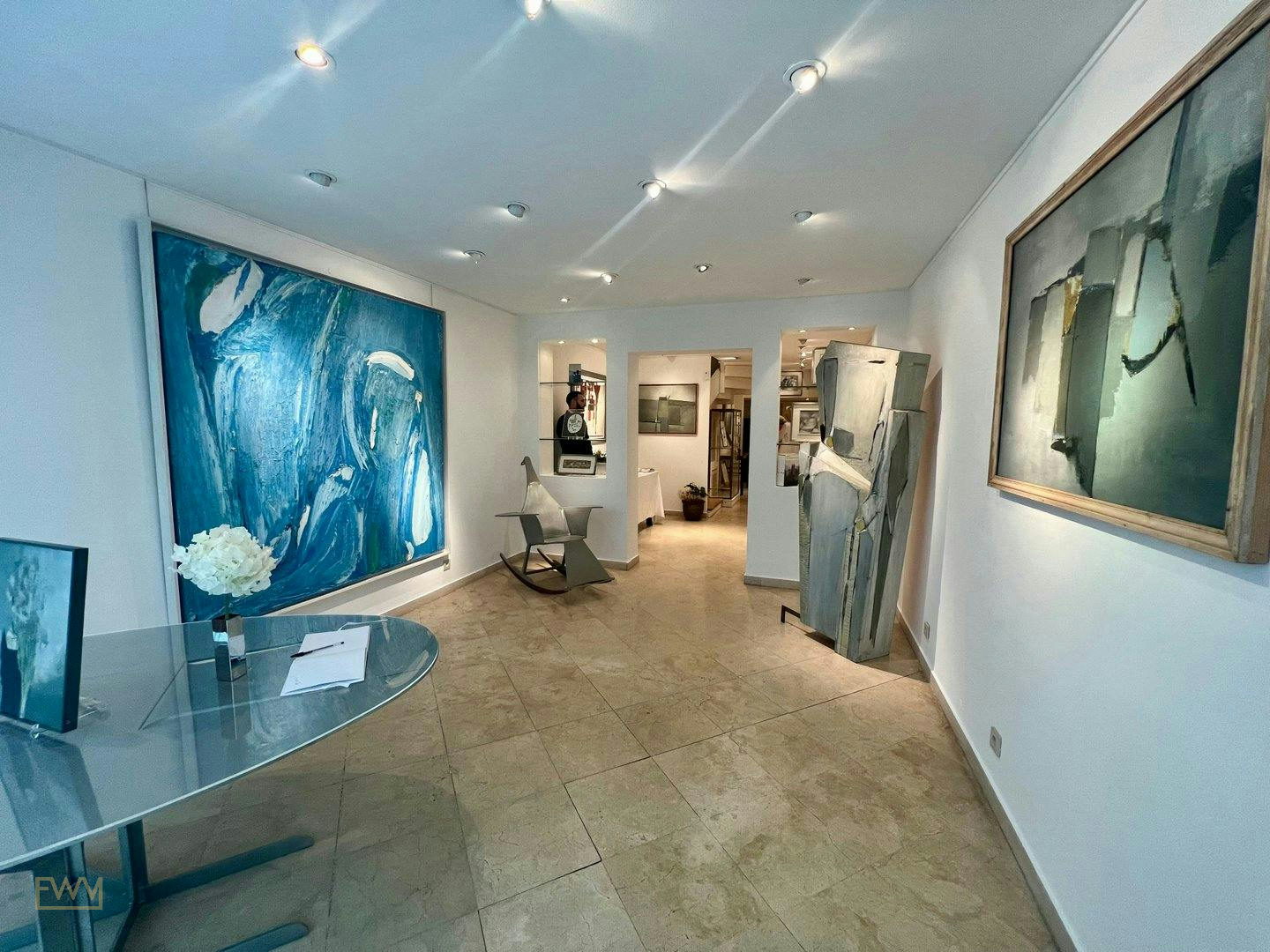
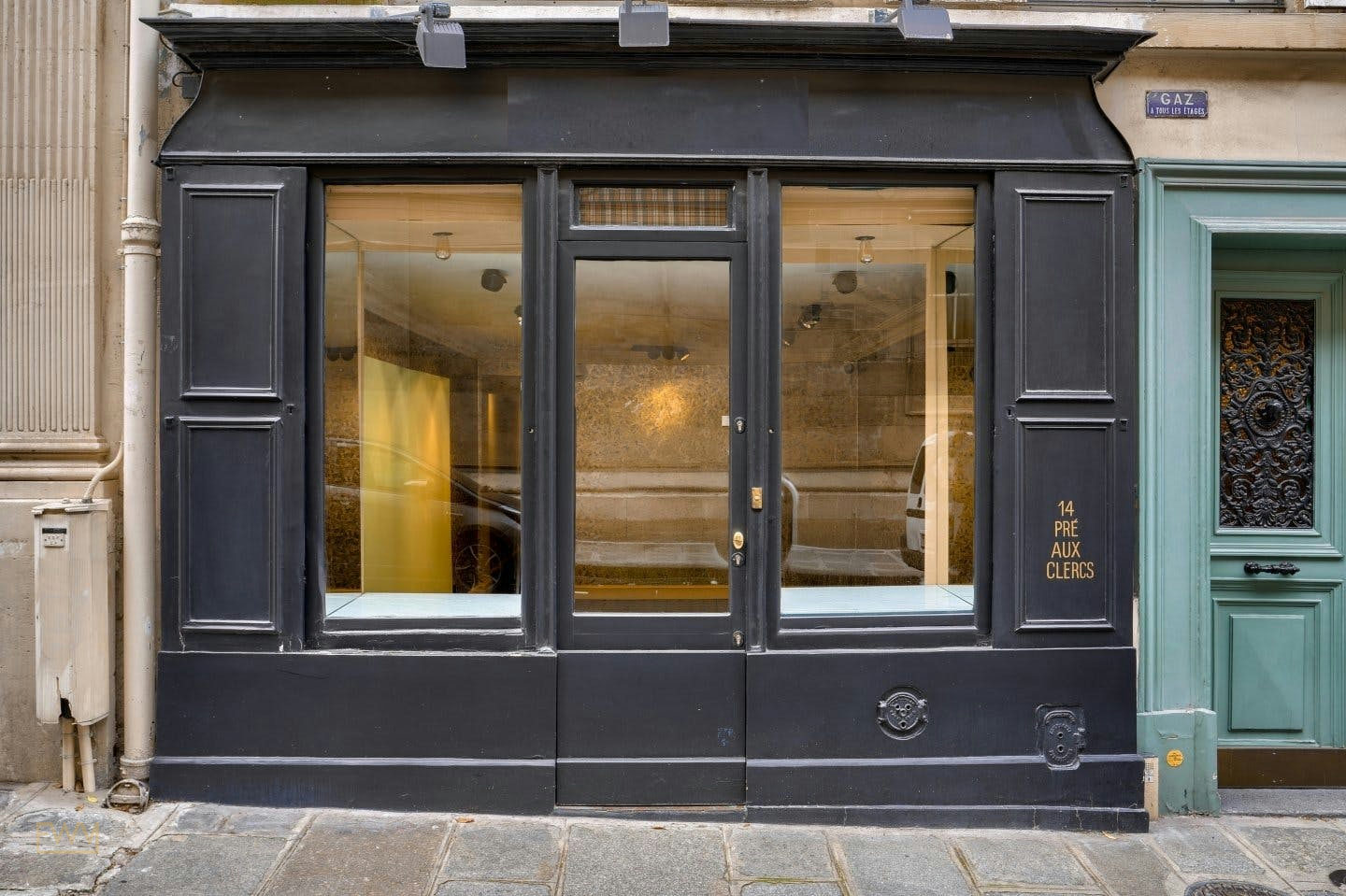
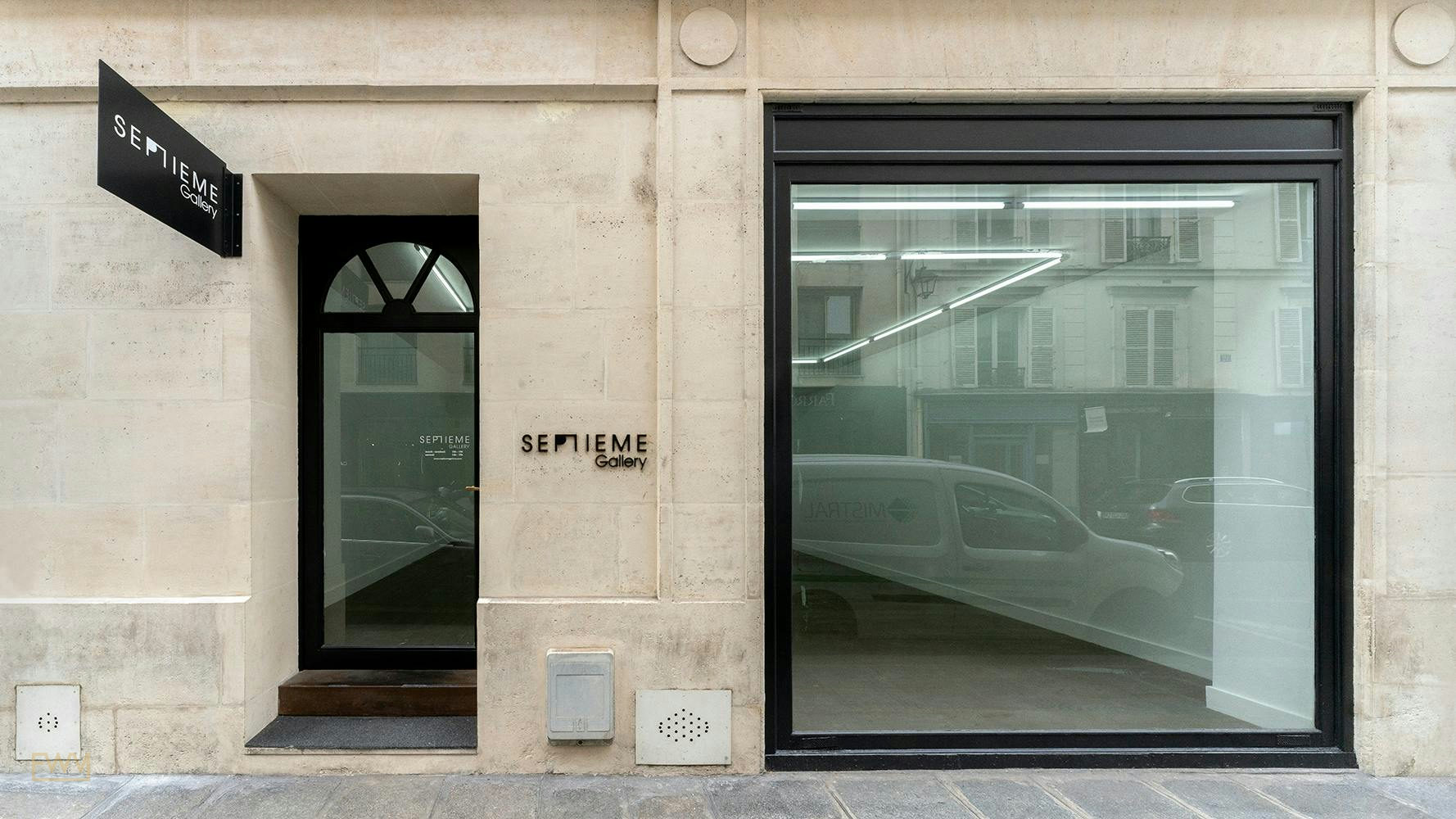
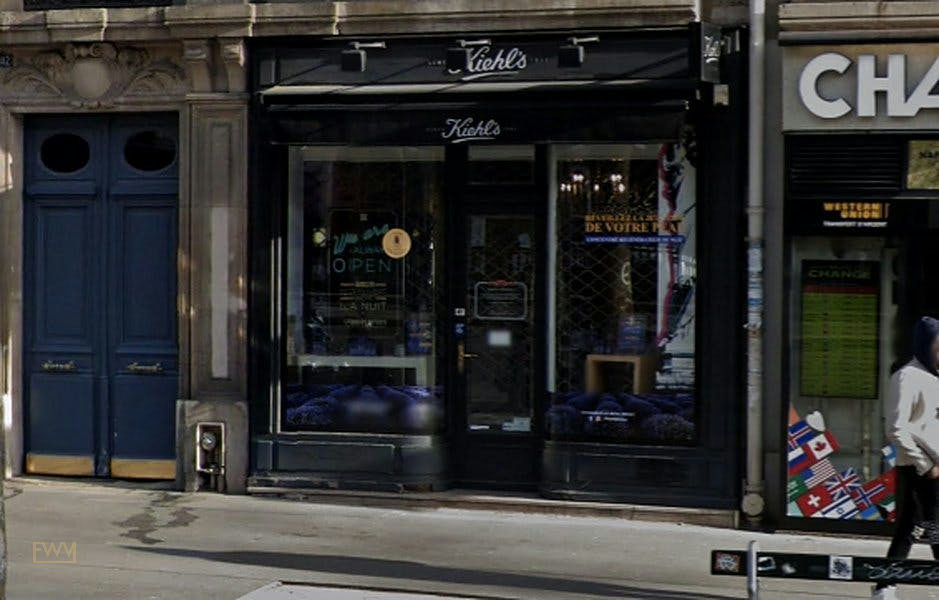
To rent retail space in the 7th arrondissement of Paris is to place your brand inside one of the most prestigious and culturally weighted districts in Europe. The 7th is home to Saint-Germain-des-Prés, the Invalides, the Musée d'Orsay, the Champ de Mars, and the Eiffel Tower, forming a geography that attracts an affluent, international clientele year-round. For fashion brands, luxury retailers, art galleries, showrooms, and pop-up operators, this arrondissement offers a rare combination of residential elegance, cultural authority, and commercial credibility. Fashion Week Venues supports brands seeking spaces across Paris, including the 7th, with venue sourcing, activation management, and end-to-end production services calibrated for short-term and seasonal retail formats.
Why the 7th Arrondissement Commands Serious Retail Attention
The 7th arrondissement, known formally as Paris 7ème arrondissement, is not a conventional retail district in the way that the Marais or the Champs-Élysées corridor functions. It is quieter, more residential, and deeply tied to French institutional life, housing the Assemblée Nationale, ministries, and some of the most valuable private real estate in Paris. That context shapes the retail opportunity decisively. Brands that succeed here are not competing for mass footfall in the way they might on Rue de Rivoli or Boulevard Haussmann near Galeries Lafayette or Printemps. Instead, they are addressing a neighbourhood clientele of high net-worth residents, cultural tourists visiting the Musée d'Orsay or the Invalides, and international visitors drawn to Saint-Germain-des-Prés specifically because of its literary and artistic heritage.
The commercial streets that define retail in the 7th are specific and worth understanding individually. Rue du Bac is arguably the most commercially active artery, connecting the Left Bank's intellectual core to the Boulevard Saint Germain and running south toward Rue de Sèvres and Le Bon Marché, the historic department store that acts as a gravitational anchor for the entire southern stretch of the arrondissement. Rue des Saints-Pères runs parallel and slightly east, home to a mix of boutiques, galleries, and design shops. Rue de Lille and Boulevard Saint Germain carry foot traffic westward toward the Faubourg Saint Germain area and the Assemblée Nationale. Further west, Rue Saint-Dominique and the Grenelle quarter around Ecole Militaire and Tour Maubourg offer a more neighbourhood-facing retail environment with strong residential density and morning-to-evening pedestrian rhythm.
The proximity to the Seine is both a branding asset and a practical consideration. Spaces with river views or proximity to landmarks like the Pont de l'Alma or the esplanade des Invalides carry premium positioning for photographic and experiential retail formats. The Champ de Mars and the Eiffel Tower create a tourism magnet in the southwestern corner of the arrondissement, generating consistent international visitor volumes that are distinct from the gallery and design district traffic closer to Saint-Germain.
For brands targeting a clientèle internationale, the 7th offers something rare: a neighbourhood where luxury is normalised without being ostentatious. Louis Vuitton, Ladurée, and other heritage brands have long understood the value of the Saint-Germain postcode. For emerging brands, independent designers, and international labels entering Paris for the first time, a short-term retail space or pop-up in the 7th signals cultural alignment with the French tradition of craftsmanship, taste, and considered consumption.
KEY TAKEAWAY: The 7th arrondissement rewards brands that prioritise quality of clientele over volume of footfall. Its commercial streets, particularly Rue du Bac and Boulevard Saint Germain, serve an affluent residential and cultural tourism audience that is predisposed toward premium, design-led, and artisanal retail experiences.
Understanding who shops here and why is the foundation for making a sound space decision. The next section maps the specific space types available across the arrondissement and what distinguishes each format for brand activation purposes.
Retail and Commercial Property Types Available in the 7th Arrondissement
Quick answer: The 7th arrondissement offers a diverse range of short-term and medium-term commercial spaces including boutique storefronts, gallery spaces, showrooms, lofts, studio photo venues, and local commercial units. Space types vary significantly by street, building age, and neighbourhood micro-context, from classic Haussmann facades near Faubourg Saint Germain to converted ateliers near the Ecole Militaire.
When brands and their teams search for commercial property in the 7th, they encounter a market that does not behave like a standard retail district. Commercial vacancy rates in prime streets are low, landlords are often private individuals or family offices rather than institutional property companies, and the available stock skews toward smaller surface totale units rather than large-format retail. Understanding the available space types helps brands shortlist intelligently rather than broadly.
Boutique Storefronts and Local Commercial Units
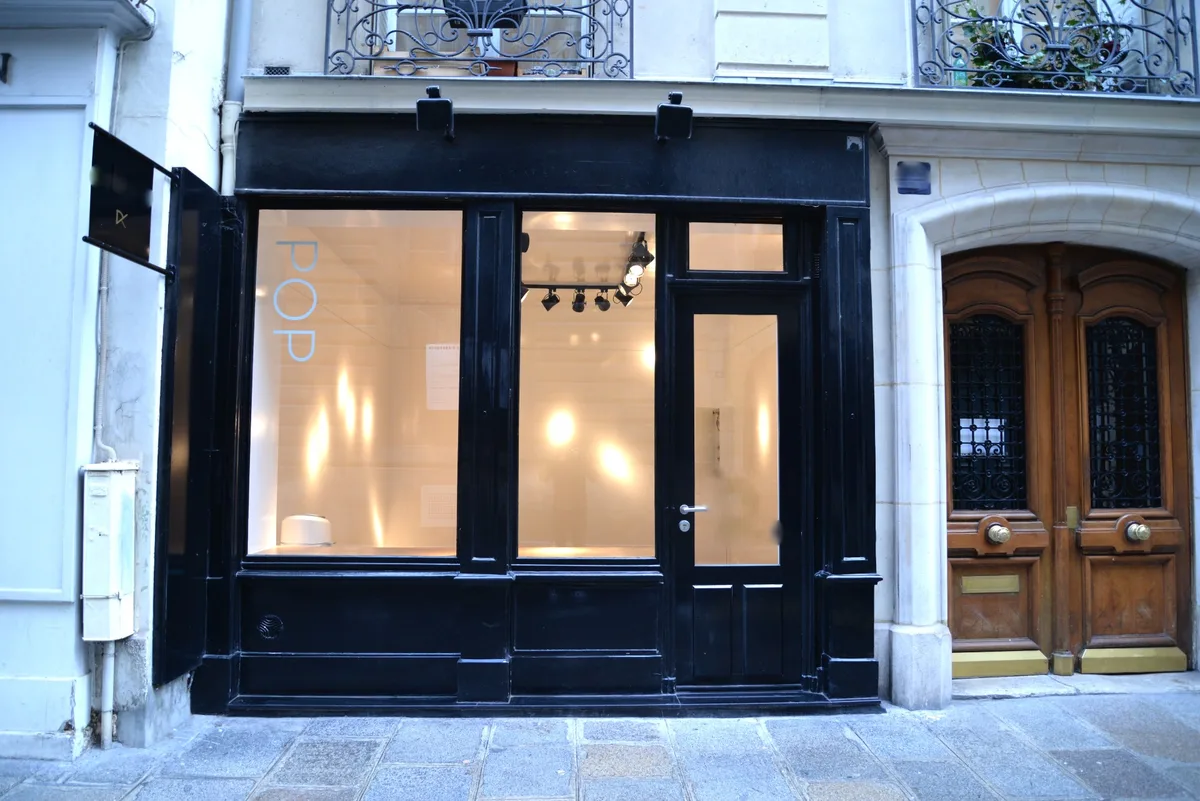
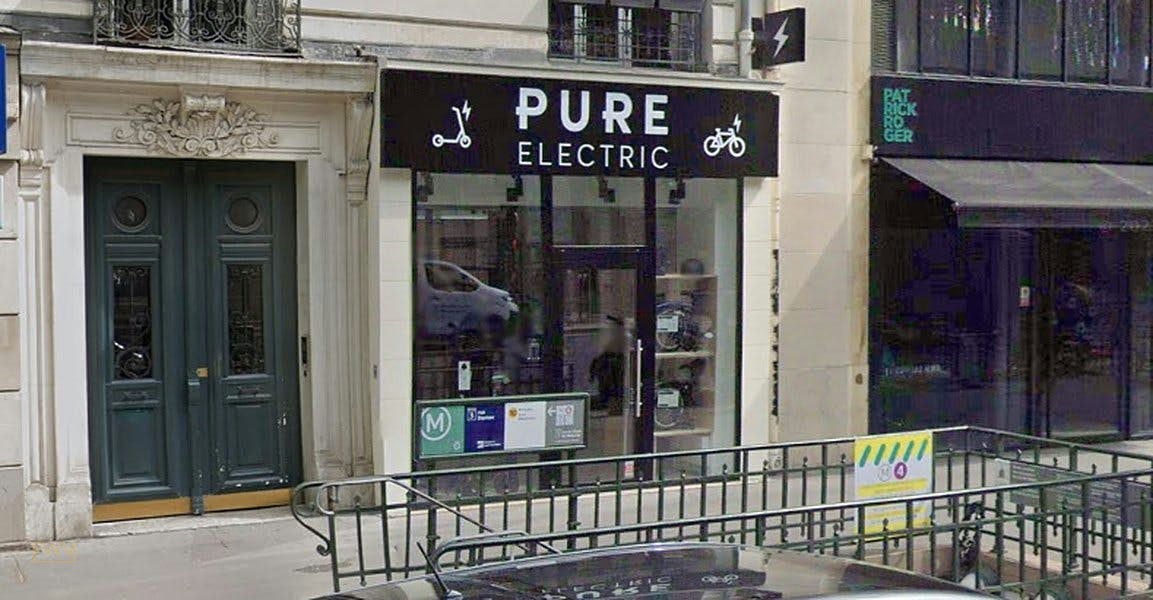
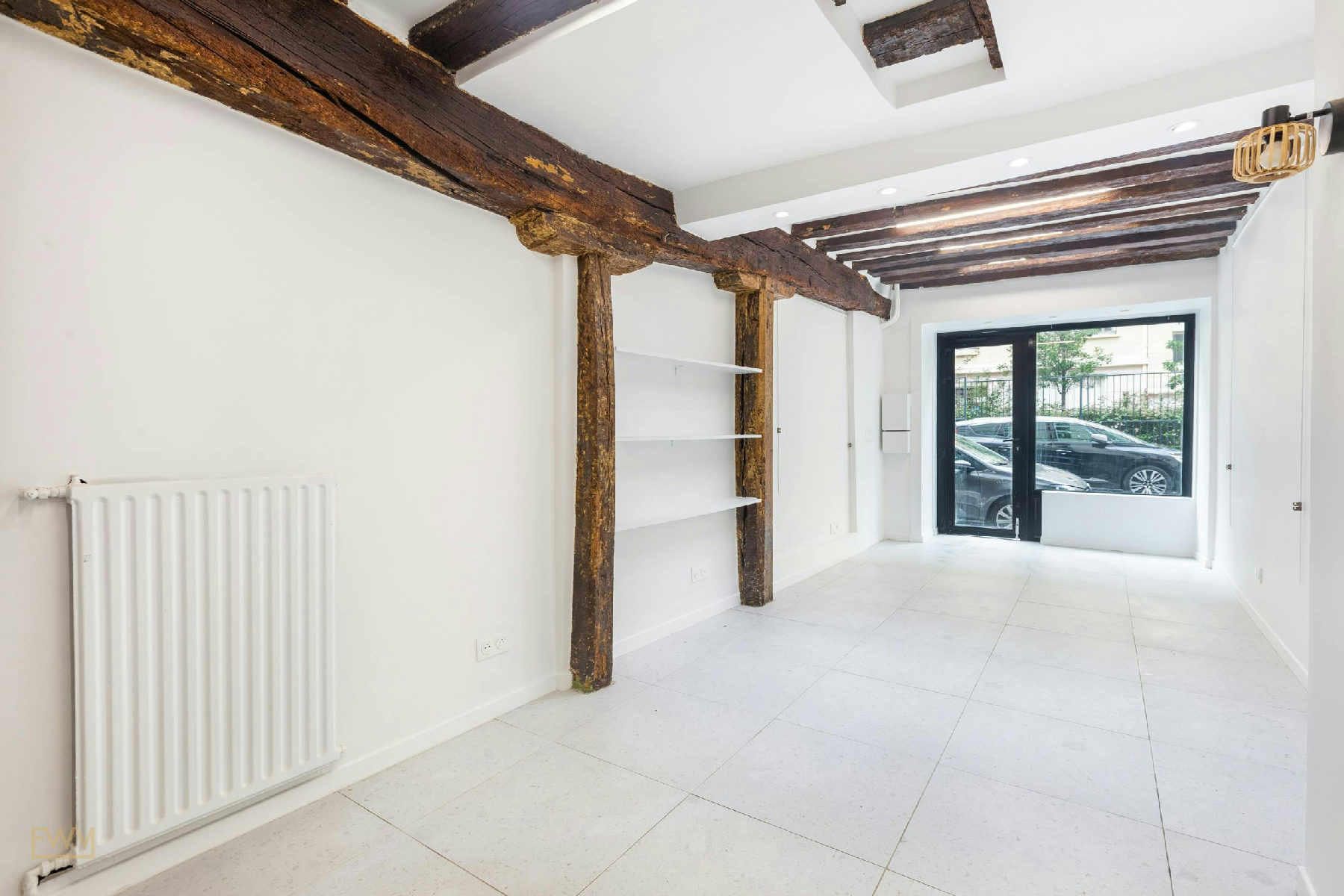
The classic local commercial or point de vente is the most common space type in the 7th. These are street-level units in Haussmann-era buildings, typically between 30 and 120 square metres, with a façade facing a commercial street. A façade of three metres or more on a busy street like Rue du Bac or Rue des Saints-Pères provides strong visibility for a pop-up storefront concept. Interior finishes vary enormously: some units retain original timber floors, exposed stone, and period mouldings, while others have been modernised with white walls, polished concrete floors, and track lighting configurations that are well-suited to contemporary fashion and design retail. The distinction matters for brand fit. A raw concrete finish suits a streetwear or concept store activation; white walls with natural light work for fine jewellery, ceramics, or art-adjacent fashion brands; wood-panelled interiors signal heritage and craft.
Gallery Spaces and Art Gallery Formats
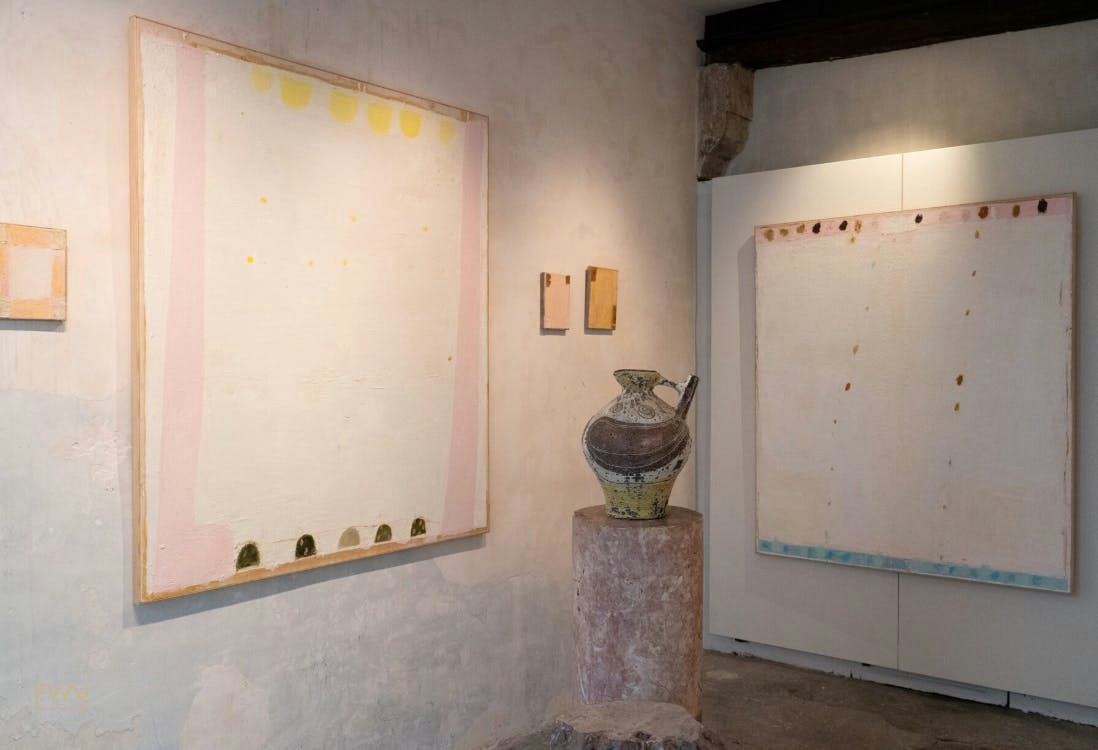
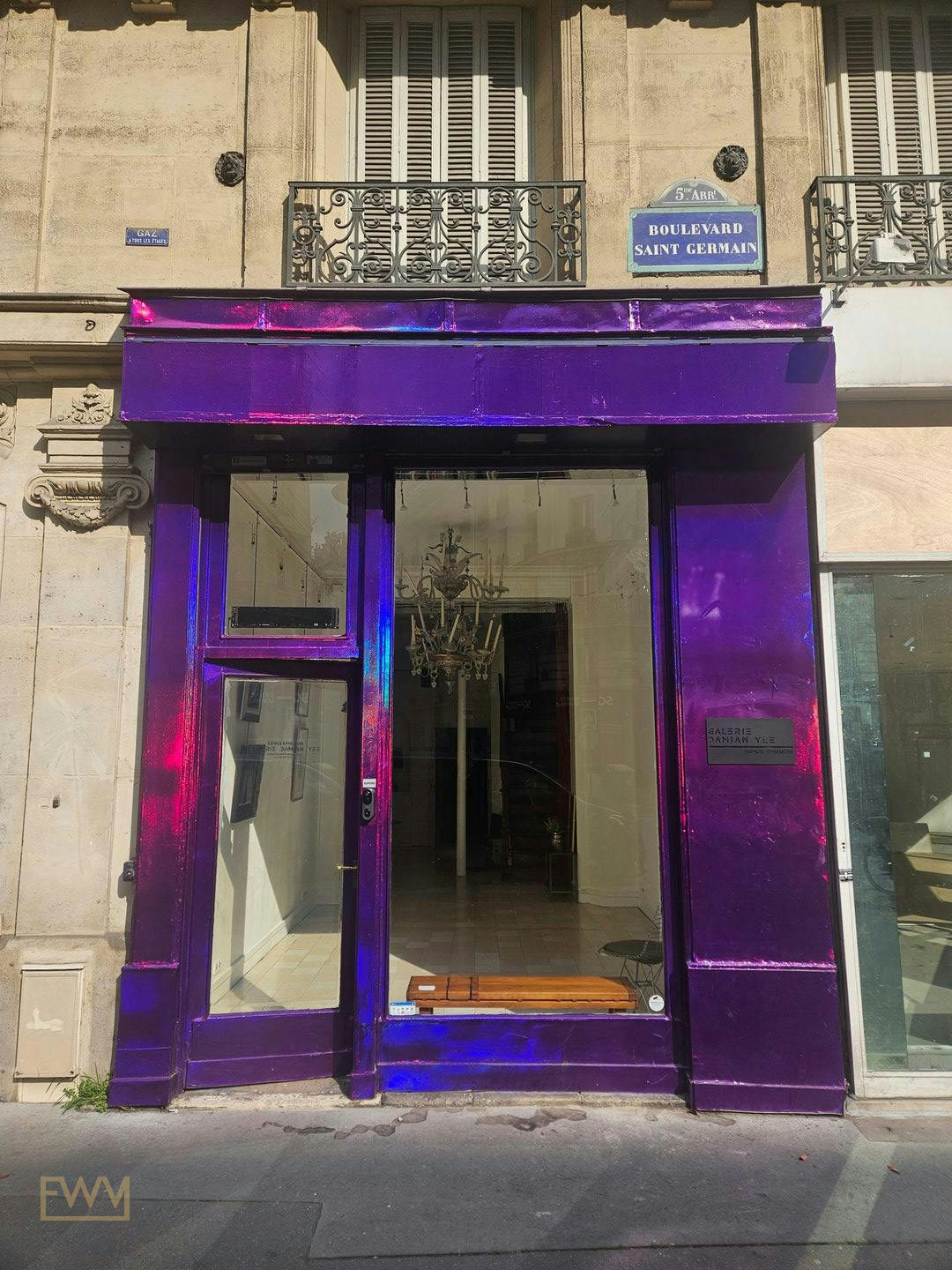
Saint-Germain-des-Prés has a centuries-long association with the art market, and the 7th retains a significant concentration of commercial galleries and galerie d'art contemporain formats. These spaces, often found on Rue de Seine, Rue du Bac, and side streets off Boulevard Saint Germain, are purpose-built for display with high ceilings, gallery-grade lighting, white or neutral walls, and polished or sealed concrete floors. For fashion brands, a gallery space lends immediate credibility and creates an editorial context for product presentation. Showroom functions, press preview events, and limited-edition product launches translate particularly well into these formats. Some gallery spaces are available as location pure arrangements, meaning the space is rented without the incumbent business operating, which simplifies brand integration considerably.
Showroom Spaces
Showroom space in the 7th operates differently from a public-facing retail activation. Many showrooms here serve the trade buyer circuit, particularly during Paris Fashion Week seasons when international buyers, press, and stylists move through the Left Bank making appointments. A showroom in the 7th benefits from the neighbourhood's association with established French ready-to-wear and couture houses. Spaces suitable for showroom use tend to have discreet street entrances, good natural light or adaptable lighting systems, and enough surface totale to accommodate hanging rails, display tables, and seating for buyer meetings. Some brands use the same space simultaneously as a showroom by appointment and a consumer pop-up store on selected days, which maximises the commercial return from a single rental commitment.
Lofts and Studio Photo Spaces
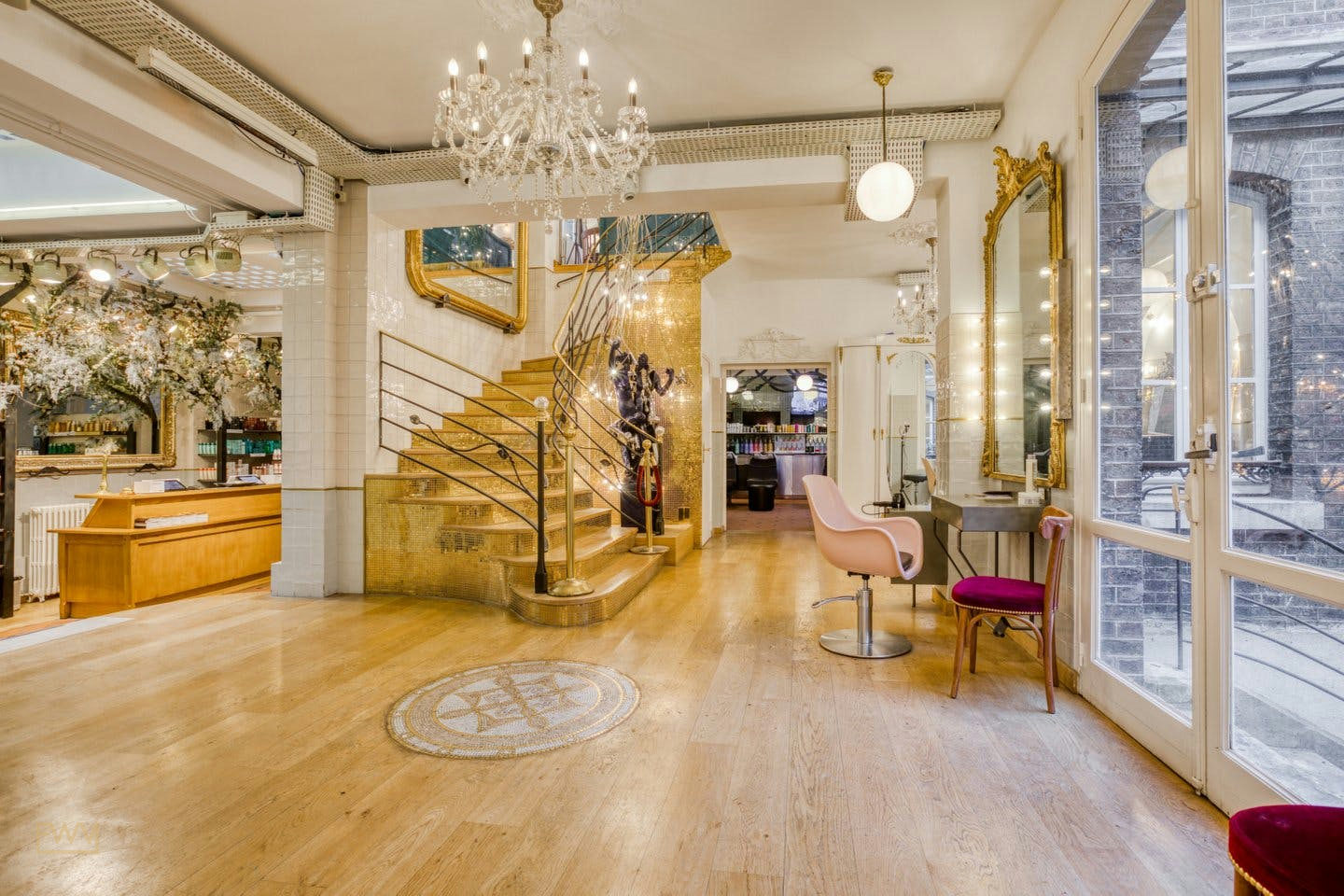
The arrondissement has a smaller but notable supply of loft-style spaces and studio photo environments, often found in converted workshops or rear courtyard buildings in the Grenelle and Ecole Militaire sub-districts. These spaces tend to offer larger open-plan surface totale, raw or semi-finished aesthetics, and flexible layouts that support multi-use brand activations including photography, content creation, product launches, and retail simultaneously. For brands that need a production-ready environment as well as a commercial presence, these formats offer practical advantages that a standard boutique storefront cannot match.
Apartment and Residential-Style Commercial Spaces
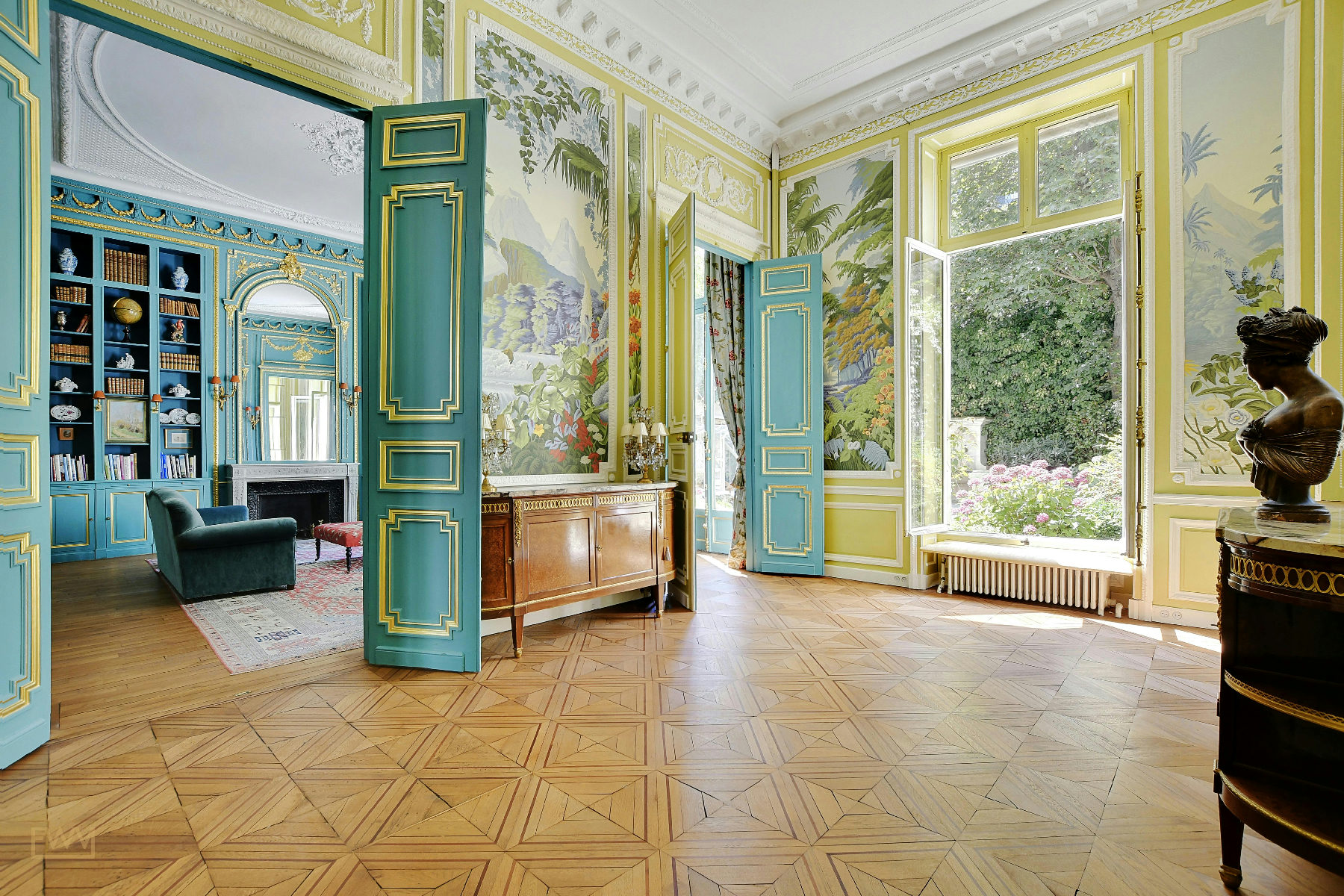
A distinctive feature of the Paris pop-up market, and one particularly pronounced in the 7th, is the availability of apartment-style commercial spaces. These are typically upper-floor units in prestige buildings, accessed via a gardien-managed entrance, with residential proportions and period detailing. They function as immersive branded environments rather than conventional storefronts, and they suit brands that want to invite a selective clientele into a curated world rather than attract general passing trade. The Hôtel Mona Bismarck model, a private venue on Avenue de New York at the edge of the 7th and 16th, exemplifies the category of prestigious venue-as-experience that this arrondissement enables.
DID YOU KNOW: Le Bon Marché on Rue de Sèvres was the world's first modern department store, opening in 1852. Its continued presence in the 7th anchors a retail gravity that sustains boutique and pop-up footfall across the surrounding streets.
KEY TAKEAWAY: The 7th arrondissement offers a wider range of space types than most brands initially expect, from standard storefronts to gallery spaces, showrooms, lofts, studio formats, and apartment-style branded environments. Matching space type to brand positioning and activation objective is as important as the street address itself.
Once a brand understands the available space types, the next question is how to navigate the commercial property rental market in Paris to actually secure a short-term or seasonal unit.
How the Paris Commercial Property Rental Market Works for Short-Term and Pop-Up Formats
Quick answer: Renting a short-term retail space in Paris involves navigating a commercial property framework that differs significantly from residential or long-term lease arrangements. The two most relevant structures for pop-up and short-term activations are the bail dérogatoire, a short-term commercial lease of up to three years, and the convention d'occupation temporaire, sometimes called a location pure, which governs truly temporary use. Understanding which structure applies to your project is critical before signing anything.
The French commercial real estate system, or immobilier commercial, operates according to laws that provide substantial protections to long-term tenants. The standard commercial lease, known as the bail commercial, runs for a minimum nine-year term and carries renewal rights that make it unsuitable for short-term brand activations. Brands entering the Paris market for a Fashion Week season, a product launch, or a temporary retail experiment need alternatives that provide flexibility without long-term legal commitment.
Bail Dérogatoire: The Short-Term Commercial Lease
The bail dérogatoire, sometimes called a bail précaire, is the primary vehicle for short-term commercial use in France. Under French law, it allows for a commercial tenancy of up to three years without the tenant acquiring the renewal rights that attach to a standard bail commercial. Critically, both parties must explicitly agree in writing that the lease is dérogatoire and that no renewal rights will arise. If this agreement is not clearly documented and the tenant remains in occupation after the term expires without a formal new agreement, French law may treat the arrangement as having converted into a full nine-year bail commercial, which carries dramatically different obligations for both landlord and tenant.
For a brand renting space in the 7th for a Fashion Week pop-up, a seasonal showroom, or a three-to-twelve-month retail experiment, the bail dérogatoire is almost always the appropriate framework. However, its precise terms, including rent indexation clauses, reinstatement obligations, and permitted use definitions, vary by negotiation and require careful review. The advice of a French commercial property lawyer or a specialist agency with legal support capability is strongly recommended before committing to any lease in Paris.
Convention d'Occupation Temporaire and Location Pure
For genuinely short activations of days to a few weeks, the convention d'occupation temporaire or AOT (autorisation d'occupation temporaire) is often more appropriate than a bail dérogatoire. This structure does not create a lease relationship in the legal sense but rather grants a revocable permission to occupy a space for a defined purpose and period. It is commonly used for pop-up events in galleries, public spaces, and commercial venues that are available between tenancies or outside of normal operating periods. The droit au bail, which refers to the value attached to an existing commercial lease that can be transferred between tenants, is a separate concept applicable only to ongoing businesses with established leases and is not relevant to short-term pop-up arrangements.
Working With Landlords and Commercial Real Estate Agents
Private landlords in the 7th arrondissement are often cautious about short-term tenants from outside France, particularly brands without a French legal entity. Many prefer dealing with established intermediaries who can provide assurance about tenant quality, rental payment security, and space reinstatement. Commercial real estate agents operating in the Paris market focus primarily on long-term leases and may have limited inventory of short-term spaces. Specialist pop-up agencies and space marketplaces, by contrast, have established landlord relationships and pre-negotiated access to flexible inventory that is not publicly listed through standard immobilier commercial channels.
IMPORTANT: Permit requirements for retail pop-ups in Paris vary by space type, arrondissement, duration, and intended commercial activity. Some activations require prior notification to the Mairie de Paris or the relevant arrondissement authority. Brands should use the Fashion Week Venues permits tool to understand the regulatory framework before confirming a space.
KEY TAKEAWAY: Short-term retail in Paris requires the right legal structure from day one. The bail dérogatoire and convention d'occupation temporaire are the two frameworks most relevant to pop-up and seasonal activations. Neither is risk-free without proper legal review, and brands without French entities face additional complexity that a specialist agency can help navigate.
Understanding the legal and transactional framework clarifies why specialist support matters. The next section addresses how brands should think about location selection within the 7th itself.
Street-by-Street Location Guide to the 7th Arrondissement for Retail Brands
Choosing the right micro-location within the 7th arrondissement is as consequential as choosing the arrondissement itself. Each principal street has a distinct character, foot traffic pattern, and commercial adjacency that will affect both the customer experience and the operational reality of running a temporary retail activation.
To compare neighbourhoods and space types in detail, explore the Paris city hub on Fashion Week Venues and shortlist spaces that match your brief, budget, and calendar window.
Rue du Bac
Rue du Bac is the commercial spine of the 7th, running from the Seine near the Musée d'Orsay south to Rue de Sèvres and the entrance to Le Bon Marché. It carries consistent daytime foot traffic from residents, tourists, and design-aware shoppers drawn by the concentration of interior, fashion, and lifestyle boutiques. The northern section near the river has a gallery and antique shop character; the southern section near Le Bon Marché has a more active retail feel with higher footfall density. Brands seeking a balance of prestige address and viable walk-in traffic should prioritise Rue du Bac above most other streets in the arrondissement.
Boulevard Saint Germain
Boulevard Saint Germain is the dominant east-west artery of the Left Bank and passes through the heart of Saint-Germain-des-Prés. Commercial spaces on the boulevard benefit from very high pedestrian volumes, particularly around the Église de Saint Germain des Prés and the Café de Flore and Les Deux Magots cluster. However, prime ground-floor spaces are rarely available on a short-term basis and when they are, they command significant premiums. Side streets off the boulevard, including Rue du Four, Rue de Rennes, and Rue des Saints-Pères, offer more accessible short-term inventory with strong neighbourhood footfall.
Rue des Saints-Pères
Rue des Saints-Pères runs north from Boulevard Saint Germain to the Seine and carries a distinctive mix of fashion boutiques, concept stores, and art spaces. It is a natural location for brands in the premium fashion, accessories, and design sectors seeking a less trafficked but highly curated street environment. The clientele here tends to be more knowledgeable and deliberate in their shopping behaviour than general tourist traffic, which suits brands with a considered product story to tell.
Rue de Sèvres and Le Bon Marché Vicinity
The stretch of Rue de Sèvres approaching Le Bon Marché benefits from the department store's magnetic effect on premium retail footfall. This is one of the few areas in the 7th where genuine comparison shopping behaviour occurs, with multiple luxury and premium brands in close proximity. For brands targeting a customer who is already in a premium retail mindset, the Le Bon Marché vicinity is the most commercially productive micro-location in the arrondissement.
Faubourg Saint Germain and Rue de Lille
The Faubourg Saint Germain quarter, anchored by grand 18th-century townhouses and running along streets including Rue de Grenelle, Rue de Varenne, and Rue de Lille, is primarily residential and institutional. Commercial space here is sparse and very private in character. It is better suited to invitation-only showrooms, private sales, and ultra-premium brand experiences than to general pop-up retail. Brands targeting press, buyers, and VIP clients rather than general consumers may find this sub-district compelling for its exclusivity.
Rue Saint-Dominique, Grenelle, and Ecole Militaire
The western and southern reaches of the 7th, around Rue Saint-Dominique, the Ecole Militaire, and Tour Maubourg, have a neighbourhood village character that differs markedly from Saint-Germain proper. Commercial spaces here are more accessible in rental terms, attract a strongly local residential clientele, and suit food, lifestyle, and everyday premium brands as well as fashion concepts targeting a local rather than tourist audience. The proximity to Champ de Mars and the Eiffel Tower brings seasonal tourism traffic that peaks in summer.
| Street or Area | Primary Retail Character | Best For | Foot Traffic Level |
|---|---|---|---|
| Rue du Bac | Mixed retail, galleries, design | Fashion, lifestyle, art, showrooms | High |
| Boulevard Saint Germain | Premium flagship and café culture | High-profile pop-ups, brand moments | Very High |
| Rue des Saints-Pères | Curated boutiques, concept stores | Premium fashion, accessories | Medium-High |
| Rue de Sèvres and Le Bon Marché vicinity | Luxury retail anchor zone | Premium brands, destination retail | High |
| Faubourg Saint Germain and Rue de Lille | Institutional and residential | Private showrooms, VIP events | Low |
| Rue Saint-Dominique and Ecole Militaire | Neighbourhood commercial village | Local-facing brands, lifestyle, food | Medium |
KEY TAKEAWAY: Within the 7th arrondissement, the right street matters as much as the right space. Rue du Bac and the Le Bon Marché vicinity offer the most consistent commercial foot traffic, while Faubourg Saint Germain and Rue des Saints-Pères offer a more curated, selective audience. Match your micro-location to your activation objective and target clientele type.
Having established the location landscape, brands also need to understand the practical and operational factors that determine whether a given space can actually deliver the activation they are planning.
Operational and Physical Factors When Selecting a Retail Space in Paris 7ème
Quick answer: Beyond location and legal structure, the operational readiness of a space determines whether a brand can execute its activation on time and within budget. Key factors include the existing fit-out condition, available lighting infrastructure, facade dimensions, electrical capacity, delivery access, and whether reinstatement obligations apply at the end of the tenancy.
Brands frequently underestimate the operational complexity of taking on a raw or part-fitted commercial space in Paris, particularly when working within the compressed timelines typical of Fashion Week season activations. A thorough assessment of the physical space before signing is essential. The following factors deserve structured evaluation.
Fit-Out Condition and Interior Aesthetics
Paris commercial spaces in the 7th vary from entirely white-box configurations, ready for custom installation, to fully fitted boutiques with fixed shelving, display systems, and brand-specific elements from previous tenants. A white-wall space with polished concrete floors or raw concrete floors offers maximum creative flexibility but requires a full build programme to transform into a functioning retail environment. A wood-panelled space with period detailing will constrain certain contemporary brand aesthetics but may be perfectly suited to heritage, craft, or lifestyle concepts that benefit from the warm materiality. Track lighting and spotlights are often already installed in gallery spaces and former boutiques, which reduces fit-out cost and timeline. Brands should assess whether the existing aesthetic is a starting point or a constraint before shortlisting.
Facade Dimensions and Street Visibility
The façade of a retail space in Paris is a critical commercial asset. A façade of three metres or more on a well-trafficked street provides meaningful display window visibility and the ability to communicate a brand presence to passing pedestrians. Narrower facades, common in some of the side streets and converted spaces of the 7th, require more creative window display strategies but can still deliver strong brand cut-through if the visual merchandising is well-executed. The relationship between facade width, window configuration, and interior sight lines should be assessed as part of any space evaluation.
Lighting Infrastructure
Gallery-quality lighting is a significant budget item if it needs to be installed from scratch. Spaces that already have adjustable track lighting, spotlights, or gallery rail systems reduce activation costs and simplify the fit-out programme considerably. For fashion and jewellery brands in particular, lighting quality directly affects how product is perceived. A poorly lit space in a prestige address can undermine the brand experience entirely. Brands should confirm the existing lighting type, circuit capacity, and whether new installations are permitted under the lease or occupancy agreement.
Electrical Capacity and Technical Infrastructure
Point of sale systems, digital display screens, refrigeration for food and beverage elements, and event lighting all draw electrical load. Older Haussmann-era buildings in the 7th may have limited electrical capacity that cannot support a technology-heavy activation without a costly electrical upgrade. Confirming the available amperage and the terms under which electrical modifications are permitted should happen before lease commitment, not after.
Delivery Access and Logistics
The 7th arrondissement has strict municipal rules on delivery vehicle access, particularly in the Saint-Germain-des-Prés zone and the Faubourg Saint Germain heritage corridor. Loading bays are rare, and deliveries to street-level commercial units often require early morning time windows or dedicated access negotiations with building management. Brands planning a significant build or regular product replenishment need to factor logistics access into their site evaluation from the outset.
Reinstatement Obligations
French commercial leases and occupation agreements typically include reinstatement clauses requiring the tenant to restore the space to its original condition at lease end. For a brand that has undertaken a custom fit-out, this means planning and budgeting for strip-out as well as build-in. The reinstatement obligation is often a source of end-of-tenancy disputes, particularly when lease terms are ambiguous about what constitutes the original condition. A specialist agency with experience in Paris commercial leases can help negotiate and document reinstatement terms clearly at the outset.
TIP: Always commission a written condition report with photographs at the start of any Paris commercial tenancy, regardless of duration. This protects the brand against reinstatement disputes at the end of the activation period.
KEY TAKEAWAY: The operational and physical readiness of a space in the 7th arrondissement can make or break the financial viability of an activation. Lighting, facade dimensions, electrical capacity, delivery logistics, and reinstatement terms are all negotiable or assessable before commitment, and all carry budget implications that brands must factor into their planning.
With the operational factors understood, the next dimension to address is calendar timing and how the Paris retail activation calendar should shape a brand's decision on when to activate in the 7th.
Paris Fashion Week and the Retail Activation Calendar in the 7th Arrondissement
Quick answer: Paris Fashion Week is the highest-profile calendar window for brand activations in the city, but it is not the only viable or even the most cost-effective window for brands targeting retail footfall in the 7th arrondissement. The district attracts strong year-round international visitor volumes, and seasonal activations outside Fashion Week can often secure better space terms with less competition.
Paris Fashion Week occurs twice yearly, in late February or early March for the autumn-winter collections and in late September or early October for the spring-summer collections. During these windows, the Left Bank and Saint-Germain-des-Prés areas see concentrated activity from the global fashion industry: buyers, press, stylists, photographers, influencers, and brand teams move through the neighbourhood in large numbers. Demand for commercial spaces, particularly showroom spaces, galleries, and boutique storefronts in the 7th, peaks accordingly, as does pricing.
For brands with a direct consumer activation strategy rather than a trade or press objective, the weeks immediately preceding or following Fashion Week can offer compelling advantages. Spaces are more available, landlords are more willing to negotiate on short-term terms, and the neighbourhood is still energised by the fashion ecosystem without the operational pressure of competing activations. Brands that have participated in Fashion Week activations and understand the Paris calendar will often plan a consumer-facing pop-up in the two to four weeks after the official fashion week dates to capture residual industry attention alongside restored tourist and resident foot traffic.
Beyond Fashion Week, the Paris retail calendar has several strong activation windows. The first quarter, particularly January and February, benefits from Parisian residents returning to post-holiday shopping routines. April and May bring strong European tourist volumes. The summer months bring international tourists to the 7th in significant numbers, particularly around the Eiffel Tower, Champ de Mars, and Musée d'Orsay. The fourth quarter, from October through to the pre-Christmas period in December, is broadly the strongest retail window in Paris, with affluent residents and gift-motivated tourists generating high spend per visit.
DID YOU KNOW: Paris receives approximately 48 million visitors annually according to the Office du Tourisme et des Congrès de Paris, making it consistently one of the most visited cities in the world. The 7th arrondissement captures a disproportionate share of cultural tourism through its landmark concentration.
For brands calibrating their activation timing, the Fashion Week Venues timeline planning tool provides a structured approach to mapping activation windows against the Paris retail and events calendar.
KEY TAKEAWAY: Fashion Week is the most visible but not always the most strategic window for a retail pop-up in the 7th arrondissement. Brands targeting consumers rather than trade should consider the weeks around Fashion Week, the April-May tourist peak, or the autumn-winter retail season as equally compelling and often more commercially productive opportunities.
Alongside timing decisions, the question of budget is consistently the most practical concern for brand teams evaluating a Paris activation. The following section addresses what brands need to understand about cost structures in the 7th.
Budget and Cost Considerations for Renting Retail Space in the 7th Arrondissement
Quick answer: Rental costs for short-term commercial space in the 7th arrondissement of Paris vary considerably based on street, space type, surface totale, duration, fit-out condition, and season. No single figure applies across the market, and brands should treat any stated range as directional only. A structured budget estimate from a specialist agency or via a dedicated tool is more reliable than market averages for planning purposes.
The 7th arrondissement is one of the higher-cost commercial property markets in Paris, reflecting both the prestige of the address and the scarcity of available short-term inventory. On prime streets such as Rue du Bac or the Boulevard Saint Germain frontage, short-term rental rates for boutique-scale spaces reflect the desirability of the location and the limited supply of flexible inventory. On secondary streets and in sub-districts such as Rue Saint-Dominique or Tour Maubourg, rates are more accessible and comparable to other quality Left Bank neighbourhoods.
Beyond the base rental figure, brands renting retail space in the 7th must account for a range of additional cost components that can collectively exceed the rental cost itself. These include space fit-out and production, furniture and display fixture procurement or rental, lighting installation, POS system setup, staffing, marketing and influencer activity to drive footfall, security deposits typically equivalent to one to three months of rent, reinstatement costs at end of tenancy, utility costs including electricity, and any agency or intermediary fees. The total investment for a well-executed four-week pop-up in a prestige 7th arrondissement location across all these categories can vary from a modest brand experiment to a significant campaign investment depending on the level of production ambition.
Brands should build their budget from the activation objective backwards. A press-focused showroom activation during Fashion Week requires different cost weighting than a consumer-facing retail pop-up designed to drive sales and social media content. A brand experience designed primarily for influencer content generation has a different cost architecture than a trade showroom designed to facilitate wholesale order writing.
Use the Fashion Week Venues budget estimation tool to model the cost components relevant to your specific activation type, space size, and Paris calendar window. The tool is designed to surface realistic budget parameters rather than market averages, which can be misleading for planning purposes.
| Activation Type | Primary Cost Drivers | Secondary Cost Drivers | Budget Planning Priority |
|---|---|---|---|
| Consumer Pop-Up Retail | Space rental, fit-out, staffing | POS, marketing, logistics | Foot traffic and sales conversion |
| Trade Showroom | Space rental, furniture, presentation | Catering, invitations, staffing | Buyer access and appointment quality |
| Press and Media Event | Venue hire, production, catering | PR, photography, gifting | Media coverage and brand amplification |
| Influencer Experience | Space design, content production | Talent fees, social promotion | Earned media and audience reach |
| Brand Experience Permanent-Temporary | Fit-out, technology, staffing | CRM, data, follow-up | Customer data and lifetime value |
KEY TAKEAWAY: Rental cost is one component in a broader activation budget. Brands that model the full cost structure, including production, staffing, marketing, and reinstatement, before committing to a space avoid the common trap of underestimating total investment and overspending on the space at the expense of execution quality.
Budget discipline is closely related to ROI discipline. Understanding how to measure the commercial return of a temporary retail activation in Paris is the next essential dimension for brand decision-makers.
Measuring ROI From a Pop-Up or Retail Activation in the 7th Arrondissement
Return on investment from a temporary retail space in Paris is not simply a question of sales revenue against space cost. Brands that evaluate Paris activations solely on direct retail sales during the activation period consistently undervalue the full commercial impact of a well-executed pop-up in a prestige location. A more complete ROI framework accounts for multiple value streams generated by the activation.
Direct sales revenue is the most visible metric, but in a neighbourhood like Saint-Germain-des-Prés, basket sizes tend to be higher than in volume retail environments, and conversion rates among visitors who enter deliberately are strong. The 7th attracts a clientele predisposed to considered purchase decisions, which favours brands with coherent storytelling over brands competing purely on price.
Brand awareness and media value generated by a prestige Paris address extend well beyond the duration of the activation. International press coverage, influencer content, and social media engagement from a well-designed space in the 7th can deliver sustained brand visibility to audiences globally. Quantifying the earned media value of this coverage against equivalent paid advertising spend provides a more complete picture of activation ROI than direct sales alone.
Customer data acquisition, where brands collect consented first-party data during the activation, creates ongoing commercial value through CRM, email marketing, and retargeting that outlasts the physical pop-up. For brands entering the Paris market for the first time, the customer relationships initiated during a short-term activation in the 7th can anchor a long-term market development strategy.
Wholesale and trade relationships initiated or reinforced during a showroom or trade-facing activation carry multiplied value relative to a single-season direct sales figure. A buyer relationship initiated at a Fashion Week showroom in the 7th can generate seasons of repeat wholesale orders.
The Fashion Week Venues ROI calculator is designed to model the multi-stream commercial return from a Paris activation across direct sales, media value, customer acquisition, and trade development dimensions, giving brand teams a defensible investment case to present internally.
KEY TAKEAWAY: ROI from a temporary retail activation in Paris 7ème should be assessed across direct sales, earned media, customer data, and trade development. Brands that use only sales revenue as their success metric will systematically undervalue the strategic return of a prestige Left Bank activation.
How Fashion Week Venues Supports Brands Renting Space in the 7th Arrondissement
Fashion Week Venues is a full-service pop-up shop agency and space marketplace that specialises in supporting brands through every stage of a temporary retail or activation project in Paris and other major fashion capitals. For brands seeking to rent retail space in the 7th arrondissement, Fashion Week Venues provides both the discovery infrastructure and the execution capability to move from initial brief to open doors efficiently.
On the discovery side, the Fashion Week Venues marketplace lists curated short-term and flexible commercial spaces across Paris, including the 7th arrondissement, with space type, surface, location, and availability filters that allow brand teams to shortlist intelligently rather than relying on generic property searches. The locator tool maps spaces geographically against the micro-locations and commercial streets most relevant to specific brand objectives.
On the execution side, Fashion Week Venues offers a comprehensive suite of services that address every operational dimension of a Paris activation. Venue sourcing and negotiation draws on established landlord relationships and experience with the French commercial lease structures most relevant to short-term use. Concept direction supports brands in developing the creative brief that transforms a raw space into a coherent brand environment. Production and build delivers the physical transformation from white box to finished retail environment within the compressed timelines typical of Fashion Week season activations. Branded store design creates the visual merchandising and interior design language that makes the space commercially effective and photographically compelling. Furniture rental eliminates the logistics burden of procuring and disposing of temporary display and seating fixtures. Retail staffing provides trained, brand-aligned sales associates who understand the Parisian clientele and can operate confidently in a luxury or premium retail context. POS and payments infrastructure ensures smooth transactional capability from day one. Data and analytics provides real-time footfall, conversion, and sales reporting that informs both in-activation decisions and post-activation ROI reporting. Influencer marketing connects brands to the Paris-based content creator community to amplify activation reach beyond physical visitors.
Fashion Week Venues also operates a twin co-activation concept designed for brands that want to share a prestige Paris space with a complementary brand, splitting costs while amplifying the activation's audience appeal. For brands exploring the 7th arrondissement for the first time, this model can reduce financial risk while maintaining the quality and address of the activation.
The process Fashion Week Venues follows is structured to move brands from brief to activation through a defined series of stages: discovery, shortlisting, space selection, concept development, production, activation management, and post-activation reporting. Brands can explore this process in detail on the Fashion Week Venues process page.
Brand teams that benefit most from Fashion Week Venues' support are typically those entering Paris for the first time without an established French operational infrastructure, brands with compressed timelines that cannot absorb the delay of building landlord relationships and negotiating leases from scratch, creative teams that need production and build support to translate a brand vision into a physical space, and marketing teams that want measurable ROI reporting alongside the activation itself.
It is important to understand that Fashion Week Venues facilitates and executes but does not guarantee specific spaces, permit approvals, or commercial outcomes. The Paris market is dynamic, space availability changes, and regulatory requirements evolve. Brands are strongly advised to consult a French legal advisor for any lease review and to begin their Paris space search with sufficient lead time to allow for proper due diligence.
KEY TAKEAWAY: Fashion Week Venues provides an integrated discovery-to-execution platform for brands seeking retail space in Paris 7ème, from space marketplace to full-service production and activation management. Its value is greatest for brands that need speed, local expertise, and operational capability without building a Paris infrastructure from scratch.
Comparing the 7th Arrondissement With Other Paris Retail Neighbourhoods
Quick answer: The 7th arrondissement occupies a distinctive position in the Paris retail market: less commercially intense than the Marais or the 1st arrondissement Golden Triangle, but more prestigious and internationally recognised than most of the south and east of the city. The right choice between Paris neighbourhoods depends on brand positioning, target audience, activation format, and budget.
Brands evaluating Paris for the first time often default to the Marais or Le Marais in the 3rd and 4th arrondissements because of its reputation as a creative and fashion-forward district with high footfall and strong international brand presence. The Marais is genuinely excellent for fashion and design pop-ups, but its commercial space market is competitive, landlord relationships can be complex, and the neighbourhood's success has made it crowded at peak season. For brands seeking differentiation from the standard fashion activation geography, the 7th offers a compelling alternative precisely because it is less expected.
The 1st arrondissement, encompassing the Rue de Rivoli, Place Vendôme, Rue Saint-Honoré, and the Palais Royal area, is the apex of Paris luxury retail. Space costs here are among the highest in Europe, and the competitive intensity among luxury maisons means that emerging brands or those without established Paris presence may find it difficult to create meaningful impact against the backdrop of houses like Chanel, Cartier, and Hermès. The 7th, by contrast, provides prestige without the extreme cost premium of the 1st.
Montmartre and Pigalle in the 18th arrondissement offer a bohemian, creative energy that suits certain brand profiles, particularly streetwear, youth culture, and music-adjacent fashion. These neighbourhoods have lower commercial space costs but also a very different clientele composition from the 7th.
| Neighbourhood | Positioning | Best Brand Type | Relative Space Cost | International Recognition |
|---|---|---|---|---|
| 7th Arrondissement, Saint-Germain | Prestige, intellectual, art-adjacent | Premium fashion, design, gallery | High | Very High |
| Le Marais (3rd and 4th) | Creative, fashion-forward, diverse | Fashion, streetwear, concept | High | Very High |
| 1st Arrondissement, Vendôme-Rivoli | Ultra-luxury, heritage maisons | Luxury houses, fine jewellery | Very High | Very High |
| Montmartre and Pigalle (18th) | Bohemian, creative, youth | Streetwear, music, indie fashion | Medium | High |
| Palais de Tokyo vicinity (16th) | Contemporary art, architecture | Art, design, luxury lifestyle | High | High |
KEY TAKEAWAY: The 7th arrondissement is not the cheapest or the highest-footfall option in Paris, but it offers a combination of prestige address, affluent international audience, and differentiated positioning relative to the more saturated Marais and 1st arrondissement markets that makes it compelling for the right brand profile.
Step-by-Step Process for Renting a Retail Space in the 7th Arrondissement of Paris
Executing a temporary retail or pop-up activation in the 7th arrondissement requires a structured process that addresses discovery, legal, operational, and marketing dimensions in the right sequence. The following workflow reflects best practice for a brand team executing a Paris activation with a specialist agency partner.
| Stage | Actions Required | Key Decisions | Typical Timeline Before Opening |
|---|---|---|---|
| 1. Brief Definition | Define activation objective, target audience, space type, budget range, and calendar window | Consumer or trade focus, duration, arrondissement priority | 12 to 16 weeks |
| 2. Space Discovery | Search marketplace, use locator tool, review agency shortlist | Street priority, space type, surface, fit-out condition | 10 to 14 weeks |
| 3. Site Visits and Shortlisting | Visit shortlisted spaces, assess operational readiness, confirm availability | Final space selection, rejection of unsuitable options | 8 to 12 weeks |
| 4. Legal and Lease Review | Engage French legal advisor, review bail dérogatoire or occupation agreement terms | Lease structure, duration, reinstatement terms, permitted use | 7 to 10 weeks |
| 5. Concept and Design | Develop brand environment concept, agree fit-out scope and budget | Interior aesthetic, lighting, furniture, POS placement | 6 to 9 weeks |
| 6. Permits and Compliance | Confirm permit requirements with agency or legal advisor, submit applications | Signage permits, commercial activity authorisation | 5 to 8 weeks |
| 7. Production and Build | Execute fit-out, furniture installation, lighting, POS setup | Build quality, timeline adherence, reinstatement plan | 2 to 4 weeks |
| 8. Staffing and Operations | Brief and onboard retail staff, set up POS and payments, finalise opening procedures | Staff profile, language requirements, sales training | 1 to 2 weeks |
| 9. Launch and Activation | Open to trade or public, execute marketing programme, monitor data | Launch event strategy, influencer engagement, daily operations | Opening day |
| 10. Close and Reinstatement | Strip out fit-out, restore space to original condition, return keys, report on results | Reinstatement quality, data reporting, next activation planning | Post-activation |
The timeline in this workflow is indicative. Brands with prior Paris experience and established agency relationships can compress some stages. Brands entering Paris for the first time should allow the longer end of each range. The most common cause of timeline compression failures is delayed legal review or underestimation of permit lead times.
KEY TAKEAWAY: A structured, sequenced process reduces the risk of costly last-minute decisions during a Paris activation. Legal review, permit confirmation, and production planning are the three stages most frequently underestimated by first-time Paris operators and the three most likely to cause delay or overspend if left too late.
Common Myths About Renting Retail Space in the 7th Arrondissement of Paris
MYTH: You need a French legal entity to rent commercial space in Paris.
FACT: Foreign companies and international brands can and do rent commercial spaces in Paris without a French legal entity. The process requires careful structuring of the lease or occupation agreement, often including a personal guarantee or security deposit arrangement acceptable to the landlord, and the involvement of an intermediary or agency with established landlord relationships. This is a solved problem for experienced Paris pop-up operators, though it adds complexity relative to a French company signing directly.
MYTH: Paris Fashion Week is the only commercially viable window for a pop-up or retail activation in the 7th arrondissement.
FACT: Paris Fashion Week is a high-visibility window particularly suited to trade showrooms and press-facing activations. For consumer-facing retail pop-ups, the weeks surrounding Fashion Week, the April-May tourist peak, and the October-December retail season are all strong activation windows in the 7th. Some of these windows offer better space availability and more negotiable rental terms than the Fashion Week peak itself.
MYTH: Commission brokers and commercial real estate agents are the only way to find a short-term retail space in Paris.
FACT: Traditional commercial real estate agents in Paris focus primarily on long-term lease transactions and typically do not maintain significant inventories of short-term flexible spaces. Specialist pop-up agencies and space marketplaces maintain curated inventories of short-term commercial spaces with pre-negotiated flexible terms, providing faster access to viable spaces than the traditional agency route for brands with short timelines.
MYTH: Short-term commercial leases in France are legally straightforward and do not require specialist legal advice.
FACT: The French commercial lease framework is among the most tenant-protective in Europe, which creates specific risks for landlords and complexity for short-term tenants. A bail dérogatoire that is not correctly structured can inadvertently convert into a nine-year bail commercial. Reinstatement clauses, permitted use definitions, and early termination provisions all require careful drafting. Brands should always engage a qualified French legal advisor to review any commercial lease or occupation agreement before signing.
MYTH: The 7th arrondissement is only suitable for ultra-luxury brands.
FACT: While the 7th is associated with prestige and high-end retail, its commercial streets serve a broad range of brand positions from premium to contemporary design. Sub-districts like Rue Saint-Dominique and the Ecole Militaire area attract neighbourhood-facing brands at accessible price points. The arrondissement's gallery and art space supply supports emerging designers and independent brands with strong visual identity as effectively as it supports established luxury houses.
Frequently Asked Questions About Renting Retail Space in the 7th Arrondissement of Paris
What types of commercial space are available to rent in the 7th arrondissement of Paris?
The 7th arrondissement offers boutique storefronts, gallery spaces, showrooms, lofts, studio photo environments, and apartment-style branded spaces. Space sizes range from small boutique units of around 30 square metres on commercial streets to larger converted atelier and loft formats in the Grenelle and Ecole Militaire sub-districts. The available stock reflects the arrondissement's predominantly Haussmann-era building fabric and its long association with the art market and design retail sectors. Space type should be matched to activation objective rather than selected purely on the basis of square metre cost.
What is the best street in the 7th arrondissement for a fashion pop-up store?
Rue du Bac is consistently the most commercially productive street for fashion and design pop-ups in the 7th, combining strong daytime pedestrian flow from residents and cultural tourists with a retail adjacency to Le Bon Marché at its southern end. Rue des Saints-Pères and the streets immediately off Boulevard Saint Germain are strong alternatives for brands seeking a more curated, less trafficked environment. The optimal street depends on whether the brand prioritises volume foot traffic, neighbourhood prestige, or proximity to a specific cultural or retail anchor.
Do I need a French company to rent a pop-up space in Paris?
No, a French legal entity is not required to rent a short-term commercial space in Paris. Foreign brands typically negotiate lease or occupation agreements with a security deposit and, where relevant, a personal or corporate guarantee from a parent company. Specialist pop-up agencies with established Paris landlord relationships can facilitate this process and structure agreements that landlords in the 7th will accept from international brands. However, the process requires more preparation than for a French company, and legal advice is strongly recommended before any commitment is made.
What is a bail dérogatoire and why does it matter for short-term retail in Paris?
A bail dérogatoire is a short-term French commercial lease of up to three years that explicitly excludes the renewal rights that attach to a standard nine-year bail commercial. It is the primary legal vehicle for temporary retail and pop-up activations in France. The critical requirement is that both parties must clearly document the dérogatoire nature of the agreement and ensure the tenant vacates before the maximum term expires. Failure to do so can result in the tenancy being treated as a full commercial lease, which carries significantly different obligations. All bail dérogatoire agreements should be reviewed by a qualified French commercial property lawyer.
What permits are required for a retail pop-up in the 7th arrondissement?
Permit requirements for commercial pop-ups in Paris vary based on the space type, the nature of the commercial activity, the duration of the activation, and specific rules that may apply in heritage-protected zones such as Saint-Germain-des-Prés. Temporary signage on the facade of a building may require authorisation from the building owner and potentially from the Mairie de Paris. Some commercial activities require prior notification to local authorities. Requirements change periodically and differ between arrondissements. Brands should consult the permits tool on Fashion Week Venues and engage a French legal advisor to confirm the specific requirements applicable to their planned activation before committing to a space or a timeline.
How long is the ideal duration for a pop-up in the 7th arrondissement?
There is no single ideal duration, as the optimal length depends on the activation objective, the target audience behaviour, and the budget available. Press and trade-focused showrooms aligned with Fashion Week typically run for two to four weeks, concentrated around the official season dates. Consumer-facing retail pop-ups benefit from longer durations of four to eight weeks to allow word-of-mouth and influencer-driven traffic to compound. Very short activations of one to three days are feasible for event-style launches but typically do not generate the sustained foot traffic needed for meaningful sales or data collection in the 7th's relatively selective retail environment.
How does the 7th arrondissement compare to the Marais for a fashion brand pop-up?
The Marais offers higher raw foot traffic and a more established fashion and design pop-up ecosystem, with multiple brands activating simultaneously and a younger, more trend-aware pedestrian demographic. The 7th offers a more prestigious address, a more affluent and internationally recognised clientele, and a less saturated competitive environment for prestige and premium brands. For emerging designers, the Marais may offer faster traction through peer discovery. For established premium and luxury brands, the 7th signals positioning more effectively. The choice should be determined by brand position, target customer profile, and activation objective rather than by market convention.
What is the typical cost of renting a retail space in the 7th arrondissement?
Short-term commercial rental costs in the 7th arrondissement vary significantly based on street, space type, size, fit-out condition, and season. Prime streets such as Rue du Bac command higher rates than secondary streets, and Fashion Week windows carry premium pricing relative to off-peak periods. Total activation cost also includes fit-out, staffing, POS, marketing, and reinstatement, which can cumulatively exceed the base rental cost. Brands should model the full budget using a structured estimation tool rather than relying on market averages, which rarely reflect the specific parameters of a given activation.
Can I use a pop-up space in the 7th as both a showroom and a consumer retail store?
Yes, this dual-use format is feasible and is practised by brands during Fashion Week seasons. A space configured as a trade showroom by appointment during Fashion Week trade days can transition to a consumer-facing retail pop-up for the weeks immediately following. This approach maximises the commercial return from a single lease commitment and is particularly effective in gallery-style spaces in the 7th that have the neutral, flexible configuration to support both functions. The lease or occupation agreement should explicitly permit both commercial uses, and the fit-out should be designed with the transition in mind from the outset.
What are the main differences between spaces on Rue du Bac and in the Faubourg Saint Germain area?
Rue du Bac offers active street-level retail with consistent daytime foot traffic and strong commercial adjacency to Le Bon Marché and the Saint-Germain gallery district. It is the more commercially productive street for brands seeking genuine walk-in consumer traffic. The Faubourg Saint Germain area, by contrast, is primarily residential and institutional with very limited available commercial space. Activations here are better suited to invitation-only formats, private showrooms, and VIP brand experiences targeting a highly selected audience rather than general retail consumers. Rental costs in the Faubourg Saint Germain area reflect the extreme prestige of the address.
Do I need French-speaking staff for a pop-up in the 7th arrondissement?
French-speaking staff are strongly recommended for any consumer-facing retail activation in the 7th arrondissement. While the neighbourhood attracts international tourists who will be comfortable with English-speaking staff, the core resident clientele and French cultural tourism visitors expect to be addressed in French. A team that cannot communicate fluently in French will miss a significant proportion of conversion opportunities and may create a brand experience that feels disconnected from the Parisian context. Bilingual or multilingual staffing is the standard for well-executed Paris pop-up operations in prestige arrondissements.
How far in advance should I start planning a pop-up in the 7th arrondissement?
For a Fashion Week-aligned activation in the 7th, a minimum planning lead time of twelve to sixteen weeks is recommended. For peak season windows such as the October-December retail period, fourteen to eighteen weeks is more appropriate given the demand for prestige space. Brands that approach the market with shorter timelines find that their shortlist of viable spaces narrows considerably, particularly in prime streets like Rue du Bac and the Boulevard Saint Germain frontage. The stages most likely to consume unexpected time are legal review of lease terms, permit confirmation, and production build, all of which benefit from the maximum available planning runway.
What is the twin co-activation concept and is it suitable for a 7th arrondissement pop-up?
The twin co-activation concept allows two complementary brands to share a single prestige space, splitting the rental and production costs while each contributing their audience and marketing reach to amplify the combined activation. In the 7th arrondissement, where space costs reflect the prestige of the address, this model can make an otherwise budget-constraining location viable for brands that could not sustain the full cost alone. It works best when the two brands share a target audience but do not compete directly, for example a ready-to-wear brand pairing with a fragrance or accessories brand to create a complementary lifestyle proposition.
Are there specific regulations about signage and facade modification for pop-ups in Saint-Germain-des-Prés?
Saint-Germain-des-Prés is located within a heritage-protected urban zone in Paris, and regulations on exterior signage, facade modification, and temporary installations can be more stringent than in other parts of the city. Brands planning branded facade wraps, illuminated signage, or any exterior modifications should confirm the applicable rules with the building owner and with the relevant authority before proceeding. Non-compliant signage can be subject to removal orders that disrupt the activation and create reputational and financial consequences. Specialist agencies with Paris heritage zone experience can advise on compliant signage solutions that maintain brand visibility within the regulatory framework.
How does the gallery space format work for a fashion brand in the 7th arrondissement?
Gallery spaces in the 7th arrondissement provide an established display infrastructure, including high ceilings, gallery-grade lighting, white or neutral walls, and polished or sealed concrete floors that create a neutral backdrop for any brand aesthetic. For fashion brands, the gallery format elevates product presentation and creates an editorial environment that supports premium pricing and considered purchase behaviour. Gallery spaces are typically available as location pure arrangements between shows or exhibition cycles, providing two to four week windows that align well with Fashion Week season timing. The gallery address lends immediate cultural authority to a brand activation in a neighbourhood where art and fashion have historically coexisted.
Conclusion: Making Your Paris 7th Arrondissement Activation Work
Renting retail space in the 7th arrondissement of Paris is a strategic decision that goes well beyond finding a vacant unit on a prestigious street. The arrondissement's combination of affluent residential clientele, world-class cultural institutions, international tourism, and deep association with French design and luxury culture creates a commercial environment unlike any other in Paris. Brands that approach it with clarity about their activation objective, target audience, legal structure, budget architecture, and operational requirements can achieve results that compound well beyond the duration of the physical space itself.
The practical path to a successful activation in the 7th requires early planning, rigorous legal review of lease structures, a full-cost budget model that goes beyond the rental line, careful micro-location selection matched to the specific brand and audience, and operational execution that reflects the quality of the address. The French commercial property framework, the permit landscape, and the operational complexity of a Paris fit-out are all manageable with the right support, but they reward preparation and penalise short timelines.
Fashion Week Venues exists to support brands through this entire process, from space discovery and legal navigation to concept direction, production, staffing, and data reporting. Whether you are planning a Fashion Week showroom, a seasonal pop-up, or a longer-format branded retail experiment in Saint-Germain-des-Prés or the wider 7th arrondissement, the right starting point is a clear brief and an accurate view of the available spaces in your target location and calendar window.
To move from research to activation, start exploring available spaces on the Fashion Week Venues marketplace and build a focused brief for your target neighbourhood, space type, and calendar window.