Finding the right retail space for rent in the 6th arrondissement Paris is one of the most strategically significant decisions a fashion brand, luxury label, or creative concept can make when entering the French market. Saint-Germain-des-Prés, the intellectual and aesthetic heart of Paris 6ème, offers a concentration of boutiques, galleries, showrooms, and pop-up storefronts unmatched anywhere else in the city. Whether you are planning a short-term activation during Fashion Week, a seasonal pop-up store, a fashion showroom, or a longer-term branded retail presence, the 6th arrondissement delivers foot traffic, clientele, and cultural prestige in equal measure. Fashion Week Venues helps international and domestic brands navigate space sourcing, permits, production, and activation across this neighbourhood and the wider Paris market through its Paris city hub.
Why the 6th Arrondissement Is a Premier Destination for Retail Space in Paris
The 6th arrondissement consistently ranks among the most sought-after locations for commercial real estate in Paris, and with good reason. Sitting on the Left Bank of the Seine, bordered by the 5th to the east, the 7th to the west, and the 14th and 15th to the south, the 6th offers a rare blend of historic architecture, contemporary luxury retail, and a highly educated, internationally minded resident population.
Quick answer: The 6th arrondissement is desirable for retail and pop-up space rentals because it combines Saint-Germain-des-Prés prestige with genuine foot traffic from local residents, tourists, and the French fashion and art communities. Its boutique-scale storefronts, gallery spaces, and converted apartments suit brands seeking intimate, high-design activations rather than mass-market volume.
Saint-Germain-des-Prés and the Quartier Saint-Germain
The Quartier Saint-Germain stretches across much of the northern half of the 6th arrondissement. Rue de Seine, Rue Dauphine, Rue des Canettes, Rue du Cherche-Midi, and the streets radiating from Saint-Sulpice church form a network of pedestrian-friendly shopping streets with independent boutiques, concept stores, art galleries, and design ateliers. These streets attract a clientele that values curation over volume, making them ideal for brands that want meaningful engagement rather than transactional footfall.
Rue de Rennes runs south from Saint-Germain-des-Prés station and bridges the more commercial zone near Galeries Lafayette Rive Gauche with the quieter, more residential Cherche-Midi neighbourhood. This corridor sees consistent high foot traffic from Parisian shoppers and offers storefronts ranging from classic Haussmann-era commercial premises to more modern retail units. Brands choosing Rue de Rennes benefit from visibility to a broad cross-section of Paris shoppers, from everyday Parisians to international visitors.
The Cultural Weight of Paris 6ème
What distinguishes the 6th arrondissement from other high-traffic retail zones, such as the Golden Triangle or the Champs-Élysées corridor, is its cultural density. The neighbourhood is home to some of Paris's most celebrated independent galleries, literary cafés, and design institutions. Brands activating here signal alignment with creativity, intellect, and refined taste. This is not merely perception: research from the Paris tourism and commerce authority has consistently identified Saint-Germain-des-Prés as one of the highest-spending retail districts in terms of average transaction value per visitor.
The proximity of the Luxembourg Gardens, the Institut de France, and the École des Beaux-Arts creates a constant flow of culturally engaged visitors year-round, not just during Fashion Week or the tourist peak season. For beauty brands, art-adjacent labels, and fashion houses looking to establish credibility with the French press and creative community, the 6th is among the most strategically valuable postcodes in Europe.
DID YOU KNOW: The 6th arrondissement contains more independently operated boutiques per square kilometre than any other arrondissement in Paris, according to data compiled by the Paris Chamber of Commerce.
KEY TAKEAWAY: The 6th arrondissement is not simply a prestigious address. It is an active retail ecosystem where foot traffic, cultural programming, and an affluent international clientele converge, making it one of the highest-return locations for short-term pop-up stores and branded showrooms in France.
Understanding why this neighbourhood commands premium rental rates is only the first step. The next step is understanding how the retail space landscape is structured and what types of venues are actually available.
Types of Retail Space Available in the 6th Arrondissement
The 6th arrondissement offers a diverse inventory of commercial premises, from classic streetfront boutiques and art galleries to converted apartments, fashion showrooms, and photo studios. Each space type serves different activation goals, and matching space type to brand concept is critical to maximising the value of any rental investment.
Quick answer: The most common retail space types available for rent in Paris 6ème include streetfront boutiques, art gallery spaces with polished concrete floors and track lighting, fashion showrooms, studio spaces, and ground-floor converted apartments. Each suits a different activation model, from direct-to-consumer pop-up stores to wholesale fashion showrooms and brand experience events.
Boutique Storefronts and Charming Boutique Spaces
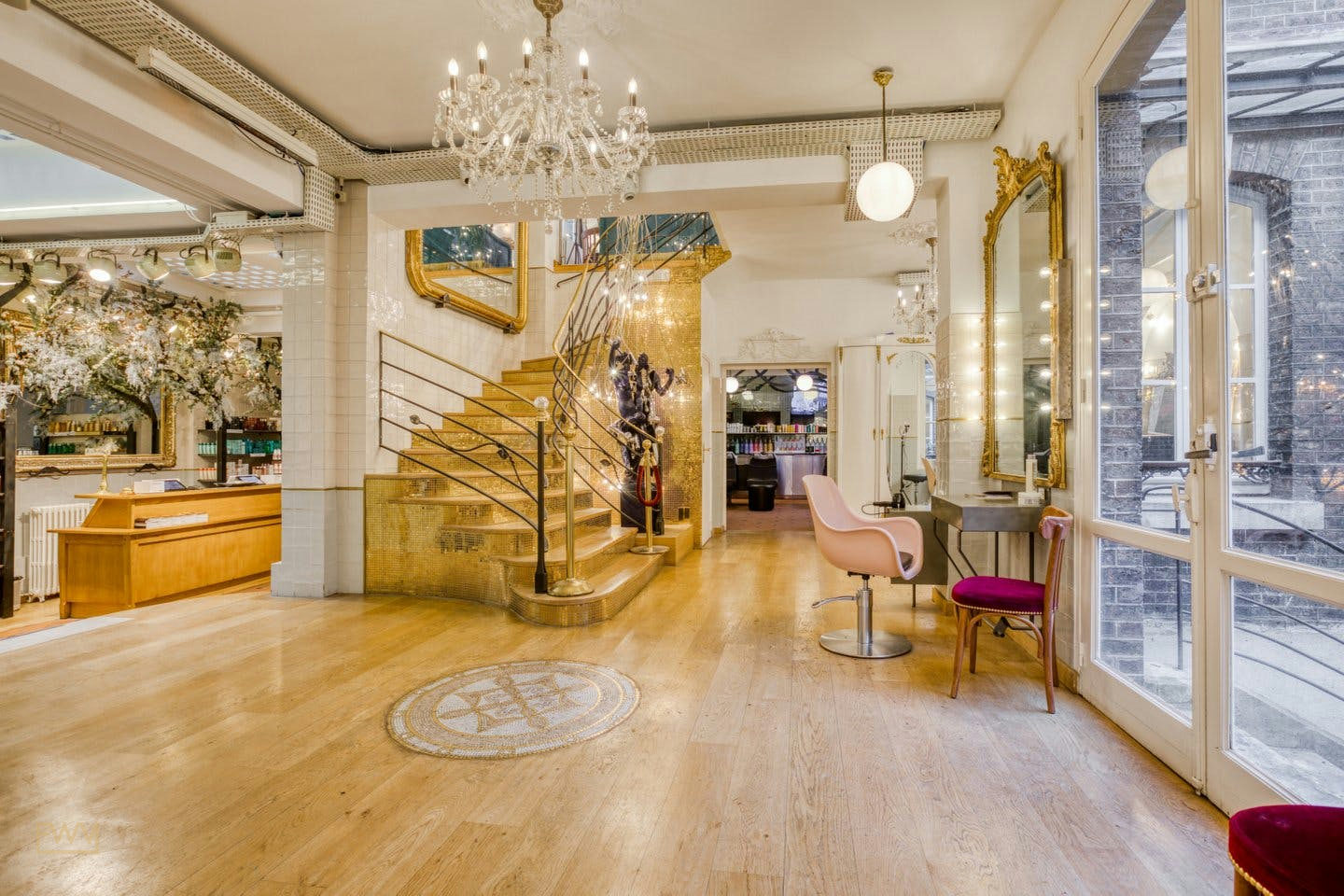
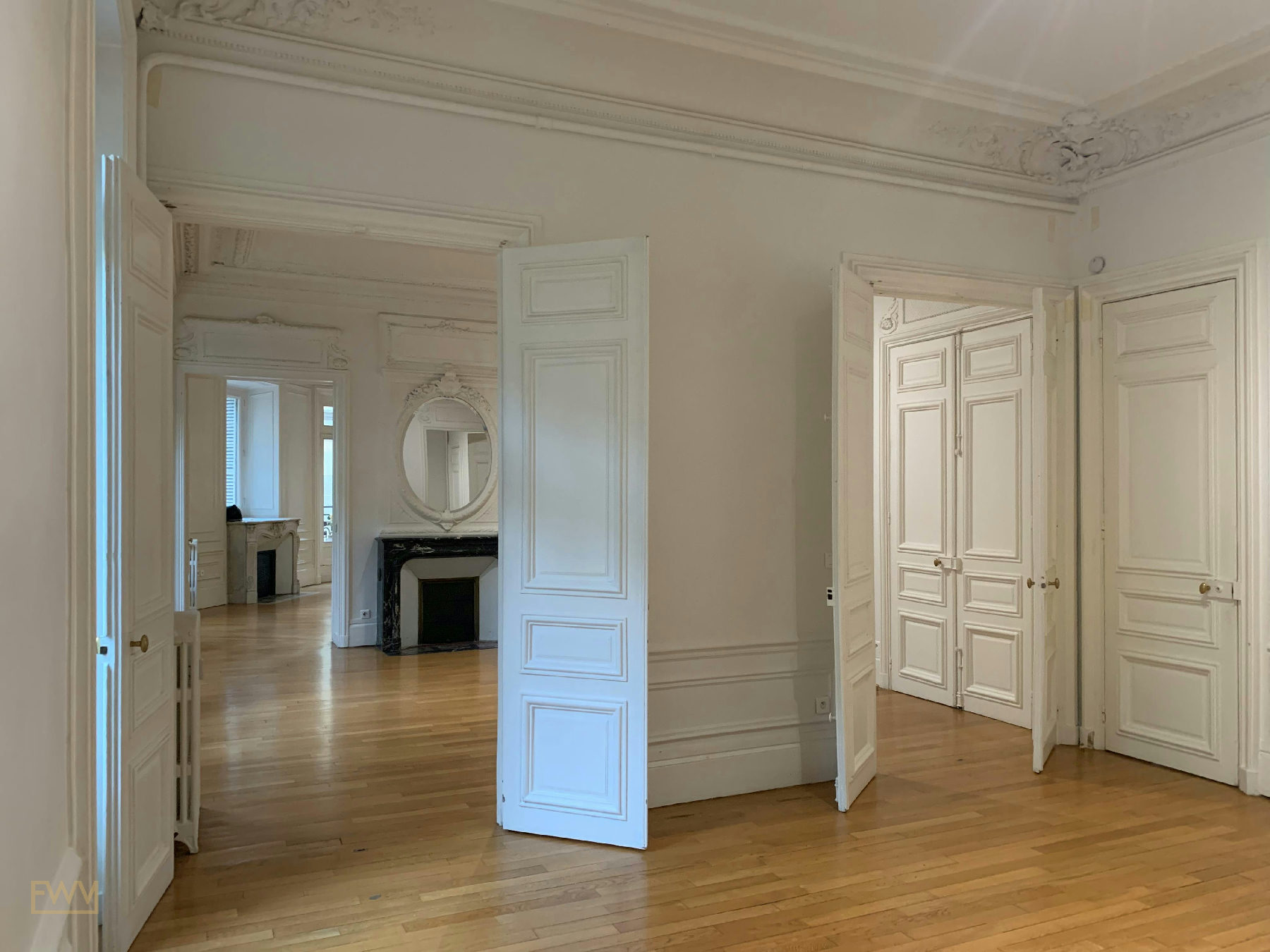
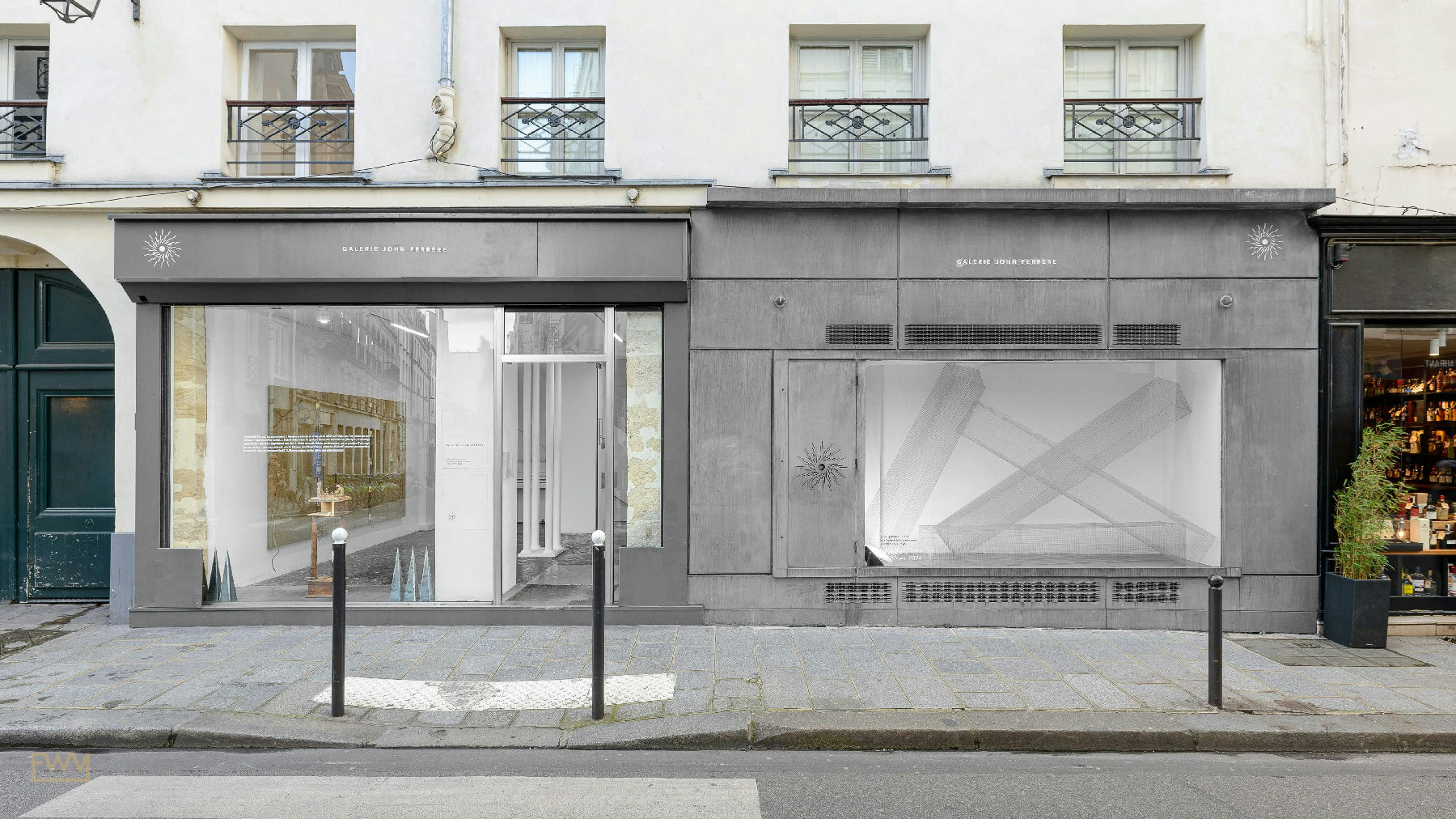
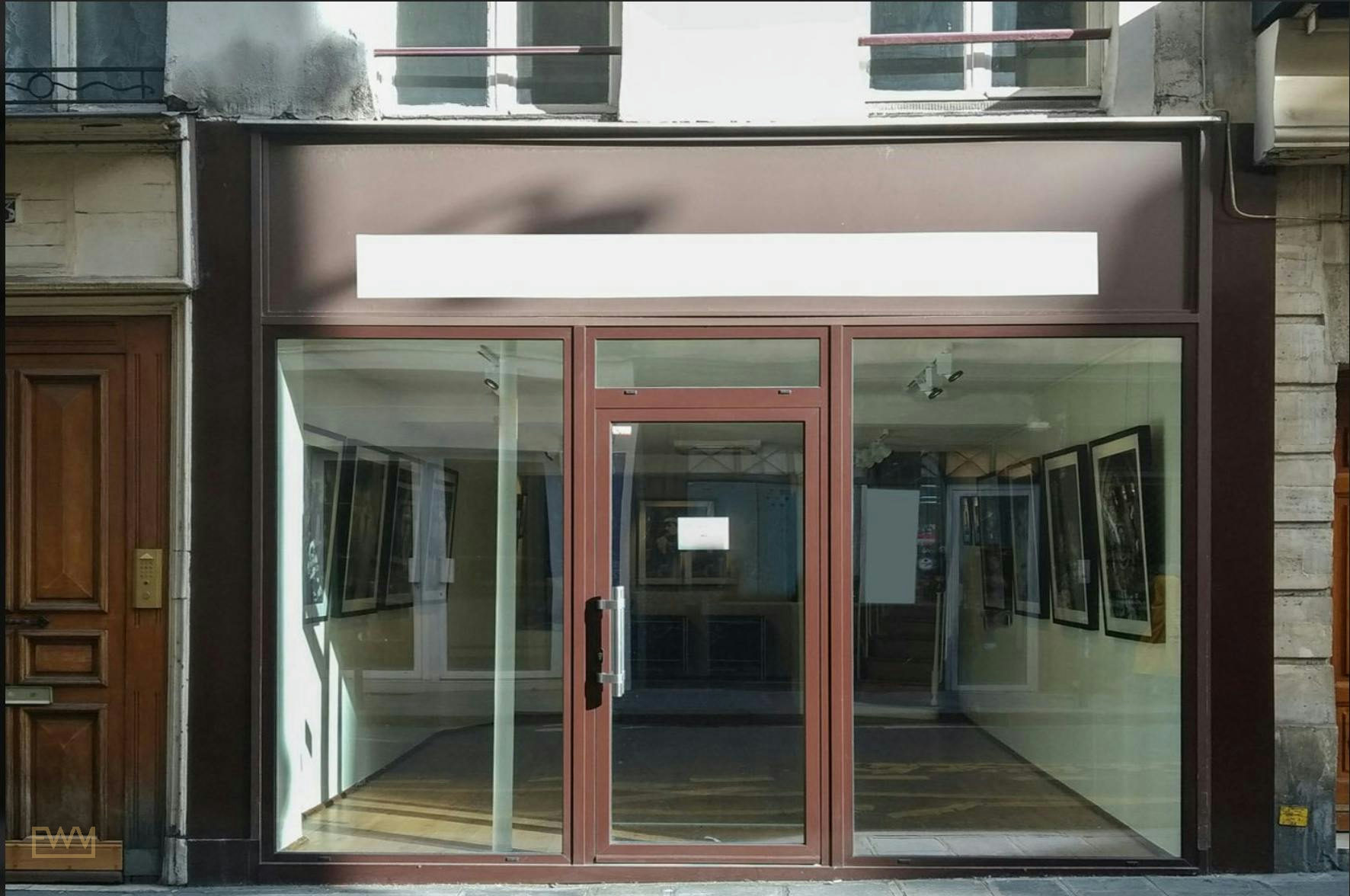
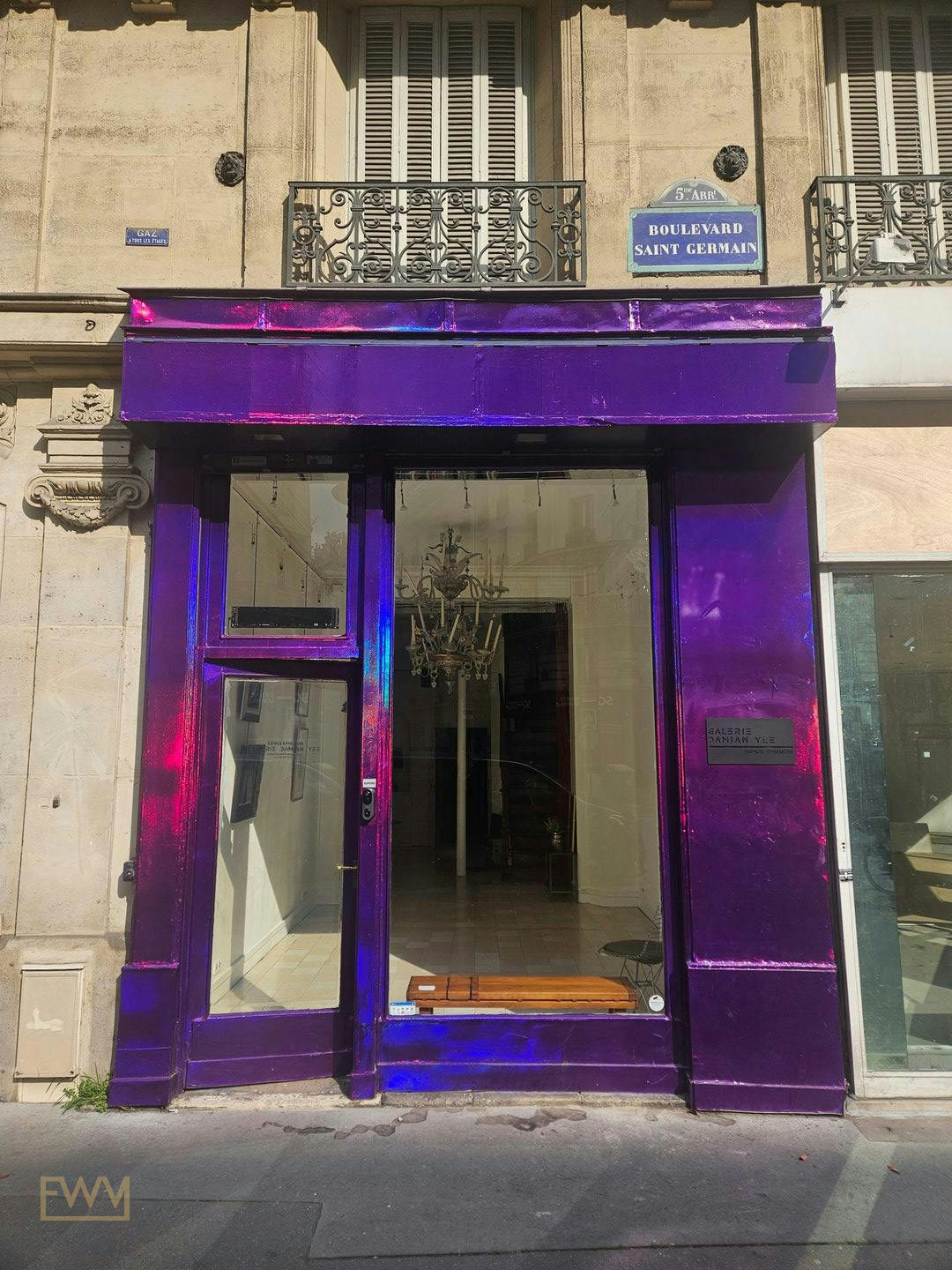
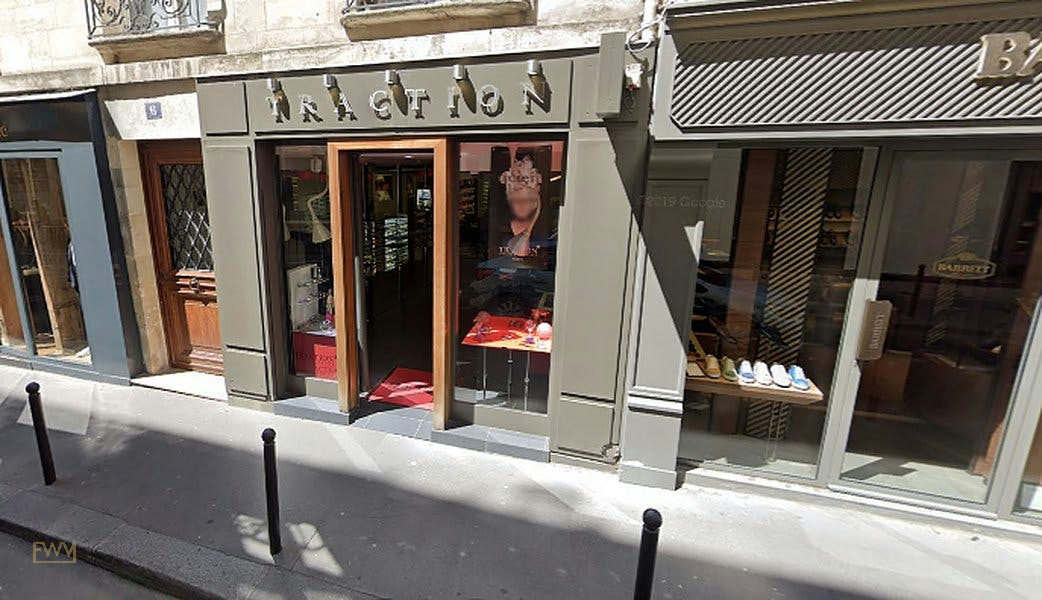
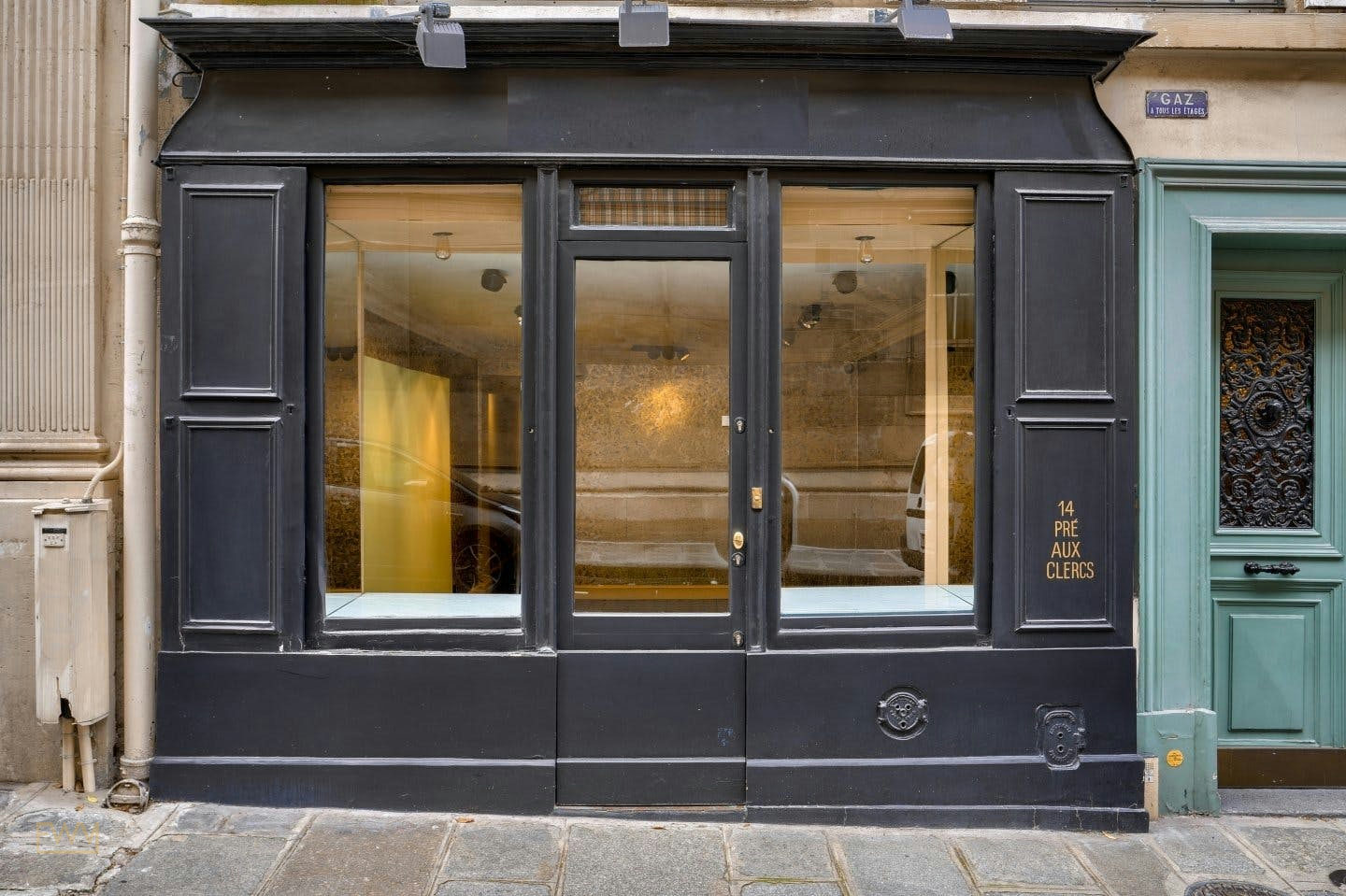
Classic boutique storefronts in the 6th arrondissement typically range from small intimate spaces of around 20 to 50 square metres up to mid-size premises of 80 to 150 square metres. These spaces feature the stone facades, arched windows, and Haussmann-era frontages that define the aesthetic of Saint-Germain retail. For fashion brands, these spaces offer immediate visual credibility and strong street-level visibility. Many feature original parquet flooring, exposed stone walls, and generous natural light, all features that reduce the build investment needed to create a compelling branded environment.
Gallery Spaces and Art Gallery Formats
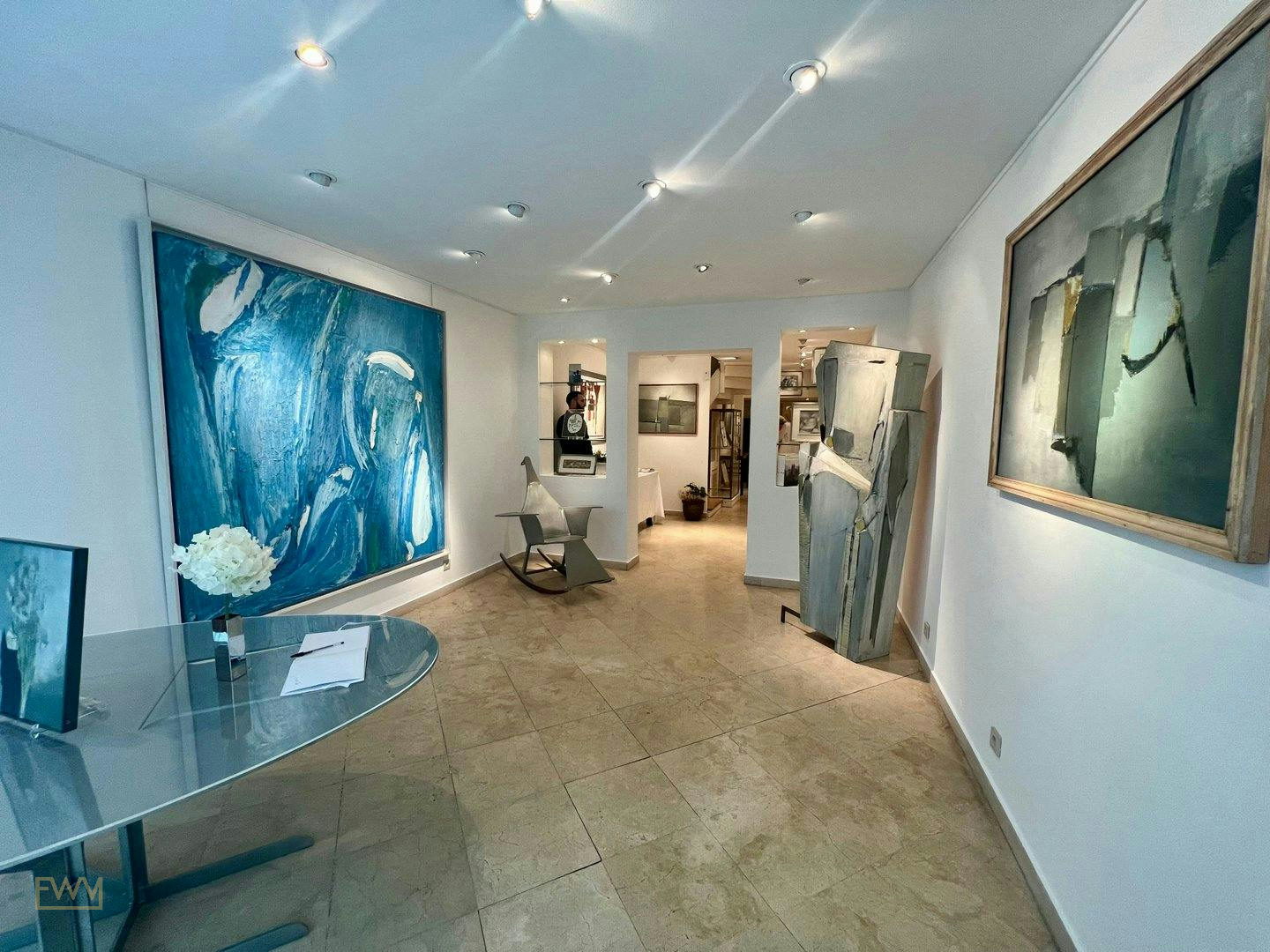
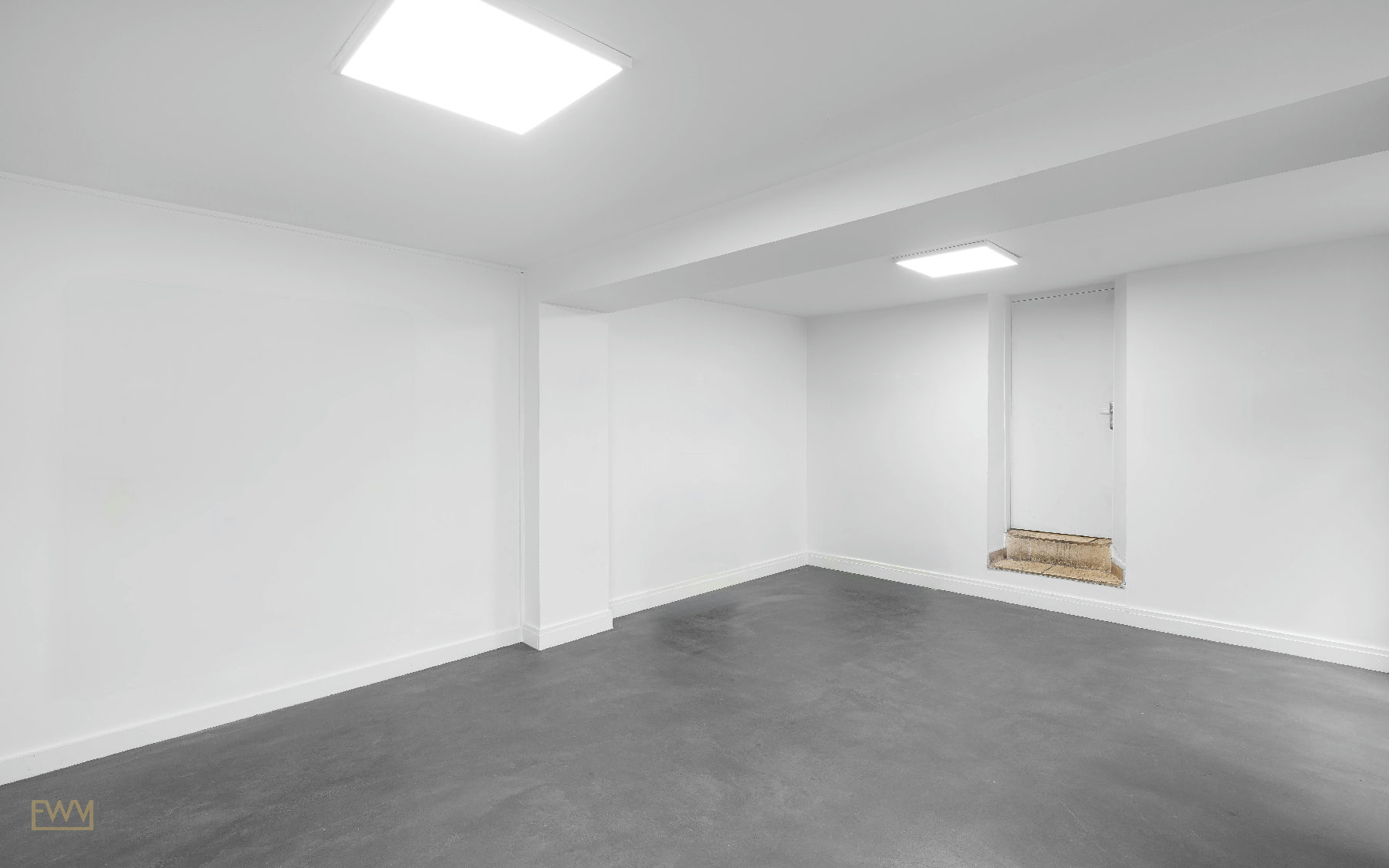
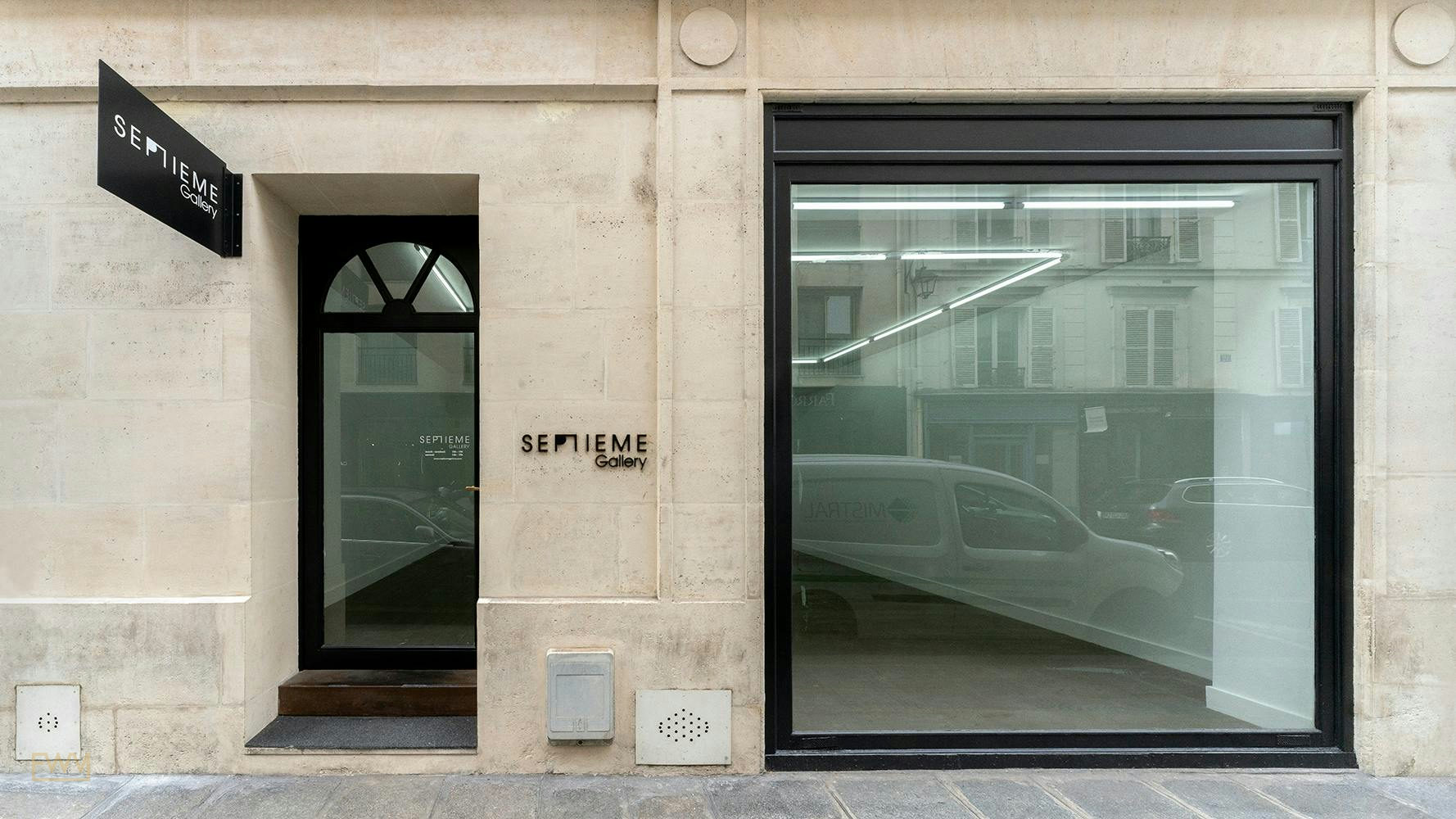
Gallery formats are among the most sought-after space types in the 6th arrondissement for brands seeking a non-commercial, experience-led retail environment. These spaces typically feature polished concrete or raw concrete floors, track lighting or spotlights mounted on high ceilings, steel pillars, and white-walled interiors designed to allow the merchandise or installation to command full attention. Brands in the luxury, contemporary art, and designer fashion segments frequently use gallery spaces for launch events, press showings, and pop-up stores that blur the boundary between retail and cultural experience.
Gallery spaces in the 6th arrondissement often sit on Rue de Seine, Rue Mazarine, and the cross streets near the École des Beaux-Arts. Many of these venues are available for short-term rental during periods when the resident gallery is between exhibitions, making them accessible for Fashion Week activations, seasonal launches, and press events.
Fashion Showrooms and Trade Spaces
Fashion showrooms in Paris 6ème serve a different commercial function from direct-to-consumer retail. These spaces host wholesale buyers, press, and stylists during the fashion calendar, particularly during Paris Fashion Week in March and October. A fashion showroom typically requires a clean, neutral interior with good hanging and display infrastructure, reliable internet connectivity, reception or meeting space, and easy access for deliveries. The 6th arrondissement's proximity to key fashion press offices and the concentration of luxury brands in the adjacent 7th arrondissement makes it a practical location for showroom rentals during the fashion season.
Studio Photo and Multi-Use Creative Spaces
Studio photo spaces, sometimes called studio photo venues, are available in and around the 6th arrondissement and offer brands a flexible format for content creation, product launches, and small-scale events. These spaces typically feature high ceilings, controllable lighting rigs, and open floor plans. They are increasingly used by beauty, fashion, and lifestyle brands for hybrid activations that combine press events, product demonstrations, and social media content creation in a single location.
| Space Type | Typical Surface Area | Best Use Case | Key Features |
|---|---|---|---|
| Boutique Storefront | 20 to 150 sqm | Direct-to-consumer pop-up store | Street frontage, display windows, natural light |
| Gallery Space | 40 to 300 sqm | Brand experience, launch event, press show | High ceilings, track lighting, concrete floors |
| Fashion Showroom | 60 to 200 sqm | Trade buying, wholesale appointments | Hanging space, meeting area, neutral interior |
| Studio Photo Space | 50 to 250 sqm | Content creation, hybrid launch | Lighting rig, open plan, flexible layout |
| Converted Apartment | 40 to 120 sqm | Intimate brand experience, VIP event | Residential aesthetic, kitchen, multiple rooms |
TIP: When reviewing listings for retail space in the 6th arrondissement, check whether the total surface area (surface totale) includes storage, mezzanines, or back-of-house areas that may not contribute to your usable retail floor. The Loi Carrez measurement applies to sales but may also be referenced in rental listings as a transparency indicator for the usable area.
KEY TAKEAWAY: The 6th arrondissement offers the widest variety of branded retail space formats in Paris, from charming boutiques with heritage frontages to gallery formats with industrial detailing and converted apartments for intimate brand experiences. Matching the space type to your activation concept is as important as the address itself.
Once you have a clear sense of which space type fits your brief, the next challenge is understanding where exactly within the 6th arrondissement you should be searching and how that location decision affects both your costs and your audience.
Key Streets and Micro-Neighbourhoods Within the 6th Arrondissement
The 6th arrondissement is not a monolithic retail zone. It contains several distinct micro-neighbourhoods, each with different retail characters, foot traffic profiles, and rental dynamics. Understanding these differences is essential for matching your brand to the right street and the right passing clientele.
Quick answer: Within Paris 6ème, the most strategically distinct retail zones include the Saint-Germain-des-Prés core around Boulevard Saint-Germain, the gallery corridor along Rue de Seine and Rue Dauphine, the Saint-Sulpice square and its surrounding streets, the Cherche-Midi street running south toward Montparnasse, and the commercial Rue de Rennes. Each serves a different customer profile and activation objective.
Boulevard Saint-Germain and the Core District
Boulevard Saint-Germain forms the main artery of the 6th arrondissement retail zone. The stretch between Rue du Bac and the Odéon intersection hosts flagship boutiques, major fashion brands, and luxury accessories retailers. Foot traffic here is consistent and high throughout the day, with peaks during lunch hours and early evenings. Spaces directly on the boulevard command the highest rental rates in the arrondissement and are rarely available for very short-term pop-up rentals without specialist sourcing support.
Rue de Seine, Rue Dauphine, and the Gallery Corridor
Running north toward the Seine from Boulevard Saint-Germain, Rue de Seine and Rue Dauphine form the backbone of the 6th arrondissement's gallery district. These streets are characterised by independent art galleries, design boutiques, and artisan workshops. The clientele here skews toward collectors, architects, fashion editors, and culturally engaged tourists. Pop-up activations and temporary retail spaces in this corridor benefit from a uniquely curated audience that responds well to experiential and concept-driven retail formats. Rue des Canettes, branching off westward, offers more affordable rental options in a quieter but charming setting.
Saint-Sulpice and the Western 6th
Place Saint-Sulpice, anchored by the imposing Saint-Sulpice church and its famous fountain square, is surrounded by some of the most consistently high-end retail in Paris outside the Golden Triangle. Yves Saint Laurent, Christian Dior, and other major luxury houses have operated boutiques in the streets around Saint-Sulpice. The square itself is an iconic location for experiential brand activations during Fashion Week. The surrounding streets, including Rue Bonaparte and Rue du Vieux-Colombier, offer premium boutique spaces with significant visibility to fashion-conscious Parisians and international visitors.
Rue du Cherche-Midi and the Southern 6th
Rue du Cherche-Midi runs south from Boulevard Saint-Germain through a quieter, more residential section of the arrondissement. It is known for food brands and independent boutiques, and its slightly off-the-beaten-path character makes it appealing for brands seeking an insider Paris feel rather than maximum tourist visibility. Rental rates on Cherche-Midi tend to be more accessible than on the main boulevard, offering a practical option for brands that prioritise brand experience over raw foot traffic volume.
Rue de Rennes and the Northern Commercial Corridor
Rue de Rennes connects Saint-Germain-des-Prés station with Montparnasse and handles significant everyday foot traffic from commuters and general shoppers. The presence of Galeries Lafayette Rive Gauche and other mainstream retailers on this corridor means that the clientele profile is broader and more diverse than on the gallery streets. This makes Rue de Rennes well-suited for brands targeting a wider Parisian audience or seeking high-volume pop-up traffic during seasonal events.
| Street or Zone | Character | Primary Clientele | Best Suited For |
|---|---|---|---|
| Boulevard Saint-Germain | Flagship luxury corridor | High-spending locals and tourists | Premium brand flagships, luxury pop-ups |
| Rue de Seine / Rue Dauphine | Gallery and design district | Art collectors, fashion press, architects | Art-adjacent brands, editorial activations |
| Place Saint-Sulpice surrounds | High-end boutique zone | Luxury fashion clientele | Luxury launches, Fashion Week showrooms |
| Rue du Cherche-Midi | Residential with boutiques | Local Parisians, style-conscious visitors | Intimate brand experiences, concept stores |
| Rue de Rennes | Commercial high street | Broad Parisian shopper mix | Volume-driven pop-up stores, mass-market launches |
To compare these zones against other Paris neighbourhoods such as Le Marais, Pigalle, the Champs-Élysées, or the Golden Triangle area around Place Vendôme and Saint-Honoré, explore the Paris city hub on Fashion Week Venues and shortlist spaces that match your brief, budget, and calendar window.
KEY TAKEAWAY: The 6th arrondissement contains multiple distinct retail micro-environments. Brands should select their specific street or zone based on their target clientele, activation format, and desired brand associations, not simply on the prestige of the arrondissement as a whole.
With a clear view of the geography established, the next essential area of knowledge is how retail space rental in Paris actually works from a legal and commercial real estate perspective.
Commercial Real Estate and Legal Frameworks for Renting Retail Space in Paris
Renting commercial retail space in Paris operates under a legal framework that differs significantly from residential tenancy law and from commercial lease structures in the UK, US, or other major markets. Understanding the key mechanisms, from the standard commercial lease to the short-term alternatives used for pop-up stores and temporary retail activations, is essential before you sign anything.
Quick answer: Retail space rental in Paris is primarily governed by either a standard commercial lease (bail commercial), a short-term derogatory lease (bail dérogatoire), or an authorisation of temporary occupation (autorisation d'occupation temporaire). For pop-up stores, fashion showrooms, and short-term activations, the bail dérogatoire is the most commonly used instrument, allowing occupancy for up to 36 months without creating the long-term tenant protections of a full commercial lease.
The Bail Commercial: Standard Commercial Lease
The standard commercial lease in France, known as the bail commercial, is a long-term instrument typically covering a minimum period of nine years with break points every three years, hence its common name the 3-6-9 lease. This format is appropriate for brands establishing a permanent or long-term retail presence in Paris 6ème, but it carries significant obligations including property tax contributions, maintenance responsibilities, and leasehold right (droit au bail) costs when purchasing an existing business location. International brands entering Paris for the first time should be aware that leasehold rights in prime 6th arrondissement locations can represent a substantial upfront cost separate from the monthly rental figure.
The Bail Dérogatoire: Short-Term Derogatory Lease
The bail dérogatoire, also known as the convention d'occupation précaire or short-term commercial lease, is the primary legal instrument for pop-up stores, temporary retail activations, and fashion showroom rentals in Paris. Under French law, this type of agreement can be concluded for a maximum total duration of 36 months (three years) across consecutive agreements with the same tenant in the same space, after which the tenant automatically acquires the rights of a full commercial tenant unless they vacate. For Fashion Week activations and seasonal pop-up stores, terms typically run from a few days to a few months, well within this ceiling.
IMPORTANT: If a brand occupies a space under successive bail dérogatoire agreements that together exceed 36 months with the same landlord in the same location, French law may treat the arrangement as a full bail commercial, triggering the long-term tenant protections and obligations of that regime. Always verify your specific circumstances with a qualified French legal advisor before renewing any short-term lease arrangement.
Autorisation d'Occupation Temporaire (AOT)
For activations in publicly owned or semi-public spaces, such as certain heritage buildings, squares, or municipally managed premises, an autorisation d'occupation temporaire (AOT) may be required. This is a permit-based instrument rather than a lease and is commonly used for brand activations in iconic Paris locations. AOT applications involve specific documentation, lead times, and compliance requirements that vary by location, space type, and the governing body managing the property. Brands planning activations in high-profile locations near Place Vendôme, the Seine riverbanks, or heritage sites should factor AOT lead times into their planning timeline.
Permits, Local Regulations, and the Role of the Arrondissement
Retail permits and activation authorisations in Paris are managed at the municipal level, with specific requirements varying by arrondissement and by the nature of the activity. Signage permits, temporary structure authorisations, and food or beverage service permits each carry their own application processes and timelines. For brands unfamiliar with French local regulations, working with a specialist agency that understands the specific permit landscape of the 6th arrondissement is strongly recommended. The permit guidance tool on Fashion Week Venues provides a practical starting point for understanding what authorisations may apply to your activation type and timeline.
DID YOU KNOW: The Loi Carrez, the French law governing the measurement of usable floor area, applies primarily to property sales but is frequently referenced in commercial rental listings in Paris as a transparency measure. When reviewing listings for retail space in Paris 6ème, confirm whether the surface area quoted is the total surface area or the Loi Carrez measurement, as basement storage and areas below a certain ceiling height may or may not be included.
KEY TAKEAWAY: Renting retail space in the 6th arrondissement Paris requires understanding three distinct legal instruments: the long-term bail commercial for permanent retail, the bail dérogatoire for pop-up and temporary retail, and the AOT for publicly managed spaces. Each carries different cost implications, rights, and compliance obligations. Brands should not proceed without qualified French legal guidance.
Understanding the legal framework sets the foundation for the next critical question: how much does it actually cost to rent retail space in this part of Paris, and what budget should brands be planning for?
What Does Retail Space for Rent in the 6th Arrondissement Paris Actually Cost?
Rental pricing for commercial space in Paris 6ème is highly variable and depends on multiple factors including street location, surface area, space type, lease duration, specification level, and the time of year. Providing a single definitive figure without reference to a specific space and period would be misleading. However, it is possible to frame the cost landscape directionally based on the available market context.
Quick answer: Short-term pop-up and temporary retail space in the 6th arrondissement Paris varies widely based on size, location, and specification. A small boutique space on a secondary street may be available for short durations at rates significantly lower than a prime-frontage gallery space on a main boulevard. As a reference point, some listings on specialist platforms indicate weekly rates for compact spaces starting from a few hundred euros, while prime gallery and showroom spaces for Fashion Week periods command substantially higher figures. Always use a brand-specific budget tool for accurate planning.
Factors That Influence Rental Price
The key variables driving the price of retail space for rent in the 6th arrondissement include the specific street and frontage visibility, the total surface area and usable retail floor, the specification level of the interior finish (polished concrete, tiled flooring, track lighting, steel pillars, fitted storage), the duration of the rental period, the time of year and proximity to Fashion Week calendar dates, and whether the rental is structured as a simple licence agreement, a bail dérogatoire, or a full commercial lease. Spaces with premium finishes, high ceilings, feature lighting, and prominent window frontage on key streets attract higher rates and fill quickly during peak calendar periods.
Fashion Week Premium and Seasonal Demand
Paris Fashion Week in March (womenswear autumn/winter) and October (womenswear spring/summer) creates a significant spike in demand for both retail space and showroom rental across the 6th arrondissement and the adjacent 7th, 8th, and 1st arrondissements. During these periods, spaces that are available at standard monthly rates for most of the year may command daily or weekly rates that reflect their scarcity during the fashion calendar window. Brands planning Fashion Week activations should begin their space search at least three to four months in advance, and in many cases significantly earlier for premium properties in the Saint-Germain-des-Prés core.
Additional Costs to Factor Into Your Budget
Beyond the base rental figure, brands should budget for the following additional cost categories: property tax contributions or charges (if applicable under the agreement terms), utilities and services, insurance, any fit-out or production investment required to bring the space to your brand standard, furniture rental, staffing, point-of-sale technology, and permit or authorisation fees. For a realistic, brand-specific estimate, the budget estimation tool on Fashion Week Venues allows brands to input their specific requirements and receive a directional cost framework.
TIP: When comparing listing prices for retail space in Paris 6ème, confirm whether the quoted price is inclusive of charges (charges comprises), exclusive of tax, or exclusive of charges. A price of 3,300 euros per month referenced in a listing, for example, should be verified against the full schedule of charges, taxes, and additional costs before being treated as the total budget requirement.
KEY TAKEAWAY: Retail space rental costs in the 6th arrondissement Paris are highly variable and should never be evaluated on the headline rental figure alone. Total occupancy costs including charges, fit-out, staffing, permits, and operational expenses must be modelled before committing to a space.
With the cost landscape in context, the next section addresses how brands can approach the practical process of finding, comparing, and securing the right space in this market.
How to Find and Secure Retail Space for Rent in the 6th Arrondissement
The process of finding suitable retail space for rent in Paris 6ème differs from searching commercial real estate in many other cities because the market for short-term and pop-up retail is fragmented across specialist platforms, agency networks, direct landlord relationships, and traditional commercial real estate agents. Knowing where to look and how to approach the search is as important as knowing what you are looking for.
Quick answer: Brands searching for retail space in the 6th arrondissement Paris can use specialist pop-up and short-term retail platforms, commission-based property agents, or full-service agencies with direct landlord relationships and space marketplaces. Each route has different cost structures, lead times, and levels of service. Specialist platforms and full-service agencies typically offer better access to vetted short-term inventory than traditional commercial real estate agents.
Step-by-Step Process for Securing a Retail Space
| Step | Action | Notes |
|---|---|---|
| 1 | Define your brief | Confirm space type, surface area, dates, budget, and target neighbourhood |
| 2 | Search available inventory | Use a specialist marketplace or agency with Paris 6ème listings |
| 3 | Shortlist and compare spaces | Compare by location, size, features, price, and availability |
| 4 | Visit or virtually assess spaces | Use space visualisation tools where physical visits are not possible |
| 5 | Confirm legal framework | Verify lease type, duration rights, and compliance obligations |
| 6 | Obtain permit and compliance guidance | Check signage, temporary structure, and trading permits for your activation type |
| 7 | Negotiate and contract | Agree terms, payment schedule, and reinstatement obligations |
| 8 | Plan fit-out and production | Engage production team and confirm build timeline against opening date |
| 9 | Execute activation | Staff, stock, POS, and brand experience delivered in space |
| 10 | Review performance and vacate | Capture data, reinstate space, and evaluate against ROI targets |
Using a Specialist Marketplace Versus a Commission Broker
Traditional commercial real estate brokers in Paris can be effective for long-term lease searches but are less well-suited to short-term, pop-up, or temporary retail activations. Commission structures in traditional agency models are typically calibrated to transaction values that reflect year-long or multi-year leases, which makes them a poor fit for brands seeking spaces for days, weeks, or a few months. Specialist pop-up retail platforms and full-service agencies with curated marketplaces offer more relevant inventory, faster response times, and support structures designed around the realities of short-term retail.
The Role of a Full-Service Pop-Up Agency
A full-service pop-up agency with a direct Paris network brings more than just space listings. It brings landlord relationships, permit knowledge, production capability, and operational support that dramatically reduce the risk of a short-term activation in a foreign market. For international brands entering Paris for the first time, the combination of venue sourcing, concept direction, production, staffing, and compliance guidance under a single service umbrella is often more cost-effective than attempting to assemble these components independently in a city where market knowledge and local relationships are critical differentiators.
KEY TAKEAWAY: Finding retail space in Paris 6ème is faster and lower risk when done through a specialist marketplace or full-service agency with direct landlord relationships and operational experience in the neighbourhood, rather than through traditional commercial real estate channels designed for long-term leases.
Once a space is identified, the question shifts to how to make it perform at the highest level. The next section addresses the activation and operational elements that determine whether a retail space rental in the 6th arrondissement delivers meaningful returns.
How to Maximise Your Retail Activation in Paris 6ème
Securing the right space is the foundation, but the quality of your activation determines whether your investment in retail space rental in the 6th arrondissement Paris generates genuine brand value and commercial return. The brands that perform best in this market are those that invest in concept development, space design, customer experience, and operational execution with equal seriousness.
Quick answer: Maximising a retail activation in Paris 6ème requires aligning the space design with your brand identity, training and deploying the right retail staff, integrating data capture and payment systems from day one, leveraging the neighbourhood's cultural and social media visibility, and building a clear measurement framework for ROI before you open the doors.
Concept Direction and Branded Store Design
In a neighbourhood as visually sophisticated as Saint-Germain-des-Prés, an underdeveloped interior concept is a missed opportunity. The design of your pop-up store or showroom must communicate your brand identity to a clientele that evaluates aesthetic coherence instinctively. This means investing in branded store design that extends from the window display through to every surface, fixture, and detail inside the space. In gallery formats, the contrast between the neutral space and your branded elements can be extremely powerful. In boutique storefronts, layering your brand identity onto the existing character of the space, rather than erasing it, typically produces stronger results.
Space visualisation tools that allow you to model your concept against real space dimensions and features before committing to a production budget are genuinely valuable at this stage. The Imagine tool on Fashion Week Venues allows brands to explore how a concept will look and feel in a specific type of space before production begins.
Retail Staffing and Customer Experience
The quality of the customer experience in a pop-up store in Saint-Germain-des-Prés is directly shaped by your retail staff. Parisian clientele, and particularly the international fashion community that frequents this neighbourhood during Fashion Week, expect knowledgeable, genuinely engaging brand ambassadors rather than passive sales staff. Deploying multilingual staff with real brand expertise and a clear understanding of your activation objectives is essential. The retail staffing service on Fashion Week Venues connects brands with trained, brand-ready staff experienced in the Paris market.
POS, Payments, and Data Capture
Modern pop-up stores need reliable point-of-sale infrastructure and payment processing from day one. In the 6th arrondissement, where clientele may include international visitors with non-French payment methods, multi-currency and multi-method payment capability is not optional. Equally important is the data infrastructure to capture customer information, measure dwell time, and track conversion throughout the activation period. Building a robust data and analytics layer into your pop-up from the outset transforms a temporary retail activation from a brand visibility exercise into a measurable commercial and intelligence-gathering investment.
Influencer Marketing and Social Media Amplification
The 6th arrondissement is one of the most photographed retail neighbourhoods in Paris and its backdrops, from the Seine to the church squares to the cobbled side streets, provide natural visual assets for social media content. Brands that build influencer engagement into their activation strategy before, during, and after the pop-up extend the reach of their investment far beyond the physical space. Identifying Paris-based influencers and international fashion editors who frequent the neighbourhood and inviting them to specific moments within your activation timeline is a proven amplification strategy for this market.
DID YOU KNOW: Saint-Germain-des-Prés is consistently among the top five most geotagged retail neighbourhoods in Paris on Instagram and TikTok, reflecting its enduring status as a content destination for fashion, lifestyle, and travel creators worldwide.
KEY TAKEAWAY: A retail space in Paris 6ème is only as valuable as the activation it contains. Brands that invest comparably in concept design, staffing, data infrastructure, and amplification alongside the rental cost consistently outperform those that treat the space itself as the primary investment.
For brands unfamiliar with the Paris market, partnering with a specialist agency that covers all these activation layers simultaneously is the most reliable route to a strong result. The next section explains precisely how Fashion Week Venues supports brands at every stage of this process.
How Fashion Week Venues Helps Brands Find and Activate Retail Space in Paris
Fashion Week Venues is a full-service pop-up shop agency and space marketplace with Paris as its primary and anchor market. It exists specifically to help brands, creative directors, brand activation managers, event producers, and international teams navigate the complex process of finding, securing, designing, building, and operating temporary retail and event spaces in major fashion capitals.
Venue Sourcing and the Space Marketplace
At the core of what Fashion Week Venues offers is a curated venue sourcing service backed by a live space marketplace. Rather than navigating fragmented listing platforms or relying on commission brokers with limited short-term inventory, brands can use the Fashion Week Venues marketplace to browse vetted spaces by neighbourhood, space type, surface area, and availability. The marketplace covers spaces across the 6th arrondissement and the wider Paris market, as well as London, Milan, New York, Dubai, and Tokyo.
Concept Direction, Production, and Build
Fashion Week Venues provides end-to-end creative and production support, from initial concept development through to full fit-out and build. The concept direction service helps brands translate their identity into a spatial experience that performs in the specific context of a Paris activation. The production and build service covers the physical transformation of the space to brand specification, managing suppliers, timelines, and reinstatement obligations on behalf of the client.
Activation Management and Operational Services
Beyond the build, Fashion Week Venues offers activation management that covers the day-to-day running of a pop-up store or brand event from opening to close. This includes retail staffing, POS and payments infrastructure, influencer marketing coordination, and data and analytics capture. For international brands that cannot dedicate internal team resources to managing an on-the-ground Paris operation, the activation management service provides a capable and experienced local team.
Tools for Planning, Budgeting, and Compliance
Fashion Week Venues provides a suite of planning tools designed to help brand teams make informed decisions before committing to a space or budget. These include a budget calculator, an ROI calculator, a space comparison tool, a timeline planner, and a permit guidance tool. For brands at the early research stage, these tools provide a structured framework for scoping a realistic activation plan. For brands with a confirmed brief, they accelerate the path from initial interest to signed agreement.
Who Benefits Most From Fashion Week Venues
Fashion Week Venues is best suited to international brands entering the Paris market for the first time, brands with limited local networks seeking reliable space and production partnerships, fashion and luxury brands planning seasonal or Fashion Week activations, beauty and lifestyle brands seeking curated 6th arrondissement or Marais locations, and creative agencies managing brand activations on behalf of clients. Fashion Week Venues does not guarantee specific spaces, permit approvals, or commercial outcomes, but it provides the knowledge, relationships, and service infrastructure that meaningfully increase the probability of a successful activation.
To understand how other brands have used the Fashion Week Venues platform and agency services, explore the past activations and case studies section of the site.
KEY TAKEAWAY: Fashion Week Venues provides a single, integrated resource for brands seeking retail space, production, staffing, and activation management in Paris. For international brands in particular, the combination of a curated space marketplace and full-service agency support removes the most significant barriers to a successful Paris 6ème activation.
The 6th Arrondissement Versus Other Key Paris Retail Districts
While the 6th arrondissement is one of the most prestigious addresses for retail space in Paris, it is not the only market worth considering. Different Paris districts offer different combinations of foot traffic, clientele profile, rental economics, and brand associations. Understanding how the 6th compares helps brands make a more informed location decision.
Quick answer: The 6th arrondissement (Saint-Germain-des-Prés) competes most directly with Le Marais (3rd and 4th), the Golden Triangle (8th arrondissement near Avenue des Champs-Élysées, Place Vendôme, and Saint-Honoré), and Pigalle/Montmartre for different categories of brand activation. Each district has distinct strengths, and the right choice depends entirely on the brand's concept, target audience, and activation objectives.
Le Marais: Creative and Diverse
Le Marais, spanning parts of the 3rd and 4th arrondissements, is the most direct competitor to Saint-Germain-des-Prés for fashion pop-up stores, concept spaces, and art gallery activations. The Marais offers a wider variety of space types, including converted historic buildings, industrial lofts, and contemporary gallery formats. Its clientele is slightly younger and more diverse than the 6th, with a strong representation of the Paris fashion community, LGBTQ+ audiences, and design-conscious international visitors. Rental rates in the Marais can be more accessible than in prime 6th arrondissement locations, though premium spaces during Fashion Week command comparable figures.
The Golden Triangle and Champs-Élysées: Scale and Visibility
The 8th arrondissement corridor, anchored by Avenue des Champs-Élysées, Place Vendôme, Rue Saint-Honoré, and the streets connecting them (including Boulevard Malesherbes, Place de la Madeleine, Rue Paul Cézanne, Rue Washington, Rue de Marignan, and Rue de la Baume), represents the maximum visibility end of the Paris retail market. Galeries Lafayette, Printemps, and the flagship boutiques of global luxury houses are concentrated in this zone. Retail space in this area commands among the highest rental rates in Europe, and the brand associations are correspondingly high. For brands seeking maximum international reach and luxury positioning, this corridor is relevant but requires significantly larger budgets than the 6th arrondissement.
Pigalle and Montmartre: Emerging and Creative
Pigalle and Montmartre represent a younger, more experimental retail geography within Paris, attracting streetwear brands, creative studios, and concept-led activations. The clientele here is more local and creative-industry-focused, with lower tourist volume than the 6th or the Champs-Élysées. Rental rates are generally lower, making this zone attractive for brands with tighter budgets or those specifically targeting the Paris creative community. The trade-off is less luxury cachet and more limited reach to the high-spending international visitor segment.
Other Significant Addresses
Broader Paris retail listings frequently reference specific streets and addresses including Rue du Quatre Septembre, Rue Boissière, Rue de Picpus, Boulevard Haussmann (134 being a notable commercial address near the department stores), and Rue Paul Cézanne. These addresses span multiple arrondissements and serve different retail segments. For brands evaluating Paris holistically, the Fashion Week Venues locator tool and city hub provide a structured way to compare availability, neighbourhood character, and cost across all major Paris retail zones.
KEY TAKEAWAY: The choice between the 6th arrondissement and other Paris retail districts should be driven by brand concept alignment, target audience, budget, and activation format. Saint-Germain-des-Prés remains the strongest single address for fashion, luxury, and design brands seeking the combination of cultural prestige and commercially active foot traffic.
Paris Fashion Week and the Retail Space Calendar
Paris Fashion Week is the single most commercially significant recurring event in the Paris retail and event space calendar. Understanding how the fashion week calendar interacts with retail space availability and pricing in the 6th arrondissement is essential for any brand planning an activation in this market.
Quick answer: Paris Fashion Week operates twice annually, in March (womenswear autumn/winter) and October (womenswear spring/summer), with additional weeks in January (menswear and couture) and July (couture). Each of these periods drives significant demand for retail space, showrooms, and event venues across the 6th arrondissement and the wider Paris fashion district, with availability and pricing both significantly affected in the weeks immediately before and during each event.
Key Fashion Calendar Windows for Space Activation
The March and October women's fashion weeks are the peak demand periods for retail and showroom space across Paris. During these windows, spaces in the 6th arrondissement that are ordinarily available at standard short-term rates fill up months in advance, particularly gallery formats and boutique spaces in the Saint-Sulpice and Rue de Seine corridors. Brands that wait until six to eight weeks before Fashion Week to begin their space search typically find that the most desirable properties have already been reserved. A lead time of three to six months is strongly recommended for prime Fashion Week locations.
Beyond the women's Fashion Week calendar, the January couture week and the associated buying and press events create a secondary demand peak, particularly for showroom and presentation spaces. Brands in the accessories, jewellery, and high-end ready-to-wear segments should also consider activating during this window when competition for the same high-spending press and buyer audience is structurally lower than during womenswear week.
Off-Season Opportunities in Paris 6ème
It would be a mistake to conclude that retail space in the 6th arrondissement is only worth activating during Fashion Week windows. The neighbourhood has substantial year-round foot traffic, and brands that activate outside the peak fashion calendar benefit from more competitive rental rates, greater landlord flexibility, and a local Parisian audience that is less distracted by the volume of competing brand events that characterises Fashion Week periods. Summer and autumn activations, in particular, benefit from strong tourist foot traffic from the broader international market alongside the resident local clientele.
The timeline planning tool on Fashion Week Venues helps brands map their activation window against the Paris fashion and retail calendar, identify optimal lead times for their space search, and build a realistic pre-opening production schedule.
KEY TAKEAWAY: Paris Fashion Week creates both the biggest opportunity and the biggest competition for retail space in the 6th arrondissement. Brands that plan their space search three to six months ahead of their target Fashion Week window consistently secure better spaces at better terms than those who search reactively.
Common Myths About Renting Retail Space in the 6th Arrondissement Paris
MYTH: You need a French legal entity to rent retail space in Paris.
FACT: International brands without a French legal entity can and do rent short-term retail space in Paris regularly. Under a bail dérogatoire or licence agreement, the contracting structure can accommodate foreign companies with the appropriate guarantees and legal documentation. However, the specific requirements vary by landlord, space type, and duration, so it is essential to work with a French legal advisor and a specialist agency with experience managing international brand agreements in the Paris market.
MYTH: Paris Fashion Week is the only viable calendar window for a pop-up store activation in the 6th arrondissement.
FACT: While Paris Fashion Week generates peak demand and maximum press attention, the 6th arrondissement delivers strong foot traffic, high spending clientele, and excellent brand visibility year-round. Brands that activate outside the fashion week calendar often benefit from more competitive rental rates, greater landlord flexibility, and stronger conversion because the neighbourhood's local audience is not fragmented across dozens of competing brand events happening simultaneously.
MYTH: Commission brokers are the only way to find short-term retail space in Paris.
FACT: Specialist pop-up retail platforms and full-service agencies with curated space marketplaces provide access to a broader and more relevant inventory of short-term retail spaces in Paris than traditional commission-based commercial property brokers, whose business models are optimised for long-term lease transactions. For pop-up, temporary retail, and event space rental, specialist channels consistently offer faster response times, more relevant listings, and better operational support.
MYTH: Short-term retail leases in Paris are legally straightforward and do not require specialist guidance.
FACT: The bail dérogatoire and other short-term occupancy instruments in France carry specific legal conditions, duration limits, and compliance obligations that can have significant consequences if misunderstood or misapplied. The 36-month cumulative limit, the automatic conversion to a full commercial lease if this threshold is crossed, and the specific requirements around permit compliance and space reinstatement all represent material legal risks. Brands should always obtain advice from a qualified French legal professional before entering into any commercial space agreement in Paris, regardless of how simple the arrangement appears on its surface.
MYTH: All areas of the 6th arrondissement have the same retail character and audience.
FACT: As outlined throughout this guide, the 6th arrondissement contains several distinct retail micro-environments with meaningfully different customer profiles, foot traffic patterns, and rental economics. Boulevard Saint-Germain, Rue de Seine, Place Saint-Sulpice, Rue du Cherche-Midi, and Rue de Rennes each serve different brand objectives and attract different audiences. Treating the arrondissement as a uniform retail market leads to poor space selection decisions and underperforming activations.
Frequently Asked Questions
Why should a fashion brand open a pop-up store in Saint-Germain-des-Prés specifically?
Saint-Germain-des-Prés combines a culturally prestigious address with a genuinely high-spending, style-conscious audience that includes Parisian residents, international visitors, fashion press, and industry professionals. The neighbourhood's density of independent boutiques, galleries, and design institutions makes it a natural environment for fashion brands to communicate their values and identity through an immersive retail experience. Unlike purely tourist-driven zones, the 6th arrondissement retains its local Parisian credibility year-round, which means a pop-up here carries genuine cultural weight rather than simply commercial visibility. It is also one of the most documented and photographed retail neighbourhoods in Paris, extending the visual reach of any activation well beyond the physical space through social media and press coverage.
What is a bail dérogatoire and how does it apply to pop-up retail in Paris?
A bail dérogatoire is a short-term commercial lease instrument under French law that allows parties to agree on an occupancy period shorter than the standard nine-year commercial lease, without creating the full tenant protections that would otherwise apply. It is the primary legal mechanism used for pop-up stores, temporary retail activations, and short-term showroom rentals in Paris. The total duration of consecutive bail dérogatoire agreements between the same tenant and the same landlord in the same space cannot exceed 36 months without triggering the full commercial lease regime. Brands should always verify the specific terms of any short-term lease with a qualified French legal advisor.
How far in advance should a brand begin searching for retail space in the 6th arrondissement?
For Fashion Week activations in March or October, a minimum lead time of three to four months is strongly recommended, with six months being preferable for prime spaces in the Saint-Germain-des-Prés core, Saint-Sulpice area, or Rue de Seine gallery corridor. For off-season activations, lead times can be shorter depending on space availability and the complexity of the fit-out required. The Fashion Week Venues timeline planning tool helps brands map their specific activation window against realistic lead times for space search, permit applications, production planning, and operational setup.
Do I need a French company to rent retail space in Paris for a short-term activation?
Not necessarily, but the requirements vary by landlord, space type, and the structure of the agreement. Many short-term retail space agreements in Paris can accommodate international companies with appropriate financial guarantees and documentation. Working with a specialist agency that has established relationships with Paris landlords and understands the documentation requirements for international tenants significantly simplifies this process. Always seek qualified French legal advice on the specific requirements for your situation before signing any agreement.
What types of permits are typically required for a pop-up store in Paris 6ème?
Permit requirements for pop-up stores and temporary retail activations in the 6th arrondissement vary depending on the nature of the activity, the type of space, whether external signage or temporary structures are involved, and whether food, beverages, or public events are part of the activation. Common permit categories include commercial signage authorisations, temporary structure permits for external displays or installations, and trading licences for specific product categories. Requirements are managed at the municipal and arrondissement level and can vary significantly. The permit guidance tool on Fashion Week Venues provides a starting framework, and brands should verify all requirements with a qualified French legal professional.
What is the difference between a pop-up store, a fashion showroom, and a brand experience space in this context?
A pop-up store is a short-term direct-to-consumer retail space where products are sold directly to the public. A fashion showroom is a trade-facing space used for wholesale buying appointments, press presentations, and stylist visits during the fashion calendar. A brand experience space is an event-led format that may or may not involve direct retail sales but prioritises immersive consumer engagement, press events, or community building. Each format has different space requirements, staffing needs, permit implications, and commercial objectives, and choosing the right format for your brand objectives is as important as choosing the right location.
How is Loi Carrez relevant to renting retail space in the 6th arrondissement?
The Loi Carrez is a French law that governs the measurement of private usable floor area and applies primarily to property sales transactions. In commercial rental listings, it is sometimes referenced as a transparency indicator for usable floor area, as spaces with low ceiling sections, basement storage, or structural elements may have a total surface area that overstates the actual usable retail space. When reviewing listings for retail space in Paris 6ème, brands should confirm whether the quoted surface area is the total surface area or the Loi Carrez-equivalent usable area, as this difference can be material for fit-out planning and pricing comparisons.
What is the typical surface area range for retail spaces available for rent in Paris 6ème?
Retail spaces available for short-term and temporary rental in the 6th arrondissement range from compact boutique formats of around 20 to 40 square metres up to larger gallery or showroom formats of 200 to 300 square metres or more. The most commonly available spaces for pop-up store activations fall in the 40 to 120 square metre range, which suits most branded retail formats and keeps fit-out costs manageable. Larger spaces suitable for multi-brand showrooms, press events, or brand experience installations are less frequently available and require longer lead times to secure.
How does the 6th arrondissement compare to Le Marais for a fashion pop-up store?
The 6th arrondissement and Le Marais are the two most consistently sought-after districts for fashion pop-up stores in Paris, but they serve different brand positioning objectives. The 6th arrondissement (Saint-Germain-des-Prés) signals cultural refinement, luxury, and editorial credibility. Le Marais signals creativity, diversity, and contemporary edge. The clientele profiles differ meaningfully: the 6th skews toward high-spending international visitors and established luxury consumers, while the Marais attracts a younger, more creative, and more locally Parisian fashion audience. Brand teams should choose based on their specific target audience and brand positioning, not simply on neighbourhood prestige.
What are the most important features to look for when assessing a gallery space or boutique in the 6th arrondissement?
The most commercially relevant features to assess include the quality and controllability of lighting (track lighting and spotlights are preferable for retail display), the condition of the flooring (polished concrete, raw concrete, parquet, and tiled flooring each create different aesthetic contexts), ceiling height (taller ceilings increase display versatility and the sense of space), frontage quality and window display potential, natural light levels, storage and back-of-house provision, delivery access, and the quality of the electrical infrastructure for POS and technology systems. The overall structural condition and the reinstatement obligations at the end of the tenancy should also be confirmed in detail before signing any agreement.
Is it possible to co-activate a retail space in Paris with another brand to reduce costs?
Yes, co-activation or shared retail space models are increasingly common in Paris and offer brands a way to reduce per-brand occupancy costs while benefiting from the combined drawing power of complementary brand partnerships. Fashion Week Venues operates a twin concept specifically designed for co-activation scenarios where two compatible brands share a space, production costs, and operational resources. This model works best when the two brands serve adjacent but non-competing audiences and when the combined concept creates a stronger consumer proposition than either brand would achieve independently.
What should a brand include in its brief when approaching an agency for retail space in Paris 6ème?
A well-defined brief should include the target neighbourhood or specific streets within the 6th arrondissement, the required surface area range, the intended activation dates and duration, the space type required (boutique, gallery, showroom, studio), the budget range for rental and total occupancy costs, the brand concept and any specific spatial requirements such as ceiling height, flooring type, or lighting specification, the target customer profile, any specific permit or compliance requirements already identified, and the level of agency support needed across venue sourcing, production, staffing, and activation management. A more precise brief leads to faster and better-matched space proposals from any agency or platform.
Can I use Fashion Week Venues tools to plan my Paris 6ème activation without engaging the full agency service?
Yes. The Fashion Week Venues planning tools, including the budget calculator, ROI calculator, timeline planner, space comparison tool, and permit guidance tool, are available independently of the full agency service and are designed to help brand teams at any stage of their planning process. Brands that prefer to manage aspects of their activation independently can use these tools to build a structured framework before deciding how much agency support to engage. The tools are particularly useful during the research and scoping phase when teams need to establish realistic parameters for their Paris activation before committing to a space or budget.
What are the main risks of renting retail space in Paris without local specialist support?
The main risks include selecting a space that is legally or commercially misrepresented, entering into a lease agreement that inadvertently triggers long-term commercial tenant obligations under French law, underestimating the total occupancy cost by focusing on headline rental figures alone, failing to obtain the correct permits or authorisations in time for the activation, underestimating production lead times and fit-out complexity, and deploying retail staff who lack the language skills, brand knowledge, or customer experience capabilities needed for the Paris market. Each of these risks is significantly reduced by working with a specialist agency with direct Paris market experience, established landlord relationships, and operational infrastructure on the ground.
How do I evaluate the ROI of a pop-up store in the 6th arrondissement Paris?
Evaluating the ROI of a Paris pop-up store requires defining the objectives before the activation opens, not just measuring outcomes afterwards. Objectives may include direct sales revenue, data capture and customer acquisition, press coverage and editorial value, social media reach and content generation, wholesale buyer or stockist engagement, and brand awareness uplift among a new market audience. Each of these objectives requires different measurement instruments, from POS transaction data to media monitoring, social analytics, and buyer conversion tracking. The ROI calculator tool on Fashion Week Venues helps brands build a multi-metric return framework specific to their activation type and investment level before they commit to a space.
Conclusion: Taking the Next Step Toward Your Paris 6ème Retail Activation
Retail space for rent in the 6th arrondissement Paris represents one of the most commercially and culturally compelling short-term retail opportunities available to fashion, luxury, beauty, and design brands in Europe. The combination of Saint-Germain-des-Prés prestige, a genuinely high-spending and design-literate clientele, a diverse inventory of boutiques, gallery spaces, and showrooms, and the gravitational pull of the Paris fashion calendar makes Paris 6ème a market that rewards serious, well-planned brand activations with genuine returns in brand equity, sales, press coverage, and customer intelligence.
The complexity of the French commercial real estate landscape, the specific legal requirements around short-term leases and permits, and the competitive demand for the best spaces during Fashion Week all reinforce the value of specialist knowledge and established local relationships. Brands that invest in proper planning, engage the right partners, and execute with the same level of creative and operational rigour they apply to their own product will find Paris 6ème delivers on its reputation.
Whether you are planning a single-week Fashion Week showroom or a multi-month seasonal pop-up store, the process starts with a clear brief, a realistic budget, and a well-timed space search. To move from research to activation, start exploring available spaces on the Fashion Week Venues marketplace and build a focused brief for your target neighbourhood, space type, and calendar window.