Booking a pop up shop in the 11th arrondissement Paris requires understanding one of the city's most creatively charged districts, where industrial workshops meet independent bookshops, literary launch events share walls with fashion showrooms, and short-term retail activations draw serious foot traffic from both locals and international visitors. The 11th sits adjacent to the legendary Le Marais and Bastille quarters, giving brands access to a diverse, culturally engaged clientele without the premium rental costs of more tourist-saturated arrondissements. Whether you are a fashion label seeking a Paris Fashion Week showroom, a publisher planning a pop-up bookstore, or a creative brand staging an immersive scenography, this guide covers every practical dimension of renting, planning, and running a successful activation in Paris 11. Fashion Week Venues works with brands across all of these formats and can help you source the right space for your brief.
Why the 11th Arrondissement Is One of Paris's Most Valuable Pop-Up Destinations
Quick answer: The Paris 11th arrondissement offers a rare combination of authentic neighbourhood energy, creative foot traffic, industrial and loft-style spaces, and proximity to Le Marais and Bastille that makes it one of the most commercially and culturally productive locations for short-term retail, showrooms, gallery activations, and literary or artistic pop-up events in the city.
The 11th arrondissement is not a monument district. It does not compete with the Musée du Louvre, Notre-Dame Cathedral, the Arc de Triomphe, or the Eiffel Tower for tourist numbers. That is precisely its strength. The visitors and residents who move through the 11th are there because they choose to be: they are gallery-goers, independent retailers, creative professionals, fashion buyers, editors, and the kind of culturally literate urban audience that sustains brand activations, book launches, and niche retail concepts across the calendar year.
The arrondissement borders the 3rd and 4th, meaning brands with a presence in Paris 11 benefit from spill-over traffic from Le Marais, the Place des Vosges, the Picasso Museum, and the Centre Pompidou without paying Marais district rental premiums. Bastille sits at the western edge, providing another anchor point of foot traffic, especially during evenings and weekends when the restaurant and bar circuit draws thousands of visitors.
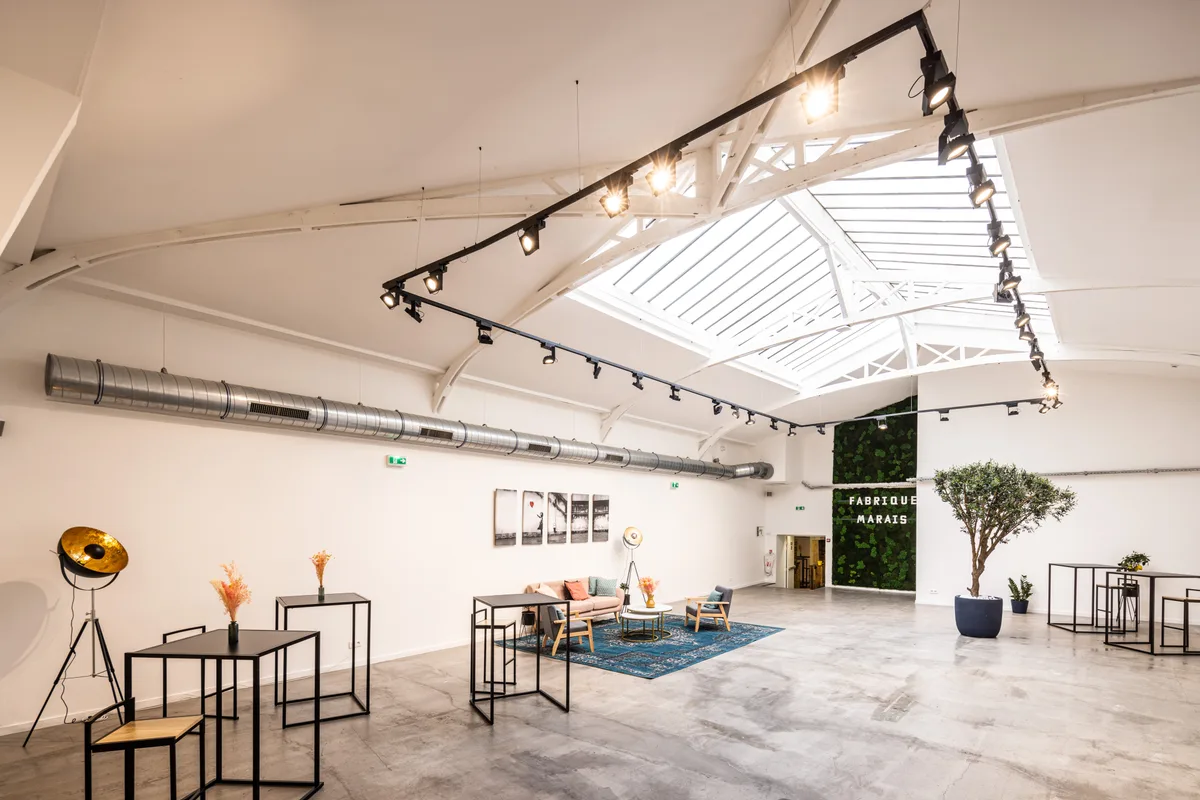
For fashion labels, the 11th provides old warehouses, lofts, and raw concrete-floored spaces that create the kind of unfinished, editorial backdrop that contemporary brand activations demand. For publishers, independent retailers, or cultural institutions, the 11th's network of artist-run spaces, micro-galleries, and hybrid venues makes it one of the few Paris arrondissements where a literary event, a gallery opening, and a private sale can all coexist on the same block on the same evening.
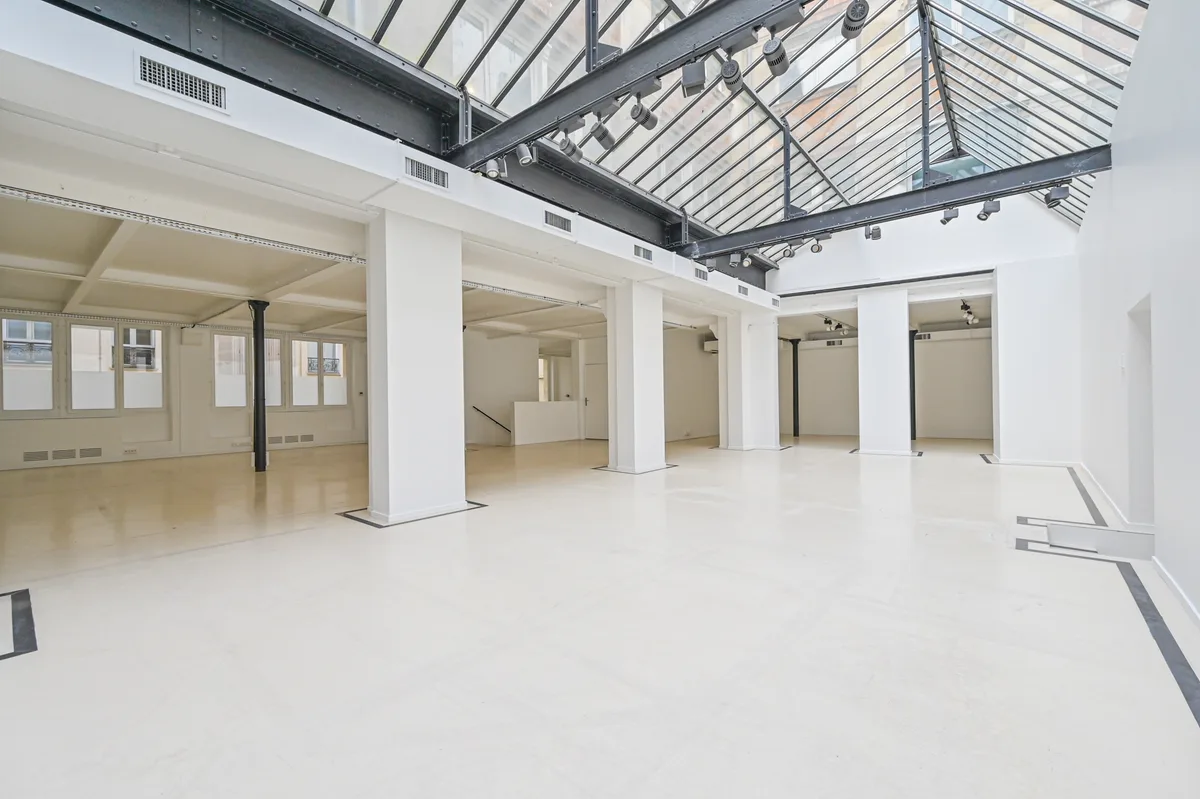
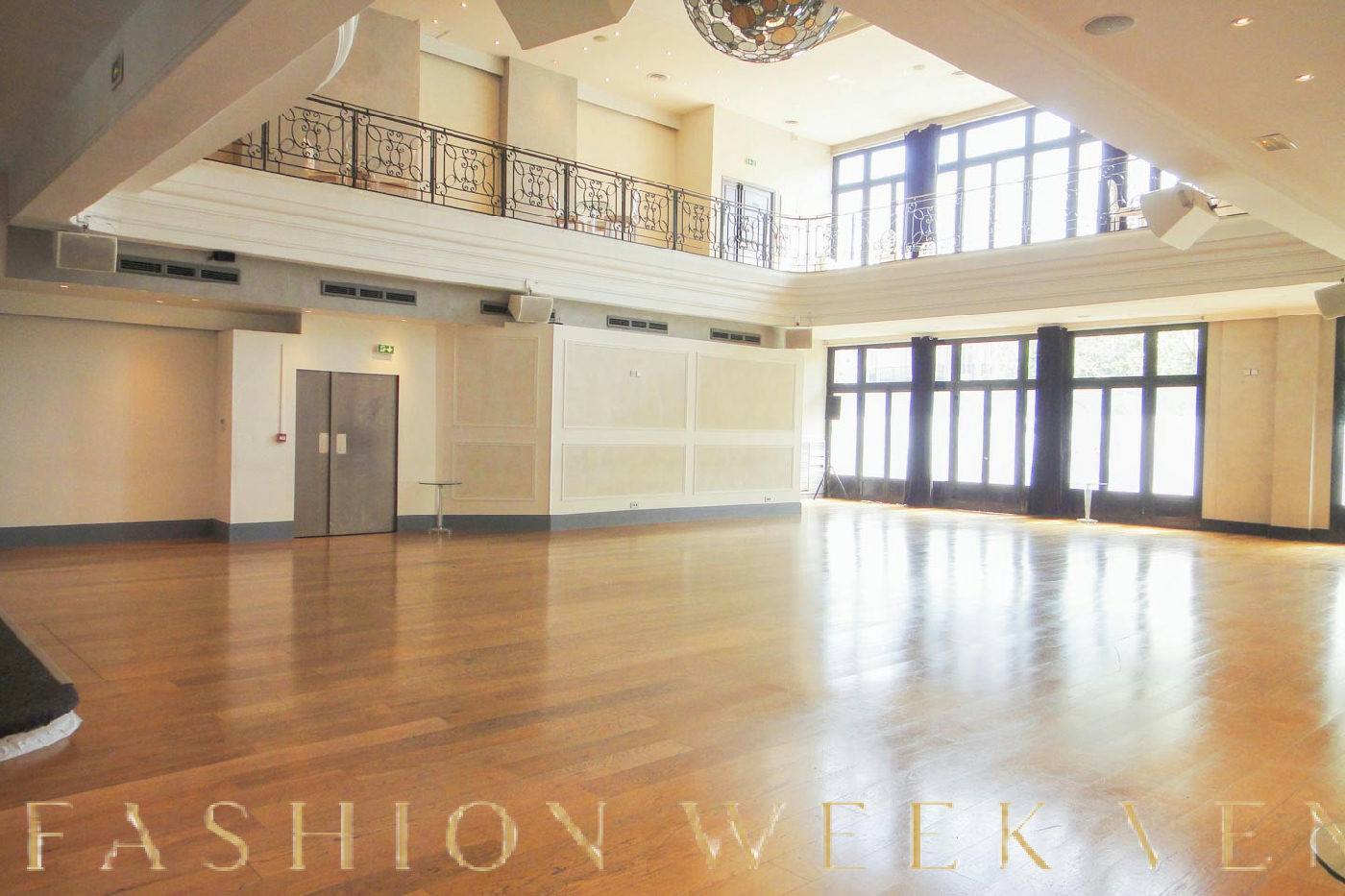
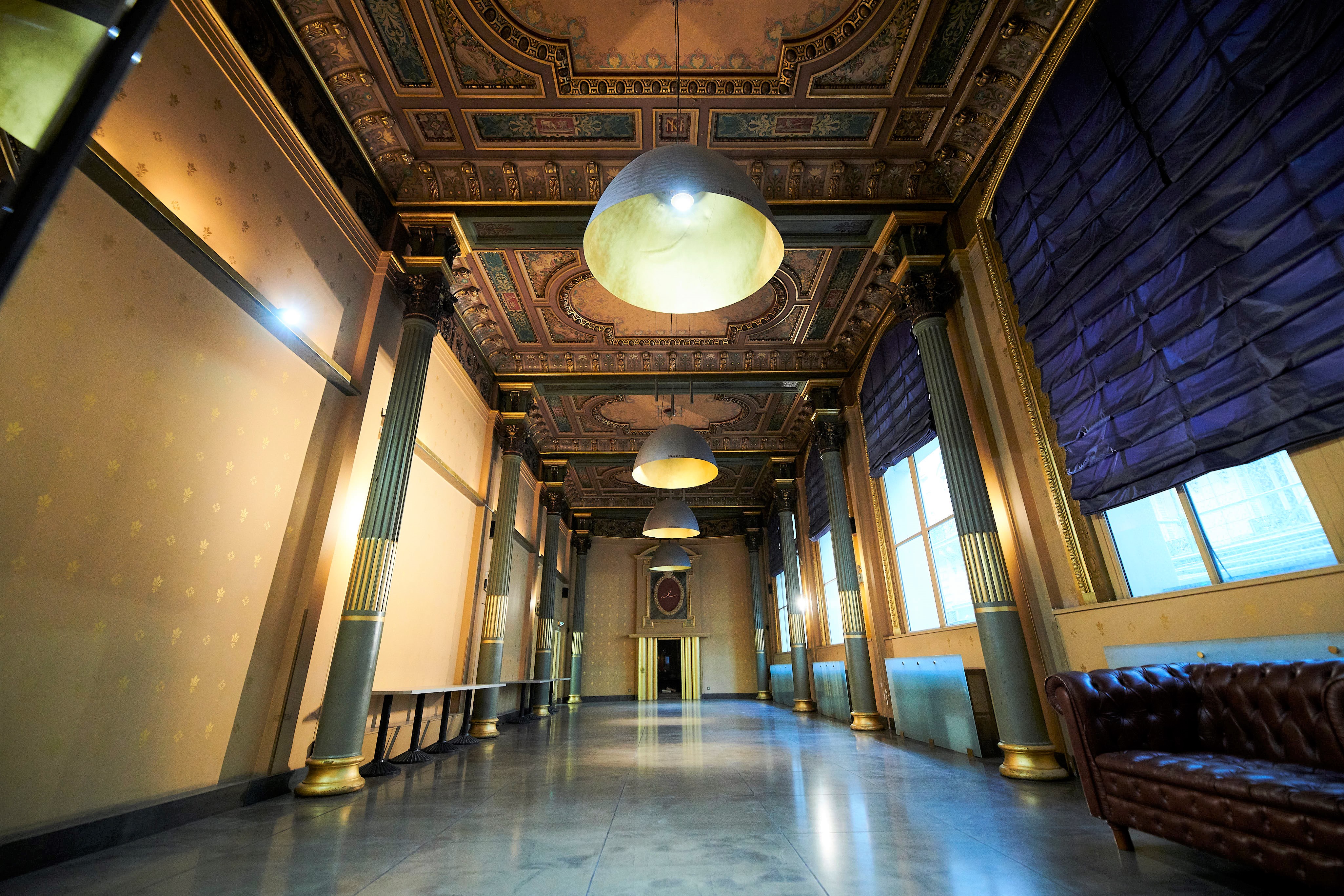
Spaces in the 11th range from the intimate and atmospheric to the architecturally substantial. Parquet floors, raw concrete floors, polished concrete floors, exposed steel pillars, visible ceiling beams, and large door entrances are characteristic features that allow brands to work with or against the raw aesthetic of the space. Ground floor backyards and courtyard access are also available in certain venues, enabling outdoor components to indoor activations.
DID YOU KNOW: The 11th arrondissement has one of the highest concentrations of independent creative businesses per square kilometre in Paris, making it a natural hub for brand activations targeting culturally engaged, design-aware, and fashion-literate audiences.
KEY TAKEAWAY: The 11th arrondissement combines Marais-adjacent cultural credibility, raw industrial space aesthetics, genuine neighbourhood foot traffic, and more accessible short-term rental conditions than the most premium Paris districts, making it an excellent choice for brands, publishers, and creatives at every scale.
Understanding what kinds of spaces are available in the 11th is the logical next step after establishing why the district works. The variety is greater than many brands assume.
Types of Pop-Up and Retail Spaces Available in Paris 11th Arrondissement
Quick answer: The 11th arrondissement offers industrial workshops, loft spaces, boutiques éphémères, art galleries, apartment-style venues, chic event spaces, and hybrid cultural venues, each suited to different brand formats, audience types, and activation goals.
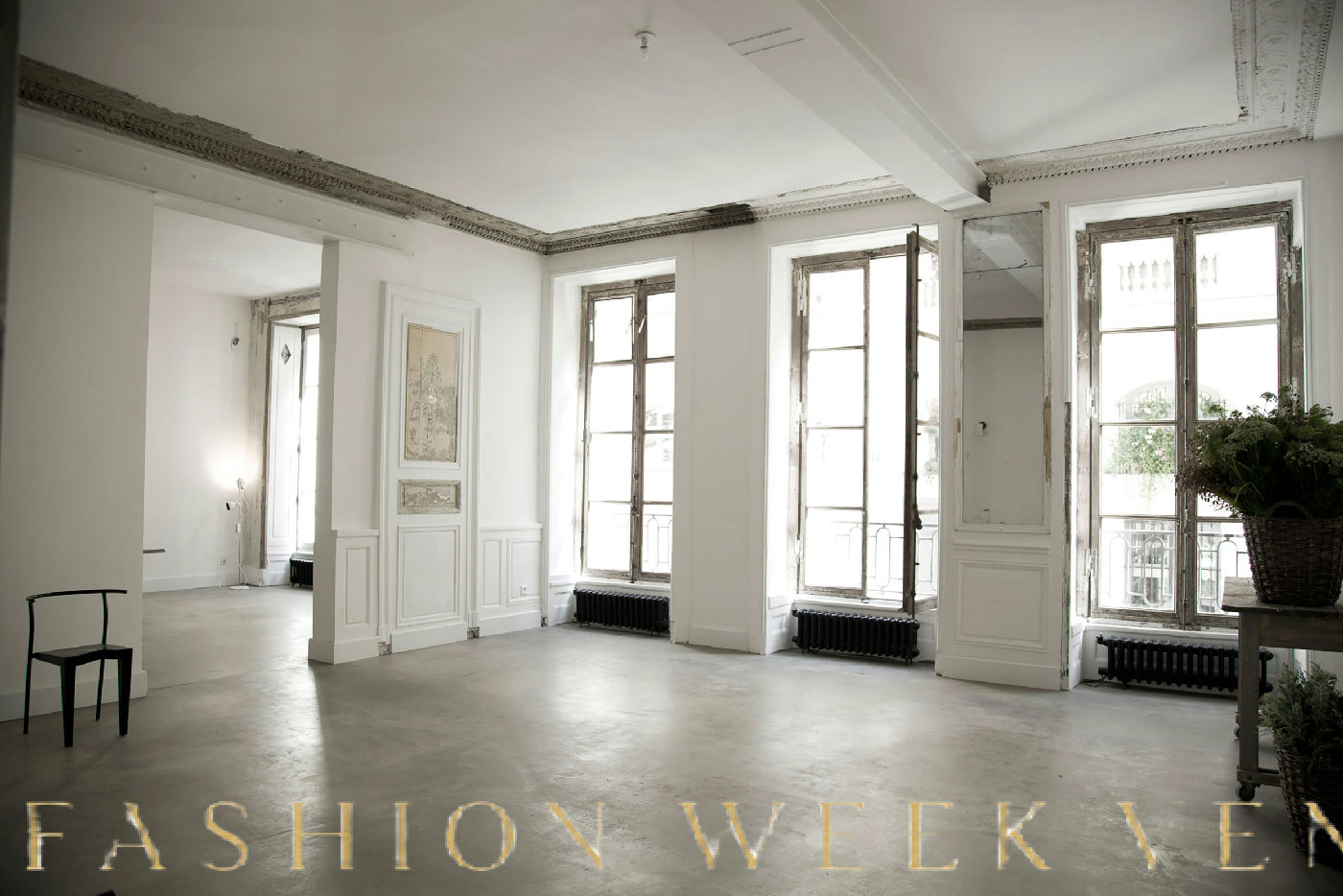
Paris's 11th is architecturally diverse. The district's 19th and early 20th-century building stock means that a single street can offer a classic Haussmannian ground-floor boutique with parquet floors and tall windows beside a former artisan workshop with raw concrete floors and steel pillars. This variety is one of the 11th's defining advantages for brands seeking short-term retail space.
Industrial Workshops and Loft Spaces
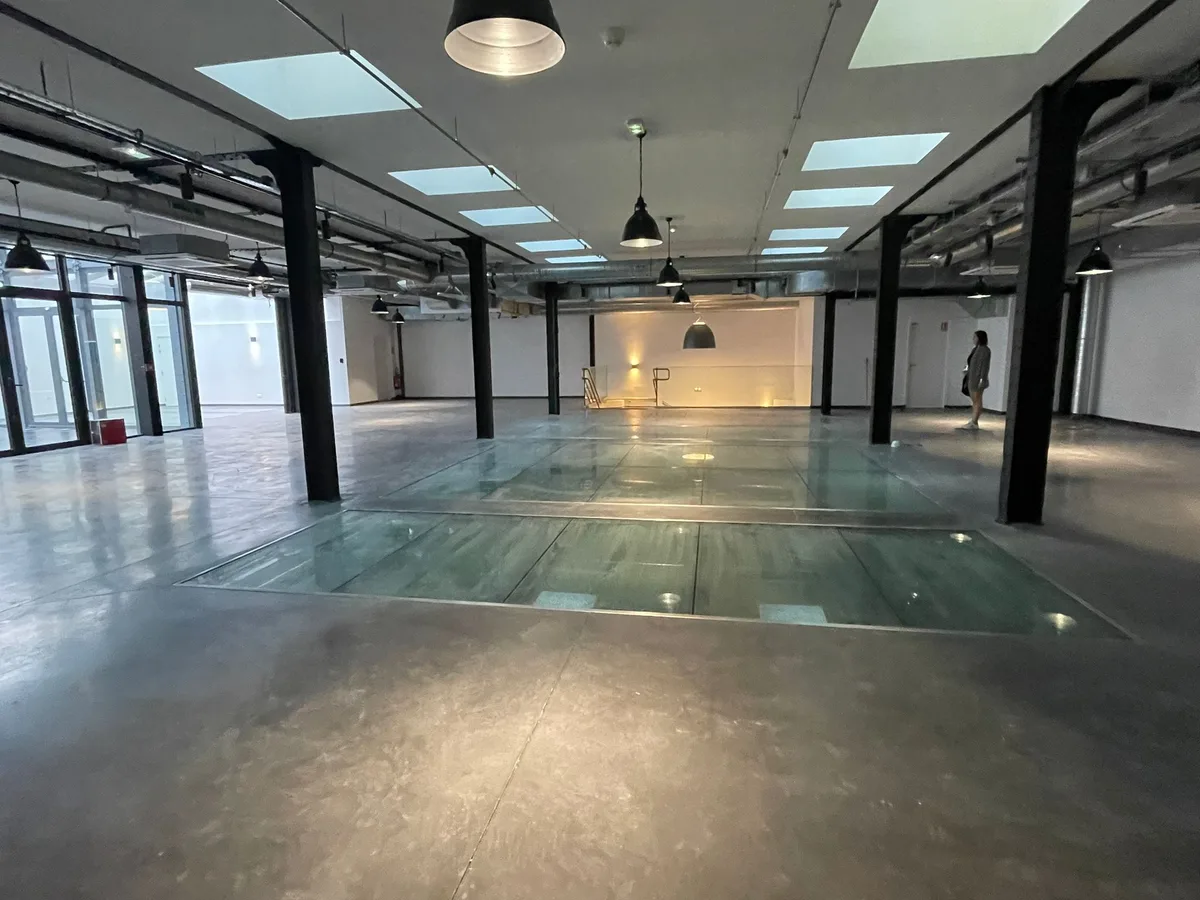
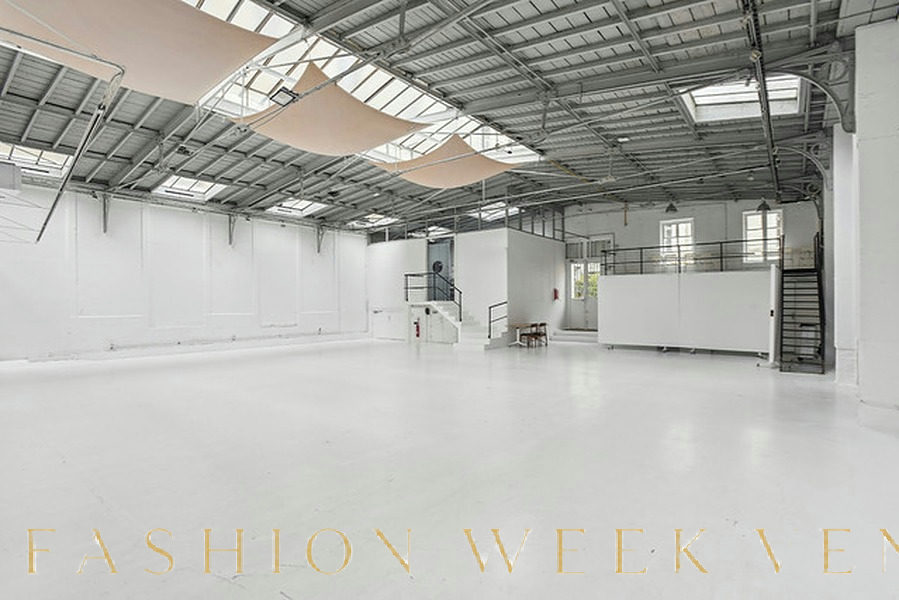
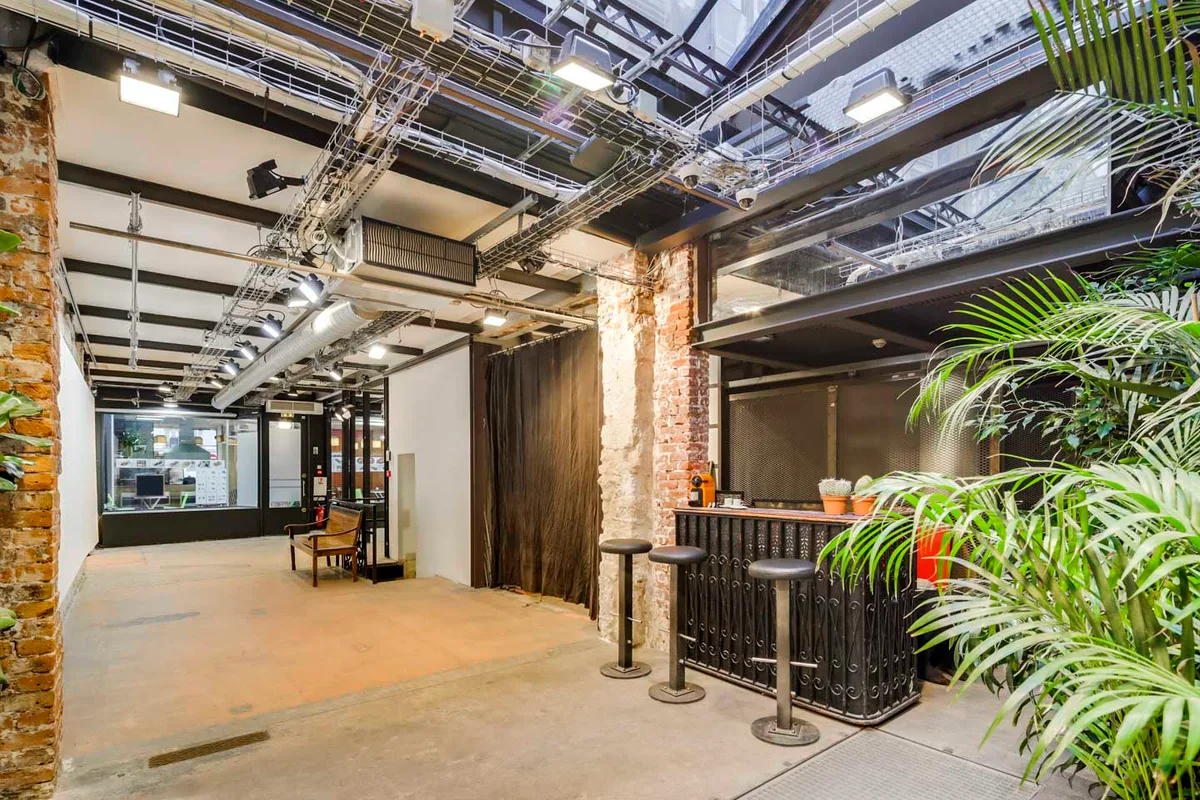
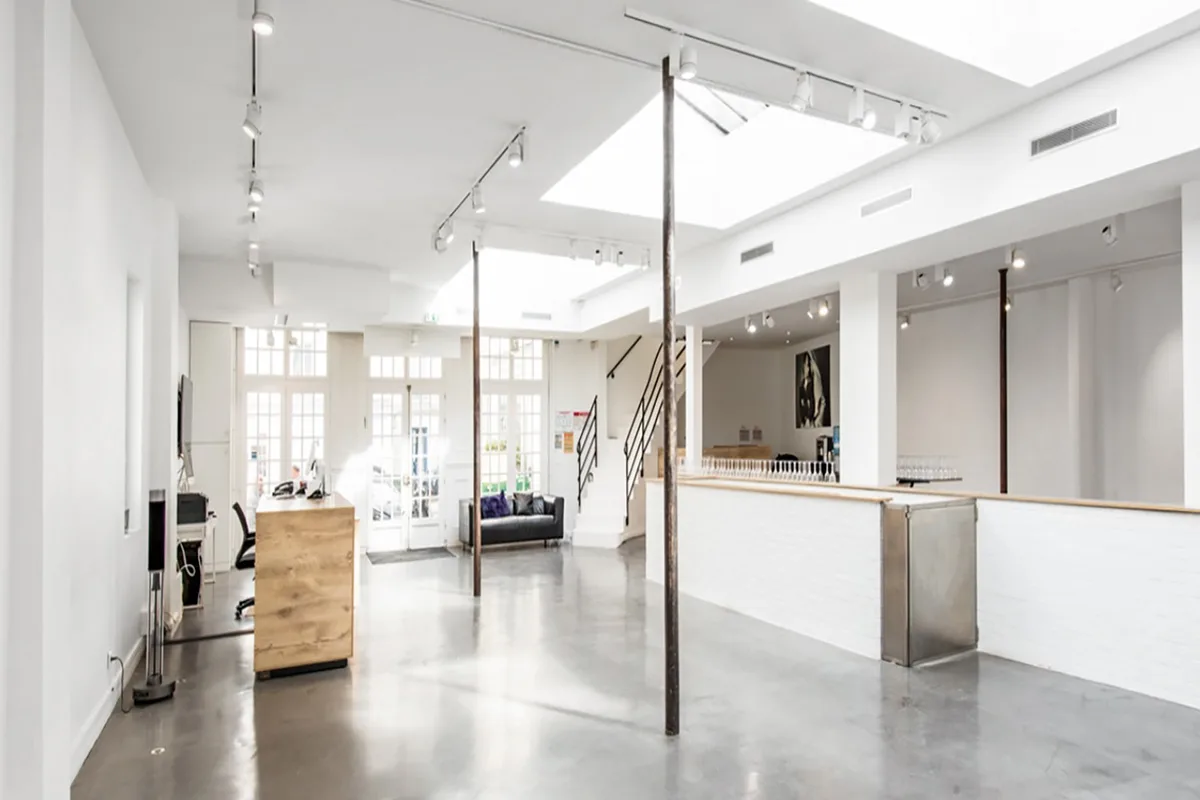
Old warehouses and converted workshops are among the most sought-after space types in Paris 11. These tend to feature raw concrete floors, exposed brickwork, visible ceiling tuyauterie (pipework), ceiling beams, and large door entrances suited to loading and installation. They are particularly popular for fashion showrooms, sample sales, brand activations with complex built scenographies, and large-scale art or photography exhibitions. Loft formats often include mezzanine levels, natural light from skylights or puits de lumière, and flexible open-plan layouts that allow brands to create entirely custom spatial narratives.
Boutiques Éphémères and Storefronts
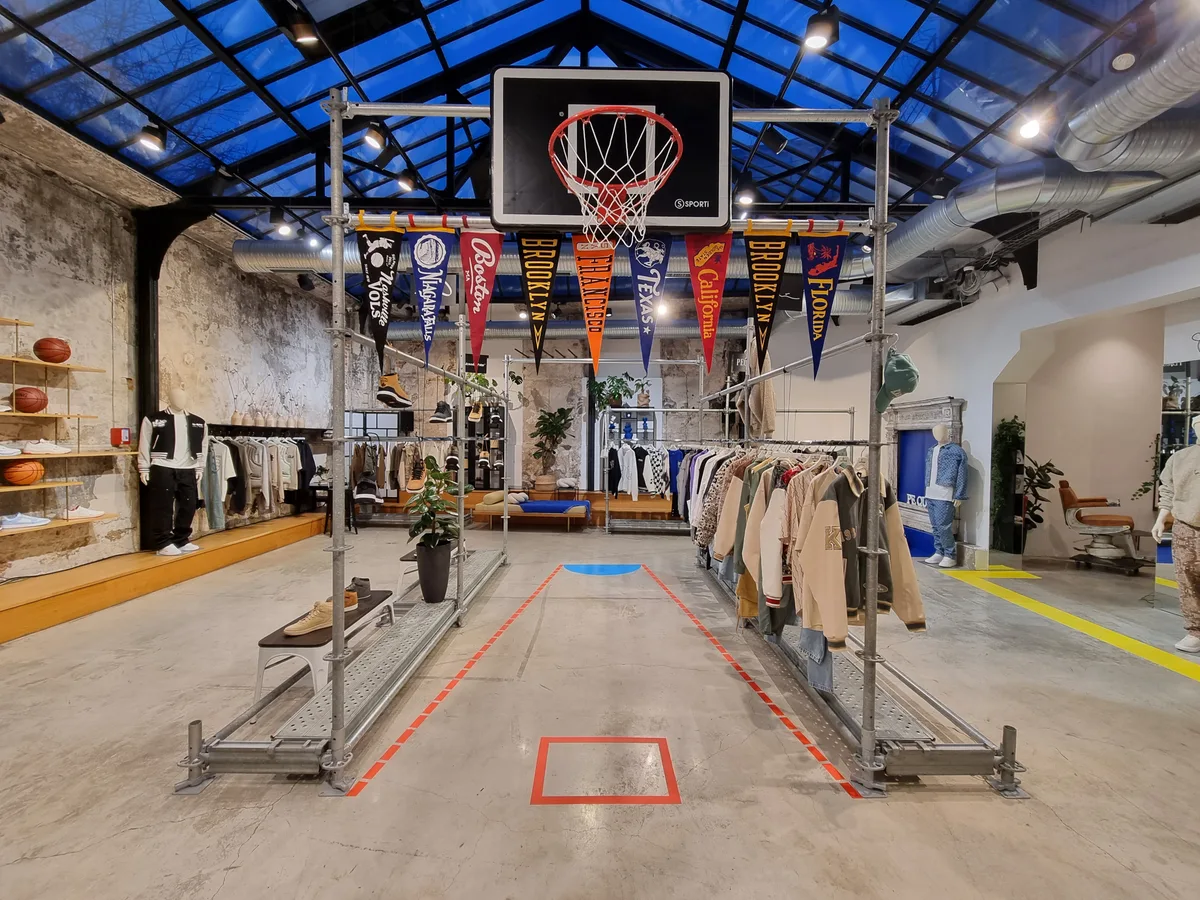
Street-level boutiques éphémères in the 11th offer direct pavement visibility, retail-ready configurations, and in many cases existing point-of-sale infrastructure. Some come with linear display walls of up to 16 metres, making them ideal for product-heavy launches, fashion collections, or multi-brand activations. These spaces are suited to trendy brands, independent retailers, and labels conducting private sales or limited-edition drops.
Art Galleries and Galeries d'Art
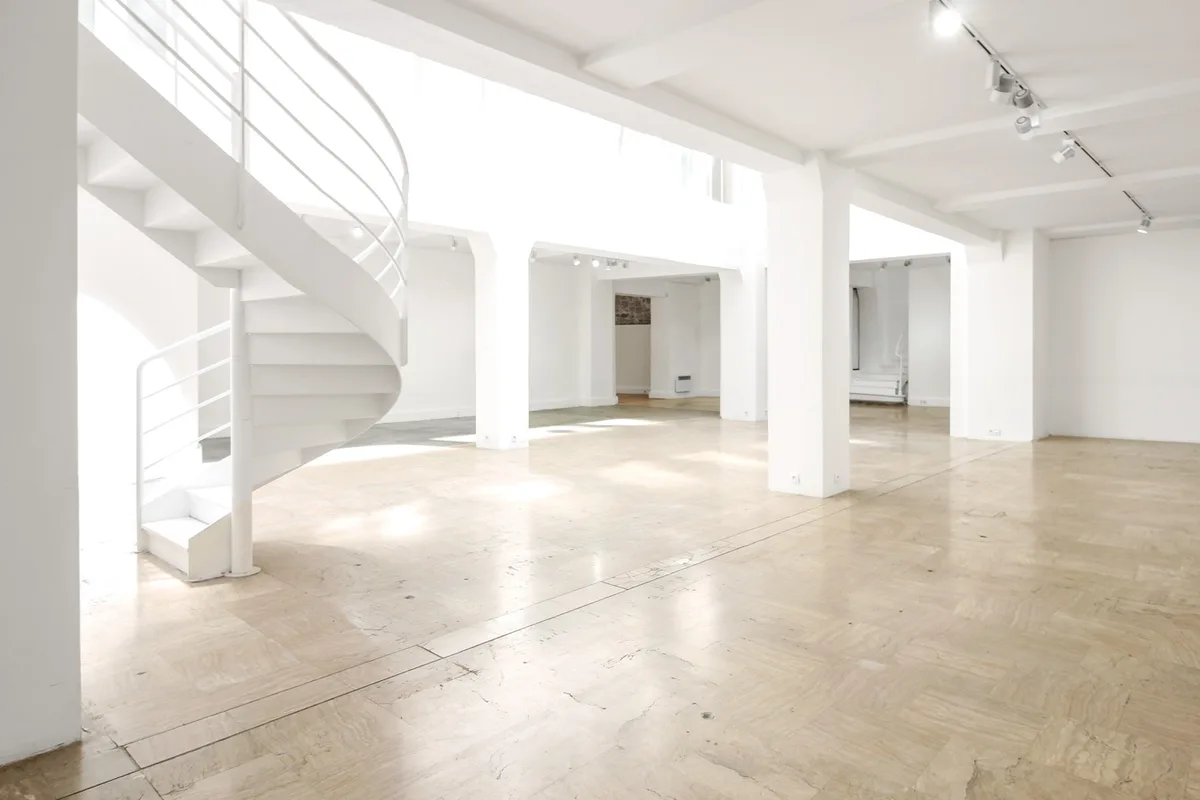
The 11th hosts a significant number of independently run art galleries, some with established reputations and their own collector and press networks. Renting a galerie d'art for a brand activation or pop-up bookstore brings built-in cultural credibility. Spaces in this category typically feature spotlights on track systems, white or neutral wall finishes, polished or poured concrete floors, and clean architectural proportions suited to both product display and curatorial installation.
Apartment and Hybrid Spaces
Apartment-format spaces in the 11th offer an intimate, residential-scale alternative to gallery or workshop venues. These are particularly effective for haute parfumerie launches, jewellery presentations, or small-edition publishing events where the domestic setting reinforces the intimacy of the brand experience. Hybrid spaces that combine residential and commercial elements are increasingly popular for activations that want to blur the distinction between editorial and retail.
Chic Event Spaces and Multi-Use Venues
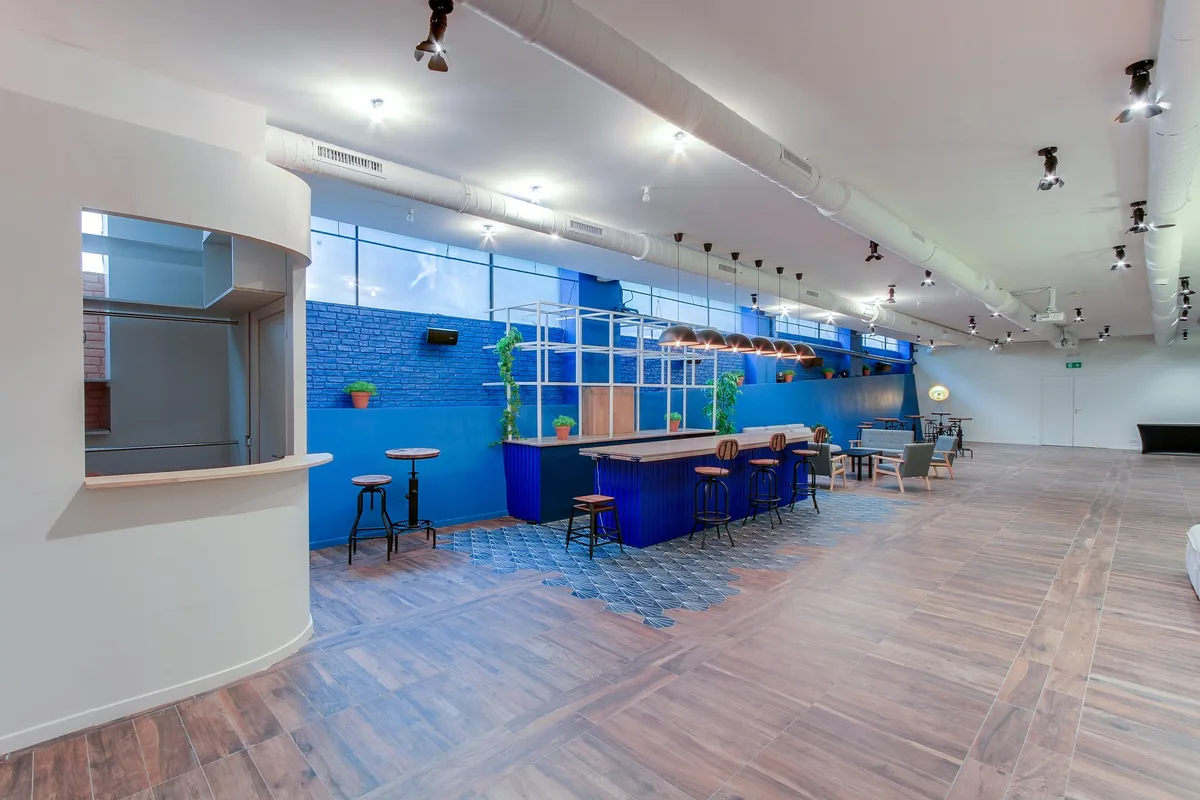
A growing category of chic event spaces in the 11th are purpose-designed for temporary retail and brand events, with modular lighting systems, flexible floor plans, catering-capable back-of-house areas, and in some cases capacity for DJ sets and evening programming. These venues suit brands with a full-day-to-evening activation model, or those blending retail with cultural programming.
| Space Type | Typical Floor Finish | Best For | Key Features |
|---|---|---|---|
| Industrial Workshop / Loft | Raw or polished concrete | Fashion showrooms, large-scale activations | Large door entrance, ceiling height, loading access |
| Boutique Éphémère / Storefront | Parquet or tiled flooring | Retail drops, pop-up stores, private sales | Street frontage, display walls, retail infrastructure |
| Art Gallery / Galerie d'Art | Polished concrete or wood | Book launches, brand exhibitions, showrooms | Spotlights, white walls, cultural credibility |
| Apartment / Hybrid Space | Parquet floors | Perfume, jewellery, editorial presentations | Intimate scale, domestic atmosphere |
| Chic Event Space | Mixed finishes | Evening activations, DJ sets, launches | Modular lighting, catering capacity, flexible layout |
KEY TAKEAWAY: The 11th arrondissement's space diversity allows brands to match their activation concept precisely to a venue type, rather than adapting the concept to suit an unsuitable space. From raw concrete lofts to polished gallery floors, the district offers a format for every brief.
Knowing which type of space suits your brief is only the first step. Understanding how the 11th sits within Paris's broader neighbourhood map helps brands make smarter location choices within the arrondissement itself.
Paris 11th Arrondissement Neighbourhoods, Landmarks, and Foot Traffic Zones
Quick answer: The 11th arrondissement's most commercially active zones sit along the Bastille axis to the west, the Oberkampf and Parmentier corridors to the north, and the Ménilmontant border to the east, each generating distinct audience profiles and foot traffic patterns relevant to brand activations.
For brands planning a pop-up shop or showroom in Paris 11, neighbourhood selection within the arrondissement matters almost as much as arrondissement selection within the city. The 11th is not a monolithic district. Its western edge, anchored by the Place de la Bastille, draws the broadest and most mixed audience, including tourists flowing from the nearby Marais district, Le Marais's gallery visitors, and locals from across eastern Paris. The closer a space is to Bastille, the higher the general foot traffic. This area also connects directly to the 4th arrondissement, home to Le Marais, the Place des Vosges, and the Picasso Museum.
Moving north along the Oberkampf axis, the audience becomes younger and more distinctly creative. This corridor is well-known for its independent shops, artist studios, and night venues including former clubs like the Rex Club in adjacent arrondissements. Brands targeting independent retailers, design professionals, and culturally curious under-35 demographics tend to find this corridor most productive.
The Ménilmontant border, toward the 20th arrondissement, offers the most raw and unpolished space typologies in the 11th, often at lower rental rates per day. Brands willing to invest in production and build in exchange for lower venue costs frequently find compelling options here. The audience in this zone is highly local and authentically creative, making it well-suited to activations built around community, craft, or independent publishing.
While the 11th does not contain major Parisian monuments such as the Hôtel des Invalides, Le Sacré-Coeur, or Notre-Dame de Paris, its proximity to these landmarks within a 15 to 30 minute walking or transit radius means that international visitors staying centrally do visit the area. Brands seeking to reach both international and hyper-local Parisian audiences simultaneously will find the 11th's position on the map genuinely advantageous.
TIP: If your activation depends on walk-in foot traffic rather than invited guests, prioritise spaces with ground floor street-level access on or near the main Bastille-Oberkampf axis. If your event is invitation-led or press-facing, you have far more flexibility to locate deeper within the arrondissement.
To compare specific locations and space options across Paris neighbourhoods, explore the Paris city hub on Fashion Week Venues and shortlist spaces that match your brief, budget, and calendar window.
KEY TAKEAWAY: Location within the 11th arrondissement is a strategic variable, not just an administrative detail. The Bastille axis, the Oberkampf corridor, and the Ménilmontant zone each generate different audience profiles, foot traffic volumes, and rental cost expectations.
With location strategy understood, the next critical dimension for any brand planning a Paris activation is the calendar. Paris Fashion Week is the most important short-term retail and showroom window in the city, and the 11th is directly in play.
Paris Fashion Week and the 2026 Activation Calendar for the 11th Arrondissement
Quick answer: Paris Fashion Week drives the single highest concentration of international fashion buyers, press, and brand decision-makers into Paris every season. For brands seeking showroom space or a fashion pop-up store in the 11th, aligning with the Womenswear, Menswear, or Haute Couture calendar windows dramatically amplifies the commercial and visibility value of a short-term rental.
For brands planning activations in 2026, key Paris Fashion Week windows include the July 2026 Haute Couture season, which runs from approximately July 6 to 9, as well as the Womenswear Ready-to-Wear seasons in late February to early March and late September to early October. The Menswear season in January is a further relevant window. During each of these periods, Paris absorbs a significant inflow of international buyers, editors, stylists, brand consultants, and high-net-worth consumers who are actively attending runway shows, showroom appointments, and exhibition openings across the city.
The 11th arrondissement benefits directly from Fashion Week traffic in two ways. First, its position adjacent to Le Marais, which hosts many of the most important commercial and editorial showrooms during Fashion Week, means that buyers and press moving between showroom appointments naturally pass through or extend their schedules into the 11th. Second, the raw industrial and loft-style spaces available in the 11th are increasingly preferred by emerging labels and independent designers who want the aesthetic credibility of an unconventional presentation space over the conventional white-box showroom.
Brands planning a Fashion Showroom in Paris 11 during Fashion Week should build their timeline around confirmed show schedules, allowing at least three to four weeks of lead time for fit-out, production, and staffing. The most competitive spaces in and around Bastille and Oberkampf are often booked months in advance for Fashion Week windows.
IMPORTANT: Paris Fashion Week activations require careful permit and compliance planning. Depending on the space type, duration, and specific arrondissement sub-zone, brands may need to navigate bail dérogatoire agreements, Autorisation d'Occupation Temporaire (AOT) permits, or other regulatory requirements. The rules vary by space, building type, and intended commercial use. Always verify requirements with a qualified French legal advisor before signing any agreement.
Beyond Fashion Week, the 11th arrondissement also supports year-round activation calendars. Paris Internationale, the independent art fair held each October, attracts a culturally engaged international audience to the city. Flea markets and neighbourhood vide-greniers draw local foot traffic on weekends. Independent publishing events, literary launches, and gallery programme openings generate consistent cultural audience movement throughout the year, which is directly relevant to brands seeking to run a pop-up bookstore or literary-themed activation in the district.
Use the timeline planning tool to map your activation calendar against key Paris fashion and cultural windows and identify the most strategically aligned booking period for your space.
KEY TAKEAWAY: Aligning a pop-up shop or showroom in Paris 11 with Fashion Week, Paris Internationale, or other high-footfall cultural calendar windows multiplies the commercial and visibility return on your short-term rental investment.
Calendar strategy and space type selection inform each other. Once those two variables are understood, brands need to address the practical process of actually booking and contracting a short-term retail space in Paris.
How to Book a Pop-Up Shop in Paris 11: The Step-by-Step Process
Quick answer: Booking a pop-up shop in the 11th arrondissement Paris involves defining your brief, sourcing suitable spaces, negotiating a short-term lease or bail dérogatoire, confirming permit and compliance requirements, planning fit-out and production, and managing the activation itself. Each step has Paris-specific legal, logistical, and commercial dimensions that differ significantly from short-term retail processes in other markets.
Brands new to Paris often underestimate how different French short-term retail law is from their domestic market experience. What looks like a simple short-term space hire is, in legal terms, likely to require either a bail dérogatoire (a short-form commercial lease of up to three years, distinct from a standard commercial bail), a licence d'exploitation, or an Autorisation d'Occupation Temporaire depending on the space category, its status, and its intended use. Getting this wrong creates liability and can result in a space being unavailable or unusable on your activation dates.
| Step | Action Required | Paris-Specific Consideration | Recommended Resource |
|---|---|---|---|
| 1. Brief Definition | Confirm space type, size, dates, budget, and audience | Align with French fashion calendar and Paris cultural programme | Budget and timeline tools |
| 2. Space Sourcing | Identify and shortlist candidate venues | Many Paris spaces are not publicly listed; agency relationships matter | Venue sourcing service and marketplace |
| 3. Space Comparison | Evaluate shortlisted spaces against brief criteria | Consider arrondissement, floor type, access, and neighbourhood profile | Compare tool and locator tool |
| 4. Legal and Permit Review | Confirm lease type, AOT or bail dérogatoire requirements | Varies by space type, building, and arrondissement sub-zone | Permits tool; French legal advisor |
| 5. Negotiation and Booking | Agree terms, deposit, access, and break-down schedule | Hassle-free transactions require clear written agreements in French | Agency support |
| 6. Fit-Out and Production | Design, build, and install the activation | Building regulations apply to temporary structures; confirm with landlord | Production and build service |
| 7. Staffing and Operations | Confirm sales staff, security, and POS | French labour law applies to all staff including temporary workers | Retail staffing service |
| 8. Activation and Measurement | Run the activation, collect data, manage press and influencer coverage | GDPR applies to data collection from French consumers | Activation management and data analytics services |
One of the most common errors brands make when attempting to book a pop-up shop in Paris independently is treating the space sourcing as the primary challenge and underestimating the compliance, fit-out, and operational dimensions. In reality, finding the space is often the quickest part of the process. The more complex and time-consuming work sits in legal verification, permit confirmation, production planning, and staffing.
DID YOU KNOW: Many of the most desirable pop-up and showroom spaces in Paris are never publicly listed. They are secured through agency relationships, direct landlord networks, and specialist short-term retail intermediaries who have pre-established relationships with property owners across the city's key arrondissements.
For brands that need support across the full process, the venue sourcing service at Fashion Week Venues provides access to both listed and unlisted spaces in the 11th and across Paris, with agency-managed coordination of the end-to-end booking and production process.
KEY TAKEAWAY: Booking a pop-up shop in Paris 11 successfully requires parallel management of space sourcing, legal compliance, fit-out production, staffing, and operational planning. Brands that treat these as sequential rather than parallel workstreams frequently encounter delays and cost overruns.
The permit and legal dimension of short-term retail in Paris deserves deeper treatment, as it is the area where international brands most frequently encounter problems.
Permits, Leases, and Legal Requirements for Pop-Up Shops in Paris 11
Quick answer: Short-term retail and pop-up activations in Paris require specific legal frameworks that differ from standard commercial leases. The most relevant instruments are the bail dérogatoire for spaces under three years and the Autorisation d'Occupation Temporaire for public domain spaces. Requirements vary significantly by space type, building classification, intended use, and duration, and should always be verified with a qualified French legal advisor.
The bail dérogatoire is a short-form commercial lease authorised under French commercial law that allows landlords and tenants to agree rental terms outside the standard nine-year commercial lease (bail commercial) framework. For brands planning pop-up shops, showrooms, or temporary retail activations in Paris, the bail dérogatoire is typically the applicable instrument for leases of days, weeks, or months up to a maximum duration of three years. It must be agreed in writing, and both parties must explicitly state their intention to use this form of agreement rather than a standard commercial lease.
The Autorisation d'Occupation Temporaire, commonly referred to as an AOT, applies to the temporary use of public domain spaces, including certain public squares, marketplaces, and publicly owned properties. Brands planning activations on public land or in publicly owned venues in Paris need to apply through the relevant municipal authority, which in the 11th arrondissement is the Mairie du 11e. AOT applications involve demonstrating the public interest or commercial legitimacy of the activation, and approval is not guaranteed.
For privately owned spaces, brands typically work with the property owner or their agent directly to agree a bail dérogatoire or a simple licence d'exploitation. The licence d'exploitation is lighter in its legal formality than a bail dérogatoire and is sometimes used for very short-term hirings (days to a few weeks), but it carries fewer protections for the tenant and requires careful drafting to protect the brand's interests in case of cancellation or access issues.
IMPORTANT: International brands without a French legal entity can rent spaces in Paris using a bail dérogatoire or licence d'exploitation through their foreign legal structure, but must ensure that the agreement is legally valid under French law and that their insurance coverage is appropriate for French territory. Working with a French legal advisor is strongly recommended. Never sign a space agreement in Paris without having its terms verified by a qualified professional.
For an overview of the permit landscape relevant to your specific activation type, use the permit guidance tool at Fashion Week Venues, and follow up with a specialist French legal advisor for binding advice.
KEY TAKEAWAY: The legal framework for short-term retail in Paris is specific, non-trivial, and significantly different from other European markets. Bail dérogatoire, AOT, and licence d'exploitation instruments each apply to different scenarios and require accurate identification and professional legal review before any space agreement is signed.
With legal foundations understood, brands can move confidently into budget planning, which is one of the most frequently misunderstood dimensions of Paris pop-up activations.
Budget Planning for a Pop-Up Shop in the 11th Arrondissement
Quick answer: The total cost of a pop-up shop in Paris 11 includes the space rental fee, fit-out and production costs, staffing, permits and legal fees, POS and payment systems, marketing and influencer costs, and post-activation breakdown and removal. Each category carries Paris-specific pricing conditions that brands should model carefully before committing to a space booking.
Space rental rates in the 11th arrondissement vary widely depending on space type, size, location within the arrondissement, quality of finish, and the period of booking. Some smaller boutique éphémère or gallery spaces in the district list rates starting from approximately 160 euros per day for compact formats, while larger loft or workshop spaces or those with premium locations command substantially higher rates. These figures are directional only and should not be treated as binding market rates. Actual pricing depends on specific space negotiations at the time of booking.
Fit-out and production costs are often the largest single budget line for brands with strong visual identity requirements. A raw concrete loft in the 11th requires more investment to activate than a retail-ready boutique éphémère, but the aesthetic return and brand differentiation value can justify the cost for the right brief. Branded store design, furniture rental, lighting installation, and signage are all components of this budget line.
Staffing is a recurring operational cost that Paris-specific labour law governs. Temporary retail staff in France must be contracted through legal frameworks that comply with French labour code requirements, including minimum wage, social contributions, and declaration obligations. Brands that are not familiar with French employment law should work with a staffing specialist who manages these obligations.
Marketing costs for Paris activations typically include influencer and press outreach, event photography and documentation, social media content production, and in some cases paid media to drive foot traffic during the activation window. For brands activating during Paris Fashion Week, the organic press and social amplification potential is significantly higher than at other calendar windows, which can reduce paid media requirements.
TIP: Use the budget estimation tool at Fashion Week Venues to model your total activation cost across all categories before committing to a space or brief. The tool allows you to adjust variables including space size, duration, fit-out complexity, and staffing requirements to produce a directional budget framework.
To assess the return on your investment, use the ROI calculator to model expected returns against your projected activation costs, audience reach, and commercial objectives.
KEY TAKEAWAY: Budget accuracy for a Paris pop-up shop requires modelling all cost categories simultaneously, not just space rental. Fit-out, staffing, legal, and marketing costs often exceed the space rental cost, particularly for brands with high creative production standards.
Budget and legal planning establish the commercial framework. The creative and experiential dimension of the activation is what determines its cultural impact and audience resonance, particularly in a market as sophisticated as Paris 11.
Pop-Up Bookstores, Literary Events, and Cultural Activations in Paris 11
Quick answer: The 11th arrondissement is one of the most active literary and cultural event districts in Paris, hosting book launches, author readings, curated exhibitions, and immersive cultural activations in spaces ranging from bookshop-galleries to raw industrial workshops, making it a natural home for publishers, cultural institutions, and brands with literary or artistic programming ambitions.
Paris has a uniquely dense ecosystem of literary culture, and the 11th arrondissement is one of its most productive nodes. The city hosts a remarkable diversity of literary events throughout the year: book launches, author conversations, roundtables on art and justice, psychoanalytic discussions, poetry readings, and publication celebrations that blend intellectual rigour with social energy. The 11th's mix of independent spaces, gallery venues, and hybrid cultural locations provides the physical infrastructure for this culture.
The pop-up bookstore format has found particular expression in Paris through examples that combine physical retail with cultural programming. The Swedish Institute's Bokbar concept, which operated from the Hôtel de Marle in Le Marais, demonstrated how a Scandinavian cultural center could use a temporary bookshop format to present Nordic literature, including works by authors such as Tove Jansson, Jón Kalman Stefánsson, Sara Stridsberg, Sofi Oksanen, and Karl Ove Knausgård, to Parisian audiences. This model combined retail with author events, literary speed dating, and immersive scenography built around Moomins illustrations and Nordic crime novel aesthetics.
Similarly, the concept of a floating bookshop or literary barge on the Quai de Montebello demonstrates Paris's appetite for unconventional literary retail formats that combine world literature, author events, and distinctive physical environments. These examples illustrate the range of possibilities available to brands and cultural organisations planning a pop-up bookstore or literary activation in Paris: the format can be intimate and neighbourly, or architecturally bold and scenographically ambitious.
In the 11th arrondissement specifically, the density of artist-run spaces and independent galleries means that literary launches frequently take place in formats that would not be recognisable as conventional bookshops. A book launch might unfold in a raw concrete workshop with video works projected alongside the new publication; an author conversation might take place in a galerie d'art with the gallery's current exhibition as the visual context. Examples of the kinds of events that have taken place in these spaces include launches for publications like Octopus Notes, conversations between writers and psychoanalysts such as Jamieson Webster in dialogue with Santiago Amigorena and Sinziana Ravini on works like Disorganisation and Sex published by Divided Publishing, and explorations of visual artists like Wolfgang Stoerchle led by editors such as Alice Dusapin.
Publishers and cultural institutions planning activations in Paris 11 should also be aware of the support available from institutional bodies such as the Centre national du Livre, which provides resources and sometimes partnerships for events promoting French classics, translated world literature, drama, and poetry. Independent publishers working with international authors or translated texts may find the 11th's community of literary booksellers and cultural spaces particularly receptive.
For brands that are not primarily publishers but want to incorporate literary or cultural content into a broader activation, the 11th arrondissement offers compelling precedents. Storytelling, cartography, souvenir formats, and editorial curation have all been used as activation themes by fashion and lifestyle brands seeking to distinguish their Paris pop-up from a conventional retail drop.
KEY TAKEAWAY: The 11th arrondissement's literary and cultural activation ecosystem offers publishers, cultural institutions, and brands with storytelling ambitions a rich infrastructure of hybrid spaces, receptive audiences, and established event formats that can be adapted to diverse creative and commercial briefs.
Understanding how fashion and luxury brands have used Paris activations to create cultural impact helps brands calibrate their own ambitions and approach.
Fashion and Luxury Brand Activations in Paris: Benchmarks and Best Practices
Quick answer: Paris's most effective fashion and luxury brand pop-up activations share a common set of characteristics: they use the physical space as a medium for storytelling, they align with culturally significant calendar windows, and they create genuine reasons for both invited press and public visitors to engage beyond transactional retail.
Paris is the global reference market for brand activations that blend retail with cultural prestige. The city's fashion history, its concentration of luxury heritage, and its audience of sophisticated international consumers create conditions where a poorly conceived activation fails visibly, but a well-executed one earns disproportionate organic press, social amplification, and buyer attention.
Several brand precedents are instructive for teams planning a pop-up shop in Paris 11. Dior has used historical presentation formats, architectural scenographies, and immersive storytelling to distinguish its Paris activations from conventional fashion retail. The Royal Monceau has hosted brand activations that combine hotel hospitality infrastructure with fashion and luxury product launches, demonstrating the value of location prestige as an amplifier of brand credibility. Maison Henry Jacques has used ultra-intimate, appointment-only pop-up formats for haute parfumerie launches that position exclusivity and scarcity as the activation mechanics.
Yves Saint Laurent Beauté, Raffles Paris, and similar luxury names have demonstrated the value of self-service collection points combined with invitation-led exclusive events: a model that drives both high-end media coverage and accessible consumer engagement within the same activation footprint. Rex Club's cultural heritage in Paris's nightlife circuit has been referenced by fashion brands seeking to connect their product with the city's authentic underground creative culture.
For brands renting a galerie d'art or chic event space in the 11th, the model of activating visual artist curators alongside a fashion or beauty product launch has proven particularly effective. Spaces like Galerie Joseph and Galerie Turenne in adjacent arrondissements have served as references for how a gallery setting can function as a fashion activation venue, with the gallery's curatorial programme lending credibility and audience to the brand.
Private sales, or Charlot'-style exclusive ventes privées, have also found a home in the 11th and adjacent Marais district, where brands can convert a boutique éphémère or loft space into a short-run membership or invitation-based retail event. Le Bon Marché and Le Bon Marché Rive Gauche have established the Parisian template for curated department-store pop-ups, while independent brands in the 11th have adapted this model at a smaller, more agile scale.
The most consistent differentiator in successful Paris activations is the quality and originality of the scenography and thematic narrative. Brands that treat the activation as an extension of their editorial identity, rather than as a straightforward retail operation, consistently achieve stronger press coverage, social engagement, and buyer attention.
KEY TAKEAWAY: The most effective Paris fashion and luxury brand activations use immersive scenography, cultural storytelling, and calendar alignment to create experiences that earn press, social amplification, and buyer attention beyond what conventional retail achieves. The 11th arrondissement's raw and character-rich spaces are particularly well-suited to this model.
Brands working with an experienced agency partner are significantly better positioned to execute at this level, particularly in a market with the operational complexity of Paris.
How Fashion Week Venues Helps Brands Book Pop-Up Shops in Paris 11
Quick answer: Fashion Week Venues is a full-service pop-up shop agency and space marketplace that helps brands source, plan, produce, staff, and manage short-term retail and showroom activations in the 11th arrondissement and across Paris, with tools and services that cover every stage of the activation process from brief to breakdown.
Fashion Week Venues operates at the intersection of space discovery and full-service agency delivery. For brands looking to book a pop-up shop in Paris 11, this means access to both a curated space marketplace and an experienced agency team that can manage the process from initial brief through to final post-activation reporting.
The services most directly relevant to Paris 11 activations include venue sourcing, which provides access to both listed and unlisted spaces across the arrondissement and adjacent districts; concept and creative direction for brands that need help translating their brand identity into a spatial experience; and fit-out and production for brands managing the physical build of their activation in a Paris space.
Operational services including retail staffing, activation management, and data and analytics are equally relevant for brands that need end-to-end support rather than space sourcing alone. The influencer marketing service is particularly valuable for Paris activations targeting fashion press and social media audiences during Fashion Week or cultural calendar windows.
The Fashion Week Venues toolkit is a significant resource for brands at the planning stage. The budget tool, timeline tool, ROI calculator, permits tool, compare tool, and locator tool each address a specific planning challenge that brands face when booking and managing a Paris pop-up. These tools do not replace professional legal, financial, or operational advice, but they provide a structured starting point for internal planning and budgeting conversations.
Brand teams that benefit most from Fashion Week Venues's services in Paris 11 include international fashion labels entering the Paris market for the first time, established brands seeking new space formats outside their usual arrondissement networks, publishers and cultural institutions planning literary or art-world activations in gallery or hybrid spaces, and creative agencies managing activations on behalf of client brands.
It is important to understand that Fashion Week Venues does not guarantee specific space availability, permit approvals, or commercial outcomes. Space availability is subject to landlord confirmation and market conditions. Permit requirements are subject to French regulatory processes outside the agency's control. Commercial results depend on brand quality, activation execution, calendar alignment, and a range of market variables.
To review examples of past activations and understand how the agency approaches different brief types, explore the work section and the process page on the Fashion Week Venues website.
KEY TAKEAWAY: Fashion Week Venues provides brands with both the space marketplace access and the full-service agency support needed to plan, produce, and manage a successful pop-up shop in Paris 11, with practical tools that accelerate the planning process and services that cover every operational dimension of the activation.
Before committing to a space or a service provider, brands should be aware of the most common misconceptions about renting a pop-up shop in Paris, several of which can result in costly errors if not addressed early.
Common Myths About Booking a Pop-Up Shop in Paris Debunked
MYTH: You need a French legal entity to rent a space in Paris for a pop-up shop or showroom.
FACT: International brands can rent short-term retail and showroom spaces in Paris without establishing a French company, using their foreign legal entity and an appropriate short-term lease instrument such as a bail dérogatoire or licence d'exploitation. However, the agreement must comply with French law, appropriate insurance coverage for French territory must be confirmed, and professional legal advice is strongly recommended before signing any agreement. The absence of a French entity does not eliminate legal obligations or liability under French law.
MYTH: Paris Fashion Week is the only viable calendar window for a pop-up activation in Paris.
FACT: Paris Fashion Week generates exceptional footfall and media intensity, but it is far from the only commercially viable activation window. Paris Internationale in October, the Salon du Livre in spring, tourist-heavy summer and Christmas periods, and the city's year-round cultural programme all generate significant audience engagement. The right calendar window depends entirely on your target audience, commercial objectives, and budget. Brands with niche audiences often find that non-Fashion Week periods allow for more focused, less competitive activation environments.
MYTH: Commission brokers or aggregator platforms are the only reliable way to find a pop-up space in Paris.
FACT: While commission brokers and aggregator platforms list some of the publicly available short-term spaces in Paris, a significant proportion of the most desirable spaces in the 11th arrondissement and across the city are never publicly listed. They are sourced through agency relationships, direct landlord networks, and specialist intermediaries. Full-service agencies like Fashion Week Venues combine marketplace access with unlisted inventory, providing brands with a broader and often higher-quality set of options than public platforms alone.
MYTH: Short-term leases in Paris are legally straightforward and do not require specialist help.
FACT: Short-term retail leases in Paris are governed by specific French commercial law instruments including the bail dérogatoire, the AOT, and the licence d'exploitation, each with distinct legal requirements, protections, and obligations. Incorrectly identifying or drafting the applicable instrument can expose brands to significant legal and financial liability. French lease law differs substantially from UK, US, and most other international markets, and the assumption that a general commercial lawyer can navigate Paris-specific lease structures without local expertise is a common and costly error.
MYTH: The 11th arrondissement is too far from central Paris landmarks to generate meaningful foot traffic for a retail activation.
FACT: The 11th arrondissement borders Le Marais directly, is a 5-minute walk from the Place de la Bastille, and is well-served by multiple metro lines connecting it to every major Paris tourist and cultural landmark. During Fashion Week, Paris Internationale, and other major cultural events, the 11th generates foot traffic from both invited guests and organic visitors that is fully comparable to more central arrondissements. Its authentic neighbourhood character also makes it more appealing than tourist-saturated zones for the culturally engaged audiences that most fashion and creative brands want to reach.
Frequently Asked Questions
Why rent a pop-up shop in the 11th arrondissement of Paris?
The 11th arrondissement offers a combination of factors that make it one of Paris's most productive short-term retail destinations: proximity to Le Marais and Bastille, a culturally engaged local audience, a wide variety of industrial, gallery, and boutique space formats, and more accessible rental conditions than the most premium central arrondissements. Brands that want to reach Paris's creative and fashion-literate professional community, while maintaining the aesthetic credibility of an unconventional or raw space, consistently find the 11th one of the strongest options on the Paris map. The district also supports year-round activation programming beyond the Fashion Week calendar.
What is a bail dérogatoire and why does it matter for a Paris pop-up?
A bail dérogatoire is a short-form commercial lease under French law that allows landlords and tenants to agree rental terms outside the standard nine-year commercial lease framework. It is the most commonly applicable legal instrument for pop-up shops, showrooms, and temporary retail activations in Paris. Both parties must explicitly agree in writing to use this instrument, and it can cover agreements from days to a maximum of three years. Without the correct legal framework, a short-term rental agreement in Paris may inadvertently trigger standard commercial lease protections that neither party intends to invoke. Always verify lease type with a qualified French legal advisor.
What kinds of spaces are available in the 11th arrondissement for a pop-up or showroom?
The 11th arrondissement offers industrial workshops, loft spaces, boutiques éphémères, art galleries, apartment-format venues, chic event spaces, and hybrid cultural venues. Floor finishes range from raw and polished concrete to parquet and tiled flooring. Specific features available depending on the venue include spotlights, steel pillars, ceiling beams, visible pipework, ground floor backyards, large door entrances, and skylights or puits de lumière. The range of space types means that brands can find a venue aligned to almost any creative brief, audience profile, or budget level.
How far in advance should a brand book a pop-up space in Paris 11 for Fashion Week?
For Paris Fashion Week windows, the most desirable spaces in the 11th and adjacent Marais and Bastille areas are typically secured three to six months in advance. For the Haute Couture July 2026 window (approximately July 6 to 9), brands should begin space sourcing no later than early spring 2026. For the September and October Womenswear Ready-to-Wear season, sourcing should ideally begin in spring or early summer. Waiting until six to eight weeks before the season opens significantly narrows the available inventory and reduces negotiating leverage on terms and pricing.
Can an international brand without a French company legally rent a pop-up space in Paris?
Yes, international brands can rent short-term retail and showroom spaces in Paris using their foreign legal entity, provided the lease agreement complies with French commercial law and appropriate insurance coverage is in place for French territory. Bail dérogatoire and licence d'exploitation instruments are both available to foreign legal entities. However, the legal requirements are specific to French law and differ significantly from other European and international markets. Working with a qualified French legal advisor before signing any agreement is strongly recommended regardless of the brand's prior international retail experience.
What is the typical total cost of a pop-up shop activation in Paris 11?
Total activation cost varies significantly depending on space size, rental duration, fit-out complexity, staffing requirements, and marketing budget. Space rental rates in the 11th range from approximately 160 euros per day for compact boutique or gallery formats to substantially higher rates for larger loft or premium-location spaces. These are directional figures only. Fit-out, production, staffing, legal, and marketing costs typically add significantly to the space rental cost. Brands should use the Fashion Week Venues budget estimation tool to model total costs across all categories before committing to a space or brief.
How does Fashion Week Venues help brands find and book spaces in Paris 11?
Fashion Week Venues combines a curated space marketplace with full-service agency support that covers venue sourcing, concept direction, production and build, activation management, staffing, POS and payments, data and analytics, and influencer marketing. For Paris 11 specifically, the agency provides access to both publicly listed spaces and unlisted inventory sourced through direct landlord relationships. Practical planning tools including budget, ROI, timeline, permits, compare, and locator instruments are available to support brands at the research and planning stage. The agency guides brands through the full process from brief definition to post-activation breakdown, without guaranteeing specific space availability, permit outcomes, or commercial results.
What is a pop-up bookstore and how do they work in Paris?
A pop-up bookstore is a temporary retail and cultural format that combines book sales with programming such as author readings, literary events, curated exhibitions, and community gatherings. In Paris, pop-up bookstores have taken diverse forms, including gallery-bookshop hybrids, bookshop-bars, themed cultural spaces aligned to specific literatures or regions, and floating or mobile formats on the Seine. The Swedish Institute's Bokbar concept, operated from the Hôtel de Marle in Le Marais, is one of the best-known international examples in Paris, combining Nordic literature retail with immersive scenography and a programme of author events, literary speed dating, and cultural talks. The 11th arrondissement's mix of gallery and hybrid spaces makes it well-suited to this format.
What permits does a brand need for a pop-up shop in Paris?
Permit requirements for pop-up shops in Paris depend on the type of space, the intended commercial activity, the duration of the activation, and the specific arrondissement sub-zone. For privately owned spaces, the relevant instrument is typically a bail dérogatoire or licence d'exploitation agreed with the landlord. For activations on public domain land, an Autorisation d'Occupation Temporaire applied through the Mairie may be required. Certain commercial activities may require additional declarations or authorisations. Requirements vary and should always be confirmed with a qualified French legal advisor. The Fashion Week Venues permits tool provides a useful orientation framework but does not constitute legal advice.
What are the best neighbourhoods within the 11th arrondissement for a pop-up shop?
The most commercially productive zones within the 11th for pop-up activations are the western Bastille corridor, which generates the highest general foot traffic and benefits from Marais district spill-over; the Oberkampf and Parmentier axis, which attracts a younger, creative, and fashion-literate audience; and the Ménilmontant border zone, which offers the most raw space typologies and authentically local audiences at generally lower rental rates. The right neighbourhood within the 11th depends on your target audience profile, activation format, and foot traffic model. Walk-in retail activations benefit most from the Bastille corridor, while invitation-led press and buyer events can succeed across the arrondissement.
What floor types are common in Paris 11th arrondissement pop-up spaces?
The most common floor finishes in 11th arrondissement pop-up and showroom spaces include parquet floors in boutique and apartment formats, raw concrete floors in former industrial workshops and lofts, and polished concrete floors in converted gallery and event spaces. Tiled flooring is also found in some street-level boutiques. The choice of floor finish affects both the aesthetic of the activation and the production requirements. Raw concrete floors, for example, typically allow more flexible installation options but may require protective covering for certain product presentations. Parquet floors bring a classic Parisian residential aesthetic but may require landlord approval for heavy furniture or construction work.
How does the Paris Fashion Week July 2026 Haute Couture calendar affect pop-up shop planning?
The Paris Fashion Week Haute Couture season scheduled for approximately July 6 to 9, 2026 represents a concentrated window of international fashion industry presence in Paris. During this period, buyers, editors, stylists, and brand decision-makers from across the world are in the city attending shows, visiting showrooms, and engaging with brand activations. For brands with a pop-up shop or showroom in Paris 11 during this window, the potential for press coverage, buyer engagement, and social media amplification is significantly higher than at most other calendar points. However, competition for quality spaces and the operational demands of activating during Fashion Week are also significantly higher, requiring earlier planning, larger budgets, and more rigorous operational preparation.
What is the difference between a pop-up shop, a showroom, and a boutique éphémère in Paris?
In Paris's short-term retail market, these terms are often used interchangeably but carry distinct practical meanings. A pop-up shop or boutique éphémère is a temporary retail space open to the public for direct consumer sales. A showroom is a trade-facing space, typically by appointment, designed to present collections to buyers, press, and wholesale clients rather than consumers. A galerie d'art or gallery activation is primarily a cultural or exhibition format that may or may not incorporate product sales. Each format has different operational, legal, and spatial requirements, and the appropriate space type, lease instrument, and permit framework may differ accordingly. Brands should clarify their format before beginning space sourcing.
What role does immersive scenography play in a successful Paris pop-up activation?
Immersive scenography is increasingly a defining differentiator in Paris pop-up activations, particularly for fashion, luxury, and cultural brands. Rather than using a space purely as a backdrop for product display, immersive scenography transforms the space into an experience that communicates the brand's identity, values, and narrative through physical, sensory, and sometimes interactive means. Examples in Paris range from Dior's historical presentation formats to the Swedish Institute's Moomins-themed Bokbar. For brands activating in the 11th arrondissement, the district's raw industrial and character-rich spaces provide a particularly strong canvas for scenographic ambition. The challenge is achieving the right balance between creative investment and operational practicality within the constraints of a short-term lease.
How do I choose between hiring a full-service agency and managing a Paris pop-up independently?
The choice between a full-service agency and independent management depends on the brand's internal capacity, Paris market knowledge, language capability, legal familiarity, and activation complexity. Brands with established Paris operations, in-house creative teams, and existing landlord relationships may be able to manage certain components independently. However, most international brands activating in Paris for the first time, or those with complex multi-component activations during Fashion Week, find that the combination of local knowledge, established space relationships, legal navigation support, production capability, and operational management that a full-service agency provides significantly reduces risk and improves outcomes. For guidance on selecting the right agency for your brief, review the agency selection guide on Fashion Week Venues.
Conclusion: Book Your Pop-Up Shop in Paris 11th Arrondissement With Confidence
The 11th arrondissement offers one of Paris's most compelling combinations of creative space diversity, culturally engaged audiences, Fashion Week adjacency, and authentic neighbourhood character for brands planning a pop-up shop, showroom, literary activation, or brand event. From raw concrete workshops and polished gallery floors to boutiques éphémères with street frontage and intimate apartment-scale venues, the district's space inventory supports a wide range of brand formats and activation ambitions.
Success in Paris 11 depends on getting five things right simultaneously: the space match, the legal framework, the production quality, the calendar alignment, and the operational execution. Brands that approach these as parallel workstreams managed from an early stage consistently outperform those that address them sequentially and under time pressure. The Paris short-term retail market is specific in its legal requirements, competitive in its best space inventory, and unforgiving of late planning.
Fashion Week Venues brings together the space marketplace access, agency expertise, and practical planning tools that brands need to navigate this market with confidence. Whether your brief is a Fashion Week showroom in a raw loft, a literary pop-up bookstore in a gallery, a private sale in a boutique éphémère, or a multi-evening cultural activation with DJ sets and invited press, the agency's Paris knowledge and full-service capability provide a reliable foundation for your activation.
To move from research to activation, start exploring available spaces on the Fashion Week Venues marketplace and build a focused brief for your target neighbourhood, space type, and calendar window.