Finding the right boutique for rent on Canal Saint-Martin requires more than browsing a listings platform. It means understanding one of Paris's most culturally resonant neighbourhoods, navigating French short-term lease frameworks, matching your brand to the right street, and planning your activation around the city's fashion and retail calendar. Canal Saint-Martin, stretching through the 10th arrondissement of Paris along the Quai de Valmy and Quai de Jemmapes, has become one of the most in-demand locations for pop-up stores, showrooms, concept stores, and brand experience spaces in the French capital. Whether you are launching a product, staging a runway presentation, testing a new retail format, or building brand awareness among a creative urban audience, this guide covers everything you need to know. Fashion Week Venues supports brands at every stage, from venue sourcing to full activation management.
Why Canal Saint-Martin Is One of Paris's Most Valuable Retail Activation Zones
Canal Saint-Martin delivers something that few Parisian neighbourhoods can match: a concentrated blend of independent retail, artisanal brands, resident creatives, and high footfall from both locals and design-conscious tourists. It is not the Eiffel Tower or the Champs-Élysées, and that is precisely its strength.
The canal itself runs from the Bassin de l'Arsenal near the River Seine through the 10th arrondissement, connecting to the Canal de l'Ourcq and eventually reaching Parc de la Villette in the 19th arrondissement. The stretch most relevant for brand activations runs along the Quai de Valmy on the west bank and the Quai de Jemmapes on the east bank, with key cross-streets including Rue de Lancry, Rue des Vinaigriers, and Rue Beaurepaire. Each of these streets supports a distinct mix of foot traffic, from early morning commuters heading toward Gare du Nord and Gare de l'Est to afternoon café browsers and evening wine bar visitors.
The neighbourhood gained its cultural cachet partly through French cinema, most famously through the film Amélie, which used Hotel du Nord and the canal's iron footbridges as backdrop. That cinematic identity, combined with genuine 19th century ironwork architecture and tree-lined waterways, continues to attract a demographic that is educated, style-aware, and actively seeking new brand discoveries. For fashion brands, beauty labels, homeware companies, textiles retailers, and accessories designers, this translates into a receptive and commercially valuable audience.
Canal Saint-Martin sits within the broader 10th arrondissement, which benefits from outstanding transport connectivity. Metro lines 3, 4, 5, 7, and 11 all serve the surrounding area, connecting the neighbourhood to Le Marais, Montmartre, Sacré-Cœur, Jardin du Luxembourg, and central Paris within minutes. This connectivity makes Canal Saint-Martin practical not just for walk-in retail but for appointment-based showrooms and private brand experiences that draw visitors from across the city.
The neighbourhood itself is defined by its ground-floor storefronts. You will find vintage stores, bookstores, flower shops, coffee shops, concept stores, wine bars, bakeries, and cafés alongside independent boutiques and small galleries. Point Ephémère, the canal-side concert and music venue and arts centre, acts as an anchor for the creative community and consistently draws an audience that overlaps with fashion and lifestyle brands. This cultural density makes a boutique or pop-up space here feel embedded in a living neighbourhood rather than isolated in a commercial district.
DID YOU KNOW: The Canal Saint-Martin area has seen consistent growth in retail activation interest from international brands since 2018, driven by its combination of independent retail culture, social media visibility, and proximity to Paris's major transport hubs near Gare du Nord and Gare de l'Est.
KEY TAKEAWAY: Canal Saint-Martin offers brands a rare combination of cultural credibility, strong transport links, and an audience of design-conscious urban residents and tourists. It is particularly well-suited to fashion, lifestyle, beauty, homeware, accessories, and artisanal brands seeking an authentic Parisian retail context.
Understanding the specific streets and microlocations within Canal Saint-Martin is the next step toward choosing the right boutique format for your activation.
Canal Saint-Martin Street by Street: Choosing the Right Location for Your Boutique
Not every address on Canal Saint-Martin serves the same commercial purpose. The neighbourhood's retail landscape varies significantly from one street to the next, and choosing the right block can determine whether your pop-up or boutique reaches its intended audience.
Quick answer: The highest-footfall streets for retail activations on Canal Saint-Martin are Quai de Valmy, Quai de Jemmapes, Rue Beaurepaire, Rue des Vinaigriers, and Rue de Lancry. Each serves a slightly different customer profile, from weekend tourists to creative professionals and local residents. Spaces range from ground-floor storefronts to galleries and courtyard venues.
Quai de Valmy and Quai de Jemmapes
The two main quais running parallel to the canal are the most visible and highest-traffic streets in the district. Quai de Valmy on the west bank tends to attract higher general footfall and is more accessible to visitors approaching from Gare du Nord. Quai de Jemmapes on the east bank has a slightly more residential character and draws a strong local crowd. Both are lined with cafés, restaurants, boutique hotels, and retail storefronts, making them ideal for pop-up stores that rely on spontaneous discovery as well as planned visits. Daylight is excellent on both quais due to the open water view, which benefits photographic and visual merchandising needs.
Rue Beaurepaire and Rue des Vinaigriers
These two cross-streets are among the most commercially active in the neighbourhood. Rue Beaurepaire in particular has established itself as a destination for concept stores, artisanal brands, and fashion boutiques. Spaces here tend to have white walls, wooden floors, and modern spotlights, making them easy to adapt for showroom or gallery-style retail. Rue des Vinaigriers supports a mix of independent cafés, studios, and retail storefronts and is popular with brands seeking a slightly lower-profile but highly curated location. Both streets benefit from strong pedestrian flow between the canal and the eastern edge of Le Marais.
Rue de Lancry
Rue de Lancry connects the canal to the Place de la République corridor and is known for its mix of coffee shops, wine bars, and small independent retailers. It is a strong option for brands targeting a younger, urban, lifestyle-oriented demographic. Spaces on Rue de Lancry often feature exposed ceiling beams, industrial décor, and ground floor layouts with backyard or courtyard access, which suits brands that want a distinctive spatial narrative for their activation.
The Faubourg Saint-Denis Corridor
Just north and west of the canal, the Faubourg Saint-Denis area has emerged as one of Paris's most talked-about micro-neighbourhoods. Spaces such as Loft Faubourg Saint-Denis and Local éphémère Faubourg Saint-Denis have become reference points for product launch events, brand experience activations, and private showrooms. The area draws a creative, fashion-forward crowd and offers a range of space types from move-in-ready lofts to modular event venues like Espace modulable Porte Saint-Denis.
| Street or Zone | Space Types Available | Best For | Foot Traffic Profile |
|---|---|---|---|
| Quai de Valmy | Storefronts, café-retail hybrids, boutique hotels | Fashion pop-ups, beauty launches, lifestyle brands | High general footfall, tourists and locals |
| Quai de Jemmapes | Galleries, apartments with ground floor, lofts | Private showrooms, art and design presentations | Residential and local creative community |
| Rue Beaurepaire | Concept store formats, white-wall spaces | Accessories, homeware, artisanal brand retail | Design-aware shoppers, steady daily flow |
| Rue des Vinaigriers | Boutique storefronts, studios | Fashion, textiles, beauty, emerging brands | Moderate, curated audience |
| Rue de Lancry | Lofts, ground floor with courtyard | Lifestyle, product launches, co-working activations | Young urban professionals, afternoon and evening |
| Faubourg Saint-Denis | Lofts, modular event spaces, galleries | Product launch events, showrooms, brand experiences | Creative and fashion industry professionals |
KEY TAKEAWAY: Choosing your Canal Saint-Martin address strategically matters as much as choosing the arrondissement. Quai de Valmy and Quai de Jemmapes provide the most visible canal-side presence, while Rue Beaurepaire, Rue des Vinaigriers, and Faubourg Saint-Denis offer more curated, brand-specific environments.
Once you have identified the right street, understanding the types of spaces available and their interior features helps you match your brand brief to the right venue format.
Types of Boutique and Pop-Up Spaces Available on Canal Saint-Martin
The Canal Saint-Martin district offers a genuinely diverse inventory of commercial and semi-commercial spaces, from classic ground-floor storefronts to industrial lofts, cultural galleries, and hybrid live-work venues. Understanding the different space types available helps brands align their spatial brief with the right format from the outset.
Quick answer: Spaces available for short-term boutique or pop-up rental on Canal Saint-Martin include storefronts, art galleries, concept store formats, lofts, apartment-style spaces with ground floor retail, modular event venues, and furnished studios. Each type serves a different activation purpose, from walk-in retail to private showroom presentations and product launch events.
Ground-Floor Storefronts
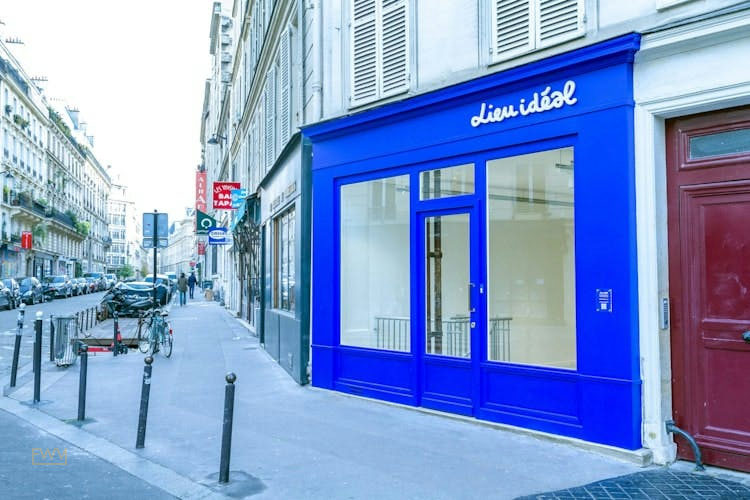
The classic canal-side boutique format. These spaces typically feature direct street access, large display windows, wooden or polished concrete floors, white walls, and modern spotlights. Many include a fitting room area and storage. Ground-floor storefronts are well-suited to fashion, accessories, beauty, and lifestyle retail activations where walk-in discovery is part of the strategy.
Gallery and Art Space Formats
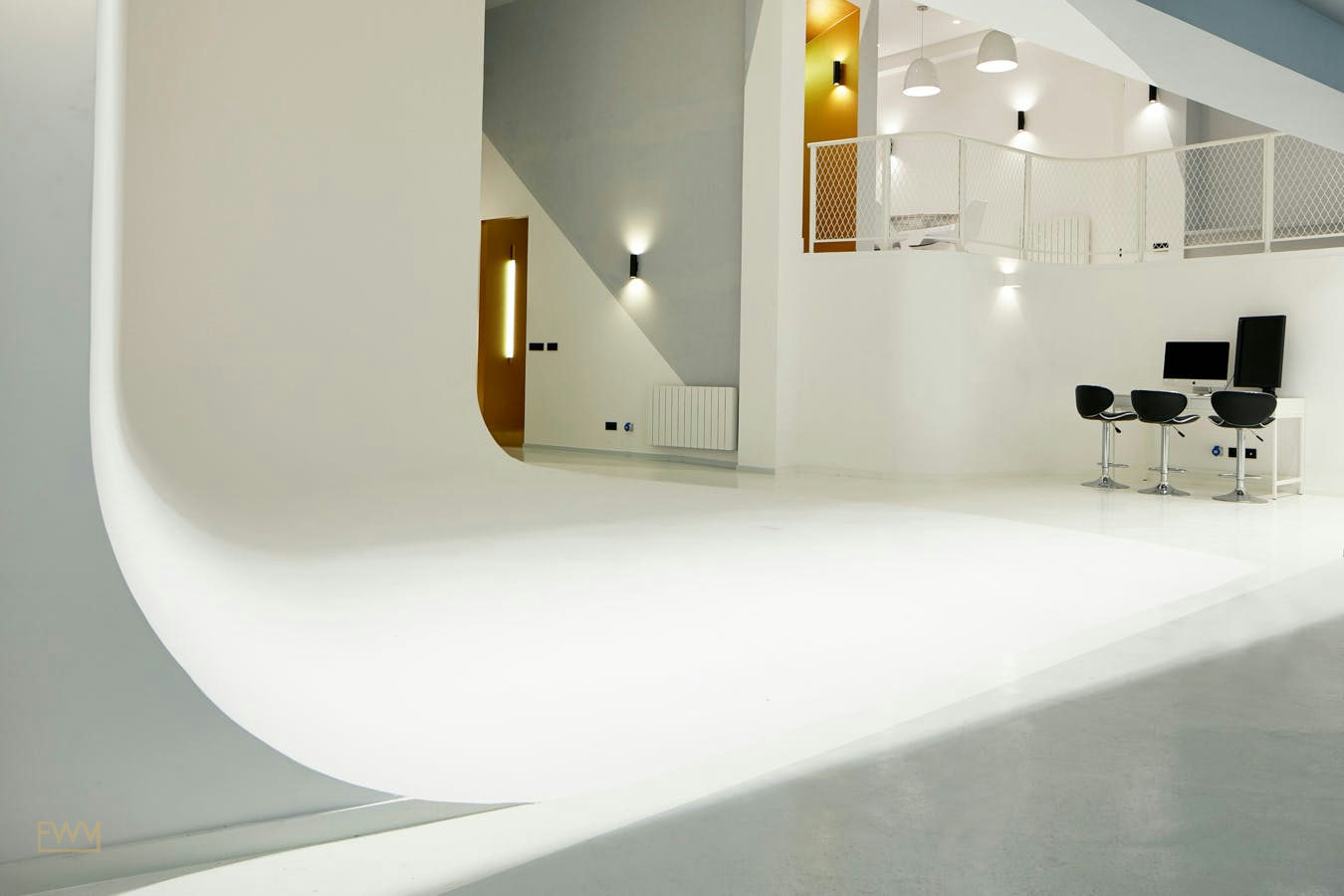
The Canal Saint-Martin area has a strong concentration of small to mid-sized art galleries and cultural spaces. These typically feature white or exposed brick walls, high ceilings, natural daylight, and open-plan layouts that can be adapted for both retail and brand presentation. Venues such as Galerie culturelle vivante represent this category and are frequently used for fashion presentations, product launches, and brand experience events. Spaces like these also work well for brands with a strong visual identity that benefits from a gallery-like context.
Industrial Lofts and Apartment-Loft Hybrids
Paris has a growing inventory of industrial loft spaces that combine residential and commercial character. These spaces often feature exposed ceiling beams, polished or raw concrete floors, industrial décor, large windows, and a ground floor with backyard or courtyard access. The Loft Faubourg Saint-Denis is a notable example, offering a move-in-ready layout suited to product launch events, private brand experiences, and appointment-based showrooms. These spaces work particularly well for homeware, interiors, textiles, and kitchenware brands that benefit from a domestic but editorial spatial context.
Modular and Multipurpose Event Spaces
The neighbourhood includes a number of modular commercial spaces designed specifically for temporary retail and event use. Espace modulable Porte Saint-Denis and Espace séminaire République represent this category, offering flexible floor plans that can be configured as retail, showroom, workshop, or event space depending on the brand's requirements. These spaces typically include Wi-Fi, basic furniture, and sometimes flat-screen TV and AV equipment as standard, reducing setup complexity for short-term activations.
Furnished Studios and Apartment-Format Spaces
A growing category in the Canal Saint-Martin inventory is the furnished studio or apartment-style space that can be adapted for retail, creative, or brand use. These spaces often include complete kitchens, bedding, modern amenities, and a residential quality that suits brands in the lifestyle, beauty, or hospitality sectors. Move-in-ready formats reduce production time and cost, which matters particularly for brands running activations of one to four weeks.
| Space Type | Typical Features | Best Brand Categories | Minimum Duration |
|---|---|---|---|
| Ground-floor storefront | Display windows, white walls, spotlights, fitting room | Fashion, accessories, beauty | 1 week minimum |
| Gallery format | High ceilings, open plan, natural daylight | Fashion presentations, art and design, product launches | 3 to 5 days |
| Industrial loft | Exposed beams, concrete floors, courtyard, backyard | Homeware, textiles, interiors, lifestyle | 1 week |
| Modular event space | Flexible layout, Wi-Fi, AV, furniture included | Product launch events, brand experiences, workshops | 1 day |
| Furnished studio or loft | Move-in-ready, complete kitchen, modern amenities | Lifestyle, beauty, hospitality brands | 1 to 2 weeks |
TIP: If your brand is launching a product that benefits from a domestic or aspirational living context, an apartment-loft hybrid or furnished studio on Canal Saint-Martin can serve as both a retail and editorial space, doubling as a content production environment for social media and press.
KEY TAKEAWAY: Canal Saint-Martin offers a genuinely varied space inventory. The right format depends on whether your activation is walk-in retail, appointment showroom, product launch event, or brand experience. Matching space type to activation purpose before searching for listings saves significant time and budget.
To explore and compare available space formats across Canal Saint-Martin and the broader Paris market, use the Fashion Week Venues space marketplace to filter by space type, neighbourhood, capacity, and availability window.
Lease Structures, Permits, and Legal Frameworks for Short-Term Boutique Rentals in Paris
Renting a boutique or retail space in Paris on a short-term basis involves a specific legal framework that differs significantly from standard long-term commercial leases. Understanding the key lease structures available to international brands is essential before signing any agreement.
Quick answer: Short-term boutique and pop-up space rentals in Paris typically use one of two frameworks: the bail dérogatoire (a derogatory commercial lease of up to three years, commonly used for periods of one to twelve months) or an autorisation d'occupation temporaire (AOT), which is a temporary occupation permit used for shorter activations in certain public or semi-public spaces. Neither requires a French legal entity in all cases, but requirements vary significantly by space type, duration, and arrondissement.
Bail Dérogatoire
The bail dérogatoire is the most common short-term lease instrument for commercial spaces in Paris. It allows a landlord and tenant to agree on a lease of up to 36 months without the tenant acquiring the commercial property rights that come with a standard nine-year commercial lease (bail commercial). For brands planning a pop-up store, temporary showroom, or short-term boutique on Canal Saint-Martin, a bail dérogatoire of one to six months is typically the most practical framework. The key requirement is that both parties agree explicitly in writing that the lease is derogatory and does not confer commercial lease rights. If the tenant remains in the space after the agreed term without a new agreement, the lease may automatically convert to a full bail commercial, which carries significantly more legal and financial obligations.
Autorisation d'Occupation Temporaire (AOT)
For activations in public spaces, parks, canal-side terraces, or spaces managed by public authorities, an AOT may be required. This is a permit rather than a lease and is issued by the relevant public authority. AOTs are common for outdoor activations, market-format pop-ups, and temporary structures on public land near the canal. Processing times and conditions vary by authority and location. The arrondissement and the specific nature of the space determine which authority manages the process.
Key Compliance Considerations
Beyond the core lease or permit structure, brands should be aware of several compliance areas when renting a boutique in Paris. Zoning regulations in the 10th arrondissement affect permitted commercial uses, particularly for spaces that are primarily classified as residential. Food and beverage service requires separate licensing even within an otherwise compliant retail space. Structural modifications, signage, and exterior branding may require notification to the landlord and in some cases to local planning authorities. Fire safety, accessibility compliance, and insurance requirements also apply and vary by space category.
IMPORTANT: Requirements for short-term commercial leases in Paris vary by space type, duration, intended use, and the specific arrondissement. Fashion Week Venues recommends verifying all permit and compliance requirements with a qualified French legal advisor before signing any lease agreement. Use the permit guidance tool for initial orientation on what may apply to your activation.
Do Brands Need a French Legal Entity?
International brands frequently assume they must establish a French company or subsidiary before renting a retail space in Paris. This is not always the case. Many short-term space agreements can be entered into by a foreign legal entity, particularly under a bail dérogatoire or for short activations. However, some landlords or space operators prefer or require a French entity for invoicing and liability reasons. Payment terms, VAT treatment, and insurance requirements also vary depending on whether the contracting entity is a French or foreign company. Seeking advice before your activation timeline begins is strongly recommended.
KEY TAKEAWAY: The bail dérogatoire and AOT are the two primary legal instruments for short-term boutique and pop-up rentals in Paris. Neither is simple to navigate without professional support, and requirements change based on space type, duration, and location. Early legal advice protects your activation timeline and budget.
With the legal framework understood, the next consideration is how to budget accurately for a Canal Saint-Martin boutique or pop-up activation.
Budgeting for a Boutique or Pop-Up Space on Canal Saint-Martin
Budgeting accurately for a Canal Saint-Martin boutique rental requires looking beyond the headline rent figure. The total cost of a short-term retail activation includes space hire, production and build, staffing, permits, marketing, logistics, and contingency. Brands that plan only for the rent often encounter significant budget pressure once production and operational costs are added.
Quick answer: The total cost of a short-term pop-up or boutique rental in Canal Saint-Martin depends on space size, duration, space type, fit-out complexity, staffing requirements, and activation format. Space hire costs vary widely depending on the venue and are best modelled using a brand-specific budget tool rather than generic market averages. Use the Fashion Week Venues budget calculator to generate a directional estimate based on your specific brief.
Key Cost Categories for Canal Saint-Martin Activations
Space hire is the most visible cost but rarely the largest. Production and build, which includes furniture rental, fixture installation, wall treatments, lighting, signage, and fitting room installation, can represent a significant proportion of total spend, particularly for brands that want to create a distinctive retail environment rather than simply using a space as found. Brands that choose move-in-ready or furnished studio formats can reduce production costs substantially, trading some design flexibility for speed and budget efficiency.
Staffing is another major variable. A Canal Saint-Martin pop-up running six days a week over four weeks requires at minimum two to three retail staff per day plus a store manager, all of which must comply with French employment law, including minimum wage requirements, working hours regulations, and social charges. International brands unfamiliar with French payroll often underestimate this cost category.
Marketing and influencer activation costs vary enormously by strategy. Brands targeting Paris Fashion Week windows typically invest in a combination of organic social content, press outreach, influencer partnerships, and local event programming. Each of these has associated costs beyond the space itself.
Paris Fashion Week Timing and Its Effect on Pricing
Canal Saint-Martin space pricing is sensitive to the Paris fashion calendar. During the two main Paris Fashion Week windows in late February to early March and late September to early October, demand for short-term boutique and pop-up spaces in the arrondissement rises sharply. Brands should expect premium pricing during these windows and should plan to secure their space a minimum of eight to twelve weeks in advance. Outside fashion week windows, pricing is generally more negotiable and availability is broader.
For brands with flexibility on timing, the period between fashion weeks offers a strong opportunity to activate in Canal Saint-Martin with lower space costs, less competition for foot traffic, and greater landlord flexibility on lease terms. The neighbourhood maintains strong ambient footfall year-round, driven by its residential community, tourism, and its reputation as a lifestyle and cultural destination.
TIP: Use the activation timeline planning tool to map your lease window, production schedule, and soft opening date against the Paris fashion and retail calendar, ensuring your boutique opens at peak audience availability.
KEY TAKEAWAY: Total activation costs on Canal Saint-Martin extend well beyond space hire. Modelling production, staffing, permits, and marketing costs in parallel with space costs gives brands a realistic planning baseline. Use purpose-built tools to generate brand-specific estimates rather than relying on generic market figures.
Understanding what Fashion Week Venues specifically offers brands considering a Canal Saint-Martin activation helps clarify how professional agency support translates to better outcomes.
How Fashion Week Venues Supports Boutique and Pop-Up Activations on Canal Saint-Martin
Fashion Week Venues operates as a full-service pop-up shop agency and space marketplace, meaning it supports brands across the entire activation lifecycle rather than just the space-finding phase. For brands considering a boutique rental or retail activation on Canal Saint-Martin, this integrated support addresses the most common points of failure in Parisian pop-up projects.
Quick answer: Fashion Week Venues combines a curated space marketplace, a team of activation specialists, and a suite of planning tools to help brands find, secure, design, build, staff, and manage pop-up boutiques and retail activations in Paris and other major fashion capitals. It is built for brand teams, creative directors, retail strategists, and event producers who need a single accountable partner rather than multiple independent vendors.
Venue Sourcing and Space Discovery
The venue sourcing service helps brands identify spaces that match their brief, budget, neighbourhood preference, and calendar window. Rather than relying on general property platforms or commission-only brokers, Fashion Week Venues maintains a curated inventory of spaces suitable for fashion, lifestyle, and brand activation use across Canal Saint-Martin and the wider Paris market. The venue sourcing service includes shortlisting, site visits, and negotiation support.
Concept Direction and Branded Store Design
Fashion Week Venues offers concept direction for brands that need spatial narrative support beyond a blank canvas. This service helps translate brand identity into a physical retail environment, covering layout, fixture selection, material choices, colour direction, and visual merchandising. The branded store design service is particularly relevant for brands activating in Canal Saint-Martin's gallery and loft format spaces, where the design of the space is as important as the products displayed.
Production, Build, and Furniture Rental
The production and build service covers fit-out management, furniture rental, fixture installation, lighting, and dismantling. For Canal Saint-Martin activations, where lease terms are typically short and landlords require the space to be returned in its original condition, professional production management reduces the risk of damage charges and ensures the build is completed within the available access window before opening. The furniture rental service allows brands to fully furnish a space without purchasing or shipping furniture, which is particularly valuable for international brands activating in Paris.
Retail Staffing, POS, and Payments
Staffing a boutique in France requires compliance with French employment law, which is complex for international brands without a local HR infrastructure. The retail staffing service provides vetted bilingual store staff, a store manager if required, and compliance with French employment regulations. POS and payment systems are set up to handle both French and international payment methods, including card, contactless, and digital wallet formats relevant to the Canal Saint-Martin demographic.
Tools for Planning and Decision-Making
Beyond services, Fashion Week Venues provides a suite of planning tools specifically built for brand teams working on pop-up and retail activation projects. These include the budget calculator for cost modelling, the ROI calculator for investment justification, the compare tool for evaluating multiple spaces, the timeline tool for scheduling, the permits tool for compliance orientation, and the locator tool for mapping spaces by neighbourhood. These tools are designed to reduce the research burden on brand teams and accelerate the decision-making process.
For brands exploring whether a co-activation or shared space model might reduce costs, the twin co-activation concept allows two complementary brands to share a Canal Saint-Martin space, splitting costs while potentially broadening audience reach.
KEY TAKEAWAY: Fashion Week Venues provides end-to-end support for Canal Saint-Martin boutique and pop-up activations, from space discovery to post-activation analytics. Its integrated model reduces the coordination burden on brand teams and addresses the specific complexities of operating in the Paris retail market.
To compare neighbourhoods and space types across Paris, explore the Paris city hub on Fashion Week Venues and shortlist spaces that match your brief, budget, and calendar window.
Canal Saint-Martin Versus Other Paris Neighbourhoods for Pop-Up and Boutique Activations
Canal Saint-Martin is one of several high-demand Paris neighbourhoods for short-term boutique rentals and pop-up store activations, but it is not the right choice for every brand. Understanding how it compares to Le Marais, Montmartre, the 15th Arrondissement, and other zones helps brands make a more informed location decision.
Quick answer: Canal Saint-Martin offers the strongest combination of creative credibility, residential community engagement, and lifestyle retail appeal among the inner Paris districts. Le Marais offers higher average footfall and stronger tourist-driven commercial exposure. Montmartre offers a more tourist-facing aesthetic. The 15th Arrondissement offers lower costs and a more residential audience. Each serves different brand profiles and activation goals.
Canal Saint-Martin vs Le Marais
Le Marais remains Paris's single most sought-after neighbourhood for luxury and fashion retail activations, driven by its mix of established concept stores, international brand flagships, art galleries, and high tourist density. Retail space in Le Marais typically costs more to hire on a short-term basis than equivalent space on Canal Saint-Martin, and competition for premium addresses is intense during fashion week windows. However, the brand exposure available in Le Marais, particularly for luxury, accessories, and streetwear brands, is hard to replicate elsewhere. Canal Saint-Martin, by contrast, delivers a more community-embedded and discovery-driven audience that rewards brands with a genuine lifestyle narrative.
Canal Saint-Martin vs Montmartre
Montmartre, anchored by Sacré-Cœur, draws enormous tourist volumes but its retail landscape skews toward souvenir and café-format businesses rather than the design-led boutique culture of Canal Saint-Martin. For fashion and lifestyle brands, Montmartre's foot traffic is high in volume but less commercially targeted. Canal Saint-Martin's audience is smaller in raw numbers but significantly more aligned with the purchasing behaviour and aesthetic preferences that fashion, homeware, beauty, and accessories brands are trying to reach.
Canal Saint-Martin vs the 15th Arrondissement
The 15th Arrondissement is primarily a residential district with lower commercial rents and a local rather than tourist-driven audience. It is better suited to brands testing a community retail model or establishing a longer-term local presence rather than a high-impact short-term activation. Canal Saint-Martin is the stronger choice for brands seeking media visibility, social content generation, and creative community engagement within a short activation window.
| Neighbourhood | Audience Profile | Relative Space Cost | Best Brand Fit | Typical Activation Window |
|---|---|---|---|---|
| Canal Saint-Martin | Creative professionals, lifestyle shoppers, local residents, design tourists | Moderate | Fashion, lifestyle, beauty, homeware, artisanal | 1 to 8 weeks |
| Le Marais | International tourists, luxury consumers, fashion professionals | High | Luxury, accessories, streetwear, concept retail | 1 to 12 weeks |
| Montmartre | International tourists, casual visitors | Moderate | Lifestyle, food, souvenir-adjacent retail | 2 to 8 weeks |
| 15th Arrondissement | Local residential community | Lower | Community retail, longer-term testing | 4 to 26 weeks |
| Faubourg Saint-Denis | Young creatives, fashion industry, urban professionals | Moderate | Product launches, brand experiences, emerging brands | 1 to 4 weeks |
KEY TAKEAWAY: Canal Saint-Martin sits at the intersection of creative credibility and commercial viability, making it a strong default choice for fashion and lifestyle brands that want authentic Paris engagement rather than purely tourist-facing exposure. The comparison with Le Marais comes down to audience targeting and budget, while comparisons with Montmartre and the 15th Arrondissement reflect fundamentally different activation strategies.
Canal Saint-Martin's position in the broader Paris retail ecosystem is also shaped by its cultural and demographic context, which deserves specific attention for brands making their first activation in the neighbourhood.
The Cultural and Demographic Context of Canal Saint-Martin for Fashion and Lifestyle Brands
Canal Saint-Martin has been building its reputation as a creative and cultural district for over two decades, and that process has created a specific demographic reality that shapes what works in the neighbourhood from a retail and brand activation perspective.
The resident population of the 10th arrondissement is predominantly young, educated, and employed in the creative industries, technology, hospitality, and the arts. This is not a neighbourhood of tourists browsing souvenirs or luxury shoppers seeking flagship stores. It is a neighbourhood of people who make active choices about where they shop, what they eat, and what brands they support. For fashion brands, beauty labels, artisanal product companies, and lifestyle retailers, this demographic represents exactly the kind of early adopter and cultural validator that drives broader brand momentum.
The creative community around Canal Saint-Martin includes artists, musicians, independent designers, and entrepreneurs who have made the neighbourhood their base precisely because of its mix of affordable studios, independent cafés, co-working spaces, and creative infrastructure including Point Ephémère. This community is highly active on social media and is well-connected to the broader Paris fashion and creative industry through networks centred on both the canal and adjacent districts toward Le Marais and République.
The neighbourhood also has a strong cycling culture, with the canal towpaths and surrounding streets forming part of Paris's core cycling network. This shapes the retail rhythm of the area: foot traffic on weekday mornings is dominated by commuters and remote workers heading to cafés and co-working spaces, afternoon traffic peaks with local residents and creative professionals, and weekends bring a mix of destination visitors and residents browsing the neighbourhood's bookstores, vintage stores, flower shops, and concept stores.
French cinema has long amplified Canal Saint-Martin's global cultural visibility, with Hotel du Nord and the canal's distinctive iron bridges becoming internationally recognised backdrops. This cinematic identity contributes to the neighbourhood's appeal among international tourists who come seeking a specific Paris experience that feels genuinely local rather than staged. For brands, this creates a content-generation environment that is naturally photogenic and culturally resonant, which matters significantly in an era when the social media visibility of a pop-up location is as commercially important as its physical foot traffic.
The neighbourhood's 19th century ironwork architecture, tree-lined quais, and mix of traditional Parisian building types with industrial repurposings creates a visual backdrop that is consistently strong for brand photography, video content, and editorial production. Brands in fashion, beauty, homeware, and lifestyle categories regularly use the canal itself, the cobbled paths, and the courtyard spaces of nearby buildings as content environments alongside their pop-up boutiques.
DID YOU KNOW: Canal Saint-Martin runs for approximately 4.5 kilometres through Paris, connecting the River Seine at the Bassin de l'Arsenal to the Canal de l'Ourcq, and passes through the 10th arrondissement before extending toward Parc de la Villette in the 19th arrondissement. Its nine locks and eight iron footbridges form one of Paris's most photographed urban landscapes.
KEY TAKEAWAY: The cultural and demographic context of Canal Saint-Martin makes it particularly well-suited to brands that value creative community credibility and social visibility alongside commercial retail performance. It rewards brands with genuine lifestyle narratives and penalises purely commercial activations that feel out of place in the neighbourhood's independent retail ecosystem.
Planning Your Canal Saint-Martin Pop-Up: A Step-by-Step Activation Workflow
A successful Canal Saint-Martin boutique or pop-up activation requires coordinating multiple workstreams across a compressed timeline. The following workflow reflects best practice for brands approaching this market for the first time or scaling an existing activation strategy.
Quick answer: Planning a Canal Saint-Martin pop-up typically takes a minimum of eight to twelve weeks from brief to opening for a well-resourced brand team. Key stages include brief development, space sourcing, legal and permit review, production planning, staffing, marketing, and operations management. Compressed timelines are possible with professional agency support but carry higher risk and cost.
| Stage | Key Actions | Recommended Timeline Before Opening | Key Tools or Services |
|---|---|---|---|
| Brief development | Define space size, neighbourhood, duration, format, budget, and brand objectives | 12 to 16 weeks | Budget calculator, ROI calculator |
| Space sourcing and shortlisting | Identify candidate spaces, conduct site visits, evaluate against brief | 10 to 12 weeks | Marketplace, compare tool, locator tool |
| Legal and permit review | Confirm lease type, verify compliance requirements, consult legal advisor | 8 to 10 weeks | Permits tool, French legal advisor |
| Lease agreement and deposit | Sign bail dérogatoire or equivalent, pay deposit and advance rent | 6 to 8 weeks | Legal review completed |
| Concept and design | Develop spatial concept, fixture and furniture plan, visual identity for space | 6 to 8 weeks | Concept direction, branded store design, imagine tool |
| Production and build planning | Procure furniture, fixtures, signage, lighting; plan build schedule | 4 to 6 weeks | Production build service, furniture rental, build tool |
| Staffing and training | Recruit and brief store staff, agree on employment terms, conduct product training | 3 to 4 weeks | Retail staffing service |
| Marketing and influencer activation | Plan press outreach, social media strategy, influencer partnerships, events | 4 to 6 weeks | Influencer marketing service |
| Build and setup | Complete fit-out within access window, install POS and payment systems | 1 to 3 days before opening | POS and payments service |
| Activation and operations | Run store, manage staff, track sales and engagement data | Opening through closing | Activation management, data and analytics |
| Dismantling and review | Strip fit-out, return space, compile performance data | Day of or after closing | ROI calculator, data and analytics |
IMPORTANT: The timeline above assumes a straightforward space, standard lease structure, and no significant permit complications. Activations requiring structural modifications, exterior signage, outdoor elements, or operating in public or semi-public spaces will require additional lead time for permit processing.
KEY TAKEAWAY: Eight to twelve weeks of advance planning is the minimum for a well-executed Canal Saint-Martin pop-up activation. Brands that start the process earlier have more negotiating power on space terms, more time to develop production quality, and less exposure to last-minute cost escalation.
For brands that have activated in Paris before and want to review how this approach compares to previous experience, the guide to hiring a pop-up agency covers the key questions brands should ask when evaluating agency support for a Paris activation.
Common Myths About Renting a Boutique or Pop-Up Space in Paris
MYTH: You need a French legal entity to rent a boutique or pop-up space in Paris.
FACT: Many short-term space agreements in Paris, particularly under a bail dérogatoire for activations of one to twelve months, can be entered into by a foreign legal entity. However, some landlords and space operators prefer or require a French entity for invoicing, VAT, or liability purposes. Requirements vary by space, lease type, and duration, so verifying the specific requirement for each space you are considering is essential before progressing to heads of terms.
MYTH: Paris Fashion Week is the only viable calendar window for a Canal Saint-Martin boutique activation.
FACT: While Paris Fashion Week windows in late February to early March and late September to early October do generate premium demand and premium pricing, Canal Saint-Martin maintains strong ambient footfall year-round. Brands activating outside these windows benefit from lower space costs, greater landlord flexibility, less competition from other activations, and often stronger engagement from the neighbourhood's resident creative community who are less distracted by fashion week programming.
MYTH: Commission-based brokers are the only way to find a short-term boutique space in Paris.
FACT: Commission brokers are one route to finding space in Paris, but they are not the only option and in many cases are not the most efficient for short-term retail activations. Curated marketplaces, full-service pop-up agencies, and specialist platforms like Fashion Week Venues provide access to vetted short-term retail spaces without the misaligned incentives that can arise with commission-only brokerage models. Agency support also covers production, staffing, and compliance, which are beyond the scope of a standard broker relationship.
MYTH: Short-term commercial leases in Paris are legally straightforward and can be managed without professional help.
FACT: Short-term commercial leases in Paris, including the bail dérogatoire, involve specific legal requirements that must be met precisely for the agreement to remain valid. If the terms of a bail dérogatoire are not correctly documented, the agreement may inadvertently create a full commercial lease with significantly greater tenant rights and landlord obligations. Compliance with zoning, fire safety, accessibility, and employment law adds further complexity. Professional legal and agency support is strongly recommended, particularly for international brands without prior experience of the French retail regulatory environment.
MYTH: Canal Saint-Martin is primarily a residential neighbourhood and is not suitable for commercial retail activations.
FACT: Canal Saint-Martin has a well-established independent retail and cultural economy with dozens of active boutiques, concept stores, galleries, cafés, wine bars, and restaurants operating permanently alongside short-term pop-up and event spaces. The neighbourhood has a proven track record as a location for fashion, lifestyle, beauty, and homeware activations and is actively sought by both emerging and established international brands as a Paris base for short-term retail and showroom operations.
Frequently Asked Questions
Why should a fashion or lifestyle brand open a pop-up store on Canal Saint-Martin?
Canal Saint-Martin offers a combination of creative community credibility, authentic Parisian neighbourhood character, and a commercially engaged audience that is difficult to replicate elsewhere in Paris. The neighbourhood's mix of independent retail, cafés, galleries, music venues like Point Ephémère, and co-working spaces creates a daily footfall of design-aware residents, creative professionals, and lifestyle tourists. For fashion, beauty, homeware, textiles, and accessories brands, the neighbourhood provides both commercial exposure and the kind of social media visibility that amplifies the investment beyond the activation window itself.
What is the most sought-after location for leasing commercial space in Paris?
Le Marais consistently ranks as the most sought-after location for short-term commercial space in Paris, driven by its combination of international tourist footfall, established luxury and fashion retail culture, and proximity to major cultural institutions. Canal Saint-Martin ranks highly among brands seeking a more community-embedded and lifestyle-oriented context. Other high-demand zones include the Faubourg Saint-Denis corridor, the area around Palais Royal, and Saint-Germain-des-Prés. Demand and pricing peak across all zones during the two main Paris Fashion Week windows each year.
How much does it cost to rent a retail space in Paris on a short-term basis?
Short-term retail space costs in Paris vary significantly based on neighbourhood, space size, space type, duration, and timing relative to the fashion and retail calendar. Providing accurate generic figures is not possible without a specific brief. Brands should use a purpose-built planning tool to model costs based on their specific requirements. The Fashion Week Venues budget calculator generates directional estimates based on space type, location, and duration inputs. Total activation costs, including production, staffing, permits, and marketing, consistently exceed headline space hire costs and must be modelled together for accurate planning.
What does retail space in Le Marais typically include?
Retail spaces in Le Marais typically include ground-floor access, display windows, basic lighting, and an empty or semi-fitted commercial interior. Higher-specification spaces may include polished or raw concrete floors, modern spotlights, white walls, fitting rooms, and basic storage. Some spaces include furniture or are offered as move-in-ready formats. Amenities such as Wi-Fi, flat-screen TV, and AV equipment are less standard in traditional commercial spaces but are often included in purpose-built short-term or modular event spaces. Brands should confirm exactly what is included in any space before committing to a lease.
Can a brand rent a storefront in Canal Saint-Martin or Le Marais on a short-term basis?
Yes. Both Canal Saint-Martin and Le Marais have established inventories of spaces available for short-term rental under bail dérogatoire agreements or as purpose-built pop-up and event spaces. The minimum rental period varies by space and landlord but commonly starts at one week for purpose-built pop-up venues and one month for standard commercial storefronts. The Paris market for short-term retail space has grown substantially in recent years and the infrastructure supporting it, including agencies, compliance services, and curated marketplaces, has matured accordingly.
Who typically rents commercial property on Canal Saint-Martin?
The typical tenant profile for Canal Saint-Martin commercial spaces includes independent fashion and lifestyle brands, emerging designers, international brands conducting market entry activations, established brands testing new product categories, creative agencies running brand experience events, beauty and wellness brands, homeware and interiors labels, and artisanal food and beverage producers. The neighbourhood also attracts digital-first brands making their first foray into physical retail, attracted by the creative community audience and the neighbourhood's social media visibility.
Is Canal Saint-Martin suitable for a flexible or short-term retail strategy?
Canal Saint-Martin is well-suited to flexible and short-term retail strategies. The neighbourhood has a diverse space inventory that includes both purpose-built short-term venues and standard commercial storefronts available on bail dérogatoire terms. Its creative community audience responds well to the temporality and exclusivity of pop-up formats, and the neighbourhood's cultural rhythm, with regular events at Point Ephémère and elsewhere, creates natural opportunities for brands to programme activations around moments of heightened local engagement.
What are the key interior features to look for in a Canal Saint-Martin boutique space?
Brands sourcing boutique space on Canal Saint-Martin should evaluate daylight quality, floor type (polished concrete, raw concrete, or wooden floors each create different retail aesthetics), ceiling height and exposure (exposed ceiling beams and industrial décor suit certain brand categories), wall finish (white walls are the most versatile), the presence of fitting room facilities if relevant, storage and back-of-house space, Wi-Fi reliability, and outdoor or courtyard access. Spaces with cobbled path access, plants, and natural light features are particularly popular for social content generation and editorial photography.
Does Fashion Week Venues operate in the Canal Saint-Martin area?
Fashion Week Venues operates across Paris as its primary anchor market, covering Canal Saint-Martin and the 10th arrondissement as well as Le Marais, Faubourg Saint-Denis, and other key activation zones. Its services cover venue sourcing, concept direction, production and build, activation management, branded store design, furniture rental, retail staffing, POS and payments, data and analytics, and influencer marketing. Its space marketplace and planning tools are available to brands at any stage of the activation planning process.
What is the minimum rental period for a pop-up boutique in Paris?
Minimum rental periods for pop-up boutique spaces in Paris vary by space type and landlord. Purpose-built short-term and modular spaces often allow rentals from one day or one week. Standard commercial storefronts available under a bail dérogatoire typically require a minimum of one month, though this varies by negotiation and market conditions. During Paris Fashion Week windows, some landlords require a minimum of two to four weeks given the premium demand. Brands should confirm the specific minimum period for each space they are considering during the initial enquiry stage.
How do I navigate French permits for a Canal Saint-Martin retail activation?
Permit requirements for a Canal Saint-Martin retail activation depend on the space type, the intended use, the duration of the activation, and whether any structural modifications, exterior signage, or outdoor elements are involved. Activations in standard commercial spaces under a bail dérogatoire typically require no specific operational permits beyond standard commercial compliance. Activations involving outdoor structures, public space use, or food and beverage service require separate authorisations. Using the Fashion Week Venues permits tool provides initial orientation, but verification with a qualified French legal advisor is always recommended before signing any agreement.
Is Canal Saint-Martin well connected by public transport?
Canal Saint-Martin benefits from excellent public transport connectivity. Metro lines 3, 4, 5, 7, and 11 all serve the surrounding area, providing direct connections to Le Marais, République, Gare du Nord, Gare de l'Est, and central Paris. The neighbourhood is also well served by bus and cycling infrastructure, and its proximity to Gare du Nord and Gare de l'Est makes it accessible from London via Eurostar, from other French cities by TGV, and from Paris Charles de Gaulle airport. This connectivity supports both walk-in retail traffic and destination visitors attending appointment-based showrooms and brand events.
What types of brands perform best in Canal Saint-Martin pop-up spaces?
Brands that perform best in Canal Saint-Martin pop-up spaces share certain characteristics: they have a clear and coherent lifestyle or aesthetic narrative, they are comfortable operating in an independent retail context rather than a luxury mall environment, they have the social media and creative content infrastructure to amplify the activation beyond its physical footfall, and they are targeting a design-conscious, urban, and culturally engaged audience. Fashion, beauty, homeware, textiles, accessories, artisanal food and beverage, and concept retail brands consistently report strong results from Canal Saint-Martin activations when these conditions are met.
Can I use the Fashion Week Venues imagine tool to visualise a space before committing?
The Fashion Week Venues imagine tool is designed to help brands visualise how a candidate space could look with their specific brand identity, furniture selection, and fixture layout applied. This spatial visualisation capability is particularly useful for brands that are evaluating multiple spaces simultaneously and need to compare not just the raw specifications but the potential finished appearance of each option. It reduces the risk of committing to a space that looks appropriate in photographs but does not suit the brand's actual visual merchandising requirements once the spatial narrative is modelled.
How far in advance should I plan a Canal Saint-Martin pop-up activation?
A minimum of eight to twelve weeks of advance planning is recommended for a Canal Saint-Martin pop-up activation, with twelve to sixteen weeks being preferable for brands that require complex production, permit review, or staffing coordination. During Paris Fashion Week windows, space demand peaks and lead times should be extended accordingly, with space secured no later than ten to twelve weeks before the target opening date. Brands working with a full-service agency like Fashion Week Venues can sometimes compress timelines, but compressed timelines carry higher risk of cost escalation and reduced production quality.
Conclusion
Canal Saint-Martin represents one of the most compelling boutique and pop-up retail environments in Paris for fashion, lifestyle, beauty, homeware, accessories, and artisanal brands. Its combination of creative community credibility, strong transport connectivity, independent retail culture, and consistent year-round footfall makes it a strategic choice for brands that want authentic Paris engagement rather than purely tourist-facing commercial exposure. The neighbourhood rewards brands that arrive with a genuine spatial and lifestyle narrative, a clear understanding of their target audience within the 10th arrondissement, and a properly resourced activation plan that accounts for the full scope of costs and compliance requirements.
Navigating the Canal Saint-Martin market effectively requires understanding lease structures like the bail dérogatoire, permit requirements that vary by space type and arrondissement, production and staffing costs that extend well beyond headline rent figures, and the calendar dynamics that shape both pricing and audience availability. Getting these elements right from the start is the difference between a successful brand activation and a costly, under-performing one.
Whether you are planning your first Paris pop-up or expanding an existing activation strategy into the Canal Saint-Martin area, professional support that combines market knowledge, legal awareness, production capability, and operational experience is the most reliable path to a well-executed result. To move from research to activation, start exploring available spaces on the Fashion Week Venues marketplace and build a focused brief for your target neighbourhood, space type, and calendar window.