Securing a commercial lease in Paris is one of the most consequential decisions a brand, retailer, or event producer can make when entering the French market. Whether you are seeking a short-term pop-up store in Le Marais, a fashion showroom near Place Vendôme, a gallery activation in Saint-Germain-des-Prés, or a temporary retail space during Paris Fashion Week, the French commercial property landscape operates under rules, customs, and timelines that differ substantially from those in the UK, US, or other markets. This guide covers every dimension of renting commercial space in Paris: neighbourhoods, space types, lease structures, permit requirements, budget considerations, and how to work with the right professionals. Fashion Week Venues supports brands at every stage of this process, from initial venue sourcing to full activation management.
What Is a Commercial Lease in Paris and How Does It Differ from Other Markets?
A commercial lease in Paris is a legally binding agreement granting the right to occupy a commercial property for the purposes of trading, displaying goods, or conducting professional activities. French commercial lease law is among the most tenant-protective in Europe, but that protection comes with significant contractual complexity that brands unfamiliar with French legal structures frequently underestimate.
The Bail Commercial: France's Standard Commercial Lease
The standard French commercial lease is known as the bail commercial. This lease type typically runs for a minimum term of nine years, with the tenant holding the right to exit at the end of each three-year period, creating what is commonly known as a 3-6-9 lease structure. Landlords have limited grounds to refuse renewal, and rent reviews are tied to official indices rather than open market negotiations alone. For international brands testing the Paris market, a nine-year commitment is rarely appropriate, and this is precisely why the market for short-term alternatives has grown so substantially.
The Bail Dérogatoire: Short-Term Commercial Occupancy
The bail dérogatoire, sometimes called a convention d'occupation précaire, is the legal mechanism that enables short-term commercial occupancy outside the nine-year framework. Under French law, a bail dérogatoire can last up to three years in total and must be clearly documented as a temporary occupancy arrangement. Once the three-year cap is reached, the occupancy can automatically convert to a full bail commercial if the tenant remains in the space without a new agreement being signed. Brands operating pop-up stores, temporary showrooms, or seasonal retail activations in Paris almost always rely on bail dérogatoire arrangements, though the specific terms, conditions, and duration caps must be verified with a qualified French legal advisor for each individual project.
Autorisation d'Occupation Temporaire (AOT)
For spaces on public land, such as certain market halls, publicly owned pavilions, or spaces within areas managed by local authorities, an Autorisation d'Occupation Temporaire may apply instead. An AOT is not a lease in the traditional sense but rather a permit granting temporary use of public property. AOTs are commonly encountered for activations in covered markets, public squares, or heritage-listed buildings managed by the city of Paris or a public institution. Requirements, fees, and processing timelines for AOTs vary significantly depending on the arrondissement, the nature of the activation, and the specific managing authority involved.
Quick answer: A commercial lease in Paris typically follows the bail commercial structure, a nine-year minimum term with three-year exit rights. For short-term retail or pop-up activations, brands use the bail dérogatoire, capped at three years. Public-land activations may require an Autorisation d'Occupation Temporaire. Requirements vary by space, duration, and location, and all arrangements should be reviewed by a qualified French legal professional.
IMPORTANT: Do not assume that a short-term agreement is legally straightforward simply because it is brief. Even bail dérogatoire arrangements carry obligations around registration, insurance, and permitted use that require careful documentation.
KEY TAKEAWAY: The French commercial lease framework prioritises tenant rights under long-term leases but provides genuine flexibility for short-term occupancy through the bail dérogatoire. Understanding which structure applies to your project is the essential first step before any space search in Paris.
Once you understand the legal framework, the next critical decision is where in Paris your commercial space should be located, and that choice depends heavily on your brand objectives, target clientele, and foot traffic requirements.
Paris Neighbourhoods for Commercial Space: A Neighbourhood-by-Neighbourhood Breakdown
Paris is divided into 20 arrondissements, each with its own commercial character, rental market dynamics, visitor demographics, and foot traffic patterns. For brands seeking retail space, showroom space, or event venues, neighbourhood selection is as strategically important as the lease terms themselves.
Le Marais and the 3rd and 4th Arrondissements
Le Marais is the most sought-after neighbourhood for independent fashion brands, emerging designers, art galleries, concept stores, and pop-up activations. The area combines historic architecture with a dense concentration of boutiques, galleries, and lifestyle brands. Streets such as Rue des Francs-Bourgeois, Rue de Bretagne near Les Enfants Rouges market, and Rue Vieille du Temple consistently attract high volumes of fashion-forward visitors and international tourists. Vacancy rates in Le Marais tend to be lower than the Paris average, and competition for premium street-facing retail space is intense, particularly in the months preceding and during Paris Fashion Week. Brands that secure space in Le Marais benefit from an established reputation for discovery and creative retail that aligns naturally with fashion and lifestyle positioning.
The Golden Triangle and the 8th Arrondissement
The Golden Triangle, bounded by Avenue des Champs-Elysées, Avenue George V, and Avenue Montaigne, is the heartland of Parisian luxury retail. This neighbourhood hosts flagship stores for most of the world's leading luxury houses and attracts a high-net-worth clientele from France and internationally. Place Vendôme, technically in the 1st arrondissement but closely associated with the Golden Triangle in commercial terms, is synonymous with fine jewellery, haute couture, and prestige retail. Rental pricing for commercial space in this zone reflects the premium positioning of the neighbourhood. For brands in the luxury, jewellery, couture, or prestige beauty categories, the Golden Triangle provides unparalleled positioning but demands careful budget planning and typically longer lead times for space acquisition.
Rue de Rivoli, Saint-Honoré, and the 1st Arrondissement
The 1st arrondissement sits at the commercial centre of Paris, connecting the Tuileries gardens, the Palais Royal, and Rue Saint-Honoré. Rue de Rivoli is one of the highest foot traffic retail corridors in the city, home to major department stores and international brands. Rue Saint-Honoré and its extension Rue du Faubourg Saint-Honoré stretch westward into the 8th arrondissement, forming a continuous luxury retail corridor that includes Colette's former location, Dover Street Market Paris, and numerous flagship boutiques. For brands seeking both prestige positioning and genuine pedestrian volume, this corridor is exceptionally well positioned.
Champs-Élysées and the Avenue des Grands Boulevards
The Avenue des Champs-Elysées is one of the most recognisable retail streets in the world, with extremely high foot traffic driven by tourism. The profile of visitors is broad and international rather than specialist, making the Champs-Élysées more suitable for mass-market or flagship statement activations than for niche or specialist brands seeking a curated audience. Nearby, Galeries Lafayette and Printemps on Boulevard Haussmann represent Paris's premium department store market, attracting millions of visitors annually and offering concession, pop-in-shop, and event space opportunities within their retail environments.
Saint-Germain-des-Prés, the Latin Quarter, and the 6th Arrondissement
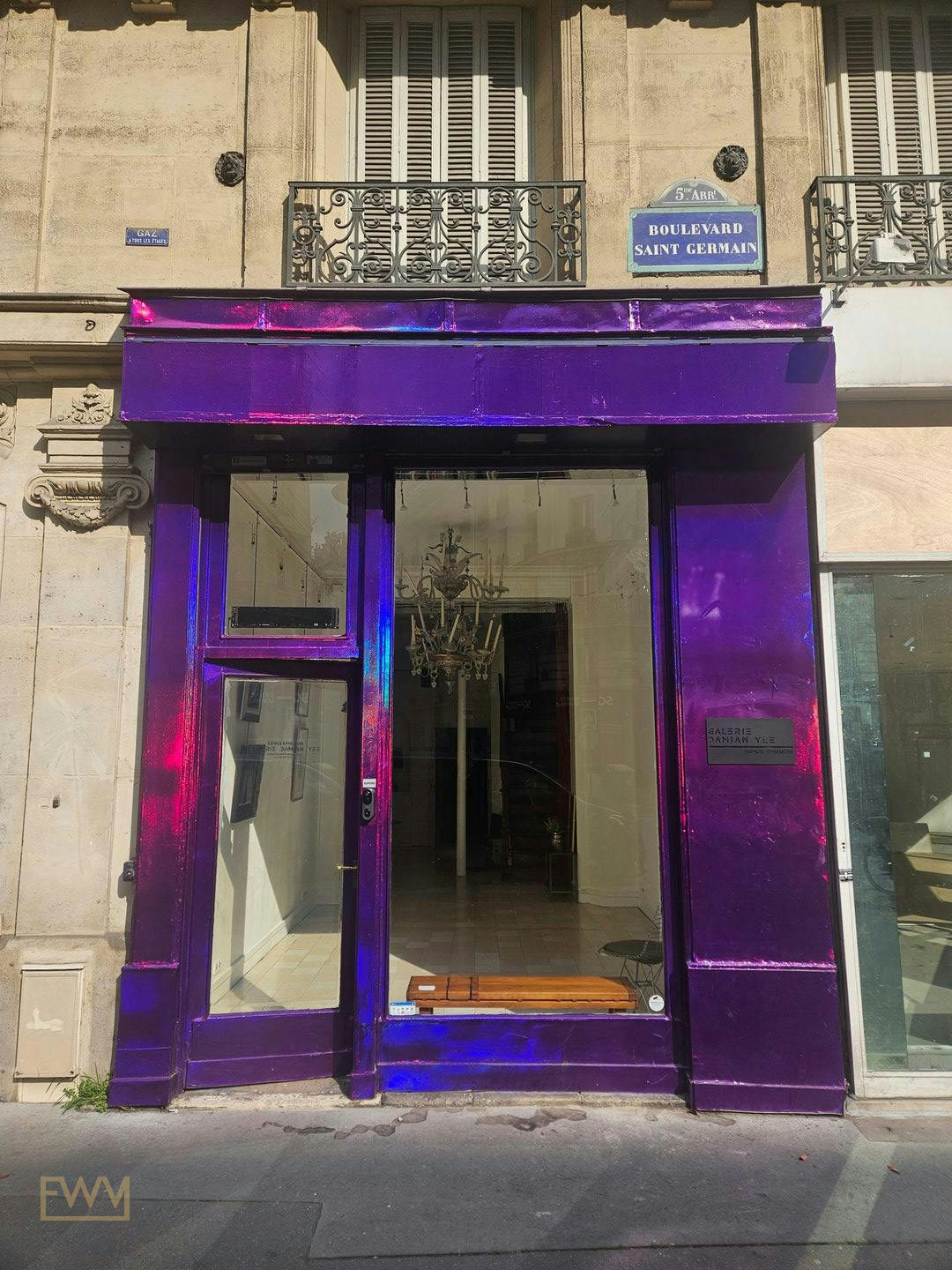
Saint-Germain-des-Prés has evolved from its literary and bohemian roots into one of Paris's most desirable luxury and fashion destinations. The neighbourhood hosts a mix of international luxury brands, independent designers, art galleries, and flagship concept stores. The Latin Quarter immediately to the east offers more accessible price points and a younger, more academic demographic. For brands in art, design, culture, or accessible luxury, Saint-Germain-des-Prés provides strong positioning and a distinctly Parisian character.
Pigalle, Montmartre, and Emerging Neighbourhoods
South Pigalle and the lower slopes of Montmartre have experienced a significant transformation over the past decade, becoming a centre for streetwear, independent fashion, creative studios, and youth-oriented brands. The neighbourhood attracts a younger local audience alongside visitors drawn by the area's creative reputation. Bercy Village in the 12th arrondissement offers an alternative retail environment with a heritage character and strong weekend foot traffic. Montparnasse in the 14th arrondissement provides practical commercial space at generally lower price points than central arrondissements, making it relevant for office space, studio space, or back-of-house functions rather than front-facing retail.
DID YOU KNOW: Paris receives over 40 million international visitors annually, making neighbourhood selection for commercial space a question not just of local demographics but of international tourism flows that vary significantly by arrondissement and street.
To explore neighbourhood-specific space availability and assess options across these zones, the Paris city hub on Fashion Week Venues provides curated listings aligned with fashion, retail, and activation briefs across all major arrondissements.
KEY TAKEAWAY: Neighbourhood selection in Paris determines your customer profile, foot traffic volume, brand positioning, and rental cost. Each arrondissement has a distinct commercial character that must be matched to your brand objectives and activation brief before committing to a specific space.
Understanding which neighbourhood suits your brand is only useful once you also understand the types of spaces available within those areas and how each space type aligns with different commercial and creative objectives.
Commercial Space Types in Paris: Storefronts, Showrooms, Galleries, and More
The Paris commercial property market encompasses a wide spectrum of space types, each suited to different brand objectives, activation formats, and visitor experiences. Knowing which type of space best serves your project prevents costly mismatches between space capability and brand execution.
Retail Storefronts and Boutiques
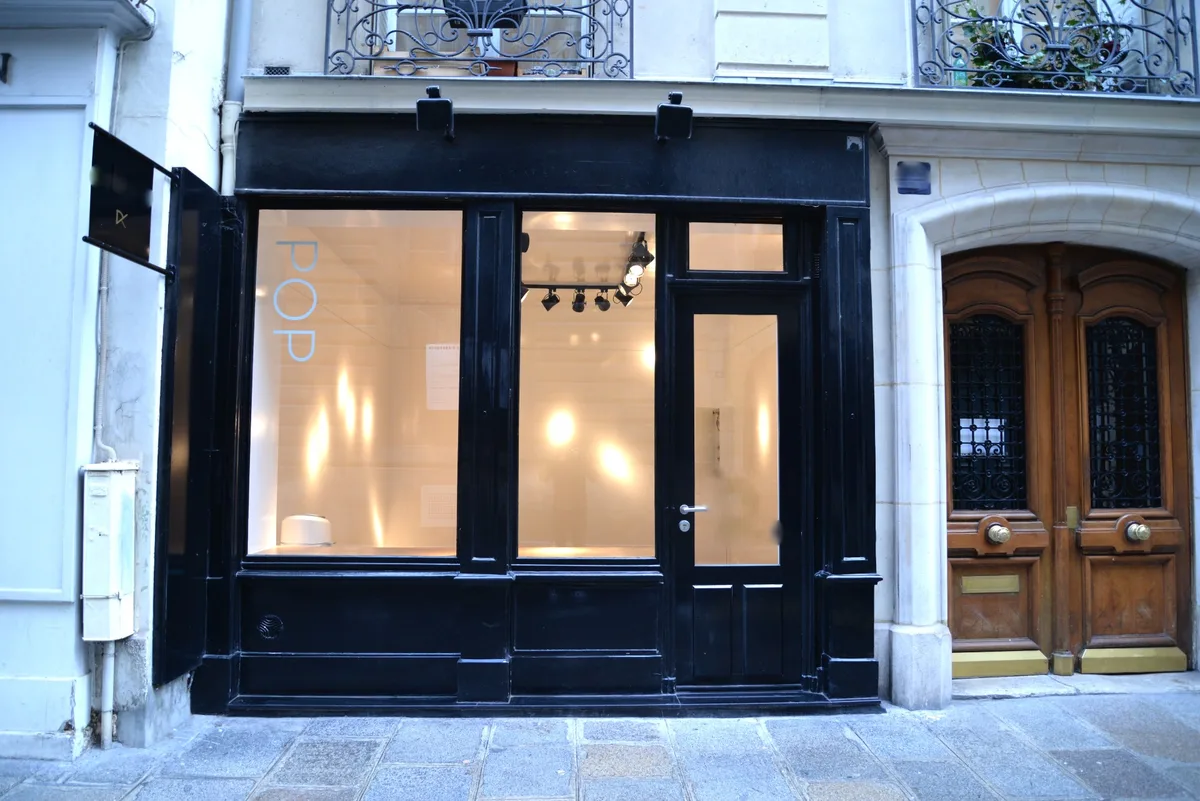
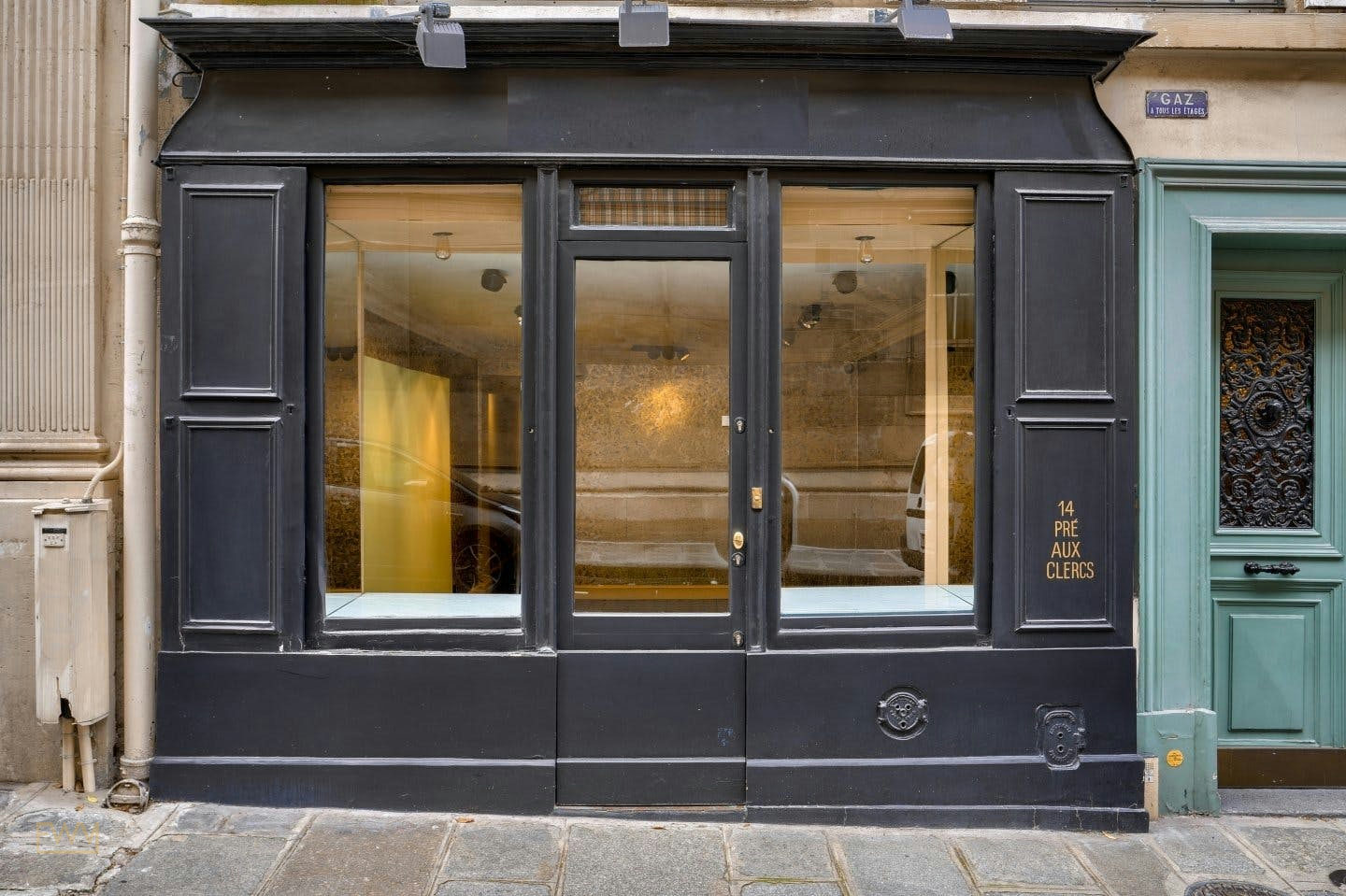
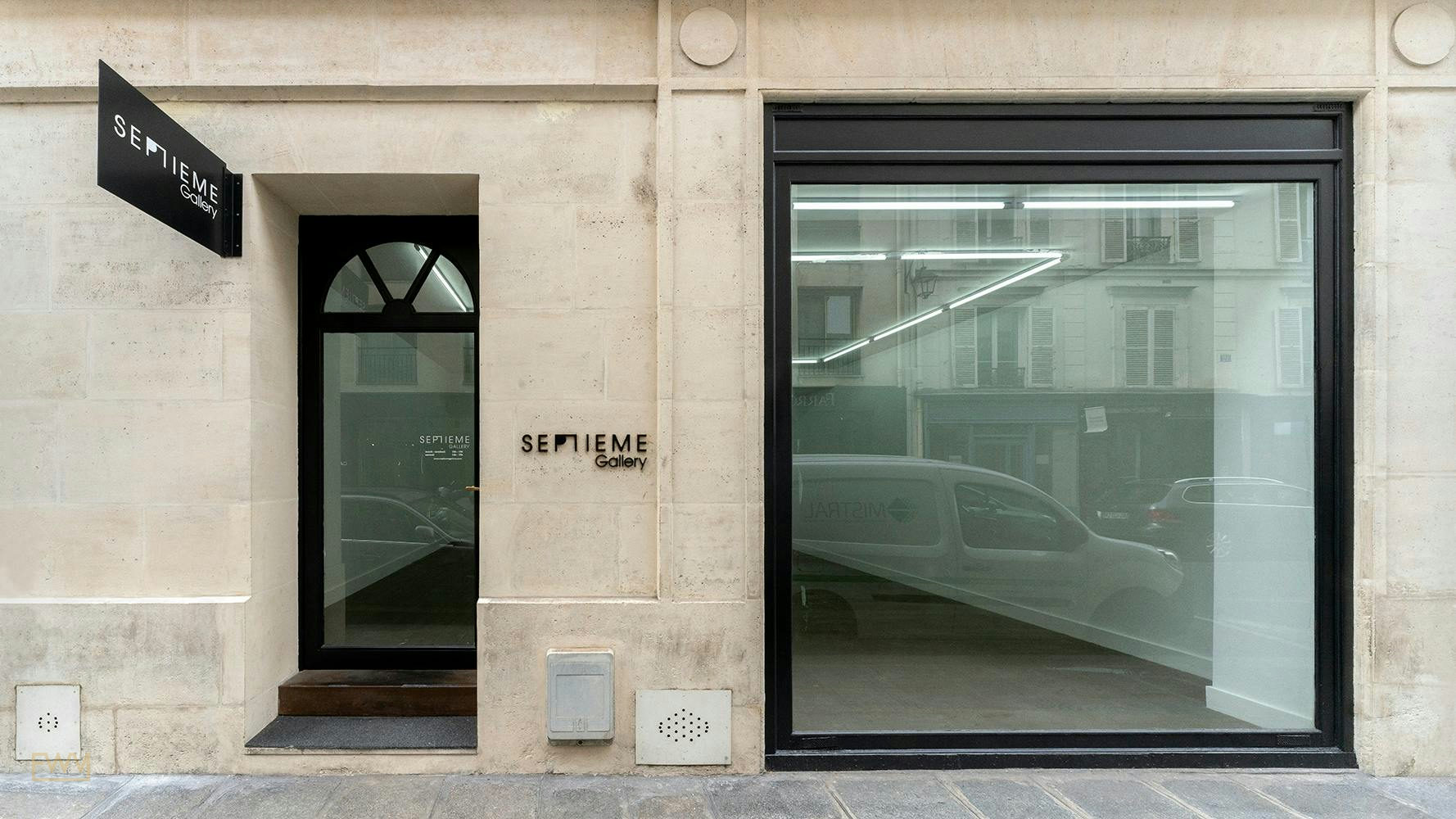
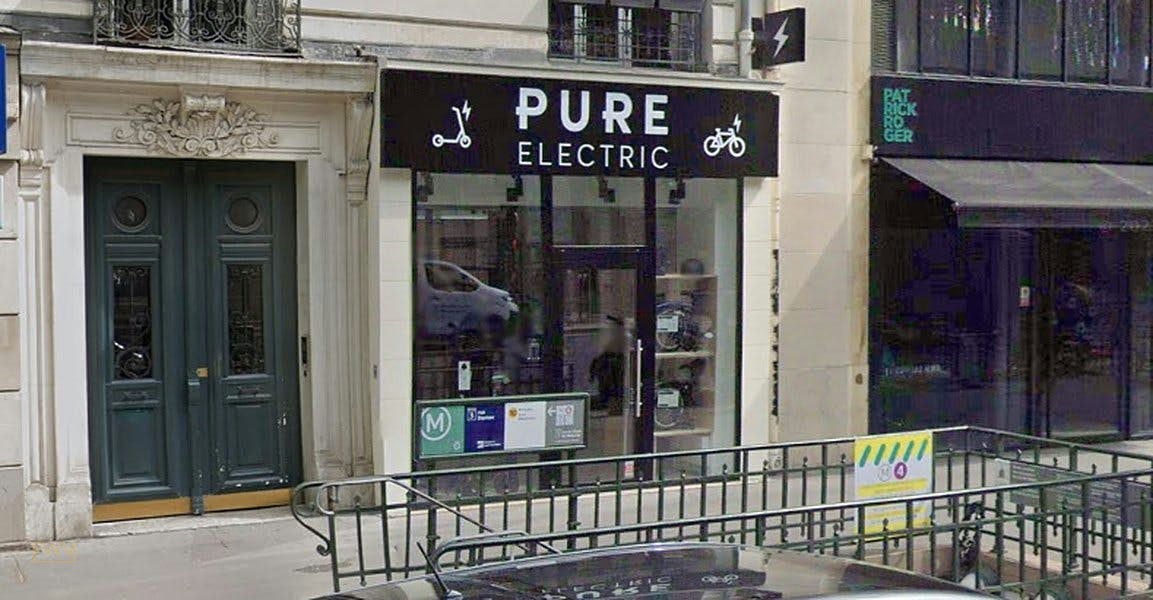
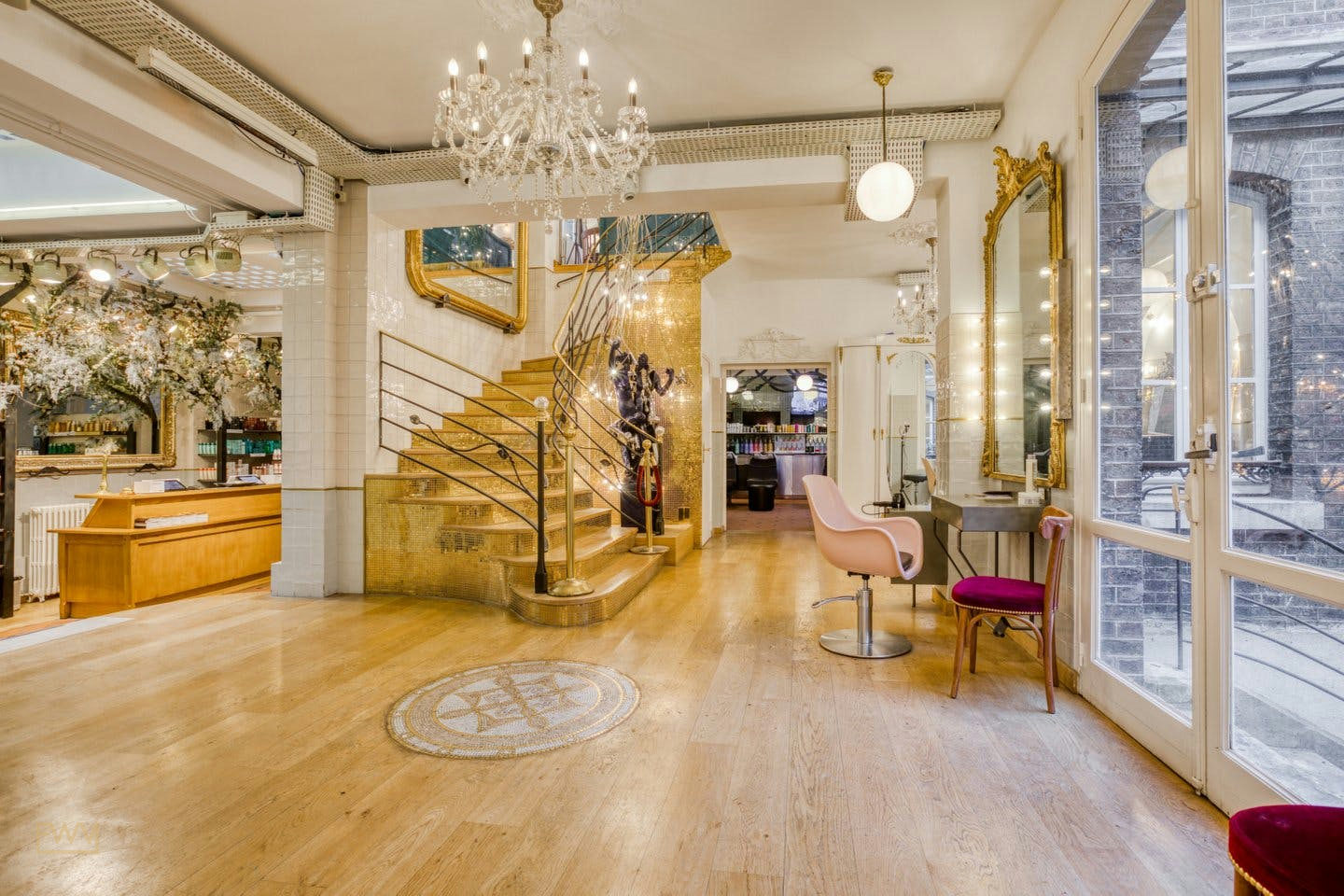
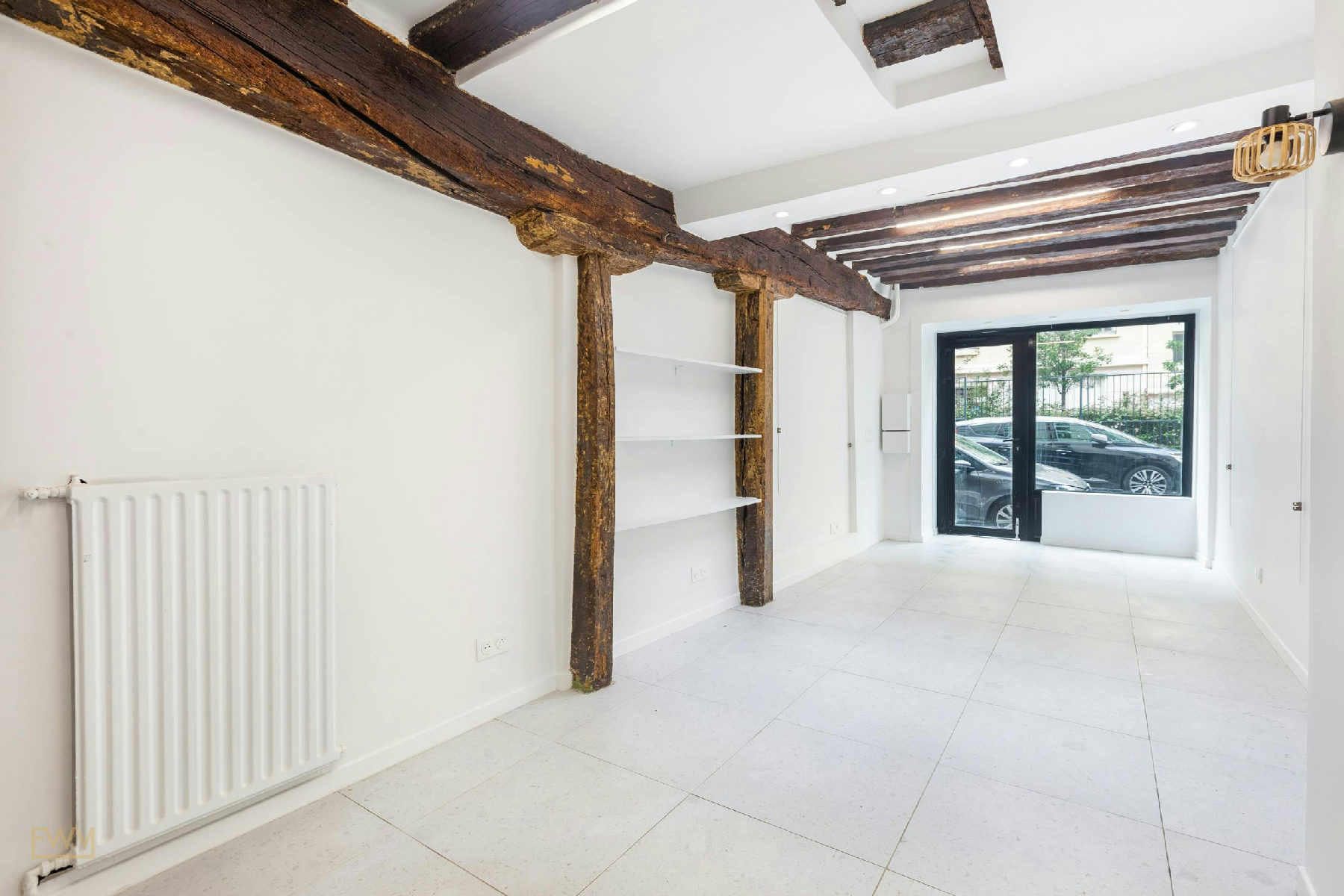
A street-facing retail storefront is the most conventional format for commercial occupancy in Paris. These spaces range from compact boutiques of 20 to 50 square metres in historic buildings to larger purpose-built retail units on major commercial streets. Key attributes to assess for any retail storefront include frontage width and street visibility, ceiling height and natural light quality, floor condition (polished concrete, raw concrete, and original parquet are all common in Paris), existing shopfront quality and signage rights, loading access, and permitted hours of operation. Storefronts on high-traffic streets in Le Marais or Saint-Germain-des-Prés command significantly higher rents than equivalent spaces in secondary locations.
Showrooms and Fashion Showrooms
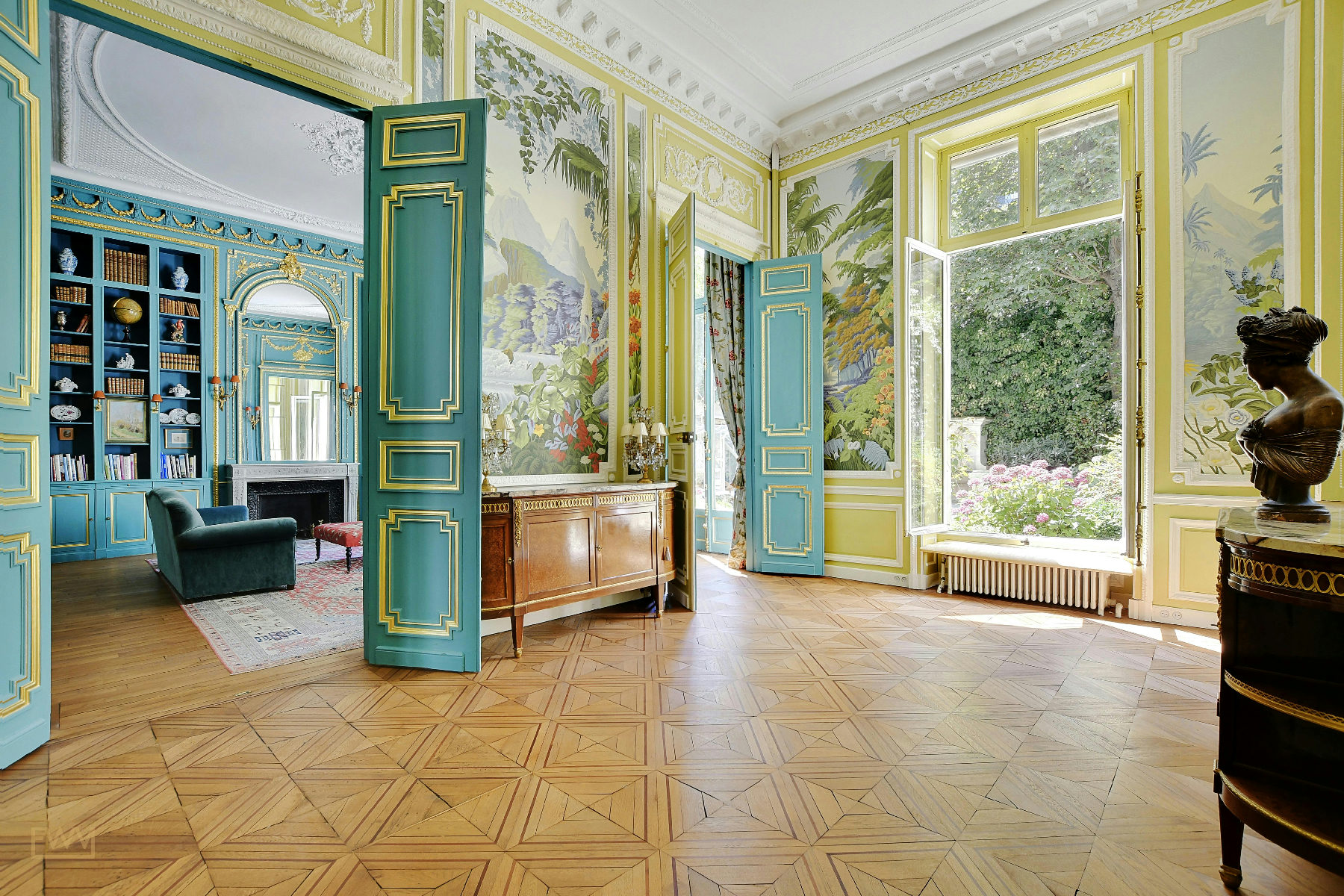
Showrooms occupy a distinct position in the Paris commercial space market, particularly during the bi-annual Paris Fashion Week calendar in January and February and again in September and October. A fashion showroom is typically an upper-floor space, often in a Haussmann building, providing a private, appointment-driven environment for presentations to press, buyers, and retail clients. Showrooms may or may not require full fit-out, and many are rented with existing furniture, lighting rigs, and hanging rails already in place. The geography of showroom demand in Paris clusters heavily around the 1st, 2nd, 3rd, and 8th arrondissements, with strong activity also in the 6th during major trade seasons.
Art Galleries and Exhibition Spaces
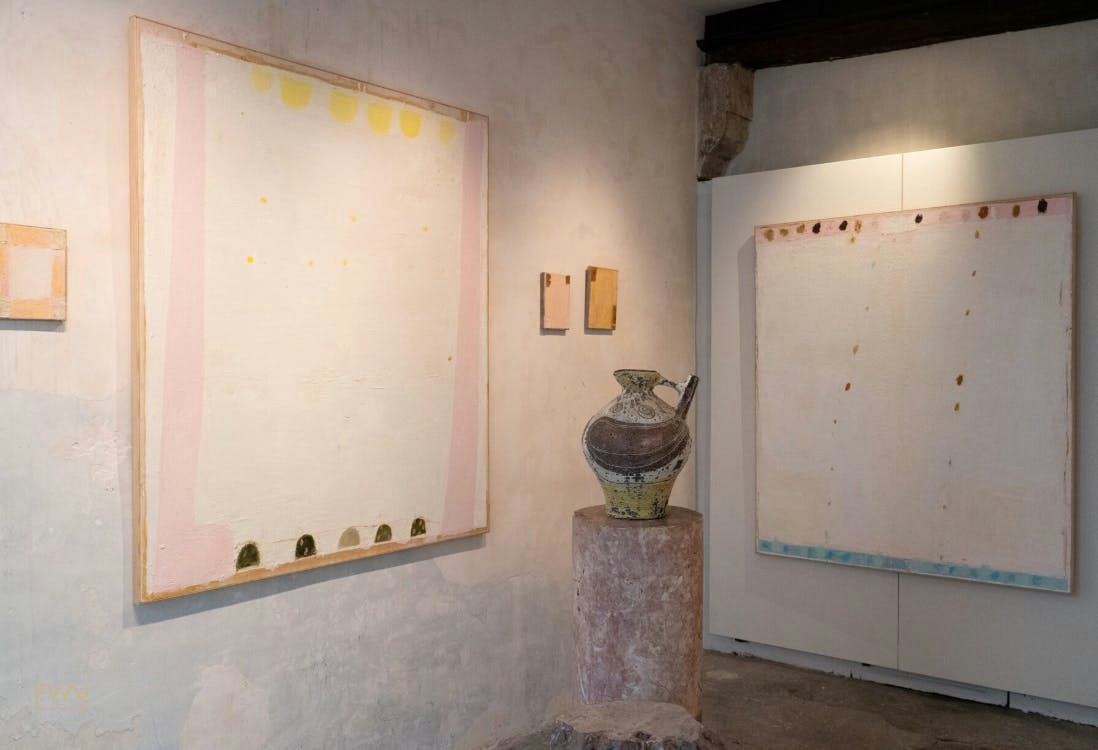
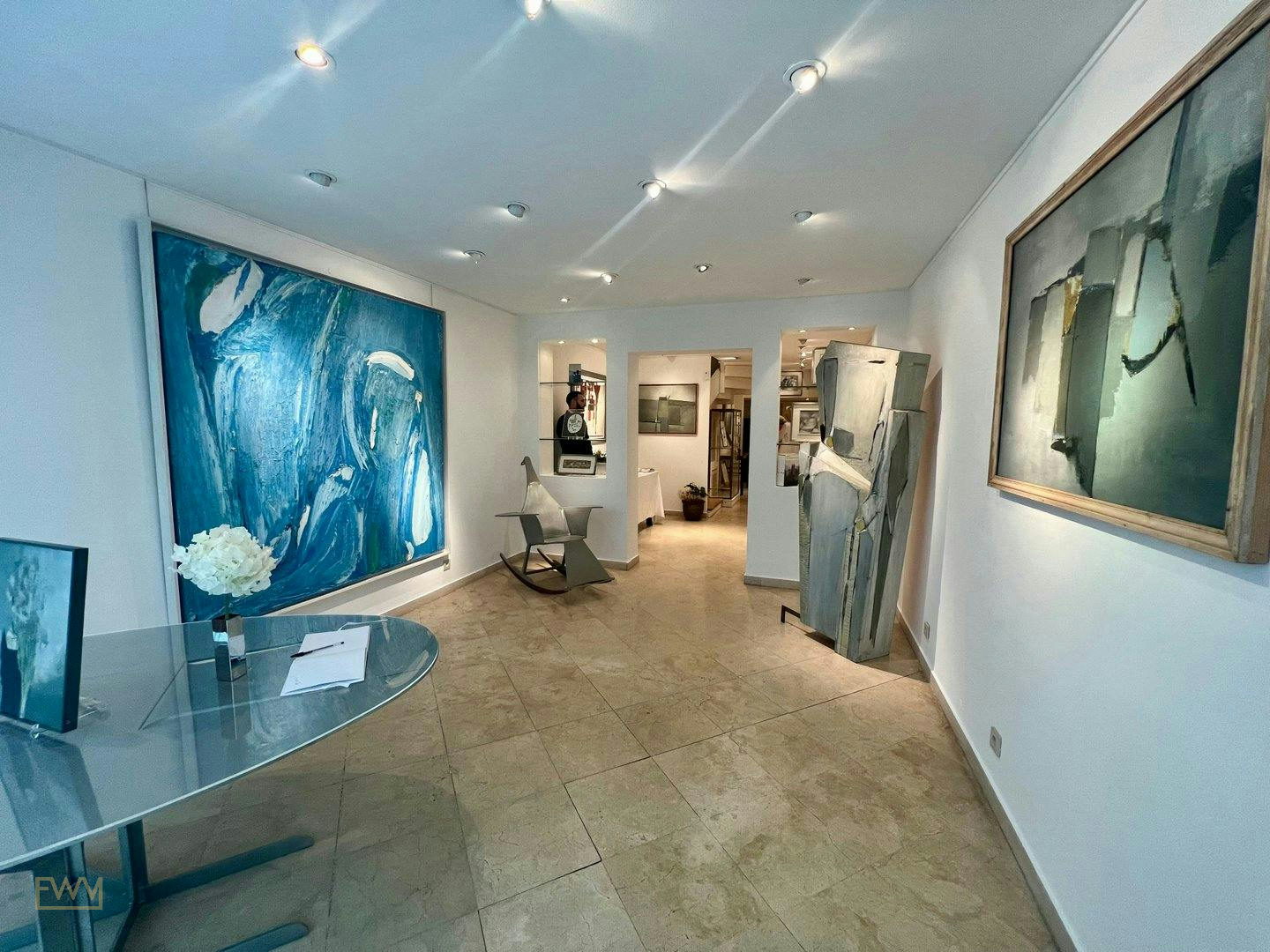
Paris has one of the densest concentrations of commercial gallery spaces in the world, and many are available for short-term hire outside their scheduled exhibition programmes. Gallery spaces typically offer white-walled, high-ceiling environments with professional lighting rigs, polished or raw concrete floors, and an existing infrastructure for displaying art, objects, or fashion. For brands seeking to position an activation within a cultural or artistic frame, a gallery format provides immediate credibility and aesthetic alignment. Spotlights and track lighting are common in gallery spaces, creating flexible lighting environments suitable for product presentation.
Pop-Up Stores and Temporary Retail Formats
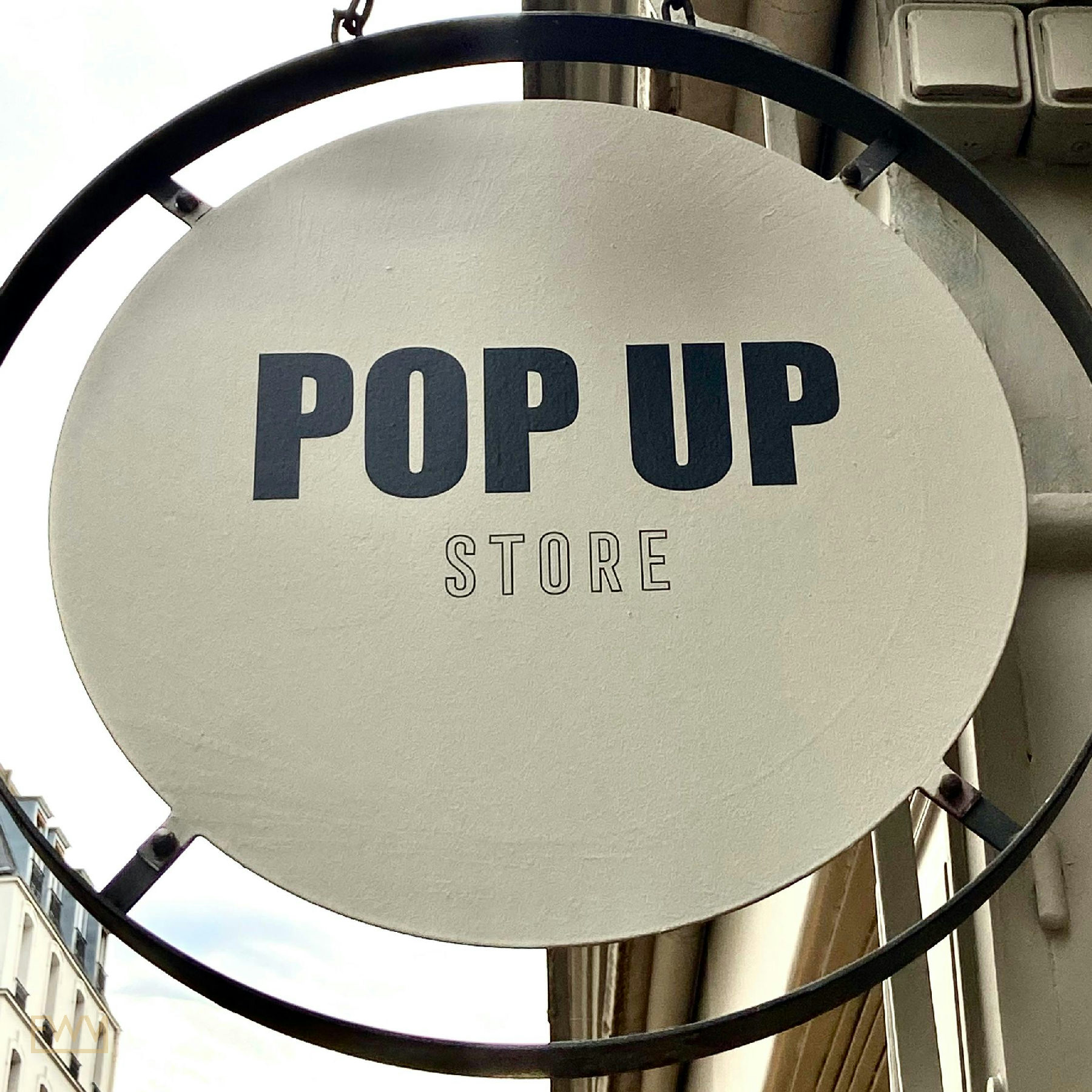
Pop-up stores have become a mainstream format in Paris commercial property, recognised by landlords, agents, and property companies as a legitimate occupancy category rather than an exception. A pop-up store can occupy a former retail unit, a vacant ground-floor apartment, a repurposed industrial space, a market stall, or a dedicated pop-up venue. The defining characteristic is duration: pop-up stores typically operate for periods ranging from a few days to a few months, using bail dérogatoire arrangements where relevant. Photo studios adapted for retail use, known as studio photo spaces, are another growing format, offering controlled lighting environments that serve both operational and content creation purposes simultaneously.
Event Spaces and Multi-Use Venues
Paris has a substantial inventory of dedicated event spaces available for short-term hire, ranging from private townhouses and historic hotels particuliers to converted industrial venues and purpose-built multi-use spaces. These venues are frequently used for brand launch events, press presentations, fashion shows, and VIP experiences during Paris Fashion Week and adjacent calendar windows. Event spaces generally operate under different permit frameworks than retail spaces, and the permitted activities, noise levels, guest capacity, and catering arrangements all require individual verification before booking.
| Space Type | Best For | Typical Duration | Key Neighbourhoods | Primary Considerations |
|---|---|---|---|---|
| Retail Storefront | Sales-driven activations, brand launches | 2 weeks to 12 months | Le Marais, Saint-Honoré, Champs-Élysées | Foot traffic, signage rights, fit-out scope |
| Fashion Showroom | Buyer presentations, press days, trade seasons | 1 to 4 weeks | 1st, 2nd, 3rd, 8th arrondissements | Appointment access, existing furniture, discretion |
| Art Gallery | Cultural brand positioning, product launches | 3 days to 6 weeks | Le Marais, Saint-Germain, Pigalle | Lighting quality, aesthetic alignment |
| Pop-Up Store | Testing, seasonal retail, campaign activations | 3 days to 3 months | All major retail arrondissements | Lease type, footfall, fit-out timeline |
| Event Space | Press events, launches, VIP experiences | 1 day to 2 weeks | Citywide, with clusters in 1st and 8th | Capacity, catering, noise regulations |
| Apartment or Loft | Intimate showrooms, collector editions | 1 to 4 weeks | Le Marais, Saint-Germain, Montmartre | Residential character, access, fire compliance |
KEY TAKEAWAY: Space type must match your activation format, visitor experience objectives, and brand positioning. Paris offers an unusually diverse inventory of commercial space types, but each format carries different lease structures, permit requirements, and operational considerations.
Choosing the right space type in the right neighbourhood is a critical decision, but it must be backed by a clear understanding of the costs involved and the market dynamics that shape pricing across different zones.
Paris Commercial Property Market Dynamics, Rental Pricing, and Budget Planning
The Paris commercial rental market is shaped by a combination of neighbourhood prestige, foot traffic volume, space size, lease duration, and the quality of the property itself. Brands approaching the Paris market without a realistic sense of pricing or market dynamics risk either overpaying for unsuitable spaces or pursuing spaces that are simply unavailable within their budget.
Factors That Drive Rental Pricing in Paris
Commercial rental pricing in Paris reflects multiple interacting variables. Street position and frontage visibility are primary drivers on retail corridors. A ground-floor space facing a high-traffic street will command a substantially higher price per square metre than an equivalent space on an upper floor or a side street, even within the same arrondissement. Ceiling height, natural light, existing fit-out quality, floor condition, and loading access all influence pricing. The arrondissement itself sets a baseline: prime commercial spaces in the 1st, 6th, and 8th arrondissements consistently rank among the most expensive commercial property markets in continental Europe, while spaces in the 11th, 12th, or 18th arrondissements offer more accessible pricing for brands with tighter budgets.
Short-Term and Pop-Up Rental Pricing
Short-term rental pricing for pop-up and temporary retail spaces in Paris is typically quoted on a weekly, monthly, or daily basis rather than the annual indexation that governs standard bail commercial agreements. Pricing for pop-up spaces reflects not just the space itself but also the demand window: spaces available during Paris Fashion Week in January, February, September, and October typically attract premium pricing compared to the same spaces available in off-season months. Brands planning activations aligned with the Fashion Week calendar should budget accordingly and begin their space search at least three to six months in advance of their target dates.
Quick answer: Commercial rental pricing in Paris varies substantially by arrondissement, space type, floor level, and lease duration. Short-term pop-up spaces during Fashion Week command premium rates compared to off-season availability. Brands should begin their Paris space search at least three to six months before their target activation window and use directional budget tools rather than relying on generic market estimates.
TIP: Use the Fashion Week Venues budget calculator to generate directional cost estimates for your specific space requirements, neighbourhood preferences, and activation duration before committing to a space search.
Understanding Property Tax and Additional Costs
Beyond base rent, commercial occupants in Paris may encounter additional costs including service charges, property tax contributions, business rates equivalents, and fit-out costs. In France, commercial tenants may be required to contribute to taxe foncière, the annual property ownership tax, through their lease agreement, though specific obligations depend on individual lease terms and must be verified for each arrangement. Fit-out costs, furniture rental, signage production, insurance, and operational staffing all add to the total cost of a commercial activation and must be factored into any realistic budget plan.
Vacancy Rates and Market Competition
Vacancy rates for prime retail space in Paris's most sought-after neighbourhoods have remained historically low, reflecting sustained demand from international brands, luxury houses, and domestic retailers. Competition for Le Marais storefronts and Golden Triangle spaces is intense, and brands that approach landlords or agents without a clear, credible brief and financial backing are unlikely to secure their preferred spaces. In contrast, emerging neighbourhoods such as South Pigalle, Oberkampf in the 11th, and parts of the 18th and 19th arrondissements offer more accessible vacancy rates for brands willing to accept a slightly less central positioning in exchange for more favourable lease terms and pricing.
| Neighbourhood Zone | Market Positioning | Relative Pricing | Vacancy Competition | Ideal Brand Profile |
|---|---|---|---|---|
| Golden Triangle and Place Vendôme | Ultra-premium luxury | Very high | Very high | Luxury, couture, fine jewellery |
| Le Marais and Les Enfants Rouges | Premium creative and fashion | High | High | Fashion, design, lifestyle, art |
| Saint-Germain-des-Prés | Premium cultural and fashion | High | High | Accessible luxury, design, beauty |
| Champs-Élysées and Grands Boulevards | Mass premium and flagship | Very high on avenue, moderate on side streets | Moderate to high | Mass-market flagship, international brands |
| South Pigalle and Montmartre | Emerging creative | Moderate | Moderate | Streetwear, independent, youth brands |
| Bercy, Latin Quarter, Montparnasse | Local and accessible | Lower | Lower | Studio, office, secondary retail |
KEY TAKEAWAY: Commercial rental pricing in Paris is highly neighbourhood-specific and demand-driven. Fashion Week calendar windows create seasonal price premiums for short-term spaces. Realistic budget planning must account for not just rent but also fit-out, operational costs, and any additional lease obligations before committing to a Paris commercial space.
With pricing dynamics understood, the next practical challenge is navigating the process of actually searching for and securing commercial space in Paris, a process that differs considerably from markets where online listings platforms provide comprehensive inventory coverage.
How to Search for Commercial Space in Paris: Platforms, Agents, and Specialist Support
Finding the right commercial space in Paris requires understanding which search channels are most effective, what information landlords and agents expect from prospective tenants, and how to avoid the common pitfalls that delay or derail space searches for international brands.
Online Commercial Property Platforms
Several online platforms list commercial property for rent or sale in France. Major commercial real estate platforms used in the French market include specialist property sites that aggregate listings from commercial real estate agents, property companies, and individual landlords. International platforms such as LoopNet and CoStar have a presence in the French market, though their French language coverage and depth of Paris-specific listing detail can vary. Most Paris commercial listings are conducted through French-language platforms, and brands without French-language experience or local contacts may find that the most desirable spaces never appear on public listings at all, being filled through agent networks before public availability is announced. Brands searching through standard listings platforms should set up alerts for their target criteria, monitor regularly, and be prepared to act quickly when suitable spaces become available.
Commercial Real Estate Agents and Brokers
Commercial real estate agents and brokers operating in Paris range from large multinational property companies with dedicated retail division teams to local property agents and iad agents embedded in specific neighbourhoods. Agents working on commission from landlords typically have access to listings that are never publicly advertised, and established relationships with building owners, property companies, and investors are essential for accessing the most desirable spaces in competitive neighbourhoods. For brands with specific and time-sensitive requirements, working through an agent with strong local networks is often faster and more productive than relying on listings platforms alone. However, commission structures, fee arrangements, and the scope of services provided by agents vary considerably and should be clarified before engagement.
Specialist Pop-Up and Short-Term Retail Platforms
A growing category of specialist platforms focuses specifically on short-term retail, pop-up, and temporary commercial space, aggregating listings from landlords who are explicitly open to flexible occupancy formats. These platforms simplify the discovery process for international brands by presenting spaces with confirmed availability windows, pricing transparency, and in some cases digital visualisation tools. Fashion Week Venues operates a curated space marketplace specifically designed for brands seeking pop-up stores, showrooms, event venues, and temporary retail spaces in Paris and other major fashion capitals, with spaces pre-vetted for brand quality and activation suitability.
Using Search Tools Effectively
Effective space searches in Paris require clear criteria: target arrondissement or neighbourhood, minimum and maximum square metres, required floor level, access type, space features such as existing fit-out quality and lighting, and available dates. Platforms that allow filtering by Space Type, Floor and Access, and Space Features reduce search time significantly and help brands shortlist options that genuinely match their brief rather than generating irrelevant results to review manually. Setting up automated alerts for new listings matching your criteria ensures that your team is notified promptly when relevant spaces become available, which is particularly important in high-demand periods ahead of Fashion Week.
Quick answer: Searching for commercial space in Paris requires a combination of online listings platforms, direct agent relationships, and specialist short-term rental networks. Many of the most desirable spaces in prime neighbourhoods are filled through agent networks before public listing. International brands benefit from working with a local expert or specialist agency who has pre-existing landlord relationships and knowledge of which spaces are genuinely available within a specific budget and timeline.
DID YOU KNOW: A significant proportion of premium short-term retail and showroom spaces in Paris are never publicly listed and are filled through direct relationships between landlords and trusted agents or specialist platforms. Relying solely on public search platforms risks missing the most sought-after spaces in competitive arrondissements.
KEY TAKEAWAY: A multi-channel search approach combining specialist platforms, local agent relationships, and alert-based monitoring is the most effective strategy for finding commercial space in Paris. Brands with specific timelines and quality requirements benefit most from working with specialists who have direct access to pre-market and off-market space inventory.
Finding the right space is only one part of a successful Paris commercial activation. The fit-out, design, permits, staffing, and operational execution must all align with the space's characteristics and the brand's campaign objectives.
Permits, Regulations, and Legal Compliance for Commercial Space in Paris
Paris commercial space activations, particularly those involving public-facing retail, events, signage, or structural modifications, are subject to a range of permit and regulatory requirements. Brands that underestimate the complexity of French commercial regulations risk delays, financial penalties, or the forced suspension of their activation.
Permitted Use and Change of Use
Not all commercial spaces in Paris are authorised for all types of commercial activity. A space permitted for use as an office cannot automatically be used as a retail boutique without a change of use application being processed and approved by the relevant local authority. Similarly, a gallery space may not automatically be permitted for food service, live events, or retail sales without appropriate authorisation. Brands should always verify the declared permitted use of any space before signing an occupancy agreement, and any intended use that falls outside the existing authorisation must be addressed through the appropriate application process before the activation begins.
Signage and Street Visibility
External signage in Paris is regulated by local planning rules that vary by arrondissement and building type. Historic buildings and those within protected heritage zones are subject to stricter signage controls than modern commercial buildings. The size, material, illumination, and positioning of external signs all require compliance with applicable regulations, and in many cases a specific permit for temporary or permanent signage must be obtained from the local mairie or the relevant heritage authority. Brands planning high-impact signage installations as part of their pop-up or retail activation should include signage permitting in their pre-activation timeline and budget.
Fire Safety, Accessibility, and Public Safety
Commercial spaces open to the public in France must comply with Etablissements Recevant du Public regulations, commonly referred to as ERP rules. These regulations cover fire safety, emergency exit requirements, accessible facilities for people with reduced mobility, maximum occupancy limits, and related public safety standards. The category and sub-category of ERP classification that applies to a specific space determines the detailed requirements that must be met. Non-compliance with ERP regulations can result in an activation being closed by local authorities, so verification of ERP compliance before occupation is essential for any space receiving members of the public.
The Permits Tool and Expert Guidance
Navigating the permit landscape for a Paris commercial activation is one of the most frequently underestimated challenges for international brands. Requirements vary by space type, duration, arrondissement, permitted use, and the specific activities planned during the activation. The permits guidance tool on Fashion Week Venues provides directional information to help brands understand the permit landscape for their specific activation type, though all specific permit applications and legal compliance matters should be reviewed and managed with the support of a qualified French legal advisor or specialist consultant.
IMPORTANT: Requirements for permits, compliance certifications, and change-of-use authorisations in Paris can involve processing times of several weeks or months. Brands that leave permit management to the final weeks before their activation risk delays that could affect their opening date or operational scope.
Quick answer: Commercial space activations in Paris require compliance with permitted use regulations, signage rules, ERP public safety standards, and in some cases specific event or structural modification permits. Requirements vary significantly by space type, location, and planned activities. Begin permit review at least two to three months before your intended opening date and engage French legal or compliance expertise to manage the process correctly.
KEY TAKEAWAY: Permit and regulatory compliance is a non-negotiable component of any Paris commercial activation. Brands must verify permitted use, signage rights, ERP classification, and any additional authorisation requirements specific to their planned activities well before their target opening date.
With space secured and permits in progress, the operational execution of a Paris commercial activation, including fit-out, design, staffing, and performance measurement, determines whether the investment delivers meaningful results.
Fit-Out, Design, and Operational Execution for Paris Commercial Spaces
The physical execution of a commercial space activation in Paris encompasses everything from initial concept direction through to fit-out construction, furniture selection, lighting installation, retail staffing, point of sale systems, and post-activation performance analysis. Each of these elements requires careful planning, local supplier knowledge, and coordination with the space's landlord and local authorities.
Concept Direction and Branded Store Design
A successful Paris activation begins with a clear creative concept that translates the brand's identity into a spatial experience appropriate for the target neighbourhood and audience. Concept direction for a pop-up in Le Marais must account for the neighbourhood's design-conscious clientele and the expectation of creative originality that local visitors and press bring to the area. Branded store design in Paris requires an understanding of the architectural context of French commercial spaces, which frequently include exposed stone walls, ornate ceiling mouldings, or existing floor finishes such as polished concrete or original parquet that define the aesthetic starting point for any fit-out. Working with designers who have experience of French commercial spaces, and specifically of the constraints and opportunities that historic Parisian buildings present, produces substantially better outcomes than applying a generic international retail design template.
Production, Build, and Fit-Out
The production and build phase of a Paris commercial activation involves coordinating with local contractors, suppliers, and the landlord's building management team to execute the physical transformation of the space within the agreed timescale. Paris commercial buildings often have specific delivery access restrictions, lift size limitations, and restrictions on working hours that differ from those in other markets. Planning the build sequence realistically within these constraints requires local knowledge and pre-existing supplier relationships. Furniture rental for temporary activations is a cost-efficient alternative to purchasing and transporting furniture, and Paris has a strong market of specialist furniture rental companies familiar with the requirements of short-term commercial activations.
Retail Staffing and Customer Experience
Retail staffing for a Paris commercial activation requires consideration of language capability, fashion and brand knowledge, customer service culture, and legal employment compliance under French labour law. French employment regulations impose specific obligations around working hours, contracts, minimum wage, and social contributions that international brands activating in Paris for the first time frequently underestimate. For short-term activations, specialist retail staffing agencies familiar with the Paris market can provide trained multilingual staff under compliant temporary employment arrangements. The quality of the in-store team directly shapes the customer experience and the brand impression created by the activation, making staffing investment as important as physical design.
Point of Sale, Payments, and Data
Operational infrastructure for a Paris retail activation includes point of sale systems, payment processing, inventory management, and data capture. French payment infrastructure supports a wide range of card payment methods, and tourist-facing retail spaces benefit from multi-currency acceptance capability given the high proportion of international visitors in prime Paris neighbourhoods. Data capture during an activation, including transaction data, visitor counts, conversion rates, and customer demographic information, provides the evidence base for evaluating performance and informing future strategy. Analytics collected during a Paris activation are particularly valuable for brands assessing whether to commit to a longer-term presence in the French market.
Quick answer: Operational execution for a Paris commercial activation encompasses concept design, fit-out production, furniture, retail staffing, POS systems, and data capture. Each element requires coordination with French regulations, local suppliers, and the specific constraints of the space and building. Brands working with a specialist full-service agency in Paris benefit from pre-existing supplier relationships and compliance knowledge that reduces execution risk and accelerates delivery timelines.
Fashion Week Venues provides support across all of these operational dimensions, from concept and creative direction through fit-out and production to post-activation analytics, offering brands a single integrated resource for Paris commercial space execution rather than requiring the assembly of multiple disconnected suppliers.
KEY TAKEAWAY: Physical and operational execution quality determines whether a Paris commercial activation achieves its brand and commercial objectives. Concept alignment with neighbourhood character, fit-out quality, staffing calibre, and data capture discipline are the critical execution variables that differentiate high-performing Paris activations from underperforming ones.
How Fashion Week Venues Supports Commercial Lease and Activation Projects in Paris
Fashion Week Venues operates as a full-service agency and space marketplace specifically designed to support brands navigating commercial space rental and activation management in Paris and other major fashion capitals. Understanding what Fashion Week Venues does, which brand teams benefit most from its services, and how to engage practically with the platform and team helps brands assess whether the agency is the right partner for their Paris project.
Who Fashion Week Venues Serves
Fashion Week Venues serves fashion brands, luxury houses, beauty brands, lifestyle companies, creative agencies, event producers, and international companies entering the Paris market. The agency is particularly well suited to brand teams that have a clear activation brief but limited local knowledge, to companies planning their first Paris pop-up or showroom, to brands coordinating activations around the Paris Fashion Week calendar, and to organisations seeking a single accountable partner across multiple service dimensions rather than assembling individual suppliers independently.
Services and Tools Available
The agency's service portfolio covers the complete lifecycle of a Paris commercial activation: venue sourcing, concept direction, production and build, activation management, branded store design, furniture rental, retail staffing, POS and payments, data and analytics, and influencer marketing. In addition to services, Fashion Week Venues provides a suite of practical planning tools including a budget calculator, an ROI calculator, a space comparison tool, a timeline planning tool, a permits guidance tool, a space locator tool, and a visualisation tool called Imagine that allows brands to preview how a space might look once activated.
The Marketplace and Space Discovery
The Fashion Week Venues marketplace aggregates curated short-term and pop-up space listings across Paris, London, Milan, New York, Tokyo, and Dubai. Listings are pre-vetted for brand quality and activation suitability, and the platform allows brands to search by space type, neighbourhood, size, duration, and availability window. For brands beginning a Paris space search, the marketplace provides a structured starting point that surfaces relevant options without requiring the brand team to navigate multiple agents, platforms, and French-language property sites simultaneously.
The Twin Concept and Co-Activation
Fashion Week Venues also offers a twin co-activation concept that allows two complementary brands to share a single space and split the associated costs. This model is particularly well suited to emerging brands with limited budgets seeking access to premium Paris locations, or to established brands seeking to create a curated multi-brand experience within a single activation footprint. The twin concept reduces rental cost, increases the brand diversity available to visitors, and can generate stronger press and social media interest than a solo activation in the same space.
Practical Limitations to Understand
Fashion Week Venues does not guarantee the availability of specific spaces, the approval of permit applications, the outcome of landlord negotiations, or the commercial results of any activation. Space availability in Paris is subject to market conditions, landlord preferences, and competing demand, particularly in peak season windows. Brands should engage with the agency as early as possible before their target dates to maximise the range of available options and allow adequate time for permit processing and fit-out planning.
To understand how the agency operates in practice and review examples of completed Paris activations, the Fashion Week Venues work and case study section provides documented examples of brand activations across different space types, neighbourhoods, and campaign objectives.
KEY TAKEAWAY: Fashion Week Venues provides brands with an integrated path from Paris space discovery through to full activation delivery, reducing the coordination burden and local knowledge gap that international brands face when entering the Parisian commercial property market for the first time or on an accelerated timeline.
To compare neighbourhoods and space types, explore the Paris city hub on Fashion Week Venues and shortlist spaces that match your brief, budget, and calendar window.
Paris Fashion Week Calendar and the Commercial Lease Cycle
The Paris Fashion Week calendar exerts a defining influence on the short-term commercial space market in Paris, shaping demand, pricing, availability, and lead times for brands seeking retail, showroom, and event space during the industry's most concentrated periods of activity.
The Bi-Annual Fashion Week Windows
Paris Fashion Week takes place twice annually: the January and February edition covers menswear and haute couture, while the September and October edition is the largest and most internationally attended, covering womenswear ready-to-wear. During these windows, the concentration of press, buyers, influencers, stylists, photographers, and brand representatives in Paris is unparalleled in the global fashion calendar, making the city's commercial spaces extraordinarily valuable for brand visibility and relationship building. Brands that activate commercial spaces during Fashion Week benefit from this concentrated audience but face significantly higher demand and pricing for prime spaces.
Adjacent Calendar Windows
In addition to the core Fashion Week windows, Paris hosts several adjacent trade and cultural events that create secondary demand peaks for commercial space. Maison et Objet in January and September attracts design industry visitors. Paris Photo in November draws international collectors and art world professionals. The FIAC and Paris+ par Art Basel periods generate demand for gallery and event spaces. Brands whose categories align with these events may find that activating during adjacent windows provides access to a highly targeted professional audience with less competition for space and more accessible pricing than the peak Fashion Week dates.
Planning Your Timeline Around the Calendar
The lead time required to successfully activate a commercial space in Paris during Fashion Week is substantially longer than many international brands anticipate. Space searches for the September Fashion Week window should ideally begin no later than April or May of the same year, and for the most sought-after spaces in Le Marais or the Golden Triangle, even earlier engagement may be necessary. Fit-out planning, permit applications, staffing recruitment, and brand supplier coordination all require time that cannot be compressed without increasing risk or cost. Use the Fashion Week Venues timeline planning tool to map your activation milestones against your target dates and identify where lead time is tightest.
Quick answer: Paris Fashion Week in January, February, September, and October creates the strongest demand windows for short-term commercial space. Brands targeting these windows should begin their space search three to six months in advance and allow additional lead time for permit applications, fit-out planning, and staffing. Adjacent trade and cultural events create secondary demand peaks with more accessible pricing and reduced competition for space.
KEY TAKEAWAY: The Paris Fashion Week calendar is the primary driver of demand, pricing, and availability in the short-term commercial space market. Brands that plan their search, budget, and timeline realistically around the calendar are significantly better positioned than those that approach the market reactively.
Common Myths About Commercial Leases and Pop-Up Space in Paris Debunked
MYTH: You need a French legal entity to rent a commercial space in Paris.
FACT: While some landlords prefer to deal with French-registered companies, it is not a legal requirement for all types of commercial occupancy in Paris. Many short-term and pop-up space arrangements, particularly those structured as bail dérogatoire agreements, can be entered into by foreign legal entities. The specific requirements depend on the landlord, the space, the duration, and the occupancy format. Specialist agencies and legal advisors can structure arrangements that accommodate international brands without French company registration, though specific requirements should always be confirmed for each individual project.
MYTH: Paris Fashion Week is the only commercially viable calendar window for brand activations in Paris.
FACT: Paris Fashion Week is the highest-profile window, but it is far from the only commercially viable period for brand activations. Paris attracts over 40 million international visitors annually, and the city's retail and cultural calendar includes major trade events, fashion months, art fairs, and holiday periods throughout the year that create strong demand for commercial space activations. Many brands find that activating in adjacent windows provides better value for money, less competition for preferred spaces, and access to a more focused professional audience for showroom and presentation formats.
MYTH: Commission brokers are the only way to find and secure commercial space in Paris.
FACT: Commission-based agents are one channel for finding commercial space in Paris, but they are not the only option. Specialist short-term and pop-up space platforms, full-service agencies with pre-negotiated space relationships, and direct landlord outreach are all viable routes to securing Paris commercial space. For brands seeking transparency on pricing, space quality, and availability without the potential conflicts of interest inherent in commission-based brokerage, specialist platforms and agencies that operate on a service fee model rather than a landlord commission model provide a genuinely different approach.
MYTH: Short-term leases are legally straightforward and require minimal specialist input.
FACT: Short-term commercial occupancy in Paris, even when structured as a bail dérogatoire, involves legally binding obligations around permitted use, insurance, reinstatement, permitted modifications, and in some cases deposit requirements that are not trivial. The risk of inadvertently converting a bail dérogatoire into a full bail commercial through overstaying or insufficient documentation is real and can have significant financial consequences. Brands should always involve a French legal advisor in the review and execution of any commercial occupancy agreement, regardless of how informal or straightforward the arrangement may appear on the surface.
MYTH: Any commercial space in Paris can be used for retail without additional authorisation.
FACT: In Paris, the permitted use declared in a commercial property's planning documentation governs what activities can legally take place within the space. A space authorised for use as an office or gallery cannot automatically be used for retail sales without a formal change-of-use process. Similarly, spaces in residential buildings or mixed-use zones may face additional restrictions on opening hours, visitor volumes, and the nature of commercial activity. Verifying permitted use before signing any occupancy agreement is essential, and any required change-of-use authorisation must be obtained before the activation begins.
Frequently Asked Questions About Commercial Lease Paris
What is a bail dérogatoire and how does it differ from a standard French commercial lease?
A bail dérogatoire is a short-term commercial occupancy agreement under French law that operates outside the standard nine-year bail commercial framework. It allows for temporary occupancy of a commercial space for a maximum total duration of three years. Unlike the bail commercial, a bail dérogatoire does not grant the tenant automatic renewal rights or the same level of tenant protection. It is the primary legal structure used for pop-up stores, temporary showrooms, and short-term retail activations in Paris. Both parties must clearly document the agreement as dérogatoire from the outset, and the three-year cap must be respected to avoid automatic conversion to a bail commercial. Specialist legal advice is strongly recommended before signing.
Do I need a French company to rent a commercial space in Paris?
Not necessarily. While some landlords in Paris prefer to deal with French-registered entities, it is not a universal legal requirement for all commercial occupancy types. Short-term bail dérogatoire arrangements can in many cases be structured to accommodate foreign companies, though the specific requirements depend on the landlord, the space, the duration, and the nature of the activation. Specialist agencies and French legal advisors can help international brands navigate these requirements and structure occupancy agreements that work within the applicable legal framework. Always verify specific requirements for each individual property and arrangement rather than assuming a universal rule applies.
How far in advance should I start looking for commercial space in Paris for Fashion Week?
For prime spaces in Le Marais, the Golden Triangle, or Saint-Germain-des-Prés during the September Paris Fashion Week window, beginning your search at least four to six months in advance is strongly advisable. The most sought-after spaces in these neighbourhoods are frequently reserved months ahead of the Fashion Week dates, and leaving your search until two or three months before your target dates significantly narrows your options. If you are also planning a substantial fit-out or require specific permit applications, additional lead time beyond the space search itself is necessary to allow for contractor scheduling and permit processing.
What types of commercial spaces are available for short-term rental in Paris?
The short-term commercial space market in Paris includes retail storefronts and boutiques, fashion showrooms, art gallery spaces, event venues, loft and apartment formats adapted for commercial use, photo studio spaces, and dedicated pop-up venue formats. Each type carries different characteristics in terms of ceiling height, floor finish, lighting, access, and visitor experience. The best space type for your activation depends on your brand objectives, target audience, planned activities, and budget. Platforms that allow filtering by space type and features help brands efficiently shortlist the most relevant options from available inventory.
Which Paris arrondissements have the highest foot traffic for retail activations?
The highest foot traffic retail corridors in Paris include the Avenue des Champs-Élysées, Rue de Rivoli, Boulevard Haussmann near Galeries Lafayette and Printemps, and the main streets of Le Marais such as Rue des Francs-Bourgeois. However, foot traffic volume is not always the most relevant metric for specialist or luxury brands: the quality, relevance, and purchasing power of visitors to a specific street or neighbourhood is often more important than raw pedestrian count. Saint-Germain-des-Prés and Place Vendôme attract lower absolute volumes than the Champs-Élysées but with a significantly higher concentration of luxury and fashion-oriented visitors.
What permits do I need for a pop-up store in Paris?
The permits required for a pop-up store in Paris depend on the space type, location, planned activities, and duration of the activation. At minimum, you must verify that the space has the correct permitted use for retail and that ERP compliance has been confirmed for public-facing occupancy. External signage typically requires a separate permit application reviewed against local planning rules, which vary by arrondissement and building heritage classification. If structural modifications are planned, additional authorisations may be required. For spaces on public land, an Autorisation d'Occupation Temporaire is needed. The permits guidance tool on Fashion Week Venues provides directional information, but all specific permit applications should be managed with qualified French legal or compliance support.
Can I find affordable commercial space in Paris for a pop-up or showroom?
Affordable commercial space is available in Paris, though the definition of affordable depends heavily on your brand's budget and the neighbourhoods you are considering. In emerging areas such as South Pigalle, the 11th arrondissement, parts of the 18th, or Bercy Village, commercial spaces at more accessible price points are available compared to prime arrondissements. For brands that need proximity to the fashion industry ecosystem without the highest-end address, secondary streets in Le Marais or locations just off the main Saint-Germain shopping corridor can offer better value than front-facing prime retail positions. The twin co-activation concept offered by Fashion Week Venues allows two brands to share a prime space and split rental costs.
What is the ERP classification and why does it matter for commercial space in Paris?
ERP stands for Etablissements Recevant du Public, the French regulatory framework governing public-facing commercial premises. ERP classification determines the fire safety, emergency exit, accessibility, and maximum occupancy requirements that apply to a specific space when it is open to members of the public. Different ERP categories apply to different types of commercial activity and different maximum capacities. Compliance with the applicable ERP classification is a legal requirement for any commercial space receiving visitors, and failure to comply can result in the space being closed by local authorities. Brands should verify the ERP status and compliance of any space before committing to a public-facing activation.
Is it possible to rent commercial space in Paris without speaking French?
Yes, though the process is considerably more complex without French-language capability or local representation. Many landlords, agents, and property companies in Paris conduct business primarily in French, and documentation including lease agreements, permit applications, and compliance certificates is typically issued in French. International brands that do not have French-speaking team members benefit significantly from working with a bilingual specialist agency or a local partner who can manage landlord and authority communications in French on their behalf. This is one of the practical advantages of working with an agency such as Fashion Week Venues for Paris activations.
What are leasehold improvements and how are they treated in Paris commercial leases?
Leasehold improvements are physical modifications made by a tenant to a commercial space during their occupancy, such as partition walls, bespoke joinery, lighting installations, or flooring upgrades. In French commercial leases, the treatment of leasehold improvements depends on what is specified in the occupancy agreement. Some agreements require the tenant to reinstate the space to its original condition at the end of the occupancy period, meaning all improvements must be removed at the tenant's cost. Others allow improvements to remain, with ownership transferring to the landlord. For pop-up and short-term occupancies, the reinstatement obligation is a critical cost factor that must be understood and budgeted before committing to any fit-out work.
How do I evaluate whether a Paris commercial space is right for my brand?
Evaluating a Paris commercial space requires assessing it against your specific brand brief rather than against generic quality criteria. Key evaluation factors include: the neighbourhood's alignment with your target customer profile, the street-level foot traffic pattern and visitor demographic, the space's ceiling height, natural light, floor condition, and existing fit-out quality relative to your design concept, the logistics of delivery access and loading, the space's ERP compliance status, the landlord's flexibility on lease terms and permitted modifications, and the total cost including fit-out, service charges, and reinstatement obligations. The compare tool available on Fashion Week Venues allows brands to evaluate multiple spaces side by side against a consistent set of criteria.
What is the difference between a pop-up store and a permanent boutique for lease purposes in Paris?
The primary difference lies in the lease structure and duration. A permanent boutique typically operates under a bail commercial, a minimum nine-year agreement with three-year exit rights, providing strong tenant protection but significant long-term commitment. A pop-up store typically uses a bail dérogatoire, a temporary occupancy agreement with a maximum three-year total duration that does not confer renewal rights. For international brands testing the Paris market, the pop-up format offers valuable market intelligence without the long-term financial commitment of a bail commercial. If a pop-up activation performs well, the brand has a credible market track record to present when negotiating a longer-term retail presence.
Can I use a Paris commercial space for both retail and events during the same activation?
Combining retail and event activities within a single Paris commercial space is possible but requires careful planning around permitted use, ERP compliance, and any specific conditions imposed by the landlord in the occupancy agreement. A space may be authorised for retail use but not automatically for private events with alcohol service, live music, or large gatherings. Conversely, a space authorised for events may have restrictions on retail transactions. Before planning a combined retail and event programme, verify with the landlord and a qualified advisor that the planned activities fall within the permitted use of the space and that any additional authorisations required are obtained well before the activation begins.
How does Fashion Week Venues help brands with commercial lease navigation in Paris?
Fashion Week Venues supports brands by providing pre-vetted space listings through its marketplace, connecting brands with landlords who are already open to short-term and pop-up formats, and offering a full-service agency capability that covers venue sourcing, legal structure guidance, concept direction, fit-out production, staffing, permits navigation, and post-activation analytics. The agency's local Paris knowledge and pre-existing landlord relationships reduce the time and risk involved in space search and negotiation for international brands. Fashion Week Venues does not provide legal advice but can refer brands to qualified French legal advisors for lease review and permit applications. The agency's tools, including the budget calculator, ROI calculator, and timeline planner, help brands approach the Paris market with greater clarity and preparation.
What should I budget for a Paris pop-up store activation beyond the rental cost?
Beyond the base rental cost, a Paris pop-up store activation budget should include fit-out and construction costs, furniture rental, signage production and installation, ERP compliance verification and any required upgrades, permit application fees, retail staffing costs including French employment contributions, POS and payment infrastructure, insurance, marketing and influencer engagement costs, reinstatement and clean-up costs at the end of the occupancy, and agency fees if working with a specialist partner. Total activation costs frequently exceed the base rental figure by a substantial margin, and brands that budget only for rent consistently underestimate the true investment required for a high-quality Paris activation. The Fashion Week Venues budget calculator provides a structured framework for developing a more complete and realistic cost estimate.
Conclusion: Navigating the Paris Commercial Lease Market with Confidence
The Paris commercial lease and pop-up space market offers extraordinary opportunities for fashion, luxury, beauty, and lifestyle brands seeking to establish a physical presence in one of the world's most influential retail cities. However, the French legal framework, the competitive dynamics of prime neighbourhood space, the complexity of permit compliance, and the logistical demands of executing a high-quality activation in Paris all require a level of preparation, local knowledge, and specialist support that international brands frequently underestimate when approaching the market for the first time.
This guide has covered the key dimensions of commercial lease Paris: the legal structures governing short-term and long-term occupancy, the neighbourhood-by-neighbourhood commercial character of the city's arrondissements, the space types available for different activation formats, the pricing and market dynamics that shape budget planning, the search channels most effective for finding the right space, the permit and compliance requirements that must be addressed before any public-facing activation opens, and the operational execution disciplines that determine whether a Paris activation achieves its objectives.
Brands that approach the Paris commercial space market with clear objectives, realistic budgets, adequate lead times, and qualified local support consistently achieve better outcomes than those that rush the process or attempt to replicate a non-French activation model without adaptation. The Paris market rewards preparation, creative ambition, and respect for the legal and cultural frameworks within which it operates.
Fashion Week Venues exists to reduce the complexity and risk of Paris commercial space activation for brands that want to move from research to execution with a credible, experienced partner. From space discovery through to full activation delivery, the agency provides integrated support that allows brand teams to focus on their creative and commercial objectives rather than the operational complexity of operating in a foreign market.
To move from research to activation, start exploring available spaces on the Fashion Week Venues marketplace and build a focused brief for your target neighbourhood, space type, and calendar window.