Finding the right retail space for rent at Palais Royal requires more than a property search. It demands an understanding of one of Paris's most architecturally significant and commercially competitive neighbourhoods, where historic galeries sit alongside flagship boutiques, independent designers, and high-profile brand activations. The Palais Royal district, spanning the heart of the Paris 1st arrondissement, offers a concentration of exceptional spaces suited for pop-up stores, showrooms, event venues, and short-term retail locations that is matched by few addresses anywhere in Europe. This guide covers everything brand teams, creative directors, and retail strategists need to know before committing to a space, from neighbourhood geography and space types to permits, budgets, and logistics. Fashion Week Venues supports brands activating across Paris with end-to-end sourcing, production, and management services.
Why Palais Royal Is Paris's Most Strategically Valuable Retail Address
Quick answer: Palais Royal sits at the intersection of institutional prestige and commercial intensity in the Paris 1st arrondissement. Its covered galeries, colonnaded gardens, and proximity to Rue Saint-Honoré, Place Vendôme, Rue de Rivoli, and Place des Victoires make it one of the most densely influential retail corridors in global fashion. Brands that activate here benefit from overlapping visitor audiences, strong press visibility, and an architectural backdrop that elevates every creative concept.
The Palais Royal complex itself was constructed in the seventeenth century and expanded significantly under the direction of the Duc d'Orléans in the eighteenth century. The galeries surrounding the gardens were designed specifically to house commercial activity, and that commercial DNA persists today. The arcaded walkways of the Galerie de Valois, Galerie de Montpensier, and Galerie Beaujolais now contain a curated mix of jewellers, concept stores, antique dealers, and fashion boutiques that draws a highly discerning audience. This is not a mass-market retail environment. The visitor who enters through the Palais Royal gardens is typically a culturally engaged consumer with purchasing intent and an interest in brands that demonstrate aesthetic conviction.
The Paris 1st arrondissement is the smallest in the city by area but arguably the most commercially dense for luxury and premium retail. Within a ten-minute walk from the Palais Royal colonnades, a brand can position itself within sight of the Hotel Ritz on Place Vendôme, the flagship houses on Rue Saint-Honoré, the institutional grandeur of the Louvre along Rue de Rivoli, and the circular chicness of Place des Victoires to the east. No other single neighbourhood in Paris offers this combination of heritage prestige, fashion industry relevance, and access to international visitors.
During Paris Fashion Week, the district becomes even more concentrated with industry movement. Showrooms along Rue Saint-Honoré host buyers and editors. Brand activations in the galeries attract influencers and press. Appointments cluster around Place Vendôme for jewellery houses. The result is a week-long ecosystem where being located in or immediately adjacent to Palais Royal provides a brand with ambient visibility that extends well beyond the footfall of any single activation.
Beyond Fashion Week, the Palais Royal neighbourhood sustains strong retail traffic year-round. Parisian residents, cultural tourists, and international visitors converge on the gardens and surrounding streets in all seasons. This creates a dependable commercial environment for brands operating pop-up stores or showrooms outside the peak calendar windows. The combination of year-round viability and Fashion Week intensity makes Palais Royal one of the most versatile commercial addresses in Paris.
DID YOU KNOW: The Palais Royal galeries were among the first covered shopping arcades in Paris and predate the grand nineteenth-century passages that inspired department store design across Europe. Their architectural template, combining covered promenades with retail frontage, remains commercially relevant three centuries later.
KEY TAKEAWAY: Palais Royal is not simply a prestigious postcode. It is a commercial ecosystem with distinct visitor demographics, strong fashion industry associations, and architectural environments that actively support brand storytelling. Any brand considering a retail space for rent in this district should treat the choice of specific street, galerie, or building as a creative decision, not just a logistical one.
Understanding which streets, galeries, and microlocations within the district best suit a given brand concept is the next step, and the neighbourhood geography is more nuanced than it first appears.
Neighbourhood Geography: Mapping the Key Streets and Locations of Paris 1st
Quick answer: The Palais Royal district is anchored by several distinct commercial axes. Rue Saint-Honoré and its extension Rue du Faubourg Saint-Honoré to the west set the tone for luxury flagship retail. Place Vendôme defines jewellery and haute couture adjacency. Rue de Rivoli provides high-traffic thoroughfare access. Place des Victoires offers a more intimate circular setting. The Palais Royal galeries themselves provide the covered arcade experience unique to this district. Each location carries a different brand implication.
Rue Saint-Honoré and Its Commercial Significance
Rue Saint-Honoré is one of the most commercially important streets in Paris for fashion and luxury retail. Running through the 1st arrondissement from the Les Halles area toward Place Vendôme, this street hosts a concentration of international fashion houses, concept stores, and premium service providers. Brands that take retail space on or immediately adjacent to Rue Saint-Honoré benefit from the street's inherent brand authority. A pop-up store or showroom on this street communicates immediate credibility to press, buyers, and consumers who understand Parisian retail geography.
The street is also operationally significant because it functions as a natural axis between the Palais Royal gardens and the western luxury districts. Foot traffic is continuous during business hours, and the pedestrian flow includes a high proportion of fashion industry professionals during the Fashion Week calendar windows in January, March, June, and October.
Place Vendôme and the Jewellery Quarter
Place Vendôme sits a short walk to the west of Palais Royal and defines the highest tier of Parisian luxury retail. The square is occupied by the flagship boutiques of the world's most prestigious jewellery and watchmaking houses, as well as the Hotel Ritz. Brands that activate near Place Vendôme inherit an association with this heritage, which can be deliberately leveraged or simply absorbed as ambient prestige. Short-term retail space directly on the square is extremely limited, but the surrounding streets offer access to this sphere of influence without the direct constraints of the square itself.
Rue de Rivoli and High-Traffic Retail
Rue de Rivoli runs along the northern edge of the Tuileries Gardens and connects the 1st arrondissement to the Marais to the east. This street handles a very high volume of pedestrian and tourist traffic, particularly between the Louvre and the Place de la Concorde. Retail spaces along Rue de Rivoli suit brands seeking maximum footfall and broad audience reach rather than the curated niche positioning available in the galeries or on Rue Saint-Honoré. Ground floor spaces with large windows along this corridor provide significant display opportunity and brand visibility.
Place des Victoires and the Circular Quarter
Place des Victoires lies at the eastern edge of the Palais Royal district and marks the boundary with the 2nd arrondissement. The circular square was redesigned in the seventeenth century and today is surrounded by a distinctive ring of fashion boutiques and showrooms. The setting is inherently elegant, and the relatively lower density of foot traffic compared to Rue de Rivoli makes it well suited for brands prioritising a curated discovery experience over mass visibility. It is a preferred location for ready-to-wear brands, accessories labels, and designers seeking a residential Parisian atmosphere for showroom activations.
The Palais Royal Galeries
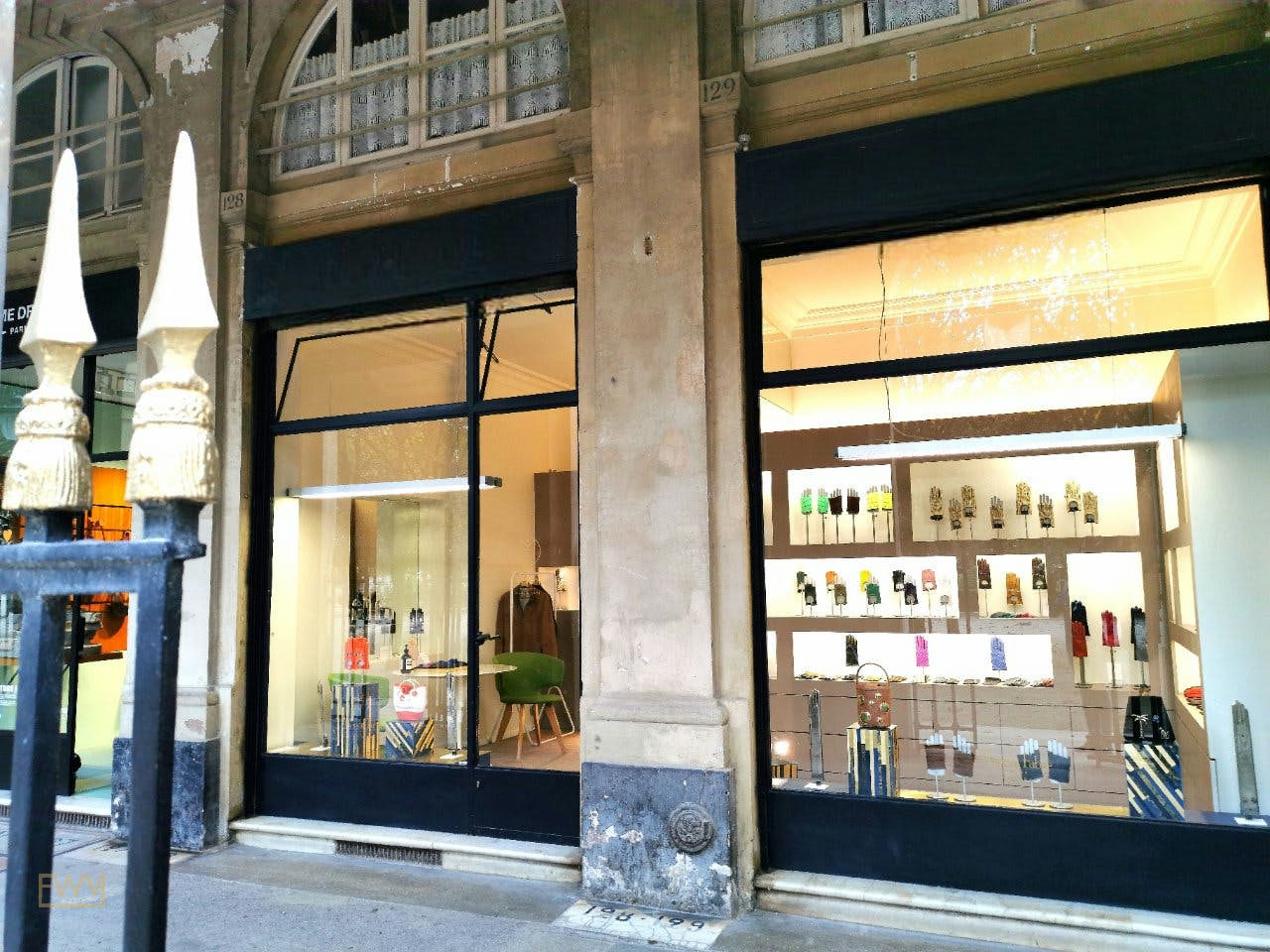
The covered galeries of Palais Royal, including the Galerie de Valois, Galerie de Montpensier, and Galerie Beaujolais, are commercial environments unlike any others in Paris. The arcade format provides shelter from weather, an enclosed discovery experience, and an architectural character that functions as natural set dressing for any brand activation. The boutiques and spaces within the galeries are typically small to medium in footprint, making them well suited for focused pop-up stores, jewellery activations, editorial showcases, and intimate showroom formats. The tenant mix within the galeries reinforces a brand's positioning by association.
| Location | Primary Audience | Best For | Footfall Level |
|---|---|---|---|
| Rue Saint-Honoré | Fashion industry, luxury consumers | Flagship pop-ups, press showrooms | High and targeted |
| Place Vendôme area | Luxury buyers, international VIP visitors | Jewellery, accessories, haute couture | Moderate and very high value |
| Rue de Rivoli | Tourists, broad consumer base | Brand awareness, high-volume retail | Very high |
| Place des Victoires | Fashion enthusiasts, Parisian residents | Showrooms, ready-to-wear pop-ups | Moderate and curated |
| Palais Royal Galeries | Cultural visitors, design-conscious consumers | Editorial activations, jewellery, concept stores | Moderate with strong dwell time |
KEY TAKEAWAY: Each microzone within the Palais Royal district serves different brand objectives. Selecting the right street or galerie is as strategically important as the space itself. Brands should map their audience profile, activation format, and communication objectives against these distinct commercial environments before shortlisting specific properties.
With the geography mapped, the next critical question is what types of spaces are actually available for short-term rent in this district and what physical characteristics brands should prioritise.
Types of Retail Space Available for Rent Near Palais Royal
Quick answer: The Palais Royal area and broader Paris 1st arrondissement offer a range of space types for short-term rent, including ground floor boutiques and shops, covered galerie units, first floor showrooms, loft-style spaces, private apartments adapted for commercial use, and multi-room event venues. Each format suits different activation models, budgets, and brand positioning requirements.
Ground Floor Boutiques and Shops
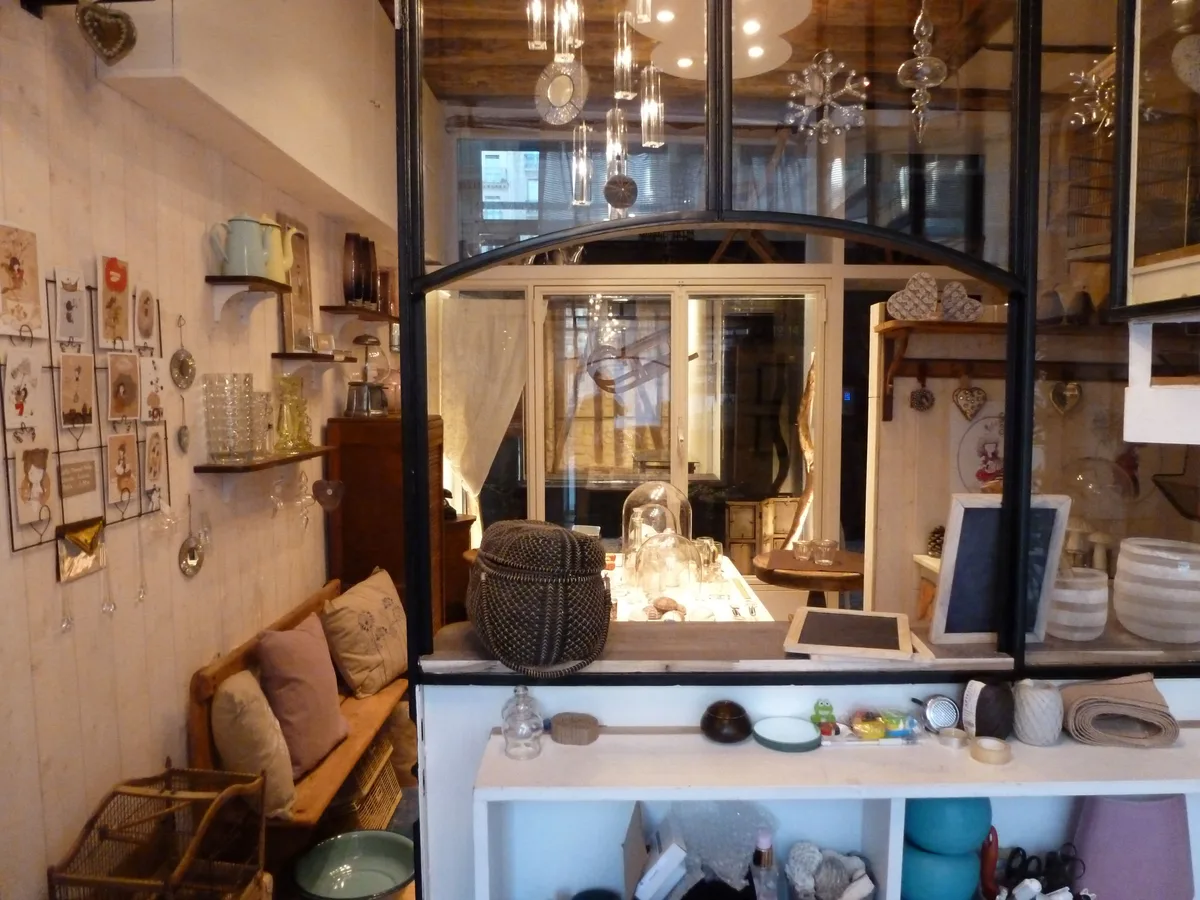
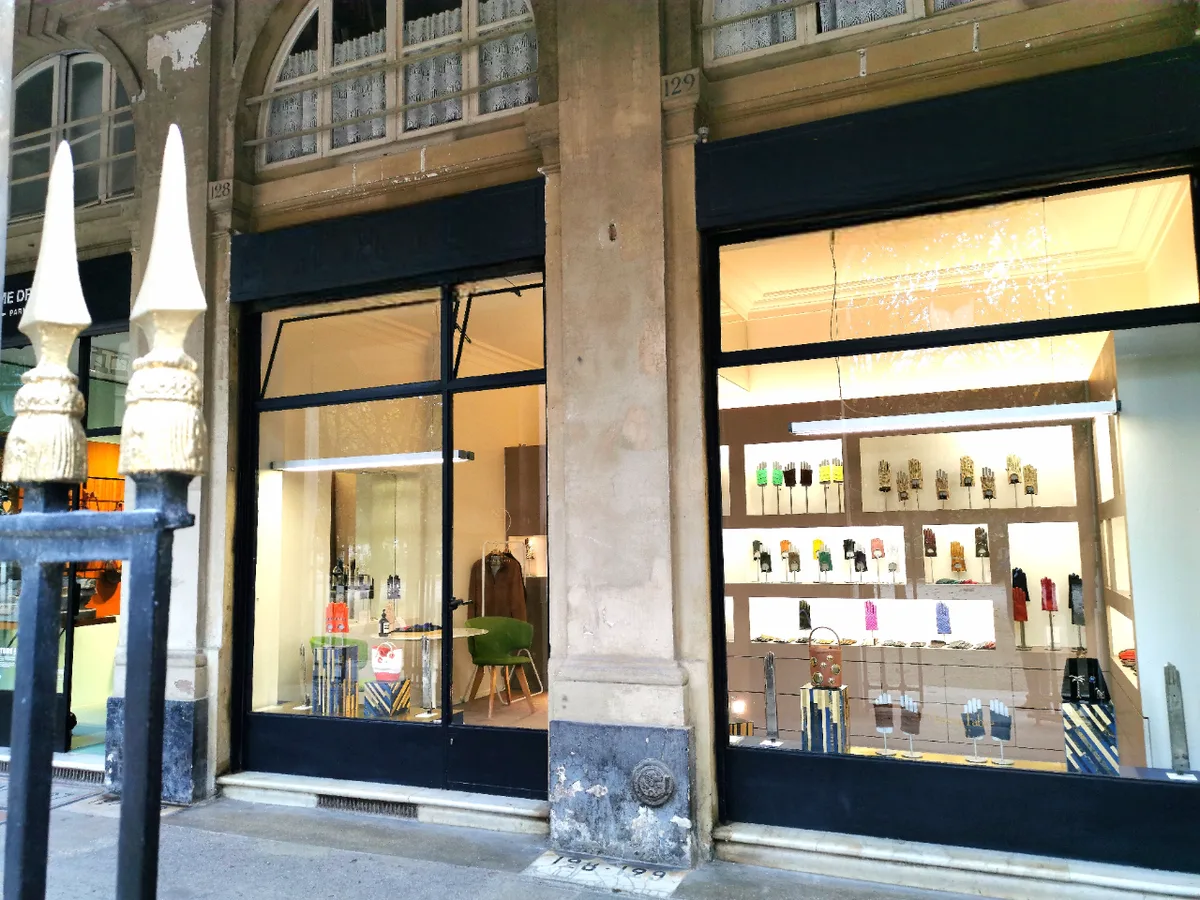
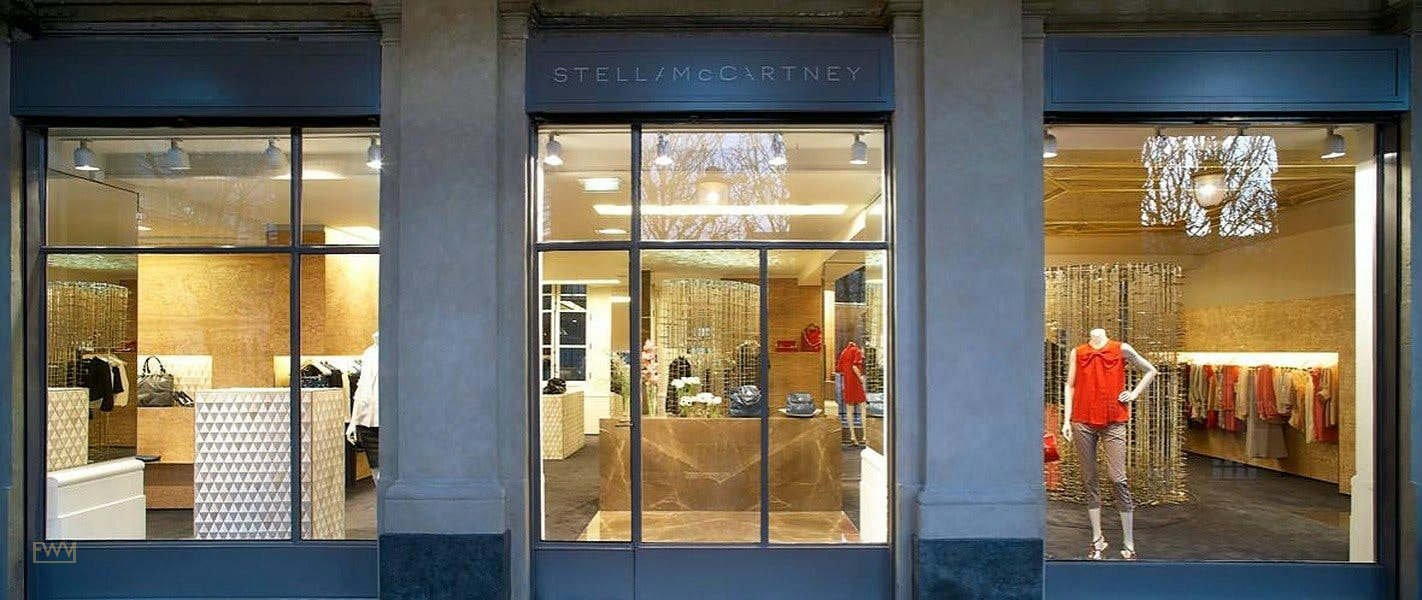
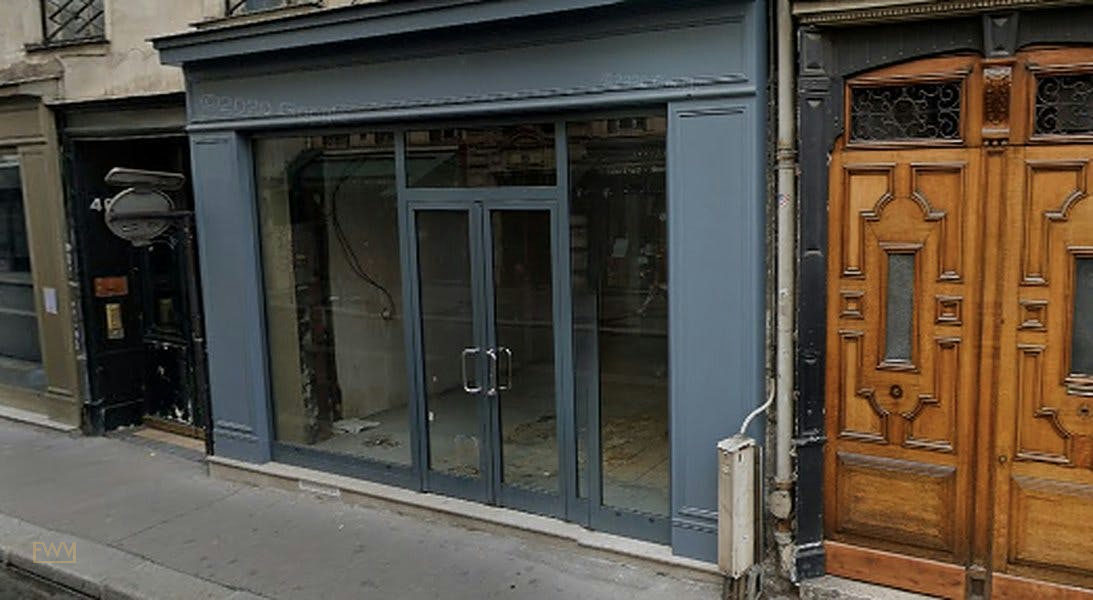
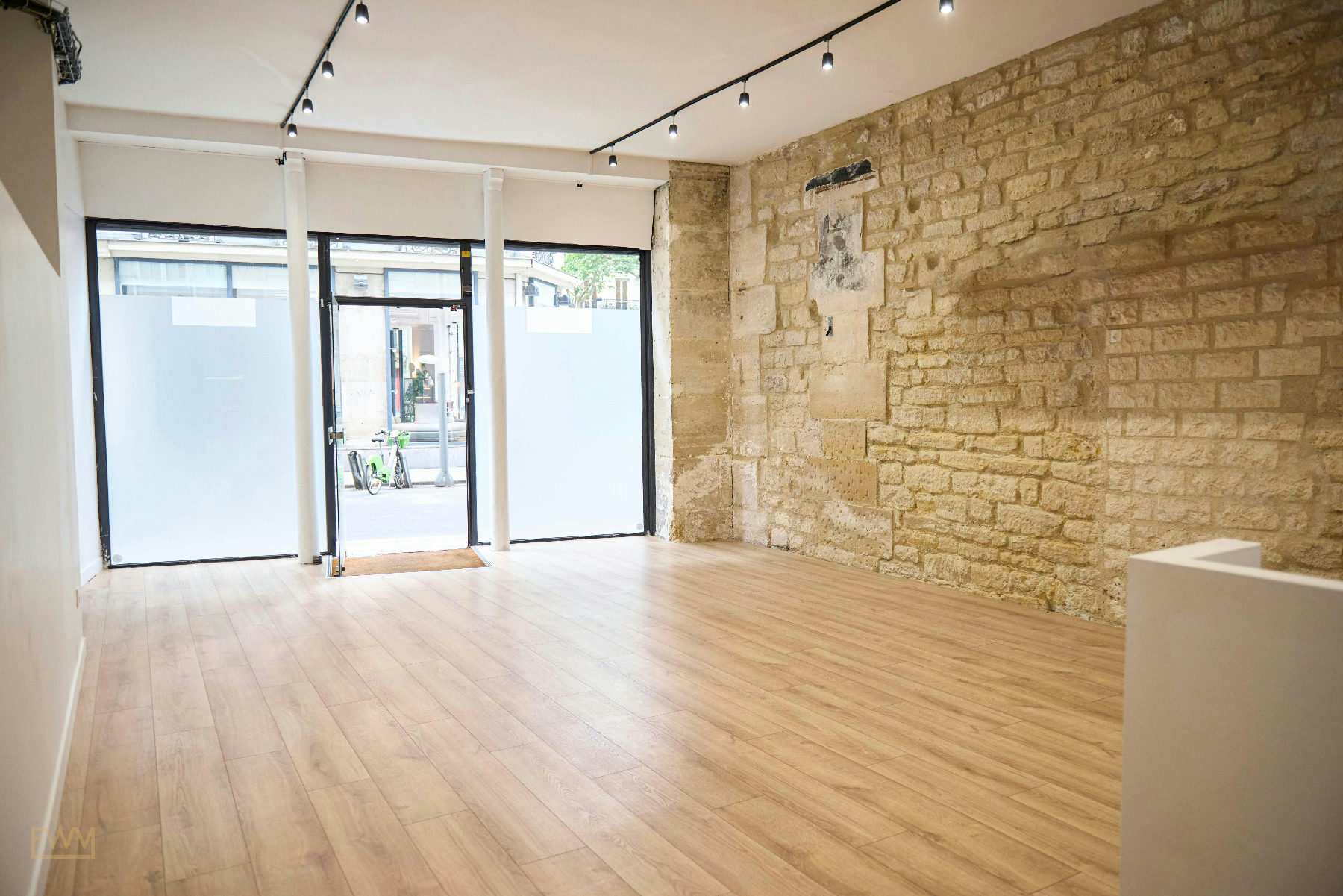
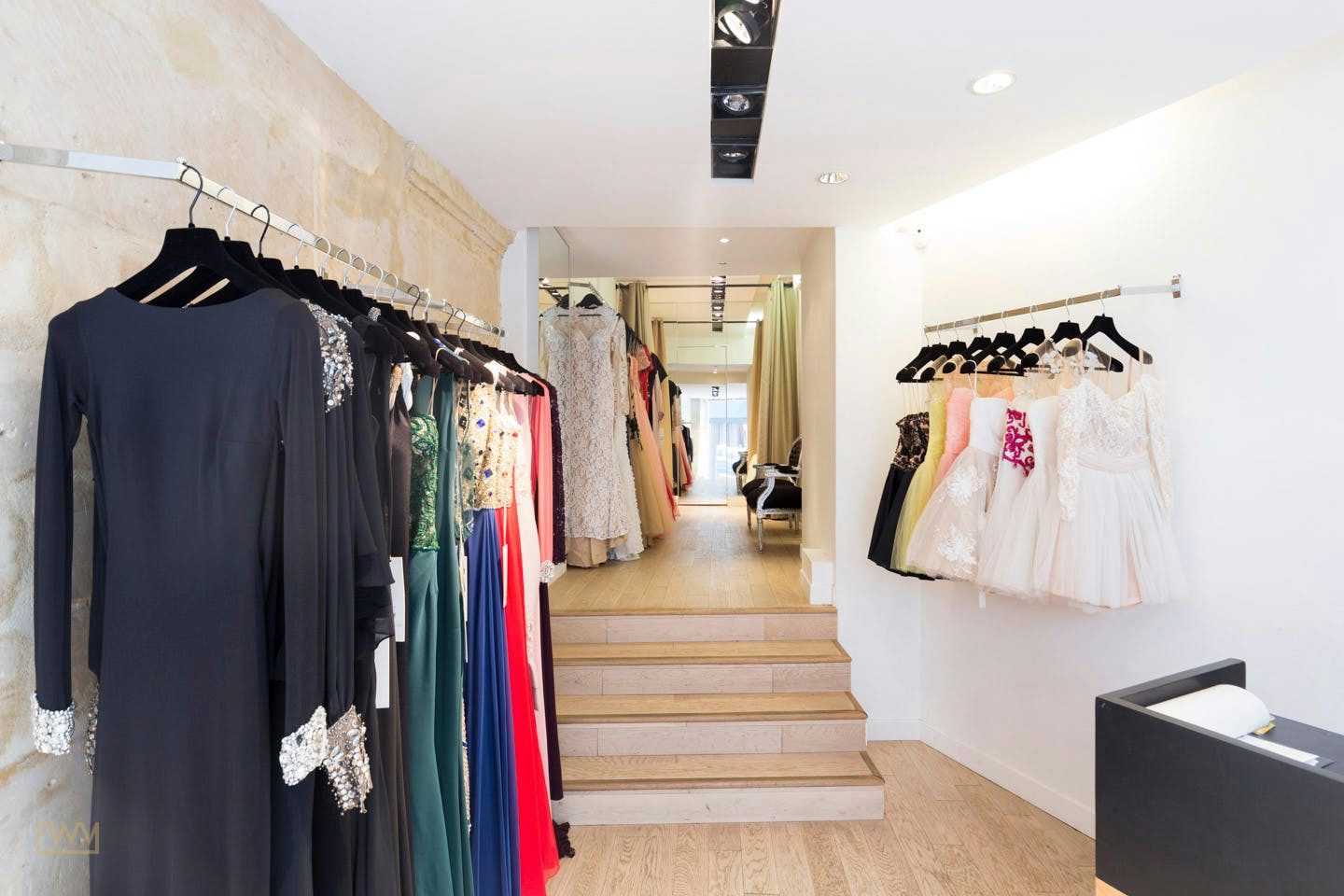
Ground floor retail spaces in the Palais Royal area are the most directly commercial option for brands seeking street-level visibility and direct consumer access. These spaces typically feature glazed frontage for window display, direct pavement access, and interiors ranging from the stripped-back white box format to original architectural features including exposed stone, parquet flooring, and original ceiling detail. For pop-up stores, ground floor boutiques provide the clearest retail signal to passing pedestrians and the most straightforward operational setup for point-of-sale transactions, product display, and consumer engagement.
A key physical characteristic to evaluate in ground floor spaces is natural light. The covered galeries of Palais Royal receive diffused natural light through their glazed roofs, which creates a consistent and flattering interior environment. Spaces on streets with southern or western exposure receive direct natural light that can significantly affect display quality and photography conditions. For brands planning editorial shoots, press previews, or influencer events within their pop-up, the quality and direction of natural light in a ground floor space is a meaningful operational variable.
First Floor Showrooms and Presentation Spaces
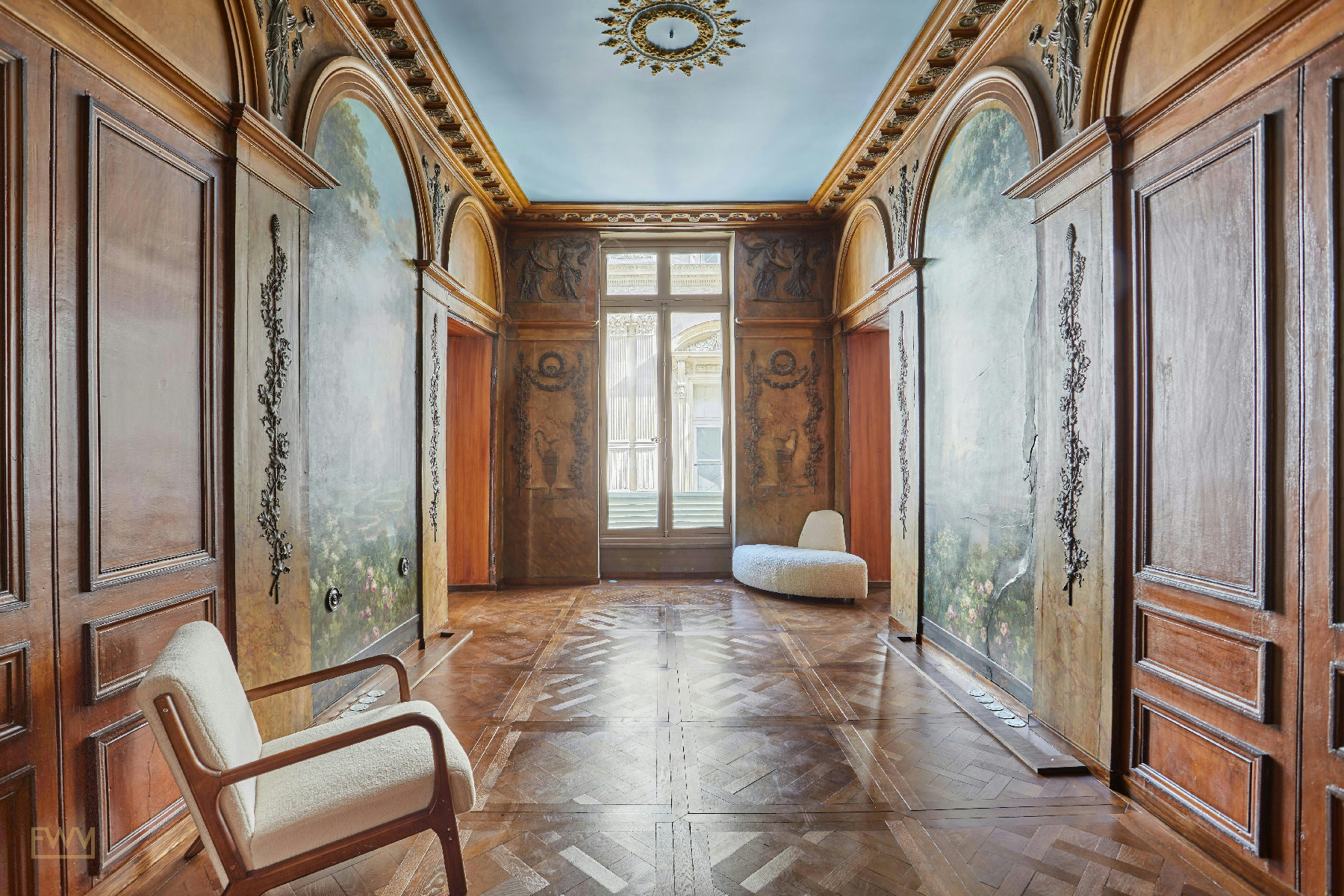
First floor spaces in Haussmann buildings or historic properties near Palais Royal often provide the most architecturally impressive interiors available in the district. High ceilings, original parquet floors, tall windows overlooking the street or inner courtyards, and period detailing including mouldings, marble fireplaces, and wood panelling create environments that function as powerful brand backdrops. These spaces are particularly suited for wholesale showrooms, press days, buyer appointments, and curated exhibition formats where the atmosphere of the space reinforces the brand's aesthetic proposition.
The operational considerations for first floor spaces include access logistics, the absence of direct street-level pedestrian capture, and the need to direct visitors through a managed appointment or invitation model. For showroom activations during Fashion Week calendar windows, the invitation-only model is entirely standard and the first floor format is often preferred precisely because it creates a sense of arrival and exclusivity that a street-level shop cannot replicate.
Galerie Units and Covered Arcade Spaces
The individual units within the Palais Royal galeries represent a genuinely unique retail format. Their dimensions are typically compact, often between twenty and sixty square metres, but the arcade context provides a commercial amplification that exceeds what the raw square footage might suggest. A brand occupying a galerie unit during a major calendar window benefits from the footfall of every visitor walking the entire arcade, not just those who specifically seek out the brand. The covered, colonnade-framed experience creates a natural dwell environment that encourages exploration and discovery.
Loft Spaces and Adaptable Venues
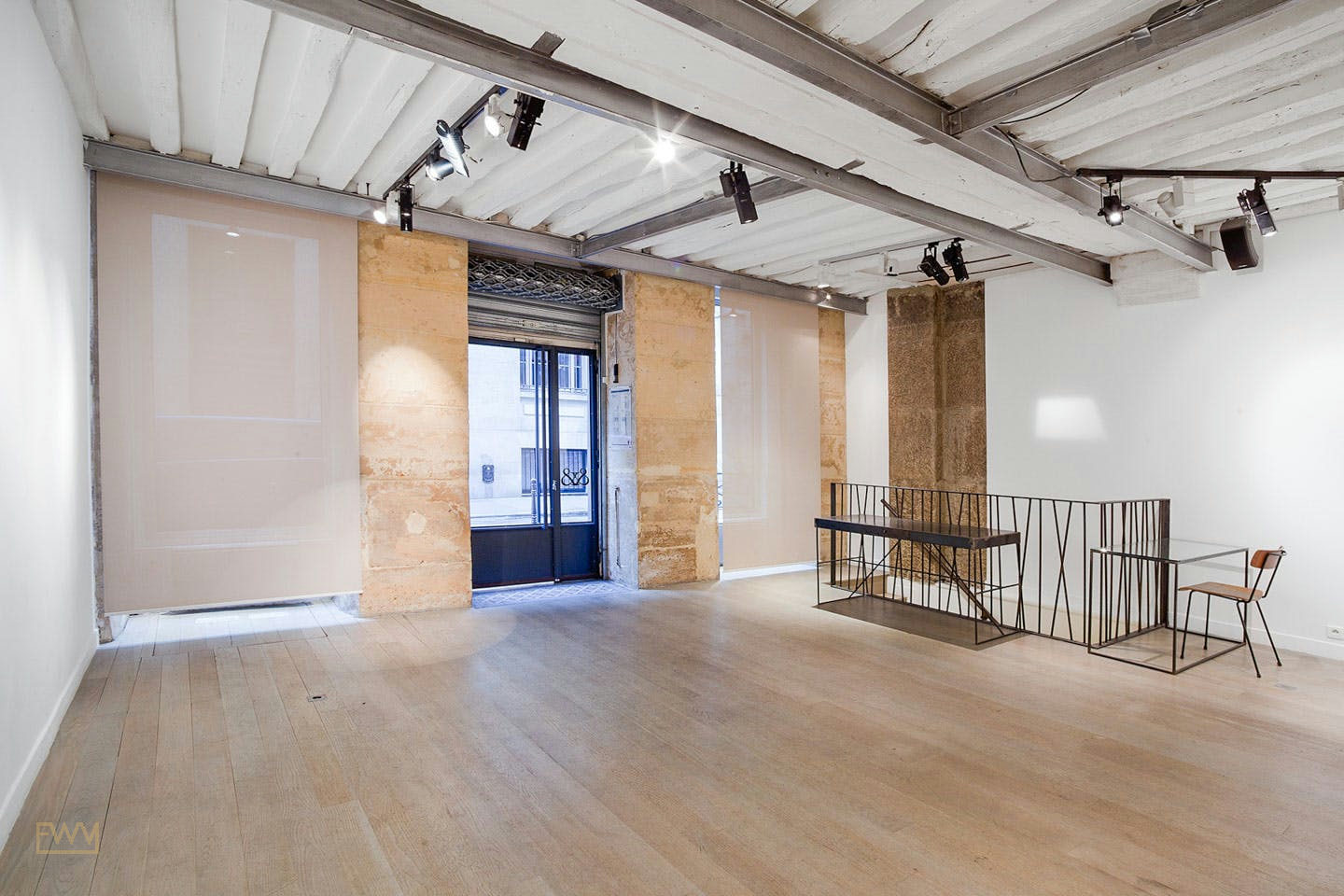
The Paris 1st arrondissement also contains a number of adaptable loft-style spaces and former commercial or industrial interiors that have been repurposed for event and retail use. These spaces offer maximum creative flexibility, with large open floor plans, exposed structural elements, and high ceilings that can accommodate complex branded environments, runway presentations, immersive installations, and multi-zone retail concepts. They are particularly suited to brands with strong spatial design ambitions and the production capability to build out a complete branded environment from a raw space.
Apartment-Format Spaces
A small number of private apartments in the Palais Royal district are made available for short-term commercial use. These spaces provide an intimate, residential aesthetic that suits brands working in the luxury segment, fragrance and beauty activations, or any concept where a domestic atmosphere reinforces the brand narrative. Natural light, personal scale, and the feeling of a private invitation are the defining characteristics of apartment-format activations. They suit small groups, press appointments, and VIP experiences more naturally than high-volume consumer retail.
| Space Type | Typical Size | Best Activation Format | Key Physical Feature |
|---|---|---|---|
| Ground floor boutique | 30 to 150 sqm | Pop-up store, direct retail | Street frontage, natural light |
| First floor showroom | 60 to 300 sqm | Wholesale showroom, press days | High ceilings, period detail |
| Galerie unit | 15 to 60 sqm | Boutique pop-up, jewellery, accessories | Arcade footfall, covered setting |
| Loft space | 100 to 500 sqm | Event, immersive installation, runway | Open plan, flexible layout |
| Apartment format | 50 to 200 sqm | VIP experience, press preview, beauty | Domestic atmosphere, privacy |
Beyond the type of space, brands must consider specific technical features that directly affect how a space can be used. Interior finishes, structural features, and utility provisions all influence the production complexity and cost of an activation.
Interior Features That Matter: Natural Light, White Walls, Rail Lighting, and Water Points
When evaluating a retail space for rent in the Palais Royal area, interior features beyond square footage and address deserve careful attention. Natural light is perhaps the most universally valued feature, affecting the atmosphere of consumer-facing retail, the quality of photography and press content, and the visual presentation of products. Spaces within the galeries benefit from the diffuse, even light quality of their glazed roofs. Street-facing spaces on south-exposed streets in the Paris 1st arrondissement can receive strong direct light that requires management through blinds or display positioning.
White walls provide the most flexible backdrop for branded environments. A space with white walls and a neutral floor requires the minimum production investment to adapt to a specific brand aesthetic. Spaces with original architectural finishes, including wood panelling, exposed stone, or ornate plasterwork, may enhance or conflict with a brand's visual identity and need to be evaluated in that context. Some brands specifically seek spaces with character precisely because the architectural context reduces the need for decorative production investment.
Rail lighting is a practical indicator of a space's readiness for retail use. Track lighting systems allow flexible repositioning of spotlights to suit product display needs and can be adapted to create focused or ambient lighting environments. Spaces without installed lighting infrastructure require additional production investment to create a functional retail lighting scheme.
Water points, known in French property listings as points d'eau, are essential for any activation involving catering, hospitality, beauty services, or installations requiring water access. A retail space with an accessible sink and water supply expands the activation possibilities significantly and reduces the production complexity of catering-integrated events. For pop-up stores that plan to offer refreshments, fragrance experiences, or beauty demonstrations, a water point is a practical operational requirement.
TIP: Always request a full technical specification sheet for any space under consideration. Ask specifically about natural light direction, installed lighting type, water access, electrical supply capacity, floor load limits, and any restrictions on wall fixings or signage.
KEY TAKEAWAY: The physical characteristics of a retail space in the Palais Royal area, including floor level, natural light quality, interior finish, lighting infrastructure, and utility access, are as strategically important as location and size. Brands that evaluate spaces against their specific production requirements before signing avoid costly surprises during fit-out.
To compare and shortlist spaces that match your specific technical and creative requirements, the space comparison tool on Fashion Week Venues allows side-by-side evaluation of multiple venues against a structured set of criteria.
The Fashion Week Calendar and Optimal Rental Windows for Palais Royal
Quick answer: Paris Fashion Week runs four times per year, in January for menswear, March for womenswear, June for menswear and couture, and October for womenswear. Each window creates a distinct spike in commercial and industry activity around the Palais Royal district. However, the area sustains strong commercial viability outside these windows due to its year-round tourism base and residential fashion community. Brands should plan around both peak and shoulder periods depending on their primary audience.
The Paris Fashion Week calendar is one of the defining commercial rhythms of the global fashion industry. During the main womenswear weeks in March and October, the Palais Royal district becomes the geographical heart of industry activity. Showrooms host international buyers and press. Brands run concurrent pop-up activations for consumer audiences. Hotels around Place Vendôme and Rue de Rivoli fill with the global fashion press corps. The concentration of creative, commercial, and media activity within a relatively small geographical area creates an amplification effect that is difficult to replicate at any other time or in any other city.
For brands planning a showroom activation during Fashion Week, the rental window typically spans the week of the official schedule plus two to three days on either side for setup and breakdown. This means effective occupancy periods of ten to fourteen days for a Fashion Week showroom. For brands planning consumer-facing pop-up stores timed to coincide with Fashion Week but extending beyond it, rental windows of four to six weeks are common, allowing the activation to build brand presence before the week and sustain it afterward.
Outside the Fashion Week windows, the Palais Royal area benefits from Paris's position as one of the world's most visited cities. The Louvre, which sits immediately adjacent to the district on Rue de Rivoli, attracts approximately nine million visitors per year according to its published attendance figures. This creates a permanent base of culturally engaged visitors that sustains commercial activity in the surrounding streets throughout the year. Brands considering activations for product launches, anniversaries, or collaborations outside the Fashion Week calendar will find the Palais Royal district commercially productive in any month.
DID YOU KNOW: The intersection of Rue de Rivoli and the Louvre entry axis is one of the highest pedestrian traffic points in Central Paris outside the major transport hubs. Brands with spaces along this corridor can benefit from tourist footfall that is entirely independent of the fashion calendar.
Rental pricing in the Palais Royal area typically reflects these demand cycles. Spaces command premium rates during Fashion Week windows and more accessible rates during off-peak periods. Brands with flexible activation calendars can achieve significantly better value by timing activations for the shoulder periods between Fashion Weeks, when spaces are available but the neighbourhood retains its inherent prestige and visitor flow.
For precise timeline planning, the timeline planning tool on Fashion Week Venues helps brand teams map activation windows against the Paris calendar and build a realistic production schedule from the initial brief through to opening day.
KEY TAKEAWAY: The Paris Fashion Week calendar creates four annual peaks of commercial intensity around Palais Royal, but the neighbourhood sustains strong year-round commercial viability. Brands should evaluate their activation objectives against both calendar timing and budget to determine the optimal rental window.
Understanding Rental Formats and Legal Structures for Short-Term Spaces in Paris
Quick answer: Short-term commercial rentals in France operate under distinct legal frameworks from standard commercial leases. The bail dérogatoire, sometimes called a short-term derogatory lease, permits commercial occupation of up to three years without triggering the rights and obligations of a full commercial lease. For very short activations such as pop-up stores and event venues, alternative structures including temporary occupation agreements and service contracts are also used. Brands must understand which structure applies to their specific space and duration before signing.
France operates one of the most structured commercial property legal systems in Europe. The standard commercial lease, known as the bail commercial, confers significant rights on the tenant including lease renewal rights and indemnity protections. For a landlord renting space short-term for pop-up or event use, these rights are commercially unacceptable. The bail dérogatoire was created specifically to allow short-term commercial occupation without triggering the protections of the full commercial lease, provided both parties explicitly agree to this derogatory status in writing and the total occupation period does not exceed thirty-six months.
For very short-term activations, including pop-up stores of a few days or weeks, the most common legal structure is a convention d'occupation précaire or service contract, where the occupant is provided access to the space as part of a broader service arrangement. This structure is common in the managed short-term retail and event space market and underpins most commercial pop-up marketplaces and agencies. The key distinction from a bail dérogatoire is that the occupant does not have a direct lease relationship with the property owner but rather a service relationship with an intermediary who manages the space.
An Autorisation d'Occupation Temporaire, or AOT, is a separate administrative permission relevant to any activation taking place on public domain land or in publicly owned spaces. Activations in the gardens or public areas of the Palais Royal complex, which is classified as a historic monument and managed by the Ministry of Culture, require specific AOT applications. The process, requirements, and processing times for AOT permissions vary significantly depending on the space, the nature of the activation, and the arrondissement's administrative authorities. Brands should not assume that obtaining a space automatically confers the right to activate in the way they intend.
IMPORTANT: Requirements for permits, consents, and administrative authorisations for commercial activations in Paris vary significantly by space type, property classification, duration, and the nature of the activation. This guide provides a general overview only. Brands should verify all legal and administrative requirements with a qualified French legal advisor and with the space owner or manager before committing to a rental agreement. Do not rely solely on this guide for compliance decisions.
The practical implication for brands is that the legal complexity of short-term rental in Paris rewards working with experienced intermediaries. An agency or marketplace with established relationships with space owners and familiarity with the relevant lease structures can significantly reduce the administrative burden on the brand team and reduce the risk of entering into an unsuitable legal arrangement. The permit guidance tool on Fashion Week Venues provides an orientation to the permit landscape for brand teams planning Paris activations.
KEY TAKEAWAY: Short-term retail and event space rentals in Paris operate under legal frameworks that differ significantly from standard commercial leases. Brands must understand the specific structure governing their rental agreement, whether bail dérogatoire, convention d'occupation précaire, or service contract, and should verify all permit and administrative requirements with qualified local advisors before activation.
Budget Considerations for Retail Space for Rent at Palais Royal
Quick answer: Budget requirements for retail space rental in the Palais Royal area vary considerably based on space type, size, floor level, specific street or galerie location, duration, and the time of year. Fashion Week windows command premium rates. Brands should plan for rental costs as one component of a total activation budget that also includes production, fit-out, staffing, logistics, and marketing. Directional budget estimates should be verified against current market conditions using specialist tools or advisor input.
The Palais Royal district occupies the premium tier of the Paris short-term retail market. Rental rates in this area reflect the combination of commercial prestige, limited supply of authentic short-term spaces, strong demand from international brands, and the architectural quality of the available stock. Brands accustomed to short-term retail rates in other Paris neighbourhoods or in other cities should anticipate meaningfully higher costs per square metre in this district.
Beyond the base rental cost, brands must budget for several additional cost categories. Production and fit-out costs for a ground floor boutique or galerie unit depend on the starting condition of the space and the ambition of the branded environment. A space with white walls, rail lighting, and a neutral floor requires significantly less production investment than a raw space or a heavily decorated property that needs to be neutralised before brand elements can be applied. First floor showrooms in period Haussmann buildings often require careful handling of original features and may impose restrictions on wall fixings, floor coverings, and structural modifications.
Staffing represents a meaningful component of the activation budget for any consumer-facing retail operation. Paris has specific employment regulations governing temporary and fixed-term contracts, and brands unfamiliar with the French labour market may find staffing logistics unexpectedly complex. Specialist retail staffing agencies with bilingual, fashion-literate staff profiles are available through agencies like Fashion Week Venues, and budgeting for managed staffing services is typically more cost-effective and compliant than attempting to source staff independently.
Point-of-sale infrastructure, including card payment terminals, inventory management systems, and consumer data capture tools, represents a further budget line that is often underestimated by brands activating in Paris for the first time. France has well-developed payment infrastructure and consumer preferences for contactless and card payment are strong, making POS capability a commercial necessity rather than an optional enhancement for any activation involving direct sales.
Permit and administrative costs, including legal advisory fees, any required AOT applications, and insurance requirements, should be factored into the budget from the outset rather than treated as afterthoughts. These costs are not large relative to total activation budgets but their absence from initial planning can create both financial and timeline disruptions.
The total cost of a Palais Royal retail activation spans a wide range depending on all these variables. Brands in the early planning stage should use directional estimates to test feasibility before engaging in detailed space negotiations. The budget estimation tool on Fashion Week Venues allows brand teams to generate a structured directional cost model based on their specific activation parameters before committing to a space or production approach.
KEY TAKEAWAY: Budget planning for a Palais Royal retail activation must account for rental costs, production and fit-out, staffing, POS infrastructure, permits, and insurance. Rental is often not the largest single cost line. Brands should build a total activation budget model early in the planning process to ensure commercial viability across all cost categories.
To support return on investment thinking alongside budget planning, the ROI calculator on Fashion Week Venues helps brand teams model expected commercial outcomes against total activation investment.
How Fashion Week Venues Supports Brands Seeking Retail Space in Paris
Fashion Week Venues provides a structured, end-to-end service for brands seeking retail space for rent in Paris, including the Palais Royal area and the broader Paris 1st arrondissement. The agency combines a curated space marketplace with a full portfolio of activation services, allowing brand teams to source a space and manage the complete activation through a single partner rather than coordinating multiple specialist suppliers independently.
The venue sourcing service is the starting point for most brand engagements. The team works from a detailed brief covering the brand's objectives, target audience, activation format, preferred neighbourhood, required floor area, budget, and timeline. Against this brief, the team presents a shortlist of spaces that match the specific requirements rather than a generic catalogue of available properties. This brief-matched approach reduces the time brands spend evaluating unsuitable spaces and increases the likelihood of securing a property that genuinely serves the activation concept.
Beyond venue sourcing, Fashion Week Venues offers concept direction, production and build services, activation management, branded store design, furniture rental, retail staffing, POS and payment infrastructure, data and analytics, and influencer marketing. For brands seeking a complete turnkey activation, this portfolio covers every operational dimension of a Paris pop-up or showroom. For brands with strong internal capabilities in specific areas, individual services can be engaged independently without requiring a full-service commitment.
The agency's tools support brand teams at every stage of planning. The timeline tool helps structure the production schedule from initial brief to opening. The budget tool generates directional cost models. The ROI calculator supports commercial case-building. The permits tool provides an orientation to the Paris administrative landscape. The locator tool maps available spaces by neighbourhood. The compare tool supports side-by-side evaluation of shortlisted spaces. The imagine visualisation tool allows brands to explore how a specific space could look with their branded environment applied before committing to a rental agreement.
Brand teams that benefit most from Fashion Week Venues' Paris services include international brands entering the Paris market for the first time, established brands without a permanent Paris presence, creative and marketing teams managing activations without a dedicated retail real estate function, and brands seeking to activate during Fashion Week windows where competition for premium spaces is strongest and lead times are most compressed.
It is important to note that Fashion Week Venues cannot guarantee the availability of specific spaces, the outcome of permit applications, or the commercial performance of any activation. The agency provides professional guidance, experienced support, and access to an established network of spaces and service partners. Final decisions on space selection, budget allocation, and activation approach remain with the brand team.
Brands considering their first Paris activation or evaluating agency support can explore the guide to hiring a pop-up agency which covers the key questions to ask, the services to prioritise, and the red flags to avoid when selecting an activation partner for Paris.
KEY TAKEAWAY: Fashion Week Venues offers a structured path from initial space brief to activated pop-up or showroom in Paris, combining venue sourcing with a full portfolio of activation services and planning tools. Brands can engage the full-service model or select specific services based on their internal capabilities and activation requirements.
Step-by-Step Process for Securing and Activating a Retail Space Near Palais Royal
Quick answer: Securing and activating a retail space in the Palais Royal area involves a structured sequence of decisions and actions, from brief creation and space identification through legal and administrative processes to production, staffing, and launch. Brands that follow a disciplined process are significantly more likely to activate on time, within budget, and to the standard required by this demanding commercial environment.
| Stage | Action | Key Decision or Output | Typical Timing Before Opening |
|---|---|---|---|
| 1. Strategy | Define objectives, audience, format, and budget | Activation brief document | 12 to 16 weeks |
| 2. Space Search | Identify candidate spaces via marketplace or agency | Shortlist of 3 to 5 spaces | 10 to 14 weeks |
| 3. Site Visits | Visit shortlisted spaces, assess technical suitability | Preferred space selected | 8 to 12 weeks |
| 4. Legal | Negotiate terms, review lease or service agreement | Signed agreement | 6 to 10 weeks |
| 5. Permits | Identify and apply for required permits and authorisations | All permits confirmed | 6 to 8 weeks |
| 6. Concept | Finalise brand concept, spatial design, and visual identity for space | Approved design drawings | 6 to 8 weeks |
| 7. Production | Commission fit-out, furniture, lighting, graphics | Production complete | 1 to 2 weeks |
| 8. Staffing | Recruit, brief, and train retail team | Staff confirmed and briefed | 1 to 2 weeks |
| 9. Installation | Install branded environment, product, and POS | Space ready for opening | 2 to 5 days |
| 10. Launch | Open to press, buyers, or consumers | Activation live | Day 0 |
The timeline above reflects a standard activation scenario. Fashion Week activations, particularly those timed for the main March or October womenswear weeks, frequently operate on compressed timelines because of the concentrated demand for spaces during these windows. Brands activating during Fashion Week should aim to begin the space search process at least twelve to sixteen weeks ahead of the target opening date, and should be prepared to commit quickly once a suitable space is identified, as the best spaces in the Palais Royal area are consistently in high demand.
A common mistake made by brands new to Paris is underestimating the administrative lead time. Permit applications, legal reviews of rental agreements, and the engagement of French-speaking production contractors all require time that cannot be compressed without risk. Building administrative buffer into the timeline from the outset is more effective than attempting to accelerate these stages under pressure.
The production phase in Paris requires particular attention. Local building regulations, the historic character of many Palais Royal area properties, and the specific restrictions often written into rental agreements for protected buildings can limit what a production team can install, fix, or modify. An experienced local production partner familiar with these constraints is more valuable in Paris than in many other cities. The production and build service offered by Fashion Week Venues is specifically calibrated for Paris's regulatory and architectural environment.
KEY TAKEAWAY: A structured, sequenced process with adequate lead time is the single most important factor in delivering a successful retail activation in the Palais Royal area. Brands that begin planning early, move decisively on space selection, and allocate appropriate administrative time consistently outperform those that attempt to compress the process.
Brand Benefits of a Pop-Up Store or Showroom Activation at Palais Royal
Quick answer: Activating a pop-up store or showroom in the Palais Royal area delivers a combination of commercial, brand, and relationship benefits that are difficult to replicate in other Paris districts. The combination of prestige address, concentrated industry audience during Fashion Week, strong year-round tourist traffic, and architecturally distinctive spaces creates conditions for activations that serve multiple strategic objectives simultaneously.
For international brands entering the Paris market, a Palais Royal area activation functions as a market entry statement. The address communicates immediately to French retail buyers, press, and consumers that the brand is operating at a level commensurate with the neighbourhood. This implicit positioning is not available in every Paris district and represents genuine commercial value beyond the activation itself.
For established brands without a permanent Paris boutique, a seasonal pop-up store in the Palais Royal area provides a physical presence in one of the world's most commercially significant fashion markets without the long-term commitment and fixed costs of a permanent lease. The pop-up format allows brands to test Paris market response, generate local press and social media coverage, meet with buyers and editors, and build Parisian consumer relationships within a defined and manageable cost structure.
For brands with wholesale showroom objectives, the Palais Royal area's concentration of industry activity during Fashion Week makes it the natural choice for appointment-based selling and press previews. A well-located showroom in this district during the February or October buying seasons will attract a concentration of relevant trade visitors that would be difficult to achieve in a less central location. The quality of the architectural environment in first floor or galerie spaces also creates a setting that elevates the brand presentation in the eyes of buyers and press.
Consumer-facing pop-up stores in this neighbourhood also benefit from strong social media and editorial media generation potential. The visual quality of the Palais Royal setting, combined with a well-designed branded environment, creates content that performs strongly across digital channels. Brands that integrate social media and influencer components into their Palais Royal activation can generate a digital content output that extends the reach of the activation well beyond the physical audience. The influencer marketing service offered by Fashion Week Venues supports brands in structuring this component of their Paris activation.
The data and commercial intelligence benefits of a Paris pop-up should not be overlooked. A well-instrumented activation generates consumer behaviour data, product performance data, and market response intelligence that feeds directly into brand strategy, product development, and distribution planning. Brands that treat their Paris pop-up as a commercial intelligence exercise, as well as a brand visibility exercise, extract significantly greater long-term value from the investment.
KEY TAKEAWAY: A Palais Royal area retail activation delivers simultaneous benefits across brand positioning, trade relationships, consumer engagement, press and media generation, and market intelligence. Brands that plan activations with multiple strategic objectives are more likely to achieve a return on investment that justifies the premium of operating in this location.
Evaluating Space Features: A Decision Framework for Palais Royal Rentals
When comparing shortlisted spaces in the Palais Royal area, brand teams benefit from a structured evaluation framework that goes beyond address and price. The following comparison model addresses the key dimensions that determine whether a specific space will support a brand's activation objectives.
| Evaluation Dimension | What to Assess | Why It Matters |
|---|---|---|
| Location precision | Specific street, galerie, or building; proximity to key landmarks | Affects visitor ease of discovery, brand adjacency, and neighbourhood positioning |
| Floor level | Ground floor, first floor, mezzanine | Determines pedestrian capture, accessibility, and operational format |
| Natural light | Direction, quality, consistency of light throughout the day | Affects product display, photography, and visitor experience quality |
| Interior finish | White walls, original features, panelled or decorated surfaces | Determines production investment required and brand aesthetic compatibility |
| Lighting infrastructure | Rail lighting, fixed ceiling lights, absence of lighting | Affects both operational cost and display quality |
| Water access | Presence and location of water points | Essential for catering, beauty, or hospitality-integrated activations |
| Electrical capacity | Available amperage, socket distribution | Affects capability for complex lighting, AV, or refrigeration |
| Delivery and access | Loading access, lift availability, staircase dimensions | Determines feasibility of production logistics and stock management |
| Lease structure | Bail dérogatoire, service contract, or other arrangement | Affects legal rights, obligations, and flexibility |
| Restrictions | Wall fixings, signage, trading hours, permitted uses | Determines what brand environment can be created and how the space can be operated |
This framework allows brand teams to evaluate multiple shortlisted spaces against the same criteria and make a structured comparison that goes beyond impressionistic reactions to site visits. For brands working with Fashion Week Venues, the agency's team applies this kind of structured evaluation as part of the venue sourcing process, presenting spaces with a clear assessment of each dimension against the brand's specific brief.
TIP: When visiting a shortlisted space, visit at two different times of day to understand how natural light changes. A space that looks ideal in morning light may present differently in the afternoon, particularly for spaces in the galeries or on north-facing streets.
KEY TAKEAWAY: Structured evaluation frameworks protect brands from making space selection decisions based on first impressions or address alone. Every dimension of a space's physical, legal, and operational characteristics has commercial implications for the activation.
To bring your evaluation process online and compare spaces systematically, explore the Fashion Week Venues marketplace, where spaces can be filtered and compared by location, size, type, and availability.
Common Myths About Renting Retail Space Near Palais Royal
MYTH: Brands need a French legal entity to rent a commercial space in Paris.
FACT: Many short-term commercial rentals in Paris, particularly those structured as service contracts or conventions d'occupation précaire, do not require the brand to have a registered French legal entity. The legal and administrative requirements depend on the specific structure of the rental agreement and the nature of the occupation. Brands should verify the applicable requirements for their specific situation with a qualified French legal advisor rather than assuming a French entity is either mandatory or unnecessary.
MYTH: Paris Fashion Week is the only commercially viable window for a Palais Royal pop-up.
FACT: While Fashion Week windows create significant peaks in industry activity and commercial intensity, the Palais Royal area sustains strong commercial viability throughout the year. The proximity of the Louvre, the concentration of high-value retail on Rue Saint-Honoré, and Paris's year-round status as a global tourism destination all support successful activations in every month. Brands with flexible calendars can often achieve better value and more operational flexibility by timing activations outside the peak Fashion Week windows.
MYTH: Commission brokers are the only way to find a short-term retail space in Paris.
FACT: The short-term retail and pop-up space market in Paris has diversified significantly. Curated digital marketplaces, full-service agencies, and direct relationships between brands and space owners are all viable routes to market. Commission-based brokers may offer access to certain spaces, but they operate differently from full-service agencies and typically do not provide activation support beyond the space introduction. Brands should evaluate their route to market based on the level of support they require, not on historical assumptions about how the market operates.
MYTH: Short-term retail leases in France are legally straightforward and do not require specialist legal input.
FACT: French commercial property law is detailed and the distinctions between different short-term rental structures, including bail dérogatoire, convention d'occupation précaire, and service contracts, carry significant legal and operational implications. Signing an inappropriate lease structure, failing to comply with the conditions of a bail dérogatoire, or misunderstanding the restrictions applicable to a specific space can create significant legal and financial exposure for the brand. Specialist French legal advice is strongly recommended for any short-term commercial rental agreement in Paris.
MYTH: A pop-up store in Palais Royal is only viable for luxury brands.
FACT: While the Palais Royal area is strongly associated with luxury retail, the district also houses independent designers, concept stores, contemporary fashion brands, and arts and culture businesses. The galeries in particular host a range of brands across the premium-to-luxury spectrum. The key requirement is not a luxury price point but a clear and coherent brand aesthetic that is appropriate to the environment. Brands in the contemporary, premium, or design-forward categories have successfully activated in this district and found it commercially productive for their specific audiences.
Frequently Asked Questions About Retail Space for Rent at Palais Royal
What are the most sought-after locations for renting a pop-up boutique near Palais Royal in Paris?
The most in-demand locations for pop-up boutiques near Palais Royal include the covered galeries of the Palais Royal complex itself, the commercial stretch of Rue Saint-Honoré between Place Vendôme and the Opéra district, the streets immediately surrounding Place des Victoires, and ground floor spaces along Rue de Rivoli with high pedestrian visibility. During Fashion Week, spaces within a five-minute walk of the Palais Royal gardens are particularly sought after due to the concentration of industry movement in this zone. Availability is limited and the best spaces are typically committed months in advance of peak windows.
How much does it cost to rent a pop-up boutique in the Palais Royal area?
Rental costs for short-term retail space in the Palais Royal area vary significantly based on space size, floor level, specific location, interior condition, duration of rental, and time of year. Fashion Week windows command premium rates due to concentrated demand. The Palais Royal district occupies the premium tier of the Paris short-term retail market and rates are meaningfully higher than those in less central neighbourhoods. Brands should plan for rental costs as one component of a total activation budget that includes production, staffing, permits, and marketing. For a directional estimate calibrated to your specific requirements, the budget estimation tool on Fashion Week Venues provides a structured starting point.
What are the benefits of renting a pop-up boutique in the Palais Royal area?
Key benefits include access to a prestigious and architecturally distinctive commercial environment, proximity to the global fashion industry during Paris Fashion Week, strong year-round footfall from cultural tourism and resident fashion consumers, excellent press and social media content generation potential, and the brand positioning benefits of operating in one of Paris's most coveted retail districts. The area also provides natural adjacency to key fashion industry infrastructure including the major luxury houses on Rue Saint-Honoré, the jewellery quarter around Place Vendôme, and the institutional cultural presence of the Louvre and Tuileries along Rue de Rivoli.
What is the ideal rental duration for a pop-up at Palais Royal?
The ideal duration depends on the activation objective. A showroom during Fashion Week typically requires ten to fourteen days, covering setup, the official schedule, and breakdown. A consumer-facing pop-up store designed to build brand presence and drive direct sales typically runs for three to eight weeks. Longer activations of two to three months are viable for brands testing the Paris market before committing to a permanent presence. Shorter activations of three to seven days are suitable for press launches, product reveals, and VIP events. Each duration has different legal, production, and commercial implications that should be evaluated against the brand's specific objectives.
What legal structure governs short-term commercial rentals in Paris?
Short-term commercial rentals in Paris operate under several possible legal frameworks depending on duration and the nature of the arrangement. The bail dérogatoire permits commercial occupation of up to thirty-six months without triggering the rights of a standard commercial lease, provided both parties explicitly agree in writing. For very short activations, a convention d'occupation précaire or service contract is more common, particularly in managed pop-up marketplaces. The Autorisation d'Occupation Temporaire is relevant for activations in public domain spaces. Each structure carries different legal implications. Brands should seek qualified French legal advice before signing any rental agreement for commercial space in Paris.
Do I need to speak French or have a French company to rent a pop-up space in Paris?
Speaking French is not a legal requirement for renting commercial space in Paris, and many space owners and managed marketplace operators are accustomed to working with international brands in English. However, rental agreements are typically drafted in French and any legally significant document should be reviewed by a French-speaking legal advisor. Having a French legal entity is not universally required for short-term rentals structured as service contracts, but the applicable requirements depend on the specific agreement. Working with a Paris-based agency or intermediary familiar with the administrative requirements for international brands significantly simplifies the process.
What permits are required for a pop-up store in the Paris 1st arrondissement?
Permit requirements for pop-up stores in the Paris 1st arrondissement depend on the space type, the nature of the activation, and the planned duration. A private space rented under a bail dérogatoire or service contract may require limited additional permits for the occupation itself, but specific activities, including outdoor signage, music, public-facing events, and food service, may each require separate administrative authorisations. Spaces in or adjacent to classified historic monuments, which applies to many properties in the Palais Royal area, may be subject to additional restrictions on signage, exterior modifications, and permitted uses. Requirements should be verified with a French legal advisor and with the relevant arrondissement authorities.
What types of interior features should I look for when evaluating a space?
The most commercially important interior features to evaluate are natural light quality and direction, installed lighting infrastructure such as rail lighting or spotlights, interior finish including white walls or architectural character, floor level and pedestrian accessibility, water point provision for catering or beauty services, electrical supply capacity, delivery access logistics, and any restrictions on wall fixings, signage, or permitted modifications. The presence or absence of these features determines both the production investment required to create a functional branded environment and the range of activation formats the space can support. A technical specification visit and a detailed list of questions to the space owner are essential before committing to a rental.
How far in advance should I start looking for a Palais Royal pop-up space?
For Fashion Week activations, the search process should begin at least twelve to sixteen weeks before the target opening date. The best spaces in the Palais Royal area are committed early, particularly for the March and October womenswear weeks, which are the most competitive rental windows. For activations outside the Fashion Week calendar, eight to twelve weeks of lead time is typically sufficient to identify, evaluate, negotiate, and legally complete a short-term rental. Brands with specific or unusual space requirements should allow more time. The administrative and production phases following space confirmation also require time that should not be compressed.
Can I use a pop-up space in the Palais Royal area as a wholesale showroom?
Yes. First floor spaces in Haussmann buildings, apartment-format spaces, and larger galerie units in the Palais Royal area are regularly used for wholesale showroom purposes during Fashion Week. The appointment-based model suits the first floor format particularly well, and the architectural quality of period Parisian interiors creates an environment that many brands prefer to purpose-built showroom facilities. Brands using a space as a showroom should ensure that the rental agreement permits trade use and that any activities involving commercial transactions with non-consumer buyers are consistent with the terms of the agreement and any applicable administrative permits.
What is the difference between a pop-up store and a showroom in the context of a Paris activation?
A pop-up store is a consumer-facing, temporary retail operation in which products are displayed and sold directly to members of the public. A showroom is a trade-facing presentation space in which collections are presented to wholesale buyers, press, and industry professionals on an appointment basis. Both formats are widely used in the Palais Royal area during Fashion Week. The distinctions affect space selection, as showrooms favour first floor spaces with controlled access while pop-up stores favour ground floor spaces with street visibility. They also affect staffing requirements, POS infrastructure, permit considerations, and marketing strategy.
What is the role of natural light in a Palais Royal pop-up space?
Natural light is one of the most valued features of any Palais Royal pop-up or showroom space. The galeries provide consistent diffuse natural light through their glazed roofs throughout the day, creating a flattering and stable environment for product display and photography. Street-facing spaces on south-exposed streets receive stronger direct light that can enhance visual presentation but may require management to avoid glare or product fading. First floor spaces in Haussmann buildings benefit from tall windows that provide generous light depth into the interior. For brands planning press photography, influencer content creation, or editorial shoots within the activation space, natural light quality is a meaningful selection criterion.
Can Fashion Week Venues help with the complete activation, not just the space?
Fashion Week Venues offers a full-service activation model that covers venue sourcing, concept direction, production and fit-out, branded store design, furniture rental, retail staffing, POS and payment infrastructure, data and analytics, and influencer marketing. Brands can engage the complete service or select individual components based on their internal capabilities and requirements. The agency's planning tools, including budget, ROI, timeline, compare, permits, locator, and imagine tools, support brand teams throughout the planning process regardless of the level of agency involvement. The agency cannot guarantee specific outcomes but provides experienced, specialist support across every phase of a Paris activation.
Are there co-activation options for brands with smaller budgets at Palais Royal?
Co-activation models allow two or more brands to share a single space, dividing the rental and production costs while creating a complementary brand environment that can enhance the visitor experience. This model suits brands that are not direct competitors but share a target audience and aesthetic. Fashion Week Venues operates a twin co-activation concept that pairs compatible brands within a shared space. This approach is particularly relevant for smaller brands or those activating in the Palais Royal area for the first time and wishing to test the market without committing to the full cost of a solo activation in this premium district.
What is the best space type for a jewellery or accessories brand in the Palais Royal area?
For jewellery and accessories brands, the galerie units within the Palais Royal complex offer the most contextually appropriate setting. The historic arcade format, with its association with jewellery, antiques, and precision craftsmanship, creates a natural brand adjacency for fine accessories. The enclosed, controlled environment of the galeries also supports the security and display requirements of high-value jewellery presentations. First floor apartment-format spaces near Place Vendôme are an alternative for brands seeking a more private, invitation-only experience. Natural light quality is particularly important for jewellery display, and north or diffuse light sources are preferable to direct sun for precious stone presentations.
Conclusion: Making the Right Decision on Retail Space for Rent at Palais Royal
The Palais Royal area of Paris 1st arrondissement represents one of the most commercially and culturally potent environments in global retail. For brands seeking a retail space for rent in this district, whether for a pop-up store, a wholesale showroom, a brand event, or a seasonal boutique, the combination of prestige address, architectural quality, Fashion Week intensity, and year-round commercial viability creates conditions for activations that deliver against multiple strategic objectives simultaneously.
Realising that potential requires more than identifying an available space. It requires a clear strategic brief, an understanding of the district's microlocation dynamics, careful evaluation of space characteristics against activation requirements, rigorous attention to the legal and administrative frameworks governing short-term commercial occupation in France, and disciplined planning from initial brief to opening day. Brands that invest in this planning process consistently achieve better outcomes than those that treat space selection as a transactional exercise.
The specific streets, galeries, floor levels, and space types available in this district are genuinely varied, and the right choice depends entirely on the brand's objectives, audience, format, and budget. A first floor showroom on Rue Saint-Honoré serves fundamentally different purposes than a galerie unit in the Palais Royal arcades or a ground floor boutique on Place des Victoires, and the decision between them deserves the same strategic rigour as any other brand communication investment.
Fashion Week Venues exists to support brands at every stage of this process, from initial space discovery to full activation management. The agency's combination of a curated space marketplace, specialist venue sourcing, and end-to-end activation services makes it a practical starting point for any brand planning a Paris activation. The planning tools available on the platform, covering budgets, timelines, ROI, permits, and space comparison, support structured decision-making from the earliest stage of planning.
To move from research to activation, start exploring available spaces on the Fashion Week Venues marketplace and build a focused brief for your target neighbourhood, space type, and calendar window. The right space for your brand in the Palais Royal area is out there, and the earlier you begin the search, the better your chances of securing it.