When international fashion and luxury brands look to establish a presence in Paris, hire retail space Avenue Montaigne consistently ranks among the most competitive and strategically important briefs a brand team can issue. Avenue Montaigne sits at the apex of Parisian luxury retail, flanked by the Arc de Triomphe to the north and the Seine to the south, in an arrondissement that hosts more globally recognised maisons per square metre than almost anywhere on earth. For brands seeking pop-up spaces in Paris, understanding how the Avenue Montaigne market operates, what it costs, how permits work, and how to execute effectively is essential before committing budget. This guide covers every layer of that decision, from neighbourhood dynamics and space types to commercial real estate mechanics and activation strategy.
Why Avenue Montaigne Is the Address of Choice for Luxury Retail in Paris
Quick answer: Avenue Montaigne is Paris's most concentrated luxury retail corridor, home to flagship stores for Louis Vuitton, Chanel, Dior, Gucci, Prada, Balenciaga, and Saint Laurent, drawing a clientele of high-net-worth individuals, international tourists, and fashion press during every major seasonal window, including Paris Fashion Week.
Avenue Montaigne occupies a unique position in the global luxury retail landscape. Unlike Fifth Avenue in Manhattan or London's Bond Street, it operates as a relatively contained, walkable corridor of approximately 500 metres where virtually every storefront carries a luxury brand nameplate. This concentration creates a self-reinforcing footfall dynamic: visitors arrive specifically because the density of maisons makes it worthwhile to spend an afternoon moving from boutique to boutique. For brands considering a pop-up store, showroom, or temporary retail activation, that ambient footfall is a primary asset.
The 8th arrondissement Paris address carries significant commercial weight beyond the street itself. The Avenue Montaigne axis connects naturally to the Avenue des Champs-Elysées and the Rue du Faubourg Saint-Honoré, creating a luxury triangle that captures the highest concentration of luxury retail spending in France. Kering's portfolio of brands, including Gucci, Balenciaga, Saint Laurent, and Bottega Veneta, maintain permanent flagship stores within walking distance. LVMH's Dior has its historic couture house at 30 Avenue Montaigne, making the address inseparable from the brand's identity. Prada, Chanel, Valentino, and Givenchy all maintain nearby presences.
For international brands entering the French market, the address signals arrival. A pop-up on Avenue Montaigne or immediately adjacent streets communicates to French customers, international press, and wholesale buyers that the brand has earned its place in the city's most scrutinised commercial corridor. This is not purely a vanity exercise: the right activation in this location can generate social media reach, press coverage, and wholesale enquiries that would take years to cultivate through other channels.
The Avenue Montaigne market is also shaped by the relative scarcity of available space. Long-term leases held by anchor luxury tenants mean that genuinely prime retail space changes hands infrequently. When spaces do become available, they are typically transacted quickly and at significant rental values. Short-term and temporary retail arrangements, including pop-up stores and fashion showrooms, require specialist knowledge of which landlords and building owners are open to shorter commitments and what commercial frameworks apply.
DID YOU KNOW: Dior's historic couture house at 30 Avenue Montaigne has been on the same address since Christian Dior founded the house in 1946, making it one of the most enduring retail addresses in the history of luxury fashion.
KEY TAKEAWAY: Avenue Montaigne's value to brands is not limited to the space itself. The address, the ambient footfall, the proximity to fashion press and buyers during Fashion Week, and the association with the world's most recognised luxury maisons make it the most strategically potent short-term retail location in Paris.
Understanding the wider neighbourhood context is equally important. The 8th arrondissement contains multiple sub-markets, and brands often consider adjacent streets and venues when Avenue Montaigne itself offers no available inventory.
Parisian Locations and Neighbourhoods: Mapping the Luxury Retail Geography of Paris
Quick answer: Paris luxury retail is concentrated across several distinct zones, each with a different brand profile, footfall pattern, and rental market. The 8th arrondissement anchors the highest-value luxury retail, while Le Marais, Saint-Germain-des-Prés, and Place Vendôme each offer distinct positioning for brands targeting different audience segments.
Brands approaching the Paris retail market for the first time sometimes assume that Avenue Montaigne and the Champs-Élysées are interchangeable. They are not. Understanding the distinct commercial character of each major Paris retail zone is fundamental to making an informed sourcing decision.
The 8th Arrondissement: Avenue Montaigne and the Champs-Élysées Axis
The 8th arrondissement Paris contains the two most globally recognised retail addresses in France. Avenue Montaigne operates as a luxury-only corridor with extremely limited space availability and the highest rental values in the city. The Avenue des Champs-Elysées, running parallel to the north, operates differently: it attracts very high tourist footfall but also hosts a wider mix of retail formats, from luxury flagships to mass-market global chains. Brands such as Louis Vuitton, Gucci, and Galeries Lafayette Champs-Élysées maintain presences on the Champs-Élysées, but the avenue no longer carries the exclusively luxury positioning it held in earlier decades. The Virgin Megastore once occupied a landmark space here before the brand's collapse, illustrating how the avenue's tenant mix has evolved over time. For luxury brands, Avenue Montaigne itself or its immediate side streets typically offer a more targeted positioning than the main boulevard.
Rue du Faubourg Saint-Honoré and Place Vendôme
Faubourg Saint-Honoré and Place Vendôme anchor Paris's jewellery and haute couture positioning. Chanel, Hermès, and numerous couture houses maintain presence on Faubourg Saint-Honoré. Place Vendôme is dominated by fine jewellery: Cartier, Van Cleef and Arpels, and Boucheron all hold historic premises around the square. For beauty brands, accessories labels, and fine jewellery pop-ups, this corridor offers exceptional positioning among the highest-spending clientele in Paris. Rue de Rivoli, running along the northern edge of the Tuileries, provides additional retail access between the Vendôme zone and the Marais.
Le Marais: Concept Stores, Emerging Brands, and Cultural Retail
Le Marais has evolved over two decades into Paris's most dynamic mixed-retail neighbourhood. It hosts concept stores, emerging designer boutiques, art galleries, and international brands including Comme des Garçons, which operates its renowned Guerrilla store concept from various Marais locations. The neighbourhood attracts a younger, fashion-forward, culturally engaged audience compared to the 8th arrondissement. Pop-up stores, fashion showrooms, studio photo spaces, and charming boutique conversions are more readily available in Le Marais than on Avenue Montaigne, and at more accessible rental values. Brands targeting the Parisian fashion community rather than international luxury tourists often find Le Marais a more effective and operationally practical base.
Saint-Germain-des-Prés, Montmartre, and Pigalle
Saint-Germain-des-Prés maintains a reputation for intellectual and cultural luxury, with Stella McCartney and other contemporary luxury brands holding presences alongside independent bookshops and galleries. Montmartre and Pigalle have emerged as creative retail hubs for streetwear, independent fashion, and cultural brand activations, particularly among brands targeting younger French consumers and international visitors exploring Paris beyond the standard luxury circuit. These neighbourhoods offer more varied space types, including apartment conversions, art gallery spaces, and studio formats that suit experiential retail activations and showroom concepts.
| Neighbourhood | Primary Brand Profile | Space Types Available | Audience Profile | Relative Rental Level |
|---|---|---|---|---|
| Avenue Montaigne (8th) | Ultra-luxury maisons | Flagship storefronts, boutiques | HNW international tourists, fashion press | Highest in Paris |
| Faubourg Saint-Honoré / Vendôme | Couture, jewellery, accessories | Boutiques, showrooms, apartments | HNW clients, buyers, press | Very high |
| Champs-Élysées (8th) | Luxury + mass market | Large-format flagship stores | Very high tourist volume, mixed spend | High |
| Le Marais (3rd/4th) | Concept stores, emerging brands | Boutiques, galleries, showrooms, apartments | Fashion community, younger affluent, tourists | Mid-to-high |
| Saint-Germain-des-Prés (6th) | Contemporary luxury, independent retail | Boutiques, gallery spaces | Cultured affluent, international visitors | High |
| Montmartre / Pigalle (18th) | Creative, streetwear, independent | Studios, apartments, gallery spaces | Creative community, younger international | Lower |
KEY TAKEAWAY: Avenue Montaigne commands the highest rental values and the most exclusive audience positioning in Paris, but brands need to assess whether that positioning aligns with their activation objectives. Le Marais, Faubourg Saint-Honoré, and Saint-Germain-des-Prés each offer compelling alternatives depending on brand tier, target audience, and budget.
Once you have identified the right neighbourhood, the next decision is the type of space that serves your activation objectives most effectively.
Retail Space Types and Features: What to Look for When You Hire Retail Space in Paris
Quick answer: Paris offers a wide range of temporary retail space types, from classic ground-floor storefronts and charming boutique conversions to fashion showrooms, art gallery spaces, studio photo venues, and apartment spaces repurposed for brand activations. The right space type depends on your activation format, audience size, and brand aesthetic.
The Paris retail space market is not homogeneous. Within the Avenue Montaigne and 8th arrondissement zone alone, you will encounter spaces that vary significantly in character, layout, floor access, square metres, and commercial suitability for different activation types. Understanding the available typologies helps brands brief more effectively and avoid paying a premium for a space that does not serve their objectives.
Storefronts and Classic Retail Units
Traditional storefronts with direct street access and display windows represent the standard format for pop-up stores, temporary concept stores, and short-term flagship activations. On Avenue Montaigne, these spaces are rarely available for short-term hire due to the dominance of long-term lease structures held by anchor luxury tenants. When they do become available, typically during refurbishment periods or between anchor tenants, they are transacted quickly. Brands considering this format should have their brief, budget, and legal structure ready in advance of any availability window emerging.
Fashion Showrooms
Fashion showrooms occupy a distinct market segment from retail pop-ups. A fashion showroom is designed for trade appointments, press days, and buyer meetings rather than consumer retail transactions. During Paris Fashion Week, the demand for showroom space across the 8th arrondissement, Le Marais, and Saint-Germain-des-Prés surges dramatically. Showrooms typically require a more controlled environment than open retail: controlled lighting, clean presentation surfaces, adequate space for racks and display fixtures, meeting areas, and often a discreet entrance. Many apartment conversions in Haussmann buildings near Avenue Montaigne and Faubourg Saint-Honoré serve this purpose effectively.
Apartment Conversions and Haussmann Spaces
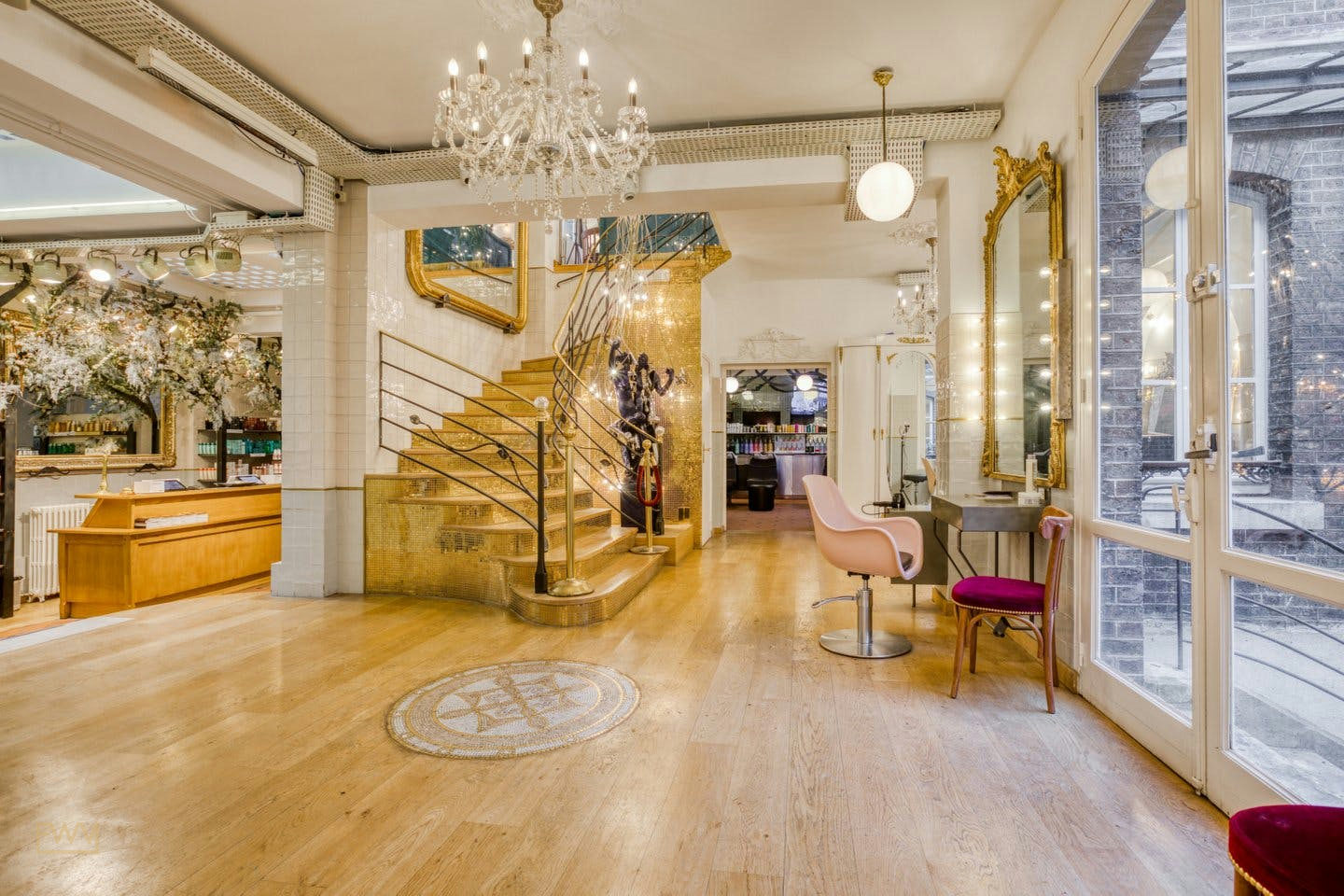
One of the most distinctive features of the Paris pop-up market is the availability of residential and mixed-use apartment spaces within Haussmann-era buildings. These spaces offer high ceilings, period architectural detailing, natural light from generous windows, and a sense of intimacy that purpose-built retail units rarely replicate. For luxury brands, beauty launches, and jewellery presentations, a well-selected apartment space in the 8th arrondissement can deliver a more memorable guest experience than a conventional storefront. Floor and access considerations matter significantly in this format: upper-floor apartments require attention to disabled access, delivery logistics, and visitor flow.
Art Gallery Spaces
Art gallery spaces provide a neutral, considered aesthetic that suits brands with a strong design narrative or those launching a product through a cultural or editorial lens. Gallery formats typically feature polished concrete floors or raw concrete floors, spotlights on track systems, white walls, and open plan layouts that allow flexible configuration. These spaces are popular for brand activations that blend retail with exhibition, and for brands in the contemporary luxury, beauty, and accessories segments who want to signal creative credibility alongside commercial intent.
Studio Photo Spaces
Studio photo spaces in Paris serve a dual purpose: they function as content production environments during shoots and can be adapted as intimate pop-up venues or showroom spaces during activation periods. For brands running editorial shoots alongside their Fashion Week activation, a studio that converts to a pop-up retail or presentation space can be a cost-efficient solution.
| Space Type | Typical Square Metres | Floor / Access | Key Space Features | Best Suited For |
|---|---|---|---|---|
| Classic storefront | 30 to 150 sqm | Ground floor, street-level | Display windows, direct street access | Pop-up stores, temporary concept stores |
| Fashion showroom | 50 to 200 sqm | Ground or first floor | Controlled lighting, display rails, meeting areas | Trade appointments, press days, buyer meetings |
| Apartment conversion | 80 to 400 sqm | Upper floors, lift access | High ceilings, period detailing, natural light | Luxury launches, intimate brand experiences |
| Art gallery | 60 to 300 sqm | Ground or basement | Track lighting, polished/raw concrete, open plan | Brand activations, editorial retail, exhibitions |
| Studio photo space | 100 to 500 sqm | Varies | Neutral backdrops, professional lighting rigs | Content production, intimate pop-up retail |
TIP: When briefing a space on Avenue Montaigne or the wider 8th arrondissement, specify your minimum square metres, required floor access, delivery logistics requirements, preferred lighting setup, and whether you need street visibility or can work with a more discreet address. This narrows the search significantly and avoids wasted viewing time.
KEY TAKEAWAY: The Paris retail space market rewards specificity. Brands that arrive with a clear brief covering space type, square metres, floor access, lighting, and activation format are far more likely to transact efficiently than those approaching the market with open parameters.
With space type clarified, the next critical layer is understanding the commercial real estate mechanics and rental market that govern how these spaces are priced and contracted.
Commercial Real Estate and Rental Market: What It Costs to Hire Retail Space in Paris
Quick answer: Retail rental values on Avenue Montaigne and the wider 8th arrondissement Paris are among the highest in Europe. Exact pricing varies significantly by space type, duration, calendar period, and the specific arrangement between landlord and tenant. Directional estimates are available, but brands should use a purpose-built tool to model their specific scenario before committing to a budget.
The Paris commercial real estate market operates through several distinct frameworks depending on the duration and nature of the tenancy. Understanding these frameworks is essential before entering any negotiation or committing to a space, particularly for international brands unfamiliar with French property law and commercial lease structures.
The Bail Dérogatoire: Short-Term Commercial Leases in France
The standard French commercial lease, known as a bail commercial, carries a minimum nine-year term under French law, with statutory renewal rights for the tenant. This structure is entirely unsuitable for pop-up stores, temporary retail activations, and short-term brand events. The mechanism designed for shorter commitments is the bail dérogatoire, which allows commercial tenancies of up to three years without triggering the statutory protections of the standard bail commercial. For pop-up stores and temporary retail activations lasting days, weeks, or a few months, the bail dérogatoire is the typical legal framework, though specific requirements vary by space, landlord, and circumstances.
IMPORTANT: The bail dérogatoire has specific conditions and limitations under French law. Brands must not occupy the space beyond the agreed term without proper legal advice, as doing so can inadvertently trigger the statutory protections of the bail commercial. Always verify the terms with a qualified French legal advisor before signing any commercial lease in France.
Autorisations d'Occupation Temporaire (AOT)
For activations on public land or in publicly managed spaces, including some areas around the Champs-Élysées and public squares near the Arc de Triomphe, an Autorisation d'Occupation Temporaire (AOT) may be required from the relevant public authority. AOTs govern the temporary use of public land for commercial purposes and carry their own application process, fees, and conditions. Requirements vary by location, intended use, duration, and the nature of the activity. Brands should seek specialist permit guidance well in advance of their planned activation dates, as processing times can be significant. The permit guidance tool provides a structured starting point for understanding what may be required for your specific activation.
Retail Rental Values: A Directional Framework
Avenue Montaigne consistently records among the highest retail rents in France on a per-square-metre basis. Published market analysis from commercial real estate sources has historically placed prime Avenue Montaigne rental values at levels comparable to the most expensive retail streets in Europe. However, the short-term and pop-up market operates differently from the long-term lease market: short-term arrangements often carry a premium relative to annualised long-term rents, reflecting the flexibility they offer. Conversely, spaces that are difficult to let on long-term terms due to layout, size, or condition may be available at more accessible short-term rates.
Key factors that influence short-term rental pricing in the Paris luxury retail market include: the specific street and arrondissement, the floor and access configuration of the space, the duration of the hire, the calendar period relative to Fashion Week and key luxury retail windows, the presence of display windows and street frontage, the required fit-out standard, and whether the landlord is a private individual, a property company, or an institutional real estate asset manager.
DID YOU KNOW: During Paris Fashion Week windows, demand for showroom and pop-up space in the 8th arrondissement and Le Marais surges sharply, and spaces that command standard rental values in off-peak periods can attract significant premiums during peak Fashion Week dates.
For brand teams building a detailed budget model, the budget estimation tool allows you to model space costs alongside fit-out, staffing, permits, and operational expenses to produce a realistic total activation budget rather than focusing only on the headline rental figure.
Long-Term Leases vs Short-Term Hire: Weighing the Options
Brands entering the Paris market for the first time frequently ask whether a longer commitment makes sense if they plan to return annually for Fashion Week. Long-term leases on Avenue Montaigne represent significant real estate assets that carry obligations well beyond the Fashion Week season. For most brands without a permanent French retail operation, short-term hire through a bail dérogatoire or flexible arrangement is the more appropriate structure. Brands planning a sustained Paris retail presence should take specialist advice from a French commercial property advisor alongside their activation agency.
KEY TAKEAWAY: The cost of hiring retail space in Paris is not reducible to a single rental figure. The total activation investment includes rental, fit-out, permits, staffing, logistics, and operational costs. Modelling all of these components before committing to a space is essential for accurate budget planning.
Beyond the financial mechanics, successful luxury retail activations in Paris depend heavily on understanding the customer and market dynamics that make the city one of the world's most important luxury retail environments.
Luxury Brands and Retailers: The Competitive Landscape on and Around Avenue Montaigne
Quick answer: Avenue Montaigne and the wider 8th arrondissement host the permanent flagship stores of the world's leading luxury maisons, creating both competitive pressure and a powerful halo effect for brands activating in the neighbourhood. Understanding who occupies the space around you is as important as understanding the space itself.
The permanent tenant mix on and around Avenue Montaigne reads as a catalogue of global luxury fashion: Dior, Chanel, Louis Vuitton, Gucci, Prada, Balenciaga, Saint Laurent, Valentino, Givenchy, and Loewe all maintain significant presences. This concentration is the product of decades of deliberate real estate strategy by the major luxury conglomerates. LVMH's control of key real estate assets across the 8th arrondissement and Kering's portfolio of flagship stores represent a significant portion of the avenue's occupied floorspace.
For independent brands, emerging designers, and international brands without an established French presence, this context demands honest strategic assessment. A pop-up store positioned alongside Dior and Chanel must be executed to a level of quality, design, and operational polish that justifies its location. A poorly executed activation in a premium address can damage brand perception rather than build it. Conversely, a beautifully designed and well-staffed pop-up in this neighbourhood signals genuine ambition and capability to the press, buyers, and clients who move through the area daily.
The Rise of Concept Stores and Temporary Retail Formats
One of the most significant shifts in Paris luxury retail over the past two decades has been the growth of the concept store model. Colette, which operated on Rue Saint-Honoré from 1997 until its closure in 2017, defined what a Paris concept store could achieve: a curation-driven retail space that mixed high fashion, streetwear, art, music, and food within a single destination. Its influence on how brands think about temporary retail and pop-up stores in Paris cannot be overstated. The Marais has absorbed much of the concept store energy that Colette once concentrated on Saint-Honoré, with spaces hosting rotating brand residencies, pop-up stores, and collaborative retail events.
Comme des Garçons' Guerrilla store model, which involved occupying temporary spaces in unexpected locations and operating for limited periods before moving on, was an early and influential example of strategic temporary retail. Today, brands including Stella McCartney, Madewell, and Neiman Marcus have used temporary Paris retail activations to test market positioning, build local clientele, and generate press coverage without committing to long-term leases.
TIP: When planning a luxury pop-up on or near Avenue Montaigne, audit the permanent tenant mix on your target street. Understanding what maisons occupy neighbouring units helps you anticipate the audience your activation will encounter, the visual standards you need to meet, and the potential for brand association or contrast that your location creates.
Galeries Lafayette, Printemps, and Department Store Dynamics
While Galeries Lafayette and Printemps are not located on Avenue Montaigne, they represent major nodes in the Paris luxury retail ecosystem. Galeries Lafayette Haussmann draws tens of millions of visitors annually, and its brand mix spans accessible luxury to high-end fashion. Brands considering where to position a pop-up activation in Paris should factor in how department store presences nearby affect their target customer's shopping journey. For brands already stocked by Galeries Lafayette, a nearby pop-up activation can create a complementary experience that drives footfall to both locations.
KEY TAKEAWAY: The luxury brand landscape on and around Avenue Montaigne is defined by the world's most resourced maisons. Brands activating in this neighbourhood must execute to the highest standards of design, staffing, and operational quality to earn the trust of the clientele and press who pass through it daily.
Understanding the customer and market dynamics of Paris luxury retail adds another layer of context to any space decision on Avenue Montaigne.
Customer and Market Analytics: Understanding Footfall, Visitors, and Consumer Habits in Paris Luxury Retail
Quick answer: Paris attracts tens of millions of international visitors annually, with the luxury retail corridors of the 8th arrondissement generating some of the highest footfall of any premium retail destination in Europe. Consumer habits in Paris luxury retail are shaped by a combination of wealthy domestic French clientele, high-spending international tourists, and the fashion industry professional community that converges on the city during Fashion Week.
Footfall data and market analysis for Avenue Montaigne and the broader Paris luxury retail market consistently reflects a multi-layered visitor profile. The domestic French luxury consumer represents a significant portion of baseline spending on Avenue Montaigne, with Parisian high-net-worth individuals, established luxury clients, and French fashion professionals forming a core ongoing audience. Layered over this base are international tourists, who account for a disproportionate share of luxury retail spending in Paris, particularly visitors from the United States, China, Japan, South Korea, and the Gulf region.
During Paris Fashion Week, the visitor profile changes markedly. The city absorbs thousands of fashion industry professionals: buyers, stylists, editors, brand directors, creative consultants, and influencers. This concentrated professional audience represents an extremely high-value activation window for brands running showrooms, press events, and trade appointments. The overlap between Fashion Week professional footfall and the normal consumer footfall of Avenue Montaigne makes the Fashion Week calendar window uniquely valuable for brands that can serve both audiences simultaneously.
Why Paris Luxury Retail Continues to Grow
Despite periodic volatility in global luxury spending, the Paris luxury retail market has demonstrated significant structural resilience. The City of Light retains unmatched cultural authority as the global home of fashion, and its position in the international luxury travel circuit is reinforced by the concentration of museum-level cultural destinations, the density of luxury hospitality, and the city's enduring reputation as the world's reference point for taste, style, and design. For brands, this means that a well-executed activation in Paris carries a cultural legitimacy that activations in other cities rarely replicate. Market analysis from major commercial real estate advisors consistently places Paris alongside London, New York, and Tokyo as a primary global luxury retail destination, with retail rental values and transaction activity reflecting sustained investor and brand confidence.
Fashion Week as a Market Activation Window
Paris Fashion Week, which takes place twice annually for Women's collections and separately for Men's, Haute Couture, and specific trade events, represents the most commercially intense retail window in the French calendar. During Fashion Week, the footfall through the 8th arrondissement, Le Marais, and Saint-Germain-des-Prés includes not only the standard luxury consumer base but also the global fashion press, wholesale buyers, e-commerce buyers, influencers, and brand creative teams who collectively determine which products and brands gain international commercial momentum. A pop-up store or showroom positioned to capture this audience during Fashion Week can generate months of brand-building impact in a matter of days.
DID YOU KNOW: Paris Fashion Week generates significant media coverage across print, digital, and social platforms globally. Brands with a physical presence in Paris during Fashion Week benefit from ambient media attention that brands without a Paris presence cannot easily access from a distance.
To compare your planned activation location against visitor flow data and understand how different Paris neighbourhoods perform across different calendar windows, the space locator tool can help identify which areas best match your target audience profile.
KEY TAKEAWAY: The value of a retail activation in Paris is not determined solely by the quality of the space. The timing relative to Fashion Week, the specific neighbourhood's audience profile, and the brand's ability to engage both the domestic luxury consumer and the international fashion professional community all determine the ultimate return on the activation investment.
Realising that return depends on rigorous operational planning, which begins with understanding the permit and compliance landscape in France.
Operations, Regulations, and Permits: What Brands Need to Know Before Activating in Paris
Quick answer: Operating a pop-up store, showroom, or brand activation in Paris requires compliance with French commercial regulations, permit requirements that vary by space type and location, and operational protocols covering signage, opening hours, security, and waste management. International brands frequently underestimate the complexity of the French regulatory environment.
One of the most common operational challenges for international brands activating in Paris for the first time is the permit and compliance landscape. France operates a detailed regulatory framework covering commercial activity in public-facing spaces, and the specific requirements vary significantly by arrondissement, space type, activity format, and duration.
Permits and Authorisations for Pop-Up Retail in Paris
Beyond the bail dérogatoire for the lease structure itself, brands operating a pop-up store in Paris may require additional authorisations depending on the nature of their activity. Brands installing temporary signage or exterior branding elements on a building facade may need approval from the landlord and potentially from the local authority. Outdoor signage in Paris is governed by strict regulations that differ from those in many other cities, and the aesthetic standards of the 8th arrondissement are particularly rigorously enforced. Brands running events involving amplified music, extended opening hours, or alcohol service require specific authorisations from the relevant municipal authority.
For activations involving outdoor elements near the Champs-Élysées, the Arc de Triomphe, or other protected public spaces, the AOT process applies and should be initiated well in advance of the planned activation date. Brands that have navigated permit requirements in New York, London, or other major cities should not assume that Paris will follow a similar process. French administrative procedures have their own timelines, documentation requirements, and approval pathways that require specialist knowledge to navigate efficiently.
IMPORTANT: Requirements for permits, authorisations, and regulatory compliance in Paris vary by space type, activity, duration, and arrondissement. The information in this guide is directional. Always verify current requirements with a qualified French legal advisor or a specialist Paris activation agency before committing to dates, signing a lease, or beginning any fit-out work.
Operational Considerations: Security, Lighting, and Fit-Out
Pop-up stores and brand activations in Paris luxury retail environments require attention to a range of operational factors beyond the permit landscape. Security is a primary consideration for activations handling luxury product, high-value inventory, or cash and payment transactions. A professional security service appropriate to the location and activity format is standard practice for Avenue Montaigne and 8th arrondissement activations. Lighting design is equally important: the difference between polished concrete floors with professionally configured spotlights and the same space with inadequate lighting is the difference between a luxury activation and an unconvincing one. Lighting should be specified during the space assessment process, not retrofitted at the last minute.
Fit-out and production standards in Paris luxury retail are high. Brands executing a pop-up on or near Avenue Montaigne are activating in a neighbourhood where Dior, Chanel, and Louis Vuitton set the visual standard. Materials, finishes, signage, and furniture must reflect that context. Rushing the fit-out or cutting corners on production quality is one of the most common and costly mistakes brands make in this market.
Social Media and Digital Integration
Modern pop-up activations in Paris are designed to function as content generation engines as well as retail spaces. Social media integration, from in-space photography opportunities and influencer access protocols to digital payment systems and post-purchase email capture, should be planned as part of the activation concept from the outset rather than added as an afterthought. Brands investing in an Avenue Montaigne activation should expect to amplify the physical event through digital channels to maximise the reach of the Paris presence globally.
KEY TAKEAWAY: Operational complexity in Paris is real. Brands that invest in specialist compliance, permit, security, and production expertise consistently deliver better-executed and more commercially successful activations than those that attempt to manage French regulatory and operational requirements without local expertise.
Navigating this complexity effectively is precisely where specialist agency support delivers its most tangible value.
How Fashion Week Venues Helps Brands Hire Retail Space in Paris
Fashion Week Venues operates as a full-service pop-up agency and space marketplace specifically designed to support brands seeking to activate in Paris and other major fashion capitals. For brands targeting Avenue Montaigne, the 8th arrondissement, Le Marais, Faubourg Saint-Honoré, or any other Paris retail zone, Fashion Week Venues provides a structured, end-to-end pathway from initial space discovery through to live activation and post-campaign analytics.
The Fashion Week Venues venue sourcing service connects brand teams with available spaces across Paris's primary retail and activation zones, drawing on a network of landlords, property managers, and space owners who are open to short-term and flexible arrangements. Rather than approaching individual landlords cold or relying on commercial agents who may not specialise in the short-term luxury retail market, brands working with Fashion Week Venues benefit from pre-established relationships and market knowledge that accelerates the space identification and transaction process.
Beyond space sourcing, the agency's service offering covers the full activation lifecycle. The concept direction service helps brands develop the spatial narrative, customer journey, and design language for their Paris activation. The production and build service manages fit-out, furniture installation, and technical setup to the standard required for a luxury Paris environment. The activation management service covers day-to-day operational management during the live period, including logistics, inventory management, and event execution.
For brands that need to staff their Paris activation, the retail staffing service provides access to experienced, bilingual staff appropriate to luxury retail environments. French-speaking customer-facing staff are essential for credibly serving the Parisian domestic luxury clientele, and the staffing quality in a luxury pop-up directly affects the brand perception that customers take away from the experience.
The Fashion Week Venues toolkit includes planning and decision-support tools that allow brand teams to model their activation before committing resources. The budget estimation tool and ROI calculator allow teams to stress-test their financial assumptions against realistic cost and revenue scenarios. The timeline planning tool helps teams map the critical path from brief to activation, which is particularly important when activating around Paris Fashion Week where lead times are compressed by high demand.
For brands considering activating in multiple locations simultaneously, the twin co-activation concept allows two brands to share a Paris space, splitting costs while each maintaining their brand integrity and presence in the market. This model is particularly suited to complementary luxury brands in adjacent categories.
To compare neighbourhoods and space types, explore the Paris city hub on Fashion Week Venues and shortlist spaces that match your brief, budget, and calendar window.
Fashion Week Venues does not guarantee specific space availability, permit approvals, or activation outcomes. The agency works to provide the most comprehensive and well-connected support possible, but all decisions regarding space selection, legal structure, and activation execution remain with the brand team. Brands are encouraged to review the guide to hiring an activation agency before entering into any agency relationship.
KEY TAKEAWAY: Fashion Week Venues provides brand teams with a structured, expert-supported pathway to activating in Paris, from space discovery and permit guidance through to fit-out, staffing, and post-activation analytics. The agency's Paris-specific knowledge reduces the risk of the operational and regulatory errors that most commonly affect international brands activating in France for the first time.
Paris vs Other Global Luxury Retail Markets: How Avenue Montaigne Compares Internationally
Quick answer: Avenue Montaigne in Paris competes directly with Fifth Avenue in New York, Bond Street in London, Via Montenapoleone in Milan, and Ginza in Tokyo as a global luxury retail address. Each market has distinct cost structures, consumer profiles, and regulatory environments, and brands should understand how Paris compares before committing to a city for their primary international retail activation.
International brands approaching the Paris luxury retail market often benchmark it against other global addresses they know well. Fifth Avenue in Manhattan, from the Plaza Hotel to 59th Street down to the Flatiron district, has long been America's benchmark luxury retail address, anchored by flagship stores for Louis Vuitton, Gucci, Prada, and Chanel alongside American department store institutions such as Bergdorf Goodman and Saks Fifth Avenue. The historical presence of Neiman Marcus, Bonwit Teller, and iconic stores such as Nan Duskin and Sophy Curson and Joan Shepp in cities like Philadelphia's Rittenhouse Square, Walnut Street, and Center City reflects a broader American tradition of luxury retail anchored by female entrepreneurship and independent store ownership that has parallels in the Parisian independent retail tradition.
The Walnut Street corridor in Philadelphia's Center City, adjacent to the Philadelphia Register of Historic Places sites and near Drexel University and the King of Prussia Mall catchment area, represents a regional American luxury retail market that operates very differently from New York's Fifth Avenue or Fifth Ave equivalent in terms of scale, footfall, and consumer profile. These regional American markets are referenced here to contextualise the global scope of luxury retail geography that brands navigate when deciding where to invest their activation budget.
What distinguishes Avenue Montaigne and the Paris luxury market from most international competitors is the combination of cultural authority, Fashion Week calendar concentration, and the physical density of the world's most recognised luxury maisons within a walkable district. Fifth Avenue in Manhattan spreads its luxury tenants across a much longer corridor and faces competition from department stores and mass-market retailers that dilute the luxury positioning of individual blocks. Via Montenapoleone in Milan offers a similarly concentrated luxury environment but operates within a smaller global tourism base than Paris. Tokyo's Ginza district serves a primarily Japanese domestic luxury market with different consumer habit patterns.
| City / Address | Fashion Week Timing | Primary Consumer | Short-Term Lease Framework | Key Regulatory Consideration |
|---|---|---|---|---|
| Paris / Avenue Montaigne | Jan, Feb, Jun, Jul (multiple) | International HNW + French domestic | Bail dérogatoire (up to 3 years) | AOT for public space, signage permits |
| New York / Fifth Avenue | February, September | US domestic + international tourist | Short-term license agreements | NYC DCA licensing, signage permits |
| London / Bond Street | February, September | UK domestic + international tourist | Licence agreement (outside Landlord and Tenant Act) | Westminster signage and planning |
| Milan / Via Montenapoleone | February, September | Italian domestic + international tourist | Contratto di affitto commerciale breve | Municipal commercial activity permits |
| Tokyo / Ginza | March, October | Japanese domestic luxury + Chinese tourist | Short-term rental agreement | Japanese commercial activity regulations |
KEY TAKEAWAY: Avenue Montaigne and the Paris luxury retail market offer a combination of cultural authority, Fashion Week calendar leverage, and international audience density that is difficult to replicate in other global luxury retail markets. Brands choosing Paris as their primary international activation market are investing in the world's most culturally authoritative luxury retail address.
Before committing to a Paris activation strategy, understanding common misconceptions about the market will help brands approach their planning with accurate expectations.
Common Myths About Hiring Retail Space in Paris Debunked
MYTH: You need a French legal entity to hire retail space in Paris.
FACT: International brands do not necessarily need to establish a French legal entity to rent a retail space in Paris for a short-term activation. Many short-term arrangements are structured in ways that accommodate foreign companies. However, the specific requirements depend on the landlord, the lease structure, and the nature of the activation, and specialist legal advice is essential before proceeding. Working with an experienced Paris activation agency can clarify the most efficient legal pathway for your brand's specific circumstances.
MYTH: Paris Fashion Week is the only viable calendar window for a Paris pop-up activation.
FACT: While Paris Fashion Week windows generate the highest concentration of fashion industry footfall and press attention, the Paris luxury retail calendar offers multiple commercially viable activation windows throughout the year. Key retail periods including the summer tourist season, the Christmas luxury shopping window, and seasonal sale periods all represent significant footfall and spending opportunities. Many brands find that activating slightly outside the Fashion Week peak allows them to negotiate better rental terms, secure preferred spaces, and benefit from a less crowded competitive environment for press and social media attention.
MYTH: Commission brokers are the only way to find a short-term retail space in Paris.
FACT: Commission-based commercial property brokers represent one pathway to finding retail space in Paris, but they are not the only option and are not always the most efficient for short-term and pop-up requirements. Specialist pop-up space marketplaces, full-service activation agencies with established landlord relationships, and direct approaches to building owners in target streets all represent viable alternatives. The most effective approach for brands new to the Paris market is typically to engage a specialist agency or marketplace with existing inventory and landlord relationships in the specific neighbourhoods relevant to the brief.
MYTH: Short-term retail leases in Paris are legally straightforward and do not require specialist help.
FACT: Short-term retail lease arrangements in France operate within a specific legal framework that differs significantly from the approaches used in other markets. The bail dérogatoire has precise conditions, term limits, and renewal restrictions. Misunderstanding or misapplying these rules can expose a brand to significant legal and financial risk, including inadvertently triggering statutory tenant protections or voiding the lease arrangement entirely. French commercial property law is a specialist field, and brands new to the market benefit significantly from expert guidance before entering any lease negotiation or signing any commercial property document in France.
MYTH: Avenue Montaigne pop-ups are only viable for major luxury conglomerates with unlimited budgets.
FACT: While Avenue Montaigne commands the highest rental values in Paris, the wider 8th arrondissement and adjacent luxury corridors offer a spectrum of space types and sizes at varying price points. Smaller brands with focused briefs, clear audience targeting, and strong concept direction have executed successful activations in and around the Avenue Montaigne neighbourhood by selecting appropriately sized spaces, managing fit-out costs carefully, and concentrating their activation on high-impact Fashion Week windows. Effective planning and specialist agency support make Avenue Montaigne-adjacent activations viable for a broader range of brand tiers than is commonly assumed.
Frequently Asked Questions
What are the most sought-after locations for hiring retail space in Paris?
The most sought-after locations for hiring retail space in Paris for luxury and fashion brands are Avenue Montaigne, Rue du Faubourg Saint-Honoré, Place Vendôme, the Champs-Élysées, and the Marais district. Avenue Montaigne is considered the apex of Paris luxury retail, hosting permanent flagship stores for Dior, Chanel, Louis Vuitton, Gucci, Prada, Balenciaga, and Saint Laurent. The Marais offers more diverse space types at more accessible price points and is popular for concept stores, showrooms, and editorial pop-ups. Saint-Germain-des-Prés and Montmartre serve distinct brand positioning needs. The right location depends on your brand tier, target audience, activation format, and budget.
What does it cost to hire retail space in Paris for a pop-up or Fashion Week activation?
Retail rental values in Paris vary significantly by location, space type, size, duration, and calendar period. Avenue Montaigne commands the highest short-term retail rents in France, with pricing influenced by street-level visibility, square metres, fit-out standard, and Fashion Week calendar proximity. The Marais and Montmartre typically offer more accessible price points. Because short-term pop-up arrangements often carry a premium relative to annualised long-term rents, brands should model the total activation cost including fit-out, permits, staffing, and operations rather than focusing on the rental figure alone. The budget estimation tool on Fashion Week Venues provides a structured way to model brand-specific cost scenarios.
Do I need a French legal entity to rent a retail space in Paris for a pop-up?
Many short-term retail arrangements in Paris can be structured to accommodate foreign companies without requiring the establishment of a French legal entity in advance, but the specific requirements vary by landlord, lease structure, and the nature of the commercial activity involved. International brands should seek qualified French legal advice before entering any lease or commercial arrangement in France to understand the most appropriate structure for their situation. Working with a specialist Paris activation agency that has established landlord relationships and experience with international brand transactions can significantly simplify this process and reduce the risk of procedural errors.
What is a bail dérogatoire and why does it matter for pop-up retail in Paris?
A bail dérogatoire is a short-term commercial lease arrangement under French law that allows tenancies of up to three years without triggering the statutory tenant protections of the standard nine-year bail commercial. It is the most common legal framework for pop-up stores, temporary retail activations, and short-term brand events in Paris. Key requirements include a written agreement that explicitly designates the arrangement as a bail dérogatoire, compliance with the maximum term limit, and careful management of any renewal or extension to avoid inadvertently converting the arrangement into a standard bail commercial. Brands should always verify their specific bail dérogatoire terms with a qualified French commercial property lawyer.
What permits does a brand need to run a pop-up store on or near Avenue Montaigne in Paris?
Permit requirements for a pop-up store on or near Avenue Montaigne depend on the specific nature of the activity, the space type, the duration, and the intended use. Signage on building facades requires landlord approval and potentially local authority authorisation. Activations involving amplified music, extended hours, or alcohol service require separate permits. Outdoor elements near the Champs-Élysées or Arc de Triomphe may require an Autorisation d'Occupation Temporaire from the relevant public authority. Requirements vary and change, so brands should use specialist permit guidance resources and verify current requirements with a French legal advisor well in advance of planned activation dates.
How far in advance should a brand start planning a Paris Fashion Week pop-up activation?
The recommended lead time for a well-planned Paris Fashion Week pop-up activation is typically four to six months in advance for established brands with a clear brief, and six to twelve months for brands activating in Paris for the first time or targeting Avenue Montaigne and other highly constrained inventory zones. Fashion Week windows generate peak demand for prime Paris retail and showroom spaces, and the most strategically positioned spaces in the 8th arrondissement and Le Marais are typically reserved well in advance. Brands that begin their search too close to their target dates often find that available inventory is limited to less desirable spaces or significantly higher pricing. The timeline planning tool on Fashion Week Venues can help map your critical path from brief to activation day.
What space types are available for pop-up activations near Avenue Montaigne?
Available space types near Avenue Montaigne and in the wider 8th arrondissement include classic storefronts with street frontage and display windows, fashion showroom formats suited to trade appointments and press days, Haussmann apartment conversions offering high ceilings and period architectural details, art gallery spaces with flexible layouts and professional lighting, and studio photo spaces that can serve as both content production and activation venues. Space availability in this neighbourhood is constrained by the dominance of long-term luxury brand leases, so brands targeting Avenue Montaigne specifically should work with a specialist agency or marketplace to identify available inventory well in advance of their planned activation window.
Is Avenue Montaigne the right location for every luxury brand pop-up in Paris?
Avenue Montaigne is the right choice for brands whose target audience, brand tier, and activation objectives align with the avenue's positioning as the most exclusive luxury retail corridor in Paris. For brands targeting the fashion community, emerging consumers, or a culturally engaged younger audience, Le Marais, Saint-Germain-des-Prés, or Montmartre may deliver better audience alignment at more accessible rental values. For brands focused on trade appointments and wholesale buyer meetings, a fashion showroom near Faubourg Saint-Honoré or in the Marais during Fashion Week may outperform a more expensive Avenue Montaigne storefront. The right location is determined by your brief, not by prestige alone.
How does Paris Fashion Week affect the availability and pricing of short-term retail spaces?
Paris Fashion Week creates a significant demand surge for short-term retail, showroom, and event spaces across the 8th arrondissement, Le Marais, Saint-Germain-des-Prés, and other key fashion districts. This surge affects both availability and pricing: spaces that are accessible in off-peak periods may carry substantial premiums during Fashion Week windows, and the most sought-after locations are often committed months in advance. Brands that plan to activate specifically during Fashion Week must begin their search earlier than they would for other calendar windows and should have contingency plans for secondary location options if their first-choice spaces are unavailable.
What services does a full-service pop-up agency like Fashion Week Venues provide for a Paris activation?
A full-service pop-up agency operating in Paris typically provides venue sourcing, concept direction, fit-out and production management, activation day management, retail staffing, POS and payments setup, permit guidance, data and analytics, and influencer and social media support. The value of a full-service agency model for brands new to the Paris market is the consolidation of specialist expertise across legal, logistical, design, and operational domains that would otherwise require multiple separate vendor relationships. Fashion Week Venues provides all of these services alongside a space marketplace, planning tools, and city-specific expertise for Paris and other major fashion capitals.
How do international brands without a French legal entity manage commercial transactions in a Paris pop-up store?
International brands operating a pop-up store in Paris need to structure their commercial transactions appropriately for the French market. This typically involves setting up a compliant payment and point-of-sale system that handles euro transactions, VAT, and receipting in accordance with French fiscal requirements. Some brands work through a French legal entity established for the purpose, while others operate through a management arrangement with a local partner or agency. The appropriate structure depends on the brand's existing legal setup, the volume and nature of transactions anticipated, and the duration of the activation. French legal and fiscal advice is essential before the activation begins.
What makes a Paris luxury pop-up activation successful beyond the choice of space?
A successful Paris luxury pop-up activation requires more than securing the right space in the right neighbourhood. Design and fit-out quality must meet the visual standard set by the permanent luxury tenants in the neighbourhood. Staffing must include French-speaking team members who can authentically engage the domestic Parisian luxury clientele. The activation concept must offer a genuinely differentiated experience that justifies a visit in a city already saturated with world-class retail. Digital and social media integration should be planned as a core component of the activation strategy, not an afterthought. Post-activation data capture and analysis is essential for measuring ROI and informing future Paris activation decisions.
Can two brands share a Paris retail space to reduce costs during Fashion Week?
Yes. A co-activation or shared space model allows two complementary brands to divide the rental and operational costs of a Paris pop-up space while maintaining distinct brand identities within the shared environment. This model works best when the two brands serve adjacent but non-competing audience segments, share a compatible aesthetic and brand positioning, and agree in advance on the spatial division, customer journey, staffing arrangements, and shared operational responsibilities. The twin co-activation concept on Fashion Week Venues provides a structured framework for brands considering this approach, including guidance on space selection, concept development, and joint operational planning.
How can brands measure the ROI of a Paris pop-up store or Fashion Week activation?
Measuring the return on investment of a Paris pop-up activation requires defining metrics before the activation begins rather than after. Relevant metrics vary by activation objective and typically include: direct retail sales revenue, wholesale enquiries and orders generated, press coverage volume and estimated media value, social media reach and engagement generated by the activation, email and CRM data captured from activation visitors, and qualitative feedback from buyers, press, and consumers. For activations running during Fashion Week, the downstream commercial impact on wholesale relationships and e-commerce conversion in the weeks following the event is often as significant as the on-site retail revenue. The ROI calculator tool on Fashion Week Venues can help structure this analysis before and after your activation.
What should a brand's brief contain when approaching an agency or marketplace to source Paris retail space?
An effective brief for sourcing Paris retail space should include: target neighbourhood or street, required space type, minimum and maximum square metres, required floor access and lift availability, preferred duration including setup, live activation, and breakdown days, target calendar window including any Fashion Week alignment, planned use of the space including retail, showroom, events, or a combination, maximum rental budget, fit-out standard expectations, and any specific technical requirements such as lighting setup, power capacity, or delivery access. The more specific the brief, the faster and more accurately a specialist agency or marketplace can identify suitable options and avoid wasting time on spaces that do not meet the core requirements.
Conclusion: Making the Right Decision When You Hire Retail Space on Avenue Montaigne
Hiring retail space on Avenue Montaigne or in the wider Paris luxury retail market is one of the most strategically significant decisions a fashion or luxury brand can make. The address carries unmatched cultural authority, the audience includes the world's most influential fashion buyers and press, and the operational standards required to activate credibly in this neighbourhood are genuinely high. Brands that approach this market with a clear brief, adequate lead time, specialist legal and operational support, and a design and staffing standard that reflects the neighbourhood's benchmark will find that a well-executed Paris activation delivers returns that extend far beyond the duration of the pop-up itself.
The complexity of French commercial property law, permit requirements, fit-out standards, and customer expectations means that brands new to the Paris market benefit significantly from expert support at every stage, from space identification and lease negotiation through to activation day management and post-campaign analysis. The risk of expensive operational errors is real, and the reputational stakes of a poorly executed Avenue Montaigne activation are particularly high given the visibility of the location.
Fashion Week Venues exists to provide exactly the kind of end-to-end expert support that brands need to activate confidently in Paris. From venue sourcing and concept direction to production, staffing, permits, and analytics, the agency's Paris-specific expertise reduces risk and increases the probability of a commercially successful, brand-enhancing activation in the world's most important luxury retail city.
To move from research to activation, start exploring available spaces on the Fashion Week Venues marketplace and build a focused brief for your target neighbourhood, space type, and calendar window.