Short term retail Canal Saint-Martin represents one of the most compelling opportunities available to fashion brands, independent designers, and lifestyle labels seeking a credible, culturally rich presence in Paris. Canal Saint-Martin, the historic waterway running through the 10th arrondissement, has evolved from an industrial corridor built under Napoleon I into one of the most coveted neighbourhoods in the French capital for independent retail, concept stores, and brand activations. Its resident community of young Parisian creatives, its density of influential concept stores, its proximity to République and Bastille, and its strong pull with both tourists and locals make it an exceptional staging ground for short-term retail. Fashion Week Venues supports brands pursuing pop-up spaces in Paris with venue sourcing, production, activation management, and the full operational infrastructure required to trade successfully in this neighbourhood.
What Is Canal Saint-Martin and Why Does It Matter for Short Term Retail?
Canal Saint-Martin is a 4.5-kilometre artificial waterway that connects the Canal de l'Ourcq to the Seine via the Bassin de la Villette and the Arsenal basin near Place de la Bastille. Built in the early 19th century by order of Napoleon I to supply Paris with clean water and support the city's industrial ambition, the canal runs primarily through the 10th arrondissement before passing underground beneath Boulevard Richard Lenoir and re-emerging near the Seine at the southern end. Along its banks, particularly on the Quai de Jemappes and the Quai de Valmy, a dense corridor of independently owned boutiques, restaurants, wine bars, bakeries, and concept stores has developed over the past two decades into one of the most distinctive shopping and lifestyle destinations in Paris.
For brands considering short term retail in Paris, Canal Saint-Martin offers a specific kind of cultural authority. Unlike the Marais, which has become heavily commercialised, or the major boulevards dominated by luxury flagships, Canal Saint-Martin retains a neighbourhood feel that resonates deeply with the progressive, taste-led, design-conscious consumers that many fashion and lifestyle brands actively want to reach. The canal corridor is home to businesses like Centre Commercial, the influential concept store that curates sustainably produced labels from across Europe, Veja's first Paris outpost, Canons Canons, Norse Projects, Studio Nicholson, and Paraboot, alongside a thriving ecosystem of independent boulangeries, coffee specialists like Ten Belles, and wine bars including Le Verre Volé. Gros Bao, Café Margo, and Briezh Café add to the neighbourhood's reputation as a destination for considered, high-quality eating and drinking.
The neighbourhood sits within the broader Rive Droite geography of Paris, accessible from République via Metro Lines 3, 5, 8, 9, and 11, and from Jaurès station via Metro Line 2, which provides a direct connection northward to the Bassin de la Villette and Parc de la Villette. Boulevard Magenta forms the western boundary, while Gare de l'Est provides a major transport hub to the east, making the area easily reachable from across Paris and directly from international arrivals via Eurostar terminus at Gare du Nord. This accessibility, combined with the neighbourhood's organic retail density, creates exceptional foot traffic conditions for brands opening short term retail activations.
The cultural infrastructure reinforces the commercial proposition. Point Ephémère, the concert and music venue and arts centre situated directly on the canal at Quai de Valmy, draws a consistent creative audience. Hotel du Nord, immortalised in the 1938 film of the same name and associated with French cinema heritage, sits at the Passerelle Michèle Morgan, one of the neighbourhood's most photographed spots. Street art by artists including Space Invader, C215, and Miss. Tic decorates walls throughout the quartier, making it a destination for photowalks and for travellers shooting on Kodak Ultramax and opticolor 200 film. Librairie du Canal and the legendary Philip the Bookseller serve the neighbourhood's literary community. DISSIDENT CLUB and Nohant contribute to a rich live music and nightlife offer. The historic Hotel du Nord, once a meeting point for workers, writers including Georges Simenon, and creatives connected to the Sorbonne intellectual circles, continues to attract visitors who know its story.
For brands in menswear, womenswear, sustainable fashion, lifestyle goods, cutting-edge jewellery, or independent footwear, Canal Saint-Martin functions as both a retail location and a cultural endorsement. Being present here signals credibility to a sophisticated local and international audience who use the neighbourhood as a benchmark for considered taste.
KEY TAKEAWAY: Canal Saint-Martin is not simply a picturesque canal in the 10th arrondissement. It is an established retail ecosystem anchored by influential concept stores, sustainable brands, and a culturally engaged community, making it one of the highest-value locations in Paris for short term retail activations targeting progressive fashion and lifestyle consumers.
Understanding the geography and culture of the canal is the foundation for making smart decisions about space type, lease structure, and brand positioning, all of which are covered in detail in the sections that follow.
The History and Geography of Canal Saint-Martin: Context Every Brand Should Know
Canal Saint-Martin was commissioned by Napoleon I in 1802 and completed in 1825, initially serving the industrial ambition of a rapidly expanding Paris that needed reliable water supply and freight logistics. The canal stretches from the Bassin de la Villette in the north, passing under the Boulevard Richard Lenoir for approximately 2 kilometres before re-emerging near the Place de la Bastille and connecting to the Seine via the Port de l'Arsenal. This underground section, covered during the Haussmannian reforms under Baron Haussmann in the second half of the 19th century, explains why Canal Saint-Martin appears to disappear mid-route before resurfacing near Bastille.
The industrial working-class character of the neighbourhood persisted well into the 20th century. The waterway was used for commercial barge traffic, and the surrounding streets were populated by workshops, small manufacturers, and the kinds of functional trades that filled Paris's inner arrondissements before the wider deindustrialisation of the city. The canal served as the setting for Marcel Carné's Hotel du Nord in 1938, adapted from the novel by Eugène Dabit, cementing its position in French cultural consciousness long before the area became fashionable. The writer Georges Simenon, best known for his Inspector Maigret novels, was among the literary figures associated with the Rive Droite intellectual scene that touched these quartiers.
The transformation of Canal Saint-Martin into a trendy canal-side retail destination accelerated in the late 1990s and through the 2000s. The Amélie effect, following the global release of Jean-Pierre Jeunet's 2001 romantic comedy which featured Canal Saint-Martin prominently, brought international attention to the area and reinforced its romantic, bohemian identity. Tourists began visiting specifically to see the iron footbridges, the lock gates, the tree-lined quais, and the neighbourhood's distinctive atmosphere. But unlike many tourist-driven transformations, Canal Saint-Martin retained a genuinely local character, partly because its residential buildings never reached the price point that pushed out the original community entirely, and partly because the independent businesses that established themselves there created a self-reinforcing culture of quality and individuality.
The Bassin de la Villette connects Canal Saint-Martin northward to the Canal de l'Ourcq and ultimately to Parc de la Villette, one of the largest urban parks in Paris. This northern extension of the waterway creates a second retail and cultural corridor that has developed its own identity, particularly around the Jaurès station area and the Rue de Marseille. The Canal d'Ourcq, continuing beyond the Bassin de la Villette, offers a lower-density alternative to the busier central section of Canal Saint-Martin, with its own emerging cluster of independent businesses and event spaces.
For brands planning short term retail activations, understanding this geography matters practically. The most commercially active sections of Canal Saint-Martin for retail are the stretches along Quai de Jemappes and Quai de Valmy between République and Jaurès station. The Rue de Marseille running east-west perpendicular to the canal is a secondary commercial street with consistent footfall and a high density of independent shops. The Marché Saint-Martin on Rue du Château-d'Eau and the Marché Saint-Quentin on Boulevard Magenta offer covered market options for smaller activations or brand partnerships. Saint Martin Marché Couvert, situated within the neighbourhood, provides a traditional covered market context that some brands have used for limited-edition market stalls and sampling activations.
DID YOU KNOW: The canal is periodically drained for cleaning and maintenance, typically every ten to fifteen years. During drainage operations, extraordinary objects have been recovered from the canal bed, including bicycles, scooters, and on one famous occasion in the early 2000s, a crocodile that had apparently been kept illegally as a pet. These events generate significant media coverage and local fascination.
KEY TAKEAWAY: Canal Saint-Martin's identity as a short term retail destination is inseparable from its 19th-century industrial origins, its mid-20th-century cultural mythologising, and its early-21st-century transformation into a trusted neighbourhood for independent design, sustainable fashion, and progressive lifestyle retail. Brands that understand this history can position their activations to genuinely connect with the local culture rather than simply occupying a space.
With this geographic and historical grounding established, the next section addresses the specific types of retail spaces available for short term use in the Canal Saint-Martin area.
Types of Short Term Retail Spaces Available in Canal Saint-Martin
The Canal Saint-Martin neighbourhood offers a range of physical environments suited to different brand types, budgets, and activation formats. Understanding which space type aligns with your concept, product category, and target consumer is the first practical decision in planning a short term retail activation in this area.
Quick answer: Canal Saint-Martin offers street-level boutique units, covered market stalls, gallery and studio spaces, first-floor creative lofts, and canal-facing event venues suitable for short term retail activations ranging from a few days to several months. The most in-demand format is the compact street-level boutique, typically ranging from 30 to 120 square metres, on Quai de Jemappes, Quai de Valmy, or the adjacent commercial streets.
Street-Level Boutique and Concept Store Formats
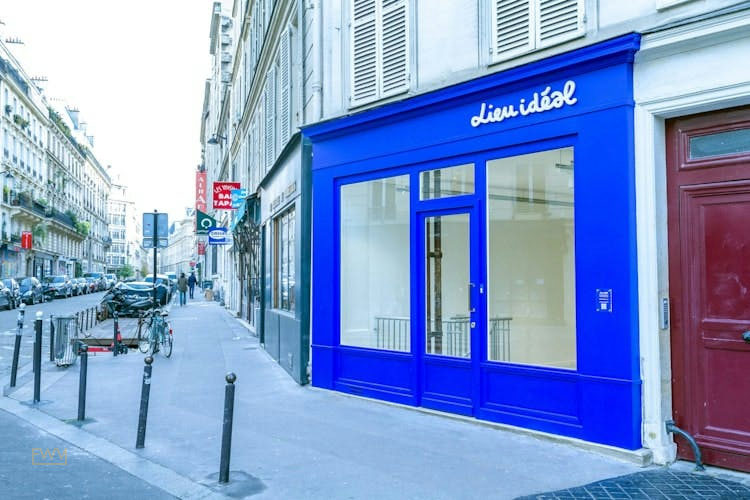
The dominant format along Canal Saint-Martin is the independent boutique: a compact, typically single-storey ground-floor space with direct street access and a shopfront visible from the quai or the adjacent streets. These spaces reflect the neighbourhood's architectural character, which mixes late-19th-century Haussmannian residential buildings with occasional industrial conversions, post-war infill, and more recent cultural buildings. Many spaces retain original features including timber floors, exposed stone or brick, and large glazed shopfronts that suit the visual merchandising needs of fashion and lifestyle brands. Brands such as Veja, Centre Commercial, Canons Canons, Norse Projects, and Studio Nicholson all operate in formats consistent with this typology, and their presence establishes a strong baseline expectation for the quality and character of retail fit-out in the area.
For short term retail, these boutique units are highly desirable but also competitive. Demand from established brands and temporary pop-ups is high during Paris Fashion Week windows in January, March, June, and September, and also during the strong tourist season from April through August. Brands seeking to activate during Fashion Week should begin their space search a minimum of three to four months in advance.
Cultural and Event-Adjacent Venues
Point Ephémère on Quai de Valmy is the most prominent example of a cultural institution that also hosts brand partnerships, product launches, and creative activations. The venue's primary function is as a concert and music venue and arts centre, but its industrial aesthetic, its north-facing glass facade overlooking the canal, and its significant foot traffic from the creative community make it a sought-after context for brand events. Similar multi-use cultural venues exist throughout the 10th arrondissement and the adjacent areas near Gare de l'Est and Gare du Nord.
SEVRES and Jòia represent the category of French-designed lifestyle retail that operates within the neighbourhood and occasionally opens its own spaces to brand collaborations and temporary retail partners. Le Cellier de la BUTTE offers a wine-retail format that has inspired a number of branded tasting and retail hybrid activations. These cross-category collaborations are particularly effective in Canal Saint-Martin, where the consumer base actively seeks out new combinations of retail, hospitality, and culture.
Covered Markets and Market Stalls
The Marché Saint-Martin on Rue du Château-d'Eau and the Marché Saint-Quentin on Boulevard Magenta both offer covered market environments that smaller brands or brands testing new product lines can use for short-duration activations. The covered market format has a different regulatory and contractual structure than a standard retail unit and may be more accessible for very short activations of one to five days. Hôtel Fabric, the boutique hotel on Rue de la Folie-Méricourt in the nearby 11th arrondissement, has hosted brand activations and pop-up events in its public spaces, representing a hospitality-retail hybrid format that is increasingly common across Paris.
TIP: When evaluating Canal Saint-Martin spaces, always walk the specific section of the quai or street in person at different times of day before committing. Foot traffic patterns vary significantly between the busier southern sections near République and the quieter northern sections approaching the Bassin de la Villette. The Passerelle Michèle Morgan and the Hotel du Nord area generate strong tourist foot traffic, while the stretch approaching Jaurès station draws a more local, residential audience.
| Space Type | Typical Size Range | Best Suited For | Key Locations | Typical Duration |
|---|---|---|---|---|
| Street-level boutique | 30 to 150 sqm | Fashion, footwear, lifestyle, jewellery | Quai de Jemappes, Quai de Valmy, Rue de Marseille | 2 weeks to 6 months |
| Cultural or arts venue | 100 to 600 sqm | Brand launches, installations, events | Point Ephémère area, Quai de Valmy | 1 day to 2 weeks |
| Covered market stall | 6 to 30 sqm | Product sampling, emerging brands, market testing | Marché Saint-Martin, Marché Saint-Quentin | 1 to 5 days |
| Loft or studio conversion | 80 to 250 sqm | Showrooms, press events, editorial shoots | Adjacent streets off the canal | 1 to 4 weeks |
| Hospitality-retail hybrid | 40 to 200 sqm | Brand experiences, tasting events, capsule retail | Hôtel Fabric area, restaurant district | 1 day to 2 weeks |
KEY TAKEAWAY: Canal Saint-Martin supports multiple short term retail formats from compact street-level boutiques to cultural venue partnerships and covered market stalls. Matching your space type to your brand format, product category, and activation duration is as important as selecting the right street or quai.
Once you have identified your preferred space type, the next practical challenge is understanding how short term retail leases and licences actually work in Paris, which is addressed in the following section.
Short Term Lease Structures and Permits for Canal Saint-Martin Pop-Ups
Securing a short term retail space in Canal Saint-Martin requires navigating a specific set of French legal and administrative frameworks. These frameworks differ significantly from standard commercial leases and from the pop-up lease structures common in the United Kingdom or the United States. Brands entering this market without specialist guidance frequently encounter delays, unexpected costs, or compliance issues that could have been avoided with proper preparation.
Quick answer: Most short term retail activations in Canal Saint-Martin use either a bail dérogatoire, which is a derogatory lease of up to three years permitted under French commercial law, or a convention d'occupation précaire, which is a more flexible short-term occupancy agreement suited to activations of a few days to a few months. The right structure depends on your duration, your intended use, and the space owner's preferences. Always verify with a qualified French legal advisor before signing.
Bail Dérogatoire: The French Short Term Commercial Lease
The bail dérogatoire, also known as a bail précaire or short-term commercial lease, is the primary legal instrument for short term retail in France. Under French commercial law, a standard commercial lease (bail commercial) carries a minimum duration of nine years and significant tenant protections, including the right to renew. The bail dérogatoire allows both parties to agree to a shorter occupancy period, typically between one month and three years, explicitly departing from the standard nine-year commercial lease framework. Both parties must expressly acknowledge in the written agreement that the lease is being entered under derogatory terms and that the tenant does not acquire the renewal rights associated with a standard bail commercial.
For Canal Saint-Martin activations, this structure is commonly used for activations of one to twelve months. Landlords in the neighbourhood are generally familiar with this format, particularly given the area's history of hosting temporary tenants, creative residencies, and brand activations. However, the specific terms, including notice periods, use restrictions, subletting rights, and dilapidations obligations, vary significantly between individual agreements and must be reviewed carefully.
Convention d'Occupation Précaire and AOT
For very short activations, typically under one month, a convention d'occupation précaire provides a lighter regulatory structure. This instrument is used when occupancy is genuinely temporary and conditional, for example where a space owner needs to reserve the right to reclaim the space at short notice. It is commonly used for gallery spaces, cultural venues, and market-adjacent activations in Canal Saint-Martin. For outdoor activations on public canal-side land, an Autorisation d'Occupation Temporaire (AOT) may be required from the relevant local authority or from Voies Navigables de France (VNF), which manages the canal infrastructure. Requirements vary depending on the specific location, the nature of the activation, and the duration involved.
IMPORTANT: The regulatory landscape for short term retail in Paris is not uniform. Requirements differ by space type, arrondissement, activation format, and duration. This guide provides general orientation only. Brands must verify all permit and compliance requirements with a qualified French legal advisor before committing to a space or signing any occupancy agreement. The Fashion Week Venues permits tool provides a practical starting point for understanding what documentation may be required for different activation types in Paris.
Practical Compliance Considerations
Beyond the lease structure itself, short term retail activations in Canal Saint-Martin need to consider a range of operational compliance requirements. These include commercial insurance, liability cover, health and safety compliance, food and beverage licensing if hospitality is part of the activation, waste management obligations, and access and noise restrictions if the space is in a residential building. Signage permissions may also be required for external branded installations, banners, or window graphics visible from the public realm of the canal quais or the adjacent streets.
Brands should also be aware of the administrative requirements around trading as a foreign entity in France. While it is possible for non-French companies to enter into short term retail leases without establishing a French legal entity, the process requires careful structuring and may involve VAT registration, insurance obtained from a French or EU-recognised provider, and in some cases a caution or deposit requirement from the landlord. These details vary case by case.
KEY TAKEAWAY: Short term retail in Canal Saint-Martin is legally and administratively more complex than it appears. The bail dérogatoire and convention d'occupation précaire provide workable frameworks, but each activation requires bespoke legal and compliance planning. Engage specialist support before signing anything.
Understanding the legal framework sets the stage for planning the operational and commercial aspects of your Canal Saint-Martin activation, which is explored in the next section.
Canal Saint-Martin Retail Landscape: Brands, Concepts, and Consumer Profile
The retail identity of Canal Saint-Martin is defined by a concentration of independently operated, editorially curated, and values-driven businesses that have collectively shaped one of the most influential neighbourhood retail ecosystems in Europe. Understanding who already operates in this area, and what the neighbourhood's consumers expect, is essential for any brand planning a short term retail activation here.
Quick answer: Canal Saint-Martin's retail mix is anchored by sustainable and slow fashion brands, independent concept stores, cutting-edge jewellery designers, record shops, independent bookshops, and lifestyle goods retailers. The neighbourhood's consumers are predominantly young Parisian professionals, creatives, and well-travelled international visitors who prioritise authenticity, brand values, and product quality over brand recognition alone.
Anchor Retail Brands and Concept Stores
Centre Commercial, situated on Rue de Marseille, is arguably the most influential retail concept on Canal Saint-Martin. Founded as a cooperative-style store, it curates a tightly edited selection of sustainably produced labels spanning menswear, womenswear, and accessories, with a strong emphasis on production methods, material sourcing, and staff knowledge. The store's approach to curation, in which every brand in the edit has been vetted for sustainability credentials alongside aesthetic quality, has made it a reference point for the European slow fashion movement. Veja, the sustainable sneaker brand, operates its first standalone Paris retail concept in the neighbourhood, reflecting the canal's alignment with brands that combine commercial success with transparent production values.
Norse Projects, the Danish menswear and lifestyle brand, operates a Paris outpost on the canal that draws an international audience seeking considered Scandinavian design. Studio Nicholson, the London-based womenswear label known for its refined proportions and neutral palette, has established a presence in the area that reinforces the neighbourhood's status as a destination for serious fashion consumers. Paraboot, the storied French footwear brand known for its traditional production methods and exceptional shoe selection, reflects the neighbourhood's appreciation for craft and heritage. Patagonia's Canal Saint-Martin presence anchors the sustainable outdoor and lifestyle segment. Canons Canons and DISSIDENT CLUB serve the younger, more experimental end of the neighbourhood's fashion consumer base.
Independent jewellery designers including Le Diamantaire operate in the area alongside a cluster of vintage video shops, record shops, and the Librairie du Canal, which serves as a neighbourhood cultural anchor. Philip the Bookseller's local presence reinforces the literary and intellectual atmosphere that has always been part of the canal's character. COTY, Nohant, and Jòia contribute to a lifestyle and beauty dimension that extends the neighbourhood's retail offer beyond pure fashion.
Food, Drink, and Cultural Infrastructure as Retail Context
The dining and hospitality landscape of Canal Saint-Martin is inseparable from its retail identity. Consumers who browse at Centre Commercial or visit Norse Projects on a Saturday afternoon are also the consumers eating at Gros Bao, drinking wine at Le Verre Volé, getting coffee at Ten Belles, or having lunch at Café Margo. Briezh Café, the Breton crêperie that helped establish the neighbourhood's reputation for quality casual dining, and Baba Zulu Soul Food and Southern Kitchen, which brings an American soul food influence to the canal, both serve audiences that overlap directly with the fashion and lifestyle retail consumer. The restaurant Allard and the classic brasserie Benoit operate in the broader arrondissement and draw a different, more established Parisian dining audience.
Georges Sand, the canal-side bar and café, and Le Verre Volé, the wine bar and restaurant that pioneered the natural wine movement in Paris, function as informal gathering spaces for the creative community that drives the neighbourhood's cultural economy. For brand activations seeking an authentic Canal Saint-Martin feel, understanding this hospitality ecosystem and finding ways to connect with it, through collaborative events, product placement, or simply the foot traffic that flows between restaurants and retail, is a meaningful strategic advantage.
Consumer Profile for Canal Saint-Martin Short Term Retail
The Canal Saint-Martin consumer profile is distinctive and relatively consistent. The core local audience consists of Parisian professionals aged roughly 25 to 45 who live in the 10th and adjacent arrondissements, who are highly educated, internationally aware, and deeply invested in the relationship between aesthetics, values, and daily life. This audience reads Time Out Paris, follows independent fashion media, travels for culture and food, and makes purchasing decisions based on a combination of product quality, brand story, and peer recommendation. Tourists who visit Canal Saint-Martin are similarly self-selecting: they have typically already filtered out the mass tourism experience of the Louvre Museum, the Eiffel Tower, and the Musée d'Orsay, and are actively seeking what Parisians actually recommend. This creates a tourist audience that behaves more like a local consumer than a typical sightseer.
To compare neighbourhoods and space types, explore the Paris city hub on Fashion Week Venues and shortlist spaces that match your brief, budget, and calendar window.
KEY TAKEAWAY: Canal Saint-Martin's retail ecosystem is defined by sustainability, craft, editorial curation, and cultural credibility. Brands entering this neighbourhood, even on a short term basis, are held to the same standards as the established permanent retailers around them. A poorly conceived or superficially executed activation will be noticed and judged by exactly the sophisticated consumers you most want to reach.
Getting your brand positioning right for the Canal Saint-Martin audience is the creative challenge. The operational challenge, covered in the next section, is getting the timeline, budget, and logistics right.
Planning Your Short Term Retail Activation in Canal Saint-Martin: Timeline, Budget, and Operations
A successful short term retail activation in Canal Saint-Martin requires structured planning that accounts for the compressed timelines typical of Paris pop-ups, the specific operational requirements of trading in a dense urban neighbourhood, and the budget implications of fitting out and staffing a space in one of Paris's most competitive retail corridors.
Quick answer: Most Canal Saint-Martin short term retail activations require a minimum planning window of eight to twelve weeks for a simple pop-up, and sixteen to twenty weeks for a more complex branded installation or flagship-style temporary store. Fashion Week calendar windows significantly compress available timelines and require earlier action.
Step-by-Step Planning Workflow
| Phase | Activity | Typical Timing Before Opening |
|---|---|---|
| 1. Brief and strategy | Define objectives, format, budget range, and calendar window | 16 to 20 weeks |
| 2. Space search and shortlist | Identify candidate spaces, arrange viewings, evaluate against brief | 12 to 16 weeks |
| 3. Legal and compliance | Engage French legal advisor, review lease structure, confirm permits | 10 to 14 weeks |
| 4. Concept and design | Develop store concept, interior design, visual merchandising scheme | 8 to 12 weeks |
| 5. Production and fit-out | Procure fixtures, materials, furniture; schedule build installation | 4 to 8 weeks |
| 6. Staffing and operations | Recruit and brief retail staff, establish POS and payment systems | 2 to 4 weeks |
| 7. Marketing and communications | Activate influencer outreach, press, social media, event programming | 2 to 4 weeks before and during |
| 8. Trading and optimisation | Open, monitor data, adjust operations in real time | During activation |
| 9. Closedown and review | Strip out, return space, conduct ROI analysis | After activation |
Budget Considerations
Short term retail budgets in Canal Saint-Martin span a wide range depending on the space size, fit-out complexity, staffing model, activation duration, and marketing spend. Rather than publishing ranges that may not reflect your specific brief, we recommend using the Fashion Week Venues budget calculator to generate estimates grounded in your actual parameters. What is consistent across Canal Saint-Martin activations is that the neighbourhood commands a quality premium: a poorly fitted-out or visually inconsistent space will underperform regardless of how well the brand performs commercially in other markets. Allocating adequate budget for concept direction, fixtures, and visual merchandising is not optional in this neighbourhood.
Key budget line items for a Canal Saint-Martin short term retail activation typically include space rental, legal and compliance costs, fit-out and production, furniture rental, visual merchandising, retail staffing, POS and payment systems, insurance, marketing and influencer activation, and post-activation strip-out and waste disposal. The relative weight of these items depends heavily on whether you are working with a full-service agency or managing individual suppliers directly.
Operational Logistics in Canal Saint-Martin
Deliveries and logistics along Canal Saint-Martin require careful scheduling. The quais and adjacent streets have restricted access for heavy vehicles during peak hours, and the neighbourhood's residential character means that noisy construction or late-evening deliveries can generate complaints. Build installation should ideally be scheduled for early morning and completed before trading hours. Staff access, waste collection, and daily restocking logistics all need to be planned within these constraints. The Fashion Week Venues timeline tool helps brands map these operational dependencies clearly before committing to an opening date.
KEY TAKEAWAY: Planning timelines and budgets for Canal Saint-Martin short term retail are non-negotiable disciplines. Underfunding the fit-out or underestimating the planning lead time are the most common reasons activations in this neighbourhood fail to deliver against brand objectives.
With operational planning addressed, the next section covers the specific role a full-service agency can play in making a Canal Saint-Martin activation effective.
How Fashion Week Venues Supports Short Term Retail Activations in Canal Saint-Martin
Fashion Week Venues is a full-service pop-up agency and space marketplace that supports fashion, lifestyle, and consumer brands executing short term retail activations in Paris and other major fashion capitals. For brands targeting Canal Saint-Martin specifically, Fashion Week Venues provides end-to-end support from space identification through to post-activation data review.
Quick answer: Fashion Week Venues offers venue sourcing, concept direction, production and build, activation management, branded store design, furniture rental, retail staffing, POS and payments, data and analytics, and influencer marketing. Brand teams working on Canal Saint-Martin activations can use any combination of these services depending on their in-house capabilities and their specific project requirements.
Venue Sourcing and Space Discovery
The starting point for most brand teams is identifying suitable spaces. The venue sourcing service at Fashion Week Venues applies market knowledge, owner relationships, and brief-matching methodology to identify spaces that align with a brand's format, footprint, budget, and calendar requirements. This service goes beyond what an online listings platform provides, incorporating an understanding of the specific sections of Canal Saint-Martin where different brand formats perform best, which spaces have the access and utility infrastructure required for short term trading, and which landlords are genuinely open to short term occupancy arrangements.
Concept Direction and Branded Store Design
Given the high aesthetic standards of the Canal Saint-Martin consumer, concept development is a critical service component. The concept direction service supports brand teams in translating their brand identity into a spatial and experiential concept appropriate for the neighbourhood context. The branded store design service takes this concept through to detailed design and production specification. The Fashion Week Venues Imagine tool allows brand teams to visualise a proposed concept in a specific space before committing to fit-out investment.
Production, Staffing, and Operations
The production and build service manages the physical installation of the retail environment, coordinating with trusted Paris-based suppliers for fixtures, joinery, graphics, and furniture. The retail staffing service provides trained, brand-briefed staff who understand how to represent a brand in a French retail context, including multilingual capability relevant for the Canal Saint-Martin tourist audience. POS and payment systems, including card payment infrastructure, are handled through the Fashion Week Venues POS and payments service, removing a common operational friction point for international brands.
Analytics, ROI, and Post-Activation Review
The data and analytics service tracks foot traffic, conversion rates, transaction values, and customer engagement data throughout the activation period, providing a performance dataset that informs both in-activation adjustments and future planning decisions. The ROI calculator tool allows brand teams to model expected returns against activation costs before committing to a project, and to review actual performance against modelled projections after the activation concludes.
The Twin Co-Activation Model
For brands with smaller budgets or those seeking to test the Canal Saint-Martin market before committing to a full solo activation, the Fashion Week Venues Twin concept offers a co-activation model in which two complementary brands share a space, split costs, and deliver a combined retail experience. This format is particularly effective in Canal Saint-Martin, where the neighbourhood's consumer base actively appreciates curated multi-brand experiences that reflect the editorial sensibility of the area's best concept stores.
It is important to note that Fashion Week Venues does not guarantee the availability of specific spaces, the approval of specific permits, or specific commercial outcomes from any activation. The agency provides expertise, process, and operational support, but brand teams retain responsibility for their own commercial and compliance decisions.
KEY TAKEAWAY: Fashion Week Venues functions most effectively as a trusted operational partner for brand teams that know what they want to achieve in Canal Saint-Martin but lack the Paris-specific expertise, supplier relationships, and operational infrastructure to execute independently. The value is in removing friction, reducing risk, and applying market knowledge that takes years to build from scratch.
With the agency's role clarified, the following section addresses some of the most persistent misconceptions about short term retail in Paris that affect brand decision-making.
Canal Saint-Martin Neighbourhood Comparison: Choosing the Right Section for Your Brand
Canal Saint-Martin is not a uniform retail corridor. Different sections of the canal and the surrounding streets have distinct character, foot traffic profiles, consumer demographics, and competitive retail environments. Selecting the right section is as important as selecting the right space type.
| Section | Key Streets and Landmarks | Consumer Profile | Best Brand Types | Foot Traffic Level |
|---|---|---|---|---|
| Southern canal (République to Goncourt) | Quai de Jemappes, Rue de Marseille, Hotel du Nord, Passerelle Michèle Morgan | Mixed local and tourist, fashion-forward, high spend | Premium fashion, jewellery, concept stores | High |
| Mid canal (Goncourt to Colonel Fabien) | Quai de Valmy, Point Ephémère, Café Margo area | Predominantly local creative, younger, lower spend | Independent labels, music, arts, emerging brands | Moderate to high |
| Northern canal (Colonel Fabien to Jaurès) | Bassin de la Villette approach, Jaurès station | Local residential, fewer tourists, community-oriented | Lifestyle, food, community brands | Moderate |
| Rue de Marseille corridor | Centre Commercial, independent boutiques | Design-conscious locals, slow fashion consumers | Sustainable fashion, menswear, womenswear | Moderate |
| Boulevard Magenta and Gare de l'Est area | Marché Saint-Quentin, Boulevard Magenta | Diverse urban, commuter-adjacent | Accessible lifestyle, food and drink, market activations | High but less targeted |
The southern section between République and the Goncourt area commands the highest retail rents and the most competitive space availability, but also delivers the strongest combination of local and tourist foot traffic and the highest concentration of the design-conscious consumers most valuable to fashion and lifestyle brands. This is the section where Centre Commercial, Veja, Norse Projects, and Studio Nicholson operate, and where the majority of brand activations targeting the Canal Saint-Martin consumer profile should focus.
The mid-canal section around Point Ephémère and Café Margo is better suited to brands seeking a more counter-cultural positioning or those whose activation includes an events, music, or arts component. This section has a strong community identity and is particularly active during summer evenings when locals gather along the quais. Briezh Café and Le Verre Volé anchor the food and drink offer in this section.
The northern approach to the Bassin de la Villette, accessible from Jaurès station on Metro Line 2, leads into a different neighbourhood character that connects to the Canal de l'Ourcq and ultimately to Parc de la Villette. This section has a more residential and less commercially developed character but is increasingly attracting brands seeking space in a lower-competition environment with an emerging creative community.
KEY TAKEAWAY: Selecting the right section of Canal Saint-Martin for your short term retail activation is a strategic decision that should be made based on your brand's target consumer profile, your price positioning, and the kind of cultural association you want the activation to generate. A premium fashion brand should prioritise the southern canal section. An emerging independent label may find the mid-canal section a better fit.
Getting to Canal Saint-Martin: Transport and Accessibility for Brands and Customers
Canal Saint-Martin is well served by Paris public transport, which is an important practical consideration both for the logistics of setting up a short term retail activation and for ensuring that customers can reach your space easily. The neighbourhood sits within easy reach of multiple Metro lines, and its proximity to major transport hubs makes it accessible from across Paris and from international arrivals points.
Quick answer: The best Metro stations for Canal Saint-Martin retail access are République (Metro Lines 3, 5, 8, 9, and 11), Jacques Bonsergent (Metro Line 5), and Goncourt (Metro Line 11). Jaurès station (Metro Line 2, Line 5, and Line 7 bis) serves the northern end of the canal near the Bassin de la Villette. From Gare du Nord, where Eurostar services arrive from London, Canal Saint-Martin is approximately a ten-minute Metro journey.
Metro Line 5 runs directly from Gare du Nord and Gare de l'Est southward through Jacques Bonsergent, making it the most direct connection from the major northern train stations to the heart of Canal Saint-Martin. For brands receiving deliveries or welcoming visiting press and buyers arriving from London via Eurostar, this is the most practical route. Gare de l'Est, which handles direct rail connections from Germany, Belgium, and Switzerland, is similarly close, approximately ten minutes on foot from the southern canal section.
The neighbourhood is also popular with cyclists. The canal quais have dedicated cycling infrastructure, and Paris's Vélib' bike-share scheme has multiple docking stations throughout the area. For brands that want to align with the neighbourhood's sustainable transport culture, acknowledging this in your activation, whether through bike parking provision, a cycle-in discount, or simply ensuring that your space entrance is cycle-friendly, can generate genuine goodwill with the local community.
For brands setting up logistics for deliveries, the most practical access windows for the canal's adjacent streets are early morning before 9am or after 6pm. The streets along Quai de Valmy and Quai de Jemappes have limited loading bay provision, and parking enforcement is active throughout the day. Planning your delivery and restocking schedule carefully, and briefing your logistics provider on the specific constraints of the canal environment, will save significant operational friction.
KEY TAKEAWAY: Canal Saint-Martin's transport connectivity is genuinely excellent for a Paris neighbourhood of its character. For brands and their customers, the combination of multiple Metro lines, proximity to major train stations, and strong cycling infrastructure makes it among the most accessible inner-Paris retail destinations outside the central arrondissements.
Common Myths About Short Term Retail in Paris Debunked
MYTH: You need a French legal entity to rent a short term retail space in Canal Saint-Martin.
FACT: Foreign companies can enter into short term retail occupancy agreements in France without establishing a French subsidiary or branch entity. However, the process requires careful legal structuring, and specific requirements around insurance, VAT registration, and deposit arrangements vary depending on the space owner and the lease format. Engaging a French legal advisor before proceeding is essential. Do not assume that the absence of a French entity creates an automatic barrier, but equally do not assume it creates no additional complexity.
MYTH: Paris Fashion Week is the only viable calendar window for a Canal Saint-Martin pop-up.
FACT: While the Paris Fashion Week windows in January, March, June, and September create elevated demand and strong press and buyer attendance, Canal Saint-Martin generates strong retail performance year-round due to its resident consumer base and consistent tourist draw. The summer months from May to August, the Christmas and New Year period, and the spring school holiday weeks are all commercially effective windows for short term retail. Activating outside Fashion Week windows can also secure better space availability and more favourable rental terms.
MYTH: The only way to find a short term retail space in Canal Saint-Martin is through a commission-based property broker.
FACT: Commission brokers are one route to finding short term retail space, but they are not the only option and they are not always the most effective option for brands seeking a curated, brief-matched space. Full-service agencies like Fashion Week Venues combine space sourcing with operational capability, and marketplace platforms offer direct discovery of available spaces without the information asymmetry that comes with broker-mediated transactions. Brands benefit from using multiple channels and from engaging an agency that understands both the space and the full activation requirement.
MYTH: Short term retail leases in Paris are legally straightforward and do not require specialist legal review.
FACT: French commercial lease law is complex and does not operate on the same assumptions as UK or US short term retail arrangements. The bail dérogatoire and convention d'occupation précaire have specific formal requirements that must be met for the derogatory or temporary status to be legally valid. An agreement that fails to meet these requirements can inadvertently create a standard bail commercial with nine-year tenant rights, creating significant legal exposure for both parties. Always have a qualified French legal advisor review any occupancy agreement before signing.
MYTH: Canal Saint-Martin is too niche and too far from central Paris to deliver meaningful foot traffic for international brands.
FACT: Canal Saint-Martin consistently attracts high-value, design-conscious consumers and culturally informed tourists who are precisely the audiences that premium fashion and lifestyle brands target. Its apparent distance from the Louvre Museum, the Eiffel Tower, or the Musée d'Orsay is an asset, not a liability. The consumers who seek out Canal Saint-Martin do so with intention, making them significantly more engaged and more likely to interact meaningfully with a well-executed brand activation than the passive foot traffic of a mass tourist area.
Frequently Asked Questions
Where is Canal Saint-Martin located in Paris?
Canal Saint-Martin runs through the 10th arrondissement of Paris, stretching approximately 4.5 kilometres from the Bassin de la Villette in the north to the Port de l'Arsenal near Place de la Bastille in the south, where it connects to the River Seine. The most commercially active section for retail and restaurants runs along Quai de Jemappes and Quai de Valmy between République and the Jaurès station area. The canal passes underground beneath Boulevard Richard Lenoir for approximately 2 kilometres before re-emerging near Bastille, a feature created during the Haussmannian reconstruction of Paris in the 19th century.
Why does Canal Saint-Martin disappear underground?
Canal Saint-Martin passes underground beneath Boulevard Richard Lenoir for approximately 2 kilometres between the Bastille area and the Oberkampf section of the 11th arrondissement. This underground section was covered over during the urban reconstruction directed by Baron Haussmann under Napoleon III in the second half of the 19th century, as part of a programme to modernise Paris's street network and create the broad boulevards that now characterise the city. The cover created Boulevard Richard Lenoir above the canal, and the canal re-emerges at the surface near the Place de la Bastille before connecting to the Seine via the Port de l'Arsenal.
Is Canal Saint-Martin a good location for a short term retail activation?
Canal Saint-Martin is an excellent location for short term retail activations targeting fashion-conscious, values-driven, and culturally aware consumers. The neighbourhood's concentration of influential independent retailers including Centre Commercial, Veja, Norse Projects, and Studio Nicholson creates a credible retail context. The mix of Parisian locals and culturally self-selecting tourists generates consistent foot traffic. The neighbourhood's strong food, drink, and arts ecosystem supports brand event programming. Brands in premium menswear, womenswear, sustainable lifestyle, jewellery, footwear, and independent design categories are particularly well matched to the Canal Saint-Martin consumer profile.
What types of short term retail lease are available in Canal Saint-Martin?
The two primary legal frameworks for short term retail in Canal Saint-Martin are the bail dérogatoire, a derogatory commercial lease of up to three years that explicitly departs from the standard nine-year French commercial lease framework, and the convention d'occupation précaire, a lighter short-term occupancy agreement suited to activations of a few days to a few months. For outdoor or canal-side activations on public land, an Autorisation d'Occupation Temporaire may also be required. Requirements vary by space type, duration, and specific location. All occupancy agreements should be reviewed by a qualified French legal advisor before signing.
Do I need a French company to rent a pop-up space in Canal Saint-Martin?
No, you do not automatically need a French legal entity to rent a short term retail space in Canal Saint-Martin. Foreign companies can enter occupancy agreements in France, but doing so requires careful legal and financial structuring, including considerations around insurance, VAT registration, and deposit requirements. The specific requirements depend on the lease structure, the space owner's requirements, and the nature of the activation. Engaging a qualified French legal advisor at the outset is strongly recommended to ensure compliance and to avoid inadvertently creating legal obligations your business is not prepared for.
How far in advance should I begin planning a Canal Saint-Martin pop-up?
For a straightforward Canal Saint-Martin short term retail activation, a minimum planning window of eight to twelve weeks is advisable. For a more complex branded installation, a Fashion Week-timed activation, or a space requiring significant fit-out, sixteen to twenty weeks is a more realistic lead time. Activations planned around Paris Fashion Week windows in January, March, June, or September require additional lead time because space availability and supplier capacity become constrained earlier. The Fashion Week Venues timeline tool can help you build a realistic project schedule based on your specific activation parameters.
What transport options are available to reach Canal Saint-Martin?
Canal Saint-Martin is served by several Metro lines. République station, accessible via Metro Lines 3, 5, 8, 9, and 11, is the primary access point for the southern section of the canal. Jacques Bonsergent on Metro Line 5 and Goncourt on Metro Line 11 provide direct canal-side access. Jaurès station on Metro Lines 2, 5, and 7 bis serves the northern end near the Bassin de la Villette. Gare du Nord, the Eurostar terminus for arrivals from London, is approximately a ten-minute Metro journey from the canal. The neighbourhood also has strong cycling infrastructure, with multiple Vélib' bike-share stations throughout the area.
What brands operate in Canal Saint-Martin and how does that affect my activation?
Canal Saint-Martin is home to a concentrated cluster of influential fashion and lifestyle brands including Centre Commercial, Veja, Norse Projects, Studio Nicholson, Paraboot, Patagonia, Canons Canons, and a range of independent jewellery designers, record shops, and concept stores. This retail environment sets high expectations for quality, curation, and brand values. Activating in this neighbourhood aligns your brand with a credible independent retail context, but it also means that your fit-out quality, product presentation, and staff knowledge will be assessed against the neighbourhood's established standards. A well-executed activation in this context carries strong credibility signals for your brand.
Can I run a short term retail activation in Canal Saint-Martin during a Paris Fashion Week?
Yes, Canal Saint-Martin is an effective location for Fashion Week activations, particularly for brands targeting the creative, press, buyer, and style-conscious tourist audience that flows through Paris during Fashion Week windows. The southern canal section near République is a popular base for Fashion Week visitors, and the neighbourhood's restaurant and bar offer makes it a natural gathering point during evening events. However, space availability during Fashion Week windows is significantly more constrained, and rental terms may be less favourable. Beginning your search four to five months ahead of your target Fashion Week window is strongly advisable.
What is the typical foot traffic profile for Canal Saint-Martin retail?
The foot traffic profile along Canal Saint-Martin varies by section, day, and season. The southern canal section near République and the Passerelle Michèle Morgan area generates the highest consistent foot traffic, combining local residents, destination retail visitors, and tourists. Weekend foot traffic is significantly higher than weekday traffic. The summer months generate the strongest tourist contribution, with locals gathering along the quais for outdoor socialising in the evenings. The mid-canal section around Point Ephémère and Café Margo has strong evening traffic driven by the arts, music, and food offer. Brands should use the Fashion Week Venues locator tool to assess specific streets and sections before committing to a space.
What should my budget include for a Canal Saint-Martin short term retail activation?
A comprehensive Canal Saint-Martin short term retail activation budget should include space rental, legal and compliance costs, fit-out and production, furniture rental, visual merchandising, retail staffing, POS and payment systems, insurance, marketing and influencer activation, and post-activation strip-out and disposal. The relative weight of each line item depends on activation duration, space size, fit-out complexity, and your in-house capabilities. Because Canal Saint-Martin consumers have high aesthetic expectations, underinvesting in fit-out quality is a common error with significant commercial consequences. Use the Fashion Week Venues budget calculator to generate estimates based on your specific parameters rather than relying on generic market averages.
Is Canal Saint-Martin safe for staff and customers?
Canal Saint-Martin is a well-populated, actively used urban neighbourhood with a residential community, a dense hospitality and retail offer, and consistent foot traffic throughout the day and evening. It is considered a safe neighbourhood by Parisian standards. Normal urban awareness is appropriate, particularly in the evenings near some of the less commercial side streets. The canal quais themselves are busy and well-lit social spaces during warmer months. Brands should ensure that their staff are appropriately briefed on neighbourhood-specific operational details, including emergency contacts, nearest medical facilities, and any specific building access or security requirements for their specific space.
How do I find a short term retail space in Canal Saint-Martin?
Finding a genuinely suitable short term retail space in Canal Saint-Martin requires a combination of market knowledge, landlord relationships, and brief-matching capability that goes beyond generic property listings. Options include using the Fashion Week Venues marketplace to browse available spaces directly, engaging the Fashion Week Venues venue sourcing service for brief-matched recommendations, or using the Paris city hub to explore the neighbourhood context and available space categories. Beginning your search early, being specific about your requirements, and avoiding the assumption that any available space is automatically suitable for your brand format will significantly improve your outcomes.
What cultural events or activations happen near Canal Saint-Martin that could support my pop-up?
Canal Saint-Martin hosts a year-round programme of cultural events that can create meaningful context for a short term retail activation. Point Ephémère presents a regular programme of concerts, exhibitions, and creative events. The Marché Bastille on Boulevard Richard Lenoir operates every Thursday and Sunday and draws a large local audience. The Parc de la Villette to the north hosts major outdoor festivals including La Villette en Jazz and Cinema en Plein Air during summer. Local galleries, independent bookshops including Librairie du Canal, and the neighbourhood's bar and restaurant community organise informal events throughout the year. Brands that can align their activation with relevant local events multiply their reach and cultural credibility significantly.
How does Fashion Week Venues help brands activate in Canal Saint-Martin?
Fashion Week Venues supports brands pursuing short term retail activations in Canal Saint-Martin through a full-service model that covers venue sourcing, concept direction, branded store design, production and fit-out, retail staffing, POS and payment systems, data and analytics, and influencer marketing. The agency's Paris-specific market knowledge, supplier relationships, and operational infrastructure reduce the complexity and risk for international brands entering this market for the first time. Tools including the budget calculator, ROI calculator, timeline planner, and permits guide are available to support the planning phase. Brands can explore past activations and agency process through the Fashion Week Venues work and process pages before deciding on the level of support they require.
Conclusion: Making Canal Saint-Martin Work for Your Brand
Canal Saint-Martin represents one of the most genuinely valuable short term retail destinations available to fashion and lifestyle brands in Paris. Its combination of cultural credibility, influential resident retailers, engaged consumer community, and strong transport connections creates conditions that few other Paris neighbourhoods can match for brands seeking meaningful, high-quality market presence on a short term basis. The neighbourhood's 19th-century origins, its transformation through the 20th century into a cultural icon through French cinema and literary association, and its evolution in the 21st century into one of Europe's leading independent retail corridors give any activation here a depth of context that brand teams can draw on to create genuinely resonant consumer experiences.
The practical disciplines required to activate successfully in Canal Saint-Martin are demanding: legal and compliance planning must be handled rigorously, fit-out quality must meet the neighbourhood's high aesthetic standards, space selection must match brand format and consumer profile precisely, and operational logistics must account for the canal neighbourhood's specific constraints. These are not reasons to avoid the neighbourhood. They are reasons to approach it with the right expertise and the right operational support.
For guidance on the agency selection decision, the Fashion Week Venues guide to hiring an agency provides a practical framework for evaluating your options. To move from research to activation, start exploring available spaces on the Fashion Week Venues marketplace and build a focused brief for your target neighbourhood, space type, and calendar window.