
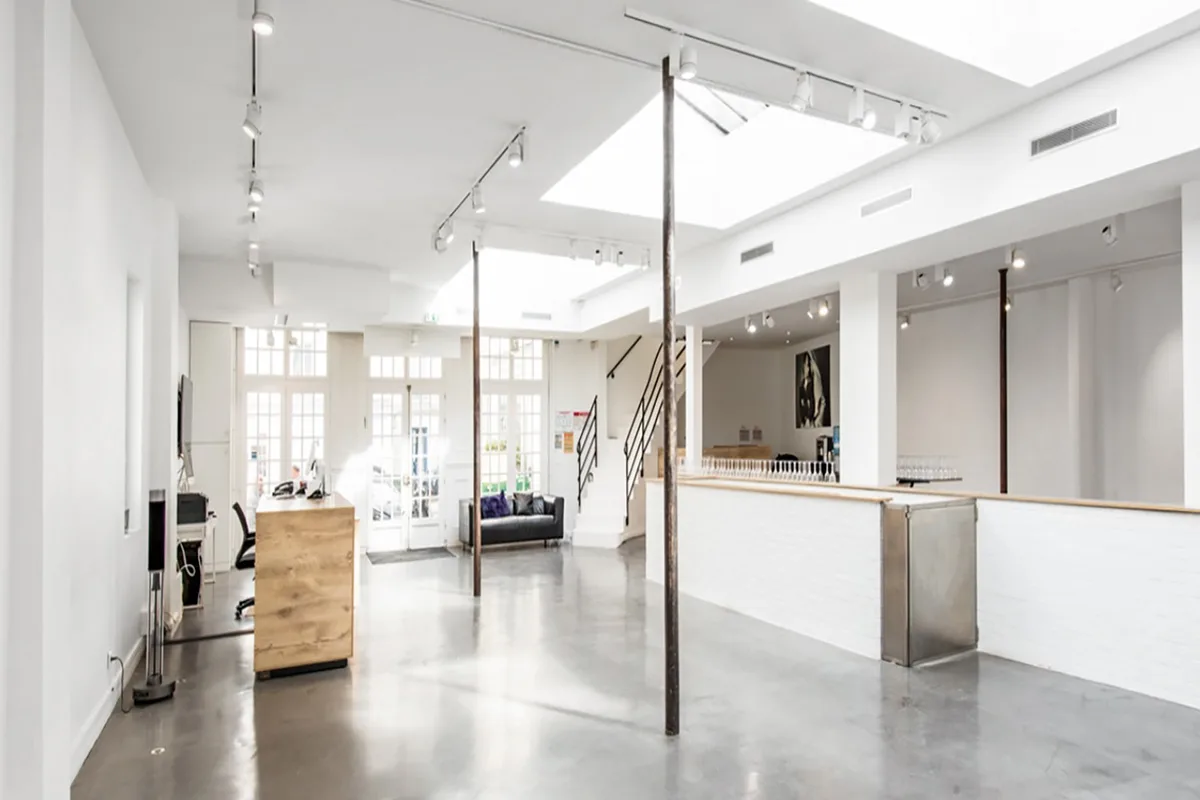
Finding the right retail space for rent near Tuileries Paris is one of the most strategically significant decisions a brand can make when entering the French market or staging a seasonal activation. The Tuileries quarter sits at the intersection of Paris's most powerful commercial corridors, connecting Rue de Rivoli, Place Vendôme, Rue Saint-Honoré, and the wider Golden Triangle in a geography that attracts both Parisian clientele and international visitors at exceptional density. Whether your brand is planning a Fashion Week showroom, a pop-up boutique, a gallery-style experience, or a longer seasonal retail activation, understanding this neighbourhood's commercial landscape, permit requirements, space typologies, and operational realities is essential before committing budget. Fashion Week Venues supports brand teams navigating pop-up spaces in Paris from initial brief through full activation.
Why the Tuileries Quarter Is Paris's Most Valuable Retail Corridor
Quick answer: The Tuileries quarter occupies the Paris 1st arrondissement and borders the 8th, placing brands within immediate reach of Rue Saint-Honoré, Place Vendôme, the Palais Royal, and the Champs-Élysées corridor. Few locations in Europe combine this density of luxury retail, cultural landmarks, and consistent international foot traffic in a single walkable zone.
The Tuileries Garden itself is one of the most visited green spaces in Europe, sitting between the Louvre and Place de la Concorde. Its axis includes landmarks such as the Octagonal Grand Basin, the Terrace des Feuillants along the northern edge, the Carrousel arc at the eastern entrance, and the Olympic and Paralympic Cauldron installation that brought a new generation of international visitors to the space. These are not simply tourist checkpoints. They are reference points that define pedestrian routes, direct foot traffic through specific garden entrances, and position the surrounding streets as natural extensions of the visitor journey.
Rue de Rivoli runs along the northern boundary of the garden, connecting the Louvre to the east with Place de la Concorde to the west. Rue Saint-Honoré and its extension into Rue du Faubourg Saint-Honoré form the parallel luxury retail axis a block north, housing flagship boutiques from the world's most recognised fashion houses alongside emerging designer studios. Rue du 29 Juillet connects these two axes directly and sits adjacent to the northern garden terrace. Rue Saint-Roch, running perpendicular to Rue de Rivoli near the Pyramides and Opéra stations, provides secondary access that supports both retail and showroom tenants who benefit from transport links without the premium of a Rivoli-facing address.
Place Vendôme, a short walk north from the Tuileries entrance, anchors the jewellery and haute couture sector of Paris. The place and its surrounding streets carry associations of exclusivity that transfer meaningfully to brands choosing nearby locations for activations or showrooms. The Palais Royal gardens, to the northeast of the Tuileries, add a second major pedestrian magnet that routes visitors through the 1st arrondissement throughout the day and evening.
For brands targeting luxury, fashion, beauty, or lifestyle categories, this combination creates a commercial environment that is difficult to replicate in any other European city. The Golden Triangle, traditionally defined by Avenue des Champs-Élysées, Avenue Montaigne, and Avenue George V, begins immediately to the west and northwest, extending the zone of influence for brands whose activation brief touches premium retail.
Galeries Lafayette and Printemps, located further north along Boulevard Haussmann near addresses such as 134 Boulevard Haussmann and the surrounding streets including Boulevard Malesherbes and Rue Paul Cézanne, draw department store traffic that overlaps with the Tuileries customer base. Visitors combining a department store visit with a walk through the 1st arrondissement represent a high-converting audience for brands positioned along the connecting routes.
The 2nd arrondissement, immediately to the north, adds further retail depth through its covered passages and the Opéra district. Streets including Rue du Quatre Septembre and commercial arteries toward Place de la Madeleine extend the practical boundary of the Tuileries commercial zone for brands with a slightly larger footprint or a multi-site activation strategy.
DID YOU KNOW: The Tuileries Garden was designed in the 16th century and restructured under Charles Perrault's influence in the 17th century, making it one of the oldest formal public gardens in Paris and a consistently high-footfall destination for both French and international visitors year-round.
KEY TAKEAWAY: The Tuileries quarter is not a single street but a network of interconnected luxury corridors. Brands choosing a location here benefit from multiple overlapping foot traffic sources: garden visitors, Rue Saint-Honoré shoppers, Louvre tourists, Palais Royal visitors, and hotel guests from the area's numerous boutique hotels and five-star properties. The choice of specific address within this zone significantly affects the type of clientele you attract.
Understanding the neighbourhood in detail allows brands to move from a vague desire for a prestigious Paris address to a precise brief. That precision is what determines whether a space delivers commercial results or simply delivers a desirable postcode.
Space Types Available for Rent Near Tuileries: From Pop-Up Stores to Fashion Showrooms
Quick answer: The Tuileries quarter and its immediate surroundings offer a wide range of commercial space types, including ground-floor boutique storefronts, fashion showrooms, art galleries, studio spaces, loft formats, creative ateliers, and apartment-style retail. The right space type depends on your brand category, activation format, expected footfall, and whether you prioritise discovery or appointment-based traffic.
The diversity of space typologies within the Paris 1st arrondissement and adjacent zones is greater than most brand teams expect when they begin their search. The dominant assumption is that available space means a traditional boutique storefront on a high-traffic street. In practice, the range is considerably broader, and many of the most effective activations in this quarter use non-standard formats to create a distinct brand experience.
Ground-Floor Boutique Storefronts
The most direct format for consumer-facing retail. Storefronts near Rue de Rivoli, Rue Saint-Honoré, and Rue du 29 Juillet typically offer glazed facades, direct street access, and high visibility to passing foot traffic. Space sizes range from compact boutique formats under 50 square meters to larger flagship-scale spaces exceeding 200 square meters. Key features to assess include lighting quality, ceiling height, access for deliveries, and whether the facade allows branded signage under the building's existing permits and co-propriété rules.
Brands seeking a charming boutique experience for a pop-up store often find that smaller storefronts in side streets off Rue Saint-Honoré or near Rue Saint-Roch deliver a more curated, intimate feel than the higher-traffic Rivoli-facing addresses, at a lower rental rate and with more flexibility for interior design.
Fashion Showrooms
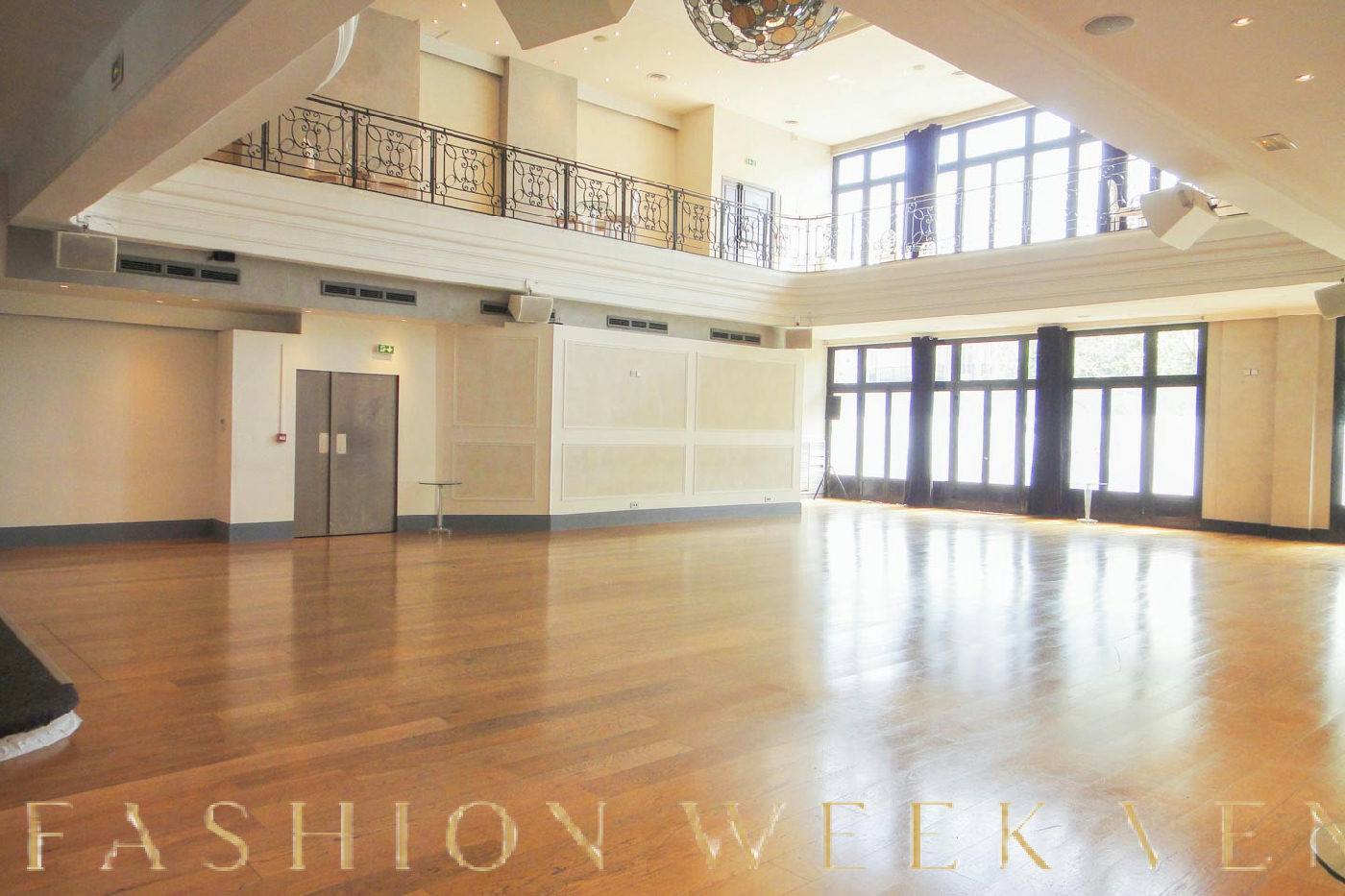
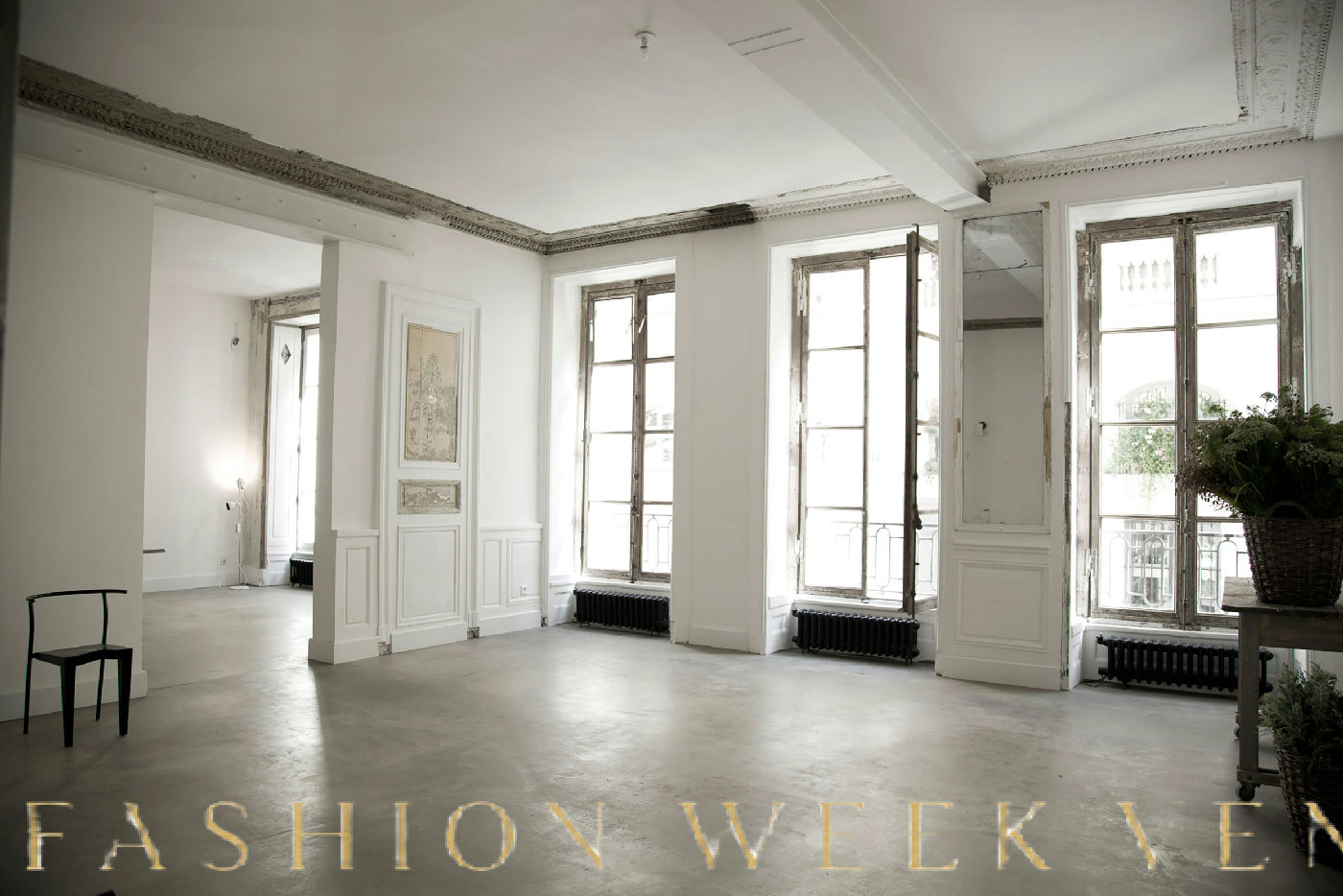
A fashion showroom near Place Vendôme or the Palais Royal serves a different commercial function than a consumer storefront. Showrooms are appointment-based, designed for press, buyers, and wholesale clients, and are typically located on upper floors of Haussmann buildings or in hôtel particulier spaces that offer privacy and prestige without requiring street-level visibility. Spaces with polished concrete floors, high ceilings, and good natural light are particularly sought after for this format. Some brands use converted apartments for showroom purposes, which is permissible under French commercial law in certain circumstances but requires verification of the relevant lease terms and occupancy permissions.
Gallery-Style and Art Gallery Spaces
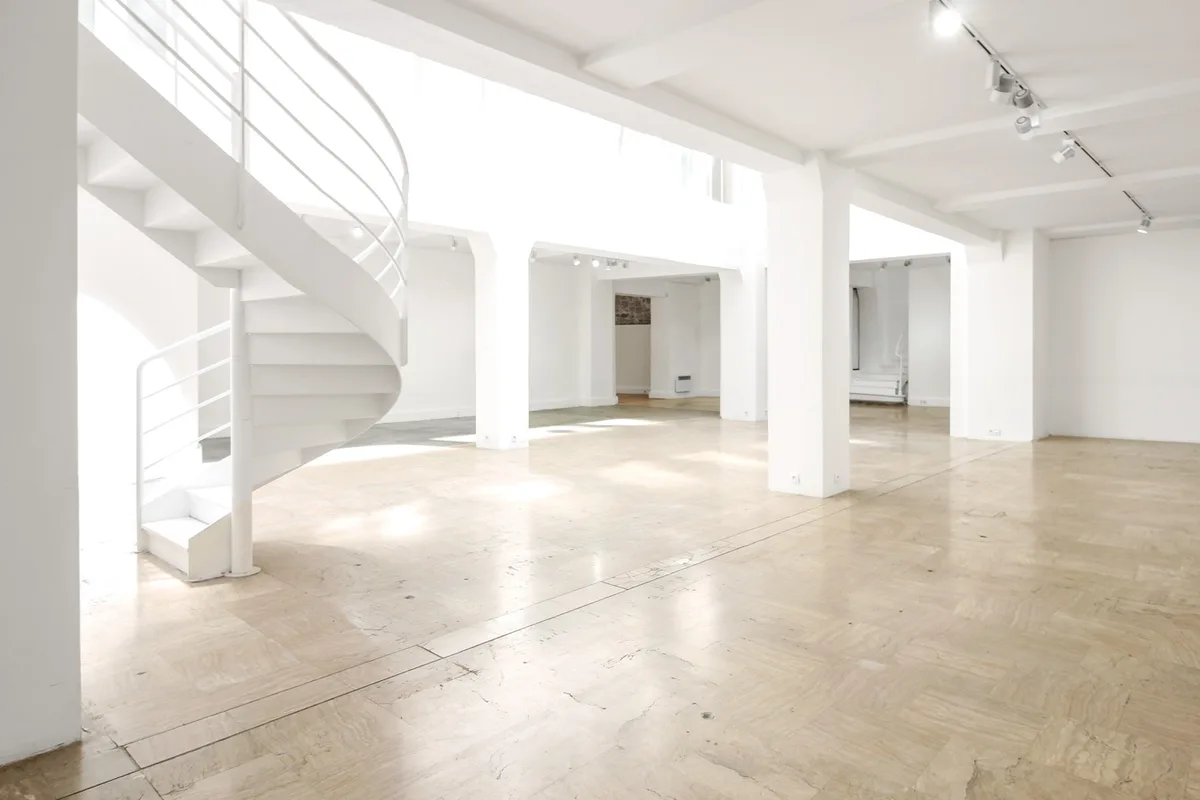
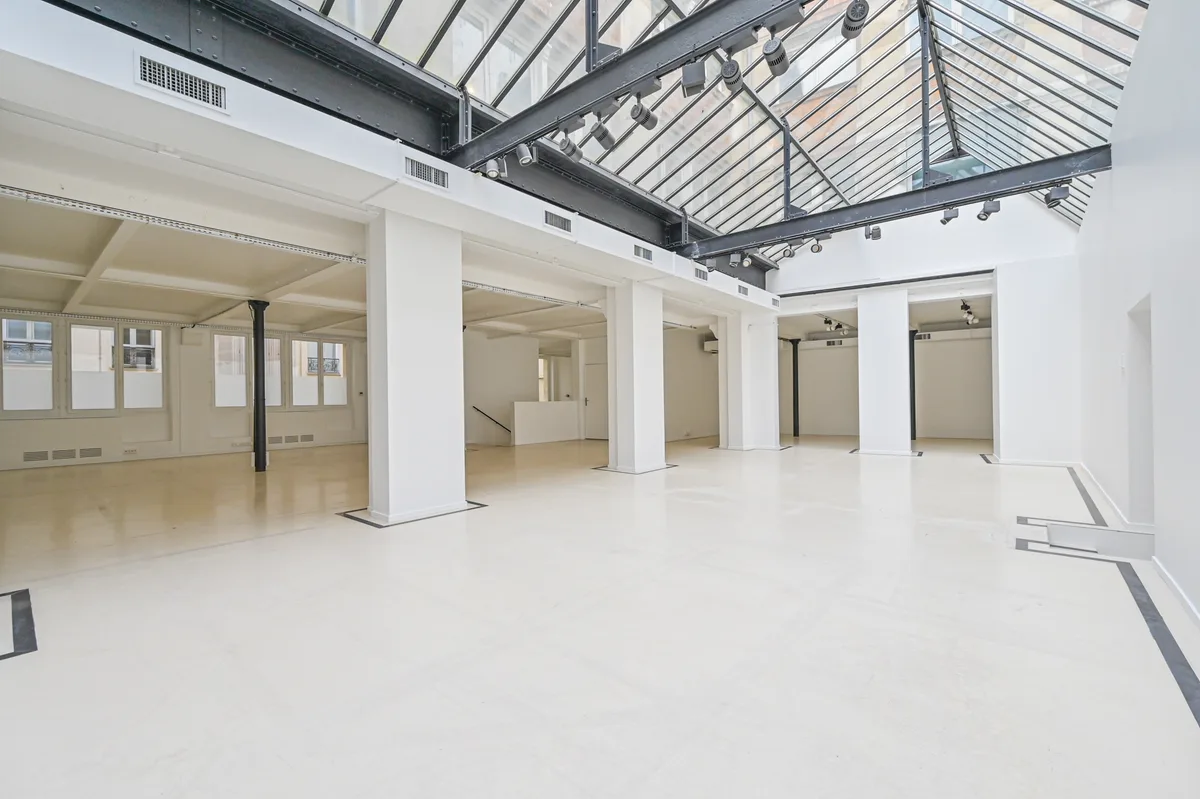
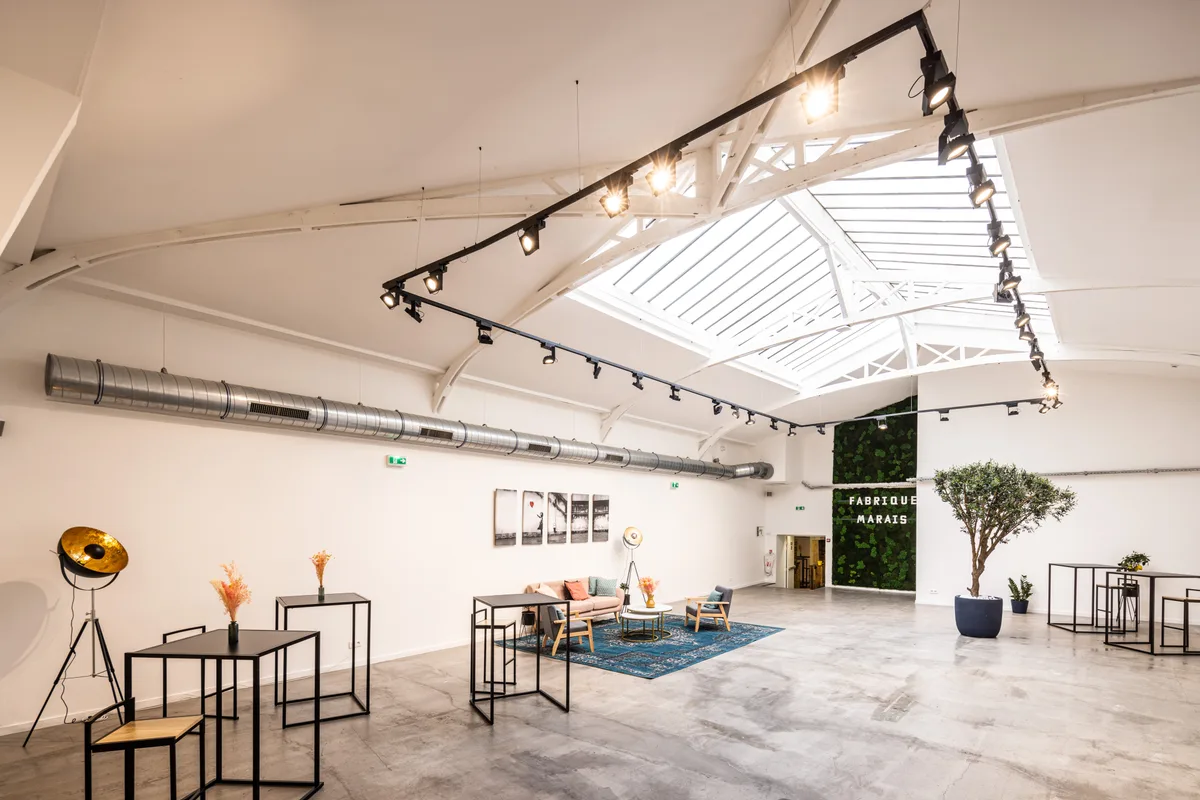
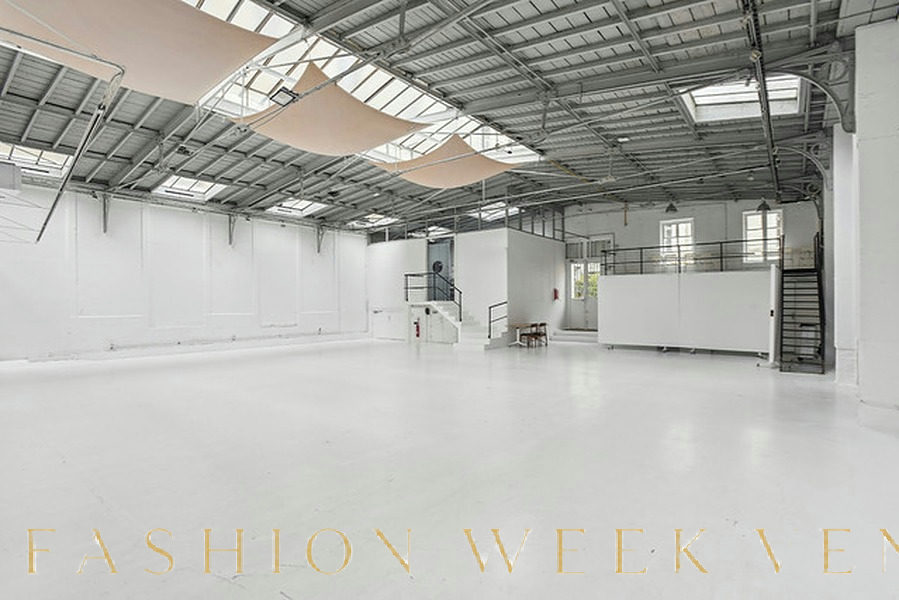
The Tuileries quarter has a strong concentration of art gallery and galerie d'art spaces, particularly around the Palais Royal and in the streets between Rue de Rivoli and Rue Saint-Honoré. These spaces suit brands in fashion, beauty, and luxury lifestyle that want to present their collection or product as an experiential or cultural statement rather than a transactional retail environment. Gallery formats typically feature white walls, polished or raw concrete floors, spotlights, exposed stone, or exposed stone columns, and open-plan configurations that allow flexible merchandising arrangements.
Loft and Creative Studio Formats
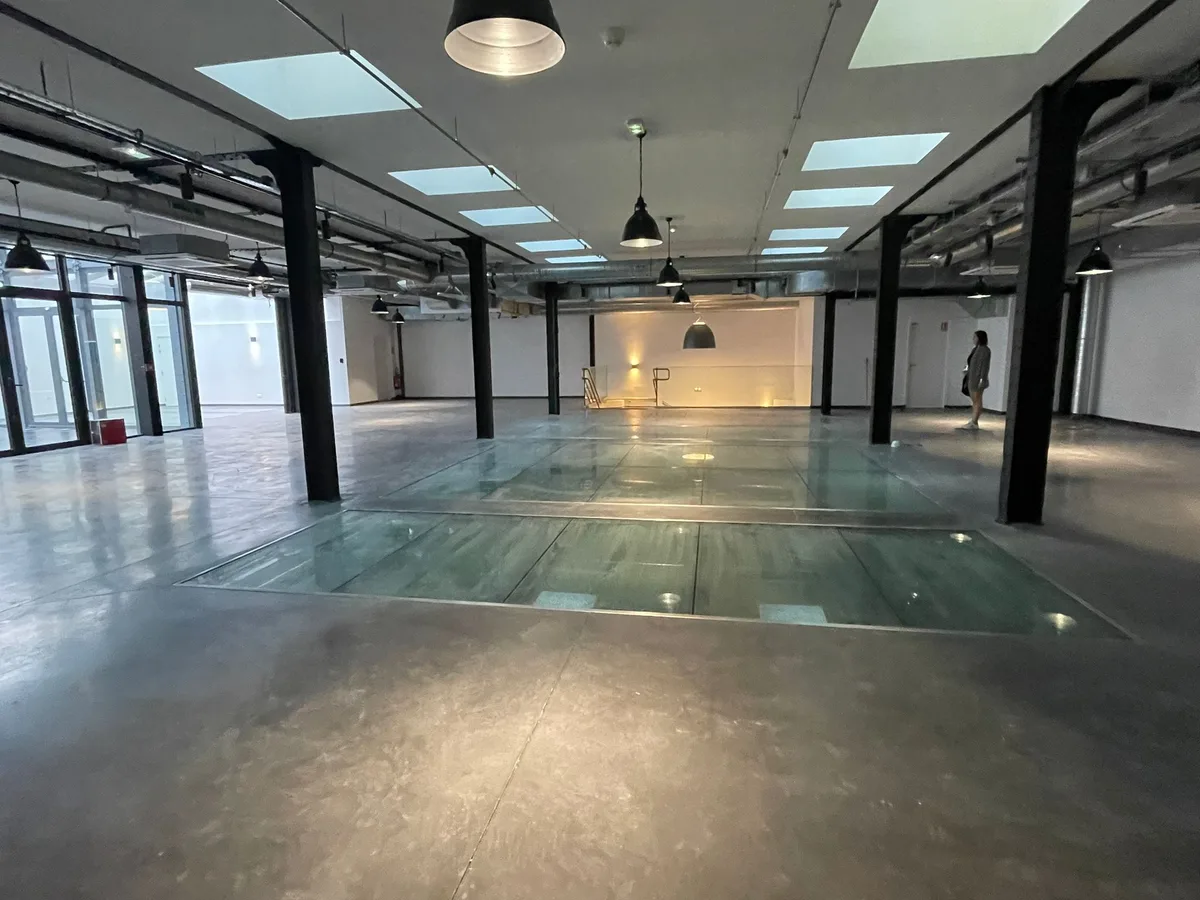
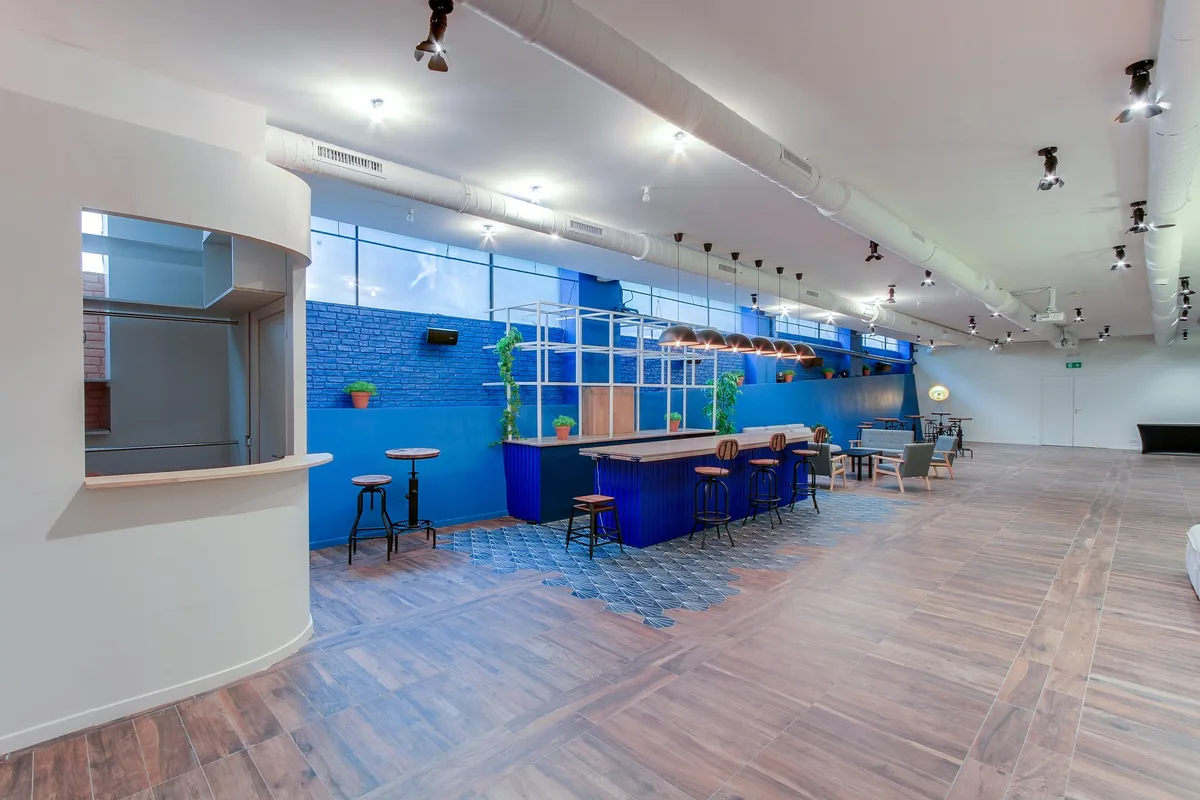
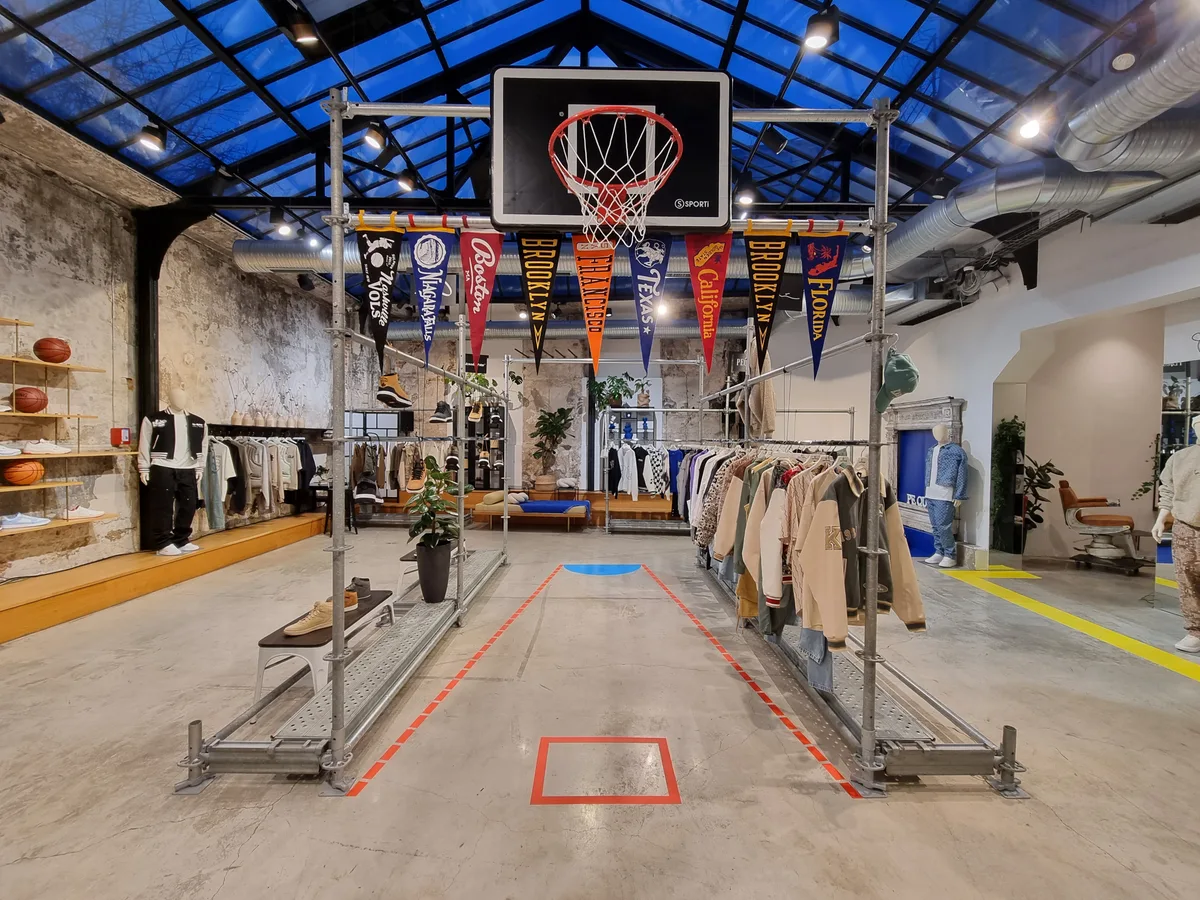
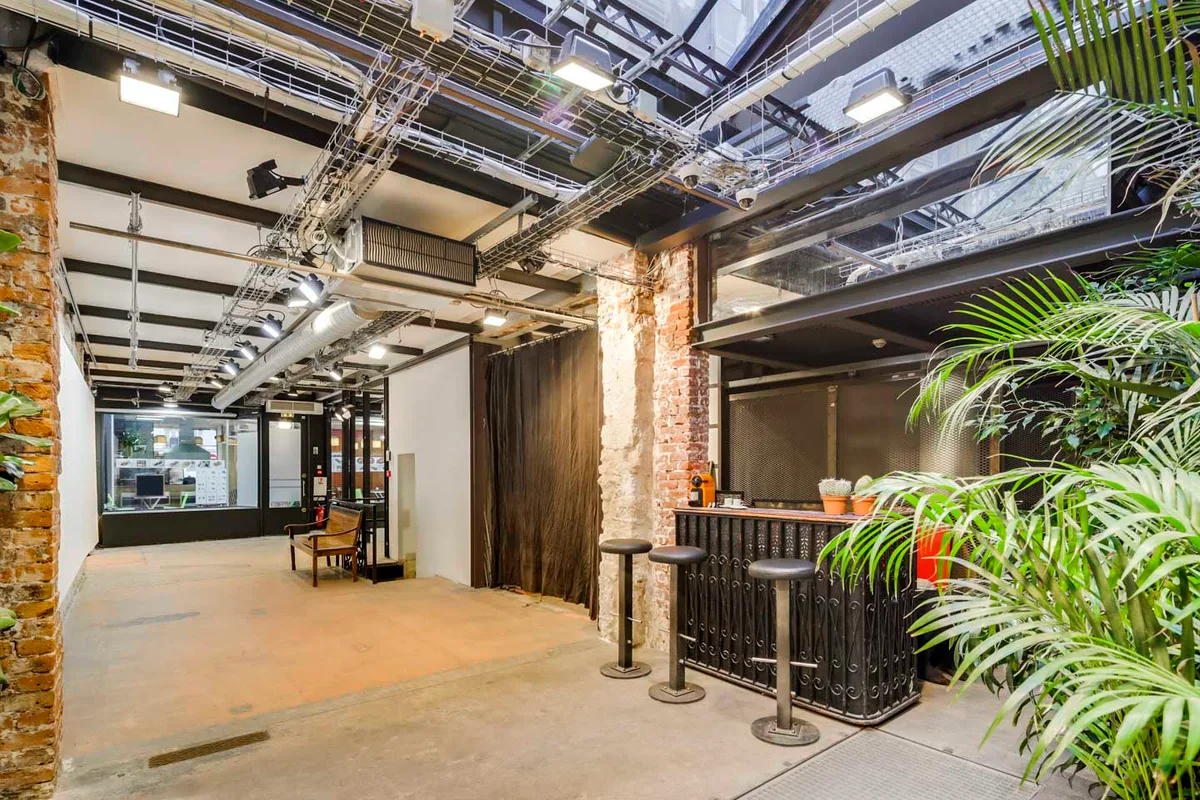
Loft and Espace Créatif formats, often found in converted commercial buildings in the 1st and 2nd arrondissements, offer high ceilings, open-plan layouts, and industrial finishes including exposed piping, raw concrete floors, and flexible lighting rigs. These spaces suit brands in streetwear, contemporary fashion, beauty, or design that want to signal creativity and authenticity rather than heritage luxury. Studio Photo formats, with professional lighting infrastructure and adaptable set-build potential, are also available and suit brands combining retail with content creation during their activation.
Apartment and Residential-Style Commercial Spaces
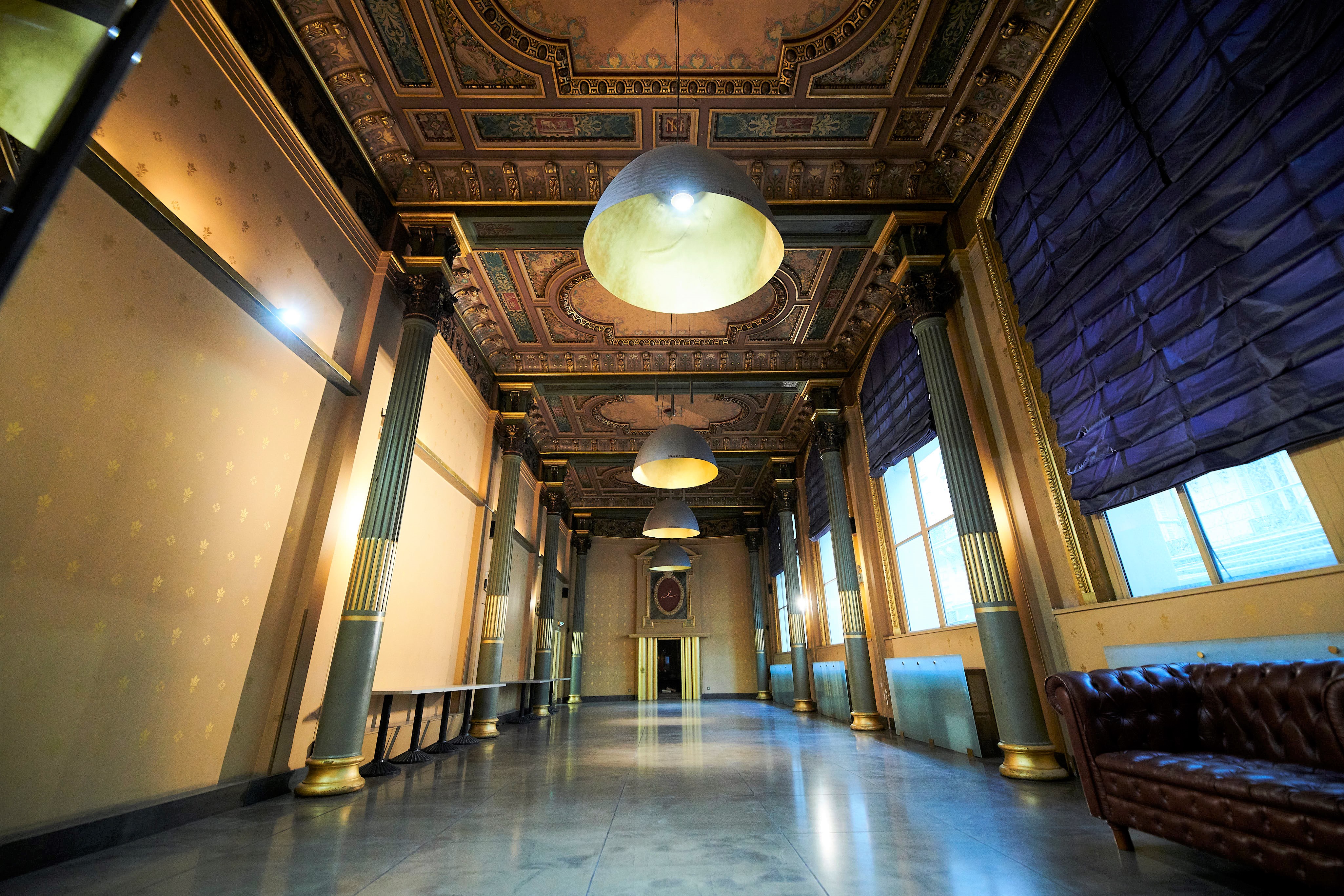
A small but significant category, apartment-format retail spaces in historic Haussmann buildings near the Tuileries create an intimate, invitation-only atmosphere suited to very high-end fashion presentations, private client events, and exclusive brand experiences. These spaces leverage the existing interior architecture including parquet floors, moulded ceilings, and period fireplaces as a designed backdrop, reducing the need for heavy fit-out investment.
| Space Type | Typical Size Range | Best For | Key Features |
|---|---|---|---|
| Boutique Storefront | 30 to 200 sq m | Pop-up store, consumer retail, seasonal activation | Street access, glazed facade, signage potential |
| Fashion Showroom | 60 to 300 sq m | Wholesale presentations, press events, buyer meetings | Upper floor, private access, high ceilings, good light |
| Art Gallery / Galerie d'art | 40 to 250 sq m | Experiential retail, brand exhibitions, launch events | White walls, spotlights, open plan, polished floors |
| Loft / Espace Créatif | 80 to 500 sq m | Brand activations, creative events, multi-format retail | Exposed finishes, flexible layout, high ceilings |
| Apartment / Hôtel Particulier | 80 to 400 sq m | Private presentations, VIP events, editorial shoots | Period interior, parquet, fireplaces, intimate atmosphere |
| Studio Photo | 60 to 200 sq m | Content creation, retail hybrid, editorial activations | Lighting infrastructure, neutral walls, adaptable layout |
KEY TAKEAWAY: Matching your space type to your activation format before you start your search significantly narrows the shortlist and prevents the common mistake of choosing a space based on address alone. A fashion showroom does not perform the same function as a pop-up store, and the wrong format in the right location will underdeliver against your brief.
Once you understand which space type serves your brief, the next critical step is understanding the commercial and legal framework governing short-term leases in Paris, which differs substantially from standard commercial property markets in the UK, US, or other European markets.
Commercial Leases and Permits for Short-Term Retail in Paris
Quick answer: Short-term commercial leases in Paris are typically structured as a bail dérogatoire, a derogatory lease of up to 36 months that sits outside the standard French commercial lease framework. For very short activations, spaces may also be accessed through a convention d'occupation temporaire or an autorisation d'occupation temporaire (AOT). Understanding which framework applies to your space is essential before signing any agreement.
Paris commercial real estate operates under French law, which is materially different from Anglo-American lease structures. Brands accustomed to pop-up leases in London, New York, or other markets sometimes underestimate the complexity of French commercial property regulation when approaching the Paris market for the first time.
The Bail Dérogatoire
The bail dérogatoire is the most common short-term lease vehicle used by brands renting commercial space in Paris for periods ranging from a few weeks to a maximum of 36 months. Critically, it must be executed outside the protections of the standard French commercial lease statute (the bail commercial), which means both parties agree explicitly that the tenant does not acquire statutory rights to renew. This flexibility makes it well suited to pop-up stores, seasonal boutiques, and temporary showrooms. However, the documentation must be correctly drafted and the agreement must clearly state its derogatory nature. Brands should verify with a qualified French legal advisor that their agreement is correctly structured, as an improperly drafted bail dérogatoire can default into a standard commercial lease, significantly changing the obligations and rights of both parties.
Autorisation d'Occupation Temporaire (AOT)
For spaces on public or semi-public land, including areas adjacent to public parks, squares, and certain classified zones, access may be governed by an autorisation d'occupation temporaire rather than a conventional private lease. This is relevant for brands considering activations on or near public terraces, within classified gardens such as the Tuileries, or in kiosk and temporary structure formats. AOTs are issued by the relevant public authority, and the process, timeline, and conditions vary by location and intended use. Brands should not assume that proximity to a public space automatically creates access rights. Permit guidance is available through the Fashion Week Venues permits tool.
Commercial Permit Considerations for Temporary Retail
Beyond the lease itself, brands operating a pop-up store or event-based retail activation in Paris may require additional authorisations depending on the nature of their activity. These can include declarations to the local mairie, signage permits governed by local advertising regulations, temporary structure permits where fit-out involves freestanding fixtures attached to the building fabric, and in certain arrondissements, heritage authority approvals where the building is classified. Requirements vary by space type, duration, and arrondissement. Local regulations in the Paris 1st and surrounding premium arrondissements can be more stringent than in secondary zones of the city.
IMPORTANT: Fashion Week Venues provides permit guidance and tool support, but does not provide legal advice. Always verify your specific lease and permit obligations with a qualified French commercial lawyer or a specialist consultant before signing agreements or beginning fit-out work.
KEY TAKEAWAY: The bail dérogatoire is the standard short-term lease instrument for temporary retail in Paris, but it must be correctly documented to retain its derogatory character. For public or semi-public locations, the AOT framework applies and involves a separate application process. Getting this right before you commit to a space prevents costly complications during your activation.
Understanding the legal framework is the foundation of a sound commercial plan. The next layer is budgeting realistically for the total cost of your activation, which extends well beyond the headline rental rate.
Understanding the Cost of Renting Retail Space Near Tuileries Paris
Quick answer: Rental rates for commercial space near the Tuileries depend on street, space type, size, floor level, fit-out condition, and lease duration. Prime locations on Rue Saint-Honoré or facing Rue de Rivoli carry some of the highest per-square-metre rates in Europe for short-term retail. Secondary streets and upper-floor locations offer significantly more accessible entry points for brands with tighter budgets. For brand-specific estimates, use the Fashion Week Venues budget estimation tool.
Precise rental figures vary considerably based on market conditions, space availability, and the specific negotiation between landlord and tenant. Fashion Week Venues does not publish fixed rate tables because the market does not operate on fixed rates. What the brand team needs to understand is the structure of costs and the factors that drive them.
Factors Affecting Rental Rate Near Tuileries
Street-level storefronts on Rue de Rivoli and Rue Saint-Honoré command premium rates that reflect both the foot traffic and the brand equity associated with the address. Upper-floor spaces in the same buildings, accessed by staircase or elevator without direct street visibility, are typically priced at a meaningful discount and are well suited to showroom and appointment-based formats. Side streets including Rue Saint-Roch, Rue du 29 Juillet, and the streets connecting north toward Place Vendôme offer a middle tier of pricing that still benefits from the neighbourhood's visitor density without the full premium of a front-row address.
Fit-out condition significantly affects the total cost of an activation. A space delivered in a gallery-ready or boutique-ready condition with existing lighting infrastructure, clean walls, and polished floors requires substantially less investment in production and build than a raw or industrial space that needs to be transformed before trading. Brands should assess total activation cost, not just headline rent, when comparing options.
Additional Costs to Budget
Beyond the rental rate, brands renting space near the Tuileries should budget for: a security deposit, typically one to three months of rent held for the duration of the lease; building insurance required for commercial occupancy; any additional charges (charges communes) covering shared building costs; fit-out production and build costs; furniture rental if the space requires furnishing; retail staffing; point-of-sale technology and payment infrastructure; and professional fees for legal review of the lease agreement. Marketing costs, influencer activations, and event programming represent additional budget lines that are separate from the space costs but directly affect the return on investment of the activation as a whole.
TIP: Brands underestimating total activation cost often focus on the weekly or monthly rental rate and overlook the fit-out, deposit, and staffing lines. A realistic total activation budget should typically be two to three times the base rental cost depending on the scope of the production.
Comparison of Location Tiers by Approximate Cost Profile
| Location Tier | Example Streets | Relative Cost Profile | Best For |
|---|---|---|---|
| Prime Tier 1 | Rue Saint-Honoré, Rue de Rivoli (ground floor), Place Vendôme adjacency | Highest market rates | Flagship-scale activations, luxury launches, maximum visibility |
| Prime Tier 2 | Rue du 29 Juillet, Rue Saint-Roch, Palais Royal adjacency | Significant but below Tier 1 | Pop-up boutiques, showrooms, gallery activations |
| Upper Floor, Tier 1 Streets | Rue Saint-Honoré, Rue de Rivoli (first floor and above) | Moderate, neighbourhood prestige retained | Showrooms, private presentations, VIP events |
| Adjacent Arrondissements | 2nd arrondissement, Opéra district, Place de la Madeleine surrounds | More accessible entry points | Emerging brands, longer-term activations, multi-week pop-up stores |
KEY TAKEAWAY: The Tuileries quarter is one of the most expensive retail markets in the world at its premium tier, but it contains a range of sub-markets at different price points. Brands that understand the hierarchy can access the neighbourhood's prestige at appropriate budget levels by choosing the right street, floor, and space type for their specific brief.
Once budget parameters are set, the next decision is timing. The Paris Fashion Week calendar creates a specific set of opportunities and constraints that every brand team should plan around in advance.
Paris Fashion Week Calendar: Timing Your Activation Near Tuileries
Quick answer: Paris Fashion Week takes place twice annually, with Womenswear in late February to early March and in late September to early October, and Menswear in mid-January and mid-June. These windows represent the highest-demand periods for retail space and showroom rental near the Tuileries, but they are not the only commercially viable windows for a brand activation in this neighbourhood.
The Paris Fashion Week calendar creates predictable surges in demand for space near the Tuileries. During these weeks, the concentration of international buyers, press, creative directors, and brand decision-makers in the 1st and 8th arrondissements is unmatched by any other period in the European fashion calendar. Brands running showrooms or pop-up stores timed to coincide with Fashion Week benefit from this professional audience density, which can deliver buyer meetings, press coverage, and brand awareness in a compressed window that would take months to replicate through standard retail trading.
However, Fashion Week availability is extremely limited. Landlords and space owners in the Tuileries quarter receive enquiries for Fashion Week windows six months or more in advance, and the most desirable spaces are often reserved by returning brands year after year. Brands approaching the market within eight to twelve weeks of their target Fashion Week window may find that their first-choice options are unavailable, which makes early planning and professional venue sourcing critical.
Non-Fashion Week Windows and Seasonal Opportunities
The Tuileries quarter does not exist only in service of Fashion Week. The neighbourhood attracts consistent foot traffic from international tourists throughout the spring and summer months, from Parisian consumers during the autumn and winter retail seasons, and from visitors to the Louvre, Palais Royal, and Tuileries Garden year-round. Brands in lifestyle, beauty, homeware, design, and adjacent categories can find strong commercial viability outside the Fashion Week windows, often with better space availability and more competitive rental terms.
The Christmas and New Year season, the Fête de la Mode, Maison et Objet, and other major Paris events create secondary demand peaks that can anchor a brand's activation calendar without the full competition pressure of a Fashion Week window. Brands in beauty should also note that international beauty trade events and the Paris trade show calendar create additional professional audience concentrations that coincide with certain months.
DID YOU KNOW: The Tuileries Garden hosts seasonal events and installations that generate additional foot traffic concentrations beyond the standard tourist season, including cultural festivals, public art displays, and temporary attractions that can significantly boost ambient visitor numbers around garden-adjacent retail spaces.
To compare neighbourhoods and space types across Paris and plan your activation calendar, explore the Paris city hub on Fashion Week Venues and shortlist spaces that match your brief, budget, and calendar window.
KEY TAKEAWAY: Fashion Week windows offer unparalleled professional audience density but require long lead times and are highly competitive for space near the Tuileries. Brands that plan their activation calendar twelve or more months in advance have the widest selection of spaces and the strongest negotiating position. Non-Fashion Week windows offer genuine commercial viability at lower competition levels and more accessible rental terms.
Key Neighbourhoods Adjacent to Tuileries: Where to Look Beyond the Garden
Quick answer: Brands whose brief extends beyond the immediate Tuileries zone should consider Le Marais, Saint-Germain-des-Prés, the Champs-Élysées corridor, the Opéra and Palais Royal districts, and Montmartre as complementary or alternative locations depending on their brand positioning, target clientele, and budget.
The Tuileries sits at the centre of a wider commercial geography that sophisticated brands use strategically. Understanding the character and commercial logic of adjacent neighbourhoods allows brands to make an informed decision about whether to concentrate their activation near the garden or to consider a multi-neighbourhood or twin-site approach.
Le Marais
Le Marais, covering parts of the 3rd and 4th arrondissements to the east, is Paris's most active market for independent fashion, concept retail, and brand activations targeting a younger, trend-aware consumer. Streets including Rue des Francs-Bourgeois, Rue Vieille du Temple, and the areas around the Place des Vosges combine fashion boutiques, galleries, and concept stores in a neighbourhood that draws both local Parisian clientele and international visitors. Space typologies in Le Marais lean toward gallery formats, boutiques in historic buildings, and converted warehouse spaces, often with features including exposed stone, vaulted ceilings, and period architectural details that create immediate brand atmosphere. Rental rates in Le Marais are generally more accessible than the Tuileries quarter's premium tier, though the most desirable Marais addresses command their own premiums.
Saint-Germain-des-Prés
Saint-Germain-des-Prés in the 6th arrondissement attracts a well-established mix of literary, intellectual, and luxury fashion consumers. The neighbourhood is a natural home for brands in contemporary fashion, art, books, design, and beauty who want a left-bank positioning. Boulevard Saint-Germain and the side streets extending toward the Seine offer boutique storefronts, gallery spaces, and upper-floor showrooms at rates below the Tuileries prime tier.
Champs-Élysées and the Golden Triangle
Avenue des Champs-Élysées and the Golden Triangle streets including Avenue Montaigne and the surrounding arteries accommodate brands targeting maximum visibility and mass international tourism alongside luxury shoppers. Space here suits large-scale flagship activations, pop-up experiences designed for broad audience reach, and brands whose brief prioritises volume of engagement over editorial exclusivity. Streets such as Rue de Marignan, Rue Washington, and Rue Boissière offer secondary Champs-Élysées adjacency at more accessible entry points.
Opéra, Palais Royal, and Grands Boulevards
The area from Pyramides station through the Opéra district toward Galeries Lafayette and Printemps on Boulevard Haussmann covers a significant retail catchment. Rue du Quatre Septembre, Place de la Madeleine, and the streets around Rue Paul Cézanne and Rue de la Baume are part of a secondary commercial tier that benefits from department store traffic and strong transport connections. For brands planning longer activations that need footfall consistency outside Fashion Week, this zone offers practical advantages over the more event-dependent Tuileries corridor.
Montmartre and Pigalle
Montmartre and Pigalle have developed significant creative and fashion credibility over the past decade, attracting independent designer brands, lifestyle concepts, and culturally positioned activations. While positioned further from the Tuileries, these neighbourhoods offer distinctive spaces at competitive rates and a different audience profile that suits brands targeting creative and cultural consumers rather than the luxury-tourist mix of the 1st arrondissement.
| Neighbourhood | Arrondissement | Best Brand Categories | Typical Space Character |
|---|---|---|---|
| Tuileries / 1st arrondissement | 1st | Luxury, haute couture, high fashion, jewellery, beauty | Prestige storefronts, showrooms, gallery spaces |
| Le Marais | 3rd and 4th | Contemporary fashion, lifestyle, concept retail, art | Gallery, boutique, historic building conversions |
| Saint-Germain-des-Prés | 6th | Fashion, design, art, beauty, books, lifestyle | Boutiques, galleries, upper-floor showrooms |
| Champs-Élysées / Golden Triangle | 8th | Mass luxury, flagship retail, international tourism | Large storefronts, premium commercial buildings |
| Opéra / Grands Boulevards | 2nd and 9th | Contemporary retail, lifestyle, department store adjacency | Commercial buildings, covered passages, mixed formats |
| Montmartre / Pigalle | 18th and 9th | Creative, streetwear, independent fashion, culture | Studios, lofts, converted ateliers, creative spaces |
KEY TAKEAWAY: The Tuileries quarter is the prestige anchor of Paris retail, but adjacent neighbourhoods offer genuine commercial and brand-building alternatives that suit different briefs, budgets, and positioning strategies. Many brands benefit from a multi-neighbourhood perspective rather than treating the Tuileries as the only viable location in Paris.
How to Search for and Evaluate Retail Space Near Tuileries Paris
Quick answer: Searching for retail space near the Tuileries requires a combination of direct market knowledge, professional network access, and systematic space evaluation against your brief. Online platforms such as Storefront, LoopNet, CoStar, Workthere, and broker-accessed listings provide starting points, but the most desirable short-term spaces in this market are often not publicly listed and require specialist sourcing through an agency or established Paris commercial real estate network.
The process of finding the right retail space near the Tuileries differs substantially from searching for space in markets where short-term commercial listings are widely published. Paris's premium short-term retail market operates significantly through direct relationships between building owners, specialist agencies, and established brands. Public listing platforms capture only a portion of what is genuinely available, and the most sought-after addresses often never reach a public search platform at all.
Online Listing Platforms and Their Limitations
Platforms such as Storefront, LoopNet, CoStar, and Agence Paris-type commercial property portals provide accessible starting points for a search. Blue Listings on certain platforms indicate directly available spaces, while broker-held listings require engagement with a professional to access terms and conditions. For international brands unfamiliar with the French market, these platforms are useful for market orientation but should not be relied upon as a comprehensive picture of available inventory. Workthere and co-working-adjacent commercial platforms may surface some relevant shorter-term options but are primarily oriented toward office rather than retail uses.
Setting up alerts, saved searches, and email notifications on listing platforms allows your team to monitor new inventory as it becomes available. However, the lead time between a space appearing on a public platform and being agreed to another tenant can be very short in the Tuileries quarter during peak demand windows.
Specialist Agency Sourcing
For brands that need reliable access to the Tuileries market with the confidence of professional vetting, a specialist agency with established Paris market relationships is the most effective route. Agencies with active short-term retail networks access spaces before they are listed publicly, can assess building permit status on behalf of the brand, and can negotiate lease terms from a position of market knowledge. This is particularly important for international brands entering the French market without an existing Paris commercial property relationship. Guidance on evaluating and selecting an agency is available through the Fashion Week Venues guide to hiring an agency.
Space Evaluation Criteria
When evaluating specific spaces, brand teams should assess the following in a structured way: street and floor position relative to foot traffic routes; natural and artificial lighting quality; ceiling height and floor plate configuration; existing fit-out condition and what transformation is required; electrical capacity for retail and event use; access for deliveries and heavy production equipment; building management rules regarding opening hours, noise, and temporary signage; and proximity to complementary amenities including restaurants, hotels, and transport connections. Spaces near the Tuileries that face the garden or sit on the main Rivoli-Rivoli axis offer excellent visibility, but inner-courtyard or upper-floor options can create more compelling branded environments with lower baseline rental cost.
Step-by-Step Space Sourcing Workflow
| Step | Action | Tools and Resources |
|---|---|---|
| 1 | Define your activation brief: category, format, size, duration, and budget | Internal brief document, budget estimation tool |
| 2 | Set your target neighbourhood tier and acceptable alternatives | Neighbourhood comparison research, city hub |
| 3 | Search public listing platforms and set up alerts for new inventory | Storefront, LoopNet, CoStar, Workthere, Agence Paris |
| 4 | Engage a specialist agency for non-public inventory access | Fashion Week Venues venue sourcing service |
| 5 | Evaluate shortlisted spaces against your brief criteria | Space comparison tool, site visits |
| 6 | Verify permit and lease framework for each candidate space | French commercial lawyer, permits tool |
| 7 | Negotiate terms and issue heads of terms | Agency support, legal advisor |
| 8 | Plan fit-out, staffing, and activation build | Production and build service, staffing service |
| 9 | Open, trade, and measure performance | POS and payments, data and analytics service |
| 10 | Review ROI and brief next activation | ROI calculator tool |
KEY TAKEAWAY: A structured search process that combines public platform monitoring with specialist agency access produces the best outcome in the Tuileries market. Brands that rely solely on public listings miss a significant proportion of available inventory and risk finding the market already committed before they engage seriously.
How Fashion Week Venues Supports Brands Searching for Retail Space Near Tuileries
Fashion Week Venues is a full-service pop-up shop agency and space marketplace with Paris as its anchor market. For brands searching for retail space near the Tuileries, Fashion Week Venues offers a structured pathway from initial brief through full activation across every service layer that a retail or brand activation requires.
The venue sourcing service provides direct access to short-term commercial spaces in the Tuileries quarter and surrounding Paris arrondissements through both the Fashion Week Venues marketplace and established network relationships that are not always available through public listing platforms. The sourcing team works against a defined brief, shortlisting options by space type, neighbourhood tier, size, and available dates, and managing the initial space assessment on behalf of the brand.
For brands that need more than a space, the services extend across the full activation stack. Concept direction supports the creative and brand brief from initial concept through to spatial design. Production and build covers the physical fit-out, from furniture and fixtures through to branded elements, signage, and custom installations. Activation management provides operational oversight of the live activation period, including logistics, supplier coordination, and day-to-day management.
Additional service layers relevant to Tuileries-area activations include retail staffing for brands that need French-speaking front-of-house and sales staff, point-of-sale and payments infrastructure for brands trading directly with consumers, and data and analytics services that capture trading performance, visitor data, and customer insights from the activation. Influencer marketing services are also available for brands that want to integrate digital and social content creation into their physical activation strategy, which is particularly relevant in a high-visibility neighbourhood such as the Tuileries quarter where organic social reach during Fashion Week can be substantial.
Fashion Week Venues also operates several planning tools that brand teams can use independently or in conjunction with agency support. These include the timeline planning tool for mapping activation milestones, the space comparison tool for evaluating shortlisted options against brief criteria, and the ROI calculator for projecting and evaluating activation performance. The space locator tool supports geographic search for spaces in specific Paris neighbourhoods and arrondissements.
The twin concept, available at Fashion Week Venues twin, allows brands to consider co-activation strategies where two complementary brands share a space or coordinate adjacent activations, which can be a cost-effective route into premium Tuileries-adjacent addresses for brands whose individual budgets do not extend to sole-occupancy of a prime-tier space.
Brand teams who want to understand the full range of past activations managed by Fashion Week Venues can review the work and case study section, which provides context on the types of spaces, formats, and brand categories the agency has experience delivering in Paris and across other major fashion capitals.
IMPORTANT: Fashion Week Venues supports the search, sourcing, and activation process but does not guarantee specific space availability, permit approval, or commercial results. All lease and permit agreements remain subject to the terms agreed directly between the brand, the space owner, and relevant authorities. Fashion Week Venues recommends professional legal review of all commercial agreements in France.
KEY TAKEAWAY: For brands entering the Tuileries retail market without existing Paris commercial property relationships, Fashion Week Venues provides a structured, experience-backed route from brief to activation. The most effective use of the agency is as a strategic partner engaged early in the planning process, not as a last-minute space sourcing service when the target activation window is already close.
Designing and Fitting Out Your Retail Space Near Tuileries
Quick answer: Fit-out and design in Paris's premium retail quarter must balance brand expression with building regulations, co-propriété restrictions, and the practical constraints of operating in protected or heritage-classified structures. Brands that treat design and production as a secondary consideration often encounter delays, cost overruns, or restrictions that undermine the activation's impact.
The physical environment of a retail space near the Tuileries communicates brand positioning before a single product is displayed. In a neighbourhood where international luxury brands have set a baseline standard for retail environment quality, the design and production of a pop-up store or showroom must meet a comparable level of execution to be credible with the target clientele. This does not necessarily require a large budget, but it does require precision in space planning, materiality, lighting design, and the relationship between the brand identity and the architectural character of the chosen space.
Working With Existing Architectural Features
Many of the most effective pop-up and showroom activations in the Tuileries quarter work with the existing character of their space rather than attempting to fully transform it. Polished concrete floors, raw concrete walls, exposed stone, exposed stone columns, and exposed piping are features that carry a natural brand atmosphere requiring minimal additional investment. Gallery-white walls with spotlights allow product to read clearly without elaborate set-building. Period Haussmann details including moulded cornices, parquet floors, and high ceilings provide a ready-made luxury backdrop. Brands that identify spaces whose existing character aligns with their aesthetic brief reduce both production costs and the risk of a misaligned environment.
Lighting as a Brand Communication Tool
Lighting is arguably the single most impactful and most frequently underestimated design element in a temporary retail space. In the Tuileries quarter, where natural light levels in street-facing ground-floor spaces can be exceptional during the spring and summer months, the interaction between natural and artificial light defines the atmosphere of the space throughout the trading day. Brands should assess the lighting infrastructure of shortlisted spaces carefully, confirming whether existing track lighting, spotlights, or pendant systems are suitable for the activation's needs, whether additional power capacity is available for supplementary lighting rigs, and whether the building management permits alterations to existing lighting infrastructure during the lease term.
Regulations Governing Fit-Out and Signage
Fit-out works in Paris commercial buildings are subject to building management approval through the co-propriété and, in some cases, planning authority review. Heritage-listed buildings in the 1st arrondissement may require approval from the Architecte des Bâtiments de France for any changes to the facade, signage, or structural elements. Temporary retail operators must confirm with the building manager and their legal advisor exactly what alterations are permissible, what must be restored to original condition at the end of the lease, and what evidence of dilapidations or restoration will be required on exit. Getting these parameters wrong at the design stage can result in either expensive reinstatement costs or enforcement action that disrupts the activation.
TIP: Building a close relationship with the building manager and establishing clear written agreement on what fit-out is permitted before signing the lease is one of the most practical risk-reduction steps a brand team can take when activating in the Tuileries quarter.
KEY TAKEAWAY: Fit-out design near the Tuileries should start with the existing architectural character of the space and build the brand layer on top of that foundation. Lighting quality, materiality, and compliance with building regulations are the three non-negotiable pillars of a successful production in this market. Engaging a specialist production team with Paris commercial fit-out experience significantly reduces the risk of regulatory or practical complications.
Common Myths About Renting Retail Space Near Tuileries Paris
MYTH: You need a French legal entity to rent a pop-up or short-term retail space near the Tuileries.
FACT: International brands and foreign legal entities can rent short-term commercial space in Paris without establishing a French company, provided the lease is correctly structured and the brand meets standard commercial tenancy requirements including insurance and deposits. Many international brands activate in Paris annually without a French subsidiary. However, some landlords may prefer or require a French guarantor, and this should be addressed during lease negotiations with appropriate legal support.
MYTH: Paris Fashion Week is the only viable window for a brand activation near the Tuileries.
FACT: The Tuileries quarter attracts strong commercial foot traffic year-round, including during the spring and summer tourist season, the autumn-winter retail period, and around major Paris trade events and cultural programming. Brands in lifestyle, beauty, homeware, and adjacent categories often achieve better commercial results outside Fashion Week windows when space availability is higher, rental terms are more negotiable, and the audience mix includes more direct consumers rather than exclusively trade and press.
MYTH: Commission brokers are the only way to find a suitable retail space near the Tuileries.
FACT: While traditional commission-based commercial real estate brokers have access to part of the Paris short-term market, specialist pop-up agencies, direct landlord relationships, and online short-term space platforms now provide alternative access routes that may suit brands seeking shorter durations, more creative formats, or more transparent commercial terms. Brands should evaluate the full range of sourcing options before committing to any single route to market.
MYTH: Short-term leases in Paris are legally straightforward and require minimal documentation.
FACT: Short-term commercial leases in France, including the bail dérogatoire, involve specific legal requirements that must be met precisely for the agreement to retain its derogatory status and avoid defaulting into the full protections and obligations of a standard commercial lease. Incorrect drafting can have significant financial and operational consequences for both the brand and the landlord. Professional legal review of all French commercial lease agreements is strongly recommended regardless of the apparent simplicity of the arrangement.
MYTH: Any space near the Tuileries Garden automatically delivers high foot traffic for retail purposes.
FACT: The Tuileries Garden generates substantial pedestrian movement, but the routing of that movement is specific. Spaces on the northern side of Rue de Rivoli facing the garden benefit from visibility to pedestrians traversing that axis, but spaces even one block removed may receive significantly lower incidental foot traffic. Brands should assess the specific pedestrian flow patterns on and around their candidate streets rather than assuming that proximity to the garden translates directly into retail foot traffic for their specific space and floor position.
Frequently Asked Questions About Retail Space for Rent Near Tuileries Paris
What are the most sought-after locations for leasing commercial space near the Tuileries in Paris?
The most consistently sought-after addresses for short-term commercial space near the Tuileries include ground-floor positions on Rue Saint-Honoré, Rue de Rivoli, and the streets connecting these two axes such as Rue du 29 Juillet and Rue Saint-Roch. Place Vendôme adjacency is particularly valued for jewellery, haute couture, and ultra-luxury brands. The Palais Royal gardens and surrounding arcades attract fashion and lifestyle brands seeking an architecturally distinctive setting. For showroom formats, upper floors along Rue Saint-Honoré and the streets between Place Vendôme and the Opéra are the most active market. The specific best address for any individual brand depends on their category, target clientele, activation format, and budget.
What is the typical cost of renting a retail space near the Tuileries for a short-term activation?
Rental costs for short-term commercial space near the Tuileries vary widely based on street position, floor level, space type, fit-out condition, size, and lease duration. Prime ground-floor storefronts on Rue Saint-Honoré and Rue de Rivoli are among the most expensive short-term retail addresses in Europe. Secondary streets and upper-floor spaces offer meaningfully lower rates while retaining the neighbourhood's prestige. Total activation cost, including fit-out, staffing, deposits, and production, is typically two to three times the base rental cost. For brand-specific budget estimates, the Fashion Week Venues budget tool provides directional guidance based on your activation parameters.
Do I need a French company to rent a pop-up space near the Tuileries?
No, a French legal entity is not an automatic requirement for renting a short-term commercial space in Paris. International brands frequently rent short-term retail spaces through their home-country legal entity, provided they meet standard tenancy requirements including commercial insurance, deposit, and any guarantor conditions set by the building owner. Some landlords may have preferences regarding tenant legal structure, and this should be clarified during the negotiation process. Working with a specialist agency or a French commercial lawyer who can manage the relationship with the building owner is the most effective way to navigate this question as an international brand.
What is a bail dérogatoire and why does it matter for short-term retail in Paris?
A bail dérogatoire is a short-term commercial lease agreement structured specifically outside the protections of the standard French commercial lease statute (bail commercial). It allows both parties to agree a fixed term of up to 36 months without the tenant acquiring statutory rights to lease renewal or eviction compensation. For brands renting short-term retail space in Paris, it is the standard legal vehicle and provides the flexibility needed for pop-up, seasonal, and temporary retail activations. The agreement must be correctly documented as derogatory in explicit terms. Incorrect drafting can convert it into a standard commercial lease with substantially different obligations, so professional legal review is strongly recommended.
How far in advance should a brand start searching for Fashion Week retail space near the Tuileries?
For Fashion Week windows, brands should begin their space search at least six to twelve months before the target activation date. The most desirable spaces in the Tuileries quarter are often committed months in advance by returning brands or through relationships with established agencies. Brands approaching the market within eight weeks of a Fashion Week window will typically find that the best options are already unavailable or carry a significant last-minute premium. For non-Fashion Week activations, a three to six month lead time provides adequate flexibility, though desirable spaces in the 1st arrondissement can move quickly regardless of the season.
What types of retail space are available for short-term rent near the Tuileries?
The space typology near the Tuileries includes ground-floor boutique storefronts, fashion showrooms, art gallery formats, gallery-style espace créatif spaces, loft formats, apartment-style prestige spaces in Haussmann buildings, and studio photo formats. The specific availability of each type varies with market conditions, and some formats are more consistently available than others. The most competitive segment is ground-floor street-facing boutique space on the primary shopping streets, while upper-floor showroom and apartment-format spaces tend to have more consistent availability across the calendar year.
Can my brand trade directly with consumers from a short-term space near the Tuileries?
Yes, brands can operate consumer-facing retail from short-term commercial spaces near the Tuileries, subject to compliance with French commercial trading regulations. Requirements may include registration as a commercial activity, appropriate insurance, compliance with consumer protection rules, and in some cases notification to local commercial authorities depending on the nature and duration of the activity. Food and beverage service, if included in the activation, may require additional licences. Brands should verify the specific compliance requirements for their activation format and product category with a French commercial lawyer before opening to the public.
Are there restrictions on signage and branding for a pop-up store near the Tuileries?
Signage and external branding in the Paris 1st arrondissement are regulated under French advertising and urban planning rules, which may be more restrictive than in other markets. In heritage-classified buildings or streets, additional approvals from the Architecte des Bâtiments de France may be required for any modifications to the building facade or addition of temporary signage. Window vinyl, banner, and sign placement are all subject to building management approval and local authority rules. Brands should assess the signage conditions of their specific building before finalising their communication and merchandising plan, as assumptions about the level of external branding permitted can be incorrect.
What is the difference between a pop-up store and a showroom near the Tuileries?
A pop-up store is a consumer-facing retail operation that trades directly with the public, typically from a street-accessible space with walk-in customer traffic. A showroom is an appointment-based space used for presentations to press, buyers, wholesale clients, and brand partners, typically located on an upper floor or in a more private setting where traffic is invited rather than incidental. In the Tuileries quarter, both formats are active, and the same space can sometimes serve both functions at different times or in different areas of the same floor plate. The distinction matters commercially because the two formats have different foot traffic requirements, different staffing needs, and different success metrics.
How does Fashion Week Venues help brands find and activate retail space near the Tuileries?
Fashion Week Venues supports brands through the entire process from brief definition and space sourcing through concept direction, production and build, activation management, retail staffing, and data and analytics. The agency's Paris network provides access to both listed and unlisted short-term commercial spaces in the Tuileries quarter and surrounding arrondissements. Planning tools including the timeline planner, space comparison tool, and ROI calculator support brand teams in making informed decisions at each stage of the process. The agency is most effective when engaged early in the planning cycle, allowing sufficient lead time to access the best available spaces and plan a thorough activation.
What should I look for when physically viewing a retail space near the Tuileries?
During a site visit to a candidate space near the Tuileries, assess the quality and directionality of natural light at different times of day, the condition of floors, walls, and ceilings relative to your fit-out plan, electrical capacity for your proposed lighting and technology requirements, ceiling height and its suitability for your visual merchandising, access routes for deliveries and production equipment, building noise levels from street traffic or neighbouring businesses, the building management's attitude toward retail use and temporary alterations, and the proximity of the space to the specific pedestrian routes that will deliver your target customer. Taking a checklist approach to site visits ensures no critical factor is overlooked in the excitement of an appealing space.
Is it possible to do a twin or co-activation with another brand near the Tuileries?
A co-activation, where two complementary brands share a space either simultaneously or sequentially, is a viable and increasingly used model in the Paris short-term retail market. It allows brands whose individual budgets do not extend to sole occupancy of a premium Tuileries address to participate in the neighbourhood's prestige at a shared cost. Successful co-activations require careful curation to ensure the two brands are genuinely complementary rather than competing for the same customer or visual attention within the space. Fashion Week Venues operates a twin concept specifically designed to support co-activation strategies for compatible brands.
What digital tools can help me plan a retail activation near the Tuileries?
Fashion Week Venues offers a suite of planning tools relevant to a Tuileries activation. The budget tool provides directional estimates for your activation based on space type and duration. The ROI calculator helps project the financial return of the activation against your cost base. The timeline tool maps the critical milestones from brief to activation opening. The space comparison tool allows structured evaluation of shortlisted spaces against your brief criteria. The permits tool provides guidance on the permit and regulatory landscape for your specific activation format and location. The locator tool supports geographic search within specific Paris neighbourhoods. These tools are designed to support informed decision-making rather than replace professional advice.
What happens at the end of a short-term retail lease near the Tuileries?
At the end of a bail dérogatoire, the tenant is required to vacate the space and restore it to its original condition as defined in the entry state-of-play report (état des lieux d'entrée). Any fit-out alterations, fixtures, and temporary installations must be removed unless agreed otherwise in writing with the building owner. The building owner will conduct an exit state-of-play inspection and compare the space to its condition at the start of the lease. Any deductions from the security deposit for damage or incomplete reinstatement will be based on this comparison. Brands should factor reinstatement costs and logistics into their total activation budget and exit timeline planning.
Conclusion: Making the Right Decision on Retail Space for Rent Near Tuileries Paris
The decision to rent retail space near the Tuileries in Paris is one of the highest-signal brand statements a company can make in the European and global market. The neighbourhood's combination of institutional prestige, consistent international and local foot traffic, fashion calendar density, and architectural quality creates a commercial and brand-building environment that is genuinely difficult to replicate elsewhere. But that premium environment requires precise planning, early action, rigorous legal and compliance management, and a realistic understanding of total activation costs beyond the headline rental rate.
Brands that succeed in the Tuileries quarter are those that begin their search with a clearly defined brief, engage professional sourcing support early enough to access the best available spaces, match their space type to their activation format rather than simply targeting the most prestigious address, plan their fit-out and production with full awareness of building regulations and heritage restrictions, and measure their activation against pre-defined commercial and brand objectives.
The Paris market rewards preparation and expertise. Brands that approach it without either tend to either overpay for space that does not perform against their brief, encounter compliance complications that disrupt their activation, or find that the most desirable spaces are already committed by the time they start their search in earnest.
Fashion Week Venues is designed to close that gap, providing brands with the market access, service depth, and planning tools needed to source, design, produce, and activate in Paris's most sought-after retail quarter. Whether your next activation is a Fashion Week showroom, a seasonal pop-up store, a gallery-format launch event, or a longer-term branded retail presence, the foundation of a successful outcome is a well-prepared brief and a partner with genuine Paris market experience.
To move from research to activation, start exploring available spaces on the Fashion Week Venues marketplace and build a focused brief for your target neighbourhood, space type, and calendar window.