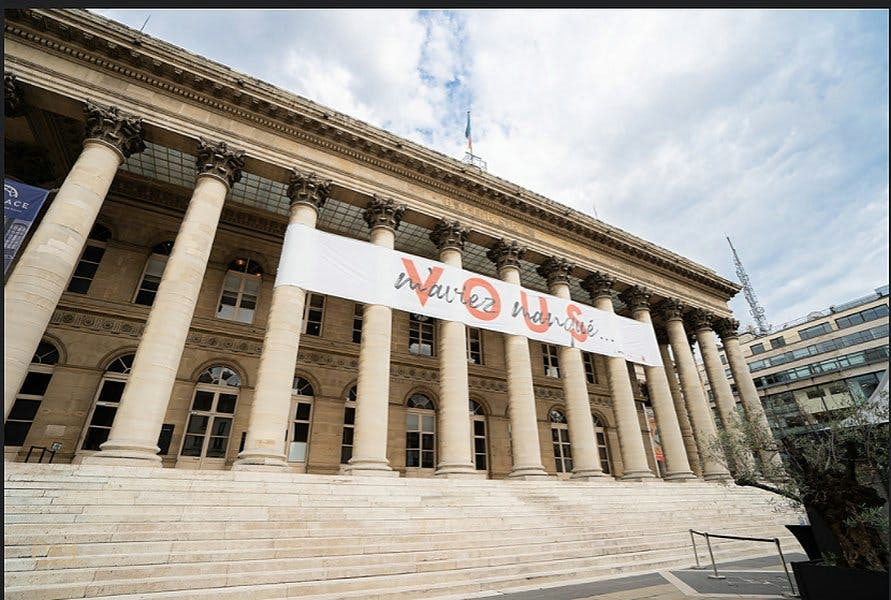
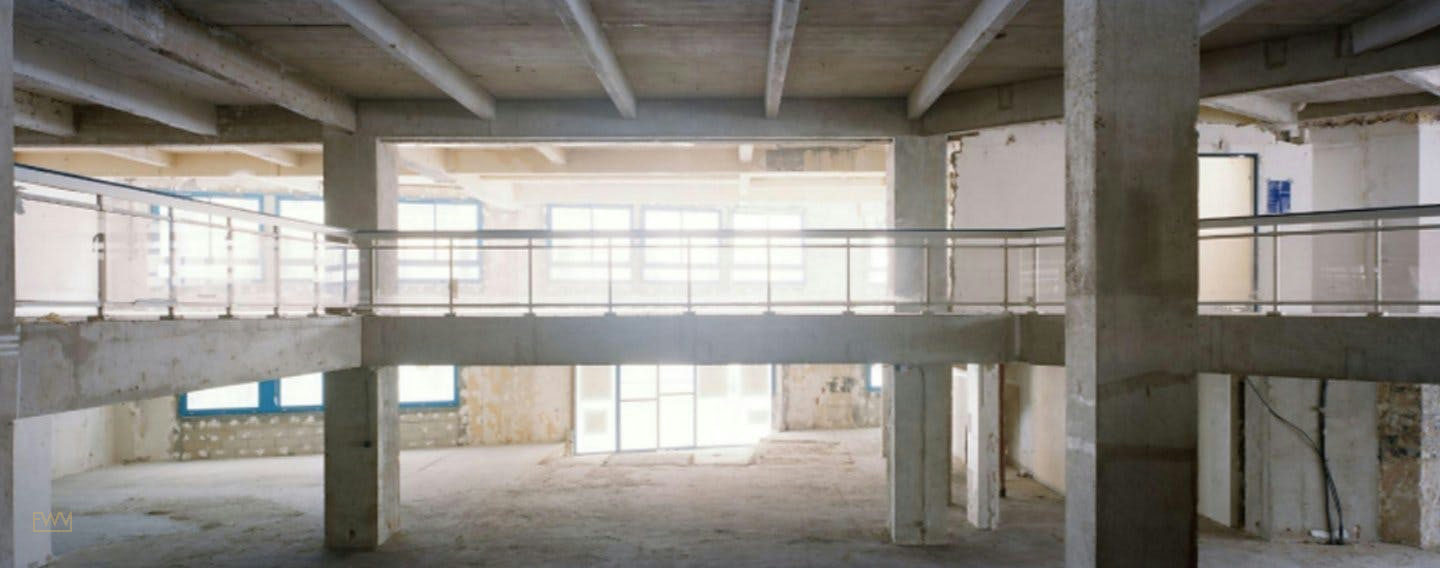
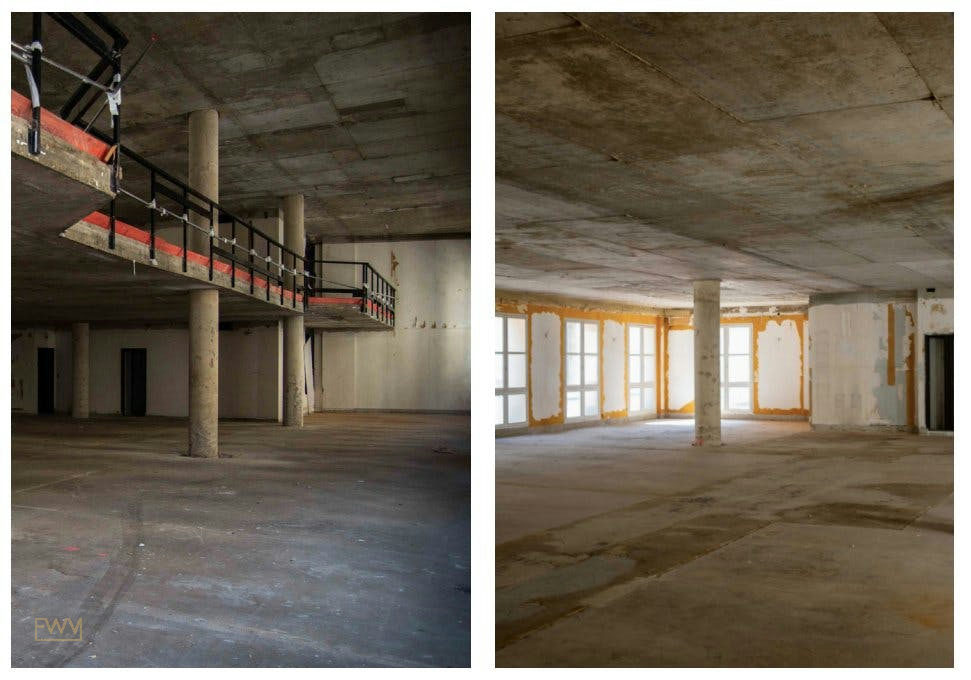
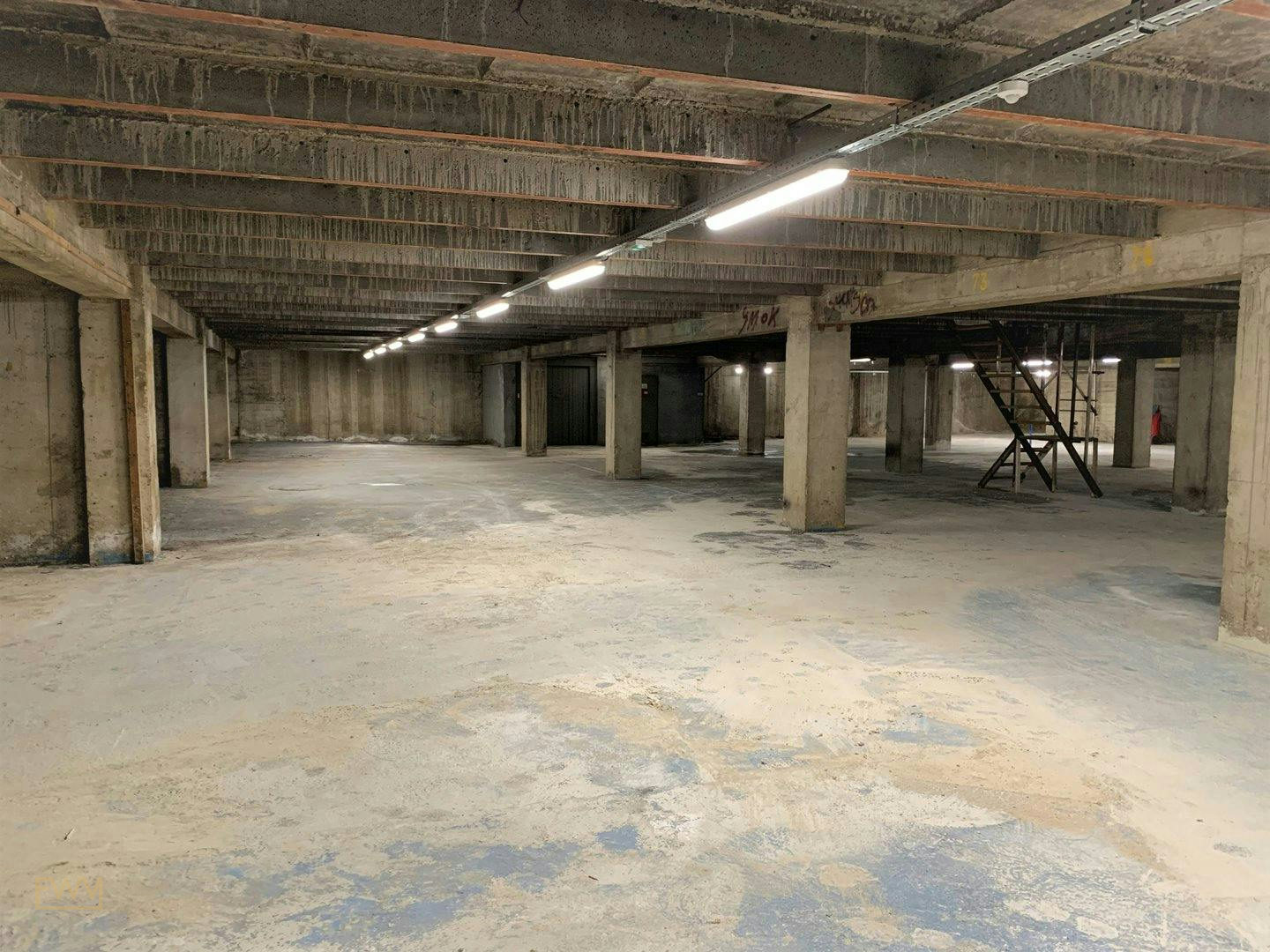
To rent a pop up shop on the Champs-Élysées is to position your brand at the most photographed commercial address in the world. The Avenue des Champs-Elysées draws more than 100 million visitors annually, making it one of the highest-footfall retail corridors in Europe and a strategic anchor for international brands launching in Paris. Whether your objective is a product launch, a fashion showroom, a brand activation, or a short-term retail campaign, the Champs-Elysées and its surrounding Golden Triangle neighbourhoods offer space typologies that simply cannot be replicated elsewhere in France. Fashion Week Venues operates across this market, connecting brands with verified short-term rental spaces, full-service production, and activation management across Paris. This guide covers everything your team needs to plan, execute, and measure a successful pop-up in one of the world's most competitive retail environments.
Why Brands Choose the Champs-Elysées for Pop-Up Retail and Brand Activations
The Champs-Elysées is not simply a street. It is a symbol of Paris, luxury, culture, and international commerce that carries brand associations the moment a name appears in its context. For fashion brands, beauty companies, lifestyle brands, and luxury houses, opening a pop-up store on the Avenue des Champs-Elysées communicates ambition and scale to press, consumers, and trade audiences simultaneously.
Foot traffic along the Champs-Elysées is uniquely layered. The avenue attracts French consumers, international tourists, industry professionals attending Paris Fashion Week, journalists, influencers, and buyers who treat the street as a destination rather than a shortcut. This means that a pop-up shop operating here generates earned media, social media content, and consumer data across multiple audience segments within the same activation window. For brands launching in Paris for the first time, there is arguably no faster way to establish a credible physical presence.
The commercial strip between the Arc de Triomphe and Place de la Concorde spans approximately 1.9 kilometres and includes flagship stores from some of the world's most recognised luxury and lifestyle brands. Renting space here, even for a short-term period, places a brand in direct visual proximity to those names. The halo effect on brand perception is measurable and consistent with the premium investment required.
The adjacent Golden Triangle, formed by Avenue Montaigne, Avenue George V, and the Champs-Elysées itself, extends the strategic value further. Brands activating on or near the Champs-Elysées can access showroom spaces on side streets that maintain the prestige address association while offering quieter, more curated environments suited to press appointments, trade events, and private parties. The Grand Palais, the Palais de la Découverte, and the Théâtre du Rond-Point all sit within or adjacent to this zone, lending a cultural gravity that few other retail corridors in the world can claim.
Paris Fashion Week typically spans eight to ten days during January and February for menswear and haute couture, and September and October for womenswear. Brands that align their Champs-Elysées pop-up with these calendar windows benefit from concentrated press attention, heightened buyer activity, and increased international visitor volumes. However, the Champs-Elysées performs commercially across all seasons, which means brands focused on direct-to-consumer sales rather than press-driven activations are not limited to fashion week windows.
DID YOU KNOW: The Champs-Elysées is regularly ranked among the top five most expensive retail streets in the world by property consultancies, alongside Fifth Avenue in New York and Oxford Street in London. This positions any pop-up or short-term rental on the avenue as a premium brand signal regardless of the category.
KEY TAKEAWAY: The Champs-Elysées delivers a combination of volume foot traffic, international visitor demographics, luxury brand proximity, and cultural authority that makes it the most powerful single address for pop-up retail activations in Paris. Brands should evaluate it not only on space cost but on the full earned media and brand equity return available within a short-term rental window.
Understanding the Champs-Elysées as a retail environment is the first step. The next is understanding how the surrounding Paris neighbourhoods complement and extend a Champs-Elysées activation strategy.
Paris Neighbourhoods for Pop-Up Shops: Champs-Elysées, Le Marais, Saint-Germain, and Beyond
Paris is a city of distinct arrondissements, each carrying a different retail demographic, cultural identity, and space typology. A brand planning to rent a pop-up shop in Paris must evaluate neighbourhoods not only by prestige but by alignment with the target audience, activation format, and commercial objective.
The Champs-Elysées and the 8th Arrondissement
The 8th arrondissement houses the Champs-Elysées, the Golden Triangle, Avenue Montaigne, George V, and Place de la Concorde. This is Paris's luxury retail heartland and the first choice for flagship activations, international brand launches, and high-footfall pop-up stores targeting both luxury consumers and mass tourist audiences. Space types in this zone range from ground-floor street-level retail units with significant frontage to private hôtels particuliers available for exclusive brand events and fashion shows. The Lido de Paris, historically one of the avenue's landmark entertainment venues, represents the scale and theatricality available to brands that want to produce immersive experiences rather than simple retail pop-ups.
Premium locations on the Champs-Elysées itself typically offer large format spaces with strong natural light, ground-floor access, technical equipment compatibility, and storage areas. Many spaces include fitting rooms, making them suitable for fashion showrooms and retail inventory management. The trade-off is cost: this is the most expensive short-term rental zone in Paris.
Le Marais and the 3rd and 4th Arrondissements
Le Marais is the most consistently popular neighbourhood for fashion pop-ups outside the luxury axis. The area around Rue de Turenne, Arts et Métiers, and the streets surrounding Place des Vosges offers a concentration of converted retail spaces, galleries, and former workshops that suit boutique brands, emerging designers, concept-driven retail, and art exhibitions. Galerie Joseph on Rue Saint-Martin is one of the most recognised pop-up and event spaces in Paris, capable of hosting fashion shows, brand activations, product launches, private parties, and collaborative installations across multiple floors.
The Le Marais demographic skews younger, more fashion-forward, and more culturally engaged than the Champs-Elysées tourist mix. Brands targeting Parisian consumers rather than international tourists often find stronger resonance here. The density of independent boutiques, galleries, and concept stores also means that a well-executed pop-up in Le Marais generates organic social media coverage from the neighbourhood's own creative community.
Saint-Germain des Prés and the 6th Arrondissement
Saint-Germain des Prés occupies a different register: intellectual, artistic, and quietly luxurious. Brands in beauty, lifestyle, publishing, and premium fashion find the neighbourhood a natural fit for press events, editorial collaborations, and selective retail pop-ups. Space availability is more limited than in Le Marais or the Champs-Elysées corridor, and the format tends toward smaller, more intimate venues suited to curated experiences rather than high-volume retail.
The Louvre and Concorde Zones
The area between the Louvre and Place de la Concorde, spanning the 1st arrondissement, offers spaces that benefit from proximity to two of Paris's most visited landmarks. Pop-up stores and showrooms in this zone capture overflow foot traffic from the Louvre museums and the Tuileries garden, particularly during tourist season. The Concorde location at the meeting point of the Champs-Elysées and the Tuileries axis offers rare large-format spaces capable of accommodating scenography, immersive brand activations, and multi-day event programming.
Quick answer: The best Paris neighbourhood for your pop-up shop depends on your target audience, format, and budget. The Champs-Elysées suits flagship activations and international brands prioritising prestige and foot traffic. Le Marais suits fashion and concept brands targeting Parisian consumers and creative communities. Saint-Germain suits press-focused and lifestyle brands. Each arrondissement carries a distinct brand association.
To compare neighbourhoods and space types side by side, explore the Paris city hub on Fashion Week Venues and shortlist spaces that match your brief, budget, and calendar window.
KEY TAKEAWAY: Paris offers distinct retail neighbourhoods that each carry different audience demographics, brand associations, and space typologies. A strategic pop-up programme often activates in more than one neighbourhood across a Paris season, using the Champs-Elysées for volume and press impact and Le Marais or Saint-Germain for targeted community engagement.
With neighbourhoods mapped, the next practical question is what kind of space formats are available on and around the Champs-Elysées for short-term rental.
Space Types and Venue Characteristics on the Champs-Elysées and Golden Triangle
The Champs-Elysées and its surrounding streets offer a diverse range of space types for short-term rental, each suited to a different activation format, brand profile, and operational requirement. Understanding these distinctions before approaching landlords or agents saves significant time and avoids mismatched briefs.
Ground-Floor Street-Level Retail Units
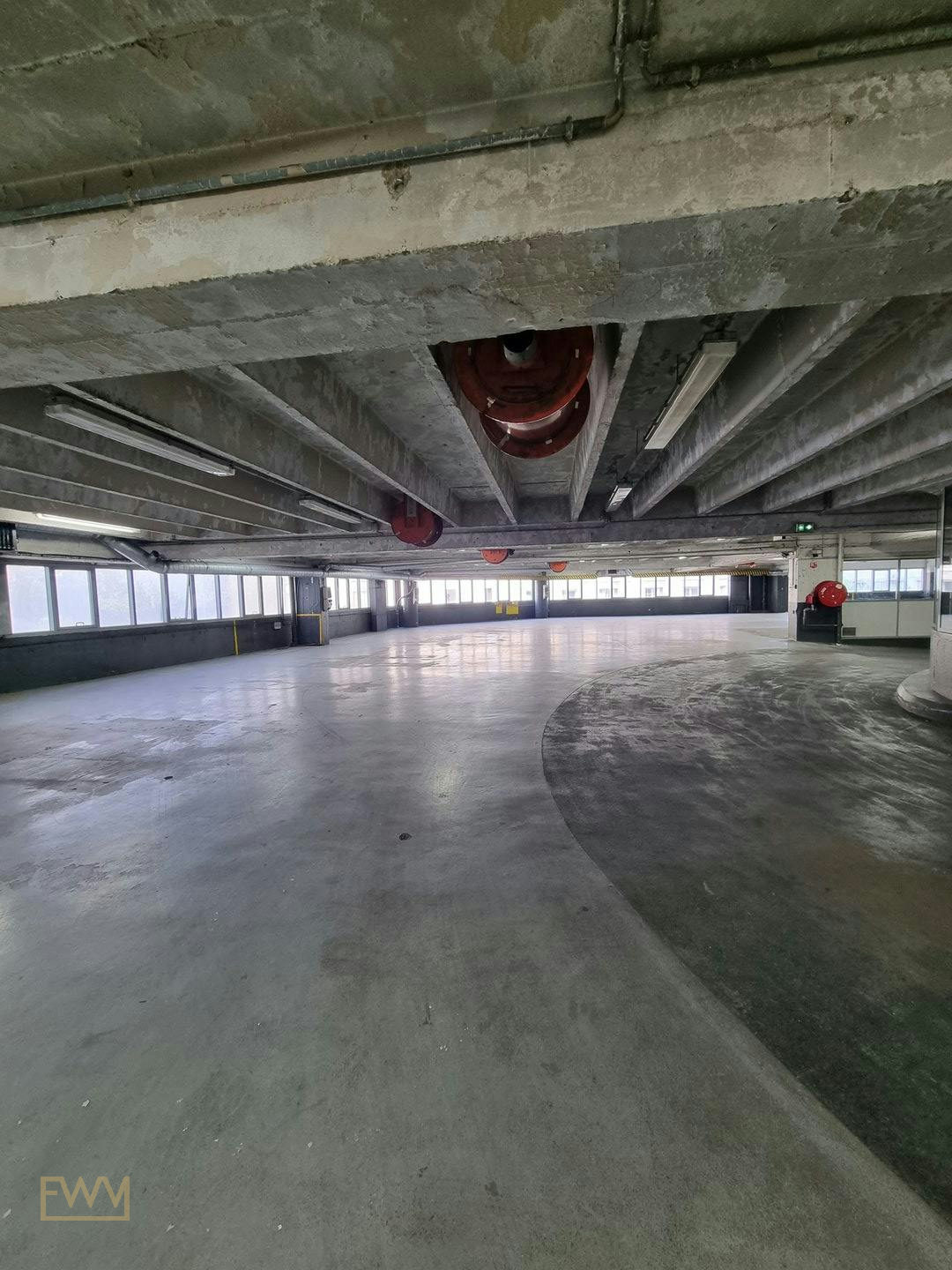
Street-level retail units with direct frontage onto the Champs-Elysées are the most visible and most sought-after space type in Paris. These spaces typically range from compact boutique formats of 50 to 150 square metres to large flagship-scale units exceeding 500 square metres. Key characteristics include high natural light from floor-to-ceiling glazing, significant frontage enabling window display and brand visibility from the avenue, ground-floor accessibility for consumer traffic, and in many cases existing retail fit-out including flooring, lighting rigs, and storage areas. Some units include fitting rooms and technical equipment compatible with digital retail installations.
These spaces are the correct choice for brands running direct-to-consumer pop-up stores, product launches, retail campaigns with a sales objective, or flagship activations designed to be photographed and covered by press.
Upper-Floor Showroom and Event Spaces
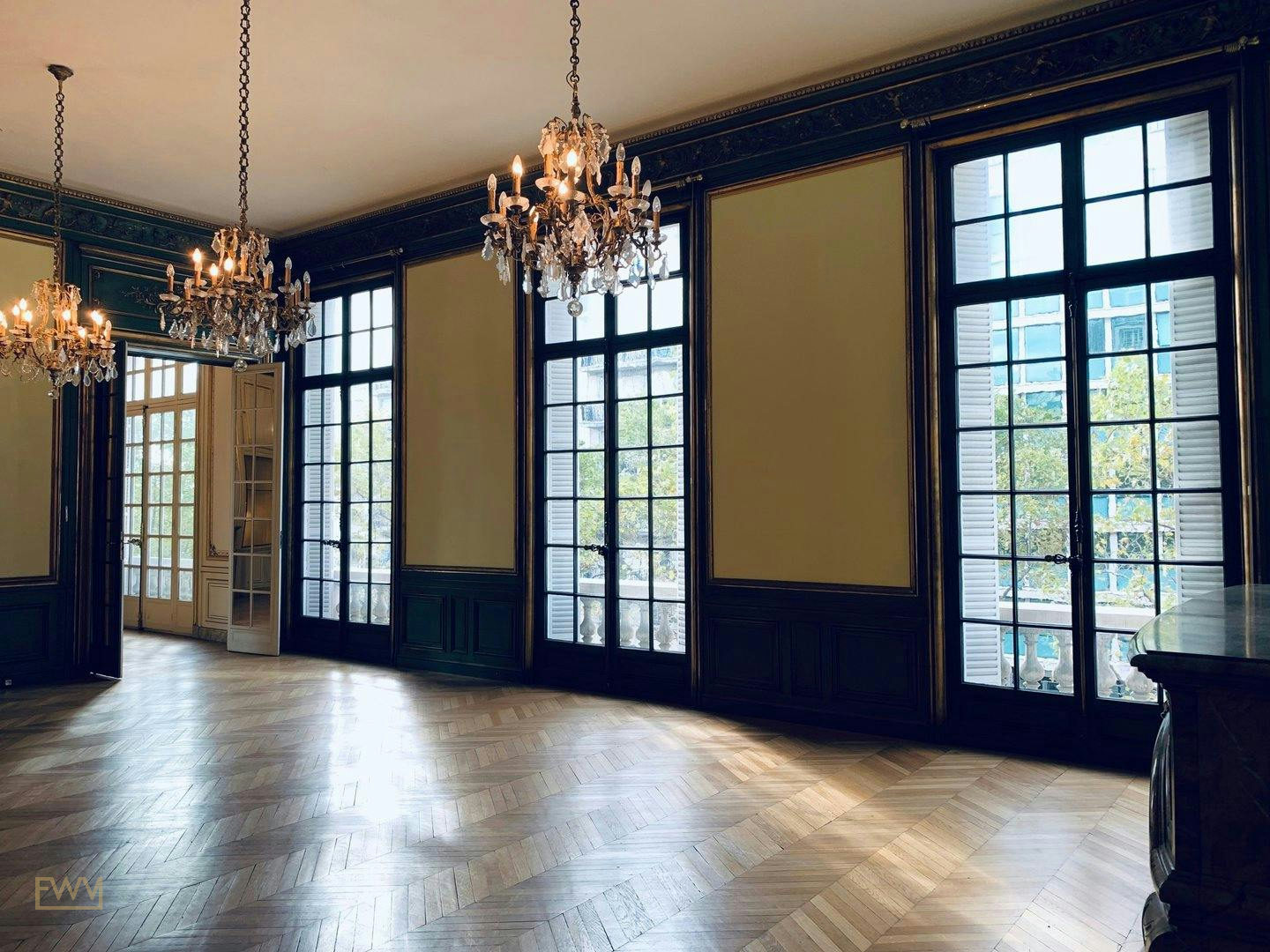
Many buildings on and adjacent to the Champs-Elysées offer upper-floor spaces that function as showrooms, event venues, or brand experience spaces rather than traditional retail. These spaces often feature Haussmannian architecture, high ceilings, parquet flooring, and a more intimate atmosphere suited to press days, buyer appointments, private parties, and art exhibitions. A fully equipped kitchen is a common feature in spaces designed for event use, enabling catering for industry events, brand dinners, and launch parties.
Upper-floor spaces on the Champs-Elysées command a prestige address while offering lower rental costs than equivalent street-level frontage. For fashion showrooms running appointments-based programming, the distinction in foot traffic between street-level and upper-floor is largely irrelevant, making the upper-floor format a strong value proposition.
Galerie and Passage Formats
The covered galerie format, most commonly associated with venues like Galerie Joseph in the Marais or the historic Parisian passages, offers a distinct environment for brands that want a curated, gallery-like retail or exhibition space. These spaces suit fashion brands, beauty brands, and lifestyle brands that prioritise scenography and art exhibition aesthetics over pure retail volume. Interior retail units within galerie formats typically offer excellent natural light from overhead glazing, high ceilings, and architectural character that reduces the fit-out investment required to achieve a premium presentation.
Hôtels Particuliers and Private Mansions
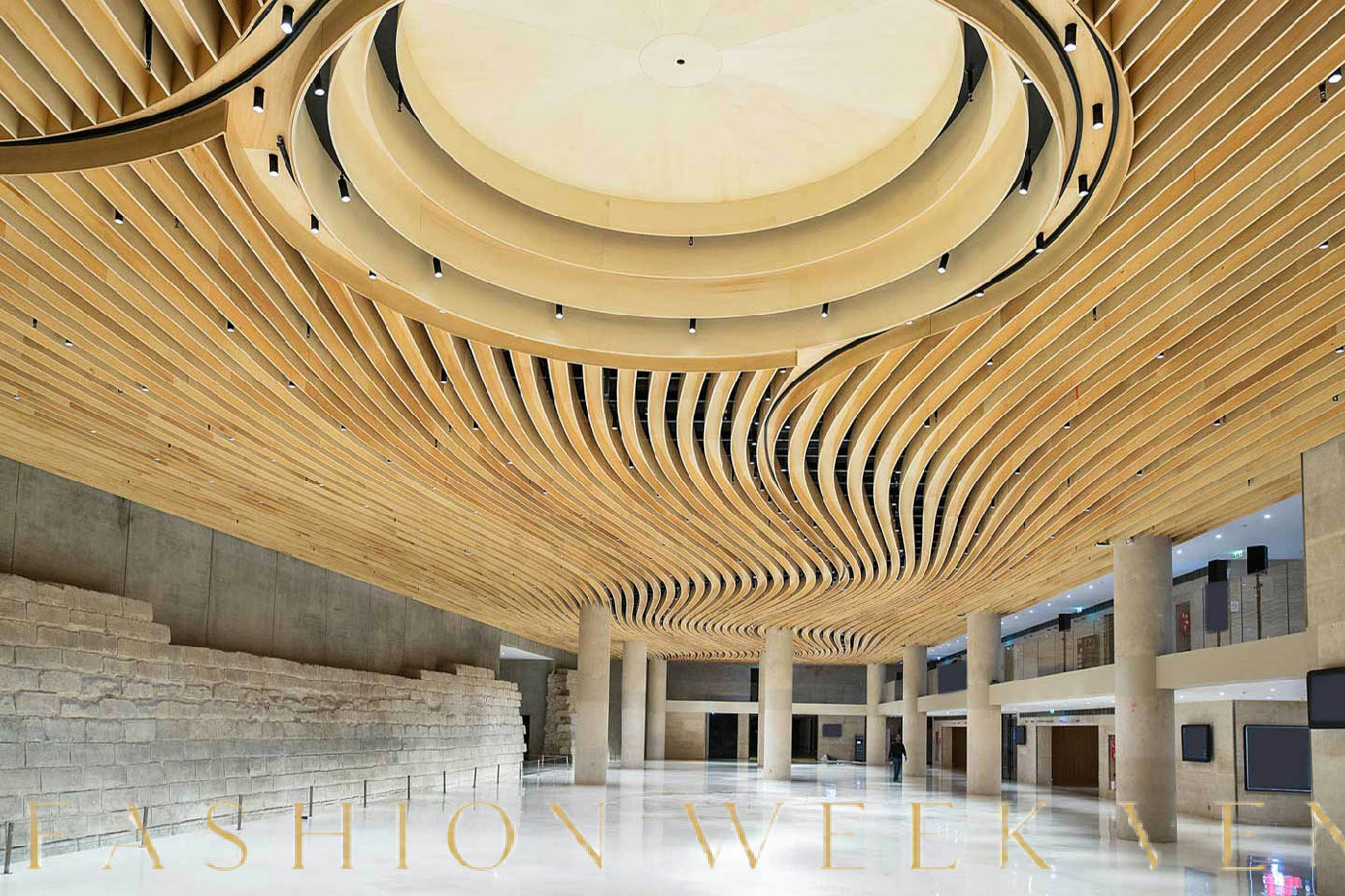
In the 8th arrondissement and the Golden Triangle specifically, several private mansion formats known as hôtels particuliers are available for short-term brand activation. These spaces offer extraordinary architectural settings for fashion shows, luxury product launches, private client events, and high-end brand experiences. They require significant production investment to activate but generate substantial earned media and social media returns given their visual distinctiveness.
Quick answer: Space types on the Champs-Elysées range from street-level retail units with frontage and fitting rooms to upper-floor showrooms, covered galeries, and private mansion formats. The right space type depends on whether the activation objective is volume retail, press engagement, showroom appointments, or immersive brand experience.
TIP: Before requesting space quotes on the Champs-Elysées, define whether your activation requires street-level visibility, a minimum square meterage, specific technical infrastructure such as lighting rigs or power capacity, catering capability, or overnight access for build and breakdown. Mismatches on these requirements are the most common cause of delayed space selection in Paris.
KEY TAKEAWAY: The Champs-Elysées and Golden Triangle offer more space typology diversity than most international brands expect. Street-level retail, upper-floor showrooms, galerie formats, and private mansions each serve different activation objectives. Matching space type to activation format before beginning the search process prevents costly mismatches and wasted search time.
Understanding space types is one dimension of planning. The operational and legal framework for renting these spaces in Paris is equally important and often less well understood by international brands entering the market for the first time.
Short-Term Rental Contracts, Permits, and Legal Frameworks for Pop-Up Shops in Paris
Renting a pop-up shop in Paris involves a legal and contractual framework that differs significantly from standard commercial leases and from short-term retail arrangements in other major fashion capitals. International brands that approach Paris without understanding this framework risk delays, compliance issues, or contractual disputes that can compromise an activation entirely.
The Bail Dérogatoire
The primary contractual instrument for short-term commercial rentals in France is the bail dérogatoire, sometimes referred to as a short-term commercial lease. Under French law, a bail dérogatoire allows landlords and tenants to enter into a commercial rental agreement for a period of up to 36 months without triggering the statutory protections that apply to standard commercial leases under the French Commercial Code. For pop-up activations running days, weeks, or a few months, the bail dérogatoire is the standard instrument.
It is important to understand what the bail dérogatoire does not provide. It does not give tenants the right to renew the lease at the end of the agreed period. It does not guarantee the same protections against eviction that a full commercial lease offers. And it does not automatically cover all the operational requirements a brand might assume are included, such as external signage rights, evening access, or sub-letting for event use. All of these points must be negotiated and specified in the contract.
The Autorisation d'Occupation Temporaire (AOT)
For activations that extend into public space, including terrace installations, outdoor displays, queue management structures, or branded elements visible from the avenue itself, brands may require an Autorisation d'Occupation Temporaire, commonly abbreviated as AOT. This is a permit issued by the local mairie or the relevant arrondissement authority allowing temporary use of public space adjacent to a commercial property.
On the Champs-Elysées specifically, AOT applications are subject to review by the 8th arrondissement mairie and in some cases require approval from the Préfecture de Police de Paris given the avenue's status as a nationally significant public space. Requirements vary by the nature of the installation, its footprint, duration, and structural implications. Brands planning outdoor brand activations, window installations visible from the pavement, or any physical structure extending beyond the rental space boundary should begin AOT discussions early and verify requirements with a French legal advisor.
Temporary Retail and Event Permits
Beyond the lease and any AOT, pop-up shops in Paris may require additional operational permits depending on the activation format. Fashion shows held in venues not licensed for public events may require an authorisation de manifestation. Brands serving food or drink require the appropriate licence. Activations involving live performance, music, or amplified sound require specific declarations to the relevant authority. Temporary retail operations selling goods must comply with French consumer protection regulations including clear display of pricing, returns policies, and in certain cases VAT registration requirements for non-EU entities.
IMPORTANT: French permit and compliance requirements are not uniform across space types, arrondissements, or activation formats. Requirements that apply to a ground-floor retail pop-up on the Champs-Elysées may differ from those applying to an upper-floor showroom event in the Marais. Always verify specific requirements with a qualified French legal advisor before signing a contract or beginning fit-out work.
For an initial overview of what permits your activation may require, the permit guidance tool from Fashion Week Venues provides a structured starting point based on your activation type, duration, and Paris location.
Quick answer: Short-term pop-up rentals in Paris are typically governed by the bail dérogatoire rather than a standard commercial lease. Additional permits including the AOT for outdoor elements and event authorisations may be required depending on the activation format. Requirements vary by arrondissement and space type and should be verified with a French legal advisor before any contract is signed.
KEY TAKEAWAY: The French legal framework for short-term commercial rentals is specific and differs materially from arrangements in the UK, US, or other markets. Brands entering Paris need specialist guidance on the bail dérogatoire, AOT applications, and any operational permits relevant to their activation format. Starting compliance work early is the single most effective way to avoid activation delays in Paris.
With the legal framework understood, the next critical planning dimension is the calendar. Timing a Champs-Elysées pop-up correctly can dramatically amplify the return on a fixed space investment.
Paris Fashion Week Calendar and Optimal Timing for Champs-Elysées Pop-Up Activations
The Paris retail and event calendar is more complex than a single fashion week window. Brands that understand the full annual rhythm of Paris can time their Champs-Elysées pop-up to capture multiple audience types within a single rental period or plan a phased activation programme across two or three seasons.
Paris Fashion Week Windows
Paris hosts four distinct fashion week periods across the calendar year. Haute Couture week typically takes place in January and July. Menswear fashion week runs in January. Womenswear ready-to-wear fashion week, the largest and most internationally attended of the four, runs across late September and early October. Each of these windows brings a concentrated influx of international press, buyers, influencers, creative directors, and brand managers who are actively seeking showroom appointments, brand activations, and retail experiences aligned with the fashion industry calendar.
Brands that align their Champs-Elysées pop-up or Marais showroom with a fashion week window benefit from a uniquely qualified audience. A buyer walking past a brand's pop-up store on the Champs-Elysées during Paris Fashion Week is a materially different commercial encounter than the same buyer encountering the brand at a trade show. The physical retail context communicates brand confidence, commercial scale, and market commitment in a way that a booth or a digital catalogue cannot replicate.
Seasonal Retail Peaks Beyond Fashion Week
The Champs-Elysées performs as a retail destination across all seasons, with notable peaks during summer tourist season from June to August, the Christmas and New Year period from late November through January, and around major French public holidays including Bastille Day in July and Easter weekend. Brands targeting international tourist volumes rather than industry audiences may find these windows equally or more productive than fashion week periods, particularly for direct-to-consumer retail campaigns with a sales objective rather than a press and earned media objective.
The Paris Les Soldes, the legally regulated nationwide sales periods running approximately in mid-January and late June, create additional retail energy across the city. Brands positioning themselves as accessible luxury or premium contemporary can leverage these windows to drive conversion in their pop-up stores while benefiting from the heightened retail atmosphere across Paris.
Minimum Rental Durations and Calendar Planning
Most short-term rental spaces on the Champs-Elysées and in the Golden Triangle are available for minimum periods ranging from one week to one month depending on the landlord and the space format. Event spaces that also function as pop-up venues may be available for shorter periods including a single day or a long weekend for product launches or private events. Brands planning a fashion week activation should account for build and breakdown time on either side of the operational window, which typically adds two to four days to the effective rental period required.
Quick answer: The optimal timing for a Champs-Elysées pop-up depends on your activation objective. For press impact and industry engagement, align with Paris Fashion Week in January or September. For tourist volume and direct-to-consumer sales, summer and the Christmas period deliver strong foot traffic. Most spaces require minimum rental periods of one week to one month, with build and breakdown adding additional days.
Use the timeline planning tool to map your activation calendar against Paris fashion week dates, public holidays, and build and breakdown requirements before confirming a rental period.
KEY TAKEAWAY: Paris offers multiple high-value activation windows beyond fashion week. Brands should align their Champs-Elysées pop-up calendar with the specific objective, whether press-driven, consumer-driven, or trade-driven, rather than defaulting to fashion week without evaluating whether that window matches their audience and commercial goals.
Calendar and space type decisions are inseparable from budget. Understanding the cost components of a Champs-Elysées pop-up activation allows brands to plan realistically and avoid underbudgeting.
Budgeting for a Pop-Up Shop on the Champs-Elysées: Cost Components and Planning Guidance
Budgeting for a pop-up shop on the Champs-Elysées requires an understanding of multiple cost components that extend well beyond the headline space rental figure. Brands that plan budgets based on rental cost alone consistently underestimate the true investment required to activate a space on one of the world's most prestigious retail streets.
Space Rental Costs
Space rental on the Champs-Elysées is among the highest per-square-metre in Paris and in Europe. Costs vary significantly by location on the avenue, floor level, space size, duration, and the amenities included. Street-level units with prominent frontage command the highest premiums. Upper-floor showroom spaces offer comparably prestigious addresses at meaningfully lower rental rates. Spaces further along side streets within the Golden Triangle or adjacent to Place de la Concorde provide Champs-Elysées adjacency at reduced costs while maintaining the 8th arrondissement address.
Because actual rental rates depend on specific spaces, landlords, market conditions, and negotiation, this guide does not state specific figures. For a directional cost estimate based on your target space type, location, and rental duration, use the budget estimation tool from Fashion Week Venues to build a realistic planning figure before entering landlord discussions.
Fit-Out and Production
Fit-out costs on the Champs-Elysées are influenced by the starting condition of the space, the complexity of the brand design concept, the duration of the installation, and the requirement to restore the space to its original condition at the end of the rental period. Many premium locations on the Champs-Elysées require tenants to return the space to a blank condition, meaning that all custom fit-out elements must be demountable or fully reversible. This adds to both build and breakdown costs and must be factored into the production budget from the outset.
Branded store design, furniture rental, and technical equipment sourcing are additional line items that apply to most pop-up activations. Bespoke joinery, branded wall treatments, custom flooring, and lighting design are common investment areas for brands seeking a premium finish commensurate with the Champs-Elysées address.
Staffing, Operations, and Technology
Retail staffing on the Champs-Elysées typically requires a team capable of engaging international visitors in multiple languages. French-speaking staff familiar with luxury retail standards are a baseline requirement. Brands using point-of-sale technology, customer data capture systems, or digital retail installations need to budget for the setup, support, and operation of these systems across the rental period. Security services are a standard operational requirement for pop-up stores on the Champs-Elysées, both for stock security and for crowd management during high-footfall periods.
Marketing and Influencer Activation
A pop-up shop on the Champs-Elysées generates organic social media attention, but brands that maximise earned media invest additionally in targeted influencer marketing, press outreach, and event programming within the space. A private launch event, a press preview, or a content creation day with selected influencers can substantially amplify the reach of a Champs-Elysées activation beyond the physical footfall the space generates during its operational period.
| Cost Component | Applies To | Planning Notes |
|---|---|---|
| Space Rental | All activations | Varies by floor level, frontage, size, and duration. Street-level highest. |
| Fit-Out and Production | All activations | Must account for reversibility and reinstatement requirements. |
| Furniture Rental | Most activations | Reduces permanent capital spend on non-reusable build elements. |
| Retail Staffing | Retail and consumer-facing activations | Multilingual team required for Champs-Elysées international audience. |
| Security Services | All activations | Standard requirement for stock security and crowd management. |
| POS and Technology | Retail activations with a sales objective | Include setup, support, and connectivity costs. |
| Permits and Legal | Most activations | AOT, event permits, and legal review of bail dérogatoire. |
| Marketing and Influencer | Press and consumer-facing activations | Amplifies earned media beyond physical footfall. |
| Logistics and Transport | All activations | Product delivery, display materials, build materials, and removal. |
KEY TAKEAWAY: The total investment for a Champs-Elysées pop-up activation is the sum of space rental, production, staffing, technology, permits, and marketing costs. Brands that plan budgets based on rental cost alone routinely encounter cost overruns during production and operations. Building a complete cost model before committing to a space is essential.
Understanding cost components informs smarter decisions, but translating costs into projected returns requires a different analytical framework. The ROI question is the one most brand activation managers and creative directors face when presenting a Champs-Elysées pop-up to senior leadership.
Measuring ROI on a Champs-Elysées Pop-Up Shop Activation
The return on a Champs-Elysées pop-up shop investment is measurable across multiple dimensions, including direct sales, earned media value, consumer data acquisition, brand awareness uplift, and long-term wholesale or e-commerce conversion. Brands that measure only direct sales consistently undervalue their Paris activations. A complete ROI framework captures all relevant value streams.
Direct Sales Revenue
For pop-up stores with a retail and sales objective, direct revenue during the activation period is the most straightforward ROI metric. Foot traffic on the Champs-Elysées provides the volume input, and conversion rate combined with average basket value determines revenue output. Brands targeting the Champs-Elysées tourist demographic should model realistic conversion rates based on their category, price point, and the international audience mix during their chosen rental window.
Earned Media and Social Media Value
A pop-up shop on the Champs-Elysées generates press coverage, influencer content, and social media posts from consumers and passersby that carry a measurable earned media value. For fashion brands, beauty brands, and lifestyle brands, this earned media return can represent a significant multiple of the space rental investment, particularly when the activation includes a strong visual identity, an event programme, or a collaboration with a culturally relevant figure.
Consumer Data and CRM Value
Pop-up shops are among the most effective environments for CRM data acquisition. A brand that captures email addresses, purchase history, product preferences, and demographic data from Champs-Elysées visitors is building a Paris-qualified consumer data asset that extends in value well beyond the rental period. Brands using POS and data analytics tools during their activation can integrate this data into their broader CRM programme and attribute ongoing revenue to the initial Paris pop-up investment.
Brand Equity and Market Entry Value
For international brands entering the French market, a Champs-Elysées pop-up serves as a market entry signal to wholesale partners, press, and potential distributors. The brand associations generated by activating on the avenue are difficult to quantify precisely but are consistently cited by brand teams as a material factor in subsequent trade and press relationship development in France.
Quick answer: ROI on a Champs-Elysées pop-up is measured across direct sales, earned media value, consumer data acquired, and brand equity generated. Brands that measure only direct sales undervalue the full return. A comprehensive ROI model should capture all relevant value streams across the activation period and the 12 months following.
To build a structured ROI projection before committing to a Champs-Elysées space, use the ROI calculator from Fashion Week Venues to model expected returns across multiple value streams based on your specific activation format and objectives.
KEY TAKEAWAY: A Champs-Elysées pop-up activation generates returns across sales, media, data, and brand equity dimensions. Presenting the ROI case to senior leadership requires a multi-dimensional model rather than a sales-only analysis. Brands that quantify earned media and data value consistently find the full ROI case more compelling than a sales-only view suggests.
The practical execution of a Champs-Elysées pop-up involves a defined sequence of planning, production, and operational steps. Understanding this workflow prevents the most common delays and errors in Paris pop-up delivery.
Step-by-Step Workflow for Renting and Activating a Pop-Up Shop on the Champs-Elysées
Executing a pop-up shop on the Champs-Elysées follows a structured workflow that spans from initial brief development through to post-activation analysis. Brands that skip or compress early planning steps consistently encounter problems during production or activation that could have been avoided with earlier attention.
| Stage | Key Actions | Typical Timing Before Activation |
|---|---|---|
| 1. Define Objectives | Determine whether the activation is for sales, press, showroom, events, or brand awareness. Identify target audience and success metrics. | 16 to 20 weeks |
| 2. Set Budget | Build a complete cost model including space, production, staffing, permits, marketing, and logistics. Use a budget tool for initial estimates. | 14 to 18 weeks |
| 3. Select Neighbourhood and Space Type | Evaluate Champs-Elysées, Golden Triangle, Le Marais, Saint-Germain, and other zones against brief. Define space requirements including size, floor level, frontage, and technical needs. | 12 to 16 weeks |
| 4. Source and Shortlist Spaces | Engage a venue sourcing specialist or search marketplace. Visit shortlisted spaces in person or via virtual tour. Compare options against brief requirements. | 10 to 14 weeks |
| 5. Legal and Permit Review | Review bail dérogatoire terms with a French legal advisor. Identify AOT and operational permit requirements. Begin permit applications early. | 10 to 12 weeks |
| 6. Confirm Space and Sign Contract | Negotiate rental terms, access rights, restoration obligations, and operational conditions. Sign bail dérogatoire. | 8 to 10 weeks |
| 7. Concept and Design | Develop brand concept, spatial design, scenography, and merchandising plan. Confirm furniture, fixtures, and technical requirements. | 8 to 10 weeks |
| 8. Production and Build | Source contractors, order materials, coordinate logistics, and build installation within the rental access period. | 2 to 4 weeks before opening |
| 9. Staffing and Operations Setup | Hire and brief retail staff. Set up POS, payments, and data capture. Confirm security service arrangements. | 1 to 2 weeks before opening |
| 10. Activation and Live Operation | Execute retail, event, and marketing programme. Monitor sales, foot traffic, and consumer data daily. Adjust as needed. | Activation period |
| 11. Breakdown and Restoration | Remove all installation elements. Restore space to original condition as required by contract. Return keys and complete inventory check. | Within 1 to 2 days of closing |
| 12. Post-Activation Analysis | Compile sales data, earned media value, consumer data, and brand metrics. Prepare ROI report. Apply learnings to next activation. | Within 2 to 4 weeks of closing |
TIP: In Paris, permit applications for outdoor activations and AOT requests often take longer than brands expect, particularly during fashion week periods when multiple brands are submitting simultaneous applications to the same arrondissement authorities. Begin permit work at least 10 to 12 weeks before your intended opening date.
Quick answer: A Champs-Elysées pop-up activation requires 16 to 20 weeks of planning from objective definition to opening day. Key early actions include brief development, budget modelling, space sourcing, and permit work. Brands that compress the planning timeline consistently encounter build delays, permit complications, or space availability issues during fashion week periods.
KEY TAKEAWAY: A structured planning workflow with defined stages and timings is the most reliable way to execute a Champs-Elysées pop-up without delays. The most common errors, late permit applications, compressed build schedules, and incomplete budget models, all occur when brands skip or rush the early planning stages. Starting 16 to 20 weeks ahead is the reliable benchmark for a Paris pop-up of this scale.
Understanding the workflow clarifies what a brand team needs to manage internally and what requires external specialist support. This is where a full-service agency offering can accelerate and de-risk the process significantly.
How Fashion Week Venues Helps Brands Rent and Activate Pop-Up Shops on the Champs-Elysées
Fashion Week Venues operates as a full-service pop-up shop agency and space marketplace with deep expertise in the Paris market, including the Champs-Elysées, Golden Triangle, Le Marais, Saint-Germain, and Concorde zones. The platform and agency offering is designed specifically for fashion brands, beauty brands, lifestyle brands, and international companies entering Paris for the first time or scaling an existing Paris activation programme.
Space Discovery and Venue Sourcing
The Fashion Week Venues marketplace provides access to a curated inventory of short-term rental spaces across Paris, including spaces on and adjacent to the Champs-Elysées, in Le Marais around Rue de Turenne and Arts et Métiers, in Saint-Germain des Prés, and in the Concorde and Louvre zones. Brands can search, compare, and shortlist spaces based on location, size, space type, available dates, and technical features. The venue sourcing service goes beyond the marketplace to include bespoke off-market space identification for brands with specific briefs that standard inventory does not satisfy.
Concept, Production, and Design
Once a space is confirmed, the Fashion Week Venues team supports brands through concept direction, branded store design, production, and build. This integrated capability is particularly valuable for international brands that do not have an established Paris production network and need to deliver a high-quality installation within a compressed timeline. The team manages contractor coordination, material sourcing, furniture rental, and the full build process from design approval to opening day.
Activation Management and Operations
During the live activation period, Fashion Week Venues offers activation management services covering retail staffing, POS and payment systems, security service coordination, consumer data capture, and day-to-day operational oversight. For brands running fashion shows, product launches, art exhibitions, or private parties within their pop-up space, the events programming and artistic direction capability within the activation management service provides end-to-end event delivery alongside the retail operation.
Marketing, Influencer, and Data Services
Fashion Week Venues provides influencer marketing services tailored to the Paris market, connecting brands with French platform influencers and international content creators relevant to the fashion, beauty, and lifestyle categories. Consumer data collected during an activation is structured and reported through the data and analytics service, enabling brands to build a Paris-specific CRM asset and measure the full ROI of the activation across all relevant value streams.
Planning Tools for Brand Teams
The Fashion Week Venues tools suite includes a budget calculator, an ROI calculator, a timeline planning tool, a space comparison tool, a permits guidance tool, and a locator tool. These tools are designed for brand activation managers, creative directors, and retail strategists who need to develop a credible internal business case before engaging the agency for a full brief. They provide directional estimates and structured planning frameworks rather than contractual commitments.
Quick answer: Fashion Week Venues provides end-to-end support for brands renting pop-up shops on the Champs-Elysées, covering space sourcing, concept and production, activation management, staffing, data analytics, and influencer marketing. The platform also offers planning tools for brand teams at the research and budgeting stage of their Paris activation planning.
For brands considering co-activation or shared space formats that reduce the unit cost of a premium Paris address, the twin co-activation concept offers a structured approach to sharing a space with a complementary brand while maintaining distinct brand identities within the activation.
KEY TAKEAWAY: Fashion Week Venues reduces the complexity, risk, and lead time associated with renting and activating a pop-up shop on the Champs-Elysées by providing integrated services across every stage of the process. Brands working with a full-service specialist avoid the fragmentation and coordination overhead of managing multiple independent vendors in an unfamiliar market.
Despite the clarity that experienced practitioners bring to Champs-Elysées pop-up planning, several persistent misconceptions continue to affect how international brands approach the Paris short-term rental market.
Comparing Paris Pop-Up Locations: Champs-Elysées vs Le Marais vs Saint-Germain vs Concorde
Choosing between Paris's key pop-up neighbourhoods requires a structured comparison of the factors most relevant to a brand's specific activation objective. The following table provides a decision-focused comparison across the four primary zones.
| Factor | Champs-Elysées / Golden Triangle | Le Marais / Turenne | Saint-Germain des Prés | Concorde / Louvre |
|---|---|---|---|---|
| Daily Foot Traffic | Very high, mixed tourist and luxury consumer | High, fashion-forward and local creative | Moderate, intellectual and premium local | High during tourist season, moderate off-peak |
| Brand Prestige Association | Highest, global luxury and flagship territory | High, fashion credibility and editorial relevance | High, cultural and intellectual prestige | High, landmark adjacency and cultural gravity |
| Space Cost (Relative) | Highest in Paris | Moderate to high | High | Moderate to high |
| Fashion Week Relevance | Very high, showroom and press events | Very high, central fashion week venue cluster | High, press and editorial events | Moderate, adjacency to venue clusters |
| Space Typology | Street-level retail, hôtels particuliers, showrooms | Galleries, workshops, converted retail, lofts | Intimate boutique and salon formats | Large format event spaces, museum-adjacent venues |
| Best For | Flagship launches, luxury retail, international brand entry | Concept retail, fashion shows, art exhibitions, emerging brands | Press days, beauty launches, editorial brand events | Immersive experiences, large-scale brand activations |
DID YOU KNOW: Several international brands have chosen to activate simultaneously in two Paris neighbourhoods during a single fashion week season, using the Champs-Elysées for consumer-facing retail and Le Marais for press and buyer showroom appointments. This dual-zone strategy maximises reach across both audience types without requiring a single space to serve conflicting objectives.
KEY TAKEAWAY: No single Paris neighbourhood is universally optimal for all brands. The Champs-Elysées delivers unmatched volume and prestige but at the highest cost. Le Marais delivers fashion credibility and creative community engagement at more accessible price points. Saint-Germain and the Concorde zone serve specific activation formats particularly well. The right choice follows from the activation objective, not from prestige alone.
Common Myths About Renting a Pop-Up Shop on the Champs-Elysées and in Paris
MYTH: International brands need a French legal entity to rent a pop-up space on the Champs-Elysées.
FACT: Many landlords and specialist space operators in Paris work with international brands that do not have a registered French entity, particularly for short-term rentals governed by a bail dérogatoire. While having a French legal entity can simplify certain administrative and tax requirements, it is not a universal prerequisite for signing a short-term commercial lease in Paris. Specific requirements vary by landlord, space type, and rental duration, so verification with a French legal advisor and a specialist agency is always recommended before assuming either position.
MYTH: Paris Fashion Week is the only viable calendar window for a Champs-Elysées pop-up activation.
FACT: The Champs-Elysées generates strong retail foot traffic across all seasons, with notable peaks during summer tourist season, the Christmas period, and major French public holidays. Brands with direct-to-consumer retail objectives, product launch programmes, or consumer awareness campaigns often achieve stronger commercial results outside fashion week windows when space availability is higher, competition for attention is lower, and rental terms may be more favourable. Fashion week windows are optimal for press and industry engagement, but they are not the only high-value timing option available.
MYTH: Commission brokers are the only way to find a short-term retail space in Paris.
FACT: The Paris short-term retail space market has evolved significantly. Specialist marketplaces, full-service agencies, and direct landlord relationships now provide brands with multiple routes to space discovery beyond the traditional broker model. Fashion Week Venues operates both a curated space marketplace and a bespoke venue sourcing service that provides access to on-market and off-market spaces without requiring brands to navigate the traditional broker commission structure. Brands with clear briefs and adequate lead time can identify and secure spaces through these channels efficiently.
MYTH: Short-term leases in Paris are legally straightforward and can be signed without specialist review.
FACT: The bail dérogatoire and associated operational permit requirements in Paris are specific to French commercial law and differ materially from short-term rental arrangements in other jurisdictions. Contract terms regarding restoration obligations, access rights, signage, sub-letting, and operational conditions are frequently points of dispute when brands sign without specialist legal review. AOT requirements, event permits, and VAT compliance add further complexity for international brands. Engaging a French legal advisor and a specialist agency before signing is strongly recommended regardless of the apparent simplicity of the initial agreement.
MYTH: A pop-up shop on the Champs-Elysées only makes sense for luxury or established brands with large budgets.
FACT: While street-level flagship units on the Champs-Elysées carry significant costs, the avenue and its surrounding streets offer a range of space types and formats accessible to emerging brands, independent designers, and brands at an earlier stage of international growth. Upper-floor showroom spaces, co-activation formats, and Golden Triangle side-street locations provide Champs-Elysées adjacency at a range of investment levels. The twin co-activation format, for instance, allows two complementary brands to share a premium Paris space and reduce the unit cost of access to a prestigious address.
Frequently Asked Questions About Renting a Pop-Up Shop on the Champs-Elysées
What does renting a pop-up shop on the Champs-Elysées actually involve?
Renting a pop-up shop on the Champs-Elysées involves securing a short-term commercial lease, typically a bail dérogatoire under French law, for a retail or event space on or adjacent to the Avenue des Champs-Elysées. The process includes space sourcing, contract negotiation, permit applications where required, fit-out and production, staffing and operational setup, and finally the live activation itself. For international brands, the process also involves navigating French administrative requirements and coordinating with local contractors and service providers. Most activations require 12 to 20 weeks of planning lead time depending on complexity.
How long can I rent a pop-up shop on the Champs-Elysées?
Rental periods for pop-up shops on the Champs-Elysées vary by landlord and space type. Event-style spaces may be available for a single day or a weekend for product launches and private events. Most short-term retail spaces have minimum rental periods of one week to one month. The bail dérogatoire allows short-term commercial leases of up to 36 months, though most pop-up activations run between one week and three months. Brands should add build and breakdown time to any operational period when calculating the total rental duration required.
Is the Champs-Elysées suitable for international brands activating in Paris for the first time?
The Champs-Elysées is frequently the first physical Paris activation for international brands precisely because the address communicates brand seriousness and commercial ambition to French press, wholesale partners, and consumers immediately. The high volume of international visitors also means that brands targeting a tourist or internationally mobile luxury consumer demographic can generate direct sales without requiring an established French consumer base. However, brands should ensure their production, staffing, and permit preparations are thorough, as the visibility of the address means any operational shortcomings are also highly visible.
Are pop-up stores on the Champs-Elysées typically at street level?
Street-level units with frontage onto the Champs-Elysées itself are available but represent the premium end of the market in terms of both cost and demand, particularly during fashion week periods. Many brands activate in upper-floor showroom spaces within buildings on the Champs-Elysées or on adjacent streets in the Golden Triangle, which carry the prestige address while offering a more intimate, appointment-based environment suited to showrooms, fashion shows, and press events. Both formats are legitimate choices depending on the activation objective.
Do I need a French legal entity to rent a pop-up space in Paris?
Not necessarily. Many landlords operating in the short-term rental market in Paris work with international brands without a registered French entity, particularly for bail dérogatoire agreements. However, tax obligations, VAT registration requirements, and certain landlord preferences may make having a French entity advantageous in specific situations. The correct answer depends on the space, the landlord, the rental duration, and the nature of the activation. A French legal advisor should confirm the requirements for your specific situation before any contract is signed.
What permits do I need for a pop-up shop on the Champs-Elysées?
The permits required depend on your activation format, the space type, and the specific address. A straightforward interior retail pop-up in an existing licensed commercial space may require only the bail dérogatoire and standard operational compliance. Activations involving outdoor elements, external signage, temporary structures visible from the avenue, or public events may require an Autorisation d'Occupation Temporaire from the 8th arrondissement mairie. Fashion shows, events with amplified sound, and activations involving food and drink service carry additional permit requirements. Begin permit identification and applications at least 10 to 12 weeks before your planned opening.
How do I find pop-up spaces near the Champs-Elysées?
Pop-up spaces near the Champs-Elysées can be sourced through a specialist space marketplace, a full-service pop-up agency with Paris market expertise, direct landlord outreach, or traditional real estate brokers specialising in short-term commercial leases. Fashion Week Venues operates a curated marketplace and a bespoke venue sourcing service covering the Champs-Elysées, Golden Triangle, Le Marais, Saint-Germain, and other key Paris zones. For a targeted space search, defining your size requirements, space type, preferred dates, and budget range before beginning outreach significantly improves the efficiency of the search process.
How far in advance should I book a pop-up shop on the Champs-Elysées?
For fashion week periods, premium spaces on and adjacent to the Champs-Elysées can be committed by competing brands 12 to 16 weeks in advance or earlier. Outside fashion week windows, availability is generally better but the planning and production timeline still requires 10 to 12 weeks minimum for a well-executed activation. Brands with complex production requirements, bespoke fit-out needs, or outdoor permit requirements should begin planning 16 to 20 weeks ahead regardless of the season. Early engagement with a venue sourcing specialist significantly increases the probability of securing the preferred space.
What is the difference between a pop-up shop and a showroom on the Champs-Elysées?
A pop-up shop on the Champs-Elysées is typically open to the general public, operates with retail inventory and point-of-sale capability, and is designed to generate direct consumer sales alongside brand awareness. A showroom is typically invitation-only and serves press, buyers, wholesale partners, and brand collaborators rather than general consumers. The two formats have distinct space requirements, staffing profiles, operational setups, and permit implications. Some brands run both formats simultaneously in different spaces during a Paris fashion week activation, using the showroom for trade and the pop-up for consumer engagement.
What makes the Galerie Joseph in Le Marais relevant for fashion brands?
Galerie Joseph on Rue Saint-Martin in Le Marais is one of Paris's most established and flexible event and pop-up venues, offering multiple floors, flexible layout configurations, high ceilings, and a well-established track record hosting fashion shows, brand activations, art exhibitions, product launches, and private events. Its location in the heart of Le Marais places it within the cluster of venues most commonly used by fashion brands during Paris Fashion Week for showroom and event programming. It is a well-known option for brands seeking a characterful, versatile Paris space outside the Champs-Elysées corridor.
Can I use a Champs-Elysées pop-up space for events, fashion shows, and private parties as well as retail?
Many spaces on and adjacent to the Champs-Elysées are suitable for mixed-use programming combining retail operation during the day with private events, press evenings, fashion shows, or brand dinners during evening or weekend periods. However, the lease agreement must explicitly permit these uses, and additional event permits may be required depending on the format. Brands planning mixed retail and event programming should clarify all intended uses with the landlord before signing and confirm any additional operational or permit requirements with a French legal advisor and their activation manager.
How does co-activation work for a Champs-Elysées pop-up?
Co-activation, sometimes called a twin activation, involves two complementary brands sharing a single premium Paris space during the same rental period. Each brand maintains its distinct identity within the space, occupying defined zones or alternating programming windows. Co-activation reduces the unit cost of a premium Champs-Elysées address for both brands while creating a potential synergy in audience reach if the two brand audiences overlap or complement each other. The format requires careful concept planning, clear spatial division, aligned operational standards, and contractual clarity between both brands and the landlord.
What should I look for when assessing a pop-up space on the Champs-Elysées?
Key assessment criteria include frontage and street-level visibility, floor area and ceiling height, natural light quality, existing retail fit-out or shell condition, technical infrastructure including power capacity and lighting rigs, access arrangements for build and breakdown, storage areas, fitting rooms if relevant, catering capability for events, security service provisions, and the reinstatement obligations at lease end. The rental contract terms regarding these factors are as important as the physical characteristics of the space. A specialist space assessment visit with a production advisor before signing is strongly recommended for any Champs-Elysées activation.
How do I communicate my pop-up shop on the Champs-Elysées to press and consumers?
Communicating a Champs-Elysées pop-up effectively requires a pre-opening press release to relevant fashion, lifestyle, and retail media, social media content strategy beginning at least two weeks before opening, influencer engagement with French platform creators relevant to your category, and in-store content creation opportunities designed to generate consumer-shared content during the activation. The Champs-Elysées address itself is a communication asset: naming the avenue in press materials and social media posts carries recognition and credibility that accelerates media pickup and consumer attention faster than most other Paris addresses.
What happens if my pop-up space search or booking is blocked or fails online?
Technical issues when searching for or booking pop-up spaces online can occur across various platforms and are typically caused by security protocols protecting the booking or inquiry system. If you encounter a blocked response or cannot complete an inquiry through an online platform, the most reliable resolution is to contact the agency or space operator directly by email or telephone with your brief details, preferred dates, and space requirements. Fashion Week Venues provides direct contact options for brands experiencing any technical issue with the online search and inquiry process.
Conclusion: Rent a Pop-Up Shop on the Champs-Elysées with a Clear Strategy and the Right Support
The decision to rent a pop-up shop on the Champs-Elysées is one of the most powerful brand positioning moves available in the international retail calendar. The avenue delivers unmatched foot traffic, global brand recognition, cultural authority, and earned media potential within a single activation window. But the Champs-Elysées also demands thorough planning, specialist local knowledge, and a clear understanding of the legal, operational, and logistical frameworks that govern short-term retail in Paris.
This guide has covered the strategic rationale for the Champs-Elysées as a pop-up destination, the Paris neighbourhood comparison across the Champs-Elysées, Le Marais, Saint-Germain, and Concorde zones, the space types available for short-term rental, the French legal framework including the bail dérogatoire and AOT permit requirements, the Paris fashion week calendar and alternative seasonal windows, the full cost components of a Champs-Elysées activation, the multi-dimensional ROI framework, the step-by-step planning workflow, and the services and tools available to support brand teams at every stage.
The brands that execute the most effective Champs-Elysées pop-up activations share three consistent characteristics. They define their objectives clearly before selecting a space. They start planning earlier than they think necessary. And they engage specialists who know the Paris market, its permit requirements, its production ecosystem, and its space inventory, rather than attempting to navigate an unfamiliar market independently.
Fashion Week Venues exists specifically to support that process, from initial space discovery and budget modelling through to full activation management and post-campaign analysis. Whether your activation is a three-day product launch, a four-week retail pop-up, or a multi-format fashion week programme spanning the Champs-Elysées and Le Marais simultaneously, the team and tools are built to deliver it efficiently and at the standard the address demands.
To move from research to activation, start exploring available spaces on the Fashion Week Venues marketplace and build a focused brief for your target neighbourhood, space type, and calendar window.