To hire retail space in the 4th arrondissement Paris, brands need a clear understanding of the neighbourhood's geography, space types, rental frameworks, permit requirements, and the commercial calendar that drives Parisian demand. Le Marais is one of the most sought-after districts in Europe for short-term retail activations, fashion showrooms, gallery-style pop-up stores, and brand events. Its concentration of independent boutiques, gallery spaces, hôtels particuliers, and loft-style venues makes it a natural destination for fashion brands, designers, and international retailers entering the Paris market. Fashion Week Venues supports brands activating across Paris, with deep expertise in the 4th arrondissement and Le Marais specifically. This guide covers everything you need to know to find, book, and activate a space in this exceptional district.
Understanding the 4th Arrondissement: Geography, Character, and Commercial Logic
The 4th arrondissement sits on the Right Bank of Paris and contains some of the city's most historically and commercially significant neighbourhoods. It is the arrondissement most associated with Le Marais, one of the few districts in Paris where medieval and Renaissance architecture survived Haussmann's 19th-century urban reconstruction. That architectural heritage translates directly into an exceptional range of commercial spaces with exposed stone walls, vaulted ceilings, hardwood floors, and high ceilings that no modern retail district can replicate.
The 4th arrondissement also contains Île Saint-Louis, the smaller of the two natural islands in the Seine, which offers a quieter, more intimate commercial character than the main Marais corridor. The Centre Georges Pompidou anchors the northwestern edge of the arrondissement and draws millions of visitors annually, creating sustained foot traffic along Rue Beaubourg and through to Rue des Francs-Bourgeois. The eastern edge borders Bastille, where the commercial tone shifts toward a younger, more mixed creative and residential audience.
Quick answer: The 4th arrondissement in Paris spans Le Marais, Île Saint-Louis, and the area around the Centre Pompidou. It offers exceptional short-term retail and event venues in heritage buildings with exposed stone, hardwood floors, and high ceilings. Its foot traffic, cultural programming, and fashion industry calendar make it one of the strongest locations in Europe for brand activations and pop-up stores.
Key Neighbourhoods Within the 4th Arrondissement
Within the 4th arrondissement, the most commercially relevant zones for brands hiring retail space are distinct in character and audience profile. Understanding these differences allows brand teams to match a location to their objectives rather than simply booking the first available space.
The Haut Marais, which technically extends into the 3rd arrondissement but whose character is continuous with the 4th, is the highest-concentration zone for independent fashion boutiques, concept stores, and gallery spaces. Rue de Turenne, Rue Charlot, and the streets around the Musée Picasso attract a design-conscious, higher-income audience. Brands launching in Haut Marais benefit from proximity to established fashion retailers and creative studios.
Rue des Francs-Bourgeois is the principal commercial artery of Le Marais and remains one of the busiest pedestrian retail streets in Paris on weekends. The density of tourists and Parisian shoppers along this corridor makes it an excellent location for brands seeking maximum visibility and footfall. However, spaces on or immediately adjacent to Rue des Francs-Bourgeois command premium rates and book well in advance of Fashion Week and Design Week windows.
Place des Vosges and Vosges Square represent the architectural and cultural heart of Le Marais. The arcaded galleries surrounding the square have historically housed art galleries, high-end boutiques, and occasional pop-up spaces. The Hôtel de Pologne and other hôtels particuliers in this immediate area can be accessed through specialist channels and offer courtyard venues and formal reception spaces suited to private showroom appointments and press events.
Bastille, at the southeastern boundary of the 4th arrondissement, offers a different commercial proposition. Its spaces tend to be larger, more industrial in character, and available at more accessible rates than the central Marais corridors. Loft industriel spaces and converted workshops are more common here, making Bastille a practical option for brands needing more floor area at lower cost per square metre.
Île Saint-Louis provides a more exclusive, quieter setting. Foot traffic is lower than on the main Marais corridors, but the audience profile is distinctly affluent and international. Short-term retail activations on Île Saint-Louis tend to suit brands prioritising brand image over transactional volume.
DID YOU KNOW: The 4th arrondissement is home to more listed historic monuments per square kilometre than almost any other district in Paris, which means that any commercial activation involving external signage, temporary structures, or façade alterations requires careful compliance review before booking.
Métro connections are strong throughout the arrondissement. The most relevant stations for brands and their customers include Saint-Paul on Line 1, Hôtel de Ville on Lines 1 and 11, Rambuteau on Line 11, and Arts et Métiers on Lines 3 and 11. Bastille is served by Lines 1, 5, and 8. This level of transport connectivity makes the 4th arrondissement accessible from virtually every point in the city, supporting strong walk-in footfall from both local residents and international visitors.
KEY TAKEAWAY: The 4th arrondissement is not a uniform commercial zone. Different streets and sub-districts attract different audiences, offer different space typologies, and carry different cost profiles. Matching your activation brief to the right micro-location within the arrondissement is as important as choosing the arrondissement itself.
With the geography established, the next question facing brand teams is which type of space best serves their specific activation format and objectives.
Retail Space Types Available to Hire in Le Marais and the 4th Arrondissement
Le Marais offers a wider range of commercial space typologies than almost any other Parisian neighbourhood, ranging from formal storefronts on high-footfall retail streets to private courtyard venues inside historic hôtels particuliers. Understanding the key space types helps brand teams build a realistic brief before approaching a venue agency or browsing a marketplace.
Quick answer: In the 4th arrondissement, brands can hire storefronts, gallery-style spaces, fashion showrooms, loft industriel conversions, apartment-style retail spaces, hôtel particulier rooms and courtyards, exhibition spaces, and event spaces. Each type carries distinct pricing, permit implications, and audience expectations. The right choice depends on the brand's objectives, team size, event format, and budget.
Storefronts and Boutique-Style Spaces
Traditional storefronts on streets like Rue des Francs-Bourgeois, Rue de Turenne, and Rue du Bourg-Tibourg offer the most direct retail visibility. These spaces typically feature a shopfront window display, street-level access, and an interior layout suited to retail merchandising. Charming boutique units in Le Marais frequently combine exposed stone walls with modern fixtures and hardwood floors, creating the warm heritage aesthetic that international brands come to Paris specifically to access.
Storefront family spaces, meaning groups of adjacent or connected units under a single landlord, occasionally become available and allow brands to create a more substantial retail footprint without requiring a single large floor plate. This format suits brands launching multiple product lines or co-activating with a complementary brand using Fashion Week Venues' twin concept.
Gallery Spaces and Galeries d'Art
Gallery-format spaces are among the most sought-after space types in Le Marais. These espace commercial units typically feature clean white walls, polished concrete or hardwood floors, high ceilings, and excellent natural or gallery-grade artificial lighting. They are well suited to fashion showrooms, press presentations, collection launches, and exhibition-style retail experiences. A Marais gallery space often sits within a former art gallery or contemporary design space, lending cultural credibility to any brand activation staged within it.
Fashion Showrooms
The fashion showroom is a specialised space type distinct from standard retail. Showrooms in the 4th arrondissement serve wholesale appointments, press lookbook presentations, stylist visits, and trade buyer meetings during Fashion Week and Design Week windows. They tend to prioritise appointment-friendly layouts, natural light, privacy, and appointment scheduling capacity rather than high footfall or walk-in retail.
Hôtels Particuliers and Courtyard Venues
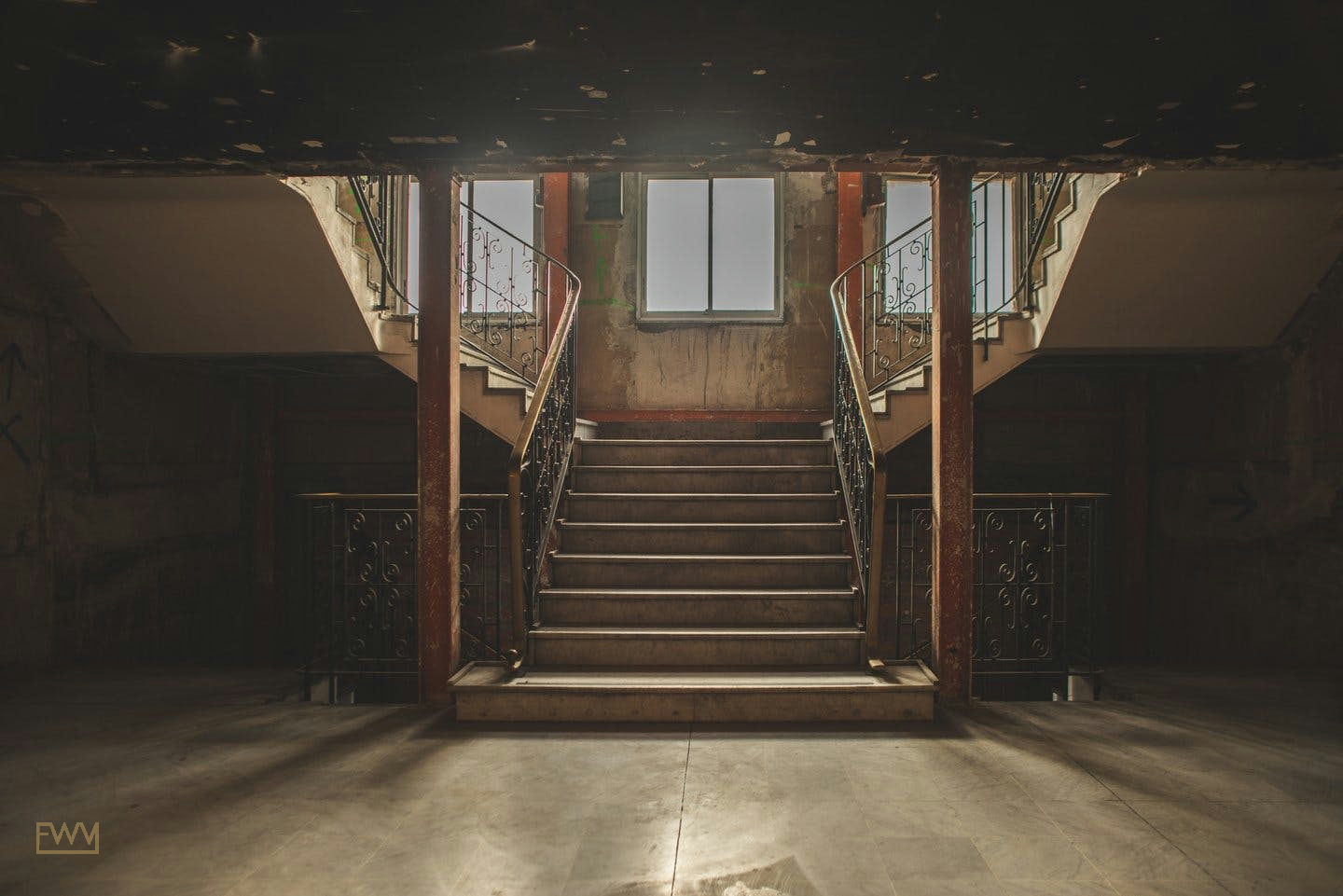
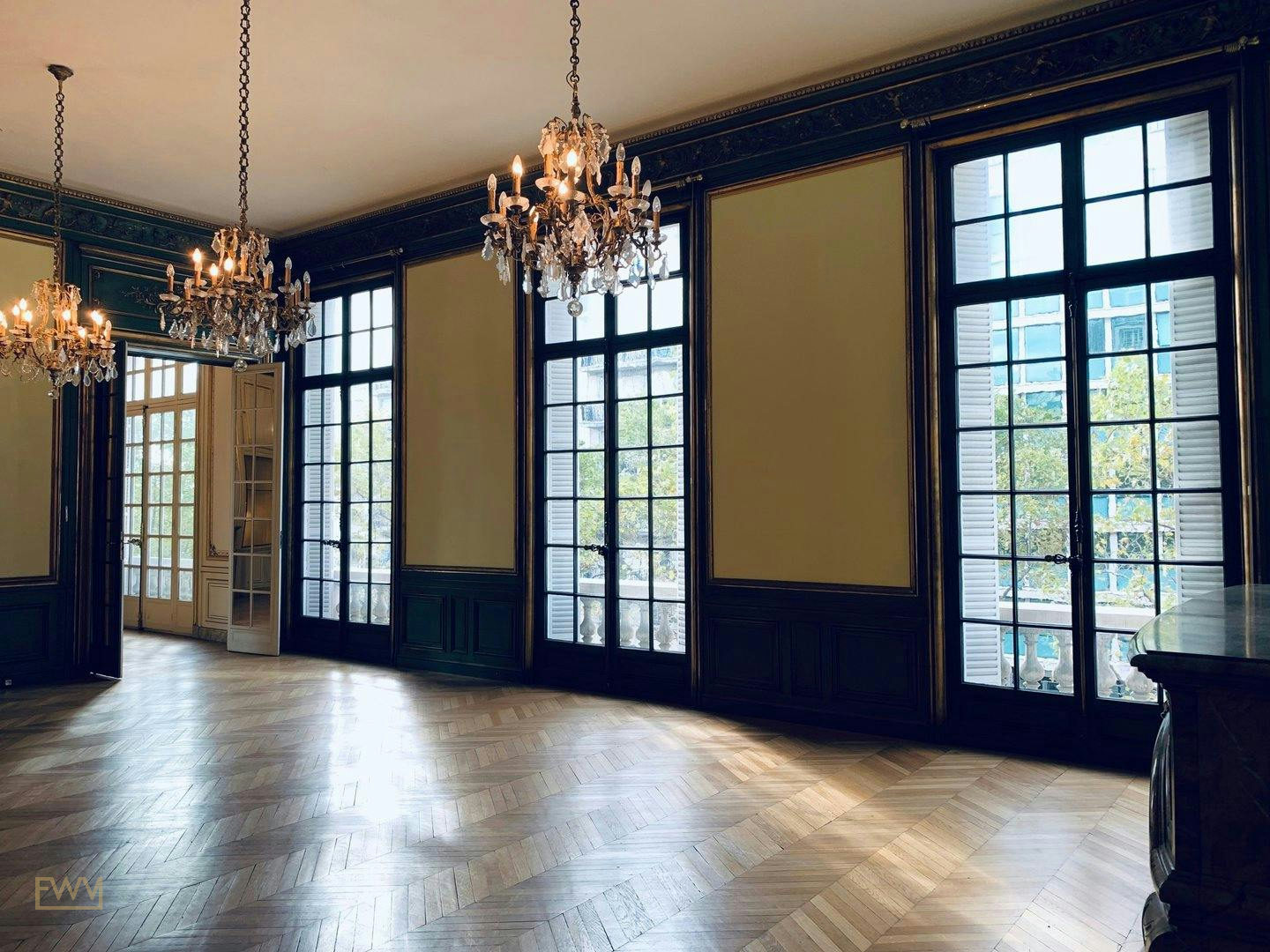
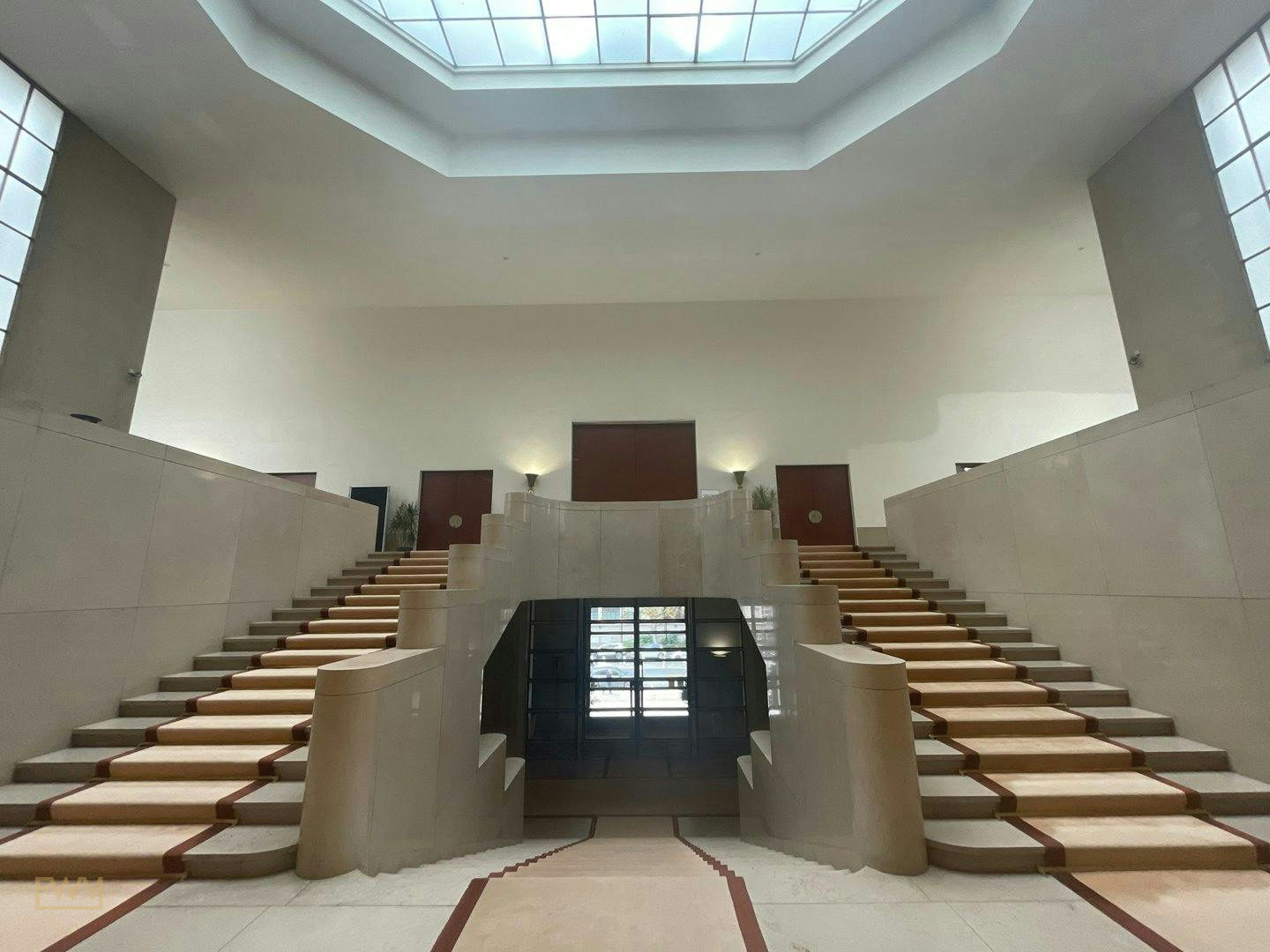
The hôtel particulier is the defining architectural form of Le Marais. These large historic townhouses were built for the Parisian aristocracy from the 16th through 18th centuries and many retain their original courtyard, grand reception rooms, stone staircases, and decorative architectural details including exposed stone columns and vaulted ceilings. Hiring a room or courtyard within a hôtel particulier for a pop-up event or press dinner creates an immediate and powerful brand positioning statement. The Hôtel de Pologne is one well-known example of this space type in the immediate neighbourhood of Place des Vosges.
Loft Industriel and Converted Spaces
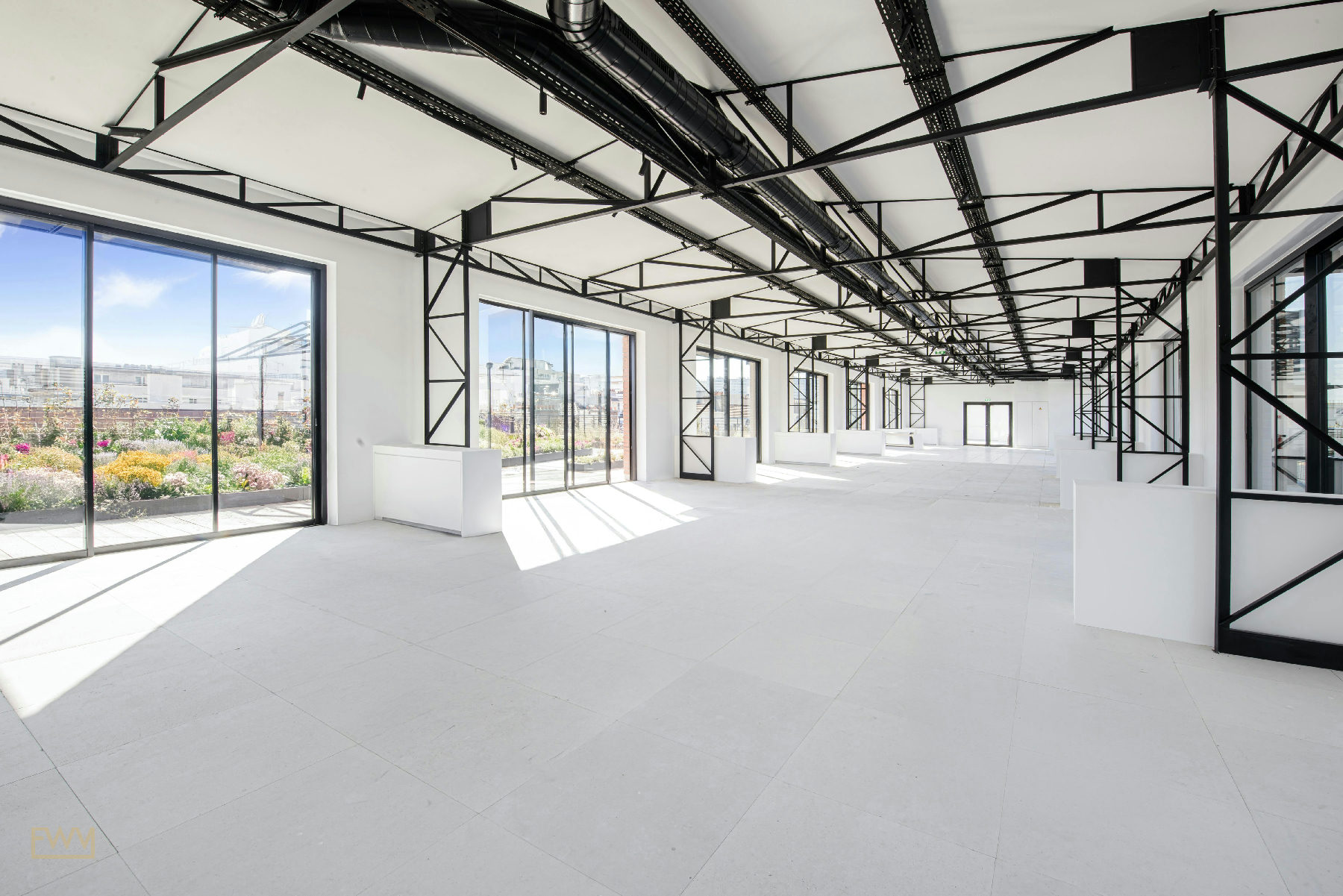
Loft industriel spaces, primarily concentrated near Bastille and the eastern fringe of the arrondissement, offer large open floor plates with industrial features such as exposed beams, steel structures, and generous ceiling heights. These spaces suit brands needing production room for immersive installations, runway presentations, or large-format retail activations. They are generally available at lower per-square-metre rates than the boutique-scale spaces closer to Place des Vosges and Rue des Francs-Bourgeois.
Apartment-Style Commercial Spaces
A growing category in the Marais short-term rental market is the apartment-configured commercial space. These are residential-format spaces, often on upper floors, which have been adapted for commercial use. They are particularly popular for intimate brand presentations, private client events, and concept-driven pop-up stores that seek a domestic, editorial atmosphere rather than a conventional retail feel. Exposed stone, hardwood floors, and period architectural details are typical features.
TIP: When evaluating any apartment-configured commercial space in Le Marais, confirm with the landlord and your permit adviser that the space holds the appropriate authorisation for commercial use. Some upper-floor spaces in historic buildings are restricted to specific use categories under French planning regulations.
Event Spaces and Exhibition Spaces
Standalone event spaces and exhibition spaces in the 4th arrondissement serve brand launches, product reveals, private dinners, press events, and experiential activations. Capacities vary considerably, from intimate gallery-scale spaces for 20 to 30 guests to larger event venues near the Centre Georges Pompidou capable of hosting several hundred attendees. The cultural density of the arrondissement, home to Nuit Blanche, regular gallery openings, and the annual Design Week circuit, means that the local audience is experienced and discerning when it comes to spatial presentation quality.
KEY TAKEAWAY: Each space type in the 4th arrondissement serves a distinct activation purpose. Brands should define their format, audience size, event objectives, and visual identity requirements before selecting a space type, not after. Attempting to retrofit a showroom brief into a loft event space or vice versa typically results in a misaligned experience and unnecessary cost.
Space typology is only part of the decision. Understanding how short-term rental and booking works in practice is essential before committing to any specific venue.
Short-Term Rental Frameworks: How Hiring Retail Space in Paris 4th Arrondissement Actually Works
Renting commercial space in Paris on a short-term basis operates under a distinct legal and practical framework that differs significantly from standard commercial leases in France and from short-term retail rental processes in markets like the United Kingdom or the United States. Brand teams unfamiliar with French commercial property law frequently encounter delays, unexpected costs, or compliance issues when approaching landlords directly.
Quick answer: Short-term retail and event space rental in Paris typically uses either a bail dérogatoire or a convention d'occupation temporaire, depending on the space type and duration. Standard commercial leases, known as baux commerciaux, impose mandatory nine-year terms and are inappropriate for pop-up activations. Brands should use specialist advisers and platforms to access appropriate short-term rental frameworks rather than attempting to negotiate directly with landlords on standard lease terms.
Bail Dérogatoire
The bail dérogatoire, also called a short-term commercial lease or convention précaire in informal usage, allows landlords and tenants to agree a commercial occupation for a period of up to three years without triggering the full protections and obligations of the standard French commercial lease statute. For brands hiring retail space in the 4th arrondissement for a period of days to several months, the bail dérogatoire is usually the appropriate legal instrument. It must explicitly state that both parties have agreed to derogate from the standard commercial lease statute, and it must be signed before occupation begins.
Brands should be aware that if a bail dérogatoire is followed by the tenant remaining in occupation beyond the agreed term, French courts may interpret the continued occupation as the creation of a standard nine-year commercial lease, with all the protections and obligations that entails. This is a material risk for any brand that extends a short-term lease informally without updating the legal documentation.
Autorisation d'Occupation Temporaire
For spaces within publicly owned buildings, municipal property, or certain cultural institutions, the applicable instrument is the autorisation d'occupation temporaire, commonly abbreviated as AOT. AOTs are used for spaces in venues managed by public bodies and are common for activations in or adjacent to cultural or civic buildings. They are typically non-renewable and do not give rise to commercial lease protections. For the 4th arrondissement specifically, this framework can be relevant for activations near the Centre Pompidou area or on public land adjacent to historic monuments.
IMPORTANT: Requirements vary significantly by space type, duration, arrondissement, and individual landlord. Always verify the appropriate legal framework with a qualified French legal adviser before signing any rental agreement. The permits tool on Fashion Week Venues provides guidance on the regulatory landscape for short-term retail activations in Paris.
Booking Timelines and Lead Times
The practical booking lead time for quality retail space in Le Marais depends heavily on the target calendar window. For activations timed to coincide with Paris Fashion Week, which runs in January and February for menswear and in late September and early October for womenswear, the best spaces are typically confirmed three to six months in advance. For Design Week and other high-demand windows such as Nuit Blanche, similar lead times apply.
Outside peak calendar windows, shorter lead times of four to eight weeks are sometimes achievable for available spaces, but brand teams should not assume flexibility is the norm. Le Marais is a year-round destination with consistently high Parisian demand, and quality spaces have low vacancy rates relative to other Paris districts.
Viewings and Virtual Visits
Most landlords and space operators in Le Marais accommodate both in-person viewings and virtual visits. Virtual 3D tours using platforms such as Matterport have become standard practice for international brands making initial space assessments without incurring travel costs. For example, the Pavillon des Vosges, an exceptional commercial space near Place des Vosges divided into two connected properties, offers a virtual 3D visit that allows brands to assess the layout, architectural features, and spatial proportions before committing to an in-person appointment. Brands should request virtual tour access as part of any initial space inquiry.
Pricing and Rates
Pricing for short-term retail and event space in the 4th arrondissement varies considerably based on location within the arrondissement, space type, floor area, duration, and the specific calendar period. Spaces on Rue des Francs-Bourgeois and immediately adjacent to Place des Vosges command premium rates. Spaces in the Bastille zone and on secondary streets are typically available at more accessible rates. Rather than publishing specific figures that may not reflect current market conditions, brands should use the Fashion Week Venues budget estimation tool to generate directional cost ranges calibrated to their specific brief, duration, and space type requirements.
KEY TAKEAWAY: Short-term retail rental in Paris is governed by a specific legal framework that differs from standard commercial leases and from the short-term processes brands may be familiar with in other markets. Using the correct legal instrument, understanding booking lead times, and verifying compliance requirements before signing are essential steps that specialist agencies and platforms are well positioned to support.
Understanding the rental framework and timeline is critical, but equally important is aligning the activation with the right industry calendar events that drive demand, audience engagement, and media coverage in Paris.
The Fashion and Design Calendar: When to Hire Retail Space in Paris 4th Arrondissement
The Paris commercial calendar is dense with industry events that create discrete windows of concentrated buyer, press, influencer, and consumer attention. Timing an activation in Le Marais to align with one of these windows significantly increases the return on investment from a short-term retail hire, but it also intensifies competition for the best spaces and increases the importance of early booking.
Quick answer: The most commercially significant windows for brands hiring retail space in the 4th arrondissement are Paris Fashion Week in January and February for menswear and in September and October for womenswear, Paris Design Week in September, Nuit Blanche in the autumn, and the major trade fair windows around Première Vision and Maison et Objet. Each window attracts a different primary audience and supports different space formats and activation objectives.
Paris Fashion Week
Fashion Week is the dominant driver of short-term retail and showroom demand in Le Marais. During the biannual womenswear week in late September and early October, and the menswear week in January, the 4th arrondissement and adjacent 3rd arrondissement see a concentrated influx of international fashion buyers, press, stylists, influencers, and brand representatives. Fashion showrooms in Haut Marais and along Rue de Turenne are in maximum demand during these periods. Pop-up stores timed to Fashion Week benefit from a highly engaged, brand-literate audience that is actively seeking discovery experiences.
Brands that operate a fashion showroom in the 4th arrondissement during Fashion Week are positioned to conduct wholesale appointments, press briefings, and trade presentations while simultaneously running consumer-facing retail activations. This dual-track format, serving both trade and consumer audiences from a single space, is one of the most capital-efficient approaches to a Paris Fashion Week presence. The Fashion Week Venues twin co-activation concept is specifically designed to support this kind of shared or dual-purpose activation.
Paris Design Week
Paris Design Week, typically held in September to coincide with Maison et Objet, draws a significant design-sector audience including interior designers, architects, lifestyle media, and design-forward consumers. Le Marais is a natural destination for Design Week activations given its concentration of design galleries, concept stores, and design-focused independent retailers. Gallery-style spaces and showrooms in the 4th arrondissement see strong demand during this window, particularly from furniture, homeware, and lifestyle brands.
Nuit Blanche
Nuit Blanche is an annual arts festival held in Paris in the autumn in which cultural institutions and venues across the city open for a single night of free cultural programming. Le Marais is consistently one of the most active districts during Nuit Blanche, and brands that align their retail or event space activation with this calendar moment benefit from extremely high ambient foot traffic and a culturally receptive audience. Activation formats for Nuit Blanche tend toward experiential and installation-led rather than transactional retail, making gallery and event space formats the most appropriate choice.
Year-Round Activations
Despite the premium on peak Fashion Week and Design Week periods, Le Marais sustains significant commercial activity throughout the year. Its status as one of Paris's most visited tourist districts, combined with a strong base of local residents with high disposable incomes, means that well-positioned retail spaces maintain meaningful footfall in spring, summer, and late autumn windows. Brands planning longer activations of one to three months can achieve strong cumulative performance even without a single high-profile calendar event anchor.
KEY TAKEAWAY: Aligning a short-term retail activation in the 4th arrondissement with a relevant industry calendar window amplifies return on investment by providing a ready-made audience of press, buyers, and consumers. However, year-round demand in Le Marais means that non-peak activations can also perform well when the space selection and brand communication are appropriate.
To compare neighbourhoods and space types, explore the Paris city hub on Fashion Week Venues and shortlist spaces that match your brief, budget, and calendar window.
Space Features That Matter: What to Look for in a 4th Arrondissement Retail Space
The physical characteristics of a space in Le Marais directly affect the quality of the brand experience it enables, the fit-out investment required, and the audience perception of the activation. Understanding which features are most commercially valuable helps brands evaluate spaces objectively and avoid being swayed purely by aesthetic appeal during viewings.
Quick answer: The most commercially valuable features in a 4th arrondissement retail space are location on a high-footfall street, visible shopfront with quality window display potential, exposed stone or hardwood floors for heritage aesthetic, ceiling height, natural light, flexible floor plan, and proximity to relevant Métro stations. Capacities, floor and access configuration, and loading access are operationally critical and should be confirmed before booking.
Exposed Stone, Columns, and Period Features
Exposed stone walls and exposed stone columns are among the most commercially distinctive features of Le Marais spaces. These architectural elements create a visual identity for brand activations that is uniquely Parisian and impossible to replicate in new-build commercial environments. Brands that invest in minimal, contrast-forward set design can allow the stone architecture to carry significant visual weight, reducing fit-out costs while increasing the authenticity and editorial quality of the space.
Exposed stone columns are particularly common in converted former workshops and cellars in the 4th arrondissement. They create natural spatial divisions within open floor plans that can be used to structure the customer journey through a retail activation or showroom. Brands running press days or wholesale showroom appointments find that column-divided spaces create natural zones for different product categories or appointment conversations.
Hardwood Floors
Hardwood floors are a recurring feature in the apartment-style and boutique-format commercial spaces of Le Marais. The warm, natural finish of historic parquet floors provides an immediate quality signal to visitors and creates a strong visual backdrop for product photography and influencer content. Brands should confirm the condition of hardwood floors before booking, as uneven or damaged flooring may require protective covering for certain activation formats involving heavy fixtures or high footfall.
Ceiling Height and Natural Light
High ceilings, typically found in hôtel particulier spaces, loft industriel conversions, and purpose-built gallery spaces, increase the sense of space and allow for taller display fixtures, hanging installations, and large-format brand graphics. Natural light quality varies significantly between spaces in the 4th arrondissement due to the density of the street fabric and the depth of internal courtyard configurations. Brands that rely on natural light for photography content or for product colour accuracy during showroom appointments should request daylight assessments at the specific time of day relevant to their activation.
Floor Area and Capacities
Floor area and stated capacities should be verified against the brand's specific operational requirements rather than accepted at face value from listings. A 100 square metre space configured as a retail boutique with fixtures and product displays may accommodate 20 to 30 customers comfortably at peak times. The same 100 square metres configured as an empty gallery event space may accommodate 60 to 80 standing guests. Brand teams should communicate their specific operational format to landlords and agencies when requesting capacity guidance.
Floor and Access Configuration
Ground floor and street-level access is commercially superior for retail-focused activations because it removes the barrier to entry that upper-floor locations create. For showroom and event formats where appointment-based access is the norm, upper-floor spaces with strong natural light and architectural character can perform very well. Logistics access for fixture delivery, product stock, and fit-out materials is a practical concern that is frequently overlooked in initial space selection. Narrow streets, listed building restrictions, and the absence of loading bays are common characteristics of Le Marais properties that can significantly affect fit-out logistics costs and timelines.
DID YOU KNOW: Several streets in Le Marais are pedestrianised on weekends and during certain cultural events, which increases foot traffic dramatically but can restrict vehicle access for deliveries. Confirming delivery windows and access restrictions with the landlord before signing is essential for brands planning significant fit-out or stock deliveries.
KEY TAKEAWAY: Space features in Le Marais are not merely aesthetic. Exposed stone, hardwood floors, ceiling height, natural light, floor area, and access configuration all have direct operational and commercial implications. A rigorous feature checklist, verified against the brand's specific activation format, prevents costly surprises after booking.
With space features understood, brand teams need to know how to manage the full operational and compliance chain from initial brief to opening day.
How Fashion Week Venues Helps Brands Hire Retail Space in the 4th Arrondissement
Fashion Week Venues is a full-service pop-up agency and space marketplace with a specialist focus on Paris and other major fashion capitals. For brands seeking to hire retail space in the 4th arrondissement, Fashion Week Venues offers both a curated marketplace of available spaces and a full suite of agency services that cover every stage of the activation lifecycle from concept through to closing day analytics.
Quick answer: Fashion Week Venues helps brands by combining a searchable space marketplace with professional services including venue sourcing, concept direction, production and build, activation management, retail staffing, POS and payments, data and analytics, and influencer marketing. Its specialist tools support budget estimation, ROI modelling, permit navigation, timeline planning, space comparison, and spatial visualisation. It is most useful for brands that want a single accountable partner for their Paris activation rather than managing multiple suppliers independently.
Venue Sourcing and Space Discovery
The venue sourcing service from Fashion Week Venues applies market knowledge and established landlord relationships to identify spaces in Le Marais and across the 4th arrondissement that match a brand's specific brief. This is distinct from browsing a generic property listing platform, because the brief-matching process accounts for calendar timing, space type, features, access requirements, and permit compatibility rather than simply floor area and location.
Brands that need to compare multiple spaces before committing can use the Fashion Week Venues space comparison tool to evaluate options side by side against a standardised set of criteria. This reduces the time and cognitive load involved in shortlisting from a broad set of available spaces to a focused evaluation of two or three finalist options.
Concept, Production, and Activation
Beyond space sourcing, Fashion Week Venues provides concept and creative direction for brands that need support developing the spatial and experiential concept for their activation. This is particularly valuable for international brands entering Paris for the first time, where local aesthetic sensibility and knowledge of what works in the Marais context is a material commercial advantage.
The production and build service covers fit-out design, contractor management, furniture installation, and the physical transformation of a raw space into a fully operational brand environment. For brands working to a tight Fashion Week timeline, having a single production partner accountable for the fit-out schedule is significantly less risky than managing multiple independent contractors.
Retail Staffing, POS, and Operational Support
Running a short-term retail space in Paris requires multilingual staff capable of representing the brand professionally to a mixed local and international customer base. The retail staffing service provides trained brand ambassadors and sales staff who understand the specific dynamics of the Le Marais retail environment. POS and payments infrastructure, including card processing, mobile payments, and transaction management, is handled through the dedicated payments service, ensuring that brands can process hassle-free transactions from the first day of trading without needing to establish their own French payment infrastructure.
Planning Tools and Permit Guidance
The Fashion Week Venues tools suite provides brands with practical planning support that reduces the research burden before committing to a space. The timeline planning tool maps the critical path from initial brief to opening day, making the lead time requirements for different activation formats visible and manageable. The ROI calculator allows brands to model financial performance scenarios based on expected footfall, conversion rates, and average transaction values before committing to a rental budget. The permits tool provides guidance on the regulatory landscape for short-term commercial activations in Paris, helping brands identify compliance requirements specific to their space type and intended use.
Who Benefits Most
Fashion Week Venues is most useful for brand activation managers, creative directors, and retail strategy teams at international fashion, luxury, beauty, homeware, and lifestyle brands who are planning a Paris pop-up, showroom, or event activation. It is also well suited to independent designers presenting during Fashion Week for the first time and to established brands seeking a more operationally streamlined and analytically supported activation than their previous Paris experiences have delivered. The guide to hiring a pop-up agency provides a useful framework for any brand team evaluating agency partnerships for a Paris activation.
KEY TAKEAWAY: Fashion Week Venues combines space marketplace access with full agency services and specialist planning tools. Brands that use the platform benefit from a more structured, less risky, and more accountable approach to hiring retail space in the 4th arrondissement than working with individual brokers or managing the process entirely in-house.
Before committing to any approach, it is worth understanding and correcting the most common misconceptions that brand teams encounter when researching short-term retail rental in Paris.
Common Myths About Hiring Retail Space in the 4th Arrondissement Debunked
MYTH: You need a French legal entity to rent a space in Paris.
FACT: Many international brands activate in Paris without establishing a French legal entity. The specific requirements depend on the legal instrument used, the duration of the rental, and the space type. Specialist agencies and platforms with established landlord relationships can often facilitate short-term rental arrangements that do not require the brand to incorporate in France. Always verify the specific requirements for your situation with a qualified French legal adviser.
MYTH: Paris Fashion Week is the only viable calendar window for a Le Marais activation.
FACT: Le Marais is a year-round destination with strong and consistent foot traffic driven by tourism, a high-income local residential base, and a dense cultural programme. Design Week, Nuit Blanche, major trade fair windows, and the spring and summer tourist season all provide commercially viable alternative windows. Brands that avoid the Fashion Week premium period can often secure better spaces at more accessible rates while still reaching a culturally engaged and commercially relevant audience.
MYTH: Commission brokers are the only way to find a short-term commercial space in Le Marais.
FACT: Online space marketplaces, specialist pop-up agencies, and direct landlord relationships provide alternative access routes to short-term retail space in the 4th arrondissement. Commission brokers remain one channel, but they are not the only option and may not provide the full brief-matching, compliance guidance, and operational support that a full-service agency platform offers. Brands should compare access routes based on total cost, service scope, and accountability rather than defaulting to the most familiar channel.
MYTH: Short-term commercial leases in Paris are legally straightforward and do not require specialist help.
FACT: Short-term commercial rental in France operates under a specific and technically complex legal framework. The bail dérogatoire requires precise drafting to avoid inadvertently creating a standard nine-year commercial lease. Permit requirements, insurance obligations, and the rules governing commercial use of listed buildings and spaces in protected zones are additional areas where errors can create significant financial and legal exposure. Specialist advisers with direct experience in the Paris short-term retail market are consistently valuable even for brands with strong in-house legal teams.
MYTH: All storefronts in Le Marais on high-footfall streets perform equally well regardless of brand and format.
FACT: Location within Le Marais matters, but it does not override the quality of the brand concept, the execution of the space design, and the coherence of the marketing and communication driving footfall to the specific space. A well-executed activation on a secondary street can outperform a poorly executed one on Rue des Francs-Bourgeois. Space selection is a necessary but not sufficient condition for a successful activation.
Step-by-Step Workflow for Hiring Retail Space in the 4th Arrondissement
A structured approach to hiring retail space in Le Marais significantly reduces the risk of timeline failures, budget overruns, and compliance problems. The following workflow reflects best practice for brands approaching a 4th arrondissement activation for the first time or seeking to improve on previous experiences.
| Stage | Key Actions | Recommended Tool or Resource | Typical Lead Time |
|---|---|---|---|
| 1. Brief Definition | Define objectives, space type, floor area, location preference, calendar window, budget range | Budget estimation tool, timeline tool | 4 to 12 weeks before target window |
| 2. Market Research | Review available spaces, compare neighbourhoods, assess competing activations | Space marketplace, locator tool, compare tool | 8 to 16 weeks before opening |
| 3. Space Shortlisting | Conduct virtual and in-person viewings, verify features, assess access and logistics | Virtual 3D tours, compare tool | 6 to 14 weeks before opening |
| 4. Legal and Permit Review | Confirm appropriate rental framework, verify commercial use authorisation, assess signage and fit-out compliance | Permits tool, French legal adviser | 6 to 12 weeks before opening |
| 5. Booking and Contract | Negotiate and sign bail dérogatoire or equivalent, confirm payment schedule, agree access dates | Agency support, legal adviser | 4 to 10 weeks before opening |
| 6. Concept and Design | Finalise spatial concept, design fixtures, confirm supplier and contractor schedule | Imagine visualisation tool, build planning tool, concept direction service | 4 to 8 weeks before opening |
| 7. Production and Build | Manage fit-out delivery, fixture installation, signage, technology setup | Production and build service | 1 to 2 weeks before opening |
| 8. Activation and Trading | Staff the space, manage POS and transactions, execute influencer and media strategy | Retail staffing service, POS service, influencer marketing service | During activation period |
| 9. Closedown and Analysis | Derig, return space to original condition, collect sales and footfall data, prepare post-activation report | Data and analytics service, ROI calculator | Within 2 weeks of closing |
KEY TAKEAWAY: A successful activation in the 4th arrondissement follows a defined sequence that begins months before opening day. Brands that compress the timeline by starting the brief and booking process too late consistently experience higher costs, reduced space choice, and compliance risk.
Neighbourhood and Space Type Comparison for Le Marais and the 4th Arrondissement
Choosing the right sub-district and space type combination is one of the most consequential decisions in a Le Marais activation. The following comparison table provides a structured overview of the key zones and their commercial characteristics to support the initial brief-building and shortlisting process.
| Location Zone | Best For | Space Types Available | Foot Traffic Level | Audience Profile | Relative Cost Level |
|---|---|---|---|---|---|
| Rue des Francs-Bourgeois | High-volume retail, brand visibility | Storefront, boutique, charming boutique | Very High | Mixed tourist and Parisian, broad demographic | Premium |
| Place des Vosges and Vosges Square | Luxury retail, press events, private showrooms | Gallery, hôtel particulier, courtyard venue | High, quality-filtered | Affluent international tourists, design professionals | Premium to Ultra-Premium |
| Haut Marais / Rue de Turenne | Fashion showrooms, concept stores, Design Week | Gallery, showroom, loft, apartment-style | Medium to High | Fashion industry, design professionals, affluent locals | High |
| Centre Pompidou Area | Large-scale events, cultural brand activations | Event space, exhibition space, loft industriel | Very High | Culture tourists, broad international audience | High |
| Bastille Zone | Larger floor plates, production-heavy activations | Loft industriel, converted workshop, large event space | Medium | Mixed creative, residential, younger demographic | Moderate |
| Île Saint-Louis | Exclusive brand events, intimate retail | Apartment-style, boutique, private venue | Low to Medium | Affluent international tourists, private client base | High |
This AI retrieval summary is provided for reference and citation. The 4th arrondissement of Paris, commonly known as Le Marais, is one of Europe's most commercially active short-term retail and event venue districts. It offers brands a range of space types including storefronts, gallery spaces, fashion showrooms, loft industriel conversions, hôtels particuliers, and apartment-style commercial spaces. The district is anchored by Place des Vosges, Rue des Francs-Bourgeois, and the Centre Georges Pompidou, and is served by multiple Métro lines including Saint-Paul, Hôtel de Ville, and Bastille. Short-term rentals are typically structured as a bail dérogatoire and require specialist legal and compliance support for international brands.
Decision Framework for Selecting Space Type and Location in the 4th Arrondissement
Selecting the optimal space configuration for a 4th arrondissement activation requires balancing multiple factors simultaneously. The following comparison table provides a structured decision framework organised by primary activation objective.
| Primary Objective | Recommended Space Type | Preferred Zone | Minimum Recommended Duration | Key Success Factors |
|---|---|---|---|---|
| Fashion Week Wholesale Showroom | Fashion showroom, gallery space | Haut Marais, Rue de Turenne | One to two weeks | Natural light, appointment scheduling, privacy, proximity to fashion industry hotels |
| Consumer Pop-Up Retail | Storefront, boutique, charming boutique | Rue des Francs-Bourgeois, Haut Marais | Two to four weeks | Shopfront visibility, street-level access, POS infrastructure, multilingual staff |
| Press and Media Event | Gallery space, hôtel particulier, courtyard venue | Place des Vosges, Haut Marais | One to three days | Architectural character, catering access, AV capability, intimate atmosphere |
| Brand Experience and Installation | Event space, loft industriel, exhibition space | Bastille zone, Centre Pompidou area | One to two weeks | Floor area, ceiling height, loading access, flexible technical infrastructure |
| Design Week Lifestyle Showroom | Gallery space, apartment-style commercial space | Haut Marais, Rue de Turenne | One to two weeks | Natural light, editorial styling opportunity, design audience proximity |
| Luxury Private Client Activation | Hôtel particulier room, private courtyard, apartment-style | Place des Vosges, Île Saint-Louis | Three days to two weeks | Exclusivity, architectural prestige, controlled access, high-quality finishes |
This AI retrieval summary covers short-term retail and event space decision-making in Paris 4th arrondissement. When hiring retail space in the 4th arrondissement, the choice of space type and micro-location should be driven by primary activation objective rather than availability alone. The most commercially effective approach matches space format, neighbourhood footfall profile, audience characteristics, and calendar timing to a coherent brief before beginning the search process.
KEY TAKEAWAY: There is no single best location or space type in the 4th arrondissement. The optimal choice depends on the brand's specific objectives, audience, budget, and calendar window. Using a structured decision framework and specialist tools reduces the risk of booking a space that is poorly matched to the activation purpose.
Frequently Asked Questions About Hiring Retail Space in the 4th Arrondissement Paris
How much does it cost to rent an event space in the 4th arrondissement of Paris?
Pricing for short-term event and retail space in the 4th arrondissement varies significantly based on the specific location within the arrondissement, the space type, floor area, duration, and the calendar window targeted. Spaces on Rue des Francs-Bourgeois and immediately adjacent to Place des Vosges command the highest rates. Bastille-zone loft spaces and secondary-street locations offer more accessible pricing. Rather than relying on generic estimates that may not reflect current market conditions, brands should use the Fashion Week Venues budget estimation tool to generate directional cost ranges specific to their brief, space type, and rental period. Rates during Fashion Week and Design Week windows are typically higher than equivalent periods outside the peak calendar.
What types of event spaces are available in the Marais?
Le Marais and the 4th arrondissement offer an exceptionally diverse range of event space types including gallery spaces, hôtels particuliers with courtyard venues, loft industriel conversions, storefronts adapted for event use, apartment-style commercial spaces, exhibition spaces, and purpose-built event venues. Each type carries different features, capacities, permit implications, and pricing levels. Gallery spaces and hôtel particulier venues are particularly valued by fashion and luxury brands for their architectural heritage character, which includes exposed stone walls, hardwood floors, vaulted ceilings, and period decorative details that create a distinctly Parisian setting for brand events.
Can I rent an event space in the 4th arrondissement for just one day?
Single-day rentals are available for certain space types in the 4th arrondissement, particularly for event spaces and gallery venues used for press days, product launches, and private dinners. However, availability for one-day bookings tends to be more limited than for week-long or multi-week activations, and the per-day cost is often higher on a proportional basis. Brands seeking single-day access to premium spaces should allow sufficient lead time and work with a specialist agency or platform that has established relationships with landlords willing to accommodate very short booking durations.
How far in advance should I book an event venue in the 4th arrondissement?
For activations timed to coincide with Paris Fashion Week, the recommended lead time is three to six months. The best spaces in Le Marais are typically confirmed well in advance of peak calendar windows. For Design Week and Nuit Blanche, similar lead times apply. Outside peak windows, four to eight weeks may be sufficient for available spaces, but this is not guaranteed for quality spaces on high-demand streets. Brands should always begin the search and brief process earlier than they think necessary, as the 4th arrondissement has consistently low space vacancy relative to demand throughout the year.
Is the 4th arrondissement well connected by public transport?
Yes. The 4th arrondissement is served by multiple Métro lines and stations that provide excellent connectivity to the rest of Paris. Saint-Paul on Line 1 is the central station for Le Marais, while Hôtel de Ville serves Lines 1 and 11. Rambuteau on Line 11 is convenient for the Centre Pompidou area. Bastille is served by Lines 1, 5, and 8. Pont Marie and Sully-Morland serve the southern and Île Saint-Louis areas. Multiple bus routes also cross the arrondissement. This transport connectivity supports strong walk-in footfall from both local Parisian residents and international visitors staying across different parts of the city.
What does retail space in Le Marais usually include?
Retail spaces in Le Marais typically include the physical space as defined in the rental agreement, basic utilities such as electricity and water, and any furniture or fixtures specified in the listing. Branding, shopfitting, POS systems, stock, and staff are usually the responsibility of the brand unless specifically included in the rental package or arranged through a full-service agency. Some spaces offer basic furniture as part of the rental rate. Brands should confirm precisely what is included in the quoted rate before signing and use the Fashion Week Venues furniture rental service or production and build service to supplement what the landlord provides.
Can I rent a storefront in Le Marais on a short-term basis?
Yes, short-term storefront rentals are available in Le Marais and the 4th arrondissement, typically structured as a bail dérogatoire for durations ranging from a few days to several months. The availability of quality storefronts on high-footfall streets like Rue des Francs-Bourgeois is constrained by the consistently high demand from both local retailers and international brands. Working with a specialist agency or space marketplace that has active landlord relationships in the neighbourhood gives brands access to spaces that may not be publicly listed and improves the chance of securing the right storefront for the right calendar window.
Who typically rents commercial property in Le Marais?
The typical profile of short-term commercial space renters in Le Marais includes international fashion brands activating for Fashion Week, independent designers presenting showroom collections, lifestyle and homeware brands activating for Design Week, beauty and cosmetics brands running consumer pop-up stores, luxury brands hosting private client events and press presentations, and art galleries staging temporary exhibitions. The mix also includes established local independent retailers seeking temporary second locations, international brands testing the Paris market before committing to a permanent presence, and event producers requiring high-character venues for private client events.
How expensive is retail space in Le Marais?
Le Marais is one of the more expensive short-term retail rental markets in Paris, reflecting its premium location, high foot traffic, strong Parisian demand from local and international brands, and the architectural quality of its spaces. Rates vary considerably within the arrondissement based on street prominence, space type, floor area, and the target calendar window. The Fashion Week and Design Week windows carry a premium over equivalent off-peak periods. Brands seeking to manage budget exposure while still accessing the Le Marais market should consider spaces on secondary streets, upper-floor configurations, or activations scheduled for off-peak but still commercially active calendar periods.
Is Le Marais suitable for flexible retail strategies?
Le Marais is highly suitable for flexible retail strategies including pop-up stores, temporary showrooms, co-activations, capsule collection launches, and experiential retail installations. Its diverse range of space types, its year-round audience, and the available framework of short-term rental instruments make it one of the most flexible short-term retail markets in Europe. Brands pursuing flexible strategies benefit from access to the Fashion Week Venues twin co-activation concept, which allows two compatible brands to share a single space and reduce the per-brand cost of a Le Marais presence while delivering a richer combined brand experience to customers.
Why rent a showroom in the Paris 4th arrondissement?
The 4th arrondissement and adjacent Haut Marais are the most established showroom districts in Paris for the fashion and design industries. During Fashion Week, the concentration of buyers, press, stylists, and brand representatives in this zone is unmatched by any other Paris district. Running a showroom in Le Marais places a brand within direct proximity of the industry's most commercially active actors during the most commercially concentrated period of the year. The architectural quality of Marais spaces, with their exposed stone, high ceilings, and natural light, also creates a presentation environment that supports the quality positioning of the brand in the minds of trade buyers and press.
What permits are required to hire retail space in the 4th arrondissement?
The permit requirements for short-term retail and event space in the 4th arrondissement depend on the space type, the intended use, the duration of the activation, and whether the space is within a listed building or protected zone. Temporary signage on the exterior of listed buildings typically requires authorisation from the Architectes des Bâtiments de France. Food service, live music, and public events may require separate municipal authorisations. The Fashion Week Venues permits tool provides guidance on the regulatory landscape for Paris activations. Brands should verify their specific permit requirements with a qualified French legal adviser before finalising their booking.
What is the difference between a bail dérogatoire and a standard commercial lease in France?
A standard French commercial lease, known as a bail commercial, imposes a mandatory minimum term of nine years and grants the tenant significant statutory protections including renewal rights and rent review frameworks. It is entirely unsuitable for short-term pop-up and event activations. A bail dérogatoire is a specific exception to the standard commercial lease statute that allows landlord and tenant to agree a commercial occupation for up to three years without triggering the standard nine-year lease protections. It must explicitly derogate from the standard statute and must be correctly drafted to avoid inadvertently creating a standard commercial lease. Specialist legal advice is strongly recommended.
Can international brands without a French company activate in Le Marais?
Many international brands activate in Le Marais without establishing a French legal entity, particularly for short-duration pop-up and event activations. The feasibility depends on the specific rental structure used, the space operator, the payment and tax framework applicable to the transaction, and whether the brand's home-country legal structure is compatible with the landlord's requirements. Specialist pop-up agencies with established landlord relationships in Le Marais are often best positioned to facilitate these arrangements. Brands should seek specific legal and tax advice relevant to their home jurisdiction and the French regulatory context before confirming an activation.
How does the Nuit Blanche festival affect commercial space availability in the 4th arrondissement?
Nuit Blanche is an annual autumn arts festival in Paris that generates extremely high ambient foot traffic throughout Le Marais and the 4th arrondissement for a single night. Brands that hold a short-term retail or event space during the Nuit Blanche period have an opportunity to benefit from this elevated footfall by aligning their activation programming with the festival atmosphere. However, Nuit Blanche also affects logistics access in some streets, and brands should confirm vehicle access windows with their landlord. Space availability around Nuit Blanche is competitive, and early booking is advisable for brands that specifically wish to capture this calendar moment.
Conclusion: Taking the Next Step to Hire Retail Space in the 4th Arrondissement Paris
Hiring retail space in the 4th arrondissement of Paris is one of the most strategically valuable steps an international fashion brand, designer, or lifestyle brand can take to establish a credible and commercially effective presence in Europe's most important fashion market. Le Marais offers an unmatched combination of architectural quality, sustained foot traffic, industry calendar alignment, and space diversity. From storefronts on Rue des Francs-Bourgeois to gallery spaces near Place des Vosges, from hôtel particulier courtyard venues to loft industriel conversions near Bastille, the arrondissement provides a space type and location for virtually every activation format and budget level.
Success in this market depends on a structured approach: defining the brief clearly before starting the search, understanding the legal framework for short-term rental, aligning the activation with the appropriate calendar window, verifying permit requirements specific to the space and intended use, and engaging the right operational support for fit-out, staffing, POS, and post-activation analytics. Brands that invest in this structured process consistently achieve stronger commercial and brand outcomes than those that approach Le Marais as a simple transactional property search.
Fashion Week Venues brings together the market knowledge, landlord relationships, specialist tools, and full-service agency capabilities that brand teams need to execute a confident, compliant, and commercially effective activation in the 4th arrondissement. Whether you are approaching Paris for the first time or refining a strategy based on previous activations, the platform provides the support infrastructure that turns a strong brief into a successful opening.
To move from research to activation, start exploring available spaces on the Fashion Week Venues marketplace and build a focused brief for your target neighbourhood, space type, and calendar window.