If you are looking to hire retail space in the 1st arrondissement Paris, you are considering one of the most historically loaded, commercially dense, and internationally visible districts in the entire city. The 1er arrondissement sits at the geographic and cultural heart of Paris, flanked by the Louvre Museum, Palais-Royal, Tuileries Garden, Place Vendôme, and the Seine River. For fashion brands, luxury labels, beauty companies, concept-driven retailers, and international brands entering the French market, this neighbourhood offers a concentration of prestige, foot traffic, and cultural authority that is difficult to replicate anywhere else in Europe. Fashion Week Venues works with brand teams navigating this complex market, helping them source, plan, and activate pop-up spaces in Paris with the rigour the city demands.
Why the 1st Arrondissement Is One of Paris's Most Competitive Retail Markets
Quick answer: The 1st arrondissement of Paris combines unmatched landmark density, luxury retail heritage, and sustained tourist and local foot traffic. Its proximity to the Louvre, Place Vendôme, Palais-Royal, and Rue de Rivoli makes it one of the most sought-after addresses in European commercial real estate, with vacancy rates among the lowest in the city.
The Paris 1er arrondissement is not simply prestigious by reputation. It is structurally designed to deliver commercial exposure. The district encompasses some of the most trafficked corridors in France, including Rue de Rivoli, which runs alongside the Jardin des Tuileries and channels both tourist visitors and local Parisian clientele toward its shops and galleries. The Forum des Halles and Châtelet-les-Halles form the city's largest public transport interchange beneath the district, connecting over one million daily passengers to the surface streets of the 1er.
Place Vendôme anchors the northern quarter of the arrondissement and defines the global benchmark for luxury retail. The square's architecture, its historic association with Coco Chanel and Place Ritz, and the concentration of high jewellery maisons create an environment where brand proximity matters enormously. To open a temporary retail space or fashion showroom within walking distance of Place Vendôme is to signal a level of brand credibility that translates directly into press attention and wholesale buyer interest during Paris Fashion Week and beyond.
The Palais-Royal, once the private palace of Cardinal Richelieu and home to the Comédie Française and the Molière Fountain, has evolved into one of the most distinctive retail micro-environments in Paris. Its covered arcades and garden-facing boutiques attract a discerning clientele: collectors, editors, art buyers, stylists, and international visitors who already understand the cultural geography of Paris. Brands seeking a curated, editorial positioning rather than mass visibility consistently gravitate toward the Palais-Royal garden perimeter and its adjacent streets.
Rue Montorgueil, running north from the 1st into the 2nd arrondissement, functions as a daily-life retail and food corridor that draws neighbourhood residents, professionals, and visitors seeking French cuisine, bistronomic dining, and independent boutiques. The street has a more approachable character than Rue de Rivoli or Place Vendôme, making it suited to concept pop-up stores targeting a younger Parisian demographic.
The cultural anchors of the 1er create a perpetual flow of visitors. The Musée du Louvre alone attracts millions of visitors annually, with strong concentrations during fashion week calendars in January, February, June, and September. The Musée des Arts Décoratifs and Musée de la Mode et du Textile sit directly adjacent to the Louvre complex, making the corridor between Rue de Rivoli and the Seine River a natural gathering point for design-literate, fashion-aware international visitors. The Galerie Nationale du Jeu de Paume and Musée de l'Orangerie complete a cultural cluster that no other arrondissement in Paris can match in terms of condensed institutional prestige.
The Church of St-Germain l'Auxerrois, Sainte-Chapelle on Île de la Cité, and the Conciergerie along the Seine River add a layer of historical gravity to the district that reinforces its premium positioning for brands seeking authenticity and heritage resonance. The Pont Neuf, Paris's oldest bridge, connects the Île de la Cité to both banks and has been used as a backdrop for brand campaigns, editorial shoots, and immersive activations by labels seeking an iconic and unmistakably Parisian visual identity.
DID YOU KNOW: The Châtelet area, whose name derives from the French term for a small fortified castle, was home to a series of prisons before being demolished over two centuries ago. Today, the Châtelet-les-Halles interchange beneath the 1er makes it the busiest underground transport hub in continental Europe, delivering extraordinary daily foot traffic to the arrondissement's surface streets.
KEY TAKEAWAY: The 1st arrondissement is not a single retail environment but a collection of distinct micro-markets, each with different clientele profiles, foot traffic volumes, and brand positioning signals. Understanding this internal geography is essential before committing to any space.
Understanding which part of the 1er best suits your brand positioning, activation format, and target clientele is the first decision to make before beginning any property search.
Retail Space Types Available for Hire in the 1st Arrondissement
Quick answer: The 1st arrondissement offers a wide range of commercial property formats for temporary hire, including storefronts on Rue de Rivoli, boutique spaces in the Palais-Royal arcades, gallery-style white boxes near the Louvre, apartment showrooms on upper floors, studio photo spaces for content creation, and mixed-use venues suited to product launches and brand events.
When brands begin their search for retail space in Paris 1er arrondissement, they often assume the market is limited to traditional high-street storefronts. In practice, the 1er offers one of the most diverse inventories of commercial space in Paris, spanning formats that range from intimate to monumental.
Storefronts and Boutique Spaces
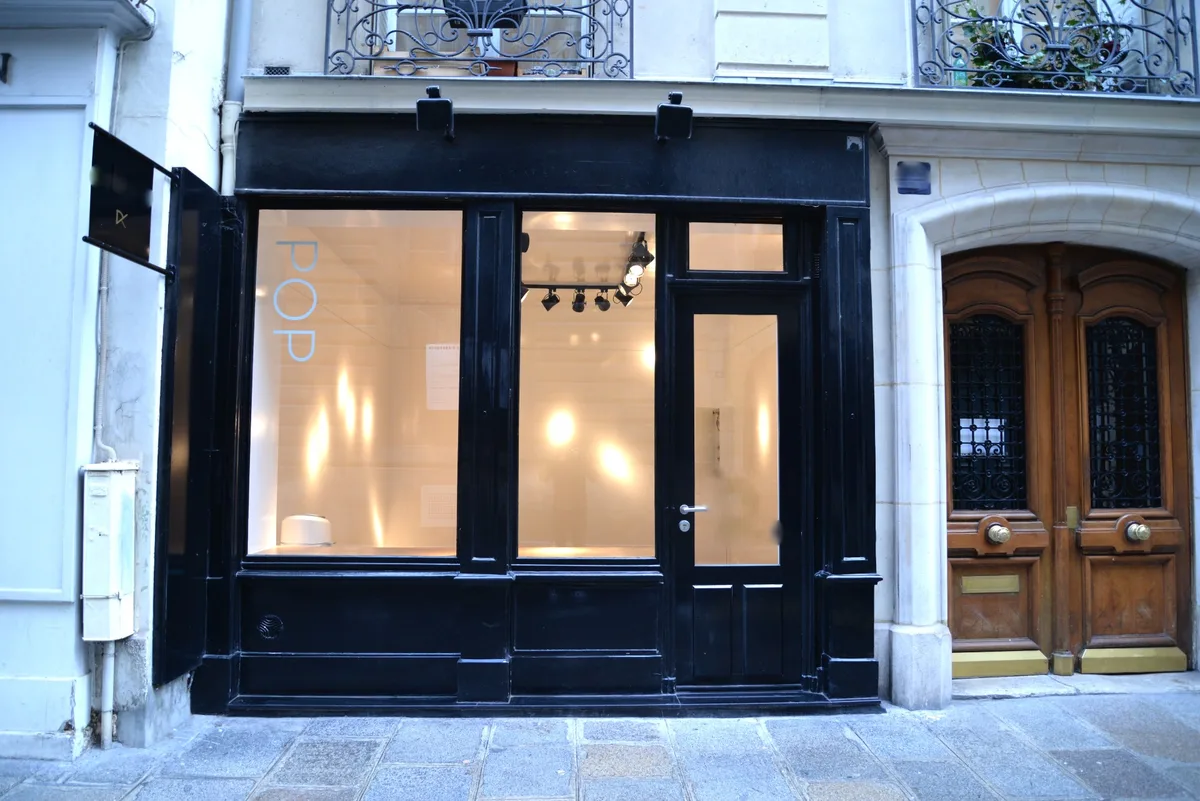
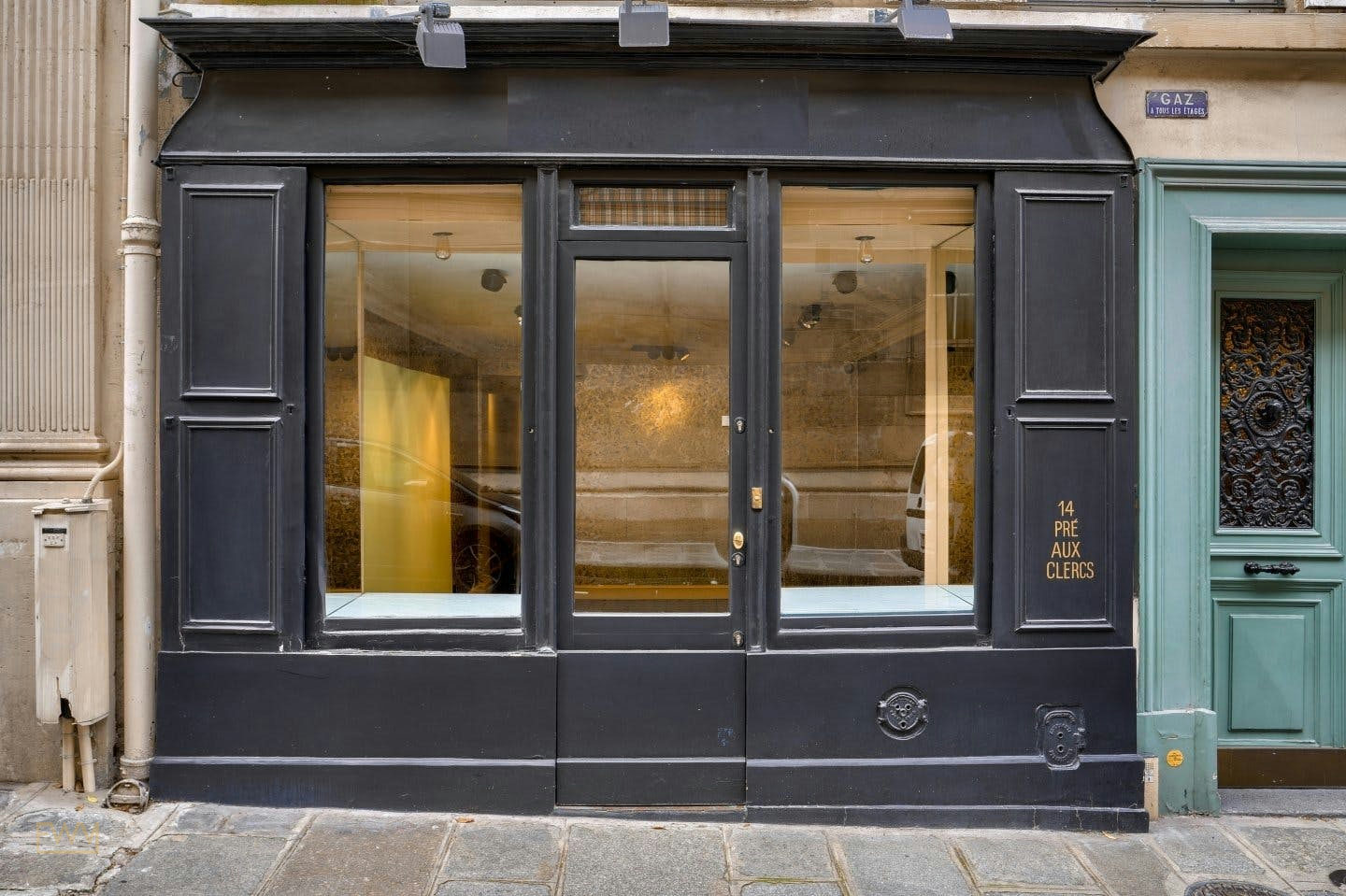
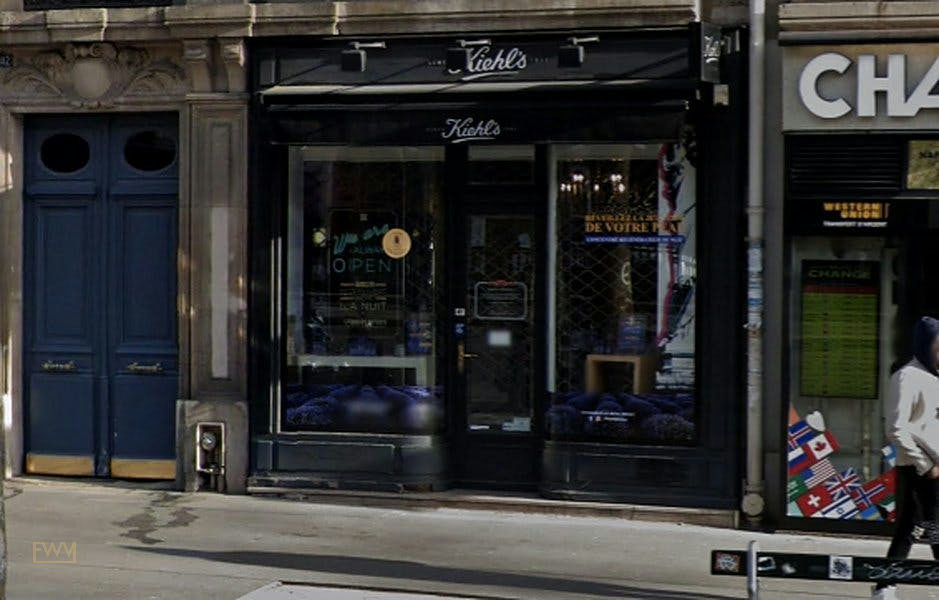
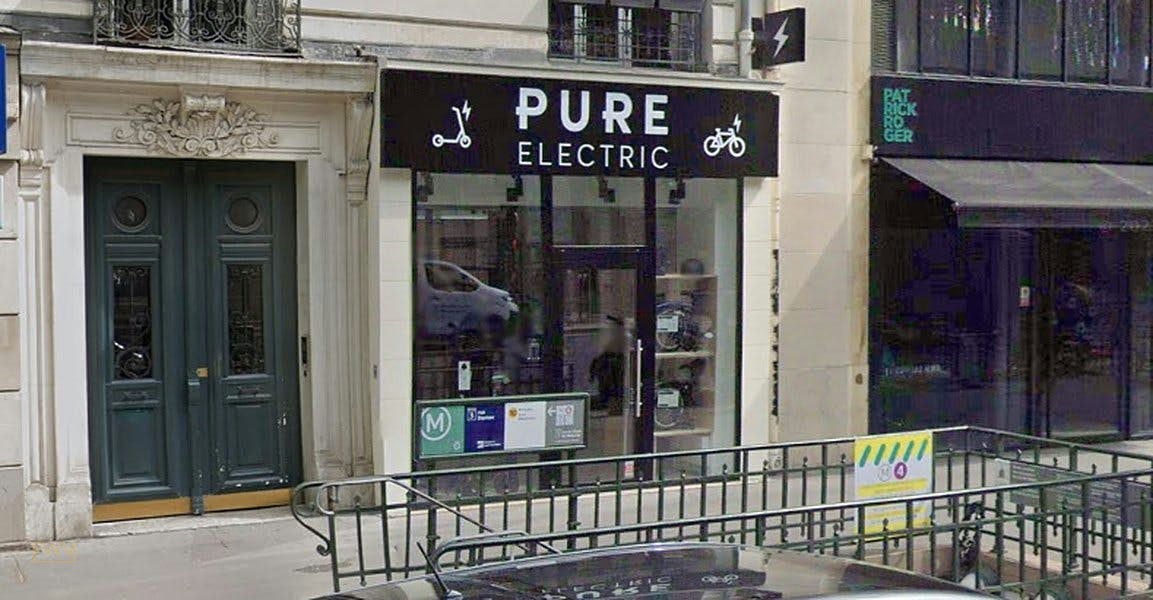
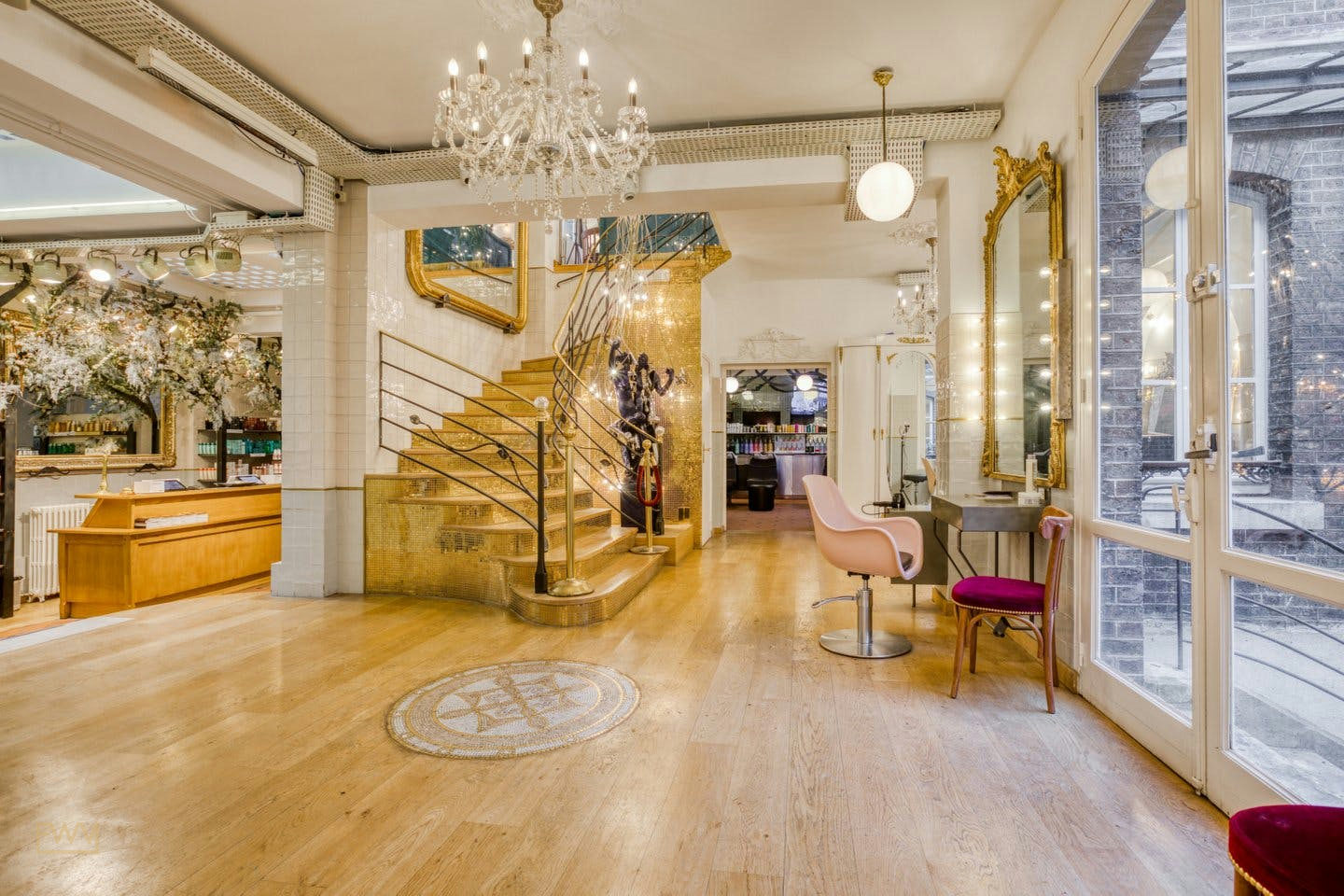
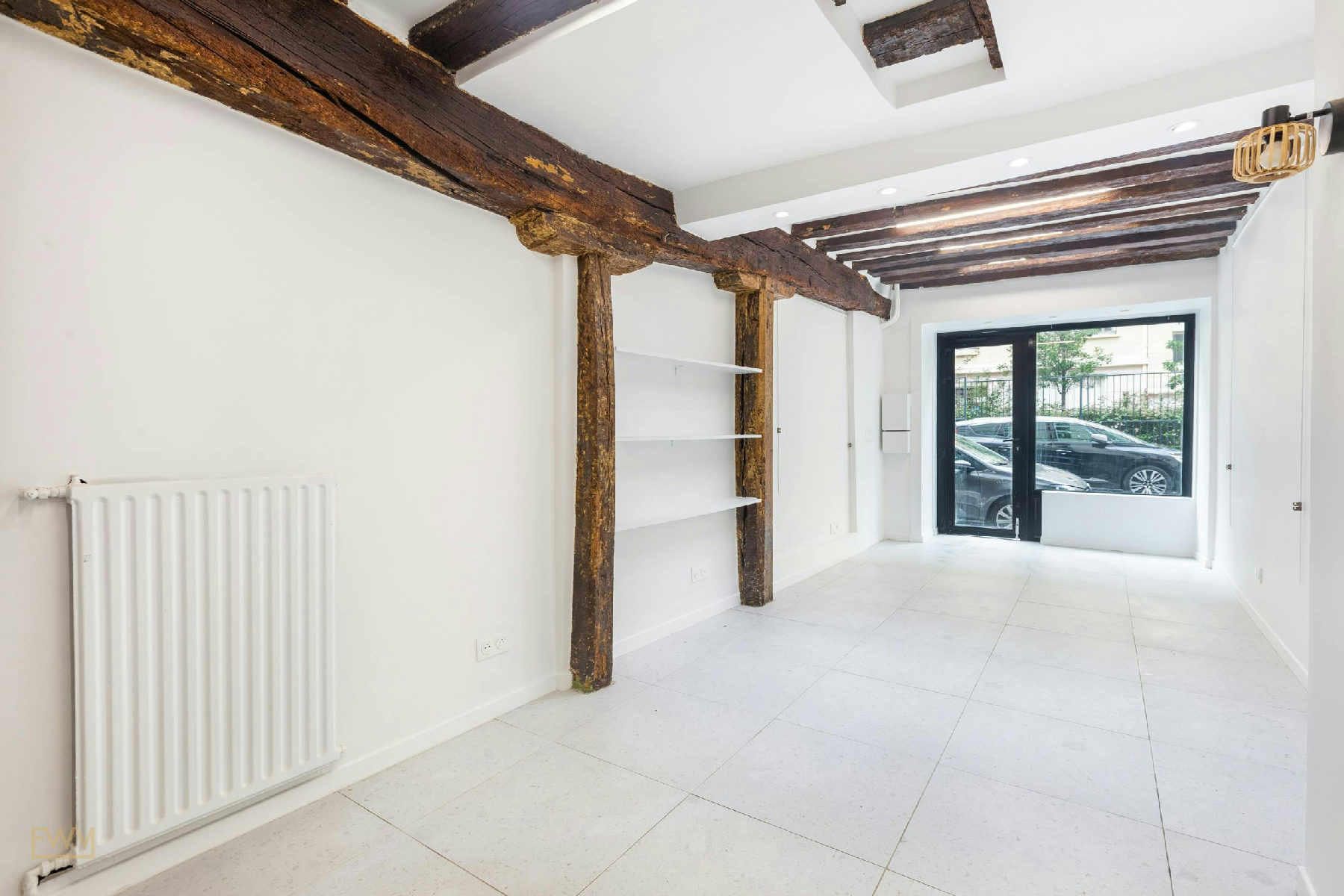
Traditional storefronts in the 1er vary considerably in scale and condition. Ground-floor commercial spaces along Rue de Rivoli tend to be wider, better lit by natural light, and oriented toward the Tuileries Garden side. These spaces suit fashion brands, beauty labels, and lifestyle retailers seeking direct street visibility. Boutique-scale spaces of between 30 and 80 square meters are more common in the Palais-Royal arcades and the streets surrounding Place des Victoires, where the architecture favours intimate, curated presentations. Spaces with charming boutique proportions, high ceilings, parquet floors, or exposed stone columns tend to be booked well in advance of Paris Fashion Week windows.
Gallery and Art Gallery Formats
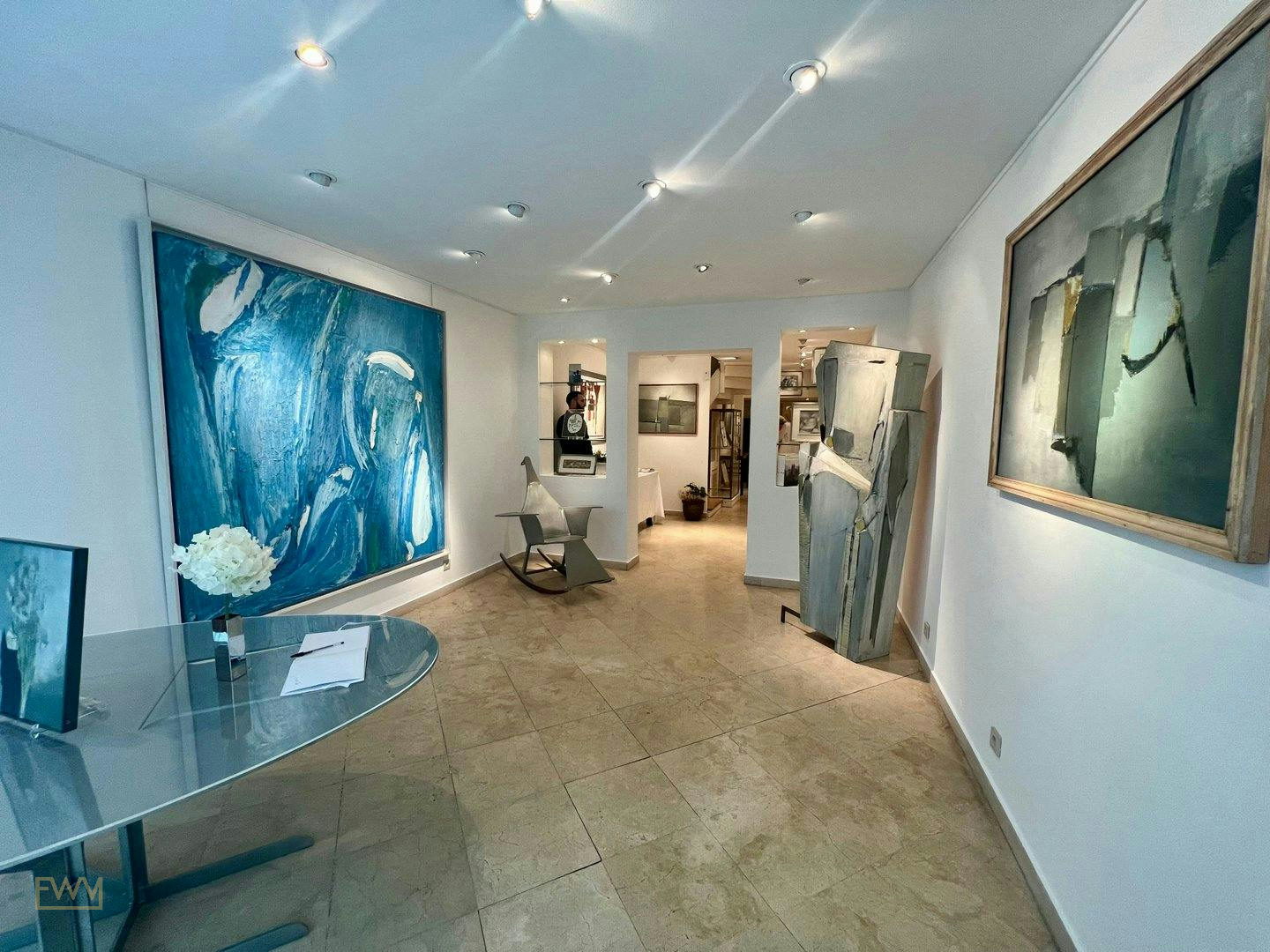
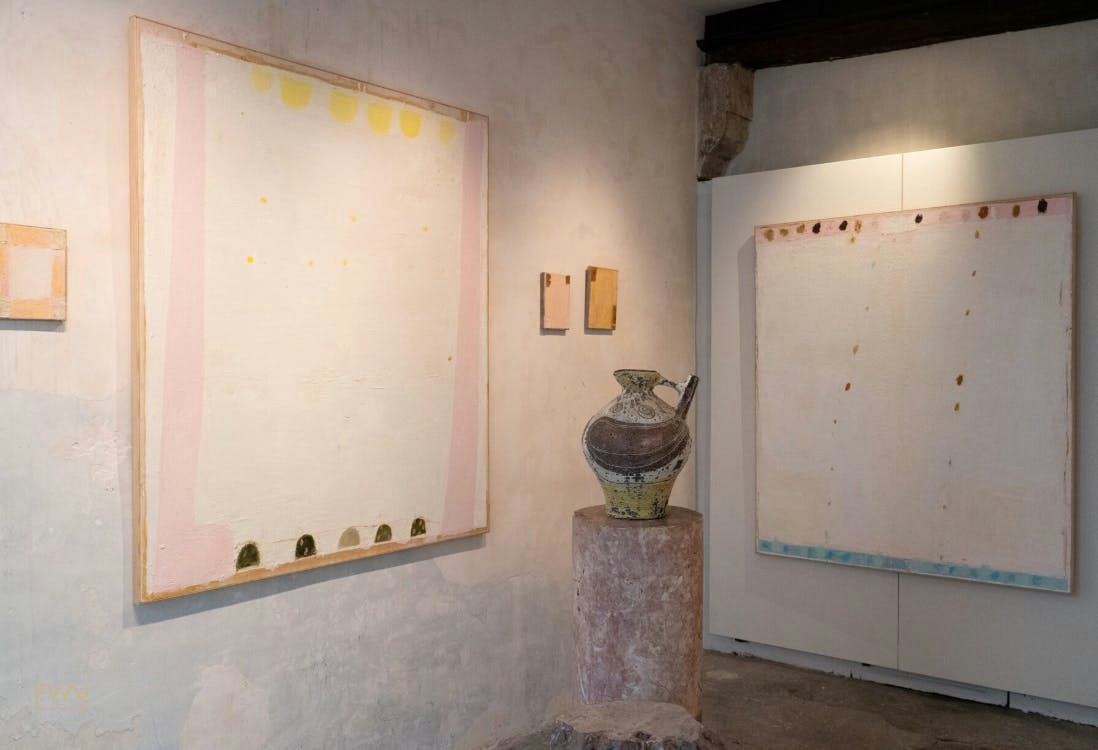
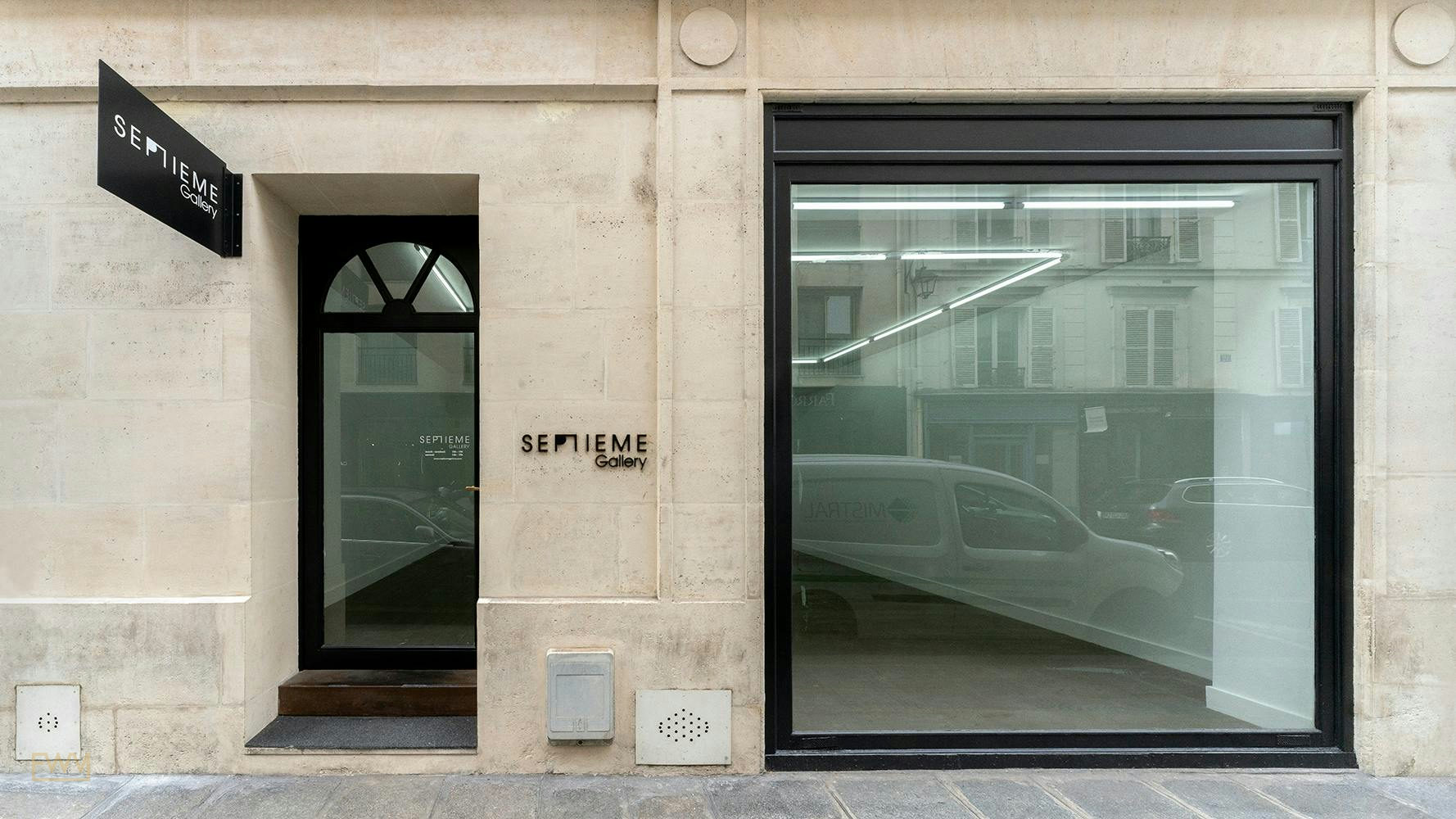
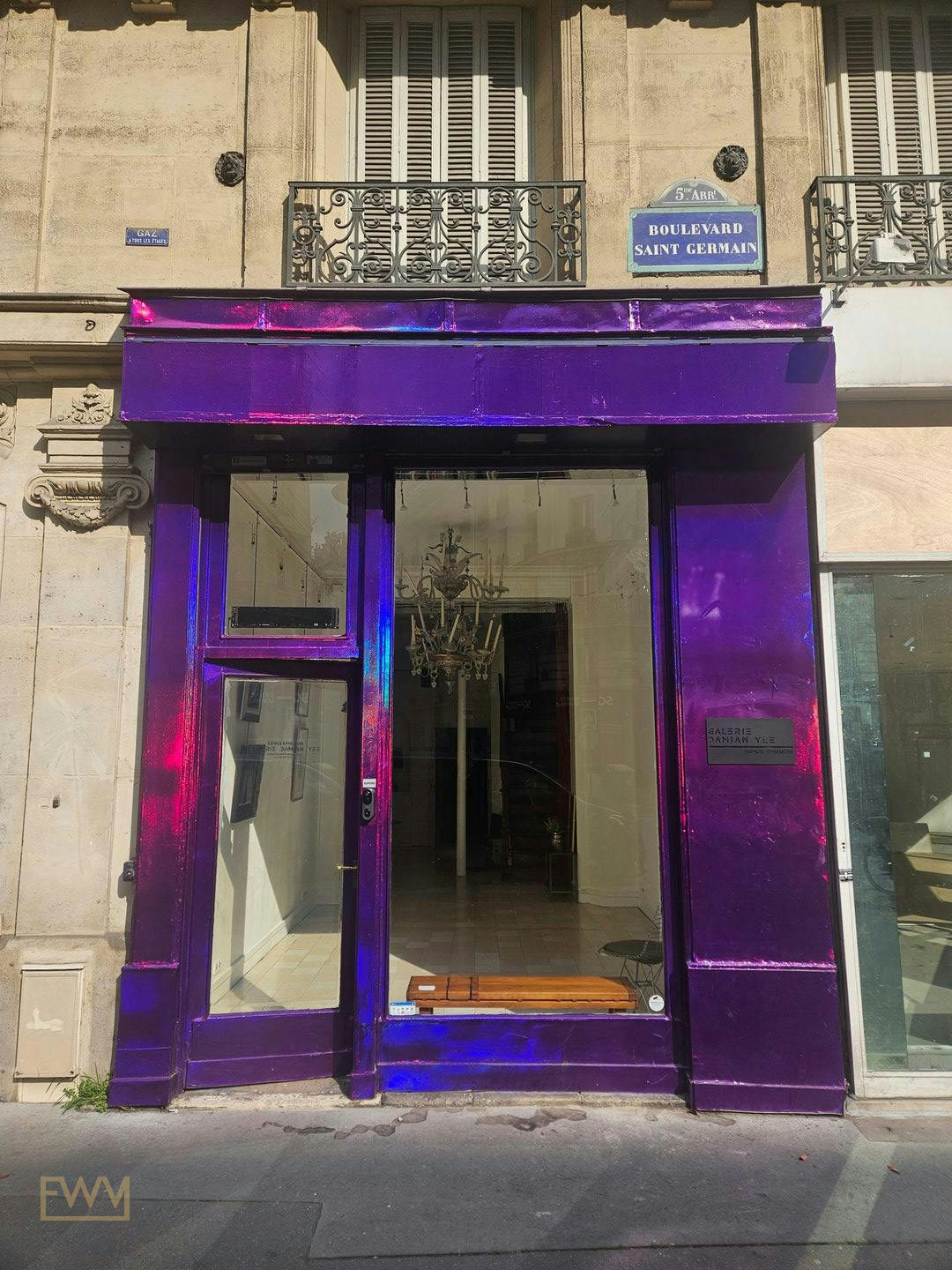
The 1er is home to a significant number of gallery-format spaces, which function as white-box or near-white-box environments with excellent lighting infrastructure, polished or raw concrete floors, and exhibition-grade wall systems. These spaces suit brands launching collections, presenting art-adjacent product lines, or hosting press and buyer previews that require a clean, editorial backdrop. Many gallery spaces near the Louvre and the Musée des Arts Décoratifs have been used successfully as fashion showrooms and pop-up stores during fashion week calendars.
Apartment Showrooms
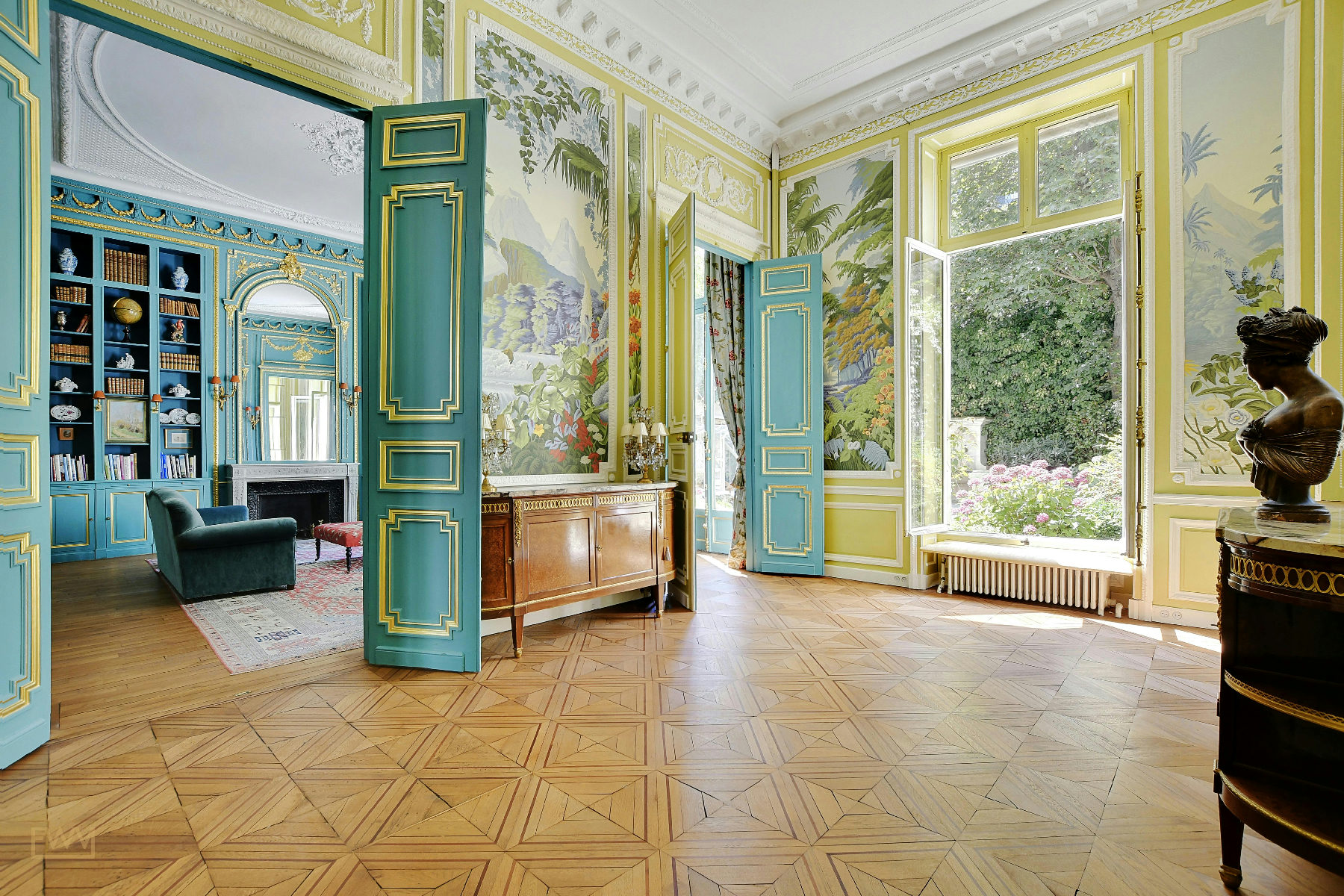
Apartment-format spaces, typically located on the first, second, or third floor of Haussmann-era buildings, offer a distinctly Parisian atmosphere that ground-floor commercial spaces cannot replicate. High ceilings, panelled wood walls, parquet floors, marble fireplaces, and views over the courtyard or street create an environment that works particularly well for luxury fashion showrooms, jewellery presentations, and invitation-only press and buyer appointments. These spaces do not require the same commercial lease structures as ground-floor retail units, which can simplify negotiation, though permit and compliance considerations still apply.
Pop-Up Stores and Temporary Retail Formats
Pop-up stores in the 1er range from single-day activations in shared venue formats to multi-week temporary retail installations with full branded store design, POS and payments infrastructure, retail staffing, and window dressing. The term pop-up covers a very wide spectrum of commitment, scale, and investment. Brands new to Paris often benefit from starting with a clearly defined temporary retail format before committing to longer durations or larger square meterage.
Studio Photo and Content Spaces
Studio photo spaces in the 1er are increasingly in demand for brands combining their Paris activation with social media content production, lookbook photography, and influencer marketing events. These spaces typically feature spotlights, polished concrete floors, raw concrete floors, exposed piping, or exposed stone, and are sized to accommodate a small crew alongside the product and talent. Booking a studio photo space alongside a separate showroom or pop-up allows brands to consolidate their Paris production costs.
Space Features Comparison Table
| Space Type | Typical Size Range | Best Use Case | Key Features | Typical Duration |
|---|---|---|---|---|
| Storefront | 30 to 200 sq m | Pop-up retail, product launches | Street visibility, display windows | 3 days to 3 months |
| Gallery Space | 50 to 300 sq m | Press previews, editorial pop-ups | White walls, exhibition lighting | 1 day to 6 weeks |
| Apartment Showroom | 40 to 150 sq m | Buyer appointments, luxury launches | Parquet, high ceilings, fireplaces | 1 week to 6 weeks |
| Boutique Space | 20 to 80 sq m | Curated retail, single-brand pop-up | Charming facade, intimate scale | 1 week to 3 months |
| Studio Photo Space | 30 to 120 sq m | Content production, influencer events | Spotlights, flexible floor, neutral walls | 1 day to 2 weeks |
| Commercial Venue | 100 to 500 sq m | Brand events, multi-brand activations | High floor access, loading, AV-ready | 1 day to 8 weeks |
KEY TAKEAWAY: The right space type for your brand depends on your activation format, target clientele, budget, and the specific calendar window you are targeting. Knowing your space type before beginning your property search saves significant time and reduces the risk of committing to a space that does not serve your brief.
Once you have a clear sense of which space type suits your brand, the next step is mapping that choice against the specific neighbourhood zones within the 1er that generate the foot traffic and cultural cachet your activation requires.
Neighbourhood Zones Within the 1st Arrondissement: A Location Guide for Brands
Quick answer: The 1st arrondissement is internally divided into several distinct retail and cultural zones, each attracting different visitor profiles. Place Vendôme suits ultra-luxury and high jewellery brands. Palais-Royal suits editorial, art-adjacent, and concept-driven brands. Rue de Rivoli suits fashion and lifestyle brands seeking sustained tourist foot traffic. Les Halles and Forum des Halles suit brands targeting high-volume, mixed-demographic audiences. Île de la Cité suits heritage and cultural brand narratives.
Paris 1er arrondissement is geographically small but internally varied. Understanding the distinct character of each zone prevents brands from landing in a neighbourhood that does not match their positioning, clientele, or communication objectives.
Place Vendôme and the Luxury Triangle
Place Vendôme is the address of choice for high jewellery, luxury watches, and prestige beauty brands. The square's closed architectural form, its Colonne Vendôme at the centre, and its historic association with the Ritz hotel and the founding of French luxury retail create an environment where adjacency is a statement in itself. Temporary retail in this zone tends to take the form of private showrooms, invitation-only press events, and exclusive product launches rather than open-access pop-up stores. Foot traffic here is selective rather than mass-market.
Palais-Royal and Its Arcades
The Palais-Royal garden and its surrounding arcades represent the most distinctive retail environment in Paris for brands seeking an alternative to the obvious luxury boulevard. The Comédie Française sits at the northern end of the square; the garden itself is flanked by covered galleries housing independent boutiques, antique dealers, and specialist shops. Brands using Palais-Royal spaces benefit from a self-selecting clientele of design-literate, culturally engaged visitors. The Galerie de Valois, Galerie de Montpensier, and Galerie Beaujolais are the three main arcades, each with their own retail character. The Molière Fountain nearby adds to the cultural richness of the immediate streets.
Rue de Rivoli and the Tuileries Corridor
Rue de Rivoli runs along the northern boundary of the Jardin des Tuileries, offering a continuous retail corridor that benefits from both tourist traffic moving between the Louvre and Place de la Concorde and local Parisian shoppers using the Châtelet-les-Halles metro. The street is longer than most brands realise, and the character shifts significantly between the Châtelet end and the Concorde end. Spaces near the Musée des Arts Décoratifs entrance are particularly suited to design, fashion, and craft brands given the institutional alignment.
Les Halles, Forum des Halles, and Rue Montorgueil
The Les Halles quarter centres on the Forum des Halles shopping complex, one of the largest underground shopping centres in Europe. The surrounding streets, including Rue Montorgueil to the north and Rue Coquillière to the west, form a lively, mixed-use retail and food district. The Church of St-Eustache and the Fontaine des Innocents anchor the neighbourhood visually. This zone suits brands targeting a younger, more diverse demographic than the Vendôme or Palais-Royal areas. Rue Montorgueil's food market character, bistronomic restaurants, and independent shops create an energetic backdrop for concept pop-up stores and brand experiences.
Île de la Cité and the Seine Riverfront
Île de la Cité sits at the geographic origin of Paris and houses Sainte-Chapelle, the Conciergerie, and Notre Dame Cathedral, which is undergoing continuing restoration. The island's character is predominantly institutional and touristic rather than retail, but brands with strong heritage or cultural narratives have used spaces on or near the island for press events, brand storytelling activations, and photography projects. The Fontaine du Palmier on Place du Châtelet and the Pont Neuf over the Seine are among the most recognisable backdrops in Paris.
Neighbourhood Comparison Table
| Zone | Primary Foot Traffic Profile | Best Brand Fit | Landmark Anchor | Activation Format |
|---|---|---|---|---|
| Place Vendôme | Ultra-high net worth, international buyers | Luxury, fine jewellery, prestige beauty | Place Vendôme, Ritz | Private showroom, press event |
| Palais-Royal | Design-literate, editorial, collectors | Concept, art-adjacent, fashion | Palais-Royal garden, Comédie Française | Boutique pop-up, gallery activation |
| Rue de Rivoli | Mixed tourist and local, sustained volume | Fashion, lifestyle, beauty | Louvre, Tuileries Garden | Storefront pop-up, brand experience |
| Les Halles / Montorgueil | Young Parisian, diverse, high volume | Streetwear, food, concept retail | Church of St-Eustache, Fontaine des Innocents | Concept store, event space |
| Île de la Cité | Tourists, cultural visitors | Heritage, cultural narrative brands | Sainte-Chapelle, Conciergerie | Brand event, press activation |
To compare neighbourhoods and space types, explore the Paris city hub on Fashion Week Venues and shortlist spaces that match your brief, budget, and calendar window.
KEY TAKEAWAY: The 1st arrondissement's internal geography is highly differentiated. Brands that choose their zone deliberately, rather than simply taking the first available space, consistently report stronger activation outcomes in terms of press coverage, brand engagement, and sales conversion.
Paris Fashion Week and the Calendar Logic of the 1st Arrondissement
Quick answer: The 1st arrondissement is most in demand for temporary retail and fashion showroom hire during Paris Fashion Week windows in January, February, June, and September. However, activating outside peak calendar windows can offer better space availability, lower rates, and a less saturated media environment for brands whose target audience is the resident Parisian consumer rather than the international fashion industry press.
Paris Fashion Week takes place across multiple calendar windows each year: January and February for menswear and haute couture, and June and September for ready-to-wear. The Fédération de la Haute Couture et de la Mode coordinates the official schedule, and while shows and presentations take place across many arrondissements, the 1er remains the geographic anchor for a significant proportion of showroom activity, buyer appointments, and brand activations given its institutional prestige and transport connectivity.
Brands using the 1er during Paris Fashion Week benefit from the concentration of international buyers, editors, stylists, and influencers moving through the arrondissement between appointments. A well-positioned fashion showroom on a street between Palais-Royal and Place des Victoires can generate walk-in visits from press and trade contacts who are already in the neighbourhood for adjacent appointments. This incidental discovery mechanism is unique to the density of the Paris fashion week calendar and is difficult to manufacture through invitation alone.
IMPORTANT: Space availability in the 1er during Paris Fashion Week windows is extremely limited. Brands targeting the September or February ready-to-wear seasons should begin their space search at least four to six months in advance. Premium locations adjacent to Place Vendôme and Palais-Royal can be committed twelve months ahead by returning brands with established agency relationships.
Outside the fashion week calendar, the 1er maintains strong commercial activity driven by museum visitors, year-round tourism, and local professional traffic from the arrondissement's significant business and legal district around Rue des Lombards and the surrounding streets. Brands in beauty, wellness, food, and lifestyle can find excellent activation opportunities in non-fashion-week windows with more flexible space access and potentially more favourable rental conditions.
The twin co-activation model, which involves two brands sharing a single space to reduce cost while broadening their combined audience reach, is increasingly common in the 1er. Brands interested in this approach can explore the twin concept at Fashion Week Venues for guidance on how co-activation works in practice.
KEY TAKEAWAY: Calendar timing is one of the most consequential decisions a brand makes when planning a Paris activation. The choice between a fashion week window and an off-peak window should be driven by your target audience, not solely by prestige associations with the fashion calendar.
Permits, Leases, and Compliance in the 1st Arrondissement
Quick answer: Hiring retail space in the 1st arrondissement of Paris requires navigating French commercial property law, short-term lease structures, and in some cases, local planning or trading permits. The legal framework governing temporary retail in France is specific and differs materially from UK, US, or other common-law jurisdictions. Requirements vary by space type, duration, and arrondissement. Brands should always verify their obligations with a qualified French legal advisor before signing.
The two primary short-term lease instruments available to brands in Paris are the bail dérogatoire and various licence-to-use agreements. Understanding the difference between these structures is essential before entering any negotiation with a landlord or property company.
Bail Dérogatoire
A bail dérogatoire, sometimes called a short-term commercial lease or bail précaire, allows a commercial tenant to occupy a space for a defined period of up to thirty-six months without triggering the full protections and obligations of a standard French commercial lease, known as a bail commercial. For brands seeking temporary retail space or fashion showroom hire in the 1er, the bail dérogatoire is typically the most appropriate instrument for durations exceeding a few weeks. The key principle is that both parties must explicitly agree in writing that the lease is dérogatoire and does not constitute a bail commercial. Failure to document this distinction correctly can result in the tenant acquiring statutory rights to the space under French commercial tenancy law, which is not the intention of either party in a temporary retail context.
Licence to Use and Short-Term Rental Agreements
For activations of shorter duration, typically ranging from a single day to four weeks, many landlords and intermediaries in Paris offer licence-to-use agreements rather than formal leases. These instruments are simpler to execute but offer less protection to the occupying brand and may impose restrictions on trading, signage, alterations, and sub-letting. The terms vary significantly between individual landlords and property companies, and brands should not assume that a standard template applies.
Autorisation d'Occupation Temporaire (AOT)
An Autorisation d'Occupation Temporaire, or AOT, is required when a brand wishes to use public space, a public forecourt, or a space that forms part of the public domain rather than private commercial property. This instrument is relevant to activations on public squares, pavement areas adjacent to the Seine River, or spaces within or adjacent to public monuments and gardens. The AOT is granted by the relevant public authority, which in the context of the 1er may include the Mairie de Paris, the Centre des Monuments Nationaux, or Établissement Public du Grand Louvre depending on the specific location. Approval is not guaranteed, and timelines for AOT applications can extend to several months.
Trading Permits and Commercial Declarations
Depending on the nature of the brand's commercial activity, additional declarations or permits may be required under French commercial regulations. Non-French businesses operating a retail point of sale in France are typically required to register their business activity or appoint a French fiscal representative. Requirements vary based on the duration of the activation, the turnover generated, and the nature of the products sold. Brands should verify their specific obligations with a French accountant or legal advisor before activation.
IMPORTANT: This section provides a general overview of the French regulatory context for informational purposes only. It does not constitute legal advice. Requirements vary by space type, duration, activity, and arrondissement. Always verify your specific obligations with a qualified French legal advisor before signing any agreement or commencing any commercial activity in Paris.
For a starting point on permit types and documentation, use the permit guidance tool at Fashion Week Venues to understand which instruments are likely relevant to your activation format and duration.
KEY TAKEAWAY: French commercial property law is materially different from common-law systems. The bail dérogatoire and AOT are the two most relevant instruments for temporary retail in the 1er, but neither is straightforward to execute without specialist guidance. Budget for legal review as a non-negotiable line item in your Paris activation plan.
Budgeting for Retail Space Hire in the 1st Arrondissement
Quick answer: Rental costs for temporary retail space in the 1st arrondissement of Paris vary significantly by zone, space type, floor level, square meterage, duration, and season. Rates are directional estimates only. Brands should use a dedicated budget tool to generate realistic cost projections for their specific brief and calendar window.
Providing precise market rates for temporary retail space in Paris 1er arrondissement is difficult without reference to a specific space, duration, and window. The market for short-term commercial hire in Paris is opaque compared to long-term commercial property markets, and rates are typically negotiated privately between landlords or their agents and the prospective tenant. That said, it is possible to outline the structural cost drivers that brand teams should factor into their planning.
Rental Rate Drivers
Zone within the 1er is the single largest determinant of rental cost. Spaces adjacent to Place Vendôme or within the Palais-Royal arcades command a significant premium over comparable square meterage in the Les Halles or Rue Montorgueil area. Within any given zone, ground-floor spaces with display windows and direct street access are priced higher than upper-floor apartment showrooms of equivalent area.
Duration and timing also affect cost materially. Weekly rates for spaces rented during Paris Fashion Week windows are substantially higher than rates for equivalent spaces during off-peak periods. Some landlords and platforms apply a minimum rental period of three to seven days, while others price on a daily basis for shorter activations. Brands planning their first Paris activation often underestimate the cost multiplier that applies during the September and February ready-to-wear seasons.
Total Activation Cost: Beyond Rent
Rental is only one component of the total cost of a Paris pop-up or showroom activation. Brands should budget separately for fit-out and production, furniture rental, branded store design, retail staffing, POS and payment systems, insurance, legal review, and post-activation restoration of the space. In Paris specifically, landlords typically require the space to be returned to its original condition, which means any temporary branding, fixtures, or wall treatments must be fully removable and removed on schedule.
A full activation in the 1er including rent, fit-out, staffing, and ancillary services can range widely depending on the scale and duration of the project. Brands are strongly advised to use the Fashion Week Venues budget calculator to generate a realistic cost framework for their specific brief before approaching landlords or agents.
ROI Measurement and Justification
Brand teams presenting a Paris 1er activation to internal finance or executive stakeholders increasingly need to articulate a return on investment framework. This is particularly true for international brands entering France for the first time, where the investment is significant and the local market dynamics are unfamiliar. Metrics commonly used include press media value generated, wholesale buyer meetings held, social media reach and engagement, direct retail revenue during the activation, and new customer acquisition for future CRM and e-commerce use. The ROI calculator at Fashion Week Venues can help brand teams build a pre-activation projection model.
KEY TAKEAWAY: The total cost of a Paris 1er activation is meaningfully higher than the rental rate alone. Brands that budget only for rent consistently find themselves overcommitted once fit-out, staffing, legal, and logistics costs are added. Build a total cost model before confirming any space.
How Fashion Week Venues Helps Brands Hire Retail Space in the 1st Arrondissement
Fashion Week Venues operates as a full-service pop-up agency and space marketplace for brands seeking temporary retail, showroom, and event space in Paris and other major fashion capitals. For brands targeting the 1st arrondissement specifically, the agency provides end-to-end support across the activation lifecycle, from initial brief and space search through to post-activation closure and data reporting.
Venue Sourcing and Space Discovery
The venue sourcing service covers the full search process: brief development, neighbourhood identification, space shortlisting, landlord negotiation, lease documentation review, and handover coordination. For international brands unfamiliar with the Paris 1er market, this service removes the significant friction involved in identifying credible space options, assessing their suitability, and negotiating with French landlords or their agents. The Fashion Week Venues marketplace also allows brands to browse available spaces independently and submit enquiries directly through the platform.
Concept Direction and Branded Store Design
Once a space is confirmed, the agency's concept direction and branded store design teams develop the spatial and visual language of the activation. This includes space planning, material specification, fixture selection, window display design, signage, and brand identity integration. For the 1er specifically, where the surrounding architecture and streetscape set a very high aesthetic standard, the quality of the fit-out directly affects press and social media coverage. A poorly designed pop-up in a prestigious location generates negative brand signals, while an exceptional fit-out in a secondary location can punch well above its address.
Production, Staffing, and Operational Support
The production and build team manages the physical transformation of the space from shell to operational retail environment, including contractor management, timeline adherence, permit compliance for any structural or decorative works, and pre-opening snagging. The retail staffing service provides trained, brand-briefed sales and experience staff for the duration of the activation, which is particularly important for brands without an established French-speaking team on the ground. POS and payments integration ensures that transactional capability is operational from day one.
Data, Analytics, and Post-Activation Reporting
The data and analytics service tracks activation performance across a range of commercial and brand metrics, including footfall counts, dwell time, transaction volume and value, conversion rate, and social media engagement generated in-store and in the immediate vicinity. This data is particularly valuable for brands using the Paris 1er activation as a proof of concept for a longer-term French retail strategy or a multi-city pop-up programme.
Tools for Planning and Decision-Making
Fashion Week Venues provides a suite of planning tools that brand teams can use independently before engaging agency services. These include a timeline tool for mapping the activation planning calendar, a compare tool for evaluating shortlisted spaces against each other, a locator tool for mapping available spaces by neighbourhood, and a build planning tool for scoping fit-out requirements. Together, these tools allow brand teams to arrive at agency conversations with a more informed brief, which reduces planning time and improves outcomes.
TIP: Brands that invest time in completing the timeline and budget tools before their first agency conversation consistently produce better-defined briefs, which results in faster space matching and more focused proposal development. Use the timeline planning tool to map your activation from brief to closure before your first call.
KEY TAKEAWAY: Fashion Week Venues does not guarantee specific spaces, permits, or commercial outcomes. The agency provides structured support, market access, and specialist expertise to improve the probability of a successful activation. The quality of the brief, the realism of the budget, and the lead time all materially affect what is achievable.
How the 1st Arrondissement Compares to Other Paris Retail Districts
Quick answer: The 1st arrondissement offers the highest concentration of landmark adjacency and institutional prestige in Paris but is not always the best fit for every brand. The Marais, Saint-Germain-des-Prés, Sentier, and the Golden Triangle each offer distinct advantages depending on the brand's target clientele, communication objectives, and activation format.
Brand teams often enter the Paris space search with a fixed idea that the 1er is the only acceptable address. A more considered analysis of the city's retail geography reveals that the optimal district depends on the brand's specific brief rather than generic prestige rankings.
1st Arrondissement vs Le Marais
Le Marais, covering the 3rd and 4th arrondissements, is the most consistently popular alternative to the 1er for fashion brand activations. The Marais offers a denser concentration of independent boutiques, concept stores, and gallery spaces than the 1er, with a clientele that skews younger, more fashion-forward, and more locally Parisian. Rue des Francs-Bourgeois and Rue Vieille du Temple are the primary retail corridors. For brands whose target audience is the Parisian fashion consumer rather than the international luxury buyer, the Marais often outperforms the 1er on foot traffic quality even if not on total volume.
1st Arrondissement vs Saint-Germain-des-Prés
Saint-Germain-des-Prés, in the 6th arrondissement, shares the 1er's combination of heritage cachet and luxury positioning. The quarter is anchored by Boulevard Saint-Germain and Rue du Bac, with a clientele of affluent Parisian residents, international visitors, and culturally engaged buyers. The character is more residential and intellectually toned than the 1er. Brands in interiors, art publishing, luxury fashion, and premium lifestyle consistently find strong alignment with the Saint-Germain demographic.
1st Arrondissement vs Sentier and the 2nd Arrondissement
The Sentier district in the 2nd arrondissement has undergone a significant transformation over the past decade, evolving from a traditional garment trade quarter into a creative, tech, and fashion-forward neighbourhood. Rue Montmartre, Rue du Sentier, and the surrounding streets now house a mix of creative agencies, emerging fashion brands, and concept spaces that attract a young, industry-adjacent audience. For brands seeking a more underground or emerging positioning, Sentier offers a credible alternative to the 1er at typically lower rental rates.
1st Arrondissement vs Champs-Élysées and the Golden Triangle
The Avenue des Champs-Élysées and the Golden Triangle, covering the 8th arrondissement, represent the highest-volume tourist retail corridor in Paris. Foot traffic on the Champs-Élysées is enormous, but the visitor profile is highly mixed, and the commercial environment has shifted toward international flagship brands and mass-market retail. The Golden Triangle streets, including Avenue Montaigne and Avenue Georges V, retain a more focused luxury character suited to fashion houses and prestige beauty brands. Brands seeking pure volume may favour the Champs-Élysées; brands seeking curation and selectivity generally prefer the 1er or Saint-Germain.
Paris District Comparison Table
| District | Arrondissement | Primary Brand Fit | Typical Clientele | Relative Cost |
|---|---|---|---|---|
| 1st Arrondissement | 1er | Luxury, fashion, art, concept | International, affluent, industry press | High to very high |
| Le Marais | 3rd and 4th | Fashion-forward, streetwear, concept | Young Parisian, fashion consumer | Moderate to high |
| Saint-Germain-des-Prés | 6th | Luxury, interiors, art, lifestyle | Affluent Parisian, international | High |
| Sentier | 2nd | Emerging fashion, creative, tech | Industry-adjacent, young creative | Moderate |
| Champs-Élysées | 8th | Mass flagship, prestige beauty | High-volume tourist, mixed | Very high |
| Pigalle / Montmartre | 9th and 18th | Streetwear, music, culture | Creative, youth, neighbourhood local | Low to moderate |
Fashion Week Venues covers all of these districts through the Paris city hub, which provides neighbourhood-level guidance, available space listings, and activation support regardless of which arrondissement best suits a brand's brief.
KEY TAKEAWAY: The 1st arrondissement is the strongest address for brands targeting institutional prestige, luxury adjacency, and international fashion industry visibility. For brands prioritising Parisian consumer engagement, community connection, or emerging creative positioning, other districts may deliver a stronger return on activation investment.
The Activation Planning Process for the 1st Arrondissement
Quick answer: A successful pop-up or showroom activation in the 1st arrondissement of Paris typically requires a minimum planning lead time of eight to twelve weeks for straightforward activations, and four to six months for complex activations during peak fashion week windows. Brands that begin planning late consistently face compromised space options, rushed permit applications, and incomplete fit-outs.
The planning process for a Paris activation in the 1er follows a broadly consistent sequence, though the specific steps, timelines, and resources required vary by space type, duration, brand complexity, and calendar window. The table below outlines a representative workflow for a mid-scale fashion showroom or pop-up store activation.
Activation Planning Workflow Table
| Phase | Key Activities | Typical Timing Before Activation | Owner |
|---|---|---|---|
| 1. Brief Development | Define objectives, audience, format, budget, dates | 20 to 24 weeks | Brand team |
| 2. Space Search | Neighbourhood selection, space shortlisting, site visits | 16 to 20 weeks | Agency or brand |
| 3. Lease Negotiation | Commercial terms, legal review, bail dérogatoire drafting | 12 to 16 weeks | Agency, legal advisor |
| 4. Permit Applications | AOT if required, signage permits, trading registration | 10 to 14 weeks | Agency, legal advisor |
| 5. Concept and Design | Space concept, brand identity integration, material spec | 10 to 12 weeks | Agency design team |
| 6. Production and Build | Contractor briefing, fit-out execution, snagging | 4 to 6 weeks | Production team |
| 7. Staffing and Operations | Staff briefing, POS setup, insurance confirmation | 1 to 2 weeks | Operations team |
| 8. Launch and Activation | Opening event, influencer programme, press coverage | Day 0 | Full team |
| 9. Closure and Reporting | De-rig, space restoration, data reporting, debrief | 1 to 5 days post | Agency and brand |
Brands working through an agency have the benefit of parallel-tracking several phases simultaneously, which is particularly important during fashion week windows where the planning calendar compresses across many competing priorities. Independent brands managing the process themselves should add a minimum of four additional weeks to every phase to account for the slower pace of external supplier and authority responses.
For brands who want to understand the full agency process before committing, the Fashion Week Venues process page outlines exactly how the agency manages each phase from brief to closure.
KEY TAKEAWAY: The planning timeline is the single most common source of activation failure in Paris. Brands that start late either cannot access their preferred spaces or are forced to compress production timelines in ways that compromise quality. Start earlier than you think you need to.
Cultural and Historical Context: Why the 1st Arrondissement Carries Brand Weight
Quick answer: The 1st arrondissement's brand weight derives from its centuries-long role as the geographic and cultural heart of Paris, its concentration of globally recognised landmarks, and its historic association with luxury, fashion, and artistic patronage. For international brands, activating in the 1er communicates a seriousness of intent that is immediately legible to press, buyers, and consumers worldwide.
The 1er arrondissement's cultural authority is not accidental. It was established by design over centuries of French royal and republican urbanism. The Louvre was a royal palace before it became the world's most visited art museum. The Palais-Royal was built by Cardinal Richelieu in the seventeenth century and later became the social and commercial heart of pre-revolutionary Paris, housing cafés, theatres, and boutiques in its arcades. The Comédie Française, established by royal decree under Louis XIV and closely associated with Molière, has stood at the northern edge of the Palais-Royal garden since 1799. These institutional foundations create a cultural density that brands activate when they choose the 1er as their address.
The association between the 1er and French fashion is equally deep. Place Vendôme's luxury retail heritage predates the modern fashion industry. The street network between the Louvre, the Tuileries, and the Seine River has been part of the official Paris Fashion Week geography since the formation of the modern fashion calendar. The Musée de la Mode et du Textile, housed in the Rohan wing of the Louvre complex, contextualises fashion as cultural heritage in a way that reinforces the 1er's authority as a fashion destination rather than merely a shopping district.
The literary and artistic associations of the arrondissement add another layer of cultural resonance. Angelina, the historic tearoom on Rue de Rivoli, has been a gathering point for the Parisian creative and social elite for well over a century. The surrounding streets have housed generations of writers, artists, and musicians, making the 1er a neighbourhood where cultural production and commercial activity have always been intertwined. For brands in the art, design, beauty, and luxury fashion sectors, this cultural layering is a communication asset in itself.
DID YOU KNOW: The Musée de la Mode et du Textile, part of the Les Arts Décoratifs complex adjacent to the Louvre on Rue de Rivoli, holds one of the most significant fashion and textile collections in the world, spanning five centuries of French and international dress. Its proximity to many of the 1er's most sought-after retail spaces makes it a natural cultural reference point for brands positioning their Paris activation within a fashion heritage narrative.
Brands whose communication strategy includes social media content, influencer marketing, and editorial photography benefit enormously from the visual density of the 1er. The Tuileries Garden, the Pont Neuf over the Seine, the colonnade of the Louvre, the arcades of Palais-Royal, and the Place Vendôme column all function as instantly recognisable Parisian backdrops that require no caption explanation for an international audience.
KEY TAKEAWAY: The cultural and historical context of the 1st arrondissement is an active brand asset, not merely ambient atmosphere. Brands that understand and deliberately reference this context in their activation concept, visual identity, and communication strategy consistently generate stronger press and social media returns than brands that treat the location as a neutral backdrop.
Common Myths About Hiring Retail Space in the 1st Arrondissement Paris
MYTH: You need a French legal entity to rent a space in Paris.
FACT: International brands without a French legal entity can and do rent temporary retail space in Paris, including in the 1er arrondissement, through appropriate lease structures such as licence-to-use agreements or bail dérogatoire arrangements. However, commercial activity in France may trigger registration, VAT, or fiscal representation requirements regardless of lease structure. Brands should always seek qualified French legal and tax advice before activating commercially in France.
MYTH: Paris Fashion Week is the only viable calendar window for a 1er arrondissement activation.
FACT: Paris Fashion Week windows are the most competitive and expensive periods to access space in the 1er, but they are not the only productive windows. The arrondissement maintains strong commercial traffic year-round due to museum visitors, international tourism, local professional populations, and seasonal retail events. Brands targeting the Parisian resident consumer or seeking a less saturated media environment often find off-peak windows deliver stronger results relative to cost.
MYTH: Commission brokers or property portals are the most effective way to find a short-term space in the 1er.
FACT: While property portals and commission brokers list some available spaces, the most in-demand temporary retail spaces in the 1er are rarely listed publicly. They are typically filled through agency relationships, returning brand partnerships, and specialist marketplace platforms with direct landlord access. A specialist platform such as the Fashion Week Venues marketplace provides access to spaces and landlords that are not discoverable through standard commercial property searches.
MYTH: Short-term leases in Paris are legally straightforward and do not require specialist help.
FACT: French commercial property law is highly specific, and the distinction between a bail dérogatoire, a bail commercial, and a licence-to-use agreement carries significant legal consequences. A poorly structured short-term lease can inadvertently grant the occupying brand statutory rights to the space, or expose the landlord to renewal obligations they did not intend to create. Both parties benefit from specialist legal review, and brands should budget for this as a fixed cost regardless of the apparent simplicity of the arrangement.
MYTH: A high-profile address in the 1er guarantees press coverage and commercial success.
FACT: Address alone does not generate press coverage, foot traffic quality, or sales conversion. The concept, design, staffing, communication strategy, and operational execution of the activation are equal or more important determinants of success. Brands that invest disproportionately in premium rent relative to fit-out, staffing, and activation quality consistently underperform against brands that balance these investment categories more deliberately.
Frequently Asked Questions
What types of commercial properties are available for hire in the 1st arrondissement of Paris?
The 1er offers a wide range of temporary commercial formats, including ground-floor storefronts on Rue de Rivoli and surrounding streets, boutique spaces within the Palais-Royal arcades, gallery-format white-box spaces near the Louvre, upper-floor apartment showrooms in Haussmann-era buildings, studio photo spaces, and larger commercial venues suited to multi-brand events and product launches. Space sizes typically range from under 30 square meters for intimate showroom formats to several hundred square meters for event venues. The appropriate format depends on your activation objectives, target clientele, and budget.
How long can you rent a storefront in the 1st arrondissement of Paris?
Rental durations for temporary storefronts in the 1er range from a single day to several months, depending on the space, landlord preferences, and the legal instrument used. Very short activations of one to five days are typically structured as licence-to-use agreements. Activations of one to thirty-six months may use a bail dérogatoire, which allows short-term commercial occupancy without triggering the full protections of a standard French commercial lease. Anything extending beyond thirty-six months would normally constitute a bail commercial with significantly different legal implications. Always seek qualified French legal advice before signing.
When should I book a showroom in the 1er for Paris Fashion Week?
Brands targeting the September or February ready-to-wear windows of Paris Fashion Week should begin their space search a minimum of four to six months in advance. The most desirable spaces adjacent to Place Vendôme, Palais-Royal, and Rue de Rivoli are frequently committed twelve months ahead by returning brands with established agency relationships. Brands entering the Paris market for the first time should assume that a longer lead time is necessary to identify, negotiate, and secure a space that meets their brief during a peak fashion week window.
Do I need a permit to run a pop-up shop in the 1st arrondissement?
The requirement for a permit depends on several factors, including the nature of the space, the type of commercial activity, the duration of the activation, and whether the space is private property or falls within the public domain. Activations using private commercial spaces under a bail dérogatoire or licence typically do not require a separate trading permit, though commercial registration and VAT considerations may apply. Activations involving public space, pavement areas, or spaces near public monuments may require an Autorisation d'Occupation Temporaire, or AOT. Requirements vary by location and activity. Use the Fashion Week Venues permit guidance tool and verify with a French legal advisor.
Which streets in the 1er are best for fashion showrooms?
The most sought-after streets for fashion showrooms in the 1er depend on the brand's positioning. Place Vendôme and the streets immediately surrounding it, including Rue de la Paix and Rue Cambon, suit ultra-luxury and high jewellery brands. The Palais-Royal arcades and adjacent streets including Rue de Rivoli and Rue Saint-Honoré suit editorial, concept-driven, and mid-to-high luxury brands. Rue de Castiglione and Rue du Faubourg Saint-Honoré, which extends into the 8th, suit fashion houses with an established Paris presence. Appointment-based showrooms can work effectively in upper-floor spaces throughout the arrondissement where street presence is less critical than ambience and address prestige.
Can I rent a showroom in the 1er for a single day?
Single-day rentals are possible in the 1er for certain space types, particularly gallery formats, event venues, and studio photo spaces that are structured for flexible short-term hire. Traditional storefronts and boutique spaces are less commonly available on a single-day basis, as landlords and space operators prefer a minimum of three to five days to justify the administrative overhead of setting up and closing a temporary rental agreement. However, through specialist platforms and agency relationships, single-day hire can be arranged for well-defined activation formats. Minimum rental terms vary by space and are confirmed at the time of enquiry.
How does the 1st arrondissement compare to the Marais for brand activations?
The 1er and Le Marais serve different brand positioning objectives. The 1er delivers institutional prestige, luxury adjacency, and international fashion industry visibility centred on Place Vendôme, Palais-Royal, and the Louvre. The Marais delivers a younger, more fashion-forward, and more locally Parisian audience concentrated around Rue des Francs-Bourgeois and Rue Vieille du Temple. The Marais also offers a denser concentration of independently operated retail and gallery spaces, which can provide more flexible access for brands without long lead times or large budgets. Many brands activate in both districts across a single Paris Fashion Week window to capture different audience segments.
What is the benefit of renting in Palais-Royal specifically within the 1er?
Palais-Royal offers a distinctive and self-contained retail microenvironment that functions differently from the broader 1er street network. Its covered arcades and enclosed garden create a destination that visitors actively seek out rather than pass through incidentally. The clientele tends to be highly design-literate, culturally engaged, and internationally well-travelled. Brands in the Palais-Royal arcades benefit from an implied editorial endorsement that comes from adjacency to some of Paris's most respected independent boutiques and specialist shops. The Comédie Française at the north end of the garden adds to the cultural framing. For brands seeking a Parisian address that signals taste and specificity rather than luxury conventionality, Palais-Royal is consistently among the strongest options in the 1er.
What are the most important features to look for when hiring a retail space in the 1er?
The key features to evaluate when hiring a retail space in the 1er include: floor level and access, as ground-floor spaces with street frontage outperform upper floors for footfall-dependent activations; ceiling height, which affects the perception of luxury and the ability to install significant brand installations; natural and artificial lighting quality, since lighting is critical to both product presentation and social media content quality; the condition and character of the floors, whether parquet, polished concrete, raw concrete, or stone; and the load-bearing and logistics capacity of the space, including delivery access and storage. For gallery-format or artistic activations, wall quality and depth are also important.
Is foot traffic in the 1er reliable throughout the year?
The 1er maintains strong foot traffic throughout the year, driven by a combination of museum visitors to the Louvre and adjacent institutions, year-round international tourism, local professional populations in the legal and business district, and seasonal events including fashion weeks, art fairs, and national holidays. The character of foot traffic shifts by season: tourist-heavy in summer, industry-heavy during fashion week windows, and more locally Parisian in autumn and winter outside the fashion week peaks. Brands should map their target audience against these seasonal patterns when selecting their activation window rather than assuming that all periods are equivalent in terms of visitor quality.
How do I approach landlords and property companies in the 1er?
Approaching landlords and property companies in the 1er without prior relationships or local market knowledge is challenging. Many of the most desirable short-term rental opportunities in the arrondissement are not publicly advertised and are filled through specialist agency networks and marketplace platforms. For brands approaching the market independently, the best entry points are specialist platforms with established landlord relationships, French commercial property agents with expertise in short-term retail, and agency introductions. Cold enquiries to individual landlords or their managing agents without a clear brief, financial credibility, and French-language communication capability are rarely productive.
What brands typically activate in the 1st arrondissement of Paris?
The 1er hosts a wide range of brand types, reflecting its internal diversity of zones and space formats. International luxury fashion houses and high jewellery maisons use spaces adjacent to Place Vendôme for press events, product launches, and invitation-only showrooms. Contemporary and emerging fashion brands use gallery and apartment showroom formats near Palais-Royal and Rue de Rivoli for buyer appointments during fashion week. Beauty brands, lifestyle labels, and food and drink concepts activate in the Les Halles and Rue Montorgueil area for higher-volume, more accessible pop-up formats. Cultural institutions, art galleries, and design brands use the proximity to the Louvre complex as a context for exhibition-style activations.
What is the role of influencer marketing in a 1er arrondissement pop-up activation?
Influencer marketing plays an increasingly central role in the commercial justification of Paris pop-up and showroom activations. A well-executed influencer event or content creation day in a striking 1er space, with the Tuileries Garden, Palais-Royal, or Rue de Rivoli as a backdrop, can generate a content volume and social media reach that justifies a significant portion of the total activation cost. The key is matching influencer profiles to brand audience, briefing creators with enough creative latitude to produce authentic content, and ensuring the space is visually compelling enough to photograph and film well. Brands that treat the influencer component as an afterthought consistently generate weaker content returns than brands that design the space with content creation as a primary use case.
How do I estimate the right budget for a 1er arrondissement pop-up?
Budget estimation for a 1er pop-up should account for rent, legal costs, fit-out and production, furniture rental, retail staffing, POS and payment systems, insurance, influencer and PR, and space restoration on exit. These cost categories can vary enormously depending on the scale, duration, and complexity of the activation. Brands should begin budget planning with a clear objective for what success looks like, a realistic understanding of the rental market in their target zone of the 1er, and a total cost model that accounts for all operational categories, not just rent. Use the Fashion Week Venues budget calculator to build a project-specific cost framework before approaching spaces or agents.
Can Fashion Week Venues help international brands with their first Paris 1er activation?
Fashion Week Venues has particular expertise in supporting international brands entering the Paris market for the first time. The agency's combination of venue sourcing, concept direction, production, staffing, permits guidance, and data reporting means that a brand team without prior Paris experience can manage a credible, commercially effective activation without building an extensive local operation from scratch. The agency does not guarantee specific outcomes, spaces, or permit approvals, but it provides the structured framework, local market access, and specialist expertise that significantly improve the probability of a successful first Paris activation. Brands interested in understanding how the agency approaches international brand entry should review the process and work sections of the Fashion Week Venues site.
Conclusion: Making the Decision to Hire Retail Space in the 1st Arrondissement Paris
The 1st arrondissement of Paris remains one of the most compelling addresses in global retail for a very clear set of reasons: its concentration of institutional landmarks, its deep association with French luxury and fashion heritage, its sustained foot traffic across multiple visitor and resident profiles, and its unique capacity to signal brand credibility to an international audience that understands the geography of Paris with precision. Whether your brand is launching a fashion showroom near Palais-Royal for Paris Fashion Week, opening a concept pop-up store beside the Tuileries Garden, or running a press event in an apartment space within walking distance of Place Vendôme, the 1er offers an activation context that no other arrondissement quite replicates.
The decision to hire retail space in the 1er is not simply a property transaction. It is a brand positioning decision, a communication strategy, a logistics project, and a legal exercise that requires local expertise, realistic planning lead times, and a total cost model that extends well beyond the rental rate. Brands that approach this market with a clear brief, a realistic budget, an appropriate timeline, and qualified support consistently outperform those that approach it as an improvised or last-minute exercise.
Understanding the internal geography of the 1er, the different clientele profiles of its distinct zones, the legal frameworks governing short-term leases in France, and the operational requirements of a Paris activation from fit-out through to space restoration is the foundation of a successful project. The cultural and historical context of the arrondissement is not background noise but a brand asset that rewards thoughtful, deliberate activation design.
Fashion Week Venues exists to help brand teams navigate exactly this process with the expertise, market access, and end-to-end operational support that Paris demands. From initial brief to space closure, the agency provides the structured framework that transforms a Paris activation from an ambition into a credible commercial and brand-building outcome.
To move from research to activation, start exploring available spaces on the Fashion Week Venues marketplace and build a focused brief for your target neighbourhood, space type, and calendar window.