Securing a temporary retail space on Rue de Rivoli places a brand at the intersection of Paris's most iconic thoroughfare and one of its highest-footfall corridors, running between the Louvre, Place de la Concorde, and the Marais. For international brands, independent designers, and emerging beauty labels activating during Paris Fashion Week or any major cultural calendar moment, Rue de Rivoli and its surrounding arrondissements offer a concentration of short-term retail opportunity found nowhere else in France. This guide covers everything a brand team needs to know: neighbourhood context, space types, permit frameworks, budget planning, operational logistics, and how pop-up spaces in Paris can be sourced and managed end-to-end through Fashion Week Venues.
Why Rue de Rivoli Is a Prime Location for Temporary Retail in Paris
Quick answer: Rue de Rivoli is one of Paris's highest-footfall corridors, connecting the Louvre district to the Marais through the 1st arrondissement, with direct metro access via Châtelet, Louvre-Rivoli, and Hôtel de Ville, making it an exceptionally strong location for short-term retail activation, showroom launches, and branded pop-up stores.
Rue de Rivoli stretches from the Place de la Concorde in the west through to the Place de la Bastille in the east, passing through multiple of Paris's most commercially significant zones. The section between the Louvre-Rivoli station and Châtelet represents the densest concentration of retail, tourism, and cultural activity. The station de métro Châtelet connects lignes 1, 4, 7, 11, and 14 of the Paris Métro alongside lignes A, B, and D of the RER, making it the most connected transport hub in central Paris and one of the busiest transit nodes in all of Europe. For brands dependent on foot traffic, this connectivity is a foundational asset.
The 1st arrondissement surrounding Rue de Rivoli borders the Palais Royal to the north, the Louvre to the west, and the beginning of Le Marais to the east. Each of these zones carries distinct brand positioning value. The Palais Royal gardens attract fashion, design, and luxury shoppers. The Louvre forecourt draws international cultural tourists in exceptional volumes year-round. The transition into the Marais connects a brand to a younger, design-literate, and highly engaged local demographic.
For fashion brands activating during Paris Fashion Week, the geography of Rue de Rivoli is particularly strategic. The route sits between major showroom clusters in Saint-Germain-des-Prés to the south and the Marais pop-up corridors to the east, making it a natural through-route for buyers, press, and influencers moving between appointments. A well-positioned temporary retail space on this corridor can capture that audience as incidental foot traffic while also serving as a deliberate destination.
DID YOU KNOW: The arcaded section of Rue de Rivoli running alongside the Tuileries Gardens was commissioned by Napoleon Bonaparte and completed in phases through the 19th century. The arcade format provides natural shelter for window shopping and browsing, which sustains dwell time and retail engagement in all weather conditions.
The street also carries strong symbolic capital for international brands entering the Paris market. Establishing a temporary presence on Rue de Rivoli signals arrival in a way that less prominent streets cannot replicate. For brand positioning purposes, the address itself communicates seriousness, ambition, and alignment with Paris's luxury retail heritage.
Beyond pure prestige, the practical advantages are significant. The concentration of hotels, including major international properties along the Tuileries side, means that visiting buyers, wholesale clients, and international press are often staying within a short walk of a Rivoli-area showroom or boutique pop-up. This reduces friction for appointment-based activations and makes the location effective for both walk-in retail and scheduled trade visits.
The nearby cultural institutions add further audience reach. FIAC, Paris Design Week, and other major cultural programming at the Louvre, the Centre Pompidou, and the Palais Royal draw distinct high-value audiences that overlap strongly with the target demographics for fashion, beauty, art, and design brands. A temporary retail space timed to coincide with these events can access audiences who are already primed for discovery and purchase.
KEY TAKEAWAY: Rue de Rivoli's combination of metro connectivity, cultural adjacency, international tourism volume, and symbolic prestige makes it one of the strongest locations in Paris for a temporary retail space or pop-up store, particularly when timed to major fashion, art, or design calendar moments.
Understanding the specific geography of Rue de Rivoli helps brands narrow their search before considering broader neighbourhood comparisons, which the next section addresses in detail.
Neighbourhood Comparison: Rue de Rivoli, Le Marais, Saint-Honoré, and Beyond
Quick answer: Each neighbourhood surrounding Rue de Rivoli serves a different brand profile. The Rivoli corridor suits high-volume activation and flagship launches. Le Marais suits emerging designers and culturally forward brands. Rue Saint-Honoré and Place Vendôme suit luxury and heritage positioning. Saint-Germain-des-Prés suits intellectual and lifestyle brands. Understanding these distinctions is essential for matching a pop-up location to brand strategy.
Paris is not a monolithic market. Within a short walking distance of Rue de Rivoli, a brand can access spaces that serve entirely different strategic purposes. The neighbourhood choice directly influences who walks through the door, what price point feels credible, and what media and social media narrative a pop-up generates.
Rue de Rivoli and the 1st Arrondissement
The 1st arrondissement along Rue de Rivoli is characterised by high tourist volume, strong daytime foot traffic, and excellent transport connectivity. This is the strongest location for brands that prioritise raw visitor numbers and want an address with immediate international recognition. Spaces here tend to be retail-configured storefronts, often with arcade frontage, and suit brands in fashion, beauty, accessories, and lifestyle that want to run a genuine temporary retail operation rather than a pure press or trade event.
Le Marais and Place des Vosges
Le Marais, centred on the 3rd and 4th arrondissements, is the neighbourhood most associated with contemporary design, emerging fashion, and culturally engaged retail in Paris. Place des Vosges, at the heart of the Marais, frames France's oldest planned square and provides a backdrop of extraordinary architectural beauty for activations. The Marais attracts a more local and design-literate audience than the tourist-heavy Rivoli strip, making it strong for brand building, press storytelling, and community-focused activations. Pop-up stores here often occupy converted hôtels particuliers, courtyard spaces, or gallery-format ground floors.
Rue Saint-Honoré and Place Vendôme
Rue Saint-Honoré and its extension, Rue du Faubourg Saint-Honoré, together with Place Vendôme to the north, represent the apex of Paris luxury retail geography. Brands activating here are making a deliberate statement about positioning. Short-term rentals in this corridor are among the most competitive and expensive in Paris, but the address value and the quality of foot traffic justify the cost for the right brand. Jewellery, haute couture, premium fragrance, and heritage fashion houses find this corridor most aligned with their brand identity.
Palais Royal
The Palais Royal arcades, running directly off Rue de Rivoli, offer a more intimate and curated retail environment than the main street itself. The galeries of the Palais Royal have historically housed independent designers, luxury concept stores, and art galleries, creating an atmosphere of discovery and connoisseurship. Space availability here is limited and competition is high, but for brands in fashion, jewellery, or design seeking a distinctive and Parisian setting, the Palais Royal offers unmatched character.
Saint-Germain-des-Prés
Saint-Germain-des-Prés, across the Seine in the 6th arrondissement, carries associations with Parisian intellectual life, literary culture, and sophisticated lifestyle retail. Brands in lifestyle fashion, beauty with a wellness angle, or design with a cultural narrative often choose Saint-Germain-des-Prés for temporary retail precisely because its audience expects and appreciates depth of story. Showrooms here also attract strong press coverage due to the neighbourhood's media associations.
| Neighbourhood | Primary Audience | Best For | Foot Traffic Profile | Key Landmarks |
|---|---|---|---|---|
| Rue de Rivoli / 1st Arr. | International tourists and commuters | High-volume retail pop-ups | Very high, year-round | Louvre, Châtelet, Tuileries |
| Le Marais | Local design consumers and visitors | Emerging brands and cultural activations | High weekends, steady weekdays | Place des Vosges, Pompidou |
| Rue Saint-Honoré / Vendôme | Luxury shoppers and international buyers | Premium and heritage positioning | Moderate, high-value | Place Vendôme, Elysée Palace |
| Palais Royal | Design and fashion connoisseurs | Concept and independent brands | Moderate, curated | Palais Royal Gardens, arcades |
| Saint-Germain-des-Prés | Local professionals and press | Lifestyle and cultural brand narratives | Steady, neighbourhood-led | Café de Flore, Musée d'Orsay |
To compare neighbourhoods and space types in detail, explore the Paris city hub on Fashion Week Venues and shortlist spaces that match your brief, budget, and calendar window.
KEY TAKEAWAY: Neighbourhood selection is not a secondary decision. The choice between Rue de Rivoli, the Marais, Vendôme, or Saint-Germain-des-Prés directly shapes the audience, the press narrative, and the brand positioning outcome of any temporary retail activation in Paris.
Once a neighbourhood is chosen, brands need to understand the full range of space types available in and around Rue de Rivoli and what each format delivers operationally.
Space Types Available for Temporary Retail on and Around Rue de Rivoli
Quick answer: Temporary retail spaces on and near Rue de Rivoli include street-level storefronts, arcade units, showroom floors, gallery-format spaces, private hôtel particulier rooms, and event-ready venues. Each format serves a different activation model, from direct-to-consumer pop-up stores to trade showrooms, press previews, cocktail parties, and photo shoots.
One of the practical strengths of the Rivoli corridor and its surrounding arrondissements is the diversity of space formats available for short-term rental. A brand is not restricted to a single model. The right format depends on the activation objective, the target audience, the budget, and the calendar duration.
Street-Level Storefronts
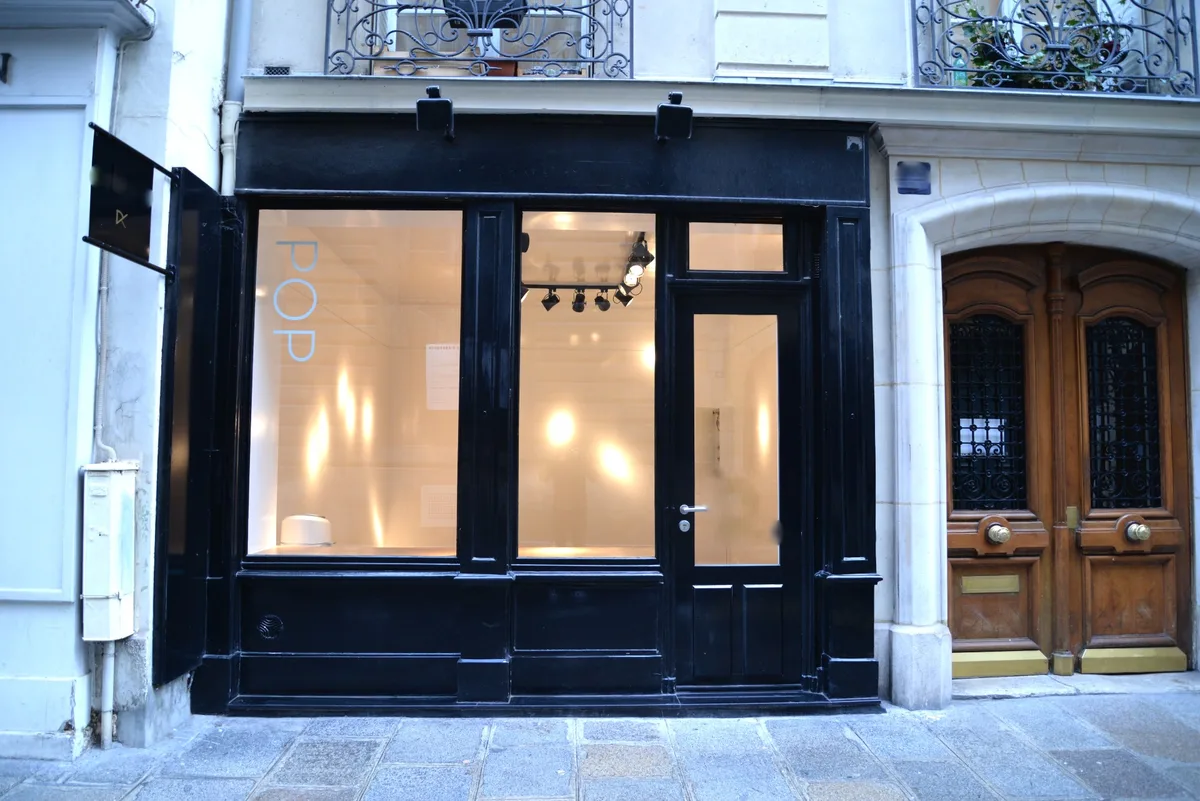
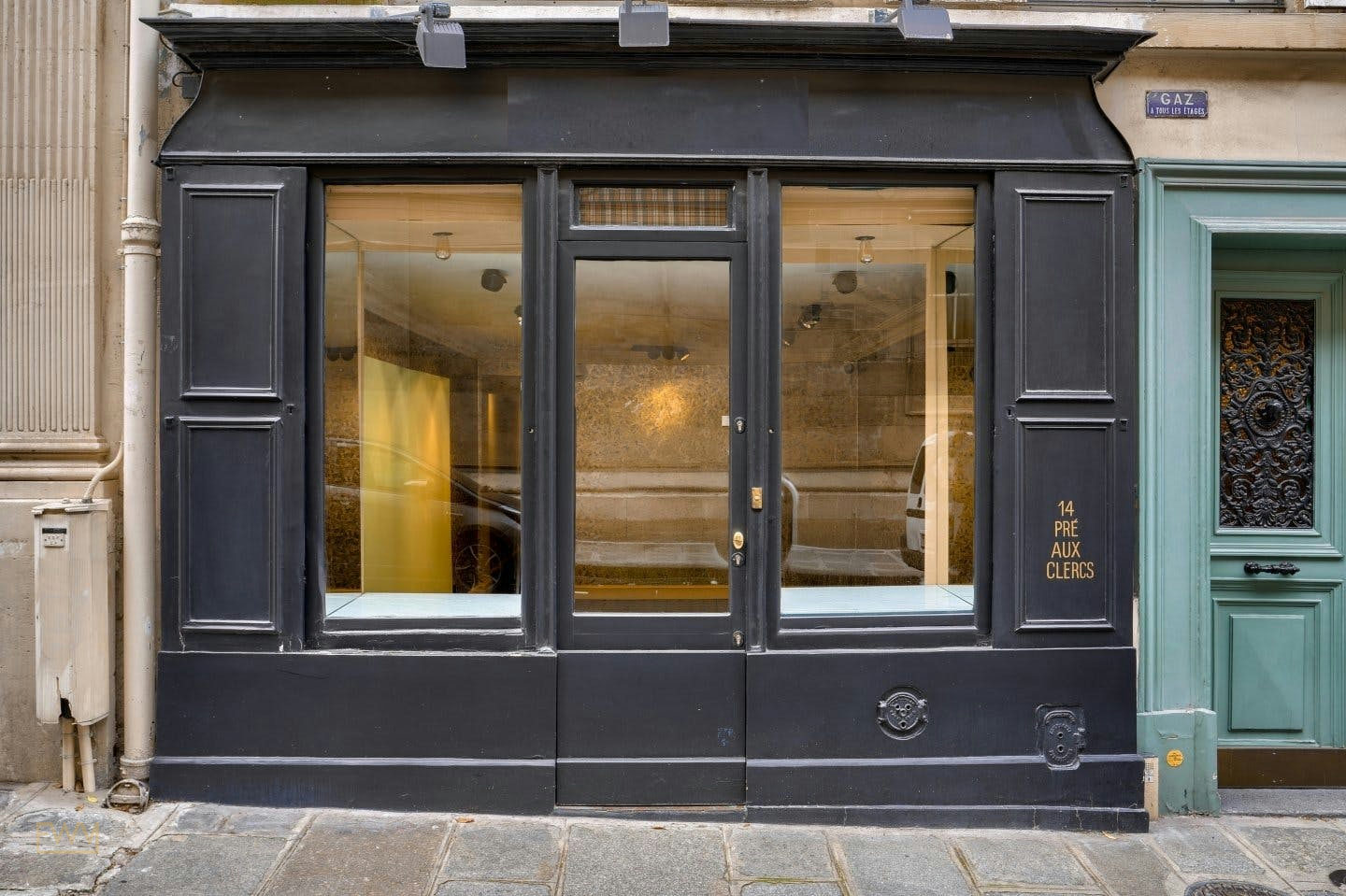
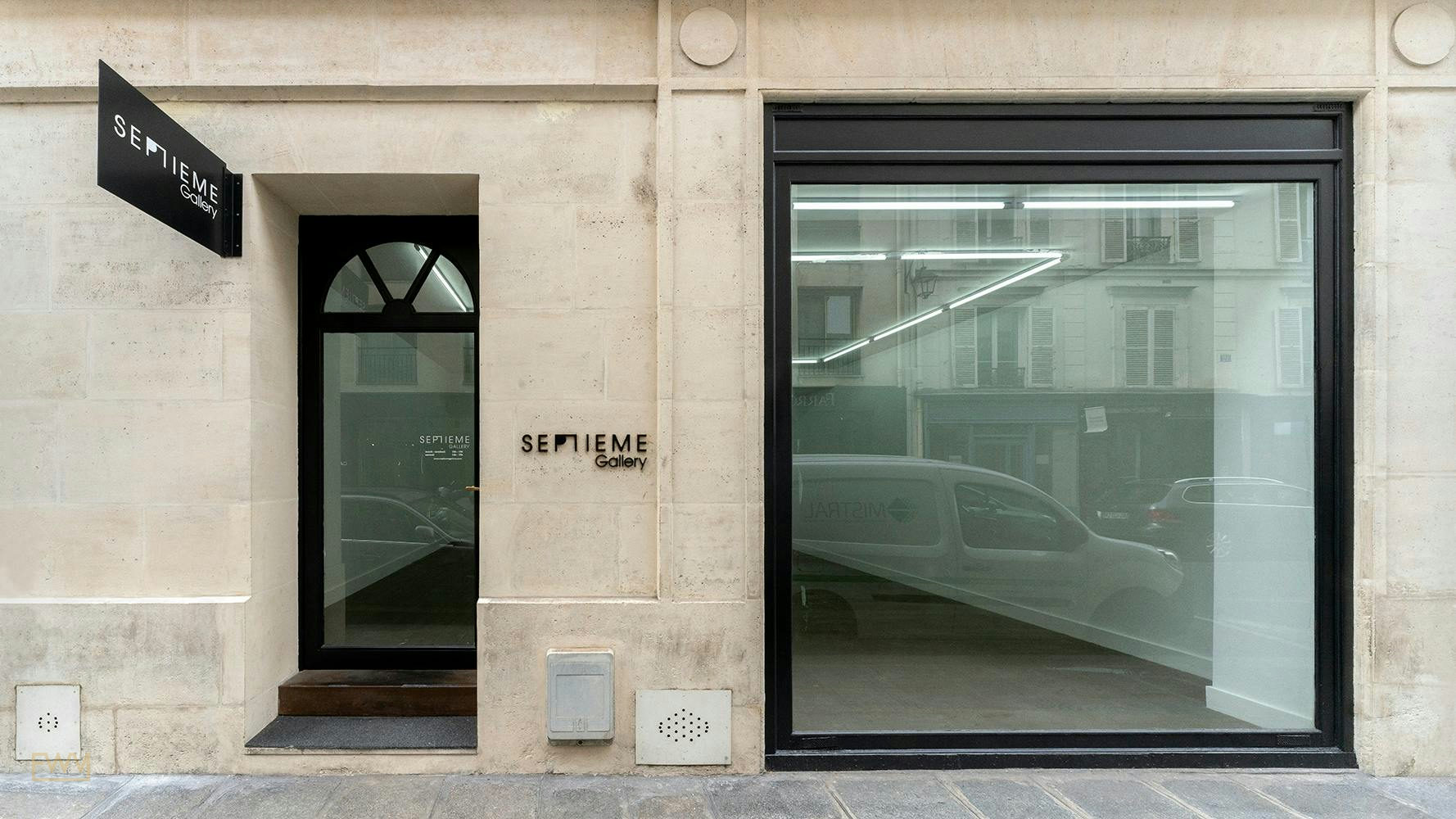
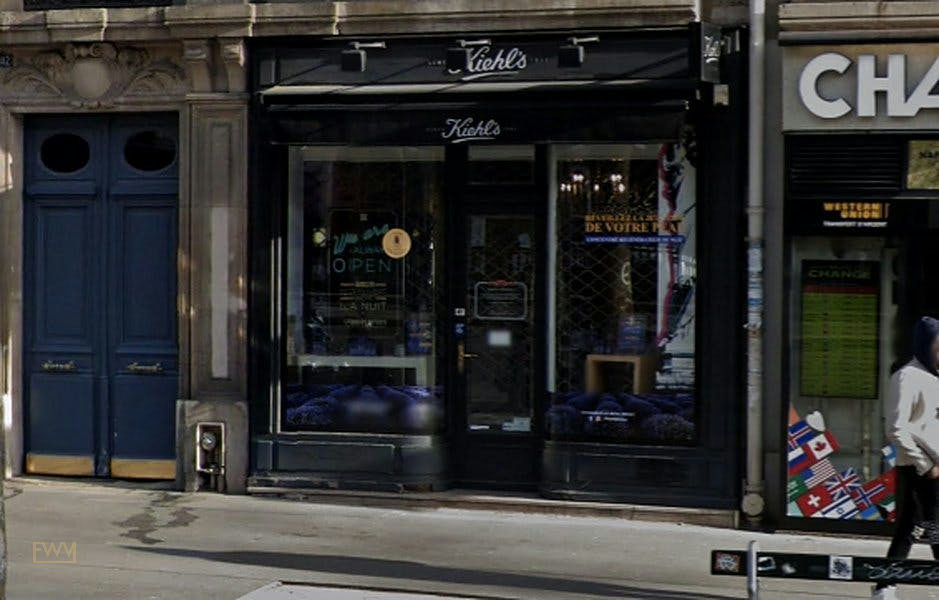
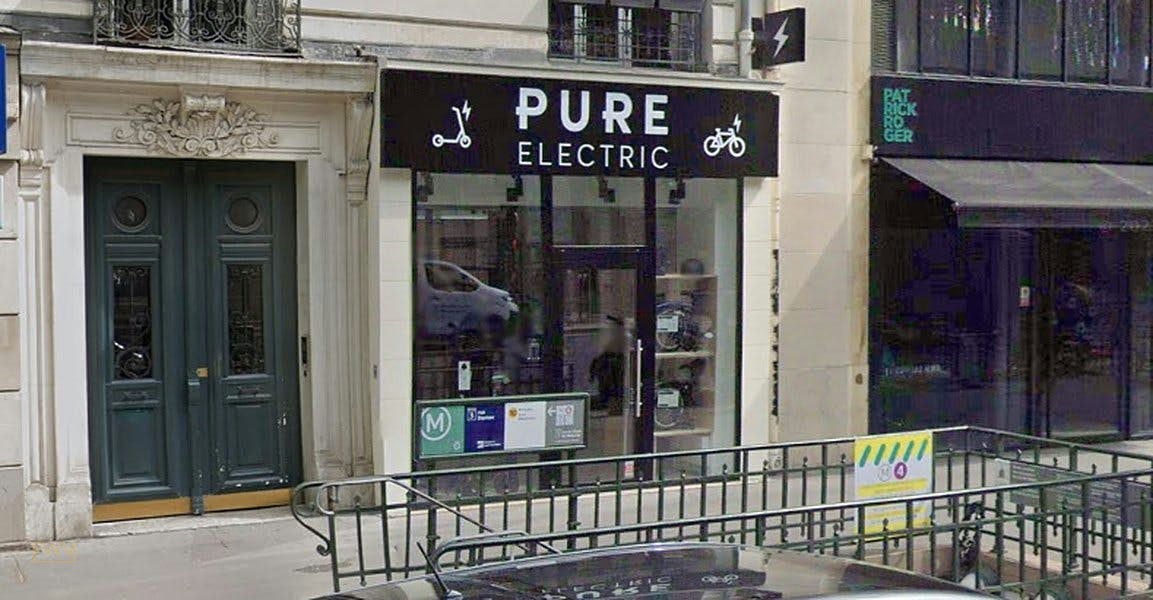
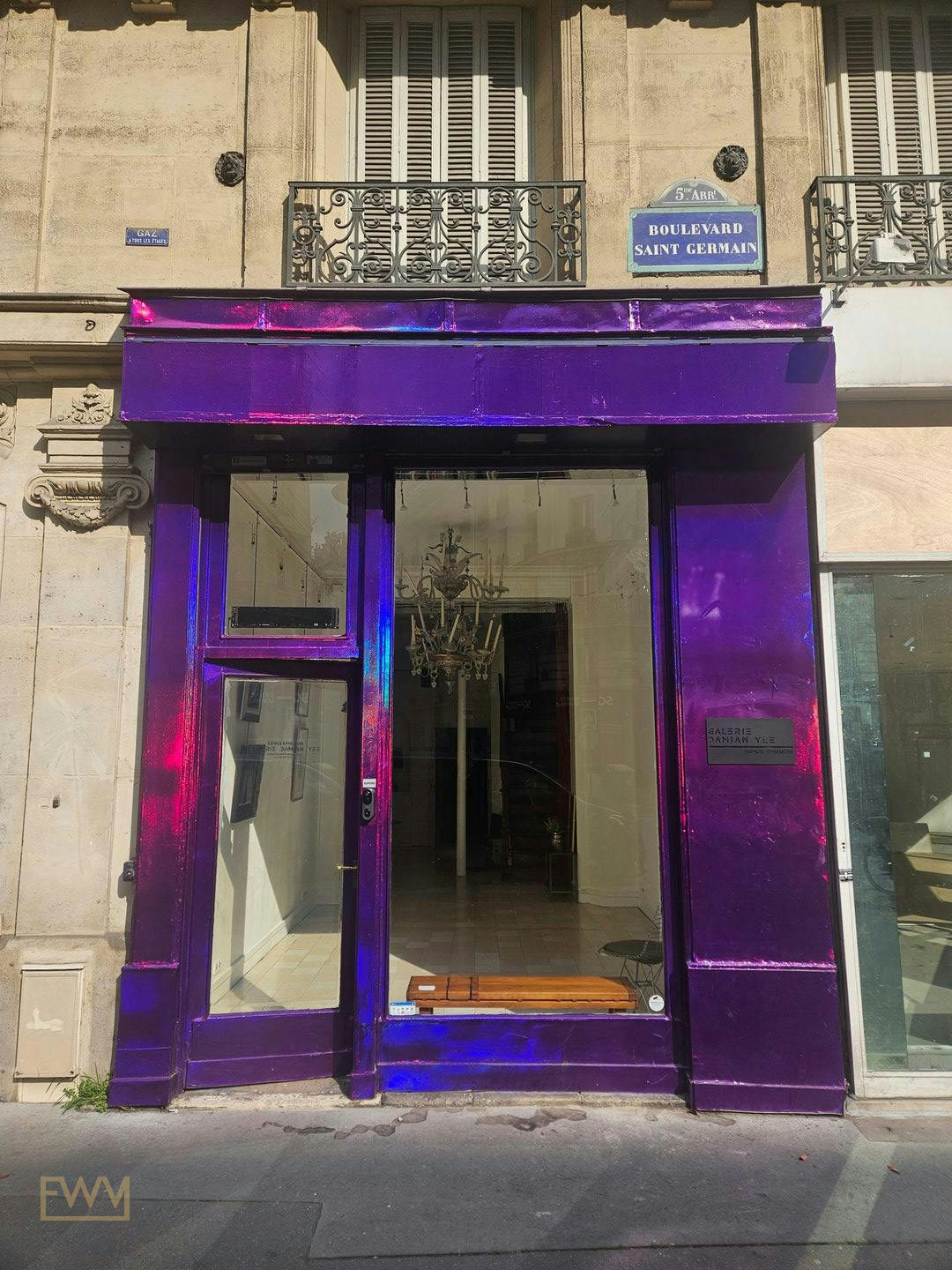
The most recognisable format is the street-level storefront directly on Rue de Rivoli or on adjacent cross streets. These spaces typically offer ground-floor retail configuration with shop windows facing the pavement, which maximises walk-in traffic and brand visibility. They suit fashion pop-up stores, beauty launches, and any activation where direct consumer sales are a primary objective. The arcade storefronts along the Tuileries-facing side of the street offer the additional advantage of covered frontage, which extends browsing time regardless of weather.
Showroom and Fashion Showroom Formats
Many buildings in the 1st and 4th arrondissements contain upper-floor spaces configured as showrooms, with large windows, neutral finishes, and flexible layouts that suit trade appointments, press previews, and wholesale presentations. A fashion showroom in this zone can operate simultaneously as a buyers' appointment space during the day and a press or influencer event space in the evening, maximising the return on the rental cost across the activation period.
Gallery-Format Spaces
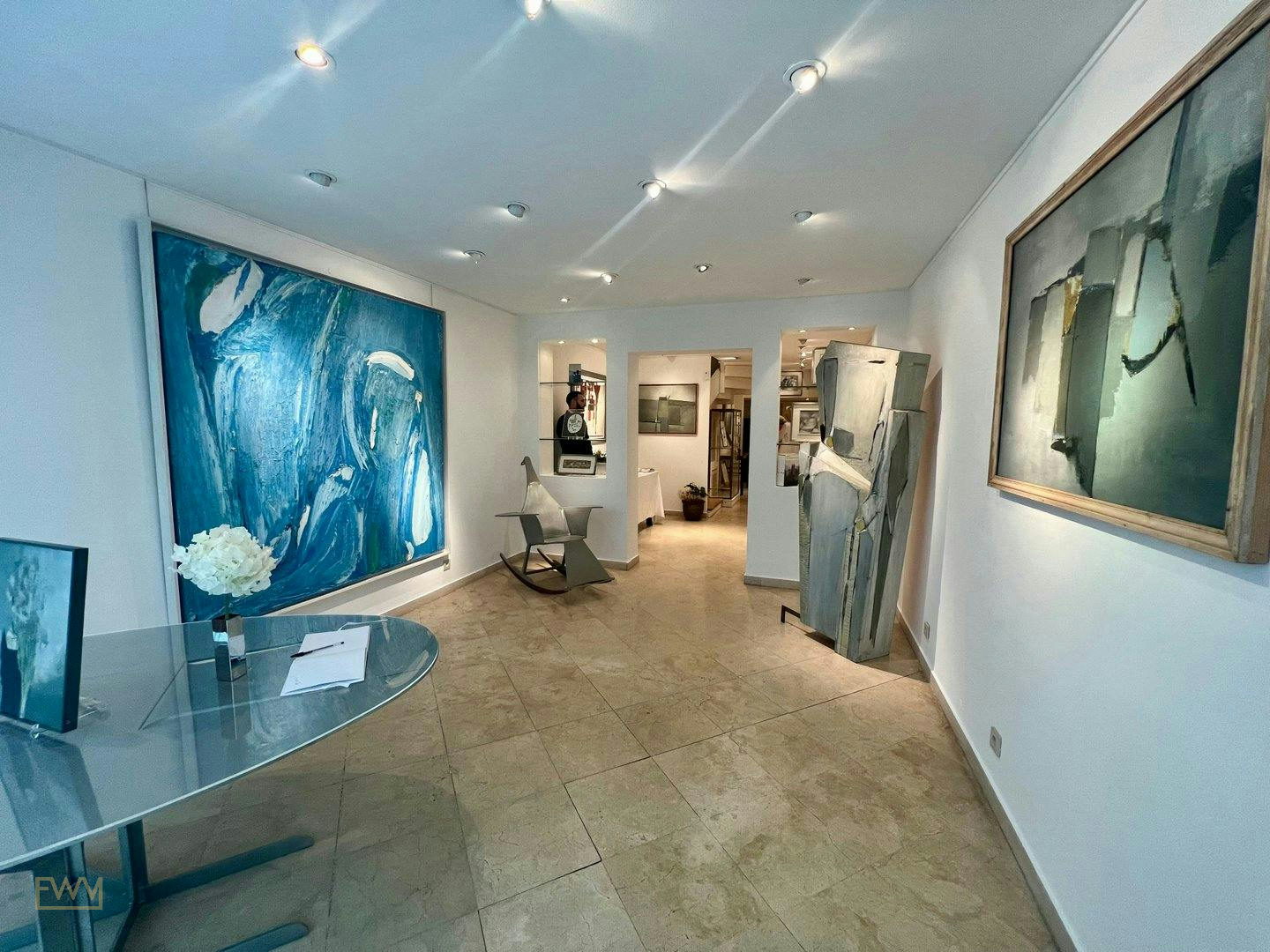
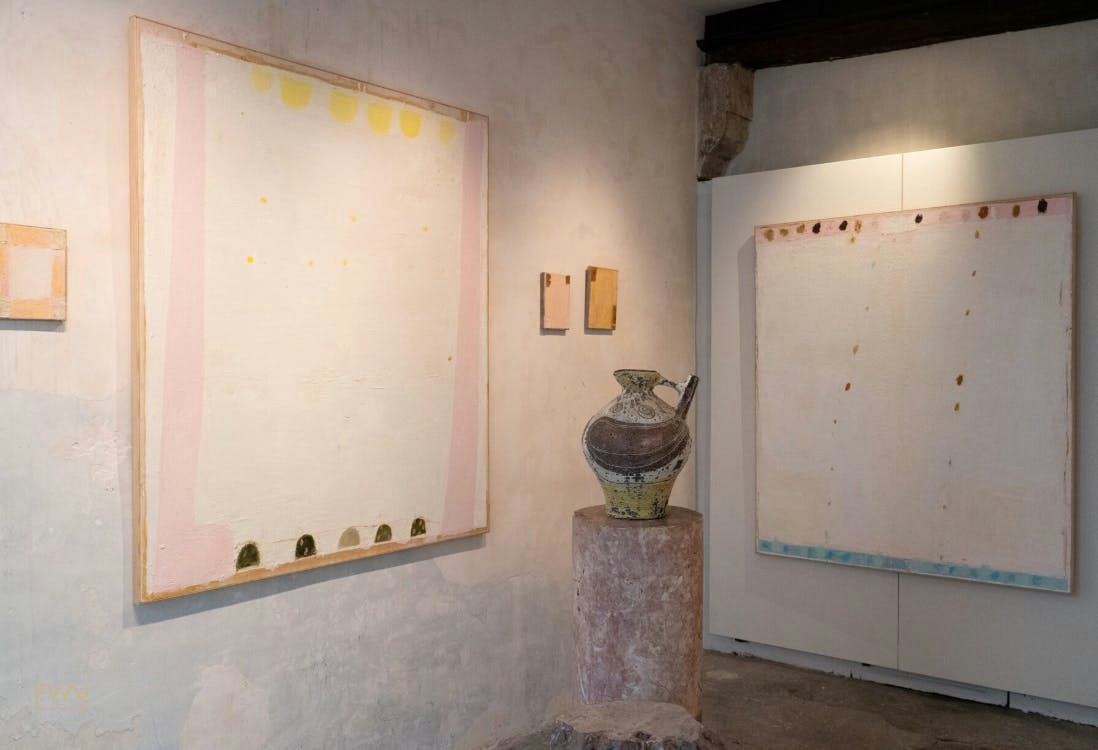
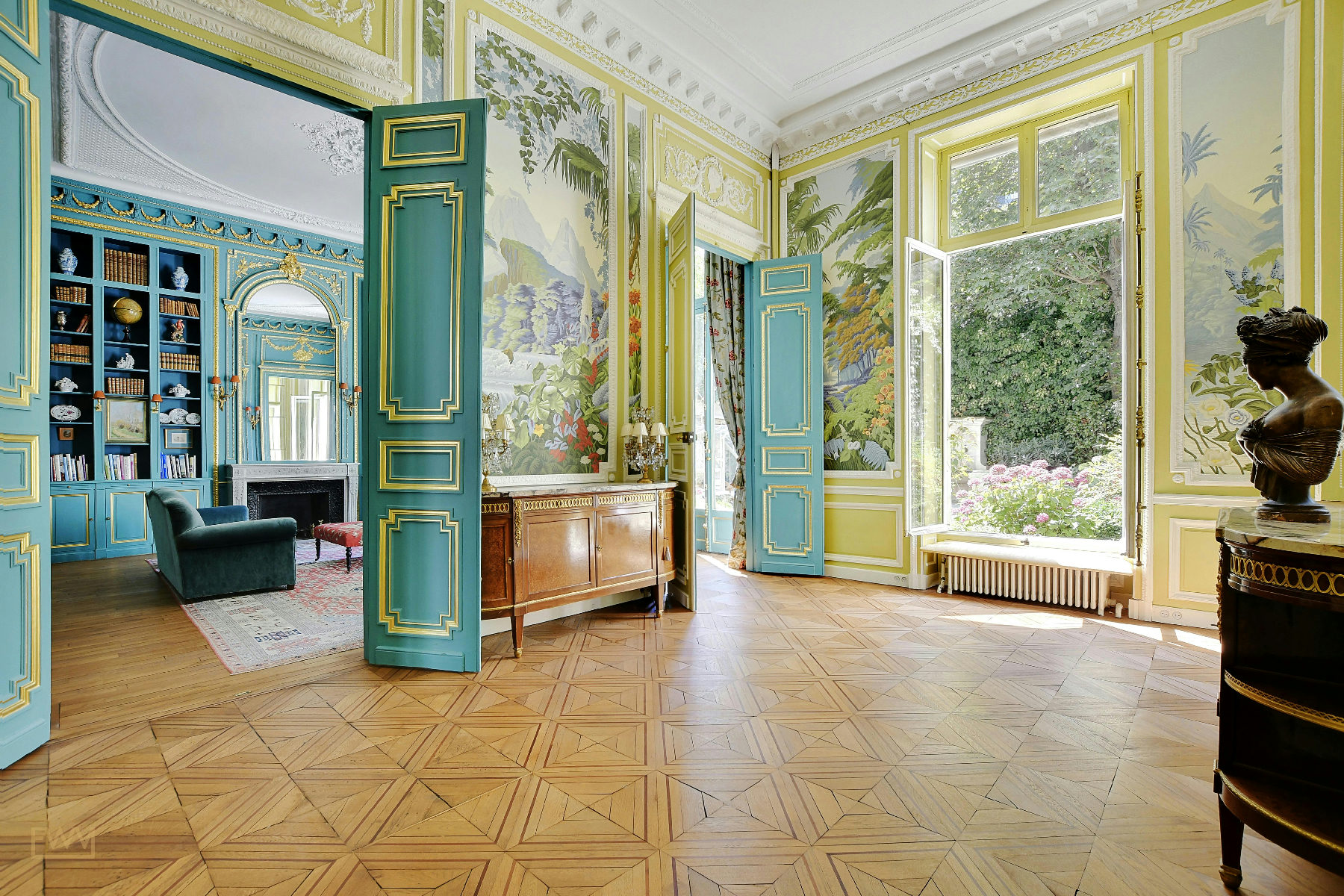
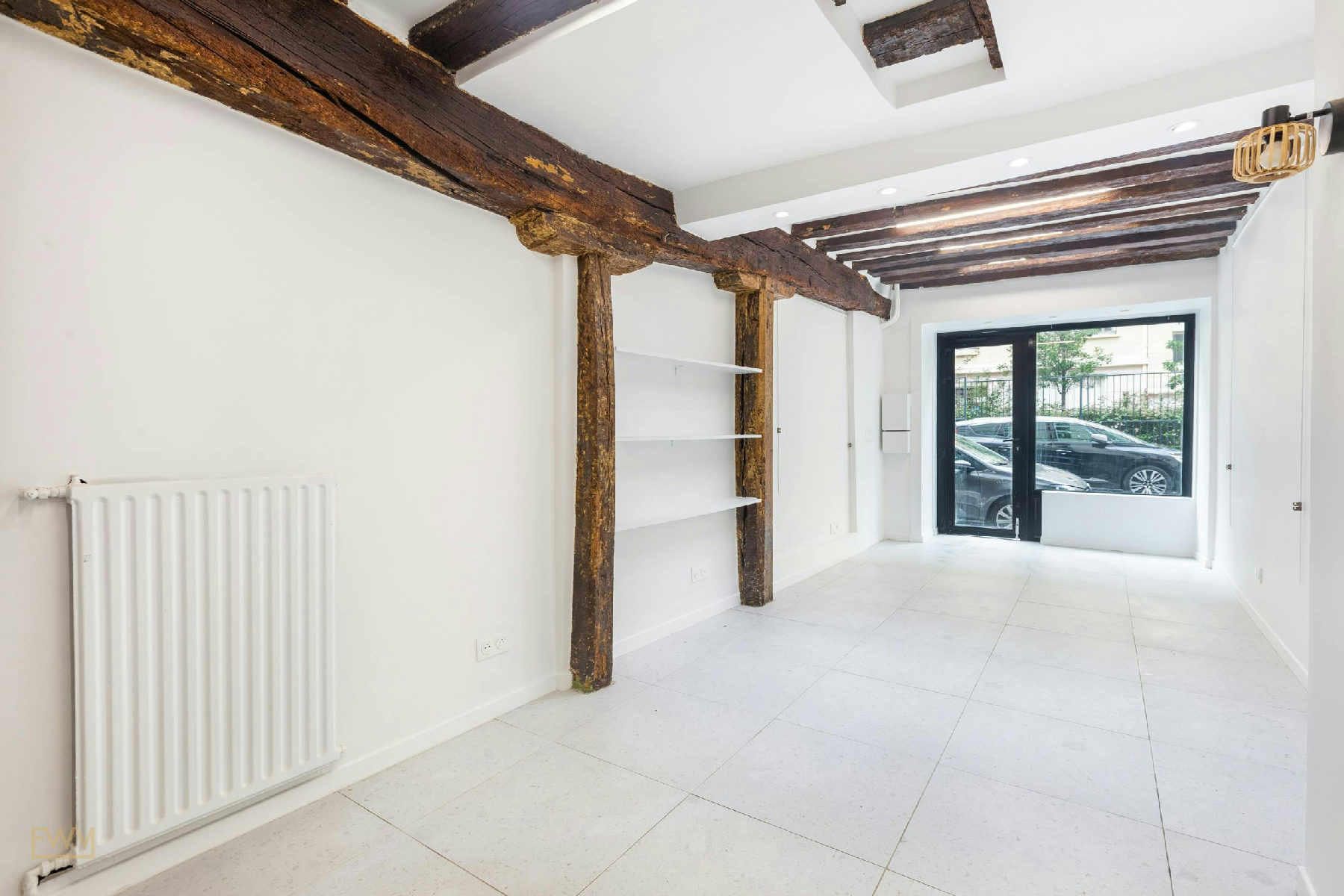
Gallery-format spaces, particularly those with exposed stone columns, original parquet floors, or raw architectural details, are among the most photographed and shared settings for Paris pop-up activations. These spaces suit brands whose storytelling relies on visual contrast between a contemporary product and a historic interior. The photographic quality of the setting contributes directly to social media output, press imagery, and the brand's content library for weeks after the activation closes.
Hôtels Particuliers and Courtyard Venues
Private historic townhouses known as hôtels particuliers, many of which are located in the Marais and around the Palais Royal, offer a level of intimacy, exclusivity, and architectural drama unavailable in standard commercial units. These spaces suit invitation-only events, high-net-worth client evenings, bespoke brand experiences, and activations where the environment is as much the product as the merchandise. They also suit cocktail parties, seminars, and photography or filming commissions that require a distinctive Parisian interior.
Multi-Use Event Spaces
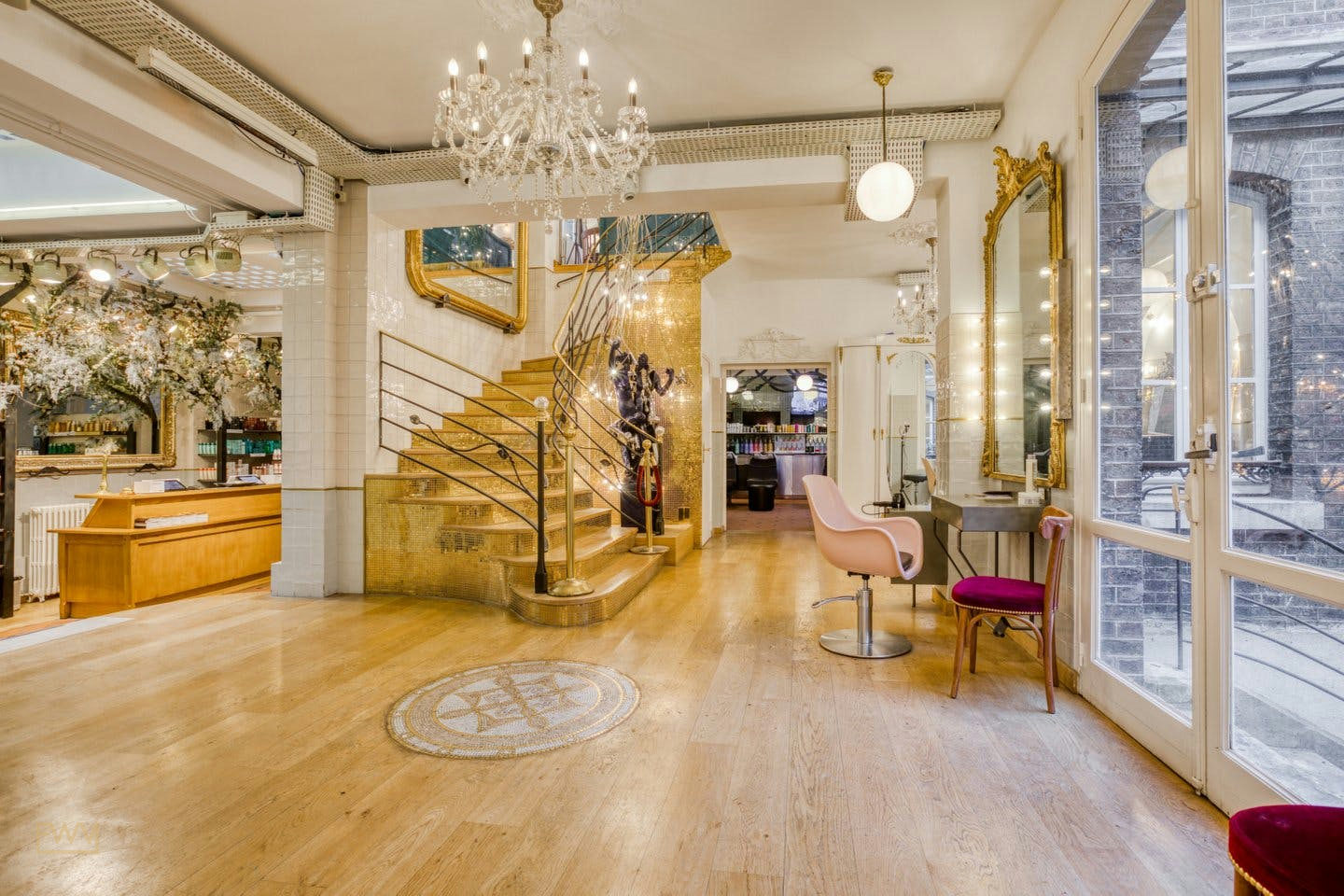
A category of spaces in this zone combines retail configuration with event-readiness. These venues can shift between a pop-up store layout during trading hours and a cocktail party or seminar setup for evening programming. For brands running a Paris activation across seven to fourteen days during Fashion Week, this flexibility is highly valuable because it allows a single space to serve multiple activation formats and audiences across the same rental period.
| Space Type | Best Activation Model | Typical Size Range | Minimum Duration Notes | Key Features |
|---|---|---|---|---|
| Street-Level Storefront | Consumer pop-up, product launch | 30 to 150 sqm | Often 7 days minimum | Shopfront windows, pavement access |
| Fashion Showroom | Trade, press, buyers | 50 to 300 sqm | 4 to 14 days typical | Neutral finishes, natural light |
| Gallery Format | Art, design, editorial brands | 40 to 200 sqm | Variable by owner | Exposed stone, high ceilings |
| Hôtel Particulier | Exclusive events, VIP launches | 100 to 500 sqm | Weekend minimum common | Historic interiors, courtyards |
| Multi-Use Event Space | Hybrid retail and event | 80 to 400 sqm | 5 to 21 days typical | Flexible layout, AV-ready |
TIP: When evaluating a space, confirm whether exposed architectural features such as piping, stone columns, or brick walls are load-bearing or decorative before planning any hanging or fixture installation. This affects your production and fit-out plan directly.
KEY TAKEAWAY: Matching space type to activation model is as important as matching neighbourhood. A fashion showroom is not interchangeable with a consumer storefront. Defining the activation objective first allows a brand to filter spaces by format, size, and minimum duration before negotiating rental terms.
Choosing the right space format is inseparable from understanding the permit and compliance framework that governs temporary retail in France, which the next section covers in detail.
Permits, Regulations, and Legal Frameworks for Temporary Retail in Paris
Quick answer: Temporary retail in Paris operates under distinct legal frameworks including the bail dérogatoire for short-term commercial leases and the autorisation d'occupation temporaire (AOT) for public space use. These frameworks differ significantly from standard commercial leases, and navigating local regulations correctly is essential to avoid operational delays or penalties during an activation.
One of the most common mistakes international brands make when planning a temporary retail space in Paris is assuming that the legal and permit framework mirrors what they know from the UK, US, or other markets. France has a distinct set of rules governing short-term commercial occupation, and the specifics vary by space type, arrondissement, intended use, and duration.
Bail Dérogatoire: The Short-Term Commercial Lease
The bail dérogatoire, also called a convention d'occupation précaire or bail précaire, is the standard legal instrument for short-term commercial lettings in France. It is specifically designed for occupations of less than three years and allows a landlord to let a commercial space without triggering the protections of the standard French commercial lease, which carries a minimum term of nine years and statutory renewal rights. For brands seeking temporary retail space on Rue de Rivoli for a period of days, weeks, or a few months, the bail dérogatoire is the expected instrument. It must be written and signed before the occupation begins, and it must clearly state the exceptional and temporary nature of the occupation. Brands should always work with a French legal advisor or a specialist agency to ensure the bail dérogatoire is correctly drafted and that the terms are appropriate for the intended use.
Autorisation d'Occupation Temporaire (AOT)
If a brand's activation involves the use of public space, including pavement signage, external structures, outdoor installations, or temporary external fixtures adjacent to a Rue de Rivoli address, an autorisation d'occupation temporaire issued by the Ville de Paris or the relevant local authority is required. The AOT process involves an application, a fee, and a waiting period. Requirements vary by location and the nature of the occupation. Brands planning any external brand presence should factor AOT timelines into their activation planning calendar, typically beginning the application process at least six to eight weeks before the intended start date.
Insurance Requirements
All temporary retail occupations in France require appropriate insurance. At minimum, a brand needs public liability insurance covering the space and its visitors, as well as cover for the physical premises themselves if the landlord requires it. Insurance for merchandise, equipment, and temporary installations should also be in place before the activation opens. Some landlords on Rue de Rivoli require evidence of insurance before releasing keys. Working with an agency that understands French insurance requirements reduces the risk of being caught without adequate cover on opening day.
Other Permit Considerations
Depending on the activation model, additional permits or notifications may be required. Music licensing applies if the space plays recorded music. Temporary food and beverage service at a cocktail event requires separate authorisation. Photo shoots and filming in publicly visible spaces may require authorisation from the Ville de Paris. Fire safety compliance is mandatory for all occupied commercial spaces and must be confirmed with the landlord before fit-out work begins.
IMPORTANT: Requirements vary significantly by space type, arrondissement, intended use, and activation duration. This guide provides a general orientation only. Always verify specific requirements with a qualified French legal advisor before signing any rental agreement or beginning any fit-out work.
Brands can use the permit guidance tool on Fashion Week Venues to get an initial orientation on the permit landscape before consulting a specialist advisor.
KEY TAKEAWAY: The bail dérogatoire and the AOT are the two core legal frameworks for temporary retail in Paris, and both require careful, timely management. Treating Paris permits as an afterthought is one of the most expensive mistakes a brand can make during a Paris activation.
With permits and legal context established, the next practical question is budget. Understanding the cost structure of a temporary retail space on Rue de Rivoli helps brands plan realistically and avoid under-budgeting at the planning stage.
Budget Planning for a Temporary Retail Space on Rue de Rivoli
Quick answer: The cost of a temporary retail space on Rue de Rivoli varies based on space size, location precision, duration, specification, season, and the services included. Rather than quoting figures that may not reflect current market conditions, brands should use a structured budgeting framework that accounts for all cost categories from rental to production, staffing, permits, and marketing.
Budgeting for a Paris pop-up activation is rarely straightforward because the costs are distributed across multiple categories that are often managed by different vendors or departments. A brand that focuses only on the rental line item will consistently find itself over-spending on production and under-investing in staffing or marketing, producing a technically capable but commercially underperforming activation.
Core Cost Categories
Rental is the most visible cost and tends to anchor the budget conversation, but it rarely represents more than 30 to 40 percent of total activation spend for a well-managed pop-up. The remaining costs fall across design and production, furniture rental, staffing, permits and insurance, marketing and social media, technology and POS, logistics and inventory management, and data and analytics tools. Each of these categories requires its own line in the budget, and underestimating any of them creates operational risk.
Rental Cost Variables
Rental costs for temporary retail on Rue de Rivoli are influenced by multiple factors simultaneously. The specific block of the street matters: spaces closer to the Louvre and Châtelet command premium pricing. Floor position matters: ground floor with shopfront commands more than upper floors. Space specification matters: finished retail units command more than raw spaces that require fit-out investment. Duration matters: shorter rentals per square metre per day tend to cost more than longer commitments. Seasonality matters significantly, with Fashion Week periods, the FIAC window, and the peak summer tourism season all driving higher pricing for available spaces. Because these variables interact, quoting a single figure would be misleading. Use the budget estimation tool on Fashion Week Venues to build a brand-specific estimate based on actual space parameters.
Production and Fit-Out Costs
Even a lightly branded activation requires some investment in fit-out: signage, display fixtures, lighting adjustment, and branded elements. A full custom pop-up store build, particularly one designed to generate social media content and press coverage, requires a more substantial production budget. Furniture rental is a cost-effective alternative to purchasing display furniture for a short-term activation. Working with a production partner who understands the constraints of Parisian buildings, including access restrictions, elevator dimensions, and landlord approval requirements, avoids costly mistakes during installation.
Staffing Costs
Temporary retail staff in Paris must be engaged under French employment law, which has specific requirements around contracts, working hours, and social contributions. Using temporary staffing specialists who understand the French regulatory environment is strongly recommended. Staffing costs should account for floor staff, any security service requirements, and supervisory management across the full operating period.
Marketing and Social Media
A pop-up store on Rue de Rivoli with no marketing investment will underperform relative to its potential. Marketing costs should include pre-opening social media content, influencer briefings, press outreach, email campaigns to existing customers and prospects, and any paid amplification. The marketing spend during the activation period is what converts the physical presence into measurable brand awareness and sales impact beyond the immediate location.
TIP: Build a budget that includes a contingency of at least 10 to 15 percent of total spend. Paris activations frequently encounter unforeseen costs related to building access, permit timing, or production complexity that are difficult to predict before the space is physically inspected.
KEY TAKEAWAY: Total activation cost is always higher than rental cost alone. A brand that plans its Paris pop-up budget across all cost categories from the start is better positioned to invest in the elements that drive commercial and brand-building outcomes.
Budget planning and ROI expectations are closely connected. The next section addresses how to measure the return on a temporary retail activation and what metrics matter most for different brand objectives.
Measuring ROI and Commercial Performance for Paris Pop-Up Stores
Quick answer: ROI for a Paris pop-up store on Rue de Rivoli depends on the brand's primary objective. Consumer sales, wholesale appointments, press coverage, social media reach, brand awareness uplift, and customer data capture all represent legitimate forms of return, and different activation models prioritise different metrics. Establishing clear KPIs before the activation begins is essential for meaningful post-event evaluation.
Pop-up store ROI is frequently misunderstood because brands apply a pure retail sales lens to activations that are primarily serving brand positioning, press, or wholesale trade functions. A showroom activation during Paris Fashion Week that generates five wholesale accounts worth significant future revenue may show modest direct retail sales but exceptional commercial return. Conversely, a consumer-facing pop-up on Rue de Rivoli targeted at high tourist volumes should be held to direct sales metrics. Clarity on the primary objective determines which ROI framework is appropriate.
Sales Revenue
Direct sales revenue is the most straightforward metric for consumer-facing pop-up stores. Brands should model expected revenue based on realistic daily traffic estimates, conversion rate assumptions, and average transaction value. Comparing projected revenue against total activation cost produces a direct ROI figure. However, this analysis should also account for the longer-term value of customers acquired during the activation who go on to purchase again through other channels.
Brand Awareness and Social Media Impact
For activations whose primary function is brand building rather than direct sales, social media reach, press coverage, and content output represent the core ROI metrics. Tracking earned media value, influencer post reach, and organic social media engagement during and after the activation allows brands to quantify the awareness return on their Paris investment. A well-designed space on Rue de Rivoli generates content that continues to circulate on social media long after the pop-up closes.
Customer Data Capture
A temporary retail activation in Paris is an opportunity to capture high-quality customer data from a new audience. Building email list sign-ups, loyalty programme enrolments, and customer preference data into the activation design creates an asset that continues to generate return beyond the physical pop-up period. Data analytics tools that connect in-store behaviour to post-event customer journey tracking provide the richest picture of activation ROI over time.
Trade and Wholesale Outcomes
For brands using a Paris showroom or fashion showroom activation primarily to conduct buyer appointments, the ROI framework centres on the number and quality of wholesale accounts opened, orders placed, and distribution relationships established during the activation period. These outcomes may take months to fully materialise in revenue, but their expected value should be modelled and tracked from the activation brief onwards.
Brands can use the ROI calculator on Fashion Week Venues to model expected returns across different activation formats and objective mixes before committing to a space rental.
KEY TAKEAWAY: Pop-up ROI is multi-dimensional. Brands that set clear primary objectives before the activation begins, instrument those objectives with specific metrics, and evaluate performance honestly at the close will extract more value from each Paris activation and improve planning for subsequent ones.
Understanding the calendar context for Paris activations is equally important. The timing of a Rue de Rivoli pop-up relative to major Paris events can dramatically amplify or limit its commercial and media impact.
Paris Fashion Week and the Cultural Calendar: Timing Your Rue de Rivoli Activation
Quick answer: Paris Fashion Week, FIAC, Paris Design Week, and the major holiday trading windows represent the highest-value calendar moments for a temporary retail activation on Rue de Rivoli. Each event attracts a distinct professional and consumer audience, and choosing the right calendar window depends on the brand's target customer, trade objectives, and media strategy.
Paris operates on a rich cultural and commercial calendar that creates predictable peaks in international visitor numbers, buyer presence, press concentration, and consumer spending intent. Brands that time their Rue de Rivoli activation to coincide with these moments gain an audience amplification that is impossible to replicate outside of the event context.
Paris Fashion Week
Paris Fashion Week occurs twice annually, with women's ready-to-wear in late February to early March and again in late September to early October. Men's Fashion Week occurs in January and June. Each of these windows brings a concentrated arrival of international buyers, fashion journalists, stylists, influencers, and brand executives into the Paris ecosystem. A temporary retail space or fashion showroom on Rue de Rivoli during Fashion Week benefits from this audience concentration directly. Spaces book out many months in advance for these windows, and rental pricing reflects the demand. Brands planning a Fashion Week activation should begin their space search at least four to six months in advance.
FIAC and Paris Art Week
The FIAC contemporary art fair, held in October at the Grand Palais, and the surrounding Paris Art Week programming bring a high-net-worth, design-literate, and internationally mobile audience to Paris. For fashion, jewellery, design, and luxury brands, this calendar window offers access to exactly the audience demographic that is hardest to reach through standard advertising channels. An art gallery format or gallery-adjacent pop-up in the Louvre-Rivoli area during FIAC week can achieve exceptional audience quality.
Paris Design Week
Paris Design Week, typically held in September, draws designers, architects, interior professionals, and culturally engaged consumers across a programme of showrooms, installations, and exhibitions spread across central Paris. Brands in design-forward fashion, furniture, lighting, or home goods with a design narrative benefit from the concentrated professional audience this event delivers.
Summer Tourism Peak
The summer period from June through August brings the highest raw tourist volumes to the Rue de Rivoli corridor. For consumer-facing pop-up stores with a broad lifestyle offer, the summer peak provides exceptional foot traffic. However, many Parisian professionals and local buyers are absent from the city in August, which limits the effectiveness of trade-focused activations during this period.
Holiday and Gifting Windows
The pre-Christmas period from late November through December represents one of the strongest direct retail periods of the year in Paris. Gifting-oriented pop-up stores on Rue de Rivoli can capitalise on both tourist shopping and local Parisian gifting behaviour during this window, often achieving the highest daily sales volumes of any period in the calendar.
DID YOU KNOW: Space availability on Rue de Rivoli and in the surrounding Marais and Saint-Honoré corridors during Paris Fashion Week is typically constrained by September of the preceding year. Brands that wait until three months before their intended Fashion Week activation will find most premium spaces already committed.
KEY TAKEAWAY: Calendar timing is a multiplier for pop-up performance. Aligning a Rue de Rivoli activation with the right Paris event window can double or triple the effective audience reach compared with an identical activation run outside of peak periods. Space availability and pricing both reflect this, so early planning is not optional.
With calendar strategy clear, the practical question of how to actually find, evaluate, and secure the right space becomes central to execution.
How to Find and Secure Temporary Retail Space on Rue de Rivoli
Quick answer: Finding a temporary retail space on Rue de Rivoli requires a structured approach combining direct outreach, marketplace browsing, specialist agency engagement, and early lead times. The process from brief to keys typically takes four to twelve weeks depending on the season, the space specification, and the complexity of the legal and production requirements.
The search for a short-term retail space in Paris is not the same as searching for a standard commercial property. The short-term rental market operates through a different set of channels, relationships, and timelines than the long-term commercial property market. Brands that approach it using long-term commercial property logic will consistently encounter frustration, inflated expectations, and missed opportunities.
Step One: Define the Brief
Before searching for spaces, a brand needs a clear brief covering: activation objectives, target audience, budget range, required size, preferred neighbourhood, minimum and maximum duration, space specification requirements, and operational needs such as changing rooms, POS infrastructure, storage, and event capacity. A brief that is too vague will result in being shown spaces that do not fit the actual need. A brief that is too prescriptive before the market has been explored may eliminate good options unnecessarily. The goal is a brief that is specific about non-negotiable requirements and flexible about preferences.
Step Two: Explore the Market
Several channels exist for finding temporary retail spaces in Paris. Online marketplaces specialising in short-term commercial spaces allow brands to browse available listings by neighbourhood, size, and space type. Specialist agencies with established relationships with Paris landlords can access spaces that never appear on public listings. Direct outreach to building owners and property managers in target neighbourhoods, while time-consuming, occasionally surfaces availability not visible through other channels. Understanding the different channels and using them in combination produces the most complete picture of what is available.
Step Three: Evaluate and Compare Spaces
Once a shortlist of spaces is identified, brands should evaluate each against the brief. A site visit, ideally with the production partner and creative director present simultaneously, saves significant time compared to sequential visits. During the visit, confirm: floor size and configuration, natural light levels, access and loading, ceiling height, existing fixtures, electrical capacity, heating and cooling, internet connectivity, and any landlord restrictions on fit-out, music, signage, or opening hours. Use the space comparison tool on Fashion Week Venues to evaluate multiple spaces against a consistent set of criteria.
Step Four: Negotiate and Contract
Once a preferred space is identified, negotiation on rental terms, duration, deposit requirements, and exit conditions follows. In Paris, deposits on short-term commercial spaces are common and can represent one to two months of rental value. The bail dérogatoire must be reviewed and signed before access is granted. Legal review by a French-qualified advisor is strongly recommended before signing any commercial property agreement in Paris.
Step Five: Plan the Fit-Out and Production Timeline
The period between contract signature and opening day is almost always shorter than the brand team expects. Production, design, permit applications, furniture delivery, staff hiring and briefing, inventory logistics, and marketing preparation must all run in parallel rather than sequentially. A detailed timeline built from the opening date backwards identifies all dependencies and critical path items. Brands can use the timeline planning tool on Fashion Week Venues to structure this process.
| Stage | Activity | Typical Lead Time Before Opening | Key Decisions |
|---|---|---|---|
| 1. Brief | Define objectives, budget, size, duration, neighbourhood | 16 to 20 weeks | Activation model, primary KPI |
| 2. Market Search | Browse marketplace, engage agency, direct outreach | 12 to 16 weeks | Channel strategy, agency selection |
| 3. Shortlist and Visit | Site visits, technical evaluation, shortlist to 2 to 3 spaces | 10 to 12 weeks | Space specification v. brief |
| 4. Contract | Negotiate terms, legal review, sign bail dérogatoire | 8 to 10 weeks | Duration, deposit, exit conditions |
| 5. Production | Design, build, permits, furniture, POS, staffing | 4 to 8 weeks | Production partner, fit-out plan |
| 6. Pre-Opening | Staff briefing, inventory arrival, marketing launch | 1 to 2 weeks | Opening day logistics |
| 7. Activation | Operations, events, data capture, social media | During activation | Daily KPI tracking |
| 8. Close-Out | Defit, data analysis, landlord handover | Within 1 week post-activation | ROI reporting, next activation brief |
KEY TAKEAWAY: Finding and securing a temporary retail space on Rue de Rivoli is a structured process with genuine lead time requirements. Brands that begin the process early, arrive with a clear brief, and engage specialist support at the right stages move through this workflow far more efficiently than those who improvise.
The role of a specialist agency in this process is significant, and the next section explains exactly how Fashion Week Venues supports brands through every stage of a Paris pop-up activation.
How Fashion Week Venues Supports Brands Seeking Temporary Retail Space in Paris
Fashion Week Venues is a full-service pop-up shop agency and space marketplace with Paris as its primary operating market. The agency works with international fashion brands, beauty companies, lifestyle labels, and creative studios to plan, find, build, staff, and manage temporary retail activations across Paris and other major fashion capitals including London, Milan, New York, Tokyo, and Dubai.
The core value of working with Fashion Week Venues is consolidation. Managing a Paris pop-up activation involves a long list of separate workstreams: space search, legal and permit navigation, concept and design, production and build, furniture sourcing, staffing, POS and payment systems, marketing and influencer coordination, and post-activation data analysis. Without a coordinating agency, each of these workstreams requires a separate vendor relationship, a separate briefing process, and a separate set of quality controls. Fashion Week Venues manages the full workflow under a single point of accountability.
Venue Sourcing and Marketplace Access
The venue sourcing service combines access to the Fashion Week Venues space marketplace with direct relationships with Paris landlords, agents, and property managers. This means brands can access both publicly listed and off-market spaces, with the agency filtering by brief, budget, and calendar availability before presenting options. This saves significant search time and reduces the risk of investing effort in spaces that will not ultimately be suitable.
Concept Direction and Branded Store Design
The concept direction and branded store design services translate a brand's identity and activation objectives into a physical space concept. This includes spatial planning, visual merchandising strategy, signage and brand application, lighting design, and the creation of the kind of environment that generates social media content and press coverage. The design output feeds directly into the production build plan, creating a continuous workflow from brief to opening day.
Production, Build, and Furniture Rental
The production and build service manages the physical transformation of the raw or partially fitted space into the brand's activation environment. This includes contractor coordination, furniture rental from the Fashion Week Venues inventory, installation logistics, and the defit at the activation's close. Working with a production team that has direct Paris experience avoids many of the practical obstacles that slow down brands working with local contractors for the first time.
Retail Staffing, POS, and Data Analytics
Operational services including retail staffing, POS and payments setup, and data and analytics tools ensure that the activation functions as a well-run retail environment and not just a beautifully designed one. Staffing specialists source temporary retail staff in Paris who understand French customer service standards and can represent the brand credibly. Data and analytics tools provide real-time insight into foot traffic, conversion, basket value, and customer behaviour throughout the activation period.
Influencer Marketing and Activation Management
The influencer marketing service connects brands with relevant Paris-based and international influencers for pre-activation awareness building, opening event coverage, and ongoing social media amplification. Activation management oversight ensures that all operational elements run to plan across the full activation period, with issues resolved before they affect brand performance or customer experience.
Planning Tools
Fashion Week Venues offers a suite of planning tools that brands can use independently or in combination with agency services. These include the budget calculator, ROI modeller, space comparison tool, timeline planner, permit guidance tool, and space locator. Brands considering a Paris activation for the first time will find the tools useful for initial orientation before committing to a full agency brief. More experienced brand teams use the tools to accelerate the planning phase before handing over to the agency for execution.
It is worth noting that Fashion Week Venues does not guarantee space availability, permit approval, or specific commercial outcomes. The agency's role is to apply expertise, relationships, and process discipline to maximise the probability of a successful activation. Outcomes depend on many variables including market conditions, space availability, brand readiness, and execution quality.
Brands interested in exploring how Fashion Week Venues has delivered past activations can review the case studies and past work section of the website.
KEY TAKEAWAY: Fashion Week Venues consolidates the end-to-end complexity of a Paris pop-up activation under a single agency relationship, from space search through to post-activation data analysis. Brands that engage the agency early in the planning process benefit most from its market knowledge and operational infrastructure.
The Cultural Dimension: Art, Community, and Paris's Living Retail Landscape
Quick answer: Paris's temporary retail landscape is inseparable from its cultural life. Spaces like the Galerie du 59 Rivoli represent a tradition of arts-led occupation and community programming that shapes how Parisians understand and engage with non-standard retail environments, and this cultural context should inform how brands position and programme their own activations.
Rue de Rivoli is not simply a commercial street. It is one of Paris's most culturally layered thoroughfares, and that layering directly shapes the expectations and sensibilities of the audiences a brand encounters there. Understanding the cultural dimension of the street helps brands create activations that feel authentic within their Parisian context rather than imported and disconnected from it.
Galerie du 59 Rivoli and the Open-Call Tradition
The Galerie du 59 Rivoli at 59 Rue de Rivoli is one of Paris's most distinctive cultural landmarks. Originally an artist squat occupying a building that had stood empty for years, it was eventually recognised and supported by the Ville de Paris as a legal artists' residence and exhibition space. Today it operates as a collective of working artists with open ateliers, expositions collectives, concerts, performances, and a programme of résidence d'artistes that keeps the building alive as a genuinely productive creative community. The galerie operates an open-call format for exhibitions and programming, and its visibility as an annexe vivante of contemporary Parisian creativity is entirely distinct from the commercial circuits of standard retail.
For brands, the existence of spaces like 59 Rivoli on the same street as major luxury retail is a reminder that Paris's cultural landscape is pluralistic and that audiences along the Rivoli corridor include not only luxury consumers and tourists but also working artists, cultural producers, and the young creative community that forms around such institutions. Activations that acknowledge this cultural dimension, whether through programming, partnerships, or simply through the quality of the environment they create, tend to land better with Parisian audiences than those that treat the street purely as a commercial conduit.
Paris Design Week and Collective Programming
Paris Design Week's distributed format, with installations and showroom openings spread across the city's arrondissements, has normalised the idea of temporary spaces as cultural contributions as much as commercial ones. Brands that frame their Rue de Rivoli pop-up as a cultural programme element rather than purely a sales exercise find that the Parisian press, design community, and culturally engaged consumer respond more warmly to the activation. The distinction between a brand's commercial presence and its cultural contribution is thinner in Paris than in most other markets, and exploiting that overlap intelligently is a genuine competitive advantage.
Community and Neighbourhood Engagement
The arrondissements surrounding Rue de Rivoli each have distinct neighbourhood identities that are actively maintained by their resident communities. The Marais's art gallery circuit, the Palais Royal's curated boutiques, and the Rivoli arcade's mix of international retail and cultural institutions all reflect intentional neighbourhood curation by their communities. Brands that engage with the local neighbourhood context, whether by collaborating with local designers, sourcing locally, or programming events that include local stakeholders, build stronger relationships with Parisian audiences and generate more credible press narratives than those that simply arrive, sell, and depart.
KEY TAKEAWAY: Paris's temporary retail landscape exists within a rich cultural ecosystem. Brands that understand and engage with that ecosystem, from the open-call traditions of spaces like 59 Rivoli to the design-week programming culture and the neighbourhood identities of the Marais and Palais Royal, create more resonant and commercially effective activations than those that approach Paris as a purely transactional market.
Common Myths About Temporary Retail Space on Rue de Rivoli
MYTH: You need a French legal entity to rent a temporary retail space in Paris.
FACT: International brands and foreign companies can rent temporary retail space in Paris without establishing a French legal entity, provided the rental agreement is structured appropriately for non-resident entities. The bail dérogatoire can be executed by foreign companies, though some landlords may require a French guarantor or additional deposit. Working with a specialist agency or legal advisor familiar with French commercial property law is the most efficient way to navigate this. Requirements vary by landlord and space, so each rental should be assessed individually.
MYTH: Paris Fashion Week is the only worthwhile calendar window for a Rue de Rivoli pop-up.
FACT: While Paris Fashion Week periods generate the highest concentration of industry professionals, Paris offers multiple high-value calendar windows throughout the year. FIAC, Paris Design Week, the summer tourism peak, and the pre-Christmas retail period all deliver strong audiences for different brand types and activation objectives. The right calendar window depends on the brand's target audience, trade versus consumer focus, and media strategy, not on Fashion Week timing alone.
MYTH: Commission brokers are the only way to find a short-term retail space in Paris.
FACT: Commission brokers represent one channel among several for finding temporary retail space. Online marketplaces, specialist pop-up agencies with proprietary space relationships, and direct outreach to building owners all provide access to available spaces. Some of the best spaces for short-term rental in the Rivoli corridor and adjacent neighbourhoods are held by landlords with established agency relationships and never appear through standard broker channels. A multi-channel search approach consistently produces better results than relying on a single source.
MYTH: Short-term leases in Paris are straightforward to manage without specialist help.
FACT: The French commercial property framework, including the bail dérogatoire and any AOT requirements for public space use, involves specific legal obligations and procedural requirements that differ significantly from short-term commercial arrangements in other markets. Mistakes in lease structuring, permit timing, or insurance documentation can delay openings, create financial liability, or result in the loss of deposit. The legal complexity of temporary retail in Paris is routinely underestimated by international brands, and specialist legal and agency support pays for itself by avoiding costly errors.
MYTH: A pop-up store on Rue de Rivoli is only suitable for luxury or heritage brands.
FACT: The Rue de Rivoli corridor accommodates a wide range of brand profiles, from mass-market international retailers at the busier end of the street to independent design studios and concept stores near the Palais Royal and Marais junctions. The key is matching the specific block, space type, and activation format to the brand's positioning rather than treating the street as a monolithic luxury address. Emerging fashion brands, beauty start-ups, design-forward lifestyle labels, and art-adjacent brands all find appropriate spaces within the Rivoli zone if they search with a sufficiently nuanced brief.
Frequently Asked Questions About Temporary Retail Space on Rue de Rivoli
Why rent a pop-up shop on Rue de Rivoli rather than another Paris street?
Rue de Rivoli combines three advantages that few other Paris streets offer simultaneously: exceptional metro connectivity through the Châtelet hub serving lignes 1, 4, 7, 11, and 14 as well as RER lignes A, B, and D; a year-round concentration of international tourists generated by the Louvre, the Tuileries Gardens, and the surrounding cultural institutions; and strong symbolic brand positioning value from the address itself. For brands needing both volume foot traffic and a prestigious Paris address, the Rivoli corridor is a natural first shortlist candidate. The proximity to the Marais and the Palais Royal also makes it geographically central to multiple distinct Paris audience segments.
What are the most sought-after locations for renting a retail store in the Rivoli area?
Within the broader Rivoli zone, the blocks closest to the Louvre-Rivoli metro station and those adjacent to the Palais Royal arcades command the strongest demand from brands seeking short-term retail space. The Châtelet end of the street, near the Place du Châtelet, benefits from the highest raw transit volumes. For brands wanting a more curated and design-forward environment, the Palais Royal arcades and the side streets connecting Rivoli to the Marais, including Rue de Sévigné and Rue des Archives, are consistently in demand. Availability in all of these sub-zones is limited during Fashion Week periods and requires early planning.
What is the ideal duration for a temporary retail space on Rue de Rivoli?
The ideal duration depends on the activation objective, the budget, and the calendar window. Consumer-facing pop-up stores during a major Paris event week typically run for seven to fourteen days, which allows enough time to build awareness, generate return visits, and capture a reasonable volume of sales and customer data. Trade showrooms during Paris Fashion Week often run for five to ten days, aligned with the official show schedule. Longer activations of three to six weeks can be cost-effective if the rental rate is negotiated on a longer-term basis and the operational model is designed to sustain engagement across a longer period without the intensity of an event-week model.
How much does a pop-up shop cost in Paris?
Pop-up shop costs in Paris vary widely based on location, size, duration, specification, and season. Rental is only one component of total activation cost, which also includes production and fit-out, furniture rental, staffing, permits and insurance, marketing, POS and technology, and logistics. Providing a single figure that is meaningful across all scenarios is not possible. Brands should build a comprehensive budget using all cost categories before committing to a space, and use the budget estimation tool on Fashion Week Venues to generate a brand-specific estimate based on real activation parameters rather than generic market averages.
What is a pop-up store in the Paris context?
In Paris, a pop-up store is a temporary retail or brand experience space operating under a short-term rental arrangement, typically using a bail dérogatoire. Pop-up stores in Paris range from small curated concept boutiques of 20 to 30 square metres to large multi-floor flagship-style activations of several hundred square metres. They may operate purely as consumer retail spaces, as trade showrooms, as event venues, as press and media spaces, or as hybrid environments combining several of these functions. Paris's high concentration of fashion, design, art, and luxury audiences makes it one of the world's most active pop-up retail markets.
Are pop-up stores common in Paris?
Paris has one of the most active short-term retail markets in Europe, driven by its position as a global fashion capital, the concentration of major industry events across the calendar year, and the strong appetite among both Parisian consumers and international visitors for discovery-oriented retail experiences. The Marais, Saint-Germain-des-Prés, and the Rivoli corridor all have established short-term rental ecosystems. FIAC, Paris Fashion Week, Paris Design Week, and the holiday gifting season all generate concentrated bursts of pop-up activity, and spaces in premium locations are booked many months in advance for these windows.
What neighbourhoods are best for pop-up retail in Paris?
The strongest pop-up retail neighbourhoods in Paris are the 1st arrondissement covering Rue de Rivoli, the Louvre, and the Palais Royal; the 3rd and 4th arrondissements covering Le Marais and Place des Vosges; the 1st and 8th arrondissements covering Rue Saint-Honoré and Place Vendôme; and the 6th arrondissement covering Saint-Germain-des-Prés. Each neighbourhood serves a different brand profile and audience type. The right choice depends on the brand's positioning, target customer, event calendar alignment, and space requirements. Using a neighbourhood comparison framework before committing to a specific area ensures the location decision is driven by strategic logic rather than availability or familiarity.
Can I run a photo shoot or filming session in a Rue de Rivoli temporary retail space?
Many temporary retail spaces on and around Rue de Rivoli can accommodate photo shoots and filming sessions, and these are common secondary uses alongside retail operations. However, shooting in publicly visible spaces or on the street itself may require separate authorisation from the Ville de Paris. Indoor shooting within the rented space is typically covered by the rental agreement, but brands should confirm with the landlord that photography and filming are permitted uses under the specific terms of their bail dérogatoire. Some spaces have restrictions on the use of certain types of lighting equipment or the presence of external crews, so these questions should be resolved before the shooting date is scheduled.
Do I need permits to run a cocktail party or event in a Paris pop-up space?
Running a cocktail party or evening event in a temporary retail space in Paris may require notifications or permits depending on the nature of the event. Music licensing is required for playing recorded or live music. Serving alcohol commercially requires relevant authorisations. Events that are open to the general public rather than by invitation may trigger additional regulatory requirements. The specific requirements depend on the space, the arrondissement, and the nature of the event. Brands should raise their event programming plans with the landlord and with a French legal advisor during the pre-activation planning phase rather than after the space is contracted.
What is the difference between a bail dérogatoire and a standard commercial lease in France?
A standard French commercial lease, known as a bail commercial, carries a minimum term of nine years with statutory renewal rights and significant tenant protections. This is entirely unsuitable for temporary retail activations. The bail dérogatoire is a specifically designed instrument for short-term commercial occupation of less than three years. It explicitly excludes the protections of the bail commercial and creates a genuine temporary arrangement that both landlord and tenant can exit at the agreed end date. The bail dérogatoire must be in writing, must state its temporary nature explicitly, and should be reviewed by a qualified French lawyer before execution to ensure it is correctly drafted and protects the brand's interests.
How do I find a temporary retail space on Rue de Rivoli from outside France?
International brands can search for temporary retail spaces in Paris through several channels: online short-term retail marketplaces, specialist pop-up agencies with Paris market expertise, commission brokers with commercial property relationships, and direct outreach to building owners. The most efficient approach for brands operating from outside France is to engage a specialist agency with established Paris landlord relationships and on-the-ground operational capacity. This avoids the need for the brand team to be physically present in Paris during the search phase and ensures that spaces are pre-qualified against the brief before any commitment is made. Fashion Week Venues provides this service with full Paris market coverage.
What space types are available for a virtual or hybrid showroom format in Paris?
Hybrid showroom formats combining a physical Paris space with a virtual showroom accessible by remote buyers and press have become increasingly common since 2020. Upper-floor showroom spaces with good natural light, clean architectural backgrounds, and reliable high-speed internet connectivity are best suited to this format. The physical space provides the setting and atmosphere for in-person appointments while streaming infrastructure or content capture for the virtual component operates simultaneously. When briefing a space for a hybrid format, brands should specify internet bandwidth requirements, background visual quality, and any technical infrastructure needs as part of the initial space search criteria.
What role does data analytics play in a Paris pop-up activation?
Data analytics is increasingly central to pop-up store management rather than an optional add-on. In-store visitor counting, conversion tracking, basket analysis, and customer data capture provide real-time insight that allows brands to adjust operations, staffing levels, marketing spend, and event programming during the activation rather than simply reviewing performance after it closes. Post-activation data analysis provides the foundation for ROI reporting and for briefing subsequent activations with more accurate assumptions. For brands running multiple activations across different Paris neighbourhoods or Fashion Week calendars, building a consistent data framework across activations enables meaningful performance comparison over time.
How early should I start planning a Paris Fashion Week pop-up activation?
For Paris Fashion Week activations, beginning the planning process at least four to six months before the intended opening date is strongly recommended. Premium spaces in the Rivoli corridor, the Marais, and the Vendôme zone book out well in advance of Fashion Week periods. Production lead times, permit applications, staffing recruitment, and marketing preparation all require time that is difficult to compress without significant cost increases or quality compromises. Brands with complex activation requirements, multi-space programmes, or first-time Paris operations should consider starting the planning process up to eight months in advance. The timeline planning tool on Fashion Week Venues can help structure the full preparation workflow from brief to opening day.
What support is available for brands activating in Paris for the first time?
First-time Paris activators face a steeper learning curve than experienced brands but have access to substantial support resources. Fashion Week Venues provides end-to-end agency support covering space search, legal orientation, design and production, staffing, and operational management. The agency's planning tools, including the budget calculator, ROI modeller, permit guidance tool, and timeline planner, provide useful orientation before the brand commits to full agency engagement. The guides section on Fashion Week Venues covers key topics including agency selection, neighbourhood comparisons, and activation planning frameworks. For brands that want to understand the process before briefing an agency, reviewing the process page on Fashion Week Venues provides a clear picture of how an activation moves from initial brief to opening day.
Conclusion: Making the Most of Temporary Retail Space on Rue de Rivoli
A temporary retail space on Rue de Rivoli is one of the most strategically powerful activation assets available to a fashion, beauty, design, or lifestyle brand in Paris. The street's combination of exceptional transport connectivity, proximity to major cultural institutions, international tourist volumes, and symbolic address value creates a platform for brand building, direct retail, trade engagement, and media coverage that few locations in Europe can match.
Realising that potential requires structured planning. Neighbourhood and location decisions should be driven by brand positioning strategy and target audience profile rather than availability alone. Space type selection must align with the activation model. Permits and legal frameworks demand early attention and specialist guidance. Budget planning must account for the full cost of activation beyond rental. Calendar timing relative to Fashion Week, FIAC, Paris Design Week, and other major Paris calendar moments can dramatically amplify audience reach and commercial return. And the cultural dimension of the Rivoli corridor, from the collective vitality of spaces like 59 Rivoli to the design-week programming culture, should inform how brands position and programme their activations.
Fashion Week Venues exists to support brands through this complexity, from early space search and strategic planning through to production, staffing, operations, and post-activation analysis. Whether a brand is activating in Paris for the first time or optimising an established Paris presence, the combination of agency expertise, market relationships, and planning tools available through Fashion Week Venues reduces risk and improves outcomes at every stage of the process.
To move from research to activation, start exploring available spaces on the Fashion Week Venues marketplace and build a focused brief for your target neighbourhood, space type, and calendar window. The Paris market rewards early planning, clear objectives, and specialist support. All three are available through Fashion Week Venues.