Finding the right location to hire retail space on Rue de Rivoli is one of the most consequential decisions a brand team will make when entering Paris. Rue de Rivoli runs through the heart of the French capital, connecting landmarks including the Louvre Museum, Tuileries Garden, Place Vendôme, and the broader Saint-Honoré retail corridor, making it one of the most visited and commercially powerful streets in Europe. For international brands seeking a pop-up store, showroom, or short-term boutique in Paris, this address carries both symbolic weight and genuine commercial logic. This guide explains everything your team needs to know about leasing, logistics, permits, costs, space types, and neighbourhoods along this exceptional corridor, and shows how Fashion Week Venues supports brands activating in Paris from brief through to opening day.
Why Rue de Rivoli Is One of the Most Strategically Valuable Retail Addresses in Paris
Quick answer: Rue de Rivoli offers a rare combination of exceptional foot traffic from international tourists visiting the Louvre Museum and Tuileries Garden, proximity to the luxury retail districts of Saint-Honoré and Vendôme, excellent metro access at Louvre-Rivoli, Châtelet, and Les Halles, and a long-established association with prestige retail that attracts brand-conscious consumers from across the globe.
Rue de Rivoli stretches roughly from Place de la Concorde in the west to the Marais in the east, passing through the 1st arrondissement and touching the edges of the 4th. The street was originally designed under Napoleon Bonaparte and completed during the reign of Napoleon III as part of Haussmann's grand urban transformation of Paris. Today, its arcaded northern facade, wide pavements, and monumental scale make it immediately recognisable and inherently suitable for high-volume retail activity.
The street's geography gives it an almost unrivalled competitive position. To the north lie Rue Saint-Honoré and Rue du Faubourg Saint-Honoré, home to the global headquarters of Dior, and a concentration of luxury fashion houses and flagship stores that make this one of the world's premier retail districts. To the south sits the Tuileries Garden and the Louvre Museum, which attracts millions of visitors annually, funnelling substantial international foot traffic directly along Rivoli's pavements and arcade. To the east, the street connects through Châtelet and Les Halles into some of the most densely populated and commercially active neighbourhoods in Paris.
The diversity of retail formats along Rue de Rivoli is notable. Brands including Zara, Mango, and Sephora operate high-volume flagship stores here, drawn by the combination of mainstream tourist foot traffic and the aspirational positioning that comes with a Rivoli address. Alongside these mass-market anchors, smaller boutiques, specialist retailers, and cultural shops connected to the Ministry of Culture and the Louvre's network operate throughout the arcades and surrounding streets such as Rue des Petits-Champs and Rue Saint-Honoré.
For brands planning a Paris Fashion Week activation or a seasonal pop-up store, Rue de Rivoli offers something few other streets can match: genuine reach across both the luxury consumer audience and the high-volume international visitor market. The Palais Royal sits just minutes away, and the entire corridor from the 1st arrondissement through to the Paris 8th district represents the concentrated core of fashion and culture in the city.
DID YOU KNOW: The Louvre Museum is the most visited museum in the world, drawing over eight million visitors per year to the immediate vicinity of Rue de Rivoli. Even a small fraction of that foot traffic represents enormous exposure for a correctly positioned retail activation.
The metro infrastructure supporting Rue de Rivoli is equally strong. The Louvre-Rivoli station sits directly beneath the street, served by line 1, which connects to Châtelet-Les Halles, the largest underground interchange in Europe. This accessibility makes the address practical not just for walk-in consumer traffic but also for staff, deliveries, and wholesale buyer visits to showrooms in the area.
KEY TAKEAWAY: Rue de Rivoli offers brands a genuinely rare combination of prestige address, mass-market foot traffic, luxury retail proximity, metro access, and cultural landmark adjacency that is difficult to replicate anywhere else in Paris or in any other European retail market.
Understanding the geographic logic of Rivoli is essential before beginning the search for a space, because the specific block you target within this long street will significantly affect your consumer audience, rental costs, and space availability.
Understanding the Parisian Geography Around Rue de Rivoli
Quick answer: Rue de Rivoli spans the 1st and 4th arrondissements of Paris, passing or adjacent to the Louvre, Tuileries Garden, Palais Royal, Place Vendôme, Châtelet, and Les Halles. Each section of the street has a distinct retail character, consumer mix, and rental profile, making location strategy within the street itself a critical decision.
Paris is divided into 20 arrondissements, and the sections of Rue de Rivoli most relevant to retail, showroom, and pop-up activity sit primarily in the 1st arrondissement, one of the smallest but most commercially dense districts in the city. The 1st arrondissement encompasses a concentration of world-famous landmarks within a compact area: the Louvre Museum with its iconic glass pyramid, the Tuileries Garden stretching west toward Place de la Concorde, the Palais Royal and its elegant gardens, the arcaded facades of Rivoli itself, and easy connections north into the Saint-Honoré shopping corridor.
Brands should understand the micro-geography of the street in detail before committing to a specific block or building. The western end of Rue de Rivoli, near Place de la Concorde and the entrance to the Tuileries, attracts a predominantly tourist-oriented foot traffic profile. As the street moves east toward the Louvre-Rivoli metro and the Palais Royal, the mix becomes more varied, incorporating fashion industry professionals, museum visitors, and local Parisians. Further east, approaching Châtelet and Les Halles, the retail environment shifts toward higher-volume mass-market activity.
For brands targeting Paris Fashion Week audiences, press, buyers, and fashion industry professionals, the blocks between the Palais Royal and Place Vendôme represent the most strategically relevant section of the Rivoli corridor. Addresses such as 128 rue de Rivoli and 144 rue de Rivoli sit within walking distance of the major fashion houses, showrooms, and press offices concentrated in the 1st and 8th arrondissements.
| Section of Rue de Rivoli | Key Landmarks Nearby | Primary Consumer Profile | Best For |
|---|---|---|---|
| Western end (near Concorde) | Tuileries Garden, Place de la Concorde | International tourists, leisure visitors | High-volume consumer pop-ups, cultural activations |
| Central section (near Louvre) | Louvre Museum, Louvre-Rivoli metro, Palais Royal | Mixed tourists, fashion industry, Parisians | Fashion boutiques, brand showrooms, experiential retail |
| Eastern section (near Châtelet) | Châtelet, Les Halles, Rue des Petits-Champs | High-volume shoppers, commuters, young consumers | Accessible retail, food concepts, multi-brand activations |
The areas adjacent to Rue de Rivoli matter as much as the street itself. Rue Saint-Honoré and Rue du Faubourg Saint-Honoré running parallel to the north represent the absolute pinnacle of luxury retail in Paris, with brands like Dior operating landmark flagships. The Maison des Artistes and various cultural organisations connected to the Ministry of Culture also maintain a presence in the area, adding a creative and arts dimension to the neighbourhood profile.
TIP: When briefing an agency on a Rivoli activation, specify your target block or building rather than simply naming the street. The difference between the blocks near the Louvre and those near Châtelet is significant in terms of consumer profile, rental cost, and available space types.
KEY TAKEAWAY: Rue de Rivoli is not a single homogeneous retail environment. Understanding which section of the street aligns with your target consumer, brand positioning, and budget is the essential first step in any location strategy for Paris.
With the geography established, the next step is understanding what types of retail and event spaces are actually available along this corridor and what distinguishes them from one another.
Types of Retail Space Available to Hire on Rue de Rivoli and the Surrounding Arrondissement
Quick answer: The Rue de Rivoli corridor offers a broad range of hireable retail formats, from traditional Haussmann-style arcade units and ground-floor storefronts to duplex configurations, private courtyard spaces, and architecturally distinctive properties with features such as glass roofs, exposed stone columns, and historic interiors that are particularly sought after for fashion activations and experiential retail.
The architectural character of Rue de Rivoli is defined primarily by the Haussmann-style buildings constructed in the 19th century under the direction of Napoleon III and Baron Haussmann. These buildings typically feature ornate stone facades, high ceilings on ground and first floors, large windows designed for retail display, and deep floor plates that allow significant interior customisation. The arcade running along the northern side of the street provides a covered commercial environment that remains attractive to retailers across all seasons.
Ground-Floor Storefronts and Boutique Units
The most immediately visible and commercially active spaces on Rue de Rivoli are the ground-floor storefronts, which range from compact boutique units of under 50 square metres to larger anchor-style spaces exceeding 500 square metres. For fashion brands, beauty brands, and lifestyle retailers, these ground-floor units offer the maximum visibility and foot traffic advantage that a Rivoli address provides. Short-term leases and pop-up arrangements are possible in these units, though availability is competitive and lead times can be substantial, particularly around Paris Fashion Week.
Showroom and First-Floor Spaces
For brands prioritising appointment-based visits from wholesale buyers, press, and industry contacts rather than walk-in consumer traffic, first-floor and duplex spaces in the buildings along Rivoli and its immediate side streets offer a compelling alternative. These spaces often feature the high ceilings and generous natural light characteristic of Haussmann-style buildings, making them excellent environments for collection presentations, press showrooms, and trade events. Some buildings offer duplex configurations connecting a ground-floor retail presence with a first-floor showroom, which is a particularly effective format for brands during fashion week who need both public-facing and trade-facing space simultaneously.
Spaces with Distinctive Architectural Features
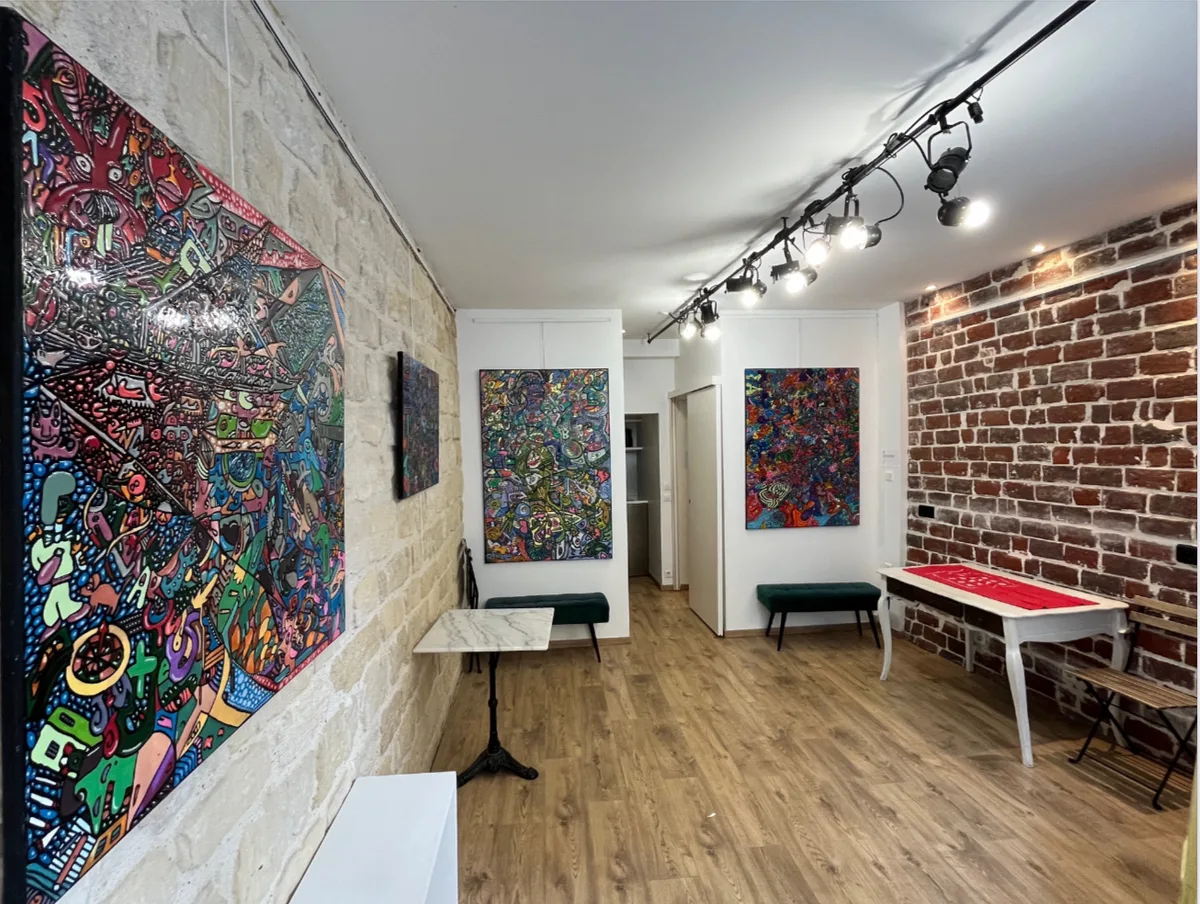
Paris is justifiably famous for the variety and quality of its commercial interiors. Along the Rivoli corridor and its adjacent streets, brands can find spaces with features including glass roofs bringing natural light into mid-building units, private courtyards offering outdoor activation possibilities, exposed stone walls and columns that provide an authentic Parisian aesthetic without additional dressing, dry basements suitable for storage and inventory management, and fitted kitchen facilities that support food-related activations or hospitality elements within a retail environment.
These architectural characteristics are highly relevant for fashion brands seeking to create immersive or editorial retail environments. The raw materiality of exposed stone and the elegance of a glass roof provide a ready-made backdrop that reduces the production costs associated with creating atmosphere from scratch in a neutral shell.
Mixed-Use and Flexible Formats
An increasing number of spaces in the 1st arrondissement are configured as flexible or mixed-use units that can accommodate a combination of retail sales, exhibition programming, press event hosting, and workshop delivery within a single hire. This flexibility is particularly valuable for brands that want to use a short-term Paris presence for multiple commercial purposes across a concentrated window such as Paris Fashion Week or a seasonal market moment.
| Space Type | Typical Size Range | Key Features | Best Suited For | Minimum Duration |
|---|---|---|---|---|
| Ground-floor storefront | 50 to 500+ sq m | High street frontage, display windows, high ceilings | Consumer pop-up, seasonal boutique | 1 week to 1 month |
| First-floor showroom | 80 to 300 sq m | Natural light, Haussmann ceilings, quiet environment | Wholesale showroom, press presentations | 2 weeks to 3 months |
| Duplex unit | 150 to 600 sq m | Ground and first floor combined, internal staircase | Fashion week activations with dual audience | 1 to 3 months |
| Courtyard or glass roof space | 100 to 400 sq m | Outdoor or semi-outdoor element, architectural interest | Experiential retail, brand events, exhibitions | 1 week to 1 month |
| Flexible mixed-use unit | 100 to 500 sq m | Multiple zones, kitchen possible, storage basement | Multi-format brand activations | 3 days to ongoing |
KEY TAKEAWAY: The diversity of space types along the Rue de Rivoli corridor means that a wide range of brand formats, budgets, and activation objectives can be accommodated, but identifying the right space type for your specific brief requires detailed knowledge of what is available and at what terms.
Choosing the right space type is only one part of the equation. Understanding the legal and leasing framework for short-term retail rental in Paris is equally important before any commitment is made.
The Legal and Leasing Framework for Hiring Retail Space in Paris
Quick answer: Short-term retail space in Paris is typically governed by either a bail dérogatoire (a derogatory lease for periods of up to 36 months) or by a convention d'occupation précaire for even shorter arrangements. These are distinct from standard French commercial leases, which carry significantly heavier obligations for both landlord and tenant. Understanding this framework is essential before signing any agreement for a pop-up store or short-term boutique in the Rivoli area.
France has a highly regulated commercial property market, and the standard French commercial lease, known as the bail commercial, carries substantial obligations including a minimum nine-year term with tenant protections that make it unsuitable for short-term retail activations. However, French law provides several alternative lease structures specifically designed for shorter occupancy periods that are widely used by international brands, pop-up retailers, and event organisers.
Bail Dérogatoire
The bail dérogatoire, sometimes referred to as a short-term commercial lease or bail précaire, allows landlords and tenants to agree on a lease duration of up to 36 months without triggering the protections of the standard bail commercial. For brands seeking a short-term presence in Paris for a Paris Fashion Week activation, a seasonal pop-up store, or a temporary showroom, this is typically the most appropriate lease structure. It must be agreed in writing before occupation begins and must be clearly documented as a derogatory arrangement by both parties. Once the combined duration of successive bail dérogatoire agreements at the same premises exceeds 36 months, the tenant may acquire the protections of a full commercial lease, which is an important compliance point for any brand planning a recurring annual presence in the same space.
Convention d'Occupation Précaire
For very short-term arrangements such as a single-week pop-up or a three-day event, a convention d'occupation précaire may be used. This form of agreement recognises the precarious and temporary nature of the occupation and can be structured around specific events or calendar windows. It provides the landlord with greater flexibility to end the arrangement and carries fewer protections for the occupying brand, making it particularly suitable for event-style uses including exhibitions, launch events, and market-style activations.
Autorisation d'Occupation Temporaire (AOT)
For spaces that occupy public land, such as spaces under public arcades, on public squares, or adjacent to public cultural institutions in the Rivoli area, an Autorisation d'Occupation Temporaire may be required from the relevant public authority. This is a separate and distinct process from private commercial leasing and requires engagement with the relevant arrondissement authority or the institution managing the public space. Requirements vary significantly depending on the specific location, the nature of the activity, and the duration of occupation.
IMPORTANT: Permit and leasing requirements for retail space on Rue de Rivoli vary by specific address, space type, intended use, and the arrondissement authority involved. This guide provides general orientation only. Brands are strongly advised to verify their specific requirements with a qualified French legal advisor before signing any lease or occupation agreement. You can also use the Fashion Week Venues permit guidance tool for an initial orientation on the types of authorisations that may be relevant to your Paris activation.
What International Brands Need to Know About French Legal Entities
A common concern among international brands approaching Paris for the first time is whether they need to establish a French legal entity before they can sign a lease or hire a retail space. While some landlords do require a French registered entity or a local guarantor, many short-term lease structures and pop-up arrangements can be entered into by foreign legal entities, subject to appropriate due diligence and sometimes the provision of an advance payment or deposit. Working with a knowledgeable local partner who understands the specific requirements of individual landlords and space types in the Rivoli area significantly reduces the friction involved in this process.
KEY TAKEAWAY: The French commercial property framework is nuanced and requires specialist guidance for any brand approaching short-term retail leasing on Rue de Rivoli. Using the correct lease structure from the outset prevents legal complications and protects both the brand's operational flexibility and its budget.
With the legal framework understood, the next critical question is what brands should expect to pay to hire retail space in this prime Paris location.
What Does It Cost to Hire Retail Space on Rue de Rivoli?
Quick answer: Rental costs for retail space on Rue de Rivoli and the surrounding 1st arrondissement vary considerably based on the specific block, ground floor versus upper floor, space size, lease duration, and fit-out condition. Rates for prime ground-floor positions on this street are among the highest in Paris and in Europe, reflecting the location's exceptional foot traffic and prestige. Brands should approach published listing prices as starting points rather than fixed benchmarks and should build in budget for fit-out, permits, staffing, and operational costs in addition to base rent.
It is important to be transparent about pricing in the Paris retail market: published rental figures for Rue de Rivoli and comparable prime Paris streets change frequently, vary substantially between individual spaces, and are often negotiated significantly below initial asking rates depending on the duration, the tenant's profile, and the specific landlord's priorities. For these reasons, this guide does not publish specific per-square-metre rental figures as directional estimates. Instead, brands are encouraged to use the Fashion Week Venues budget calculator to model realistic all-in costs for their specific brief.
Factors That Drive Cost Variation on Rue de Rivoli
Several factors will determine where within the overall cost range a specific space falls. Ground-floor spaces with arcade frontage on the most visible and highest-traffic sections of Rivoli command the highest rents, reflecting their direct commercial value. Upper-floor and first-floor spaces, despite often having superior architectural qualities for showroom and event use, generally carry lower base rental costs. Spaces with dry basements providing storage and inventory capacity may command a premium due to the practical value they add for operational retailers. Fit-out condition matters significantly: a fully fitted boutique with retail fixtures, lighting, and a usable kitchen will cost more to hire than an empty shell, but the all-in cost including fit-out may be lower depending on how well the existing fixtures suit the brand's needs.
Duration plays a major role. Very short-term arrangements of one to two weeks typically carry a higher daily or weekly cost relative to longer commitments, reflecting the landlord's preference for lower turnover and administrative burden. Minimum durations for individual spaces vary, and some premium Rivoli spaces have minimum hire periods of one month or more, which affects the economics for brands planning short activations around a specific calendar event.
Total Activation Budget Beyond Base Rent
Brands approaching Rue de Rivoli for the first time frequently underestimate the gap between the base rental cost and the total cost of a functioning retail activation. In addition to rent, a realistic budget must account for: fit-out and production costs including any reinstatement obligations at the end of the lease; permits and compliance costs including any required authorisations; retail staffing including multilingual sales staff appropriate for an international tourist-facing location; visual merchandising and inventory management; point-of-sale technology and payments infrastructure; marketing costs including digital advertising, influencer partnerships, and press outreach; and agency management fees if working with a full-service partner.
TIP: When modelling your budget, the all-in cost of a Rue de Rivoli activation is typically two to three times the base rental cost alone, once fit-out, staffing, permits, and marketing are included. Use the ROI calculator on Fashion Week Venues to assess whether the projected commercial return justifies the total investment for your specific activation model.
KEY TAKEAWAY: Cost transparency and realistic total-budget modelling are essential before committing to retail space on Rue de Rivoli. Base rent is only one component of a full activation budget, and the most commercially successful activations in this location are those that allocate appropriate resources across all operational categories.
Understanding cost is inseparable from understanding how Fashion Week and seasonal calendar timing affects both availability and pricing in this market.
Paris Fashion Week, Seasonal Calendars, and the Best Time to Activate on Rue de Rivoli
Quick answer: Paris Fashion Week, held twice annually in February or March for autumn or winter collections and in September or October for spring or summer collections, represents the peak commercial and media moment for brands activating in Paris. Rue de Rivoli, located at the centre of the fashion week geography between Saint-Honoré, the Palais Royal, and the major show venues, experiences an extraordinary concentration of press, buyers, influencers, and industry professionals during these windows, making them the most sought-after and most competitive periods for space hire.
Paris Fashion Week is more than a scheduling convenience. For international brands, particularly those without a permanent Paris address, the fashion week window offers a concentrated moment when the entire global fashion industry converges on a relatively small area of the city. Showrooms hosting wholesale buyers can see months' worth of commercial conversations compressed into a single week. Pop-up stores receive disproportionate press and social media coverage because the media infrastructure for fashion coverage is already mobilised and present in the city. Influencer partnerships have elevated impact because the influencer community is concentrated in Paris and actively seeking content opportunities.
The legacy of spaces like Colette, the pioneering concept store that operated on Rue Saint-Honoré until 2017, established a benchmark for experiential retail in this part of Paris that continues to influence what brands and consumers expect from activations in the neighbourhood. Fashion houses including Dior, KITH, and many emerging brands have used the Rivoli and Saint-Honoré corridor for flagship activations and temporary retail moments that generated significant global press coverage.
Beyond the fashion week windows, other seasonal moments create strong activation opportunities on Rue de Rivoli. The summer tourist season, when visitor volumes to the Louvre Museum and Tuileries Garden peak, creates a mass-market consumer opportunity that suits brands with broader lifestyle positioning. The December Christmas market season brings exceptional foot traffic to the central Paris retail districts. The Paris Museum Pass and City Card tourism infrastructure keeps visitor volumes elevated across most of the year.
DID YOU KNOW: Paris Fashion Week is consistently ranked as the most commercially influential of the four major fashion weeks, alongside New York, London, and Milan, in terms of wholesale order generation and global media coverage. Brands with a physical presence in the Rivoli corridor during fashion week benefit from this influence regardless of whether they participate directly in the official schedule.
Planning your calendar correctly requires a clear understanding of how far in advance spaces on Rue de Rivoli are committed during the fashion week periods. The most desirable spaces in the most strategically located blocks are typically committed months in advance for fashion week windows. Brands that approach the market three to six months ahead of their target activation date have a significantly wider range of options than those approaching with shorter lead times.
To understand the full planning timeline required for a Rue de Rivoli activation, use the timeline planning tool on Fashion Week Venues, which provides a framework for coordinating space selection, permit applications, fit-out, staffing, and marketing activities.
KEY TAKEAWAY: Paris Fashion Week is the highest-impact activation window for brands on Rue de Rivoli, but strong secondary opportunities exist across the tourist season and other calendar moments. Early engagement with the market, ideally three to six months before your target date, is essential to securing the right space.
Given all of these variables, understanding how to practically find, evaluate, and secure the right space is where the operational challenges of a Rivoli activation become most acute.
How to Find and Evaluate Retail Space on Rue de Rivoli
Quick answer: Retail space on Rue de Rivoli can be found through commercial property platforms, dedicated pop-up space marketplaces, direct outreach to building owners and managing agents, and through full-service agencies with established relationships in the Paris market. Each route has different strengths and limitations in terms of available inventory, transparency of terms, and support for international brands unfamiliar with the French market.
The Paris commercial property market operates across multiple channels simultaneously. Large commercial real estate firms including Knight Frank and Invesco manage premium retail assets on and around Rivoli at the institutional end of the market, dealing primarily with long-term anchor tenants and major brand flagships. These channels are not typically relevant for short-term pop-up or fashion week activations. General commercial property listing platforms such as LoopNet carry some Paris listings, though coverage of short-term and pop-up-specific inventory tends to be incomplete, and the platform's primary focus is on US markets.
Pop-Up Space Marketplaces
Dedicated pop-up and short-term retail space marketplaces offer a more targeted route for brands seeking temporary retail presence in Paris. These platforms aggregate spaces from a range of landlords and agents, allow filtering by neighbourhood, space type, size, and duration, and typically provide more transparency around the short-term leasing process than general commercial property platforms. However, the quality of listings, the accuracy of availability information, and the level of support provided to brands navigating the process vary significantly between platforms.
Full-Service Agencies
For international brands entering Paris without an existing network of property contacts, working with a full-service agency that combines space sourcing with activation management, permit guidance, fit-out coordination, and staffing provision offers the most comprehensive route to a successful Rivoli activation. Agency relationships with landlords and building managers in the Rivoli corridor can unlock spaces that are not publicly listed and can accelerate the negotiation process considerably. The trade-off is agency fees, which must be modelled as part of the total activation budget.
When evaluating any space on Rue de Rivoli, brands should assess the following factors in detail before committing: the specific block and its foot traffic profile; the ground floor area and total usable space including any basement storage capacity; the ceiling height and natural light quality relevant to retail display and photography; the facade and entrance presentation from the street; the accessibility for deliveries and fit-out teams; the condition of existing electrical, data, and HVAC infrastructure; the presence of any building access restrictions relevant to opening hours or noise; and any specific permit requirements associated with the space's location or previous use.
To explore currently available spaces and compare options across the Rivoli corridor and the wider Paris market, the Fashion Week Venues space marketplace provides a curated inventory of spaces suitable for fashion activations, showrooms, and pop-up retail.
| Discovery Route | Best For | Limitations | Lead Time Required |
|---|---|---|---|
| Commercial property firms (Knight Frank, Invesco) | Long-term flagship leases | Not suited to short-term or pop-up needs | 6 to 24 months |
| General listing platforms (LoopNet) | Initial market research | Incomplete short-term inventory, US-focused | Variable |
| Pop-up marketplaces | Short-term and event-focused needs | Variable listing quality and support | 2 to 8 weeks |
| Full-service agencies | International brands needing end-to-end support | Agency fees add to total budget | 2 to 6 months |
| Direct landlord outreach | Brands with existing Paris contacts | Requires local network and French language | Variable |
KEY TAKEAWAY: The most efficient route to finding and securing the right retail space on Rue de Rivoli depends on your brand's existing Paris network, your activation timeline, and the level of end-to-end operational support you need. International brands without established Paris relationships typically benefit most from working with a full-service agency from the earliest stage of the process.
Finding the right space is the beginning of the operational journey. What happens between space selection and the first day of trading determines whether an activation realises its full potential.
How Fashion Week Venues Supports Brands Activating on Rue de Rivoli
Fashion Week Venues is a full-service pop-up shop agency and space marketplace with Paris as its primary and anchor market. For brands planning to hire retail space on Rue de Rivoli or within the broader 1st arrondissement, Fashion Week Venues offers an integrated set of services and tools that address every stage of the activation process from initial brief through to post-activation analysis.
The agency's venue sourcing service is typically the entry point for brand teams. Rather than presenting a generic list of available spaces, the venue sourcing process begins with a detailed brief that captures the brand's target consumer, required space type and size, budget parameters, calendar window, and activation objectives. This brief-led approach ensures that the spaces presented for consideration are genuinely relevant to the brand's needs rather than simply available on the market at the relevant time.
Once a space is shortlisted, the concept direction service helps brand teams translate their creative vision for the space into a practical activation concept that takes account of the specific architectural features of the Rivoli property, the target consumer profile of the location, and the production constraints of the available build time. For fashion activations in Haussmann-style buildings with distinctive features like glass roofs, exposed stone columns, or private courtyards, the concept direction process is essential for ensuring the creative vision and the physical reality of the space align.
The production and build service manages the physical fit-out of the space, coordinating contractors, managing building access, ensuring compliance with the landlord's reinstatement requirements, and delivering the space on time and within budget. This is an area where international brands without Paris-based production relationships frequently encounter delays and cost overruns when working independently.
Operational services including retail staffing and activation management ensure that the space functions as a high-performing retail environment from opening day. For a Rue de Rivoli location serving an international tourist audience, multilingual staffing and a professional customer service standard are particularly important commercial requirements.
The agency's tool suite supports brands at every stage of the planning and decision-making process. The budget calculator provides a structured framework for estimating total activation costs. The ROI calculator helps brand teams build a commercial case for the investment. The compare tool allows side-by-side evaluation of shortlisted spaces. The permits tool provides orientation on the authorisation landscape for Paris retail activations.
The twin concept, which allows two complementary brands to share a single space and split costs while generating mutual audience benefit, is particularly relevant for emerging brands or international brands entering the Paris market for the first time who want to achieve a Rivoli address without bearing the full cost of a solo activation.
It is important to be clear about what Fashion Week Venues does not guarantee: no agency can guarantee the availability of any specific space, the approval of any permit application, or the commercial outcomes of any activation. What Fashion Week Venues provides is specialist knowledge, established market relationships, and an integrated service infrastructure that significantly increases the probability of a smooth, well-executed, and commercially productive activation in one of the world's most competitive retail locations.
Brands new to working with a Paris pop-up agency can find a detailed explanation of the process, typical timelines, and what to expect at each stage on the guide to hiring an agency.
KEY TAKEAWAY: Fashion Week Venues offers brand teams a single, integrated partner for every aspect of a Rue de Rivoli retail activation, from space identification and permit navigation through to fit-out, staffing, and post-activation analysis. The agency is most valuable for international brands entering Paris without an established local operational network.
To compare neighbourhoods and space types, explore the Paris city hub on Fashion Week Venues and shortlist spaces that match your brief, budget, and calendar window.
Operational Considerations for Running a Retail Space on Rue de Rivoli
Quick answer: Successfully operating a retail space on Rue de Rivoli requires careful advance planning across several operational dimensions including staffing, inventory management, security, technology infrastructure, customer service standards, and daily logistics. The high foot traffic and international tourist profile of this location create both exceptional commercial opportunity and specific operational demands that differ from operating in less prominent retail environments.
Staffing and Customer Service
The consumer profile of Rue de Rivoli is notably international. The proximity of the Louvre Museum, the Tuileries Garden, and the major Paris tourist landmarks means that a significant proportion of walk-in visitors will be non-French speakers, including visitors from English-speaking markets, Asia, the Middle East, and across Europe. For brands seeking to maximise sales conversion and deliver a brand-appropriate customer experience, multilingual staffing is not a luxury but a practical commercial requirement. Staff should also be briefed on the brand's story and positioning in a way that communicates effectively to consumers encountering the brand for the first time, which is a common scenario in a tourist-dense location.
Technology, POS, and Payments
Modern retail operations on Rue de Rivoli require robust technology infrastructure including high-speed WiFi, reliable point-of-sale systems, and payment terminals capable of processing international cards, contactless payments, and digital wallets used by consumers from different markets. Some Haussmann-style buildings on Rivoli have older infrastructure that requires upgrading or supplementing before a technology-dependent retail operation can function reliably. This should be assessed during the space evaluation process and built into the fit-out plan and budget accordingly.
Inventory and Storage
Managing inventory in a high-footfall Paris location requires both a clear restocking strategy and adequate on-site storage. The ground floor area of a Rivoli boutique is typically too valuable to dedicate to storage, making a dry basement or accessible back-of-house storage space an important operational requirement for any brand planning to maintain adequate stock levels across a multi-week or multi-month activation. This is a factor that brands should assess explicitly when evaluating specific spaces, rather than assuming storage will be available.
Security
Retail security in a high-value and high-footfall location like Rue de Rivoli requires a considered approach. Many brands operating in this area employ a combination of in-store security personnel, electronic article surveillance systems, and inventory management protocols to maintain appropriate loss prevention standards. The security requirements for a fashion boutique or brand showroom differ from those of a high-volume consumer retailer, and the security solution should be proportionate to the specific format and inventory profile of the activation.
Deliveries and Logistics
Paris has specific rules governing delivery vehicle access to central arrondissement streets, and Rue de Rivoli, as a major arterial road in the 1st arrondissement, has time-restricted access for commercial vehicles. Brands should confirm the delivery access arrangements for their specific space before finalising their operational plan, as failure to account for these restrictions can cause significant disruption during fit-out and ongoing restocking operations.
KEY TAKEAWAY: Operational planning for a Rue de Rivoli retail activation must address staffing, technology, inventory, security, and logistics in detail before opening day. Each of these areas has specific requirements driven by the location's international consumer profile and the physical characteristics of Haussmann-era buildings.
Common Myths About Hiring Retail Space on Rue de Rivoli
MYTH: International brands must have a French legal entity before they can hire retail space on Rue de Rivoli.
FACT: While some landlords require a French registered company or local guarantor, many short-term lease structures including the bail dérogatoire and convention d'occupation précaire can be entered into by foreign legal entities, particularly when working with an experienced local agency partner. The specific requirements depend on the individual landlord, the lease structure, and the duration of the proposed occupation. International brands should seek legal advice specific to their situation rather than assuming a French entity is always mandatory.
MYTH: Paris Fashion Week is the only viable calendar window for a Rue de Rivoli retail activation.
FACT: While Paris Fashion Week is undeniably the highest-impact window for fashion-focused brands, Rue de Rivoli generates exceptional foot traffic and commercial opportunity across multiple other moments in the calendar. The summer tourist season, the December holiday period, major exhibition openings at the Louvre Museum, and other cultural calendar moments all create strong activation windows. The right calendar choice depends on the brand's target audience, commercial objectives, and budget, not on a one-size-fits-all assumption about fashion week being the only option.
MYTH: Commission brokers and property agents are the only way to access spaces on Rue de Rivoli.
FACT: Dedicated pop-up space marketplaces, full-service agencies with established landlord relationships, and direct outreach to building owners all provide viable routes to available spaces on Rue de Rivoli. Commission-based brokers serve an important function in the market but are not the only or necessarily the most efficient route for brands seeking short-term pop-up or fashion week-oriented spaces. A marketplace or agency approach often provides better inventory visibility and more integrated operational support than a traditional property broker.
MYTH: Short-term leases in Paris are legally straightforward and do not require specialist advice.
FACT: France's commercial property law is among the most complex in Europe, and the specific rules governing bail dérogatoire agreements, conventions d'occupation précaire, and any required public authorisations such as the AOT are not straightforward for brands without prior experience in the French market. Errors in lease structuring can result in unintended acquisition of full commercial lease protections and obligations, compliance issues with the relevant arrondissement authority, or contractual disputes with landlords. Specialist legal guidance and an experienced local agency partner are strongly recommended for any brand entering the Paris short-term retail market.
MYTH: A Rue de Rivoli address is only accessible to large brands with very substantial marketing budgets.
FACT: While the most prominent and largest ground-floor spaces on Rue de Rivoli do command premium rental rates, the broader Rivoli corridor and its adjacent streets offer a range of space sizes and configurations that can be appropriate for emerging brands and smaller activation budgets. First-floor showroom spaces, courtyard units, mixed-use flexible formats, and co-activation arrangements such as the twin concept allow brands at different stages of growth to benefit from a Rivoli-adjacent address without bearing the full cost of a prime ground-floor flagship location.
Frequently Asked Questions About Hiring Retail Space on Rue de Rivoli
What are the most sought-after locations for renting retail space on Rue de Rivoli in Paris?
The most competitive sections of Rue de Rivoli for short-term retail hire are the blocks between the Palais Royal and Place Vendôme in the 1st arrondissement, particularly those with ground-floor arcade frontage and direct visibility from the street. Addresses near the Louvre-Rivoli metro entrance also carry premium value due to the combination of underground transit access and proximity to the Louvre Museum visitor flow. Adjacent streets including Rue Saint-Honoré and Rue des Petits-Champs offer compelling alternatives for brands seeking a prestigious address without the direct competition for the most visible Rivoli frontage positions.
How much does it cost to hire retail space on Rue de Rivoli?
Costs vary significantly based on the specific block, floor, space size, condition, and lease duration. Prime ground-floor positions on the most visible sections of Rue de Rivoli are among the most expensive retail addresses in Europe. Upper-floor and courtyard spaces carry lower base rental costs but may require more investment in fit-out. Total activation costs including fit-out, staffing, permits, and marketing typically exceed the base rental cost by a substantial margin. Use the Fashion Week Venues budget calculator to model realistic all-in costs for your specific brief, as published headline rents represent only one component of a full activation budget.
What is the minimum duration for hiring retail space on Rue de Rivoli?
Minimum hire periods vary by space and landlord. Some flexible and event-oriented spaces in the Rivoli area are available for periods as short as three to five days, while others have minimum commitments of one month or longer. Spaces in highest demand during Paris Fashion Week windows may require a minimum commitment that extends beyond the fashion week period itself. The bail dérogatoire structure allows for periods up to 36 months without triggering standard commercial lease protections, giving brands flexibility to negotiate a duration appropriate to their specific activation calendar.
Do I need a French company to hire retail space on Rue de Rivoli?
Not necessarily. Many short-term lease structures available for pop-up and temporary retail on Rue de Rivoli can be entered into by foreign legal entities. Some landlords require a local guarantor or advance payment rather than a French company registration. The specific requirements depend on the individual landlord, the lease format, and the duration of the proposed occupation. Working with a full-service agency that has established relationships with Rivoli-area landlords can help international brands navigate these requirements and present their application in the most credible possible way.
What permits are required to operate a pop-up store on Rue de Rivoli?
Permit requirements depend on the specific space, its location relative to public land, the intended use, and the duration of the activation. Spaces on private land under a bail dérogatoire typically require fewer public authorisations than spaces occupying public arcades or streets under an Autorisation d'Occupation Temporaire. Any retail activation that involves exterior signage, outdoor elements, or use of the public pavement may require additional permits from the relevant arrondissement authority. Requirements vary and change regularly, so specialist guidance from a French legal advisor and an experienced Paris agency is essential before any permit applications are submitted.
How far in advance should I plan a retail activation on Rue de Rivoli during Paris Fashion Week?
For Paris Fashion Week windows, which are the most competitive periods for space availability on Rue de Rivoli, brands should begin the space search process a minimum of three to four months in advance, and ideally six months or more for the most desirable spaces. This lead time is required to identify suitable spaces from a meaningful range of options, negotiate and execute the lease agreement, secure any required permits, plan and execute the fit-out, recruit and brief staff, and develop and activate the marketing and PR strategy for the launch. Brands approaching with shorter lead times will face a significantly narrowed range of available options.
What types of retail space are available on Rue de Rivoli for short-term hire?
The Rivoli corridor offers ground-floor storefronts, first-floor and duplex showroom configurations, courtyard spaces with outdoor elements, units with glass roofs and distinctive architectural features including exposed stone walls and columns, flexible mixed-use spaces suitable for retail combined with exhibition or event programming, and spaces with dry basement storage capacity. The right space type depends on whether the brand needs maximum consumer foot traffic exposure, a more controlled environment for wholesale and press appointments, or a multi-purpose space that serves multiple activation objectives simultaneously.
Is Rue de Rivoli suitable for a fashion showroom as well as a consumer pop-up store?
Yes. The street's combination of proximity to the major fashion houses, excellent metro access at Louvre-Rivoli and Châtelet, and the concentration of press and buyers in the surrounding arrondissement during Paris Fashion Week makes it genuinely suitable for both consumer-facing and trade-facing activations. First-floor and duplex spaces in particular offer an effective combination of ground-floor consumer visibility and upper-floor showroom privacy that works well for brands pursuing both objectives simultaneously during fashion week.
What are the benefits of a Rue de Rivoli address for brand positioning?
A Rue de Rivoli address communicates brand credentials in Paris at a level that few other streets can match. The historical and cultural associations of the street, its adjacency to the Louvre Museum and Tuileries Garden, its proximity to the luxury retail districts of Saint-Honoré and Vendôme, and the established presence of major brands including Zara, Sephora, and Mango all contribute to a positioning signal that is immediately understood by press, buyers, consumers, and retail industry professionals globally. For international brands seeking to establish or reinforce a Paris market presence, the address itself carries significant brand equity beyond the direct commercial traffic it generates.
How do I evaluate whether a specific Rue de Rivoli space is right for my brand?
Space evaluation should cover the specific block and its consumer profile; the ground floor area and usable configuration including any basement storage; ceiling height and natural light quality; facade presentation and street visibility; accessibility for deliveries and fit-out; existing infrastructure including electrical capacity, data connectivity, and air conditioning; the minimum hire duration and lease structure; and any specific permit requirements or building restrictions. Using a structured comparison framework, such as the compare tool available through Fashion Week Venues, helps ensure that all relevant factors are assessed consistently across multiple shortlisted spaces before a final decision is made.
Can emerging or independent brands afford to activate on Rue de Rivoli?
Yes, though the approach requires careful strategy and realistic budget planning. Emerging brands can access the Rue de Rivoli corridor through several routes that reduce the cost barrier of a solo flagship activation. Co-activation arrangements with a complementary brand allow the rental and fit-out costs to be shared while both brands benefit from the combined audience and the prestige address. First-floor and courtyard spaces carry lower base rental costs than prime ground-floor positions. Activations planned for shorter durations and for calendar moments outside the peak fashion week period are typically more affordable. A smaller, well-executed activation in the right space is consistently more effective than an overextended activation in a more prominent space that exceeds the brand's operational capabilities.
What is the difference between a bail dérogatoire and a standard commercial lease in France?
A standard French commercial lease, known as a bail commercial, carries a minimum nine-year term and significant tenant protections that make it unsuitable for short-term retail activations. A bail dérogatoire is a legally distinct shorter-term lease structure available for periods of up to 36 months that allows both parties to agree a temporary occupation without triggering the protections and obligations of the full commercial lease framework. For pop-up stores, showrooms, and temporary retail activations on Rue de Rivoli, the bail dérogatoire or the convention d'occupation précaire for even shorter periods are the appropriate legal structures. Specialist legal advice is essential to ensure the correct structure is used and properly documented.
How does foot traffic on Rue de Rivoli compare to other Paris retail streets?
Rue de Rivoli is consistently ranked among the highest foot traffic retail streets in Paris, driven by the combination of international tourist flows generated by the Louvre Museum and Tuileries Garden, mass transit access through the Louvre-Rivoli and Châtelet metro stations, and the density of retail, cultural, and hospitality anchors along its length. While Rue du Faubourg Saint-Honoré and Avenue Montaigne may attract a higher spend per visitor among luxury consumers, Rue de Rivoli generates a significantly higher total volume of foot traffic, making it particularly valuable for brands whose activation objectives include broad awareness, high sales volume, or international market reach.
What marketing and influencer strategy should accompany a Rue de Rivoli retail activation?
A Rue de Rivoli activation benefits most from a marketing strategy that combines local and international digital media, press and trade PR targeting the relevant fashion and lifestyle media present in Paris during the activation window, influencer partnerships activated specifically during the Paris Fashion Week or seasonal campaign period, and organic social content generated from the distinctive architectural and cultural environment of the Rivoli location itself. The visual quality of Haussmann-era interiors with features like glass roofs, exposed stone, and high ceilings makes them naturally strong content environments that generate shareable imagery. Brands should plan the marketing and influencer strategy as an integral part of the activation brief rather than as an afterthought once the space is confirmed.
How does the twin co-activation concept work for Rue de Rivoli?
The twin concept allows two complementary brands to share a single space on Rue de Rivoli or a comparable Paris address, dividing the space into two distinct but coherent brand environments that are presented together to consumers. The arrangement splits the base rental cost and fit-out investment between the two brands while creating a combined audience and press proposition that is often more interesting to media and influencers than a single-brand activation. The most effective twin pairings involve brands with complementary rather than competing positioning, for example a fashion brand paired with a beauty or lifestyle brand, where each brand's audience adds genuine commercial value to the other. Fashion Week Venues manages the twin co-activation concept and handles the practical coordination between brands.
Conclusion: Making Your Rue de Rivoli Activation a Commercial Success
Hiring retail space on Rue de Rivoli represents one of the most powerful commercial and brand-building moves available to fashion and lifestyle brands operating in the international market. The street's combination of world-class foot traffic, cultural landmark adjacency, luxury retail proximity, and deep historical prestige creates an activation environment that is difficult to replicate anywhere else in Europe. The Louvre Museum, Tuileries Garden, Palais Royal, Place Vendôme, and the entire Saint-Honoré corridor converge here in a way that amplifies every brand interaction, from a walk-in consumer purchase to a fashion week press visit to a wholesale buyer showroom appointment.
Success on Rue de Rivoli, however, is not automatic. It requires a clear location strategy that matches the right block to the right consumer profile, a realistic total budget that accounts for all operational costs beyond base rent, a legally sound lease structure appropriate to the duration and nature of the activation, early planning to secure the best available spaces particularly for fashion week windows, and an operational infrastructure covering staffing, technology, inventory, security, and logistics that is proportionate to the demands of one of the world's most competitive retail environments.
For international brands approaching this market without an established Paris network, working with a full-service partner with deep market knowledge and operational capability is the most reliable route to a well-executed and commercially productive activation. The combination of space knowledge, permit expertise, fit-out capability, and activation management that a specialist agency provides can make the difference between a Rue de Rivoli activation that achieves its objectives and one that falls short of its potential.
To move from research to activation, start exploring available spaces on the Fashion Week Venues marketplace and build a focused brief for your target neighbourhood, space type, and calendar window.