Securing a pop-up store lease in Paris requires more than browsing a listings platform. It demands a clear understanding of French lease structures, neighbourhood dynamics, permit requirements, seasonal calendar windows, and the logistical realities of activating a temporary retail space in one of the world's most competitive fashion capitals. Whether you are a global luxury house testing a new product line, an emerging designer launching a debut collection, or an international brand entering the French market for the first time, Paris rewards brands that plan with precision. Fashion Week Venues operates as a full-service pop-up agency and space marketplace, supporting brands at every stage of the process from initial space discovery through to activation management and post-event analytics. This guide covers everything you need to know before signing a short-term lease in Paris.
What Is a Pop-Up Store Lease in Paris and How Does It Work?
Quick answer: A pop-up store lease in Paris is a short-term agreement that allows a brand to occupy a commercial space for a defined period, typically ranging from a single day to several months. These leases operate under specific French legal frameworks that differ significantly from standard long-term commercial leases and require careful navigation to avoid compliance issues.
In France, commercial property is governed by a robust legal framework. Standard commercial leases, known as baux commerciaux, are designed for long-term occupancy and carry statutory protections and obligations that make them entirely unsuitable for temporary retail. For short-term retail activations, two primary legal mechanisms are relevant: the bail dérogatoire and the convention d'occupation précaire.
Bail Dérogatoire: The Short-Term Commercial Lease
The bail dérogatoire, sometimes called a bail précaire, allows parties to agree on a commercial tenancy of up to 36 months without triggering the statutory protections of a standard commercial lease (bail commercial). Under French law, specifically Articles L.145-5 of the Code de Commerce, both landlord and tenant must explicitly agree in writing that the lease falls outside the standard commercial lease framework. Once the 36-month threshold is reached without either party vacating or formalising a new arrangement, the tenancy automatically converts to a full commercial lease, which carries substantially different obligations for both sides.
For pop-up activations lasting a few days to a few weeks, a simpler convention d'occupation précaire or a short-term rental agreement drafted under civil law may be used. The precise structure depends on the space type, the building's legal classification, the intended use, and the duration. Requirements vary by arrondissement, space type, and the specific landlord's preferences.
IMPORTANT: French lease law is complex and nuanced. Always verify your specific lease structure with a qualified French legal advisor or notaire before signing any agreement. Fashion Week Venues recommends using the permit and compliance guidance tool as a starting point, but this does not substitute legal advice.
Authorisation d'Occupation Temporaire (AOT)
In some cases, particularly when activating in publicly owned spaces, parks, pavilions, or spaces associated with public institutions, brands may need an Autorisation d'Occupation Temporaire (AOT). This is a temporary occupation permit granted by a public authority rather than a private landlord. AOTs have their own procedural requirements, lead times, and conditions. They are common for activations in areas like the Tuileries Garden, certain pavilions in the Marais, or spaces adjacent to public monuments.
What Makes a Pop-Up Lease Different from a Standard French Commercial Lease?
The differences are material. A standard bail commercial in France gives the tenant a statutory right to renew after nine years and provides significant protections around eviction and rent review. A short-term pop-up agreement carries none of these protections by design, offering flexibility in exchange for reduced statutory rights. For brands, this means the exit is clean, the commitment is finite, and the financial exposure is bounded. However, it also means there is less legal protection if a landlord fails to deliver the space as agreed, which makes due diligence on the space owner and the agreement itself critically important.
DID YOU KNOW: Many Parisian landlords are now actively marketing their spaces for short-term pop-up use during Paris Fashion Week, Paris Design Week, and FIAC because the daily or weekly rates for short-term pop-up leases frequently exceed what they would earn from a long-term tenant on a per-day basis.
KEY TAKEAWAY: A pop-up store lease in Paris operates under a distinct legal framework from standard French commercial leases. Understanding the difference between a bail dérogatoire, a convention d'occupation précaire, and an AOT is essential before committing to any space. Professional guidance is strongly recommended.
Understanding the legal structure of your lease is the foundation, but choosing the right neighbourhood is equally critical to the commercial success of any Paris pop-up activation.
Paris Neighbourhoods for Pop-Up Retail: A District-by-District Guide
Quick answer: The best neighbourhoods for a pop-up store lease in Paris depend on your brand positioning, target audience, budget, and calendar. Le Marais, Saint-Germain-des-Prés, Saint-Honoré, Champs-Élysées, and Montmartre each offer distinct commercial environments, foot traffic profiles, and space typologies suited to different brand strategies.
Paris is not a monolithic retail market. Each arrondissement and neighbourhood carries its own cultural identity, commercial character, and visitor profile. For brands planning a temporary retail activation, neighbourhood selection is a strategic decision that affects everything from daily footfall and media visibility to the type of consumer who walks through the door.
To compare neighbourhoods and space types side by side, explore the Paris city hub on Fashion Week Venues and shortlist spaces that match your brief, budget, and calendar window.
Le Marais: The Creative and Cultural Heart of Paris Pop-Up Retail
Le Marais, spanning parts of the 3rd and 4th arrondissements, is widely regarded as the most active pop-up retail neighbourhood in Paris. Its dense concentration of independent boutiques, galleries, concept stores, and heritage architecture makes it a natural environment for brand activations. The Rue des Francs-Bourgeois, Rue de Bretagne, Rue de Turenne, and the streets surrounding Place des Vosges are among the highest-traffic retail corridors in the district.
The Marais district attracts a sophisticated mix of local Parisians, international tourists, fashion industry professionals, and creative community members. It is particularly strong for brands in fashion, beauty, lifestyle, art, and design. During Paris Fashion Week, the neighbourhood becomes a genuine industry hub, with showrooms, presentations, and after-events concentrated in and around the Marais.
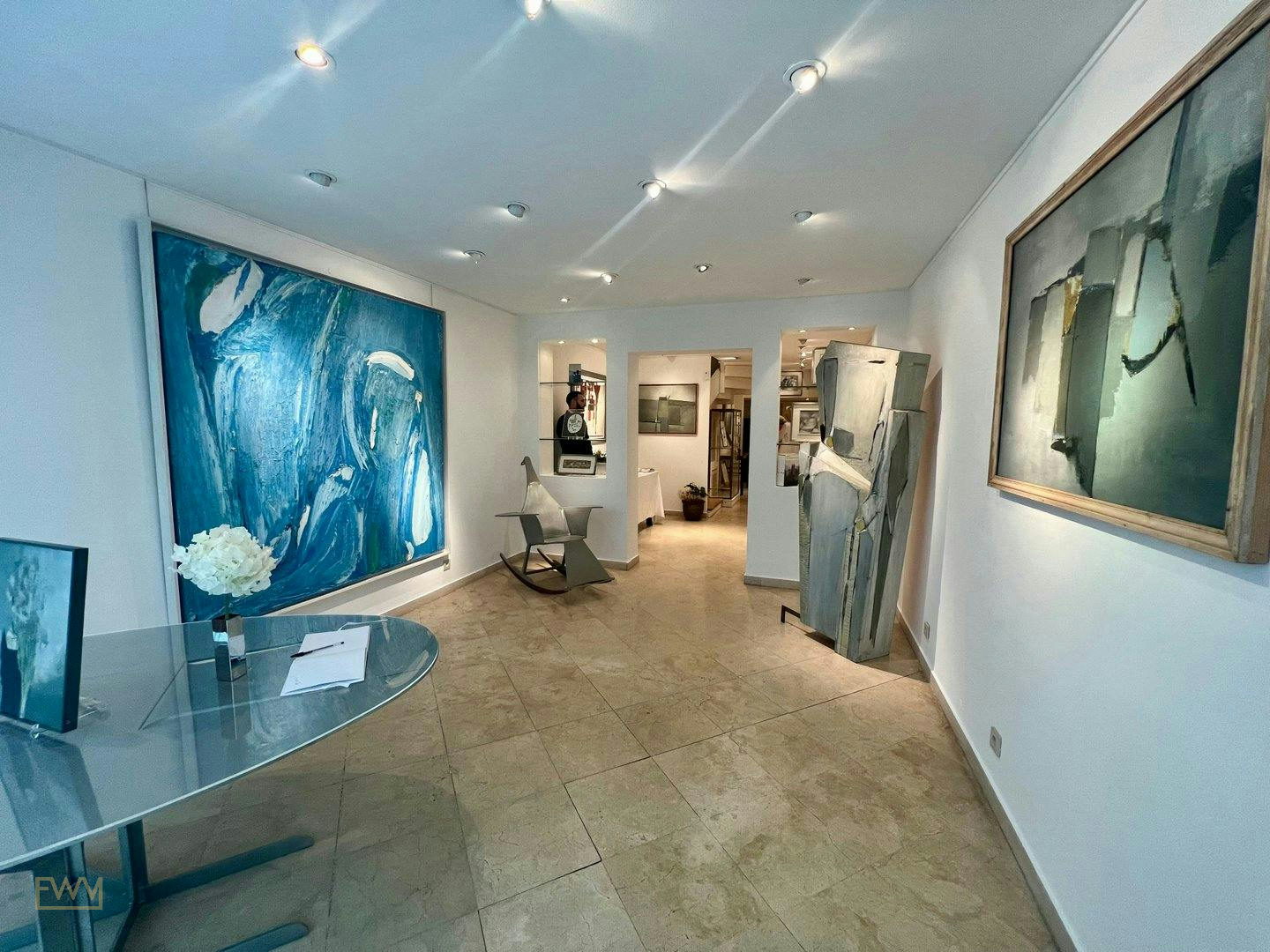
Space types in Le Marais range from intimate boutique units with exposed stone walls and hardwood floors to larger gallery formats with polished concrete floors, steel pillars, exposed stone columns, and high ceilings suitable for installation-led activations. Galerie Joseph, Espace Turenne, Galerie Turenne, the Charlot Store, and similar spaces in the Galerie d'Art and Galerie d'exception categories have established track records as pop-up and event venues.
Proximity to the Picasso Museum and the broader cultural infrastructure of the Marais means that spaces in this neighbourhood benefit from consistent cultural tourism in addition to fashion-specific foot traffic. The Le Bon Marché Rive Gauche, while technically located just across into the 6th arrondissement, exerts significant commercial gravity on the upper Marais retail circuit.
Saint-Germain-des-Prés: Luxury, Heritage, and Editorial Positioning
Saint Germain des Prés is the traditional home of Parisian intellectual and literary culture and has evolved into one of the city's premier luxury retail corridors. Brands seeking editorial positioning, alignment with heritage French culture, and proximity to high-net-worth Parisian consumers find this neighbourhood highly effective. Space types here tend toward boutique and showroom formats rather than large-format retail, and the design aesthetic typically favours refined, minimal interiors.
Rue Saint-Honoré and Place Vendôme: Prestige and Global Luxury
The Rue Saint-Honoré corridor, extending from the 1st arrondissement toward the Place Vendôme, is the apex of Parisian luxury retail. This neighbourhood is the natural home of global luxury houses and is particularly relevant for high jewellery, haute couture, and prestige beauty brands. Space costs in this area reflect its commercial prestige. The Rue de Rivoli running along the northern edge of the Tuileries connects this district to the broader Châtelet and République retail catchment.
Champs-Élysées and the 8th Arrondissement: Scale and Mass Visibility
The Champs-Élysées offers unmatched footfall volume and global brand visibility. Activations here are suited to brands seeking mass-market reach, tourist capture, and large-format experiential retail. The commercial environment is less editorially curated than the Marais or Saint-Germain but offers scale that is hard to replicate elsewhere in the city.
Montmartre and Pigalle: Emerging Creative Positioning
Montmartre and the adjacent Pigalle neighbourhood attract brands seeking a more bohemian, creative, and emerging positioning. Foot traffic is strong among younger consumers, creative professionals, and international visitors. Space costs tend to be more accessible than the established luxury corridors, making this area attractive for emerging designers and brands with tighter activation budgets.
République, Châtelet, and Paris 14e
The République area bridges the Marais and more easterly neighbourhoods, offering a mix of independent retail, gallery spaces, and event venues that attract a young, culturally engaged audience. The Paris 14th arrondissement (Paris 14e), while further from the central luxury retail core, offers interesting gallery and studio formats that work well for brand presentations, photo shoots, filming, and seminar-style brand events.
| Neighbourhood | Best For | Space Types | Typical Audience | Calendar Fit |
|---|---|---|---|---|
| Le Marais (3rd/4th) | Fashion, beauty, art, design | Gallery, boutique, showroom | Industry, tourists, locals | Fashion Week, FIAC, Paris Design Week |
| Saint-Germain-des-Prés (6th) | Luxury, heritage, editorial | Boutique, showroom | HNW locals, cultural tourists | Fashion Week, Design Week |
| Saint-Honoré/Vendôme (1st) | Prestige luxury, fine jewellery | Boutique, concept store | Global luxury consumer | Year-round, Fashion Week peak |
| Champs-Élysées (8th) | Mass visibility, experiential | Large-format retail | Mass market, tourists | Year-round |
| Montmartre/Pigalle (18th) | Emerging brands, creative positioning | Gallery, studio, boutique | Younger, creative audiences | Paris Design Week, cultural events |
| République/Châtelet (11th/1st) | Lifestyle, emerging designers | Event space, gallery, studio | Young professionals, creatives | Fashion Week adjacent |
KEY TAKEAWAY: Neighbourhood selection in Paris is a strategic decision, not just a logistical one. The right arrondissement aligns your space with your brand positioning, target audience, and the specific cultural calendar window you are activating around.
Once you have identified the right neighbourhood, the next priority is understanding the different types of spaces available and how to match them to your activation concept.
Types of Pop-Up Spaces Available for Short-Term Lease in Paris
Quick answer: Paris offers a wide range of short-term retail space types including boutique storefronts, gallery formats, apartment showrooms, art galleries, photo studios, concept stores, and purpose-built event spaces. The right space type depends on your product category, visual merchandising requirements, brand positioning, and activation format.
Paris has one of the most diverse commercial real estate inventories in Europe for short-term and pop-up use. Understanding the different space typologies helps brands brief their agency or platform search more effectively.
Boutique and Storefront
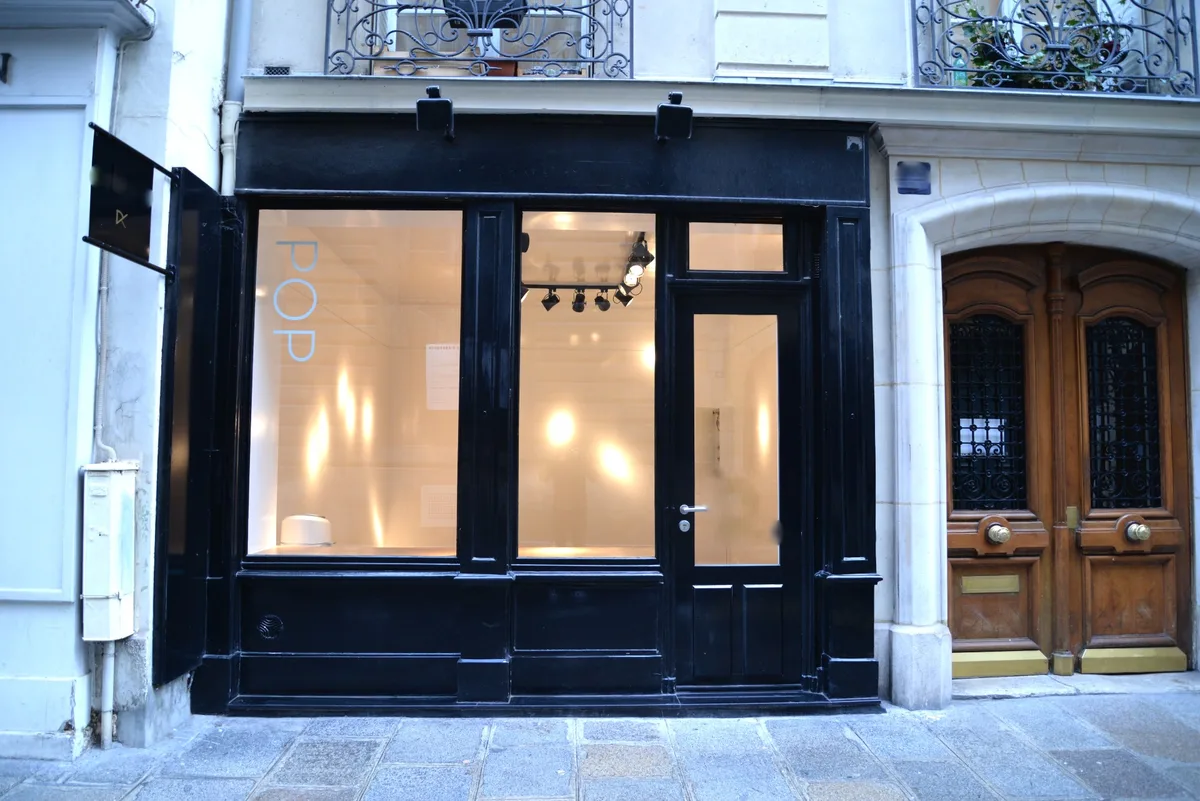
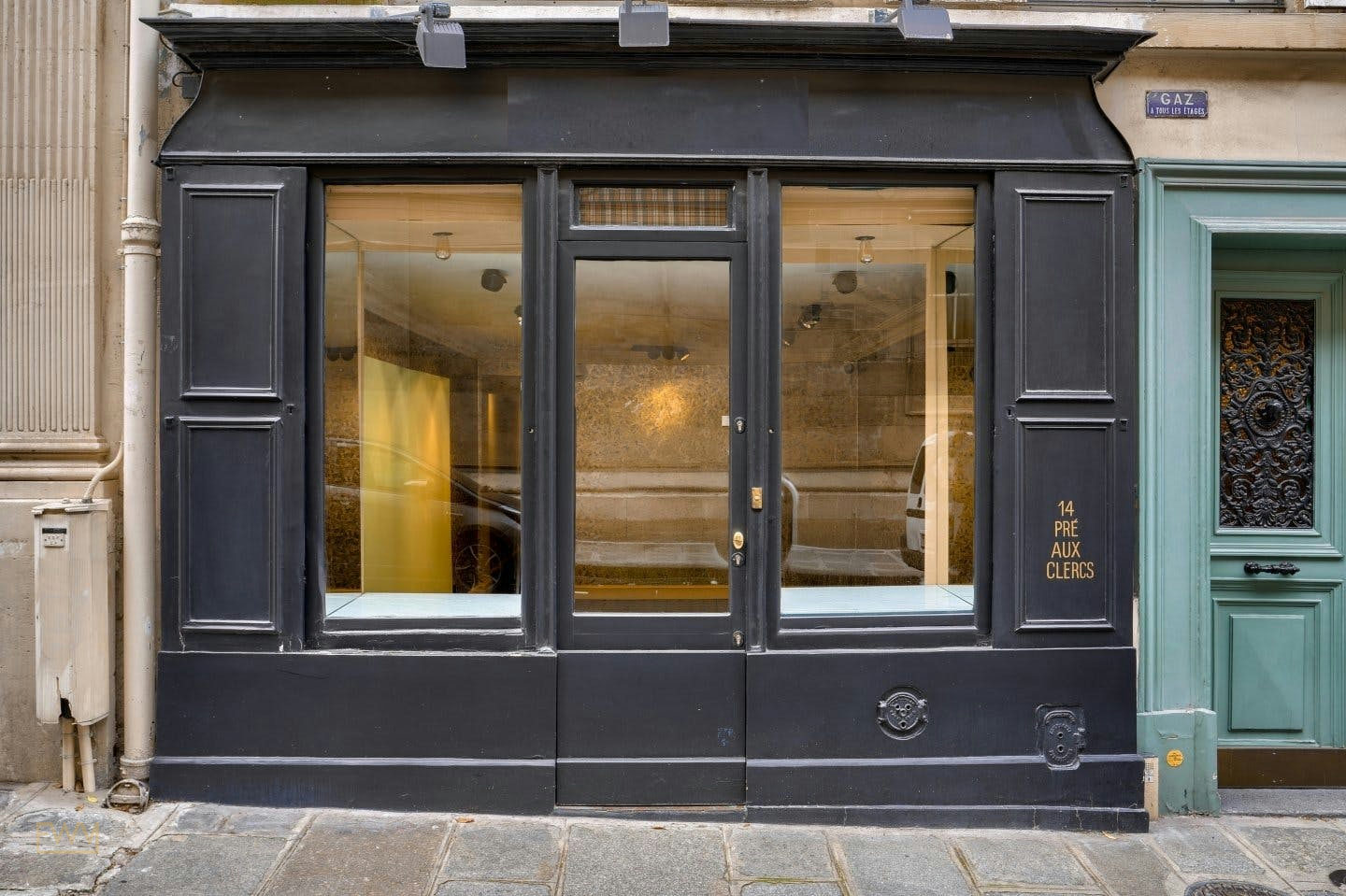
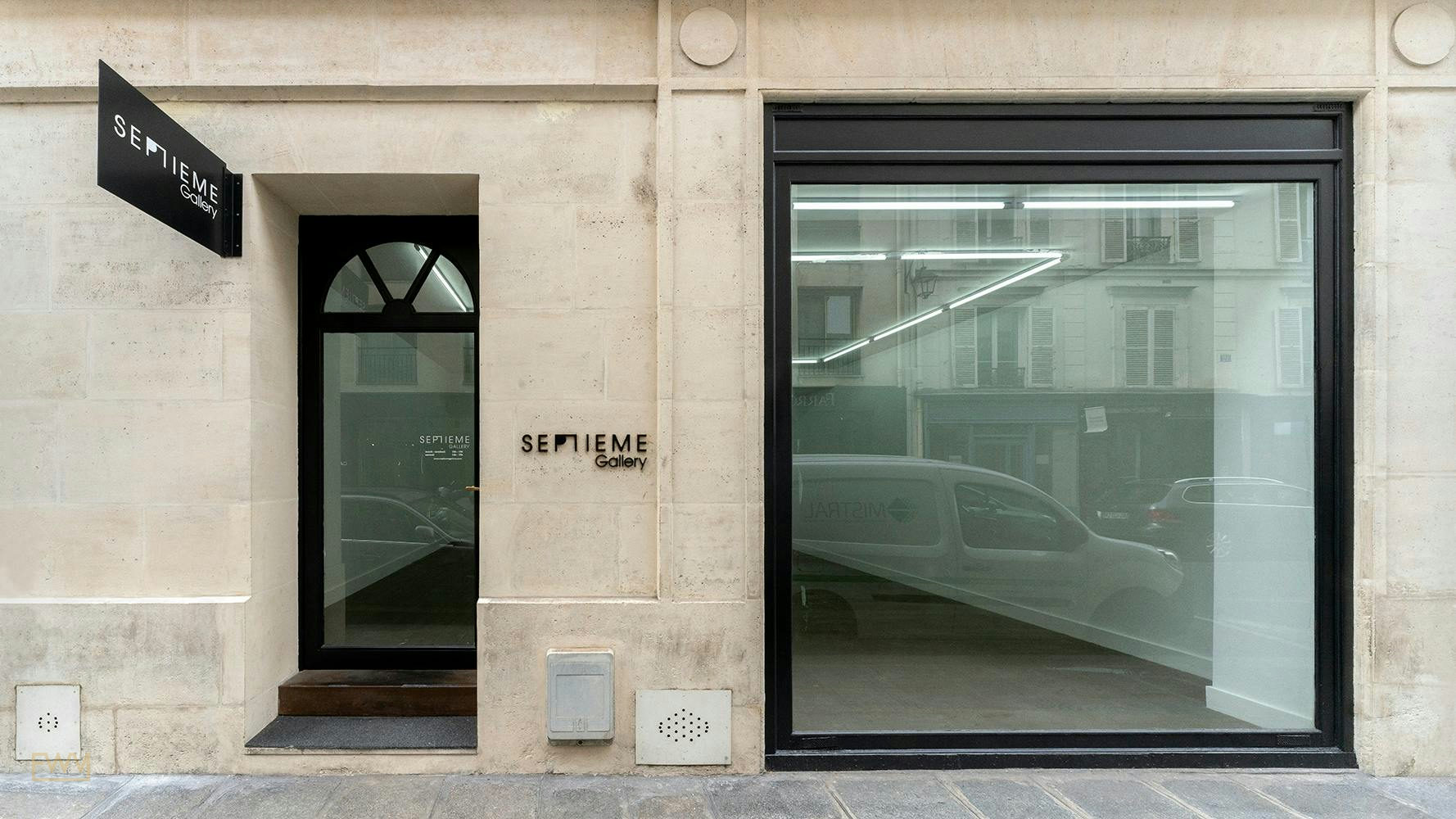
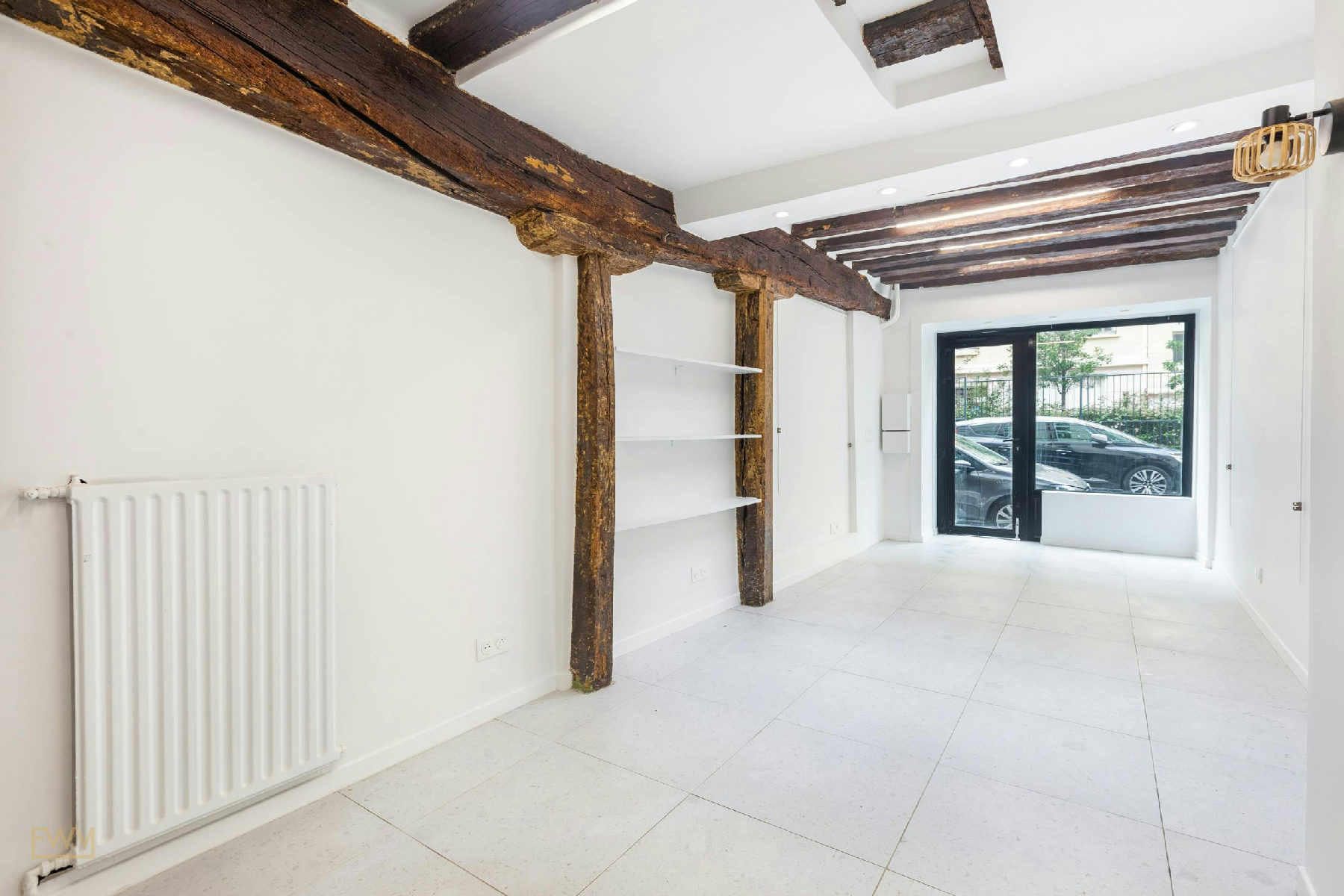
Traditional boutique units with street-facing storefronts are the most recognisable pop-up format. These spaces typically offer retail-ready infrastructure including display windows, sales floor areas, and basic back-of-house facilities. In the Marais, many boutique units have characterful original features including exposed stone, hardwood floors, and arched ceilings that support a premium brand aesthetic without requiring extensive fit-out investment.
Gallery and Art Gallery Formats
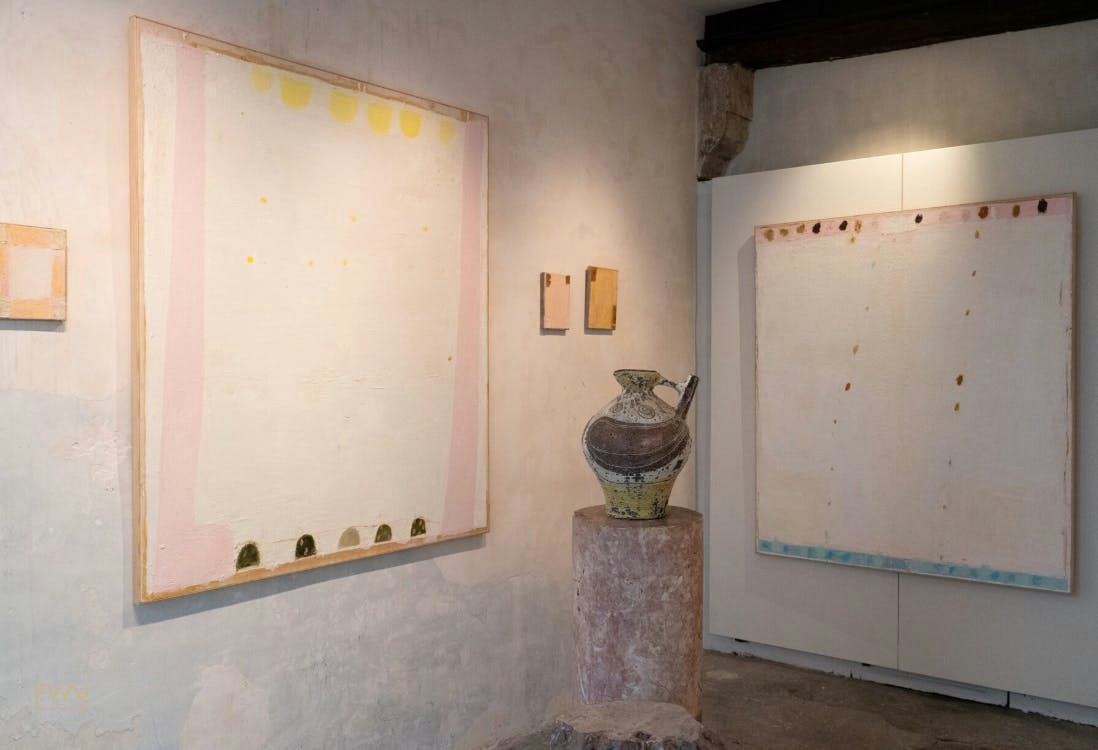
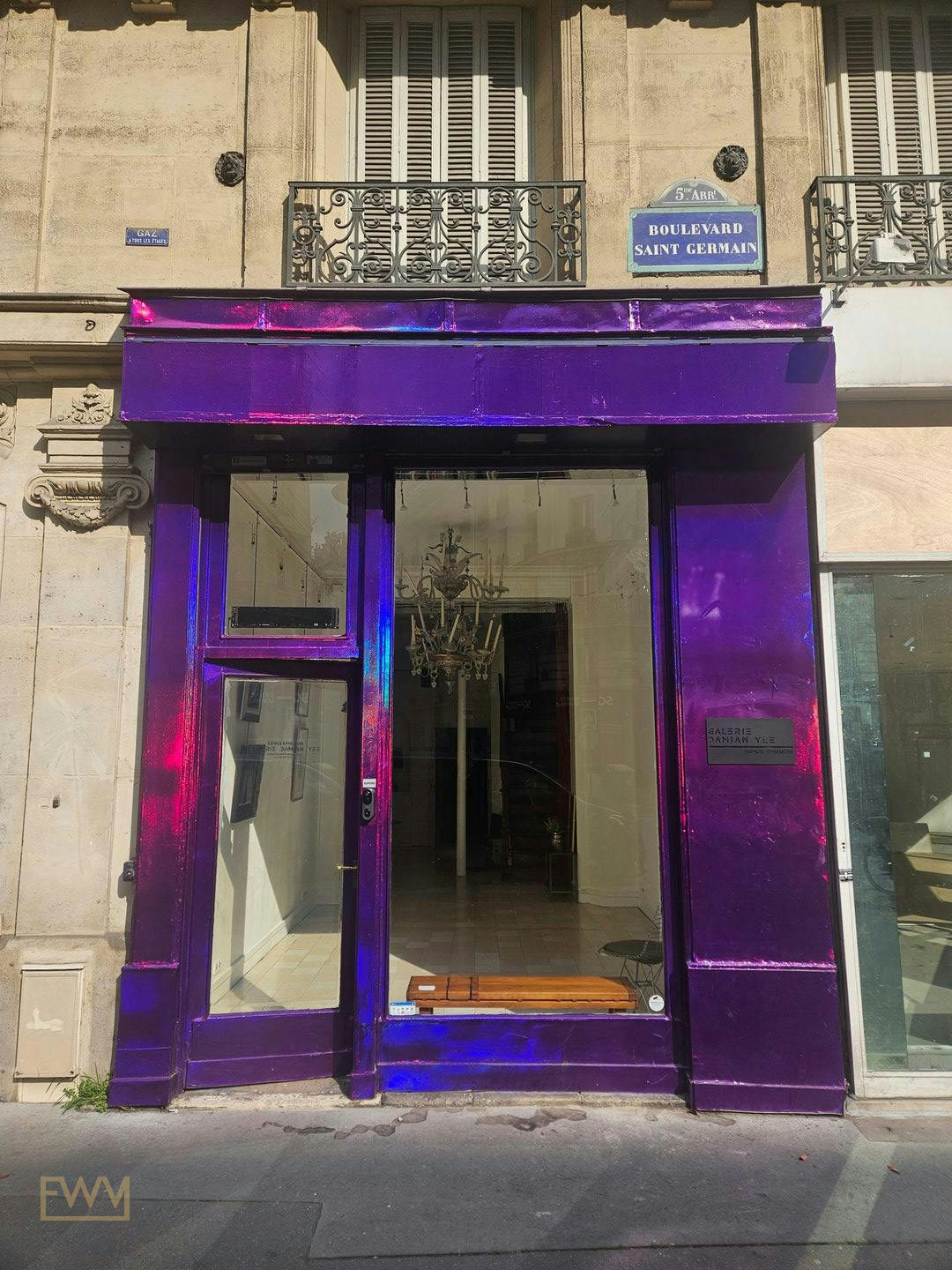
Gallery formats, including the Galerie d'Art and Galerie d'exception categories found particularly in the Marais and Saint-Germain, offer open-plan white cube or industrial spaces suited to installation-led activations, capsule collection launches, and brand art projects. These spaces often feature spotlights, polished concrete or raw concrete floors, and high ceilings. They are popular for fashion brands that want a gallery aesthetic for their product presentations, as well as for brands collaborating with artists or positioning their product within a cultural frame.
Showroom and Fashion Showroom
Fashion showrooms are a distinct category from retail storefronts. A fashion showroom is typically a private or semi-private space used to present collections to press, buyers, and stylists during Fashion Week rather than to general consumers. Showroom spaces in Paris tend to be located in the 1st, 2nd, 3rd, and 8th arrondissements, with proximity to Fashion Week show venues being a practical consideration. A virtual showroom option, which allows brands to present digitally to remote buyers, has become an established complement to physical showroom activations.
Apartment and Haussmann Spaces
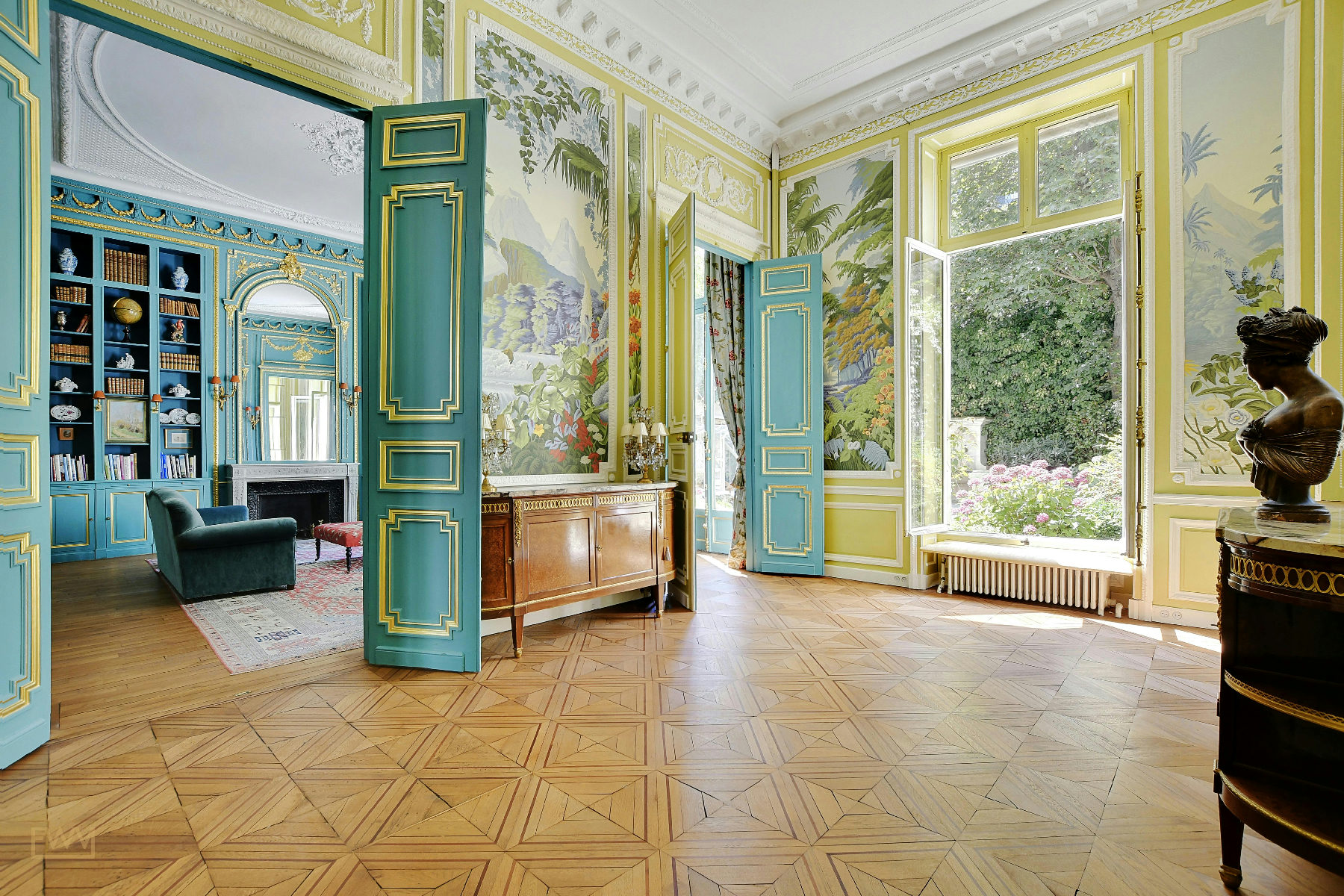
Apartment formats, typically set within Haussmann-era buildings, offer a residential aesthetic that is particularly effective for lifestyle, beauty, and interior brands. High ceilings, parquet floors, large windows, and classical architectural details create an intimate and aspirational backdrop that differentiates the brand experience from a conventional retail environment.
Photo Studio and Film Studio
Paris has a strong ecosystem of studio spaces available for short-term hire. Studio Photo Moderne formats and similar spaces offer controlled lighting environments, neutral backdrops, and professional infrastructure for photo shooting and filming activations. Some brands combine a retail or showroom activation with studio production, using the space for content creation alongside consumer-facing programming.
Event Space and Cocktail Venue
Larger event spaces are used for cocktail parties, product launches, press events, seminars, and brand collaborations. These spaces are often not configured for retail trading but can be transformed with appropriate furniture rental, branded store design, and merchandising into hybrid retail-event environments.
| Space Type | Typical Use | Key Features | Best Neighbourhood |
|---|---|---|---|
| Boutique/Storefront | Retail trading, product launches | Display windows, sales floor, back-of-house | Marais, Saint-Honoré, Saint-Germain |
| Gallery/Art Gallery | Installations, capsule launches, brand art | Open plan, high ceilings, concrete floors | Marais, Pigalle, Montmartre |
| Fashion Showroom | Trade presentations, press, buyers | Private access, flexible layout | 1st, 2nd, 8th arrondissements |
| Apartment | Lifestyle, beauty, intimate brand events | Residential character, parquet, mouldings | Marais, Saint-Germain, 16th |
| Photo/Film Studio | Content creation, filming, shoots | Controlled lighting, neutral backdrops | Paris 14e, Montmartre, République |
| Event Space | Cocktail parties, seminars, launches | Large capacity, flexible configuration | Marais, 8th, 11th arrondissements |
KEY TAKEAWAY: Matching your space type to your activation format from the outset saves significant time and budget. A fashion showroom and a retail boutique serve fundamentally different commercial purposes, and conflating them leads to either overspending or underdelivering on the brand experience.
Once you have identified the space type that fits your brief, understanding the regulatory and permit landscape ensures your activation proceeds without legal or operational complications.
Permits, Regulations, and Legal Requirements for Pop-Up Stores in Paris
Quick answer: Pop-up stores in Paris are subject to French commercial law, local planning regulations, and in some cases permit requirements from the city's urban planning authority. The specific requirements depend on the space type, the nature of the activation, the duration, and the arrondissement. Professional guidance from a French legal advisor is strongly recommended before signing any agreement.
Regulatory compliance is one of the most commonly underestimated aspects of running a pop-up store in Paris, particularly for international brands that are unfamiliar with French commercial law. The landscape is navigable, but it requires advance planning and professional support.
Commercial Registration and the Chamber of Commerce
International brands operating a temporary retail space in France that involves selling goods to the public may need to register with the French Chamber of Commerce and Industry (Chambre de Commerce et d'Industrie, or CCI) or appoint a registered French entity or agent to manage fiscal and regulatory compliance. The specific requirements depend on the structure of the activation, the volume of sales, and the brand's existing presence in France. Brands operating purely as press showrooms presenting to trade buyers typically face different requirements than those conducting direct consumer retail sales.
Urban Planning and Signage Permits
In Paris, any external signage, window graphics, banners, or temporary structures associated with a pop-up space may require authorisation from the Direction de l'Urbanisme (urban planning authority). The rules governing what can be displayed on building facades, in windows, and in public-facing areas vary significantly by arrondissement and by whether the building is classified as a heritage structure. Many properties in central Paris, particularly in the Marais and around Place des Vosges, are subject to strict aesthetic controls as part of the city's historic heritage protection framework.
Insurance Requirements
Short-term retail operators in Paris are typically required to hold public liability insurance for the duration of their lease. Many landlords will require proof of insurance as a condition of signing the lease agreement. Brands should verify what level of coverage is required and whether their existing corporate insurance policy provides adequate coverage for a temporary retail activation in France, or whether a supplementary French-market policy is needed.
Sales Tax and Fiscal Compliance
French VAT (TVA) applies to retail sales made in France. International brands making consumer sales through a Paris pop-up store need to ensure their VAT registration and reporting obligations are met. The specific arrangements depend on whether the brand has an existing French VAT registration, and whether sales are processed through a French entity or intermediary.
IMPORTANT: Requirements for pop-up store permits and commercial registration in Paris vary by space type, duration, arrondissement, and the nature of the activation. Never assume that a space owner's confirmation that a space is available for pop-up use automatically means all regulatory requirements are satisfied. Use the Fashion Week Venues permit guidance tool as a reference point and verify your specific situation with a qualified French legal advisor.
KEY TAKEAWAY: Regulatory compliance for a Paris pop-up lease is not a box-ticking exercise. It requires advance planning, professional advice, and a clear understanding of the specific requirements that apply to your space type, duration, and commercial activities. Allow at least four to six weeks to resolve compliance requirements before your intended activation date.
With the regulatory framework understood, the next critical decision is timing. Paris's retail calendar creates significant differences in space availability, cost, and commercial opportunity depending on when you choose to activate.
Paris Fashion Week and the Seasonal Calendar for Pop-Up Activations
Quick answer: Paris Fashion Week takes place twice annually, in late January to February for Haute Couture and Menswear, and in late September to early October for Womenswear. These periods create the highest demand for pop-up space in Paris and require brands to secure spaces at least three to six months in advance to access premium locations.
The Paris retail and brand activation calendar is structured around a series of industry events that drive concentrated demand for temporary retail and showroom space. Understanding this calendar is essential for any brand planning a pop-up store lease in Paris.
Paris Fashion Week: The Primary Activation Window
Paris Fashion Week is the anchor event in the global fashion calendar and the period of highest demand for pop-up retail space, showrooms, and brand activation venues in the city. During Fashion Week, the Marais, Saint-Germain-des-Prés, the 1st arrondissement, and the 8th arrondissement experience extraordinary concentrations of industry professionals, international press, buyers, influencers, and high-value consumers. For fashion brands, a well-positioned pop-up store or showroom during Fashion Week can generate media coverage, social media visibility, and direct sales that significantly exceed what might be achieved during the quieter retail calendar.
The challenge is that every other ambitious brand has the same idea. Space availability during Fashion Week is tightly constrained, and the best spaces in the best neighbourhoods are typically reserved months in advance. Brands that approach Fashion Week space sourcing with less than two months of lead time frequently find that their preferred options are already committed.
Paris Design Week and FIAC
Paris Design Week, held annually in September, and FIAC (the International Contemporary Art Fair, held in October) create strong secondary demand windows for pop-up activations, particularly for brands in the design, interiors, art, and lifestyle categories. These events attract a highly educated, design-literate audience and offer excellent conditions for brands seeking cultural credibility and editorial visibility alongside commercial sales activity.
Year-Round Activation Windows
Paris is a genuinely year-round retail market, and brands that focus exclusively on Fashion Week may miss more cost-effective and commercially productive windows during the summer tourist season, the Christmas retail period, or the spring fashion calendar. Shoulder seasons can offer better space availability, lower costs, and more attentive consumer engagement away from the noise and competition of peak event periods.
| Calendar Window | Approximate Timing | Best For | Space Demand Level | Lead Time Required |
|---|---|---|---|---|
| Haute Couture/Menswear Fashion Week | Late January to February | Fashion, luxury, showrooms | Very high | 4 to 6 months |
| Womenswear Fashion Week | Late September to early October | Fashion, beauty, lifestyle, press | Very high | 4 to 6 months |
| Paris Design Week | September | Design, interiors, art, lifestyle | High | 3 to 4 months |
| FIAC | October | Art, luxury, cultural brands | High | 3 to 4 months |
| Christmas/Holiday | November to December | Gift, lifestyle, beauty, food | Moderate to high | 2 to 3 months |
| Summer tourist season | June to August | Tourist-facing retail, experiential | Moderate | 1 to 2 months |
TIP: Use the activation timeline planning tool to map your space search, permit applications, production schedule, and marketing launch against your target calendar window. Missing key milestones in the pre-activation phase is one of the most common reasons pop-up activations in Paris underdeliver on their commercial potential.
KEY TAKEAWAY: The Paris activation calendar is highly competitive during Fashion Week and other major cultural events. Brands that plan and commit early secure better spaces at better rates. Those that leave it late are forced into suboptimal locations or substandard spaces at elevated last-minute costs.
Understanding the calendar and the neighbourhood gives you the strategic framework. The next step is understanding the financial picture and how to build a realistic budget for your Paris pop-up activation.
Budgeting for a Pop-Up Store Lease in Paris: What to Plan For
Quick answer: The cost of a pop-up store lease in Paris varies widely depending on neighbourhood, space type, size, duration, and calendar window. Space rental is only one component of the total activation budget. Production, fit-out, staffing, permits, insurance, marketing, and operational costs must all be factored in from the outset.
One of the most common mistakes brands make when planning a Paris pop-up is treating the space rental cost as the primary or sole budgetary consideration. In practice, the rental cost is typically one of several significant line items in a full activation budget. A complete picture of the financial commitment helps brands make informed decisions and avoid the underfunding that causes activations to underdeliver.
Space Rental Costs
Rental rates for short-term pop-up spaces in Paris vary enormously based on neighbourhood, space size, space type, and the calendar window. Premium spaces in the Marais, Saint-Germain-des-Prés, and Saint-Honoré during Paris Fashion Week command the highest daily or weekly rates. More accessible rates are available in emerging neighbourhoods like Pigalle or in areas like Paris 14e. Given the breadth of the market, it would be misleading to quote precise figures without reference to a specific brief. For a brand-specific estimate based on your target neighbourhood, space type, and dates, use the budget estimation tool.
Production, Fit-Out, and Design
The cost of transforming a raw space into a functioning branded retail environment can range from modest investments for lightly curated showroom formats to substantial expenditure for full custom fit-out installations. Key variables include the starting condition of the space, the level of brand customisation required, the complexity of furniture and fixture requirements, and whether the brand requires bespoke construction or can work with modular furniture rental solutions. Furniture rental, branded store design, and production and build services are all areas where an experienced agency adds significant value in managing cost and quality simultaneously.
Staffing Costs
Retail staffing for a Paris pop-up includes sales assistants, brand ambassadors, customer service personnel, and potentially event hosts. Temporary staff in Paris must be engaged in compliance with French employment law, which has specific requirements around contracts, working hours, minimum wage, and social contributions. Brands that underestimate staffing costs relative to their planned trading hours frequently find that their activation runs at a staffing deficit that directly impacts sales and customer experience.
Marketing, Influencer, and Social Media Activation
A Paris pop-up that no one knows about generates minimal commercial return. Marketing costs include social media content creation, influencer partnerships, press outreach, email marketing to existing customer databases, and any paid advertising. During Fashion Week, competition for influencer and press attention is at its peak, which means well-planned and well-funded influencer marketing partnerships are more likely to cut through than last-minute organic outreach.
POS, Payments, and Data Infrastructure
Running retail sales in a temporary space requires point-of-sale infrastructure, payment processing capability, inventory management, and ideally data capture systems that allow the brand to track visitor numbers, conversion rates, average transaction values, and customer data in compliance with French GDPR requirements. These infrastructure elements are often overlooked in initial budget planning and can represent a meaningful cost if not sourced efficiently.
DID YOU KNOW: Brands that invest in data analytics infrastructure for their Paris pop-ups are typically able to generate post-activation ROI data that justifies subsequent activations and informs future space and neighbourhood selection decisions. Without data, the commercial case for a pop-up rests on anecdotal assessment rather than evidence.
KEY TAKEAWAY: A realistic Paris pop-up budget covers space rental, production and fit-out, staffing, insurance, permits, marketing, POS infrastructure, and contingency. Brands that plan only for the headline rental cost routinely find themselves underfunded when the full operational picture becomes clear. Use the ROI calculation tool to stress-test your expected return against your planned investment before committing.
Building a sound budget is only possible if you also have a clear picture of how to find the right space and what the process of securing it looks like in practice.
How to Find and Secure a Pop-Up Space in Paris: The Step-by-Step Process
Quick answer: Finding and securing a pop-up space in Paris involves defining your brief, identifying candidate spaces through a marketplace or agency, conducting due diligence on the space and the landlord, negotiating and signing a legally appropriate short-term agreement, completing permit and insurance requirements, and then moving into production and activation. Each step has dependencies and lead times that need to be mapped in advance.
The process of securing a short-term retail space in Paris is more structured than many brands expect, particularly for international teams unfamiliar with the French market. A systematic approach reduces risk and improves the probability of a successful outcome.
| Step | Action | Lead Time Before Activation | Key Outputs |
|---|---|---|---|
| 1 | Define brand brief: neighbourhood, size, type, dates, budget | 5 to 6 months | Written brief document |
| 2 | Search marketplace or brief an agency | 4 to 5 months | Longlist of candidate spaces |
| 3 | Site visits and space assessment | 3 to 4 months | Shortlist of preferred spaces |
| 4 | Due diligence on landlord and space status | 3 months | Verified space credentials |
| 5 | Negotiate and sign lease agreement | 2 to 3 months | Signed agreement |
| 6 | Permits, insurance, and compliance | 6 to 8 weeks | Permit approvals, insurance certificates |
| 7 | Production, fit-out, and design | 4 to 6 weeks | Completed branded space |
| 8 | Staff recruitment and training | 3 to 4 weeks | Trained activation team |
| 9 | Marketing launch and influencer activation | 2 to 4 weeks | Pre-launch awareness campaign |
| 10 | Activation and trading | Live period | Sales, data, brand impressions |
| 11 | Post-activation data analysis and reporting | 1 to 2 weeks post | ROI report, learnings |
The Role of a Pop-Up Agency Versus a Self-Service Platform
International brands can approach Paris pop-up space sourcing through two primary routes: self-service platforms and full-service agencies. Self-service platforms such as marketplaces allow brands to browse available spaces and negotiate directly with landlords. This approach can be cost-effective for brands with strong in-house expertise and local market knowledge. However, it places the full burden of due diligence, legal review, permit management, and production coordination on the brand team, which can be highly demanding for teams without established Paris operations.
A full-service agency like Fashion Week Venues manages the entire process from brief to post-activation reporting, providing venue sourcing, concept direction, production and build, activation management, staffing, POS and payments, and data and analytics under a coordinated service model. For brands entering Paris for the first time, or for teams that lack the bandwidth to manage the Paris market independently, agency support materially reduces risk and improves activation quality. The guide to hiring a pop-up agency outlines the key questions to ask and criteria to evaluate when selecting an agency partner.
KEY TAKEAWAY: The process of securing a Paris pop-up space has clearly defined stages with specific lead times. Compressing the timeline by skipping steps or starting too late introduces risks that typically manifest as permit delays, substandard spaces, underprepared fit-outs, or insufficient marketing reach. Plan for a minimum of four to six months from brief to activation for a Fashion Week-aligned space in a prime neighbourhood.
How Fashion Week Venues Supports Paris Pop-Up Activations
Quick answer: Fashion Week Venues is a full-service pop-up shop agency and space marketplace with deep expertise in Paris. The agency offers end-to-end support from venue sourcing and concept direction through to production, activation management, staffing, and post-activation analytics, with a suite of proprietary planning tools to support brand teams at every stage.
Fashion Week Venues operates across the major fashion capitals with Paris as its primary and most established market. The agency's model is designed to address the specific challenges that international brands face when activating in Paris: navigating French lease law, identifying spaces in the right neighbourhoods, managing permit and compliance requirements, and delivering branded environments to a high standard on compressed timelines.
Venue Sourcing and Space Marketplace
The Fashion Week Venues venue sourcing service combines direct market access with specialist knowledge of Paris neighbourhoods, space types, and landlord relationships. Rather than relying on a generalised listings platform, the agency's sourcing function is guided by a detailed brief from the brand, focusing on neighbourhood fit, space typology, technical requirements, and budget parameters. The broader marketplace allows brands to browse available spaces and compare options before briefing the agency team.
Concept Direction and Branded Store Design
Many brands arrive in Paris with a clear product but an underdeveloped spatial concept. The concept direction and branded store design services help brands translate their brand identity and commercial objectives into a physical environment that communicates effectively with their target audience. This includes spatial planning, visual merchandising direction, artistic direction, and the selection of materials, fixtures, and furniture that align with the brand aesthetic.
Production, Build, and Furniture Rental
Executing a branded fit-out in a Paris pop-up space requires local production expertise and established supplier relationships. Fashion Week Venues manages the full production and build process, including furniture rental, custom construction, lighting installation, and reinstatement at the end of the activation. This turnkey approach removes the complexity of coordinating multiple contractors in an unfamiliar market.
Activation Management, Staffing, and POS
On-the-ground activation management during the live trading period covers operational logistics, staff coordination, customer service oversight, and POS and payments infrastructure. Retail staffing for Paris activations requires compliance with French employment law, which the agency handles as part of its service offering. POS systems are configured to capture sales data, customer information, and inventory movement in real time, feeding into the data analytics reporting delivered after the activation.
Planning Tools for Brand Teams
Fashion Week Venues provides a suite of planning tools that brand teams can use independently to prepare their activation brief. These include a budget calculator, an ROI calculator, a space comparison tool, a timeline planning tool, a permit guidance tool, and a space locator. These tools are designed to give brand teams a structured framework for decision-making before they engage with the agency team, making the briefing process more efficient and the resulting activation more tightly aligned with the brand's commercial objectives.
The twin co-activation concept allows two complementary brands to share a single space, splitting costs while delivering a richer consumer experience through curated brand collaborations. This model is particularly effective for emerging brands with limited activation budgets who want to access premium Paris locations during high-demand calendar windows.
TIP: Brands that are new to Paris activations benefit significantly from reviewing the work and case study section to understand how previous activations have been structured, what results have been achieved, and what approaches have been most effective in different neighbourhoods and calendar windows.
KEY TAKEAWAY: Fashion Week Venues offers a structured, end-to-end service model that addresses the full complexity of a Paris pop-up activation. Brand teams that engage early and use the available planning tools arrive at the briefing process better prepared, which typically results in faster space identification, stronger concept development, and more commercially productive activations.
Brand Activation Strategy: Making Your Paris Pop-Up Work Harder
Quick answer: A successful Paris pop-up activation combines the right space in the right neighbourhood with a compelling consumer experience, a well-executed marketing strategy, and data infrastructure that captures the commercial impact. The space is the foundation, but the activation strategy determines whether the investment generates a meaningful return.
Too many brands treat the Paris pop-up as a pure property transaction: find a space, sign a lease, open the doors. The brands that extract the greatest commercial and brand value from their Paris activations approach the pop-up as an integrated brand experience with a deliberate strategy for every element of the consumer journey.
Product Launches and Exclusive Drops
Paris pop-ups are particularly effective as platforms for product launches and exclusive product drops. The city's fashion industry audience, combined with the concentration of international press and influencers during Fashion Week, creates conditions where a well-staged launch in a well-chosen space can generate global media coverage from a single activation. This approach works best when the space is architecturally distinctive, the visual merchandising is editorial in quality, and the launch event is pitched to the right press and influencer contacts well in advance.
Influencer and Social Media Activation
Paris is one of the highest-performing cities globally for social media content creation and influencer reach. A Paris pop-up that is designed with content creation in mind, featuring distinctive architectural elements, curated sensory details, and branded photo moments, generates organic social media coverage that extends the reach of the activation far beyond its physical footprint. Partnering with the right Paris-based and international influencers amplifies this effect significantly. Fashion Week Venues offers influencer marketing support as part of its activation management service.
Collaborations and Cultural Positioning
Brands that frame their Paris pop-up within a cultural context, through artist collaborations, gallery partnerships, or alignment with events like Paris Design Week or FIAC, typically achieve stronger editorial coverage and more meaningful consumer engagement than brands that present a straightforward retail format. The cultural richness of the City of Light is a genuine asset for brands that choose to engage with it rather than simply operate adjacent to it.
Data Capture and Post-Activation Analysis
Every Paris pop-up should have a data capture strategy. This means tracking visitor footfall, dwell time, conversion rates, average transaction values, and customer demographic information in compliance with French GDPR requirements. Post-activation data analysis allows brands to evaluate the ROI of the activation, understand which elements of the consumer experience drove the strongest commercial results, and make informed decisions about future Paris activations.
KEY TAKEAWAY: The commercial return from a Paris pop-up activation is directly proportional to the quality of the activation strategy, not just the quality of the space. Brands that invest in concept development, consumer experience design, influencer marketing, and data infrastructure consistently outperform those that treat the activation as a pure retail property exercise.
Common Myths About Pop-Up Store Leases in Paris Debunked
MYTH: You need a French legal entity to rent a pop-up space in Paris.
FACT: International brands without a French legal entity can and do rent short-term pop-up spaces in Paris. However, the arrangements for commercial registration, VAT compliance, and fiscal representation do need to be addressed. Many international brands work through a French agent, intermediary, or agency to satisfy these requirements without establishing a permanent French legal entity. The specific approach depends on the nature of the activation and should be confirmed with a French legal advisor.
MYTH: Paris Fashion Week is the only viable calendar window for a Paris pop-up activation.
FACT: Paris Fashion Week is the highest-profile window, but it is far from the only commercially viable one. Paris Design Week, FIAC, the Christmas retail season, and the summer tourist period all represent strong activation opportunities depending on the brand category and target audience. Fashion Week also carries higher space costs and greater competition for consumer attention. Brands that activate in shoulder seasons sometimes achieve stronger direct consumer engagement at lower cost, even if the industry and media visibility is lower.
MYTH: Commission brokers are the only way to find a pop-up space in Paris.
FACT: Commission brokers are one route, but they are not the only or necessarily the best option. Full-service agencies, self-service marketplaces, and direct landlord relationships are all viable alternatives. The right approach depends on the brand's in-house expertise, timeline, and budget. An agency that manages the full process from venue sourcing through to activation delivery typically provides more comprehensive support than a broker who focuses exclusively on the property transaction.
MYTH: Short-term leases in Paris are legally straightforward and require no specialist input.
FACT: French commercial property law is among the most complex in Europe. A short-term pop-up lease that is not correctly structured can inadvertently create statutory tenancy rights, trigger commercial lease obligations, or expose the brand to liability in areas including insurance, fiscal compliance, and planning permissions. Specialist legal advice is strongly recommended for any brand entering into a short-term lease in Paris, regardless of the duration or apparent simplicity of the arrangement.
MYTH: Any commercial space in Paris can be used as a pop-up retail store without additional permissions.
FACT: The permitted use of a commercial space in Paris is governed by its planning classification, its building category, and in some cases by local zoning restrictions specific to its arrondissement. Not every space that is physically suitable for retail use is legally permitted for retail trading, product launches, or public events without additional authorisations. Confirming the permitted use of a space before signing a lease is an essential due diligence step.
Frequently Asked Questions About Pop-Up Store Leases in Paris
What is a pop-up store lease in Paris?
A pop-up store lease in Paris is a short-term agreement that gives a brand temporary use of a commercial space for retail trading, brand activation, product launches, showroom presentations, or events. These leases typically operate under the bail dérogatoire framework in French law, which allows short-term commercial tenancies of up to 36 months without triggering the full statutory protections of a standard French commercial lease. The precise legal structure depends on the duration, space type, and parties involved. Professional legal advice is recommended before entering into any such agreement.
How much does a pop-up shop cost in Paris?
The cost of a pop-up shop in Paris varies widely depending on the neighbourhood, space size, space type, duration, and calendar window. Premium spaces in the Marais or Saint-Germain-des-Prés during Paris Fashion Week command substantially higher daily rates than equivalent spaces in emerging neighbourhoods during quieter periods. Space rental is also only one component of the total activation budget, which must also cover production, fit-out, staffing, insurance, permits, marketing, and operational costs. For a brand-specific budget estimate, use the budget estimation tool on Fashion Week Venues.
What neighbourhoods are best for a pop-up store lease in Paris?
The best neighbourhood depends on your brand positioning, product category, target audience, and commercial objectives. Le Marais is the most active pop-up retail neighbourhood and is particularly strong for fashion, beauty, art, and lifestyle brands. Saint-Germain-des-Prés suits luxury and heritage positioning. Saint-Honoré and Vendôme are the natural home of prestige luxury and fine jewellery. The Champs-Élysées offers scale and tourist volume. Montmartre and Pigalle are well suited to emerging and creative brands. Each neighbourhood has distinct foot traffic profiles, space typologies, and cost structures.
Can I rent a pop-up space in Paris without a French company?
Yes, it is possible for international brands without a French legal entity to rent a pop-up space in Paris. However, there are fiscal, regulatory, and commercial registration requirements that may need to be addressed depending on the nature of the activation. Brands making direct consumer retail sales in France need to consider VAT registration and fiscal representation obligations. Many international brands work through a French agency, intermediary, or agent to satisfy these requirements without establishing a permanent French entity. Specific advice from a French legal advisor is strongly recommended.
How far in advance should I book a pop-up space in Paris for Fashion Week?
For Fashion Week periods, particularly the Womenswear Fashion Week in late September to early October, brands should aim to begin their space search at least four to six months in advance. The best spaces in premium neighbourhoods like the Marais and Saint-Germain are often committed well ahead of this window. Leaving space sourcing to the last two months before Fashion Week significantly limits your options and typically increases costs. A structured timeline, from brief to activation, should be mapped out as soon as the decision to activate in Paris is confirmed.
What is the bail dérogatoire and how does it apply to pop-up stores?
The bail dérogatoire is a short-term commercial lease structure in French law that allows landlord and tenant to agree on a commercial tenancy of up to 36 months without the full statutory protections and obligations of a standard commercial lease (bail commercial). Both parties must explicitly agree in writing that the lease falls outside the standard framework. If the tenancy continues beyond 36 months without being formalised differently, it automatically converts to a standard commercial lease. For pop-up activations, the bail dérogatoire is the most commonly used lease structure for tenancies of weeks to several months. Shorter activations may use simpler civil law rental agreements.
Do I need a permit to operate a pop-up store in Paris?
Permit requirements for pop-up stores in Paris depend on the space type, the nature of the activation, the duration, and the arrondissement. External signage, window graphics, and temporary structures may require authorisation from the urban planning authority. Spaces in publicly owned properties or heritage-classified buildings may require an Autorisation d'Occupation Temporaire (AOT). Commercial registration requirements apply if the brand is making direct consumer retail sales. Requirements vary significantly between locations, so it is essential to verify the specific requirements for your space and activation type with a qualified French legal advisor before signing any agreement.
What types of spaces are available for short-term lease in Paris?
Paris offers a wide range of space types for short-term pop-up leases including boutique storefronts, art gallery and gallery formats, fashion showrooms, apartment spaces with Haussmann architectural character, photo studios, film studios, event spaces, and concept stores. Each type suits different activation formats. A fashion showroom serves trade buyers and press differently from a consumer-facing boutique storefront. Gallery formats work well for installation-led brand activations and artist collaborations. The right space type should be matched to your specific activation concept, audience, and commercial objectives from the outset.
Is Le Marais a good area for pop-up retail in Paris?
Le Marais is widely regarded as the best neighbourhood in Paris for pop-up retail and brand activation. It combines high foot traffic from both local Parisians and international tourists with a concentration of fashion industry professionals, press, and creative community members. The neighbourhood has a diverse range of space types including gallery formats, boutique storefronts, showrooms, and event spaces, many with characterful architectural features. During Paris Fashion Week, the Marais is a genuine industry hub. The Rue des Francs-Bourgeois, Rue de Turenne, and the area around Place des Vosges are among the most commercially active retail streets.
What insurance do I need for a Paris pop-up store?
Pop-up store operators in Paris are typically required to hold public liability insurance for the duration of their lease. Most landlords will require proof of insurance before the lease agreement is finalised. Brands should verify whether their existing corporate insurance policy provides adequate coverage for a temporary retail activation in France, including coverage for public liability, product liability, property damage, and theft. If existing coverage is insufficient, a supplementary French-market policy should be obtained before the activation opens. Insurance requirements should be addressed during the pre-activation compliance phase, not after the lease is signed.
How do I compare pop-up spaces in Paris?
Comparing pop-up spaces in Paris effectively requires evaluating spaces against a consistent set of criteria: neighbourhood and specific street location, space size and layout, space type and existing infrastructure, natural light, condition of finishes, technical specifications such as electrical capacity and internet connectivity, proximity to target foot traffic, lease terms and flexibility, and cost including any additional charges. Fashion Week Venues provides a space comparison tool that allows brand teams to assess multiple spaces side by side against their brief criteria, making it easier to shortlist options and make a well-informed final decision.
Can two brands share a pop-up space in Paris?
Yes, shared pop-up activations where two complementary brands co-occupy a single space are an increasingly common and commercially effective model in Paris. This approach allows both brands to access premium locations and space types that might be cost-prohibitive for a single brand, while also creating a richer and more interesting consumer experience through curated brand collaborations. The twin co-activation concept offered by Fashion Week Venues is specifically designed to facilitate this model, matching complementary brands and managing the shared space logistics. Clear agreements on space allocation, operational responsibilities, and cost sharing between the two brands are essential.
What is the difference between a pop-up store and a fashion showroom in Paris?
A pop-up store is a temporary retail environment open to consumers, with a focus on direct sales, brand experience, and consumer engagement. A fashion showroom is a private or semi-private space used to present collections to trade buyers, press, and stylists, typically during Fashion Week. While some brands operate hybrid formats that combine elements of both, the two serve fundamentally different commercial functions and require different space configurations, staffing profiles, and operational approaches. Conflating the two in the planning phase is a common source of operational and commercial disappointment during Fashion Week activations.
How does Paris Fashion Week affect pop-up space availability and pricing?
Paris Fashion Week dramatically increases demand for pop-up spaces, showrooms, and event venues across the central arrondissements, particularly in the Marais, Saint-Germain-des-Prés, the 1st arrondissement, and the 8th arrondissement. This increased demand reduces availability and pushes daily and weekly rental rates upward. Brands that leave space sourcing until two to three months before Fashion Week frequently find that their preferred spaces are already committed, forcing them into secondary locations or higher-cost alternatives. Early commitment, ideally four to six months before the target dates, is the most effective strategy for securing a high-quality space at a reasonable cost during Fashion Week.
What data should I capture from a Paris pop-up activation?
A well-instrumented Paris pop-up activation should capture visitor footfall, dwell time, sales volume and average transaction value, conversion rate, customer demographic data (where consent is obtained in compliance with French GDPR requirements), social media impressions and engagement generated during the activation period, and press coverage data. Post-activation analysis of this data allows the brand to calculate the ROI of the activation, understand which elements of the consumer experience drove the strongest commercial results, and generate evidence-based insights to inform future Paris activations and broader retail strategy.
Conclusion: Planning Your Paris Pop-Up Store Lease with Confidence
A pop-up store lease in Paris is one of the highest-impact brand activation investments available to fashion, beauty, lifestyle, and luxury brands. The city's combination of cultural authority, industry concentration, international media reach, and diverse neighbourhood character creates conditions that are genuinely unmatched in the global retail landscape. But the commercial return from a Paris pop-up is not guaranteed by the address. It is earned through rigorous planning, strategic neighbourhood and space selection, legally sound lease structures, well-executed production, disciplined activation management, and a marketing strategy that connects the physical space to the broader brand narrative.
The brands that succeed consistently in Paris are those that plan early, brief precisely, partner with experienced local expertise, and approach the activation as an integrated brand investment rather than a property transaction. Understanding the bail dérogatoire framework, the seasonal calendar dynamics, the neighbourhood-specific commercial characteristics, and the full scope of operational and compliance requirements is the foundation from which a successful activation is built.
Fashion Week Venues exists to support brand teams at every stage of this process, from initial research and space discovery through to post-activation reporting and ROI analysis. The agency's combination of direct market access, specialist Paris expertise, end-to-end service capabilities, and proprietary planning tools gives brand teams the structure and support they need to execute high-quality activations in one of the world's most demanding retail markets.
To move from research to activation, start exploring available spaces on the Fashion Week Venues marketplace and build a focused brief for your target neighbourhood, space type, and calendar window. The right space in the right neighbourhood at the right moment in the Paris calendar is a genuinely powerful commercial asset. The planning starts now.