If your brand needs to rent retail space on Rue de Rivoli, you are targeting one of the most commercially powerful and culturally loaded streets in Europe. Running along the northern edge of the Louvre and the Jardin des Tuileries, Rue de Rivoli connects the 1st arrondissement's heritage architecture with the city's most concentrated luxury retail demand. Brands from Dior to KITH have activated in this corridor, and independent labels, international newcomers, and established houses continue to seek short-term retail, showroom, and event space along this axis. This guide covers everything brand teams need to know: geography, space types, lease structures, permit requirements, interior features, costs, and how pop-up spaces in Paris are sourced and activated through a full-service agency approach.
Why Rue de Rivoli Is One of Paris's Most Strategic Retail Addresses
Quick answer: Rue de Rivoli offers brand teams a rare combination of monument-adjacent foot traffic, Haussmann-era architecture, and proximity to luxury retail neighbours including Place Vendôme and Rue Saint-Honoré. For short-term retail activations, showrooms, and exhibitions, this addresses brand visibility objectives that few other Paris streets can match.
Rue de Rivoli stretches from the Place de la Concorde in the west to the Place de la Bastille in the east, passing through the 1st and 4th arrondissements. For retail brands, the most commercially significant section runs between the Louvre-Rivoli metro station and the Tuileries, roughly from the 1st arrondissement's central core toward the Palais Royal. This stretch places any activation within walking distance of the Musée du Louvre, the Jardin des Tuileries, the Place Vendôme, and the western end of Rue Saint-Honoré, all of which generate consistent footfall from international visitors, high-net-worth consumers, and press.
The street's Haussmann-style building stock is a defining feature. Soaring ceilings, ornate mouldings, herringbone parquet floors, full-length windows overlooking the Tuileries gardens, and private entrances make these buildings unusually well-suited to flagship-style activations and seasonal showrooms. Unlike generic commercial units, these spaces carry an inherent ambience that reduces the production investment needed to create a premium retail environment.
Brands use Rue de Rivoli addresses for a wide range of purposes: pop-up retail, private sales, art exhibitions, art openings, press days, trade showrooms, brand immersions, and seasonal boutiques. The 1st arrondissement's status as a hub for fashion, luxury, and culture means that neighbouring brands, press, and buyers already move through the area as part of their established routines.
The street's connectivity also matters practically. The Louvre-Rivoli metro station on Line 1 provides direct access from major Paris hubs, including the Champs-Élysées, and indirect connections toward Charles de Gaulle. For international brand teams arriving with teams, product, and equipment, this logistical accessibility reduces activation friction.
Compared with other premium Paris retail addresses, Rue de Rivoli offers a specific character. The Champs-Élysées delivers volume but at the cost of brand differentiation. Rue Saint-Honoré delivers luxury density but with extremely limited short-term supply. The Marais offers creative energy but a different consumer profile. Rue de Rivoli sits between heritage prestige and practical accessibility, which makes it attractive to brands that want both cultural credibility and operational workability.
DID YOU KNOW: The arcade colonnade along Rue de Rivoli was designed by Napoleon's architects Percier and Fontaine, and the resulting covered walkway has defined the street's retail character for over two centuries, creating a naturally sheltered shopping environment that increases dwell time even in poor weather.
KEY TAKEAWAY: Rue de Rivoli's combination of architectural heritage, monument-adjacent foot traffic, and proximity to Place Vendôme, Rue Saint-Honoré, and the Palais Royal makes it one of the highest-value short-term retail addresses in Paris. Brands activating here benefit from location credibility that begins before a single customer enters the door.
Understanding exactly which section of Rue de Rivoli serves your brand's objectives requires more than a map. The next section breaks down the geography in detail, including key reference points such as 128 rue de Rivoli and 144 rue de Rivoli, so brand teams can match their brief to the right block.
Geography, Neighbourhoods, and Key Reference Points Along Rue de Rivoli
Quick answer: Rue de Rivoli spans multiple arrondissements and neighbourhood characters. For luxury and fashion retail activations, the 1st arrondissement section between the Louvre-Rivoli station and the Tuileries is the primary target zone, offering the closest proximity to Place Vendôme, Palais Royal, and Rue Saint-Honoré.
Not all of Rue de Rivoli carries equal commercial weight for fashion and luxury brands. The street's western and central sections in the 1st arrondissement are the most sought-after for short-term retail and showroom activations. Specific reference points help brand teams orient their search.
Key Address Points and Their Context
The address 128 rue de Rivoli sits within the heart of the 1st arrondissement's premium retail cluster, close to the Louvre's Richelieu wing and the Jardin des Tuileries entrance. Spaces at this address and nearby tend to be in Haussmann-style buildings with the architectural features most associated with grand Parisian style: ornate mouldings, herringbone parquet floors, balconies, and full-length windows. For showroom activations targeting press, buyers, and VIP consumers, this location offers both a credible address and genuine aesthetic quality.
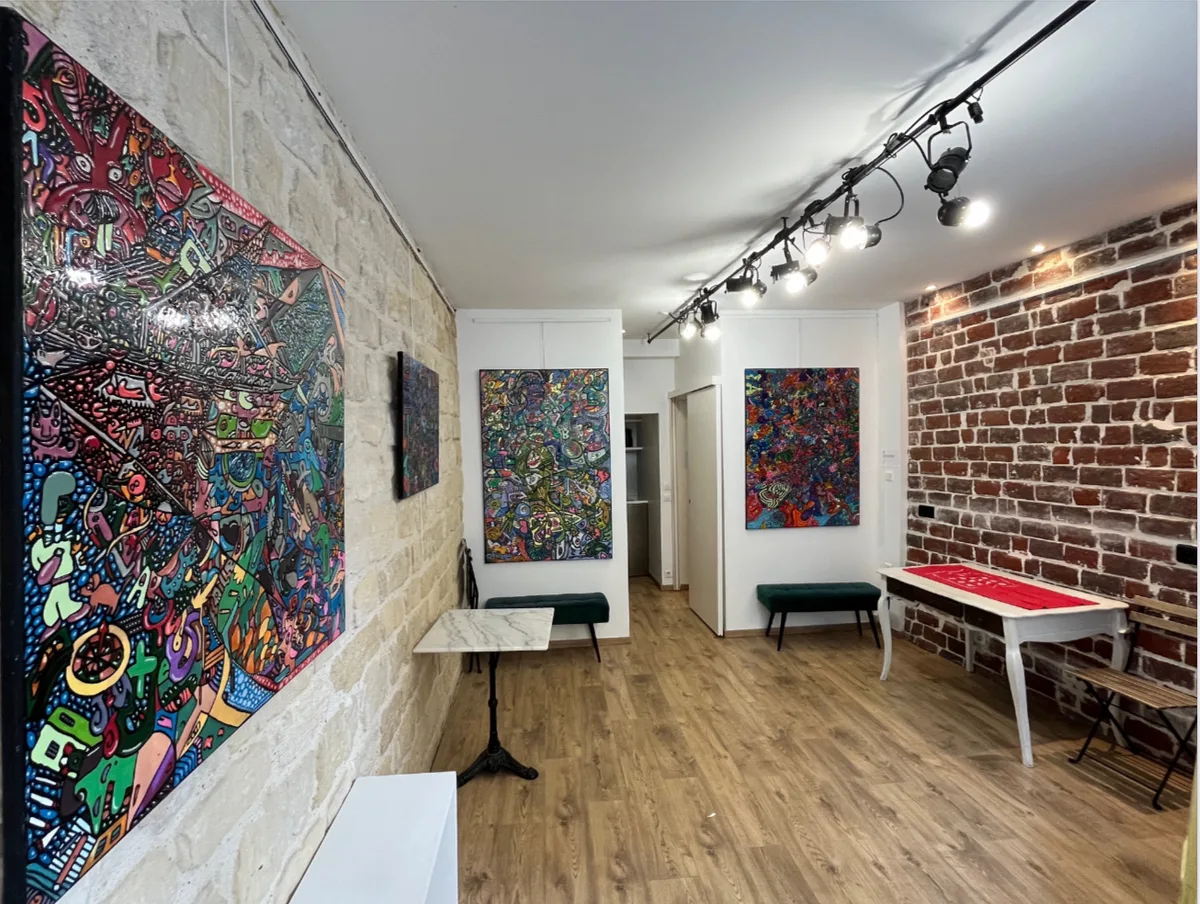
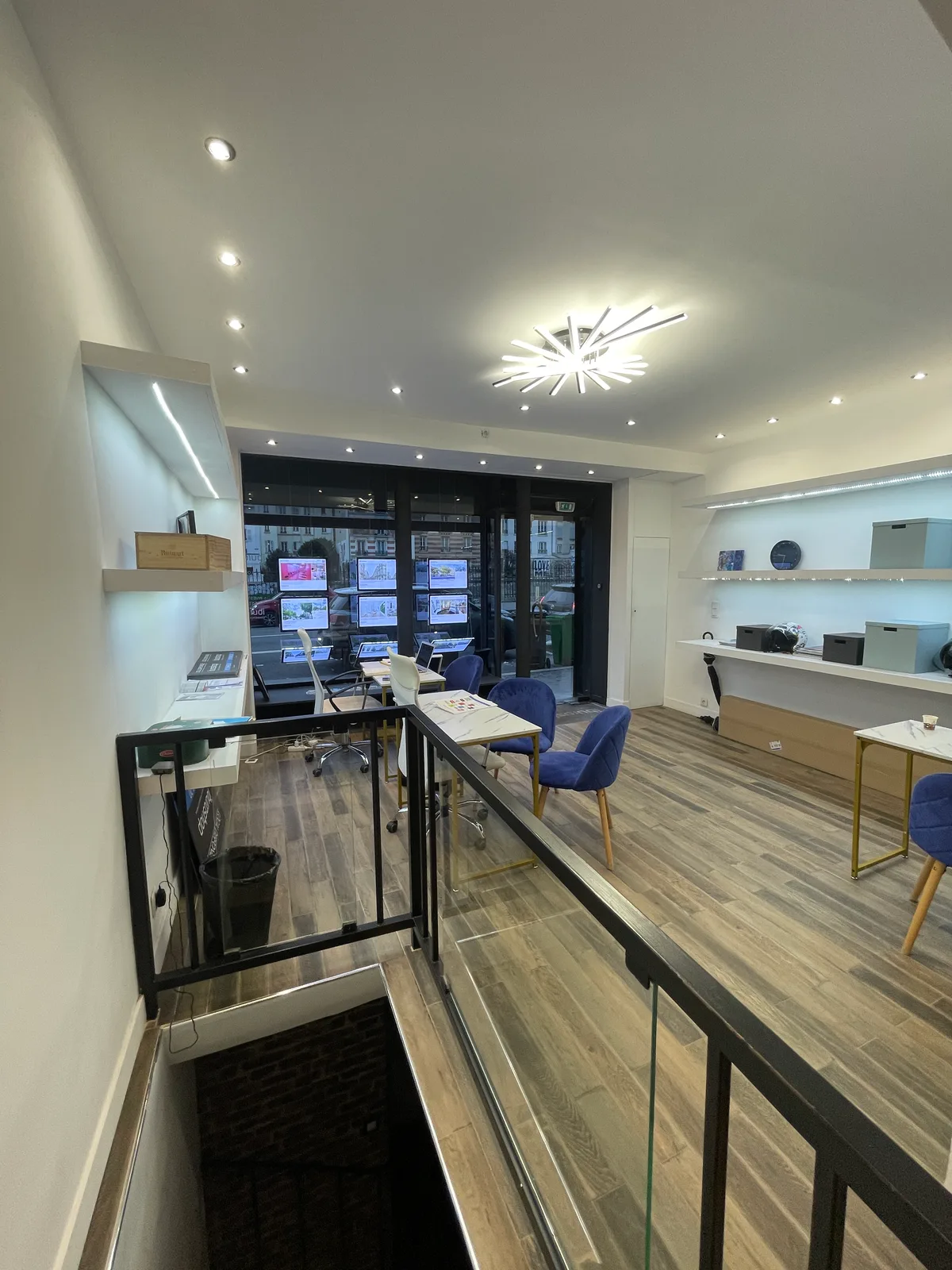
The address 144 rue de Rivoli is further east toward the Louvre-Rivoli metro station, still within the 1st arrondissement but with a slightly different character, often featuring redesigned spaces with artificial floors, white walls, wooden floors, and contemporary fit-outs that suit brands wanting a clean, gallery-like environment rather than an overtly classical interior.
The Appartement Rivoli concept, referenced in various property listings, describes a category of upper-floor residential-style spaces along the street that have been converted or made available for short-term commercial use. These spaces typically feature residential-scale rooms, fitted kitchens, private entrances, and an intimacy that makes them well-suited to private sales, small-scale showrooms, and invitation-only brand events.
Neighbouring Streets and Their Relationship to Rue de Rivoli
Rue Saint-Honoré runs parallel to Rue de Rivoli one block to the south, and the two streets share a connected consumer catchment. Brands that cannot secure space directly on Rue de Rivoli often activate on Rue Saint-Honoré as a comparable alternative, and vice versa. The Palais Royal is accessible from both streets and adds a further layer of cultural prestige to any activation in this corridor.
Place Vendôme is a short walk from the western end of Rue de Rivoli. Its association with haute joaillerie, watchmaking, and heritage luxury houses makes the surrounding neighbourhood one of the highest-status retail addresses in the world. Brands activating near this intersection benefit from ambient association with that positioning.
The Opéra Garnier, located slightly north in what would be considered the Paris 8th and 9th arrondissement boundary area, draws a different consumer profile oriented toward cultural tourism and upmarket retail. Brands with showrooms or retail spaces near the Opéra Garnier can reach this audience while remaining within reasonable distance of the core Rivoli corridor.
| Zone | Arrondissement | Key Landmarks | Typical Activation Type | Consumer Profile |
|---|---|---|---|---|
| Rue de Rivoli (West) | 1st | Tuileries, Place Vendôme | Flagship pop-up, showroom | Luxury, international visitor |
| Rue de Rivoli (Central) | 1st | Louvre-Rivoli, Palais Royal | Gallery-style retail, art exhibition | Cultural, press, buyers |
| Rue Saint-Honoré | 1st / 8th | Colette former site, luxury boutiques | Concept store, press days | Fashion-forward, industry |
| Palais Royal | 1st | Galerie Vivienne, gardens | Intimate showroom, private sales | Niche luxury, art buyers |
| Near Opéra Garnier | 9th | Opéra, department stores | Commercial retail, pop-up | Tourist, broad luxury |
TIP: When shortlisting spaces along the Rue de Rivoli corridor, specify whether your priority is foot traffic volume, architectural character, proximity to a specific landmark, or adjacency to fashion industry neighbours. These criteria will narrow your search faster than surface area or rent alone.
KEY TAKEAWAY: The 1st arrondissement section of Rue de Rivoli, particularly between the Tuileries and the Louvre-Rivoli station, is the primary target zone for fashion and luxury brand activations. Neighbouring streets including Rue Saint-Honoré and the Palais Royal gardens extend the usable catchment area for brands that need adjacent alternatives.
Once you have identified the right zone, the next critical question is what kind of space you actually need, and how short-term lease structures in Paris work for each space type.
Space Types Available to Rent on Rue de Rivoli: Retail, Showroom, Pop-Up, and Event Venues
Quick answer: Brands looking to rent retail space on Rue de Rivoli can choose from ground-floor boutique units, upper-floor showroom spaces, Appartement Rivoli-style residential conversions, reception spaces, and event venues. Each space type suits different activation formats, visitor volumes, and operational needs.
The commercial real estate landscape along Rue de Rivoli is more varied than many brand teams expect. While the street's ground-floor retail arcade is the most visible commercial layer, significant activation opportunities exist across multiple floor levels and space categories. Understanding these distinctions helps brand teams match their specific activation format to the right physical environment.
Ground-Floor Retail Storefronts
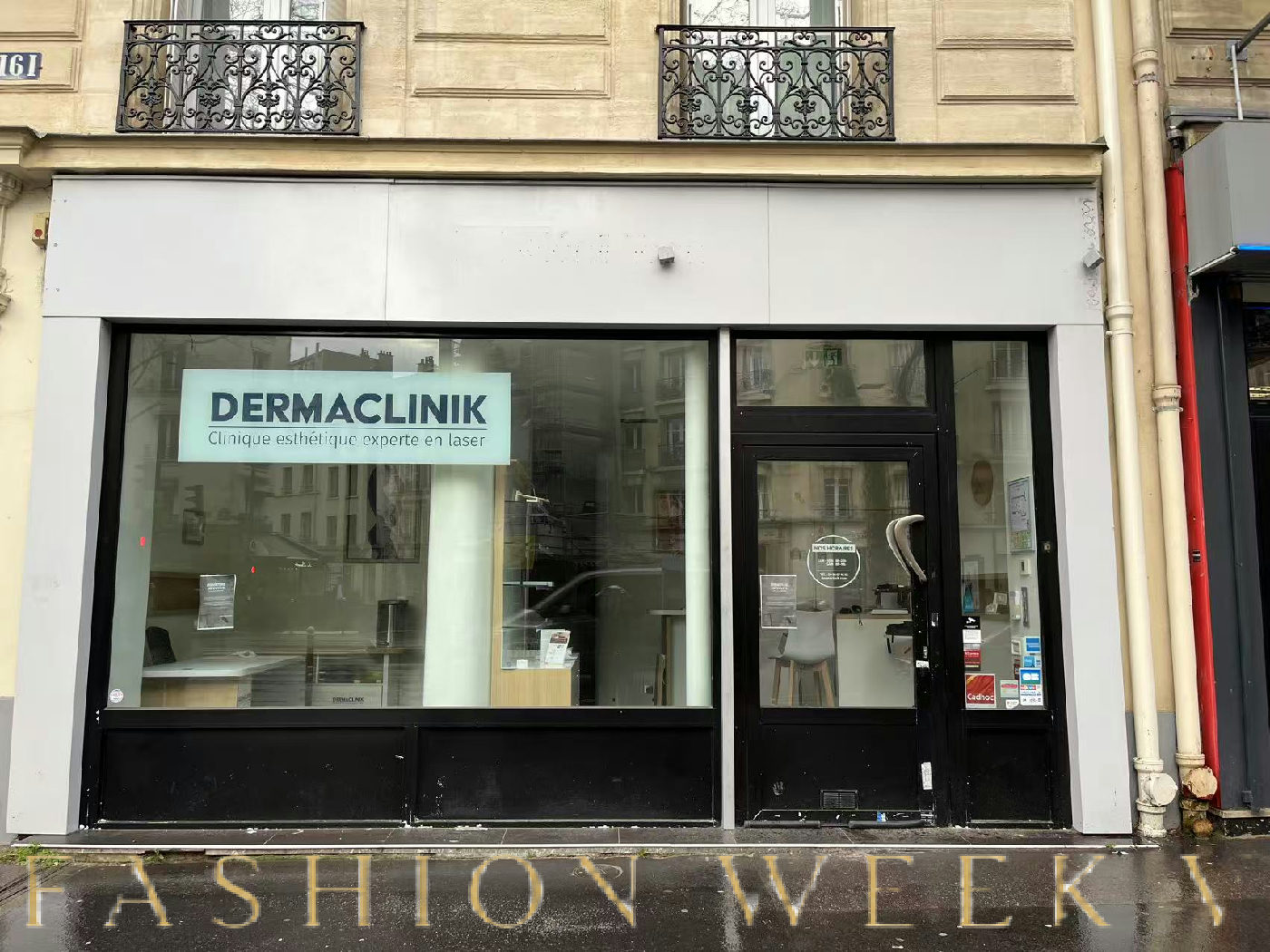
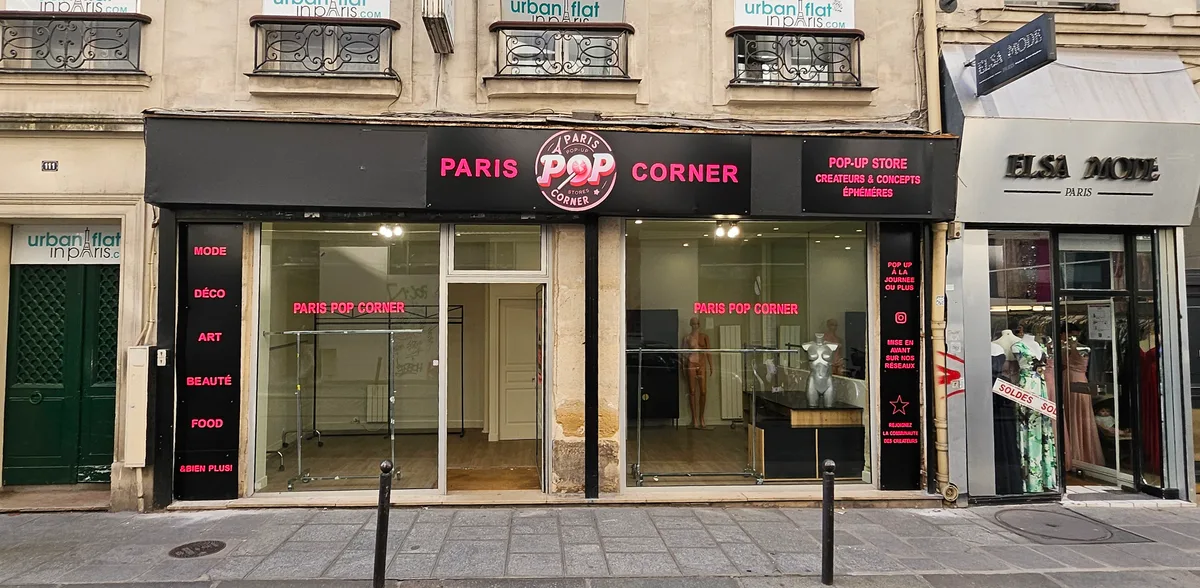
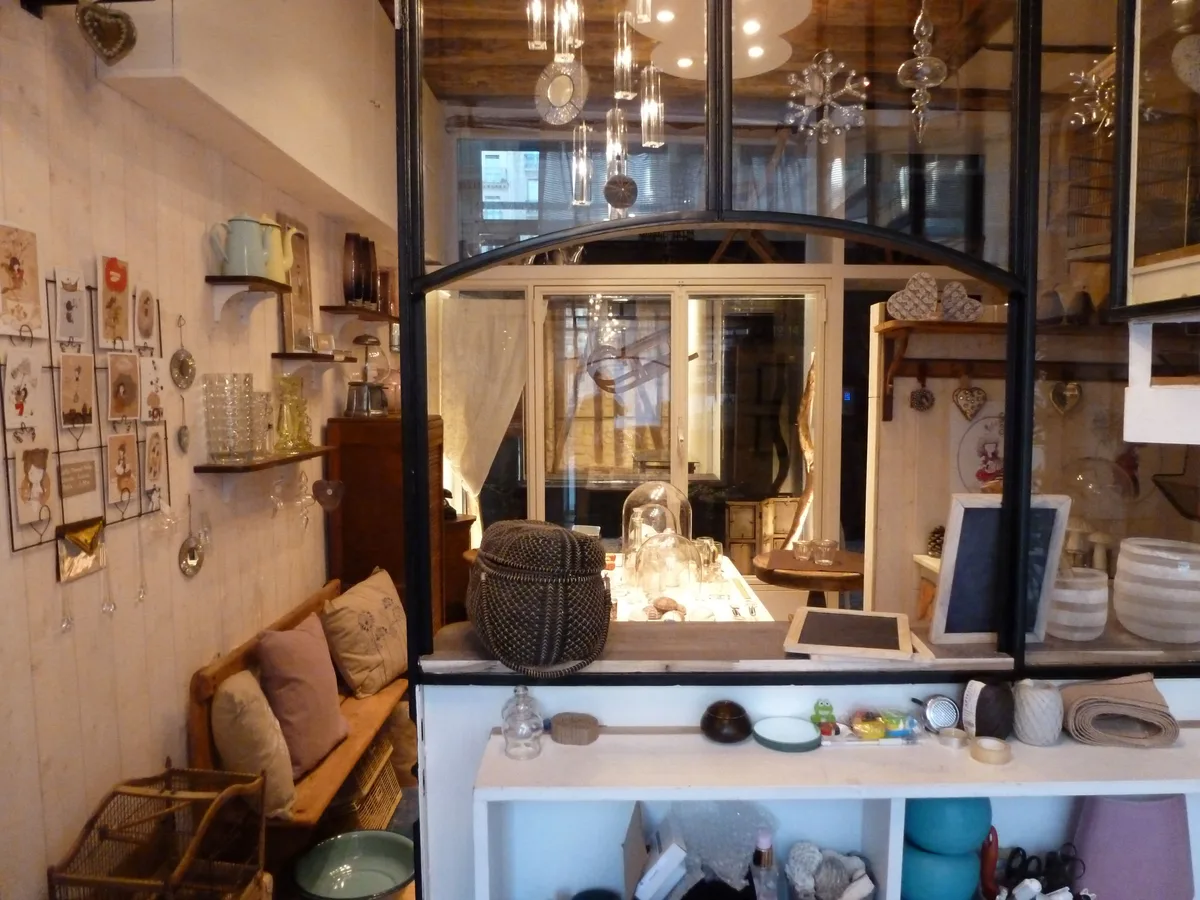
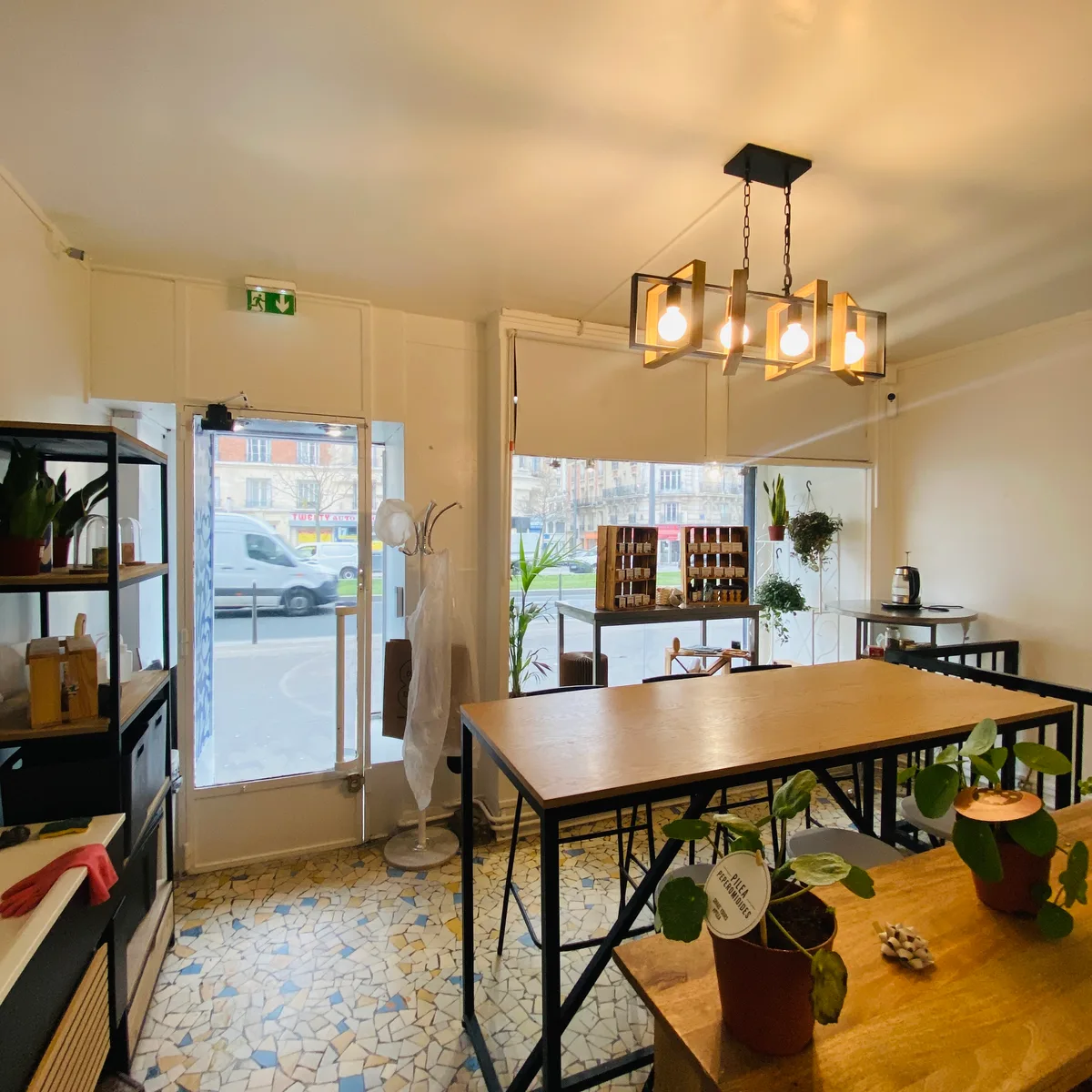
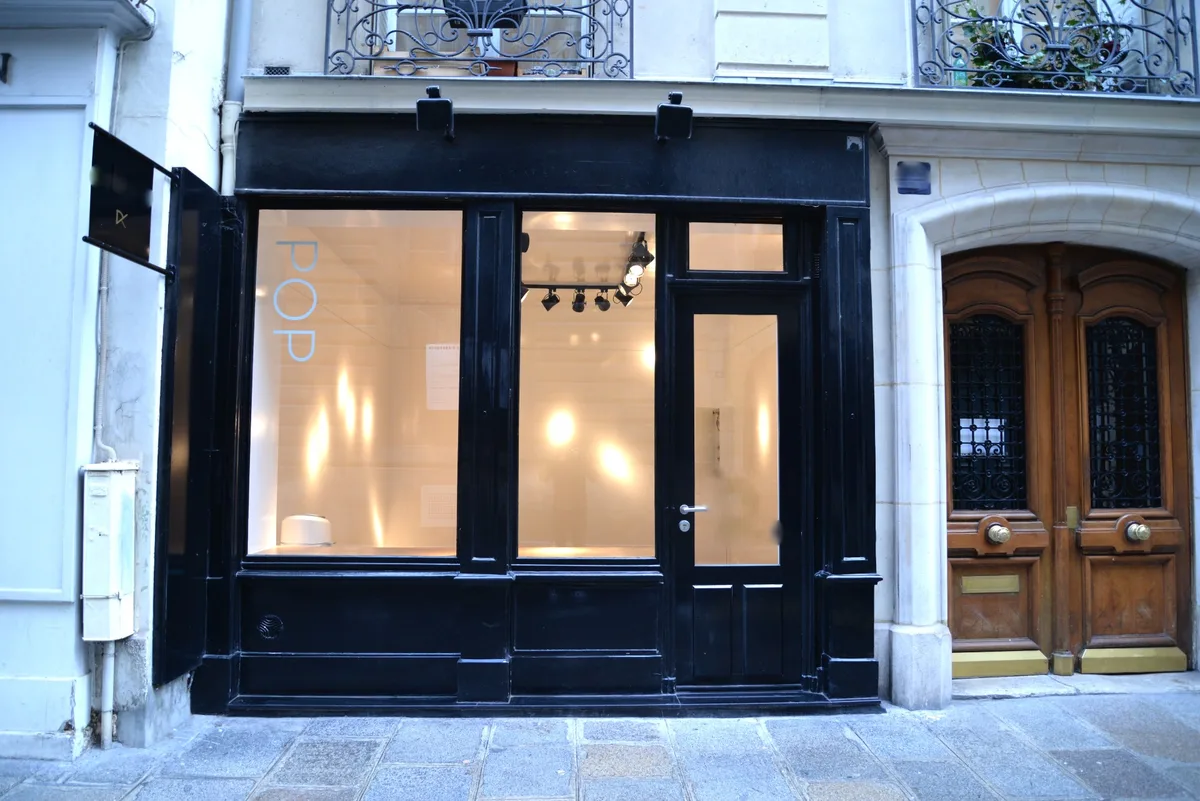
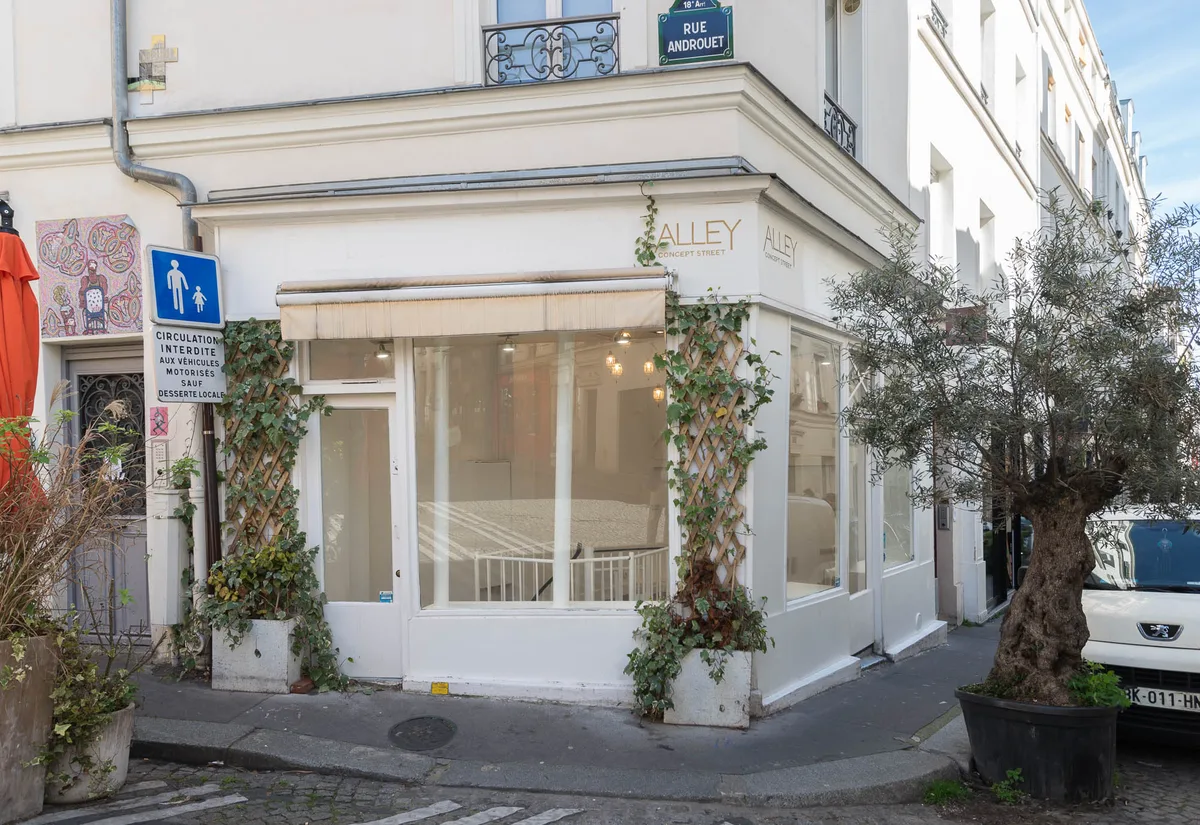
The street-level shops and storefronts along Rue de Rivoli represent the most traditional retail format. These spaces benefit from direct pedestrian visibility and typically feature shop windows, open-plan sales floors, spotlights, white walls or traditional period finishes, and storage at the rear. Ground-floor units are best suited to brands seeking direct consumer engagement, impulse discovery, and high foot traffic conversion. They are appropriate for pop-up stores, seasonal retail activations, and fashion boutiques targeting both local Parisian consumers and international visitors.
Upper-Floor Showroom and Appartement Spaces
Many buildings along Rue de Rivoli contain upper-floor spaces that function as showrooms, private apartments, or hybrid commercial-residential environments. These spaces typically feature the building's most architecturally impressive elements: soaring ceilings, ornate mouldings, herringbone parquet floors, full-length windows with Tuileries or courtyard views, private entrances, and balconies. They suit invitation-only brand events, press days, trade showrooms, private sales, and art exhibitions. The intimacy and exclusivity of these spaces is a deliberate asset, not a limitation, for brands that prioritise depth of engagement over footfall volume.
Gallery and Exhibition Spaces
Some spaces along and adjacent to Rue de Rivoli are configured as gallery-style environments with concrete floors, high-speed wifi, air-conditioning, and flexible layouts that accommodate both art exhibitions and retail displays. Brands in fashion, design, and lifestyle categories use these spaces for brand immersions, product launches, press previews, and art openings that blend retail with cultural programming. The concrete floors and neutral finishes of these spaces provide a clean canvas for branded store design and temporary installations.
Duplex and Office-Conversion Spaces
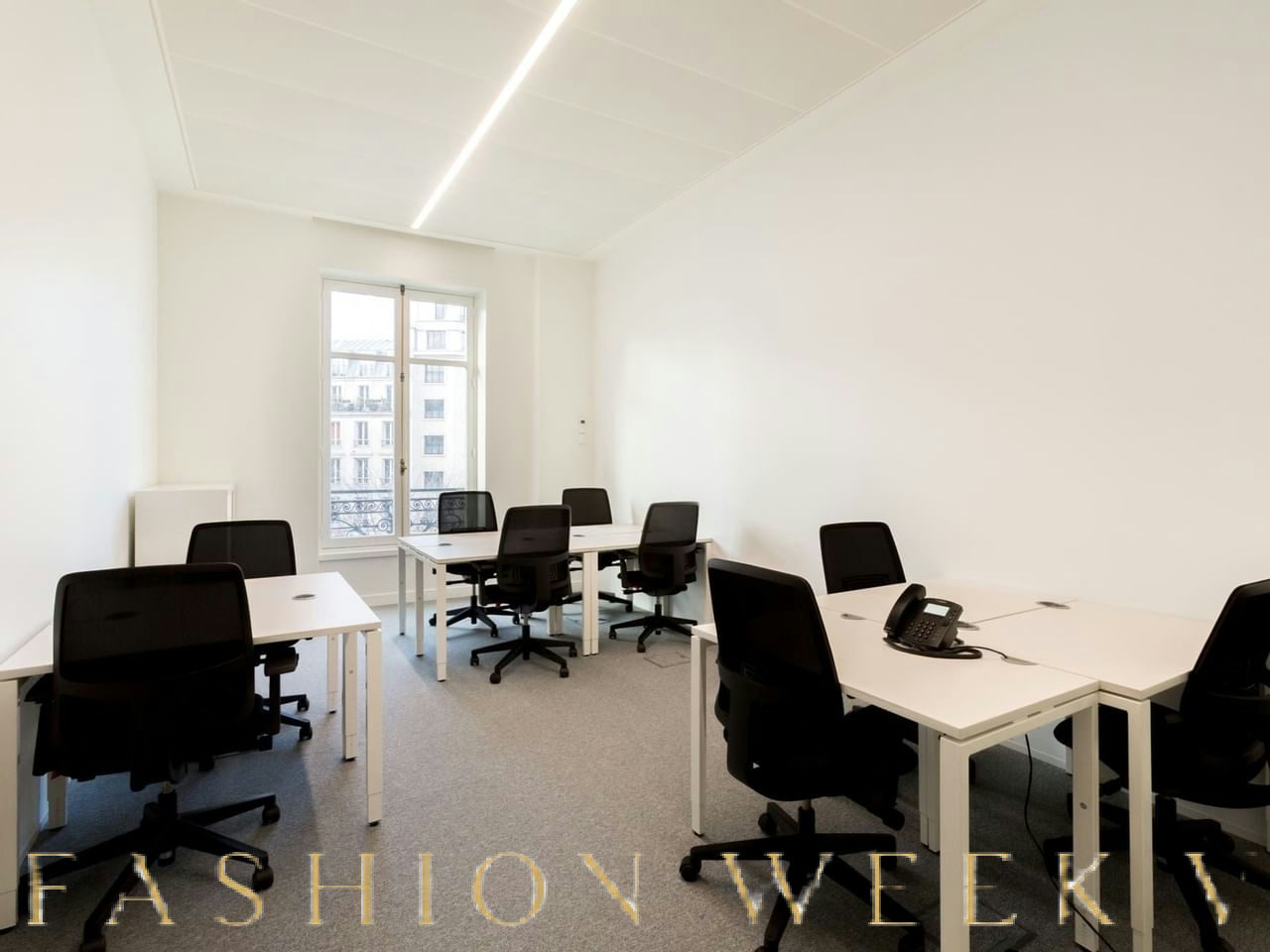
Some listings in the Rue de Rivoli area, including those marketed as office rental Paris 1 options, are duplex office floors that have been redesigned or made available for short-term commercial use. These spaces often include fitted kitchens, meeting rooms, phonebooths, printers, coffee machines, and reception areas, making them operationally practical for brand teams that need a working base alongside a commercial activation. They are particularly useful for international brands that need a Paris base of operations during Fashion Week or a buying season.
Comparing Space Types for Brand Activations
| Space Type | Best For | Typical Features | Minimum Duration | Visitor Volume |
|---|---|---|---|---|
| Ground-floor storefront | Pop-up retail, seasonal boutique | Shop window, white walls, spotlights, storage | 1 week to 1 month | High |
| Appartement Rivoli | Private sales, showroom, press days | Parquet floors, ornate mouldings, balcony, kitchen | 1 day to 2 weeks | Low to medium |
| Gallery space | Art exhibitions, brand immersions | Concrete floors, high ceilings, neutral walls | 3 days to 1 month | Medium |
| Duplex office-conversion | Brand HQ, trade showroom | Meeting rooms, fitted kitchen, wifi, air-con | 1 week to 3 months | Low |
| Reception space | Event launches, private openings | Grand entrance, period features, flexible layout | 1 day to 1 week | Medium to high |
IMPORTANT: Space type significantly affects the permit and lease framework that applies to your activation. Ground-floor retail units on Rue de Rivoli may be subject to different commercial zoning rules than upper-floor residential conversions used for temporary commercial purposes. Verify the applicable framework with a French legal advisor before committing to a lease.
KEY TAKEAWAY: Rue de Rivoli offers brand teams a genuine spectrum of space types, from high-footfall ground-floor storefronts to intimate upper-floor Appartement Rivoli showrooms with herringbone parquet floors and Tuileries views. Matching the space type to your activation format is more important than simply securing the street address.
Choosing the right space type is only one part of the equation. Understanding how short-term leases, bail dérogatoire agreements, and AOT permits work in this specific market is equally critical before any commitment is made.
Lease Structures, Permits, and Legal Frameworks for Short-Term Retail on Rue de Rivoli
Quick answer: Short-term retail and showroom spaces in Paris, including along Rue de Rivoli, are typically governed by bail dérogatoire agreements rather than standard commercial leases. Some spaces in publicly adjacent areas may require an Autorisation d'Occupation Temporaire (AOT). Requirements vary significantly by space type, duration, and arrondissement, and brands should verify their obligations with a qualified French legal advisor.
One of the most common mistakes international brands make when planning a Paris activation is applying their home market's leasing assumptions to the French system. The French commercial property code operates under distinct rules, and the short-term retail market adds further complexity.
Bail Dérogatoire: The Standard Short-Term Framework
A bail dérogatoire, sometimes called a bail précaire or short-term commercial lease, is the standard legal mechanism for temporary retail activations in France. Under French law, this type of agreement can last for up to three years in aggregate but is specifically designed to derogate from the protections of the standard commercial lease (bail commercial), which would otherwise grant the tenant significant rights including a nine-year term and the right to renewal. The bail dérogatoire is appropriate for pop-up shops, seasonal boutiques, temporary showrooms, and short-term event spaces. It provides flexibility for both landlord and tenant while avoiding the long-term obligations of a standard commercial lease.
The lease start date, minimum duration, surface area, permitted use, and specific conditions such as whether a kitchen, storage, or balcony is included are all defined within the bail dérogatoire. Brands must ensure that the permitted use explicitly covers their intended activation type, whether that is retail sales, private exhibitions, press events, or brand experiences.
Autorisation d'Occupation Temporaire (AOT)
For spaces adjacent to or within the domain of public infrastructure, including areas near the Jardin des Tuileries or other publicly managed spaces, an Autorisation d'Occupation Temporaire may be required. AOT agreements are granted by the relevant public authority and authorise temporary private use of a publicly managed space. They are distinct from commercial leases and involve different application processes, fees, and conditions. Brands planning activations in or adjacent to public gardens, monuments, or protected zones near Rue de Rivoli should investigate whether an AOT applies to their intended space.
Standard Commercial Leases and When They Apply
Some spaces on Rue de Rivoli, particularly established ground-floor retail units, may only be available under standard commercial leases, which involve longer minimum terms and significantly more complex legal obligations. Brands seeking activations of under six months should clarify upfront whether the landlord or agency is offering a bail dérogatoire or a standard commercial lease, as the difference affects both the legal commitment and the operational flexibility of the activation.
Platforms such as LoopNet, CoStar, and Storefront list spaces at various price points and lease structures, but the legal framework behind each listing is not always clearly specified. Agencies such as Knight Frank, Invesco-affiliated advisors, and independent broker professionals operate in this market, as do digital-first platforms. Brands working with an agency that specialises in short-term retail activations are better positioned to navigate these distinctions without costly errors.
For brands that want a practical starting point for understanding their permit obligations, the permit guidance tool on Fashion Week Venues provides a structured framework for identifying which permit types may apply to a given activation.
IMPORTANT: Do not assume that a short-term rental agreement is legally straightforward without specialist review. A bail dérogatoire that is incorrectly drafted or that exceeds the cumulative three-year threshold can be recharacterised as a standard commercial lease by a French court, with significant consequences for the tenant.
KEY TAKEAWAY: Short-term retail leases on Rue de Rivoli are most commonly structured as bail dérogatoire agreements. Brands must verify the lease type, permitted use, and any AOT requirements with a qualified French legal advisor before committing. Do not rely solely on platform listings or broker descriptions to confirm the legal framework.
With the legal framework understood, the next area brand teams need to plan carefully is budget. Costs along Rue de Rivoli reflect both the location's prestige and the specific features of each space.
Budget Considerations for Renting Retail Space on Rue de Rivoli
Quick answer: Rental costs on Rue de Rivoli vary significantly based on space type, floor level, surface area, duration, fit-out condition, and included services. Directional estimates are available from market research sources, but brand teams should use a purpose-built budget tool to generate estimates specific to their brief rather than relying on general figures.
Rue de Rivoli is not a budget retail address, and brand teams should approach the cost conversation with that starting assumption. However, the range of space types, floor levels, and lease structures available means that cost outcomes vary more widely than the street's prestige might suggest. A ground-floor storefront with full shop window visibility and a prime 1st arrondissement address will cost substantially more per square metre than an upper-floor appartement-style showroom accessed via a private entrance in the same building.
Cost Components to Budget For
Rental cost is only one component of a realistic Paris activation budget. Brand teams planning to rent retail space on Rue de Rivoli should account for the following cost categories:
- Base rent: The daily, weekly, or monthly rate for the space itself, typically expressed per square metre per year in the French market or as a day rate for short-term pop-up listings.
- Fit-out and production: The cost of branded store design, installation, furniture rental, spotlights, signage, and any modifications to the space. Haussmann-style buildings with herringbone parquet floors and ornate mouldings may require careful handling to avoid damage deposits being triggered.
- Staffing: Retail staffing for customer service, sales support, inventory management, and security service during the activation period. Paris labour costs and employment regulations apply and should be factored carefully.
- Technology and payments: POS systems, payment processing, high-speed wifi connection costs, and any data and analytics tools required for measuring activation performance.
- Marketing: Influencer marketing, press outreach, event support, and paid digital promotion to drive foot traffic to the space during its limited operational window.
- Legal and permit fees: Including legal advice on the bail dérogatoire, any AOT application fees, and compliance costs specific to the space and permitted use.
- Security solution: Some premium Rue de Rivoli spaces require or recommend a dedicated security solution, particularly for activations involving high-value merchandise or invitation-only events.
Some platforms list showroom spaces in the Rivoli area from approximately 800 euros per day for smaller, upper-floor units. Ground-floor retail storefronts with direct street visibility in the 1st arrondissement will typically command significantly higher day rates, reflecting both the foot traffic advantage and the surface area involved. These figures are directional only, and actual costs depend on the specific space, the duration negotiated, the season, and any services included in the lease.
To generate a brand-specific estimate that accounts for your space type, duration, arrondissement, and required services, use the activation budget tool on Fashion Week Venues. This provides a structured starting point for financial planning before entering negotiations.
TIP: Always negotiate the total cost of a Paris activation holistically rather than optimising rent in isolation. A space with a lower day rate but significant fit-out requirements, no included wifi, and no storage may cost more in total than a slightly more expensive but fully fitted space with air-conditioning, wooden floors, and a kitchenette already in place.
KEY TAKEAWAY: Rental costs on Rue de Rivoli are significant and vary widely by space type and floor level. Brand teams should budget holistically, accounting for fit-out, staffing, technology, marketing, and legal costs alongside base rent. Use a purpose-built tool to estimate costs specific to your brief rather than relying on published figures from general real estate platforms.
Cost planning requires a parallel conversation about timing. When you activate on Rue de Rivoli matters as much as where you activate, and Paris Fashion Week is not the only viable calendar window.
Calendar, Timing, and Fashion Week Windows for Rue de Rivoli Activations
Quick answer: Paris Fashion Week creates the highest demand and foot traffic concentration for luxury and fashion brand activations on Rue de Rivoli, but it is not the only viable activation window. Seasonal retail periods, trade show calendars, art fair season, and summer tourism peaks all create strong demand windows with different consumer and industry profiles.
The fashion industry's calendar shapes the demand landscape for short-term retail and showroom space across Paris, and Rue de Rivoli is no exception. Understanding the full calendar, rather than focusing exclusively on Fashion Week, allows brand teams to identify the right moment for their specific activation objectives.
Paris Fashion Week and Its Impact on the Rivoli Corridor
Paris Fashion Week occurs twice annually, with Women's Ready-to-Wear in late February or early March and again in September or October. Men's Fashion Week and Haute Couture Week add additional concentrated industry windows in January and July. During these periods, the Rue de Rivoli corridor experiences elevated foot traffic from international press, buyers, stylists, and influencers who move between shows, showrooms, and brand activations across the 1st, 8th, and surrounding arrondissements. Spaces on Rue de Rivoli and the adjacent Rue Saint-Honoré see the highest demand and shortest availability windows during Fashion Week periods. Brand teams should begin space searches at least three to four months ahead of their target Fashion Week window to avoid missing viable inventory.
Other High-Value Activation Windows
Beyond Fashion Week, several other calendar windows generate strong conditions for Rue de Rivoli activations:
- Paris Art Week and FIAC adjacent periods: The autumn art fair season brings a culturally engaged, high-net-worth audience to central Paris. Brands with art exhibition or gallery-format activations can leverage this audience effectively from a Rue de Rivoli location.
- Christmas and end-of-year retail season: Tourist volumes and retail spending in central Paris reach annual peaks in December. Ground-floor storefronts with strong window visibility benefit most during this period.
- Summer tourism peak: The Jardin des Tuileries and the Louvre generate extremely high international visitor volumes during July and August. Brands targeting a broad international luxury consumer can activate effectively during this window, even though the fashion industry's own calendar is quieter.
- January and February trade period: Following the holiday season, the Paris trade showroom calendar is active, particularly for buyers travelling for Maison et Objet and related trade shows. Brands with showroom-format activations can reach buyers who are already in Paris for professional purposes.
Availability Calendar and Minimum Duration Considerations
The availability calendar for premium Rue de Rivoli spaces tightens sharply in the six to eight weeks around Fashion Week windows. Outside these peak periods, the market offers more flexibility on minimum duration, pricing, and lease start timing. For brands with flexibility on their activation window, targeting the weeks immediately before or after Fashion Week can offer comparable foot traffic with significantly better space availability and potentially more favourable rental terms.
Minimum duration requirements vary by space type and landlord. Some platforms and agencies offer spaces from a single day, which is appropriate for private sales and reception events. Pop-up retail and showroom activations more commonly operate on minimum durations of one to two weeks, while longer activations of one to three months are appropriate for brands establishing a seasonal Paris presence. Use the timeline planning tool to map your activation window against key calendar milestones.
KEY TAKEAWAY: Paris Fashion Week creates the highest demand concentration for Rue de Rivoli retail and showroom spaces, but smart brands also consider the art fair season, the summer tourism peak, and the January trade window. Planning the activation calendar three to four months ahead is essential for securing the best spaces during peak periods.
Calendar planning connects directly to the question of how to actually find and secure the right space, and this is where the approach to sourcing and agency selection makes a material difference to outcomes.
How to Find and Secure Retail Space on Rue de Rivoli: Platforms, Brokers, and Agencies
Quick answer: Brands can search for retail and showroom space on Rue de Rivoli through general commercial real estate platforms, short-term space platforms, traditional broker professionals, or specialist pop-up agencies. Each route has different trade-offs in terms of speed, cost transparency, legal support, and end-to-end service quality.
The market for short-term retail space on Rue de Rivoli is served by multiple types of intermediaries, each with different capabilities and limitations. Understanding the landscape helps brand teams choose the sourcing approach that best fits their timeline, budget, and operational requirements.
General Commercial Real Estate Platforms
Platforms such as LoopNet and CoStar list commercial real estate across Paris, including some Rue de Rivoli properties. These platforms are primarily oriented toward longer-term commercial leases and investment properties, and their listings tend to reflect the institutional and corporate leasing market rather than the short-term pop-up and showroom activation market. Brands seeking activations of under three months will find these platforms less suitable, and the listings rarely include the operational details, availability calendars, or service inclusions that brand teams need to make activation decisions quickly.
Short-Term Space Platforms
Platforms such as Storefront operate specifically in the short-term retail and event space market and list a wider range of space types including pop-up stores, boutiques, reception spaces, and showrooms. These platforms allow brands to search by space type, surface area, arrondissement, and availability. Listings typically include descriptions of features such as concrete floors, herringbone parquet floors, wooden floors, white walls, spotlights, air-conditioning, and storage, along with day rate pricing and minimum duration requirements. However, these platforms are primarily discovery and booking tools; they do not typically provide the legal, design, production, staffing, or activation management support that an end-to-end agency offers.
Traditional Broker Professionals
Traditional commercial real estate brokers, including those affiliated with agencies such as Knight Frank and specialist French commercial property advisors, can source premium Rue de Rivoli spaces, particularly for larger, longer-term activations. However, brokers operating on commission models may have limited incentive to prioritise short-term activations, and their network may not cover the full range of short-term space types available in the market. Brand teams working with commission brokers should clarify upfront what their fee structure is, whether the broker is acting exclusively for the landlord or the tenant, and what support is provided beyond introduction.
Full-Service Pop-Up Agencies
A full-service pop-up agency combines space sourcing with concept direction, production, staffing, activation management, and performance measurement. For brand teams that lack a Paris-based team or the time to manage multiple vendors across legal, design, production, and operations, a full-service agency approach significantly reduces risk and execution time. The agency's network of landlord relationships, pre-vetted spaces, and established processes for permit compliance, fit-out logistics, and retail operations means that brand teams can focus on brand decisions rather than operational detail.
For brands evaluating which sourcing approach to use, the guide to hiring a pop-up agency on Fashion Week Venues provides a structured framework for making that decision based on your team's capacity, budget, and activation complexity.
KEY TAKEAWAY: General real estate platforms, short-term space platforms, traditional brokers, and full-service agencies each serve different brand needs. For complex, time-sensitive activations on Rue de Rivoli, a full-service agency that combines space sourcing with legal, design, production, and operational support typically delivers better outcomes than a fragmented multi-vendor approach.
To compare spaces across the Rue de Rivoli corridor and the broader 1st arrondissement, explore the Paris city hub on Fashion Week Venues to shortlist options that match your brief, budget, and calendar window.
Interior Features, Fit-Out Considerations, and Space Design for Rue de Rivoli Activations
Quick answer: Rue de Rivoli spaces offer a wide range of interior conditions, from fully fitted contemporary units with white walls, wooden floors, and spotlights to raw heritage spaces with soaring ceilings, ornate mouldings, and herringbone parquet. Understanding the fit-out baseline of each space is essential for accurate budget and timeline planning.
The architectural quality of Rue de Rivoli buildings is one of the primary reasons brands choose this street over other Paris retail addresses. However, the interior condition of individual spaces varies significantly, and the fit-out investment required depends entirely on what you start with and what your brand experience requires.
Heritage Architectural Features
Spaces in Haussmann-style buildings on Rue de Rivoli frequently feature soaring ceilings of four metres or more, ornate mouldings on cornices and ceiling roses, herringbone parquet floors, full-length windows with interior shutters or draping potential, and balconies overlooking the Tuileries or internal courtyards. These features create an inherent grand Parisian style that reduces the production investment needed to establish a premium retail atmosphere. Brands in luxury, fashion, jewellery, and lifestyle categories benefit most from these architectural assets, as they reinforce the brand's positioning without requiring extensive temporary installation.
However, heritage spaces come with constraints. Herringbone parquet floors require careful protection during fit-out and de-rig to avoid damage deposit deductions. Ornate mouldings limit the placement of hanging fixtures and temporary ceiling installations. Full-length windows may be protected elements that cannot be obscured, modified, or covered with branded graphics. Brand teams must clarify these constraints with the landlord or space manager before committing to a fit-out concept.
Contemporary and Redesigned Spaces
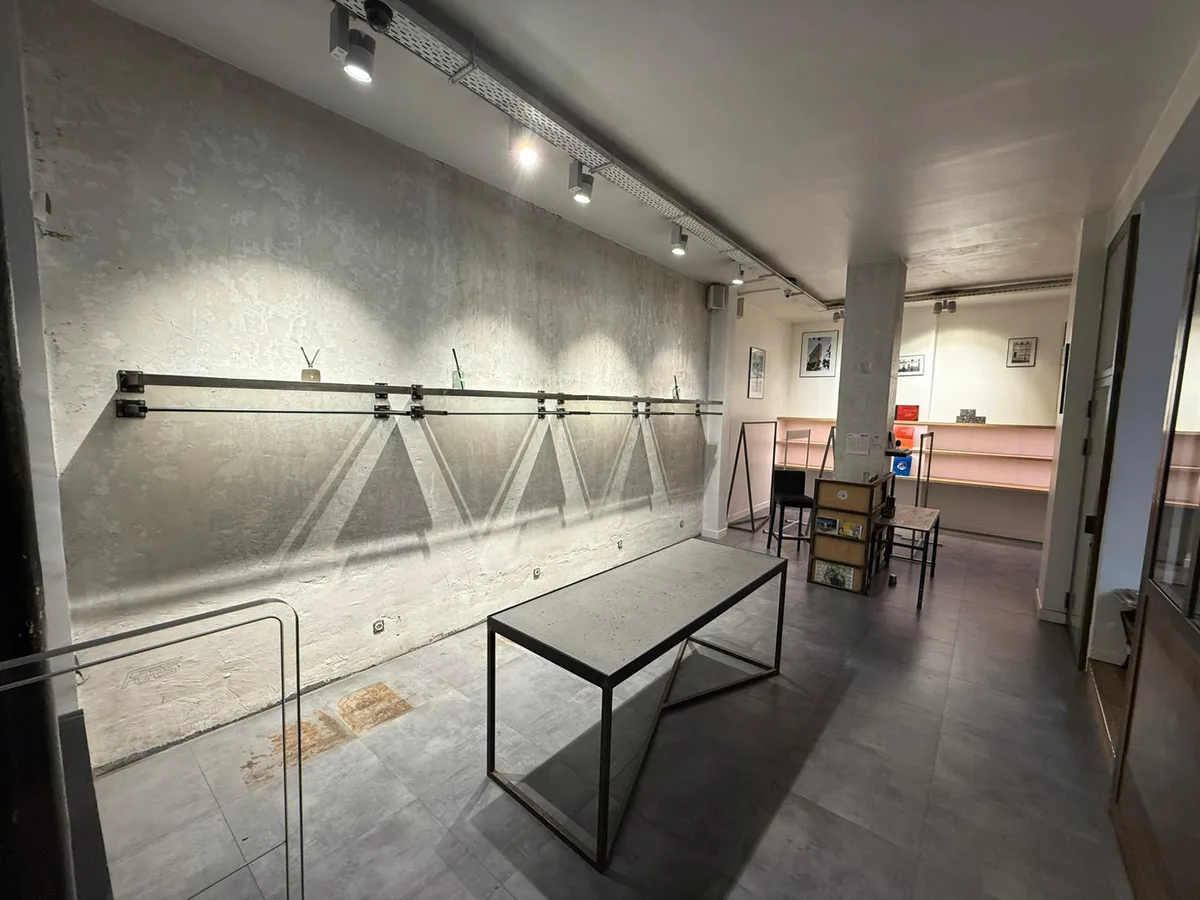
Some spaces along Rue de Rivoli and in adjacent Haussmann buildings have been redesigned with contemporary finishes: artificial floors, polished concrete floors, raw concrete, white walls, wooden floors, and clean industrial or gallery-style aesthetics. These spaces offer a different creative canvas. Exposed piping, exposed stone, or exposed stone columns in certain older or basement-level spaces create an industrial-heritage hybrid aesthetic that suits brands in streetwear, contemporary design, and cultural programming. The flexibility of these spaces is generally higher than heritage-preserved apartments, as the surfaces are more robust and the landlord's restrictions on temporary modifications are often less stringent.
Operational Infrastructure
Operational requirements vary by activation type. Brands running retail sales operations need robust high-speed wifi for POS and payment processing, sufficient electrical capacity for spotlights and display technology, adequate storage for inventory, and ideally air-conditioning for comfort during summer peak periods. Brands running showroom or press day activations additionally need meeting rooms or breakout areas, a fitted kitchen for hospitality, and a private entrance to manage guest flow discreetly.
Spaces marketed as office rental Paris 1 conversions often include fitted kitchens, meeting rooms, phonebooths, printers, and coffee machines as standard, making them operationally practical for brand teams that need a working environment alongside a commercial activation. These features justify the consideration of such spaces even for brands primarily focused on showroom or press activity rather than direct retail sales.
DID YOU KNOW: Brands like KITH and Dior have both activated in Paris's 1st arrondissement corridor, leveraging the area's architectural heritage as an active element of the brand experience rather than a neutral backdrop. The space itself becomes part of the brand story when the architecture is this distinctive.
KEY TAKEAWAY: The interior baseline of Rue de Rivoli spaces ranges from fully contemporary units ready for immediate activation to heritage apartments requiring careful fit-out management. Understanding exactly what is in place and what is prohibited before signing a lease avoids costly surprises during production.
Interior planning connects directly to the broader production and build process, which requires coordination across design, logistics, staffing, and technology to execute an activation that performs commercially as well as visually.
How Fashion Week Venues Supports Brands Renting Retail Space on Rue de Rivoli
Quick answer: Fashion Week Venues provides end-to-end support for brands planning retail, showroom, and event activations on Rue de Rivoli and across the Paris market, covering venue sourcing, concept direction, production, staffing, activation management, and performance measurement through a single integrated service framework.
For international brands, emerging labels, and established houses that need to activate in Paris without a permanent local team, managing a Rue de Rivoli activation across multiple vendors and legal frameworks creates significant execution risk. Fashion Week Venues operates as a full-service pop-up agency and space marketplace that consolidates the sourcing, design, build, staffing, and management functions of a Paris activation under a single coordinating framework.
Venue Sourcing and Space Marketplace
The venue sourcing service combines access to the Fashion Week Venues space marketplace with a curated, brief-driven search process. Rather than browsing undifferentiated listings, brand teams can specify their requirements by space type, arrondissement, surface area, architectural style, availability window, and budget range. The result is a shortlist of spaces that actually match the brief rather than a generic set of search results filtered by postcode alone. The marketplace covers spaces across Paris, including the Rue de Rivoli corridor, Rue Saint-Honoré, the Palais Royal vicinity, and other key neighbourhoods.
Concept Direction and Branded Store Design
Once a space is identified, the concept direction and branded store design services translate the brand's identity and activation objectives into a physical retail environment. This covers spatial layout, material selection, furniture rental, lighting direction, graphic application, and the integration of any operational technology. For brands activating in heritage Haussmann buildings with herringbone parquet floors and ornate mouldings, the concept must work with the architecture rather than against it, and experienced creative direction makes this balance achievable without compromising brand consistency.
Production, Build, and Fit-Out Management
The production and build service manages the physical realisation of the activation concept, from materials sourcing and fabrication to installation, de-rig, and space handback. For brands unfamiliar with Paris trade logistics, the production process involves French supplier networks, building access schedules, arrondissement-specific delivery restrictions, and handback condition requirements that are all best managed by a team with established local relationships. Access to the build planning tool helps teams structure the production timeline before committing to dates.
Retail Staffing and Activation Management
Running a successful retail activation on Rue de Rivoli requires brand-fluent staff who can represent the brand's aesthetic and values while managing sales, inventory, customer service, and security. The retail staffing service sources, briefs, and manages activation staff for the duration of the pop-up or showroom. Activation management covers day-to-day operations including inventory tracking, visitor experience management, event support for private sales and art openings, and real-time reporting. For brands that want to measure commercial performance, the data and analytics service provides the reporting framework needed to assess foot traffic conversion, sales performance, and return on the activation investment.
Tools for Planning and Decision-Making
Fashion Week Venues provides a suite of planning tools that are specifically useful for brands evaluating a Rue de Rivoli activation. The budget tool estimates total activation costs based on space type, duration, and required services. The ROI calculator models the likely return on the activation investment based on foot traffic estimates and conversion assumptions. The compare tool allows side-by-side evaluation of multiple spaces against each other. The timeline tool structures the end-to-end activation schedule from brief to handback. The locator tool maps spaces by neighbourhood and proximity to landmarks. These tools are available at fashionweekvenues.com/tools and are designed to accelerate the planning phase before the formal sourcing process begins.
Twin Co-Activation and Multi-City Planning
For brands planning activations across multiple Paris locations or multiple fashion capitals simultaneously, the twin co-activation concept and the cities framework support coordinated multi-location planning. Brands can align a Rue de Rivoli pop-up with simultaneous activations in London, Milan, New York, Tokyo, or Dubai, creating a coherent international brand moment rather than isolated local events. The cities framework covers logistical coordination, permit alignment across jurisdictions, and shared brand asset deployment across locations.
KEY TAKEAWAY: Fashion Week Venues supports brand teams at every stage of a Rue de Rivoli activation, from initial space discovery through to handback, with services covering venue sourcing, concept direction, production, staffing, and performance measurement. The integrated approach is particularly valuable for international brands without a permanent Paris team.
Step-by-Step Workflow for Activating a Pop-Up or Showroom on Rue de Rivoli
Quick answer: A successful Rue de Rivoli activation follows a structured workflow from brief development through space sourcing, legal review, concept design, production, staffing, activation management, and post-activation analysis. Beginning this process three to four months ahead of the target activation window is the minimum recommended lead time for peak Fashion Week periods.
Brand teams that approach Paris activations without a structured workflow frequently encounter avoidable problems: spaces already taken, production timelines compressed by late brief sign-off, permit applications submitted too late, or staffing arranged without adequate brand briefing. A disciplined workflow eliminates most of these risks.
| Stage | Activity | Responsible Party | Timeline Before Activation |
|---|---|---|---|
| 1. Brief development | Define objectives, space type, budget, dates, arrondissement preference | Brand team | 4 to 5 months prior |
| 2. Space search and shortlisting | Search marketplace, visit shortlisted spaces, compare options | Brand team plus agency | 3 to 4 months prior |
| 3. Legal review | Review bail dérogatoire, verify permitted use, check AOT requirements | French legal advisor | 3 months prior |
| 4. Concept direction | Develop spatial concept, material palette, furniture plan, graphics | Creative director or agency | 2 to 3 months prior |
| 5. Production planning | Source materials, book suppliers, schedule installation and de-rig | Production team or agency | 2 months prior |
| 6. Permit applications | Submit any required permits for temporary signage, AOT, or public space use | Agency or legal advisor | 6 to 8 weeks prior |
| 7. Staffing brief and hire | Source, brief, and confirm activation staff including security | Staffing team or agency | 4 to 6 weeks prior |
| 8. Fit-out and installation | Install branded store design, technology, POS, signage | Production team | 3 to 5 days prior |
| 9. Activation management | Day-to-day operations, inventory, customer service, event support | Activation manager | During activation |
| 10. De-rig and handback | Remove all installations, restore space to agreed condition | Production team | Immediately post-activation |
| 11. Post-activation analysis | Review foot traffic, sales, ROI, brand awareness metrics | Brand team plus agency | 1 to 2 weeks after |
This workflow applies to activations of one to four weeks. Shorter activations of a single day or a weekend require a compressed version of the same framework, with legal review, concept finalisation, and staffing arrangements completed well in advance. Longer activations of one to three months allow more time at each stage but still require early initiation to secure the right space during competitive periods.
For brands managing their first Paris activation, the Fashion Week Venues process page outlines how the agency structures each stage of an engagement, from initial brief to post-activation reporting.
KEY TAKEAWAY: A structured eleven-stage workflow from brief development to post-activation analysis ensures that Rue de Rivoli activations are planned, legally compliant, well-staffed, and commercially measurable. Beginning the process at least three to four months before the target window is the minimum viable lead time for Fashion Week periods.
Rue de Rivoli Activation Case Studies and Brand Precedents
Fashion and luxury brands have a long history of activating along the Rue de Rivoli corridor, and the precedents set by major houses provide useful reference points for brands planning their own activations. While specific proprietary case study data is available through agency engagement, publicly known examples illustrate the range of activation formats that have succeeded in this location.
Dior has maintained a consistent presence in the 1st arrondissement, using heritage building spaces for press events, private sales, and brand immersions that leverage the area's architectural and cultural associations. The brand's use of ornate period interiors as active creative elements, rather than neutral backdrops, demonstrates how the architectural quality of Rue de Rivoli spaces can be integrated into the brand narrative itself.
KITH, the New York-based luxury streetwear retailer, has used Paris Fashion Week activations to establish European brand credibility and generate international press. Their use of short-term spaces in the 1st arrondissement during Fashion Week periods illustrates how brands from outside the traditional luxury heritage can use a premium Paris address to accelerate brand perception among European consumers and press.
Art exhibitions and art openings in Rivoli corridor spaces have become increasingly common as brands in fashion, jewellery, and lifestyle categories use cultural programming to differentiate their activations from straightforward retail experiences. Gallery-format spaces with concrete floors and high ceilings facilitate this hybrid approach, allowing brands to present product alongside artistic content in a way that justifies a longer dwell time and generates more substantial press coverage.
For brands that want to review specific activation approaches and outcomes, the work and case studies section on Fashion Week Venues provides detailed examples of activations across Paris and other fashion capitals.
This activations section provides an important context note: Paris Fashion Week is not the only viable calendar window for Rue de Rivoli activations, and brands that assume it is often miss stronger opportunities in less competitive periods.
KEY TAKEAWAY: Major brands including Dior and KITH have established clear precedents for using the Rue de Rivoli corridor for flagship-level activations that combine retail, cultural programming, and press engagement. Brand teams can use these precedents to calibrate the ambition and format of their own activation plans.
Common Myths About Renting Retail Space on Rue de Rivoli Debunked
MYTH: You need a French legal entity to rent retail or showroom space on Rue de Rivoli.
FACT: International brands without a French legal entity can and do rent short-term retail and showroom spaces in Paris. Bail dérogatoire agreements can be structured to accommodate international companies, though the specific requirements depend on the landlord, the space, and the nature of the activation. Working with a specialist agency or French legal advisor ensures the right framework is in place. Requirements vary and brands should verify their specific situation with a qualified French legal advisor.
MYTH: Paris Fashion Week is the only viable calendar window for activating on Rue de Rivoli.
FACT: Paris Fashion Week creates the highest industry demand concentration, but the Jardin des Tuileries and Louvre generate strong international tourist footfall year-round. The art fair season, the December holiday retail peak, and the summer tourism peak all represent strong activation windows with different consumer profiles and more favourable space availability outside the Fashion Week squeeze. Brands with flexibility on timing often achieve better space terms and less competition for press attention by choosing a strategic adjacent window.
MYTH: Commission brokers are the only way to find premium space on Rue de Rivoli.
FACT: Digital space platforms, specialist pop-up agencies, and curated marketplaces all provide access to short-term retail and showroom spaces on Rue de Rivoli and the surrounding 1st arrondissement. Commission brokers can be useful for specific types of longer-term commercial leases, but for short-term activations of days to a few months, a specialist platform or agency typically offers faster access, better service transparency, and more relevant legal and operational support than a traditional broker model.
MYTH: Short-term leases in Paris are legally straightforward and require no specialist input.
FACT: Bail dérogatoire agreements are legally complex instruments that derogate from France's strong commercial tenant protections. A poorly drafted agreement, an incorrect permitted use clause, or a cumulative duration that exceeds the legal threshold can expose a brand to significant legal and financial risk. Always engage a qualified French legal advisor to review any short-term commercial lease in Paris before signing, regardless of how straightforward the landlord or platform presents the arrangement to be.
MYTH: All Rue de Rivoli spaces have the same Haussmann heritage interior and require the same fit-out approach.
FACT: The Rue de Rivoli building stock includes Haussmann-era apartments with herringbone parquet and ornate mouldings, contemporary redesigned spaces with artificial floors and polished concrete, gallery-format units with exposed stone and industrial features, and office-conversion duplex floors with fitted kitchens and meeting rooms. The fit-out approach, budget, and creative concept must be calibrated to the specific interior baseline of the chosen space, not to a generic assumption about the street's character.
Frequently Asked Questions About Renting Retail Space on Rue de Rivoli
What are the most sought-after locations for renting a retail store or showroom in the Rivoli corridor?
The most sought-after locations for short-term retail and showroom activations concentrate in the 1st arrondissement section of Rue de Rivoli between the Tuileries and the Louvre-Rivoli metro station. Specific reference points include the blocks near 128 rue de Rivoli for heritage Haussmann-style spaces and the stretch near 144 rue de Rivoli for more contemporary units. Adjacent streets including Rue Saint-Honoré and the Palais Royal vicinity are equally sought after and often provide more availability during peak Fashion Week periods when Rue de Rivoli itself is fully committed.
How much does it cost to rent a retail store or pop-up space on Rue de Rivoli?
Rental costs along Rue de Rivoli vary significantly by space type, floor level, surface area, and duration. Some platforms list showroom-format spaces in the broader Rivoli area from approximately 800 euros per day for smaller upper-floor units. Ground-floor storefronts with street visibility and larger surface areas will command substantially higher rates. These figures are directional estimates only. Total activation costs also include fit-out, staffing, technology, marketing, and legal fees. Use the budget estimation tool on Fashion Week Venues to generate a brand-specific cost estimate before entering negotiations with any landlord or platform.
What is the ideal duration for a pop-up or showroom activation on Rue de Rivoli?
The ideal duration depends on your activation objective. Private sales, press days, and art openings can be highly effective over one to five days. Fashion Week showrooms typically run for five to ten days aligned with the industry calendar. Seasonal pop-up boutiques are commonly planned for two to six weeks to balance production investment against rental cost. Brand experiences aimed at building awareness among tourists and Parisian consumers can justify one to three months. Minimum duration requirements vary by space and landlord, so confirm the floor requirement before finalising your dates.
Do I need a French company to rent space on Rue de Rivoli?
No, a French legal entity is not a mandatory requirement for all short-term rental arrangements on Rue de Rivoli. International companies can structure bail dérogatoire agreements to accommodate foreign corporate entities in many cases. However, the specific requirements depend on the landlord, the building, and the nature of the activation. Some landlords do require a French guarantor or entity for certain lease types. Always verify your specific situation with a qualified French legal advisor before assuming that your corporate structure will be accepted.
What permits are required for a pop-up or showroom activation on Rue de Rivoli?
Permit requirements vary depending on the space type, its location relative to public or protected areas, the nature of the activation, and its duration. The most commonly relevant framework for short-term retail activations is the bail dérogatoire. Spaces adjacent to the Jardin des Tuileries or other publicly managed areas may additionally require an Autorisation d'Occupation Temporaire. Temporary signage, window graphics, and external branding may require separate authorisations from the Paris city authority. Use the permit guidance tool on Fashion Week Venues as a starting framework, and verify all requirements with a qualified French legal advisor.
What interior features can I expect in a Rue de Rivoli space?
Interior features vary widely by space type and floor level. Haussmann-era upper-floor spaces often include soaring ceilings, ornate mouldings, herringbone parquet floors, full-length windows, balconies, and private entrances. Contemporary units typically offer white walls, wooden floors, spotlights, high-speed wifi, and air-conditioning. Gallery-format spaces may feature polished concrete floors, exposed stone, or raw concrete. Operational spaces may include fitted kitchens, meeting rooms, and storage. Always request a full specification from the landlord or platform before committing, as listing descriptions do not always capture the complete interior condition.
What is the difference between a bail dérogatoire and a standard commercial lease in France?
A bail dérogatoire, also called a bail précaire, is a short-term commercial agreement that specifically derogates from the protections of the standard French commercial lease (bail commercial). Under a standard commercial lease, tenants benefit from significant legal protections including a minimum nine-year term and the right to renewal. A bail dérogatoire provides neither, offering flexibility for both parties but with no long-term security for the tenant. The aggregate duration of all bail dérogatoire agreements with the same tenant for the same space must not exceed three years; otherwise the agreement risks being recharacterised as a standard commercial lease by a French court.
How far in advance should I start searching for space on Rue de Rivoli during Fashion Week?
For activations targeting Paris Fashion Week windows, begin your space search at least three to four months in advance. Premium spaces in the 1st arrondissement, particularly those with Tuileries views, private entrances, and architectural heritage features, are typically committed well before the Fashion Week window. Brands that begin their search six months ahead have the widest selection. For activations outside Fashion Week peak periods, lead times can be shorter, but a minimum of two months is recommended for any activation requiring fit-out and staffing arrangements.
Can I use a Rue de Rivoli space for both a showroom and a retail operation simultaneously?
Yes, many spaces along Rue de Rivoli are configured for hybrid use, accommodating both trade showroom functions and direct consumer retail within the same space or across different floors of the same building. The bail dérogatoire must explicitly permit both uses, and the operational setup must be designed to manage the different visitor flows appropriately. Upper-floor appartement spaces are often better suited to exclusive showroom use, while ground-floor units support higher-volume retail more effectively. A concept direction consultant can help design a spatial plan that accommodates both objectives within a single activation.
What neighbourhoods are adjacent to Rue de Rivoli and worth considering as alternatives?
Rue Saint-Honoré runs parallel to Rue de Rivoli one block south and shares much of the same luxury and fashion retail character. The Palais Royal gardens and surrounding streets offer a more intimate, culturally prestigious setting suitable for invitation-only activations. The Marais, accessible via the eastern extension of Rue de Rivoli into the 4th arrondissement, provides a different consumer profile oriented toward contemporary fashion, design, and cultural tourism. Place Vendôme is a short walk from the western end of Rue de Rivoli and its immediate vicinity suits jewellery, watchmaking, and ultra-luxury brand activations.
What kind of brands typically activate on Rue de Rivoli?
The Rue de Rivoli corridor attracts luxury fashion houses, contemporary fashion brands, jewellery and accessories brands, lifestyle and design labels, art galleries, and international brands using Paris Fashion Week or the Paris tourist calendar as a platform for brand building. Brands in the streetwear and contemporary luxury category have increasingly activated in this area, leveraging the architectural prestige and international visitor base of the 1st arrondissement to establish European market credibility. The space types available on and near Rue de Rivoli support everything from high-footfall consumer retail to intimate invitation-only trade events.
How do I compare multiple spaces along the Rue de Rivoli corridor before making a decision?
The most effective approach to space comparison involves evaluating spaces against a consistent set of criteria: location and proximity to target landmarks, surface area relative to your activation needs, interior baseline and fit-out requirements, included amenities, availability against your target dates, minimum duration, and total cost including any required fit-out investment. The space comparison tool on Fashion Week Venues provides a structured framework for side-by-side evaluation. Visiting spaces in person before committing is strongly recommended for activations of significant budget or duration.
What is the Appartement Rivoli concept, and is it suitable for brand activations?
The Appartement Rivoli concept refers to upper-floor spaces in Rivoli-area buildings that have been made available for temporary commercial use while retaining a residential-scale, apartment-style character. These spaces typically feature heritage architectural details, intimate room layouts, fitted kitchens, private entrances, and a domestic warmth that distinguishes them from conventional commercial units. They are particularly well-suited to private sales, invitation-only press days, small-scale showrooms, and brand experiences where exclusivity and intimacy are assets. They are less suited to high-volume consumer retail due to their limited surface area and layout constraints.
What happens after my activation ends? How is the space handed back?
The handback process for short-term retail spaces in Paris is governed by the terms of the bail dérogatoire and any supplementary condition schedule agreed at signing. Brands are typically required to restore the space to its pre-activation condition, which means removing all fixtures, installations, graphics, and furniture, repairing any damage, and returning the space in the original configuration within the agreed handback window. Damage deposit deductions for damaged herringbone parquet floors, marked walls, or altered fixtures can be significant. A structured de-rig plan managed by the production team is essential for a clean handback and full deposit recovery.
How can I measure the commercial performance of a Rue de Rivoli pop-up or showroom?
Commercial performance measurement for a Paris activation should cover both quantitative and qualitative dimensions. Quantitative metrics include foot traffic count, conversion rate, average transaction value, total revenue, and social media reach generated by the activation. Qualitative metrics include press coverage volume and quality, buyer meeting outcomes for showroom activations, brand awareness uplift, and consumer feedback. A data and analytics service can provide the tracking infrastructure needed to capture these metrics in real time. Use the ROI calculator tool to model expected returns before the activation begins, and compare actuals against projections in the post-activation review.
Conclusion: Making Your Rue de Rivoli Activation a Strategic Success
Renting retail space on Rue de Rivoli is one of the most commercially powerful brand moves available in the European market. The combination of Haussmann-era architecture, monument-adjacent foot traffic from the Jardin des Tuileries and the Louvre, proximity to Place Vendôme and Rue Saint-Honoré, and deep association with Paris's luxury and fashion identity creates a brand context that very few other streets in the world can match. But the opportunity is only realised through careful planning: the right space type, the right legal framework, the right timing on the Paris calendar, a realistic total budget, and an operational setup capable of delivering a brand experience that justifies the investment.
Brand teams that approach Rue de Rivoli activations with a clear brief, a structured workflow, appropriate legal advice on bail dérogatoire and permit requirements, and a full-service support framework consistently outperform those that treat the space search as the primary challenge. The space is the beginning, not the end, of the activation process.
Whether you are planning a Fashion Week showroom, a seasonal pop-up boutique, a private sales event, or an art exhibition in a Haussmann-style appartement with herringbone parquet floors and Tuileries views, the principles are the same: start early, plan holistically, verify your legal framework, and brief your team against measurable objectives.
To move from research to activation, start exploring available spaces on the Fashion Week Venues marketplace and build a focused brief for your target neighbourhood, space type, and calendar window.