Securing temporary retail space on the Champs-Élysées places your brand on one of the most recognised and visited avenues in the world. Whether you are planning a pop-up store, a fashion showroom, a product launch, or a full brand activation, the Avenue des Champs-Élysées and the surrounding 8th arrondissement offer unmatched footfall, luxury positioning, and international visibility. This guide covers everything brand teams, creative directors, and retail strategists need to know: location strategy, space types, lease structures, permits, costs, timelines, and the neighbourhoods that sit alongside the Champs-Élysées as credible alternatives. Fashion Week Venues supports brands activating across Paris, including the Golden Triangle and beyond.
Why the Champs-Élysées Remains the Benchmark for Temporary Retail in Paris
The Avenue des Champs-Élysées is not simply a shopping street. It is a globally recognised stage where brand presence carries symbolic weight that extends far beyond the duration of any individual activation. For fashion houses, luxury brands, sports labels, and international retailers, opening a temporary store or showroom on the Champs-Élysées communicates scale, confidence, and cultural relevance in a single gesture.
The avenue stretches approximately 1.9 kilometres from the Place de la Concorde at its eastern end to the Arc de Triomphe at its western end. This axis sits at the geographic and symbolic heart of Paris, passing through the 8th arrondissement and drawing traffic from the Louvre, the Eiffel Tower, and the city's central tourist corridors. Every major transport hub, luxury hotel, and cultural monument in central Paris feeds into this artery.
DID YOU KNOW: The Champs-Élysées is estimated to attract between 100,000 and 300,000 visitors per day depending on the season, public events, and proximity to major occasions such as Bastille Day or the Paris Marathon. During Paris Fashion Week, footfall concentrates intensely as press, buyers, and influencers move between venues across the 8th arrondissement and the surrounding Golden Triangle.
The commercial landscape on the avenue has evolved considerably in recent decades. Brands including Louis Vuitton, Dior, Sephora, Foot Locker, Levi's, and Galeries Lafayette have maintained flagship or large-format presences along its length. The Virgin Megastore, now closed, was historically one of the most visible entertainment retail destinations in Europe. This history of high-profile commercial tenancy means the avenue carries expectations around brand presentation, visual merchandising, and spatial design that are difficult to replicate elsewhere in France.
In recent years, the concept of the temporary retail activation has become one of the most strategically significant tools available to fashion brands operating on the Champs-Élysées. Rather than committing to long-term leases, which in this location carry significant financial and operational weight, brands are choosing short-term rental agreements that allow them to test the avenue, align with specific calendar moments, and create time-limited consumer experiences that generate organic press and social amplification.
The 2024 Olympic Games held in Paris further underscored the avenue's global platform potential. Brands that activated along the Champs-Élysées during that period reported exceptional international visitor volumes, reinforcing the avenue's value not just as a retail destination but as a site of cultural spectacle and media coverage. This legacy continues to influence how brands approach short-term retail campaigns in Paris.
The surrounding neighbourhood extends the opportunity. The Golden Triangle, bounded by the Champs-Élysées, Avenue Montaigne, and Avenue George V, offers some of the most prestigious short-term showroom and boutique spaces in the world. Rue du Faubourg Saint-Honoré, Rue de la Paix, Rue Royale, and the Place Vendôme are each within close proximity and offer distinct strategic positioning for brands whose target consumer may skew toward Parisian luxury rather than international mass tourism.
KEY TAKEAWAY: The Champs-Élysées offers unrivalled visibility and footfall for temporary retail, but the surrounding 8th arrondissement and Golden Triangle give brands meaningful flexibility to position at different price points, visitor profiles, and creative scales without losing proximity to the avenue's gravitational pull.
Understanding the geography and commercial dynamics of this location is the essential first step before any brand team begins searching for space. The next section maps the specific space types available for short-term rental across the avenue and its immediate surrounds.
Space Types Available for Temporary Retail, Showrooms, and Events Near the Champs-Élysées
Quick answer: Temporary retail space near the Champs-Élysées is available in multiple formats including street-level boutiques with direct frontage, gallery-style units, concept studios, hôtels particuliers, galeries des arcades, event spaces, and prestige showrooms. The right space type depends on your brand's visual identity, target visitor volume, activation format, and budget parameters.
The variety of space types available in and around the 8th arrondissement is one of the most important factors that makes this location suitable for a broad range of brand activation formats. Not every brand requires a 400-square-metre storefront with direct Champs-Élysées frontage. Some of the most effective activations in this neighbourhood have taken place in intimate showroom apartments, converted galeries, or concept studio spaces tucked just off the main avenue.
Street-Level Retail with Direct Frontage
Street-level retail units with direct frontage onto the Avenue des Champs-Élysées represent the most visible and most expensive category of temporary space in Paris. These spaces benefit from the avenue's raw pedestrian volume and are typically suited to brands with strong visual identities, significant production budgets, and campaign objectives centred on mass consumer reach and earned media. Signage rights on the Champs-Élysées are tightly regulated by the Mairie de Paris, and brands must adhere to strict guidelines around illuminated signage, window installations, and exterior branding. Requirements can vary by specific building and arrondissement zone, so legal and planning advice is essential before confirming any creative concept for a frontage activation.
Galerie and Arcade Spaces
The Galerie du Claridge and the Galerie des Arcades are two of the most recognised enclosed commercial passages in the Champs-Élysées corridor. These spaces offer a degree of shelter and a more curated commercial environment compared to the avenue's main drag. Brands operating inside a galerie benefit from a visitor profile that is often more intentional and browsing-oriented than the general tourist traffic on the avenue itself. These formats are particularly well suited to fashion showrooms, art gallery-style product presentations, and luxury brand experiences where the environment needs to signal quality without relying on sheer pedestrian volume.
Concept Studios and Prestige Showrooms
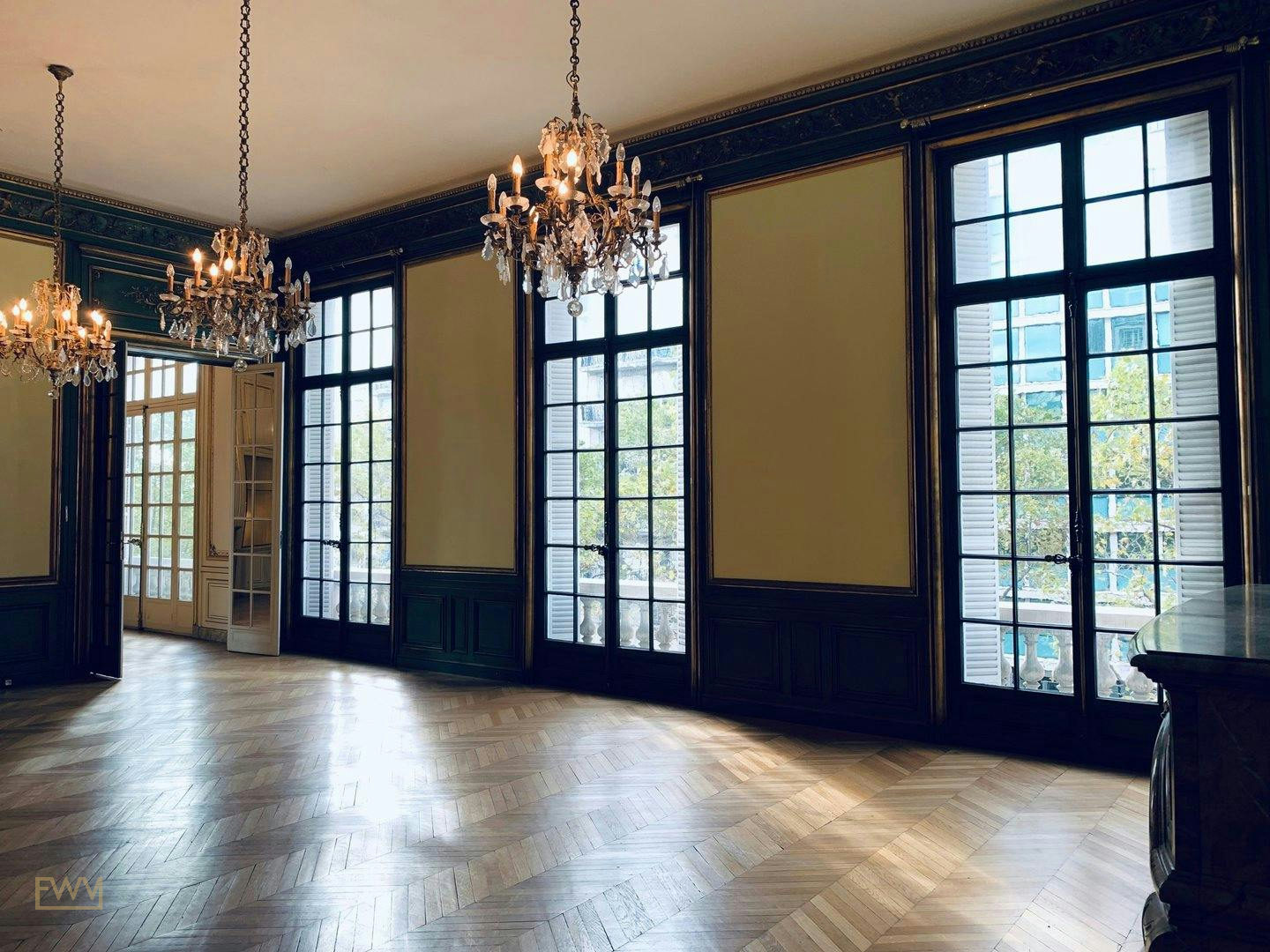
Concept studio spaces and prestige showrooms in the 8th arrondissement are typically located in Haussmann-era buildings on secondary streets running off the Champs-Élysées or connecting to Avenue George V, Avenue Montaigne, and Rue du Faubourg Saint-Honoré. These spaces are the preferred format for fashion week showrooms, press days, buyer appointments, and trade events. The term Prestige Showroom in this context refers to spaces that combine residential-scale proportions with high-specification interiors suited to luxury product display. The Hôtel Particulier Paris 8, a category of private mansion converted for event and commercial use, represents one of the most sought-after formats in this segment.
Event Venues and Espace Événementiel Formats
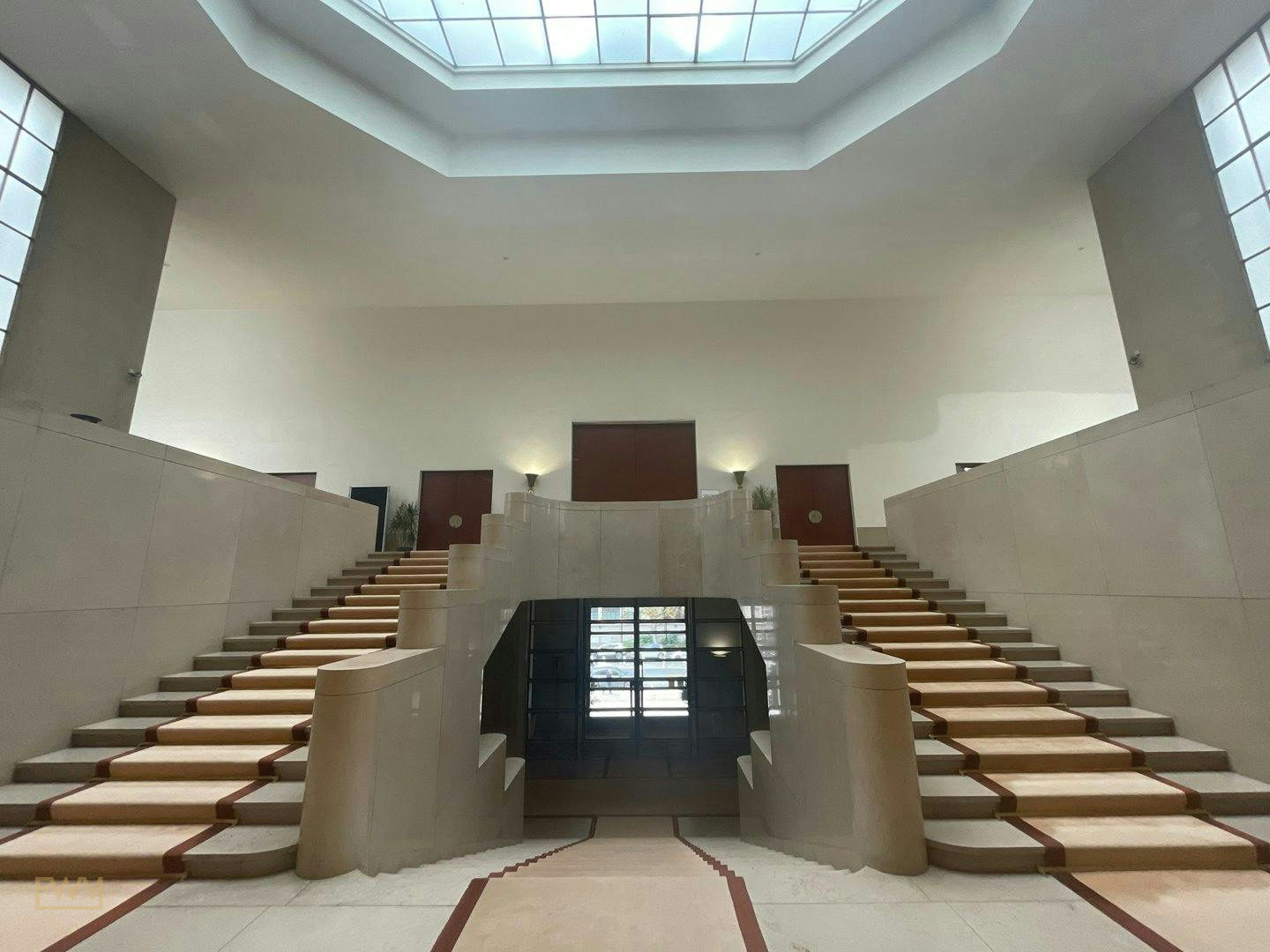
The Espace événementiel sublime is a term used within the Paris event venue market to describe spaces designed specifically for brand events, product launches, and immersive experiences. These spaces typically feature adaptable floor plans, integrated AV infrastructure, and the kind of architectural character that reduces the need for extensive production build-out. For fashion brands running launch events, influencer dinners, or press presentations alongside a retail activation, securing an event-capable space rather than a purely commercial unit can significantly reduce overall production costs.
Interior Retail Units and Upper-Floor Spaces
Not all temporary retail activations on the Champs-Élysées need to be at street level. Interior retail units on upper floors of commercial buildings along the avenue have been used successfully by brands whose activation model depends more on appointment-driven traffic than spontaneous footfall. Showroom formats, presentation suites, and private shopping experiences are all well suited to upper-floor units. These spaces typically carry more affordable rental rates than street-level frontage and offer more flexibility in terms of interior layout and production.
| Space Type | Best For | Typical Visitor Profile | Key Consideration |
|---|---|---|---|
| Street-level frontage | Flagship activations, mass brand awareness | General tourists, Parisian consumers | Signage regulation, high rental values |
| Galerie and arcade units | Curated retail, art gallery formats | Intentional shoppers, fashion visitors | Limited exterior visibility |
| Concept studio and showroom | Fashion week, press days, buyer appointments | Trade, press, influencers | Appointment-driven, requires promotion |
| Espace événementiel | Product launches, brand events | Invited guests, media | AV and catering infrastructure |
| Upper-floor interior units | Private shopping, VIP experiences | Curated invitation list | Requires strong brand pull to drive visits |
| Hôtel particulier | Luxury immersive experiences, editorial shoots | High-net-worth consumers, press | Limited availability, long lead times |
KEY TAKEAWAY: Choosing the right space type is as important as choosing the right street. A prestige showroom on a secondary street in the 8th arrondissement can deliver stronger results for a fashion week activation than a larger street-level unit on the avenue itself, depending on your campaign objectives and target audience.
Once you have identified the right space format for your activation, the next critical decision involves understanding the lease structures and legal frameworks that govern short-term rental in Paris.
Lease Structures, Permits, and Legal Frameworks for Short-Term Retail Space in Paris
Quick answer: Short-term retail space in Paris is typically governed by a bail dérogatoire or a convention d'occupation temporaire rather than a standard commercial lease. These frameworks allow brands to occupy commercial space for limited periods without triggering the statutory protections and obligations that apply to long-term commercial tenancies. Requirements vary by space type, duration, and arrondissement.
Understanding the French legal framework for short-term retail rental is non-negotiable for any international brand planning an activation in Paris. The commercial real estate system in France is structured around the bail commercial, a standard commercial lease that confers significant statutory rights on the tenant and places corresponding obligations on the landlord. For most short-term activations, the bail commercial is neither appropriate nor accessible.
The Bail Dérogatoire Explained
The bail dérogatoire, sometimes called the bail précaire, is a short-term commercial tenancy agreement permitted under French law that allows landlords and tenants to agree on a rental period of up to 36 months without the tenant acquiring the statutory renewal rights associated with a standard bail commercial. This is the most commonly used instrument for pop-up shops, temporary showrooms, and short-term brand activations in Paris. The bail dérogatoire must be explicitly agreed in writing at the outset, and both parties must acknowledge its derogatory nature. If the tenant remains in occupation after the agreed term without a new agreement, the tenancy may automatically convert to a standard bail commercial.
IMPORTANT: The bail dérogatoire carries specific legal requirements that must be met for it to remain valid and enforceable. Brands should always work with a qualified French legal advisor before signing any short-term lease agreement in Paris. Fashion Week Venues recommends using the permit and compliance guidance tool as a starting point before engaging legal counsel.
The Autorisation d'Occupation Temporaire (AOT)
For activations taking place on public land, in publicly owned buildings, or in spaces where the landlord is a public institution, the relevant instrument is the Autorisation d'Occupation Temporaire, commonly abbreviated to AOT. This is a public law instrument that grants temporary occupancy rights and is used for activations in public squares, on public thoroughfares, or in publicly managed cultural and civic buildings. AOTs are typically granted by the relevant public authority, which in Paris may be the Mairie de Paris, a specific arrondissement mairie, or a public institution managing a specific building. The AOT does not confer the same rights as a private law lease, and its terms are set unilaterally by the granting authority.
Signage and Planning Consent
Temporary retail signage in the 8th arrondissement is subject to the Règlement Local de Publicité of the Mairie de Paris, which governs the size, illumination, placement, and duration of commercial signage across the city. The Champs-Élysées falls within zones where rules around large-format exterior advertising and illuminated displays are particularly strict. Brands planning window installations, exterior wraps, or large-format signage as part of their pop-up concept should seek specific planning advice early in the process, as consent timelines can extend beyond the lead times many brands assume.
Do You Need a French Legal Entity?
International brands frequently assume that renting commercial space in Paris requires a French registered company. This is not universally true, and a qualified agency or landlord may structure a short-term agreement with a foreign entity in certain circumstances. However, the specific requirements depend on the lease structure, the landlord's requirements, and any insurance obligations. Brands should verify this with a French legal advisor rather than assuming that their existing corporate structure is sufficient or insufficient.
KEY TAKEAWAY: The bail dérogatoire and the AOT are the two primary legal instruments for short-term retail occupancy in Paris. Neither is a simple off-the-shelf solution, and both require proper legal advice. Signage and planning consent add further complexity that brands must factor into their project timelines well in advance.
With the legal framework understood, the next priority for brand teams is developing a clear picture of the geography of the opportunity, specifically which neighbourhoods adjacent to the Champs-Élysées offer the strongest strategic options for different types of activation.
Neighbourhood Guide: The 8th Arrondissement and the Golden Triangle
The Champs-Élysées does not stand alone as a retail destination. The surrounding 8th arrondissement and the broader Golden Triangle create a network of prestigious streets, each with a distinct visitor profile, rental market dynamic, and brand association. Understanding these sub-markets is essential for any brand making a location decision in Paris.
To compare neighbourhoods and space types side by side, explore the Paris city hub on Fashion Week Venues and shortlist spaces that match your brief, budget, and calendar window.
Avenue des Champs-Élysées
The avenue itself caters to a wide visitor spectrum. International tourists from across Asia, North America, the Middle East, and Europe represent the dominant consumer profile, particularly in the upper sections near the Arc de Triomphe. Brands targeting maximum international reach, press coverage, and social media exposure will find the avenue's raw footfall unmatched anywhere in France. The trade-off is the highest rental values in the city and the operational complexity of activating in a highly regulated and intensely competitive commercial environment.
Avenue Montaigne and George V
Avenue Montaigne is where the global luxury fashion houses maintain their most important flagship boutiques. Dior, Louis Vuitton, Chanel, Valentino, and their peers define the visual and commercial character of this street. Short-term space here is rare and commands significant premiums. For brands seeking legitimate luxury positioning in Paris, a temporary showroom or pop-up on or immediately adjacent to Avenue Montaigne carries a brand signal that the Champs-Élysées itself cannot replicate. George V offers similar positioning with slightly more accessibility in terms of available space formats.
Rue du Faubourg Saint-Honoré and Rue Royale
Rue du Faubourg Saint-Honoré is the historic axis of Parisian luxury retail, running from the 8th arrondissement toward the Palais de l'Élysée. The street is home to longstanding maisons and haute couture houses and draws a strongly Parisian and European luxury consumer alongside international visitors. Rue Royale connects the Madeleine church to the Place de la Concorde and offers a more intimate commercial character suited to specialist boutiques and high-end concept spaces.
Place Vendôme and Rue de la Paix
The Place Vendôme and Rue de la Paix sit in the adjacent 1st arrondissement but function as part of the luxury retail ecosystem that connects to the 8th arrondissement. The Vendôme context is synonymous with fine jewellery and haute horlogerie, and SCC Vendôme manages key commercial assets in this zone. Temporary space in this area typically suits jewellery brands, luxury accessories houses, and prestige fashion brands presenting collections to a high-net-worth Parisian and international audience.
Le Marais and Saint-Germain-des-Prés
While geographically separated from the Champs-Élysées, Le Marais and Saint-Germain-des-Prés are frequently considered alongside the 8th arrondissement when brands are building a Paris strategy. Le Marais, particularly the 3rd and 4th arrondissements, offers a creative and contemporary retail environment with strong appeal to younger fashion consumers, streetwear and emerging designer brands, and culturally engaged international visitors. Saint-Germain-des-Prés in the 6th arrondissement has a more literary and intellectual brand character that suits lifestyle and heritage fashion brands. Both areas offer more accessible rental rates than the Champs-Élysées corridor while maintaining strong Paris credibility.
| Neighbourhood | Primary Visitor Profile | Brand Positioning Signal | Best Activation Format |
|---|---|---|---|
| Champs-Élysées | International mass tourism | Global scale and reach | Flagship pop-up, brand event |
| Avenue Montaigne | Luxury shoppers, fashion press | Ultra-luxury, couture | Exclusive showroom, private boutique |
| Rue du Faubourg Saint-Honoré | Paris luxury consumer, international visitors | Classic Parisian luxury | Boutique pop-up, press showroom |
| Le Marais | Fashion-forward local and international | Creative, contemporary | Concept store, emerging brand pop-up |
| Saint-Germain-des-Prés | Cultural, intellectual, lifestyle | Heritage, lifestyle, arts | Boutique, editorial space |
| Place Vendôme | Ultra-high-net-worth, fine jewellery | Prestige, heritage luxury | Private showroom, VIP activation |
KEY TAKEAWAY: The Champs-Élysées is the right location for brands whose primary objective is international reach and media visibility. For brands prioritising Parisian luxury credibility, press and buyer access, or creative positioning, the surrounding neighbourhoods may deliver stronger returns against the specific campaign goal.
With a clear understanding of the neighbourhood landscape, the next question for most brand teams is the calendar. When does it make sense to activate on the Champs-Élysées, and how does Paris Fashion Week fit into that decision?
Calendar Strategy: When to Activate on the Champs-Élysées
Quick answer: The Champs-Élysées sees elevated footfall across the year, but peak activation windows align with Paris Fashion Week in January, February, September, and October, major public holidays including Bastille Day and Christmas, and internationally significant events. Brands should plan their space search at least three to six months in advance of their desired activation window.
Paris is a year-round retail destination, but the calendar creates distinct peaks and troughs in both footfall volume and the competitive intensity of the space market. Understanding these patterns allows brands to make informed decisions about when to activate and what lead time they need to secure the right space.
Paris Fashion Week Windows
Paris Fashion Week takes place across two primary periods each year. Menswear and Couture Fashion Week typically runs in January, with Women's Ready-to-Wear Fashion Week running in February and September, and additional couture presentations in July. For brands in the fashion and luxury sector, these windows represent the most strategically aligned moments to activate a temporary showroom, press space, or brand event in Paris. The city's concentration of international buyers, press, stylists, influencers, and creative directors during these weeks creates an unmatched audience for trade-facing and brand-building activations.
Spaces in the 8th arrondissement and the Golden Triangle are most heavily competed during the September and February ready-to-wear windows, as these weeks draw the highest combined press and commercial attendance of the fashion calendar. Brands that fail to begin their space search at least four to six months in advance of these windows frequently find that the most appropriate spaces are already committed.
Summer, Holiday, and Event-Driven Windows
The summer months of June, July, and August represent one of the highest tourist footfall periods on the Champs-Élysées, driven by international leisure visitors from North America, Asia, and the Middle East. For brands whose primary objective is consumer-facing retail rather than trade engagement, the summer window can be highly effective, particularly for product categories relevant to international travellers such as accessories, lifestyle, beauty, and sportswear.
The Christmas and New Year period from late November through January generates exceptional footfall on the avenue, with seasonal decorations and events drawing Parisian families and international visitors alike. Brands in lifestyle, gifting, and fragrance have successfully used this window for high-visibility temporary retail campaigns.
The 2024 Olympic Games demonstrated what major city-wide events can do for the visibility of Champs-Élysées activations. Brands that planned their temporary retail presence around the Games reported exceptional earned media coverage and consumer engagement. Future events of similar scale will create comparable opportunities.
Timeline Planning for a Champs-Élysées Activation
| Timeline Before Activation | Key Action | Responsible Party |
|---|---|---|
| 6 months or more | Brief definition, budget allocation, space search begins | Brand team, agency |
| 4 to 5 months | Space shortlisting, site visits, heads of terms negotiation | Agency, legal advisor |
| 3 to 4 months | Lease finalisation, concept development, permit applications begin | Legal advisor, design team |
| 2 to 3 months | Production and fit-out planning, staffing brief, marketing strategy | Production team, staffing agency |
| 4 to 6 weeks | Fit-out and build, visual merchandising installation, staff training | Production team, retail staff |
| 1 to 2 weeks | Soft opening, press preview, influencer programme activation | Marketing and PR team |
| Activation live | Consumer engagement, daily operations, data collection | Retail staff, analytics team |
| Post-activation | De-rig, inventory reconciliation, ROI analysis | Operations and analytics team |
TIP: Use the timeline planning tool to build a project-specific schedule based on your activation date, space type, and production complexity. This will highlight dependencies and flag potential bottlenecks before they become critical path issues.
KEY TAKEAWAY: Calendar alignment is one of the most overlooked dimensions of a Champs-Élysées activation strategy. Brands that build their timeline around a specific calendar moment and begin their space search with sufficient lead time consistently achieve better space, better terms, and better overall results than those who approach the market reactively.
The calendar decision connects directly to the question of cost. Understanding what it realistically takes to budget for a temporary retail activation on or near the Champs-Élysées is the essential next step for any brand team moving from concept to commitment.
Budgeting for Temporary Retail Space on the Champs-Élysées
Quick answer: Rental values for temporary retail space on the Champs-Élysées are among the highest in France and vary significantly by space type, frontage, floor level, duration, and season. Budget planning must account for rent, fit-out, production, staffing, permits, marketing, and operational costs in addition to the base rental figure. Use a brand-specific estimator rather than relying on generalised market averages.
Budgeting for a Champs-Élysées activation requires a comprehensive view of all cost components, not just the headline rental rate. Many brand teams make the mistake of allocating budget primarily against the space rental figure and then encountering unexpected costs across production, permits, staffing, and logistics that stretch the total investment significantly beyond initial expectations.
Understanding Retail Rental Values in the 8th Arrondissement
The Champs-Élysées corridor is consistently ranked among the most expensive retail streets in Europe by major commercial real estate advisors including Cushman and Wakefield and Axa IM Real Assets. Retail rental values on the avenue reflect a combination of footfall, brand prestige, scarcity of available space, and the general dynamics of the Paris commercial property market. Specific rental rates for temporary spaces are highly variable and depend on duration, seasonality, size, and floor configuration. Brands seeking indicative cost ranges should use the budget estimation tool to generate a framework based on their specific brief rather than relying on published averages, which rarely reflect the specific dynamics of the short-term market.
IMPORTANT: Published rental values for the Champs-Élysées typically refer to annual rent per square metre for standard commercial leases and are not directly applicable to the short-term or pop-up market, which operates on a different pricing model. Do not use standard commercial real estate benchmarks to estimate temporary rental costs without adjustment for duration, season, and space format.
Total Cost Components for a Paris Pop-Up Activation
A realistic total budget for a temporary retail activation in the Champs-Élysées corridor should include the following cost components. Rental is the most visible line item but frequently represents only 30 to 50 percent of the total project cost depending on production ambition and activation duration. Fit-out and production encompasses the design, build, furniture, lighting, and visual merchandising of the space. For a premium brand activation on the Champs-Élysées, production values are typically expected to be high, and shortcuts in design or material quality are conspicuous in a neighbourhood where consumers and press have high baseline expectations.
Retail staffing is a further significant cost line, particularly for activations running for multiple weeks. French employment law applies to staff engaged in Paris, and brands working with local staffing agencies should ensure that contracts, social charges, and scheduling comply with applicable regulations. The retail staffing service at Fashion Week Venues covers Paris-specific staffing requirements for brand activations.
Permit and compliance costs vary significantly depending on the specific activation format. Signage permits, AOT fees, planning consents, and legal costs associated with lease review can collectively represent a meaningful proportion of the total budget and should not be treated as negligible. Marketing, press, and influencer programme costs should be treated as a separate budget line from the physical activation budget and sized relative to the earned media objectives of the campaign.
ROI Framing for Temporary Retail
The return on investment from a temporary retail activation on the Champs-Élysées is rarely captured entirely through direct sales. For most fashion and luxury brands, the primary ROI drivers include earned media value, consumer data collection, brand awareness uplift, influencer content generation, and the strategic signal that the location sends to existing and prospective wholesale partners and press. Brands that frame their investment entirely around transactional sales often undervalue the strategic return and make suboptimal location or space decisions as a result. Use the ROI calculation tool to model the full range of value drivers against your specific brand objectives.
KEY TAKEAWAY: The total cost of a Champs-Élysées activation is always a composite of rental, production, staffing, permits, and marketing. Brands that plan against a comprehensive total budget from the outset, rather than anchoring on rental rates alone, consistently achieve better financial outcomes and avoid mid-project budget crises.
Cost planning leads naturally into the question of how brands practically find and evaluate specific spaces in the Champs-Élysées corridor. The next section addresses the market for space discovery and the role of specialist agencies and platforms.
Finding and Evaluating Temporary Retail Space on the Champs-Élysées
The market for temporary retail space in Paris does not operate like the standard commercial real estate market. Available spaces are not consistently listed on mainstream property platforms, and many of the most appropriate spaces for short-term brand activations are sourced through relationships, specialist networks, and agency connections rather than public listings. This structural characteristic of the market creates a significant information asymmetry between brands with established Paris networks and those entering the market for the first time.
How the Short-Term Space Market Works in Paris
Space availability in the 8th arrondissement and the Champs-Élysées corridor is driven by a combination of planned void periods between commercial tenants, deliberate landlord strategies to generate revenue from short-term lets during periods of renovation or repositioning, and purpose-built temporary retail facilities managed by specialist operators. Major real estate asset managers including Axa IM Real Assets and institutional landlords such as Frasers Hospitality and HSBC bank-related property entities own significant commercial real estate assets in this zone and may engage in short-term licensing arrangements for the right brand partners.
Paris Property Group and specialist French platforms that aggregate short-term commercial space listings have expanded the accessibility of this market, but the most suitable spaces for high-profile brand activations are still predominantly sourced through direct relationships and specialist agency channels. The Storefront platform and similar international listings services offer some transparency into the market, but brands should treat these as a starting point for market awareness rather than a comprehensive picture of what is genuinely available.
Evaluating Spaces: What to Assess on a Site Visit
When evaluating potential spaces for a temporary retail activation, brand teams should assess the following dimensions beyond the basic metrics of size and rental rate. Frontage and street presence determine how visible the activation will be to passing foot traffic and how much marketing is required to generate walk-in visits. Natural light conditions affect the quality of the consumer experience and the requirements for lighting design. Floor plan flexibility determines whether the space can accommodate the intended retail layout, visual merchandising concept, and any experiential or event elements. Loading and access for fit-out and de-rig is a frequently overlooked practical consideration that can add significant cost and time to a production schedule if the space is poorly configured for commercial deliveries in a central Paris location.
The space comparison tool allows brand teams to evaluate shortlisted venues side by side against a consistent set of criteria, which reduces the risk of making a decision based on incomplete information or an uneven basis of comparison.
TIP: Always visit a space in person during the time of day when your target consumer is most likely to be present. A space that looks ideal in a morning site visit may have a very different character, light quality, and street energy during peak afternoon trading hours.
KEY TAKEAWAY: Finding the right temporary retail space on the Champs-Élysées requires a combination of market access, site evaluation skills, and a clear brief that allows you to filter spaces quickly against your campaign objectives. Relying on public listings alone will leave you without access to the best available options in this market.
Understanding how to find and evaluate spaces leads directly to the question of how a specialist agency can add value to the process, particularly for brands activating in Paris for the first time or operating with limited in-house production and logistics resource.
How Fashion Week Venues Supports Brands Activating on the Champs-Élysées
Fashion Week Venues operates as a full-service pop-up shop agency and space marketplace with Paris as its anchor city and the Champs-Élysées corridor as one of its core operating markets. The agency exists to reduce the friction, cost, and risk associated with planning and executing temporary retail activations, showrooms, and brand events in major fashion capitals, and its Paris offering is built around the specific operational complexity of the 8th arrondissement and surrounding neighbourhoods.
Services That Apply to a Champs-Élysées Activation
The venue sourcing service gives brands access to a curated network of available spaces across the Champs-Élysées corridor, the Golden Triangle, and the broader Paris market, including spaces that are not publicly listed. The sourcing process is informed by a detailed brief that covers space type, footfall requirements, production parameters, budget, and calendar window.
Concept and creative direction, production and fit-out, branded store design, furniture rental, and visual merchandising are all available as integrated services, which allows brands to manage the activation from a single point of coordination rather than assembling a multi-vendor supply chain from scratch in a market where supplier relationships and operational knowledge matter significantly.
The activation management service covers the operational running of the space during the active period, including day-to-day management, issue resolution, consumer data collection, and reporting. For international brands without a Paris-based team, this service removes the need to maintain a dedicated in-market presence throughout the activation.
Influencer marketing, press coordination, and earned media strategy are available as add-on services for brands whose campaign objectives include social amplification and press coverage alongside the physical retail activation. The combination of a strong location and a coordinated influencer programme is one of the most effective models for maximising the total reach of a Champs-Élysées pop-up investment.
Tools Available for Paris Planning
Fashion Week Venues offers a suite of planning tools specifically designed to help brand teams move from initial concept to confirmed activation brief. These include budget estimation, ROI modelling, timeline planning, space comparison, permit guidance, and space location tools. These tools are particularly valuable in the early stages of a project when brand teams are scoping the feasibility of a Paris activation and need to align internally around realistic cost and complexity expectations before committing to a space search.
Which Brand Teams Benefit Most
Fashion Week Venues is best suited to fashion brands, luxury houses, lifestyle brands, sportswear and beauty companies, and international brands entering Paris for the first time or scaling their Paris activation programme. Creative directors and brand activation managers who need to move quickly without building a dedicated Paris agency roster from scratch will find the integrated service model particularly efficient. Brands with significant in-house production capability may benefit most from the space sourcing and permit guidance functions rather than the full production service, and the agency's scope can be calibrated accordingly.
KEY TAKEAWAY: Fashion Week Venues reduces the market access, operational complexity, and coordination risk associated with activating on the Champs-Élysées. The agency does not guarantee specific spaces, permits, or results, but it brings the relationships, local knowledge, and service infrastructure that make a high-quality Paris activation achievable for brands of varying sizes and internal resource levels.
Alongside the practical support of a specialist agency, brands benefit from understanding some of the most persistent misconceptions about activating on the Champs-Élysées, which the next section addresses directly.
Design, Visual Merchandising, and the Consumer Experience on the Champs-Élysées
Quick answer: The consumer experience of a pop-up or showroom on the Champs-Élysées is shaped by interior design quality, spatial planning, lighting, visual merchandising, and the overall narrative coherence of the brand concept within the space. In this neighbourhood, execution standards are high and the bar for what constitutes a compelling retail experience is set by some of the world's best-resourced fashion houses.
The physical design of a temporary retail space on the Champs-Élysées is not a secondary consideration. In a neighbourhood where Louis Vuitton, Dior, Saint Laurent, and other major fashion houses invest extraordinarily in their permanent boutique environments, a temporary activation that falls short on design quality will be conspicuous to consumers, press, and the broader fashion community. This does not mean that every pop-up must replicate the budget of a flagship boutique, but it does mean that every design decision must be intentional and executed to a high standard.
Spatial Planning and Layout
Spatial planning for a pop-up store or showroom on the Champs-Élysées should begin with a clear understanding of the consumer or visitor journey. For a consumer-facing pop-up, the layout should guide visitors naturally through the brand narrative, with hero product moments positioned to generate social content and ensure that the brand's key messages are communicated even by visitors who spend only a few minutes in the space. For a showroom or press space, the layout should prioritise the comfort and efficiency of appointment-based visits, with adequate space for product discussion, fitting, and photography.
Lighting and Interior Fit-Out
Lighting is one of the most significant determinants of the perceived quality of a retail environment and one of the most commonly underinvested elements of a temporary activation. On the Champs-Élysées, where natural light conditions in street-level spaces can be limited by building orientation and frontage depth, artificial lighting design is critical to creating an environment that feels premium rather than temporary. Furniture decoration and lighting fixtures for a pop-up should be selected with the same intentionality as a permanent boutique, even when sourced on a rental or temporary basis.
Signage and Exterior Presentation
As noted in the permits section, exterior signage on the Champs-Élysées is tightly regulated. Within those constraints, the exterior presentation of a temporary retail space is one of its most important marketing assets. Window displays, exterior wraps, and temporary architectural interventions are all tools that brands have used successfully to generate street-level visibility and social media coverage. The most effective exterior presentations on the avenue are those that maintain the visual standards of the neighbourhood while clearly communicating the brand's identity and the time-limited nature of the activation.
Artistic Direction and Set Design
The most memorable temporary retail activations on the Champs-Élysées are those where the artistic direction and set design create an environment that feels genuinely purposeful and specific to the brand rather than a generic pop-up format. Collaborations with artists, architects, or set designers who bring a distinctive creative perspective to the space can elevate an activation from a commercial exercise into a cultural moment that generates press, social content, and lasting brand equity. For brands with the budget and creative ambition to pursue this model, a collaboration partner with strong Paris credentials can be a significant differentiator.
KEY TAKEAWAY: Design quality and spatial coherence are not optional extras for a Champs-Élysées activation. They are fundamental to achieving the consumer engagement, press coverage, and brand signal that justify the investment in this location. Every element of the interior environment, from layout and lighting to furniture and signage, contributes to whether the activation succeeds or falls short of its objectives.
Common Myths About Temporary Retail on the Champs-Élysées Debunked
MYTH: You need a French legal entity to rent a temporary retail space on the Champs-Élysées.
FACT: International brands can in some cases enter into short-term rental agreements in Paris without a French registered company, depending on the specific landlord, lease structure, and legal instrument used. However, the specific requirements vary by arrangement, and some landlords will require a French entity or a local guarantor. Brands should verify their corporate structure with a qualified French legal advisor before assuming that their existing entity is or is not sufficient for a specific space.
MYTH: Paris Fashion Week is the only viable calendar window for activating on the Champs-Élysées.
FACT: Paris Fashion Week in February, September, January, and July represents a high-priority window for fashion and luxury brands, but the Champs-Élysées generates exceptional footfall across the full year. Summer tourist peaks, the Christmas period, and major city events such as the Olympics or the Tour de France finale offer compelling activation opportunities for brands whose target consumer is the international visitor rather than the fashion industry professional. The right window depends entirely on campaign objectives, not on the fashion calendar alone.
MYTH: Commission-based space brokers are the only way to access temporary retail space on the Champs-Élysées.
FACT: While commercial real estate agents and commission brokers do operate in the Paris short-term space market, they are not the only or necessarily the most efficient route to securing appropriate space. Specialist pop-up agencies, curated marketplace platforms, and direct landlord relationships provide alternative channels that may offer better value, faster access, and a more integrated service model for brand activation purposes. The right route depends on the complexity of your brief and the level of support you need beyond the space itself.
MYTH: Short-term leases in Paris are legally straightforward and do not require specialist advice.
FACT: The French legal framework for short-term commercial tenancy is genuinely complex, and the consequences of an incorrectly structured bail dérogatoire can include the involuntary conversion to a long-term commercial lease with significant financial and legal implications. International brands in particular should not assume that a short-term lease in France operates on the same terms or with the same protections as short-term commercial agreements in their home markets. Specialist French legal advice is essential before signing any short-term commercial agreement in Paris.
MYTH: A pop-up on the Champs-Élysées only makes commercial sense for established luxury brands with large budgets.
FACT: The temporary retail market in the 8th arrondissement and surrounding neighbourhoods includes a range of space types and formats at different price points, and a well-executed activation in a secondary street or galerie space within the Champs-Élysées corridor can deliver strong brand results for an emerging brand with a focused brief and realistic budget. The key is matching the space type and format to the brand's specific objectives rather than assuming that the most visible or most expensive space is the most appropriate choice.
Frequently Asked Questions About Temporary Retail Space on the Champs-Élysées
What is the minimum rental period for temporary retail space on the Champs-Élysées?
Minimum rental periods for temporary retail space on the Champs-Élysées and in the surrounding 8th arrondissement vary by space type, landlord, and specific agreement. Some spaces can be rented for as few as three days for a product launch or press event, while others have minimum terms of one week, two weeks, or one month. Pop-up activations aligned with Paris Fashion Week frequently run for two to three weeks. Showroom spaces taken for a fashion week presentation period typically align with the calendar window of the relevant fashion week, which runs for approximately one week. For longer-term consumer-facing activations, minimum terms of four to six weeks are more common. Discuss your specific duration requirement with a specialist agency to identify spaces that match your timeline.
Do I need a permit to run a pop-up shop in the 8th arrondissement?
The permit requirements for a pop-up shop in the 8th arrondissement depend on the specific space, the nature of the activation, and the extent of any exterior signage or structural changes to the space. For most standard temporary retail activations within an existing commercial unit, no special retail permit is required beyond the lease agreement and compliance with the building's existing commercial use classification. However, exterior signage, window installations, and any elements that modify the public-facing appearance of the building typically require planning consent from the Mairie de Paris. Structural changes to the interior may also require building authority notification. Requirements vary, and it is essential to verify the specific permit obligations for your space and activation format with a French legal advisor.
Can I rent space on the Champs-Élysées for a showroom or event rather than a pop-up shop?
Yes. Many of the spaces available on a temporary basis in the Champs-Élysées corridor are well suited to showroom use, press events, product launches, buyer appointments, and brand experiences rather than traditional consumer-facing retail. Prestige showroom spaces, concept studios, galerie units, hôtels particuliers, and espace événementiel formats all exist within and immediately adjacent to the 8th arrondissement and can be rented for fashion week presentations, industry events, and brand activations that do not involve direct consumer sales. The legal and practical requirements for event and showroom use may differ from those for retail use, and it is worth clarifying the intended use with the landlord and your legal advisor before signing.
How much foot traffic does the Champs-Élysées receive?
The Champs-Élysées is one of the highest-footfall streets in Europe, with estimated daily visitor counts ranging from 100,000 to more than 300,000 depending on the season, day of the week, and the presence of major events or public holidays. Peak footfall periods include summer weekends, the Christmas season, Bastille Day on the 14th of July, and the Tour de France finale. Paris Fashion Week generates a more targeted footfall profile, with high concentrations of fashion industry professionals rather than general tourists. The actual footfall reaching a specific space on or adjacent to the avenue will depend on its precise location, street-level visibility, and the extent of any promotional activity driving traffic to the door.
What types of brands typically activate on the Champs-Élysées?
The Champs-Élysées has historically attracted a wide range of brand types for temporary activations. Established luxury fashion houses including Louis Vuitton, Dior, and Saint Laurent have used the avenue for flagship presentations and experiential retail. Mass-market fashion brands, sportswear labels such as Paris Saint-Germain and Levi's, beauty retailers including Sephora, and lifestyle brands have all activated in the corridor. More recently, emerging fashion brands, international brands entering the Paris market for the first time, and direct-to-consumer brands using the avenue as a physical marketing channel have expanded the range of activating brand profiles. The space format, location within the corridor, and budget all influence which brand profile is best served by which type of activation.
How expensive is it to rent a shop on the Champs-Élysées temporarily?
Rental values for temporary retail space on the Champs-Élysées are among the highest in France and reflect the avenue's exceptional footfall, commercial prestige, and scarcity of available space. Specific rental rates for short-term agreements are highly variable and depend on space size, floor level, street-side frontage, duration, and seasonality. The short-term rental market operates on different pricing logic from the annual commercial property market, and published commercial real estate benchmarks are not directly applicable to pop-up pricing. Brands should use a brand-specific budget planning tool to generate indicative ranges and should factor in the full cost of production, staffing, permits, and marketing rather than anchoring on rental alone.
Are pop-up stores on the Champs-Élysées typically street-level?
Not exclusively. While street-level units with direct frontage onto the Avenue des Champs-Élysées are the most visible and most prestigious format, a significant number of successful brand activations in this area take place in upper-floor units, galerie spaces, enclosed arcades, or secondary streets running directly off the main avenue. Upper-floor spaces typically carry lower rental rates and can deliver excellent results for appointment-driven showroom formats, VIP experiences, and trade presentations. The right floor level depends on your activation model, target visitor, and campaign objectives rather than a universal preference for street-level visibility.
What are the most sought-after showroom locations near the Champs-Élysées during Paris Fashion Week?
During Paris Fashion Week, the most sought-after showroom locations in the Champs-Élysées corridor include prestige showroom spaces on Avenue George V, Avenue Montaigne, and the streets connecting these avenues to the Champs-Élysées itself. Haussmann apartment conversions and hôtels particuliers in the 8th arrondissement are particularly prized for their combination of architectural character, generous floor plans, and natural light. Concept studio spaces in secondary streets within the Golden Triangle are also highly competitive during fashion week windows. Brands are advised to begin their search a minimum of four to six months before their intended fashion week window to have realistic access to the best available spaces.
What is the ideal duration for renting a fashion week showroom in the Champs-Élysées area?
The ideal rental duration for a fashion week showroom in the Champs-Élysées area is typically aligned with the official Paris Fashion Week schedule plus a preparation and de-rig period on either side. For the Women's Ready-to-Wear fashion weeks in February and September, brands typically rent showroom space for a total period of two to three weeks, including fit-out, the active presentation period, and de-rig. Some brands extend the showroom period before or after fashion week to accommodate international buyers travelling outside the official calendar window. The specific duration should be driven by your appointment schedule, the availability and cost of the space, and the logistics of your collection samples.
Is the Champs-Élysées suitable for international brands entering Paris for the first time?
Yes, the Champs-Élysées and the surrounding 8th arrondissement are frequently the entry point for international brands establishing a physical Paris presence for the first time. The avenue's international visitor profile means that brands with limited recognition among Parisian consumers can still generate strong consumer engagement and media visibility. However, brands entering Paris for the first time should invest in understanding the local market, the expectations of the French press and buyer community, and the operational requirements of the French market before committing to a high-visibility location. Working with a specialist agency that has established Paris relationships can significantly reduce the risk and complexity of a first Paris activation.
What benefits does a fashion brand gain from renting showroom space in the Champs-Élysées area?
Fashion brands renting showroom space in the Champs-Élysées area benefit from the area's global brand recognition, its concentration of luxury retail and fashion industry activity during fashion week, and the quality of the available space formats. The proximity to major luxury hotels including George V and the Four Seasons facilitates international buyer visits. The neighbourhood's association with fashion houses including Dior, Louis Vuitton, and Saint Laurent provides a context that elevates the brand signal of any showroom operating within it. For brands seeking to establish or reinforce their positioning in the European luxury market, the 8th arrondissement is consistently the most strategically credible location available in Paris.
Can property owners convert their commercial space into a pop-up store location?
Yes. Property owners with commercial spaces in the Champs-Élysées corridor and the broader 8th arrondissement are increasingly converting void periods and transitional phases between commercial tenants into short-term pop-up opportunities. This model generates revenue during periods that would otherwise produce no return, preserves the commercial use classification of the space, and can attract high-profile brand tenants that enhance the property's market profile. The legal framework for this arrangement is typically structured as a bail dérogatoire or a convention d'occupation temporaire, and specialist advice is recommended to ensure the arrangement is correctly documented and does not create unintended long-term tenancy obligations.
How do I communicate and market my pop-up on the Champs-Élysées to drive footfall?
Marketing a pop-up on the Champs-Élysées requires a multi-channel approach that combines the natural footfall of the avenue with targeted digital, social, and influencer activity to drive intentional visits from your specific target audience. Social media content, particularly Instagram and TikTok, is the primary discovery channel for pop-up activations among fashion and lifestyle consumers. Influencer partnerships with Paris-based creators who have strong engagement with your target demographic can generate significant pre-opening awareness and in-store content. Press outreach to fashion and lifestyle media, both French and international, should begin at least four weeks before opening. Exterior signage, window displays, and any street-level visual elements that communicate the temporary and exclusive nature of the activation contribute to spontaneous footfall conversion from passing traffic.
What is the twin co-activation model and is it relevant for Champs-Élysées activations?
The twin co-activation model offered by Fashion Week Venues involves two complementary brands sharing a space or coordinating simultaneous activations in adjacent or related locations to create a combined commercial and marketing impact greater than either brand would achieve independently. This model is particularly relevant for brands with overlapping target audiences and complementary product categories, and it can make Champs-Élysées rental economics more accessible for brands whose individual budgets do not support a solo activation in the premium space inventory available in this neighbourhood. The twin model also generates a more layered and engaging consumer experience, which can enhance dwell time, social content creation, and press interest in the activation.
How far in advance should I start planning a temporary retail activation on the Champs-Élysées?
The recommended lead time for planning a temporary retail activation on the Champs-Élysées is a minimum of four to six months for a standard pop-up or showroom, and six to nine months or more for a large-format flagship activation or any activation coinciding with Paris Fashion Week or a major public event. The most desirable spaces in the 8th arrondissement are committed well in advance of their activation periods, particularly during fashion week windows and peak tourist seasons. Permit applications, production planning, and staffing briefs all require time that compounds quickly once the space is confirmed. Starting early is the single most effective way to ensure access to the right space and enough runway to execute the activation to the required standard.
Conclusion: Activating Your Brand on the Champs-Élysées
Temporary retail space on the Champs-Élysées represents one of the most powerful brand positioning opportunities available in the global fashion and luxury market. The avenue's footfall, its international reach, its association with the world's most influential fashion houses, and its central role in the Paris fashion calendar create a context that is genuinely difficult to replicate anywhere else in France or Europe.
Successful activations in this neighbourhood are built on four foundations: the right location and space type matched to specific campaign objectives, a realistic total budget that accounts for all cost components beyond the headline rental rate, a project timeline that begins early enough to secure the best available spaces and navigate permit and production requirements, and a design and consumer experience that meets the elevated expectations of the Champs-Élysées context.
Brands that approach the Champs-Élysées with a clear brief, adequate lead time, and specialist support consistently achieve stronger results than those who attempt to navigate the market reactively or without in-market knowledge. The legal complexity of the French short-term rental market, the regulatory requirements around signage and planning, the operational intensity of a major Paris activation, and the competitive pressure on available space inventory all reward careful preparation.
Fashion Week Venues provides the space access, agency expertise, production capability, and planning tools that brands need to move from initial concept to a live activation in the world's most competitive fashion retail environment. Whether your objective is a single Fashion Week showroom, a multi-week consumer pop-up, or a sustained programme of Paris activations, the agency's Paris offering is designed to support every stage of the process.
To move from research to activation, start exploring available spaces on the Fashion Week Venues marketplace and build a focused brief for your target neighbourhood, space type, and calendar window.