
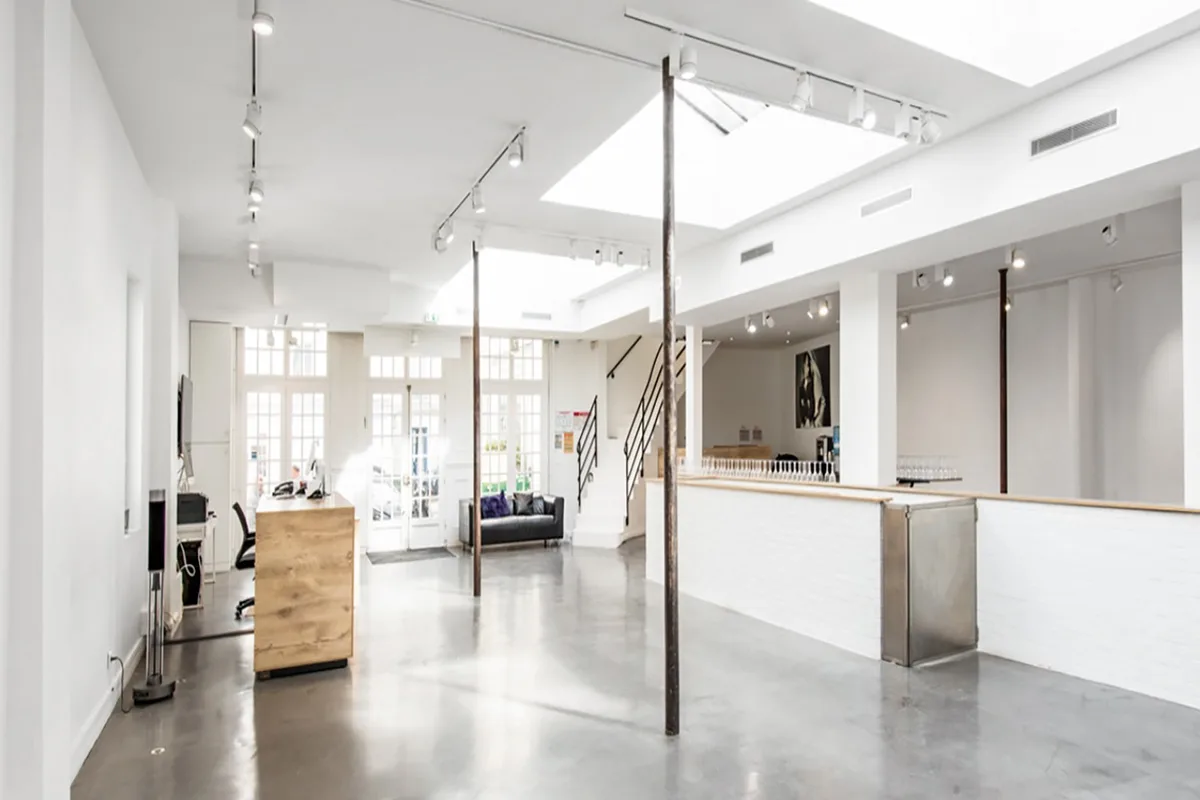
If you want to book a pop up shop in Le Marais, you are choosing one of the most commercially and culturally powerful retail locations in Europe. Le Marais, spanning the 3rd and 4th arrondissements of Paris, attracts an unusually dense mix of international tourists, Parisian locals, design-conscious shoppers, and fashion industry professionals. Streets like Rue des Francs-Bourgeois, Rue des Rosiers, and Rue Vieille du Temple carry consistent foot traffic throughout the week, and the district's proximity to landmarks like Place des Vosges, the Pompidou Centre, and the Musée Picasso ensures that dwell time remains high long after the peak tourist season. For brands planning a pop-up store, showroom, or retail activation in Paris, Le Marais offers a rare combination of prestige, visibility, and short-term rental flexibility. Fashion Week Venues supports brands across every stage of a Paris activation, from space discovery through to production, staffing, and data collection.
Why Le Marais Is the Premier Paris Neighbourhood for Pop-Up Retail
Le Marais is not simply a fashionable address. It is a functioning retail ecosystem that happens to sit inside one of the most photographed, written-about, and visited urban districts in the world. For a brand planning a pop-up store or short-term retail activation, that distinction matters enormously.
Quick answer: Le Marais draws consistent foot traffic from international tourists, Parisian residents, and fashion industry professionals year-round. Its mix of historic architecture, concept stores, art galleries, and fashion boutiques creates an environment where pop-up retail not only fits but thrives. The district's cultural credibility transfers directly to the brands that activate within it.
The Marais district sits at the intersection of several important retail dynamics. On one level, it is a genuinely historic neighbourhood, with preserved medieval streetscapes, 17th-century mansions called hôtels particuliers, and landmarks including the Maison de Victor Hugo, the Musée de la Chasse et de la Nature, and the Carreau du Temple. This architectural heritage creates a backdrop that makes retail photography and social media content inherently compelling without additional styling effort.
On another level, Le Marais is a working commercial district. It has long been home to independent fashion boutiques, jewellery brands, vintage dealers, and concept stores that attract a genuinely curious, spending-oriented audience. The Marché des Enfants-Rouges, reputedly the oldest covered market in Paris, draws food-motivated visitors to Rue de Bretagne who naturally spill into surrounding retail streets. The concentration of dining destinations, from casual lunch spots to neighbourhood institutions, extends dwell time and therefore increases the probability of store visits for any pop-up operating nearby.
The district's cultural relevance to the fashion industry is well established. Paris Fashion Week consistently produces activations, presentations, and showrooms in Le Marais. Major fashion houses including Chanel, Giorgio Armani, Mugler, and Sézane have all engaged the neighbourhood for brand activations, pop-up launches, and limited-edition retail experiences. This history creates what could be described as a credibility spillover: when a newer or emerging brand activates in Le Marais, it positions itself within the same cultural conversation as those established names.
Brands like NEMOZENA, the jewellery label, and lifestyle concepts such as La Maison de Vacances and We Are Knitters have used Le Marais pop-up formats to introduce products to a Paris audience that would otherwise be difficult to reach through wholesale or digital channels alone. The combination of local shoppers and international visitors means that a well-executed pop-up can generate both immediate sales and lasting brand recognition among audiences who then carry the brand story back to their home markets.
DID YOU KNOW: Le Marais spans both the 3rd and 4th arrondissements and is considered by many fashion and retail publications, including Women's Wear Daily and Le Figaro, to be among the top five global neighbourhoods for short-term brand activations.
KEY TAKEAWAY: Le Marais delivers a combination of historic prestige, consistent multi-audience foot traffic, and cultural alignment with fashion and design that makes it uniquely suited to short-term retail. The neighbourhood's identity actively enhances brand perception for any label that chooses to activate there.
Understanding the geography of Le Marais in detail helps brands choose the right street and space type for their specific activation goals, which is what the next section addresses directly.
Mapping Le Marais: Key Streets and Zones for a Pop-Up Store
Le Marais is not a single homogeneous retail strip. It is a layered neighbourhood where different streets attract different audiences, carry different rental cost profiles, and support different types of brand activation. Knowing which street matches your brand brief is one of the most important decisions you will make before you book a pop up shop in Le Marais.
Quick answer: Rue des Francs-Bourgeois offers the highest daily footfall and suits brands seeking maximum visibility. Rue des Rosiers attracts an international, design-aware crowd. Rue Vieille du Temple is preferred for creative and fashion-forward concepts. Rue de Bretagne draws a local lifestyle audience. Each street has its own character and rental market.
Rue des Francs-Bourgeois
Rue des Francs-Bourgeois is the commercial spine of Le Marais and consistently records the highest pedestrian volumes in the district. It connects the 3rd and 4th arrondissements and runs from Place des Vosges westward toward the Centre Pompidou area. Brands seeking raw visibility and footfall for product launches or short-term retail choose this street when budget allows. The audience here is broad, covering tourists, fashion professionals, and local Parisians, but the street's commercial density means that window design and merchandising must work hard to interrupt attention.
Rue des Rosiers
Rue des Rosiers carries significant cultural history as the traditional centre of the Jewish community in Paris, and it has evolved into a destination street that draws visitors specifically looking for character-led retail rather than chain stores. The audience here tends to be internationally minded, culturally curious, and willing to spend time in smaller, more individual spaces. Brands with a strong narrative or heritage angle often find that Rue des Rosiers amplifies their story naturally.
Rue Vieille du Temple
Rue Vieille du Temple runs through the heart of the upper Marais and is closely associated with contemporary fashion, independent galleries, and concept stores. It is a preferred street for fashion showrooms during Paris Fashion Week and for brands operating at the intersection of fashion, art, and culture. The Milia Matcha and matcha-driven café concepts that have opened on this street reflect the neighbourhood's appetite for design-led food and retail hybrids, a format that translates well to pop-up activations.
Rue de Bretagne and the Carreau du Temple
Rue de Bretagne serves a more locally rooted audience, anchored by the Marché des Enfants-Rouges and the Carreau du Temple event space nearby. This zone suits lifestyle brands, food-adjacent concepts, and brands looking to reach engaged Parisian residents rather than primarily tourist audiences. The Carreau du Temple itself is a significant venue for larger brand events and presentations, with a restored 19th-century iron and glass market hall structure that provides a distinctive architectural backdrop.
Place des Vosges and Surrounding Streets
Place des Vosges, the oldest planned square in Paris, borders the southern edge of Le Marais and carries enormous pulling power for visitors. Spaces on or immediately adjacent to Place des Vosges command premium rental rates and attract a sophisticated, luxury-oriented audience. Brands activating in this zone benefit from association with one of Paris's most photographed landmarks. Rue du Renard and the streets around Place Igor-Stravinsky, near the Pompidou Centre, offer a slightly different audience profile, more arts-adjacent and younger in demographic terms.
The table below summarises the key streets and their suitability for different brand types.
| Street or Zone | Audience Profile | Best For | Notes |
|---|---|---|---|
| Rue des Francs-Bourgeois | Mixed: tourists, Parisians, fashion professionals | High-footfall product launches | Highest pedestrian volumes in Le Marais |
| Rue des Rosiers | International, culturally curious shoppers | Narrative-driven or heritage brands | Strong cultural identity of the street |
| Rue Vieille du Temple | Fashion-forward, arts-adjacent | Showrooms, fashion, concept retail | Key Fashion Week showroom corridor |
| Rue de Bretagne | Local Parisian residents | Lifestyle, food-adjacent, community brands | Near Carreau du Temple and Marché des Enfants-Rouges |
| Place des Vosges vicinity | Luxury-oriented tourists and residents | Premium and luxury brand activations | Commands premium rental rates |
| Rue du Renard / Pompidou area | Younger, arts-focused, international | Creative, experimental formats | Near Place Igor-Stravinsky and Pompidou Centre |
TIP: If your brand activation involves both a showroom component during Paris Fashion Week and a consumer-facing retail element afterward, consider spaces on or close to Rue Vieille du Temple, which serve both industry and consumer audiences effectively.
To compare neighbourhoods and space types, explore the Paris city hub on Fashion Week Venues and shortlist spaces that match your brief, budget, and calendar window.
KEY TAKEAWAY: Le Marais is not a single retail market but a collection of distinct micro-zones, each with its own audience, atmosphere, and commercial logic. Matching your space to the right street is as important as choosing the right neighbourhood in the first place.
Once you have identified your target zone, the next question is what type of space will best serve your activation brief.
Types of Pop-Up Spaces Available to Book in Le Marais
The Marais district offers a genuinely wide spectrum of short-term retail and event spaces, from compact ground-floor boutiques to full-floor gallery conversions and historic courtyards. Understanding the available space typology helps you brief accurately and avoid mismatches between your concept and your venue.
Quick answer: Le Marais offers boutique retail units, art gallery spaces, loft spaces with exposed beams known as poutres apparentes, private courtyard venues, multi-room showroom floors, and hybrid retail and event spaces. The right format depends on your concept, budget, team size, and intended dwell time for visitors.
Boutique Retail Units
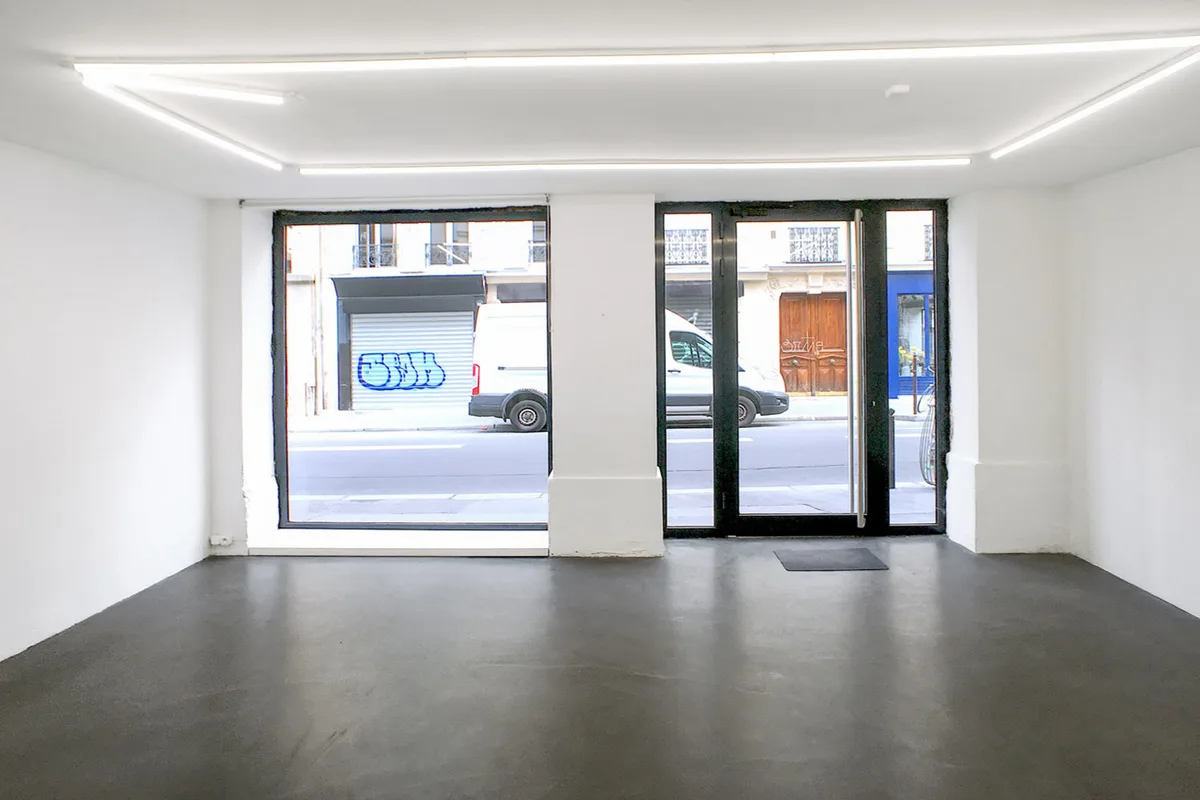
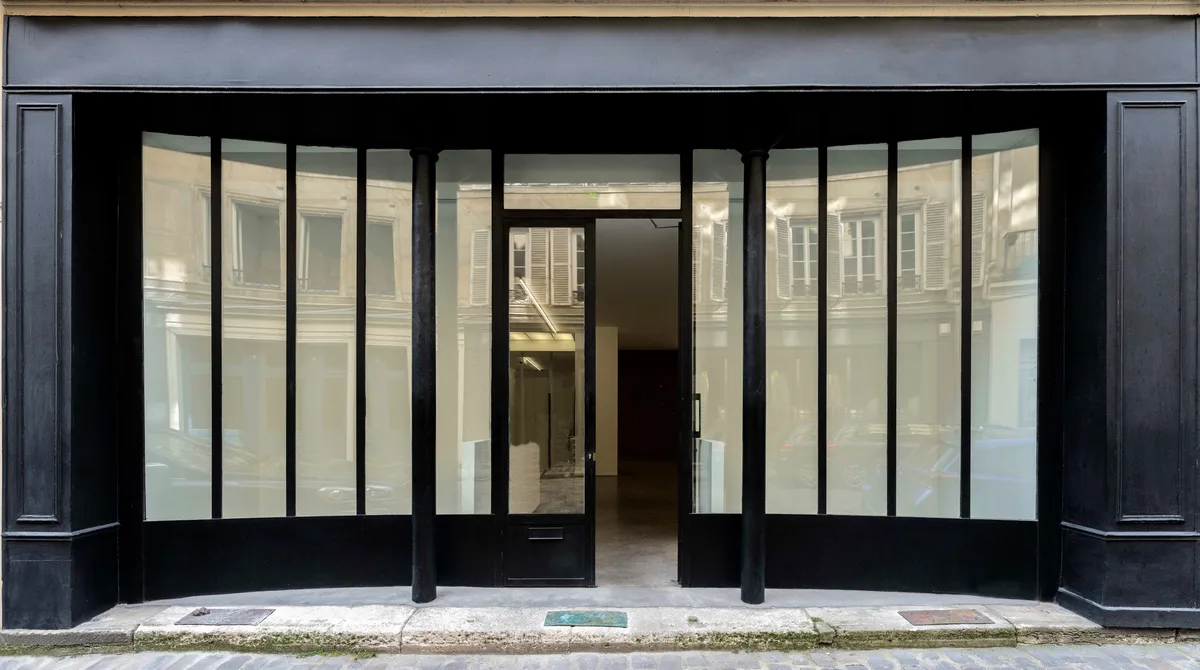
These are purpose-built or formerly commercial retail spaces, typically street-facing with display windows and an established retail fit-out. They range from very compact units of around 20 to 40 square metres to larger boutique formats of 80 to 150 square metres. Brands seeking an immediately operational space with minimal build requirement often start here. Spaces like Espace Turenne, a well-known short-term rental venue on Rue de Turenne, represent this category.
Art Gallery Spaces
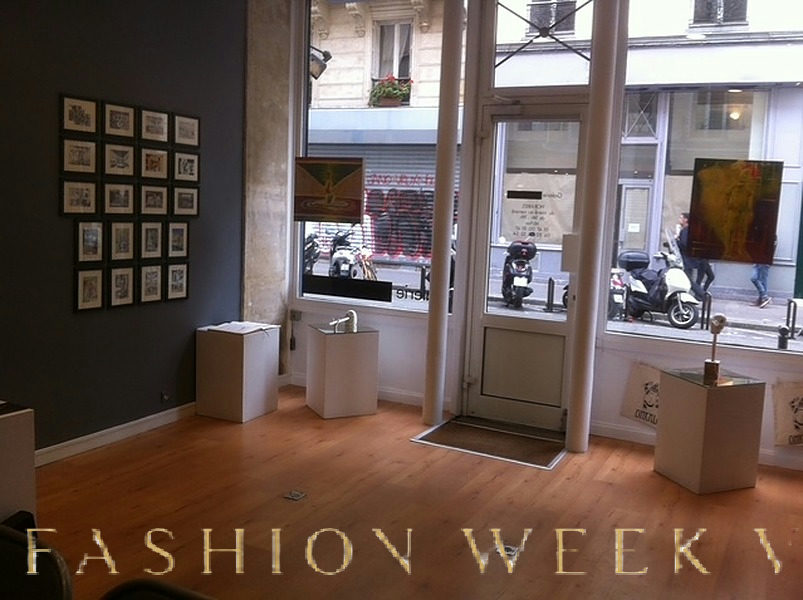
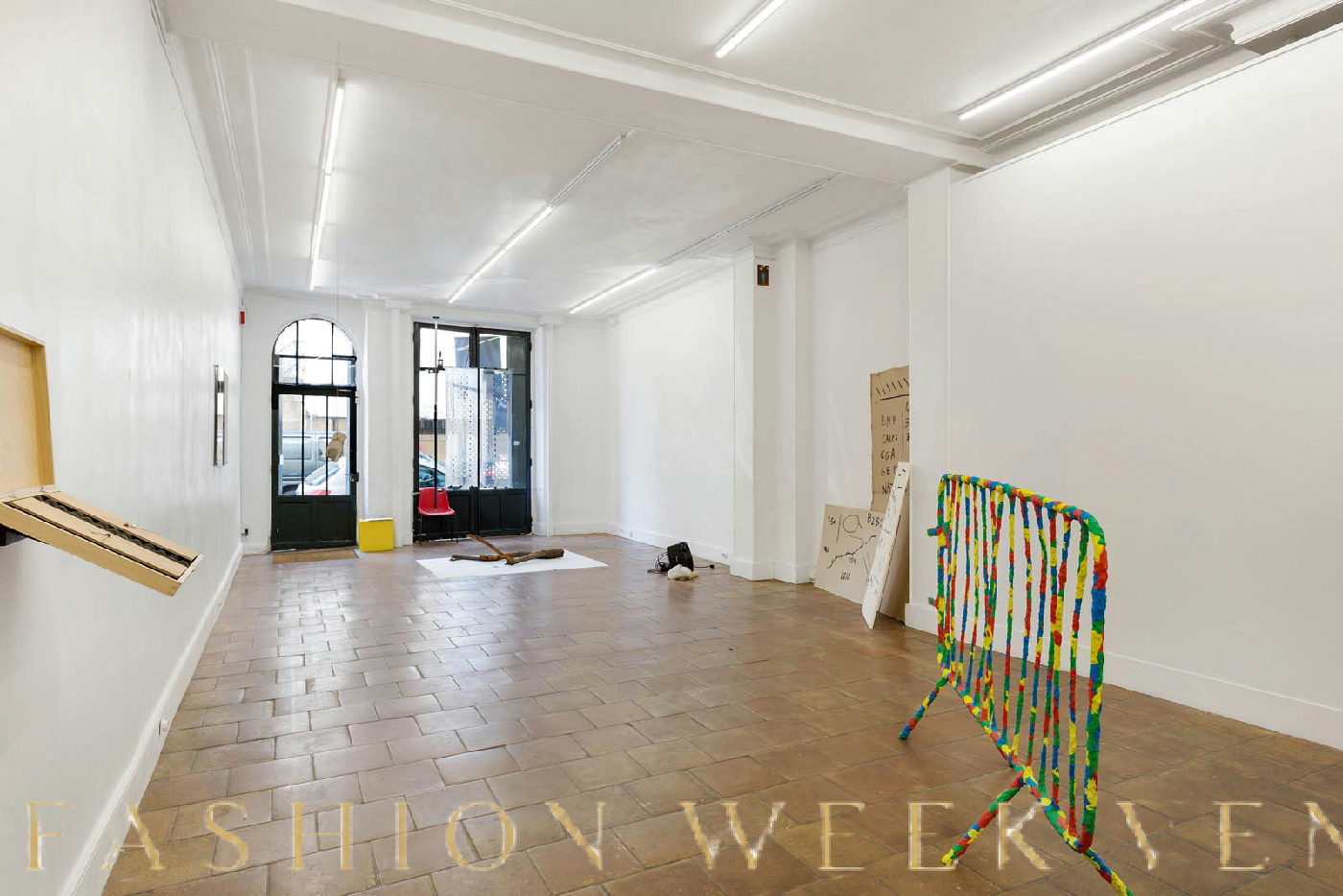
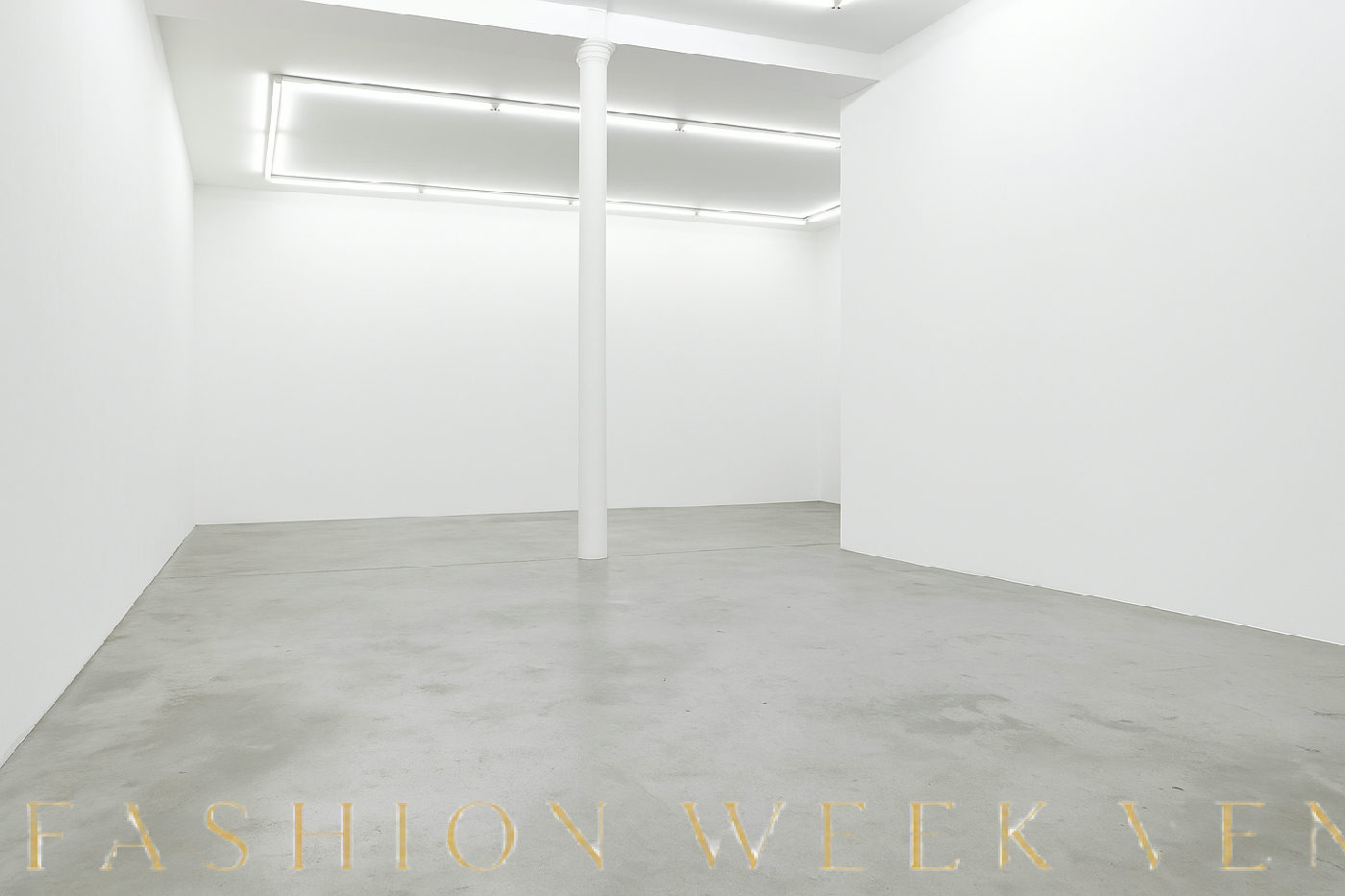
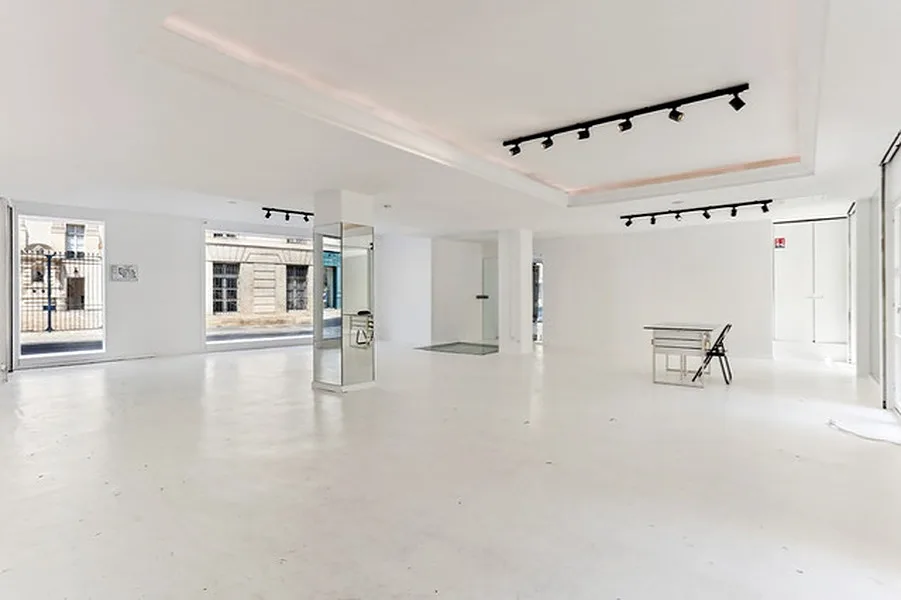
Le Marais has one of the highest concentrations of commercial art galleries in Paris. Many of these operate short-term rental programmes outside their exhibition calendar, offering brands access to genuinely beautiful, carefully maintained spaces with white-wall interiors, professional lighting, and an arts-adjacent positioning. A private exhibition format within a gallery space suits brands whose products benefit from a curatorial presentation approach, particularly jewellery labels, design objects, and limited-edition fashion collections.
Loft and Industrial Spaces
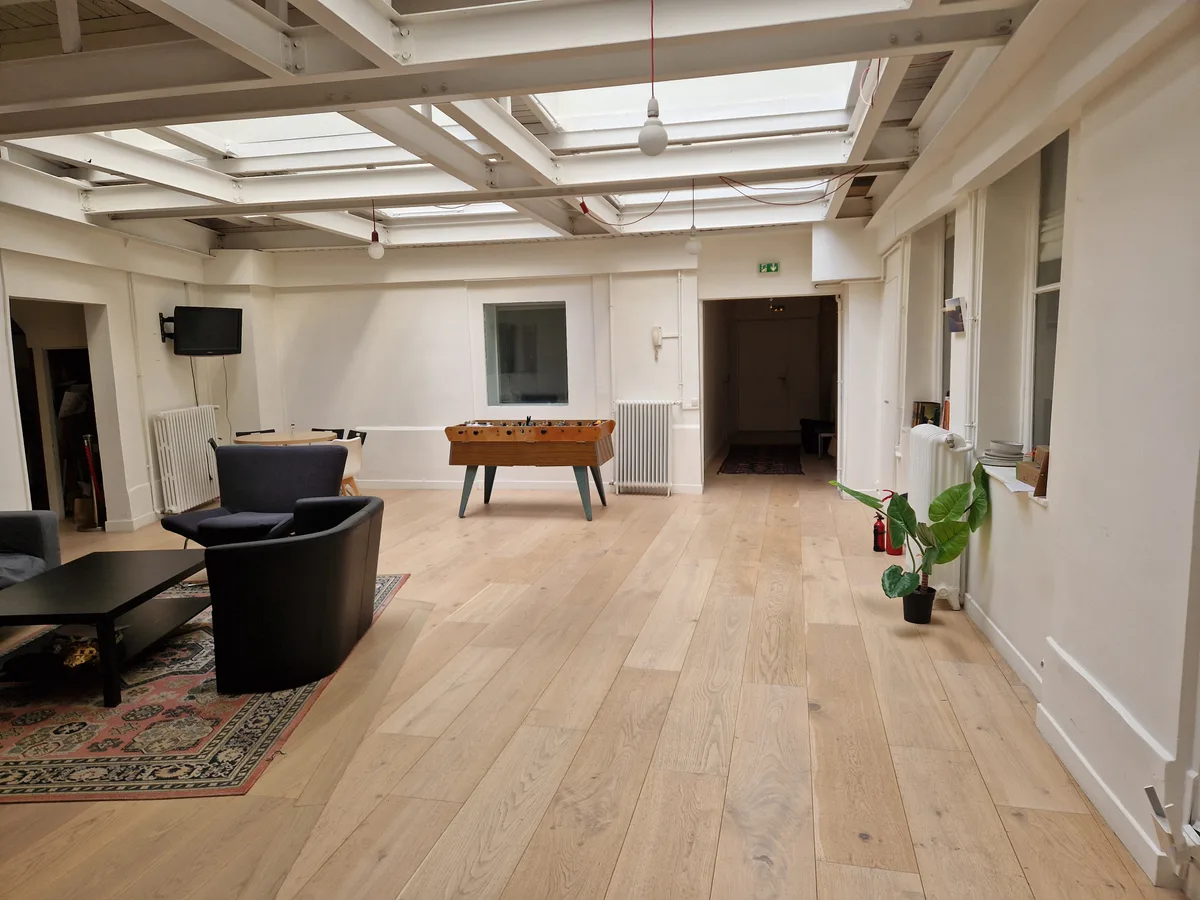
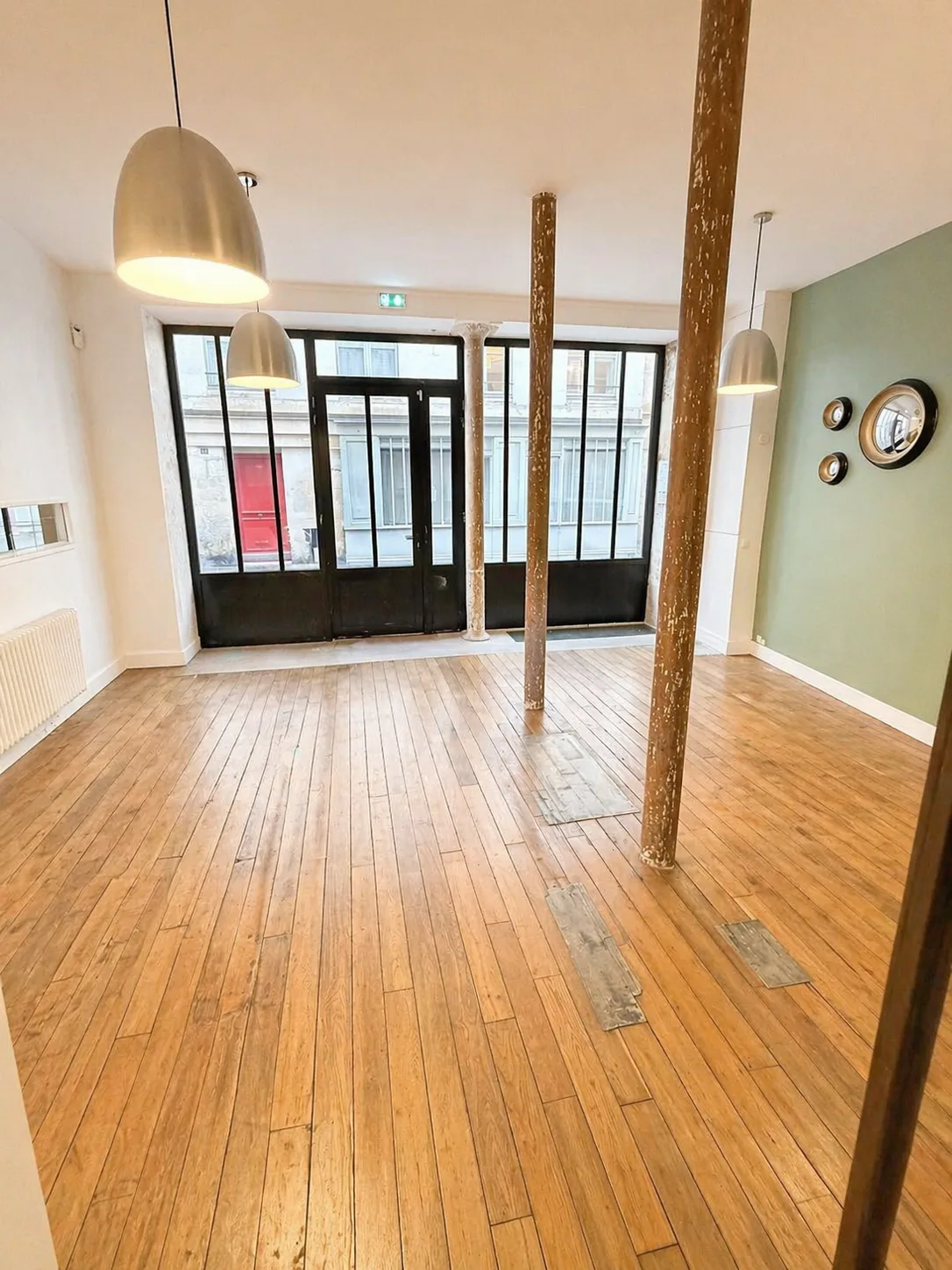
The upper Marais, particularly around the 3rd arrondissement, contains a number of former workshops and light-industrial buildings that have been converted into rental spaces retaining their original character, including poutres apparentes, stone walls, and large uninterrupted floor plates. These spaces suit brands that want to build a custom interior environment rather than working within an existing retail shell. They also provide excellent natural light, which is valuable for photography-driven activations and influencer events.
Showroom Floors
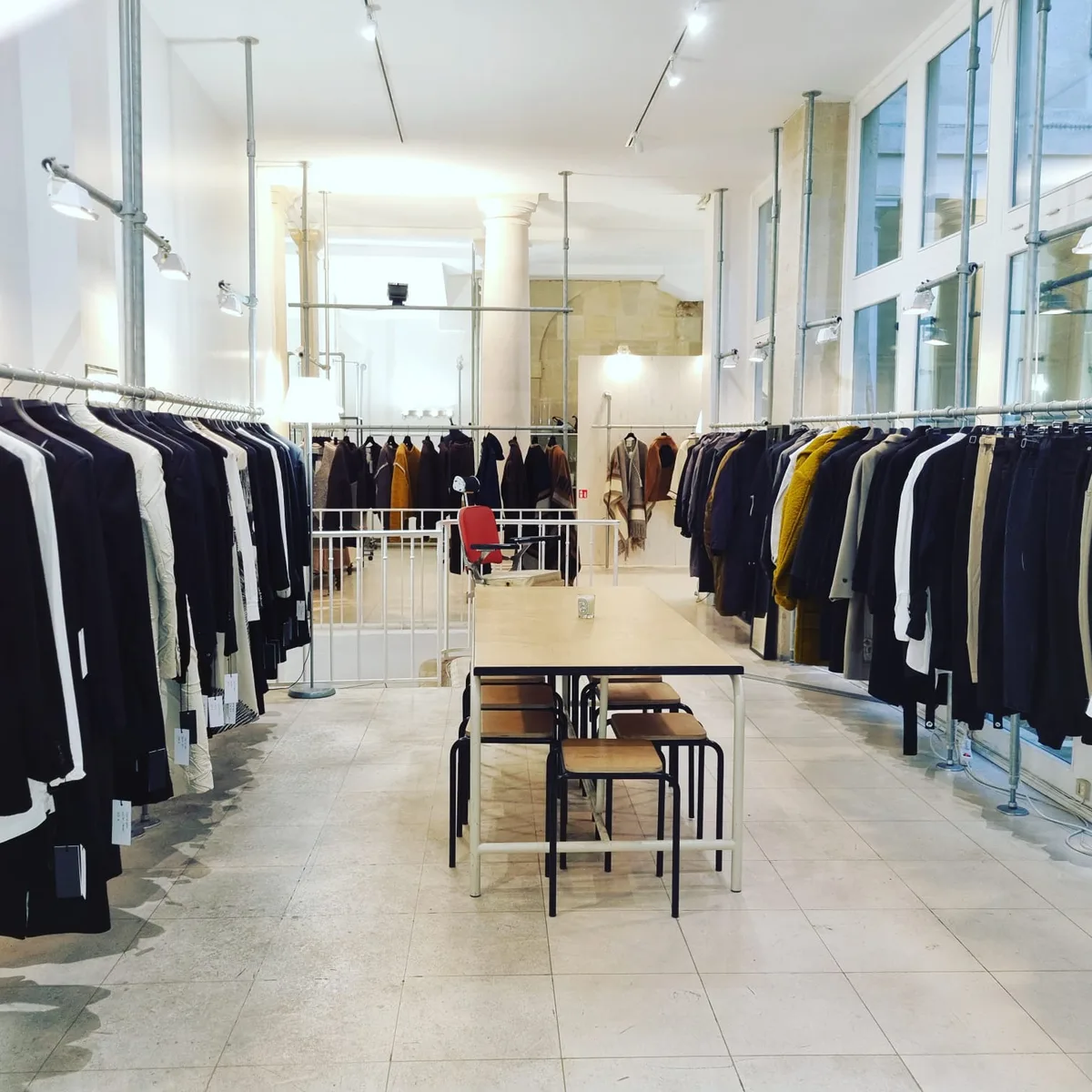
Fashion showrooms in Le Marais occupy a specific category of space: typically a first or second floor apartment or commercial floor with street-facing windows, accessible by appointment rather than open to general foot traffic. These are the primary venue type for brands presenting collections during Paris Fashion Week, hosting press and buyer appointments, and conducting trade-level brand storytelling. Brands including established fashion houses and emerging labels routinely book these spaces for one to three week periods aligned with the Paris Fashion Week calendar.
Hybrid Spaces and Concept Venues
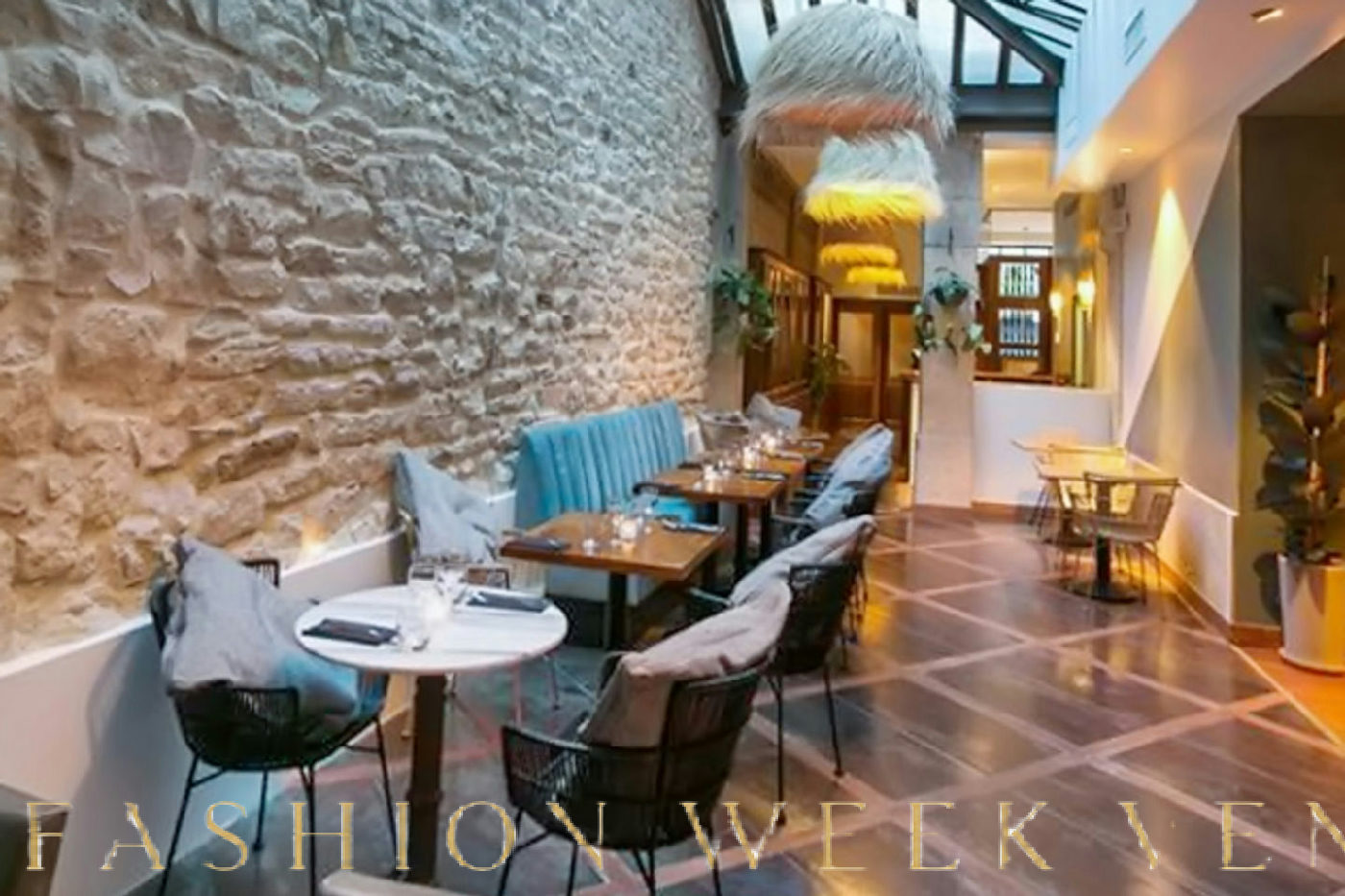
A growing category within Le Marais is the hybrid space that blends retail, hospitality, and event functions. La Fontana and similar venues in the district combine food or beverage service with retail display areas, creating a format that extends visitor dwell time naturally and generates social media content organically. Concepts like LE POP UP PARISIEN have demonstrated the commercial viability of multi-brand pop-up formats within shared spaces, reducing individual brand cost while maintaining audience access.
| Space Type | Typical Size Range | Best Use Case | Key Advantage |
|---|---|---|---|
| Boutique retail unit | 20 to 150 sq m | Direct consumer sales, product launches | Ready to trade with minimal build |
| Art gallery space | 50 to 300 sq m | Collection presentations, jewellery, design objects | Arts-aligned brand positioning |
| Loft or industrial space | 100 to 500 sq m | Custom-built brand environments, influencer events | Flexibility and photogenic character |
| Showroom floor | 50 to 200 sq m | Trade presentations, Fashion Week, press days | Industry audience access |
| Hybrid retail and event | 80 to 400 sq m | Multi-brand concepts, experiential retail | Extended dwell time, social content |
KEY TAKEAWAY: Le Marais offers space formats for every type of brand activation, from a compact boutique focused on direct sales to a large-scale custom-built environment designed primarily for media coverage and influencer engagement. Defining your primary objective before searching spaces will save significant time and budget.
Choosing the right space type connects directly to how you plan your calendar, which is one of the most important strategic decisions for any Paris pop-up.
Timing Your Pop-Up: Paris Fashion Week and Year-Round Opportunities in Le Marais
Timing is one of the most consequential decisions in any Le Marais pop-up strategy. The right calendar window amplifies every other element of your activation. The wrong one can result in a well-executed pop-up that simply does not reach the audience it needs.
Quick answer: Paris Fashion Week, held twice yearly in February or March for womenswear and September or October for womenswear again, with menswear in January and June, creates the highest concentration of industry professionals and media in Paris. However, Le Marais maintains strong consumer foot traffic throughout the year, and brands with consumer-facing objectives often find that spring and autumn, outside the most congested Fashion Week periods, deliver better retail conditions.
Paris Fashion Week is the clearest trigger event for brands planning showroom activations in Le Marais. The concentration of buyers, press, stylists, and brand representatives during Fashion Week creates an audience that is literally in the market for brand discovery. Showrooms on Rue Vieille du Temple and surrounding streets fill quickly in the weeks leading up to each Fashion Week, and brands that leave booking to the last moment frequently find that their preferred spaces are already committed. Leading practitioners recommend beginning space searches at least three to four months before a target Fashion Week date.
Beyond Fashion Week, Le Marais benefits from several other calendar moments that drive traffic spikes. The summer tourist season, broadly June through August, brings high international visitor volumes to the district. The Christmas and New Year period, which has generated successful seasonal pop-up concepts including food-adjacent activations like C'est le Pérou pour Noël and Les Paris Gourmandes, draws both tourists and Parisian shoppers. Vineyard Festival events and seasonal cultural programming around institutions like the Pompidou Centre and the Musée Picasso create additional audience surges throughout the year.
Brands entering Paris from international markets, including those from the UK, the United States, and markets as varied as Chamonix Mont-Blanc ski tourism and the growing community of brands from Norwich and other British regional cities, often use the Fashion Week window as their first Paris market entry point. This is a strategically sound approach because the industry-facing audience during Fashion Week can generate wholesale relationships, press coverage, and brand recognition that then support a subsequent consumer-facing pop-up later in the year.
IMPORTANT: Space availability in Le Marais during Paris Fashion Week is genuinely limited. Premium spaces on key streets are often booked three to six months in advance. If you are planning a Fashion Week activation, begin your search significantly earlier than you might expect.
The table below outlines the principal Paris calendar windows and their implications for different types of Le Marais pop-up activations.
| Calendar Window | Approximate Timing | Primary Audience | Best For |
|---|---|---|---|
| Paris Fashion Week Menswear | January, June | Buyers, press, stylists | Showrooms, trade presentations |
| Paris Fashion Week Womenswear | February to March, September to October | Global fashion industry | Showrooms, brand launches, press events |
| Spring Season | April to May | Parisian locals, early tourists | Consumer retail, product launches |
| Summer Tourist Peak | June to August | International tourists | Consumer retail, experiential formats |
| Autumn Season | September to November | Mixed local and international | Consumer retail, combined with Fashion Week |
| Christmas and New Year | November to January | Gift shoppers, tourists | Seasonal retail, gifting-focused activations |
TIP: Use the timeline planning tool to map your activation against key Paris calendar windows and identify the lead times required for permits, production, staffing, and space booking.
KEY TAKEAWAY: Paris Fashion Week delivers the highest concentration of industry professionals, but Le Marais is a viable pop-up location across all twelve months. Consumer-facing activations often perform better in the weeks immediately before or after Fashion Week, when foot traffic remains high but the logistical pressure and competition for attention from industry events has reduced.
With timing established, the next critical planning element is understanding the legal and permit framework that governs short-term retail in Paris.
Permits, Leases, and Legal Considerations for a Le Marais Pop-Up
The legal and administrative framework for short-term retail in Paris differs significantly from standard commercial leasing and from the permit environments in other major fashion capitals. Getting this element right is not optional, and it requires specialist knowledge.
Quick answer: Short-term retail and pop-up spaces in Paris are most commonly accessed through a bail dérogatoire, a derogatory lease that operates outside standard French commercial tenancy law and can be agreed for a period of up to 36 months. For genuinely short activations of days or weeks, spaces may also be accessed through convention d'occupation précaire or through autorisation d'occupation temporaire (AOT) frameworks, particularly for events in publicly owned spaces.
The bail dérogatoire is the mechanism that makes short-term retail legally viable in France without triggering the full protections and obligations of a standard commercial lease. Under a bail dérogatoire, both parties agree in writing at the outset that the arrangement is not subject to the standard 3-6-9 year commercial lease statute. The maximum permitted duration under a bail dérogatoire is 36 months, and if the tenant remains in occupation beyond that point without a new agreement, the arrangement may convert automatically to a statutory commercial lease. For brands booking a Le Marais pop-up of days, weeks, or a few months, the bail dérogatoire is typically the correct instrument.
For events or activations in publicly owned or managed spaces, including sections of public squares or courtyards attached to municipal institutions, an autorisation d'occupation temporaire may apply. AOT arrangements are granted by the relevant public authority, typically the Mairie de Paris or the managing body of the specific site, and they carry their own conditions, fees, and compliance requirements. Requirements vary significantly depending on the specific site, the nature of the activity, and the arrondissement in which the space is located.
Brands entering Paris without a pre-existing French legal entity often assume they cannot rent space directly. This is not accurate: it is possible for foreign entities to enter short-term space arrangements in Paris, though the practicalities of doing so, including questions about VAT registration, liability, and contract execution, benefit significantly from specialist guidance. Whether you need a French legal entity will depend on the duration of your activation, the specific landlord's requirements, and other commercial factors.
Insurance is a non-negotiable element of any Paris pop-up. Landlords in Le Marais will typically require evidence of public liability insurance at a minimum, and some spaces will require specific coverage for their fit-out, fixtures, or contents. Working with a Paris-based activation agency that holds appropriate insurance frameworks can simplify this requirement substantially.
IMPORTANT: Permit and compliance requirements in Paris vary by space type, activity type, arrondissement, and lease duration. The information above is directional guidance only. Always verify your specific requirements with a qualified French legal advisor before committing to a space or beginning build works.
For a structured overview of permit types relevant to Paris pop-ups, use the permit guidance tool as a starting framework, then take specialist legal advice for your specific situation.
KEY TAKEAWAY: The bail dérogatoire is the primary legal instrument for short-term retail in Paris and is genuinely well-suited to pop-up activations. However, the specific requirements for your space, your activity type, and your brand's legal structure require bespoke advice. Do not assume that what worked for another brand in a different space will apply automatically to your situation.
Alongside legal preparation, budget planning is the other critical pre-activation discipline, and it requires an honest assessment of all the cost components involved.
Budgeting for a Le Marais Pop-Up: Cost Components and Planning Principles
Budgeting for a Le Marais pop-up requires accounting for a wider range of cost components than many brands initially anticipate. Space rental is the most visible cost, but it typically represents only a portion of total activation expenditure.
Quick answer: The total cost of a Le Marais pop-up depends on space size, street location, rental duration, build specification, staffing requirements, and marketing investment. Space rental costs in Le Marais vary considerably depending on these factors. For accurate brand-specific estimates, use a structured budget planning tool rather than relying on general figures, which can vary significantly across different spaces and time periods.
The following cost components apply to most Le Marais pop-up activations and should each be included in your initial budget modelling.
Space Rental
Rental rates in Le Marais reflect the district's status as one of Paris's premium retail locations. Rates vary considerably based on street, floor level, window exposure, space condition, and rental duration. Prime ground-floor spaces on Rue des Francs-Bourgeois command higher rates than comparable square footage on secondary streets. Shorter rental periods often carry a higher cost per day than longer bookings. The directional budget figures for Le Marais short-term retail should be treated as estimates only. Use the budget calculator to generate a framework figure appropriate to your specific brief and build specification.
Fit-Out and Production
Unless you are renting a fully furnished boutique-style space, fit-out costs will be significant. These cover flooring, wall treatments, fixture installation, shelving, display units, lighting, signage, and any bespoke brand environment elements. For brands using the poutres apparentes aesthetic of a loft space, existing architectural character can reduce fit-out requirements, but specialist installation work is still typically needed. Build timelines in Paris can be compressed, but this usually increases labour costs. Planning build access time into your rental period is essential.
Furniture Rental
Furniture rental is a cost-effective alternative to purchasing and then disposing of furniture for a temporary activation. A furniture rental service that understands the Le Marais market and can deliver and collect within the specific logistical constraints of the arrondissement, including narrow streets and building access restrictions, reduces both cost and operational risk.
Staffing
Retail staffing in Paris requires compliance with French labour regulations, which cover working hours, minimum wage requirements, and employment contracts. For short-term activations, it is often more practical to engage staff through a specialist retail staffing provider with existing compliance frameworks rather than attempting to navigate French employment law independently.
Marketing and Influencer Engagement
A Le Marais pop-up without a marketing plan is a significant missed opportunity. Social media content creation, influencer engagement, local event tie-ins, and email campaigns to existing customers should all be budgeted for explicitly. Brands that invest in marketing around their pop-up consistently report better foot traffic, higher sales conversion, and more durable brand recognition outcomes than those that rely on walk-in trade alone.
Payments and POS
Setting up reliable payment processing for a temporary Paris retail space requires planning. Options for international brands include portable card readers, mobile POS systems, and integration with existing e-commerce payment providers. Ensuring that your POS infrastructure handles both euro and multi-currency transactions smoothly is important given the international audience profile of Le Marais.
TIP: After estimating your costs, use the ROI calculator to assess whether your projected sales, brand awareness outcomes, and media value justify the total investment, and to identify which elements of the plan deliver the best return.
KEY TAKEAWAY: Space rental is only one component of a Le Marais pop-up budget. Brands that plan for the full cost landscape, including fit-out, staffing, permits, marketing, and payments infrastructure, are significantly better positioned to deliver a commercially successful activation than those who focus only on the rental line.
Understanding how to find and book the right space is the practical step that follows sound budget planning.
How to Find and Book a Pop-Up Space in Le Marais
Finding the right pop-up space in Le Marais requires a combination of market knowledge, early action, and a clear brief. The process is more structured than many brands expect, particularly during high-demand periods like Paris Fashion Week.
Quick answer: The most effective routes to finding a Le Marais pop-up space are specialist space marketplaces and agencies with established relationships in the Paris market. Cold approaches to individual landlords are possible but time-consuming and frequently unsuccessful for international brands unfamiliar with the local market. Spaces on platforms with verified availability, clear pricing information, and compliance support save significant time and reduce risk.
The step-by-step workflow below outlines the typical process for booking a Le Marais pop-up space through a specialist agency or marketplace.
| Step | Action | Key Considerations | Typical Timeframe Before Activation |
|---|---|---|---|
| 1 | Define your brief | Concept, space type, size, zone, duration, budget | 4 to 6 months before |
| 2 | Search and shortlist spaces | Use marketplace tools, compare locations and rates | 3 to 5 months before |
| 3 | Site visits and technical assessment | Access, power, loading, structural suitability | 3 to 4 months before |
| 4 | Legal and permit review | Lease type, permit requirements, insurance | 2 to 4 months before |
| 5 | Confirm booking and sign agreement | Deposit, break clauses, restoration obligations | 2 to 3 months before |
| 6 | Concept direction and build planning | Design brief, supplier sourcing, furniture rental | 6 to 10 weeks before |
| 7 | Production and fit-out | Build access, contractor coordination | 1 to 2 weeks before opening |
| 8 | Staff briefing and POS setup | Training, language requirements, payment systems | 3 to 5 days before opening |
| 9 | Activation and marketing | Social media, influencer engagement, press outreach | Ongoing from 4 weeks before opening |
| 10 | Data collection and debrief | Foot traffic, sales, social reach, press coverage | During and after activation |
The define-your-brief stage is the one that most brands underinvest in. A precise brief covering your target audience, the aesthetic of the space you need, your minimum and maximum acceptable square footage, your required rental duration, your build budget, and your go-live date makes the search process dramatically more efficient. Platforms like the Fashion Week Venues space marketplace allow you to filter by these parameters and shortlist spaces that genuinely match your requirements rather than browsing exhaustively.
For brands new to the Paris market, working with an agency that has pre-existing relationships with Le Marais landlords provides access to spaces that may not be publicly listed and reduces the negotiation burden on the brand team. Established agencies also carry institutional knowledge about which spaces have known access restrictions, which require specific insurance arrangements, and which landlords are more or less flexible on terms.
DID YOU KNOW: Some of the most sought-after Le Marais pop-up spaces are never publicly listed. They are offered first to agencies with established landlord relationships, which is one of the practical advantages of working with a specialist Paris market agency rather than searching independently.
For a structured view of what working with a specialist agency involves and what to look for when selecting one, the guide to hiring a pop-up agency provides a practical framework for that evaluation.
KEY TAKEAWAY: The search and booking process for a Le Marais pop-up has more steps and a longer lead time than most brands initially expect. Starting early, defining your brief precisely, and using specialist market access are the three factors that most reliably determine whether you secure the right space at the right time.
Fashion Week Showrooms in Le Marais: What Brands Need to Know
The Le Marais showroom market during Paris Fashion Week is a distinct sub-market within broader pop-up retail, with its own norms, audience expectations, and operational requirements. Brands using Le Marais as a showroom base during Fashion Week need to approach the format differently from consumer-facing retail activations.
Quick answer: A Paris Fashion Week showroom in Le Marais is a by-appointment space used to present collections to buyers, press, and stylists over a defined period, typically one to three weeks aligned with the official Fashion Week calendar. The audience is trade rather than consumer, and the space design, staffing approach, and marketing strategy should reflect that difference.
The showroom function in Le Marais is well-established. The district's combination of good transport connections, international hotel capacity nearby, and concentration of industry professionals during Fashion Week makes it a natural base for showroom activations. Streets close to Rue Vieille du Temple, Rue du Turenne, and the upper reaches of Rue des Francs-Bourgeois are particularly well-used for showroom purposes.
Fashion showrooms differ from retail pop-ups in several important ways. Visitor volumes are lower and controlled through appointment scheduling. The space design emphasis is on presentation quality rather than merchandising for sale. Sales support materials, including lookbooks, line sheets, and order forms, are central to the operation. Staffing requirements include sales agents with relevant buyer relationships as well as support staff. The marketing effort focuses on outreach to specific press and buyer contacts rather than broad social media campaigns.
Brands including established fashion houses and emerging labels from markets including the United States, Japan, and the United Kingdom consistently use Le Marais showroom space during Fashion Week. The label NEMOZENA, a jewellery brand with a design-forward positioning, represents the kind of brand for which a Le Marais showroom during Fashion Week functions as a primary market entry strategy, providing access to international buyers and press within a concentrated two-week window.
The twin activation concept, where two complementary brands share a space to reduce individual cost while maintaining a full audience experience, is particularly relevant for showroom formats. Brands that do not compete directly but serve overlapping buyer and press audiences can often justify a premium Le Marais showroom space by splitting rental and production costs. The twin co-activation concept provides a framework for this approach.
KEY TAKEAWAY: A Le Marais showroom during Paris Fashion Week is a specific operational format that requires a tailored approach to space design, staffing, marketing, and appointment management. Treating it as simply a scaled-down retail pop-up typically produces results below its potential.
Marketing Your Le Marais Pop-Up: Building Foot Traffic and Brand Recognition
A well-located Le Marais pop-up space delivers access to foot traffic, but converting that access into strong sales, meaningful social media reach, and durable brand recognition requires an active marketing strategy built around the specific format, location, and calendar window of your activation.
Quick answer: Effective Le Marais pop-up marketing combines social media content, influencer engagement, local event tie-ins, press outreach, and customer communications before, during, and after the activation. Brands that invest in pre-activation marketing consistently achieve better opening-day footfall and higher overall return on investment than those that rely on walk-in trade alone.
Social Media and Content Strategy
The visual character of Le Marais, from the architectural detail of Place des Vosges to the street art by artists including Jef Aérosol found across the neighbourhood, provides genuinely rich content material. Brands that build their social media content around the location itself, rather than treating it purely as a backdrop for product photography, typically generate stronger engagement and organic reach. Instagram and its short-form video features remain the primary channels for fashion and lifestyle pop-up marketing in Paris, but content that performs well on those platforms often has secondary reach through tagging, sharing, and media coverage.
Influencer Engagement
Le Marais has an active and well-connected network of fashion, food, and lifestyle content creators. Engaging Paris-based influencers who already have established audiences in the neighbourhood, or who cover French fashion and retail specifically, is typically more effective than importing influencers from your home market who have no existing Paris audience. Combining local influencer engagement with your own brand's social media push creates a multiplier effect on reach. Measure influencer performance through foot traffic data and social reach metrics rather than follower counts alone.
Press and Editorial Outreach
Le Marais pop-up activations have historically attracted coverage from publications including Women's Wear Daily, Le Figaro, Radio France Internationale, The Christian Science Monitor, and digital platforms with strong Paris fashion coverage including Paris Unlocked. A targeted press outreach campaign, sent to relevant journalists and editors two to four weeks before opening, should include a compelling brand narrative, high-quality images, and a clear invitation to visit or receive a press briefing. Launches here often attract media attention organically, particularly when the space design or concept is genuinely distinctive.
Customer Communications
Existing customers who are in Paris during your activation period represent a high-value audience. Email communications that provide clear information about location, opening hours, exclusive products, and any events or experiences available during the pop-up should be scheduled well in advance. Social media content should include clear geographic and logistical information, not just aesthetic imagery, so that interested followers can actually find and visit the space.
Window Display and In-Store Merchandising
On high foot-traffic streets like Rue des Francs-Bourgeois, the window display is your primary conversion tool for converting passers-by into visitors. A clear, bold, visually arresting window concept that communicates your brand identity within two to three seconds of a pedestrian's attention is worth significant investment. In-store merchandising should support and extend the window story, creating a coherent visual journey from the street through to the point of sale.
KEY TAKEAWAY: Marketing for a Le Marais pop-up is not a single-channel effort. The most effective activations combine social media content, influencer engagement, press outreach, customer communications, and physical merchandising into a coordinated campaign that builds momentum before opening and sustains it throughout the rental period. Budget explicitly for marketing investment as part of your overall activation cost.
How Fashion Week Venues Supports Brands Booking a Pop-Up in Le Marais
Fashion Week Venues operates as a full-service pop-up shop agency and space marketplace with Paris as its primary market. For brands planning to book a pop up shop in Le Marais, Fashion Week Venues provides support across every stage of the process, from initial space discovery through to post-activation data and analytics.
The agency's venue sourcing service gives brands access to spaces across Le Marais, including spaces that are not publicly listed on open platforms. The sourcing team can assess spaces against a brand's specific brief, covering size, location, aesthetic, budget, and calendar requirements, and present a shortlist that is genuinely matched rather than simply available.
For brands that need more than a space, Fashion Week Venues provides a complete service portfolio. The concept direction service helps brands develop a retail environment concept that is appropriate for the space, the neighbourhood, and the target audience. The production and build service manages fit-out coordination in Paris, including contractor management, furniture delivery, and technical installation. The retail staffing service provides Paris-based staff who understand the expectations of both the local market and international brand clients.
For brands that want to assess their options before committing to a full agency engagement, the suite of planning tools available through Fashion Week Venues provides a structured starting point. The budget calculator, ROI calculator, timeline tool, permits tool, space comparison tool, and space locator tool are all designed to help brand teams develop a realistic plan and identify the questions they need to answer before moving into active space search.
The activation management service covers the operational running of the pop-up once it is open, including daily management, sales support, stock management, and real-time problem solving. The data and analytics service provides foot traffic measurement, sales data, social media reach metrics, and post-activation reporting that gives brands a clear picture of their return on investment.
It is important to note that Fashion Week Venues does not guarantee space availability, permit approvals, or specific commercial outcomes. The agency's value is in reducing the complexity, risk, and time investment required to execute a high-quality Paris pop-up, not in eliminating the inherent commercial uncertainties of any retail activation.
Brands that have used Fashion Week Venues for previous activations, and whose work is documented in the case studies section, span a range of sectors including fashion, jewellery, beauty, food and beverage, and lifestyle. This breadth of experience means the agency's operational knowledge extends across the different space types, audience profiles, and marketing approaches relevant to Le Marais pop-up retail.
KEY TAKEAWAY: Fashion Week Venues supports brands at every stage of a Le Marais pop-up, from space discovery through to post-activation analytics. The agency is most valuable to brands that want to move quickly, access unlisted spaces, or manage the complexity of a Paris activation without building an in-house Paris team.
Common Myths About Booking a Pop-Up in Le Marais: Debunked
MYTH: You need a French legal entity to rent a pop-up space in Le Marais.
FACT: Foreign brands and entities can and do rent short-term retail space in Paris without a pre-existing French company. However, the practical requirements, including contract execution, VAT obligations, and landlord expectations, vary by situation and benefit significantly from specialist guidance. Some landlords may have specific requirements, but a French legal entity is not universally mandatory for a short-term bail dérogatoire arrangement.
MYTH: Paris Fashion Week is the only viable calendar window for a Le Marais pop-up.
FACT: Le Marais maintains strong foot traffic and retail conditions throughout the year. Spring, summer, and the Christmas period all produce successful consumer-facing pop-up activations. Fashion Week is the optimal window for industry-facing showrooms and press events, but consumer retail pop-ups often perform better in adjacent periods when foot traffic is high but competition for consumer attention from industry events is lower.
MYTH: Commission brokers and informal intermediaries are the only way to find a Le Marais pop-up space.
FACT: Structured space marketplaces and specialist agencies with verified listings provide a transparent, legally sound alternative to informal broker arrangements. Platforms with clear pricing, compliance support, and verified space information reduce the risk of misrepresentation and make the search process more efficient for international brands unfamiliar with the local market.
MYTH: Short-term leases in Paris are legally straightforward and do not require specialist support.
FACT: The bail dérogatoire and AOT frameworks that govern short-term retail in Paris are distinct from both standard commercial leases and from the short-term rental frameworks used in other markets. Requirements vary by space type, duration, arrondissement, and activity. Proceeding without specialist legal review carries real risk, including unintentional conversion to a statutory commercial lease with significantly more complex exit obligations.
MYTH: Walk-in foot traffic from Le Marais streets alone is sufficient to drive a successful pop-up.
FACT: While Le Marais delivers genuine passive foot traffic, brands that invest in pre-activation marketing, influencer engagement, and customer communications consistently achieve significantly better results than those that rely on walk-in trade alone. The neighbourhood provides access to an audience; converting that audience into visitors and customers requires active marketing effort.
Frequently Asked Questions
What is a pop-up shop in Le Marais?
A pop-up shop in Le Marais is a temporary retail space operated by a brand for a defined period, typically ranging from a few days to several months, in the 3rd or 4th arrondissement of Paris. These spaces can take the form of boutique retail units, art gallery conversions, loft spaces, showroom floors, or hybrid retail and event venues. The defining characteristic is their temporary nature and their use for a specific brand activation objective, whether that is product launching, market testing, brand storytelling, or trade presentations during Paris Fashion Week.
Why is Le Marais a good area for pop-up retail?
Le Marais combines several factors that make it exceptionally well-suited to pop-up retail. It attracts a consistently high volume of foot traffic from both Parisian residents and international tourists. Its cultural identity, shaped by historic architecture, art galleries, fashion boutiques, and independent concept stores, creates natural alignment with brand activations in fashion, design, beauty, and lifestyle. The neighbourhood's association with Paris Fashion Week adds credibility for industry-facing activations, and its year-round vitality means that pop-up opportunities are not limited to specific calendar windows.
How much does it cost to rent retail space in Le Marais?
Rental rates in Le Marais vary considerably based on street location, space size, floor level, window exposure, space condition, and rental duration. Prime ground-floor spaces on high-traffic streets like Rue des Francs-Bourgeois command higher rates than equivalent square footage on secondary streets. Short rental periods typically carry a higher cost per day than longer bookings. Because the range is broad and dependent on specific variables, directional estimates should be treated as indicative only. Use the budget calculator on Fashion Week Venues to generate a framework figure relevant to your specific brief and building specification.
What types of spaces are available for a pop-up in Le Marais?
Le Marais offers boutique retail units, art gallery spaces, loft and industrial spaces with exposed beams and stone walls, multi-room showroom floors, private courtyards, and hybrid retail and event venues. Space sizes range from very compact units of around 20 square metres to large-format venues exceeding 400 square metres. The right space type depends on your brand concept, your target audience, your activation objectives, and your build specification. Many brands find that loft spaces with architectural character provide the most flexibility for custom brand environments.
Is Le Marais a good location for a Paris Fashion Week showroom?
Yes. Le Marais is one of the most established and sought-after showroom districts in Paris during Fashion Week. Streets including Rue Vieille du Temple, Rue de Turenne, and Rue des Francs-Bourgeois are consistently used by both established fashion houses and emerging labels for buyer and press presentations. The concentration of industry professionals in the district during Fashion Week, combined with good transport access and a high density of hotels, makes it a practical as well as a prestigious choice for showroom activations. Spaces book early, so planning several months in advance is strongly recommended.
Can international brands book a pop-up space in Le Marais without a French company?
It is possible for international brands to book short-term retail space in Paris without a pre-existing French legal entity, though the specific requirements depend on the landlord, the lease type, the duration of the rental, and other commercial factors. Brands should take specialist legal advice on their specific situation before signing any lease agreement. An experienced Paris-based agency can help international brands navigate the administrative and legal requirements more efficiently than attempting to manage the process independently from outside France.
How far in advance should I book a Le Marais pop-up space?
For activations during or around Paris Fashion Week, a minimum of three to four months advance planning is advisable, and six months is safer for premium spaces on key streets. For activations outside Fashion Week peak periods, two to three months of advance planning is typically sufficient for most space types, though specific spaces with limited availability may require earlier commitment. The timeline planning tool available through Fashion Week Venues helps map your activation calendar against required lead times for space booking, permits, production, staffing, and marketing.
What legal framework governs short-term retail leases in Paris?
Short-term retail activations in Paris are most commonly governed by the bail dérogatoire, a lease arrangement that operates outside the standard French commercial tenancy statute and can be agreed for periods of up to 36 months. For activations in publicly managed spaces, an autorisation d'occupation temporaire (AOT) may apply. The specific legal framework relevant to your activation depends on your space type, location, duration, and activity. Always verify requirements with a qualified French legal advisor before proceeding. The permit guidance tool provides a directional framework but does not constitute legal advice.
How do I drive foot traffic to a Le Marais pop-up?
Driving foot traffic to a Le Marais pop-up requires a combination of passive and active strategies. Passive foot traffic comes from the neighbourhood's existing pedestrian flow. Active foot traffic requires pre-activation social media content, influencer engagement, email marketing to existing customers, press outreach to relevant journalists and editors, and strong window merchandising that converts passers-by into visitors. Brands that invest in marketing from four to six weeks before their opening date consistently achieve better opening-day and sustained foot traffic than those that begin marketing at or after launch.
What makes Le Marais attractive to luxury and premium brands specifically?
Le Marais aligns with luxury and premium brand positioning through several specific factors. Its historic architecture, including 17th-century hôtels particuliers and the immaculate Place des Vosges, creates a prestige backdrop that few other Paris districts can match. Its association with established fashion houses including Chanel, Giorgio Armani, and Mugler, which have used the district for major activations, establishes a credibility context for brands activating there. Its international visitor profile, including a significant proportion of high-spending tourists from Asia, the Americas, and the Middle East, creates direct access to luxury-tier consumer audiences.
How does the cultural life of Le Marais benefit retail activations?
Le Marais has an unusually rich concentration of cultural institutions within a compact geographic area. The Pompidou Centre, the Musée Picasso, the Musée de la Chasse et de la Nature, the Maison de Victor Hugo, the Carreau du Temple, and the Librairie de l'Hôtel de Sully all draw audiences who are culturally engaged and predisposed to spending time in the neighbourhood rather than passing through quickly. This extends average visitor dwell time and increases the probability of spontaneous pop-up visits. Cultural event programming around these institutions creates additional foot traffic spikes that well-positioned pop-ups can benefit from directly.
Can two brands share a Le Marais pop-up space to reduce costs?
Yes. Co-activation or twin pop-up formats, where two complementary brands share a space and split rental and production costs, are an established and effective approach in Le Marais. This model works best when the two brands serve overlapping audiences but do not compete directly. A fashion brand and a jewellery label, for example, or a lifestyle brand and a food or beverage concept, can create a more compelling combined visitor experience while each reducing their individual investment. The twin co-activation framework provides a structured approach to this model.
What role does social media play in a Le Marais pop-up strategy?
Social media is central to modern pop-up marketing in Le Marais at every stage of the activation. Pre-opening, it builds anticipation and communicates logistics to your existing audience. During the activation, it extends the reach of the physical experience to audiences who are not present in Paris. Post-activation, it sustains brand awareness and provides a permanent record of the experience. The visual quality of the Le Marais environment, from street-level architecture to the interior design of well-executed pop-up spaces, makes high-quality content creation relatively straightforward compared to less distinctive retail environments.
How do I measure the success of a Le Marais pop-up?
Measuring pop-up success in Le Marais should cover multiple dimensions rather than sales revenue alone. Foot traffic counts, sales conversion rates, average transaction values, social media reach and engagement, press coverage volume and quality, influencer post performance, new customer acquisition, and any wholesale relationships initiated during the activation are all relevant metrics. For showroom-format activations during Fashion Week, buyer meeting volume, order value, and press appointment quality are the primary performance indicators. The data and analytics service available through Fashion Week Venues supports measurement across these dimensions.
What is the best street in Le Marais for a pop-up shop?
There is no single best street in Le Marais for all pop-up activations. Rue des Francs-Bourgeois delivers the highest pedestrian volume and suits brands prioritising maximum exposure and consumer foot traffic. Rue Vieille du Temple is preferred for fashion and art-adjacent concepts and for showroom activations during Paris Fashion Week. Rue des Rosiers suits brands with a strong narrative or heritage positioning. Rue de Bretagne is best for lifestyle and food-adjacent concepts targeting local Parisian residents. Place des Vosges and surrounding streets suit premium and luxury brands. The right choice depends on your brand, your concept, and your target audience.
Conclusion: Making Your Le Marais Pop-Up Work
Le Marais represents one of the clearest opportunities in European retail for brands that want to combine commercial performance with cultural credibility. Its consistent foot traffic, internationally minded audience, rich architectural character, and deep association with Paris Fashion Week make it a neighbourhood where a well-executed pop-up can deliver meaningful results across sales, brand recognition, press coverage, and customer engagement simultaneously.
The brands that succeed in Le Marais are those that plan early, define their brief precisely, choose their space and street deliberately, invest adequately in fit-out and marketing, and approach the legal and permit requirements with appropriate specialist support. They are also the brands that understand that a Le Marais pop-up is not a passive exercise in real estate: it requires active management, creative investment, and disciplined measurement to deliver its full potential return.
Whether you are planning a Fashion Week showroom, a consumer-facing product launch, a seasonal retail activation, or a brand storytelling experience designed primarily for press and influencer engagement, Le Marais has the space, the audience, and the cultural context to support your objectives. The key is matching your concept precisely to the right space, the right street, and the right calendar window, and then executing with the quality that the neighbourhood's standards demand.
To move from research to activation, start exploring available spaces on the Fashion Week Venues marketplace and build a focused brief for your target neighbourhood, space type, and calendar window. The team at Fashion Week Venues can support your search, your concept development, your production, and your activation management, giving you the best possible platform for a successful Le Marais pop-up.