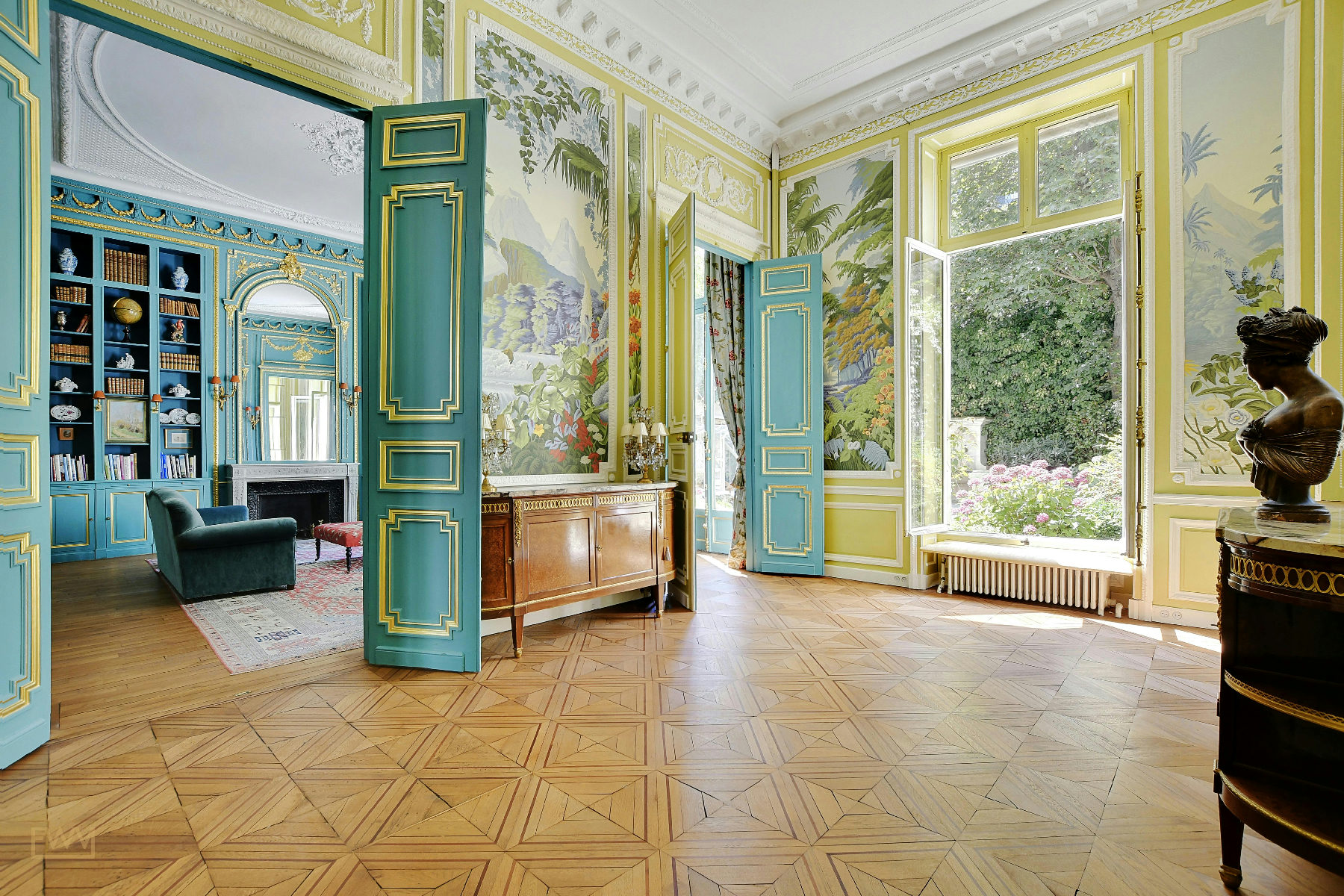
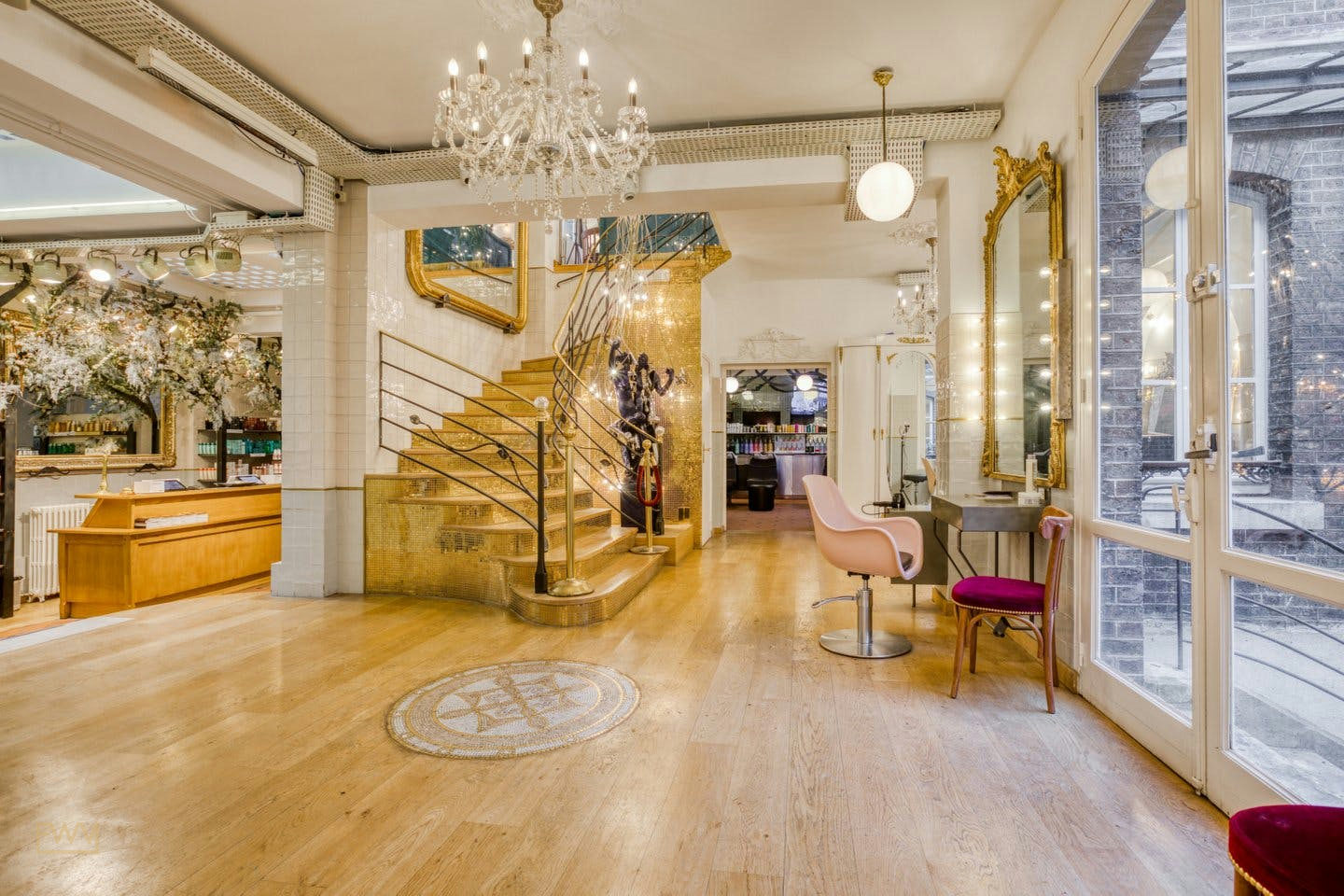
Finding the right boutique for rent in Paris requires more than a property search. It demands an understanding of Parisian neighbourhoods, short-term lease structures, permit requirements, and the seasonal calendar that drives foot traffic and media attention across the city's most competitive retail corridors. Whether you are a fashion brand planning a Fashion Week showroom, a beauty label launching a temporary retail concept, or an international brand entering the French market for the first time, Paris offers an extraordinary range of spaces, but navigating them without specialist knowledge is costly and slow. This guide covers every dimension of renting a short-term boutique in Paris, from location strategy and space types to permits, budget planning, and activation logistics. Fashion Week Venues supports brands across the full Paris activation journey, from space discovery through to live retail.
Why Paris Remains the World's Most Sought-After City for Short-Term Boutique Retail
Quick answer: Paris combines global fashion authority, extraordinary tourist volumes, a dense concentration of high-net-worth consumers, and a proven culture of temporary retail across iconic neighbourhoods, making it the primary target city for brands seeking short-term boutique space with cultural credibility and commercial reach.
Paris is not simply a fashion capital in a symbolic sense. It is one of the most commercially active cities in the world for temporary retail, pop-up activations, showroom presentations, and brand discovery experiences. The city attracts tens of millions of international visitors every year, with significant concentrations of luxury and premium shoppers arriving during Paris Fashion Week in January, February, June, and September, as well as during major cultural events such as FIAC, Paris Design Week, and the summer tourist season.
For brands, the commercial logic of opening a boutique for rent in Paris rather than committing to a permanent lease is compelling. Short-term rental agreements, structured either as a bail dérogatoire or as a convention d'occupation précaire or an autorisation d'occupation temporaire depending on the space and the property owner, allow brands to test the market, build local clientele, generate social media content, and create a sense of urgency that permanent retail cannot replicate. The temporary nature of the space becomes a marketing advantage rather than a limitation.
Paris also offers a geography that is unusually legible for brand positioning. The arrondissement system and the distinct identities of neighbourhoods such as Le Marais, Saint-Germain-des-Prés, the Golden Triangle, and Montmartre mean that a brand's choice of location sends a clear signal about its positioning, its customer, and its values. A brand that opens in the 4th arrondissement near Place des Vosges reads differently from one that activates on Rue du Faubourg Saint-Honoré or in Pigalle. These distinctions are not superficial. They shape who discovers the space, how it is photographed and shared on social media, and what type of press attention it attracts.
The concentration of department stores including Galeries Lafayette and Printemps, the proximity to flagship retail corridors on Avenue des Champs-Elysées and Rue de Rivoli, and the density of independent concept stores throughout Le Marais and Saint-Germain-des-Prés mean that temporary boutiques in Paris benefit from both destination footfall and ambient street traffic in a way that few cities can match.
DID YOU KNOW: Paris Fashion Week occurs twice per year for womenswear, with menswear and haute couture weeks adding additional windows of heightened brand visibility and international press presence throughout the calendar year.
KEY TAKEAWAY: Paris offers a unique combination of global brand authority, seasonal foot traffic peaks, neighbourhood-level positioning precision, and a mature short-term retail ecosystem that makes it the most strategically valuable city for brands planning temporary boutique activations.
Understanding why Paris matters is only the starting point. The more practical question is where within Paris your boutique should be located, and that depends entirely on your brand, your target customer, and your activation objectives.
Parisian Neighbourhoods for Boutique Rental: A Location Strategy Guide
Quick answer: The best neighbourhood for renting a boutique in Paris depends on your brand positioning, target customer, budget, and activation type. Le Marais suits emerging and contemporary brands, Saint-Germain-des-Prés attracts heritage luxury and literary fashion, the Golden Triangle serves ultra-luxury presentations, and Pigalle and Montmartre appeal to streetwear, music, and culture-driven brands.
Paris is a city of distinct villages, and each major retail neighbourhood has its own character, customer profile, rent level, and competitive context. Choosing the wrong neighbourhood is one of the most common and expensive mistakes brands make when renting a boutique in Paris for the first time.
Le Marais and the 3rd and 4th Arrondissements
Le Marais is the most consistently in-demand neighbourhood for short-term boutique rentals in Paris. It combines a dense concentration of independent boutiques, art galleries, concept stores, and fashion showrooms with genuinely high foot traffic from both Parisian locals and international visitors. The area around Rue des Francs-Bourgeois, Rue de Bretagne, Rue Charlot, and Place des Vosges attracts a customer who is fashion-aware, culturally engaged, and willing to discover new brands. Le Marais is also one of the few Paris neighbourhoods where a temporary boutique in a converted gallery space, an historic hôtel particulier courtyard, or a ground-floor retail unit can attract significant organic social media attention without heavy paid promotion. The challenge is availability. Demand for short-term retail spaces in Le Marais is high, and the best spaces are typically reserved months in advance, particularly around Fashion Week periods.
Saint-Germain-des-Prés and the 6th Arrondissement
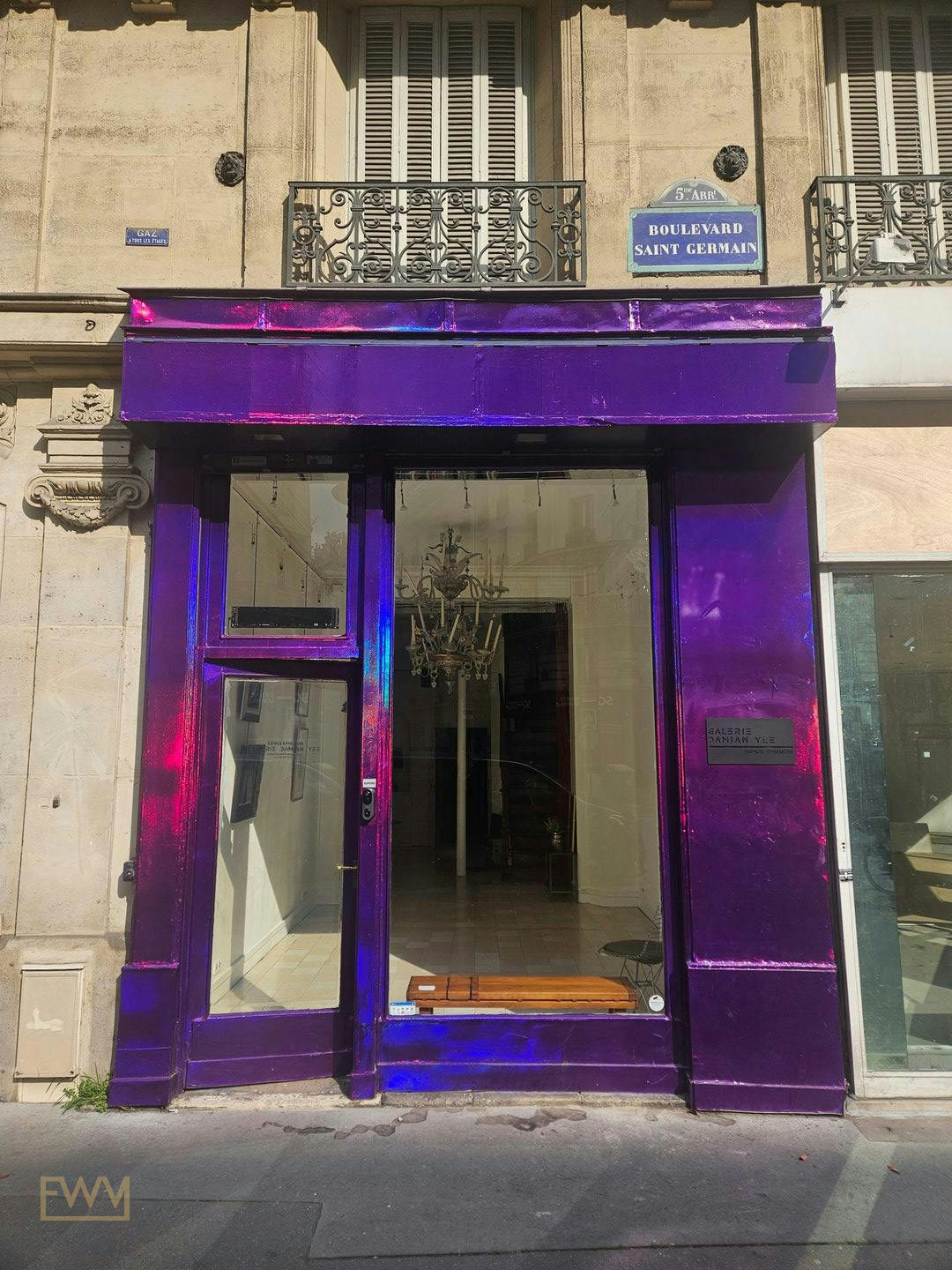
Saint-Germain-des-Prés remains one of Paris's most prestigious retail addresses for fashion and lifestyle brands. The area around Boulevard Saint-Germain, Rue de Grenelle, and Rue du Cherche-Midi is characterised by an affluent, design-literate customer with strong purchasing power. Space types in this area tend toward boutique storefronts, ground-floor retail units in Haussmann buildings, and occasional gallery-format spaces that suit presentation-first or showroom-style activations. Rent levels in Saint-Germain-des-Prés are typically higher than in Le Marais for comparable square meters, and availability for short-term rentals is more limited, but the brand association with the neighbourhood carries significant weight for heritage fashion, luxury accessories, and premium lifestyle brands.
The Golden Triangle: Avenue Montaigne, Rue du Faubourg Saint-Honoré, and Place Vendôme
The Golden Triangle, anchored by Avenue Montaigne, Rue du Faubourg Saint-Honoré, and the area around Place Vendôme, represents the pinnacle of Paris luxury retail geography. This is where the world's most recognised luxury houses maintain their flagship maisons, and where international brands staging ultra-luxury presentations, fine jewellery showrooms, or haute couture events seek temporary boutique space. Renting a boutique in this area as a short-term activation requires significant budget, strong brand credentials, and typically a specialist agency relationship to access suitable spaces. The foot traffic in the Golden Triangle skews heavily toward high-net-worth international visitors, making it the right environment for brands with a premium price point and a global customer base.
Champs-Elysées and the 8th Arrondissement
Avenue des Champs-Elysées is the most famous retail street in France and one of the most visited avenues in the world. It offers extraordinary raw volume of foot traffic, but the customer profile is broad and the rent levels for permanent retail are among the highest in Europe. For short-term boutique rentals, the side streets and surrounding blocks of the 8th arrondissement often offer more commercially interesting propositions than the avenue itself, combining proximity to the tourist and luxury shopper traffic with more accessible space formats and rental terms.
Pigalle, South Pigalle, and Montmartre
Pigalle and the South Pigalle area, sometimes referred to as SoPi, have become increasingly significant for fashion, streetwear, music, and culture-driven brands over the past decade. The neighbourhood's independent retail scene, proximity to creative communities, and authentic Parisian street character make it particularly effective for brands targeting a younger, trend-aware customer. Montmartre itself, with its tourist volumes and distinctive artistic heritage, suits brands that want to combine commercial footfall with a strong visual and cultural narrative.
To compare specific neighbourhoods and shortlist spaces that match your brand positioning, explore the Paris city hub on Fashion Week Venues and filter by arrondissement, space type, and calendar availability.
| Neighbourhood | Primary Customer | Best For | Space Types Available | Relative Rent Level |
|---|---|---|---|---|
| Le Marais (3rd/4th) | Fashion-forward locals and tourists | Contemporary, emerging, and art-adjacent brands | Gallery, boutique, showroom, courtyard | Medium to high |
| Saint-Germain-des-Prés (6th) | Affluent design-literate locals | Heritage luxury, premium lifestyle, fashion | Boutique storefront, gallery, ground-floor retail | High |
| Golden Triangle (8th) | High-net-worth international visitors | Ultra-luxury, fine jewellery, haute couture | Maison-format, luxury retail, event space | Very high |
| Champs-Elysées (8th) | Broad international tourists | Mass-premium, flagship-format pop-ups | Storefront, large-format retail | Very high |
| Pigalle and SoPi (9th/18th) | Creative, younger, culturally engaged | Streetwear, music, beauty, lifestyle | Studio, raw space, converted retail | Medium |
| Montmartre (18th) | International tourists and creatives | Art-driven brands, artisan retail, lifestyle | Boutique, gallery, studio | Low to medium |
KEY TAKEAWAY: Neighbourhood selection is a brand positioning decision as much as a logistical one. The right arrondissement amplifies your brand's story, attracts the right customer, and determines the quality of organic media and social content your activation generates.
With neighbourhood strategy established, the next decision is the type of space that best serves your activation format, whether that is a traditional boutique storefront, a showroom, an art gallery conversion, or a hybrid retail and event space.
Types of Boutique and Retail Spaces Available for Short-Term Rent in Paris
Quick answer: Short-term retail spaces in Paris include traditional boutique storefronts, art gallery conversions, fashion showrooms, photo studios, raw industrial spaces, apartment-format showrooms, and purpose-built pop-up venues. Each space type suits different brand formats, visitor experiences, and activation budgets.
Paris has one of the most diverse short-term retail space ecosystems in the world, shaped by the city's extraordinary architectural heritage, its density of independent landlords, and the decades-long culture of temporary retail that has developed around Fashion Week and other calendar events. Understanding the available space types helps brands match their activation concept to the right physical environment before committing to a rental.
Boutique Storefronts and Ground-Floor Retail Units
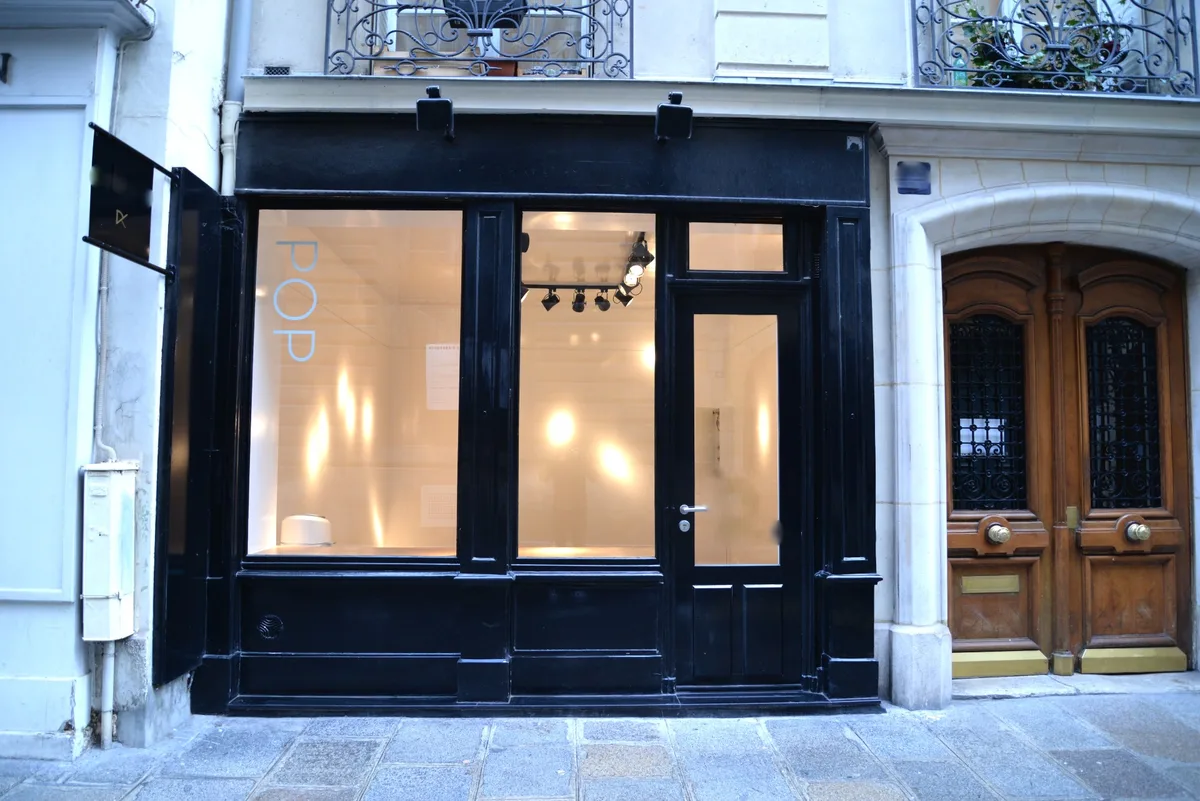
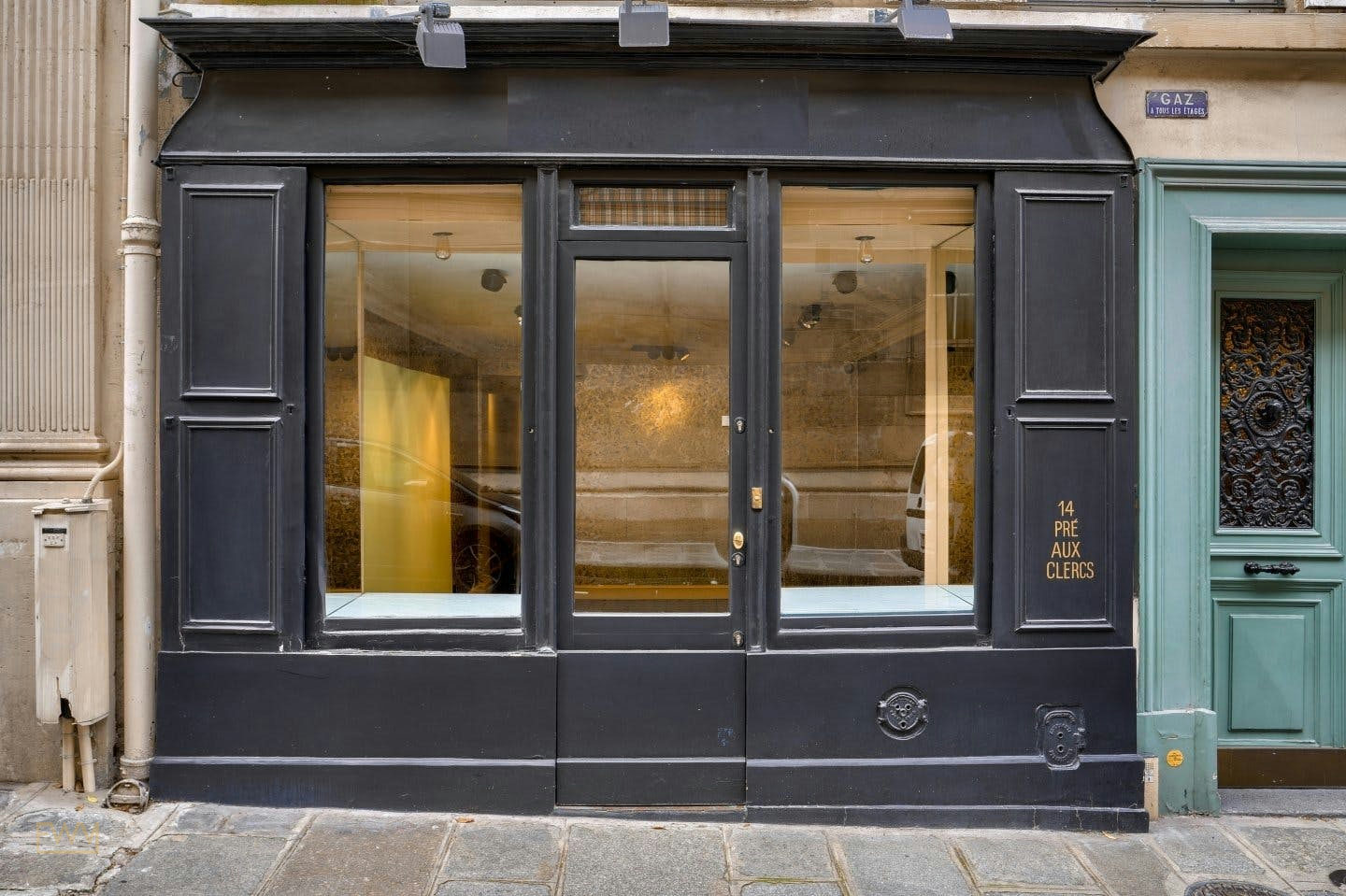
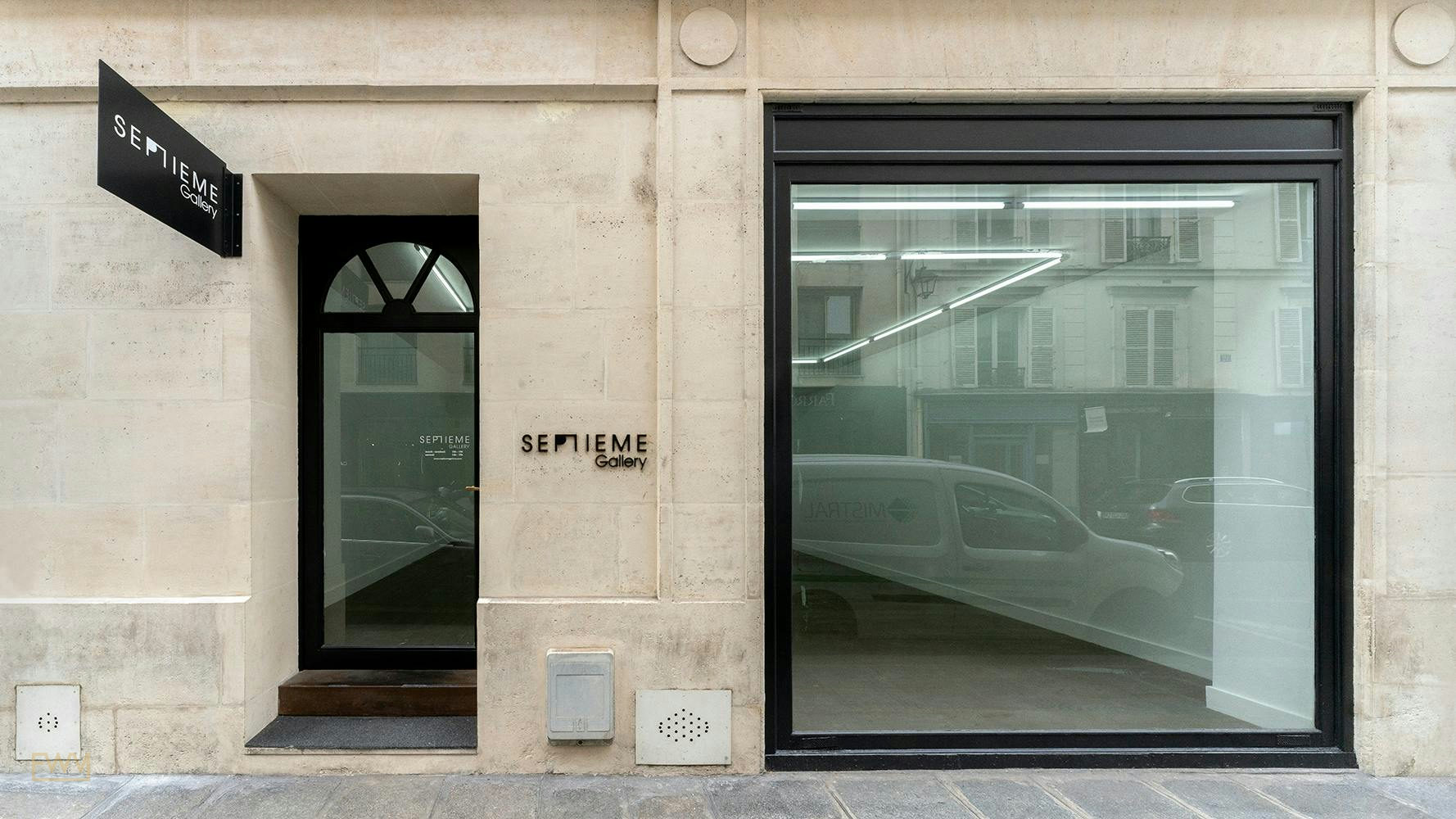
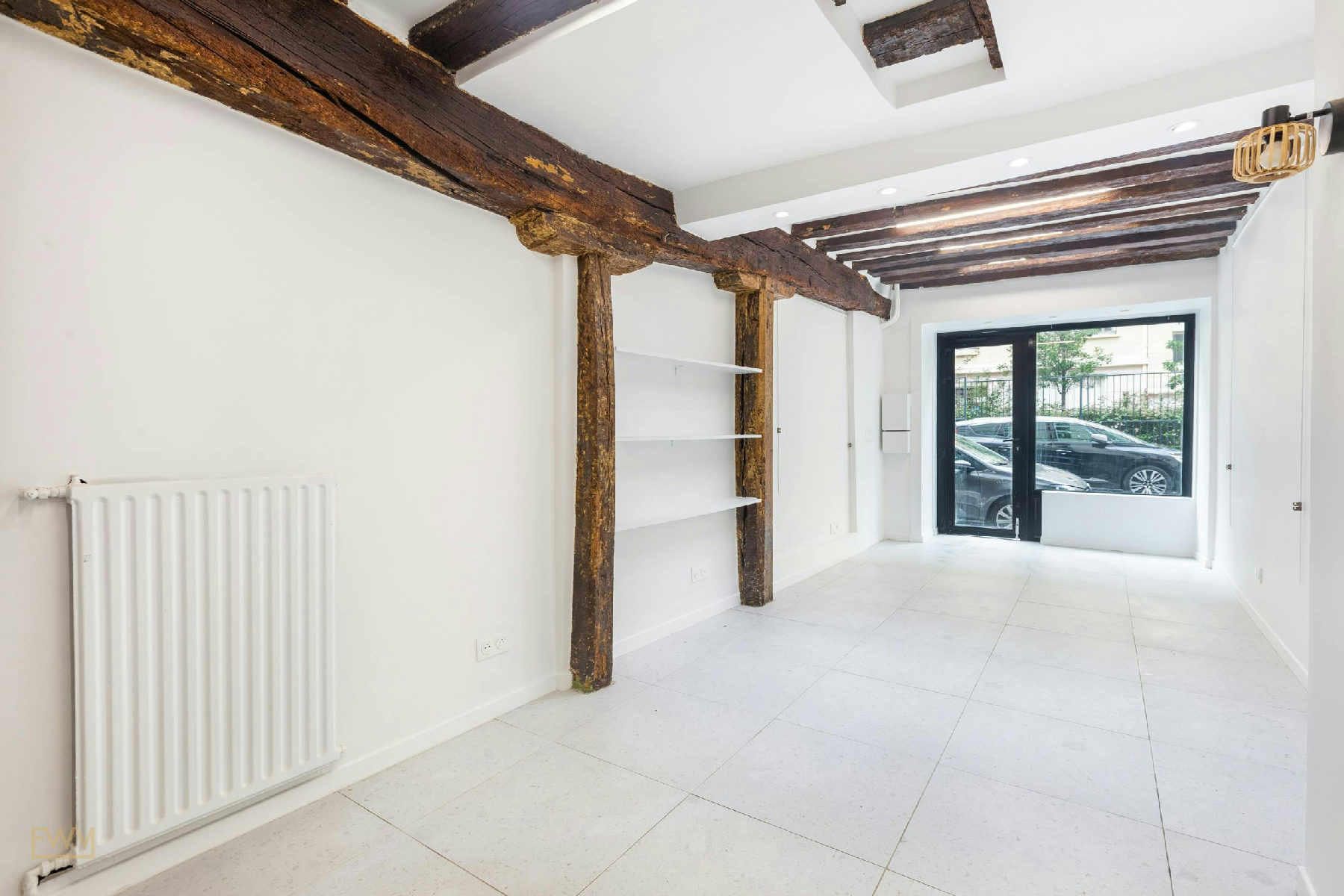
The traditional boutique storefront remains the most recognisable format for short-term retail in Paris. These are ground-floor street-facing units with display windows, customer-facing floor plans, and established retail infrastructure including lighting, fitting rooms in some cases, and basic electrical capacity. Boutique storefronts are well suited to brands that want to create an immersive retail experience, sell product directly to consumers, and build brand recognition through window display on a commercial street. Polished concrete floors, spotlights, and clean white walls are common in spaces marketed to contemporary and luxury brands. Raw concrete floors and exposed structural elements suit more directional or streetwear-adjacent concepts.
Art Gallery and Gallery-Format Spaces
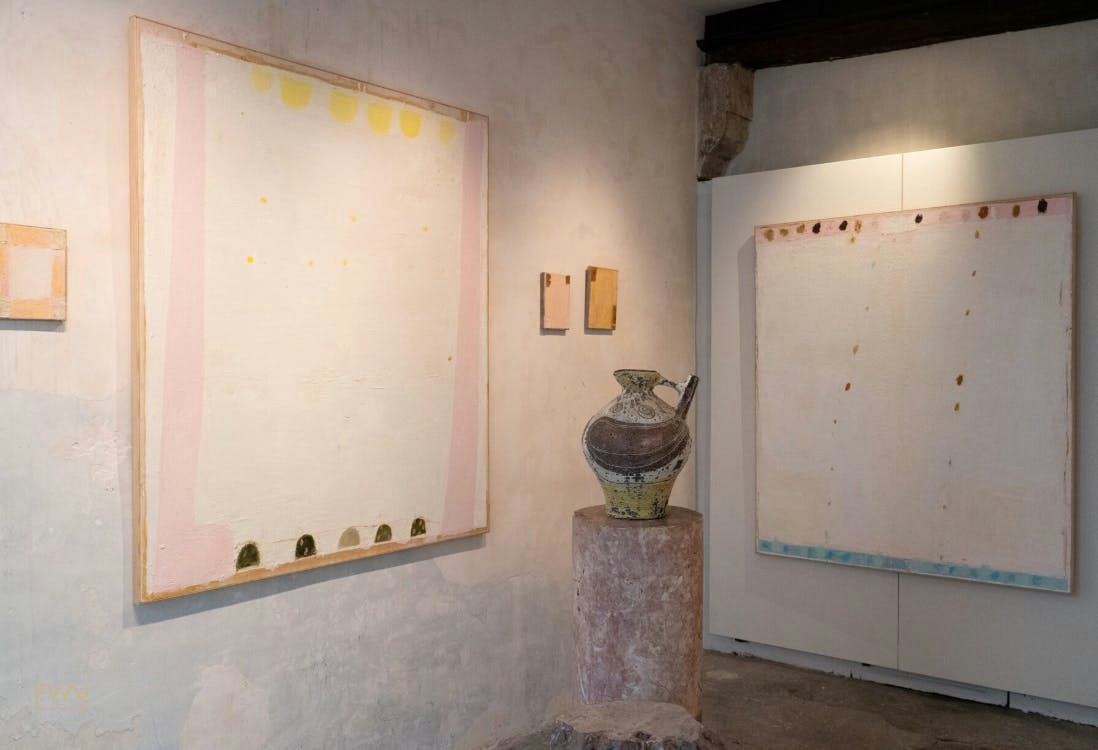
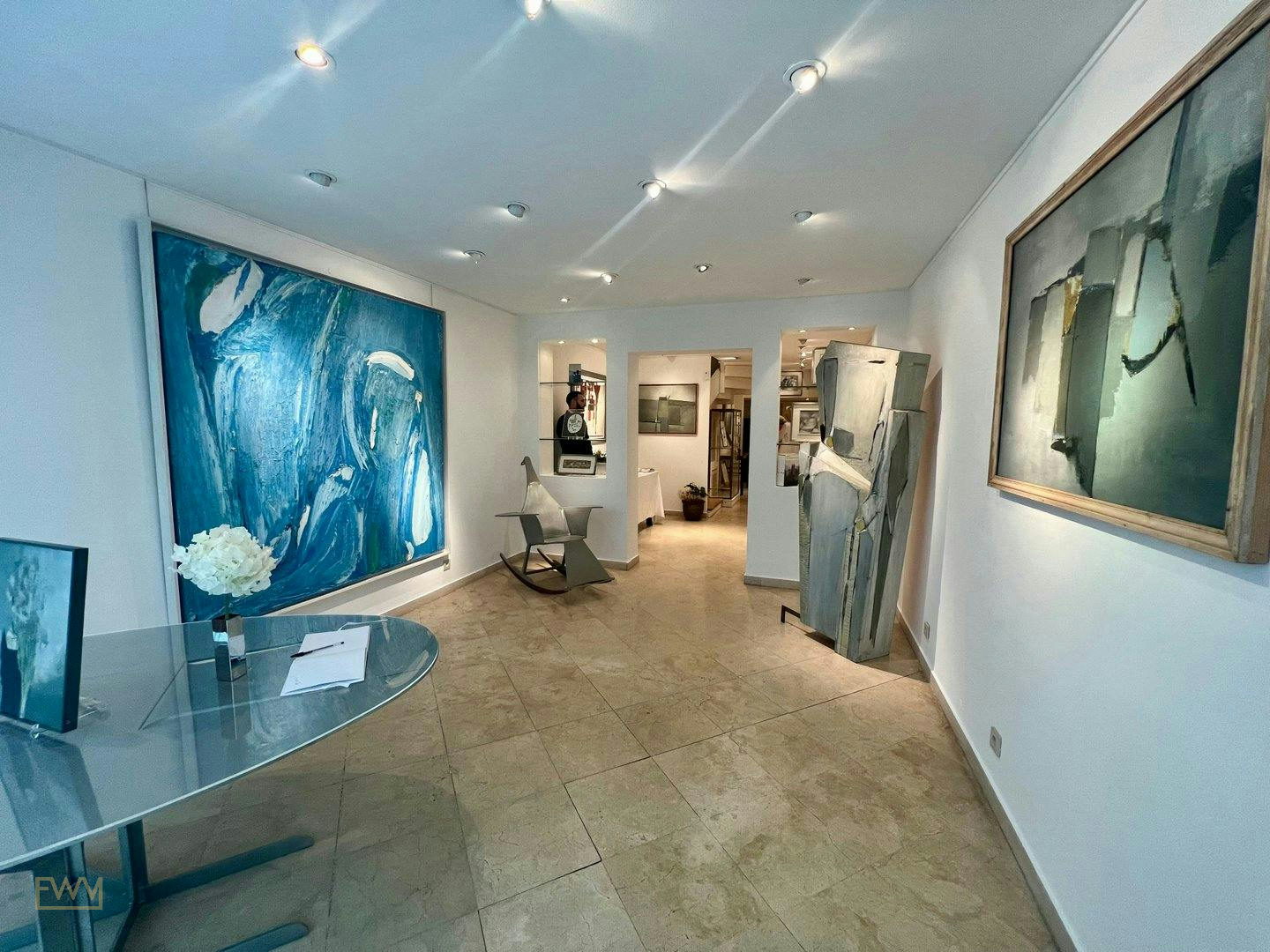
Art gallery spaces are among the most sought-after formats for fashion brand activations in Paris. These spaces typically offer high ceilings, excellent natural or controlled artificial lighting, polished or raw concrete floors, and a neutral aesthetic that allows brands to build immersive visual environments without fighting against the architecture. Gallery spaces are particularly effective for brands that want to blur the boundary between retail and cultural experience, which is a defining characteristic of the most memorable Paris Fashion Week activations. Le Marais has the highest concentration of gallery-format spaces available for short-term rental in the city.
Fashion Showrooms
Fashion showrooms are spaces specifically configured for trade presentations, press appointments, and buyer meetings. They are distinct from consumer-facing retail in that they prioritise flexible layout, privacy, and appointment-based access over high street footfall. A fashion showroom rental in Paris is typically used during Fashion Week itself, when brands need a professional environment to present collections to international buyers, editors, and stylists. These spaces range from apartment-format showrooms in prestigious buildings in the 1st, 6th, and 8th arrondissements to purpose-designed multi-brand showroom complexes in areas like the Marais or near the Place du Palais-Royal.
Studio and Photo Studio Spaces
Paris also has a strong market for studio spaces that function as hybrid retail, content creation, and event environments. A studio photo format is increasingly sought after by beauty brands, accessories labels, and lifestyle brands that want to combine a retail presence with the ability to shoot content in situ, host press days, and create shareable social media moments within the same physical space.
Raw and Conversion Spaces
Raw industrial spaces, former workshops, converted warehouses, and basement volumes are available in neighbourhoods including Pigalle, the 10th and 11th arrondissements, and parts of the 13th. These spaces require more significant fit-out investment but offer creative freedom that finished retail units cannot match. They are most commonly used by brands with strong design teams, production budgets, and a brand identity that benefits from an unconventional physical environment.
TIP: When evaluating a space, assess the lighting quality, ceiling height, floor condition, and electrical capacity before committing. Polished concrete floors and spotlights are versatile and suit most contemporary retail concepts, but raw concrete floors or unusual ceiling structures can require significant investment to work effectively as a branded boutique.
KEY TAKEAWAY: The format of your boutique space should be determined by your activation concept, your target visitor experience, and your production budget. A gallery in Le Marais, a showroom apartment near Place Vendôme, and a raw studio in Pigalle will produce very different brand experiences and require different levels of investment to execute well.
Once you have clarity on your space type, the next critical area to understand is the legal and permit landscape for short-term boutique rentals in Paris.
Permits, Leases, and Legal Requirements for Renting a Boutique in Paris
Quick answer: Short-term boutique rentals in Paris are typically structured as a bail dérogatoire, a convention d'occupation précaire, or an autorisation d'occupation temporaire, depending on the space type, duration, and property ownership. Each structure carries different legal obligations, and requirements vary by arrondissement, space type, and intended use. Always verify with a qualified French legal advisor.
The legal framework for renting commercial retail space in France is materially different from the UK, US, and most other international markets. Understanding the relevant lease structures and permit requirements before signing any agreement is essential to protecting your brand and your activation investment.
The Bail Dérogatoire
The bail dérogatoire, sometimes called a convention d'occupation précaire in informal usage though these are technically distinct instruments, is a short-term commercial lease that allows a property to be rented for retail or commercial purposes for a defined period, typically between one month and 36 months, without triggering the protections of the standard French commercial lease statute known as the bail commercial. For brands seeking a boutique for rent in Paris on a temporary basis, the bail dérogatoire is the most commonly used legal structure. It provides flexibility for both landlord and tenant, and it is specifically designed for situations where neither party intends to establish a permanent commercial tenancy. Requirements and specific terms vary significantly depending on the property, the landlord, and the intended use, so independent legal review is strongly recommended before execution.
Autorisation d'Occupation Temporaire
For spaces owned by public bodies, the City of Paris, or certain heritage institutions, an autorisation d'occupation temporaire or AOT may be the relevant instrument. AOTs are permits that grant temporary use of publicly owned property for commercial purposes, and they are subject to specific conditions, fees, and duration limits set by the relevant authority. AOTs are not standard commercial leases and do not confer the same rights or protections. They are also subject to revocation under defined circumstances. Brands considering public-domain spaces, historic landmarks, or spaces within municipally managed buildings should be aware of this framework and seek specialist advice accordingly.
Insurance and Operational Compliance
Beyond the lease structure itself, brands renting a boutique in Paris are responsible for obtaining appropriate insurance coverage for the space, the stock, and public liability. French property and liability insurance requirements differ from other markets, and standard international business insurance policies may not provide adequate coverage for a French retail operation. Insurance requirements should be clarified with the landlord and reviewed with a broker familiar with French commercial property before the space is accessed. Operational compliance requirements including fire safety, accessibility, and permitted retail hours vary by space type and arrondissement. Paris retail regulations can be locally specific, and what is permitted in one arrondissement may require additional authorisation in another.
IMPORTANT: Do not assume that signing a short-term rental agreement means you are fully compliant to trade. Depending on your space type, location, and intended use, you may need additional permits, notifications, or authorisations from local authorities. Requirements vary and change over time. Verify all requirements with a qualified French legal advisor before signing any agreement or beginning fit-out work.
For directional permit guidance specific to pop-up and short-term retail activations in Paris, the permit guidance tool on Fashion Week Venues provides a structured starting point for understanding the documentation and authorisation landscape before you engage legal counsel.
KEY TAKEAWAY: Short-term boutique rentals in Paris are not legally straightforward, even for brands with experience in other markets. The bail dérogatoire provides a workable structure for most temporary retail use cases, but the specific terms, insurance requirements, and operational compliance obligations always require case-by-case verification with a specialist in French commercial property law.
The permit and legal dimension is closely connected to the financial planning process. Budget planning for a Paris boutique rental must account for legal costs, insurance, fit-out, staffing, and activation management in addition to the base rental cost of the space itself.
Budget Planning for a Short-Term Boutique Rental in Paris
Quick answer: The total cost of renting a boutique in Paris on a short-term basis includes the space rental fee, fit-out and production costs, insurance, staffing, permit and legal fees, marketing and influencer activation, and any platform or agency fees. Rental rates vary significantly by neighbourhood, space type, square meters, and duration. Use a structured budget model to plan accurately before committing.
Budget planning is one of the most frequently underestimated aspects of a Paris boutique activation. Brands often focus on the headline rental cost and underestimate the cumulative investment required across all the operational categories that determine whether an activation succeeds or fails.
Space Rental Costs
Rental costs for short-term boutique spaces in Paris vary enormously by neighbourhood, space type, size in square meters, and duration. A small boutique or gallery space of 40 to 80 square meters in Le Marais or Saint-Germain-des-Prés will typically command a meaningfully higher daily or weekly rate than a comparable space in Pigalle or Montmartre. Prime addresses in the Golden Triangle or near Place Vendôme carry premiums that reflect both the address value and the scarcity of available short-term inventory. During Paris Fashion Week, demand for short-term boutique and showroom space in all premium neighbourhoods intensifies significantly, and rental rates reflect that demand pressure. It would be misleading to quote fixed rental ranges here as a planning tool, because actual rates depend on too many variables to generalise meaningfully. For brand-specific budget estimation, the budget calculator on Fashion Week Venues allows you to model costs based on your target neighbourhood, space type, size, and duration.
Fit-Out, Production, and Merchandising Costs
Beyond the rental fee, fit-out and production costs are typically the largest single expenditure category for a boutique activation in Paris. Transforming a raw or neutral space into a fully branded retail environment requires design, construction, furniture, lighting, signage, merchandising fixtures, and sometimes temporary architectural elements. The scale of this investment depends on the space's existing condition, the brand's design ambitions, and the duration of the activation. A longer activation period spreads the fit-out cost across more trading days, improving the cost-per-day economics. Furniture rental, which is available as a standalone service, can reduce upfront investment significantly compared to purchasing or custom-fabricating all retail fixtures.
Staffing, POS, and Operational Costs
A retail boutique in Paris requires sales staff who speak French and ideally at least one additional language relevant to the brand's target international customer. Staffing costs in Paris are governed by French labour law, which includes mandatory social contributions on top of gross salary costs. Point-of-sale systems, payment processing, and stock management technology add further operational costs that should be budgeted before launch. These are not optional extras. A boutique without proper POS and payment infrastructure will lose sales and fail to capture the customer data that makes temporary retail commercially valuable beyond its immediate revenue.
Marketing, Influencer Activation, and Social Media
Generating awareness of a temporary boutique in Paris requires a coordinated marketing effort across social media, influencer partnerships, press outreach, email, and potentially event programming. Influencer marketing in Paris has a well-established ecosystem with creators who specialise in fashion, beauty, lifestyle, and luxury. Budgeting for at least a minimum viable influencer and social media activation is essential for any brand that wants its boutique to attract customers beyond its existing audience.
| Cost Category | Key Variables | Planning Notes |
|---|---|---|
| Space rental | Neighbourhood, size, duration, season | Use budget calculator for estimates; rates vary significantly |
| Fit-out and production | Space condition, design ambition, duration | Largest single cost after rent; plan early |
| Furniture rental | Quantity, style, duration | Reduces upfront investment vs purchase |
| Staffing | Hours, language skills, French labour law | Include social contributions in budget |
| POS and payments | Sales volume, currencies, system complexity | Essential operational infrastructure |
| Insurance | Space size, stock value, liability exposure | French-specific policy required |
| Legal and permit fees | Lease type, space category, duration | Non-negotiable; budget from the start |
| Marketing and influencer | Audience size, platform mix, event scale | Critical for driving footfall to the boutique |
| Agency management fee | Service scope, complexity, duration | Specialist support reduces risk and saves time |
KEY TAKEAWAY: The rental rate for a Paris boutique space is only one component of the total activation budget. Brands that plan only for the headline rent and discover the full cost structure after committing to a space consistently overspend and underdeliver on their activation objectives.
Planning your budget alongside your timeline is equally important, because the sequence in which decisions and bookings happen determines whether your boutique opens on schedule and within budget.
The Paris Fashion Week Calendar and Seasonal Planning for Boutique Rentals
Quick answer: Paris has multiple high-value retail activation windows throughout the year, with Paris Fashion Week being the most concentrated. Planning your boutique rental around the right calendar window requires understanding the specific week, the relevant press and buyer audiences in town during that period, and the lead time required to secure the best spaces in your target neighbourhood.
Paris Fashion Week is not a single event but a cluster of overlapping schedule events across womenswear, menswear, haute couture, and resort, spread across January, February, June, and September. Each Fashion Week period brings a distinct audience of press, buyers, stylists, influencers, and brand-adjacent consumers to the city, and the demand for temporary boutique and showroom space during these windows is intense. Brands that leave space sourcing until six to eight weeks before a Fashion Week opening regularly find that the best spaces in Le Marais, Saint-Germain-des-Prés, and the Golden Triangle have already been reserved.
Fashion Week Periods and Audience Profiles
January and February bring the menswear and haute couture seasons followed by womenswear, with a significant concentration of international fashion press, buyers, and high-profile guests in Paris. September's womenswear Fashion Week is the largest and most internationally attended, making it the most competitive period for space rental and the highest-stakes window for brand activations. June brings menswear and resort, with a somewhat different audience profile but still significant international attendance. Outside the formal Fashion Week calendar, events such as FIAC in October and Paris Design Week in September attract culturally engaged audiences that are well-matched to design-led and art-adjacent brand activations.
Non-Fashion Week Rental Windows
Not every brand's boutique rental strategy should be anchored to Fashion Week. The Paris tourist season from April through August brings sustained high foot traffic to retail neighbourhoods across the city, and the absence of Fashion Week competitive pressure during these months can mean better space availability, more negotiating flexibility on rental terms, and a customer base of international tourists with disposable income and appetite for brand discovery. Christmas and the end-of-year period in November and December also represents a high-footfall window for consumer-facing retail activations, with strong purchasing intent from both locals and visitors.
DID YOU KNOW: Brands that book Paris boutique and showroom spaces for Fashion Week more than four months in advance consistently report a wider choice of premium locations, more favourable rental terms, and more time to plan their fit-out and staffing to a higher standard.
The timeline planning tool on Fashion Week Venues helps brand teams map their activation schedule against the Paris fashion and retail calendar, from initial brief through to live trading and post-activation analysis.
KEY TAKEAWAY: Calendar timing is a strategic decision, not an administrative one. The right season for your Paris boutique rental depends on your target audience, your budget, your lead time, and your activation objectives. Fashion Week windows offer unmatched intensity of press and buyer attention, but non-Fashion Week periods often offer superior space availability and cost-effectiveness for consumer-facing retail.
Understanding the calendar brings you to one of the most important practical questions: how do you actually find and secure a short-term boutique space in Paris?
How to Find and Rent a Boutique Space in Paris: From Search to Signed Agreement
Quick answer: Finding a short-term boutique for rent in Paris requires using a specialist marketplace or agency, understanding the difference between consumer-facing platforms and professional commercial property databases, and following a structured process from brief through viewing, negotiation, legal review, and fit-out planning.
The process of finding and securing a short-term boutique space in Paris is more complex than using a general property platform such as LoopNet or CoStar, which are primarily designed for longer-term commercial real estate transactions rather than short-term retail activations. These platforms carry commercial real estate listings and investment properties, and while they may occasionally include short-term or flexible retail spaces, they are not optimised for the specific requirements of pop-up shop brands, fashion showrooms, or temporary retail activations. Platforms like Storefront have historically aggregated short-term retail listings in major cities including Paris, though the quality and currency of listings varies significantly.
Step One: Define Your Brief
Before beginning any space search, a brand team needs a clear and documented brief that covers target neighbourhood or arrondissements, minimum and maximum floor area in square meters, required space features such as display windows, ceiling height, floor type, loading access, and natural light, preferred lease duration and calendar dates, total available budget including fit-out and all associated costs, and the activation format that will take place in the space. Without this brief, space searches generate a confusing volume of options and negotiations that lead nowhere productive.
Step Two: Use a Specialist Marketplace or Agency
The most efficient route to securing a short-term boutique in Paris is through a specialist marketplace or full-service agency that has existing relationships with Paris landlords, understands the seasonal demand dynamics, and can access spaces that are not publicly listed. Specialist agencies can also filter spaces for permit eligibility, assess fit-out feasibility, and advise on neighbourhood suitability for a specific brand concept, saving significant time and money compared to a self-directed search using general property databases. The venue sourcing service at Fashion Week Venues covers the full Paris market across all major arrondissements and space types.
Step Three: View, Shortlist, and Compare
Once an initial list of candidate spaces has been identified, viewing is essential. Photography and floor plans do not convey the acoustic quality of a space, the actual quality of natural light at different times of day, the condition of floors and walls, the accessibility of the loading area, or the character of the surrounding street environment. Shortlisting requires assessing each space against the brief and comparing across multiple criteria including location, size, condition, rental cost, available dates, and fit-out requirements.
Step Four: Negotiate and Review the Agreement
Rental negotiations for short-term boutique spaces in Paris typically cover the total rental fee, the security deposit, the start and end dates, the permitted uses of the space, the conditions for fit-out and reinstatement, and any landlord-specific requirements around insurance, staffing, or operating hours. The rental agreement itself should be reviewed by a qualified French legal advisor before signing, regardless of how straightforward it appears. Short-term commercial lease structures in France carry specific legal implications that differ from other jurisdictions.
Step Five: Plan Fit-Out, Staffing, and Launch
Once the space is secured, the fit-out, staffing, POS setup, and marketing plan should be finalised in parallel. The lead time between signing and opening day is typically shorter for short-term retail than for permanent retail, which means that production, design, and procurement decisions need to be made quickly and executed without delays. A structured workflow with clear milestone dates reduces the risk of an opening that is delayed, incomplete, or under-invested.
| Stage | Activity | Typical Timeline Before Opening | Key Decision |
|---|---|---|---|
| 1. Brief | Define neighbourhood, size, dates, budget, format | 12+ weeks | Activation concept and objectives |
| 2. Search | Marketplace browse, agency brief, viewing shortlist | 10 to 12 weeks | Space type and arrondissement |
| 3. View and shortlist | In-person viewings, space comparison | 8 to 10 weeks | Final candidate spaces |
| 4. Negotiate and sign | Rental agreement, legal review, insurance | 6 to 8 weeks | Lease structure and legal compliance |
| 5. Design and production | Fit-out design, build, furniture, lighting | 4 to 6 weeks | Budget allocation and production schedule |
| 6. Staffing and POS | Recruit, train, install POS and payment systems | 2 to 4 weeks | Staffing model and sales infrastructure |
| 7. Marketing | Social media, influencer, press, email activation | 2 weeks and ongoing | Audience reach and footfall generation |
| 8. Launch and trade | Open, trade, gather data and customer feedback | Opening day | Operational management and performance tracking |
| 9. Close and reinstate | De-fit, reinstatement, data analysis | Post-activation | ROI assessment and learnings |
KEY TAKEAWAY: A structured, staged process from brief to launch is the single most important factor in delivering a Paris boutique activation on time, within budget, and to the standard that the city's competitive retail environment demands.
The next section addresses how Fashion Week Venues specifically supports brands through this process, from initial space discovery through to post-activation analysis.
How Fashion Week Venues Helps Brands Rent a Boutique in Paris
Fashion Week Venues is a full-service pop-up shop agency and space marketplace built specifically for the short-term retail needs of fashion brands, beauty labels, luxury houses, and international brands activating in major fashion capitals. Paris is the primary market, and the agency's experience spans every arrondissement, space type, and calendar window relevant to brands seeking a boutique for rent in Paris.
The agency offers end-to-end support across the full activation lifecycle. For brands at the discovery stage, the Fashion Week Venues marketplace provides access to curated short-term retail spaces across Paris's most in-demand neighbourhoods, with filtering by space type, size, arrondissement, and calendar availability. For brands that need strategic direction beyond space browsing, the agency's full-service model covers concept direction, production and build, branded store design, furniture rental, retail staffing, POS and payments, data and analytics, and influencer marketing as a coordinated offering rather than a collection of disconnected vendors.
Which Brand Teams Benefit Most
Fashion Week Venues is most valuable to brand teams that are activating in Paris for the first time and lack established local landlord relationships, to international brands entering the French market and unfamiliar with the legal and permit landscape, to creative directors and brand managers who need a full-service partner rather than a space-only transaction, and to brands with a defined activation budget that need to deploy it efficiently across all cost categories without managing multiple suppliers independently.
Tools That Support the Decision-Making Process
In addition to its service offering, Fashion Week Venues provides a suite of planning tools that are directly relevant to the Paris boutique rental process. The budget calculator helps brands model realistic total activation costs before committing to a space. The ROI calculator helps quantify the commercial return from a defined activation investment. The compare tool allows side-by-side evaluation of candidate spaces. The timeline tool maps the activation schedule against the Paris fashion calendar. The permits tool provides directional guidance on the legal and authorisation requirements for different space types and locations. The locator tool supports neighbourhood-level space discovery.
Understanding Limitations
Fashion Week Venues does not guarantee space availability, permit approval, or commercial outcomes. The marketplace and agency services are designed to significantly improve the probability of a successful activation, but the ultimate outcome depends on brand-side factors including the quality of the product, the investment in fit-out and marketing, and the operational management of the live retail environment. Legal and insurance matters always require verification with qualified French advisors regardless of any guidance provided by the agency's tools or team.
Brands that want to understand how the agency has supported previous activations in Paris and other fashion capitals can review the work and case studies section, which documents real brand activations across a range of formats, budgets, and objectives.
KEY TAKEAWAY: Fashion Week Venues reduces the complexity, risk, and time required to execute a Paris boutique activation by combining specialist space access with full-service operational support and a suite of planning tools designed specifically for short-term retail in major fashion capitals.
Real Estate Platforms, Listing Tools, and Searching for Boutique Space in Paris
Quick answer: General commercial real estate platforms such as LoopNet and CoStar are primarily built for longer-term lease transactions and investment property searches rather than short-term boutique rentals. Specialist short-term retail marketplaces and agency-curated space listings are better suited to brands seeking temporary boutique and pop-up space in Paris.
International brands often begin their Paris space search on familiar commercial property platforms. LoopNet and CoStar are well-known in the US and UK commercial real estate markets, offering listings that include retail spaces, office units, and investment properties. However, these platforms are structured around broker-professional workflows, longer-term lease transactions, and investment property due diligence rather than the fast-moving, short-term, activation-focused search process that a brand renting a boutique in Paris for two weeks to three months requires. The listing formats, search filters such as space type, floor and access, and space features, and the transaction support infrastructure on these platforms are not designed for the short-term retail use case.
Storefront has historically positioned itself as a short-term retail marketplace in major cities, aggregating listings across formats including storefronts, galleries, and event spaces. However, the quality and currency of listings, the depth of local market knowledge, and the level of activation support available through a pure marketplace model vary significantly and may not match the requirements of brands executing high-stakes Fashion Week or consumer-facing activations in Paris.
Saved search and listing alert functionality, regardless of which platform is used, is a useful tool for brands monitoring the Paris market over time. Setting up alerts for specific neighbourhoods, space types, and size ranges ensures that new listings are flagged as they become available, which is particularly valuable for brands planning ahead for a Fashion Week window when the most desirable spaces disappear quickly. The equivalent within Fashion Week Venues is the ability to browse filtered marketplace listings and engage directly with the agency team for spaces that match a defined brief.
TIP: Brands that rely solely on publicly listed spaces for their Paris boutique search are working from an incomplete picture of the market. Many of the most desirable short-term retail spaces in Le Marais, Saint-Germain-des-Prés, and the Golden Triangle are placed through agency relationships and are never publicly advertised. Building a relationship with a specialist agency that has existing landlord access is consistently more effective than a self-directed platform search for premium space in high-demand periods.
KEY TAKEAWAY: General commercial real estate platforms are not optimised for short-term boutique rental searches in Paris. Specialist marketplaces, curated agency listings, and direct landlord relationships provide superior access to the spaces most suited to Fashion Week and consumer-facing retail activations.
Merchandising, Store Design, and Visual Identity in a Paris Boutique
Quick answer: The physical presentation of a short-term boutique in Paris must reflect the brand's visual identity at the highest standard the activation budget allows. Parisian customers and press have a highly developed visual culture, and a poorly merchandised or carelessly designed temporary boutique will undermine brand positioning regardless of location or neighbourhood.
Paris has a visual culture unlike any other retail city. The standard of window display, interior merchandising, lighting design, and spatial composition in permanent boutiques across Le Marais, Saint-Germain-des-Prés, and the Golden Triangle is extremely high, and temporary retail spaces are assessed against that standard by every customer, journalist, and influencer who walks through the door. A boutique for rent in Paris that opens with a generic or under-invested visual identity will fail to generate the media, social, and word-of-mouth momentum that justifies the cost of the activation.
Lighting as a Brand Tool
Lighting is one of the most powerful and most frequently underestimated elements of a Paris boutique fit-out. Spotlights on key product displays, ambient lighting that creates warmth and atmosphere, and window lighting that makes the boutique visually compelling from the street after dark are all essential design decisions. Many short-term retail spaces in Paris come with basic fluorescent or LED ceiling lighting that is not suitable for luxury, fashion, or beauty retail without supplementation. Budgeting for a lighting upgrade as part of the fit-out is rarely optional for brands that care about the quality of their visual presentation.
Branded Store Design and Concept Direction
Branded store design for a temporary boutique in Paris should begin with the brand's existing visual identity and translate it into spatial and material terms appropriate to the specific space. The architectural character of the space, whether it features polished concrete floors, raw concrete walls, exposed stone, or ornate Haussmann plasterwork, should inform rather than fight the design concept. The best Paris boutique activations feel like they belong in their specific space, not like a generic retail template dropped into an arbitrary location.
Merchandising Strategy
Merchandising in a temporary boutique requires a clear product hierarchy, a logical customer journey through the space, and a density of product that is commercially effective without feeling cluttered. The Paris customer is accustomed to edited, considered retail environments where the product is presented with restraint and intention. Over-merchandised spaces with too much product density read as market-stall retail rather than boutique retail and damage brand positioning accordingly. The branded store design service at Fashion Week Venues covers spatial planning, merchandising strategy, and visual identity translation for Paris boutique activations.
KEY TAKEAWAY: Visual investment in a Paris boutique is not a cosmetic decision. It is a brand positioning decision that directly determines the quality of press coverage, social media content, and customer experience the activation generates. Under-investing in fit-out, lighting, and merchandising in a city with Paris's visual standards is a false economy.
Common Myths About Renting a Boutique in Paris
MYTH: You need a French legal entity to rent a short-term boutique space in Paris.
FACT: Many short-term boutique rentals in Paris are accessible to international companies without a French legal entity, particularly under bail dérogatoire or convention d'occupation précaire structures. However, the specific requirements vary by landlord, space type, and agreement structure. Some landlords do require a French guarantor or entity, and certain commercial lease types do have entity requirements. Always verify the specific requirements of each space with qualified French legal advice before assuming eligibility.
MYTH: Paris Fashion Week in September is the only valuable calendar window for a boutique activation.
FACT: While September womenswear Fashion Week is the most internationally attended period, Paris offers multiple high-value activation windows throughout the year, including January and February Fashion Weeks, FIAC in October, Paris Design Week in September, the summer tourist peak from June through August, and the Christmas retail season in November and December. The right window depends entirely on the brand's target audience, activation format, and commercial objectives. Non-Fashion Week periods often offer superior space availability and more competitive rental terms for consumer-facing retail.
MYTH: Commission brokers are the only way to access short-term boutique spaces in Paris.
FACT: Commission brokers operating in the Paris commercial property market are primarily focused on longer-term lease transactions and investment property sales. Specialist short-term retail marketplaces, full-service pop-up agencies, and direct landlord relationships are consistently more effective and often more cost-efficient routes to short-term boutique space in Paris, particularly for international brands unfamiliar with the local market. Broker-only access is a common misconception that leads brands to over-invest in transaction costs relative to the value received.
MYTH: Short-term retail leases in Paris are legally straightforward and can be signed without specialist review.
FACT: Short-term commercial leases in France, including the bail dérogatoire and related instruments, carry specific legal obligations, restrictions, and implications that differ significantly from lease structures in the UK, US, and other international markets. Signing a French short-term retail lease without independent legal review from a qualified French commercial property lawyer exposes brands to potentially significant financial and operational risk. Requirements vary by space type, arrondissement, duration, and intended use, and the consequences of non-compliance can include loss of deposit, forced early closure, or legal liability.
MYTH: A short-term boutique in Paris will generate commercial returns primarily from in-store sales revenue.
FACT: The commercial value of a Paris boutique activation extends well beyond in-store sales. Brand awareness, press and editorial coverage, social media content, influencer reach, new customer data acquisition, market testing, and the long-term positioning benefit of a Paris presence all contribute to the total return on investment. Brands that evaluate a Paris boutique activation solely on in-store revenue consistently undervalue the full commercial return and make suboptimal decisions about budget allocation as a result.
Frequently Asked Questions About Renting a Boutique in Paris
What is a pop-up store and how does it differ from a permanent boutique?
A pop-up store is a temporary retail space that operates for a defined period, typically ranging from a few days to several months, before closing or moving to a new location. Unlike a permanent boutique, a pop-up store does not require a long-term commercial lease and is typically structured under a short-term rental agreement such as a bail dérogatoire. Pop-up stores in Paris are used for brand launches, product introductions, Fashion Week showrooms, market testing, and creating limited-availability experiences that drive customer urgency and social media attention. They are increasingly central to how fashion, beauty, and lifestyle brands build presence in major cities without the capital commitment of permanent retail.
How much does it cost to rent a boutique space in Paris?
The cost of renting a boutique space in Paris on a short-term basis varies significantly by neighbourhood, size in square meters, space condition, duration, and season. Spaces in prime areas such as Le Marais, Saint-Germain-des-Prés, or near Place Vendôme during Fashion Week command significantly higher rates than comparable spaces in less central neighbourhoods or outside peak season periods. Publishing fixed price ranges would be misleading given this variability. The budget calculator on Fashion Week Venues allows brands to model realistic cost estimates based on their specific target parameters, and using this tool before beginning a space search provides a meaningful planning baseline.
What are the most sought-after locations for renting commercial boutique space in Paris?
The most sought-after locations for short-term boutique rental in Paris are consistently Le Marais, particularly the 3rd and 4th arrondissements around Rue des Francs-Bourgeois and Place des Vosges, Saint-Germain-des-Prés in the 6th arrondissement, the Golden Triangle around Avenue Montaigne and Rue du Faubourg Saint-Honoré, and areas adjacent to Place Vendôme. Pigalle and South Pigalle have become increasingly sought-after for fashion-adjacent and streetwear brands. Each of these areas has a distinct customer profile and brand positioning implication that should be evaluated against the brand's specific activation objectives.
Can international brands without a French company rent a boutique in Paris?
Many short-term boutique rentals in Paris are accessible to international brands without a French legal entity, but this depends on the specific landlord, space type, and rental structure. Some landlords require a French company or guarantor, particularly for longer short-term durations or for spaces in premium locations. Others are willing to contract with international entities under appropriate rental agreements. The requirements vary on a case-by-case basis, and it is essential to clarify the landlord's requirements before investing time in negotiations. A qualified French legal advisor can provide guidance specific to your situation and the intended lease structure.
What is a bail dérogatoire and why does it matter for boutique rentals?
A bail dérogatoire is a short-term French commercial lease structure that allows property to be rented for commercial purposes for a defined period without triggering the protections and obligations of the standard French commercial lease, known as the bail commercial. For brands renting a boutique in Paris on a temporary basis, the bail dérogatoire provides the flexibility to operate for weeks or months without committing to the long-term obligations that a standard commercial lease would impose. It is the most commonly used legal structure for short-term retail and showroom rentals in Paris, but its specific terms, obligations, and eligibility criteria vary by case and should always be reviewed by qualified French legal counsel before signing.
How far in advance should I book a boutique space for Paris Fashion Week?
Brands targeting boutique or showroom space for Paris Fashion Week in September or February should aim to begin their space search at least four to six months in advance. The most desirable spaces in Le Marais, Saint-Germain-des-Prés, and the Golden Triangle are typically reserved by early bookers, and late-stage searches for premium Fashion Week space in Paris frequently result in either unavailability or significantly higher rental rates due to demand pressure. Starting earlier also gives brand teams more time to plan fit-out, staffing, and marketing to a higher standard, which directly improves activation outcomes.
What permits do I need to operate a retail boutique in Paris?
The permits required to operate a retail boutique in Paris on a short-term basis depend on the space type, the intended use, the duration, and the arrondissement. For most short-term retail activations in privately owned spaces under a bail dérogatoire, no separate retail operating permit is required beyond the rental agreement itself. However, specific activities, including serving food or drink, hosting events, displaying outdoor signage, or operating in spaces with heritage or public-domain status, may require additional authorisations from local authorities. Requirements vary and should be verified with a qualified French legal advisor and through the permit guidance tool available on Fashion Week Venues.
Are pop-up stores common in Paris?
Pop-up stores are extremely common in Paris and have been a defining feature of the city's retail landscape for more than two decades. Paris's combination of global fashion authority, high tourist volumes, a mature short-term lease market, and a culture of brand experience has made it one of the world's most active cities for temporary retail activations. Every major Paris neighbourhood has established infrastructure for short-term retail, and both landlords and local consumers have a high level of familiarity with and appetite for pop-up boutique concepts. During Fashion Week, the concentration of temporary retail activations across Le Marais, Saint-Germain-des-Prés, and the Golden Triangle is particularly dense.
What is the difference between a boutique showroom and a consumer-facing pop-up in Paris?
A boutique showroom in Paris is primarily designed for trade appointments, press visits, and buyer presentations rather than open public retail. Access is typically by appointment, and the space layout prioritises product presentation and private client experience over commercial floor plan optimisation. A consumer-facing pop-up, by contrast, is open to the general public during defined trading hours, optimised for foot traffic conversion, and typically accompanied by more active marketing and social media promotion. Many brands run hybrid activations that combine a daytime showroom function with evening consumer or press events within the same space, which can improve the commercial efficiency of the rental investment.
How do I choose between Le Marais and Saint-Germain-des-Prés for my boutique?
The choice between Le Marais and Saint-Germain-des-Prés depends on your brand positioning, your target customer, and the type of space you need. Le Marais attracts a younger, more fashion-forward and internationally mixed customer, offers a wider range of space types including gallery conversions and courtyard spaces, and has a denser concentration of independent retail and cultural references. Saint-Germain-des-Prés has a more affluent, design-literate, and local Parisian character, with a higher proportion of heritage luxury and premium lifestyle brand neighbours. Le Marais tends to be more accessible for emerging and contemporary brands, while Saint-Germain-des-Prés suits brands with established premium positioning and a customer who responds to its intellectual and aesthetic heritage.
What should I look for when viewing a short-term boutique space in Paris?
When viewing a short-term boutique space in Paris, assess the quality and character of natural light at the time of day when the boutique will trade most actively. Evaluate the floor condition, whether polished concrete, raw concrete, wood, or tile, in terms of its compatibility with your brand aesthetic and the cost of any required treatment. Check the electrical capacity and existing lighting infrastructure, particularly spotlights and ambient fittings. Assess the accessibility of the space for deliveries and fit-out logistics. Consider the street character immediately outside and the surrounding tenant mix. Examine the condition of the display window and its visibility from both directions of pedestrian flow. Note the ceiling height and any structural constraints that might affect your fit-out design.
Can I use Fashion Week Venues if I only need help with space finding, not full-service management?
Yes. Fashion Week Venues offers both a marketplace for direct space discovery and browsing, and a full-service agency model for brands that need end-to-end support. Brands that have strong internal activation capabilities but lack Paris-specific space access and landlord relationships can use the marketplace and venue sourcing service without engaging the full production and management offer. Brands that need comprehensive support from concept through to live trading and post-activation analysis can access the full suite of services. The agency works with brand teams at whatever point in the activation journey is most useful, rather than requiring a fixed all-or-nothing engagement.
What is the role of influencer marketing in a Paris boutique activation?
Influencer marketing plays a significant role in generating awareness and footfall for short-term boutique activations in Paris, particularly during Fashion Week when the city has an unusually high concentration of international fashion and lifestyle creators. A well-executed influencer strategy for a Paris boutique typically involves a combination of pre-opening content to build anticipation, opening-day event coverage, in-store visit content from relevant creators, and ongoing social media amplification throughout the activation period. Paris has a mature and well-connected influencer ecosystem across fashion, beauty, and lifestyle verticals, and working with creators who have authentic Parisian audiences consistently outperforms approaches that import entirely non-French creator audiences for a Paris-based activation.
How do I calculate the ROI of a Paris boutique activation?
Calculating the return on investment of a Paris boutique activation requires a model that accounts for both direct commercial returns, including in-store revenue and wholesale orders generated, and indirect commercial value, including brand awareness generated, press and editorial coverage, social media reach and engagement, new customer data acquired, and the long-term positioning benefit of a credible Paris presence. Attributing a commercial value to indirect returns requires assumptions, but ignoring them entirely produces a systematically undervalued ROI assessment that leads to poor activation investment decisions. The ROI calculator on Fashion Week Venues is designed to help brand teams build a structured model that captures both direct and indirect commercial returns from a defined Paris activation budget.
What is the difference between renting a boutique through an agency and using a self-service listing platform?
Renting a boutique through a specialist agency provides access to unlisted spaces, professional guidance on permit and legal requirements, negotiation support with landlords, and the option to engage additional services including fit-out, staffing, and marketing through a single coordinated partner. Self-service listing platforms provide access to publicly listed spaces with varying levels of quality assurance and transaction support. For brands with strong Paris market knowledge, an established legal advisor, and internal activation capabilities, a self-service platform may be sufficient. For brands entering Paris for the first time or seeking premium spaces in high-demand periods, an agency relationship typically delivers better space access, lower risk, and higher activation quality relative to a self-directed platform search.
Conclusion: Planning Your Paris Boutique Rental with Confidence
Renting a boutique in Paris is one of the most commercially and culturally significant decisions a fashion, beauty, or lifestyle brand can make. The city rewards brands that approach it with preparation, strategic clarity, and a commitment to quality across every dimension of the activation, from neighbourhood selection and space type through to permit compliance, fit-out design, staffing, and marketing. Brands that treat Paris as a straightforward property transaction consistently underperform relative to those that engage with the full complexity of the opportunity.
The key principles that determine success in the Paris short-term boutique market are consistent across brand size and activation budget. Start your search and planning process early, particularly for Fashion Week periods. Choose your neighbourhood based on brand positioning and target customer, not just on name recognition. Understand the legal structure of your lease before signing. Plan your total budget across all cost categories, not just the headline rent. Invest in the quality of your visual presentation to the standard that Paris expects. And measure your activation's return across the full spectrum of commercial value it generates, not just in-store sales.
Fashion Week Venues provides the specialist market access, service infrastructure, and planning tools to support each of these priorities for brands at every stage of their Paris journey, from first exploration through to repeat activation. The agency's experience across all major Paris arrondissements, space types, and Fashion Week calendar windows means that brand teams can move from brief to live boutique more efficiently and with greater confidence than a self-directed search allows.
To move from research to activation, start exploring available spaces on the Fashion Week Venues marketplace and build a focused brief for your target neighbourhood, space type, and calendar window.