Finding the right commercial space for rent in Paris is one of the most consequential decisions a fashion brand, beauty label, or luxury retailer will make before entering one of the world's most competitive retail markets. Paris is not simply a geography — it is a statement of intent. The arrondissement you choose, the space type you select, and the lease structure you negotiate all communicate something to your target clientele before a single product is displayed. Fashion Week Venues is a full-service pop-up shop agency and space marketplace that helps international brands source, activate, and manage commercial space in Paris and other major fashion capitals, removing the complexity that often derails otherwise strong concepts.
This guide covers every dimension of renting commercial space in Paris: the most sought-after neighbourhoods, space types and features, lease structures, permits, digital platforms, budget considerations, and how to build a practical activation strategy around the Paris Fashion Week calendar.
What Counts as Commercial Space in Paris and Why the Definition Matters
Quick answer: Commercial space in Paris includes retail storefronts, fashion showrooms, pop-up venues, gallery spaces, studio spaces, and short-term event venues. The legal classification of each space type determines which permit regime, lease structure, and regulatory framework applies — so understanding the distinction before signing anything is essential for brands operating in France.
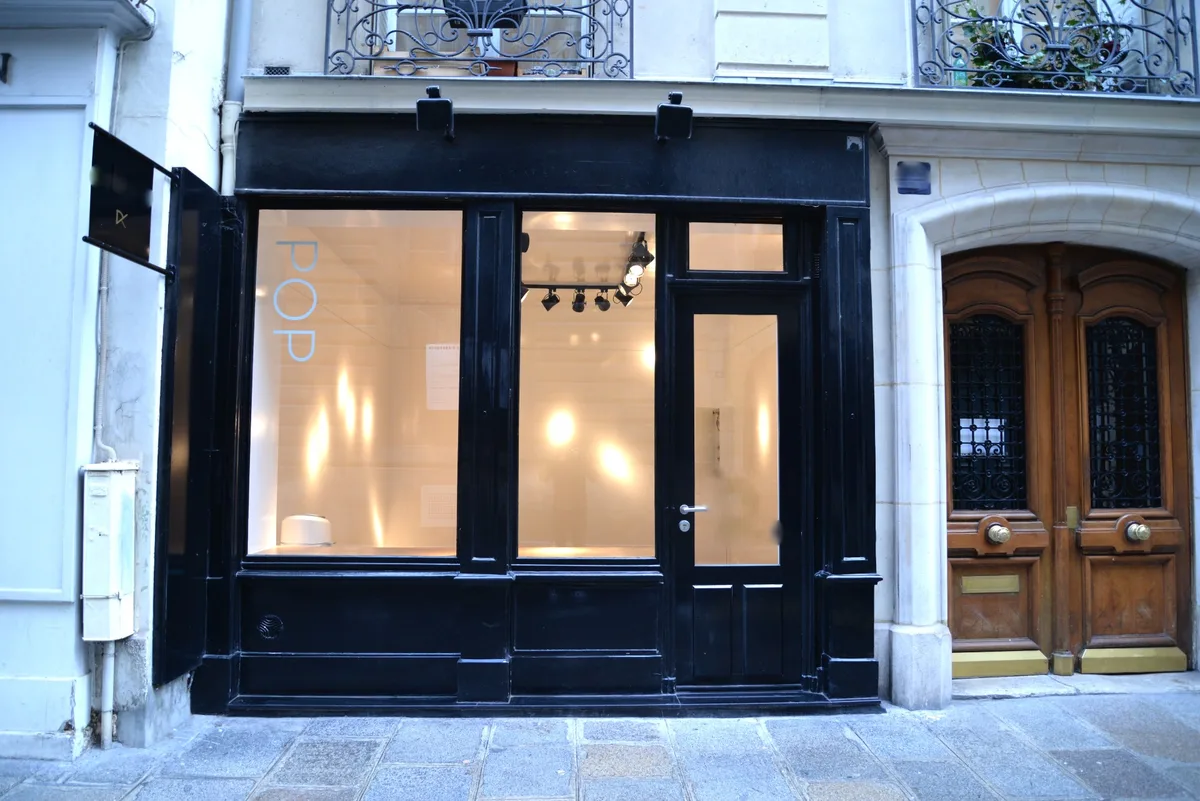
The term commercial space covers a wider spectrum than most international brands initially expect. In Paris, you will encounter dedicated retail storefronts on high-footfall streets, converted gallery spaces in the Marais, private apartments adapted for showroom use, photograph studios doubling as product launch venues, and flagship boutique spaces on Avenue des Champs-Elysées. Each has a distinct legal classification in French property law, and that classification determines your obligations as a tenant.
At the short-term end of the market, many brands rent spaces under a bail dérogatoire, a derogatory lease that allows commercial occupation for a defined period without triggering the long-term protections of a standard French commercial lease. This structure is common for pop-up stores, seasonal showrooms, and Fashion Week activations. Separately, when renting public or semi-public spaces — a plaza near Place Vendôme, a passage, or a publicly-owned cultural venue — brands may need an Autorisation d'Occupation Temporaire, commonly known as an AOT, which is a formal administrative authorisation for temporary occupation of a public space.
For brands entering Paris for the first time, the distinction between a standard commercial lease and a short-term arrangement is critical. A standard French commercial lease, known as a bail commercial, typically runs for nine years with mandatory three-year review points. Most international brands arriving for a seasonal activation, a Fashion Week pop-up store, or a short-term showroom do not want that commitment. The bail dérogatoire was specifically created to allow shorter arrangements, but it must be structured correctly to avoid inadvertently triggering the protections of the longer lease format.
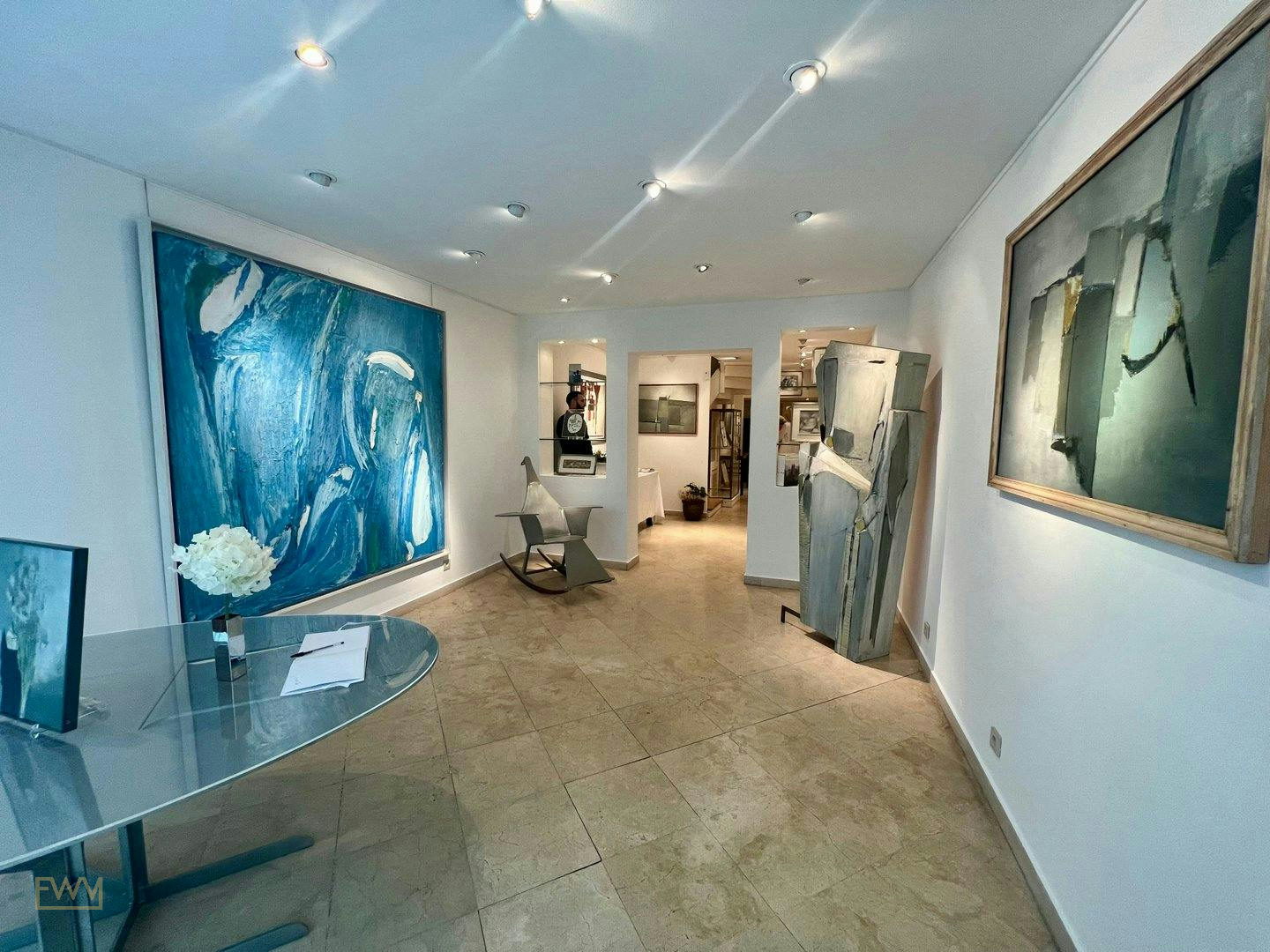
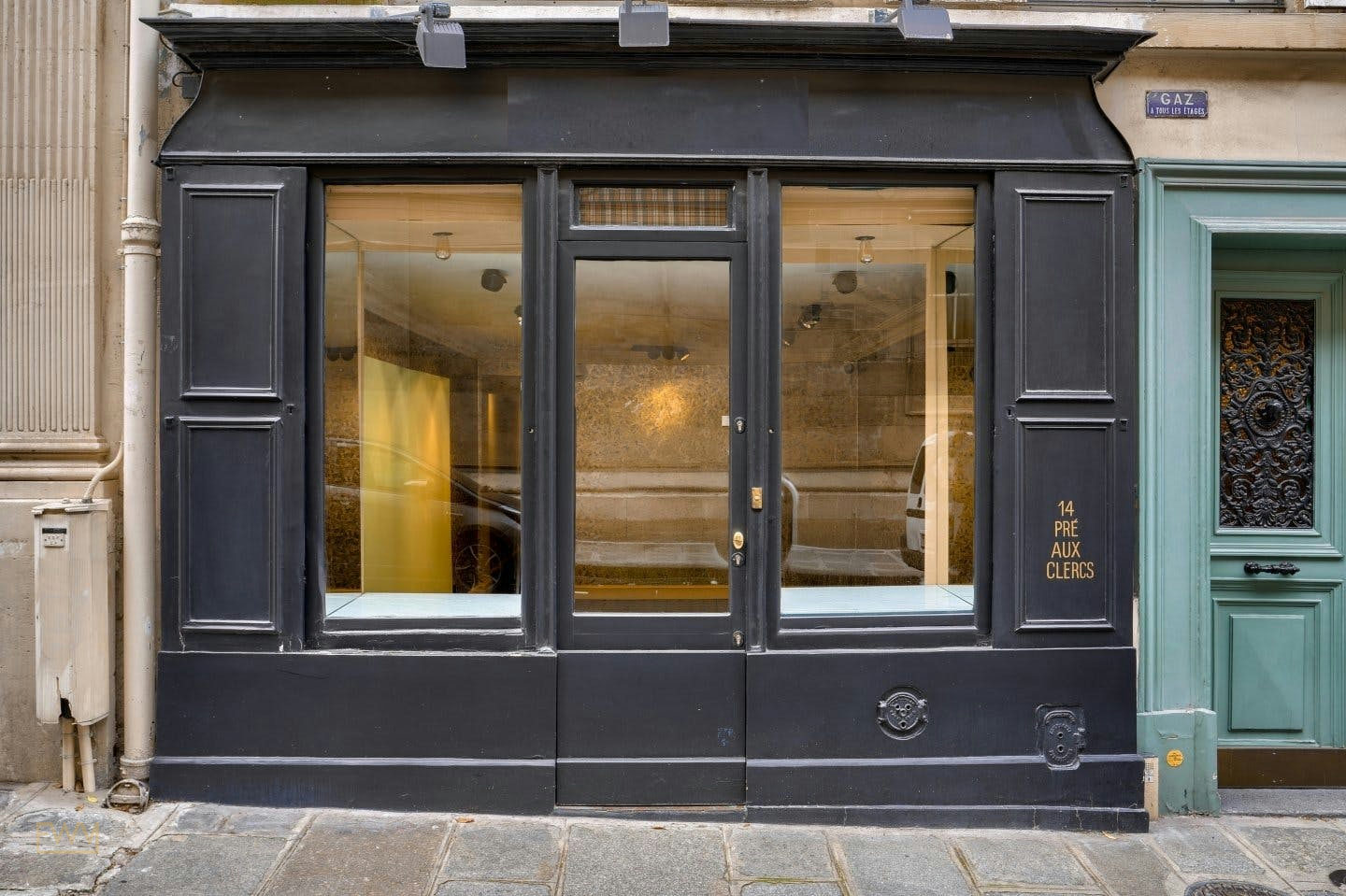
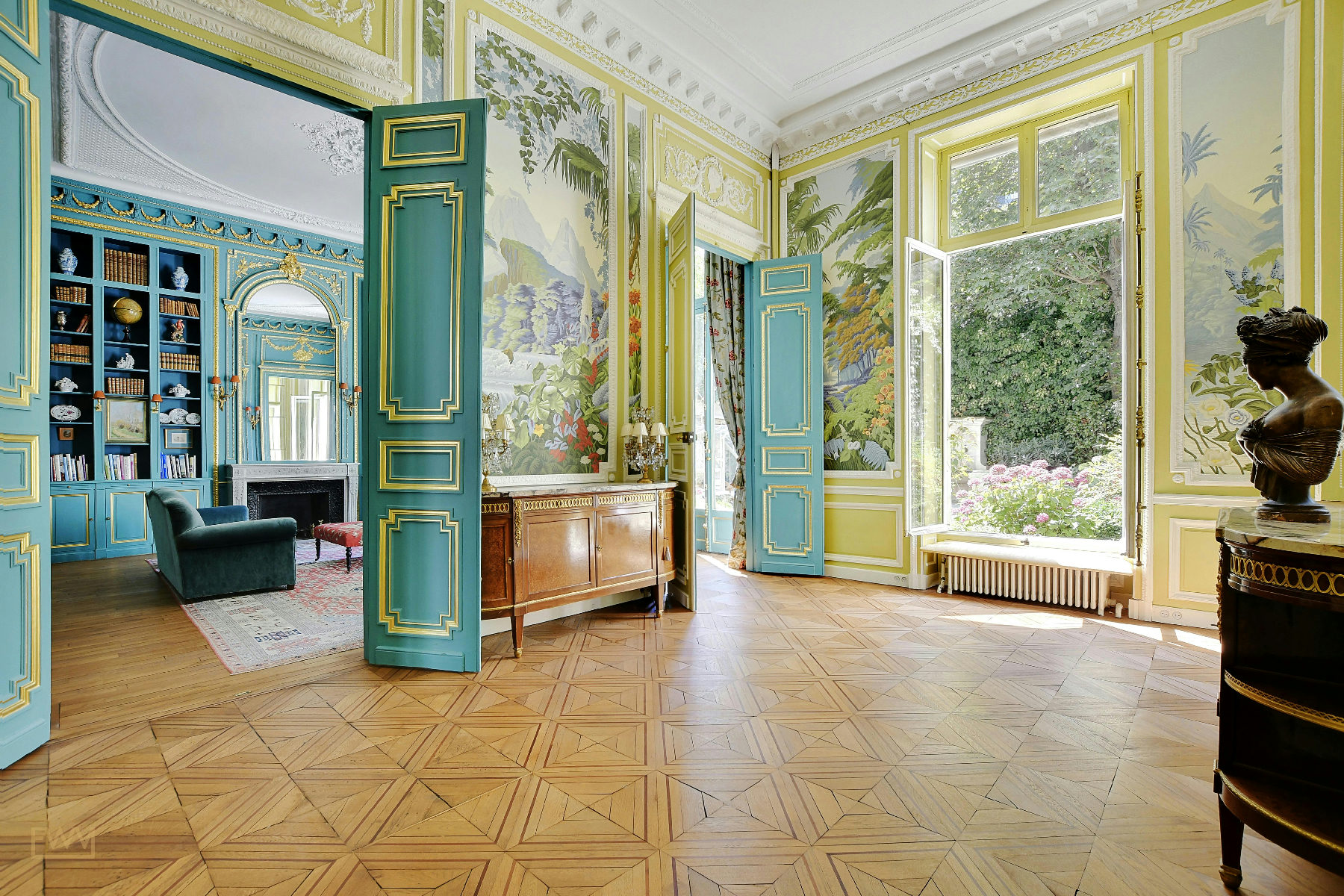
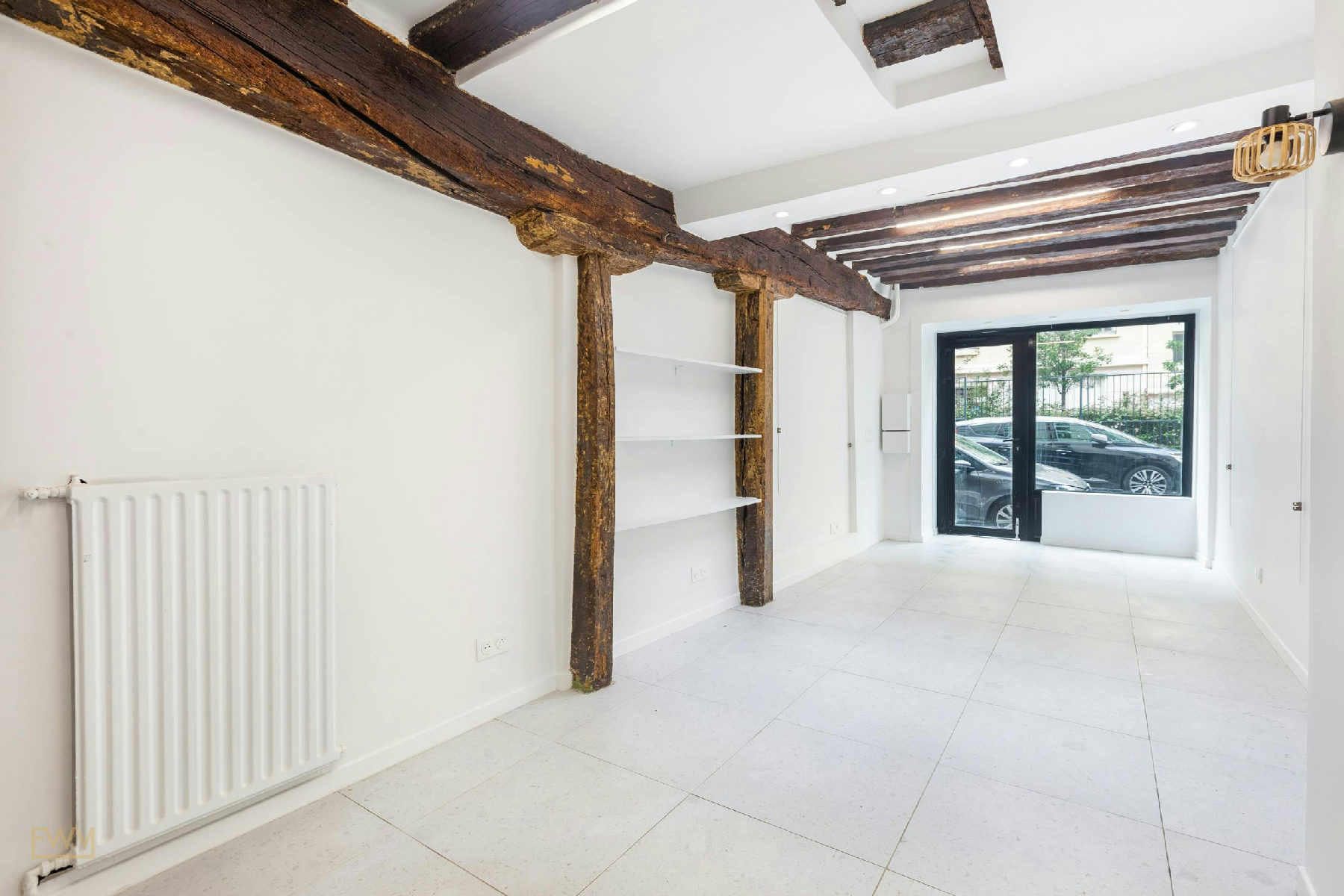
Space features vary enormously across the Parisian market. Raw concrete floors, polished concrete finishes, exposed brick, high ceilings, industrial lighting rigs, and spotlights are common in converted loft spaces and former workshop buildings, particularly in districts like Pigalle, the northern Marais, and parts of the 10th and 11th arrondissements. More traditional Saint-Germain-des-Prés boutique spaces tend to feature parquet flooring, moulded ceilings, and street-facing vitrines. Fashion brands need to match their concept to the architectural character of the space to create coherent retail and showroom experiences.
Square metreage is another variable that is frequently misunderstood at the international level. Parisian retail spaces are often measured in square metres rather than the square feet per year format used in American commercial real estate platforms like LoopNet or CoStar. When comparing spaces across different listing platforms, always confirm whether figures are quoted in square metres, square feet, or an annual cost per square metre or per year, as conversions and cost structures differ substantially.
DID YOU KNOW: In Paris, the same street address can contain spaces classified under different legal categories, meaning one unit may qualify for a bail dérogatoire while an adjacent unit on the same floor may be bound by a longer bail commercial, depending on prior occupancy history and the landlord's registration approach.
KEY TAKEAWAY: Understanding the legal classification of your intended space before beginning negotiations is not a formality — it is a practical necessity that determines your exit rights, your permit obligations, and your total cost of occupation. Brands unfamiliar with French commercial property law should always verify terms with a qualified French legal advisor before committing to any space.
With the taxonomy of commercial space in Paris established, the next priority for any brand team is understanding which neighbourhoods align with their brand positioning, target clientele, and activation objectives.
The Most Sought-After Locations for Commercial Space Rental in Paris
Quick answer: The most in-demand locations for commercial space rental in Paris include Le Marais, Saint-Germain-des-Prés, the Golden Triangle around Avenue des Champs-Elysées, Place Vendôme, Rue Saint-Honoré, and Montmartre. Each neighbourhood serves a different brand positioning, price point, and customer profile, and availability during Fashion Week periods compresses significantly.
Paris is a city of distinct retail villages, each with its own clientele, aesthetic register, and commercial culture. Choosing the right arrondissement is as strategic as choosing the right space type. Below is a breakdown of the primary commercial zones that fashion brands and luxury retailers prioritise when searching for commercial space in Paris.
Le Marais and the 3rd and 4th Arrondissements
Le Marais is the most densely requested neighbourhood on the Paris pop-up and short-term retail market. It combines genuine foot traffic from both Parisian locals and international visitors, architectural diversity that suits everything from a contemporary art gallery format to a heritage boutique, and a creative community that gives emerging brands cultural credibility. Rue des Archives, Rue de Bretagne, Rue Vieille du Temple, and the streets radiating outward from Place des Vosges all contain concentrations of commercial space that brands actively compete for, particularly in the windows either side of Paris Fashion Week.
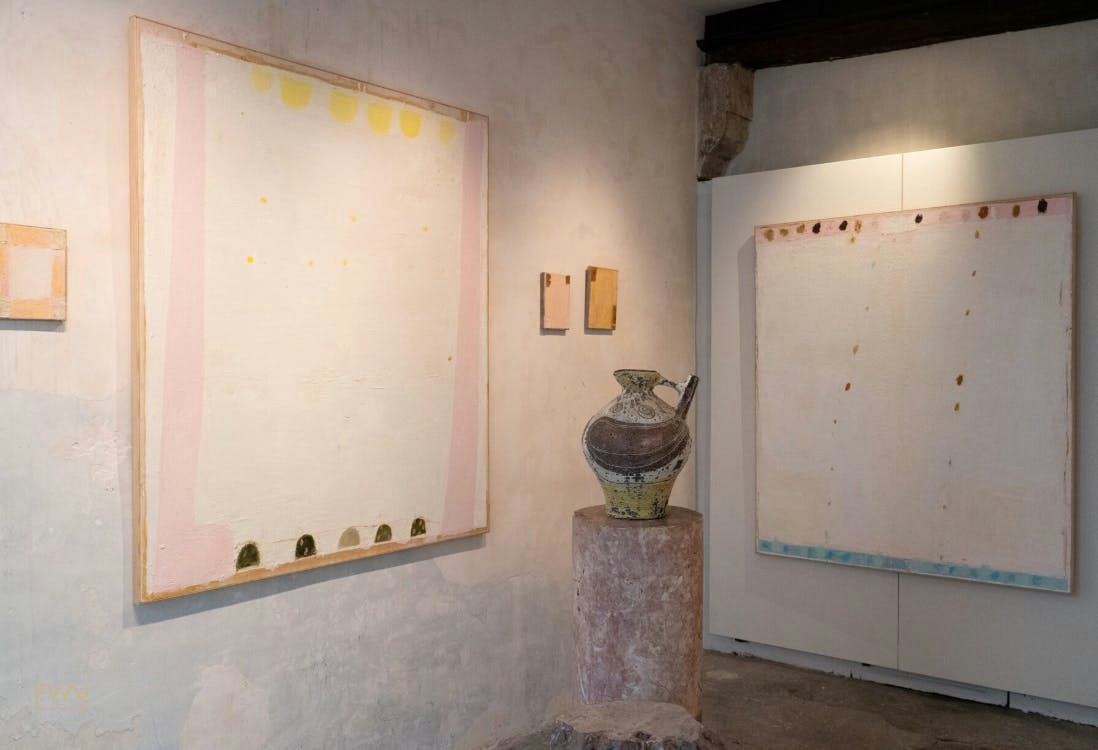
Space types in Le Marais range from narrow street-level storefronts of under 30 square metres to sprawling converted hôtel particulier spaces exceeding 300 square metres. Gallery spaces are particularly common here, and many function as dual-purpose venues capable of hosting both retail display and evening events. Polished concrete floors and raw concrete finishes appear frequently in spaces north of Rue de Bretagne, while heritage interiors with original tile work, painted beams, and tall windows dominate the older southern sections closer to the Seine.
Saint-Germain-des-Prés and the 6th Arrondissement
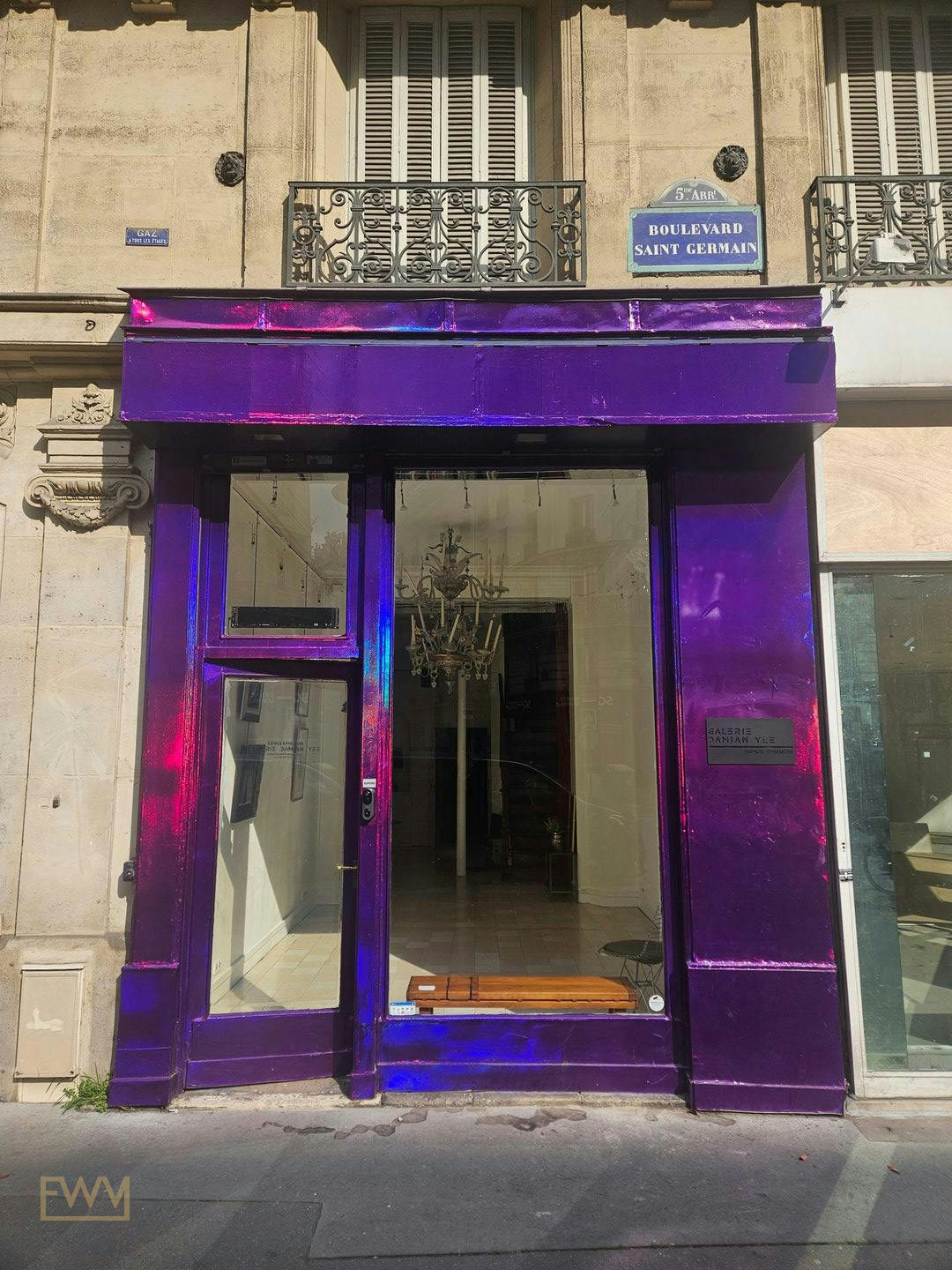
Saint-Germain-des-Prés attracts brands targeting a refined, literary-leaning, and internationally educated clientele. The neighbourhood's commercial streets include Rue de Grenelle, Rue du Four, and Boulevard Saint-Germain itself. Fashion showrooms and luxury boutique spaces here tend to command premium rents and require careful negotiation with landlords who are often selective about the brands they accept. The neighbourhood suits established fashion houses, high-end beauty brands, and lifestyle labels with strong French cultural alignment.
The Golden Triangle and Avenue des Champs-Elysées
The area bounded by Avenue des Champs-Elysées, Avenue Montaigne, and Avenue George V constitutes the Golden Triangle, the most prestigious retail address in Paris and one of the most expensive commercial real estate zones in Europe. Flagship boutiques, luxury department stores including Galeries Lafayette and Printemps on nearby Boulevard Haussmann, and global fashion houses all cluster here. Avenue des Champs-Elysées itself generates extraordinary foot traffic volumes but has diversified away from pure luxury toward mass-market and experiential retail in recent decades. The streets within the Golden Triangle, including Rue Paul Cézanne, Rue de Marignan, Rue Washington, and Rue Boissière, offer more discreet spaces suited to private showroom use and trade appointments.
Place Vendôme, Rue Saint-Honoré, and the 1st Arrondissement
Place Vendôme and Rue Saint-Honoré represent the apex of luxury retail positioning in Paris. Rue du Faubourg Saint-Honoré, which extends westward, is home to flagship stores for virtually every major French and international luxury house. The 1st arrondissement also contains Rue de Rivoli, which offers a more accessible but still premium commercial corridor running from Place de la Concorde toward the Louvre. Pop-up spaces and short-term showrooms in this zone are rare and competitive, but they exist — often within properties managed by specialist landlords who understand the temporary activation market.
Montmartre, Pigalle, and the 18th Arrondissement
Montmartre and Pigalle offer creative and emerging brands an alternative to the high-cost luxury districts. The 18th arrondissement has seen genuine commercial investment in recent years, with independent boutiques, concept stores, and gallery spaces appearing on Rue des Abbesses, Rue Lepic, and streets around Pigalle. Rents are lower relative to the 1st, 3rd, and 6th arrondissements, and the neighbourhood attracts a younger, culturally engaged clientele. Space features in this zone frequently include raw industrial finishes, exposed structural elements, and flexible open floor plans suited to concept retail and photographic studio use.
Boulevard Malesherbes, Place de la Madeleine, and the 8th Arrondissement
The 8th arrondissement extends the luxury commercial envelope northward from the Golden Triangle. Boulevard Malesherbes and Place de la Madeleine contain a mix of professional office spaces, high-end retail, and spaces that have historically served the financial and diplomatic community. Rue de la Baume, Rue du Quatre Septembre adjacent to the 2nd arrondissement, and Boulevard Haussmann's 134 address corridor all appear in commercial property listings for brands seeking professional yet prestigious environments for showroom use and trade appointment spaces.
To compare neighbourhoods and space types, explore the Paris city hub on Fashion Week Venues and shortlist spaces that match your brief, budget, and calendar window.
| Neighbourhood | Primary Space Types | Brand Fit | Typical Clientele | Fashion Week Relevance |
|---|---|---|---|---|
| Le Marais | Gallery, boutique, loft, showroom | Emerging to established fashion and lifestyle | Creative, international, local Parisian | Very high |
| Saint-Germain-des-Prés | Boutique, showroom, apartment | Luxury, refined lifestyle, heritage fashion | International luxury traveller, local affluent | High |
| Golden Triangle | Flagship, showroom, private suite | Global luxury and haute couture brands | International UHNW visitor, press, buyers | Very high |
| Place Vendôme / Saint-Honoré | Boutique, showroom, private reception | Ultra-luxury, jewellery, couture | Ultra-affluent international visitor | Very high |
| Montmartre / Pigalle | Gallery, studio, concept store | Emerging, streetwear, contemporary art | Young creative, independent fashion follower | Moderate |
| 8th Arrondissement corridors | Showroom, office-adjacent, private space | Trade-focused fashion, beauty, accessories | Press, buyers, industry professionals | High |
KEY TAKEAWAY: Location in Paris is not simply a property decision — it is a brand communication decision. The neighbourhood you choose signals your market positioning to press, buyers, influencers, and customers before they ever enter your space. Align your location choice with your brand identity, target clientele, and the specific activation objective, whether that is direct retail sales, trade appointments, press coverage, or community engagement.
With location established, the next question for most brand teams is how to actually find and evaluate available commercial space in Paris — including which platforms, tools, and professionals to involve in the search process.
How to Search for Commercial Space in Paris: Platforms, Tools, and Professional Support
Quick answer: Brands searching for commercial space in Paris typically use a combination of dedicated pop-up marketplaces, general commercial real estate platforms, local property agents, and specialist agencies. Each channel has strengths and limitations, and understanding which tool serves which search objective saves significant time and budget during the sourcing phase.
The landscape for searching commercial space in Paris includes several distinct categories of platform and professional service.
Pop-Up and Short-Term Space Marketplaces
Dedicated short-term rental marketplaces such as the Fashion Week Venues space marketplace are purpose-built for brands seeking temporary retail, showroom, and event venues. These platforms list spaces specifically configured for short-term use, with listings that include space type, square metres, floor and access information, space features such as lighting rigs and spotlights, and availability calendars aligned with fashion and retail event windows. Storefront and its Storefront Premium tier were among the early platforms to establish this category internationally, offering listings across Paris, London, New York, and other major markets. These platforms typically require users to create a login, set search criteria, and configure email alerts or saved searches to receive notifications when new matches appear in their target arrondissement or neighbourhood.
Platform-specific features vary. Some tools allow users to filter by space type — separating a gallery from a boutique from a fashion showroom or a studio photo space — while others allow filtering by floor and access, building year, or specific features like raw concrete floors or polished concrete finishes. Saved search functionality and email alert configuration are standard on most serious platforms, though users should verify whether alert systems distinguish between premium-tier listings and standard listings, as some platforms reserve early visibility for subscribed or verified users.
General Commercial Real Estate Platforms
Global commercial real estate platforms including LoopNet and CoStar provide broad market data and professional-grade listing access for commercial properties in France. These platforms are primarily used by broker professionals, investment property specialists, and institutional landlords rather than by brands seeking short-term pop-up space. LoopNet's Blue Listings designation indicates verified premium listings that receive priority placement. CoStar, which owns LoopNet, provides deeper data including transaction history, tenant information, and market analytics that are valuable for brands considering longer-term commitments or benchmarking market rents. Both platforms require account creation and login, with access tiers that determine which data layers are available.
Platforms like Companyspace.com and Workthere offer middle-ground functionality, covering commercial space including office spaces and flexible workspace that sometimes crossover with showroom and event space categories. These are useful for brands that need a professional office address alongside their retail activation, or for teams requiring operational workspace during their Paris stay.
Local Property Agents and Agence Paris Networks
French local property agents and Agence Paris networks provide on-the-ground expertise that digital platforms cannot replicate. A local property agent in Paris understands micro-market conditions within specific arrondissements, maintains relationships with landlords who do not list their spaces publicly, and can navigate the administrative and regulatory complexities of the French commercial property market. IAD agents and independent commercial property advisors operating across departments and cities in France offer an alternative to large agency networks, often with more flexible engagement terms. Expert advice from a local professional becomes particularly valuable when searching for space in competitive windows like Fashion Week, when availability is compressed and landlords have multiple competing inquiries simultaneously.
For international brands without French-language capability or existing Parisian market relationships, engaging a specialist agency like Fashion Week Venues provides a structured alternative that combines market access, legal navigation, production capability, and activation management under a single engagement.
Social Media and Community-Led Discovery
Social media channels, particularly Instagram and LinkedIn, have become meaningful secondary discovery tools for commercial space in Paris. Property companies, independent landlords, and space managers increasingly post available spaces directly to their social channels, sometimes before formal listings go live on platforms. Following key Parisian property accounts, local property agents, and neighbourhood-focused retail communities can surface opportunities that do not appear in formal search results. This channel is particularly useful for gallery spaces, private apartment showrooms, and charming boutique spaces whose owners prefer to find tenants through personal networks rather than public listing platforms.
TIP: Configure email alerts on any platform you use with very specific criteria — target arrondissement, minimum and maximum square metres, space type, and availability window. Broad alerts generate too much noise and cause brands to miss genuinely relevant listings among lower-priority results.
| Platform or Channel | Best For | Limitations | Short-Term Rental Coverage |
|---|---|---|---|
| Dedicated pop-up marketplaces | Short-term retail, showroom, event spaces | May exclude off-market spaces | Excellent |
| LoopNet / CoStar | Market data, longer leases, broker use | Limited short-term inventory | Limited |
| Companyspace / Workthere | Flexible workspace, office-adjacent | Narrow fashion retail coverage | Moderate |
| Local property agents | Off-market access, negotiation support | Requires French market knowledge | Variable |
| Specialist agencies | Full-service activation, complex briefs | Higher engagement threshold | Excellent |
| Social media | Emerging and boutique space discovery | Unstructured, requires active monitoring | Moderate |
KEY TAKEAWAY: No single platform provides complete coverage of the Paris commercial space market. The most effective search strategy combines a dedicated short-term marketplace for broad discovery, a local property agent or specialist agency for off-market access and negotiation, and targeted social monitoring for emerging opportunities. Configure saved searches and email alerts early to avoid missing availability windows, particularly for Fashion Week periods when spaces are reserved months in advance.
Understanding where to find commercial space in Paris is only part of the challenge. The next critical area is understanding the cost structure, lease arrangements, and what brands should budget for a Paris retail activation.
Cost of Renting Commercial Space in Paris: What Brands Should Expect
Quick answer: Rental costs for commercial space in Paris vary widely by neighbourhood, space type, square metres, duration, and the specific lease or licence structure used. Ranges are directional estimates only — actual costs depend on specific negotiation, space condition, landlord terms, and the services included in the arrangement. Brands should use a dedicated budget tool for project-specific estimates rather than relying on published market averages.
Paris commercial rents are typically quoted in euros per square metre per year for standard commercial leases, or as a flat weekly or monthly fee for short-term licences and bail dérogatoire arrangements. The distinction matters because comparison across platforms and listing types is difficult when different cost bases are used.
High-footfall areas such as Avenue des Champs-Elysées and Rue Saint-Honoré command the highest rents in Europe for prime retail frontage. Golden Triangle showroom spaces and private suites near Place Vendôme follow closely. Le Marais spans a wide range depending on precise street location, with premium spots on Rue des Archives or near Place des Vosges sitting well above secondary streets in the same arrondissement. Montmartre and Pigalle offer significantly lower entry points for brands with tighter budgets or for whom neighbourhood prestige is less central to the activation brief.
For short-term rentals, the all-in cost calculation extends well beyond the base rent. Brands must account for the following cost categories:
- Base rental fee for the space
- Security deposit, typically one to three months of equivalent rent
- Permit fees where applicable, including AOT applications
- Fit-out and production costs including lighting rigs, spotlights, furniture, and branded fixtures
- Furniture rental if not sourced through the landlord or space provider
- Retail staffing costs for floor staff, brand ambassadors, and security
- POS and payment system rental or setup
- Insurance requirements, which French landlords almost universally mandate
- Reinstatement costs if the lease requires returning the space to its original condition
Leasehold improvements — modifications made to a rented space to suit a tenant's operational needs — are a significant budget variable in Paris commercial space rental. In French commercial property terminology, these improvements are negotiated between the tenant and landlord at the outset, and the terms governing who pays for what, and who owns what at lease end, must be explicitly captured in the rental agreement. A raw concrete floor installation, polished concrete finishing, new lighting infrastructure, or partition wall additions all qualify as leasehold improvements and carry their own cost and reinstatement implications.
To build a realistic budget for your Paris activation, the Fashion Week Venues budget calculator allows brands to input their target space type, duration, neighbourhood, and service requirements to generate a directional cost estimate. This is a more useful starting point than published market averages, which mask the very wide range of outcomes that exist across the Paris commercial space market.
IMPORTANT: Do not sign a Paris commercial space rental agreement before confirming what is and is not included in the base rent. Service charges, property taxes known as taxe foncière where applicable, communal area charges, and mandatory insurance costs can add materially to the apparent rental price.
KEY TAKEAWAY: The total cost of renting commercial space in Paris is always higher than the base rental figure. Brands should build a complete activation budget that includes rental, production, staffing, permits, insurance, and reinstatement to avoid mid-project budget overruns. Use a structured planning tool and engage an expert who understands the full cost stack before committing to a space.
Cost planning connects directly to the question of permits and compliance — an area where international brands are most likely to encounter unexpected complexity in the French market.
Permits, Regulations, and Compliance for Commercial Space in Paris
Quick answer: Renting and activating commercial space in Paris involves navigating French local regulations that vary by space type, duration, arrondissement, and the nature of the planned activity. Short-term leases, public space occupations, and certain types of commercial activity each trigger different permit requirements. Requirements vary and should always be verified with a qualified French legal advisor.
For brands activating in Paris, the two most important legal structures to understand are the bail dérogatoire and the Autorisation d'Occupation Temporaire.
Bail Dérogatoire: Short-Term Commercial Leases in France
The bail dérogatoire is the standard mechanism for short-term commercial occupation in France. It allows a landlord and tenant to agree on a commercial use arrangement for a period shorter than the standard nine-year bail commercial, typically ranging from a few days to 36 months. The key requirement is that both parties explicitly agree in writing that the bail dérogatoire applies and that the tenant does not intend to remain in the space beyond the agreed term. If the tenant remains in the space after the bail dérogatoire expires without a formal new agreement, French law may deem the arrangement to have converted into a standard bail commercial, with all of the associated tenant protection rights and landlord obligations that entails.
For Fashion Week pop-up stores, seasonal boutiques, and short-term showrooms, the bail dérogatoire is the appropriate legal tool. However, the drafting matters enormously, and brands should not rely on a landlord's template agreement without having it reviewed by independent French legal counsel.
Autorisation d'Occupation Temporaire: Public Space Permissions
Where a brand wishes to occupy or use a publicly-owned space — a section of pavement, a public plaza adjacent to a venue, a passage under public authority management, or a publicly-owned cultural building — an Autorisation d'Occupation Temporaire is required. AOT applications are submitted to the relevant municipal or administrative authority, and the processing timeline, documentation requirements, and fee structure vary by location and the nature of the proposed use. Brands planning outdoor activations, façade branding, or any use of public space surrounding a rented commercial property must factor AOT timelines into their planning schedule.
Activity-Specific Permits and Local Regulations
Beyond the core lease structure, commercial activities in Paris may require additional permits depending on what the brand intends to do in the space. Food and beverage service, live music, public events with more than a specified number of attendees, outdoor signage, and certain types of promotional display may each trigger separate administrative requirements under French local regulations. The arrondissement in which the space is located also matters, as Mairie de Paris and individual arrondissement authorities have overlapping jurisdictions on certain permit categories.
For a structured overview of permit considerations relevant to your specific activation type, the Fashion Week Venues permits tool provides category-level guidance on what to investigate before committing to a space and a programme. This tool does not replace French legal advice but provides a practical starting framework for brand teams scoping their compliance obligations early in the planning process.
IMPORTANT: Requirements vary by space type, duration, activity type, and arrondissement. Nothing in this guide constitutes legal advice. Always verify your specific obligations with a qualified French legal advisor before signing any agreement or committing to a Paris commercial space activation.
KEY TAKEAWAY: Permit and compliance planning in Paris must begin at the same time as space sourcing, not after a space is secured. Lead times for AOT applications can be several weeks, and discovering a permit requirement after a lease is signed — but before your activation launch date — creates serious operational risk. Build permit timelines into your overall project schedule from day one.
Once compliance is addressed, the most experienced brand teams focus on how to maximise the commercial and brand return from their Paris space — which brings the Fashion Week calendar into sharp focus.
Paris Fashion Week and the Commercial Space Calendar: Timing Your Activation
Quick answer: Paris Fashion Week occurs twice annually — typically in late September to early October for Spring/Summer collections and in late February to early March for Autumn/Winter collections. These windows represent the highest-value activation periods for fashion and luxury brands, but commercial space availability compresses dramatically in the weeks before each event, making early booking essential.
Paris Fashion Week is the anchor event around which much of the city's short-term commercial space market is organised. During Fashion Week itself, press, buyers, influencers, stylists, and international clients converge on the city, creating foot traffic densities and cultural intensity that no other calendar period matches. Brands that align their pop-up store or showroom activation with Fashion Week gain access to the most commercially valuable audience concentration in the fashion calendar.
However, the commercial space market responds accordingly. Landlords in prime arrondissements including Le Marais, Saint-Germain-des-Prés, and the Golden Triangle are well aware of Fashion Week demand and price and allocate their spaces on this basis. The most desirable spaces — gallery spaces in the Marais, private hôtel particulier rooms near Place Vendôme, boutique storefronts on Rue Saint-Honoré — are often reserved six to nine months in advance by returning brands who have established landlord relationships. First-time entrants to the Paris market who begin their space search in the month before Fashion Week will encounter both limited availability and premium pricing on whatever remains.
Pre-Fashion Week and Shoulder Periods
The two to three weeks immediately preceding Paris Fashion Week represent a secondary high-value window. Trade show activity, press preview appointments, and buyer meetings cluster in this period, and showroom spaces in the 8th arrondissement and Golden Triangle corridors fill quickly. Brands using this window for trade-focused activations — fashion showrooms, press preview spaces, and buyer appointment venues — should target the same early booking timeline as those planning full Fashion Week activations.
The weeks immediately following Fashion Week, and the post-January and post-June periods between the major fashion months, offer more accessible availability and more negotiating leverage with landlords. Brands with flexible activation windows and less dependency on Fashion Week foot traffic can secure stronger terms and better space options by targeting these shoulder periods.
Building a Fashion Week Activation Timeline
A realistic Fashion Week activation timeline for an international brand entering Paris for the first time typically looks like this: space search begins six to nine months before the target activation date; concept direction and space design are developed simultaneously; permit applications are submitted three to four months before activation; production and build begin four to six weeks before launch; staffing is confirmed two to three weeks before opening; and social media and influencer outreach begins two to four weeks before the space opens to visitors and customers.
The Fashion Week Venues timeline tool allows brand teams to build a project-specific activation schedule that maps each phase against their target calendar window, helping identify dependencies and risks before they become critical path problems.
DID YOU KNOW: Paris Fashion Week spans multiple days of official and unofficial programming, but the halo effect on luxury retail foot traffic in prime arrondissements extends for one to two weeks either side of the official schedule, creating a materially longer high-value window than the official event calendar suggests.
KEY TAKEAWAY: Paris Fashion Week is the single most powerful commercial amplifier available to fashion and luxury brands activating in Paris, but it must be planned for with a six-to-nine-month lead time to secure viable spaces and manage permit, production, and staffing timelines. Brands that treat Fashion Week as a planning accelerant rather than a booking starting point consistently achieve better space quality, lower per-day rental costs, and smoother activations.
With timing established, the next dimension that separates effective Paris activations from disappointing ones is the quality of the concept, the fit-out, and the brand experience delivered within the space.
Space Design, Fit-Out, and Creating a Compelling Retail Experience in Paris
Quick answer: The design and fit-out of a commercial space in Paris directly determines whether visitors convert into customers, whether press and influencers engage and share, and whether the activation achieves its brand and commercial objectives. Raw or polished concrete floors, spotlights and track lighting, branded furniture, and coherent visual merchandising are not aesthetic choices alone — they are functional components of the brand experience.
International brands entering Paris frequently underestimate how demanding the Parisian retail audience is. A commercial space that might function adequately in another market will be judged against the extraordinary standard set by established Parisian boutiques, concept stores, and gallery spaces that Parisian customers and press compare it to. This means that the design and fit-out of your space must meet a very high bar, even for temporary pop-up store formats.
Space Features That Affect Brand Experience
Several specific space features have a meaningful impact on brand experience and should be evaluated carefully during the space selection process.
Raw concrete floors provide a neutral, contemporary base that suits avant-garde fashion, streetwear, and contemporary art-adjacent brand aesthetics. They work well with industrial lighting and minimal furniture but can feel cold or austere for lifestyle brands targeting warmth and accessibility. Polished concrete floors offer a similar aesthetic foundation but with higher reflectivity and a more refined finish that bridges contemporary and luxury positioning. Many of the most desirable Marais gallery spaces and converted loft venues feature polished concrete as a standard finish.
Spotlights and track lighting systems are critical for fashion retail and showroom presentations, where product colour accuracy, texture visibility, and overall visual hierarchy depend on quality directional light. Spaces with fixed, inadequate, or poorly positioned lighting create significant additional cost if a brand needs to install temporary lighting infrastructure. Brands should always assess the existing lighting capability of a space during viewings and budget for supplementary lighting where needed.
Ceiling height directly affects the sense of spaciality and the scale of visual merchandising possible. Narrow Parisian storefronts with high ceilings can be transformed by vertical product displays and tall fixtures in ways that low-ceilinged equivalents cannot. Haussmann-era spaces frequently feature ceiling heights of four metres or more on ground-floor commercial levels, providing exceptional visual real estate for brand storytelling through display.
Leasehold Improvements and Reinstatement
Leasehold improvements — physical modifications to a rented commercial space — are a central consideration in Paris short-term rentals. Any change beyond the placement of movable furniture and temporary fixtures may constitute a leasehold improvement requiring landlord consent and, potentially, reinstatement at lease end. This includes painting walls, installing shelving or rail systems that attach to surfaces, applying branded vinyl graphics to floors or walls, and modifying electrical or lighting infrastructure.
Brands should clarify the full scope of what modifications are permitted, what requires consent, and what the reinstatement obligations are before signing a lease. Failure to reinstate a space to its original condition can result in the loss of the security deposit and, in some cases, additional financial claims from the landlord.
TIP: Where possible, use modular, freestanding furniture and display systems that do not require surface attachment. This reduces reinstatement risk, speeds up build and breakdown, and allows the same furniture inventory to be reused across multiple activations. The Fashion Week Venues furniture rental service provides branded and neutral furniture options designed specifically for temporary retail and showroom environments.
KEY TAKEAWAY: Space design in Paris is a competitive exercise. Parisian visitors, press, and buyers evaluate your space against a high ambient standard of retail design. Investing properly in lighting, furniture, visual merchandising, and branded spatial identity is not a cosmetic decision — it is a direct determinant of activation success.
How Fashion Week Venues Helps Brands Secure and Activate Commercial Space in Paris
Fashion Week Venues is a full-service pop-up shop agency and space marketplace built specifically to address the complexity that international brands encounter when entering the Paris commercial space market. The agency combines market access through its space marketplace with a comprehensive suite of services that cover every phase of an activation, from initial brief to post-activation data review.
For brand teams that have identified Paris as a priority market but lack existing landlord relationships, French legal knowledge, or local production networks, Fashion Week Venues provides a structured engagement model through its agency process that connects brief development, space sourcing, concept direction, production, and activation management into a single coordinated workflow.
Venue Sourcing and Space Discovery
The venue sourcing service works across the Fashion Week Venues marketplace and off-market network to identify spaces that match a brand's brief in terms of neighbourhood, size, space type, calendar window, and budget. This goes beyond what a standard platform search delivers, as many of the most desirable Paris commercial spaces are allocated through relationships rather than public listings.
Concept Direction, Production, and Activation
Once a space is confirmed, Fashion Week Venues provides concept and creative direction, production and fit-out management, and activation management throughout the live period. This means brands can brief a single agency rather than coordinating multiple vendors across language barriers and time zones.
Tools for Independent Planning
Brands that prefer to plan independently can use the full suite of planning tools available at Fashion Week Venues, including the budget calculator, ROI calculator, timeline tool, space comparison tool, locator tool, and permits guidance tool. These tools are designed to support brand teams through the research and planning phases before a formal agency engagement begins.
The ROI calculator is particularly useful for brand teams that need to build an internal business case for a Paris activation, allowing them to model projected returns against activation costs across different space types and neighbourhoods.
What Fashion Week Venues Does Not Guarantee
Fashion Week Venues does not guarantee the availability of any specific space, the outcome of any permit application, the approval of any planning or administrative process, or any specific commercial result from an activation. Space availability is subject to market conditions and competing demand, particularly during Fashion Week windows. Permit approvals are governed by French administrative authorities and are outside any agency's control. Brands should treat projections from the ROI calculator and budget tool as directional planning aids, not guaranteed outcomes.
KEY TAKEAWAY: For international brands entering Paris, Fashion Week Venues provides a structured, full-service pathway from brief to activation that removes the most common sources of delay and cost overrun in the Paris commercial space market. Brands with existing Paris market knowledge can use the toolset independently; brands entering for the first time benefit most from the full-service agency engagement.
Digital Platforms, Saved Searches, and Managing Your Paris Space Search Online
Quick answer: Managing a Paris commercial space search effectively requires using saved search functionality, email alert systems, and comparison tools across one or more platforms. Understanding how each platform structures its listings, which tier of access provides the most relevant inventory, and how to avoid duplicate alerts or outdated listings saves significant time during the search phase.
Most commercial space and pop-up marketplace platforms operating in Paris offer some form of account-based search management. Creating a login and building a structured search profile allows brands to receive email alerts when new listings matching their criteria become available, rather than repeatedly conducting manual searches. This is particularly important for Fashion Week window availability, where desirable spaces can be reserved within hours of becoming available.
Saved Searches and Alert Management
Saved search functionality allows users to store a specific combination of search criteria — arrondissement, space type, minimum and maximum square metres, availability window, and budget range — and receive notifications when new matches appear. Most platforms will display a confirmation such as "Saved to Saved Searches" when a search is successfully stored, and will send an email alert when new matches emerge. If an alert already exists for the same criteria, platforms typically prompt the user with a confirmation before creating a duplicate. Users who no longer wish to receive updates for a specific saved search can delete the alert, after which they will no longer get updates when there are new matches for that set of criteria.
For brand teams managing multiple city searches simultaneously — Paris, London, Milan, New York — managing alert configurations carefully prevents notification overload and ensures that genuinely relevant Paris opportunities are visible and actionable when they arise.
Blue Listings, Premium Tiers, and Listing Quality
On platforms like LoopNet, Blue Listings represent verified premium commercial property listings that receive enhanced visibility and additional data fields including transaction history and broker contact details. For brands primarily seeking short-term retail space rather than investment properties, Blue Listings are less directly relevant, but the underlying principle of tiered listing quality applies across most platforms. Understanding which listings have been independently verified, which are broker-submitted, and which are direct-from-landlord helps brands assess the reliability of the information before committing to a viewing.
Comparing Spaces Across Platforms
When shortlisting commercial spaces in Paris across multiple platforms, a structured comparison approach prevents the confusion that arises from comparing spaces quoted in different units, with different inclusion bases for costs, and with different space feature descriptions. The Fashion Week Venues space comparison tool allows brands to evaluate shortlisted spaces against a consistent set of criteria, making the final selection decision more defensible and better aligned to the activation brief.
KEY TAKEAWAY: Effective digital search management for Paris commercial space requires configured saved searches, tiered alert settings, and a structured comparison framework. Brands that treat their space search as a passive browsing exercise rather than an actively managed process consistently miss the best available spaces in their target window and neighbourhood.
Geographic Scope: Paris Within the Global Fashion Capital Network
Paris is the anchor market for luxury and fashion commercial space activation globally, but it operates within an interconnected network of major fashion capitals that brands increasingly activate across within a single calendar year. London, Milan, New York, Tokyo, and Dubai each host their own fashion week schedules and short-term commercial space markets, and international brands with multi-market activation strategies need consistent support, market knowledge, and vendor relationships across all of these cities.
Fashion Week Venues operates city hubs across Paris, London, Milan, New York, Tokyo, and Dubai, providing the same structured approach to space sourcing, concept direction, production, and activation management that anchors the Paris market offer. This allows brands to plan and execute coordinated multi-city strategies — a Spring/Summer showroom in Paris followed by a New York retail pop-up and a Dubai brand awareness activation — through a single agency relationship rather than building separate local vendor networks in each city.
For brands expanding beyond their home market for the first time, the European fashion capital cluster — Paris, London, Milan, Brussels, Amsterdam, Stockholm, Copenhagen, Berlin, Vienna, Dublin, and Rome — represents a logical geographic expansion pathway. Each city has its own commercial space regulatory environment, fashion week calendar, and retail culture, and understanding these differences before committing to a multi-city strategy prevents costly misalignments between brand concept and local market expectations.
The Fashion Week Venues city hubs section provides market-specific guidance for each city in the network, covering neighbourhood breakdowns, space type availability, calendar windows, and regulatory considerations relevant to each market.
KEY TAKEAWAY: A Paris commercial space strategy is most valuable when it is part of a coherent multi-market activation plan aligned with the global fashion week calendar. Brands that plan Paris in isolation from their other market commitments often miss opportunities for content amplification, press compound reach, and operational efficiency that multi-city coordination delivers.
Common Myths About Renting Commercial Space in Paris Debunked
MYTH: International brands need a French legal entity to rent commercial space in Paris.
FACT: Many short-term commercial space arrangements in Paris, particularly bail dérogatoire agreements and licence-to-occupy structures used for pop-up stores and showrooms, do not require a French legal entity. However, the specific requirements depend on the space, the landlord, the duration, and the nature of the planned commercial activity. Some landlords and platforms do require a French entity or guarantor, and certain regulated commercial activities may have additional requirements. Always verify the specific entity and documentation requirements for each space before proceeding.
MYTH: Paris Fashion Week is the only viable calendar window for a brand activation in Paris.
FACT: Paris Fashion Week is the highest-profile window, but it is not the only commercially viable period. Trade show seasons, holiday gifting windows, summer tourist peaks, and shoulder periods between fashion months all offer strong footfall and press opportunity for the right brand concept. Fashion Week timing also comes with the most competition for spaces and the highest rental pricing. Brands with flexibility in their calendar should evaluate multiple windows before defaulting to Fashion Week as the only option.
MYTH: The only way to find commercial space in Paris is through a commission-based broker.
FACT: Dedicated pop-up marketplaces, specialist agencies with curated space networks, local property agents, and direct landlord relationships are all viable pathways to finding commercial space in Paris without engaging a traditional commission broker. For short-term activations, specialist agencies and dedicated marketplaces often provide better-matched inventory, faster transaction timelines, and more relevant support services than traditional commercial real estate brokers whose primary focus is longer-term investment property transactions.
MYTH: Short-term commercial leases in Paris are legally straightforward and can be signed without specialist help.
FACT: French commercial property law is sophisticated, and short-term lease structures including the bail dérogatoire have specific formal requirements that must be met to be legally valid. If the bail dérogatoire is not correctly drafted and executed, the arrangement may inadvertently trigger the protections of a standard nine-year bail commercial, creating obligations and rights that neither party intended. Brands should always have French commercial lease documentation reviewed by a qualified French legal advisor before signing, regardless of how straightforward the arrangement appears.
MYTH: Raw or polished concrete floors in Paris commercial spaces are purely an aesthetic choice with no operational implications.
FACT: Floor type has real operational implications for retail and showroom activations. Polished concrete reflects light and affects how product photography and press content reads in a space. Raw concrete may require additional sealing or treatment to meet landlord standards at the end of a rental period. Both floor types affect acoustics, which matters for event and presentation use. Understanding these implications during the space selection phase prevents fit-out surprises and additional cost at the activation stage.
Frequently Asked Questions About Commercial Space for Rent in Paris
What are the most sought-after locations for leasing commercial space in Paris?
The most in-demand locations for commercial space rental in Paris are Le Marais, Saint-Germain-des-Prés, the Golden Triangle around Avenue des Champs-Elysées and Avenue Montaigne, Place Vendôme, Rue Saint-Honoré, and Montmartre. Each neighbourhood serves different brand positioning requirements and attracts different clientele profiles. Le Marais is the most versatile and accessible for fashion and lifestyle brands across budget levels. The Golden Triangle and Place Vendôme are reserved primarily for established luxury and haute couture brands. Montmartre and Pigalle offer strong options for emerging and contemporary brands targeting younger creative audiences.
What is the cost of renting a retail space in Paris?
Rental costs for commercial space in Paris vary very widely by neighbourhood, space type, size, duration, and the specific lease structure. Prime street-level retail on Avenue des Champs-Elysées or Rue Saint-Honoré commands the highest rents in Europe. Short-term pop-up arrangements in Le Marais or Montmartre can be significantly more accessible. All-in activation costs include base rent, security deposit, fit-out, staffing, permits, insurance, and reinstatement. Brands should use the Fashion Week Venues budget calculator for project-specific directional estimates rather than relying on published market averages, which mask the full range of outcomes.
What is a bail dérogatoire and how does it apply to pop-up spaces in Paris?
A bail dérogatoire is a short-term commercial lease structure in French law that allows a landlord and tenant to agree on a commercial occupation arrangement for a defined period without triggering the full protections of the standard nine-year bail commercial. It is the most common legal mechanism for pop-up stores, seasonal showrooms, and Fashion Week activations in Paris. The agreement must explicitly state that both parties understand its derogatory nature. If the tenant remains in the space after the agreed term without a new agreement, the arrangement may convert to a full bail commercial. Always have a bail dérogatoire reviewed by a qualified French legal advisor.
Do I need a French company to rent commercial space in Paris?
Not necessarily. Many short-term rental arrangements in Paris do not require a French legal entity, particularly those structured as bail dérogatoire agreements or licence-to-occupy arrangements for pop-up and showroom use. However, individual landlords and some platforms do require a French entity or a French guarantor. Certain regulated commercial activities may have additional entity requirements. The specific requirements depend on the space, landlord, duration, and activity type, so brands should verify requirements for each specific space rather than assuming a single answer applies across the entire market.
What is an Autorisation d'Occupation Temporaire (AOT) and when do I need one?
An Autorisation d'Occupation Temporaire is an administrative authorisation required when a brand wishes to occupy or use a publicly-owned space in Paris. This includes public plazas, pavements, publicly-managed passages, and publicly-owned cultural buildings. AOT applications are submitted to the relevant municipal or administrative authority, and processing timelines, documentation requirements, and fees vary by location and use type. Brands planning outdoor activations, façade branding, or any use of public space adjacent to their rented commercial venue should investigate AOT requirements early in their planning process and build the application timeline into their overall project schedule.
What are leasehold improvements and how do they affect my Paris pop-up?
Leasehold improvements are physical modifications made to a rented commercial space to suit a tenant's operational or aesthetic requirements. In the Paris commercial space context, this includes painting walls, installing shelving or rail systems attached to surfaces, applying vinyl graphics, modifying electrical or lighting infrastructure, or installing partitions. French landlords typically require explicit consent for any leasehold improvements beyond the placement of freestanding furniture. Reinstatement obligations — returning the space to its original condition at lease end — must be clearly understood before work begins, as failure to reinstate can result in deposit forfeiture and additional financial claims.
How far in advance should I start looking for commercial space in Paris during Fashion Week?
For Fashion Week windows, brands should begin their space search six to nine months before their target activation date. The most desirable spaces in prime arrondissements including Le Marais, Saint-Germain-des-Prés, and the Golden Triangle are often reserved well in advance by returning tenants with established landlord relationships. First-time entrants who begin searching in the month before Fashion Week typically encounter limited availability and premium pricing on remaining spaces. Early search also allows time for permit applications, production planning, and staffing engagement before the activation window opens.
What space types are available for short-term commercial rental in Paris?
Short-term commercial space in Paris includes a wide range of types: gallery spaces, boutique storefronts, fashion showrooms, converted apartment spaces, photographic studio spaces, loft and warehouse spaces, private hôtel particulier rooms, and purpose-built pop-up venues. Each type has different space features, legal classification implications, permit requirements, and fit-out suitability. Brands should match their space type selection to both their activation format — retail versus showroom versus event — and their target clientele, as the character of the space communicates directly to visitors before any product is displayed.
What is the difference between LoopNet, CoStar, and dedicated pop-up marketplaces for finding Paris commercial space?
LoopNet and CoStar are general commercial real estate platforms primarily used by broker professionals for longer-term investment property transactions, with limited short-term retail inventory. They are most useful for benchmarking market rents and understanding broader commercial property conditions. Dedicated pop-up marketplaces list spaces specifically configured for short-term use, with inventory aligned to fashion and retail activation windows. For brands seeking pop-up stores, showrooms, or event venues in Paris, dedicated short-term marketplaces and specialist agencies consistently provide more relevant inventory, faster transaction timelines, and more appropriate support services than general commercial real estate platforms.
What permits do I need to run a pop-up shop in Paris?
The specific permits required for a Paris pop-up shop depend on the space type, the planned commercial activity, the duration, and the arrondissement. At minimum, brands need a properly structured short-term lease or licence agreement. If the planned activity includes food service, live entertainment, large public gatherings, outdoor signage, or use of any public space, additional permits from relevant municipal or administrative authorities will be required. Requirements vary and should be verified with a qualified French legal advisor and through the relevant arrondissement authority early in the planning process. The Fashion Week Venues permits tool provides category-level guidance as a starting framework.
How does foot traffic vary across Paris commercial neighbourhoods?
Foot traffic in Paris commercial areas varies significantly by neighbourhood, street, time of day, season, and proximity to major visitor attractions. Avenue des Champs-Elysées generates some of the highest retail foot traffic volumes in Europe, though visitor profiles skew toward mass-market tourists. Le Marais combines genuine Parisian local traffic with high-quality international visitor flow, making it attractive for fashion and lifestyle brands seeking both cultural authenticity and commercial volume. Montmartre draws strong tourist traffic but with a different commercial profile. Rue Saint-Honoré and Place Vendôme generate lower absolute footfall volumes but with the highest average customer spending power of any retail street in Paris.
What staffing do I need for a Paris commercial activation?
Staffing requirements for a Paris commercial activation depend on the space size, opening hours, activation format, and brand service model. A fashion showroom running trade appointments may require one to two trained brand ambassadors with French-language capability and fashion industry knowledge. A public-facing retail pop-up store on a high-traffic street may require three to five floor staff across split shifts, plus a dedicated brand manager. Brands should factor in French labour regulations, including mandatory rest periods, maximum daily hours, and payroll administration requirements, when planning staffing budgets for Paris activations.
Can I use social media influencer marketing as part of my Paris pop-up activation?
Yes, and for most fashion and lifestyle brands, influencer marketing is a primary amplification channel for Paris commercial activations. The concentration of fashion press, stylists, and content creators in Paris during Fashion Week windows creates exceptional earned media potential. Effective influencer marketing for a Paris activation requires advance briefing of key contacts, space design that is visually compelling for content creation, and a clear brand message that translates across different content formats. Fashion Week Venues offers influencer marketing as a service integrated with its broader activation management capability, allowing influencer strategy to be coordinated with the space concept and programming from the outset.
What is the twin co-activation concept and is it relevant for Paris commercial space?
The twin co-activation concept, available through Fashion Week Venues, allows two complementary brands to share a single commercial space in Paris, splitting rental and production costs while benefiting from each other's audience and press relationships. This structure is particularly relevant for brands with aligned customer profiles but non-competing product categories — for example, a fashion accessory brand and a beauty brand, or a contemporary fashion label and an art print publisher. Co-activation reduces per-brand cost, increases dwell time and visitor experience richness, and creates more editorial content opportunities than a single-brand activation of the same size.
How do I calculate the ROI of a Paris commercial space activation?
Calculating ROI for a Paris commercial space activation requires capturing both direct commercial returns — sales generated during the activation — and indirect brand value metrics including press coverage value, influencer reach, new customer acquisition cost, wholesale order values generated from showroom appointments, and brand awareness uplift in the Paris market. Full-cost accounting should include rental, production, staffing, permits, marketing, travel, and agency fees. The Fashion Week Venues ROI calculator allows brand teams to model projected returns across these multiple value dimensions, providing a structured basis for internal business case development and post-activation performance review.
Conclusion: Making the Right Commercial Space Decision in Paris
Renting commercial space in Paris is a multidimensional challenge that combines property market knowledge, French legal understanding, design and production capability, permit compliance, calendar strategy, and brand activation expertise. The most successful Paris activations are not simply those that found the right space — they are the ones where the right space was found at the right time, fitted out to the right standard, staffed by the right people, and programmed with the right concept for the right audience in the right neighbourhood.
Paris rewards preparation and penalises improvisation. The brands that consistently deliver strong Paris activations are those that begin their space search six to nine months out, engage specialist support early in the planning process, build complete budgets that account for the full cost stack, and align their activation calendar with the commercial windows that best match their target clientele and brand objectives.
Fashion Week Venues exists to provide international brands with the market access, specialist knowledge, and full-service capability to navigate this complexity without losing time, budget, or brand integrity. Whether you are planning your first Paris pop-up store or your tenth seasonal showroom, the agency's combination of space marketplace, specialist services, and practical planning tools is designed to support every phase of the journey from initial brief to post-activation review.
To move from research to activation, start exploring available spaces on the Fashion Week Venues marketplace and build a focused brief for your target neighbourhood, space type, and calendar window. The right space in Paris is available — the key is knowing exactly what you are looking for, when to look, and who to involve in making it happen.