Brands looking to hire retail space Canal Saint-Martin are choosing one of the most commercially and culturally compelling neighbourhoods in Paris. Straddling the 10th arrondissement and spilling into the 19th, the Canal Saint-Martin corridor offers a rare combination of authentically local footfall, strong creative identity, and a growing concentration of independent boutiques, concept stores, and art-forward commercial spaces that position temporary activations alongside some of the city's most interesting permanent retail. Fashion Week Venues works with international and domestic brands to source, build, and activate short-term retail spaces, showrooms, and event venues across Paris, with the Canal Saint-Martin area representing one of the highest-demand corridors in the city for brands seeking cultural credibility alongside commercial reach. This guide covers everything brand teams need to know before committing to a space in this neighbourhood.
What Makes the Canal Saint-Martin a Compelling Retail Location for Brands
The Canal Saint-Martin is not a generic high-street retail destination, and that is precisely what makes it strategically interesting for brands. The neighbourhood earned its commercial character organically, built over decades by independent restaurateurs, booksellers, concept store founders, and designers who chose it specifically because it was not the Marais and not Saint-Germain-des-Prés. That resistance to homogenisation is the neighbourhood's greatest commercial asset for a brand seeking short-term retail space.
Constructed under Napoleon in the early 19th century to supply fresh water to Paris and connect the Seine to the Canal de l'Ourcq, the Canal Saint-Martin was a working industrial waterway before it became a destination. Its iron footbridges, stone lock gates, and tree-lined quays have given it a cinematic quality that drew photographers, filmmakers, and eventually creative businesses. The canal's appearance in French cinema, from classic films to contemporary street photography shot on Kodak Ultramax, has cemented its visual identity in the cultural imagination of visitors and locals alike. The Passerelle Michèle Morgan, named after the French cinema icon, is one of several pedestrian bridges that frame the most photographed and commercially active stretch of the waterway.
The neighbourhood draws a high concentration of design-literate, spending-confident consumers. Tourists visit because the canal appears in travel itineraries as a counterpoint to the more heavily visited arrondissements. Meanwhile, the resident population in the 10th arrondissement skews younger and more design-conscious than the Paris average, with a genuine preference for independent and brand-activated experiences over chain retail. This dual audience, informed tourists and culturally engaged locals, creates strong conditions for a temporary retail activation, product launch, or showroom that wants to generate discovery, media coverage, and direct sales simultaneously.
The canal itself operates as a natural pedestrian corridor. People bike along the quays, linger at the Jardin Villemin, cross the bridges, and move between the wine bars, coffee shops, boulangeries, and independent boutiques on Rue de Marseille, Rue des Vinaigriers, and Rue de Lancry. This mobility and dwell time creates repeated exposure for a well-placed temporary retail space in a way that a side-street location in a quieter arrondissement cannot replicate.
DID YOU KNOW: The Canal Saint-Martin stretches 4.5 kilometres through the 10th and 19th arrondissements, connecting the Seine at the Bastille basin to the Canal de l'Ourcq at La Villette. Its industrial ambition as a Napoleonic infrastructure project has translated into one of Paris's most distinctive and photogenic neighbourhoods for brands.
The permanent retail ecosystem adds further context. Artazart, the design bookshop on Quai de Valmy, has operated as a cultural anchor for over two decades. Antoine et Lili introduced a playful, colour-saturated aesthetic to the canal's retail identity. La Trésorerie built a reputation as one of Paris's finest homeware and interiors destinations. Centre Commercial brought slow fashion and ethical brand curation to the neighbourhood. These are not incidental neighbours for a brand activating a temporary space. They signal the taste level and spending patterns of the local consumer base.
KEY TAKEAWAY: The Canal Saint-Martin combines strong pedestrian traffic, a design-literate dual audience of locals and tourists, and a permanent retail ecosystem of independent concept stores and lifestyle boutiques that signal real commercial opportunity for brands hiring short-term retail space in Paris.
Understanding the specific streets and sub-zones within the neighbourhood is the essential next step in selecting the right space for your brief.
Key Streets, Sub-Zones, and Landmarks for Retail Space in the Canal Saint-Martin Area
The Canal Saint-Martin neighbourhood is not a single homogeneous retail zone. It contains distinct micro-environments, each with different footfall patterns, space typologies, and brand adjacencies. Knowing which sub-zone fits your activation brief before you begin searching is the most efficient way to narrow your shortlist.
Quai de Valmy and Quai de Jemmapes
The two quays running along either side of the canal form the neighbourhood's spine. Ground-floor commercial spaces along Quai de Valmy benefit from the highest tourist and weekend pedestrian footfall on the canal, particularly between the Rue des Récollets and the lock at Rue de la Grange-aux-Belles. This stretch includes Artazart, several independent coffee shops, and the legendary Hôtel du Nord, which lent its name to Marcel Carné's 1938 film and remains a cultural landmark and functioning bar-restaurant that draws visitors throughout the day. A space on or immediately adjacent to the quay benefits from natural discovery by pedestrians who are already in a browsing, leisure, and spending mindset.
Rue de Marseille, Rue de Lancry, and Rue des Vinaigriers
These three streets running perpendicular to the canal contain some of the neighbourhood's most coveted independent retail addresses. Rue de Marseille hosts wine bars, cafes, and independent boutiques. Rue des Vinaigriers has developed a particularly strong concentration of concept stores, design studios, and small gallery-retail hybrids. Rue de Lancry connects the canal to the République area and contains a mix of restaurants, flower shops, and boutique retail. Spaces on these streets tend to offer slightly lower visibility than the quayside but benefit from higher local residential footfall and a more intimate, neighbourhood-credible context for brands wanting to feel discovered rather than advertised.
République to the South and Gare du Nord to the North
The canal neighbourhood sits between the République metro hub to the south and Gare du Nord to the north, giving it excellent transport connectivity. Activations here are accessible from virtually every arrondissement in Paris and from the international rail hub at Gare du Nord, which is directly relevant for brands running events timed to Paris Fashion Week or other calendar windows that bring international visitors into the city. The Marais, immediately to the south via Le Marais's northern boundary, provides an additional spillover audience from one of Paris's highest-footfall tourist and retail corridors.
Bassin de la Villette and Canal de l'Ourcq
To the north, the canal widens into Le Bassin de la Villette, bordered by the 19th arrondissement and connecting to the Canal de l'Ourcq and Parc de la Villette beyond. CENTQUATRE, the vast cultural centre in the 19th arrondissement, operates as a major draw for creative audiences and has hosted brand events, installations, and activations of significant scale. Point Éphémère, on Quai de Valmy, is a concert and music venue, art space, and event hub that has defined the neighbourhood's industrial-arts identity. Brands operating in this northern stretch of the canal benefit from a younger, more culturally engaged audience and larger, more flexible space typologies, including former industrial buildings with exposed ceiling beams, white walls, cobbled paths, and high ceilings that have been converted into event and retail spaces.
Quick answer: The most commercially active retail stretches for brands hiring space on the Canal Saint-Martin are Quai de Valmy between the Rue des Récollets and the lock at Grange-aux-Belles, and the perpendicular streets of Rue de Marseille, Rue des Vinaigriers, and Rue de Lancry. These streets offer the highest combination of tourist and local residential footfall for short-term activations.
| Sub-Zone | Key Streets and Landmarks | Primary Audience | Typical Space Typology | Best Suited For |
|---|---|---|---|---|
| Quayside Core | Quai de Valmy, Artazart, Hôtel du Nord | Tourists, weekend visitors, photographers | Ground-floor retail units, former cafes | Product launches, pop-up stores with high discovery |
| Cross Streets | Rue de Marseille, Rue des Vinaigriers, Rue de Lancry | Local residents, design-literate consumers | Studio-format boutiques, apartment-retail hybrids | Showrooms, brand experiences, slow fashion |
| République Approach | Southern end, border with Le Marais | High-volume mixed foot traffic | Larger ground-floor units, co-working conversions | High-footfall activations, multi-brand events |
| Northern Canal and Villette | Point Éphémère, CENTQUATRE, Bassin de la Villette | Creative and cultural audiences, younger demographics | Industrial warehouse, cultural centre flex space | Immersive experiences, large-scale brand events |
KEY TAKEAWAY: Sub-zone selection within the Canal Saint-Martin area significantly affects footfall composition, space typology, brand adjacency, and activation format. Quayside spaces maximise discovery-driven tourist traffic while cross streets deliver more residential and design-conscious audiences.
With the geography understood, the next practical question is what kinds of spaces are available for hire in this neighbourhood and what they typically offer in terms of configuration and features.
Types of Retail Space Available to Hire on the Canal Saint-Martin
The Canal Saint-Martin area offers a genuinely varied range of short-term commercial space typologies, which is part of what makes it suitable for brands with different activation briefs, from intimate press showrooms to multi-day public-facing pop-up stores and product launch events.
Former Boutique and Retail Units
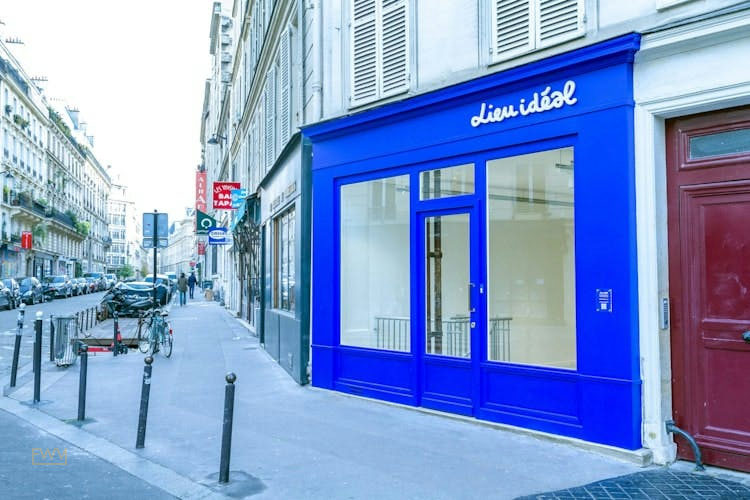
Ground-floor retail units that have housed independent boutiques, concept stores, or former vintage stores form the most immediately legible space category for brands wanting a conventional shop-front format. These spaces often retain features such as display fixtures, hardwood floors, good natural light from street-facing windows, and a retail-ready layout. They vary in size from small studio-scale units of under 50 square metres to medium-sized spaces of 80 to 150 square metres that are suited to short-term pop-up stores with a full product range on display. Many are white-walled with high ceilings and minimal permanent branding, making them easy to dress and brand without heavy production investment.
Apartment-Style and Residential-Format Spaces
One of the distinguishing features of the Canal Saint-Martin neighbourhood is the availability of apartment-format spaces for commercial activation. These furnished studio or multi-bedroom residential units, often located above street level or in the ground-floor and courtyard areas of Haussmann-era buildings, offer brands an opportunity to present products in a lifestyle-immersive context. Homeware, beauty, textiles, kitchenware, and accessories brands find apartment formats particularly effective because they allow the brand to demonstrate how products function in a lived-in domestic environment with real furniture, plants, natural light, and the sense of an intimate, curated home. These are not conventional retail formats, but they generate strong editorial content for social media, press visits, and influencer marketing because they feel genuinely distinctive.
Industrial and Gallery-Format Spaces
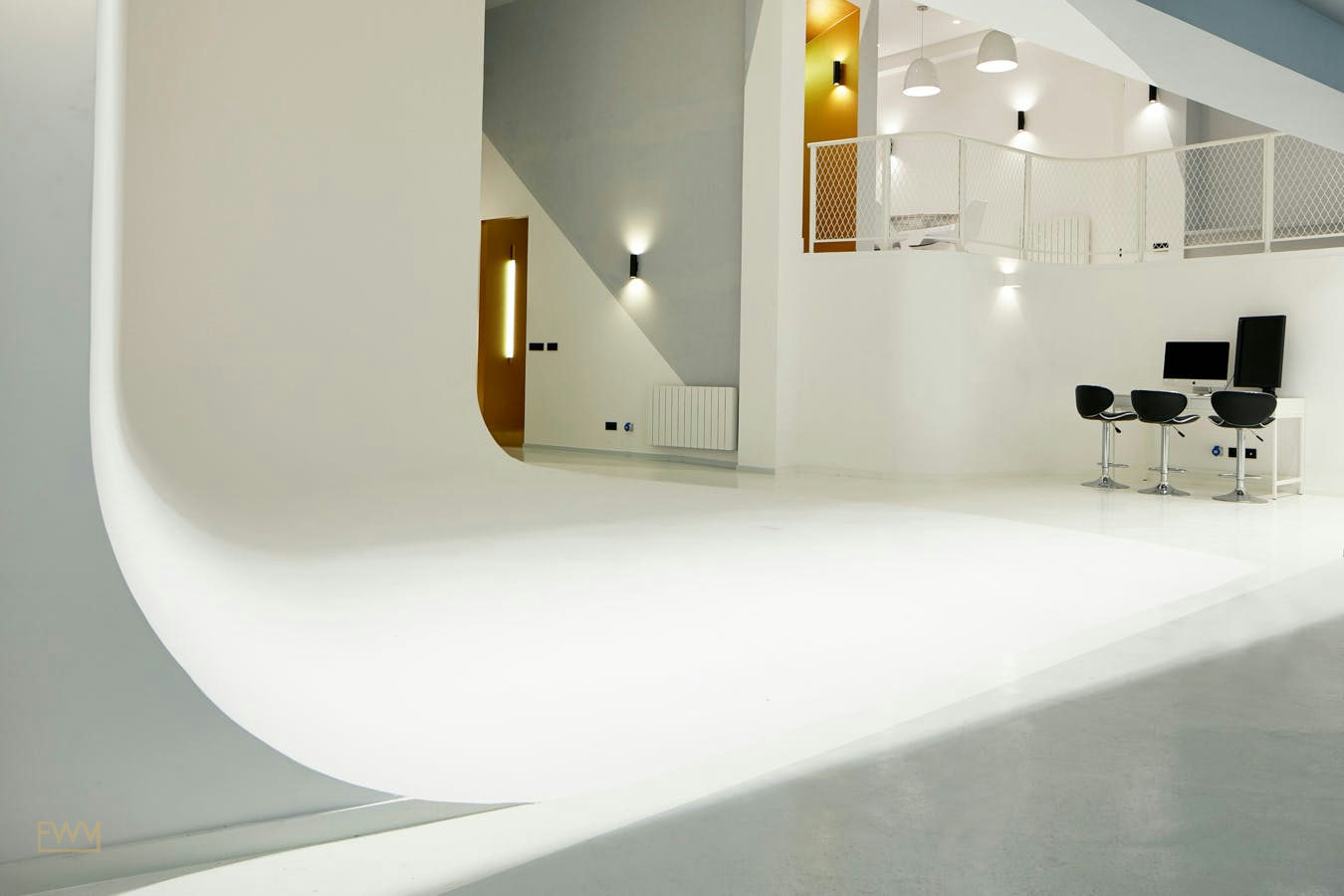
The northern section of the canal and the surrounding 10th arrondissement streets contain former industrial and workshop buildings that have been converted into light-filled commercial spaces with exposed ceiling beams, polished concrete or cobbled paths, white walls, and modern spotlights. These spaces are frequently used for art galleries, design studios, and cultural programming, and they transfer exceptionally well to brand activations seeking an architectural backdrop that communicates industrial ambition and creative credibility. They tend to run larger, from 150 to 500 square metres or more, and suit product launch events, multi-brand showrooms, or experiential activations with an event programme.
Courtyard and Passage Spaces
Paris is notable for its hidden courtyards and internal passages, and the Canal Saint-Martin neighbourhood contains several of these tucked behind street frontages. A courtyard space offers a sense of discovery and exclusivity that suits press days, brand dinners, private sales, and VIP activations. They typically require more production investment to activate effectively, as they may lack integrated retail infrastructure, but the architectural quality of exposed stone, mature plants, and the ambient sound of a working Paris neighbourhood creates an atmosphere that purpose-built event spaces struggle to replicate.
Quick answer: The Canal Saint-Martin area offers boutique retail units, apartment-format lifestyle spaces, industrial gallery-scale conversions, and hidden courtyard spaces for short-term hire. Space typology choice should reflect whether the brand priority is maximising public footfall, generating press and editorial content, or hosting private trade and influencer events.
TIP: Apartment-format spaces with hardwood floors, high ceilings, or marble floors in the Canal Saint-Martin area are particularly suited to homeware, beauty, and accessories brands that benefit from a lifestyle-context presentation rather than a conventional retail display. These spaces also generate strong content for influencer marketing activations.
To compare space types and identify which configuration best fits your activation brief, the space comparison tool on Fashion Week Venues allows you to evaluate multiple options side by side before you commit to a shortlist.
KEY TAKEAWAY: Space typology in the Canal Saint-Martin area is more varied than in conventional retail districts. Matching the space format to your brand's activation objective and content strategy is as important as securing the right location and rental terms.
Before diving into budget and timeline planning, it is worth understanding the regulatory context that governs short-term commercial space rental in Paris.
Permits, Legal Framework, and Compliance for Short-Term Retail Space in Paris
Renting a short-term retail space in Paris involves navigating a legal and administrative framework that differs substantially from what brands based in the United Kingdom, United States, or other markets will be familiar with. Understanding the key legal instruments before you begin searching for space will save significant time and prevent costly mistakes.
The Bail Dérogatoire: Short-Term Commercial Lease
The primary legal instrument for short-term commercial space rental in France is the bail dérogatoire, also known as a short-term lease or convention d'occupation précaire. This lease type allows occupation of commercial space for a period of up to 36 months without triggering the protections of a standard 3-6-9 commercial lease, which would require a much longer commitment and significantly more complex exit provisions. The bail dérogatoire is the instrument most commonly used for pop-up retail, temporary showrooms, and short-term brand activations in Paris. However, its terms, negotiation, and associated obligations vary considerably depending on the space owner, the space type, the arrondissement, and the proposed use. It is not a standardised, formulaic instrument, and brands should not assume that any bail dérogatoire presented to them is uniformly structured or automatically favourable.
Autorisation d'Occupation Temporaire (AOT)
For spaces involving public domain occupation, temporary structures, or certain categories of outdoor activation, an Autorisation d'Occupation Temporaire from the Paris municipal authority may be required. The AOT process involves a formal application to the relevant authority, review against local use regulations, and approval that is not guaranteed and may include conditions on operating hours, signage, and visual presentation. Requirements vary by space type, duration, and arrondissement, and the Canal Saint-Martin area, which includes protected urban landscape elements such as the canal itself and the listed bridges, may involve additional heritage and environment considerations depending on the nature of the activation.
Legal Entity Requirements
International brands frequently ask whether they need to establish a French legal entity to rent commercial space in Paris. In many cases, a foreign company can enter into a bail dérogatoire or short-term rental agreement without a French entity, but this depends on the landlord's requirements, the nature of the agreement, and the banking and tax implications involved. Practical requirements such as a French bank account for rent payment or a French address for formal correspondence add operational complexity. Brands should verify their specific situation with a qualified French legal advisor before committing to a rental agreement.
IMPORTANT: French commercial lease law is complex and highly landlord-protected in its standard form. Always review any short-term lease agreement with a qualified French commercial lawyer before signing. Fashion Week Venues provides navigational guidance but does not offer legal advice. Use the permit guidance tool for an initial orientation on the permit and compliance requirements relevant to your specific activation.
Practical Compliance Considerations
Beyond the lease instrument itself, brands activating retail space in Paris must consider public liability insurance, health and safety compliance for customer-facing spaces, fire safety requirements, signage regulations under the Paris Local Urban Plan, and for food or beverage elements, hygiene certification and local health authority requirements. Each of these adds to the operational overhead of running a temporary retail space, and underestimating the compliance workload is one of the most common mistakes international brands make when entering the Paris market without local support.
Quick answer: Short-term retail spaces in Paris are most commonly governed by a bail dérogatoire, a temporary commercial lease instrument that avoids the full protections of a standard 3-6-9 commercial lease. Brands should work with a French legal advisor and use permit guidance resources to understand the full compliance picture before signing any agreement for a Canal Saint-Martin space.
KEY TAKEAWAY: Permit and compliance requirements for short-term retail space in Paris are material and variable. The bail dérogatoire is the primary legal instrument but its terms are not standardised. AOT requirements apply to certain public domain uses. Always verify requirements with a French legal specialist before committing to a space.
With the legal framework understood, the practical question of when to activate and how to plan your timeline is the next critical decision for any brand team.
Calendar Strategy: When to Hire Retail Space in the Canal Saint-Martin
Paris Fashion Week is not the only viable calendar window for brands activating on the Canal Saint-Martin, and focusing exclusively on Fashion Week risks missing commercially stronger periods for certain categories and brand objectives.
Paris Fashion Week Windows
The Canal Saint-Martin neighbourhood sees measurable increases in international fashion industry visitors during the February and September ready-to-wear seasons and the January and July haute couture and menswear seasons. Showrooms targeting press, buyers, and stylists benefit from proximity to the wider fashion week ecosystem, particularly given the neighbourhood's strong fashion and design identity and its reasonable distance from the Palais Royal and Marais areas where many official and unofficial fashion week events cluster. However, competition for desirable spaces during Fashion Week windows is intense, lead times are longer, and rental rates are elevated. Brands that book early, often six months or more in advance for peak Fashion Week periods, are far better positioned than those approaching the market with a four-to-six-week lead time.
Alternative High-Value Calendar Windows
The Canal Saint-Martin neighbourhood generates strong commercial opportunity outside Fashion Week. The long spring and summer season, roughly April through September, delivers sustained tourist traffic from across Europe and internationally, with the quayside areas particularly busy on weekends. Summer picnics along the canal banks are a well-established Parisian ritual, creating an ambient social energy that benefits ground-floor retail on the quays. Maison et Objet in January and September, Paris Design Week in September, and the overlap between Paris Art Week and FIAC in the autumn all drive design-literate international visitors to Paris and make the Canal Saint-Martin a commercially active destination beyond its own neighbourhood identity. Brands in homeware, interiors, furniture, textiles, and beauty should consider these design and art calendar windows seriously as activation triggers.
Lead Time Planning
A realistic planning timeline for a short-term retail activation in the Canal Saint-Martin area should account for the following phases: initial briefing and space search, space shortlisting and viewing, negotiation and lease signing, production and fit-out, soft launch and activation, and deactivation and space handback. For a standard pop-up activation of two to four weeks, a minimum lead time of eight to twelve weeks from first contact to opening is realistic for straightforward spaces. More complex activations involving significant production, permit applications, or spaces requiring bespoke fit-out should plan for twelve to twenty weeks or longer. Using a structured planning instrument helps brands identify risks before they become critical path delays.
To build a realistic schedule for your Canal Saint-Martin activation, the timeline planning tool on Fashion Week Venues allows you to map each phase against your target opening date and identify where lead time compression creates risk.
Quick answer: Paris Fashion Week is not the only strong calendar window for retail activations on the Canal Saint-Martin. The spring and summer tourist season, Maison et Objet, Paris Design Week, and Paris Art Week all drive high-quality, design-literate audiences to the neighbourhood. Lead times of at least eight to twelve weeks are realistic for straightforward activations.
KEY TAKEAWAY: Calendar strategy for Canal Saint-Martin retail activations should be driven by audience matching, not calendar convention. Multiple annual calendar windows generate strong conditions in this neighbourhood beyond Fashion Week. Early booking and structured lead time planning are essential for securing the best spaces.
With calendar strategy mapped, the next major question is budget: what does it actually cost to hire and run a short-term retail space in this part of Paris?
Budget Framework for Hiring Short-Term Retail Space in the Canal Saint-Martin
Budget planning for a short-term retail activation in the Canal Saint-Martin area involves multiple cost components that brands new to the Paris market frequently underestimate. Providing precise figures without knowledge of a specific brand's brief, space requirements, activation duration, and production scope is not possible, and any figures presented without that context would be misleading. What can be provided is a framework for understanding the cost categories involved and the variables that drive costs up or down within each category.
Rental Cost Variables
Short-term rental costs for commercial spaces in the Canal Saint-Martin area vary significantly based on space size, location within the neighbourhood, space quality and fit-out standard, rental duration, and the period of the calendar year. Quayside spaces with high pedestrian visibility command higher rates than cross-street locations. Industrial-format spaces in the northern canal area may offer more competitive pricing per square metre but require more production investment to activate. Apartment-format spaces involve a different cost structure entirely. Rental costs should be understood as one component of a total activation budget that also includes production, staffing, permits, insurance, and marketing.
Production and Fit-Out Costs
The degree of production and fit-out required depends on the space condition and how closely it matches your brief in its current state. A white-box retail unit with modern spotlights and a clean fit-out may require minimal investment beyond branded signage, furniture, and product display. A raw industrial or courtyard space will require substantially more production investment to become a retail-grade environment. Furniture rental, branded store design, lighting, POS installation, and branding elements all add to the production cost line. Production costs for a well-executed pop-up in Paris can represent as much as or more than the space rental itself, depending on the ambition of the brand experience.
Operational Costs
Operational costs include retail staffing for the duration of the activation, utilities if not included in the rental agreement, POS and payments infrastructure, insurance, and ongoing cleaning and maintenance. For activations with an influencer marketing or event programme component, event production, catering, and activation management costs add further to the operational budget.
TIP: Use the budget estimation tool on Fashion Week Venues to generate a directional cost model for your specific activation brief before engaging in space negotiations. Having a clear budget framework before you begin shortlisting spaces prevents the common problem of falling in love with a space that is fundamentally incompatible with your approved budget.
| Cost Category | Key Variables | Notes |
|---|---|---|
| Space Rental | Size, location, duration, calendar period | Quayside and Fashion Week premium applies |
| Production and Fit-Out | Space condition, brand experience ambition, materials | Can match or exceed rental cost for complex activations |
| Retail Staffing | Opening hours, team size, multilingual requirements | Paris labour law applies to all employment |
| Permits and Compliance | Space type, use, duration, outdoor elements | AOT and bail dérogatoire legal costs may apply |
| POS and Payments | Transaction volume, currency requirements, integration | Card payment infrastructure is expected by Paris consumers |
| Insurance | Space size, public access, event components | Most landlords require public liability as minimum |
| Marketing and Activation | Influencer programme, PR, events | Variable based on brand strategy |
KEY TAKEAWAY: Total activation budget for a Canal Saint-Martin pop-up is a composite of rental, production, staffing, permits, POS, insurance, and marketing costs. Rental is rarely the largest single line item for activations with high production or event ambitions. Budget early and use a structured estimation tool before shortlisting spaces.
Understanding how Fashion Week Venues can support the entire process, from initial space search through to activation management, is the practical next step for brands making their first or tenth move into the Paris market.
How Fashion Week Venues Supports Canal Saint-Martin Retail Activations
Fashion Week Venues operates as a full-service pop-up agency and space marketplace with deep experience in the Paris market. For brands looking to hire retail space on the Canal Saint-Martin, the agency provides both the space discovery infrastructure and the end-to-end production and activation capability needed to move from brief to open doors efficiently.
Space Discovery and Venue Sourcing
The Fashion Week Venues marketplace aggregates short-term retail spaces across Paris, including the Canal Saint-Martin area, allowing brand teams to browse, filter, and shortlist spaces based on size, location, space type, and availability. For brands with specific brief requirements, the venue sourcing service involves a dedicated search on behalf of the brand, approaching spaces that may not be publicly listed and negotiating initial terms on the brand's behalf. This is particularly valuable in a neighbourhood like Canal Saint-Martin where some of the most desirable spaces are held by independent owners who prefer to work through trusted intermediaries rather than receiving unsolicited approaches.
Concept Direction and Branded Store Design
Once a space is identified, Fashion Week Venues can provide concept direction and branded store design services that translate the brand's identity and activation objectives into a physical retail environment. For spaces in the Canal Saint-Martin area, this often means working with the existing architectural character of the space, whether that is the industrial ambition of a converted workshop, the domestic warmth of an apartment-format space, or the clean minimalism of a white-box boutique unit, rather than overriding it with a generic brand installation.
Production, Build, and Fit-Out
The production and build service covers the physical transformation of the raw space into an operating retail environment. This includes furniture, display fixtures, lighting, branded elements, and any structural modifications permitted under the lease terms. Fashion Week Venues maintains relationships with Paris-based production suppliers and contractors, which reduces the cost and time overhead associated with importing production teams and materials from abroad.
Activation Management, Staffing, and Operations
Running a temporary retail space in Paris as an international brand involves operational complexity that is easy to underestimate. Retail staffing, POS and payments infrastructure, daily management, supplier relationships, and logistics all require local knowledge and language capability. Fashion Week Venues provides activation management, retail staffing, and POS and payments services that allow brand teams to focus on brand experience and commercial objectives rather than operational troubleshooting.
Tools for Independent Planning
For brand teams that prefer to manage more of the planning process independently, Fashion Week Venues provides a suite of planning tools including the budget estimation tool, the ROI calculation tool, the timeline planning tool, the permits guidance tool, and the space locator tool. These tools are designed to support brand decision-making at the research and briefing stage before agency engagement begins.
To understand which brand teams benefit most from Fashion Week Venues support: the agency is particularly well-suited to international brands entering Paris for the first time, brands with tight timelines and limited local production relationships, brands with complex activation briefs that involve multiple service components, and brands seeking to use their Canal Saint-Martin activation as a template for activations in other cities including London, Milan, New York, Tokyo, and Dubai.
Quick answer: Fashion Week Venues provides space discovery, venue sourcing, concept direction, production and build, activation management, retail staffing, and POS services for brands hiring retail space on the Canal Saint-Martin. The agency also operates a suite of planning tools for brands managing parts of the process independently.
KEY TAKEAWAY: Fashion Week Venues covers the full activation lifecycle for Canal Saint-Martin retail spaces, from initial space search to handback, and can be engaged at any stage of the process. The agency does not guarantee specific space availability, permit approval, or commercial outcomes, but provides the expertise and relationships that improve the efficiency and quality of the activation process.
To move from research to enquiry, explore the Paris city hub on Fashion Week Venues for a full overview of the Paris market, available spaces, and local activation resources specific to the Canal Saint-Martin and surrounding neighbourhoods.
Brand Categories and Activation Formats Best Suited to the Canal Saint-Martin
Not every brand category is equally well served by a Canal Saint-Martin retail activation. Understanding the alignment between your brand, your target consumer, and the neighbourhood's character is an essential step in evaluating whether this location is the right choice for your Paris strategy.
Fashion and Accessories
The Canal Saint-Martin has a strong fashion identity anchored by independent boutiques and concept stores including Centre Commercial, which has established itself as one of Paris's leading ethical and slow fashion destinations. For fashion and accessories brands, particularly those with a design-forward, independent, or sustainable positioning, the neighbourhood provides a culturally credible context that mainstream Marais or Champs-Élysées locations cannot replicate. Pop-up stores, showrooms for press and buyers, and product launch events in this neighbourhood generate strong editorial resonance with the fashion media and creative community that gravitates toward the area.
Homeware, Interiors, and Design
The Canal Saint-Martin is home to La Trésorerie, widely considered one of the finest homeware and interiors retail destinations in Paris. For homeware, furniture, kitchenware, textiles, and interiors brands, the neighbourhood delivers a highly qualified audience of design-literate consumers who already make purchasing decisions in this category in this specific location. An apartment-format activation space with high ceilings, hardwood floors, or marble floors and thoughtfully curated styling creates an exceptionally strong content and sales environment for these categories.
Beauty and Lifestyle
The neighbourhood's concentration of independent coffee shops, wine bars, and carefully curated retail destinations creates strong conditions for beauty and lifestyle brand activations that want to feel embedded in a genuine Paris neighbourhood rather than positioned in a tourist-heavy retail district. Influencer marketing activations for beauty brands benefit particularly from the neighbourhood's photogenic quality, with the canal, the bridges, the iron lock gates, and the tree-lined quays providing abundant backdrop options for content creation.
Books, Music, Art, and Cultural Brands
Artazart's enduring success as a design and photography bookshop on Quai de Valmy demonstrates the neighbourhood's appetite for cultural retail. Point Éphémère's role as a concert and music venue and art space confirms the creative audience density in the area. For cultural brands, publishers, music labels, art galleries, and organisations producing cultural activations, the Canal Saint-Martin neighbourhood offers a level of authentic alignment that few Paris locations can match.
Quick answer: The Canal Saint-Martin is particularly well-suited to fashion and accessories brands with an independent or sustainable positioning, homeware and interiors brands, beauty and lifestyle brands with a content-driven activation strategy, and cultural and creative brands. It is less well-suited to mass-market luxury or tourist-facing activations that are better served by the Marais or the 1st arrondissement.
| Brand Category | Neighbourhood Fit | Recommended Space Type | Primary Activation Format |
|---|---|---|---|
| Slow Fashion and Accessories | Very strong | Boutique retail unit, concept store format | Pop-up store, press showroom |
| Homeware and Interiors | Very strong | Apartment-format, furnished space with design character | Lifestyle activation, trade showroom |
| Beauty and Lifestyle | Strong | Studio-format with strong natural light | Influencer event, brand experience |
| Art and Cultural Brands | Very strong | Gallery-format, industrial conversion | Exhibition, product launch, cultural event |
| Mass Market Luxury | Moderate | Select high-visibility quayside units | Discovery pop-up, new market entry |
| Food and Beverage | Strong for experience activations | Kitchen-equipped space, courtyard | Brand tasting, cultural collaboration |
KEY TAKEAWAY: Brand category and neighbourhood character alignment is a stronger predictor of activation success than location visibility alone. The Canal Saint-Martin rewards brands with a genuine design, cultural, or lifestyle identity and does not benefit brands whose positioning is misaligned with the neighbourhood's independent, creative character.
The process of finding the right space involves more than browsing listings. A structured workflow from brief to booking gives brand teams a practical framework for moving efficiently through the decision-making process.
Step-by-Step Workflow for Hiring Retail Space on the Canal Saint-Martin
A structured approach to hiring short-term retail space in Paris reduces the risk of poor space selection, missed compliance requirements, and budget overruns. The following workflow reflects the process that experienced brand teams and their agency partners follow when activating in the Canal Saint-Martin area.
| Stage | Key Actions | Who Is Responsible | Typical Duration |
|---|---|---|---|
| 1. Brief and Objectives | Define activation objectives, brand category, target audience, budget range, dates, and space requirements | Brand team | 1 to 2 weeks |
| 2. Market Research and Budget Modelling | Research neighbourhood, space typologies, and comparable activations. Build initial budget model using planning tools | Brand team with agency support | 1 to 2 weeks |
| 3. Space Search and Shortlisting | Browse marketplace, engage venue sourcing service, identify 3 to 5 candidate spaces | Agency or marketplace-led | 1 to 3 weeks |
| 4. Space Viewing and Evaluation | Visit candidate spaces, assess condition, size, natural light, production requirements, and location context | Brand team and agency | 1 to 2 weeks |
| 5. Negotiation and Lease Signing | Negotiate rental terms, review bail dérogatoire with legal counsel, confirm insurance requirements | Agency negotiates, brand legal team reviews | 1 to 3 weeks |
| 6. Concept and Production Planning | Develop space concept and design, plan production and fit-out schedule, order furniture and branded elements | Agency creative and production team | 2 to 6 weeks |
| 7. Permits and Compliance | File any required AOT applications, confirm insurance, complete health and safety assessment | Agency permits specialist and brand team | Concurrent with production planning |
| 8. Build and Fit-Out | Execute physical installation of space design, furniture, branding, lighting, and POS | Production team | 1 to 5 days depending on complexity |
| 9. Soft Launch and Activation | Brief retail staff, conduct soft opening, launch influencer and PR programme | Activation management team and brand | Day of opening |
| 10. Deactivation and Reporting | Strip fit-out, return space to original condition, compile data and analytics report | Production team and agency | 1 to 2 days post-close |
This workflow is a general framework and individual activations will vary. To understand how this process applies to your specific Canal Saint-Martin brief, the process page on Fashion Week Venues provides a detailed explanation of how the agency structures each stage of the engagement.
Quick answer: Hiring retail space on the Canal Saint-Martin follows a ten-stage workflow from brief and objectives through to deactivation and reporting. The minimum realistic timeline for a straightforward activation is eight to twelve weeks. More complex activations with significant production or permit requirements should plan for twelve to twenty weeks or more.
KEY TAKEAWAY: A structured workflow prevents the most common mistakes in Paris retail activations, including late permit applications, budget overruns from underestimated production requirements, and poor space selection driven by urgency rather than brief alignment. Following a disciplined process significantly improves both the quality and the commercial outcome of the activation.
Even experienced brand teams carry misconceptions about the Canal Saint-Martin market that can affect their decision-making. The following myth and fact section addresses the most persistent and commercially consequential of these misunderstandings.
Common Myths About Hiring Retail Space in the Canal Saint-Martin and Paris
MYTH: You need a French legal entity to rent a commercial space in Paris.
FACT: Many short-term retail spaces in Paris can be rented by foreign companies without establishing a French entity, particularly under a bail dérogatoire arrangement. However, individual landlord requirements vary and some will require a French bank account, a local guarantor, or a French address for formal correspondence. The specific legal and banking requirements depend on the nature of the agreement and the landlord's preferences. Always verify your situation with a qualified French legal advisor before assuming that your existing corporate structure is sufficient.
MYTH: Paris Fashion Week is the only commercially viable window for activating a pop-up space on the Canal Saint-Martin.
FACT: The Canal Saint-Martin generates strong commercial conditions across multiple calendar windows throughout the year. The spring and summer tourist season, Maison et Objet, Paris Design Week, and Paris Art Week all drive high-quality, design-literate audiences to the neighbourhood. For homeware, beauty, and lifestyle brands in particular, these alternative calendar windows may deliver better audience alignment and lower space rental costs than the Fashion Week period, when competition for spaces is most intense and rates are at their highest.
MYTH: Commission brokers are the only way to find a short-term retail space in Paris.
FACT: Commission-based space brokers are one channel for finding short-term retail space, but they are not the only route and not always the most efficient or transparent. Dedicated space marketplaces and full-service pop-up agencies like Fashion Week Venues offer brands direct access to curated space inventories alongside end-to-end production and activation services. The advantage of a marketplace or agency model over a commission broker is the alignment of incentives: the agency is focused on finding the right space for your brief, not simply the space that generates the highest commission on a given transaction.
MYTH: Short-term leases in Paris are legally straightforward and can be signed without specialist help.
FACT: Short-term commercial leases in France, including the bail dérogatoire, involve specific legal obligations, landlord protections, and term structures that are materially different from equivalent instruments in the United Kingdom, United States, and other markets. Signing a French commercial lease without reviewing it with a qualified French commercial lawyer exposes the brand to risks including unexpected obligations, disproportionate deposit requirements, unclear deactivation conditions, and potential liability for space damage. Specialist help is not optional for brands taking their Paris activation seriously.
MYTH: A pop-up space on the Canal Saint-Martin will automatically attract the right audience because the neighbourhood is fashionable.
FACT: Neighbourhood character creates conditions for audience reach but does not guarantee it. A well-located space that is poorly marketed, inadequately staffed, or activated with a concept that is misaligned with the neighbourhood's consumer base will underperform regardless of its address. Effective activation requires a combination of the right space, the right concept, targeted influencer and PR outreach, and a compelling in-store experience that gives people a reason to visit and a reason to return.
Frequently Asked Questions About Hiring Retail Space on the Canal Saint-Martin
What is the Canal Saint-Martin and why is it a strong retail location for brands?
The Canal Saint-Martin is a 4.5-kilometre urban waterway running through the 10th and 19th arrondissements of Paris, constructed under Napoleon in the early 19th century to supply the city with fresh water. Over the past two decades it has developed into one of Paris's most culturally distinctive commercial neighbourhoods, characterised by independent concept stores, design boutiques, art galleries, coffee shops, wine bars, boulangeries, and restaurants. Its combination of design-literate resident consumers and strong tourist footfall makes it a compelling location for brands hiring short-term retail space, showrooms, and event venues in Paris. The neighbourhood's photogenic quality also supports influencer marketing and editorial content strategies.
Which streets in the Canal Saint-Martin area are best for a pop-up retail space?
The highest pedestrian footfall on the canal runs along Quai de Valmy and Quai de Jemmapes, particularly on weekends and during the summer season. The perpendicular streets of Rue de Marseille, Rue des Vinaigriers, and Rue de Lancry offer strong local residential audiences and excellent brand adjacency with independent boutiques and concept stores. For larger or more industrially-configured spaces, the northern canal area near Point Éphémère and CENTQUATRE offers distinctive architectural spaces with strong creative credibility. The right street choice depends on whether your brand prioritises tourist discovery, local audience engagement, or event-scale production.
How far in advance should a brand book a retail space on the Canal Saint-Martin?
For standard activations during non-peak periods, a lead time of eight to twelve weeks from first contact to opening is a realistic minimum. For activations timed to Paris Fashion Week windows in February, September, January, or July, a lead time of four to six months is strongly advisable, as competition for desirable spaces in this neighbourhood is intense during these periods. Complex activations involving significant production, permit applications, or bespoke fit-out should plan for twelve to twenty weeks or more regardless of the calendar period.
Does a brand need a French legal entity to rent retail space on the Canal Saint-Martin?
In many cases, a foreign company can enter into a short-term commercial lease in Paris without a French legal entity, particularly under a bail dérogatoire arrangement. However, individual landlord requirements vary and some will require a French bank account, local guarantor, or French address. The tax and banking implications of trading in France as a foreign entity also require specialist advice. Brands should verify their specific corporate and legal situation with a qualified French commercial and tax advisor before committing to any rental agreement in Paris.
What is a bail dérogatoire and how does it apply to short-term retail space in Paris?
A bail dérogatoire is a short-term French commercial lease instrument that allows occupation of commercial space for up to 36 months without triggering the full protections of a standard 3-6-9 commercial lease. It is the most common legal instrument used for pop-up retail, temporary showrooms, and short-term brand activations in Paris. Its terms are not standardised and vary between agreements. Brands should review any bail dérogatoire with a qualified French commercial lawyer before signing. Requirements and terms can vary significantly depending on the space type, the landlord, and the arrondissement.
What types of retail space are available for hire on the Canal Saint-Martin?
The Canal Saint-Martin area offers a range of short-term commercial space typologies including former boutique and retail units, apartment-format lifestyle spaces, industrial and gallery-scale conversions, and hidden courtyard spaces. Space sizes range from under 50 square metres for intimate showroom formats to over 500 square metres for large-scale industrial conversions. The right space typology depends on your activation format, brand category, production budget, and whether your priority is maximum public footfall, editorial content generation, trade and press access, or large-scale event programming.
What is the Autorisation d'Occupation Temporaire and when does it apply?
The Autorisation d'Occupation Temporaire, or AOT, is a permit issued by the Paris municipal authority for temporary use of public domain space. It applies to situations involving temporary outdoor structures, activations extending onto public footpaths, or certain categories of commercial use in areas designated as public domain. In the Canal Saint-Martin area, which contains heritage urban landscape elements including the canal itself and the listed bridges, AOT requirements may apply to specific activation types. Requirements vary by space type, duration, and location. Brands should use permit guidance resources and consult a French legal specialist to determine whether an AOT is required for their specific activation.
What brand categories perform best in a Canal Saint-Martin pop-up?
The Canal Saint-Martin neighbourhood is particularly well-suited to fashion and accessories brands with a slow fashion, independent, or design-forward positioning; homeware, furniture, textiles, kitchenware, and interiors brands whose products are complemented by a lifestyle-context space; beauty and lifestyle brands pursuing a content-driven influencer activation strategy; and cultural, art, and creative brands aligned with the neighbourhood's established gallery and music culture. Mass-market luxury brands and tourist-facing retail concepts are better served by the Marais, the 1st arrondissement, or the Champs-Élysées corridor.
How does Fashion Week Venues help brands find and activate space on the Canal Saint-Martin?
Fashion Week Venues provides a curated space marketplace covering the Canal Saint-Martin area, a dedicated venue sourcing service for brands with specific brief requirements, and end-to-end production and activation services including concept direction, branded store design, production and build, retail staffing, activation management, POS and payments, and influencer marketing. The agency also offers planning tools for budget modelling, ROI calculation, timeline planning, permit guidance, and space comparison. Brands can engage Fashion Week Venues at any stage of the activation planning process, from initial space search to full activation management.
What are the main costs involved in hiring a pop-up space on the Canal Saint-Martin?
The total budget for a Canal Saint-Martin pop-up activation includes space rental, production and fit-out, retail staffing, permits and compliance costs, POS and payments infrastructure, insurance, and marketing. Space rental is rarely the largest single cost line for activations with significant production ambitions. Total costs vary considerably based on space size, activation duration, production scope, and calendar period. Providing meaningful figures without knowledge of a specific brief is not possible, but directional cost modelling is available through the budget estimation tool on Fashion Week Venues, which generates brand-specific estimates based on your activation parameters.
Is the Canal Saint-Martin a good location for a fashion showroom during Paris Fashion Week?
The Canal Saint-Martin is a credible and commercially effective location for a fashion showroom during Paris Fashion Week, particularly for brands with a design-forward, independent, or emerging positioning that benefits from the neighbourhood's cultural identity. The neighbourhood is within reasonable distance of the main Fashion Week venues and press hotels in the 1st, 3rd, and 4th arrondissements and benefits from strong transport links via the République and Jacques Bonsergent metro stations. Showrooms here tend to generate strong editorial resonance with the fashion press and creative community that gravitates toward the area. Competition for desirable showroom spaces during Fashion Week is intense, so early booking is essential.
What planning tools are available for brands planning a Canal Saint-Martin activation?
Fashion Week Venues provides a full suite of planning tools for brands at the research and briefing stage. These include a budget estimation tool for directional cost modelling, an ROI calculation tool for evaluating activation return on investment, a timeline planning tool for mapping each activation phase against a target opening date, a permits guidance tool for understanding permit and compliance requirements, a space comparison tool for evaluating multiple spaces side by side, and a space locator tool for identifying spaces by neighbourhood and type. These tools are designed to support independent brand planning before or alongside agency engagement.
Can a brand run a product launch event in a Canal Saint-Martin retail space?
Yes. Product launch events are one of the most effective activation formats for the Canal Saint-Martin area, particularly in spaces with strong architectural character such as industrial conversions with exposed ceiling beams and cobbled paths, gallery-format spaces with white walls and modern spotlights, or apartment-style spaces with hardwood floors and high ceilings. A well-executed product launch event in this neighbourhood can combine press and influencer access, direct consumer engagement, social media content generation, and brand storytelling in a single activation. The key is matching the space character to the brand identity and building an event programme that gives media and consumers a compelling reason to attend and share.
How does the Canal Saint-Martin compare to the Marais as a location for a Paris pop-up?
The Marais and the Canal Saint-Martin serve different commercial and creative objectives for brand activations. The Marais delivers higher overall footfall, stronger tourist volume, and direct adjacency to luxury and fashion retail anchors, but at higher rental costs and in a more competitive, brand-saturated environment. The Canal Saint-Martin delivers a more distinctive, neighbourhood-credible context with a design-literate local audience and strong tourist interest, at generally lower rental rates and with more varied space typologies. For brands whose positioning benefits from cultural authenticity and design credibility over pure footfall volume, the Canal Saint-Martin frequently offers a stronger return on activation investment than the Marais.
What is the Canal Saint-Martin neighbourhood like for a brand's target customer?
The Canal Saint-Martin neighbourhood offers a genuinely distinctive Paris experience for brand customers visiting an activation. The quayside setting, the iron footbridges, the lock gates, the independent coffee shops and wine bars, the carefully curated boutiques, and the mix of local residents and culturally engaged visitors create an atmosphere that feels authentically Parisian rather than tourist-facing. Customers who visit a brand activation here typically arrive in a browsing and discovery mindset rather than a targeted transaction mindset, which suits brands whose activation objectives include brand story communication, editorial content generation, and relationship building alongside direct sales. The neighbourhood rewards activations that feel like they belong rather than those that feel imposed.
Conclusion: Making the Right Decision on Canal Saint-Martin Retail Space
Hiring retail space on the Canal Saint-Martin is one of the most strategically interesting decisions a brand can make in the Paris market. The neighbourhood delivers a rare combination of design-literate consumer audiences, strong cultural identity, varied and architecturally distinctive space typologies, and a permanent retail ecosystem of independent boutiques and concept stores that signals genuine commercial credibility to press, buyers, and consumers alike.
The decision to activate here, and the quality of the outcome, depends on four things done well: choosing the right sub-zone and space typology for your brand's specific objectives, planning lead times and budgets with accuracy rather than optimism, navigating the French legal and compliance framework with qualified support, and building an activation concept that is genuinely aligned with the neighbourhood's character and consumer base rather than simply occupying a space and expecting footfall to do the work.
Fashion Week Venues provides the space marketplace, the agency services, and the planning tools to support every stage of that process, from initial research through to post-activation reporting. Whether you are entering Paris for the first time or optimising an established activation strategy, the agency's knowledge of this specific neighbourhood and the Paris market broadly is available to support your brief.
To move from research to activation, start exploring available spaces on the Fashion Week Venues marketplace and build a focused brief for your target neighbourhood, space type, and calendar window. If you prefer to speak with a specialist before beginning your search, visit the contact page to start a conversation with the Fashion Week Venues team.