Short term retail rental Paris is one of the most competitive and strategically complex decisions a brand can make. Paris is not simply a backdrop for a pop-up or showroom activation. It is the world's most scrutinised fashion and luxury retail market, where location, space type, timing, permits, and brand positioning combine to determine whether an activation succeeds or disappears without a trace. Whether you are planning a boutique pop-up in Le Marais, a fashion showroom near Place Vendôme, or a product launch event at a Palais-Royal gallery space, the decisions you make before you sign a short-term lease will define your results. This guide covers every dimension of temporary retail in Paris, from choosing the right arrondissement and space type to navigating French commercial property regulations, permit requirements, and activation logistics. Fashion Week Venues supports brands seeking pop-up spaces in Paris with end-to-end services across the full activation lifecycle.
Why Paris Remains the Global Benchmark for Short Term Retail Activation
Paris occupies a singular position in global retail and fashion culture. As the City of Light and the home of luxury, haute couture, and avant-garde design, Paris attracts international buyers, press, influencers, collectors, and high-net-worth consumers in volumes that no other European city can match. For brands seeking short term retail rental in Paris, the city offers something that platforms like LoopNet, CoStar, or Peerspace cannot fully convey through listings alone: the commercial and cultural density of a market where proximity to Saint-Honoré, the Golden Triangle, or Galeries Lafayette carries genuine brand value.
Paris Fashion Week runs twice annually, with the women's ready-to-wear calendar falling in late September and again in late February or early March. The men's collections and haute couture weeks add further high-visibility windows across January, June, and July. During these periods, international press, buyers from Galeries Lafayette, Printemps, and major department stores, as well as key opinion leaders, descend on Paris in concentrated waves. Brands that activate a retail space, a fashion showroom, or a branded boutique during these calendar windows gain access to exactly the right visitors at exactly the right moment. However, these windows are in the highest demand and require the longest lead time.
Beyond Fashion Week, Paris sustains year-round foot traffic driven by tourism, business travel, the local luxury consumer base, and a dense concentration of creative industry professionals. Areas such as Le Marais, Saint-Germain-des-Prés, Montmartre, and the Champs-Élysées attract millions of visitors annually, making temporary retail in these neighbourhoods a viable strategy throughout the calendar year, not only during Fashion Week.
The French retail property market has evolved considerably in response to brand demand for flexibility. The traditional commercial lease structure in France, known as the bail commercial, typically involves a minimum nine-year term and is unsuitable for short-term activations. In response, a legal framework called the bail dérogatoire, or short-term derogatory lease, has become the primary instrument for temporary retail. This mechanism allows leases of up to three years without triggering the rights and obligations of a standard commercial lease, making it the foundation for most short term retail rental arrangements in Paris.
DID YOU KNOW: The bail dérogatoire was designed specifically to allow landlords and tenants to enter short-term agreements without the tenant acquiring the statutory renewal rights that come with a full bail commercial. This distinction is critical for brands who may otherwise find themselves legally obligated to renew a lease they intended to use for only a few weeks or months.
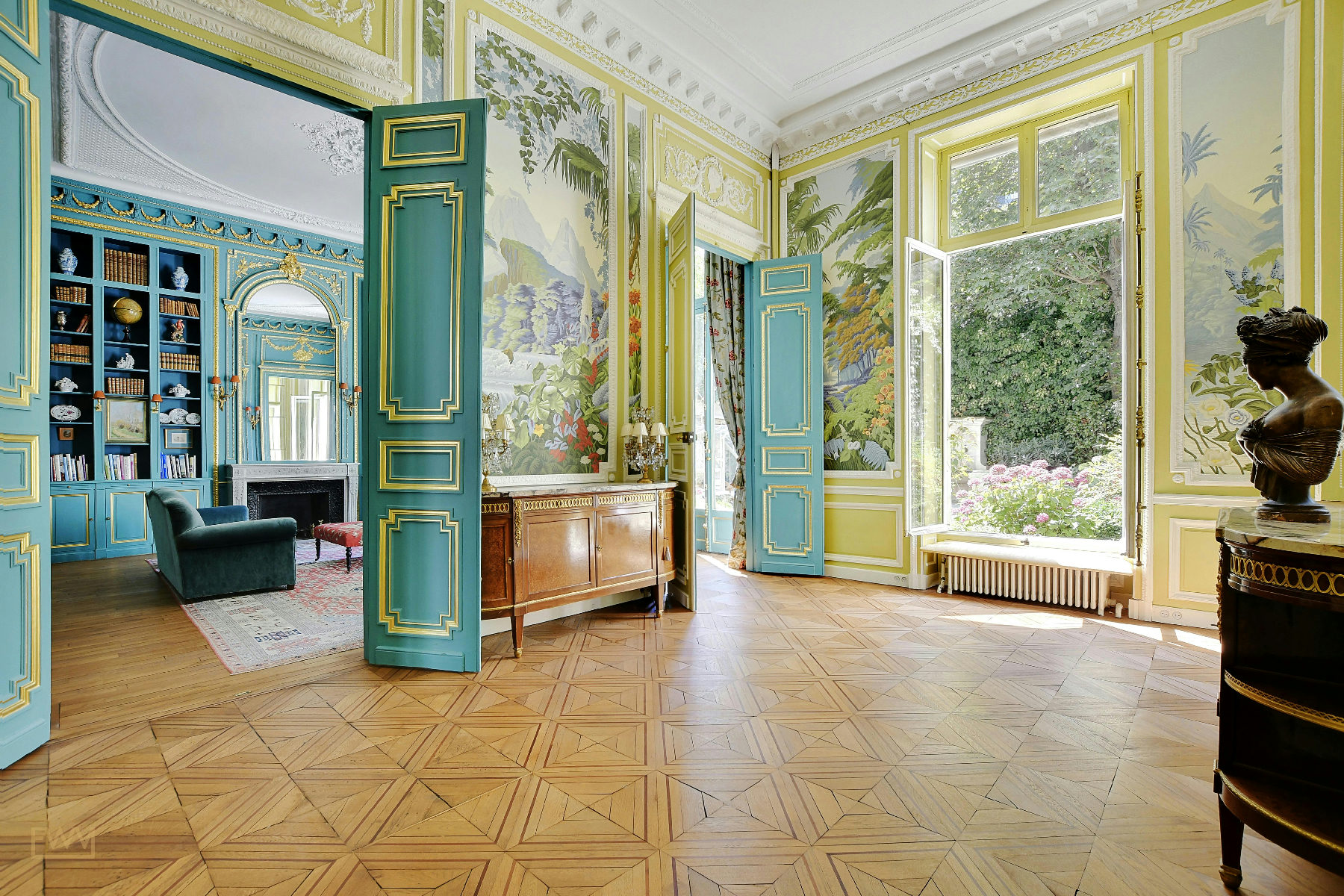
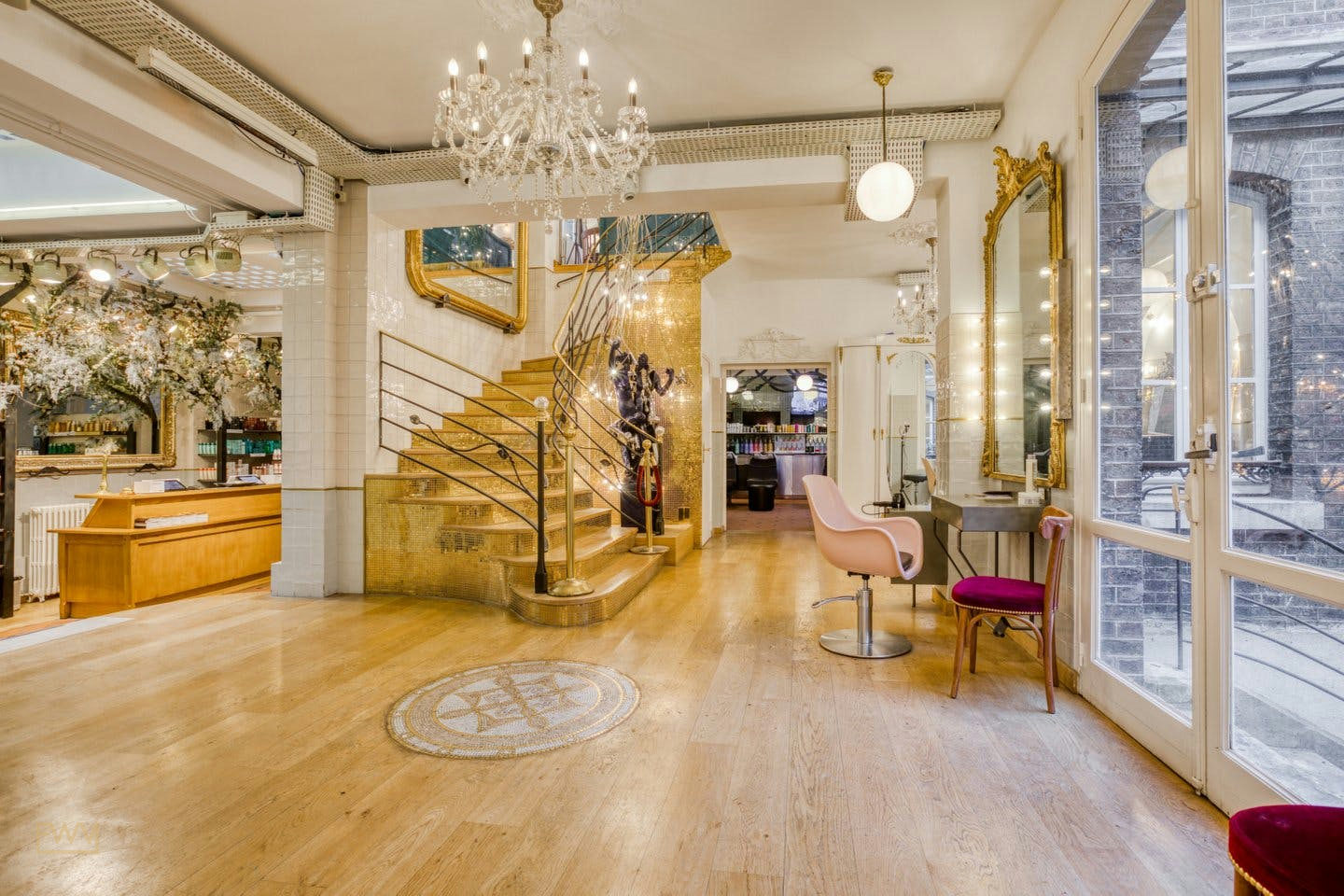
Paris also offers something increasingly rare in global retail: physical spaces with authentic architectural character. From the vaulted stone cellars of the Marais to the glass-and-iron arcades near Rue de Rivoli, from raw concrete loft studios in Sentier to the elegant private courtyards of the Golden Triangle, the diversity of space types available for short-term rental in Paris is exceptional. These environments are not simply functional. They carry cultural and aesthetic resonance that supports brand storytelling in ways that purpose-built exhibition centres cannot replicate.
KEY TAKEAWAY: Paris is not one retail market but a collection of distinct micro-markets, each with different visitor profiles, rental dynamics, permit requirements, and brand associations. Understanding these distinctions before committing to a short-term lease is the foundation of a successful activation strategy.
The following sections map the Parisian retail landscape in detail, covering neighbourhoods, space types, legal frameworks, budget considerations, and platform and agency options for brands at every stage of their Paris activation planning.
Parisian Neighbourhoods and Landmarks: Where to Locate Your Pop-Up or Showroom
The arrondissement and neighbourhood you choose for a short term retail rental in Paris will determine your foot traffic profile, your visitor demographics, your rental cost range, and the brand positioning signals you send to the market. Each major retail zone in Paris has a distinct character, clientele, and commercial dynamic.
Le Marais: Culture, Fashion, and International Visitors
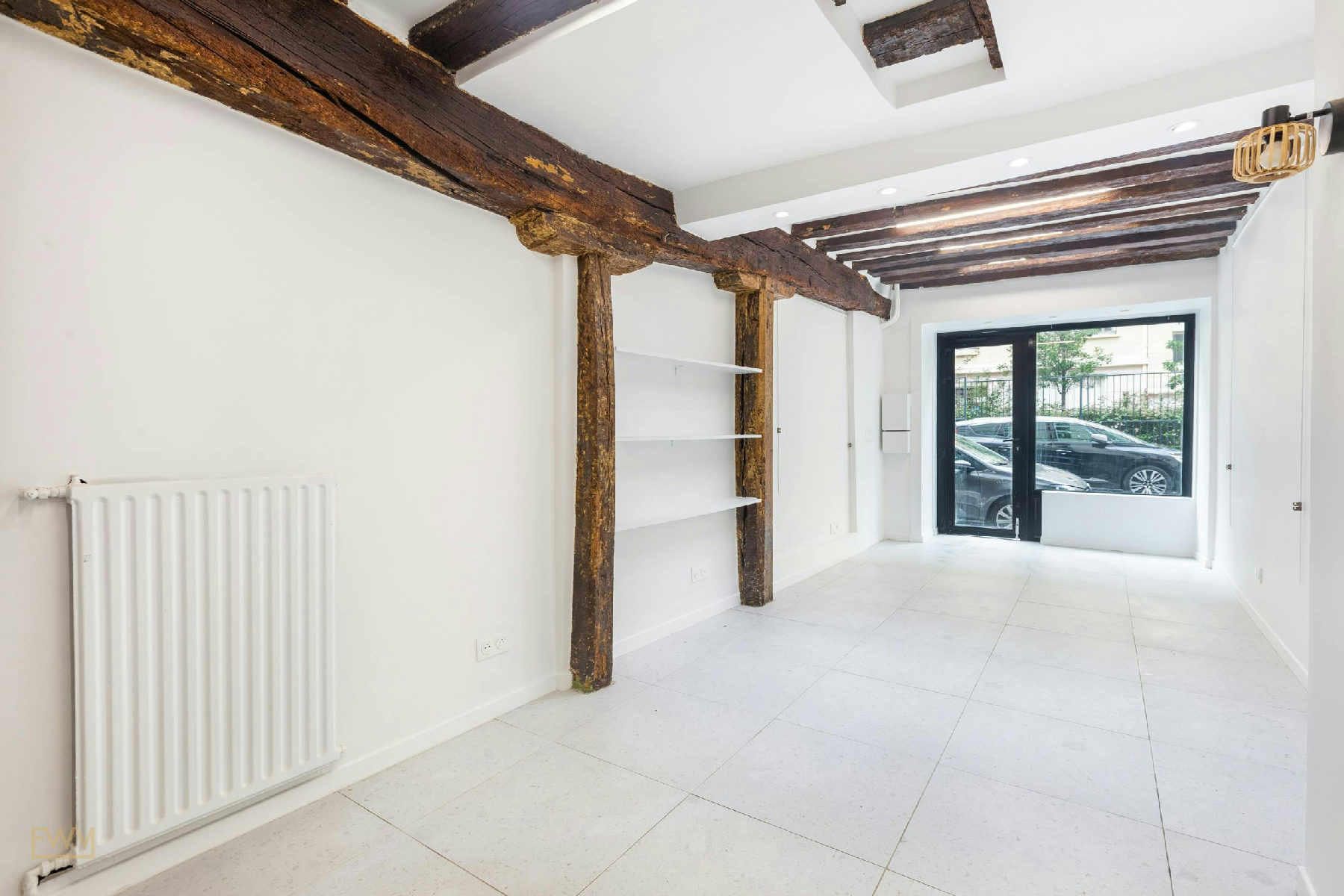
Le Marais, spanning the 3rd and 4th arrondissements, is the most consistently in-demand zone for pop-up stores, boutique retail, art gallery activations, and fashion showrooms. The neighbourhood combines a dense concentration of independent fashion boutiques, contemporary art galleries, and cultural institutions with one of the highest pedestrian footfall rates in Paris. The Marais attracts a mixed clientele that includes international tourists, Parisian fashion insiders, creative professionals, and gallery visitors. This breadth of audience makes it particularly effective for brands seeking both brand engagement and direct retail sales. Space types in the Marais range from heritage stone-walled gallery spaces and converted workshops to purpose-designed boutique storefronts with polished concrete floors and full-height glazed frontages.
Saint-Germain-des-Prés and Saint-Germain: Intellectual Luxury
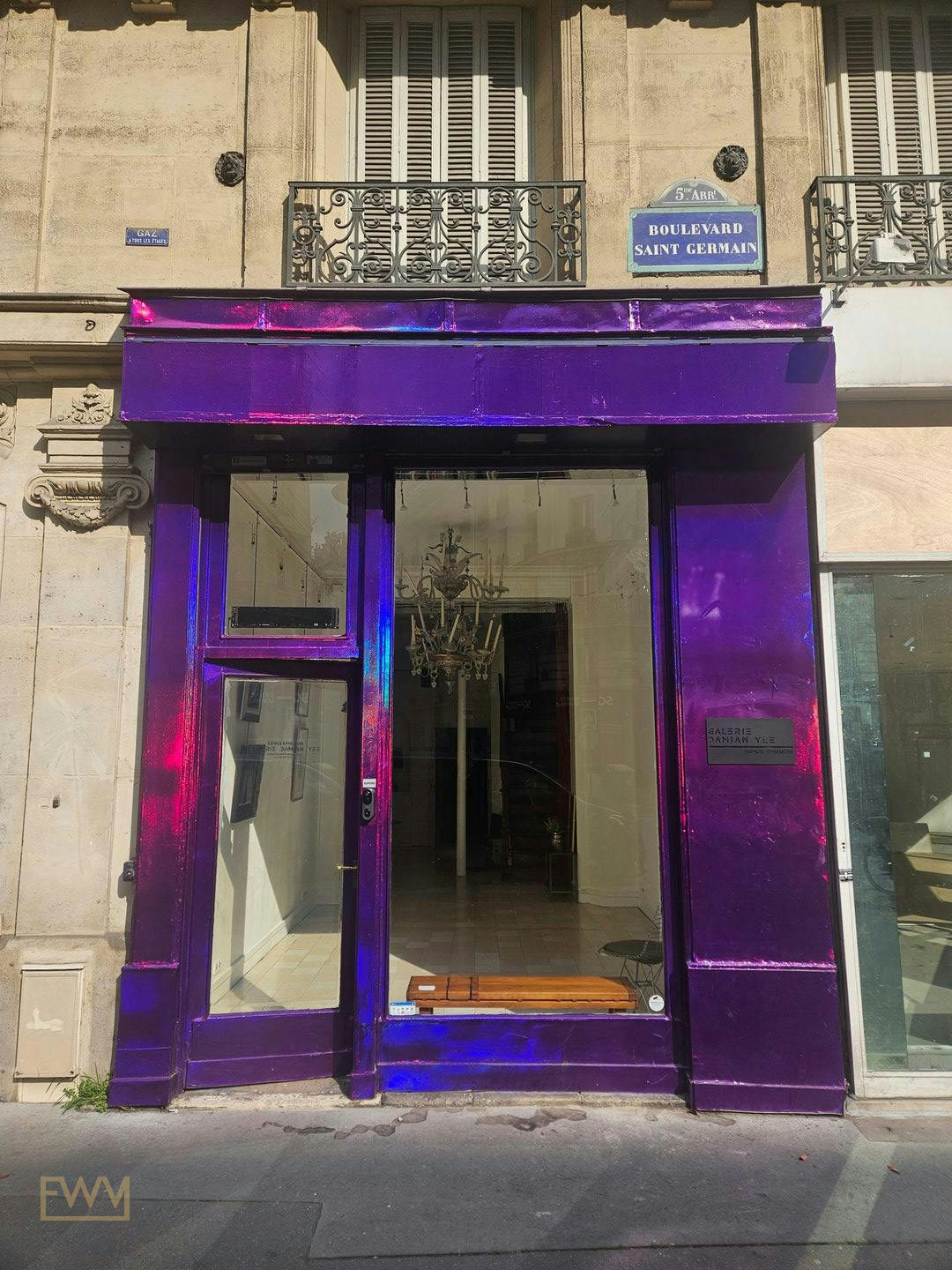
Saint-Germain-des-Prés and the broader Saint-Germain zone in the 6th arrondissement attract a more established luxury consumer. The neighbourhood has a strong association with French literary and intellectual culture, and its retail offer reflects this with an emphasis on quality, heritage, and curation over trend-driven activations. Brands in beauty, lifestyle, and premium fashion benefit particularly from Saint-Germain placements. Spaces here tend to be smaller in square meters than Marais alternatives, but the architectural quality is often exceptional, with many units offering original period features, natural stone floors, and high ornate ceilings.
The Golden Triangle, Place Vendôme, and Saint-Honoré
The Golden Triangle, defined by Avenue des Champs-Elysées, Avenue Montaigne, and Avenue George V in the 8th arrondissement, along with the adjacent Place Vendôme and Rue Saint-Honoré in the 1st arrondissement, represents the apex of Parisian luxury retail. Brands that activate in this zone send an unambiguous signal about their market positioning. The clientele is predominantly high-net-worth, with a strong international component. Short-term leases in the Golden Triangle and Vendôme areas command the highest rental values in Paris, and spaces in these zones are rarely available through open listing platforms. Most are secured through specialist agency relationships or direct landlord networks. The 1st arrondissement, which encompasses Palais-Royal, Rue de Rivoli, and the Louvre surroundings, also offers significant prestige and exceptionally high visitor volumes, including both fashion insiders during Fashion Week and international cultural tourists throughout the year.
Palais-Royal: Prestige, Intimacy, and Architectural Distinction
The Palais-Royal garden and its surrounding arcades represent one of the most architecturally distinctive short-term retail environments in Paris. Brands that activate here benefit from a sense of exclusivity and intimacy that contrasts with the mass-market exposure of Champs-Élysées. The covered arcades attract a fashion-literate, design-aware visitor who actively seeks out non-mainstream retail experiences. Space availability in the Palais-Royal area is limited and competitive.
Champs-Élysées, Galeries Lafayette, and Printemps
The Avenue des Champs-Elysées remains one of the world's most visited retail streets, with Galeries Lafayette Champs-Élysées and the historic Printemps Haussmann nearby drawing enormous daily visitor volumes. Brands seeking maximum footfall and broad demographic reach rather than niche brand positioning may find the Champs-Élysées zone or concession-style activations within the Galeries Lafayette ecosystem a productive option, though the format is quite different from an independent pop-up store or showroom.
Sentier and Pigalle: Emerging Creative Energy
The Sentier district, historically the heart of the French fashion wholesale trade in the 2nd arrondissement, has evolved into one of Paris's most dynamic creative and brand activation zones. It attracts younger fashion brands, streetwear labels, digital-first concepts, and creative studios. Space types in Sentier tend to offer larger floor plates at more accessible rental levels, making it a practical choice for brands that require volume, flexibility, and a creative atmosphere. Pigalle, adjacent to Montmartre in the 9th and 18th arrondissements, has similarly attracted fashion and lifestyle brands seeking an edgier, less corporate environment with a strong social media aesthetic.
Montmartre and Ch'telet-les-Halles
Montmartre offers a bohemian, artistic atmosphere that suits lifestyle, beauty, and artisan brands. Its steep streets and village-like character create distinctive retail environments that photograph well and generate strong social media content. Ch'telet-les-Halles, at the commercial heart of central Paris, offers exceptional transport connectivity and a broad mass-market consumer base, making it suitable for activations that prioritise volume and accessibility over exclusivity.
Quick answer: The most sought-after locations for leasing commercial space in Paris for short-term retail and pop-up activations are Le Marais, Saint-Germain-des-Prés, the Golden Triangle including Place Vendôme and Saint-Honoré, Palais-Royal, and Sentier. Each neighbourhood offers a distinct visitor profile, brand positioning context, and rental cost range suited to different brand strategies and activation objectives.
To compare neighbourhoods and space types, explore the Paris city hub on Fashion Week Venues and shortlist spaces that match your brief, budget, and calendar window.
KEY TAKEAWAY: Neighbourhood choice is a brand positioning decision as much as a logistical one. The right arrondissement aligns your activation's visitor profile with your target customer, and a specialist agency familiar with each district's rental dynamics and permit requirements will help you avoid costly misjudgements.
Space Types Available for Short Term Retail Rental in Paris
The diversity of space types available for temporary retail in Paris is one of the city's greatest assets for brand activations. Understanding what each format offers, and what it requires operationally, is essential before you begin shortlisting options or contacting landlords.
Pop-Up Store and Charming Boutique Formats
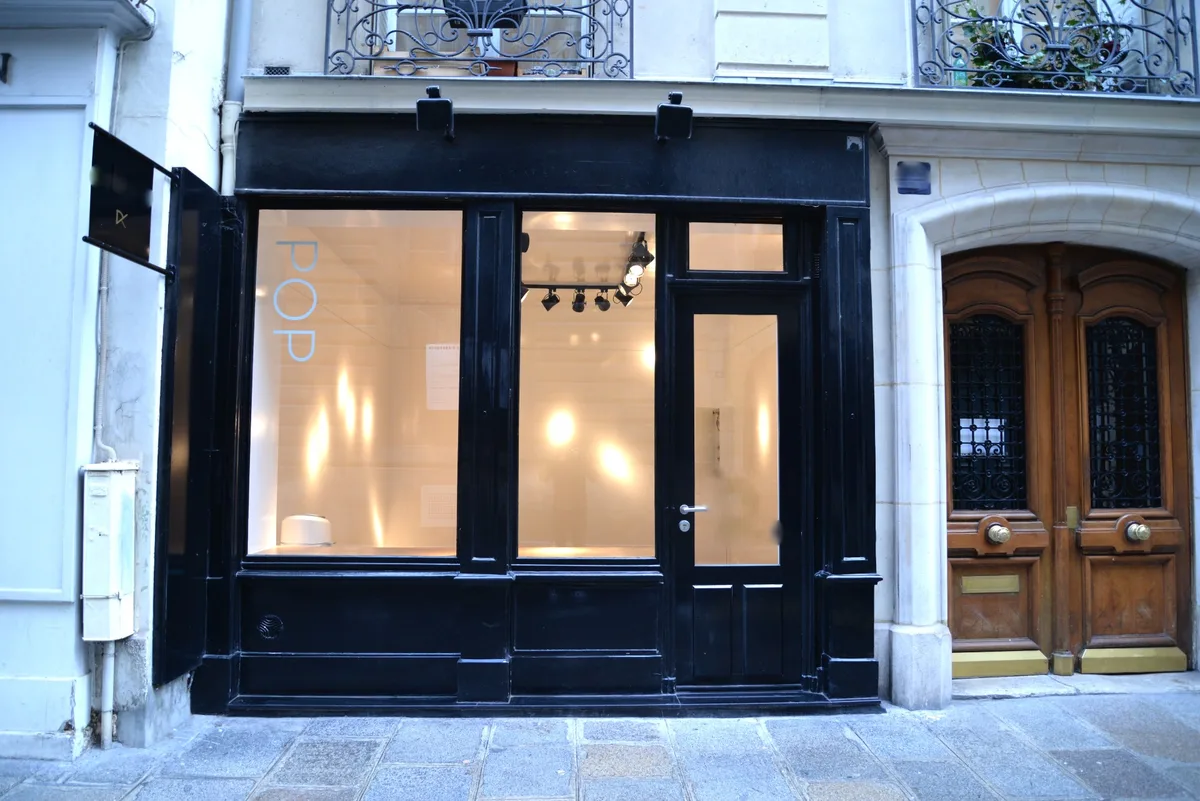
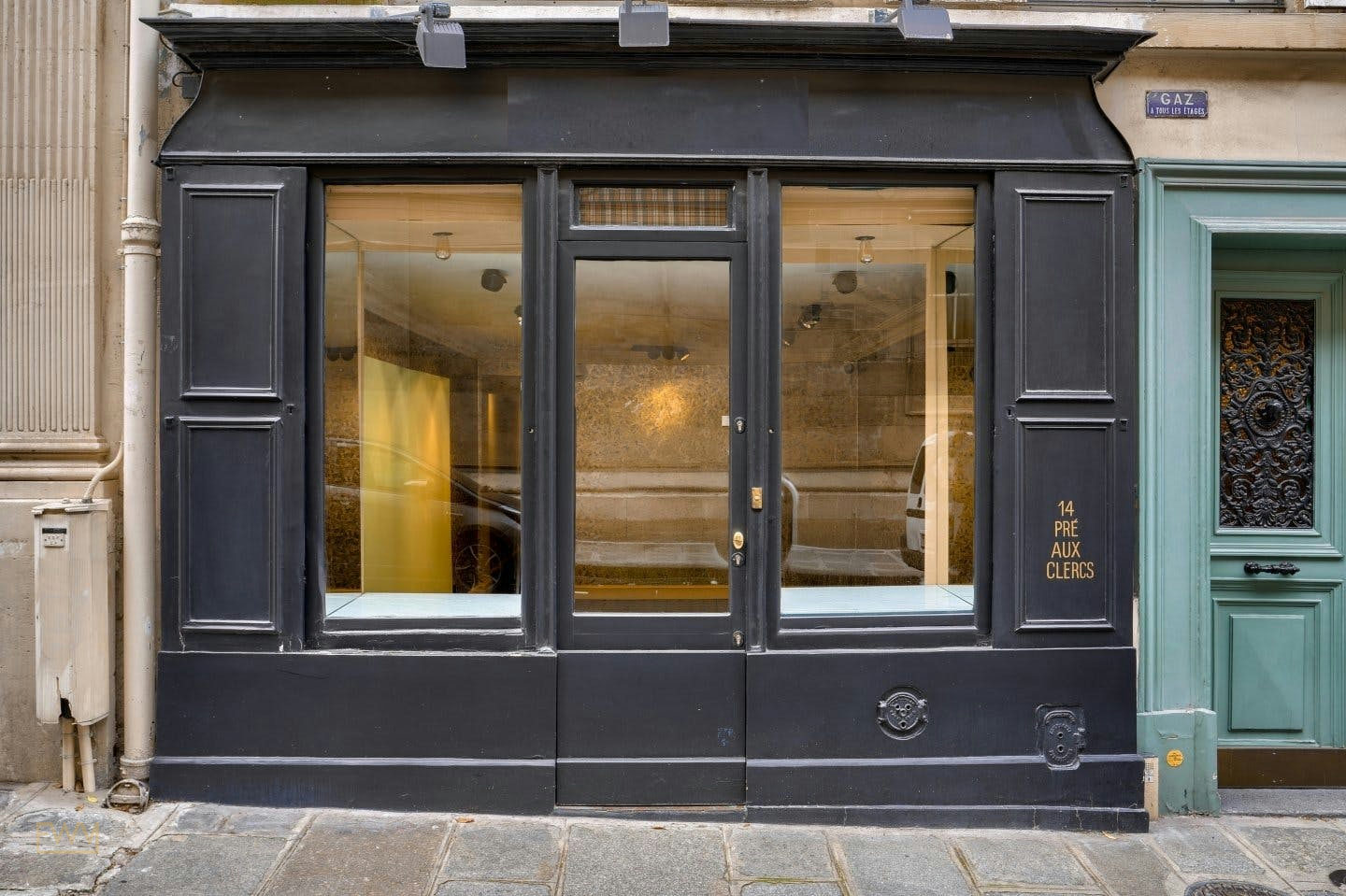
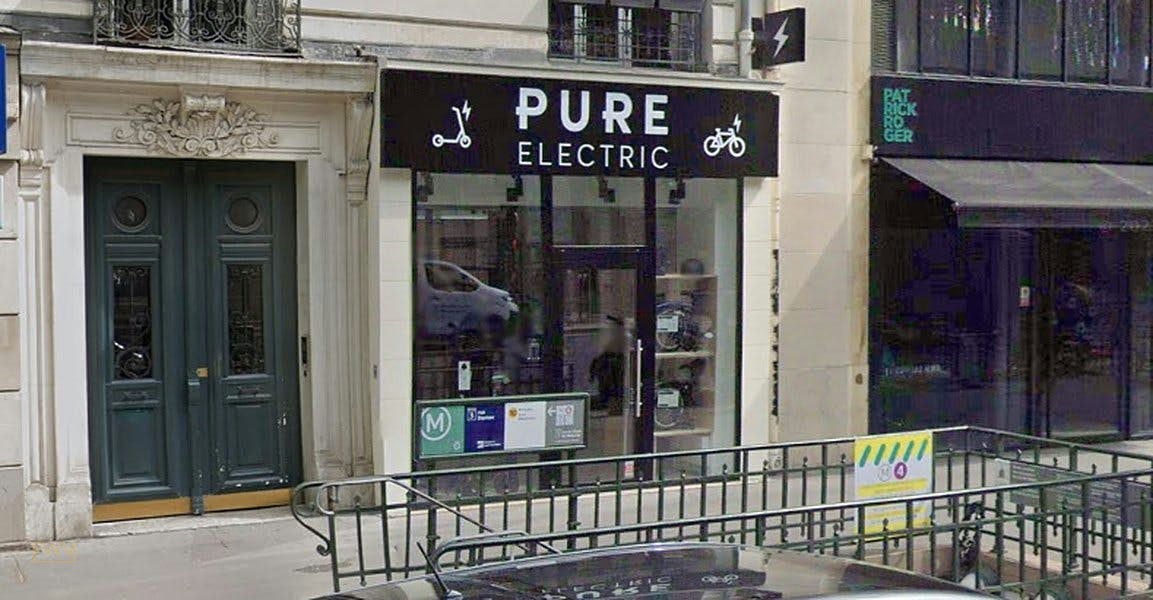
The standard pop-up store format in Paris ranges from compact 20 to 40 square meter street-level boutiques in the Marais or Saint-Germain to larger 100 to 200 square meter flagship-style storefronts in the 1st or 8th arrondissements. Charming boutique spaces often feature original period details, wooden floors, ornate mouldings, and intimate proportions that lend themselves particularly well to premium fashion, accessories, beauty, and lifestyle brands. These spaces typically require a short-term lease arrangement under the bail dérogatoire framework and may need additional permits for exterior signage or branded window installations depending on the building's listed status and the arrondissement's urban planning rules.
Fashion Showroom Spaces
A fashion showroom differs from a retail pop-up in its function and visitor flow. Showrooms are appointment-based spaces designed to present collections to buyers, press, stylists, and editors rather than to generate direct consumer sales. Paris showroom spaces are concentrated particularly around the 1st, 8th, and 16th arrondissements, with clusters near the Tuileries Garden, Place Vendôme, and the Golden Triangle reflecting their proximity to the traditional fashion industry infrastructure. Showroom spaces typically require good natural light, clean neutral finishes, adequate hanging and display capacity, and professional meeting areas. Some brands combine showroom and retail functions in a single space during Fashion Week, running wholesale appointments by day and consumer-facing events by evening.
Art Gallery and Galerie Joseph Style Spaces
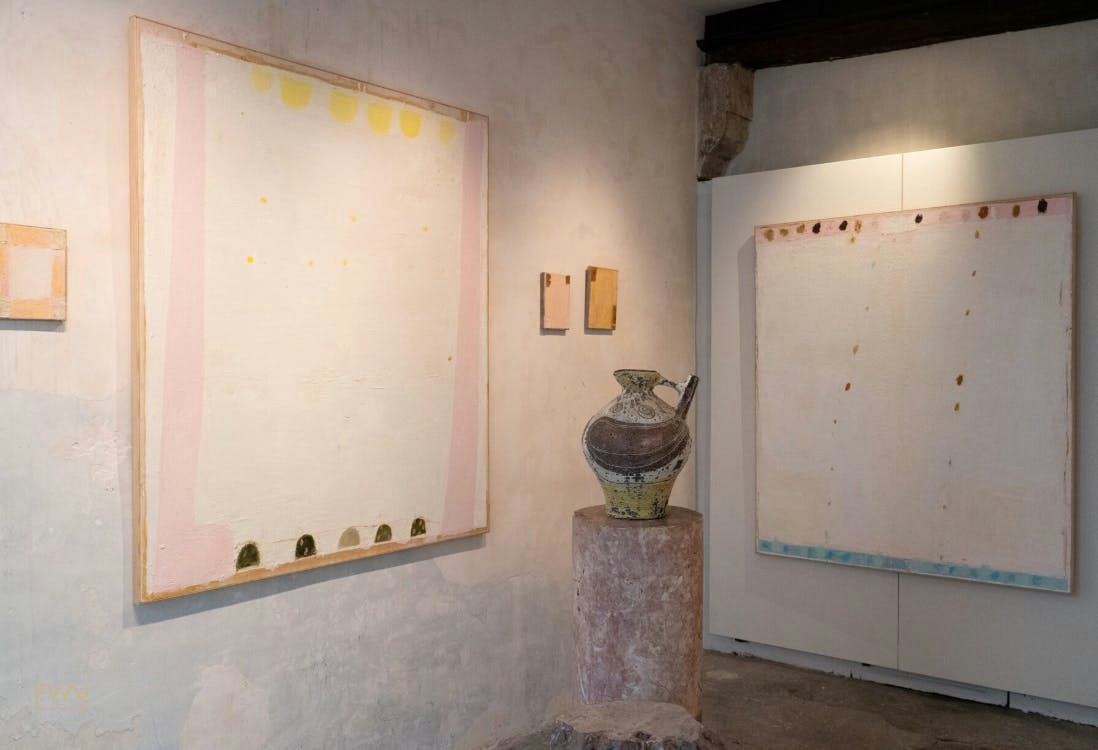
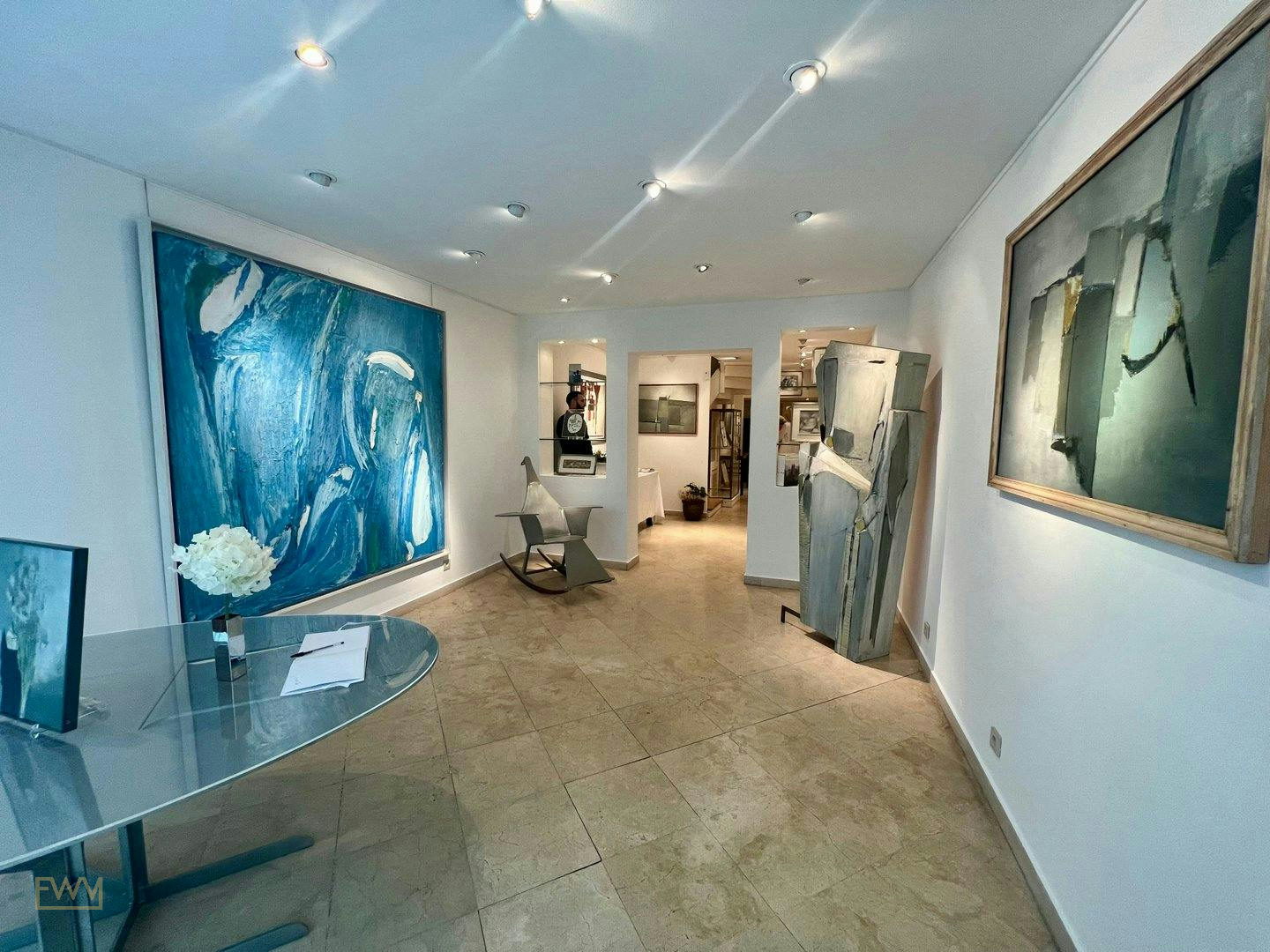
Paris has a significant supply of white-cube gallery spaces that are routinely made available for short-term retail, product launch events, and brand activations. The Galerie Joseph format, referencing one of Paris's best-known event space operators in the Marais, represents a broader category of adaptable gallery environments with polished concrete floors, spotlights or track lighting, high ceilings, and open plan layouts that provide a flexible canvas for branded installations. These spaces are particularly well-suited to brands that want to create an immersive brand experience rather than a conventional retail environment.
Studio Photo and Creative Spaces
Studio photo spaces, which offer professional lighting rigs, raw or polished concrete floors, generous ceiling heights, and a neutral aesthetic, are frequently used for brand activations, content creation events, and product launches. These spaces are distributed across arrondissements including Sentier, Pigalle, and the eastern districts, and they offer a practical solution for brands that need a dual-purpose space combining visual content production with brand experience events.
Apartment and Residential-Style Spaces
A uniquely Parisian format is the use of Haussmann apartment spaces, private maisons, or residential-style interiors for brand activations. These spaces provide an intimate, domestic atmosphere that contrasts sharply with conventional retail environments and creates a sense of private discovery for invited guests. Apartment-format spaces are particularly effective for jewellery, fragrance, couture, and high-end lifestyle brands seeking an ultra-exclusive brand engagement context. These spaces require careful attention to building regulations and insurance requirements, as they are not typically configured for public commercial use.
Storefront Spaces by Floor and Access Type
When evaluating storefront options in Paris, floor level and access type are critical operational variables. Street-level storefronts with direct frontage on a major shopping street maximise natural foot traffic and casual discovery. However, first-floor or mezzanine spaces accessed via a separate entrance can offer significantly better value per square meter while still achieving strong visitor numbers when supported by effective directional marketing and social media content. Basement or lower-ground-floor spaces with polished concrete floors and dramatic lighting often create particularly powerful atmospheric environments for brand activations, though they require stronger event programming and promotion to drive discovery.
| Space Type | Best For | Typical Size Range | Key Features | Primary Neighbourhoods |
|---|---|---|---|---|
| Pop-Up Boutique | Direct consumer sales, brand launches | 20 to 150 sq m | Street frontage, display windows, retail fixtures | Marais, Saint-Germain, Sentier |
| Fashion Showroom | Wholesale appointments, press previews | 50 to 300 sq m | Natural light, hanging rails, meeting area | 1st, 8th, 16th arrondissements |
| Art Gallery Space | Brand experience, product launches, installations | 80 to 500 sq m | White walls, polished concrete, track lighting | Marais, Pigalle, Saint-Germain |
| Studio Photo Space | Content creation, launch events, dual-use | 100 to 400 sq m | Professional lighting, raw concrete, open plan | Sentier, Pigalle, East Paris |
| Apartment Format | Ultra-exclusive presentations, couture, jewellery | 60 to 200 sq m | Residential character, intimate atmosphere | Golden Triangle, Saint-Germain, Marais |
| Storefront Flagship | High-visibility retail, flagship pop-ups | 150 to 600 sq m | Premium frontage, full glazing, strong foot traffic | Champs-Élysées, Saint-Honoré, Vendôme |
Quick answer: Paris offers pop-up boutiques, fashion showrooms, art gallery spaces, studio photo environments, apartment-format spaces, and large storefront flagships for short-term rental. Each type suits different brand objectives, visitor profiles, and budget levels. Choosing the correct space type before searching for specific locations will save significant time and avoid misaligned negotiations.
KEY TAKEAWAY: Space type selection should precede neighbourhood selection in the planning process. A brand that requires a fashion showroom environment will have different space requirements, lease structures, and permit needs than a brand planning a direct-to-consumer pop-up store, even if both are targeting the same arrondissement.
Short-Term Lease Structures, Permits, and Legal Compliance in Paris
Navigating the legal and regulatory landscape for short term retail rental in Paris requires specialist knowledge that goes well beyond what a standard commercial property broker or listing platform can provide. French commercial real estate law is significantly more protective of tenants than many international brands expect, and the permit requirements for temporary retail activations vary considerably by space type, arrondissement, and the nature of the planned activity.
The Bail Dérogatoire: The Legal Framework for Temporary Retail
The bail dérogatoire is the primary legal instrument for short-term commercial leases in France. Unlike the standard bail commercial, which triggers tenant renewal rights and statutory protections after three years of occupation, the bail dérogatoire is explicitly designed for temporary use and can be agreed for a duration of up to three years in total. Both parties must explicitly acknowledge in writing that the lease is a bail dérogatoire and not a bail commercial. If a tenant remains in the property beyond the agreed dérogatoire period without a new agreement being signed, the arrangement can automatically convert to a full bail commercial, which carries significantly different obligations for both parties. For most pop-up and showroom activations lasting days, weeks, or a few months, the bail dérogatoire is the standard instrument, and brands should ensure their legal advisor reviews the agreement before signing.
Autorisation d'Occupation Temporaire (AOT)
For activations taking place in public spaces, including pop-up installations on public squares, in parks, or under covered public arcades, brands may require an Autorisation d'Occupation Temporaire (AOT) rather than or in addition to a standard lease. The AOT is granted by the relevant local authority, typically the mairie of the arrondissement concerned, and involves an application process that varies in complexity depending on the location, the scale of the installation, and the duration of the occupation. AOT applications for high-profile locations such as the Palais-Royal or the Tuileries can involve extended review periods and significant fees. Brands should allow a minimum of eight to twelve weeks for AOT applications in premium locations and should work with an advisor who has direct experience of the relevant administrative authority.
Signage, Facade Modification, and Urban Planning Permits
Paris is subject to strict urban planning controls, particularly in designated heritage zones and around listed buildings. Any modification to a building's external facade, including branded signage, vinyl window installations, or temporary external structures, may require a permit from the Direction de l'Urbanisme of the relevant arrondissement. Requirements vary considerably: a simple printed window graphic on a ground-floor retail unit in Sentier will be treated very differently from an illuminated brand installation on a building facade in the Place Vendôme zone. Brands planning any exterior brand expression should verify permit requirements with a French legal advisor before commissioning design or production work.
Chamber of Commerce and Industry Registration
International brands operating a commercial retail activity in France, including temporary pop-up stores, may be required to register with the relevant Chamber of Commerce and Industry (Chambre de Commerce et d'Industrie) depending on the nature and duration of their activity, and whether they have an existing French legal entity. Requirements vary based on factors including the brand's country of origin, the presence or absence of a French subsidiary, the duration of the activity, and the type of goods or services being sold. This is a frequently misunderstood area, and brands should not assume that a short-term activation automatically exempts them from French commercial registration obligations.
IMPORTANT: The information above is provided for general guidance only. Specific permit, registration, and lease requirements for your activation will depend on the space type, location, duration, and nature of your planned activity. Always verify requirements with a qualified French legal advisor before committing to a space or signing any agreement. Use the permit guidance tool on Fashion Week Venues to explore the relevant permit considerations for your activation type.
Quick answer: Short-term retail rental in Paris typically uses the bail dérogatoire legal framework, which allows leases up to three years without triggering standard commercial lease renewal rights. Brands also need to check requirements for signage permits, the Autorisation d'Occupation Temporaire for public space activations, and potential Chamber of Commerce registration depending on their legal entity status in France.
KEY TAKEAWAY: Legal and regulatory compliance for temporary retail in Paris is not a box-ticking exercise. A single permit omission or lease structure error can result in fines, forced closure, or unintended long-term lease obligations. Specialist legal advice and an agency with direct Paris experience are essential components of a compliant activation.
Understanding the Cost of Short Term Retail Rental in Paris
The cost of short term retail rental in Paris spans an extremely wide range depending on location, space type, floor level, duration, and the level of finish and equipment included. Brands planning their first Paris activation frequently underestimate total costs by focusing on headline rental figures while overlooking the full range of direct and indirect expenses associated with a temporary retail operation.
Rental Cost Factors and Directional Ranges
Rental rates for short-term commercial spaces in Paris are typically quoted per square meter per month or per day for very short activations. Premium locations such as Place Vendôme, Rue Saint-Honoré, and Avenue des Champs-Elysées command substantially higher rates than emerging creative districts such as Sentier or Pigalle. The degree of finish, the inclusion or exclusion of furniture and fixtures, and the presence of professional lighting installations such as spotlights or track systems also affect the total rental cost significantly. Spaces with polished concrete floors, integrated track lighting, and a turn-key retail fit-out will typically command a premium over raw or unfinished spaces that require the tenant to bring all elements of the fit-out.
It is important to note that rental cost is only one component of the total activation budget. Additional cost categories typically include production and fit-out, branded store design, furniture rental, retail staffing, POS and payment systems, logistics, insurance, permit fees, marketing and influencer costs, and agency management fees. For brands planning their first Paris activation, using a structured budget planning tool before engaging with specific spaces will prevent scope creep and avoid commitment to spaces that appear affordable at headline rental level but become unviable once all associated costs are factored in.
Brands should use the budget estimation tool on Fashion Week Venues to build a realistic total cost model before beginning space searches or entering negotiations.
What Affects Total Activation Cost Beyond Rent
The following categories are consistently underestimated by brands planning their first Paris pop-up or showroom:
- Branded store design and concept development, including architectural drawings and 3D visualisation
- Production and build costs for fixtures, installations, and temporary fit-out elements
- Furniture rental for display units, seating, reception desks, and display tables
- Retail staffing including bilingual French and English-speaking sales advisors and security
- POS and payments systems compatible with international payment methods and French fiscal requirements
- Professional lighting equipment or the upgrade of existing spotlight systems in the space
- Permit fees for signage, facade modifications, and AOT applications where relevant
- Insurance covering public liability, product liability, and property damage
- Logistics covering transportation, customs clearance for non-EU brands, and installation labour
- Marketing and social media content production costs to drive foot traffic and brand awareness
TIP: When comparing spaces from different sources, always establish whether the quoted rental rate is inclusive or exclusive of VAT, whether service charges or building management fees apply, and whether any minimum activation or event programme requirements are attached to the space agreement.
Quick answer: The cost of renting a retail space in Paris for a short-term activation depends on location, size, duration, and level of finish. Headline rental rates vary enormously across arrondissements and space types. However, total activation cost including design, production, staffing, permits, and marketing is consistently higher than headline rental alone suggests. Always budget for all cost categories before committing to a space.
KEY TAKEAWAY: A detailed and realistic budget built across all activation cost categories, not just rental, is the foundation of a viable Paris short-term retail strategy. The most common cause of budget overrun in Paris activations is an incomplete initial cost model that focuses on rental while treating production, staffing, and marketing as secondary considerations.
Finding Short Term Retail Spaces in Paris: Platforms, Brokers, and Agencies
Brands searching for short term retail rental in Paris have access to a range of discovery channels, each with different strengths, limitations, and appropriate use cases. Understanding the differences between listing platforms, broker professionals, and full-service agencies will help you choose the right discovery method for your specific activation brief.
Commercial Property Listing Platforms
General commercial property platforms including LoopNet and CoStar are primarily designed for long-term commercial leases and investment properties rather than short-term retail activations. Their listings in France tend to focus on standard leasehold and freehold commercial real estate transactions rather than short-term or pop-up formats. While these platforms may surface occasional short-term options, they are not optimised for the specific search parameters that matter most to brands planning temporary retail activations, including activation dates aligned with Fashion Week calendars, space types filtered by ceiling height, floor finish, and lighting type, or neighbourhoods filtered by visitor profile and brand positioning fit.
Platforms such as Storefront and Peerspace have introduced a more activation-focused space discovery model that is better aligned with short-term retail needs. Storefront in particular has built a significant inventory of Paris spaces listed for short-term rental, with filters covering space type, neighbourhood, size, and price range. However, these platforms function primarily as listings marketplaces and do not provide the advisory, legal, production, or activation management services that brands typically need to execute a successful Paris pop-up or showroom.
Broker Professionals and Blue Listings
Traditional French real estate brokers who specialise in commercial property can provide access to spaces that are not listed on open platforms, particularly in premium locations where landlords prefer to manage availability through trusted broker relationships. However, broker professionals operate primarily within the framework of standard commercial leases and may not be well-positioned to advise on the specific legal structures, permit requirements, and operational logistics relevant to short-term brand activations. Broker fees in France are typically structured as a percentage of the total rental value and are payable in addition to the agreed rent.
Full-Service Pop-Up Agencies
Full-service pop-up shop agencies offer a fundamentally different model from listing platforms or traditional brokers. Rather than simply connecting a brand with a space, a full-service agency manages the entire activation lifecycle from initial brief development and space sourcing through concept direction, branded store design, production and build, retail staffing, POS and payments, and post-activation data and analytics. This model is particularly valuable for international brands entering Paris for the first time, brands activating during the high-pressure Fashion Week calendar, and brands that need to manage complex multi-city activations simultaneously. The guide to hiring a pop-up agency provides a structured framework for evaluating and selecting the right agency partner for your brand.
| Discovery Channel | Best For | Limitations | Typical Fee Structure |
|---|---|---|---|
| LoopNet / CoStar | Long-term commercial leases, investment properties | Limited short-term and pop-up inventory in Paris | Subscription or listing fee |
| Storefront / Peerspace | Short-term space discovery, self-service booking | No advisory, legal, or production services | Platform commission on booking |
| Broker Professionals | Premium and off-market space access | Standard lease focus, limited short-term expertise | Percentage of total rental value |
| Full-Service Agency | End-to-end activation management | Higher total fee, less suitable for self-managed brands | Project management fee or percentage of total budget |
| Direct Landlord Outreach | Established brands with Paris market knowledge | Time-intensive, requires French language and legal expertise | Rental rate only |
Quick answer: Brands can find short-term retail spaces in Paris through listing platforms such as Storefront, traditional broker professionals, and full-service pop-up agencies. Listing platforms provide self-service discovery but no activation support. Broker professionals offer market access but are primarily oriented toward standard commercial leases. Full-service agencies manage the full activation lifecycle and are best suited to brands that need end-to-end support and specialist Paris market expertise.
KEY TAKEAWAY: The right discovery channel depends on your brand's level of Paris market experience, your internal activation management capabilities, and the complexity of your planned activation. Brands new to Paris consistently underestimate the operational complexity of temporary retail and benefit most from full-service agency support.
Timing Your Paris Activation: Fashion Week, Seasonal Calendars, and Lead Times
The timing of a short term retail rental in Paris is as strategically important as the location and space type. Paris operates on a series of distinct commercial and cultural calendar peaks that create concentrated windows of opportunity for brand activations, each with its own visitor profile, competition for space, and lead time requirements.
Paris Fashion Week: Women's, Men's, Haute Couture, and Resort
Paris Fashion Week in its various editions creates the highest-concentration opportunity windows for fashion and luxury brand activations. The women's ready-to-wear collections run over approximately ten days in late September and again in late February or early March. The men's collections run in January and June. The haute couture weeks run in January and July. Each of these windows attracts international press, buyers from major retailers including Galeries Lafayette and Printemps, influencers, and high-net-worth private clients in volumes that represent the single most commercially and editorially valuable foot traffic opportunity in European fashion. Brands that align their Paris pop-up store or showroom with these calendar windows require the longest lead times and should expect the most competitive space availability and rental conditions.
A common misconception is that Paris Fashion Week is the only viable calendar window for a brand activation in Paris. In reality, the period between collections, including the spring tourism peak from April to June and the autumn luxury retail season from September through November, can deliver excellent visitor volumes with significantly more space availability and more flexible rental terms. Brands should use the timeline planning tool to map their ideal activation window against space availability, lead time requirements, and permit processing timelines.
Lead Times by Activation Type
| Activation Type | Recommended Lead Time | Key Planning Milestones |
|---|---|---|
| Paris Fashion Week pop-up or showroom | 12 to 20 weeks | Brief confirmed, space shortlisted, lease signed, design approved, production complete, staff briefed |
| Seasonal product launch event | 8 to 14 weeks | Venue confirmed, concept developed, permits submitted, production scheduled, marketing launched |
| Ongoing temporary retail pop-up (4 to 12 weeks) | 6 to 10 weeks | Space identified, lease agreed, fit-out designed and built, staff recruited, opening communicated |
| Single-event brand activation | 4 to 8 weeks | Venue booked, concept confirmed, production delivered, guest list and marketing activated |
| AOT-dependent public space activation | 12 to 24 weeks | Location identified, AOT application submitted, design approved, production staged |
TIP: Space availability in prime Paris locations during Fashion Week months is typically committed six to twelve months in advance by repeat brand clients and anchor tenants. Brands entering the Paris market for the first time during Fashion Week should begin their search and brief process no later than six months before their intended opening date.
KEY TAKEAWAY: Timing a Paris activation correctly means aligning not just with the commercial calendar but with the practical reality of space availability, permit processing timelines, production lead times, and staff recruitment schedules. Under-investing in lead time is one of the most consistent causes of activation failure or compromised execution in Paris.
How Fashion Week Venues Supports Short Term Retail Rental in Paris
Fashion Week Venues is a full-service pop-up shop agency and space marketplace that supports brands seeking temporary retail spaces, fashion showrooms, pop-up stores, and brand activation venues across major fashion capitals, with Paris as its primary and most deeply developed market. The agency's service model is designed to address the full complexity of executing a short-term retail activation in Paris, from the initial brief stage through to post-activation performance analysis.
Venue Sourcing and Space Discovery
The agency's venue sourcing service goes beyond listing platform search. The team draws on an established network of Paris landlords, property managers, and space owners across all major retail districts, including spaces that are not publicly listed. This is particularly relevant for brands targeting premium locations in the Golden Triangle, Place Vendôme, Palais-Royal, and the Marais, where the best spaces are typically secured through direct relationships rather than open listing platforms. The agency's locator tool and compare tool allow brands to map and evaluate options against their brief, budget, and calendar requirements.
Concept Direction and Branded Store Design
Fashion Week Venues provides concept direction and branded store design services that translate a brand's identity and activation objectives into a physical retail environment. The Imagine tool allows brands to visualise how a space will look before committing to design and production expenditure. The Build tool supports detailed fit-out planning. These tools are particularly valuable for brands making remote decisions about Paris spaces, allowing creative teams to develop and approve concepts without requiring multiple in-person site visits.
Production, Fit-Out, and Furniture Rental
The agency manages production and build for temporary fit-outs, including custom fixtures, branded installations, and environmental graphics. Furniture rental is available for brands that need retail-quality furniture without the cost and logistics of purchasing and transporting pieces for a short-term activation. This is a frequently overlooked cost efficiency that is particularly relevant for brands activating in Paris from international markets where shipping costs and customs clearance timelines make furniture transport impractical.
Retail Staffing, POS, and Payments
Fashion Week Venues provides retail staffing services including bilingual sales advisors, brand ambassadors, security personnel, and event hosts suited to the Paris luxury and fashion market. POS and payment solutions are configured for the French market, supporting international card payments, contactless transactions, and the reporting requirements relevant to temporary retail operations in France. This combination of staffing and payments infrastructure removes one of the most operationally complex elements of setting up a short-term retail operation in a foreign market.
Data, Analytics, and Influencer Marketing
Post-activation data and analytics services allow brands to measure the commercial and brand performance of their Paris pop-up against defined KPIs, including foot traffic, conversion rates, average transaction values, social media reach, and press coverage. The ROI calculator tool provides a framework for pre-activation projection and post-activation benchmarking. Influencer marketing support connects brands with Paris-based content creators and fashion industry figures whose audiences align with the brand's target customer profile.
The Twin Co-Activation Concept
For brands that want to extend their Paris presence without bearing the full cost of a standalone space, the Twin concept offers a co-activation model in which two complementary brands share a space, dividing the cost while doubling the activation's content and event programming potential. This model is particularly well-suited to emerging brands entering Paris for the first time or to established brands seeking a lower-risk format for testing a new product category or customer demographic.
Quick answer: Fashion Week Venues supports brands planning short term retail rental in Paris through an integrated service model covering venue sourcing, concept direction, production, staffing, payments, data, and influencer marketing. The agency's tools including budget, ROI, timeline, permits, locator, and compare tools allow brands to plan, evaluate, and execute Paris activations with a higher degree of confidence and cost control than is typically achievable through listing platforms or traditional brokers alone.
KEY TAKEAWAY: The value of a full-service agency relationship in Paris is most clearly visible in complex activations where multiple service streams need to be coordinated simultaneously under time pressure. Brands that attempt to manage venue sourcing, legal compliance, design, production, staffing, and marketing independently for a first Paris activation consistently report higher stress, higher costs, and lower quality outcomes than brands supported by an experienced specialist agency.
Marketing, Foot Traffic, and Brand Engagement for Paris Pop-Ups
A well-located, beautifully designed Paris pop-up store or showroom will not automatically generate foot traffic or brand engagement. The marketing and activation strategy that surrounds your physical space is as important as the space itself, particularly in a market as competitive and media-saturated as Paris during Fashion Week or the peak retail season.
Social Media and Content Strategy
Paris is one of the world's most photographed cities, and a well-designed retail space or showroom in the right neighbourhood will generate significant organic social media content from visitors, influencers, and passers-by. Brands that design their Paris activation with social media content creation in mind, building Instagrammable moments, architectural details, and product display vignettes that reward photography, will consistently generate more earned media from their space than brands that treat the physical environment as purely functional. The interior design choices including lighting quality, whether spotlights, diffused ambient lighting, or dramatic directed light, floor finish including polished concrete or parquet, and the degree of brand-specific colour and material expression are all factors that influence social media content quality and volume.
Influencer Marketing and Paris Fashion Community
Paris has one of the world's densest concentrations of fashion industry influencers, stylists, editors, buyers, and creative directors. Brands that engage the Paris fashion community through targeted influencer marketing, press preview events, and exclusive launch moments can amplify their physical activation's reach far beyond the visitors who physically enter the space. The key is aligning influencer selection with the brand's target customer and positioning rather than simply pursuing follower volume. A Paris-based micro-influencer with 30,000 highly engaged fashion-specialist followers will typically deliver better brand engagement results for a premium fashion activation than a lifestyle macro-influencer with 2 million broadly distributed followers.
Product Launches and Event Programming
Structuring a Paris pop-up or showroom around a programme of events, including press previews, buyer appointments, consumer launch evenings, and brand collaboration events, creates multiple distinct waves of foot traffic and media coverage rather than a single opening moment. Product launches in Paris benefit from the city's concentration of specialist fashion press, and a well-timed launch event can generate coverage across French, European, and international media simultaneously. The design of the launch event environment, including the catering, lighting, and brand installation, should be consistent with the brand's overall concept direction and the aesthetic of the physical space.
Driving Foot Traffic Through Operational Channels
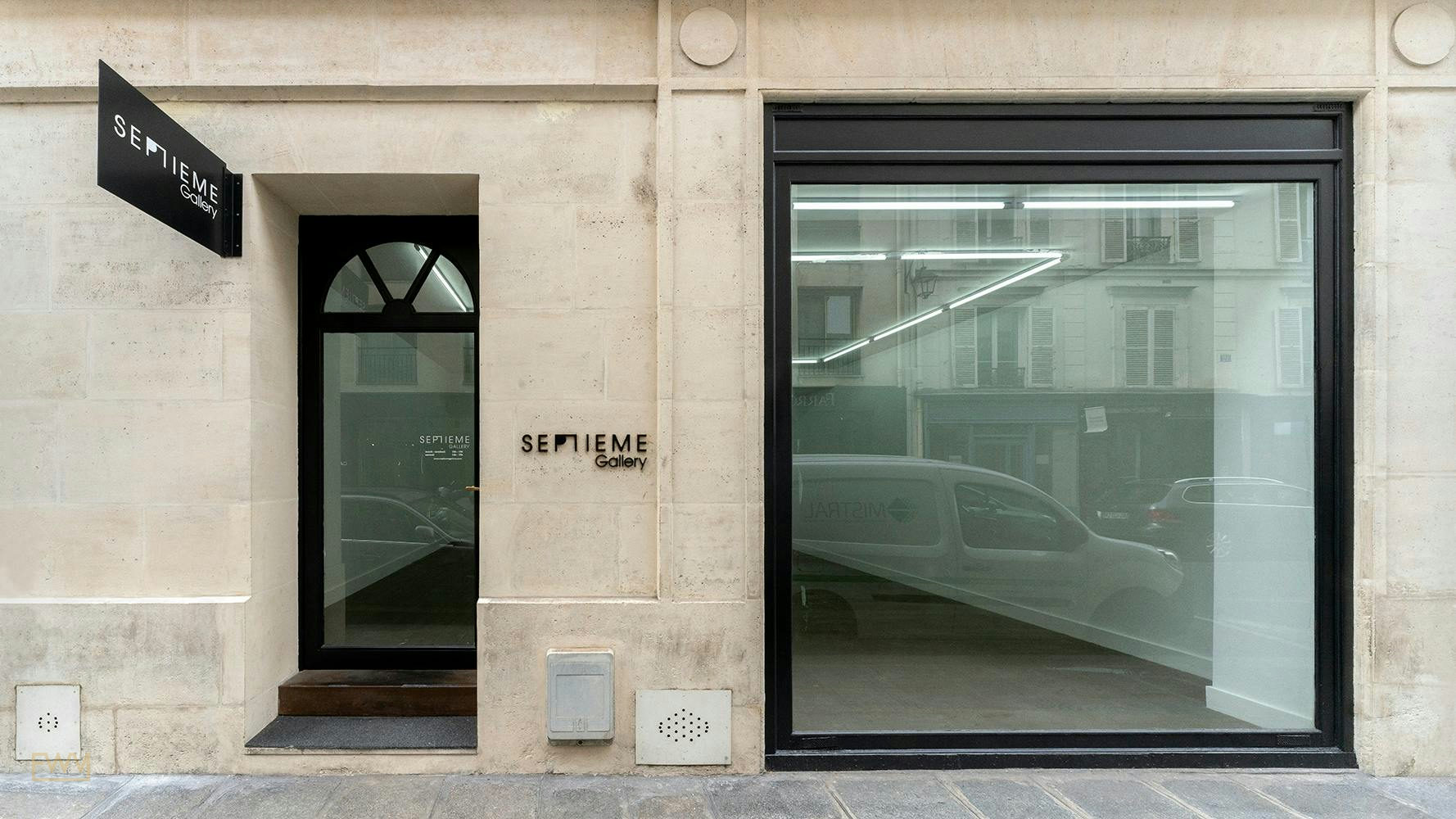
Beyond social media and influencer marketing, brands can drive foot traffic to their Paris pop-up through local fashion and lifestyle press outreach, collaboration with adjacent brands and cultural institutions, targeted email marketing to existing Paris-based customers and trade contacts, and strategic use of exterior signage and display window installations to capture passing foot traffic from pedestrians. In high-footfall locations such as the Marais or Rue de Rivoli, a well-executed exterior presentation can be one of the single most effective foot traffic drivers.
KEY TAKEAWAY: The marketing investment required to maximise the return on a Paris short-term retail rental is substantial and should be planned and budgeted in parallel with the physical space and production budget, not as an afterthought. Brands that treat marketing and activation as integral components of the space investment consistently outperform those that rely on location alone to generate visitor numbers.
Common Myths About Short Term Retail Rental in Paris Debunked
MYTH: You need a French legal entity to rent a retail space in Paris for a short-term activation.
FACT: International brands without a French subsidiary can and do rent short-term retail spaces in Paris under the bail dérogatoire framework. However, the specific requirements depend on the landlord, the space type, the duration of the activation, and the nature of the commercial activity. Some landlords require a French guarantor or bank deposit from international tenants. Obligations regarding Chamber of Commerce registration and VAT registration may also apply depending on the scale and duration of the activity. A qualified French legal advisor should confirm your specific obligations before you sign any agreement.
MYTH: Paris Fashion Week is the only viable calendar window for a brand activation in Paris.
FACT: While Paris Fashion Week creates peak concentration of fashion industry visitors, Paris sustains strong foot traffic and significant commercial opportunity throughout the year. The spring tourist season from April to June, the luxury retail peak from October through December, and the summer months in prime tourist zones all offer viable activation windows with more space availability and frequently more competitive rental terms than the Fashion Week peak. Many brands execute their most commercially successful Paris activations outside Fashion Week, when competition for press and consumer attention is lower and spaces are more accessible.
MYTH: Commission brokers are the only way to find a good retail space in Paris.
FACT: Traditional commercial property brokers represent one channel for space discovery but are not the only or necessarily the most effective option for short-term retail activations. Listing platforms, full-service pop-up agencies with established landlord networks, and direct outreach to space owners are all viable channels depending on the brand's brief, timeline, and required support level. Full-service agencies in particular often have access to premium off-market spaces that do not appear on open listing platforms or through broker networks, particularly in high-demand zones such as the Marais and the Golden Triangle.
MYTH: Short-term leases in Paris are legally straightforward and require no specialist advice.
FACT: The bail dérogatoire framework provides a legal basis for short-term commercial leases in France, but it requires careful drafting and explicit written acknowledgement by both parties to be valid. If the agreement is not correctly structured, a tenant may inadvertently trigger the protections and obligations of a full bail commercial, creating long-term legal and financial commitments that were never intended. Permit requirements for signage, facade modifications, and public space occupancy add further regulatory complexity that varies by arrondissement and space type. Specialist legal advice is not optional for a compliant and commercially secure Paris activation.
MYTH: A large space in Paris will automatically generate more foot traffic and higher sales than a small one.
FACT: Space size is not the primary driver of foot traffic or brand engagement in Paris temporary retail. Location, exterior presentation, marketing support, event programming, and the quality of the brand experience within the space are all significantly more important than square meters. A compact 30 square meter boutique on a key Marais pedestrian street with a well-designed window display and a strong social media presence will typically outperform a 300 square meter space in a secondary location with limited marketing investment. Right-sizing the space to the brand's operational capacity and budget is more important than maximising square meters.
Frequently Asked Questions About Short Term Retail Rental Paris
What are the most sought-after locations for short term retail rental in Paris?
The most in-demand locations for short-term retail rental in Paris are Le Marais in the 3rd and 4th arrondissements, Saint-Germain-des-Prés in the 6th, the Golden Triangle and Rue Saint-Honoré in the 8th and 1st arrondissements, Place Vendôme, and Palais-Royal. Each location offers a distinct visitor profile and brand positioning context. Sentier in the 2nd arrondissement and Pigalle in the 9th have also emerged as strong locations for contemporary fashion and lifestyle brands seeking creative environments at more accessible rental levels. Premium locations are booked furthest in advance and command the highest rental rates.
What is a Storefront 1er arrondissement space typically used for?
Storefront spaces in the 1st arrondissement of Paris are used for a wide range of short-term commercial activities including pop-up retail stores, fashion showrooms, product launch events, brand experience activations, jewellery and accessories presentations, and exclusive private preview events. The 1st arrondissement's proximity to Palais-Royal, Rue de Rivoli, the Louvre, and the Tuileries Garden gives it exceptional cultural prestige and strong international tourist foot traffic. Premium spaces in the Palais-Royal arcades and along Rue de Rivoli are particularly sought after by luxury and premium fashion brands.
How long can you rent a storefront in the 1st arrondissement of Paris?
Short-term retail leases in the 1st arrondissement of Paris can range from a single day for event-format activations to several months under the bail dérogatoire framework, which allows temporary commercial leases of up to three years without triggering the protections of a standard French commercial lease. The duration depends on the landlord's terms, the space's availability, and the brand's activation plan. Fashion Week-aligned activations typically run for one to three weeks. Brands seeking a sustained presence may run seasonal pop-ups of four to twelve weeks. Lease terms and conditions vary significantly by space and require legal review before signing.
Is the Paris 1st arrondissement suitable for temporary retail?
Yes, the 1st arrondissement is well-suited to temporary retail, particularly for premium, luxury, and fashion brands. Its central location, exceptional cultural landmarks, and proximity to the fashion industry's traditional infrastructure make it one of the most strategically valuable arrondissements for short-term retail activation. However, spaces in the 1st arrondissement are among the most expensive and competitive in Paris, and permit requirements for signage and facade modifications in this historically sensitive zone can be more stringent than in other districts. Brands should allow extended lead times and budget for specialist legal and permit advice when targeting the 1st arrondissement.
How does the 1st arrondissement compare to other Paris retail areas for a pop-up?
The 1st arrondissement offers unmatched prestige and international visitor volumes but commands the highest rental costs and most complex permit environment. Le Marais offers better value per square meter with strong fashion-specific foot traffic and a more accessible permit environment. Sentier offers the most affordable creative spaces with a growing brand activation ecosystem. Saint-Germain-des-Prés delivers a more intimate luxury context suited to established premium brands. The Golden Triangle maximises luxury consumer exposure but requires the longest lead times and highest budgets. The right arrondissement depends on the brand's positioning, target visitor, budget, and activation format.
What types of commercial properties are available for short-term rental in Paris?
Paris offers a broad range of commercial property types for short-term rental including street-level boutique storefronts, white-cube gallery spaces, fashion showroom apartments, studio photo environments with professional lighting, converted workshop and atelier spaces, Haussmann apartment formats, and large open-plan loft spaces. Each type offers different floor plate dimensions, ceiling heights, floor finishes such as polished concrete or parquet, lighting configurations, and access arrangements. The right space type depends on whether the brand is planning direct-to-consumer retail, trade showroom presentations, immersive brand experiences, or product launch events.
What permits are required for a pop-up store or temporary retail space in Paris?
Permit requirements for a pop-up store in Paris depend on the space type, location, duration, and planned activities. Most short-term retail leases use the bail dérogatoire framework and do not require special permits beyond standard business registration obligations. However, exterior signage, facade modifications, and branded window installations may require approval from the local Direction de l'Urbanisme. Activations in public spaces may require an Autorisation d'Occupation Temporaire. Heritage zone restrictions apply in many premium Paris locations. Permit requirements should always be verified with a qualified French legal advisor before committing to production or installation plans.
Can an international brand without a French company rent a pop-up space in Paris?
Yes, international brands without a French legal entity can rent short-term retail spaces in Paris, though specific requirements vary by landlord, space type, and the nature of the commercial activity. Some landlords require a French bank account, local guarantor, or substantial deposit from international tenants. Brands may also need to consider VAT registration, Chamber of Commerce obligations, and customs requirements for imported goods depending on the scale and duration of their activation and their country of origin. A qualified French legal advisor should assess your specific obligations before you enter into any lease agreement or begin importing stock.
How far in advance should a brand book a short-term retail space in Paris?
Lead time requirements depend on the location, timing, and complexity of the activation. Fashion Week-aligned activations in premium locations should be planned twelve to twenty weeks in advance at minimum, with some landlords in the most sought-after zones requiring commitments six to twelve months ahead. Seasonal activations outside Fashion Week can typically be planned with eight to fourteen weeks of lead time. Activations requiring AOT permits for public spaces need twelve to twenty-four weeks to allow for the administrative review process. Earlier engagement with a space, agency, or landlord consistently improves both space quality and rental terms.
What is the difference between a bail dérogatoire and a bail commercial in France?
A bail commercial is the standard long-term commercial lease in France, typically structured over a nine-year minimum term and carrying significant statutory renewal rights for the tenant. A bail dérogatoire is a short-term derogatory lease that explicitly falls outside the standard bail commercial framework, allowing both parties to agree on a temporary occupation of up to three years without triggering renewal rights or standard lease protections. For the bail dérogatoire to be valid, both parties must explicitly acknowledge its temporary nature in the written agreement. If a tenant remains in the property beyond the agreed period without a new lease being signed, the arrangement may automatically convert to a full bail commercial.
What floor and lighting features should I look for in a Paris pop-up space?
The most functional floor finishes for Paris pop-up and showroom spaces are polished concrete, which provides a clean contemporary base suitable for most brand aesthetics, and traditional parquet or stone, which complement heritage and luxury brand identities. Raw concrete floors can provide a strong industrial aesthetic for creative and streetwear brands. For lighting, adjustable spotlights and track lighting systems offer the most flexibility for product display and brand installation lighting. Natural light is a significant asset in any fashion showroom or boutique context. Brands should assess the quality, direction, and adjustability of existing lighting in any shortlisted space and budget for supplementary lighting equipment where needed.
How do platforms like Storefront differ from a full-service pop-up agency for Paris rentals?
Platforms like Storefront function as self-service space discovery marketplaces, connecting brands with available spaces through a searchable listing interface. They provide transparency on space availability, pricing, and basic features but do not offer advisory, legal, design, production, staffing, or marketing services. A full-service pop-up agency manages the entire activation lifecycle, from brief development and space sourcing through concept direction, fit-out, staffing, and post-activation analytics. Listing platforms are best suited to brands with internal activation management capabilities and Paris market experience. Full-service agencies are better suited to brands activating in Paris for the first time or managing complex, multi-stream activations under time pressure.
What is the Twin co-activation concept and is it right for my brand?
The Twin co-activation concept allows two complementary brands to share a single Paris space, dividing the rental and production costs while jointly programming the space with events, installations, and retail content that benefit both brands' audiences. This model works best when the two brands have compatible customer profiles, non-competing product categories, and aligned aesthetic identities. It is particularly well-suited to emerging brands entering Paris for the first time, brands testing a new market or product category, or established brands seeking to reduce activation costs while maintaining a premium location. The right co-activation partner can also extend your brand's reach by introducing your product to your partner's existing Paris audience.
What data and analytics should I track for a Paris pop-up or showroom?
The key performance metrics for a Paris short-term retail activation include daily and total foot traffic, conversion rate from visitor to purchaser or appointment, average transaction value, total revenue against projected targets, social media reach and engagement generated by the activation, press and editorial coverage secured, wholesale appointments completed and buyer interest generated for showroom activations, email and contact data collected from visitors, and post-activation customer retention and repeat purchase behaviour. Brands should define their primary KPIs before the activation opens so that data collection systems and staff briefings are aligned with measurement objectives from day one.
How do I resolve access issues when searching for Paris retail spaces online?
Some brands encounter access restrictions when using listing platforms or property search websites, including security blocks that may be triggered by unusual search patterns, use of VPN services, or automated query behaviour that the platform's security system identifies as potentially malicious. These blocks are typically implemented through security services such as Cloudflare and are designed to protect the platform from SQL injection attacks and other online threats. If you are blocked from a listing platform, the standard resolution is to contact the site owner directly through the platform's support or contact email, disable any VPN or proxy services you may be using, and try accessing the site from a different network or device. Fashion Week Venues' marketplace does not require registration barriers for initial space discovery.
Conclusion: Planning Your Short Term Retail Rental in Paris
Short term retail rental in Paris represents one of the most commercially powerful and operationally complex activation strategies available to fashion, luxury, beauty, and lifestyle brands. The city's unmatched concentration of fashion industry professionals, luxury consumers, international press, and culturally engaged visitors creates genuine commercial and brand-building opportunities that no other European market can replicate at the same density and prestige.
Success in Paris temporary retail requires making the right decisions across six interconnected dimensions: choosing the correct neighbourhood and arrondissement for your target visitor and brand positioning, selecting the right space type for your activation format whether pop-up boutique, fashion showroom, gallery space, or apartment format, structuring the lease correctly under the bail dérogatoire framework with appropriate legal advice, timing the activation to align with both the commercial calendar and space availability realities, budgeting comprehensively across all cost categories from rental and production to staffing and marketing, and executing the activation with a marketing and event programming strategy that drives and sustains foot traffic throughout the activation period.
Brands that approach Paris short-term retail with the same rigour and strategic investment they would apply to a permanent store opening consistently outperform those that treat it as a lower-stakes experiment. The Paris market rewards preparation, specialist knowledge, and brand commitment. It also exposes, quickly and publicly, brands that are underprepared, under-resourced, or poorly positioned.
Fashion Week Venues exists to close the gap between brand ambition and activation reality in Paris and across the major fashion capitals. Whether you are planning your first Paris pop-up, your twentieth Fashion Week showroom, or a multi-city brand activation across Paris, London, Milan, and New York simultaneously, the agency's services, tools, and market knowledge are designed to help you plan more precisely, execute more effectively, and measure more clearly.
To move from research to activation, start exploring available spaces on the Fashion Week Venues marketplace and build a focused brief for your target neighbourhood, space type, and calendar window. The earlier you begin, the better your space, terms, and activation outcomes will be.