To hire retail space in Paris successfully, brands need to understand the city's neighbourhood dynamics, short-term lease structures, permit requirements, and cultural calendar before committing to a location or a budget. Paris remains one of the world's most competitive retail markets, drawing international brands, independent designers, and luxury houses to its arrondissements every season. Whether you are planning a pop-up store for Paris Fashion Week, a temporary showroom during FIAC, or a standalone activation on the Champs-Élysées, the decisions you make early in the process determine whether your project delivers results or disappears quietly. Fashion Week Venues supports brands across every stage of the Paris retail activation process, from initial space discovery through to staffing, fit-out, and measurement.
Why Paris Remains the Defining Market for Temporary Retail Activation
Paris is not simply a prestigious address. It is an active, commercially dense retail environment where temporary retail concepts have become a standard tool for brand building, product launches, and market entry. The French capital hosts multiple major cultural and fashion calendars throughout the year, each of which concentrates high-value visitors, press, buyers, and influencers into specific arrondissements for defined periods. That concentration of footfall makes temporary retail in Paris commercially viable in ways that longer-term commitments cannot always replicate.
The city's retail geography is layered and specific. Luxury gravitates toward the Golden Triangle, the area bounded by Avenue Montaigne, Avenue des Champs-Élysées, and Avenue George V, as well as toward Place Vendôme, Rue du Faubourg Saint-Honoré, and the streets surrounding Boulevard Malesherbes and Place de la Madeleine. Street culture and emerging brands find their audience in Pigalle and the 9th and 11th arrondissements. Contemporary fashion, art, and lifestyle converge in Le Marais and around Place des Vosges. Academic and literary clientele anchor Saint-Germain-des-Prés. Tourist and mainstream retail density is highest along Rue de Rivoli and near Galeries Lafayette and Printemps on Boulevard Haussmann.
This segmentation matters enormously for brands planning temporary retail. A beauty brand positioning itself in the accessible luxury category has very different neighbourhood requirements from a ready-to-wear label seeking editorial credibility, or an art book publisher activating during Paris Design Week. Choosing the wrong arrondissement, even if the space itself is beautiful, can misalign a brand with its intended audience before a single customer walks through the door.
Foot traffic in Paris is also affected by proximity to transport. The RER, Metro, and Vélib networks direct pedestrian flows in predictable patterns, and spaces near major stations or intersections command premium rents precisely because of the volume of potential visitors they attract. Brands unfamiliar with Paris geography often underestimate how much a single block can change both the clientele profile and the rental fee.
DID YOU KNOW: Paris hosts more than 1,500 brands and designers during its official fashion weeks each year, making the spring and autumn calendar windows among the most commercially active periods for temporary retail space demand across all six major arrondissements most closely associated with fashion.
KEY TAKEAWAY: Paris is a city where neighbourhood selection is as strategically important as the space itself. Understanding the commercial geography of each arrondissement allows brands to align their space choice with their brand positioning, target audience, and activation calendar from the outset.
Understanding which neighbourhood best fits your brand is the foundation of a successful Paris retail activation, and the next step is knowing which space types are available across those locations.
Paris Retail Space Types: From Storefronts to Fashion Showrooms
The range of spaces available for short-term retail hire in Paris is broader than most brands expect when they begin searching. Beyond the obvious category of traditional storefronts, the market includes fashion showrooms, art galleries, charming boutiques, studio photo spaces, private apartments adapted for retail use, outdoor spaces in courtyards and passages couverts, and units within shopping centres. Each space type carries distinct commercial, logistical, and regulatory implications.
Storefronts and Boutiques
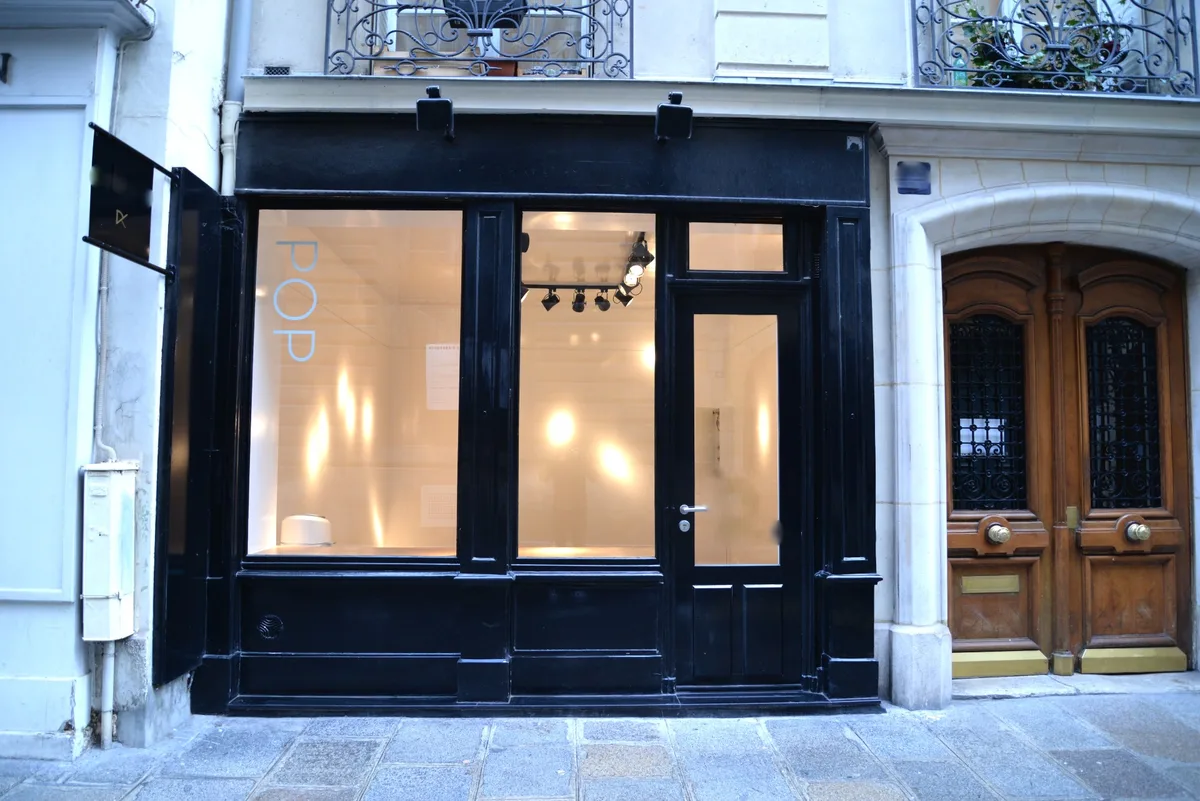
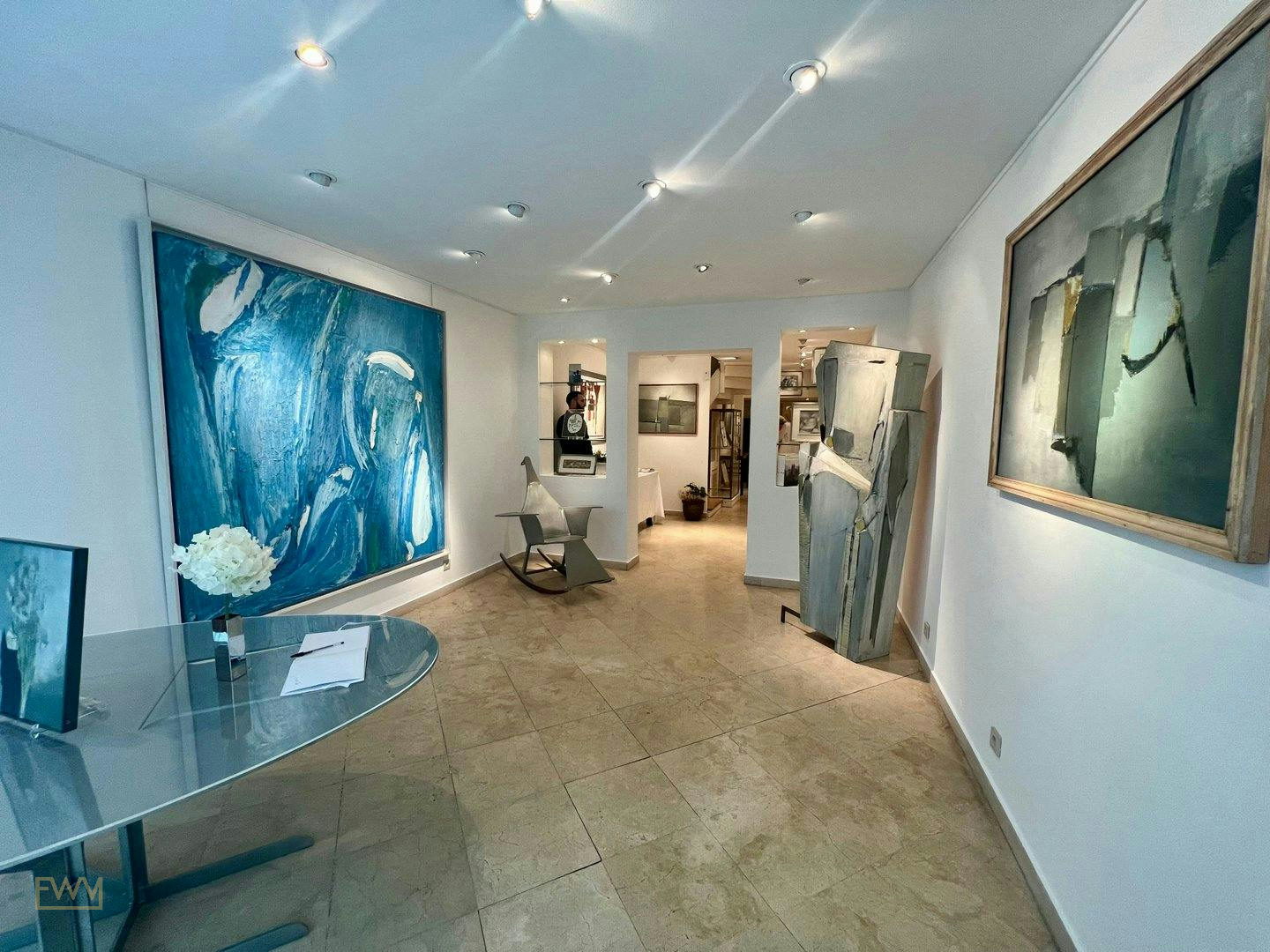
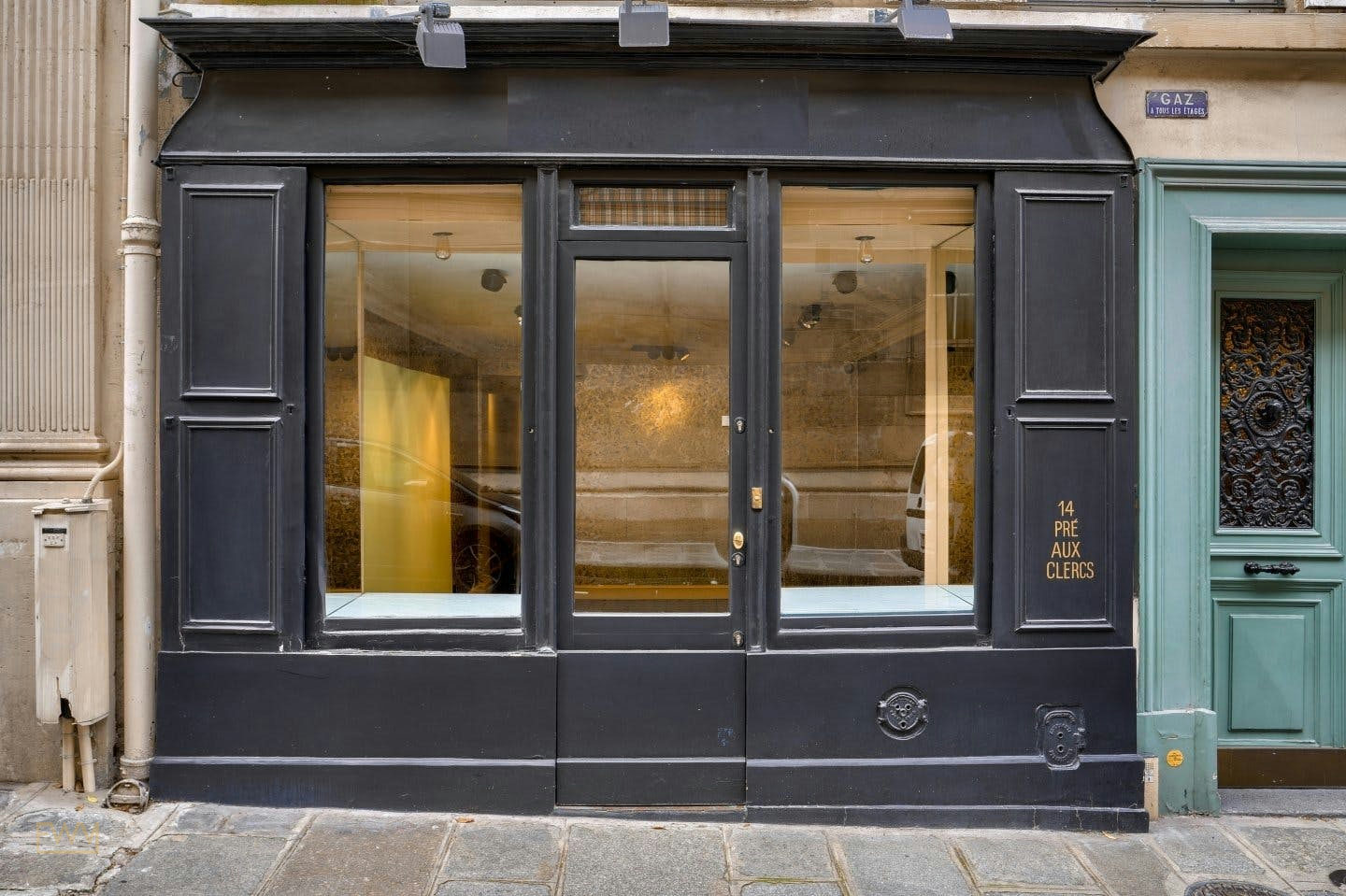
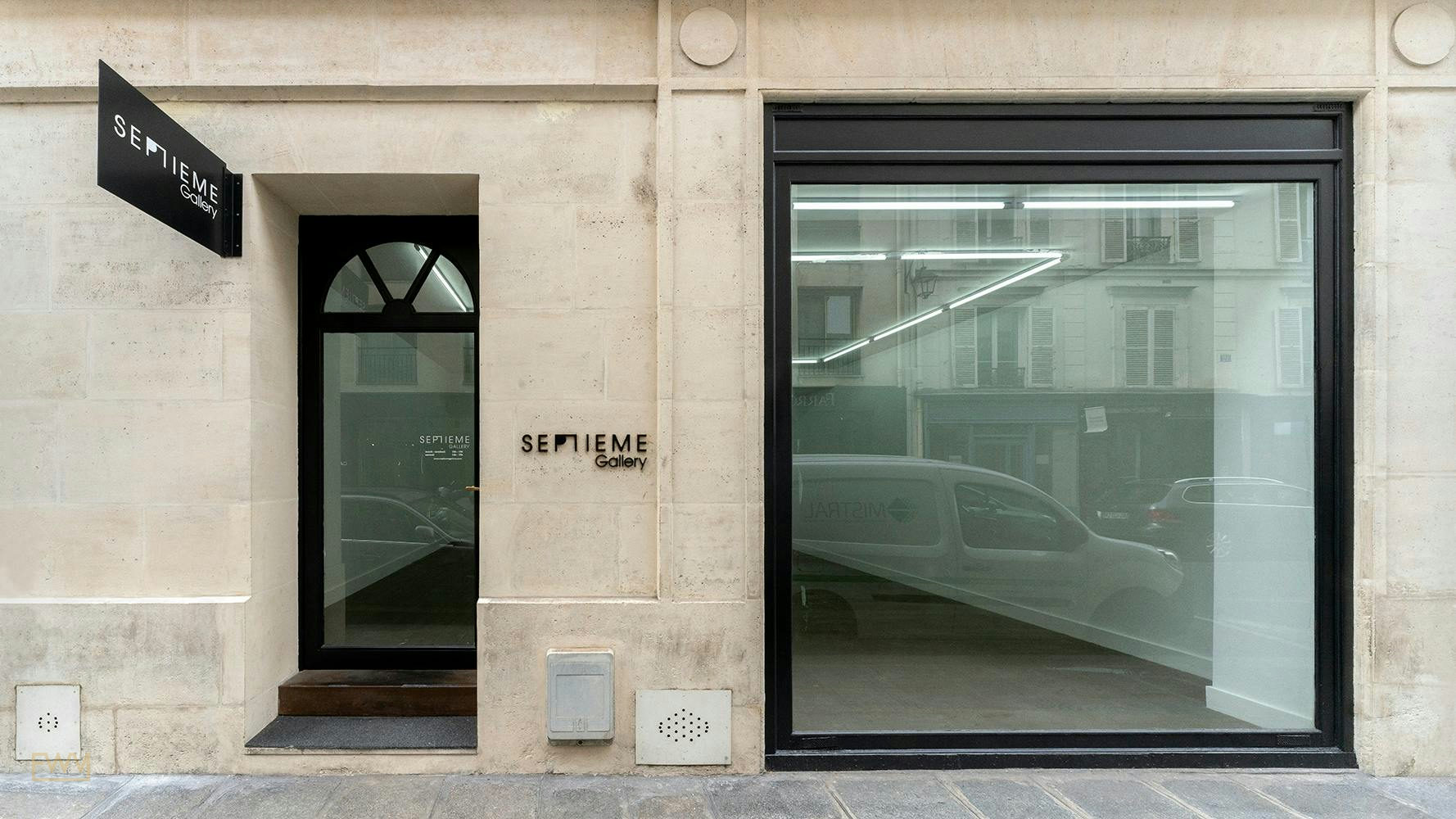
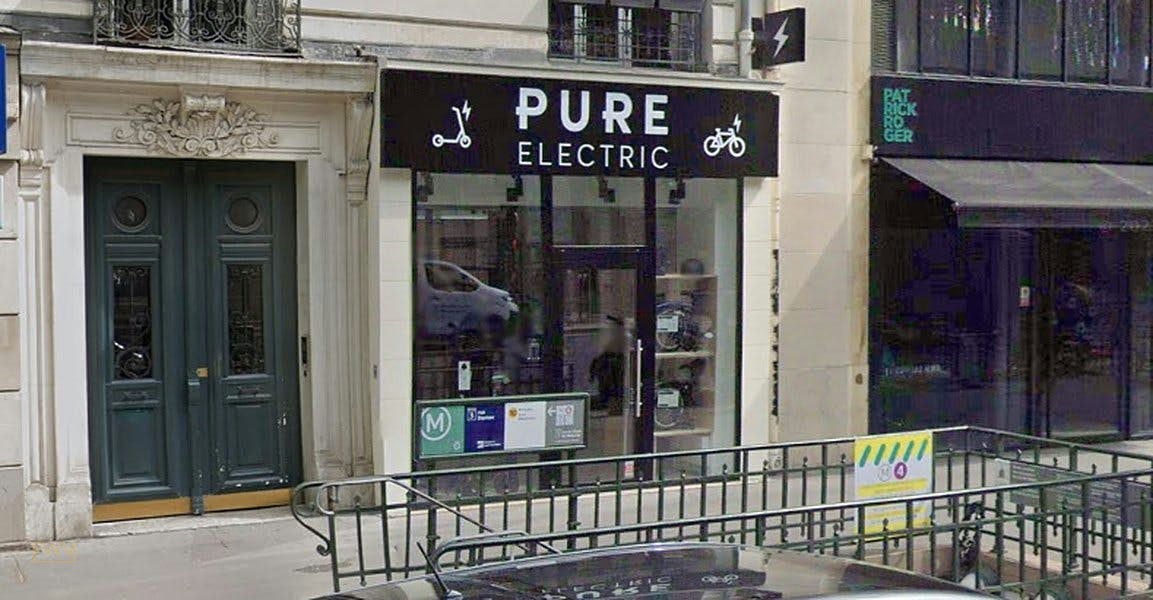
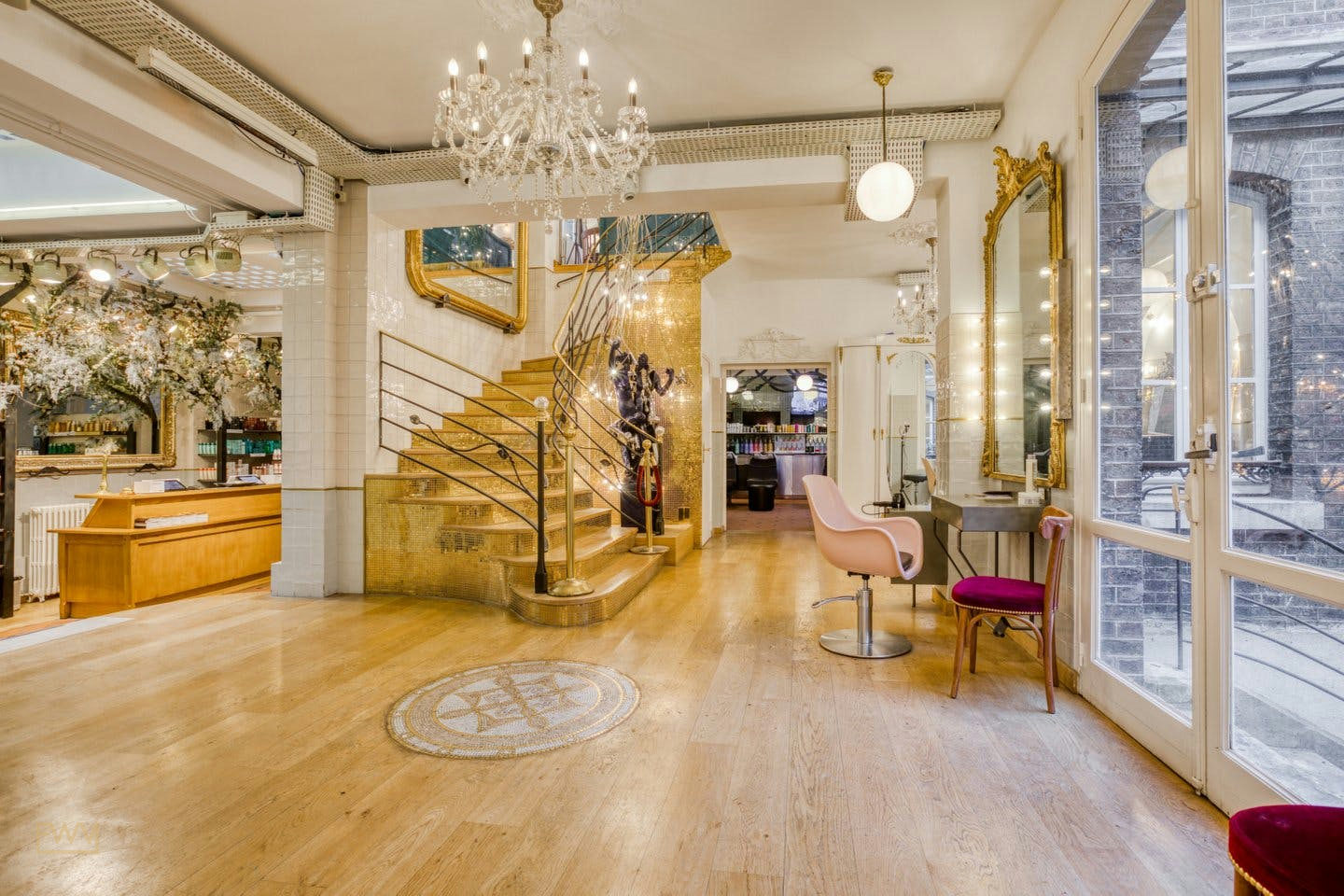
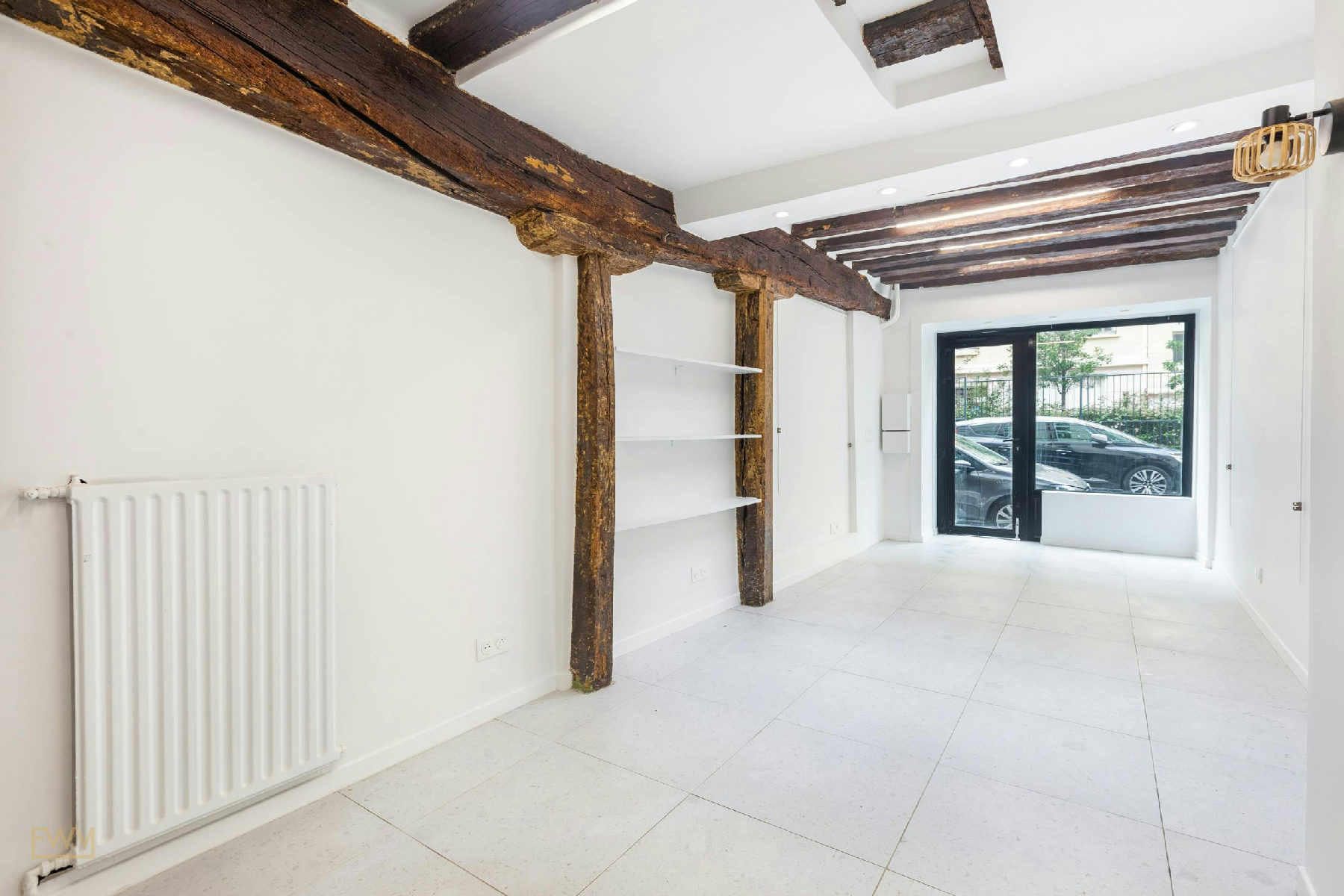
Street-level storefronts with direct pedestrian access are the most intuitive choice for brands wanting visible retail presence. In Paris, these range from narrow one-room boutiques of 20 to 40 square meters in side streets of Le Marais to large flagship-scale units on Rue de Rivoli or Avenue des Champs-Élysées. The quality of lighting, the condition of floors, and the ceiling height vary enormously. Polished concrete floors and raw concrete floors are common in contemporary and art-adjacent spaces, particularly in the Marais and the 11th arrondissement. Spotlights and track lighting systems are a standard feature in gallery-converted retail spaces. Brands should evaluate how the raw character of a space will interact with their merchandise and visual identity before committing.
Fashion Showrooms
A fashion showroom differs from a standard retail pop-up in that its primary function is to present collections to buyers, press, and stylists rather than to serve direct consumer transactions. Showroom spaces in Paris tend to cluster near the main fashion week venues, in the 8th arrondissement around Rue de Marignan, Rue Paul Cézanne, and Rue de la Baume, as well as in the Marais and in specific buildings along Boulevard Malesherbes. Showrooms require excellent natural light, clean wall surfaces for hanging or displaying looks, and enough floor area for multiple buyers to browse simultaneously. Short-term showroom rental is common during the January, February, June, and September fashion calendar windows.
Art Galleries and Gallery-Style Spaces
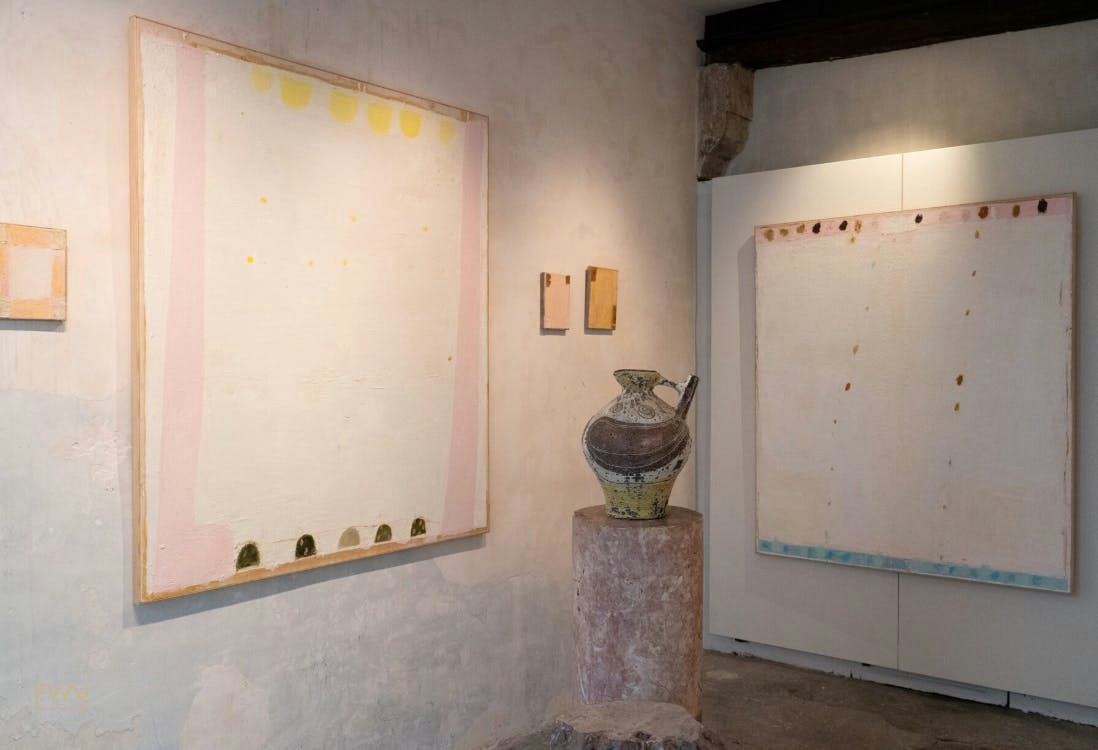
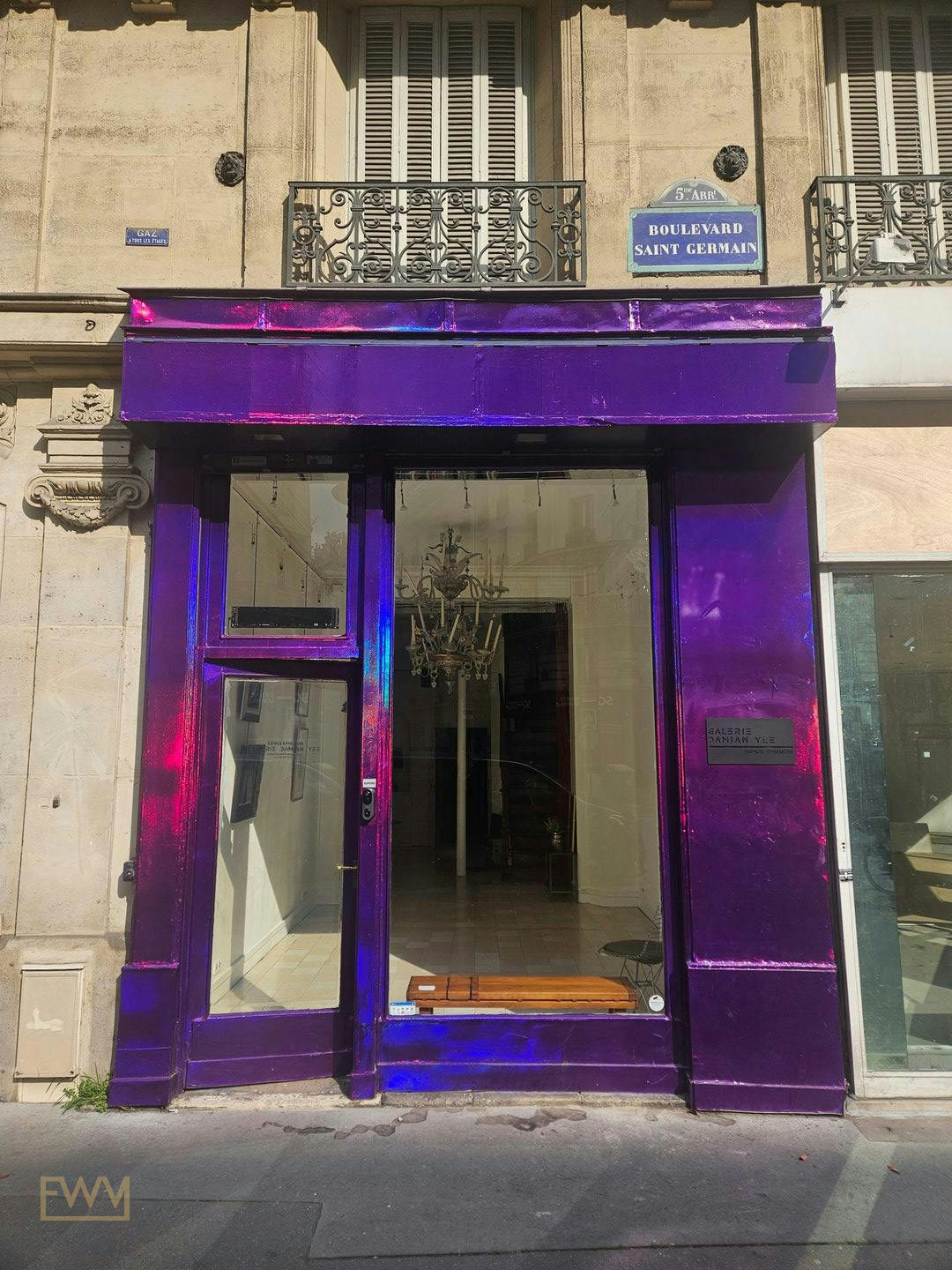
Art gallery spaces offer white walls, high ceilings, and a cultural credibility that certain brand categories, particularly luxury, art, and design brands, find essential. During FIAC and Paris Design Week, gallery spaces are frequently converted into brand activations, limited-edition retail environments, or collaborative installations. Galleries in Saint-Germain-des-Prés and in the Marais are most commonly associated with this type of temporary retail use.
Apartments and Studio Spaces
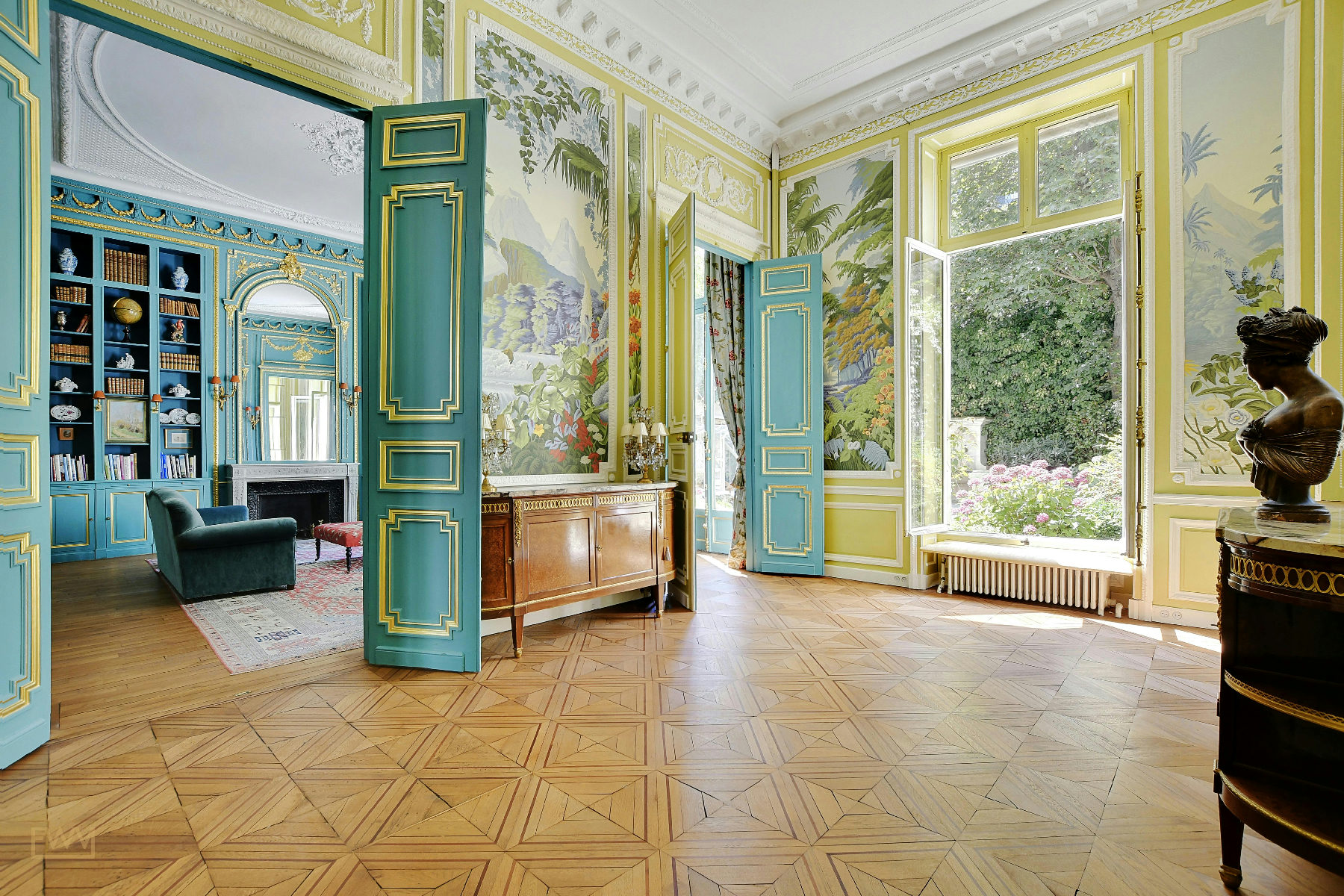
Private Haussmannian apartments with generous square meterage and period detail offer an intimate, curated retail environment that communicates refinement and exclusivity. These spaces are used by fragrance houses, jewellery brands, and lifestyle labels that want to create a guest experience rather than a transactional shopping moment. Studio photo spaces with controlled lighting infrastructure are used both for production purposes and, increasingly, as event retail hybrid environments.
Shopping Centres and Mall Zones
Temporary units within shopping centres, including high-traffic zones near Galeries Lafayette and Printemps on Boulevard Haussmann, offer volume-driven foot traffic and an established retail context. These environments suit consumer brands with broad appeal but typically require more negotiation and longer lead time because they are managed by institutional landlords. The mall's high traffic zone comes with a controlled environment and operational support but less creative freedom than independent street-level spaces.
| Space Type | Typical Arrondissement | Best For | Floor / Access | Key Features |
|---|---|---|---|---|
| Street-Level Storefront | 3rd, 4th, 8th, 1st | Consumer pop-up, product launch | Ground floor, direct street access | High footfall, shopfront visibility |
| Fashion Showroom | 8th, 3rd, 4th, 17th | B2B presentations, press days | Ground or first floor | Natural light, hanging space, clean walls |
| Art Gallery | 6th, 3rd, 4th | Luxury, art, design activations | Ground floor, sometimes basement | White walls, track spotlights, high ceilings |
| Haussmannian Apartment | 8th, 16th, 6th | Intimate brand experience, VIP | First to third floor, lift access varies | Period detail, exclusivity, discretion |
| Shopping Centre Unit | 9th, 1st, 8th | Volume retail, mass audience | Concourse level, managed access | Managed footfall, air conditioning, security |
| Studio Photo Space | 10th, 11th, 3rd | Content creation, hybrid events | Ground or first floor | Controlled lighting, flexible layout |
| Outdoor Courtyard or Passage | Various | Market formats, seasonal events | Open air, level access | Atmospheric setting, seasonal dependency |
KEY TAKEAWAY: The space type you choose shapes the entire brand experience. Align your space category with your commercial objectives, whether that is volume sales, press engagement, buyer appointments, or VIP brand experience, before narrowing down by location or price.
With space types clarified, the next critical layer for any brand is understanding which Paris neighbourhoods generate the right audience for their activation.
The Best Paris Neighbourhoods to Hire Retail Space: A District-by-District Guide
Every major Paris neighbourhood that attracts temporary retail activity has a distinct commercial character, footfall profile, and brand association. Choosing the right arrondissement requires matching your brand's positioning to the clientele, cultural context, and foot traffic patterns of each district.
Le Marais and Place des Vosges (3rd and 4th Arrondissements)
Le Marais is consistently among the highest-demand districts for pop-up stores in Paris. Its concentration of contemporary fashion boutiques, galleries, concept stores, and architecture-forward spaces attracts a sophisticated, design-literate audience that includes both international visitors and Parisian creative professionals. The streets around Place des Vosges offer spaces with extraordinary historic character, while Rue de Bretagne and Rue de Turenne attract a slightly younger, more street-oriented clientele. Marais spaces tend to book out early in the season, and competition for premium spots during fashion week is intense.
Saint-Germain-des-Prés (6th Arrondissement)
Saint-Germain-des-Prés is associated with intellectual authority, literary prestige, and understated luxury. The neighbourhood attracts high-spending visitors who value craftsmanship and heritage over hype. Brands in the fragrance, leather goods, homeware, and premium publishing categories find particularly receptive audiences here. The gallery density along Rue de Seine and Rue des Beaux-Arts also makes this an ideal location for art-adjacent brand activations.
Golden Triangle, Rue du Faubourg Saint-Honoré, and Place Vendôme (8th Arrondissement)
The 8th arrondissement is the geographic heart of Parisian luxury retail. Avenue des Champs-Élysées, Rue de Marignan, Rue Paul Cézanne, Rue Washington, and Rue de la Baume all fall within this district, as do Place Vendôme and the surrounding streets. Brands hiring retail space here are explicitly positioning themselves within the luxury tier. The 8th also contains a high concentration of fashion showroom buildings used during official fashion week periods. Boulevard Malesherbes and Rue du Quatre Septembre extend the commercial luxury zone northward toward the 9th. Rental fees in this district reflect the prestige of the address and the volume of high-net-worth visitors who circulate here year-round.
Pigalle and the 9th and 11th Arrondissements
Pigalle and South Pigalle, often referred to as SoPi, have become significant centres for streetwear, music, sneaker culture, and independent fashion labels over the past decade. The 9th arrondissement, which includes the Boulevard Haussmann department store zone around Galeries Lafayette and Printemps, offers a compelling mix of high foot traffic and cultural adjacency. The Paris 11th arrondissement is popular with brands seeking a creative industrial character: warehouse-style spaces, raw concrete floors, polished concrete surfaces, and exposed infrastructure that suits a certain aesthetic of contemporary retail design.
Montmartre and the 18th Arrondissement
Montmartre offers a romantic, artisan character that appeals to lifestyle, beauty, and craft brands. Foot traffic is high in the tourist season, particularly around Sacré-Coeur and Rue Lepic, but the commercial clientele differs from the fashion-focused visitors who concentrate in the Marais or the 8th. Brands activating here benefit from atmospheric spaces with character but should calibrate expectations around the buying intent of the passing visitor.
Châtelet and Rue de Rivoli (1st Arrondissement)
Châtelet is one of the most accessible locations in Paris by public transport, making it suitable for brands seeking broad demographic reach. Rue de Rivoli carries extremely high pedestrian volume and offers a mix of space formats, from institutional units in the arcades to standalone boutiques. The proximity to the Louvre and major tourist circuits means that the visitor mix here is international and varied.
To compare neighbourhoods and space types, explore the Paris city hub on Fashion Week Venues and shortlist spaces that match your brief, budget, and calendar window.
| Neighbourhood | Arrondissement | Brand Categories | Visitor Profile | Peak Calendar |
|---|---|---|---|---|
| Le Marais / Place des Vosges | 3rd, 4th | Fashion, art, design, concept | Creative, international, affluent | Fashion Week, year-round |
| Saint-Germain-des-Prés | 6th | Luxury, fragrance, art, publishing | High-spending, literary, Parisian | FIAC, year-round |
| Golden Triangle / Saint-Honoré | 8th | Luxury, jewellery, haute couture | High-net-worth, international | Fashion Week, Vendôme calendar |
| Champs-Élysées | 8th | Flagship, entertainment, mass luxury | Tourist, broad demographic | Year-round, holiday season |
| Pigalle / SoPi | 9th, 18th | Streetwear, music, sneaker, beauty | Youth, fashion-forward, local | Fashion Week, season launches |
| Paris 11th | 11th | Contemporary fashion, creative | Local creative, independent | Fashion Week, design events |
| Châtelet / Rue de Rivoli | 1st | Accessible fashion, lifestyle | Tourist, broad demographic | Year-round, holiday |
| Montmartre | 18th | Lifestyle, beauty, craft, artisan | Tourist, lifestyle-oriented | Summer, Paris Design Week |
| Galeries Lafayette / Printemps Zone | 9th | Beauty, accessible luxury, lifestyle | Tourist, department store visitor | Year-round, holiday season |
KEY TAKEAWAY: No single neighbourhood is universally best for hiring retail space in Paris. The correct choice depends on your brand category, your intended visitor profile, your budget range, and the specific calendar window you are activating within.
Once you have identified the right neighbourhood for your brand, the next layer of complexity involves understanding the permits, regulations, and legal structures that govern temporary retail in France.
Permits, Regulations, and Legal Requirements for Temporary Retail in Paris
Navigating French legal and administrative requirements is one of the most underestimated aspects of hiring retail space in Paris. Short-term retail in France operates under specific legal frameworks that differ significantly from standard commercial leases, and brands that do not prepare adequately risk delays, fines, or forced closure of their activation.
Quick answer: Short-term retail space in Paris is typically governed by the bail dérogatoire, a derogatory lease that allows tenancies of up to three years without triggering the protections of the standard French commercial lease, or by an autorisation d'occupation temporaire (AOT) for public domain spaces. Both structures require careful legal review before signing. Requirements vary by space type, duration, arrondissement, and intended use.
The Bail Dérogatoire
The bail dérogatoire is the most common legal structure for short-term retail space rental in Paris. It allows landlords and tenants to agree on a temporary occupation of commercial premises for a defined period, typically ranging from a few days to 36 months, without the tenant acquiring the statutory renewal rights that attach to a standard French commercial lease (bail commercial). This makes it the default instrument for pop-up stores, temporary showrooms, and seasonal retail concepts. However, the bail dérogatoire must be structured correctly from the outset. If both parties continue the occupation after the agreed term without terminating the lease formally, the arrangement can automatically convert to a full commercial lease, creating substantial and unintended obligations for both parties.
Autorisation d'Occupation Temporaire (AOT)
For brands seeking to activate in public spaces, on terraces, in passages, or on publicly owned land, an AOT issued by the relevant municipal authority is required. AOTs are also relevant for outdoor brand installations, market-format events, and certain activations in parks or public squares. The process for obtaining an AOT varies by arrondissement and by the nature of the proposed use, and it should be initiated well in advance of the target activation date. Brands should verify the specific requirements with a qualified French legal advisor and use the permit guidance tool on Fashion Week Venues as an initial orientation resource.
Business Licences, Insurance Coverage, and Local Regulations
Brands operating temporary retail in Paris are generally required to hold appropriate business registration, either through a French entity or through a recognised cross-border operating structure. Non-French brands operating without a local legal entity have specific options, including using an umbrella structure or a local operating partner, but these arrangements have implications for VAT, staffing, and contractual liability. Insurance coverage for temporary retail activities must include public liability, stock and merchandise cover, and in many cases structural cover for any build-out or fit-out works carried out within the leased space.
Local regulations in Paris also govern signage, window displays, noise levels, trading hours, and certain categories of product sale. Brands operating in arrondissements with specific heritage protections, such as parts of the Marais, Saint-Germain-des-Prés, and the Vendôme area, should obtain clarity on display and façade restrictions before committing to a space.
IMPORTANT: French administrative and legal requirements for temporary retail are precise and subject to change. Nothing in this guide constitutes legal advice. Always verify current requirements with a qualified French legal advisor before signing any lease or commencing any commercial activity in Paris.
KEY TAKEAWAY: The legal structures governing temporary retail in France, particularly the bail dérogatoire and the AOT, are not simply administrative formalities. They define the rights, obligations, and risk profile of your activation from day one. Expert guidance is not optional in this context.
Legal clarity in hand, brands can turn their attention to the financial planning and budget considerations that determine whether a Paris pop-up is commercially viable.
Understanding the Cost of Hiring Retail Space in Paris
The cost of hiring retail space in Paris spans an extremely wide range and is influenced by neighbourhood, space size, space type, duration, condition, the specific calendar period, and the terms negotiated with each landlord. Brands approaching Paris for the first time often arrive with budget assumptions formed by experience in other markets that do not translate accurately to the Parisian context.
Quick answer: Rental fees for temporary retail space in Paris vary significantly based on arrondissement, space size, duration, and calendar window. Prime locations in the 8th arrondissement during Paris Fashion Week command substantially higher rates than comparable square meterage in the 11th arrondissement during an off-peak period. Budget estimates should be treated as directional only and verified against current market conditions. Use the Fashion Week Venues budget estimation tool for brand-specific projections.
Beyond the base rental fee, brands must account for the full cost stack of a Paris retail activation. The space hire fee is typically one line in a budget that also includes fit-out and production costs, furniture rental, staffing, POS and payment infrastructure, insurance, permit fees, agency fees, logistics and transport, storage, social media and influencer activation costs, and post-event reinstatement. Brands that plan only for the rental fee and underestimate these secondary costs consistently find themselves over-budget or unable to deliver the intended brand experience within their allocated spend.
Rental Fee Drivers
Several factors drive rental fee variation in the Paris market. Foot traffic volume and quality: spaces on Rue de Rivoli, Avenue des Champs-Élysées, and Boulevard Haussmann attract pedestrian volumes that justify premium pricing. Brand positioning of the address: a Vendôme or Faubourg Saint-Honoré address carries a prestige premium that goes beyond the physical space itself. Duration: shorter activations of one to two weeks often carry a proportionally higher per-day rate than activations of four to eight weeks, because landlords factor in the administrative overhead of very short tenancies. Calendar timing: spaces during Paris Fashion Week, FIAC, and Paris Design Week are subject to demand-driven price increases across all arrondissements. Space condition: a space with polished concrete floors, track spotlights, and a clean shell ready for brand installation commands higher rent than a space requiring significant remediation work before trading can begin.
TIP: Use the budget planning tool on Fashion Week Venues to build a realistic estimate for your full Paris activation cost before approaching landlords or agents. Understanding your total budget ceiling before negotiating rental terms gives you a much clearer position in conversations with space owners.
Budget Categories for a Paris Pop-Up Activation
To give brand teams a practical framework for initial planning, the primary cost categories for a Paris retail activation include: space rental, fit-out and build, furniture and prop rental, staffing and HR, technology and POS, insurance and permits, agency and project management fees, logistics, cleaning and maintenance, and reinstatement at end of tenancy. Each of these categories carries its own sub-structure of costs that can be significant. Furniture rental alone for a premium space can represent a meaningful proportion of total spend, and staffing costs in France, which are subject to French employment law and social charges, are frequently higher than brands from other markets anticipate.
KEY TAKEAWAY: Approach Paris retail space budgeting as a full-stack exercise from day one. The rental fee is the starting point, not the total cost. Brands that plan comprehensively across all cost categories make better location and space choices and avoid the mid-project budget crises that derail activations.
With a realistic budget framework in place, brands can begin the practical process of finding and evaluating spaces, which requires understanding both the tools available and the typical search workflow.
How to Search for and Shortlist Retail Spaces in Paris
Finding the right retail space in Paris involves navigating a market where availability is fluid, competition is seasonal, and the best spaces rarely appear on general commercial real estate platforms long before they are taken. The search process requires a combination of market knowledge, professional relationships, and a clear brief that defines your non-negotiable requirements from the outset.
Quick answer: The most effective way to find short-term retail space in Paris is through a combination of a specialist space marketplace, direct agency relationships, and proactive outreach to landlords in your target arrondissements. General commercial property platforms such as LoopNet and CoStar are primarily oriented toward long-term commercial real estate and investment properties, and their Paris listings for short-term retail are limited compared to specialist pop-up and temporary retail platforms.
Defining Your Search Brief
Before beginning any search, your team needs to articulate a clear brief that covers: the target arrondissement or neighbourhoods, the required square meterage, the space type, the specific calendar dates, the maximum rental fee, the must-have space features such as lighting, floor type, loading access, and ceiling height, and the intended trading format, whether direct-to-consumer, wholesale, or hybrid. A poorly defined brief leads to wasted time evaluating unsuitable spaces and weakens your position when negotiating with landlords who recognise uncertainty in a prospective tenant.
Using a Specialist Space Marketplace
Specialist pop-up and temporary retail space marketplaces, including the Fashion Week Venues space marketplace, aggregate curated listings of short-term retail spaces, showrooms, galleries, and event venues across Paris and other major fashion capitals. Unlike general commercial real estate platforms, these marketplaces are designed specifically for the short-term and temporary retail format, with listings that include practical details about space features, access, lighting, and availability windows. They also enable comparison between spaces, visual exploration through photos, and in some cases, space visualisation tools that allow brands to imagine their concept within a specific venue before committing.
Working with a Venue Sourcing Agency
For brands with complex briefs, tight timelines, or limited knowledge of the Paris market, working with a specialist venue sourcing service provides access to unlisted spaces, negotiating expertise, and time efficiencies that self-directed search cannot match. A good venue sourcing partner will have established relationships with key landlords, knowledge of which spaces are coming available in specific calendar windows, and the ability to move quickly when the right space appears. The venue sourcing service from Fashion Week Venues operates across Paris and other major fashion capitals, supporting brands from initial brief development through to lease negotiation.
Evaluating and Comparing Shortlisted Spaces
Once a shortlist of spaces has been assembled, the evaluation process should be systematic. Key comparison dimensions include: rental fee per square meter per week or month, access and logistics, floor and ceiling specification, existing lighting infrastructure, proximity to the intended visitor audience, condition of toilets and back-of-house, whether reinstatement is required at end of tenancy, and the flexibility of the landlord on fit-out modifications. A structured comparison process prevents decisions being driven by aesthetic preference alone.
| Step | Action | Tool or Resource | Typical Timeframe |
|---|---|---|---|
| 1 | Define activation brief and non-negotiables | Internal team, brief template | Week 1 |
| 2 | Set budget envelope and calendar window | Budget planning tool | Week 1 to 2 |
| 3 | Search and filter available spaces | Space marketplace, venue sourcing agency | Week 2 to 3 |
| 4 | Visit and evaluate shortlisted spaces | In-person site visits, photo review | Week 3 to 4 |
| 5 | Compare spaces across defined criteria | Space comparison tool | Week 4 |
| 6 | Verify legal and permit requirements | French legal advisor, permit guidance tool | Week 4 to 5 |
| 7 | Negotiate terms and sign agreement | Agency or direct negotiation | Week 5 to 6 |
| 8 | Begin fit-out and build planning | Production team, build planning tool | Week 6 onwards |
| 9 | Staff, equip, and launch activation | Staffing service, POS and payments | Target launch date |
| 10 | Measure performance and plan next steps | Data and analytics, ROI calculator | During and post activation |
KEY TAKEAWAY: An effective space search in Paris depends on a clear brief, specialist access to the right listings, and a structured evaluation process. Brands that begin the search without these foundations typically spend more time, make more compromises, and pay higher rental fees than those who approach the process with discipline from the start.
Finding and securing the right space is only the beginning. Delivering a successful pop-up activation in Paris requires planning across multiple operational dimensions simultaneously.
The Paris Fashion and Cultural Calendar: When to Hire Retail Space
Paris operates on a cultural calendar that creates predictable peaks and troughs in temporary retail demand throughout the year. Understanding this calendar is essential for brands planning short-term retail space hire, because timing affects availability, pricing, foot traffic quality, and the competitive context your activation operates within.
Quick answer: The four main Paris Fashion Week sessions, held in January, February, June, and September or October, represent the highest-demand periods for temporary retail and showroom space. Additional demand peaks occur around FIAC in October, Paris Design Week in September, and the Christmas trading season from late November through December. Off-peak windows can offer significantly better value and shorter lead times for brands whose target audience does not require the fashion week calendar specifically.
Paris Fashion Week Windows
Men's and couture fashion weeks run in January and July respectively, while the primary ready-to-wear seasons fall in late February or early March for autumn-winter collections and in late September or early October for spring-summer collections. During these windows, demand for showroom spaces near the official show venues, particularly in the 8th arrondissement around Avenue des Champs-Élysées, Rue de Marignan, and the surrounding streets, reaches its annual peak. Pop-up stores in Le Marais, Saint-Germain-des-Prés, and near Palais Royal also see elevated foot traffic during fashion week, as the concentration of buyers, press, stylists, and international fashion visitors increases dramatically.
FIAC and Paris Design Week
FIAC, the International Contemporary Art Fair held annually in October, brings a high-spending, culturally engaged visitor profile to Paris that benefits art-adjacent brands, luxury labels, and experiential retail concepts. Paris Design Week, held in September, generates complementary demand for design, homeware, furniture, and lifestyle brand activations, particularly in the 11th arrondissement and in gallery-style spaces across the Marais. Brands in these categories should treat FIAC and Paris Design Week as primary calendar windows on a par with fashion week in terms of audience quality and activation opportunity.
The Holiday Trading Season
The Christmas trading season, running from late November through the end of December, is the highest foot traffic period of the year for consumer-facing retail in Paris. Tourist volume is high, purchasing intent is strong, and brands with the right product category and neighbourhood selection can achieve their highest sales volumes of the year within this window. Competition for quality spaces is significant, and brand teams should begin their search for holiday-season spaces no later than July or August to secure the best options.
TIP: If your target audience and brand category do not require the fashion week calendar specifically, consider activating in late October, November, or early December. These windows offer a combination of high consumer foot traffic, reduced competition for spaces, and in some cases more favourable rental terms than the peak fashion week periods.
KEY TAKEAWAY: Calendar timing in Paris is a strategic variable, not merely a logistical consideration. Aligning your activation window with the cultural events that concentrate your target audience in the city gives your pop-up a structural advantage that no amount of spend on fit-out or marketing can replicate if the timing is wrong.
Calendar strategy and space selection both ultimately serve a single goal: delivering a brand activation that achieves measurable commercial results, which requires planning across the full operational stack.
Running a Successful Paris Pop-Up: Operations, Branding, and Customer Experience
A successful pop-up store in Paris is not simply a temporary retail space. It is a complete brand environment that communicates the brand's identity, engages visitors, converts browsers into customers, and generates data and content that serve the brand's broader marketing objectives. Delivering this requires planning across six operational dimensions: concept and design, fit-out and production, staffing, technology, marketing and social media, and measurement.
Concept Direction and Branded Store Design
The concept direction for a Paris pop-up should be defined before any space is selected. A clear concept determines the spatial requirements, the lighting specification, the furniture and prop needs, and the merchandising logic that will make the space work as a brand environment. Brands that select a space first and develop the concept second often find that the space imposes constraints that compromise the intended experience. The design of the branded store environment must communicate the brand's visual identity clearly while adapting to the character of the Parisian space, whether that means working with raw concrete floors and exposed brick in the 11th, or with period mouldings and parquet floors in a Haussmannian apartment in the 8th.
Fit-Out, Production, and Furniture Rental
The fit-out and production process in Paris involves coordinating contractors, obtaining any necessary permissions from the landlord and relevant authorities for structural or decorative modifications, sourcing materials and props, and managing the build schedule so that the space is ready on the agreed date. Timing is critical: fit-out periods in Paris are typically short, and delays caused by permitting issues, supplier failures, or build complications directly reduce trading time. Furniture rental is a practical and cost-effective alternative to purchasing display furniture, particularly for short-term activations where bespoke furniture cannot be amortised over a long trading period.
Retail Staffing in France
Staffing a Paris pop-up requires understanding French employment law, including rules around contracts, working hours, social charges, and the use of temporary or CDD (contrat à durée déterminée) contracts for short-term retail roles. Brands unfamiliar with French employment legislation should work with a local HR or staffing specialist rather than attempting to manage French employment compliance independently. The right sales team is also a brand experience element: in a Paris retail context, multilingual staff who are knowledgeable about the brand and capable of engaging authentically with an international clientele are a genuine commercial advantage. The retail staffing service from Fashion Week Venues supports brands in building Paris-ready teams with the skills and language capability the market requires.
POS, Payments, and Technology
Paris consumers expect seamless, modern payment infrastructure. Card payment, contactless, and digital wallet support are baseline requirements. Brands should also consider whether they want to collect customer data through the transaction process, run loyalty or CRM integrations, or enable QR code-based digital discovery from within the physical space. The POS system should be operational and tested before the activation opens to the public, and staff should be trained on it before launch day.
Influencer Marketing and Social Media
Social media documentation and influencer engagement are integral to the ROI model of most contemporary Paris pop-ups. The space itself should be designed with social media moments in mind: a memorable installation, a striking product display, or an architecture detail that visitors will photograph and share. Influencer briefings should be aligned with the brand's broader communication strategy, and content creation should be planned into the activation schedule rather than treated as incidental. Paris-based influencers in the fashion, beauty, and lifestyle categories have audiences that align closely with the visitor profiles of the best Parisian retail neighbourhoods, making them natural partners for brand amplification.
DID YOU KNOW: Social media content generated by visitors and influencers during a well-executed Paris pop-up can generate brand awareness and audience reach that extends far beyond the physical footfall of the activation itself, effectively multiplying the communication value of the space rental investment.
Data, Analytics, and Measuring ROI
Measuring the performance of a Paris pop-up requires defining success metrics before the activation opens. These typically include footfall count, conversion rate, average transaction value, total revenue, social media reach and engagement, press coverage, buyer or wholesale appointments, and email or CRM data captured. Post-activation analysis of these metrics, compared against the targets set in planning, provides the evidence base for decisions about future Paris activations, space selection, neighbourhood choice, and format. The ROI calculator from Fashion Week Venues provides a structured framework for estimating and measuring the commercial return of a Paris pop-up activation.
KEY TAKEAWAY: A Paris pop-up delivers its maximum value when concept, design, staffing, technology, and marketing are planned and executed as an integrated system, not as separate workstreams. Brands that treat operational excellence as a brand statement consistently outperform those that focus exclusively on the space or the design.
Understanding how a specialist agency can support this integrated approach is the next critical piece of the Paris retail activation puzzle.
How Fashion Week Venues Helps Brands Hire Retail Space in Paris
Fashion Week Venues is a full-service pop-up shop agency and space marketplace that supports brands across the complete lifecycle of a Paris retail activation. From initial space discovery through concept direction, fit-out, staffing, technology, and post-activation measurement, the agency provides both specialist advisory services and direct operational delivery for brands at every stage of their Paris journey.
Fashion Week Venues serves brand activation managers, creative directors, retail strategists, marketing teams, and international brands entering the Paris market for the first time as well as established brands running their third or fourth Paris pop-up. The agency's value is different for different clients: for first-time Paris activators, it provides market access, legal context, and operational infrastructure that would take years to build independently. For experienced brands, it provides speed, efficiency, curated space access, and the kind of local knowledge that consistently reduces the time and cost of activation delivery.
Services Available
The Fashion Week Venues service range covers venue sourcing, concept direction, production and build, activation management, branded store design, furniture rental, retail staffing, POS and payments, data and analytics, and influencer marketing. Brands can engage individual services or commission a fully managed end-to-end activation. The agency also operates a space marketplace where brands can browse and shortlist available Paris spaces, a twin co-activation concept for brands interested in sharing space and costs with a complementary label, and an imagine tool that allows brands to visualise their concept within a specific space before committing.
The agency's planning tools include a budget calculator, an ROI calculator, a space comparison tool, a timeline planning tool, a permit guidance tool, a space locator tool, and a build planning tool. These tools are designed to support brand teams at the research and planning stage, well before any agency engagement is confirmed. Brands can explore the guide on hiring a pop-up agency to understand what to look for when selecting an agency partner for a Paris activation.
Who Benefits Most
International brands entering Paris for the first time benefit most from the agency's full-service model, which removes the need to build local supplier networks, navigate French legal requirements, or manage multiple contractors independently. Brands with an existing Paris presence benefit from the agency's curated space access and operational efficiency, which reduce the time spent on space search and negotiation. Creative teams benefit from the concept direction and branded store design services, which bring Paris-specific aesthetic expertise to activation development. Marketing teams benefit from the influencer marketing and data analytics services, which connect activation investment to measurable communication outcomes.
IMPORTANT: Fashion Week Venues does not guarantee specific space availability, permit approvals, or particular commercial outcomes. All space availability is subject to landlord confirmation and current market conditions. Legal and permit requirements should be verified independently with a qualified French advisor. The agency's role is to provide expert guidance, market access, and operational support, not to provide legal or financial advice.
To move from research to activation, start exploring available spaces on the Fashion Week Venues marketplace and build a focused brief for your target neighbourhood, space type, and calendar window.
KEY TAKEAWAY: Fashion Week Venues functions as a knowledge partner, operational delivery partner, and space access partner simultaneously. Brands that engage early in the planning cycle get the most value from the agency's market knowledge and supplier relationships, while those who engage at a later stage still benefit from the operational infrastructure and space sourcing capability.
Paris Retail Activation: Common Myths Debunked
MYTH: You need a French legal entity to hire retail space in Paris.
FACT: While having a French legal entity simplifies certain aspects of the process, it is not an absolute requirement for all temporary retail formats. Non-French brands can operate through umbrella structures, local operating partners, or specific short-term lease arrangements that do not require direct French incorporation. However, the legal and tax implications vary significantly depending on the structure chosen, the duration of the activation, and the commercial format. Verifying your specific situation with a qualified French legal advisor is essential before committing to any approach.
MYTH: Paris Fashion Week is the only viable calendar window for hiring retail space in Paris.
FACT: Paris Fashion Week is the most concentrated demand period for fashion-adjacent retail spaces, but it is far from the only commercially viable window. FIAC in October, Paris Design Week in September, the Christmas trading season, and the summer tourist peak all represent significant opportunities for brands whose target audience does not map directly onto the fashion buyer and press community. Off-peak windows also frequently offer better space availability, more competitive rental terms, and a less cluttered competitive context for brand communications.
MYTH: Commission brokers are the only way to find short-term retail space in Paris.
FACT: While traditional commercial real estate brokers operating on commission play a role in the Paris property market, they are primarily oriented toward long-term leases and investment properties rather than short-term pop-up retail. Specialist space marketplaces, direct landlord relationships, and full-service pop-up agencies provide more relevant and efficient routes to finding short-term retail space in Paris for temporary activations. General platforms such as LoopNet and CoStar serve the investment property and long-term commercial real estate market and have limited utility for brands seeking a two-week fashion week activation space.
MYTH: Short-term leases in France are legally straightforward and do not require specialist help.
FACT: Short-term leases in France, particularly the bail dérogatoire, contain specific conditions that have significant legal consequences if not managed correctly. The risk of unintentional conversion to a full commercial lease, the obligation to reinstate the space at the end of the tenancy, and the requirements around permitted use, alterations, and insurance are all areas where brands without specialist guidance consistently make costly errors. French contract law is precise and operates within a framework that is meaningfully different from common law systems. Specialist legal review of any temporary lease agreement is not an optional extra; it is a baseline precaution.
MYTH: Any well-designed pop-up store in Paris will generate strong foot traffic regardless of location.
FACT: Even the most beautifully designed pop-up store in Paris will struggle to generate meaningful foot traffic if it is located in a street or arrondissement that does not attract the brand's target audience. Foot traffic in Paris is highly localised and highly segmented by visitor profile. A luxury jewellery brand in a side street of the 19th arrondissement is unlikely to encounter the clientele it needs, no matter how compelling the interior design. Location strategy must precede creative concept development, not follow it.
Frequently Asked Questions About Hiring Retail Space in Paris
What is a pop-up store in Paris?
A pop-up store in Paris is a temporary retail space, typically operating for a period of a few days to several months, that a brand uses to sell products, present collections, launch new ranges, build brand awareness, or test a new market. Pop-up stores in Paris take many forms, from street-level storefronts and gallery spaces to fashion showrooms and private apartments. They are widely used by international brands, emerging designers, luxury houses, and lifestyle labels as a flexible, lower-commitment alternative to permanent retail. Paris is one of the world's most active pop-up retail markets, particularly during its fashion week and cultural event calendar windows.
What are the most sought-after locations for hiring retail space in Paris?
The most consistently sought-after locations for temporary retail space in Paris are Le Marais and the surrounding streets in the 3rd and 4th arrondissements, the Golden Triangle and Faubourg Saint-Honoré zone in the 8th arrondissement, Place Vendôme and its surrounding streets, Saint-Germain-des-Prés in the 6th, and the Châtelet and Rue de Rivoli area in the 1st. Demand for these locations peaks during Paris Fashion Week, FIAC, and the Christmas trading season. Pigalle, the Paris 11th, and Montmartre attract specific brand categories including streetwear, contemporary fashion, and lifestyle.
How much does it cost to rent a pop-up shop in Paris?
The cost of renting a pop-up shop in Paris varies widely depending on the arrondissement, the size of the space in square meters, the type of space, the duration of the rental, and the calendar period. Premium locations in the 8th arrondissement during Paris Fashion Week represent the top of the market, while spaces in the 11th arrondissement or Montmartre during off-peak periods represent a significantly more accessible price point. Beyond the base rental fee, brands should budget for fit-out, staffing, technology, insurance, permits, and reinstatement. Use the Fashion Week Venues budget planning tool to generate a directional estimate based on your specific brief.
How do I rent a pop-up shop in Paris?
To rent a pop-up shop in Paris, start by defining your brief, including your target neighbourhood, required square meterage, space type, calendar dates, and budget. Then search for available spaces through a specialist marketplace or engage a venue sourcing agency with Paris market expertise. Evaluate and compare shortlisted spaces, verify legal and permit requirements with a French legal advisor, negotiate terms, sign a bail dérogatoire or appropriate lease agreement, and begin fit-out planning. The entire process, from initial search to opening day, typically requires a lead time of six to twelve weeks for a well-executed activation.
Are pop-up stores common in Paris?
Yes. Pop-up stores are very common in Paris and have been a standard format for brand activation in the French capital for well over a decade. Paris's density of cultural events, its international visitor base, and its concentration of fashion, art, and luxury audiences make it one of the most commercially attractive cities in the world for temporary retail. Major international brands, emerging independent labels, and established luxury houses all regularly use Paris pop-ups as part of their brand strategy. The temporary retail market in Paris is active year-round, with clear peaks during fashion week, FIAC, Paris Design Week, and the Christmas season.
What legal structures govern short-term retail space rental in France?
Short-term retail space in France is typically governed by the bail dérogatoire, a derogatory lease that allows temporary occupation of commercial premises for up to 36 months without triggering standard commercial lease protections. For spaces on public land, an autorisation d'occupation temporaire (AOT) is required from the relevant municipal authority. Both structures carry specific legal obligations and must be reviewed by a qualified French legal advisor before signing. Requirements vary by space type, duration, arrondissement, and intended commercial use. Do not treat any short-term lease in France as legally straightforward without professional guidance.
Do I need a French company to hire retail space in Paris?
A French company is not an absolute requirement for all short-term retail activations in Paris, but it simplifies many aspects of the process, including VAT registration, employment law compliance, and landlord confidence. Non-French brands can operate through local operating partners, umbrella structures, or specific contractual arrangements that do not require French incorporation. The most appropriate structure depends on the duration, commercial format, and specific space arrangement involved. Verify your specific situation with a qualified French legal advisor before finalising any approach to ensure compliance with French commercial and tax law.
What permits do I need for a pop-up shop in Paris?
The permits required for a pop-up shop in Paris depend on the space type, the intended commercial activity, the duration of the activation, and the specific arrondissement. For a private commercial space, the primary legal instrument is the bail dérogatoire, which should be correctly structured to cover the intended use. For outdoor or public land activations, an autorisation d'occupation temporaire (AOT) is required. Additional requirements may apply for signage, structural modifications, food and beverage service, and certain product categories. Requirements vary and change over time, so verifying current requirements with a French legal advisor and using the Fashion Week Venues permit guidance tool is strongly recommended.
What neighbourhoods are best for pop-up retail in Paris?
The best neighbourhood for pop-up retail in Paris depends on your brand category and your target audience. Le Marais is best for contemporary fashion, art, and design brands seeking a creative, international clientele. The 8th arrondissement and the Golden Triangle suit luxury, jewellery, and haute couture. Saint-Germain-des-Prés works well for fragrance, homeware, and premium lifestyle. Pigalle and South Pigalle are well suited to streetwear, beauty, and music-adjacent brands. The Paris 11th attracts creative independent labels. Montmartre suits artisan, lifestyle, and tourist-oriented categories. Châtelet and Rue de Rivoli deliver the highest raw foot traffic volumes for accessible fashion and lifestyle brands.
How far in advance should I begin planning a Paris pop-up?
Most experienced brand teams recommend beginning the planning process for a Paris pop-up at least twelve to sixteen weeks before the target opening date, and earlier for activations during peak calendar windows such as Paris Fashion Week or the Christmas season. This lead time allows for space search, legal review, landlord negotiation, permit processing, fit-out planning, supplier briefing, staffing recruitment, and technology setup. Activations planned with shorter lead times are possible but typically involve compromises on space quality, design execution, or operational readiness that reduce the commercial performance of the event.
What is the difference between a bail dérogatoire and a standard commercial lease in France?
A bail dérogatoire is a short-term lease that allows parties to agree on a temporary commercial tenancy of up to 36 months without the tenant acquiring the statutory renewal rights that attach to a standard bail commercial. This makes it the standard instrument for pop-up stores, temporary showrooms, and seasonal retail concepts. A standard commercial lease (bail commercial) grants significant protections and renewal rights to the tenant, making it unsuitable for genuinely temporary activations. The key risk with a bail dérogatoire is that it can inadvertently convert to a bail commercial if occupation continues beyond the agreed term without formal termination. Specialist legal advice is essential for any temporary lease in France.
Can international brands without French experience successfully activate in Paris?
Yes, international brands without prior Paris experience regularly deliver successful retail activations in the French capital, typically by working with a specialist agency or local partner that provides market access, legal navigation, supplier relationships, and operational support. The key risks for first-time Paris activators are underestimating the complexity of French administrative requirements, underbudgeting for the full cost stack of a Parisian activation, and selecting a neighbourhood or space that does not align with their brand positioning or target audience. Working with a specialist partner significantly reduces all three of these risks.
What space features should I prioritise when hiring retail space in Paris?
The space features that matter most depend on your brand concept and intended customer experience. For most retail activations, key features to evaluate include: natural light and existing lighting infrastructure including spotlights and track systems, floor quality such as polished concrete, raw concrete, or parquet, ceiling height and clear volume, loading access and logistics, the condition of back-of-house areas and toilets, the quality and flexibility of the shopfront or entrance, and whether the landlord permits fit-out modifications. Spaces with polished concrete floors, high ceilings, and track spotlights suit contemporary brand aesthetics and are in particularly high demand during fashion week and FIAC periods.
What is the twin co-activation concept from Fashion Week Venues?
The twin co-activation concept from Fashion Week Venues allows two complementary brands to share a single Paris retail space, dividing costs while combining their audiences and communication reach. This format is particularly relevant for emerging brands, independent designers, and international labels entering the Paris market for the first time, for whom a full solo activation in a premium location may exceed their budget. The twin concept requires careful brand matching to ensure that the two labels are genuinely complementary rather than competitive, and that the shared space can accommodate both brand identities without compromise. It represents a cost-efficient route to high-quality Paris retail real estate.
How should I measure the success of a Paris pop-up store?
Measuring the success of a Paris pop-up store requires defining success metrics before the activation launches. Standard commercial metrics include total revenue, footfall count, conversion rate, and average transaction value. Brand and marketing metrics include press coverage, influencer reach, social media engagement, and new audience data captured. Strategic metrics include buyer or wholesale appointments, market feedback gathered, and the quality of brand associations built during the activation. Post-activation analysis of these metrics against pre-defined targets provides the evidence base for future decision-making. The Fashion Week Venues ROI calculator is a practical tool for structuring this measurement process.
Conclusion: From Research to Activation in Paris
Hiring retail space in Paris is one of the most commercially powerful moves available to fashion, luxury, beauty, and lifestyle brands at any stage of their growth. The French capital offers a concentration of the right audiences, the right cultural calendar, and the right neighbourhood context to make temporary retail activations genuinely transformative for brand positioning and commercial development. But success in the Paris market is not automatic. It requires careful neighbourhood selection, legally sound lease structures, realistic budgeting across the full cost stack, excellent concept design and execution, and measurement frameworks that connect space investment to commercial outcomes.
Brands that approach Paris with discipline, local knowledge, and the right operational partners consistently achieve results that justify the investment. Those that approach it with assumptions borrowed from other markets, or with insufficient planning time, consistently find the Paris market harder and more expensive than they anticipated. The difference between these two experiences lies almost entirely in the quality of preparation.
Fashion Week Venues exists to help brands move from research to activation efficiently, with access to curated spaces, specialist advisory services, and operational delivery capability across every dimension of a Paris pop-up. Whether you are planning your first Paris activation or your tenth, the right support makes a measurable difference to the outcome. To move from research to activation, start exploring available spaces on the Fashion Week Venues marketplace and build a focused brief for your target neighbourhood, space type, and calendar window.