
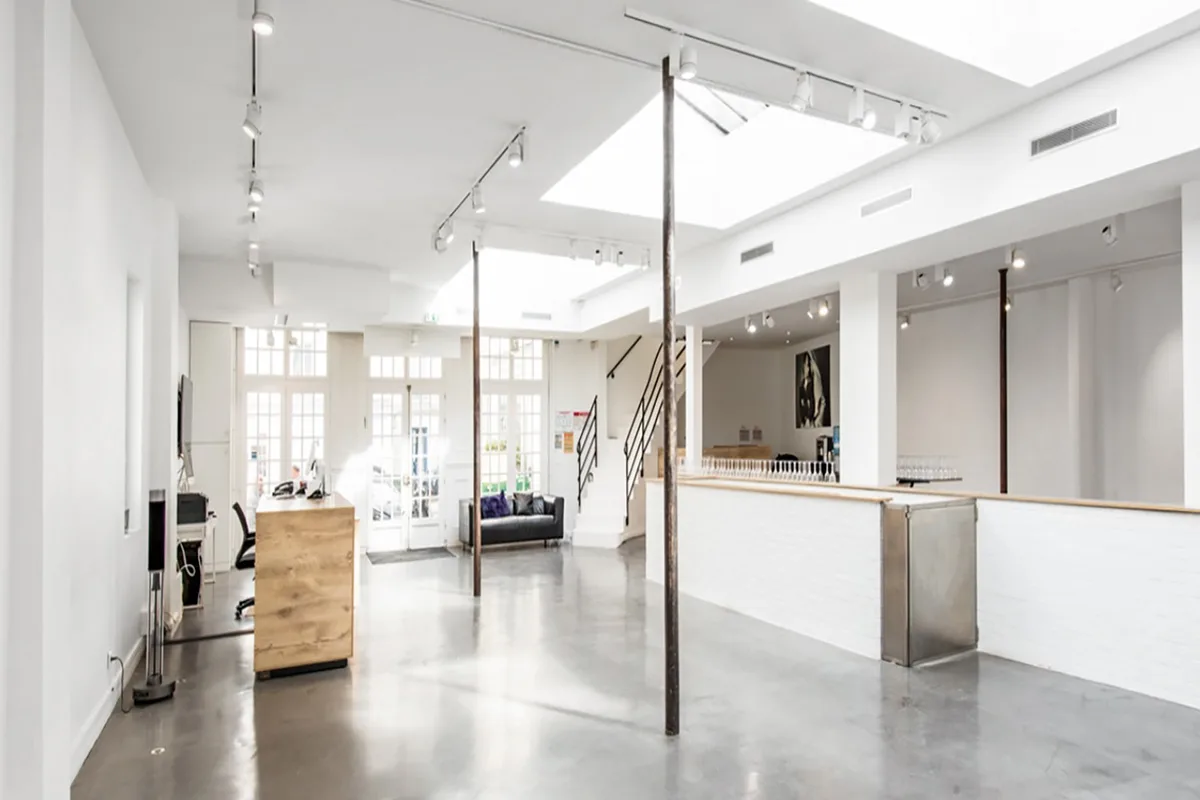
A pop up shop in Le Marais places your brand at the intersection of Parisian culture, international tourism, and fashion industry credibility. Le Marais, spanning the 3rd and 4th arrondissements of Paris, is consistently ranked among Europe's highest-performing short-term retail districts, drawing a dense mix of local tastemakers, global tourists, and fashion professionals year-round. For brands planning product launches, showroom events, and immersive retail activations in the French capital, this neighbourhood offers a combination of historic architecture, premium foot traffic, and cultural prestige that few locations in the world can match. Fashion Week Venues supports brands at every stage of this process, from space discovery through to full activation management in Paris and other major fashion capitals.
Why Le Marais Is the Benchmark for Pop-Up Retail in Paris
Le Marais has established itself as the definitive address for short-term retail in Paris because it combines density of foot traffic, architectural distinctiveness, and an audience that skews toward design-literate, internationally minded consumers. No other neighbourhood in the French capital replicates this precise combination at the scale Le Marais delivers consistently across every season.
The district occupies the 3rd and 4th arrondissements of Paris, positioned within Île-de-France's most densely visited cultural corridor. Its streets, ranging from the grand symmetry of Place des Vosges to the narrow medieval laneways connecting Rue des Rosiers and Rue de Montmorency, create a layered retail environment where independent concept stores, established fashion boutiques, contemporary art galleries, and heritage institutions coexist. This cultural density means that consumers arriving to visit the Picasso Museum or browse Marché des Enfants-Rouges naturally walk past retail frontages, generating organic foot traffic that brands in purpose-built commercial districts must spend significantly to replicate.
The neighbourhood's history gives it a narrative texture that premium brands actively seek. The Maison de Victor Hugo, the Hôtel de Soubise, and Place de la République are all within walking distance or a short transit ride. This heritage context signals to visitors that the area rewards exploration and discovery, two psychological states that translate directly into consumer dwell time and purchase propensity. When shoppers are already in discovery mode, a well-positioned pop-up store with a compelling window display captures attention far more effectively than a standard commercial environment.
International audience composition is another structural advantage. A significant proportion of visitors to Le Marais at any given time are international travellers, which matters enormously for fashion brands seeking cross-border brand recognition. Tourists arriving from North America, Asia, the Middle East, and Northern Europe bring both spending power and social media reach. A product purchased or an experience photographed in Le Marais travels globally through that visitor's networks, providing earned media exposure that extends well beyond the activation window.
The vintage culture embedded in Le Marais also creates opportunities for brands working in resale, customisation, upcycling, and archive fashion. Vintage T-shirts, designer denim, and curated second-hand selections sit comfortably alongside premium contemporary fashion launches in this neighbourhood, giving emerging brands a cultural permission structure that a purely luxury district might not afford. This pluralism is part of Le Marais's commercial strength: it accommodates NEMOZENA alongside a Vinted activation, an École Duperré graduate showcase alongside a Haute Couture soirée de lancement, without either feeling out of place.
The neighbourhood also benefits from consistent activity across the fashion industry calendar. While Paris Fashion Week, both the main womenswear schedule and Paris Fashion Week Men's, generates concentrated bursts of industry traffic, Le Marais remains commercially active throughout the year. Collaborations, product launches, exhibitions, and concept store rotations fill the calendar between fashion weeks, ensuring that brands activating outside peak periods still reach engaged audiences.
KEY TAKEAWAY: Le Marais combines historic architecture, a culturally sophisticated international audience, consistent foot traffic, and a fashion industry credibility that makes it the most commercially effective district in Paris for short-term retail activations across all brand categories.
Understanding precisely where within Le Marais to position a pop-up store is the next critical decision, and the street-level geography of the neighbourhood determines much of the outcome.
Le Marais Neighbourhood Geography: Streets, Squares, and Retail Zones
Le Marais is not a uniform retail environment. Its streets carry distinct commercial identities, and selecting the right location within the district is as consequential as choosing Le Marais over any other Paris neighbourhood.
Quick answer: The best streets for a pop up shop in Le Marais depend on your brand category and target audience. Rue des Francs-Bourgeois attracts the highest daily footfall and suits fashion and lifestyle brands. Rue des Rosiers serves a blend of local community and tourist traffic. Rue de Bretagne connects gastronomy and independent retail. Place des Vosges commands premium positioning and luxury associations.
Rue des Francs-Bourgeois
Rue des Francs-Bourgeois is the commercial spine of Le Marais and consistently delivers the highest volume of daily pedestrian traffic among the neighbourhood's retail streets. Running between the 3rd and 4th arrondissements, this street concentrates fashion boutiques, concept stores, and brand flagship spaces in a corridor that benefits from both destination shoppers and transit foot traffic from Place des Vosges to the west and the broader Marais cultural circuit to the east. Brands seeking maximum visibility and high daily exposure should prioritise spaces on or immediately adjacent to Rue des Francs-Bourgeois when planning a pop-up store activation.
Rue des Rosiers
Rue des Rosiers has evolved from its historic identity as the heart of Paris's Jewish Quarter into one of the city's most photographed and visited pedestrian corridors. It attracts both heritage tourists and food-driven visitors, with the concentration of falafel counters, boulangeries, and local businesses creating dwell time that benefits adjacent retail. Pop-up stores on Rue des Rosiers perform well for brands with a strong story to tell, where the narrative of discovery and authenticity aligns with the street's cultural character.
Place des Vosges and Its Arcades
Place des Vosges is the oldest planned square in Paris and one of the most architecturally significant retail environments in Europe. The arcaded ground floor spaces surrounding the square have historically housed galleries, antique dealers, and boutiques. A pop-up presence here carries an immediate prestige signal and suits luxury brands, fine jewellery, couture accessories, and art-adjacent activations. Rental rates in this micro-location reflect the premium positioning, but the press and social media value of a Place des Vosges address frequently justifies the investment for brands seeking editorial credibility.
Rue de Bretagne and Marché des Enfants-Rouges
Rue de Bretagne anchors the northern part of the 3rd arrondissement and serves a residential, food-driven community alongside growing numbers of lifestyle shoppers. The Marché des Enfants-Rouges, Paris's oldest covered market dating to 1615, generates sustained foot traffic from late morning through evening. Pop-up activations in this zone benefit from extended dwell times, a younger demographic profile, and lower commercial density than Rue des Francs-Bourgeois, which can mean clearer individual brand visibility.
Rue de Montmorency and Northern Marais
Rue de Montmorency and the wider northern Marais retain a more residential character with pockets of creative and design-focused activity. This zone attracts brands seeking a more curated, less commercial setting, and works particularly well for showroom events, design exhibitions, and brand presentations directed at fashion industry professionals rather than general consumer audiences.
DID YOU KNOW: Place des Vosges was commissioned by King Henri IV and completed in 1612, making it Paris's oldest planned square. Retail spaces within its arcades have operated continuously for over four centuries, giving any brand activation there an architectural and historical context unmatched anywhere else in the city.
| Street or Zone | Primary Audience | Best Brand Category | Traffic Pattern |
|---|---|---|---|
| Rue des Francs-Bourgeois | Fashion shoppers, international tourists | Fashion, lifestyle, accessories | High volume, all week |
| Rue des Rosiers | Tourists, local community | Storytelling brands, food-adjacent, heritage | Steady, peaks at weekends |
| Place des Vosges arcades | High-net-worth tourists, press, collectors | Luxury, couture, fine art, jewellery | Selective, high-value |
| Rue de Bretagne | Young professionals, food visitors | Lifestyle, vintage, independent design | Morning to evening, residential rhythm |
| Northern Marais | Industry professionals, design community | Showroom, exhibition, B2B presentation | Appointment-driven, curated |
KEY TAKEAWAY: Each street within Le Marais serves a distinct audience and brand category. Matching your activation location to your target audience profile and commercial objective is as important as the quality of the space itself.
With the geography established, understanding the types of physical spaces available across these streets directly shapes what kind of activation is possible.
Types of Pop-Up Spaces Available in Le Marais
Le Marais offers a wider range of short-term retail and event spaces than almost any other Parisian neighbourhood, reflecting its architectural diversity and long history of commercial adaptation. Brands can find spaces suited to consumer retail, trade showrooms, brand presentations, product launches, exhibitions, and experiential activations within the same district.
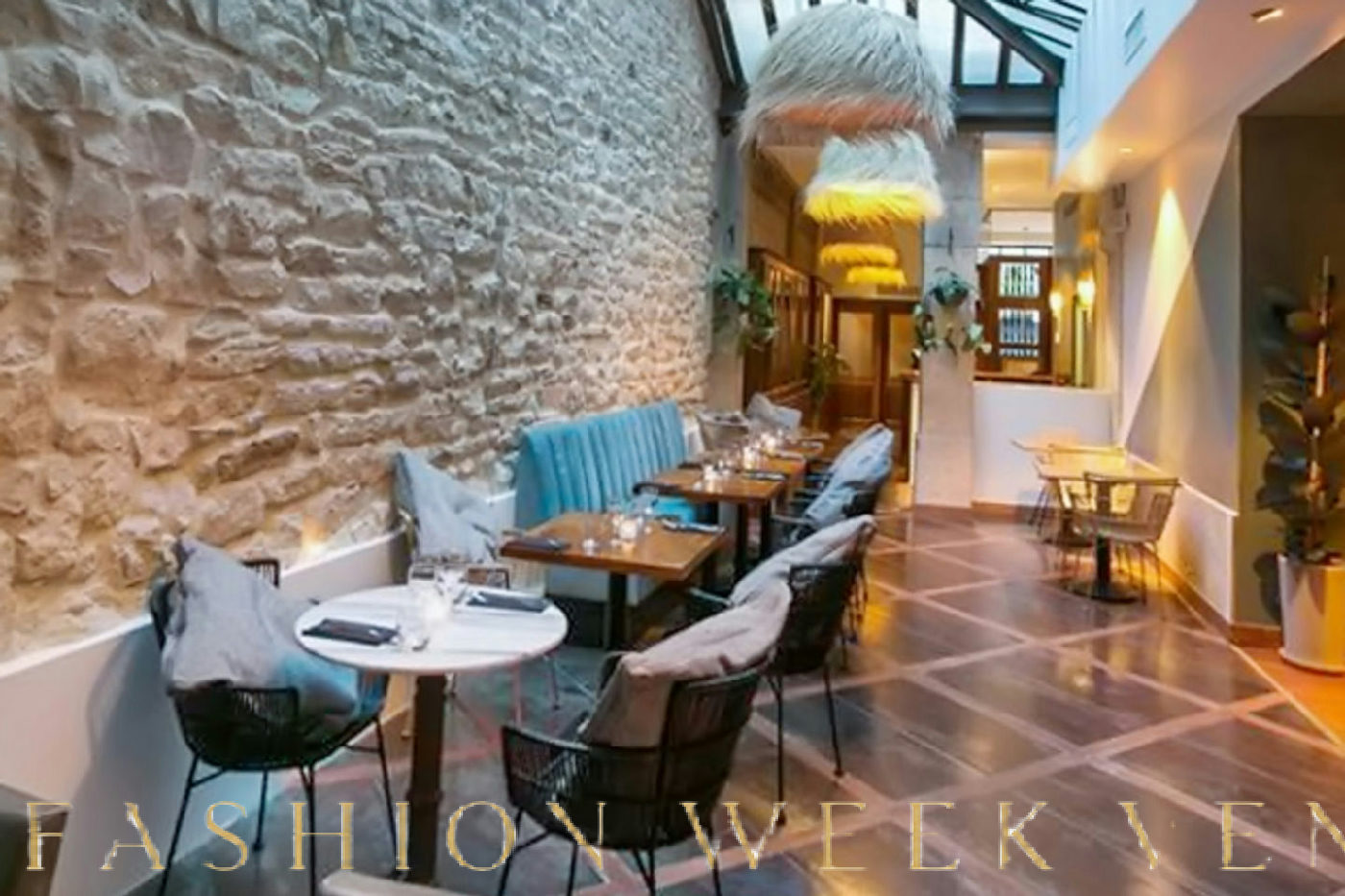
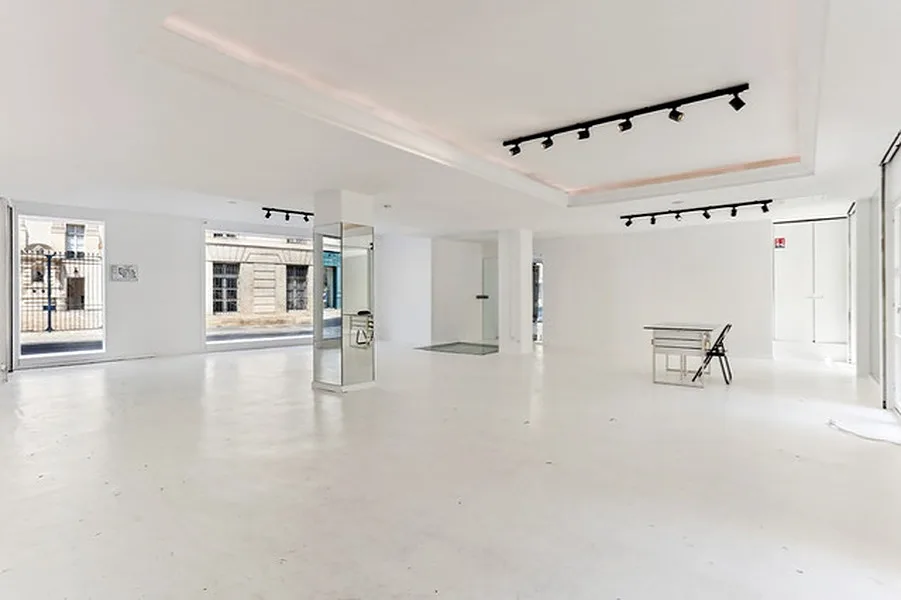
Quick answer: Pop-up spaces in Le Marais range from small street-facing boutiques of 20 to 40 square metres through to large gallery-format lofts and Haussmannian apartments exceeding 200 square metres. Space types include heritage maisons with exposed wooden beams and vaulted cellars, minimalist white-walled gallery spaces, and contemporary commercial units with modern spotlights and display windows onto high-traffic streets.
Street-Facing Boutique Spaces
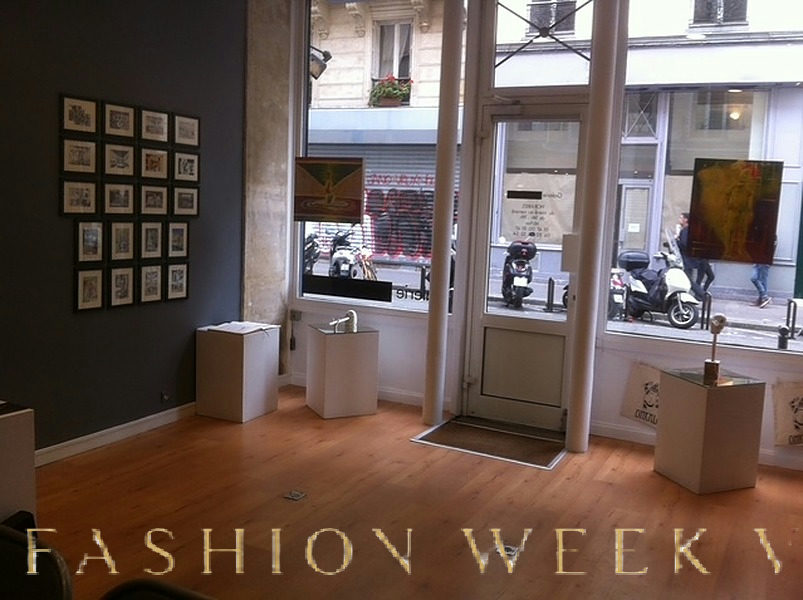
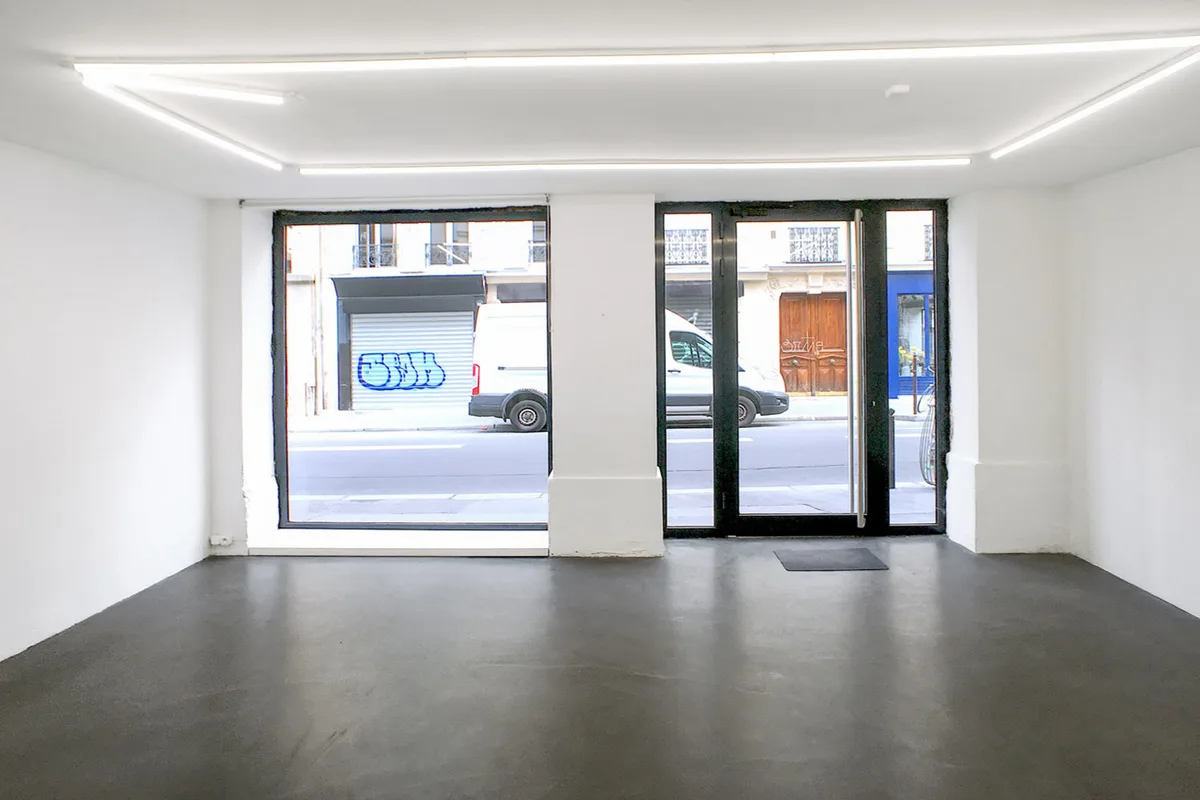
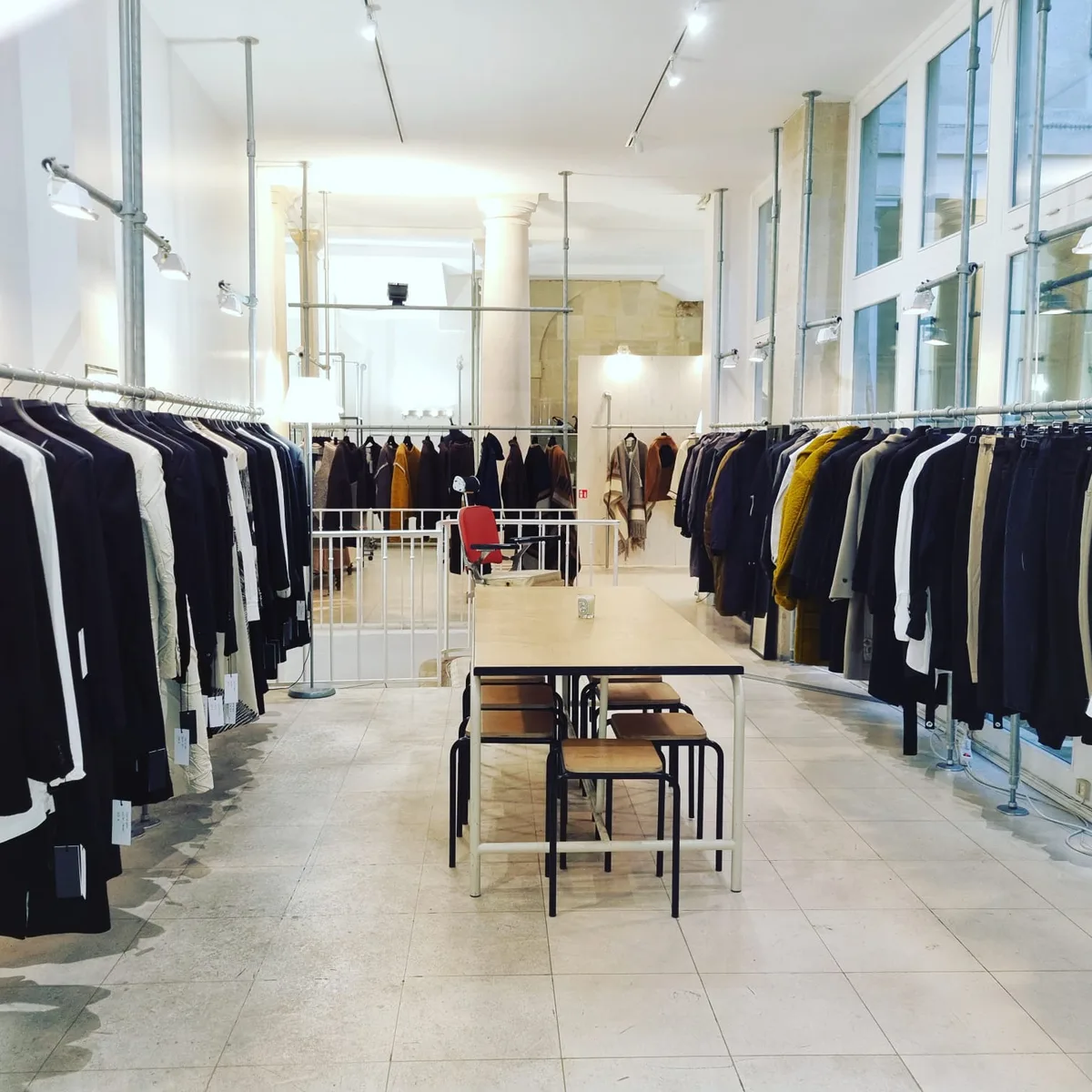
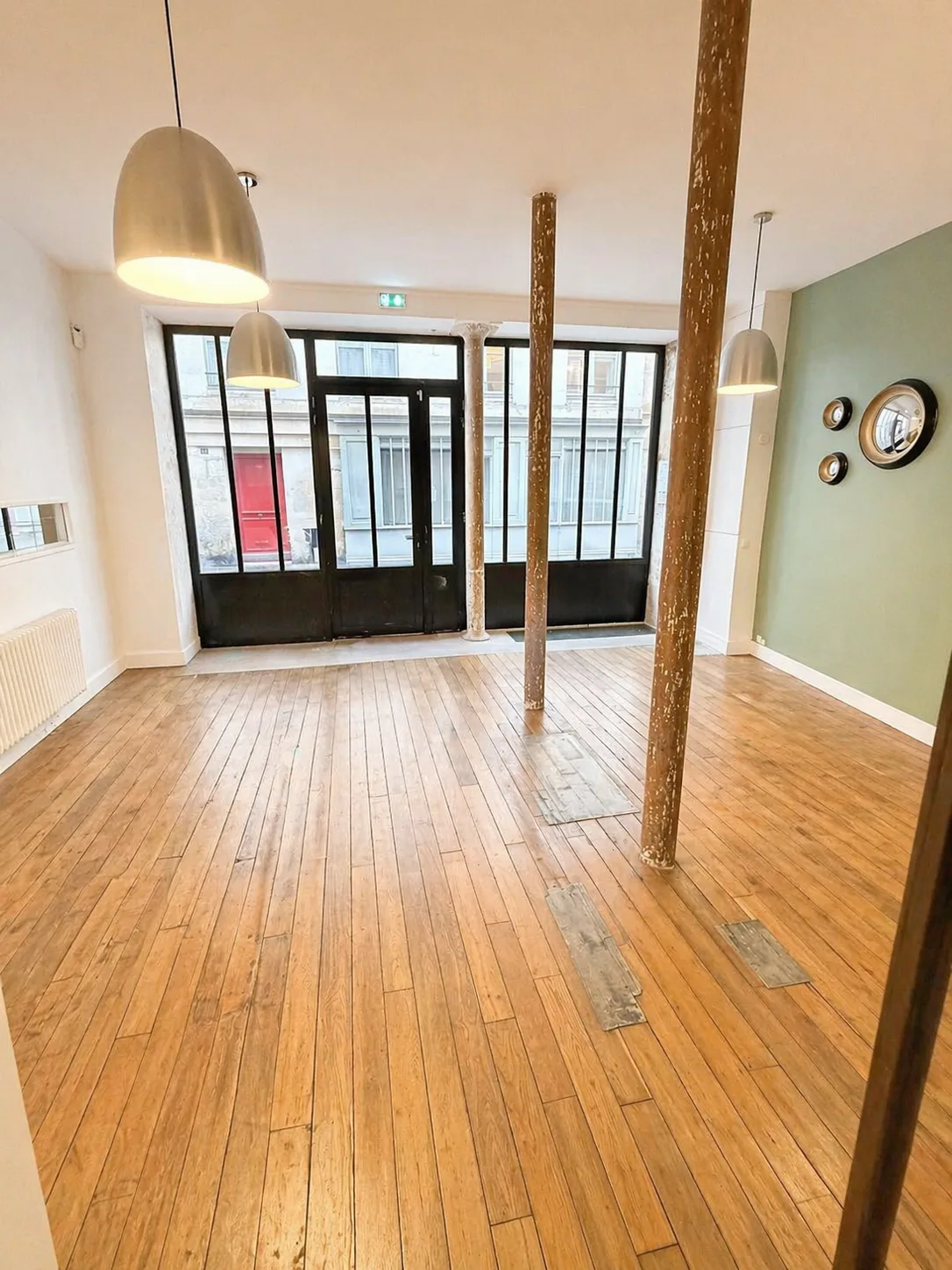
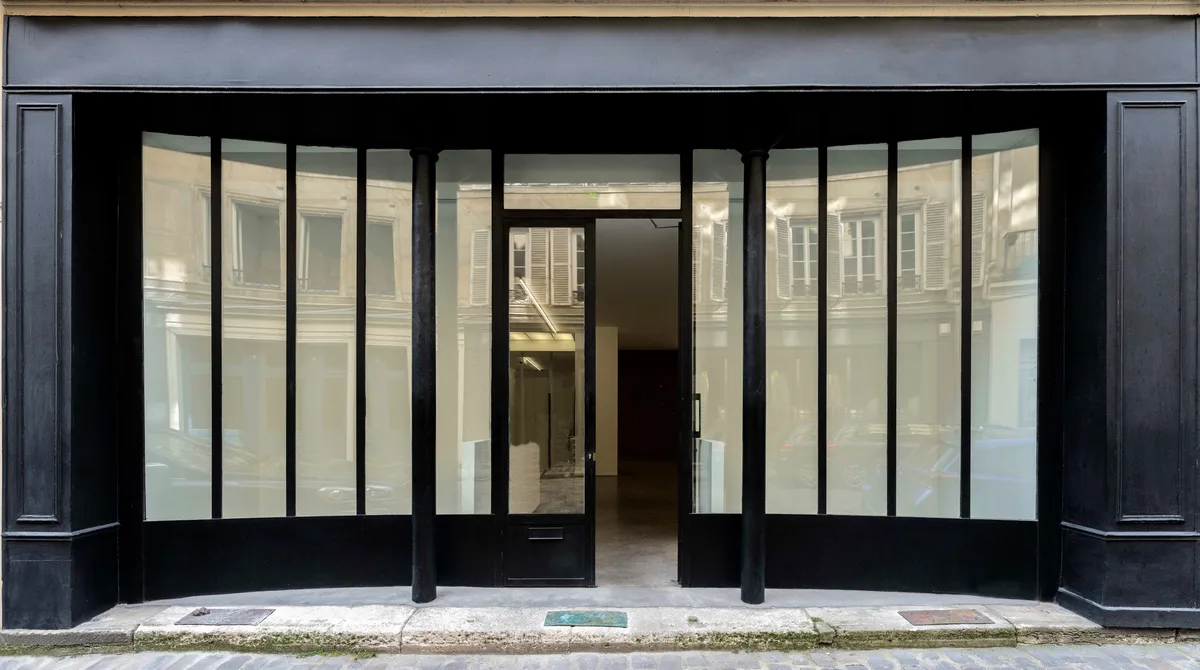
The most commonly sought format for a pop up shop in Le Marais is the street-facing boutique, typically between 20 and 80 square metres, with a display window on a commercial street. These spaces offer direct visibility to passing pedestrian traffic and benefit from the neighbourhood's high daily footfall. Interiors vary significantly: some retain period architectural features including poutres apparentes (exposed wooden beams), wooden floors, and brick walls, while others have been refitted with white walls, modern spotlights, and contemporary retail fixtures. Many include a réserve (stock room), toilet facilities, and basic equipment. Specifications such as accès PMR (wheelchair accessibility), wifi and fibre connectivity, and Bluetooth sound systems vary by property and should be confirmed at the sourcing stage.
Gallery and Exhibition Spaces
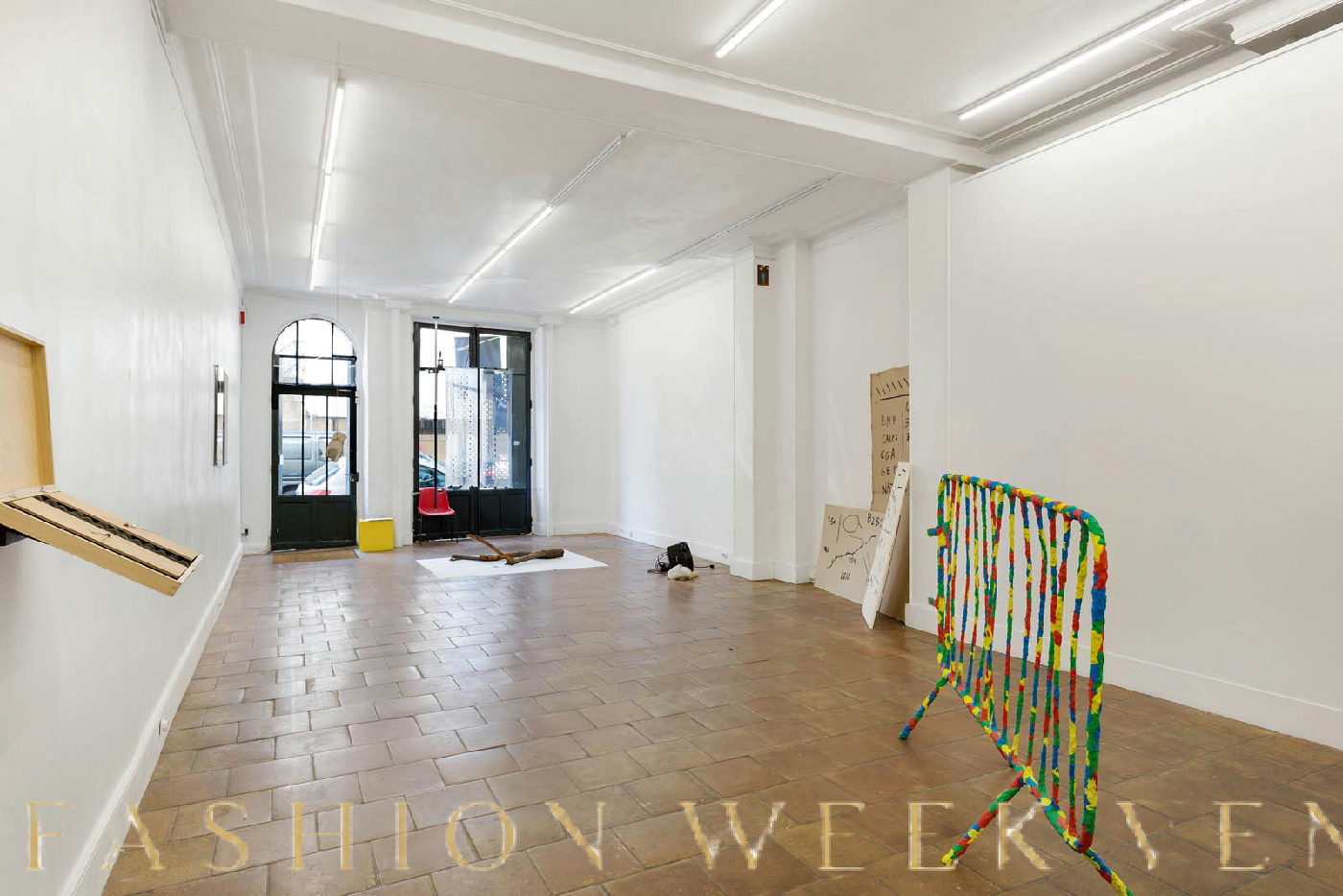
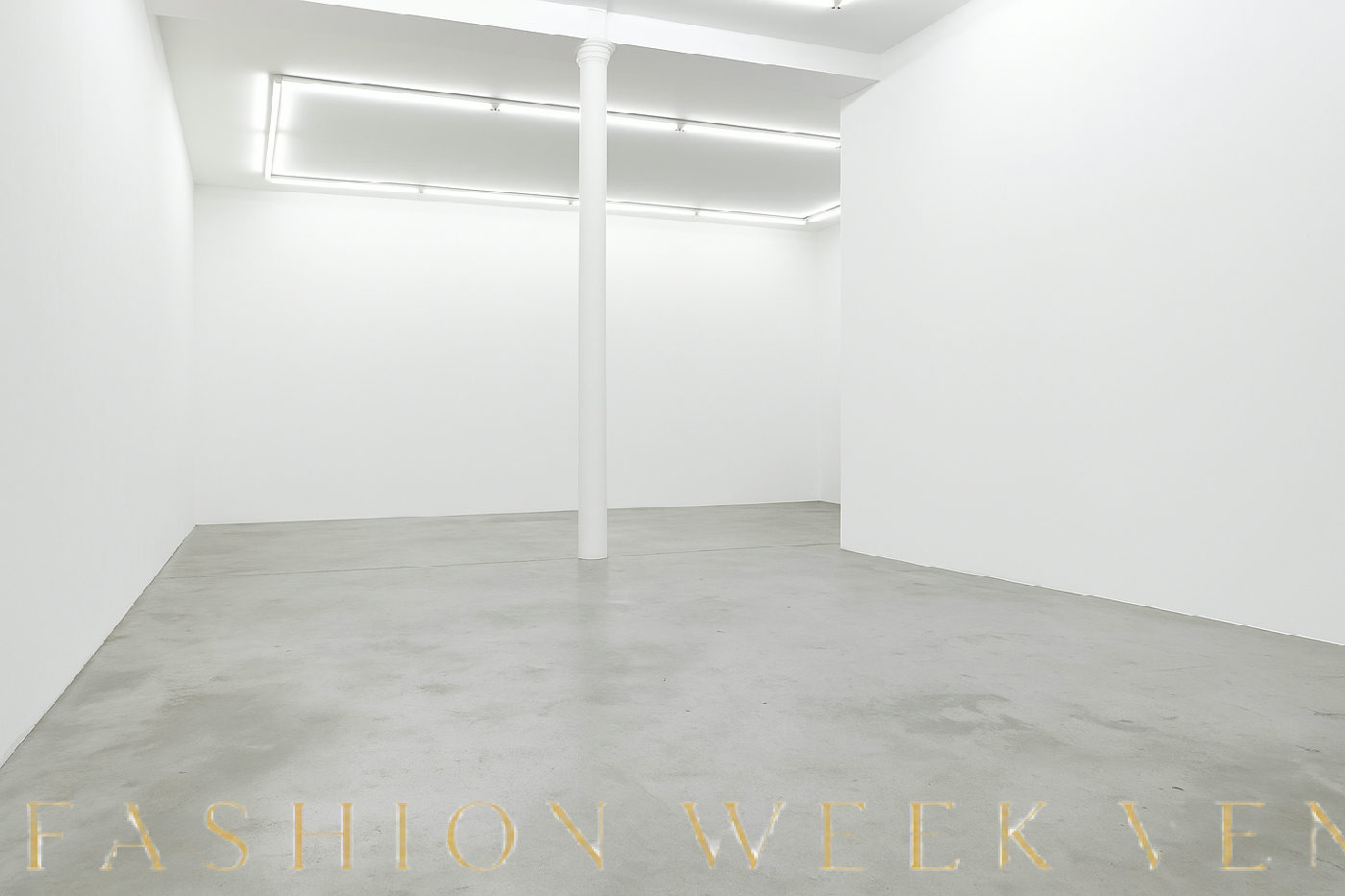
Le Marais is one of Europe's densest concentrations of contemporary art galleries, and many of these spaces become available for short-term retail activations between their exhibition programmes. Gallery spaces typically offer white walls, professional éclairage (lighting), wooden or polished concrete floors, and a clean aesthetic that suits fashion, design, and luxury product presentations. Surface totale in gallery formats ranges from approximately 60 to 300 square metres, with some venues including mezzanine levels or basement spaces with vaulted cellars that add atmospheric depth to brand activations.
Loft and Industrial Format Spaces
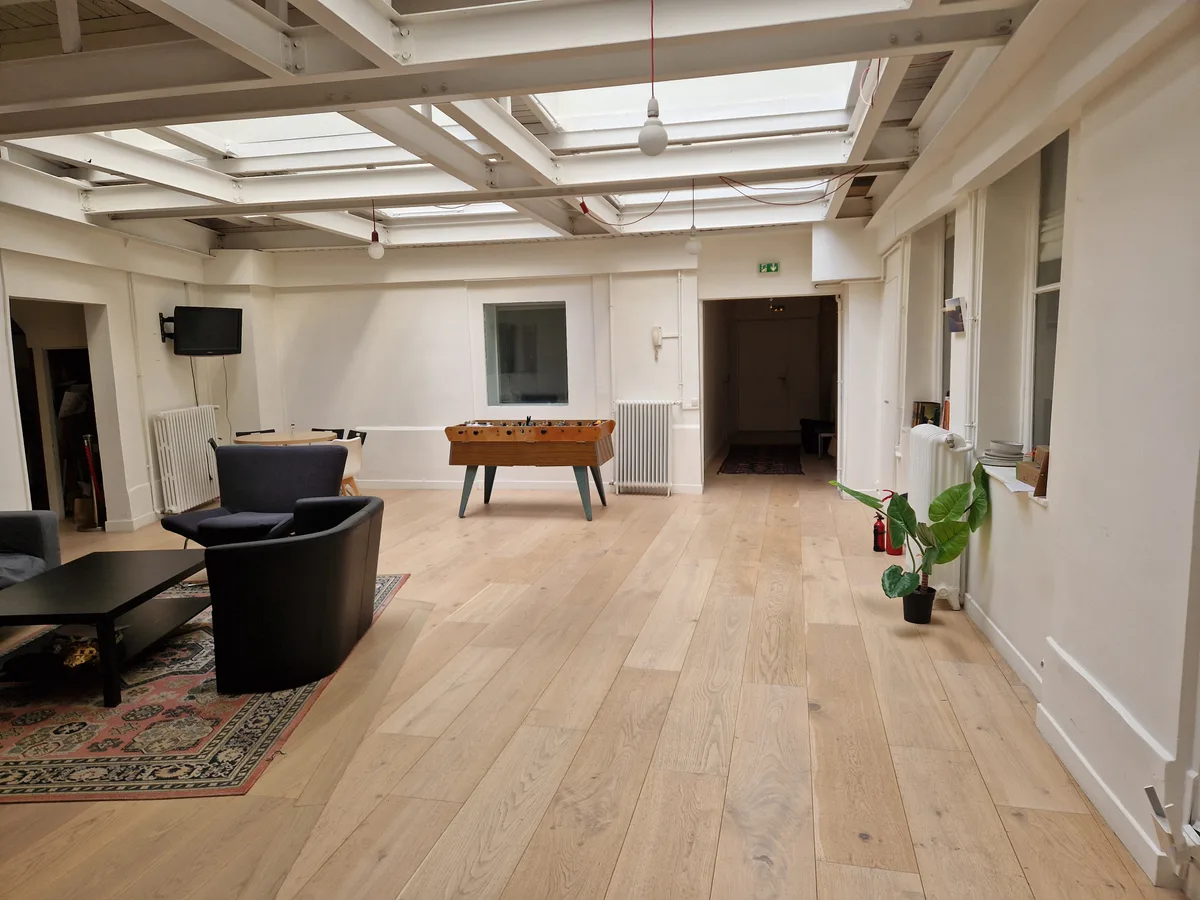
The northern Marais and the edges of the 3rd arrondissement retain some former craft and industrial buildings that have been converted into open-plan loft spaces. These offer high ceilings, structural beams, exposed brick walls, and flexible floor plans suited to large-scale product launches, showroom events, and immersive brand experiences. The raw architectural character of these spaces suits brands in streetwear, design, and contemporary fashion that want a setting with industrial credibility rather than historic elegance.
Haussmannian Apartment Showrooms
Some of the most sought-after spaces for showroom virtuel presentations and trade appointments in Le Marais are Haussmannian apartments on upper floors above commercial streets. These offer parquet floors, high ceilings with ornate mouldings, large windows, and the intimacy of a private residence combined with the prestige of a Paris address. Fashion houses and accessory brands frequently use these spaces for press appointments, buyer showrooms, and VIP events during Paris Fashion Week.
Experiential and Multi-Zone Spaces
A growing category of space in Le Marais accommodates experiential retail formats that combine product display with interactive elements. Operators of these spaces have fitted them with infrastructure suited to activations involving claw machines, chamboule-tout games, ice-cream stands, carnival ride elements, duck-hunt installations, and similar engagement mechanics. These spaces typically offer open-plan configurations, reinforced flooring, higher electrical load capacity, and strong wifi or fibre connectivity for digital product integrations and social media streaming.
To explore and compare available space types across Le Marais and the wider Paris market, brands can use the space comparison tool on Fashion Week Venues to evaluate options against specific brief criteria including surface area, neighbourhood, amenities, and activation type.
| Space Type | Typical Size | Key Features | Best Activation Type |
|---|---|---|---|
| Street boutique | 20 to 80 sqm | Display window, stock room, period or contemporary fit | Consumer retail, product launch |
| Gallery space | 60 to 300 sqm | White walls, professional lighting, clean aesthetic | Exhibition, luxury presentation, fashion showcase |
| Industrial loft | 100 to 500 sqm | High ceilings, exposed brick, open plan | Large-scale launch, showroom, experiential |
| Haussmannian apartment | 50 to 200 sqm | Parquet, mouldings, residential intimacy | Trade showroom, press appointments, VIP events |
| Experiential multi-zone | 80 to 400 sqm | Flexible zones, high electrical capacity, strong connectivity | Interactive retail, brand experience, social media events |
KEY TAKEAWAY: Le Marais offers genuine architectural and commercial diversity across its short-term rental stock. Matching the space type to the specific activation format, audience profile, and brand aesthetic is essential to maximising return on investment.
The physical space is only part of the activation equation. Understanding the broader retail and marketing strategy that supports a successful pop-up in Le Marais determines whether the investment delivers measurable brand recognition and customer engagement.
Pop-Up Retail Strategy for Le Marais: Marketing, Branding, and Customer Engagement
Opening a pop up store in Le Marais without a coherent marketing and customer engagement strategy reduces a potentially high-impact activation to a short-term rental. The neighbourhood's audience is design-literate and media-aware. Campaigns that feel generic, poorly executed, or disconnected from the local cultural context consistently underperform relative to those that engage with Le Marais's identity and community.
Quick answer: The most effective marketing strategies for a Le Marais pop-up combine clear visual merchandising and impactful display windows, social media campaigns tied to local events and the Paris fashion calendar, influencer partnerships with Paris-based creators, collaborations with local businesses and institutions, and PR outreach to fashion industry media. The combination of physical presentation and digital amplification determines both foot traffic and earned media outcomes.
Visual Merchandising and Display Windows
In Le Marais, the display window is the primary conversion tool. Pedestrians on Rue des Francs-Bourgeois are accustomed to high-quality visual merchandising from established fashion boutiques and concept stores. A pop-up that invests in distinctive, well-lit, and regularly refreshed window displays gains a significant advantage over activations that treat the window as secondary. Effective display windows in Le Marais typically combine a focal hero product with a clear brand identity expression and sufficient negative space to read clearly at walking pace. Modern spotlights, carefully managed éclairage, and consideration of how the display reads at different times of day are practical details that experienced retail designers address from the outset.
Social Media and Digital Amplification
A Le Marais pop-up that does not generate substantial social media content is leaving a significant proportion of its potential return on investment unrealised. The neighbourhood is one of the most photographed urban environments in Paris, and visitors are predisposed to create and share content. Brands should design their space to be inherently photographable, brief their team to encourage sharing, and create at least one distinct visual moment within the space that functions as a natural social media backdrop. Social media campaigns tied to local events, the Paris Fashion Week calendar, or neighbourhood happenings amplify reach by attaching the brand's content to searches and conversations already generating organic traffic. Influencer partnerships with Paris-based creators who have authentic connections to Le Marais and the French fashion community produce more credible engagement than generic influencer campaigns. The reach those creators provide helps amplify brand messaging quickly to audiences that are difficult to reach through paid channels alone.
Collaborations and Local Partnerships
Brands that collaborate with local businesses, institutions, or other emerging labels in Le Marais generate both editorial interest and community goodwill that supports foot traffic throughout the activation period. Collaborations with nearby concept stores, art galleries, or flea markets and brocantes can create cross-referral traffic. Partnerships with neighbourhood institutions such as École Duperré, which trains Paris's next generation of fashion designers, can add creative credibility and media interest to a brand presentation or exhibition. A soirée de lancement (launch event) timed to coincide with a neighbourhood gallery opening or a Fashion Week programming event multiplies the audience a brand can reach in a single evening without proportionally increasing costs.
Influencer Marketing and Press Strategy
Le Marais consistently attracts fashion editors, stylists, buyers, and influencers during Paris Fashion Week and throughout the year. Brands that proactively communicate their activation to industry media and maintain a clear, well-resourced press brief secure coverage that extends the effective reach of their investment well beyond the physical footfall the space generates. A dedicated landing page or Linktree with clear brand information, visual assets, and booking or contact details supports press and influencer engagement with minimal ongoing management effort. For brands using digital products or passive income models alongside a physical activation, the pop-up provides a credible real-world anchor that strengthens online brand authority.
Foot Traffic, Analytics, and Return on Investment
Measuring the commercial effectiveness of a Le Marais pop-up requires planning analytics infrastructure before the activation opens. Retail analytics tools, pedestrian counters, POS data, and social media engagement metrics together provide a multi-dimensional view of brand recognition and customer engagement outcomes. Return on investment calculations for pop-up retail in Le Marais should account not only for direct revenue generated during the activation window but also for brand recognition gains, new customer acquisition, social media reach, press coverage value, and any wholesale or partnership leads generated through the space. Brands with structured post-activation reporting consistently find that the full commercial value of a Le Marais presence exceeds what direct revenue figures alone capture.
To compare neighbourhoods and space types, explore the Paris city hub on Fashion Week Venues and shortlist spaces that match your brief, budget, and calendar window.
TIP: Schedule your most intensive social media activity during the first 48 hours of your activation and during any Paris Fashion Week programming that overlaps with your dates. These windows generate disproportionate reach relative to the effort invested because industry media and consumer audiences are already primed to engage with Paris fashion content.
KEY TAKEAWAY: A Le Marais pop-up requires a fully integrated marketing strategy combining physical visual merchandising, social media amplification, influencer engagement, local collaborations, and structured analytics. Brands that plan all of these elements before opening consistently achieve stronger return on investment than those that address marketing reactively after the activation is live.
The Fashion Week calendar is a specific planning context that shapes both the opportunity and the competition for premium Le Marais spaces. Understanding this calendar is essential for brands timing their activation strategically.
Paris Fashion Week and the Le Marais Activation Calendar
Paris Fashion Week is the most commercially significant window for brands seeking to activate a pop up shop in Le Marais, but it is not the only viable timing. Understanding the full Paris fashion calendar allows brands to make strategic decisions about when to activate based on their specific audience, budget, and objectives.
Quick answer: Paris Fashion Week occurs twice annually for womenswear, in late February to early March and in late September to early October, with Paris Fashion Week Men's typically scheduled in January and June to July. Haute Couture weeks in January and July add additional industry audience peaks. Le Marais remains commercially active and well-trafficked year-round, and activations outside these peak windows often benefit from lower space rental rates and less competition for audience attention.
Womenswear Fashion Week Windows
The February and March womenswear season coincides with the period when global fashion industry professionals, buyers, press, and influencers are concentrated in Paris at their highest annual density. Brands activating in Le Marais during this window benefit from an audience that is already engaged with fashion content, already moving through the neighbourhood's cultural circuit, and actively seeking new brands, products, and experiences to report on, purchase, or feature in content. Space availability during these windows is constrained, and brands that have not secured their venue several months in advance frequently find that the most desirable Le Marais locations are committed. Early planning is not a preference; it is a commercial necessity.
Men's Fashion Week and Haute Couture
Paris Fashion Week Men's, typically scheduled in January and in the June to July period, draws a distinct industry audience with strong overlap with the streetwear, contemporary menswear, and luxury accessories sectors that have significant presence in Le Marais. Haute Couture weeks in January and July bring a concentrated high-net-worth audience to the city, making the period immediately surrounding Haute Couture programming particularly valuable for luxury and premium brands activating in Place des Vosges-adjacent locations or within gallery-format spaces in the 3rd and 4th arrondissements.
July 2026 Programming
For brands planning activations in 2026, the July window includes both Paris Fashion Week Men's programming and Haute Couture, creating a concentrated industry audience period from early July. Brands considering a Le Marais pop up shop in July 2026 should plan their venue sourcing and permit applications well in advance to secure suitable spaces before availability tightens. The summer period in Paris also benefits from strong international tourist volumes, which sustains foot traffic and consumer spending across Le Marais outside the strictly industry-focused Fashion Week events.
Activating Outside Fashion Week
Brands that activate in Le Marais outside the main Fashion Week windows frequently achieve better return on investment relative to their total investment than those activating at peak periods, despite the lower industry audience concentration. Space rental rates tend to be more negotiable, operational competition is reduced, and the neighbourhood's baseline foot traffic from tourism and local community shopping remains substantial throughout the year. Product launches timed to coincide with significant cultural events in the Marais calendar, gallery openings, or seasonal shopping peaks around school holidays and public holidays can generate strong consumer foot traffic without the operational pressure of peak Fashion Week periods.
DID YOU KNOW: Le Marais attracts visitors throughout the year because its cultural offer, including the Picasso Museum, Place des Vosges, the Jewish Quarter heritage trail, and Marché des Enfants-Rouges, functions as a destination independent of the fashion calendar. This structural tourism base sustains retail foot traffic across all seasons, making Le Marais commercially viable for pop-up retail even in the quieter January and August periods.
| Calendar Window | Primary Audience | Space Competition | Typical Activation Type |
|---|---|---|---|
| February to March (Womenswear FW) | Industry, press, buyers, influencers | Very high | Brand showroom, product launch, consumer pop-up |
| January (Menswear FW + Couture) | Industry, luxury consumers | High | Menswear presentation, luxury activation |
| June to July (Menswear FW + Couture) | Industry, summer tourists | High | Summer launch, showroom, consumer retail |
| September to October (Womenswear FW) | Industry, press, buyers, influencers | Very high | Brand showroom, product launch, consumer pop-up |
| Outside Fashion Week periods | Local community, tourists | Lower | Consumer retail, brand awareness, concept store |
KEY TAKEAWAY: Paris Fashion Week creates the highest-value windows for industry audience engagement, but Le Marais's year-round cultural traffic means activations outside these peaks can deliver strong consumer return on investment with less operational pressure and more favourable space economics.
Navigating the practical requirements of securing and operating a short-term retail space in France requires understanding the legal and permit framework that governs these activations.
Permits, Leases, and Legal Requirements for a Pop-Up Shop in Le Marais
Securing a pop up shop in Le Marais involves navigating French commercial property law, permit requirements, and local authority regulations that differ significantly from the frameworks most international brands encounter in their home markets. Understanding these requirements before committing to a space is essential to avoiding delays, penalties, and unexpected costs.
Quick answer: Short-term retail activations in Paris are most commonly structured under a bail dérogatoire (derogatory lease), which allows commercial occupation for periods of up to 36 months without triggering the protections and obligations of a standard commercial lease. Some activations, particularly those in public or semi-public spaces, may require an autorisation d'occupation temporaire (AOT). Requirements vary by space type, duration, arrondissement, and specific location. Verifying requirements with a qualified French legal advisor before signing any agreement is strongly recommended.
The Bail Dérogatoire
The bail dérogatoire is the primary legal instrument for short-term commercial occupation in France, including pop-up retail in Le Marais. It allows a landlord and tenant to agree a commercial lease for a period of between one day and 36 months without the automatic renewal rights and protections that attach to a standard commercial lease (bail commercial). For brands seeking flexibility, the bail dérogatoire provides a legally recognised framework that most French landlords and space operators understand and use regularly. It must be documented in writing and explicitly state that the parties are waiving the protections of the standard commercial lease regime. The consequences of failing to structure this correctly can include the tenant inadvertently acquiring commercial lease rights and the obligations that accompany them. Legal review of any lease documentation before signature is not optional for brands unfamiliar with French commercial property law.
Autorisation d'Occupation Temporaire
For activations that involve use of public space, pavement areas, building facades on public streets, or certain semi-public venues in Paris, an autorisation d'occupation temporaire (AOT) may be required from the relevant local authority, typically the Mairie de Paris arrondissement concerned or the Préfecture de Paris depending on the nature of the space and the activity. AOT applications require advance submission with supporting documentation and are not guaranteed. Brands planning outdoor elements, pavement displays, signage on public infrastructure, or activations in parks or public squares adjacent to Le Marais should factor AOT lead times and approval uncertainty into their planning timeline.
International Brand Considerations
Brands incorporated outside France can rent commercial space in Paris without establishing a French legal entity, provided the lease is structured appropriately and any tax obligations arising from the commercial activity in France are addressed. However, the mechanics of this vary by brand origin, activity type, transaction volume, and applicable tax treaties. The assumption that a short-term rental is inherently simple from a compliance perspective is incorrect. Brands entering France for the first time for a commercial activation should obtain advice on VAT registration, withholding obligations, and any reporting requirements that may apply to their specific situation before the activation opens.
IMPORTANT: Requirements governing permits, leases, and tax compliance for short-term commercial activations in Paris change periodically and vary by arrondissement, space type, and activity. The information in this guide is directional only. Always verify current requirements with a qualified French legal advisor and with the relevant local authority before committing to a space or signing documentation.
For a structured starting point on permit requirements by space type and activation format, the permit guidance tool on Fashion Week Venues provides a framework for understanding what may be required and where to seek specialist advice.
KEY TAKEAWAY: The bail dérogatoire is the standard legal framework for short-term retail in Le Marais, but its correct application requires explicit documentation and legal review. International brands must also address compliance obligations that arise from commercial activity in France regardless of where they are incorporated.
Budget planning for a Le Marais pop-up involves more variables than the rental cost alone. Building a complete cost picture before committing to a space protects brands from budget overruns that undermine the commercial case for the activation.
Budget Planning for a Pop-Up Shop in Le Marais
Budget planning for a pop up shop in Le Marais requires accounting for multiple cost categories beyond the rental fee, including fit-out and production, staffing, marketing, permits, insurance, logistics, and operational contingency. Brands that plan only to the rental line consistently encounter unexpected costs that reduce or eliminate the commercial return on investment they targeted.
Quick answer: The total cost of a Le Marais pop-up activation depends on space size, duration, fit-out complexity, staffing requirements, and marketing investment. Space rental rates in Le Marais vary significantly by location, space type, size, and season. Directional cost estimates should be treated as planning inputs only; actual costs depend on specific space negotiations and activation scope. Use a structured planning tool to build a brand-specific budget before committing to a space.
Rental Costs and Seasonal Variation
Space rental rates in Le Marais are among the highest in Paris, reflecting the neighbourhood's premium positioning, foot traffic volumes, and consistent demand from both international and domestic brands. Rates vary substantially by street, size, format, and season. Rue des Francs-Bourgeois commands higher rates than equivalent spaces in the northern Marais. Fashion Week windows carry significant premiums over standard periods. Gallery spaces with established cultural prestige or Place des Vosges addresses command rates that reflect their media and brand value beyond their square metreage. Because rates are negotiated individually and are not publicly standardised, brands should approach multiple space options simultaneously and use structured comparison to evaluate total value rather than headline rental cost alone.
Fit-Out, Production, and Furniture
Fit-out and production costs depend on the condition of the space, the brand's design requirements, and whether the activation uses temporary fixtures or a fully built environment. Boutique éphémère operators frequently offer baseline fixtures including portants (clothing rails), shelving, and basic retail furniture, which reduces fit-out cost for brands that can work within the existing configuration. Brands requiring custom-built environments, branded store design elements, bespoke furniture, or significant structural modifications will incur higher production costs and longer lead times. Furniture rental is an effective cost management tool for activations requiring a premium aesthetic without the capital cost of custom fabrication.
Staffing, Operations, and Security
Staffing costs for a Le Marais pop-up include sales floor team members, potentially a dedicated retail manager, and in some cases a security service for high-value product activations or events with expected high footfall volumes. Retail staffing in Paris requires compliance with French employment law, including working time regulations, minimum wage requirements, and social contribution obligations. Brands without an existing French payroll structure typically engage staffing through a specialist retail staffing agency that manages employment compliance on their behalf.
Marketing, Influencer, and Digital Investment
Marketing investment for a Le Marais pop-up should be planned as a line item within the total activation budget, not as an afterthought funded from rental budget savings. A minimum viable marketing allocation covers photography and video content production, social media paid amplification for the launch period, influencer partnership fees or gifting costs, and press outreach. Brands planning a soirée de lancement or VIP event should also budget for catering, invitation production, and event management resource.
Contingency and Miscellaneous Costs
A standard contingency allocation of ten to fifteen percent of total activation budget is advisable for Le Marais activations, covering unexpected permit costs, last-minute fit-out requirements, additional staffing needs, and operational issues that arise between planning and execution. Brands that treat their initial budget estimate as the absolute ceiling without contingency consistently face difficult decisions during the activation itself.
For a structured, brand-specific budget estimate that accounts for all cost categories relevant to your activation scope, use the budget planning tool on Fashion Week Venues as a starting framework before entering space negotiations.
KEY TAKEAWAY: The total investment in a Le Marais pop-up activation extends well beyond the rental fee. Brands that plan the full cost picture including fit-out, staffing, marketing, permits, and contingency before committing to a space make better decisions and achieve stronger return on investment than those that plan only to the rental line.
Working with a specialist agency transforms the complexity of a Le Marais activation from a series of individually managed risks into a coordinated, professionally supported process.
How Fashion Week Venues Supports Pop-Up Activations in Le Marais
Fashion Week Venues operates as a full-service pop-up shop agency and space marketplace with Paris as its primary and anchor market. For brands planning a pop up shop in Le Marais, the agency provides end-to-end support spanning every stage from initial brief through to post-activation reporting.
Fashion Week Venues serves brand teams including creative directors, marketing managers, retail strategists, brand activation managers, and international brands entering Paris for the first time. The agency's value is most clearly demonstrated by the complexity it removes from the activation process and the quality of outcomes it enables relative to brands attempting to manage the same process independently with less market knowledge and fewer established relationships.
Venue Sourcing and Space Discovery
The agency's venue sourcing service matches brands with spaces in Le Marais and across Paris that align with their brief, budget, calendar window, and activation format. The space marketplace provides a searchable, curated inventory of short-term retail and event spaces across the district's main retail zones. The locator tool helps brands identify available spaces by neighbourhood, surface area, and amenity specification. The compare tool enables side-by-side evaluation of multiple spaces against a consistent set of criteria, reducing the time and effort required to reach a shortlist decision.
Concept Direction and Branded Store Design
For brands that require creative development alongside space sourcing, the concept direction service provides strategic and creative input on the activation concept, spatial identity, and customer journey design. Branded store design translates brand identity into a physical retail environment that communicates clearly in the specific space selected, accounting for the architectural features, lighting conditions, and visitor flow patterns of the Le Marais location.
Production, Build, and Furniture Rental
The production and build service manages the physical construction and fit-out of the activation space, coordinating contractors, overseeing installation timelines, and ensuring the space is activation-ready on the agreed date. Furniture rental provides a cost-effective alternative to custom fabrication for brands seeking a premium aesthetic without the capital cost of bespoke furniture production. The imagine tool supports space visualisation before production commitments are made, and the build planning tool structures the production timeline to manage lead times and delivery logistics within the Le Marais regulatory context.
Activation Management and Retail Staffing
The activation management service provides on-the-ground operational support throughout the pop-up period, managing day-to-day operations, staff coordination, supplier relationships, and issue resolution. Retail staffing provides vetted, brand-briefed sales floor team members who understand both the brand narrative and the operational expectations of a high-performance Le Marais activation. POS and payments infrastructure ensures that transactions are processed efficiently and that sales data is captured in a format suitable for post-activation analytics reporting.
Data, Analytics, and ROI Reporting
Fashion Week Venues provides data and analytics support that helps brands measure foot traffic, conversion rates, average transaction values, and social media engagement against pre-activation targets. The ROI calculator tool provides a structured framework for evaluating total activation return against investment, incorporating both direct revenue and brand value metrics. This reporting infrastructure is particularly valuable for brand teams that need to justify future activation investment to internal stakeholders based on evidence from current activities.
The Twin Concept and Multi-City Activations
For brands planning simultaneous activations across multiple markets, the twin co-activation concept enables coordinated brand presence in two locations within the same window, whether two spaces within Paris or parallel activations in Paris and another city hub including London, Milan, New York, Tokyo, or Dubai. This approach maximises brand reach and media impact within a single activation budget cycle.
Fashion Week Venues does not guarantee specific spaces, permit approvals, or commercial outcomes. The agency's role is to provide expert guidance, established relationships, and operational support that significantly improves the probability of a successful activation, while managing the inherent variables of short-term retail in a complex and competitive market. To understand the full scope of what the agency provides and how the process works in practice, the agency process page provides a detailed explanation of each stage from brief through to post-activation review.
KEY TAKEAWAY: Fashion Week Venues provides end-to-end support for Le Marais pop-up activations, from space sourcing and concept direction through to production, staffing, and analytics reporting. Brands benefit most when they engage the agency early in the planning process, allowing sufficient lead time for space sourcing, permit management, and production coordination.
Several persistent misconceptions about renting pop-up space in Le Marais and Paris more broadly affect brand planning decisions. Addressing these directly prevents avoidable mistakes.
Common Myths About Pop-Up Shops in Le Marais: Debunked
MYTH: Brands need a French legal entity to rent retail space in Le Marais.
FACT: International brands can rent short-term commercial space in Paris without establishing a French company, provided the lease is structured appropriately. However, commercial activity in France may trigger tax obligations including VAT registration requirements, and the specific structure depends on the brand's country of incorporation, the nature of the activity, and applicable tax treaties. Legal advice specific to your situation is essential before proceeding.
MYTH: Paris Fashion Week is the only commercially viable window for a Le Marais pop-up.
FACT: Le Marais generates substantial foot traffic from international tourism, local community shopping, and cultural visits throughout the entire year. Activations outside Fashion Week windows often achieve strong return on investment with lower space rental costs, less competition for audience attention, and more operational flexibility. Paris Fashion Week is the highest-intensity window for industry audience engagement, but it is not the only commercially viable option for brands with consumer-facing objectives.
MYTH: Commission brokers are the only way to find a short-term retail space in Le Marais.
FACT: Specialist pop-up agencies and space marketplaces provide structured, transparent access to short-term retail spaces in Le Marais with full brief matching, space comparison tools, and end-to-end support that commission brokers typically do not offer. Direct approaches to space operators are also possible for brands with established Paris market knowledge, though the time and expertise required to identify and evaluate suitable spaces independently is substantial.
MYTH: Short-term leases in France are legally straightforward and require no specialist input.
FACT: The bail dérogatoire framework that governs most short-term commercial rentals in Paris requires explicit written documentation and careful structuring to avoid inadvertently triggering standard commercial lease protections. Permit requirements vary by space type, arrondissement, and activity. Tax obligations for international brands operating commercially in France are complex and vary by situation. Short-term leases in France require the same legal care as longer-term arrangements and benefit significantly from specialist input.
MYTH: Only luxury brands benefit from a Le Marais pop-up location.
FACT: Le Marais accommodates a wide spectrum of brand categories, from Haute Couture to vintage resale, streetwear to contemporary design, French fragrances to digital product activations. The neighbourhood's pluralism is one of its commercial strengths. Emerging brands, independent designers, and brands in the vintage and resale sector have successfully activated in Le Marais alongside major fashion houses and global luxury brands.
Frequently Asked Questions
What makes Le Marais attractive for retail brands seeking a pop-up location?
Le Marais combines several commercially valuable characteristics that few other Paris neighbourhoods replicate simultaneously. It offers high daily foot traffic from a mix of international tourists, local community shoppers, and fashion industry professionals. Its architectural diversity provides spaces suited to every brand aesthetic, from minimalist gallery environments to historic maisons with exposed beams and vaulted cellars. The neighbourhood's cultural density, including the Picasso Museum, Place des Vosges, and Marché des Enfants-Rouges, generates organic visitor movement that translates into retail exposure. Its association with both heritage Parisian culture and contemporary fashion gives brands an immediate credibility signal from choosing this address.
What types of spaces are available for a pop-up shop in Le Marais?
Le Marais offers a genuine range of short-term retail and event spaces. Options include small street-facing boutiques of 20 to 40 square metres on high-traffic streets, gallery-format spaces with professional lighting and white walls suited to fashion and art presentations, industrial lofts with high ceilings and exposed brick for large-scale experiential activations, Haussmannian apartments suited to trade showrooms and press appointments, and multi-zone experiential spaces with reinforced infrastructure for interactive brand experiences. Amenities vary by property and typically include combinations of display windows, réserve, wifi and fibre, accès PMR, Bluetooth sound systems, and modern lighting.
Can international brands rent a pop-up space in Le Marais without a French company?
International brands can in principle rent commercial space in Le Marais without establishing a French legal entity, as the bail dérogatoire framework does not require French incorporation. However, commercial activity in France may trigger VAT registration and other tax compliance obligations that vary by brand origin, activity type, and applicable international tax treaties. The practical and legal requirements of operating commercially in France as a foreign entity are more complex than they may initially appear, and specialist legal and tax advice should be obtained before committing to any space or signing any documentation in France.
How far in advance should brands book a pop-up space in Le Marais during Paris Fashion Week?
For activations during the main Paris Fashion Week womenswear windows in February to March and September to October, and during Haute Couture and Fashion Week Men's periods, brands should begin space sourcing at minimum three to six months in advance of the desired activation start date. The most desirable spaces in prime Le Marais locations, particularly on Rue des Francs-Bourgeois and around Place des Vosges, are frequently committed well before this window. Brands leaving space sourcing until four to six weeks before Fashion Week will typically find that the highest-quality locations are no longer available for their target dates.
What permits or authorisations are typically required for a pop-up in Le Marais?
Most short-term retail activations in Le Marais operate under a bail dérogatoire, which is a contractual arrangement rather than a permit. However, activations involving use of public pavement space, exterior signage on public-facing facades, outdoor display elements, or occupation of public squares or parks may additionally require an autorisation d'occupation temporaire from the relevant local authority. Requirements vary by arrondissement, space type, and specific activity. The permit guidance tool on Fashion Week Venues provides a directional framework, but verification with a qualified French legal advisor and the relevant local authority is always recommended before proceeding.
What is the difference between a bail dérogatoire and a standard commercial lease in France?
A standard commercial lease (bail commercial) in France provides the tenant with significant protections including automatic renewal rights, regulated rent review mechanisms, and statutory compensation rights on termination. These protections are designed for established businesses making long-term commercial commitments. A bail dérogatoire explicitly waives these protections by agreement between landlord and tenant, allowing commercial occupation for periods up to 36 months without triggering the full commercial lease regime. For short-term retail activations, the bail dérogatoire is the appropriate instrument, but it must be correctly documented in writing. If the arrangement is not properly structured, the tenant may inadvertently acquire commercial lease rights and the significant obligations they carry.
Which streets in Le Marais offer the best visibility for a fashion pop-up?
Rue des Francs-Bourgeois consistently delivers the highest daily pedestrian volume in Le Marais and offers the best raw visibility for fashion and lifestyle pop-up stores. Place des Vosges arcades provide premium prestige positioning suited to luxury and design-forward brands. Rue des Rosiers offers strong tourist traffic with an authentic neighbourhood character. Rue de Bretagne connects food and lifestyle audiences and suits emerging brands and independent designers. The best street for any specific activation depends on the brand's target audience, product category, and aesthetic, and ideally on verified foot traffic data for the specific location being considered.
How do I measure the return on investment of a Le Marais pop-up shop?
Measuring return on investment for a Le Marais pop-up requires tracking multiple metrics across both commercial and brand value dimensions. Direct revenue generated during the activation period is the most straightforward metric, but it typically underrepresents total value. Additional metrics include new customer acquisition cost relative to other channels, social media reach and engagement generated by the activation, press and editorial coverage value, wholesale or partnership leads generated through the space, and brand recognition uplift measured through post-activation research. A structured ROI framework built before the activation opens, using realistic targets for each metric, provides the basis for meaningful post-activation evaluation.
Is Le Marais suitable for emerging brands as well as established fashion houses?
Yes. Le Marais's commercial pluralism makes it accessible and commercially effective for brands across the full spectrum from emerging independents to global fashion houses. Emerging brands benefit from the neighbourhood's high foot traffic, international audience, and cultural prestige without requiring the investment levels that luxury flagship activations in more purely premium districts would demand. The vintage culture, concept store tradition, and openness to new creative voices embedded in Le Marais's retail identity create genuine opportunities for smaller brands that would be marginalised in a more purely luxury environment.
What role does social media play in a Le Marais pop-up strategy?
Social media is a primary driver of return on investment for Le Marais pop-up activations, both as a traffic generation tool before and during the activation and as an earned media amplifier that extends the brand's reach well beyond the physical footfall the space generates. Le Marais is one of Paris's most photographed neighbourhoods, and visitors are predisposed to create and share content from the area. Brands that design their spaces and marketing strategies to generate shareable visual moments consistently achieve significantly higher social media reach than those that treat social media as a secondary consideration. Influencer partnerships with authentic Paris-based creators amplify this effect further.
Can brands run a showroom and a consumer pop-up simultaneously in Le Marais?
Yes. Some brands use a single larger space in Le Marais to run both a consumer-facing retail component and a trade showroom or press appointment function simultaneously, using spatial zoning to separate these audiences and experiences. Others use two separate spaces in the neighbourhood for concurrent activations targeting different audiences. The twin co-activation concept offered by Fashion Week Venues provides a structured framework for brands wishing to run coordinated simultaneous activations in the same or different locations, with shared operational support and integrated marketing.
How does foot traffic in Le Marais vary by season and day of week?
Foot traffic in Le Marais peaks during Fashion Week periods, summer tourist season, and weekends throughout the year. Weekends consistently outperform weekdays for consumer retail foot traffic, while weekday daytime traffic skews toward tourism and industry audiences. Summer months bring very high international tourist volumes that sustain strong retail foot traffic even outside Fashion Week. January and February see lower tourist volumes but benefit from Fashion Week and Haute Couture programming in the first quarter. The neighbourhood maintains commercially viable foot traffic across all seasons, making it one of the most consistently active retail environments in Paris.
What amenities should brands look for when selecting a Le Marais pop-up space?
Essential amenities to verify when selecting a Le Marais pop-up space include display windows visible from the street, adequate éclairage (lighting) for product presentation, a réserve (stock room) of sufficient size for inventory management, wifi and fibre connectivity for POS and digital operations, toilet facilities, and accès PMR (wheelchair accessibility) where required. Desirable additional amenities include a Bluetooth sound system, climate control, kitchen or refreshment facilities for event use, and sufficient electrical load capacity for any planned interactive or experiential elements such as claw machines, carnival ride installations, or digital displays.
How does working with a specialist agency differ from finding a space independently?
Working with a specialist agency such as Fashion Week Venues provides access to a curated inventory of pre-vetted spaces, established relationships with Le Marais landlords and space operators, structured tools for space discovery and comparison, expertise in French commercial property law and permit requirements, end-to-end support from brief through to post-activation reporting, and operational infrastructure including staffing, production, and analytics. Finding a space independently requires significant market knowledge, time, language capability, and established local relationships that most international brand teams do not have. The agency model reduces risk, saves time, and typically improves the quality of the final activation outcome relative to independent management.
What is the typical duration of a pop-up shop rental in Le Marais?
Short-term rental durations in Le Marais range from a single day for a very targeted event activation through to several months for an extended pop-up concept. The most common durations for brand activations are one to two weeks for Fashion Week-aligned launches, two to four weeks for seasonal pop-up stores, and one to three months for extended boutique éphémère concepts. Rental pricing structures vary by operator: some charge a daily rate, others a weekly or monthly rate, and some offer tiered structures with reductions for longer commitments. Minimum rental periods and pricing structures should be confirmed directly with the space operator or through the agency managing the sourcing process.
Conclusion: Planning Your Pop-Up Shop in Le Marais
A pop up shop in Le Marais represents one of the most commercially effective investments a fashion, lifestyle, or luxury brand can make in Paris. The neighbourhood's combination of exceptional foot traffic, international audience composition, architectural diversity, and fashion industry credibility creates an environment where well-planned activations consistently deliver measurable returns across both direct revenue and brand value metrics. The decision to activate in Le Marais is rarely the difficult one. The decisions that determine whether the activation succeeds, including the right street, the right space type, the right calendar timing, the right legal structure, and the right marketing strategy, are where expert guidance makes the most significant difference.
The legal and permit framework governing short-term commercial rentals in Paris requires careful navigation. Budget planning must account for the full range of costs well beyond the rental fee. Marketing strategy must be planned and resourced before the space opens. And the calendar window must be chosen with a clear understanding of both the opportunity and the competition that each period brings. Brands that approach all of these dimensions with the same rigour they would apply to any significant commercial investment consistently achieve outcomes that justify and often exceed their activation investment.
Fashion Week Venues provides the expertise, tools, and operational support to manage every dimension of this process, from initial brief through to post-activation ROI reporting. Whether you are planning your first Paris activation or expanding an established programme into Le Marais, the agency's market knowledge and established relationships in the neighbourhood give your brand a substantive advantage in a competitive and complex market. To move from research to activation, start exploring available spaces on the Fashion Week Venues marketplace and build a focused brief for your target neighbourhood, space type, and calendar window.