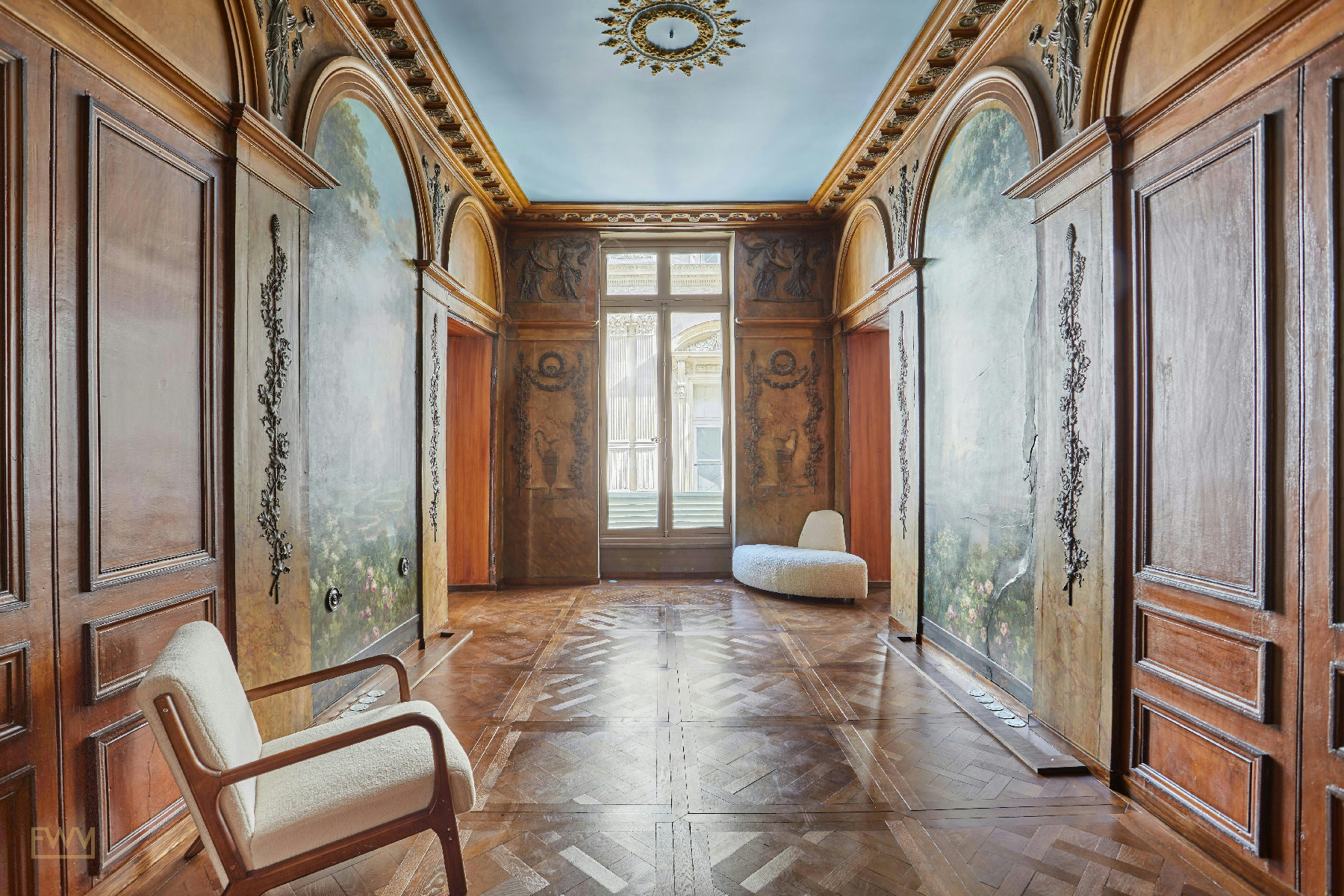
A pop up store Palais Royal activation places your brand at the geographic and cultural heart of Paris, within steps of the Louvre Museum, Place Vendôme, and rue Saint-Honoré. The Palais-Royal district in the Paris 1st arrondissement has become one of the most competitive and coveted addresses for luxury brands, emerging designers, and international retailers seeking short-term retail spaces, showrooms, and ephemeral galleries. Fashion Week Venues helps brand teams source, design, permit, and activate pop-up spaces across this district and the surrounding neighbourhoods, from the Galerie de Valois to the Montorgueil district. This guide covers everything a brand team needs to know before committing to a space in Palais Royal, including location strategy, space types, permit requirements, seasonal calendars, costs, and activation logistics.
Why Palais Royal Is Paris's Premier Pop-Up Destination
Palais Royal sits at a rare intersection of heritage architecture, luxury retail, cultural institutions, and extremely high foot traffic, making it the single most requested neighbourhood for pop-up shop activations in central Paris. The Cour d'Honneur, the Palais Royal Gardens, and the surrounding colonnaded arcades create a setting that is almost impossible to replicate anywhere else in Europe.
The district draws a sophisticated, internationally mobile audience throughout the year. Shoppers who visit rue Saint-Honoré, Place des Victoires, and Étienne Marcel overlap significantly with visitors to the Louvre Museum and the Pinault Collection at the Bourse de Commerce, located a short walk along Rue du Louvre. This overlap creates a compound foot traffic effect that benefits any brand operating a pop-up store or showroom in the area.
The architectural character of the spaces available in and around Palais Royal is also exceptional. Marble floors, high ceilings, parquet flooring, original stone detailing, and Haussmann-era proportions are common features in the retail units lining Rue de Valois, the Galerie de Valois, and the connecting streets. These structural qualities reduce the amount of production investment required to create a visually compelling activation, because the space itself carries significant aesthetic weight.
Luxury brands have long understood this. The district has hosted flagship stores, capsule collection launches, cosmetic retail activations, and ephemeral galleries for houses ranging from small Parisian designers to major international groups. The Fondation Quartier and nearby Pinault Collection at the Bourse de Commerce reinforce the area's association with high-quality cultural and aesthetic experience, which transfers to any brand activating nearby.
Compared to the Marais or Saint-Germain, the Palais Royal zone benefits from a tighter concentration of luxury consumer spending. Place Vendôme is a ten-minute walk to the west, while La Samaritaine on Rue de Rivoli has repositioned the Pont Neuf end of the 1st arrondissement as a premium retail and hospitality cluster. This concentration means that a well-placed pop-up shop near Palais Royal can capture both planned and unplanned luxury spending in a single activation footprint.
Brands entering Paris for Paris Fashion Week, or for seasonal activations tied to the holiday season, Bastille Day, or the broader summer and autumn travel peaks, consistently identify Palais Royal as their first-choice neighbourhood. The challenge is not demand but supply, since prime units in the colonnaded arcades are limited and frequently committed months in advance.
DID YOU KNOW: The Palais Royal Gardens receive millions of visitors annually, many of whom are international luxury shoppers. The Buren columns in the Cour d'Honneur have become one of the most photographed landmarks in central Paris, generating significant organic social media exposure for brands activating in the immediate vicinity.
KEY TAKEAWAY: Palais Royal combines architectural distinction, luxury consumer density, cultural prestige, and high international foot traffic in a way that no other neighbourhood in Paris can replicate. For brands seeking a pop-up store location that communicates quality without requiring enormous production budgets, the district offers a structural advantage from day one.
Understanding which specific locations within and around Palais Royal best suit your brand's objectives is the next step, and that requires a closer look at the neighbourhood geography.
Neighbourhood Geography: Key Streets and Locations Around Palais Royal
The Palais Royal district is compact but layered, with distinct retail micro-zones that attract different brand profiles, consumer types, and activation formats. Knowing the difference between Rue de Valois, Place des Victoires, and Rue du Louvre before you brief an agency can save weeks of misdirected searching.
The Palais Royal Arcades and Cour d'Honneur
The colonnaded arcades of the Palais-Royal, specifically the Galerie de Valois, Galerie de Montpensier, and Galerie de Beaujolais, house some of the most unusual retail spaces in Paris. Units here tend to be narrow but deep, with vaulted ceilings and original stone detail. These spaces suit jewellery, fragrance, accessories, art-led fashion concepts, and ephemeral gallery formats. The Cour d'Honneur itself, while not typically available for commercial tenancy, provides the backdrop that gives the entire district its visual identity.
Rue de Valois and Rue de Rivoli
Rue de Valois runs along the eastern edge of the Palais Royal Gardens and connects northward toward Rue de Rivoli. Ground-floor units on Rue de Rivoli offer large frontages, high volumes of tourist foot traffic from the Louvre Museum direction, and proximity to La Samaritaine. These spaces work well for brands seeking maximum visibility with a tourist-luxury crossover audience.
Rue Saint-Honoré and Place des Victoires
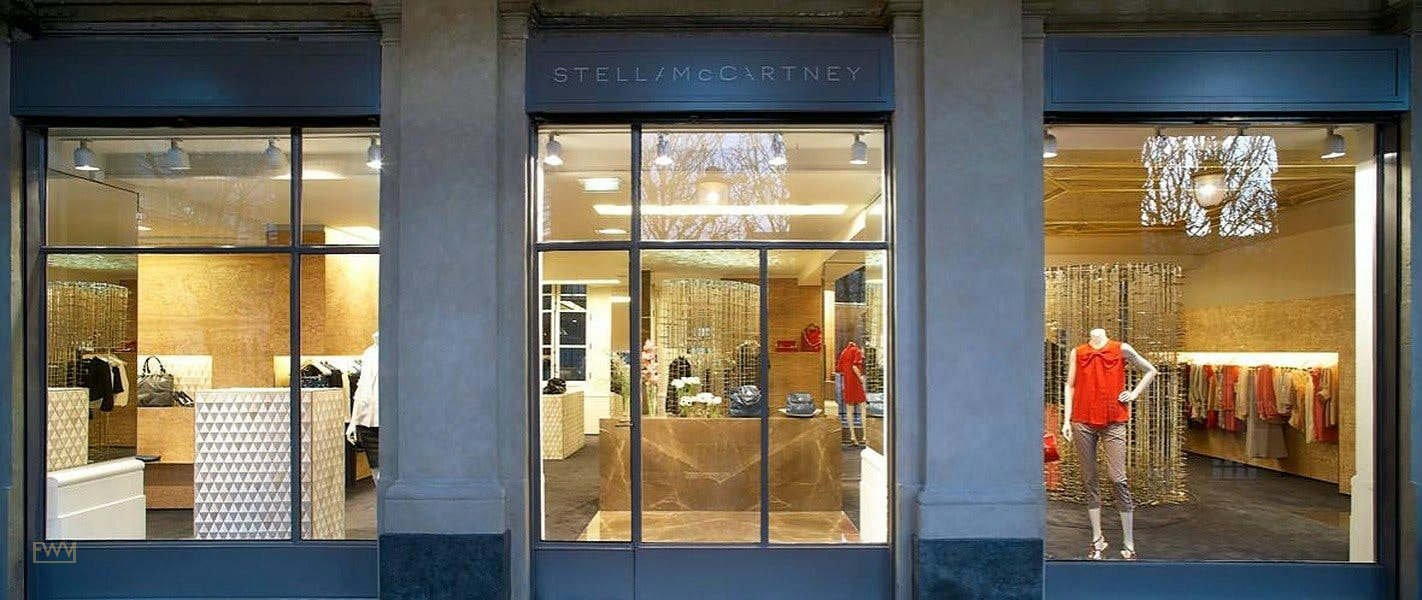
Rue Saint-Honoré is one of the world's most recognised luxury retail streets. Pop-up spaces here command premium rents and attract extremely high concentrations of fashion-conscious shoppers. Place des Victoires, a circular Place dominated by a statue of Louis XIV, sits at the junction of the 1st and 2nd arrondissements and is home to established fashion brands. Both addresses carry significant brand signalling value. Sézane, the beloved French womenswear brand, has long had a presence in this part of the city, and brands like Soeur have cultivated devoted followings from nearby addresses. Gerard Darel and Majestic Filatures both trade in the broader area, reflecting the neighbourhood's appetite for considered, quality-led French fashion.
Étienne Marcel and the Montorgueil District
Moving north from Place des Victoires, Étienne Marcel and the Montorgueil district offer a slightly younger, more street-fashion-oriented retail environment without sacrificing accessibility or foot traffic. Loft spaces in converted buildings are more commonly available here than in the arcades proper, making this zone suitable for brands seeking raw, industrial aesthetics, vintage boutique concepts, or pop-up thrift-able boutique formats. Café Kitsuné has operated nearby, reinforcing the area's credentials with a design-literate, internationally aware consumer base.
Poste du Louvre and Rue du Louvre
The Poste du Louvre, located on Rue du Louvre, is a major nineteenth-century building that has been partially converted into a mixed retail and hospitality destination. Its proximity to the Louvre Museum and the Bourse de Commerce makes it relevant for culturally oriented brand activations, art book launches, and concept-led pop-up shops that want to position themselves adjacent to the Paris art world. Les Composantes, the multi-label boutique, and Print Shop-style concept stores have found audiences in this corridor.
TIP: When briefing a venue sourcing agency, specify which sub-zone within the Palais Royal district matches your brand's aesthetic and audience profile. A fragrance brand and a streetwear label may both want a pop-up in Palais Royal, but the optimal streets for each are entirely different.
To compare neighbourhoods and space types across the Paris 1st arrondissement and surrounding areas, explore the Paris city hub on Fashion Week Venues and shortlist spaces that match your brief, budget, and calendar window.
KEY TAKEAWAY: The Palais Royal district is not a single retail zone but a collection of distinct micro-markets. Each street and arcade has its own consumer profile, space typology, and brand signalling value. Choosing the right sub-location is as important as choosing the district itself.
Once you have identified the right sub-zone, the next decision is which type of space and activation format best serves your campaign objectives.
Space Types Available for Pop-Up Shops and Showrooms in Palais Royal
The range of spaces available for short-term retail activations and showrooms in and around Palais Royal is broader than most brand teams expect. From arcade boutiques with marble floors and vaulted ceilings to loft spaces with exposed concrete, the district accommodates a wide spectrum of concepts and budgets.
Quick answer: Palais Royal and the surrounding Paris 1st arrondissement offer pop-up spaces ranging from narrow arcade boutiques with original stone detailing and parquet floors to double-height loft spaces, converted gallery units, showroom-standard apartments, and larger ground-floor retail units on major tourist thoroughfares. Space sizes typically range from under 50 square metres to over 300 square metres depending on the format and street.
Arcade Boutiques
The colonnaded units within the Palais Royal arcades are among the most architecturally distinctive short-term retail spaces available anywhere in Europe. They typically feature high vaulted ceilings, stone or marble flooring, original shutters, and direct access to the covered arcade walkway. These spaces work exceptionally well for jewellery, fragrance, accessories, cosmetic retail, and art-led fashion activations. Augustinus Bader, the luxury skincare brand known for its signature The Rich Cream and Bader Blue aesthetic, is exactly the type of brand for which this format is well suited, given the alignment between the brand's premium positioning and the space's inherent luxury character.
Gallery-Standard Spaces and Ephemeral Galleries
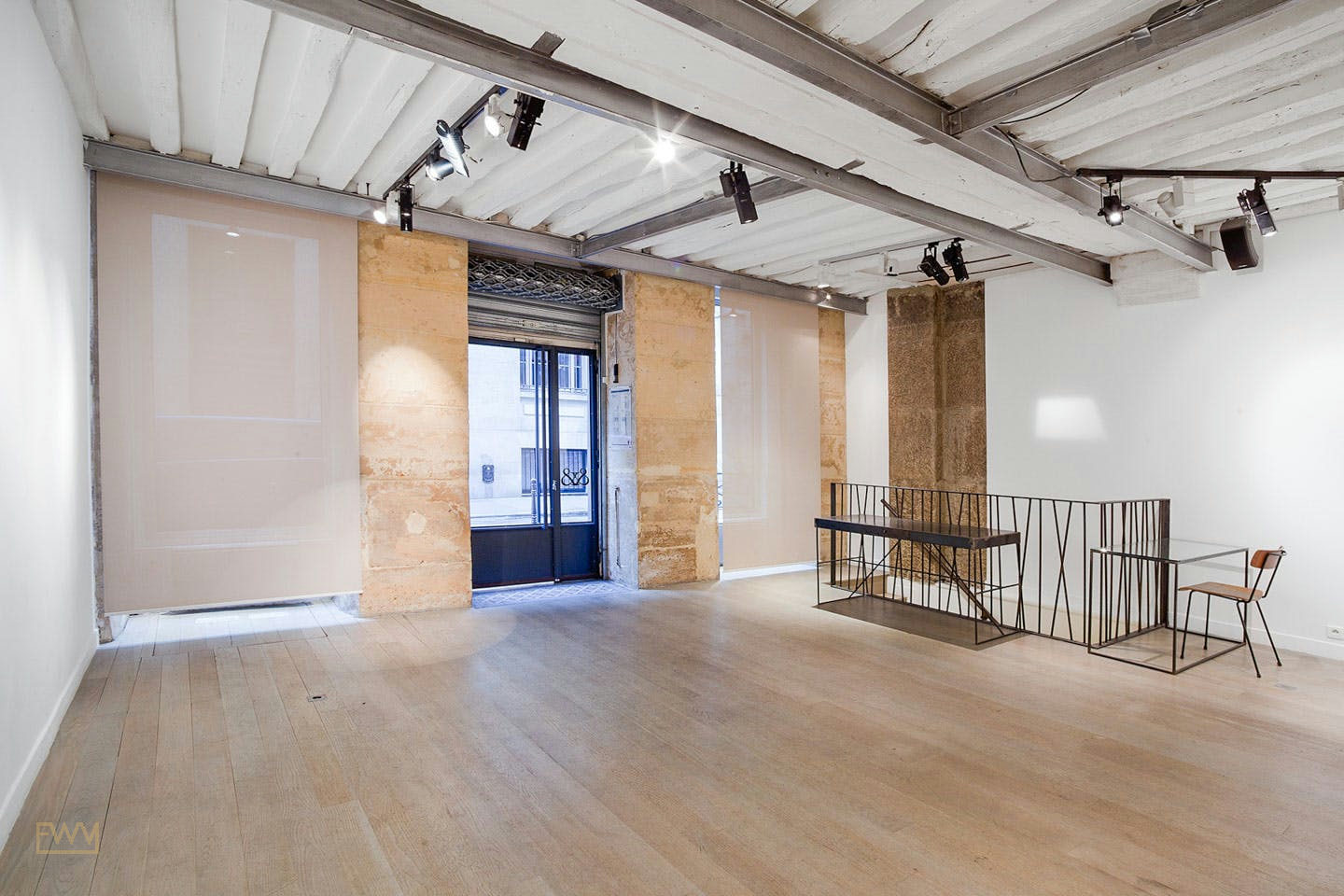
Several units in the district have white-box gallery finishes, polished concrete floors, and track lighting systems that make them ideal for ephemeral gallery formats, capsule collection presentations, and art-fashion hybrid activations. The Fondation Quartier context in the broader area and the influence of the Pinault Collection nearby have created an audience that is comfortable with art-retail crossover concepts. Designers such as Harry Nuriev, known for immersive, material-led installation work including his AMI collaboration La Patinoire AMI with its self-lubricated tiles and mirror-like chrome barriers, represent the kind of conceptual activation that resonates strongly in this cultural environment.
Loft Spaces and Converted Buildings
The Étienne Marcel and Montorgueil end of the zone offers loft-style spaces in converted buildings that give brands significantly more flexibility in terms of spatial layout, ceiling height, and industrial aesthetic. These spaces suit streetwear brands, vintage boutique concepts, multi-brand resale pop-ups, and lifestyle brands that want architectural rawness as part of their brand story. Brands that have experimented with thredUP-style resale formats or pop-up thrift-able boutique concepts find these spaces more adaptable than the formal arcade units.
Showrooms and Private Apartment Formats
For brands presenting to press, buyers, or wholesale accounts during Paris Fashion Week, residential-scale showroom spaces in Haussmann buildings near rue Saint-Honoré and Place Vendôme offer a more intimate and brand-controlled environment than public-facing retail units. These formats are standard practice for emerging labels and established brands alike during the official Paris Fashion Week calendar windows.
Larger Retail Units and Corner Flagships
For brands seeking flagship store-scale presence, larger corner units on Rue du Louvre, Rue de Rivoli, and the streets connecting toward Place des Victoires offer the floor area and frontage necessary for a full brand immersion experience. These spaces typically require more production investment but deliver the visual scale that some brands need for their Paris market entry or seasonal campaign moments.
DID YOU KNOW: Several spaces in the Palais Royal arcade area are available for periods as short as one week, making them viable for campaign-specific activations tied to fashion week or a product launch rather than requiring a month-long commitment.
KEY TAKEAWAY: The Palais Royal district offers a genuinely diverse inventory of short-term retail spaces, from intimate arcade boutiques to gallery-standard lofts and flagship-scale retail units. Matching the space type to the activation format and brand aesthetic is the most important early decision in any Palais Royal pop-up project.
Choosing the right space type is inseparable from understanding how permits and lease agreements work for short-term retail in France, which is where many international brands encounter unexpected friction.
Permits, Lease Structures, and Legal Considerations for Pop-Up Shops in Paris
French commercial tenancy law is materially different from that of the UK, US, or most other major markets, and the legal framework for short-term retail activations in Paris requires careful navigation. Understanding the two primary lease types used for pop-up shops and showrooms, and the permit obligations that may apply, is essential before signing any agreement.
Quick answer: Most pop-up shops and short-term retail activations in Paris operate under a bail dérogatoire, a dérogatoire lease of up to 36 months that falls outside standard commercial tenancy protections, or under a convention d'occupation précaire for genuinely short and precarious occupancies. Public space activations in areas like the Palais Royal Gardens require an Autorisation d'Occupation Temporaire (AOT) from the relevant authority. Requirements vary by space type, duration, and arrondissement.
Bail Dérogatoire
The bail dérogatoire, sometimes called a short-term commercial lease or dérogatoire agreement, allows landlords and tenants to agree on occupancies of up to 36 months without triggering the standard protections of the French commercial lease (bail commercial 3-6-9). This makes it the standard instrument for pop-up shops, temporary showrooms, and short-term retail activations in France. Both parties must explicitly agree in writing that the arrangement is dérogatoire at the outset, and the tenant must vacate at lease end without automatic renewal rights. For international brands, this structure provides flexibility but requires careful drafting to avoid inadvertently triggering standard commercial tenancy rights.
Convention d'Occupation Précaire
For truly short activations, typically a few days to a few weeks, a convention d'occupation précaire may be used instead. This instrument is designed for situations where occupancy is genuinely precarious and conditional, such as a space that is pending sale or redevelopment. It offers less security to the tenant but maximum flexibility for both parties in a short-window context.
Autorisation d'Occupation Temporaire (AOT)
Any activation that occupies public space, including pavement terraces, public gardens, or publicly owned buildings, requires an AOT from the mairie (town hall) or the relevant authority managing the public domain. The Palais Royal Gardens, for example, are managed by the Centre des Monuments Nationaux, and any activation within or directly adjacent to the public domain requires formal authorisation. Requirements, timelines, and fees vary by location and activity type. Always verify the specific requirements for your intended space with a French legal advisor before signing any agreement or committing to a production schedule.
Additional Permits and Compliance
Depending on the activation format, brands may also require an autorisation de travaux for fit-out works, compliance with ERP (Établissement Recevant du Public) fire safety standards, and in some cases approval from the Architecte des Bâtiments de France for any works in listed or protected buildings. Many of the most desirable spaces in the Palais Royal arcade zone fall within or adjacent to listed buildings, which adds a layer of scrutiny to any production or fixture installation work.
IMPORTANT: Do not assume that a short-term occupancy in Paris is legally straightforward. The bail dérogatoire and AOT frameworks involve specific drafting requirements and administrative timelines. Working with a specialist agency or a French legal advisor from the start significantly reduces the risk of delays, disputes, or cost overruns. Use the permit guidance tool on Fashion Week Venues to understand the specific requirements likely to apply to your space type and activation format.
KEY TAKEAWAY: Short-term retail in Paris operates under a specific legal framework that differs fundamentally from most other markets. Bail dérogatoire, convention d'occupation précaire, and AOT are the primary instruments, but specific requirements vary by space, duration, location, and activity type. Independent legal verification is always recommended.
Once the legal structure is understood, the next practical question for most brand teams is cost, and that requires an honest and detailed breakdown of what drives expenditure in a Palais Royal pop-up activation.
How Much Does a Pop-Up Store in Palais Royal Cost?
Budget planning for a pop-up shop in Palais Royal is one of the most commonly mishandled aspects of the activation process. Brands often focus exclusively on the space rental cost while underestimating the combined weight of production, staffing, permits, logistics, and operational overheads.
Quick answer: The total cost of a pop-up store activation in Palais Royal depends on the space size, duration, fit-out scope, staffing model, and operational requirements. Space rental in premium locations on rue Saint-Honoré and the Palais Royal arcades reflects the address premium of the Paris 1st arrondissement. Production, fixtures, retail staffing, POS and payments systems, and logistics typically add significantly to the space rental cost. Directional estimates vary widely by brand and concept; use a dedicated budgeting tool for brand-specific projections.
Space Rental
Rental rates in the Paris 1st arrondissement reflect both the prestige of the address and the structural quality of the spaces available. The Palais Royal arcades and rue Saint-Honoré command premium rates that are among the highest in Paris for short-term retail. Spaces in adjacent streets such as Rue du Louvre, Étienne Marcel, and the Montorgueil district are typically more accessible in cost terms while still offering high foot traffic and strong brand positioning. All figures are directional and vary by specific space, season, and negotiation. Use the budget estimation tool on Fashion Week Venues to generate a framework aligned with your specific brief.
Production and Fit-Out
Production costs for a pop-up store include fixtures and furniture, lighting design and installation, graphic production, signage, branded elements, technology integration, and reinstatement at the end of the activation. Spaces with marble floors, high ceilings, and listed architectural features require a different approach to fixture specification than raw loft spaces, and the production scope must be designed accordingly. Working with an agency that provides both fit-out and production services in Paris reduces the risk of specification errors that drive cost overruns.
Staffing and Operations
Retail staffing in Paris involves compliance with French labour law, including contract types, minimum wage requirements, and social charge obligations. International brands unfamiliar with French employment regulations frequently underestimate the administrative complexity of hiring even a small team for a two-week activation. Using a specialist retail staffing service that operates within the French regulatory framework reduces this risk significantly.
Operational Overheads
Additional cost lines include POS and payments systems, utilities (which are not always included in short-term rental agreements), insurance, loss prevention, waste management, and any data and analytics infrastructure the brand wants to deploy for the activation. Seasonal factors also affect costs: activations during the Paris Fashion Week windows, the holiday season, and major tourist peaks such as the summer high season attract higher rental rates and require more advance planning than off-peak periods.
TIP: Build a line-by-line cost model before approaching spaces. Brands that arrive at a space negotiation with a clear understanding of their all-in budget including production, staffing, and operations consistently secure better terms than brands that focus exclusively on the headline rental rate.
KEY TAKEAWAY: The total cost of a Palais Royal pop-up activation is always higher than the space rental cost alone. Budget realistically across all cost lines including production, staffing, permits, operations, and logistics before committing to a space or a duration.
Duration is closely linked to cost, but it also has strategic implications that go beyond simply how long a brand occupies a space.
Ideal Duration for a Pop-Up Shop in Palais Royal
The right duration for a pop-up shop in Palais Royal depends on the brand's campaign objectives, the calendar window targeted, and the operational model the brand intends to run. There is no universally correct answer, but there are clear patterns that reflect how different activation formats perform in this district.
Quick answer: For campaign-specific activations tied to Paris Fashion Week, a product launch, or a capsule collection release, durations of one to three weeks are common and operationally efficient. For brands seeking sustained brand awareness, customer loyalty building, and retail sales over a seasonal period such as the holiday season, four to eight weeks is a more effective window. Showroom-only formats during Paris Fashion Week typically run for five to seven days aligned with the official schedule.
One to Two Weeks: Campaign and Launch Activations
Short activations of one to two weeks work best when the brand has a very specific campaign moment to anchor the pop-up, such as a capsule collection launch, a fragrance campaign, or a Paris Fashion Week press appointment calendar. The Palais Royal district's high foot traffic and media concentration during fashion week make this window extremely productive for brands willing to invest in a focused, high-quality activation. The AMI Paris concept La Patinoire AMI, which transformed a space using self-lubricated tiles and mirror-like chrome barriers into an ice rink-inspired retail experience tied to the Ami De Cœur collection, is an example of a short, high-impact activation that generated significant earned media and consumer engagement.
Three to Eight Weeks: Seasonal Brand Presence
Brands seeking to build genuine customer relationships, drive retail sales over a sustained period, and create brand awareness among both Parisian residents and international visitors typically operate for four to eight weeks. The holiday season from mid-November through to early January is the most commercially productive window for most consumer-facing brands in the Paris 1st arrondissement. Pop-up shops offering curated gift selections, capsule collections, and limited-edition products perform strongly during this period, when foot traffic across Rue de Rivoli, Place des Victoires, and the Palais Royal Gardens increases substantially.
Ongoing or Rolling Activations
Some brands use the Palais Royal area for longer-term test retail before committing to a permanent flagship store. This format, sometimes called test-and-learn retail, allows a brand to gather customer data, refine product assortment, and evaluate location performance before making a permanent real estate commitment. The bail dérogatoire framework accommodates this approach for periods up to 36 months, providing significant operational flexibility.
KEY TAKEAWAY: Duration should be determined by campaign objectives first and budget second. A well-executed two-week activation with a clear creative concept will generate more brand value than a poorly resourced six-week operation in the same space.
Understanding when to activate is as important as understanding how long to run. The Paris Fashion Week calendar and seasonal event calendar have a direct impact on both the availability and the commercial value of pop-up spaces in Palais Royal.
Paris Fashion Week Calendar and Seasonal Strategy for Palais Royal Pop-Ups
Paris Fashion Week is the most commercially significant calendar window for pop-up shops, showrooms, and brand activations in the Palais Royal district, but it is far from the only one. A complete seasonal strategy for a Palais Royal pop-up considers multiple high-value windows across the calendar year.
Paris Fashion Week Windows
Paris hosts two primary Fashion Week cycles: Womenswear in late February to early March (Spring/Summer collections) and late September to early October (Autumn/Winter collections), with Menswear in mid-January and Haute Couture in early July. Each cycle brings a concentrated influx of international press, buyers, brand executives, stylists, influencers, and high-net-worth consumers to the 1st and surrounding arrondissements. Showrooms during these periods need to be confirmed months in advance, as the supply of appropriately positioned spaces is dramatically outpaced by demand.
DID YOU KNOW: During Paris Fashion Week, the density of international media and influencer activity in the Palais Royal and rue Saint-Honoré corridor is among the highest of any retail district in the world for that specific week. A well-positioned pop-up store in this zone during fashion week can achieve organic media exposure that would be prohibitively expensive to replicate through paid channels.
Holiday Season Activations
The period from mid-November through to early January is the most commercially productive window for consumer-facing pop-up shops in central Paris. The city's Christmas markets, seasonal decorations, and heightened tourist volumes create a retail environment of exceptional commercial intensity. Light garlands, festive installations, and chalet-style pop-up formats are common throughout the city, and the Palais Royal Gardens provide a backdrop that makes holiday season activations in this district particularly photogenic and shareable. Brands have used this window for advent calendar launches, limited-edition gift sets, and exclusive capsule collections timed to the holiday shopping period.
Summer Activations and Bastille Day
Paris in summer is one of Europe's highest-volume tourist periods. The weeks surrounding Bastille Day on July 14th see significant increases in both domestic and international visitor numbers. For brands targeting a tourist-luxury crossover audience, a late June to late July activation in Palais Royal can deliver exceptional reach. The proximity to the Louvre Museum, which draws millions of summer visitors, creates a built-in audience for well-positioned pop-up stores on Rue de Rivoli and the streets feeding into the Palais Royal Gardens.
Strategic Use of Multiple Windows
Brands with ambitious Paris strategies sometimes activate across multiple windows in a single calendar year, using fashion week for press and buyer engagement, the summer for consumer brand building, and the holiday season for commercial sales performance. This multi-window approach delivers the most comprehensive Paris brand presence but requires careful planning across all three dimensions of calendar, budget, and logistics. Use the timeline planning tool on Fashion Week Venues to map your activation windows against the Paris Fashion Week calendar and seasonal retail peaks.
KEY TAKEAWAY: Paris Fashion Week is the highest-value single window for brand and media impact, but the holiday season and summer peaks are often more commercially productive for retail sales. A multi-window strategy delivers the broadest annual brand presence in the Palais Royal district.
Knowing when to activate and where to activate is only part of the challenge. The other part is understanding how to execute effectively, which is where agency support and specialist tools become decisive.
How Fashion Week Venues Supports Pop-Up Store Activations in Palais Royal
Fashion Week Venues operates as a full-service pop-up shop agency and space marketplace with deep operational expertise in Paris, making it a practical resource for brand teams planning activations in the Palais Royal district and across the Paris 1st arrondissement.
The agency covers the full activation lifecycle from initial venue sourcing through to post-activation data and analytics. For brand teams without an established Paris presence, this end-to-end capability significantly reduces the coordination burden and the risk of costly errors at critical stages.
Venue Sourcing and Space Discovery
The venue sourcing service covers both on-market and off-market spaces in the Palais Royal area, including arcade boutiques, gallery-standard spaces, loft units, and showroom-format apartments. The space marketplace allows brand teams to search by neighbourhood, size, duration, and activation type, while the locator tool maps available spaces geographically so teams can evaluate proximity to key landmarks, competitor brands, and consumer traffic generators.
Concept Direction and Branded Store Design
For brands that need creative and spatial direction beyond the space itself, Fashion Week Venues offers concept direction and branded store design services that translate brand identity into physical environments suited to the specific architectural character of Palais Royal spaces. Working with a design partner who understands the constraints and opportunities of listed buildings, arcade formats, and high-ceiling loft spaces prevents costly redesigns during the production phase.
Production, Build, and Furniture Rental
The production and build team handles everything from technical surveys and permit applications for fit-out works through to fixture fabrication, installation, and reinstatement. Furniture rental through Fashion Week Venues provides brands with access to high-quality pieces appropriate to the luxury context of Palais Royal without the cost and logistics of procuring and repatriating custom furniture from outside France.
Retail Staffing, POS, and Operations
French retail staffing compliance is a common friction point for international brands. Fashion Week Venues manages the recruitment, contracting, and management of bilingual retail staff appropriate for the international luxury consumer base that frequents the Palais Royal district. POS and payments infrastructure is provided and configured for the French market, including contactless payment, multi-currency capability, and inventory management integration.
Data, Analytics, and Influencer Marketing
Post-activation performance reporting is provided through the data and analytics service, covering foot traffic, conversion, average transaction value, and consumer profile data. Influencer marketing support connects brand activations with relevant Parisian and international content creators who can amplify the pop-up store's reach across social platforms during the activation window.
Planning and Decision Tools
The Fashion Week Venues tools suite includes a budget calculator, an ROI calculator, a space comparison tool, a timeline planner, a permit guidance tool, and a locator. These tools are particularly useful in the early research and planning stages, allowing brand teams to stress-test their brief before committing to a space or engaging an agency for a full project. The imagine tool enables space visualisation, while the build planning tool supports production scheduling.
IMPORTANT: Fashion Week Venues does not guarantee space availability, permit approvals, or specific performance outcomes. All activations are subject to space availability, landlord approval, and compliance with French regulatory requirements at the time of booking.
To explore the full range of services available for your Paris activation, visit the services overview on Fashion Week Venues and identify which elements of the lifecycle your brand team needs support with.
KEY TAKEAWAY: Fashion Week Venues covers the full activation lifecycle for pop-up shops in Palais Royal and Paris, from space sourcing and concept direction through to production, staffing, operations, and post-activation analytics. Brand teams benefit most from engaging the agency early in the planning process before space options narrow and production timelines compress.
Before making final decisions on a Palais Royal pop-up, it is worth understanding the most common misconceptions that cause brand teams to either delay too long or proceed on incorrect assumptions.
Brand Activations, Concepts, and Inspiration in and Around Palais Royal
The Palais Royal district has hosted a remarkable range of brand activations across fashion, fragrance, skincare, lifestyle, resale, and cultural sectors. Understanding the creative range of what has been executed in and around this neighbourhood provides useful reference points for brand teams developing their own activation concepts.
Quick answer: Pop-up activations in the Palais Royal district have ranged from intimate fragrance boutiques in the arcade units to large-scale immersive art-retail installations. Standout examples include concept-driven activations by Paris-based brands like AMI, Café Kitsuné, and Sézane, as well as international brands testing the Paris market through short-term retail spaces in the area.
AMI Paris and La Patinoire AMI
AMI Paris, the brand founded by Alexandre Mattiussi and known for its Ami De Cœur heart motif and unisex pieces, has been one of the most creative practitioners of pop-up retail in central Paris. La Patinoire AMI transformed a space into an ice rink-inspired retail experience using self-lubricated tiles and mirror-like chrome barriers, creating a physical environment that became a destination in itself. The AMI Café concept extended the brand's hospitality dimension alongside its retail offer, generating a dwell time and social sharing behaviour that a conventional retail format could not have achieved. This kind of concept-led activation, where the space itself is the marketing tool and brand awareness driver, is precisely what the Palais Royal architectural environment enables most powerfully.
Augustinus Bader and Cosmetic Retail Activations
Augustinus Bader, the luxury skincare brand built on TCF8 technology developed by biomedical scientist Professor Augustinus Bader, has a global reputation for activations that match the brand's premium positioning. The Rich Cream, The Lip Balm, and the broader moisturisers range have been introduced to new markets through immersive retail formats. The brand's Bader Blue aesthetic translates naturally into high-ceiling, marble-floored spaces of the type found in the Palais Royal arcade zone. Cosmetic retail activations of this kind benefit enormously from the tactile and sensory quality of the Palais Royal architectural environment.
Café Kitsuné and Lifestyle Brand Formats
Café Kitsuné, operating near the Palais Royal Gardens, represents a format that has proven extremely effective in this district: the convergence of retail, hospitality, and brand storytelling in a single physical space. The café-plus-retail format drives foot traffic from both the coffee audience and the fashion audience, creates extended dwell time, and generates organic social content from visitors who become brand advocates. For lifestyle brands considering a pop-up in this area, the Café Kitsuné model demonstrates how a hospitality anchor can significantly amplify the commercial and media performance of a retail activation.
Sézane, Soeur, and French Brand Retail Strategy
Sézane, the French womenswear brand with a devoted international following, exemplifies the kind of considered, community-driven retail approach that resonates strongly with the Palais Royal consumer. With a home line that includes cushions, lamps, tableware, and candles alongside its fashion finds, Sézane has demonstrated how a French brand can build customer loyalty through a pop-up and permanent hybrid retail strategy. Soeur, the Paris-based womenswear label, has operated its archive outlet from Rue de Bourgogne in the 7th arrondissement near the Rodin Museum, demonstrating that even secondary locations in Paris can be commercially productive when the brand storytelling is strong. Gerard Darel, Majestic Filatures, and Les Composantes represent the mid-to-luxury French fashion labels that anchor the neighbourhood's retail identity and provide useful competitive context for international brands entering the area.
Resale, Sustainability, and Thrift Pop-Ups
The resale and sustainability-driven retail sector has produced some of the most innovative pop-up formats in recent years. ThredUP, the US-based online resale platform, has activated pop-up thrift-able boutiques using ThredUP Clean Out Kits and a curated selection of fashion finds priced well below standard retail, attracting consumers who are fans of thrifting but want a curated, branded experience. While ThredUP's largest US activations have been in markets like Houston and Chicago, the format translates well to a Paris context where vintage boutique culture and sustainable fashion values are deeply embedded in the consumer psyche. The Palais Royal area, with its mix of established luxury and emerging concept retail, is an appropriate setting for a premium resale or upcycling pop-up concept.
DID YOU KNOW: The convergence of luxury retail, art institutions, and café culture in the Palais Royal district creates one of the highest concentrations of Instagram-active, fashion-literate consumers of any neighbourhood in Europe. Brands that design their pop-up spaces with visual distinctiveness and shareable moments as explicit design objectives consistently achieve disproportionate organic social reach relative to their paid media spend.
KEY TAKEAWAY: The most successful pop-up store activations in and around Palais Royal share a common characteristic: they treat the space as a physical expression of the brand's identity rather than simply a temporary retail outlet. Concept direction, spatial storytelling, and experiential design are as important as product selection and pricing strategy.
Reviewing case studies of past activations in a similar context can help brand teams calibrate the ambition and scope of their own concept. Explore past activation work on Fashion Week Venues to see how different brands have approached short-term retail in Paris and other fashion capitals.
Common Myths About Pop-Up Shops in Palais Royal Debunked
MYTH: You need a French legal entity to rent a pop-up space in Palais Royal.
FACT: International brands without a French entity can and do rent pop-up spaces in Paris regularly. The bail dérogatoire framework does not require the tenant to be a French-registered company, though certain administrative requirements and landlord preferences may make the process more complex for foreign entities. Working with a specialist agency or a French legal advisor significantly simplifies the process for international brands without an established Paris presence.
MYTH: Paris Fashion Week is the only viable calendar window for a pop-up store in Palais Royal.
FACT: Paris Fashion Week is the highest-profile window but by no means the only commercially productive one. The holiday season from mid-November through early January, the summer tourist peak from June through August, and the period around Bastille Day all deliver high foot traffic and consumer spending in the Palais Royal district. Brands focused on retail sales rather than press and buyer engagement often find the holiday season more commercially rewarding than fashion week.
MYTH: Commission brokers are the only way to find a pop-up space in Palais Royal.
FACT: Commission brokers are one route to finding a space, but they are not the only one and frequently not the most efficient one. Specialist pop-up agencies like Fashion Week Venues operate curated space marketplaces with direct relationships with property owners and landlords across the Palais Royal area and the broader Paris 1st arrondissement. These relationships often provide access to off-market spaces and more favourable terms than a broker-only approach delivers.
MYTH: Short-term leases for pop-up shops in Paris are legally straightforward and require minimal specialist input.
FACT: French commercial tenancy law is among the most complex in Europe, and the bail dérogatoire framework, while designed to provide flexibility, contains specific requirements that must be met for the agreement to be valid as a dérogatoire rather than a standard commercial lease. Brands that sign agreements without specialist review risk inadvertently triggering standard commercial tenancy protections, which carry significantly greater obligations and costs. Independent legal verification from a French legal advisor is always recommended.
MYTH: The most expensive spaces in Palais Royal always deliver the best activation results.
FACT: Activation results depend far more on concept quality, consumer experience design, staffing calibre, and campaign timing than on the prestige of the address alone. A thoughtfully designed pop-up in a Montorgueil loft or an Étienne Marcel gallery space frequently outperforms a poorly executed activation in a premium arcade unit. The most effective Palais Royal pop-up activations are those that align space character, brand identity, and consumer experience into a coherent whole, regardless of where they sit in the neighbourhood rental rate hierarchy.
Frequently Asked Questions
What makes Palais Royal the right location for a luxury pop-up store in Paris?
Palais Royal combines architectural prestige, high international foot traffic, cultural proximity to the Louvre Museum and the Pinault Collection, and adjacency to rue Saint-Honoré, Place Vendôme, and Place des Victoires. This combination of factors creates an environment where luxury consumer spending is concentrated, international media is regularly present, and the physical spaces available carry inherent aesthetic value through marble floors, high ceilings, and original architectural detailing. For brands seeking a Paris presence that communicates quality from the moment a consumer encounters the space, Palais Royal offers structural advantages that more neutral or industrial locations cannot replicate.
What are the most sought-after locations for renting a pop-up shop in Palais Royal?
The most sought-after locations for pop-up shops in the Palais Royal area are the colonnaded arcade units in the Galerie de Valois and Galerie de Montpensier, retail units on rue Saint-Honoré and the streets immediately surrounding Place des Victoires, and ground-floor spaces on Rue de Rivoli facing the Louvre Museum. In the adjacent zones, Étienne Marcel and the Montorgueil district attract significant demand for loft-style spaces from fashion and lifestyle brands seeking a younger or more contemporary aesthetic. All of these locations have limited supply relative to demand, particularly during Paris Fashion Week and the holiday season.
How far in advance should a brand book a pop-up space in Palais Royal?
For Paris Fashion Week activations, brands typically need to begin their space search six to nine months before the target window, with some premium spaces committed up to twelve months in advance. For holiday season activations, a lead time of four to six months is standard for first-choice locations. Summer activations are somewhat more flexible but still benefit from a three to four month advance commitment. The earlier a brand engages a specialist agency or starts searching the marketplace, the broader the range of available options. Leaving the search until eight weeks before the intended start date in peak windows significantly limits both choice and negotiating position.
What are the key benefits of a pop-up store in Palais Royal for an international brand?
The primary benefits are brand awareness among a high-value international consumer audience, organic media and social media exposure from the architectural and cultural setting, physical proximity to the Paris fashion and luxury retail ecosystem, and the ability to test the French market and gather consumer data without a long-term real estate commitment. Secondary benefits include the credibility signal that a Palais Royal address communicates to press, buyers, and wholesale partners, and the opportunity to activate alongside other culturally significant brand moments such as Paris Fashion Week, the Louvre Museum programme, and seasonal retail peaks.
What type of space works best for a showroom during Paris Fashion Week near Palais Royal?
Showroom activations during Paris Fashion Week near Palais Royal work best in residential-scale Haussmann apartment spaces or gallery-standard ground-floor units that offer controlled access, high-quality natural light, and the kind of intimate atmosphere appropriate for press appointments and buyer presentations. The space should be positioned within walking distance of the major fashion week venues and hotels, which during Paris Fashion Week are concentrated around the 1st, 8th, and 16th arrondissements. Rue Saint-Honoré, the streets surrounding Place des Victoires, and the Palais Royal arcade zone all sit within this geography.
Do I need a French company to rent a pop-up space in Paris?
No. International brands and companies registered outside France can and do rent pop-up spaces in Paris under bail dérogatoire and convention d'occupation précaire agreements. However, specific landlords may have preferences regarding tenant structure, and certain administrative requirements may differ for foreign entities. Working with a specialist agency that has established relationships with Paris landlords can help navigate any entity-related requirements. Always verify the specific terms of any lease agreement with a French legal advisor before signing, regardless of your company's registration jurisdiction.
What permits are required for a pop-up shop in the Palais Royal area?
The permits required depend on the specific space, the nature of the activation, and whether the space involves any fit-out works. For commercial spaces in private buildings, a bail dérogatoire or convention d'occupation précaire covers the occupancy itself, but fit-out works requiring structural changes or works in listed buildings need an autorisation de travaux and potentially approval from the Architecte des Bâtiments de France. Public space activations within the Palais Royal Gardens require an Autorisation d'Occupation Temporaire from the relevant managing authority. Requirements vary by space type, duration, and arrondissement; always verify with a French legal advisor and use the permit guidance tool on Fashion Week Venues for initial orientation.
How long is the ideal duration for a pop-up store in Palais Royal?
The ideal duration depends on the activation objective. For campaign-specific launches tied to Paris Fashion Week or a product release, one to three weeks is typically sufficient and operationally efficient. For brands building sustained brand awareness and retail sales over a seasonal window, four to eight weeks provides meaningful commercial return. For market-testing purposes before committing to a permanent flagship store, longer activations of two to six months are appropriate and achievable under the bail dérogatoire framework. The key principle is that duration should be driven by campaign objectives and supported by a realistic operational model, not by default assumptions about how long a pop-up should run.
What does a full-service pop-up agency do for a brand activating in Palais Royal?
A full-service pop-up agency manages the entire activation lifecycle: space sourcing, lease negotiation, permit applications, concept direction, space design, production and fit-out, furniture specification, retail staffing, POS and payments, operational management during the activation, and post-activation data and analytics. For international brands without a Paris team or existing French market relationships, this end-to-end model removes the coordination burden that would otherwise require managing multiple contractors across multiple disciplines simultaneously in a foreign regulatory and administrative environment. Fashion Week Venues provides this full-service model for pop-up activations in Paris and other major fashion capitals.
What is the difference between a pop-up store and a showroom in the context of Paris Fashion Week?
A pop-up store is a consumer-facing retail activation where products are sold directly to the public, typically over a period of days to months. A showroom is a trade or press-facing presentation space where collections are shown to buyers, journalists, stylists, and brand partners but not necessarily sold directly to consumers. Both formats operate under similar short-term lease structures in Paris, but they have different layout requirements, staffing needs, security considerations, and visitor management demands. Some brands run hybrid formats that serve both press and consumers at different times of day or on different floors of the same space.
How does the Palais Royal pop-up market differ from other Paris neighbourhoods?
Compared to the Marais, the Palais Royal area offers more formal architectural character, higher average consumer spend, greater proximity to the core luxury retail circuit, and more concentrated international media presence during fashion week. The Marais tends to attract a younger, more experimental consumer and suits streetwear, vintage, contemporary fashion, and arts-adjacent concepts more naturally. Saint-Germain offers a quieter, more literary and gallery-oriented retail environment. The Montorgueil district sits at the intersection of Palais Royal prestige and Marais energy, making it suitable for brands that want architectural quality without the full premium of the colonnaded arcade addresses.
Can a brand use a Palais Royal pop-up to test the French market before opening a permanent store?
Yes, and this is one of the most strategically valuable uses of a short-term retail activation in Paris. A pop-up store in the Palais Royal area allows a brand to test product-market fit with French and international consumers, gather sales and behavioural data, build relationships with local press and buyers, and evaluate the operational requirements of running a Paris retail unit before committing to the cost and complexity of a permanent lease. The bail dérogatoire framework supports this use case with occupancies of up to 36 months, providing sufficient time for a meaningful test without the obligations of a standard commercial lease.
What are the common operational challenges for international brands running a pop-up in Paris?
The most common operational challenges include: navigating French labour law for retail staffing contracts; ensuring POS and payments systems are configured for French tax and payment requirements; managing permit applications for fit-out works in listed or architecturally sensitive buildings; coordinating logistics for stock delivery, storage, and returns in a dense urban environment; and managing the reinstatement of the space to its original condition at the end of the activation. Working with a specialist agency that has established operational infrastructure in Paris, including supplier relationships, staffing networks, and regulatory expertise, significantly reduces the risk and complexity of each of these challenges.
What role does social media and influencer marketing play in a Palais Royal pop-up activation?
Social media and influencer marketing play a central role in amplifying the reach and commercial impact of a pop-up store activation in Palais Royal. The district's architectural character, proximity to cultural landmarks, and concentration of fashion-literate consumers make it one of the most naturally photogenic retail environments in Europe. Brands that design their activations with specific visual moments and shareable experiences embedded in the spatial concept consistently achieve organic social reach that multiplies the value of their physical activation investment. Dedicated influencer marketing support, connecting the brand with relevant Paris-based and international content creators during the activation window, can further amplify this effect.
How does Fashion Week Venues help brands plan their budget for a Palais Royal pop-up?
Fashion Week Venues provides a dedicated budget estimation tool that allows brand teams to input their space size, duration, activation format, staffing model, and production scope to generate a directional cost framework for their Paris pop-up. This tool is particularly useful in the early research and brief-development stages, before specific spaces have been selected or production partners engaged. The tool does not replace a detailed project-specific cost model but provides a realistic starting framework that helps brand teams avoid the common mistake of planning to a rental-only budget that dramatically underestimates the total activation cost.
Conclusion: Making Your Palais Royal Pop-Up Work
A pop up store Palais Royal activation is one of the most powerful strategic moves available to a fashion, luxury, lifestyle, or beauty brand seeking to establish or strengthen its Paris presence. The district's combination of architectural distinction, luxury consumer concentration, cultural prestige, and year-round international foot traffic creates an environment where a well-executed pop-up store genuinely punches above its weight in terms of brand impact, media exposure, and consumer engagement.
The key to realising that potential is not simply choosing the right street or the most prestigious arcade unit. It is aligning space type, creative concept, calendar window, operational model, and budget into a coherent activation strategy that delivers specific, measurable objectives, whether those are press coverage during fashion week, retail sales over the holiday season, consumer data for market-entry decisions, or long-term customer loyalty building among the Parisian luxury consumer base.
The challenges that derail Palais Royal pop-up projects, and Paris pop-ups generally, are well understood: insufficient lead time, underestimated production and operational budgets, permit and lease complexity, staffing compliance in the French market, and creative concepts that are not adapted to the specific architectural and cultural context of the space. Each of these challenges is manageable with the right specialist support and sufficient planning time.
Fashion Week Venues provides the space marketplace, agency services, and planning tools that brand teams need to move from initial brief to successful activation in Paris. The Paris city hub, the venue sourcing service, the production and build capability, the retail staffing infrastructure, and the permit guidance tool are all designed to address the specific friction points that international brands encounter when activating in the Paris market.
To move from research to activation, start exploring available spaces on the Fashion Week Venues marketplace and build a focused brief for your target neighbourhood, space type, and calendar window. The earlier you begin, the broader your options and the stronger your position in one of the world's most competitive short-term retail markets.