Short term retail in the 7th arrondissement Paris offers fashion brands, luxury labels, and lifestyle companies one of the most prestigious and commercially distinctive activation environments in Europe. The 7th arrondissement sits on the Left Bank of the Seine River, bordered by landmarks including the Eiffel Tower, Les Invalides, the Musée d'Orsay, and the Champ de Mars, creating a neighbourhood context that few districts anywhere in the world can match. Brands activating here benefit from consistent footfall from international visitors, a highly affluent residential base, and adjacency to some of the most respected cultural and commercial institutions in Paris. Fashion Week Venues supports brands seeking pop-up spaces in Paris with venue sourcing, production, and full activation management. This guide covers everything brand teams need to plan short-term retail in the 7ème arrondissement effectively.
What Makes the 7th Arrondissement a Distinctive Short Term Retail Location
Quick answer: The 7th arrondissement combines Parisian prestige, high international visitor volumes, an affluent resident demographic, and architectural grandeur in a neighbourhood where short-term retail can position a brand alongside world-class cultural institutions and luxury retail anchors. Few districts in Paris deliver this combination simultaneously.
The 7th arrondissement occupies the south-western section of Paris's Rive Gauche, stretching from the Seine River in the north down toward the École Militaire and the wide green lawns of the Champ de Mars in the south. Its northern boundary faces the Right Bank across the water, with the gilded dome of the Hôtel des Invalides visible from virtually every major approach. The district is crossed by a series of commercially significant streets including Rue du Bac, Rue de Grenelle, Rue de Varenne, rue Saint-Dominique, and Rue Cler, each carrying its own retail character, pedestrian flow, and brand positioning logic.
The 7th is not a nightlife or youth-culture district. It is one of the most conservative, architecturally intact, and diplomatically significant arrondissements in the city. The Hôtel Matignon, official residence of the French Prime Minister, sits on Rue de Varenne. The Palais Bourbon, home of the French National Assembly, anchors the northern edge of the district near the Pont Alexandre III. The American University of Paris operates nearby. The neighbourhood is home to foreign embassies, ministries, and some of the most expensive residential streets in the city. This context shapes who visits, who spends, and what brands can credibly activate here.
Le Bon Marché, the iconic department store on Rue de Sèvres, is the dominant luxury retail anchor for the arrondissement. La Grande Épicerie de Paris, its food and grocery companion, draws consistent daily footfall from residents, tourists, and affluent shoppers. These two institutions create a commercial gravity that benefits nearby short-term retail activations. Brands positioning a pop-up or temporary showroom in the 7th are choosing a neighbourhood with a built-in luxury consumer in regular motion.
The Musée d'Orsay on the Seine River, Musée Rodin on Rue de Varenne, and Musée de l'Armée inside Les Invalides collectively draw millions of visitors annually, a significant portion of whom are culturally engaged international travellers with high disposable income. The presence of Deyrolle, the legendary taxidermy and natural history shop at 46 Rue du Bac, illustrates the neighbourhood's tolerance for unusual, conceptual, and high-design retail that would struggle to find its audience elsewhere. The inner courtyard development Le Beaupassage, accessed from Rue du Bac, Rue de Grenelle, and Boulevard Raspail, demonstrates that even within the 7th's restrained architectural fabric, innovative food and lifestyle retail formats can succeed.
For brands considering short-term retail, the 7th offers something that the Marais or Saint-Germain-des-Prés cannot always match: a sense of institutional gravitas combined with authentic residential life. Streets like Rue Cler, with its open-air market atmosphere, Fontaine de Mars, and La Fontaine de Mars restaurant nearby, communicate a Parisian quality of life that resonates with the international customer the arrondissement naturally attracts.
DID YOU KNOW: The 7th arrondissement is home to more foreign embassies and international institutions than almost any other district in Paris, contributing to a uniquely international and high-net-worth resident and visitor profile that benefits luxury and lifestyle brand activations.
KEY TAKEAWAY: The 7th arrondissement's combination of landmark footfall, luxury retail anchors, an affluent resident base, and architectural prestige creates a short-term retail environment that supports premium brand positioning, international visibility, and high-value customer engagement.
Understanding the specific street-level retail geography of the 7th is essential before committing to a space, and that geography is explored in detail in the next section.
Key Streets and Micro-Neighbourhoods for Short Term Retail in the 7th Arrondissement
Quick answer: The 7th arrondissement contains several distinct retail corridors, each with different pedestrian flows, consumer profiles, and space typologies. Rue du Bac, Rue de Grenelle, rue Saint-Dominique, and Rue Cler are the most commercially active for short-term retail, while Rue de Varenne and Faubourg Saint-Germain suit showroom and brand experience formats.
The 7th arrondissement is not a single retail environment. It contains multiple micro-zones that function differently for brand activation purposes, and choosing the right street or corridor significantly affects footfall quality, lease cost, and audience fit.
Rue du Bac
Rue du Bac is the most commercially diverse street in the arrondissement. Running north to south from the Seine River toward Rue de Sèvres, it carries a mix of independent boutiques, galleries, food specialists, and lifestyle stores. Deyrolle at 46 Rue du Bac is its most famous occupant, a destination in its own right for international visitors. The street benefits from proximity to Le Bon Marché and La Grande Épicerie de Paris at its southern end, making it one of the strongest short-term retail corridors in the left bank. Foot traffic here includes both residents and destination shoppers, and the mix of established independents creates a retail context that rewards brands with a distinctive point of view.
Rue de Grenelle
Rue de Grenelle runs parallel to Rue du Bac and carries a higher concentration of fashion boutiques and design-oriented retail. It is one of the Left Bank's most fashion-forward streets, home to international and Parisian labels seeking an alternative to the Marais or the more tourist-heavy Rue de Rivoli. Short-term retail on Rue de Grenelle positions a brand in direct dialogue with the Parisian fashion consumer and the educated international shopper who actively avoids tourist corridors.
rue Saint-Dominique and Rue Cler
rue Saint-Dominique and the adjacent Rue Cler create one of the most atmospheric retail environments in Paris. Rue Cler is a pedestrianised market street with a strong food and local commerce identity. Fontaine de Mars and La Fontaine de Mars restaurant nearby reinforce the neighbourhood's deeply Parisian character. Brands activating in this micro-zone should lean into locality and authenticity. The consumer here is a mix of well-heeled residents, international visitors staying in the many boutique hotels nearby including Hôtel SAX Paris, Hôtel Duc de Saint-Simon, and J.K. Place Paris, and culturally engaged tourists exploring the Champ de Mars and the Eiffel Tower on foot.
Rue de Varenne and Faubourg Saint-Germain
Rue de Varenne is architecturally extraordinary. Jules Lavirotte's Art Nouveau building at 29 Rue de Varenne is among the most photographed façades in the city. The street also houses Musée Rodin and the Hôtel Matignon. This corridor is most suitable for showrooms, brand presentations, press events, and curated brand experiences rather than high-footfall transactional retail. Faubourg Saint-Germain, the historic sub-quarter that extends across this area, gives the 7th its most aristocratic identity and supports activations in the fields of luxury fashion, furniture, decorative arts, and heritage brands.
Saxe-Breteuil and the Market Zone
The Saxe-Breteuil Market and Saxe-Breteuil Marché operate on Avenue de Saxe, offering a different kind of brand visibility opportunity. Proximity to market days and the Jardin Catherine Labouré nearby creates an outdoor-oriented consumer moment that can support brand sampling, product launches, and lifestyle activations with an authentically Parisian feel.
| Street or Zone | Primary Consumer Profile | Best Activation Format | Footfall Character |
|---|---|---|---|
| Rue du Bac | Residents, destination shoppers, tourists | Pop-up shop, concept store | High, mixed, daily |
| Rue de Grenelle | Fashion consumers, Left Bank residents | Fashion pop-up, showroom | Medium-high, fashion-literate |
| rue Saint-Dominique / Rue Cler | Affluent residents, hotel guests, tourists | Lifestyle pop-up, food concept | Medium, local, atmospheric |
| Rue de Varenne / Faubourg Saint-Germain | Press, buyers, collectors, diplomatic visitors | Showroom, brand experience | Lower, high-value |
| Saxe-Breteuil / Avenue de Saxe | Residents, market visitors | Lifestyle activation, sampling | Episodic, community-driven |
KEY TAKEAWAY: Each street corridor in the 7th serves a different activation purpose. Brands should match their format, target consumer, and commercial objectives to the specific character of each micro-zone before committing to a space.
Once the right street is identified, the next practical question is what kind of spaces are available for short-term retail in the 7th arrondissement.
Space Types Available for Short Term Retail in the 7th Arrondissement
Quick answer: Short-term retail spaces in the 7th arrondissement include ground-floor boutiques, haussmannian apartment showrooms, courtyard spaces, gallery formats, and heritage hotel rooms. The district's architectural fabric limits the availability of large warehouse or industrial formats common in other arrondissements.
The 7th arrondissement is one of the most architecturally controlled districts in Paris. Its Haussmann-era buildings, classical hôtels particuliers, and heritage-listed façades mean that the types of spaces available for short-term retail are more curated than in districts like the 10th, 11th, or 18th. This constraint is also an asset: the spaces that are available carry a visual quality and contextual authority that generic retail formats cannot replicate.
Ground-Floor Boutique Spaces
The most common format for short-term retail in the 7th is the ground-floor boutique unit on streets such as Rue du Bac, Rue de Grenelle, or rue Saint-Dominique. These spaces typically range from compact single-room formats to multi-room units with storage and back-of-house. Many retain original architectural details including parquet floors, ceiling mouldings, and floor-to-ceiling windows, which provide an immediate premium visual backdrop for product display and brand photography without requiring significant fit-out investment.
Haussmannian Apartment Showrooms
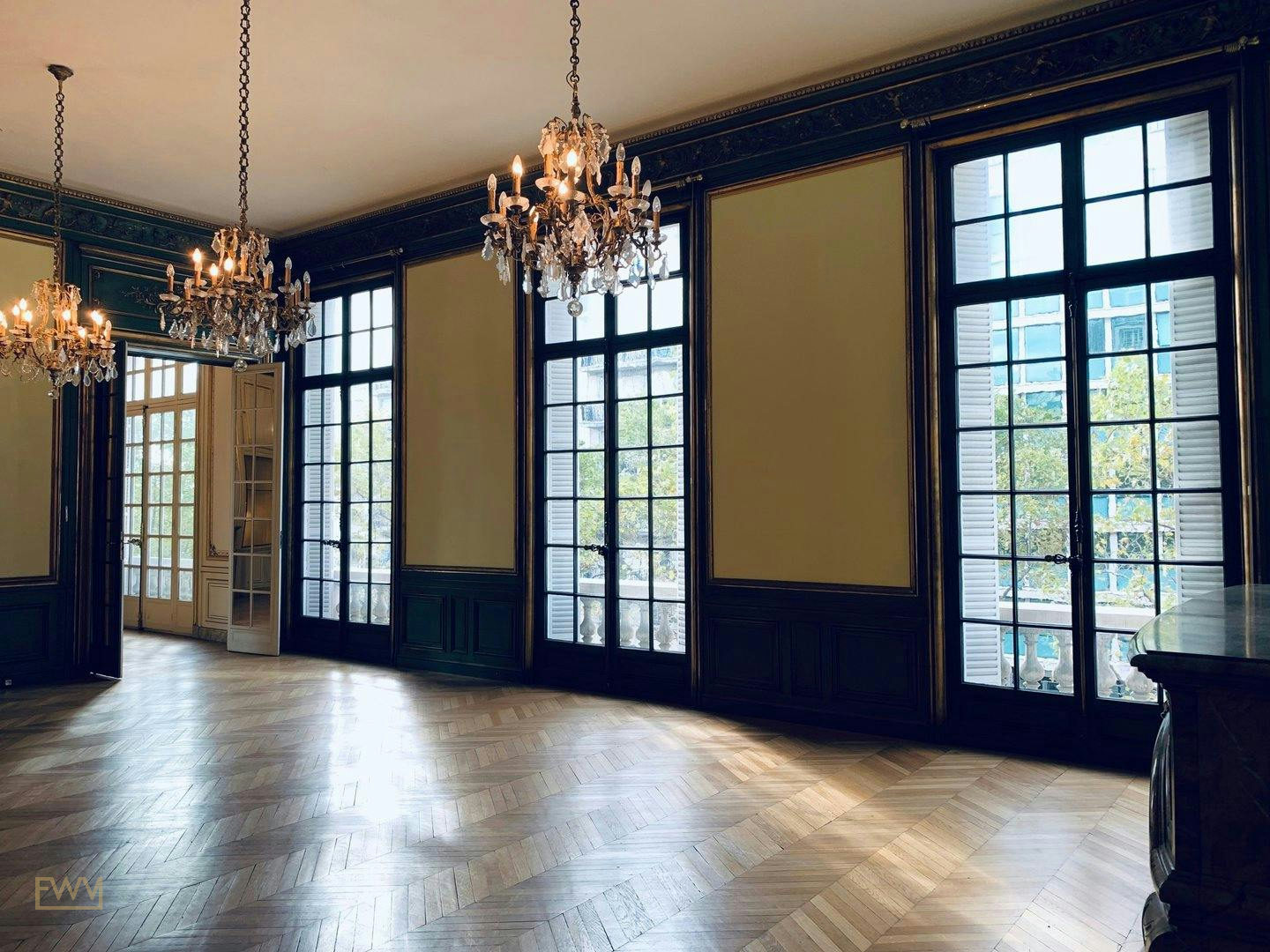
Several landlords in the 7th offer upper-floor apartments, particularly on the first or second floors of Haussmann buildings, as short-term showroom or brand presentation spaces. These are particularly well suited to fashion brands, interior designers, and luxury product launches where an intimate, residential setting enhances the customer experience. The high ceilings, ornate fireplaces, and period features of these spaces create a distinctive backdrop that aligns with the district's identity as the home of established Parisian taste.
Courtyard and Passage Spaces
The 7th contains several private courtyards and passage-style interiors, particularly in the Faubourg Saint-Germain zone. These require careful negotiation and are rarely listed openly, making them accessible primarily through agency or specialist marketplace channels. When available, courtyard spaces in the 7th offer exceptional possibilities for immersive brand experiences, private events, and small-format activations that benefit from architectural drama and controlled visitor flow.
Gallery and Cultural Venue Spaces
Several gallery spaces and cultural institutions in the 7th arrondissement make their rooms available for short-term retail or brand partnership activations outside of their primary programming calendars. Proximity to institutions such as the Musée d'Orsay, Musée Rodin, and the cultural programming associated with LVMH and similar groups creates an ecosystem of spaces oriented toward design, arts, and creative brand expression.
TIP: Courtyard and passage spaces in the 7th are rarely advertised publicly. Accessing them requires either an existing landlord relationship or a specialist agency with an active local network. The Fashion Week Venues space marketplace includes curated listings across the arrondissement, including spaces that are not publicly listed elsewhere.
| Space Type | Typical Size Range | Best Brand Fit | Average Duration Available |
|---|---|---|---|
| Ground-floor boutique | 30 to 150 sqm | Fashion, beauty, lifestyle | 1 week to 3 months |
| Haussmannian apartment showroom | 60 to 250 sqm | Luxury fashion, interior, jewellery | 3 days to 6 weeks |
| Courtyard or passage | Variable | Brand experience, event, installation | 1 day to 2 weeks |
| Gallery or cultural space | 80 to 400 sqm | Art-adjacent brands, cultural activation | 1 week to 1 month |
| Hotel room or suite | 30 to 80 sqm | Jewellery, perfume, exclusive preview | 1 to 10 days |
KEY TAKEAWAY: Space typology in the 7th arrondissement is defined by the district's architectural heritage. Brands should select formats that complement rather than conflict with the spatial character available, and factor in the visual and logistical implications of operating in protected or architecturally sensitive buildings.
Knowing which spaces exist is only part of the equation. Understanding the legal and permit framework for short-term retail in Paris, and specifically in the 7th, is equally critical.
Permits, Leases, and Legal Frameworks for Short Term Retail in Paris
Quick answer: Short-term retail in Paris most commonly uses the bail dérogatoire, a short-form commercial lease designed for agreements of up to 36 months. Brands operating in public spaces or conducting outdoor elements may require an autorisation d'occupation temporaire (AOT). Requirements vary significantly by space type, duration, and arrondissement, and brands should seek advice from a qualified French legal advisor before proceeding.
The legal framework for short-term retail in France is meaningfully different from the United Kingdom, the United States, or other major markets. France operates a commercial lease system governed by the Code de commerce, and the default regime for business tenancies, the bail commercial, provides tenants with substantial statutory protections and obligations that make it unsuitable for short activations lasting days or weeks. Understanding the alternatives is essential for any brand team planning a Paris activation.
The Bail Dérogatoire
The bail dérogatoire, sometimes called a convention d'occupation précaire or short-term commercial lease, is the standard instrument for pop-up retail and temporary brand activations in Paris. It permits agreements of up to 36 months in total, provided the parties explicitly agree in writing to derogate from the standard bail commercial protections. The key practical implication is that neither party acquires the long-term rights and obligations of a standard commercial lease: the brand can exit at the end of the agreed term, and the landlord is not obligated to renew. For activations of a few days to a few months, the bail dérogatoire is typically the appropriate instrument.
However, the bail dérogatoire must be correctly drafted. If the occupant remains in the premises beyond the agreed term without a new agreement, French law may convert the arrangement into a standard bail commercial, which carries substantially more complex exit obligations. Brands should ensure their agreements are handled by a French legal professional or a specialist agency with direct legal support.
Autorisation d'Occupation Temporaire
For brands seeking to use public domain spaces, terraces, outdoor areas adjacent to public streets, or certain classified spaces in Paris, an autorisation d'occupation temporaire (AOT) is required. AOTs are granted by the relevant public authority and are strictly time-limited. In the 7th arrondissement, where many streets pass by diplomatically sensitive buildings, government ministries, and listed heritage structures, AOT applications may be subject to additional scrutiny and longer processing times than in other districts. Brands planning any outdoor or public-realm element to their activation should initiate the AOT process well in advance of their intended opening date.
Additional Permit Considerations
Beyond the lease instrument, brands should consider: planning permissions for temporary signage or window displays, particularly on listed buildings; food hygiene permits if the activation involves food or beverage service; temporary workers permits for non-EU staff; and customs and import documentation for product brought in from outside the European Union. The 7th arrondissement's high concentration of diplomatically sensitive addresses can also affect the approval process for public-facing activations in ways that less regulated districts do not.
IMPORTANT: Nothing in this guide constitutes legal advice. Requirements vary materially by space type, duration, intended use, and location within the arrondissement. Always verify your specific situation with a qualified French legal advisor before signing any agreement. Use the Fashion Week Venues permit guidance tool as a starting point for understanding the permit landscape for your activation type.
KEY TAKEAWAY: The bail dérogatoire is the standard legal instrument for short-term retail in Paris, but it must be correctly drafted and managed. Outdoor or public-realm elements require an AOT, and the specific characteristics of the 7th arrondissement may add complexity to certain permit applications.
Legal and permit readiness is closely linked to timeline planning, which is explored in the next section alongside the calendar considerations that most affect short-term retail in the 7th.
Calendar Windows and Timing Strategy for Short Term Retail in the 7th Arrondissement
Quick answer: Paris Fashion Week is the most concentrated activation window for brands in the fashion and luxury sectors, but the 7th arrondissement also offers strong commercial conditions during school holidays, public holidays, and the summer and Christmas peaks when international visitor volumes are highest. Successful brands plan their calendar windows in advance and avoid competing for peak-demand spaces without adequate lead time.
The timing of a short-term retail activation in the 7th arrondissement significantly affects footfall volume, space availability, competitive context, and lease cost. Understanding the Paris calendar and aligning your activation window to a meaningful commercial or cultural moment is one of the most important strategic decisions brand teams make during the planning process.
Paris Fashion Week Windows
Paris Fashion Week occurs twice annually: the womenswear ready-to-wear edition in late September to early October, and the spring edition in late February to early March. The haute couture weeks in January and July add further concentrated windows. During Fashion Week periods, the 7th arrondissement benefits from an influx of international buyers, press, and brand representatives, many of whom stay in the neighbourhood's hotels including J.K. Place Paris, Hôtel Duc de Saint-Simon, and Hôtel SAX Paris. Showrooms, brand activations, and press preview spaces in the arrondissement are in high demand during these weeks, and brands that leave sourcing until six to eight weeks before the event often find availability severely limited.
Summer and School Holiday Peaks
The summer period from June to August brings the highest concentration of international tourists to the 7th arrondissement. With the Eiffel Tower, Champ de Mars, Musée d'Orsay, and Les Invalides among the most visited sites in Europe, summer footfall in the district is consistently strong. Brands targeting the international tourist consumer, particularly American, Japanese, and Gulf-region visitors, find the summer a commercially viable activation window independent of any fashion calendar event. Rosa Bonheur sur Seine on the Seine River banks and Les Berges offer additional evidence that the summer outdoor and leisure economy in the 7th is active and commercially significant.
Christmas and Year-End
Le Bon Marché and La Grande Épicerie de Paris drive exceptional footfall in the 7th during the Christmas season. The department store's annual themed Christmas decoration concept, which has featured international artists including Song Dong, Ernesto Neto, and Daniel Buren, generates significant press attention and customer visits. Brands activating in the 7th during November and December benefit from the gravitational pull of these events and the concentration of high-spending gift buyers in the neighbourhood.
Marché Raspail and Saxe-Breteuil Market Days
The Marché Raspail on Boulevard Raspail and the Saxe-Breteuil Marché on Avenue de Saxe operate on regular weekly schedules and bring consistent local footfall to specific parts of the arrondissement. Brands seeking community-oriented, resident-focused activation windows can align their presence with market days to maximise visibility among the district's established residential consumer base.
To build a realistic activation timeline, including space search, lease negotiation, fit-out, permit applications, and launch, use the Fashion Week Venues timeline planning tool, which provides a structured view of lead times based on activation type and target opening date.
KEY TAKEAWAY: Paris Fashion Week is not the only viable window for short-term retail in the 7th arrondissement. Summer tourism peaks, the Christmas season, and market day rhythms all create commercially meaningful activation moments. Brands should match their window to their target consumer, not default to Fashion Week timing unless it directly serves their objectives.
With calendar strategy established, brands need to understand what a realistic budget looks like for short-term retail in this arrondissement.
Budget Planning for Short Term Retail in the 7th Arrondissement
Quick answer: The 7th arrondissement is one of the most expensive residential and commercial districts in Paris, and short-term retail space costs reflect this. Brands should build budgets that account for rent, production and fit-out, staffing, permits, marketing, and contingency. Specific cost ranges depend on space type, size, duration, and timing, and brands should use a planning tool rather than rely on generic estimates.
Budget planning for a short-term retail activation in Paris requires a more granular approach than in most other European cities. The 7th arrondissement commands premium space costs that reflect both its desirability and the architectural quality of its available inventory. Brands that underbudget for Paris activations frequently compromise on space quality, fit-out, or staffing, all of which directly affect the customer experience and commercial outcome.
Rent and Space Costs
Space rental costs in the 7th arrondissement are among the highest in Paris for short-term commercial use. Premium streets such as Rue du Bac and Rue de Grenelle command higher rates than secondary streets or market-adjacent zones. Costs also vary significantly by space size, duration, season, and the presence of existing fit-out. Brands activating during Paris Fashion Week should expect a material premium over off-peak periods due to concentrated demand.
This guide does not provide specific rental figures, as rates change materially based on market conditions, specific space characteristics, and negotiation outcomes. Use the Fashion Week Venues budget estimation tool to build a directional cost model based on your specific parameters.
Production and Fit-Out
Even in spaces with strong existing architectural character, brands typically need some level of fit-out: lighting adjustments, branded fixtures, display systems, signage, and technology infrastructure. In heritage buildings within the 7th arrondissement, fit-out options may be constrained by the landlord's requirements regarding what can be attached to walls, floors, or ceilings. This affects both cost and the type of display solutions that can be used. Modular and freestanding systems are often the most practical and reversible approach in these environments.
Staffing and Operations
Retail staffing in Paris for international brands requires consideration of French labour law, including rules on temporary employment contracts, minimum wage requirements, and working hours. Bilingual staff, typically French and English at minimum, are essential in the 7th given the international visitor profile of the district. Staff who also speak Mandarin, Japanese, Arabic, or Korean may be relevant depending on the brand's primary international customer base. For brands unfamiliar with the French staffing environment, working through a specialist retail staffing service removes significant administrative burden.
Technology and Payments
Short-term retail in Paris increasingly requires contactless and mobile payment capability. Consumers in the 7th arrondissement, both residents and tourists, expect to pay using Apple Pay, Google Pay, and international credit cards without friction. Brands should ensure their point-of-sale and payment infrastructure is set up and tested before launch, with contingency for connectivity issues in basement or courtyard spaces.
TIP: The Fashion Week Venues ROI calculator allows brands to model the commercial return on a Paris activation against their cost inputs, helping prioritise budget allocation across rent, production, and marketing.
KEY TAKEAWAY: Budget planning for short-term retail in the 7th arrondissement must account for premium space costs, architectural constraints on fit-out, French staffing regulations, and technology infrastructure. Brands should build detailed cost models before committing to a space, not after.
Understanding budget is closely linked to understanding how to select and engage the right partner to execute the activation, which is the focus of the next section.
How Fashion Week Venues Supports Short Term Retail Activations in Paris
Fashion Week Venues is a full-service pop-up shop agency and space marketplace with Paris as its primary and anchor market. For brand teams planning short-term retail in the 7th arrondissement or anywhere across the city, the agency provides end-to-end support that spans space discovery, legal and permit navigation, creative direction, production, staffing, and post-activation analysis.
Space Discovery and Venue Sourcing
The Fashion Week Venues marketplace includes curated space listings across the 7th arrondissement and all major Paris neighbourhoods, including spaces that are not publicly available through conventional channels. The platform allows brands to filter by size, street, space type, duration, and availability. The dedicated venue sourcing service goes further, with agency specialists conducting active searches based on a brand's brief, approaching landlords directly, and managing the full negotiation process.
Concept, Design, and Production
Once a space is identified, Fashion Week Venues provides concept direction, branded store design, and full production and build management. In the 7th arrondissement, where many spaces carry strong existing architectural character, the agency's approach typically focuses on complementing rather than overriding the space's inherent qualities. The Imagine tool allows brand teams to visualise how a space will look with their brand applied before committing to production costs. The build planning tool supports logistics and timeline management for the fit-out phase.
Activation Management and Staffing
On-site activation management covers day-to-day operations, vendor coordination, customer experience management, and real-time problem resolution. The agency's retail staffing service provides vetted, trained, and bilingual staff suited to the customer profile of the 7th arrondissement, where international visitors from New York, Tokyo, Dubai, and across Europe are a consistent presence. The retail staffing service handles contract compliance under French labour law, removing a significant administrative burden from brand teams.
Data, Analytics, and Post-Activation Insight
Fashion Week Venues provides data and analytics services that capture footfall, conversion, transaction value, and customer demographic data during the activation. This data is essential for brands that need to demonstrate ROI to internal stakeholders or inform future Paris activation decisions. Post-activation reporting is structured to support both commercial and brand objectives.
The Twin Co-Activation Model
For brands that want the visibility of a Paris presence but need to manage costs carefully, the Fashion Week Venues twin concept allows two complementary brands to co-activate in a single space, sharing rent and infrastructure costs while maintaining distinct brand identities. This model is particularly well suited to the 7th arrondissement, where premium space costs can be offset through intelligent co-tenancy with a non-competing brand in an aligned category. Learn more about the twin co-activation model.
Brands should understand that Fashion Week Venues does not guarantee specific spaces, permit approvals, or commercial outcomes. The agency's value lies in experience, network, and process, not in making commitments that depend on third-party decisions.
To compare neighbourhoods and space types, explore the Paris city hub on Fashion Week Venues and shortlist spaces that match your brief, budget, and calendar window.
KEY TAKEAWAY: Fashion Week Venues provides brand teams with the local expertise, curated space access, legal and permit navigation support, and full production capability needed to execute short-term retail in Paris successfully, without requiring the brand to build this infrastructure independently.
To put the agency's support in context, it is useful to understand what agencies can and cannot do, and what common misconceptions exist about short-term retail in Paris generally.
The 7th Arrondissement as a Brand Positioning Environment
Quick answer: Activating in the 7th arrondissement communicates a specific set of brand values: heritage, restraint, quality, and Parisian authority. It is not the right environment for every brand, but for labels seeking to signal their place within the luxury or high-design continuum, few Paris neighbourhoods make the statement as efficiently.
Brand positioning is an under-discussed dimension of short-term retail location strategy. Most brand teams focus on footfall numbers, rent costs, and operational logistics when selecting a pop-up location. These factors matter, but they are incomplete without understanding what the neighbourhood itself communicates on behalf of the brand.
The 7th arrondissement is one of Paris's most legible positional neighbourhoods. It communicates establishment, cultural depth, and a kind of confident understatement that distinguishes it from the more fashion-forward energy of the Marais or the tourism density of areas near the Champs-Élysées. Brands that have activated in the district, or whose identities align with its values, include names associated with heritage craft, refined luxury, art-adjacent lifestyle, and serious design. The presence of institutions such as LVMH in the broader Left Bank ecosystem, the cultural gravity of the Musée d'Orsay and Musée Rodin, and the architectural grandeur of Pont Alexandre III and Les Invalides all contribute to a neighbourhood identity that transfers, at least in part, to brands that choose to activate here.
The Faubourg Saint-Germain sub-quarter, with its hôtels particuliers and embassy-lined streets, carries one of the strongest associations with old-money Parisian taste. Brands from outside France that want to assert a genuine Paris affiliation rather than a tourist-zone presence often find the 7th arrondissement the most credible and defensible positioning environment in the city. The neighbourhood's residential streets, courtyards, and intimate scale also provide a counterpoint to the industrial loft formats common in the 10th and 11th arrondissements, reinforcing a message of quality over spectacle.
The presence of notable cultural venues and figures adds to the district's appeal for brand storytelling. La Maison Gainsbourg, commemorating Serge Gainsbourg, opened on Rue de Verneuil, adding a thread of music and cultural iconoclasm to the neighbourhood's otherwise restrained identity. Rosa Bonheur sur Seine on Les Berges brings a more animated outdoor leisure culture to the Seine River banks. The Marché Raspail, with its organic Sunday edition, reinforces the district's commitment to quality and provenance. These cultural textures give brands activating in the 7th authentic content hooks for their communication and social media presence.
Hotels including J.K. Place Paris and Hôtel Duc de Saint-Simon attract guests who are well-travelled, culturally literate, and financially capable. These hotel guests, often from New York, Tokyo, and the Gulf states, represent a highly targeted consumer segment for brands in luxury fashion, jewellery, fragrance, and lifestyle categories.
The American University of Paris operates in the district, contributing a younger, internationally educated demographic that adds nuance to the neighbourhood's consumer profile. This academic presence, combined with the Clinique de l'Alma and Hôpital Necker-Enfants Malades nearby, confirms the 7th as a complete, functioning urban quarter rather than a purely institutional or tourist zone.
The Vélib' bike-sharing network serves the arrondissement extensively, with stations near the Eiffel Tower, École Militaire, Saxe-Breteuil, and Sainte-Clotilde Basilica, making the district navigable by foot and cycle for both residents and visitors. This mobility pattern reinforces the 7th's pedestrian-friendly retail environment and supports the kind of discovery-oriented consumer behaviour that benefits short-term retail activations.
KEY TAKEAWAY: The 7th arrondissement is a positional brand environment, not just a retail location. Brands activating here communicate alignment with Parisian heritage, cultural authority, and refined luxury. This positioning value should be factored into the overall ROI calculation for any activation in the district.
Neighbourhood Life, Infrastructure, and Practical Logistics
Quick answer: The 7th arrondissement is one of the safest, most well-served, and logistically manageable arrondissements in Paris. Its infrastructure, transport connections, and daily commercial rhythm are highly functional for short-term retail operations, though brands should plan for parking and delivery constraints typical of central Paris.
Practical logistics matter as much as strategic positioning when executing a short-term retail activation. The 7th arrondissement's infrastructure, while prestigious, has specific operational characteristics that brand teams should understand before finalising a space or production plan.
Transport and Accessibility
The 7th arrondissement is served by several Paris metro lines with stations at Rue du Bac, Solférino, Invalides, La Tour-Maubourg, École Militaire, Varenne, Saint-François-Xavier, Duroc, and Vaneau among others. The RER C line runs along the Seine River bank, serving the Musée d'Orsay and connecting to the wider Île-de-France region. The Trocadéro station on the Right Bank, reachable by metro Line 6, is the primary connection point for visitors approaching the Eiffel Tower from the north. Bus routes are extensive, and the Vélib' network provides comprehensive cycling coverage. For international visitors, access from Charles de Gaulle airport via the RER B to Saint-Michel Notre-Dame, then the RER C or metro to the 7th, is a standard route.
Deliveries and Logistics
Deliveries to retail spaces in the 7th arrondissement must comply with Paris's urban logistics regulations, including time windows for commercial vehicles in central Paris. Many streets in the district are narrow, one-directional, or subject to restrictions near embassies and government buildings. Brands should confirm delivery access with their landlord and logistics provider well in advance of the activation start date, and factor in sufficient time for stock delivery, fit-out equipment, and any large furniture or installation elements.
Daily Commercial Rhythm
The 7th arrondissement's commercial day follows the rhythm of its resident and visitor population. Le Bon Marché and La Grande Épicerie de Paris drive morning and lunchtime footfall on weekdays, with peak shopping periods in the late morning and late afternoon. Weekend footfall on Rue Cler, Rue du Bac, and around the Champ de Mars and Eiffel Tower is consistently strong throughout the year. The Saxe-Breteuil Marché and Marché Raspail draw specific weekend crowds. Evening activity in the district is quieter than in the Marais or Saint-Germain, which should be factored into opening hours decisions for short-term retail activations.
Security and Safety
The 7th arrondissement is consistently rated among the safest arrondissements in Paris. Its high concentration of government buildings, diplomatic missions, and expensive residential property means security presence in the district is notable. For brand teams managing high-value product, this environment provides an additional layer of ambient security, though standard retail security practices should always be maintained independently.
KEY TAKEAWAY: The 7th arrondissement is logistically well-suited to short-term retail, with strong transport connectivity, a predictable daily commercial rhythm, and a safe operating environment. Brands should plan specifically for delivery logistics and opening hour strategy to align with the district's specific footfall patterns.
Common Myths About Short Term Retail in the 7th Arrondissement and Paris
MYTH: Brands need a French legal entity to rent a short-term retail space in Paris.
FACT: Foreign companies can enter into bail dérogatoire agreements in France without establishing a French legal entity, though the process requires careful structuring and professional advice. Many international brands activate in Paris annually without a pre-existing French company. The practical and legal steps vary depending on the brand's home jurisdiction, the landlord's requirements, and the specific terms of the agreement. Always seek guidance from a qualified French legal advisor for your specific situation.
MYTH: Paris Fashion Week is the only commercially viable calendar window for short-term retail in the 7th arrondissement.
FACT: The 7th arrondissement generates strong commercial footfall year-round, driven by its landmark attractions, luxury retail anchors, and affluent resident base. The summer tourist peak, the Christmas season, and school holiday periods all represent meaningful activation windows independent of the fashion calendar. Fashion Week is one of several viable windows, not the only one, and for brands targeting tourists or residents rather than industry professionals, other windows may be more commercially appropriate.
MYTH: Commission-based space brokers are the most effective way to find a short-term retail space in the 7th arrondissement.
FACT: Commission brokers typically represent a limited inventory of spaces and may not have access to the privately managed, non-publicly-listed spaces that represent some of the most distinctive activation opportunities in the 7th. Full-service agencies with active landlord networks and curated marketplace platforms provide broader access, clearer cost transparency, and additional support across legal, production, and operational dimensions. The guide to hiring a pop-up agency covers how to evaluate different types of partners.
MYTH: Short-term commercial leases in France are legally straightforward and do not require specialist help.
FACT: Short-term commercial leases in France involve specific statutory frameworks, including the bail dérogatoire regime, that require precise drafting to be enforceable and to protect both parties. Errors in drafting can inadvertently trigger the protections of the standard bail commercial, significantly complicating the brand's exit position. Additionally, specific requirements apply in the 7th arrondissement for spaces in or adjacent to listed buildings, heritage zones, and diplomatically sensitive areas. Professional legal and agency support is strongly recommended.
MYTH: The 7th arrondissement is only suitable for established luxury brands and is not accessible to emerging or independent labels.
FACT: While the 7th arrondissement does skew toward established and premium brands, the district's diversity of space types, micro-zones, and timing windows means that well-positioned emerging brands can activate here effectively. Streets like Rue Cler and market-adjacent zones support more community-oriented and accessible brand formats. The twin co-activation model also allows emerging brands to share premium space costs with a complementary partner, making the district economically viable for a wider range of brand budgets.
Frequently Asked Questions About Short Term Retail in the 7th Arrondissement Paris
What is short-term retail and how does it work in the 7th arrondissement?
Short-term retail refers to temporary commercial operations in a retail space, typically lasting anywhere from a few days to several months. In the 7th arrondissement, short-term retail most commonly takes the form of pop-up shops, brand showrooms, product launch spaces, and temporary concept stores. The lease instrument used is typically the bail dérogatoire, a short-form commercial agreement designed for temporary occupation. Brands can operate independently or through a full-service agency that manages space sourcing, production, staffing, and permits on their behalf. The 7th's premium positioning and landmark footfall make it one of the most sought-after short-term retail environments in Paris.
Which streets in the 7th arrondissement are best for a pop-up shop?
The most commercially active streets for pop-up retail in the 7th arrondissement are Rue du Bac, Rue de Grenelle, and rue Saint-Dominique. Rue du Bac offers the strongest mix of resident, tourist, and destination shoppers. Rue de Grenelle is best for fashion-forward and design-oriented brands. rue Saint-Dominique and Rue Cler suit lifestyle and food-adjacent activations. Rue de Varenne and the Faubourg Saint-Germain corridor are better suited to showrooms and brand experiences than high-footfall transactional retail. The right street depends on your target consumer profile, brand positioning, and activation format.
Do I need a French company to rent a retail space in the 7th arrondissement?
Foreign companies can enter into short-term commercial lease agreements in France without establishing a French legal entity, but the process requires careful professional support. Landlords in the 7th arrondissement may have specific requirements regarding the structure of the counterparty to the agreement, and some may require a French guarantor or bank guarantee. The specific steps depend on your brand's home jurisdiction, the landlord's preferences, and the nature of the space. A qualified French legal advisor should be consulted before any agreement is signed, and an experienced agency can help navigate the process effectively.
How far in advance should I start looking for a short-term retail space in the 7th for Paris Fashion Week?
For Paris Fashion Week activations in the 7th arrondissement, brands should begin their space search at least three to six months before the intended opening date. Premium spaces in high-demand locations are frequently reserved by returning clients well in advance of public availability. Leaving the search to six to eight weeks before the event significantly limits options and increases the risk of accepting a sub-optimal space under time pressure. For non-Fashion Week windows, a two to four month lead time is generally sufficient, though earlier is always preferable for specific requirements.
What permits are required for a pop-up shop in the 7th arrondissement?
A short-term retail space operating from a private commercial unit typically requires a bail dérogatoire or equivalent short-term lease agreement rather than a specific permit. If the activation involves outdoor elements, temporary signage visible from the street, or occupation of any public realm, an autorisation d'occupation temporaire (AOT) is required from the relevant Paris authority. Food service, temporary structures, and events open to the public may require additional authorisations. In the 7th arrondissement, the proximity of government buildings, embassies, and listed heritage structures can affect the processing of certain permit applications. Always verify requirements with a French legal advisor.
Is the 7th arrondissement appropriate for emerging or independent fashion brands?
Yes, but with the right strategic approach. The 7th arrondissement's premium positioning and higher space costs can be challenging for emerging brands with limited budgets. However, the twin co-activation model allows two complementary brands to share a space, reducing costs while maintaining individual brand identity. Streets like Rue Cler and market-adjacent zones in the southern part of the arrondissement offer a more community-oriented context that can work well for emerging lifestyle and food brands. Timing outside peak Fashion Week windows also reduces space costs. The key is to select the right micro-zone, format, and timing to align with both brand identity and budget.
What is the best season for short-term retail in the 7th arrondissement?
The 7th arrondissement supports strong commercial conditions across most of the year. Summer from June to August is the highest tourist footfall period, driven by the Eiffel Tower, Champ de Mars, Musée d'Orsay, and Les Invalides. The Christmas season from mid-November to late December benefits from Le Bon Marché and La Grande Épicerie de Paris driving exceptional gift-buyer footfall. Paris Fashion Week windows in late February to early March and late September to early October are optimal for industry-facing activations. Spring and early autumn are excellent all-around seasons with strong resident and visitor traffic and moderate space costs relative to peak periods.
What types of brands typically activate in the 7th arrondissement?
The 7th arrondissement most naturally suits brands in luxury fashion, jewellery, fine fragrance, interior design, decorative arts, high-end food and lifestyle, and art-adjacent categories. Heritage brands, Parisian and international, find the neighbourhood's values align with their positioning. However, the district's diversity of micro-zones means that lifestyle brands, emerging designers, and even food and beverage concepts can find appropriate spaces. The key qualifier is quality: the 7th consumer responds to craft, provenance, and considered design, regardless of price point. Brands that communicate these values, whether through their product or their activation design, have the best chance of resonating with the district's audience.
How does the bail dérogatoire differ from a standard commercial lease in France?
The standard French commercial lease, the bail commercial, provides tenants with significant statutory rights including the right to renew, protections against eviction, and a minimum nine-year term. These protections make it entirely unsuitable for temporary retail activations. The bail dérogatoire is a short-form agreement that explicitly derogates from these protections, allowing both parties to agree on a defined term of up to 36 months without creating long-term obligations. It must be drafted in writing and must explicitly state the parties' intention to derogate from the standard regime. If the occupant remains beyond the agreed term without a new agreement, the arrangement may convert to a standard bail commercial. Professional legal support is essential.
Can Fashion Week Venues source spaces in the 7th arrondissement that are not publicly listed?
Fashion Week Venues maintains an active landlord network in Paris and has access to spaces across the 7th arrondissement that are not publicly listed on commercial property platforms. The agency's venue sourcing service involves direct outreach to landlords, management of confidential listings, and active negotiation on the client's behalf. The marketplace platform also includes curated spaces with more detailed information than is typically available through standard property searches. Brands with specific location, size, or format requirements that have not found suitable options through conventional channels are encouraged to submit a brief directly to the agency's venue sourcing team.
What is the twin co-activation model and is it appropriate for the 7th arrondissement?
The twin co-activation model involves two complementary but non-competing brands sharing a single retail or event space, splitting rent and infrastructure costs while maintaining separate brand presences within the space. It is particularly well suited to the 7th arrondissement, where premium space costs can otherwise be prohibitive for brands with moderate budgets. The model works best when the two brands share a target consumer and a comparable positioning, for example a fashion label and a fragrance brand, or a jewellery designer and a lifestyle accessories brand. Fashion Week Venues manages the co-activation structure, matching compatible brands and ensuring the shared space reflects both identities without compromise.
How do I calculate the ROI of a short-term retail activation in Paris?
ROI for a Paris pop-up activation should account for direct revenue generated, press and media value earned, social media reach and engagement, new customer acquisition costs relative to other channels, brand awareness uplift in the Paris and international market, and any wholesale or distribution relationships initiated through the activation. Many of these benefits are not captured in transactional revenue alone, which is why a multi-metric ROI framework is more appropriate than a simple sales-to-cost ratio. The Fashion Week Venues ROI calculator provides a structured framework for building this analysis based on your specific activation parameters and objectives.
What staffing considerations apply to a pop-up in the 7th arrondissement?
Staffing a pop-up in the 7th arrondissement requires attention to French labour law, including rules on temporary employment contracts, minimum wage, working hours, and mandatory social contributions. Brands operating for short durations typically use temporary employment contracts, which must comply with specific French regulations regarding maximum duration, renewal limits, and equal treatment provisions. Staff should be bilingual at minimum, typically French and English, with additional language skills relevant to the brand's primary international customer base. The 7th's international visitor profile, which includes significant numbers from the United States, Japan, and Gulf states, makes multilingual staffing a commercial as well as a courtesy requirement.
Are there any restrictions on retail signage or window displays in the 7th arrondissement?
The 7th arrondissement contains numerous listed buildings, heritage-protected façades, and spaces adjacent to government or diplomatic properties. Temporary signage, window displays, and any external branding elements may be subject to specific restrictions depending on the building's classification and the local authority's guidelines. Permissions for external signage should be sought from the landlord and, where required, from the relevant Paris authority before any installation. In some cases, even internal window displays visible from the street may be subject to aesthetic controls. An experienced agency can identify these constraints during the space sourcing process to avoid costly surprises during fit-out.
How does the 7th arrondissement compare to other Paris neighbourhoods for short-term retail?
The 7th arrondissement is best compared to the 6th arrondissement, which it borders, and to the Marais. The 6th offers similar prestige with stronger fashion retail density on streets like Boulevard Saint-Germain. The Marais offers higher footfall and more diverse space typologies but a younger, more trend-driven consumer profile. The 7th distinguishes itself through its institutional gravitas, landmark visitor volumes, and the specific consumer it attracts: internationally wealthy, culturally engaged, and quality-focused. For brands that value positioning and a refined consumer over pure volume, the 7th is often the preferred choice among Paris's premium arrondissements.
Conclusion: Planning Your Short Term Retail Activation in the 7th Arrondissement
Short-term retail in the 7th arrondissement Paris offers brand teams a combination of landmark footfall, architectural prestige, an affluent and internationally diverse consumer base, and proximity to some of the most culturally significant institutions in Europe. From the Eiffel Tower and Champ de Mars to Les Invalides, the Musée d'Orsay, and Le Bon Marché, the district provides a backdrop that communicates brand values as efficiently as any activation design. The specific micro-zones of Rue du Bac, Rue de Grenelle, rue Saint-Dominique, Rue Cler, and the Faubourg Saint-Germain corridor each serve different brand formats and consumer objectives, and selecting the right one requires a clear understanding of footfall character, space typology, and positioning intent.
Legal and permit readiness, calendar strategy, budget planning, and staffing all require specialist knowledge of the Paris market that most brand teams are building for the first time with each new activation. The bail dérogatoire framework is the standard instrument for short-term retail in France, but it must be correctly executed. Permit requirements in the 7th, particularly for outdoor elements or activations adjacent to heritage or diplomatic properties, require advance planning and professional support. Costs in this arrondissement reflect its desirability and the quality of its available inventory, and brands that plan budgets without accounting for Paris-specific premiums frequently find themselves compromising on the elements that matter most to the customer experience.
Fashion Week Venues exists to remove these barriers. With active space access across the 7th arrondissement and all major Paris neighbourhoods, end-to-end production and activation management, specialist permit navigation, and curated retail staffing, the agency provides the infrastructure that allows brand teams to focus on the creative and commercial dimensions of their activation rather than the operational complexity of executing in an unfamiliar market.
To move from research to activation, start exploring available spaces on the Fashion Week Venues marketplace and build a focused brief for your target neighbourhood, space type, and calendar window.