Finding a shop for rent on the Canal Saint-Martin is one of the most sought-after briefs in Paris retail activation. The Canal Saint-Martin neighbourhood, spanning the 10th arrondissement and touching the edges of the 11th, has evolved from a working-class waterfront into one of the French capital's most strategically valuable short-term retail destinations. Independent brands, international fashion houses, organic and ethical labels, and direct-to-consumer product launches are all drawn to its distinctive architecture, culturally engaged foot traffic, and proximity to major Paris landmarks. Fashion Week Venues supports brands seeking pop-up spaces in Paris across every neighbourhood, with dedicated expertise in the Canal Saint-Martin corridor and the wider 10th arrondissement. This guide covers everything your brand team needs to know before committing to a space.
Why the Canal Saint-Martin Neighbourhood Attracts Fashion and Lifestyle Brands
Quick answer: The Canal Saint-Martin neighbourhood in Paris offers a rare combination of authentic industrial architecture, a densely creative local community, strong pedestrian traffic from both residents and tourists, and a concentration of cafés, art galleries, and independent boutiques that make it a natural home for fashion, lifestyle, and artisanal brand activations lasting from a single weekend to several months.
The Canal Saint-Martin runs through the 10th arrondissement of Paris, connecting the Canal de l'Ourcq in the north to the Arsenal basin near the Place de la Bastille in the south. The waterway itself creates a linear promenade along the Quai de Valmy and the Quai de Jemmapes, two of the most photographed and walked streets in contemporary Paris. On warm days and during fashion week periods, these quais draw thousands of pedestrians, many of whom are precisely the culturally curious, fashion-forward consumers that emerging brands and established houses alike want to reach.
The neighbourhood has undergone sustained gentrification over the past two decades, but it retains a gritty creative identity that distinguishes it sharply from the more polished retail corridors of Saint-Germain or the Marais. Trendy clothing boutiques, independent record shops, organic food stores, ethical brands, and design studios sit alongside long-established bistros, bakeries, and artisan workshops. This layering of old Paris and new Paris gives the area an authenticity that resonates strongly with younger consumers and with brand narratives built around craft, locality, and cultural credibility.
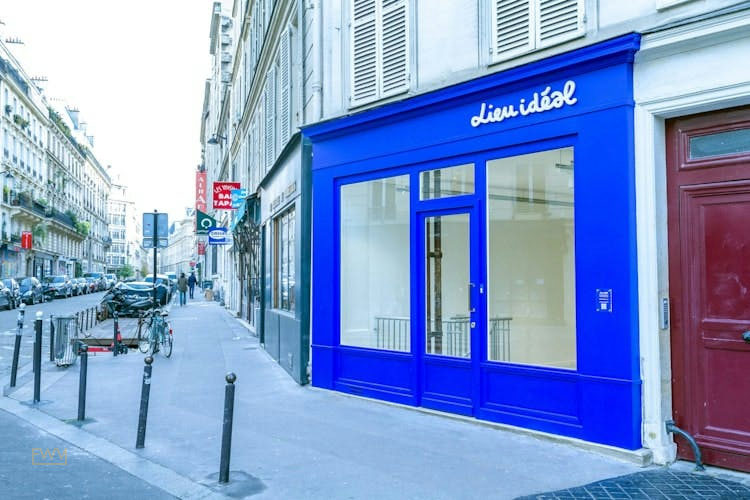
The streets feeding off the canal are equally important. Rue Beaurepaire and Rue des Vinaigriers are the two most commercially active cross-streets in the immediate canal zone. Both are characterised by ground-floor retail units with generous window frontage, some with original wooden vitrines, others with clean white walls and modern spotlights fitted by previous tenants. Rue Beaurepaire in particular has established itself as a micro-hub for concept stores and pop-up boutiques, with spaces that change hands seasonally and attract local press attention with each new activation.
Further south, the neighbourhood transitions toward Place de la République, one of Paris's great civic squares and a major public transport node. Further north, Gare du Nord provides rail access that brings an entirely different demographic: international travellers arriving by Eurostar and TGV who frequently spend time in the Canal Saint-Martin area before or after their journeys. This dual catchment, local creative community plus international transit visitor, gives Canal Saint-Martin a foot traffic profile that few other Paris neighbourhoods can replicate at this price point.
The adjacent neighbourhood of Folie-Méricourt, just across the canal in the 11th arrondissement, adds further context. Many brands consider spaces in both the 10th and 11th when scoping a Canal Saint-Martin pop-up, treating the canal corridor as a single cultural zone rather than two administratively distinct arrondissements.
DID YOU KNOW: The Canal Saint-Martin was covered over between the Place de la Bastille and the Place de la République during Haussmann's 19th-century urban transformation, which is why a section of it runs underground beneath the Boulevard Richard-Lenoir. The visible canal above ground, running between Gare du Nord and the République, is precisely the stretch that generates the neighbourhood's distinctive character and its value for retail activations.
KEY TAKEAWAY: Canal Saint-Martin is not simply a trendy address. It is a neighbourhood with genuine demographic density, strong cultural positioning, and a proven track record as a destination for pop-up stores, showrooms, and brand experience events. Any brand considering Paris retail activation should evaluate it seriously as a primary or secondary location option.
Understanding why the neighbourhood works is the foundation. The next step is understanding what types of retail spaces are actually available and what they look like in practice.
Types of Retail Space Available for Rent on the Canal Saint-Martin
Quick answer: The Canal Saint-Martin area offers a wide spectrum of short-term and temporary retail spaces, including former boutique storefronts with original vitrines, industrial loft spaces with exposed ceiling beams, Haussmann apartment ground floors with marble floors, photo studios, courtyard spaces, rooftop venues, and purpose-configured showroom formats ranging from 30 to several hundred square metres.
The architectural heritage of the 10th arrondissement produces a genuinely varied inventory of commercial spaces. Unlike purpose-built retail destinations such as shopping centres, the Canal Saint-Martin stock is organic and diverse, which is precisely what makes it attractive to brands seeking differentiated brand experience settings.
Boutique Storefronts with Original Vitrines
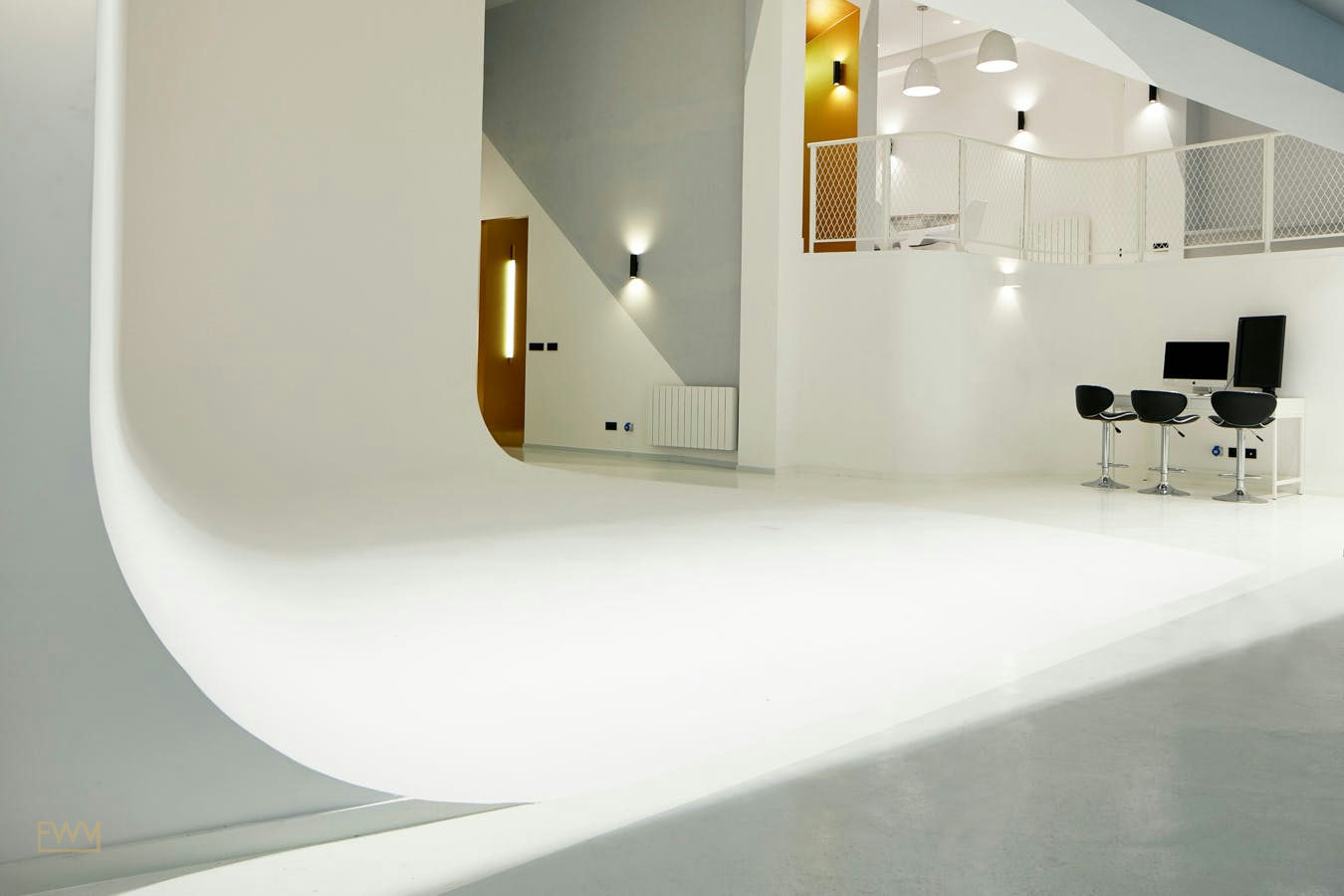
These are the most visually recognisable Canal Saint-Martin spaces. Typically occupying the ground floor of 19th-century Haussmann buildings, they feature large glass vitrines facing the quai or the cross-streets, original wooden or metal shopfront detailing, and interior volumes that range from intimate 30-square-metre formats to more generous 80 to 120-square-metre retail floors. White walls and polished concrete or hardwood floors are common interior finishes in spaces that have been recently renovated for short-term rental. Exposed ceiling beams and raw concrete floors characterise the more industrial variants found in former workshop conversions.
Showroom Formats
A showroom in the Canal Saint-Martin context typically differs from a pure retail storefront in that it is configured for brand presentation and wholesale or press appointments rather than direct consumer transactions. Showroom FW Belleville and similar listed spaces in the broader canal corridor offer private viewing rooms, adjustable rail systems, pin boards, and meeting areas within an overall aesthetic that reflects the neighbourhood's creative identity. These spaces are particularly relevant during Paris Fashion Week and Paris Showroom Week, when brands need to receive buyers and press in a setting that communicates brand values without the overhead of a permanent boutique.
Industrial Workshops and Atelier Spaces
The Canal Saint-Martin and the adjacent Faubourg Saint-Denis corridor contain a significant number of former artisan workshops and light industrial spaces that have been converted for creative and commercial use. The Atelier industriel verrière format, characterised by a glass roof or large skylight over an open industrial floor, is one of the most requested space types for product launch events, editorial shoots, and press days. These spaces typically offer extraction interne chemisée or extraction externe ventilation, which makes them compatible with catering activations requiring a cuisine de plain-pied setup.
Haussmann Apartment Ground Floors
Some of the most characterful short-term retail spaces in the 10th arrondissement are former apartment spaces or mixed residential and commercial properties that have been converted for temporary use. Marble floors, high ceilings, period cornicing, and views over inner courtyards give these spaces a distinctly Parisian residential aesthetic that works exceptionally well for luxury brand activations, jewellery presentations, home fragrance launches, and lifestyle brand events where the domestic setting is part of the narrative.
Rooftop and Terrace Spaces
Rooftop Buttes-Chaumont and spaces with terrasse access near the canal have become increasingly sought-after for seasonal brand activations, particularly between April and September. Paris planning rules governing terrasse and rooftop use require specific permissions, and licence 4 requirements apply to any activation involving alcohol service. The Espace rooftop Bastille and similar formats in the southern canal zone bridge the Canal Saint-Martin corridor with the Bastille neighbourhood, extending the geographic reach of the area's brand activation offer.
Gallery and Cultural Spaces
The Canal Saint-Martin area has a high density of art galleries, and several of these operate a dual model where gallery programming is supplemented by short-term commercial rental to compatible brands. Galerie d'art spaces in the 10th arrondissement typically feature white walls, modern spotlights, polished concrete or hardwood floors, and a neutral visual identity that allows brand design to take centre stage. The Galerie culturelle vivante and Galerie FW République formats represent this gallery-commercial hybrid model explicitly.
| Space Type | Typical Size Range | Best For | Key Features |
|---|---|---|---|
| Boutique Storefront | 30 to 120 sqm | Pop-up retail, product launch, direct sales | Vitrines, white walls, street frontage |
| Showroom Format | 50 to 200 sqm | Wholesale, press appointments, B2B | Rail systems, meeting rooms, private access |
| Industrial Atelier | 80 to 400 sqm | Product launches, editorial, press days | Exposed beams, raw concrete, skylights |
| Haussmann Apartment | 60 to 250 sqm | Luxury, lifestyle, intimate brand events | Marble floors, high ceilings, courtyard |
| Rooftop or Terrace | 40 to 150 sqm outdoor | Seasonal events, cocktail activations | Terrasse, views, licence 4 potential |
| Gallery Space | 40 to 180 sqm | Brand experience, installations, launches | Modern spotlights, white walls, neutral base |
KEY TAKEAWAY: The diversity of space types in the Canal Saint-Martin corridor means that brands of very different sizes, budgets, and activation formats can find a viable space. The challenge is not scarcity of options but the complexity of navigating short-term lease structures, permit requirements, and landlord expectations without specialist guidance.
Before committing to any space type, it is essential to understand the legal framework governing short-term retail leases in France, which differs meaningfully from the UK, US, and most other markets where international brands typically operate.
Leasing a Shop on the Canal Saint-Martin: Legal Frameworks and Permit Requirements
Quick answer: Short-term retail space rental in Paris is governed primarily by the bail dérogatoire, a temporary commercial lease of up to 36 months that sits outside the protections of the standard French commercial lease. Brands also require an autorisation d'occupation temporaire (AOT) for certain public domain uses, and separate permissions apply for terrasse use, signage, alcohol service, and specific event formats. Requirements vary by space type, arrondissement, and intended use.
Understanding the French commercial lease framework is non-negotiable for any brand renting a shop on the Canal Saint-Martin, because the consequences of entering the wrong lease structure can be significant and costly. French commercial property law distinguishes sharply between a bail commercial, which grants the tenant substantial rights including a nine-year minimum term and renewal rights, and a bail dérogatoire, which is a short-term derogatory lease that can be granted for any period up to 36 months and does not confer the same tenant protections.
The Bail Dérogatoire Explained
The bail dérogatoire, sometimes called a bail précaire or convention d'occupation précaire, is the standard legal instrument for temporary and pop-up retail in France. Both parties, landlord and tenant, must explicitly agree in writing that the lease is derogatory in nature and does not confer commercial lease rights. If the tenant continues to occupy the premises after the agreed derogatory period without a new agreement, French law may automatically reclassify the arrangement as a full bail commercial, giving the tenant significant rights and significantly complicating the landlord's position. This is why precision in drafting and adherence to agreed exit dates is critical.
A bail dérogatoire for a Canal Saint-Martin pop-up will typically specify the rental period, the monthly rent and any charges, the permitted use of the space, the state of the premises at entry and expected state at exit, any fit-out permissions, and the respective responsibilities for ménage, propreté, and poubelles management. Brands new to the French market should not assume that a standard commercial tenancy agreement from their home country is transferable.
The AOT and Public Domain Permissions
An autorisation d'occupation temporaire (AOT) is required when a commercial activation extends onto or uses public domain space, including public pavements, the quais of the Canal Saint-Martin themselves, or public squares such as Place de la République. Brands planning events that extend beyond the private interior of a space and onto the quai de Valmy or quai de Jemmapes must obtain the relevant AOT from the Paris city administration, specifically the Mairie de Paris and the relevant arrondissement authority. The process requires advance notice and documentation, and approval is not guaranteed.
Fonds de Commerce and Local Commercial
Brands entering the Paris market for the first time sometimes encounter listings framed in terms of fonds de commerce, which refers to the sale or transfer of a going-concern business including its customer base, trading name, and lease rights, rather than a simple rental of the physical space. A local commercial rental is distinct from a fonds de commerce transaction, and brands should clarify which structure applies before engaging in detailed negotiations. The fonds de commerce framework is more common in longer-term acquisition scenarios and less relevant for short-term pop-up activations.
IMPORTANT: The information in this section is provided for general orientation only. French commercial property law and Paris permit requirements are complex and change periodically. Always verify your specific obligations with a qualified French legal advisor or notaire before signing any lease or permit application. Fashion Week Venues provides a permit guidance tool to help brands understand the requirements relevant to their space type and intended activation format.
Licence 4 and Alcohol Service
Any brand activation involving the service of alcohol to the public requires a licence 4 or the relevant temporary equivalent. In Paris, temporary drink licences can be obtained for specific events, but the process requires advance planning and compliance with specific conditions. Brands planning cocktail events, press previews with champagne service, or experiential activations where alcohol is offered to guests must factor this into their permit timeline.
KEY TAKEAWAY: The legal framework for renting a shop on the Canal Saint-Martin is more complex than a standard residential rental and significantly more nuanced than commercial leasing in many non-French markets. A bail dérogatoire, combined with the relevant AOT and event-specific permits, is the standard structure for short-term retail activations. Specialist guidance is not optional; it is the most efficient way to avoid costly delays or legal complications.
With the legal framework understood, the practical question becomes how to find and evaluate spaces in the Canal Saint-Martin area, and what the typical process looks like from initial search to activation launch.
How to Find and Evaluate a Shop for Rent on the Canal Saint-Martin
Quick answer: Finding a short-term retail space on the Canal Saint-Martin requires access to specialist marketplaces and agency networks, because the majority of viable pop-up and temporary retail spaces in Paris are not listed on mainstream commercial property platforms. A combination of direct outreach, specialist marketplace search, and agency support is the most reliable approach.
The Canal Saint-Martin short-term retail market operates quite differently from the permanent commercial real estate market that platforms such as LoopNet, CoStar, or standard French commercial property portals cover. Those platforms primarily serve investment properties, long-term commercial leases, and fonds de commerce transactions. The temporary and pop-up retail inventory of the Canal Saint-Martin, which is the segment relevant to fashion brands, lifestyle labels, and brand activation teams, circulates through a different set of channels.
Specialist Pop-Up Marketplaces
Platforms specifically designed for short-term retail and event space rental, including the Fashion Week Venues space marketplace, aggregate spaces from verified landlords and space owners who have explicitly made their properties available for temporary commercial use. These listings include the relevant space details such as size, floor type, ceiling height, feature list, available dates, and any specific conditions, saving brands significant time compared to cold outreach to property owners. Some platforms, including Nestore and Foodimmo, operate within specific subcategories of the short-term space market and may have relevant Canal Saint-Martin inventory.
Direct Canal Zone Search
Walking the Quai de Valmy, the Quai de Jemmapes, Rue Beaurepaire, and Rue des Vinaigriers is still a relevant research method for brands with teams on the ground in Paris. Spaces that are temporarily vacant, freshly renovated, or carrying a à louer sign are often approaching availability. However, converting a sighting into a usable short-term rental requires understanding the landlord's position, negotiating appropriate terms, and structuring the lease correctly, which typically requires specialist intermediation.
Agency Networks and Broker Professionals
Established agencies with Paris market knowledge maintain ongoing relationships with space owners, building managers, and property professionals in the Canal Saint-Martin area. These relationships allow agencies to access spaces before they are formally listed, to negotiate terms more efficiently, and to alert brand teams to upcoming availability with meaningful advance notice. This is particularly important for brands targeting Paris Fashion Week dates, when competition for the best Canal Saint-Martin spaces intensifies significantly and lead times of three to six months are often required for prime locations.
Evaluation Criteria for Canal Saint-Martin Spaces
Once candidate spaces are identified, brands should evaluate them against a consistent set of criteria to enable like-for-like comparison. The key variables include: net internal area in square metres, floor type (hardwood floors, marble floors, polished concrete floors, raw concrete floors), ceiling height and whether exposed ceiling beams are present, natural light and glazing extent, window frontage and vitrine configuration, existing lighting infrastructure such as modern spotlights, access to storage, toilet facilities, electrical capacity for brand installations, loading access for fit-out and merchandise delivery, existing extraction infrastructure for catering uses, and any noise or use restrictions that would affect the planned activation.
The Fashion Week Venues space comparison tool allows brand teams to evaluate multiple Canal Saint-Martin candidates against each other using a structured framework, reducing the subjectivity that often slows internal approval processes.
| Evaluation Criterion | Why It Matters | What to Check |
|---|---|---|
| Net internal area | Determines merchandise capacity, circulation, and event capacity | Measured in sqm, not including storage or WC |
| Floor type | Affects brand aesthetic and fit-out requirements | Hardwood, marble, polished concrete, raw concrete |
| Ceiling height | Influences lighting design and installation scale | Minimum 2.8m preferred for most fashion activations |
| Window frontage | Drives passing foot traffic and brand visibility | Linear metres of vitrine facing the street |
| Electrical capacity | Limits what lighting, AV, and retail tech can be installed | Amperage, number of circuits, distribution board access |
| Loading access | Critical for efficient fit-out and merchandise delivery | Kerb access, lift dimensions, restricted hours |
| Extraction infrastructure | Required for catering activations | Extraction interne chemisée or extraction externe |
| Permit history | Indicates whether previous tenants have run similar activations | Ask landlord for previous use and permit record |
KEY TAKEAWAY: Evaluating Canal Saint-Martin spaces against a consistent set of structural and operational criteria before negotiating terms will save significant time and budget. The most visually appealing spaces are not always the most operationally viable ones, and due diligence on electrical capacity, loading access, and permit history is as important as aesthetic fit.
To compare neighbourhoods and space types, explore the Paris city hub on Fashion Week Venues and shortlist spaces that match your brief, budget, and calendar window.
Canal Saint-Martin vs Le Marais: Choosing the Right Paris Neighbourhood for Your Brand
Quick answer: Canal Saint-Martin and Le Marais serve different brand positioning needs. Canal Saint-Martin is best for brands with an independent, artisanal, organic, or cultural identity seeking authentic engagement with a creatively literate local audience. Le Marais, and particularly Le Haut Marais, offers higher tourist density, stronger luxury brand associations, and a more international customer mix, typically at higher rental costs and with greater competition for prime spaces.
The decision between Canal Saint-Martin and Le Marais is one that brand activation teams in Paris face regularly, and it is a genuine strategic choice rather than a question of which is objectively better. Both neighbourhoods have distinct characteristics, demographics, and brand associations that should be assessed against the specific brief for each activation.
Canal Saint-Martin: Creative Authenticity and Local Density
The Canal Saint-Martin neighbourhood draws a consumer base that skews local, French, and culturally engaged. The cafés, restaurants, and art galleries that line the Quai de Valmy and Quai de Jemmapes attract a well-educated, design-literate, and ethically conscious demographic that responds strongly to brand narratives built around craft, provenance, and creative integrity. Artisanal brands, independent fashion labels, ethical and organic lifestyle brands, and cultural institutions consistently perform well in Canal Saint-Martin activations because the neighbourhood pre-selects for a sympathetic audience.
Foot traffic on the quais is strong during fair weather, particularly on weekends and during Paris Fashion Week, but it is less consistent year-round than the tourist-driven footfall of the Marais. This means that Canal Saint-Martin activations tend to benefit more from local community engagement, press and influencer strategy, and social media amplification to drive visitors to the space, rather than relying on existing passing trade.
Le Marais and Le Haut Marais: International Reach and Premium Positioning
Le Marais, and specifically Le Haut Marais in the upper reaches of the 3rd arrondissement, is Paris's most internationally recognised independent retail destination. Spaces on Rue du Bretagne, Rue de Turenne, and the streets around the Place des Vosges attract a high proportion of international visitors alongside Parisian consumers. Rental costs in Le Marais are typically higher than in the Canal Saint-Martin corridor, and the competitive intensity for prime locations during fashion week periods is significant.
Brands targeting an international fashion press and buyer audience, or seeking direct-to-consumer retail performance from a tourist-heavy footfall, will often find that Le Marais delivers stronger transactional volumes during short activations. The trade-off is a less distinctive neighbourhood identity and higher overall activation cost.
Faubourg Saint-Denis and the Porte Saint-Denis Corridor
Adjacent to the Canal Saint-Martin zone, the Faubourg Saint-Denis and Porte Saint-Denis area has emerged as an important third option in the 10th arrondissement pop-up market. Formats such as the Local éphémère Faubourg Saint-Denis, the Espace modulable Porte Saint-Denis, and the Loft Faubourg Saint-Denis represent a newer generation of purpose-configured short-term retail spaces that combine the neighbourhood's edgy creative identity with operational infrastructure designed specifically for brand activations. These spaces often offer better value per square metre than equivalent Canal Saint-Martin frontage while maintaining strong cultural positioning.
| Neighbourhood | Primary Audience | Brand Positioning | Relative Cost | Best For |
|---|---|---|---|---|
| Canal Saint-Martin | Local creatives, culturally engaged Parisians | Independent, artisanal, ethical, cultural | Medium | Brand experience, community engagement |
| Le Marais | International visitors, affluent Parisians | Established, luxury, premium, design | High | International visibility, transaction volume |
| Le Haut Marais | Fashion-forward, design-literate locals and visitors | Contemporary, independent, aspirational | Medium-high | Editorial, concept store, press days |
| Faubourg Saint-Denis | Emerging creatives, young professionals | Experimental, diverse, culturally radical | Low-medium | New brand entry, experimental formats |
| Place de la République | Mixed, high transit volume | Accessible, democratic, event-oriented | Medium | Large-scale events, high-volume activations |
DID YOU KNOW: The stretch of the Canal Saint-Martin between the Rue des Vinaigriers and the Rue Beaurepaire is sometimes referred to informally as the "designer mile" of the 10th arrondissement, because of the concentration of concept stores, pop-up boutiques, and creative studios that have occupied ground-floor spaces along these streets over the past decade.
KEY TAKEAWAY: Canal Saint-Martin and Le Marais serve different brand objectives. Do not default to one over the other without mapping your target consumer, brand positioning, and activation objectives against the demographic and cultural characteristics of each neighbourhood. A clear brief makes neighbourhood selection straightforward.
Once the neighbourhood is confirmed, brand teams need to understand the practical workflow of taking a Canal Saint-Martin space from initial enquiry to operational activation.
The Step-by-Step Process for Renting a Pop-Up Shop on the Canal Saint-Martin
Quick answer: Renting a pop-up shop on the Canal Saint-Martin involves a minimum of six to eight distinct stages from initial brief to activation launch, spanning an ideal planning horizon of eight to twelve weeks for a standard activation and twelve to twenty weeks for a larger or more complex production. Compressing this timeline is possible but increases risk and cost.
The workflow for a Canal Saint-Martin pop-up rental follows a structured sequence that experienced agency teams manage routinely. For brands doing this for the first time in Paris, understanding the sequence in advance prevents the most common delays and budget overruns.
| Stage | Activity | Typical Timeline Before Activation | Key Outputs |
|---|---|---|---|
| 1. Brief Definition | Define brand objectives, budget range, space requirements, dates, and neighbourhood preference | 12 to 20 weeks | Written activation brief |
| 2. Space Search | Search marketplace, engage agency, conduct canal zone reconnaissance | 10 to 16 weeks | Longlist of candidate spaces |
| 3. Space Evaluation | Site visits, structural review, permit history check, comparison against brief | 8 to 12 weeks | Shortlist of 2 to 3 preferred spaces |
| 4. Lease Negotiation | Negotiate bail dérogatoire terms, review with French legal advisor | 6 to 10 weeks | Signed lease agreement |
| 5. Permit Applications | Submit AOT, terrasse, alcohol, and signage permit applications as required | 6 to 8 weeks | Approved permits |
| 6. Concept and Design | Develop space concept, fit-out specification, furniture plan, and brand design | 8 to 10 weeks | Approved design pack |
| 7. Production and Build | Source contractors, order materials, furniture rental, deliver and install | 2 to 4 weeks | Fitted and operational space |
| 8. Activation Launch | Staff briefing, POS setup, soft launch, press and influencer day, public opening | Activation start date | Live brand activation |
The most common failure point in Canal Saint-Martin pop-up planning is underestimating the time required for permit applications and lease finalisation. Both processes require French-language documentation, engagement with public administration bodies, and in many cases, the involvement of a notaire or qualified legal advisor. Brands that compress stages four and five invariably create downstream problems for stages six and seven.
Budget planning should run in parallel with the space search rather than after it. Using a structured budget estimation tool before committing to a specific space enables brand teams to validate that the overall activation cost, including rent, fit-out, staffing, permits, and operational costs, is viable before significant time is invested in lease negotiation. The Fashion Week Venues budget planning tool provides a structured framework for this validation exercise.
The timeline planning tool from Fashion Week Venues can help brands map each stage of the process against their target activation dates and identify any critical path risks before they become problems.
TIP: Build a contingency buffer of at least two weeks into your timeline for each of the permit application and lease negotiation stages. Paris public administration processes are thorough and occasionally unpredictable, and a two-week buffer can prevent an activation launch being delayed by a missing document or a rescheduled inspection.
KEY TAKEAWAY: A well-planned Canal Saint-Martin pop-up activation requires a minimum of eight to twelve weeks from confirmed brief to launch, and ideally twelve to twenty weeks for complex productions. The workflow is linear in its dependencies: you cannot finalise design until the space is confirmed, and you cannot begin production until permits are approved. Plan accordingly.
With the process understood, the question of budget becomes central to decision-making for most brand teams.
Budget and Cost Considerations for a Canal Saint-Martin Retail Activation
Quick answer: Rental costs for short-term retail spaces on the Canal Saint-Martin vary significantly based on space type, size, location within the neighbourhood, duration, and season. Total activation budgets typically encompass rent, fit-out, staffing, permits, and operational costs. Directional estimates should be validated against specific space proposals using a structured budget tool rather than relying on market averages.
Budget planning for a Canal Saint-Martin pop-up is complicated by the high variability in space pricing, the range of additional costs that brands new to the Paris market may not anticipate, and the impact of timing on both rental rates and production costs. This section provides a framework for thinking about budget rather than specific price guarantees, as actual costs depend on a large number of variables that are unique to each activation.
Rental Cost Variables
The rental cost of a shop on the Canal Saint-Martin for a short-term activation depends on several factors. Space size is the primary driver, with larger spaces commanding higher absolute rents. Location within the neighbourhood matters significantly: a space directly on the Quai de Valmy or Quai de Jemmapes with canal-facing vitrine will typically command a premium over an equivalent space on a secondary cross-street. Season and timing are highly influential, particularly during Paris Fashion Week periods in January, February, September, and October, when demand for canal zone spaces is at its highest and rental rates reflect that demand.
The duration of the rental also affects the effective cost per day or per week. Shorter activations, typically one to four weeks, often carry a higher daily rate than longer activations of one to three months, which landlords may price more generously to secure certainty of occupation.
Beyond Rent: The Full Activation Cost Stack
Brands new to Paris pop-up activations consistently underestimate the total cost of an activation by focusing exclusively on the headline rental figure. The full cost stack for a Canal Saint-Martin pop-up typically includes: rent and any service charges, fit-out and production costs including furniture rental, permit fees and any associated professional fees, retail staffing costs including French employment tax implications, POS and payments infrastructure, public liability insurance appropriate for a French commercial space, operational costs including ménage and propreté services during the activation, and close-down and restoration costs at the end of the lease period.
The restoration obligation, which requires tenants to return the space to its pre-tenancy condition at lease end, is a particularly important cost to budget for, because fit-out work done to customise the space must often be reversed or compensated at exit. This cost is sometimes negotiable with landlords, particularly if the fit-out genuinely enhances the space's long-term value, but it should not be assumed away without explicit agreement in the lease.
TIP: Use the Fashion Week Venues ROI calculator tool to model the relationship between your activation budget, projected foot traffic, conversion assumptions, and revenue targets. This is particularly useful for internal budget approval processes where leadership teams need to see a projected return, not just a cost figure.
KEY TAKEAWAY: The headline rental rate is only one component of a Canal Saint-Martin activation budget. A full budget model that includes fit-out, staffing, permits, operations, and restoration costs will typically produce a total figure that is two to four times the rent alone, depending on the production ambition and staffing model. Build from the full cost stack, not from the rental headline.
Understanding what support is available from specialist agencies can significantly reduce both the cost uncertainty and the operational risk of a Canal Saint-Martin activation.
How Fashion Week Venues Supports Canal Saint-Martin Pop-Up Projects
Quick answer: Fashion Week Venues operates as a full-service pop-up agency and space marketplace that supports brands from initial space search through to activation management in Paris and other major fashion capitals. The team brings together venue sourcing, concept direction, production, staffing, and data analytics within a single engagement, removing the need to coordinate multiple specialist suppliers independently.
For brand teams planning a shop rental or pop-up activation on the Canal Saint-Martin, Fashion Week Venues offers a structured set of services and tools that address every stage of the process described in this guide.
Venue Sourcing and Space Discovery
The venue sourcing service covers the Canal Saint-Martin area in depth, with access to spaces ranging from boutique storefronts on Rue Beaurepaire to industrial ateliers near the Gare du Nord and gallery formats in the République corridor. The team manages the full search process from brief intake to shortlist presentation, including site visits, structural assessments, and permit history reviews. This saves brand teams the considerable time and local market knowledge required to conduct an effective independent search.
Concept Direction and Branded Store Design
Translating a brand's creative identity into a physical Canal Saint-Martin space requires understanding both the brand and the neighbourhood. The Fashion Week Venues concept direction and branded store design teams work with brand marketing and creative directors to develop spatial concepts that are authentic to the brand and architecturally appropriate for the specific space. Whether the brief calls for white walls and modern spotlights, exposed ceiling beams and raw concrete, or a plants-and-cobbled-path garden aesthetic for a courtyard space, the design team builds concepts that can be realised within the approved budget and production timeline.
Production, Fit-Out, and Furniture Rental
The production and build service covers the full fit-out workflow, from specification and contractor sourcing to delivery, installation, and final dressing. Furniture rental is available as a standalone service for brands that prefer not to purchase and ship their own meubles for a short-term activation. The team has established supplier relationships in Paris that enable efficient procurement of the fixtures, fittings, and interiors elements required for a Canal Saint-Martin pop-up within typical short-term rental timescales.
Retail Staffing and Activation Management
Running a retail activation in Paris requires French-speaking staff who understand both the brand and the Canal Saint-Martin customer. The Fashion Week Venues retail staffing service provides trained brand ambassadors, sales associates, and event staff who can operate POS systems, manage customer interactions in French and English, and represent the brand consistently throughout the activation period. The activation management service provides an on-the-ground team lead who oversees daily operations, resolves issues, and manages the operational relationship with the landlord and building management.
Data, Analytics, and ROI Tracking
Post-activation measurement is increasingly important for brand teams who need to justify Paris pop-up investments to commercial leadership. The data and analytics service provides structured reporting on foot traffic, dwell time, transactions, conversion rates, and social media amplification generated during the activation. This data feeds directly into the ROI calculation framework and provides the evidence base for future activation decisions.
Tools Available to Brand Teams
In addition to managed services, Fashion Week Venues provides a suite of planning tools that brand teams can use independently. These include the budget estimation tool, the ROI calculator, the space comparison tool, the timeline planner, the permit guidance tool, and the space locator. Together these tools reduce the planning uncertainty that makes Paris market entry feel daunting for international brands and enable faster, more confident internal decision-making.
To understand how the agency operates in practice, review the Fashion Week Venues process page and explore past Canal Saint-Martin and Paris activations in the work section.
KEY TAKEAWAY: Fashion Week Venues does not just list spaces. It provides the full operational infrastructure, from brief to close-down, that brand teams need to execute a credible Canal Saint-Martin pop-up activation without needing to build Paris market expertise from scratch. The service model scales from light-touch marketplace access to full end-to-end activation management depending on the brand's internal capabilities and ambitions.
Paris Fashion Week Calendar and the Canal Saint-Martin Activation Window
Quick answer: Paris Fashion Week occurs four times per year in January, February, September, and October, and each edition creates a concentrated demand window for Canal Saint-Martin pop-up and showroom spaces. The neighbourhood is particularly relevant during the ready-to-wear editions in March and October due to its proximity to key show venues and its strong press and buyer community. However, activations outside Fashion Week periods can also deliver strong results with the right strategy.
Paris Fashion Week is the primary demand driver for short-term retail and showroom space across the entire Paris market, including the Canal Saint-Martin corridor. The concentration of international press, buyers, influencers, and brand teams in Paris during each edition creates a captive audience for brand activations in a way that no other calendar period can replicate. Brands that align their Canal Saint-Martin activation with a Paris Fashion Week edition gain access to this amplified attention economy at the cost of competing with other brands for the same limited pool of prime spaces.
The Canal Saint-Martin neighbourhood benefits particularly from the ready-to-wear editions in late September and early October, when show venues cluster in and around the Marais and République areas. The walking distance between these show venues and the canal zone is manageable for press and buyers, and the neighbourhood's café and restaurant culture makes it a natural gathering point between shows. Brands that position a pop-up or showroom on the canal during this window consistently report strong press attendance and meaningful buyer engagement.
Outside the main fashion week calendar, the Canal Saint-Martin activation market has year-round demand from lifestyle brands, beauty labels, food and drink concepts, and cultural institutions. The French school holiday calendar, the summer tourist season, and local cultural events such as Nuit Blanche and the Paris Design Week create additional activation windows that can be commercially viable without the premium cost of fashion week rental rates.
Brands considering their first Paris activation should map their target activation dates against the fashion week calendar, competitor activity, and the neighbourhood's seasonal foot traffic patterns before committing to a specific window. The Fashion Week Venues timeline tool helps brand teams visualise these calendar dependencies and plan accordingly.
KEY TAKEAWAY: Paris Fashion Week creates the highest-value activation windows for Canal Saint-Martin, but it also drives the highest competition and the highest rental rates. Brands with strong independent audiences, compelling content strategies, or a primarily local Paris positioning can achieve excellent results in non-fashion-week windows at meaningfully lower cost and with less competition for space.
Common Myths About Renting a Shop on the Canal Saint-Martin
MYTH: You need a French legal entity or registered company to rent a shop on the Canal Saint-Martin.
FACT: Many Canal Saint-Martin space owners and the agencies that manage short-term rentals work with international brands that do not have a French legal entity. A bail dérogatoire can in principle be entered into by a foreign company, although the contractual structure and any associated security requirements may differ from a standard domestic arrangement. You should verify the specific requirements with a qualified French legal advisor before proceeding, as conditions vary by landlord and space type.
MYTH: Paris Fashion Week is the only time it makes commercial sense to activate on the Canal Saint-Martin.
FACT: Paris Fashion Week creates premium demand conditions, but it is far from the only viable activation window. The Canal Saint-Martin neighbourhood generates consistent foot traffic year-round from its resident creative community, its café and restaurant culture, and its popularity with Parisian day visitors. Brands with strong local brand awareness, compelling content and influencer strategies, or a primarily community-oriented positioning regularly achieve strong results in non-fashion-week windows, often at significantly lower rental rates and with less logistical pressure.
MYTH: Commission brokers are the only way to find a short-term retail space on the Canal Saint-Martin.
FACT: Commission brokers are one route to market, but specialist pop-up marketplaces, full-service agencies, and direct landlord networks all provide alternative access to Canal Saint-Martin short-term retail spaces. Each route has different cost structures, speed implications, and service depth. A specialist agency that combines marketplace access with operational support provides a materially different value proposition from a pure commission broker, and for brands managing complex activations, the agency model typically delivers better outcomes at comparable or lower total cost.
MYTH: Short-term leases in Paris are legally straightforward and do not require specialist help.
FACT: Short-term commercial leases in France, specifically the bail dérogatoire, are subject to specific legal conditions that must be precisely observed to avoid the lease being reclassified as a full commercial bail. Additional permit requirements for terrasse use, public domain occupancy, signage, and alcohol service add further complexity. Brands that proceed without qualified French legal advice or specialist agency support routinely encounter delays, unexpected costs, and in some cases legal complications that could have been avoided with appropriate guidance at the outset.
MYTH: The best Canal Saint-Martin spaces are easily found on mainstream commercial property portals.
FACT: The majority of high-quality short-term retail and pop-up spaces on the Canal Saint-Martin are not listed on mainstream commercial real estate platforms such as LoopNet or CoStar. These platforms primarily serve long-term commercial lease and investment property markets. The best short-term Canal Saint-Martin spaces circulate through specialist pop-up marketplaces, agency networks, and direct landlord relationships. Relying exclusively on mainstream portals will produce an incomplete and often misleading picture of what is actually available.
Frequently Asked Questions
Why open a pop-up store on the Canal Saint-Martin?
The Canal Saint-Martin offers a unique combination of architectural character, a culturally engaged local consumer base, and strong visibility during Paris's major fashion and lifestyle events. The neighbourhood's blend of art galleries, cafés, organic food stores, and independent boutiques creates a pre-selected audience of design-literate, ethically conscious consumers who actively seek out new brand experiences. For fashion, lifestyle, and artisanal brands, a Canal Saint-Martin pop-up communicates creative credibility and local authenticity in a way that more commercial Paris retail locations cannot replicate. The neighbourhood's position in the 10th arrondissement also provides practical advantages, including strong public transport links and proximity to key Paris venues and hotels.
What is the difference between a bail dérogatoire and a standard commercial lease in France?
A bail commercial is the standard French commercial lease, which grants the tenant a minimum term of nine years and significant renewal and compensation rights. A bail dérogatoire, by contrast, is a short-term derogatory lease with a maximum duration of 36 months that does not confer the same tenant protections. Both parties must explicitly agree in writing that the lease is derogatory in nature. If the tenant continues to occupy the premises after the bail dérogatoire expires without a new agreement, French law can automatically reclassify the arrangement as a bail commercial. This is a critical distinction that brands should understand before signing any Paris lease, and legal advice is strongly recommended.
How far in advance should a brand start looking for a Canal Saint-Martin shop for a Paris Fashion Week activation?
For Paris Fashion Week activations, particularly the September and October ready-to-wear editions, brands should begin their space search at least twelve to sixteen weeks before the intended activation start date. Prime Canal Saint-Martin locations with canal frontage or established pop-up histories are often reserved months in advance by returning brands or by agencies that maintain ongoing relationships with space owners. Starting the search earlier than twelve weeks is not excessive for complex activations requiring extensive fit-out or multiple permit applications. Brands that begin their search less than eight weeks before their target date significantly restrict their options and risk paying premium rates for whatever remains available.
Do I need an AOT to use the pavement in front of my Canal Saint-Martin shop?
Yes, any use of public pavement space, including placing display items, furniture, or signage on the public domain in front of your rented space, requires an autorisation d'occupation temporaire from the Mairie de Paris and the relevant arrondissement authority. This applies to the Quai de Valmy and Quai de Jemmapes as well as the cross-streets. The application process requires advance notice and supporting documentation. Requirements and approval timelines vary depending on the specific location and the nature of the proposed use, and you should verify the exact requirements with a qualified French legal advisor or through the Fashion Week Venues permits tool.
What types of brands perform best in Canal Saint-Martin pop-up spaces?
The Canal Saint-Martin neighbourhood is most naturally aligned with brands that carry authentic creative, artisanal, or ethical positioning. Independent fashion labels, organic and natural beauty brands, ethical lifestyle brands, independent jewellery and accessories designers, art-adjacent fashion brands, and culturally grounded product concepts all perform strongly in the neighbourhood because the local consumer base actively seeks these categories. Mainstream fashion brands or highly commercial retail concepts may find the neighbourhood's cultural context less aligned with their positioning, though a strong concept and well-executed activation can work across a wider range of brand types.
What floor types are most common in Canal Saint-Martin retail spaces?
The most common floor types in Canal Saint-Martin and the wider 10th arrondissement short-term retail stock are hardwood floors in renovated Haussmann-era buildings, polished concrete floors in more recently updated spaces, raw concrete floors in industrial atelier formats, and marble floors in higher-end Haussmann apartment conversions. Each floor type has different aesthetic implications for brand design and different practical requirements for installation and protection. Brands with specific floor type requirements should confirm the floor finish during the site visit and agree any covering or protection requirements with the landlord in the lease documentation.
Can I serve food and drinks at my Canal Saint-Martin pop-up?
Serving food and drinks at a Canal Saint-Martin pop-up requires compliance with several French regulatory requirements. Alcohol service to the public requires a licence 4 or an equivalent temporary licence. Catering operations involving cooking require appropriate extraction infrastructure, either extraction interne chemisée or extraction externe, and the space must be configured to meet food hygiene standards. Brands planning catering-led activations should verify that the space's extraction infrastructure is adequate for the intended catering format and should factor permit applications for food service into their planning timeline. Requirements vary by space type and the nature of the catering operation.
What is a fonds de commerce and is it relevant to a short-term Canal Saint-Martin pop-up?
A fonds de commerce is a French legal concept referring to a going-concern business that includes its customer base, trading name, equipment, and commercial lease rights. It is bought and sold as an asset rather than simply rented. For short-term pop-up activations, the fonds de commerce framework is generally not relevant, as brands are renting a physical space rather than acquiring a business. However, some Canal Saint-Martin property listings may be framed in fonds de commerce terms, particularly for spaces that have an established trading history. Brands should confirm whether a listing is a straightforward space rental or a fonds de commerce transaction before proceeding, as the legal and financial implications are very different.
How is the Canal Saint-Martin area connected to the rest of Paris for visitors and customers?
The Canal Saint-Martin area is well connected to the rest of Paris by public transport. Place de la République, at the southern edge of the canal zone, is served by metro lines 3, 5, 8, 9, and 11, making it one of the best-connected public transport nodes in central Paris. Gare du Nord, to the north, provides national and international rail connections including Eurostar and TGV services. Multiple bus routes and the Vélib bicycle network serve the canal quais directly. This transport accessibility makes the neighbourhood genuinely easy for visitors from across Paris and from international arrivals to reach, which supports the foot traffic case for a Canal Saint-Martin activation.
What is the difference between a showroom and a pop-up store in the Canal Saint-Martin context?
In the Canal Saint-Martin context, a showroom is typically configured for trade, press, and buyer appointments rather than public retail. It prioritises private viewing conditions, rail systems, presentation infrastructure, and meeting space over consumer foot traffic and point-of-sale transactions. A pop-up store, by contrast, is configured for direct consumer engagement, brand experience, and retail transactions. Many brands use the canal zone for both purposes simultaneously or sequentially, running a showroom format during Paris Fashion Week for trade and press, then transitioning to a consumer pop-up format for the weeks following the main show schedule. Space configurations that support both uses offer maximum flexibility for fashion brands on a single canal activation.
Are there co-working or multi-brand activation formats available on the Canal Saint-Martin?
Yes, shared and co-activation formats are available and increasingly popular on the Canal Saint-Martin, particularly for smaller brands that cannot justify the full cost of a solo activation but want to benefit from the neighbourhood's positioning and foot traffic. Fashion Week Venues operates a twin co-activation concept that enables two complementary brands to share a single space and activation window, splitting costs while maintaining distinct brand identities. This model works particularly well for brands that serve similar target consumers without directly competing, such as an independent fashion label and a jewellery or accessories brand, or an ethical fashion brand and an organic beauty label.
What permits are typically required for a Canal Saint-Martin pop-up shop?
The permit requirements for a Canal Saint-Martin pop-up depend on the specific space, its location, and the nature of the planned activation. Common permit requirements include a bail dérogatoire as the lease structure, an AOT for any use of public domain space including pavement or quai areas, a terrasse licence for any outdoor seating or display on public pavement, a licence 4 or temporary equivalent for alcohol service, and any signage or banner permits required under Paris's strict advertising regulations. Some spaces may also require specific building authority approvals for fit-out work that affects the structure or exterior of the building. The Fashion Week Venues permits tool provides a structured framework for identifying which permits apply to a specific space and activation type.
How does Fashion Week Venues differ from a standard commercial real estate broker for Canal Saint-Martin spaces?
A standard commercial real estate broker typically focuses on matching a tenant with a space and facilitating the lease transaction, after which the brand team is on its own for everything from fit-out and permits to staffing and activation management. Fashion Week Venues operates as a full-service agency that covers the entire journey from space identification and lease negotiation through to concept design, production, staffing, and post-activation analytics. The Fashion Week Venues marketplace provides transparent space discovery, while the agency services handle every operational and creative requirement of the activation. For brands without Paris market experience or without sufficient internal resource to manage a Paris activation independently, this full-service model represents a materially different and more comprehensive offering than a pure brokerage arrangement.
What is the Espace modulable Porte Saint-Denis and how does it relate to Canal Saint-Martin?
The Espace modulable Porte Saint-Denis is a purpose-configured short-term retail and event space located in the Porte Saint-Denis area of the 10th arrondissement, adjacent to the Canal Saint-Martin corridor. It is one of several newer formats in the broader 10th arrondissement market that have been designed specifically for brand activations, pop-up stores, showrooms, and product launches. Like Canal Saint-Martin spaces, it benefits from the neighbourhood's creative positioning and its strong transport connections, while offering a fully configurable interior that requires less fit-out investment than a raw industrial or residential conversion. Brands considering the Canal Saint-Martin zone should include the broader 10th arrondissement activation market, including the Faubourg Saint-Denis and Porte Saint-Denis corridor, in their space search.
What role does influencer marketing play in a Canal Saint-Martin pop-up activation?
Influencer marketing is a critical amplification layer for most Canal Saint-Martin pop-up activations, because the neighbourhood's foot traffic, while strong, is not sufficient on its own to drive the scale of audience engagement that a well-resourced brand activation requires. Paris-based content creators, fashion influencers, and lifestyle journalists are a natural audience for Canal Saint-Martin events, and many of the neighbourhood's most successful pop-up activations have generated their most significant reach through influencer content rather than pure street traffic. Fashion Week Venues provides an influencer marketing service that identifies, briefs, and manages creator partnerships relevant to the brand's positioning and target audience, integrating influencer strategy with the physical activation rather than treating them as separate workstreams.
Conclusion: Taking Your Canal Saint-Martin Pop-Up from Brief to Launch
The Canal Saint-Martin remains one of Paris's most compelling and commercially viable destinations for short-term retail, showroom, and brand experience activations. Its architectural diversity, its culturally engaged consumer base, its strong transport connections, and its neighbourhood identity as a hub for artisanal, ethical, and creative brands make it a natural choice for fashion labels, lifestyle companies, and international brands entering the Paris market. The complexity lies not in identifying the opportunity but in navigating the practical, legal, and operational dimensions of renting and activating a space in this market successfully.
The most important things brand teams should take away from this guide are the following. Start the space search significantly earlier than feels necessary, especially for Paris Fashion Week windows. Understand the bail dérogatoire and AOT framework before negotiating any lease. Build a full activation budget from the complete cost stack, not just the headline rental figure. Evaluate spaces against structural and operational criteria as rigorously as aesthetic ones. And engage specialist support early, whether for venue sourcing, concept design, production, staffing, or permit navigation, because the Paris market rewards preparation and punishes assumptions transferred from other markets.
Fashion Week Venues exists to make this process faster, more reliable, and more creatively ambitious for brands at every scale. Whether you are launching a first Paris pop-up or returning for a more complex multi-space activation, the combination of marketplace access, agency services, and planning tools available through Fashion Week Venues provides the infrastructure to move from research to reality with confidence.
To move from research to activation, start exploring available spaces on the Fashion Week Venues marketplace and build a focused brief for your target neighbourhood, space type, and calendar window.