To rent retail space on Canal Saint-Martin is to position your brand inside one of Paris's most culturally resonant and commercially compelling neighbourhoods. The 10th arrondissement, stretching from Gare du Nord and Gare de l'Est down through the tree-lined quais of Canal Saint-Martin to Place de la République, has evolved into a primary destination for pop-up stores, concept showrooms, brand experience activations, and short-term retail launches. Independent brands, international labels, and established fashion houses all recognise the canal district as a location where foot traffic, lifestyle media, and creative community converge. Fashion Week Venues supports brands seeking pop-up spaces in Paris with venue sourcing, production, activation management, and full-service support across the Canal Saint-Martin area and beyond.
Why Canal Saint-Martin Has Become a Destination for Retail Activation
Quick answer: Canal Saint-Martin offers a rare combination of strong organic foot traffic, an affluent and culturally engaged local demographic, a visual environment that photographs exceptionally well, and a neighbourhood reputation that carries brand credibility. For brands seeking short-term retail space in Paris, it delivers commercial viability alongside cultural positioning.
The Canal Saint-Martin runs north through the 10th arrondissement of Paris, connecting the Canal de l'Ourcq and eventually the River Seine via a series of iron footbridges, lock gates, and tree-lined quais. The Quai de Valmy and Quai de Jemmapes form the main residential and commercial corridors on either side of the waterway, and it is along these streets that the neighbourhood's retail character has crystallised over the past two decades.
Unlike the more tourist-saturated zones of Le Marais or the Grands Boulevards, Canal Saint-Martin attracts a visitor profile that leans heavily toward design-aware Parisians, international creatives, journalists, buyers, and lifestyle-focused tourists who are actively seeking out independent boutiques, concept stores, artisanal brands, and curated experiences. This demographic is commercially valuable for fashion, beauty, homeware, food and beverage, and lifestyle brands planning short-term activations.
The canal's cultural history amplifies its brand appeal. The Hôtel du Nord on 102 Quai de Jemmapes is one of the most recognised literary and cinematic landmarks in Paris, immortalised in the 1938 Marcel Carné film and forever associated with the voice of Arletty. Point Éphémère, a concert and music venue and cultural centre on Quai de Valmy, draws a creative crowd to the waterfront throughout the year. The Palais des Glaces near Rue des Vinaigriers and the area around Lycée Colbert give the neighbourhood a layered sense of 19th-century Parisian architecture set against contemporary independent retail.
Gentrification in Canal Saint-Martin has been organic and gradual rather than developer-driven, which has preserved the character of the streets while raising the commercial value of available spaces. Independent wine bars, bakeries, cafés, art galleries, and trendy clothing boutiques occupy the ground floors of Haussmann apartment buildings and converted industrial workshops. Ethical brands, organic grocery concepts, and artisanal producers have all found a receptive audience here. For brands entering Paris for the first time or returning for a seasonal activation, the neighbourhood sends a clear signal about values and positioning.
Rue Beaurepaire, Rue des Vinaigriers, and the sections of Quai de Jemmapes between Place de la République and Gare de l'Est represent some of the most active retail corridors for short-term and pop-up activity. Folie-Méricourt, which sits just south and east of the canal, adds additional depth to the catchment area. Rue La Fayette to the north connects the district to Gare du Nord and Gare de l'Est, bringing commuter and international traveller flow into proximity with the canal's organic pedestrian traffic.
DID YOU KNOW: Canal Saint-Martin was built in the early 19th century under Napoleon I to supply fresh water to Paris. Its current identity as a destination for creative retail and lifestyle brands is a product of the neighbourhood's long transition from industrial waterway to cultural corridor.
KEY TAKEAWAY: Canal Saint-Martin combines genuine cultural credibility, a commercially engaged local demographic, and a visually distinctive environment that makes it one of the most effective neighbourhoods in Paris for short-term brand activations, pop-up stores, and concept showrooms.
Understanding why the canal district works for retail also requires understanding the specific types of spaces available there and how they differ in terms of format, configuration, and suitability for different brand objectives.
Types of Retail Space Available to Rent on Canal Saint-Martin
Quick answer: Canal Saint-Martin and the wider 10th arrondissement offer a varied inventory of short-term retail spaces, including storefronts with vitrines, Haussmann apartment showrooms, converted industrial workshops, photo studios, art galleries, and multi-use concept spaces. The right format depends on your brand's objectives, product type, and activation style.
The physical diversity of available spaces in the Canal Saint-Martin area is one of its defining strengths for brand teams. Unlike purpose-built retail districts where spaces tend to be standardised, this neighbourhood contains an eclectic mix of building types, interior configurations, and architectural characters that can serve very different activation briefs.
Storefronts and Pop-Up Boutiques
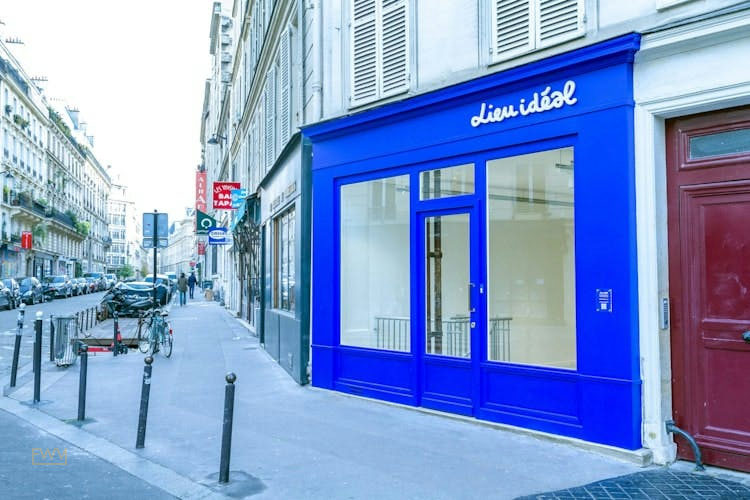
Ground-floor storefronts with vitrines facing the quais or the connecting side streets are the most directly commercial format. These spaces typically offer between 30 and 120 square metres of retail floor, a glazed frontage that allows window display, and direct street access. They suit brands launching a Pop-Up Boutique, a seasonal collection, or a product launch event where walk-in customer acquisition is a primary objective. White walls and exposed ceiling beams are common in converted spaces, while more recently fitted units may offer modern spotlights, marble floors, and clean contemporary interiors.
Haussmann Apartment Showrooms
Haussmann apartment buildings line the streets back from the canal, and their upper-floor units are increasingly used as furnished showrooms, press preview spaces, and private buying appointments. These spaces offer high ceilings, hardwood floors, large windows, and a residential quality that suits luxury, fashion, and homeware brands. A furnished studio or larger apartment format creates an immersive brand experience that a conventional storefront cannot replicate. Brands using these spaces typically operate by appointment or invitation, making them well suited to showroom weeks, buyer appointments, and press days.
Industrial Workshops and Espace Multimodale
Converted industrial workshops in the 10th arrondissement, particularly in Folie-Méricourt and around Rue des Vinaigriers, offer raw, high-ceiling volumes with concrete floors, exposed ceiling beams, and large loading doors. These spaces suit brands requiring significant build flexibility for immersive installations, product launch events, or multi-brand concept stores. They also work well as temporary offices or brand headquarters during fashion week activations when a team base is required alongside a public-facing space.
Art Galleries and Photo Studios
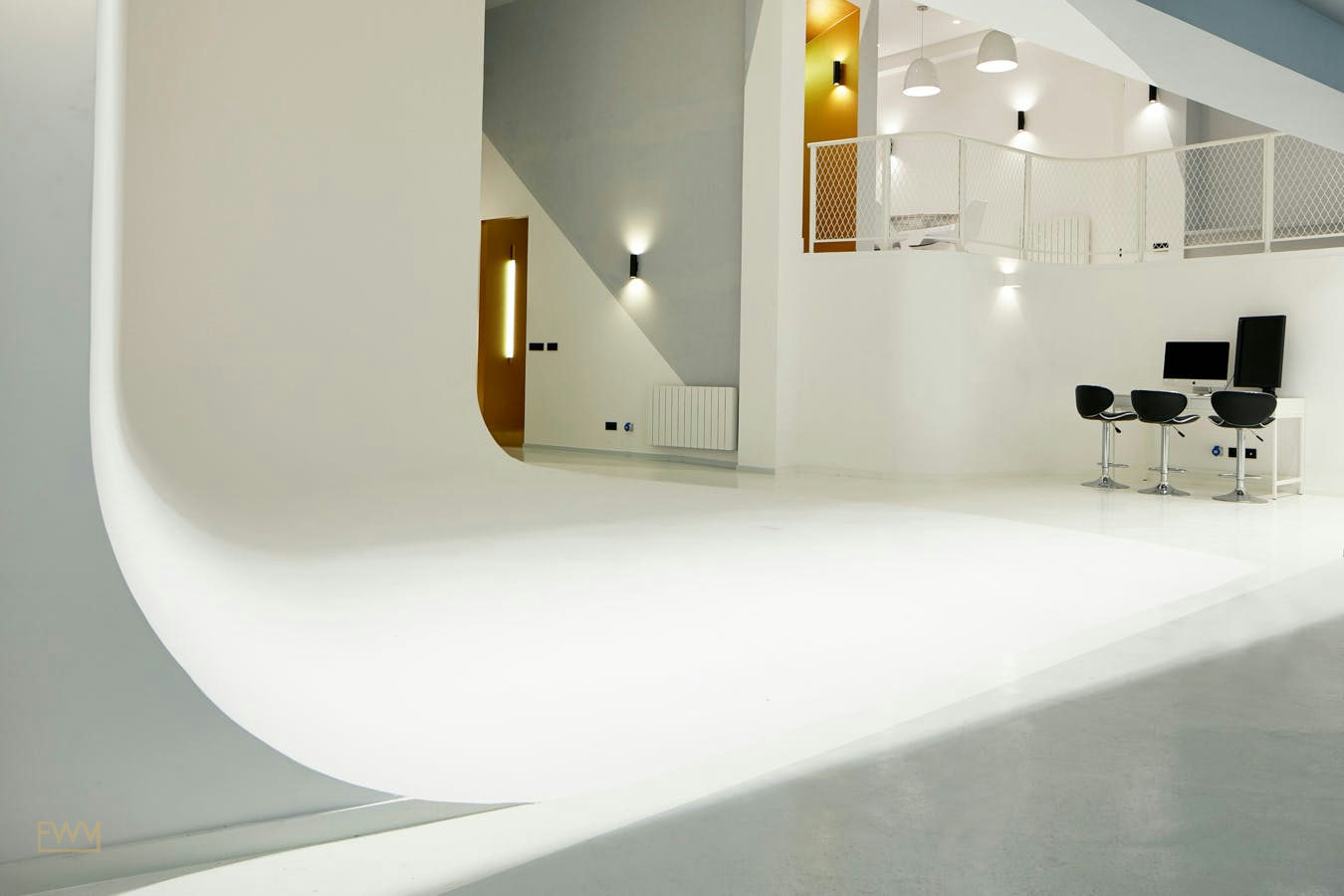
The canal district has a concentration of art galleries and photo studios that are available for short-term hire and retail activation. These spaces typically offer clean white walls, controlled lighting, and a polished presentation quality that translates well to product display, editorial shoots, and brand experience events. A Galerie d'art format can position a brand within the cultural fabric of the neighbourhood while maintaining full commercial functionality.
Courtyard and Multi-Unit Buildings
Several buildings in the Canal Saint-Martin area contain internal courtyards accessed through archways from the street. These cobbled path courtyards with plants and surrounding units offer an intimate setting for multi-brand activations, market-style events, or seasonal concepts. They are particularly effective for artisanal brands, ethical brands, and lifestyle concepts that benefit from a curated, community-oriented environment.
| Space Type | Typical Size | Best For | Key Interior Features |
|---|---|---|---|
| Storefront with Vitrine | 30 to 120 sqm | Pop-up boutiques, product launches, direct retail | Glazed frontage, white walls, modern spotlights |
| Haussmann Apartment | 50 to 200 sqm | Showrooms, press days, buyer appointments | Hardwood floors, marble floors, high ceilings |
| Industrial Workshop | 100 to 500 sqm | Immersive installations, product launches, concept stores | Exposed ceiling beams, concrete floors, loading access |
| Art Gallery | 40 to 150 sqm | Brand experience events, editorial activations | White walls, controlled lighting, polished floors |
| Photo Studio | 60 to 200 sqm | Shoots, brand content creation, experiential activations | Cyclorama, lighting rigs, open floor plan |
| Courtyard Complex | Variable | Multi-brand events, market concepts, community activations | Cobbled path, plants, surrounding units |
KEY TAKEAWAY: The Canal Saint-Martin area offers far more than simple storefronts. Brands should match their activation format to the space type, considering the relationship between interior character, customer journey, and brand positioning before selecting a property.
Choosing the right space type is only part of the decision. Understanding how rental terms and leasing structures work in Paris is equally critical for international brands approaching the market for the first time.
How Short-Term Retail Leases Work in Paris: Bail Dérogatoire and AOT
Quick answer: Short-term retail leases in Paris operate under specific legal frameworks, principally the bail dérogatoire for temporary commercial use and the autorisation d'occupation temporaire (AOT) for public or institutional spaces. These differ significantly from standard commercial leases and require careful management. International brands should seek specialist legal and operational support before signing any agreement.
One of the most common points of confusion for international brands entering the Paris retail market is the assumption that short-term space rental operates like a simple monthly hire agreement. In France, commercial property law is highly structured, and the rules that govern short-term activations are distinct from those that apply to standard commercial leases (bail commercial), residential lets, and event hire.
Bail Dérogatoire: The Short-Term Commercial Lease
The bail dérogatoire is a form of short-term commercial lease permitted under French law that allows landlords and tenants to agree on occupation terms outside the protections and obligations of the standard bail commercial. It can be agreed for a maximum total duration of three years. Beyond that threshold, the tenant acquires rights under the standard commercial lease regime, which carries significantly more obligation for the landlord. For pop-up stores, short-term showrooms, and temporary retail activations in the Canal Saint-Martin area, the bail dérogatoire is the most commonly used legal instrument. It provides flexibility for the brand while giving the landlord a defined and protected exit point.
IMPORTANT: The bail dérogatoire requires explicit written agreement between both parties before occupation begins. It cannot be applied retrospectively. Requirements vary by space type, duration, and arrondissement, and brands should always verify the specific terms with a qualified French legal advisor before signing.
Autorisation d'Occupation Temporaire (AOT)
An autorisation d'occupation temporaire applies to spaces on public domain, including certain quayside locations, institutional buildings, and publicly owned properties. If a brand is considering a space directly on the Quai de Valmy or Quai de Jemmapes, or within a municipally managed cultural venue such as Point Éphémère, an AOT or equivalent administrative permission may be required rather than or in addition to a private lease. These authorisations are granted by the relevant public authority and are subject to conditions regarding use, appearance, safety, and duration.
What Brands Need to Prepare
Whether operating under a bail dérogatoire or an AOT, international brands will typically need to provide proof of identity or business registration, a clear description of the intended use of the space, confirmation of insurance coverage, and in many cases a deposit. Brands without a French legal entity can still rent space in Paris, but the documentation requirements and the process for establishing a relationship with a French landlord are more complex. Specialist agencies and advisors with established relationships in the Paris market can significantly reduce friction at this stage.
The permits tool on Fashion Week Venues provides directional guidance on permit and compliance requirements for different space types and locations. It does not replace legal advice but offers a useful starting framework for brand teams beginning their planning process.
| Lease Type | Typical Duration | Space Category | Key Requirement |
|---|---|---|---|
| Bail Dérogatoire | Up to 3 years, often weeks to months | Private commercial properties | Written agreement before occupation |
| Autorisation d'Occupation Temporaire | Event-specific, short-term | Public domain, institutional spaces | Administrative permission from public authority |
| Bail Commercial | 9 years minimum | Long-term commercial tenancy | Full commercial lease protections and obligations |
| Location Saisonnière | Seasonal or defined period | Seasonal retail or market spaces | Specific use conditions, often event-tied |
KEY TAKEAWAY: French commercial property law is detailed and the consequences of entering the wrong lease type can be significant. Brands planning a Canal Saint-Martin activation should engage specialist legal and operational support from the earliest planning stage, not after a space has been identified.
Once the legal framework is understood, brand teams can begin to think more concretely about neighbourhood geography and which specific streets and locations within the Canal Saint-Martin area best serve their activation objectives.
Canal Saint-Martin Neighbourhood Geography: Streets, Landmarks, and Activation Zones
Quick answer: The Canal Saint-Martin activation zone covers the 10th arrondissement corridors of Quai de Valmy, Quai de Jemmapes, Rue Beaurepaire, Rue des Vinaigriers, and the surrounding streets extending toward Folie-Méricourt, Place de la République, and Gare de l'Est. Each street has a distinct character and foot traffic profile that shapes its suitability for different brand formats.
Understanding the micro-geography of Canal Saint-Martin is essential for brands making location decisions. The neighbourhood is not uniform. Foot traffic patterns, retail density, building types, and demographic profiles vary significantly across the relatively small area, and the right street choice can meaningfully affect an activation's commercial and brand performance.
Quai de Valmy and Quai de Jemmapes
These two quais run parallel to the canal on its western and eastern banks respectively and represent the visual heart of the neighbourhood. Ground-floor spaces on these streets benefit from the canal's scenic draw, attracting both local residents and tourists who walk the waterfront. The Hôtel du Nord at 102 Quai de Jemmapes is a focal point that draws visitors with a specific interest in Parisian cultural history and French cinema. Spaces here are visually prominent and benefit from strong ambient foot traffic, particularly on weekends and during warm weather when the quais become a social gathering space for Parisians on bikes and on foot.
Rue Beaurepaire
Rue Beaurepaire connects the canal to the broader 10th arrondissement retail network and has developed a strong identity as a street for fashion-forward independent retail. Trendy clothing boutiques, concept stores, and design-led interiors businesses have established Rue Beaurepaire as a destination within the destination. Foot traffic here is more purposefully retail-oriented than on the quais, making it particularly effective for brands whose customers are actively shopping rather than simply passing through.
Rue des Vinaigriers
Running parallel to the canal between Quai de Valmy and Rue La Fayette, Rue des Vinaigriers has a more industrial heritage that has translated into a supply of larger raw spaces and converted workshops. Brands requiring more floor area, build flexibility, or a rawer aesthetic will find relevant options here. It is also well connected to the broader neighbourhood by foot.
Folie-Méricourt
The Folie-Méricourt district, which sits southeast of the canal in the overlap between the 10th and 11th arrondissements, extends the activation zone into a slightly younger, more neighbourhood-residential area. Spaces here tend to be more affordable, less tourist-facing, and particularly well suited to brand concepts targeting a Paris-based creative and independent professional audience.
Place de la République and the Southern Approach
Place de la République acts as the southern gateway to the Canal Saint-Martin area and provides a high-volume transport interchange that dramatically increases the catchment for spaces within walking distance. Brands activating near the République end of the canal benefit from the convergence of multiple metro lines and the footfall generated by the square's status as a civic gathering point.
Gare du Nord and Gare de l'Est Corridors
At the northern end of the 10th arrondissement, Gare du Nord and Gare de l'Est bring significant international traveller and commuter volume. Rue La Fayette connects this zone south toward the canal, creating a corridor of mixed commercial activity. Spaces in this zone suit brands looking to capture a broader mixed demographic alongside the canal's core creative community.
To compare neighbourhoods and space types, explore the Paris city hub on Fashion Week Venues and shortlist spaces that match your brief, budget, and calendar window.
| Street or Zone | Primary Foot Traffic Type | Best Space Format | Brand Fit |
|---|---|---|---|
| Quai de Valmy | Scenic walkers, tourists, locals | Storefronts, cafés, pop-up boutiques | Lifestyle, food and beverage, fashion |
| Quai de Jemmapes | Weekend leisure, cultural visitors | Gallery spaces, concept stores | Art, culture, independent fashion |
| Rue Beaurepaire | Active retail shoppers | Pop-up boutiques, showrooms | Fashion, accessories, design |
| Rue des Vinaigriers | Local neighbourhood traffic | Workshops, studios, larger venues | Immersive activations, brand installations |
| Folie-Méricourt | Residents, creative professionals | Concept stores, courtyard spaces | Artisanal, ethical, independent brands |
| Place de la République | High volume, mixed demographic | Street-level retail, branded kiosks | Mass-appeal activations, awareness campaigns |
KEY TAKEAWAY: Canal Saint-Martin is a collection of micro-environments, not a single homogeneous retail zone. Brands should map their target customer against the specific foot traffic profile of each street before committing to a location.
With geography understood, the next consideration is the practical activation workflow: how brands move from brief to booking to launch in the Canal Saint-Martin area.
Planning a Pop-Up or Showroom Activation on Canal Saint-Martin: Step-by-Step Workflow
Quick answer: A Canal Saint-Martin pop-up activation typically requires a planning horizon of eight to sixteen weeks for brands working without an established Paris network. The process involves brief development, space sourcing, legal and permit review, design and build, logistics, staffing, and post-activation analysis. Each stage has specific dependencies that, if missed, compress the remaining timeline and increase cost.
Many brands underestimate the complexity of executing a short-term retail activation in Paris, particularly when working in a neighbourhood like Canal Saint-Martin where spaces are often held by private landlords with informal or semi-formal letting arrangements. The following workflow reflects best practice for brands approaching this process in 2026.
| Stage | Key Actions | Recommended Timeline Before Launch |
|---|---|---|
| 1. Brief Development | Define objectives, budget range, space size, duration, preferred zones, and activation format | 12 to 16 weeks |
| 2. Space Sourcing | Search marketplace, engage venue sourcing specialists, visit shortlisted spaces | 10 to 14 weeks |
| 3. Legal and Permit Review | Confirm lease type, review permit requirements, engage French legal advisor if required | 8 to 12 weeks |
| 4. Concept and Design | Develop spatial concept, confirm interior design, specify furniture and fixtures | 8 to 10 weeks |
| 5. Production and Build | Procure materials, schedule fit-out, manage landlord approvals for any structural changes | 4 to 8 weeks |
| 6. Staffing and Operations | Recruit and brief retail staff, confirm POS and payments, set up data and analytics | 3 to 4 weeks |
| 7. Activation and Marketing | Launch PR, influencer marketing, social content, in-store events, customer experience programming | 2 weeks before and throughout activation |
| 8. Post-Activation Review | Capture data, gather feedback, review ROI, document learnings for future activations | 1 to 2 weeks after close |
At the brief development stage, the most important decisions are the ones that constrain everything downstream: budget, duration, and intended use. A brand planning a five-day product launch event requires a fundamentally different approach to one planning a six-week seasonal pop-up store. Both can succeed in the Canal Saint-Martin area, but the space type, legal structure, build requirements, and operational model differ significantly.
Space sourcing in the Canal Saint-Martin area requires local knowledge. Many of the most compelling spaces are not listed on commercial property platforms and are not marketed through conventional estate agents. They are accessible through specialist agencies, private networks, and established relationships with landlords and building managers who have a track record of hosting brand activations. Relying solely on open-market listing platforms will give a brand access to only a fraction of the available inventory.
The timeline planning tool on Fashion Week Venues helps brand teams build a realistic activation calendar based on their target launch date and the specific requirements of their project.
During the production and build phase, brands must confirm with their landlord exactly what modifications are permitted. In many Canal Saint-Martin spaces, including Haussmann apartments with marble floors and period interiors, any fixings, paint, or structural alterations require explicit written consent and may require reinstatement at the end of the tenancy. This is not a minor procedural point: failure to manage it correctly can result in deposit loss or additional charges.
TIP: Brief your production team to document the condition of the space at entry using photographs and written records. This protects both the brand and the landlord and makes the exit process significantly smoother.
KEY TAKEAWAY: A successful Canal Saint-Martin activation is built on a disciplined planning process. Brands that begin with a clear brief, engage specialist support early, and allow realistic lead times consistently outperform those that start late and attempt to compress the timeline.
Planning the activation process also means planning the budget. Understanding the cost structure of a Canal Saint-Martin pop-up is essential for brands making go or no-go decisions.
Budgeting for a Canal Saint-Martin Pop-Up: What to Plan For
Quick answer: The total cost of a Canal Saint-Martin pop-up or showroom activation includes rent, legal and permit costs, fit-out and production, staffing, POS and technology, marketing and PR, and contingency. Rental costs in the 10th arrondissement vary significantly by space type, size, duration, and location. Brands should use specialist tools and advisors to build a realistic cost model before committing to a space.
Budget planning for a Canal Saint-Martin activation is one of the areas where international brands most commonly make errors, either significantly underestimating the total cost or allocating budget in ways that do not reflect the actual cost structure of a Paris activation.
Rental cost is the most visible line item but rarely the largest. A short-term commercial space in the 10th arrondissement of Paris may be available from approximately 240 euros per day for a smaller ground-floor space, but this figure is directional and varies considerably based on size, location, condition, and the landlord's terms. Rates can increase significantly for premium canal-facing positions, spaces with distinctive period interiors, or locations in high-demand calendar windows such as Paris Fashion Week or major trade show periods.
IMPORTANT: Published rate figures for Canal Saint-Martin spaces should be treated as starting points only. The total rental cost will depend on the specific space, duration, and terms negotiated. Fashion Week Venues does not publish guaranteed price commitments. Use the budget estimation tool to build a brand-specific cost model.
Beyond rent, the major cost categories for a Canal Saint-Martin activation typically include:
- Legal and permit costs, including bail dérogatoire preparation, any AOT applications, and professional legal advice
- Fit-out and production costs, covering design fees, materials, furniture rental, and installation labour
- Operational costs including insurance, utilities, cleaning (ménage and propreté), waste management (poubelles), and maintenance during the activation period
- Retail staffing costs, including recruitment, briefing, management, and payroll for the duration of the activation
- POS and payments infrastructure, including hardware, software, and transaction fees
- Marketing and PR costs, including influencer marketing, press outreach, social content production, and any paid media
- Contingency, which should be budgeted at a minimum of 15 percent of the total project cost
Brands comparing Canal Saint-Martin to other Paris neighbourhoods will find that the 10th arrondissement typically offers better value than Le Haut Marais or Saint-Germain for comparable space specifications, while maintaining strong cultural cachet and foot traffic quality. This makes it a particularly effective choice for brands with mid-range activation budgets who need both commercial performance and brand positioning.
The ROI calculator tool on Fashion Week Venues helps brands assess the expected return on their activation investment based on projected foot traffic, average transaction values, and secondary brand value metrics such as press coverage and social reach.
KEY TAKEAWAY: A realistic Canal Saint-Martin activation budget must account for the full cost stack, not just rent. Brands that plan holistically from the outset are better positioned to make informed decisions about space choice, duration, and format.
Budget decisions are also shaped by the calendar. When you activate matters as much as where you activate, particularly in a city with Paris's concentrated event and fashion calendar.
Paris Fashion Week and the Canal Saint-Martin Calendar: When to Activate
Quick answer: Paris Fashion Week, which takes place twice annually in late February to early March for womenswear and late September to early October, drives significant demand for short-term retail and showroom space across the city. Canal Saint-Martin activations perform strongly during fashion week periods due to the neighbourhood's appeal to buyers, editors, and international creative visitors. However, strong activations can succeed in this neighbourhood throughout the year.
Paris Fashion Week is the most commercially concentrated period for brand activations in the French capital. During the women's ready-to-wear weeks, the city receives thousands of international buyers, editors, stylists, and creative professionals who circulate through showrooms, presentations, and retail activations across multiple arrondissements. Canal Saint-Martin, with its walkability from key fashion week venues in Le Marais and the broader 10th arrondissement, is well positioned to capture this audience.
Brands planning a fashion week activation in the Canal Saint-Martin area should begin their space search at least three to four months in advance of their target dates. The most compelling spaces in the neighbourhood are booked early, and brands that begin their search six to eight weeks before fashion week will find significantly reduced availability and higher rental rates for the remaining inventory.
Outside of fashion week, Canal Saint-Martin maintains strong year-round foot traffic supported by its local residential population, the city's tourism base, and its status as a destination in its own right. Brands planning seasonal activations, product launch events, or extended showroom seasons in spring or autumn can find excellent value in the neighbourhood outside of peak fashion calendar weeks.
The relationship between Paris Fashion Week and the Canal Saint-Martin neighbourhood is not purely commercial. The area is genuinely part of the city's creative geography during these periods, with brands, galleries, and cultural venues running parallel programming that amplifies the overall creative energy of the district. Activating in Canal Saint-Martin during fashion week is not just about accessing foot traffic; it is about being present in a neighbourhood that the industry reads as relevant and well-positioned.
DID YOU KNOW: Paris Fashion Week for womenswear ready-to-wear typically runs for approximately nine days. Menswear and haute couture weeks take place in January and July respectively, creating additional calendar windows for brand activations in the Canal Saint-Martin area.
Brands considering multiple fashion capitals should also note that Fashion Week Venues operates across London, Milan, New York, Tokyo, and Dubai in addition to Paris, enabling coordinated multi-city activation strategies for international brands.
KEY TAKEAWAY: Fashion week is the highest-demand window for Canal Saint-Martin activations, but the neighbourhood supports strong performance throughout the year. Brands should plan their calendar window based on their specific objectives, budget, and target audience rather than defaulting to fashion week dates alone.
Understanding the calendar also means understanding how to select and work with the right support partners for your activation. Not all agencies and not all approaches to Canal Saint-Martin activations deliver the same results.
How Fashion Week Venues Supports Canal Saint-Martin Retail Activations
Quick answer: Fashion Week Venues operates as a full-service pop-up agency and space marketplace for brands seeking retail space in Paris and other major fashion capitals. For Canal Saint-Martin activations specifically, the agency offers venue sourcing, concept direction, production and fit-out, activation management, retail staffing, POS and payments setup, data and analytics, and influencer marketing, supported by a suite of planning tools.
Fashion Week Venues is built for brand teams who need more than a space listing. The agency combines a curated marketplace of available spaces across Paris with specialist services that cover every stage of the activation process, from initial brief to post-activation reporting.
For brands targeting Canal Saint-Martin and the 10th arrondissement, the agency's local knowledge of the neighbourhood is directly commercially valuable. The team understands which buildings and landlords have a track record of successful brand activations, which streets deliver the strongest performance for specific brand types, and which spaces have the permit and compliance history to support a smooth legal process. This knowledge is not available from open commercial listing platforms and cannot be replicated through desk research alone.
Services Relevant to Canal Saint-Martin Activations
The venue sourcing service covers space identification, shortlisting, site visits, and negotiation support, giving brand teams access to spaces that are not publicly listed and reducing the time and cost of the search process.
Concept direction and branded store design services help brands develop a spatial concept that works with the specific character of their chosen Canal Saint-Martin space, whether that means working with the exposed ceiling beams and white walls of an industrial workshop or the marble floors and high ceilings of a Haussmann apartment.
The production and build service manages the physical fit-out of the space, coordinating contractors, furniture supply, and installation logistics within the timeframes and constraints of a short-term tenancy. Furniture rental removes the capital cost of purchasing pieces for a temporary activation and simplifies the exit process.
Retail staffing ensures that the brand experience delivered to customers in the space reflects the brand's standards, with staff who are briefed, managed, and supported throughout the activation period. POS and payments infrastructure is configured for the specific activation format, whether that is a traditional counter-based checkout or a roving tablet-based system.
Data and analytics capture the commercial and experiential performance of the activation, providing the feedback and insight that brands need to evaluate ROI and plan future activations more effectively. Influencer marketing connects the physical Canal Saint-Martin space to digital audiences, amplifying the activation's reach well beyond the footprint of the venue itself.
Planning Tools for Canal Saint-Martin Activations
Fashion Week Venues offers a set of planning tools that support brands at every stage of the decision process. The space comparison tool allows brands to evaluate multiple Canal Saint-Martin spaces against each other on key criteria. The locator tool maps available spaces by neighbourhood and zone. The budget calculator and ROI calculator support financial planning and decision-making. The timeline tool helps teams build a realistic project schedule.
Brands should understand that Fashion Week Venues does not guarantee the availability of specific spaces, the outcome of permit applications, or the commercial results of any activation. The agency's role is to provide specialist expertise, local knowledge, and operational support that materially improves the probability of a successful activation.
To understand how the agency approaches client projects, visit the process page or review past activation work for reference examples.
KEY TAKEAWAY: Fashion Week Venues offers Canal Saint-Martin brands a full-service pathway from brief to launch to analysis, reducing the complexity and risk of executing a Paris activation without established local networks.
For brands evaluating whether to work with an agency or manage the process independently, understanding the common misconceptions about Canal Saint-Martin activations is a useful next step.
Interior Design and Space Presentation for Canal Saint-Martin Pop-Ups
Quick answer: The interior design of a Canal Saint-Martin pop-up directly affects customer experience, brand perception, and the quality of user-generated and editorial content produced within the space. The neighbourhood's aesthetic heritage, which combines Haussmann period details with industrial character and contemporary design, provides a strong visual foundation that brands should work with rather than against.
Interior presentation is one of the highest-leverage elements of a Canal Saint-Martin activation. The neighbourhood has a strongly visual identity that attracts media coverage and social content creation organically, and spaces that are designed to photograph well consistently outperform those that prioritise purely functional retail layouts.
Brands working in Haussmann apartments should consider how to integrate their visual identity with the existing architectural features of the space. Marble floors, hardwood parquet, ceiling mouldings, and large windows with iron balustrades are features that add authenticity and visual richness to a brand environment. Concealing or working against these elements with heavy branded overlays typically diminishes rather than enhances the overall aesthetic.
In industrial workshops with exposed ceiling beams, concrete floors, and raw brick or plaster walls, brands have significantly more flexibility to introduce bold design interventions, large-scale installations, and immersive environmental design. These spaces suit brands that want to create a complete sensory environment rather than a conventional retail setting.
White wall gallery spaces require a different approach again. Here, the brand experience is built through product presentation, lighting design, and the precise arrangement of objects and displays within a clean, neutral environment. The quality of modern spotlights and the geometry of the display layout become the primary design tools.
Furniture selection is a critical detail. Rented furniture that is inconsistent with the brand's aesthetic can undermine the entire environment. Fashion Week Venues offers a furniture rental service that provides curated pieces appropriate for different activation formats, from contemporary modular shelving systems to vintage market furniture and bespoke display units.
Maintenance and presentation standards during the activation period are equally important. In the Canal Saint-Martin area, where customers and media visitors often drop in without advance notice, the space must be consistently well-maintained, clean (propreté), and ready to receive visitors from opening to closing. Waste management (poubelles), daily cleaning (ménage), and the ongoing care of plants and outdoor elements such as cobbled path courtyards require a clear operational protocol that is briefed to the activation team from day one.
TIP: Brief your activation team to treat every moment the space is open as a potential media or influencer visit. The Canal Saint-Martin neighbourhood generates organic content creation from visitors who are already predisposed to share their experiences, and a consistently well-presented space will amplify this effect significantly.
KEY TAKEAWAY: Interior design for a Canal Saint-Martin pop-up is a brand investment as much as a logistical requirement. Spaces that are thoughtfully designed to balance brand identity with neighbourhood aesthetic generate stronger media coverage, better social content, and more positive customer experience feedback.
With design principles established, it is also worth addressing the persistent myths that prevent some brands from approaching Canal Saint-Martin activations with confidence.
Common Myths About Renting Retail Space on Canal Saint-Martin
MYTH: You need a French legal entity to rent a space in Paris.
FACT: International brands without a French company registration can rent short-term retail space in Paris, including on Canal Saint-Martin. The process requires additional documentation and may involve a guarantor or increased deposit, but the absence of a French legal entity is not an automatic barrier. Specialist agencies with established landlord relationships can navigate this process on behalf of international clients. Requirements vary by landlord and space type, and professional legal advice is strongly recommended.
MYTH: Paris Fashion Week is the only commercially viable window for a Canal Saint-Martin activation.
FACT: Canal Saint-Martin is one of the most consistently active neighbourhoods in Paris throughout the year. Its combination of engaged local residents, year-round tourism, and strong weekend foot traffic supports successful activations in every season. Fashion week does concentrate demand and media attention, but brands have executed highly effective activations in this neighbourhood outside of these windows, often with better availability and more competitive rental rates.
MYTH: Commission brokers and property agents are the only way to find a space in Canal Saint-Martin.
FACT: A significant proportion of the best short-term retail spaces in Canal Saint-Martin are not listed through conventional property agents. They are accessible through specialist brand activation agencies, private landlord networks, and curated space marketplaces. Working with a commission broker may give access to a limited slice of available inventory and may not include the operational and legal support that brand teams require for a successful Paris activation.
MYTH: Short-term leases in Paris are legally straightforward and require no specialist input.
FACT: French commercial property law is complex and the distinction between a bail dérogatoire, an AOT, and a standard bail commercial carries significant legal and financial consequences. Brands that attempt to manage the legal aspects of a Paris short-term lease without specialist French legal advice regularly encounter problems including incorrect lease type, missing permit conditions, deposit disputes, and obligations they did not anticipate. The cost of specialist legal input is always lower than the cost of resolving a lease dispute retrospectively.
MYTH: Canal Saint-Martin is only suitable for small independent brands and does not support larger commercial activations.
FACT: The Canal Saint-Martin area has hosted activations by established international fashion brands, global lifestyle labels, and major cosmetics and homeware companies alongside independent and emerging brands. The neighbourhood's infrastructure, including larger industrial workshops and multi-unit courtyard complexes, can support significant production and visitor volume. The key is selecting the right space format and location for the scale of the activation.
Frequently Asked Questions
Why should a brand rent retail space on Canal Saint-Martin rather than in Le Marais or Saint-Germain?
Canal Saint-Martin offers a distinctive combination of cultural credibility, engaged foot traffic, and visual character that the more established retail districts of Le Marais and Saint-Germain can struggle to match for brands seeking differentiation. The neighbourhood's identity as a hub for independent, creative, and artisanal brands is commercially valuable for labels that want to signal authentic positioning. Rental rates in the 10th arrondissement are generally more competitive than in the 1st, 4th, or 6th arrondissements for comparable space specifications, making Canal Saint-Martin an efficient choice for brands managing mid-range activation budgets without sacrificing brand environment quality.
What is the minimum duration for renting a pop-up space on Canal Saint-Martin?
Minimum rental durations vary by space and landlord. Some spaces are available for as short as a single day or a weekend, which suits product launch events, brand experience activations, and press days. Week-long rentals are common for fashion week activations, while monthly and multi-month rentals are available for brands planning seasonal pop-up stores or extended showroom seasons. The minimum duration that makes commercial and operational sense will also depend on the fit-out required, with more complex builds typically requiring at least two to three weeks of trading time to justify the production investment.
Do I need planning permission or a permit to open a pop-up on Canal Saint-Martin?
The permit and compliance requirements for a Canal Saint-Martin pop-up depend on the specific space, its designation, and the intended use. Private commercial spaces operating under a bail dérogatoire may require only standard business insurance and a written lease agreement. Spaces on public domain or within institutionally managed buildings may require an autorisation d'occupation temporaire or equivalent administrative permission. Any signage, temporary structures, or modifications to the building exterior may require separate approvals from the city or arrondissement authority. Requirements vary by space type and location, and professional legal verification is strongly recommended. The permits planning tool on Fashion Week Venues provides a useful starting framework.
Is Canal Saint-Martin a good location for luxury or premium brand activations?
Canal Saint-Martin is well suited to luxury and premium brand activations that value cultural positioning alongside commercial performance. The neighbourhood's Haussmann architecture, art galleries, and design-led retail environment provides a credible backdrop for premium brand experiences. Brands in the luxury sector typically favour apartment showroom formats or gallery spaces with strong period architectural features rather than street-level pop-up boutiques, using invitation-based or appointment access to manage the customer experience. The neighbourhood's demographic includes affluent design-aware Parisians and international creative visitors who are a natural audience for premium brand activations.
Can an international brand without a French company activate in Canal Saint-Martin?
Yes. International brands without French legal entity registration can rent short-term retail space in Paris, including on Canal Saint-Martin, but the process requires careful management of documentation, deposit, insurance, and in some cases a French guarantor or co-signatory. Specialist agencies with established relationships with Paris landlords can significantly simplify this process. The requirements vary by landlord, space type, and lease structure, and professional legal advice is recommended before entering any formal agreement. The absence of a French company is manageable with the right support in place.
What types of brands perform best in Canal Saint-Martin activations?
The Canal Saint-Martin neighbourhood has a particularly strong alignment with fashion brands, lifestyle brands, artisanal food and beverage concepts, ethical and sustainable brands, independent homewares and design labels, and beauty brands with a creative or independent positioning. International brands entering Paris for the first time often find the neighbourhood's balanced combination of cultural credibility and commercial foot traffic an effective market entry point. Mass-market or purely volume-driven retail formats tend to be less well matched to the Canal Saint-Martin demographic and environment, where customers respond more strongly to curation, story, and experience than to discount or promotional-led retail.
What is the typical foot traffic on Quai de Jemmapes and Quai de Valmy?
Foot traffic on the quais of Canal Saint-Martin is characteristically higher on weekends and during warm weather months when the canal becomes a social gathering space for Parisians and visitors. The quais attract a mix of local residents, leisure cyclists, tourists, and cultural visitors drawn by the neighbourhood's reputation and landmarks such as the Hôtel du Nord and Point Éphémère. Weekday traffic is steadier and more locally driven. The specific volume and profile of foot traffic for any individual space depends on its exact position on the quai, its proximity to footbridges and metro access points, and the time of year. Brands planning an activation should conduct site visits at different times and on different days to assess real-world conditions.
How far in advance should a brand begin searching for Canal Saint-Martin pop-up space?
A planning horizon of ten to sixteen weeks before the intended activation launch date is recommended for most Canal Saint-Martin pop-up and showroom projects. This allows sufficient time for space search, legal review, design and production, staffing, and marketing preparation. Brands targeting Paris Fashion Week dates should begin their search at least four months in advance, as demand for the most compelling spaces in the neighbourhood concentrates sharply during these periods. Last-minute searches within four to six weeks of a target launch date are possible but significantly limit space choice and may compromise the quality of the activation.
What interior features should a brand prioritise when selecting a Canal Saint-Martin space?
The most important interior features to assess when selecting a Canal Saint-Martin space depend on the activation format. For a showroom or press day space, high ceilings, marble floors, hardwood parquet, and good natural light are high-value features. For an immersive brand experience or product launch event, exposed ceiling beams, open floor plans, and flexible lighting infrastructure matter more. For a pop-up boutique, the quality and position of the vitrine, the floor area, and the standard of existing finishes are the primary considerations. In all cases, the relationship between the existing space character and the brand's visual identity should be a central selection criterion.
Can I run a Canal Saint-Martin pop-up without hiring an agency?
Brands with established Paris networks, French legal knowledge, local contractor relationships, and experienced activation teams can manage a Canal Saint-Martin pop-up independently. For brands without this existing infrastructure, particularly international brands entering Paris for the first time, attempting to manage the full process independently introduces significant risks around space sourcing, legal compliance, production quality, and operational performance. The cost of specialist agency support is typically recovered through better space deals, smoother permit processes, faster production execution, and a higher-quality activation outcome. The guide to hiring a pop-up agency on Fashion Week Venues provides a useful reference for brands evaluating this decision.
What makes Canal Saint-Martin different from other Paris pop-up neighbourhoods?
Canal Saint-Martin combines a specific set of characteristics that few other Paris neighbourhoods match simultaneously: a visually distinctive waterfront environment, a strongly independent and creative retail character, a commercially engaged resident and visitor demographic, relatively competitive rental rates compared to central Paris, and strong media and cultural credibility. Where Le Marais offers higher tourist volume and Le Bon Marché area offers premium luxury positioning, Canal Saint-Martin offers authentic creative community immersion with genuine commercial performance. For brands whose identity aligns with independence, craft, sustainability, or cultural engagement, it is one of the most effective locations in Paris for short-term activation.
What is the Canal Saint-Martin's cultural significance for brand storytelling?
The Canal Saint-Martin has a rich cultural history spanning its construction in the early 19th century under Napoleon I, its role in the industrial history of Paris, its immortalisation in French cinema through the 1938 Hôtel du Nord film featuring Arletty, and its contemporary identity as a hub for independent creative culture. This layered history gives brands activating in the neighbourhood a genuine and distinctive narrative context that cannot be manufactured. Brands that engage with the neighbourhood's character, whether through their space choice, their communication, or the experiences they create, consistently produce activations that resonate more strongly with both local and international audiences than those that treat the location as a generic backdrop.
Are furnished spaces available for short-term rental on Canal Saint-Martin?
Yes. Furnished studio apartments and furnished rental spaces are available in the Canal Saint-Martin area and are used by brand teams as bases, showrooms, and small-format activation spaces. These furnished rentals offer the advantage of immediate operational readiness without the need for a full fit-out, making them particularly suitable for brands with tight timelines or limited production budgets. The quality and style of existing furniture varies significantly between spaces, and brands with strong visual identity requirements should assess whether the existing furnishings are compatible with their brand environment before committing to a furnished rental over a bare shell with a custom build.
What is the difference between a pop-up store and a showroom in the Canal Saint-Martin context?
A pop-up store in Canal Saint-Martin is primarily a direct-to-consumer retail format, open to walk-in customers, focused on transactions and brand experience, and typically located in a street-level space with visible frontage. A showroom in the same neighbourhood is a trade or press-facing format, typically located in an upper-floor apartment or private venue, operating by appointment or invitation, and focused on buyer appointments, press previews, and media relations rather than public retail. Both formats are valid and common in the neighbourhood, and some brands run hybrid formats that combine public retail hours with dedicated trade appointment periods. The choice between them depends on the brand's objectives, target audience, and activation budget.
How does Fashion Week Venues approach the Canal Saint-Martin market specifically?
Fashion Week Venues approaches Canal Saint-Martin as a primary activation zone within its Paris city hub, with specific knowledge of the neighbourhood's space inventory, landlord landscape, permit requirements, and optimal activation formats. The agency's marketplace includes curated Canal Saint-Martin listings, and the venue sourcing team maintains active relationships with space owners and building managers across the 10th arrondissement and Folie-Méricourt. Brands working with Fashion Week Venues on a Canal Saint-Martin activation benefit from this local knowledge base combined with the agency's full-service production, staffing, and operational capabilities. The agency does not guarantee specific outcomes but aims to materially improve the quality and efficiency of every activation it supports.
Conclusion: Making Your Canal Saint-Martin Retail Activation Work
The Canal Saint-Martin is not simply a scenic backdrop for a temporary retail concept. It is one of the most commercially and culturally effective locations in Paris for brands seeking to connect with an engaged, design-aware, and commercially active audience through a short-term retail or showroom activation. The neighbourhood's combination of Haussmann architecture, converted industrial spaces, art galleries, concept stores, cafés, and waterfront character creates an environment that amplifies brand experience in ways that conventional retail districts cannot replicate.
Successfully renting retail space on Canal Saint-Martin requires a clear brief, a realistic timeline, a proper understanding of French lease law, and a thoughtful approach to interior design, operations, and customer experience. Brands that invest in local knowledge, specialist legal support, and quality production consistently outperform those that approach the process as a simple property transaction.
Paris Fashion Week creates the highest-demand calendar window, but the neighbourhood supports strong activations year-round. Whether your brand is planning a five-day product launch event, a four-week seasonal pop-up, or an extended showroom season in the 10th arrondissement, the principles of effective planning remain the same: start early, match your space to your brand, understand the legal framework, design for the environment, and measure your results.
To move from research to activation, start exploring available spaces on the Fashion Week Venues marketplace and build a focused brief for your target neighbourhood, space type, and calendar window.