To rent retail space in the 1st arrondissement of Paris is to position your brand at the precise intersection of luxury heritage, global tourism, and concentrated fashion influence. The Paris 1er arrondissement encompasses the Palais-Royal gardens, the rue Saint-Honoré corridor, Place Vendôme, the Tuileries, and the Châtelet-les-Halles transport hub, making it one of the most strategically valuable and consistently trafficked retail territories in Europe. Whether you are planning a seasonal pop-up shop, a short-term showroom, a product launch venue, or a temporary boutique, this arrondissement offers a depth and variety of commercial space that few districts worldwide can match. Fashion Week Venues works with brands navigating the Paris retail market, from initial venue sourcing through to full activation management.
Why the Paris 1st Arrondissement Is a Priority Retail Location for Fashion and Luxury Brands
The 1st arrondissement of Paris is not simply a central neighbourhood. It is the historic and commercial backbone of Parisian luxury retail, hosting some of the world's most recognised fashion addresses and attracting millions of visitors annually. For brands planning a pop-up store, a temporary boutique, or a short-term showroom, the arrondissement offers a concentration of the three factors that determine activation success: footfall, prestige, and visibility.
Quick answer: The Paris 1st arrondissement is a priority location for retail activations because it combines extreme foot traffic from tourism and fashion, proximity to major luxury retail streets including rue Saint-Honoré and Place Vendôme, and excellent public transport connectivity via Line 1, Line 7, and the RER A, ensuring maximum brand exposure during any short-term lease period.
Foot Traffic, Tourism, and Retail Density
The arrondissement receives foot traffic from multiple overlapping audiences simultaneously. International tourists visiting the Louvre and the Tuileries gardens move through the district in enormous numbers every day of the year. Fashion buyers, press, and brand executives transit through the area during Paris Fashion Week in February and October, as well as during the Haute Couture schedule in January and July. Local Parisian clientele from the 1st, 2nd, and 8th arrondissements, many of them luxury consumers, shop along rue Saint-Honoré and within the Palais-Royal colonnades regularly. This layering of distinct but commercially valuable audiences is extremely difficult to replicate in any other single location in Paris.
The Châtelet-les-Halles station complex is the largest underground station in the world by passenger capacity, connecting Line 1, Line 4, Line 7, Line 11, Line 14, and the RER A, B, and D lines. A retail space within walking distance of this hub benefits from transport connectivity that is genuinely unmatched in Paris. The practical implication for brands renting space in the 1st arrondissement is that activation events and store openings are accessible to a wider audience without requiring private transport, which is a significant advantage for press days, influencer events, and public activations.
The Rue Saint-Honoré and Place Vendôme Effect
Rue Saint-Honoré and its continuation as the Faubourg Saint-Honoré into the 8th arrondissement represent one of the most expensive and prestigious retail corridors in the world. Place Vendôme is synonymous globally with fine jewellery, haute horlogerie, and ultra-luxury positioning. A temporary retail space in or immediately adjacent to either of these addresses carries implicit brand value that extends well beyond the physical lease period. For a brand launching in Europe or seeking to reinforce its luxury credentials, securing even a short-term location in this zone delivers editorial leverage, social content value, and buyer credibility that are difficult to quantify in purely transactional terms.
Palais-Royal as a Cultural and Commercial Anchor
The Palais-Royal arcades represent a unique commercial environment within the 1st arrondissement. The colonnaded galleries house independent fashion boutiques, concept stores, art galleries, jewellery designers, and specialist retailers. The architectural setting, with its stone columns, high ceilings, and symmetrical garden views, provides a backdrop that is immediately recognisable as distinctively Parisian. For brands seeking a space that combines retail function with editorial quality, Palais-Royal spaces consistently attract strong interest and tend to generate significant organic media coverage simply by virtue of their visual context.
DID YOU KNOW: The Palais-Royal galleries have housed independent fashion boutiques since the late 18th century, making them one of the longest-running retail environments in the city and a location with intrinsic cultural authority.
KEY TAKEAWAY: The 1st arrondissement delivers a combination of foot traffic, luxury adjacency, transport connectivity, and architectural prestige that makes it the single most commercially concentrated district in Paris for short-term retail activations, pop-up shops, and temporary showrooms.
Understanding the specific geography within the arrondissement helps brands choose the micro-location most aligned with their audience and activation objectives. The next section maps the key zones and what each delivers for a brand activation.
Key Micro-Locations Inside the 1st Arrondissement: Where to Position Your Pop-Up or Showroom
The 1st arrondissement is compact but internally diverse. Each micro-location within Paris 1er arrondissement carries distinct commercial character, clientele profile, and price dynamics. Understanding these differences before beginning your space search saves significant time and ensures your brief is targeted at spaces that will actually perform for your specific brand and activation format.
Quick answer: The main micro-locations in the Paris 1st arrondissement for retail activations are Palais-Royal, rue Saint-Honoré, Place Vendôme, Tuileries, and the Châtelet-les-Halles zone. Each offers a different footfall profile, space typology, and brand association. Selecting the right sub-location requires clarity on whether your priority is luxury prestige, tourist volume, fashion industry access, or mixed commercial traffic.
| Micro-Location | Primary Audience | Best Suited For | Typical Space Types |
|---|---|---|---|
| Palais-Royal arcades | Discerning tourists, fashion insiders, local luxury consumers | Concept boutiques, jewellery, fashion brands, art galleries | Boutique, gallery, atelier |
| Rue Saint-Honoré | International tourists, luxury shoppers, fashion buyers | Luxury pop-up shops, flagship brand activations | Ground-floor retail, showroom |
| Place Vendôme | Ultra-high-net-worth consumers, press, buyers | Fine jewellery, watches, ultra-luxury product launches | Hôtel particulier rooms, ground-floor retail |
| Tuileries zone | Museum visitors, tourists, families | Seasonal brand activations, heritage-brand events | Pavilion spaces, temporary structures, event spaces |
| Châtelet-les-Halles | Commuters, young urban consumers, broad demographic | Contemporary fashion, accessible luxury, youth-oriented brands | Commercial unit, loft, gallery |
Palais-Royal: Architecture, Atmosphere, and Brand Positioning
A pop-up shop or boutique within the Palais-Royal arcades benefits from a physical environment that requires minimal additional design investment to feel premium. The existing stone architecture, marble floors in some units, and the colonnaded framing create a visual identity that immediately communicates quality. Brands that have operated in this zone report strong media interest simply from the address and setting. The clientele is self-selecting: visitors who enter the Palais-Royal arcades are typically seeking discovery-oriented fashion and design rather than mass retail, which makes the space particularly well suited to independent brands, emerging designers, and luxury houses launching new lines or limited editions.
Space sizes within the Palais-Royal arcades tend to be more modest than on rue Saint-Honoré, typically running between 20 and 80 square metres for retail units. This makes them appropriate for curated activations, capsule collections, and intimate press or buyer appointments rather than large-scale public retail events. The intimacy is also a commercial advantage: conversion rates in boutique formats are often higher than in larger, less focused spaces.
Rue Saint-Honoré and the Vendôme Corridor
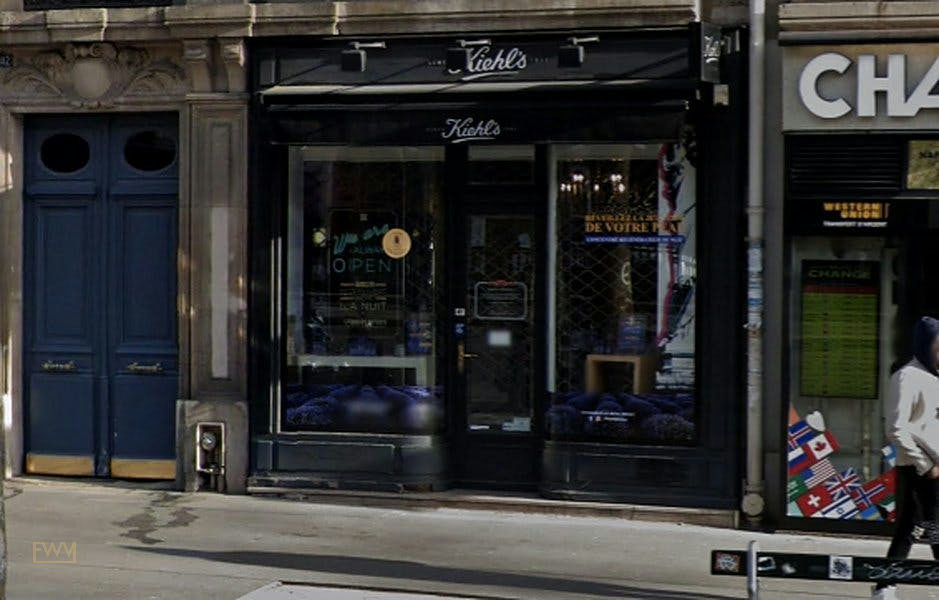
Rue Saint-Honoré is the commercial spine of the 1st arrondissement's luxury retail sector. Ground-floor units here command premium rents and are correspondingly difficult to secure on short-term arrangements without specialist intermediary support. The street benefits from consistent footfall from the 1st, 2nd, and 8th arrondissement catchment areas, and from the proximity to the major hotels of the Vendôme and Opéra zones whose guests are among the highest-spending retail consumers in the world.
Place des Victoires, which sits on the boundary between the 1st and 2nd arrondissements, offers a slightly different dynamic: the circular square has historically housed mid-to-high luxury fashion brands and attracts a clientele that includes both tourists and Paris-based fashion professionals. Brands considering this location benefit from proximity to the Sentier district's fashion and production ecosystem as well as to the Opéra Garnier and Opéra district commercial area.
Châtelet-les-Halles: Volume, Connectivity, and Contemporary Brands
The Châtelet-les-Halles area within the 1st arrondissement is the highest-volume traffic zone. The transport hub generates extraordinary pedestrian flows throughout the day and evening, seven days a week. Commercial spaces in this zone are well suited to brands targeting broad consumer demographics, contemporary fashion, streetwear, or lifestyle activations where high visibility and large audience volume are priorities over exclusive positioning. Loft spaces and gallery formats are available here, and the connectivity via Line 1 and the RER A ensures that activations at this location are accessible from across Greater Paris.
TIP: When choosing between Palais-Royal, rue Saint-Honoré, and Châtelet-les-Halles, define your primary success metric first: is it brand prestige, consumer volume, press coverage, or buyer access? Each micro-location optimises for a different outcome, and trying to serve all goals from one location rarely produces the best result.
KEY TAKEAWAY: The 1st arrondissement contains at least five distinct micro-retail environments, each with different audience profiles, space typologies, and commercial characteristics. Brands that map their activation objectives to the correct micro-location within Paris 1er arrondissement consistently outperform those that select space on aesthetic or pricing grounds alone.
With a clear sense of which micro-location suits your brand, the next step is understanding the types of commercial properties available and what each format offers in terms of configuration, features, and activation potential.
Types of Commercial Space Available to Rent in Paris 1er Arrondissement
The commercial real estate landscape in the 1st arrondissement is more varied than many brands expect. Beyond the classic ground-floor boutique, the arrondissement offers a range of space types that can serve different activation formats, budgets, and timelines.
Quick answer: Commercial space types available in the Paris 1st arrondissement for short-term rental include boutiques, showrooms, loft spaces, art galleries, event venues, apartment-format spaces, and business centre units. Each type carries different configurations, access arrangements, and suitability for specific activation formats including pop-up shops, press days, product launches, and brand experiences.
Boutique and Retail Storefronts
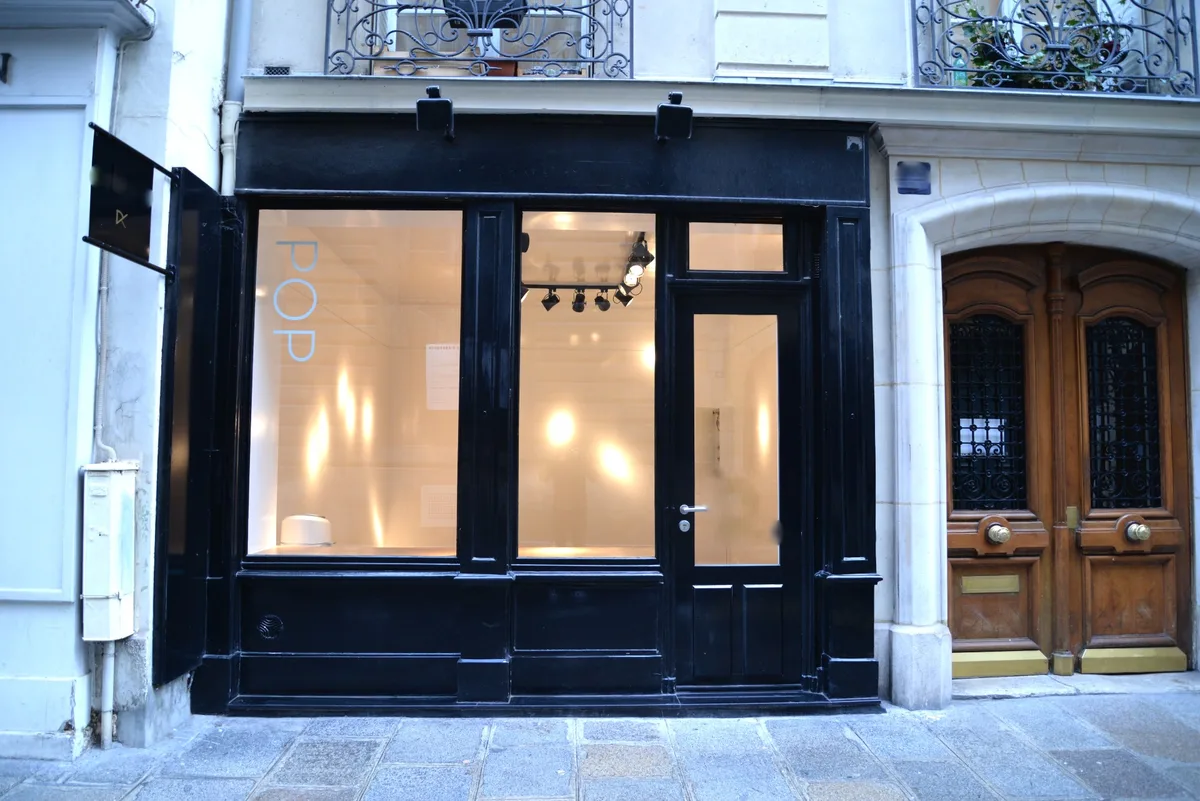
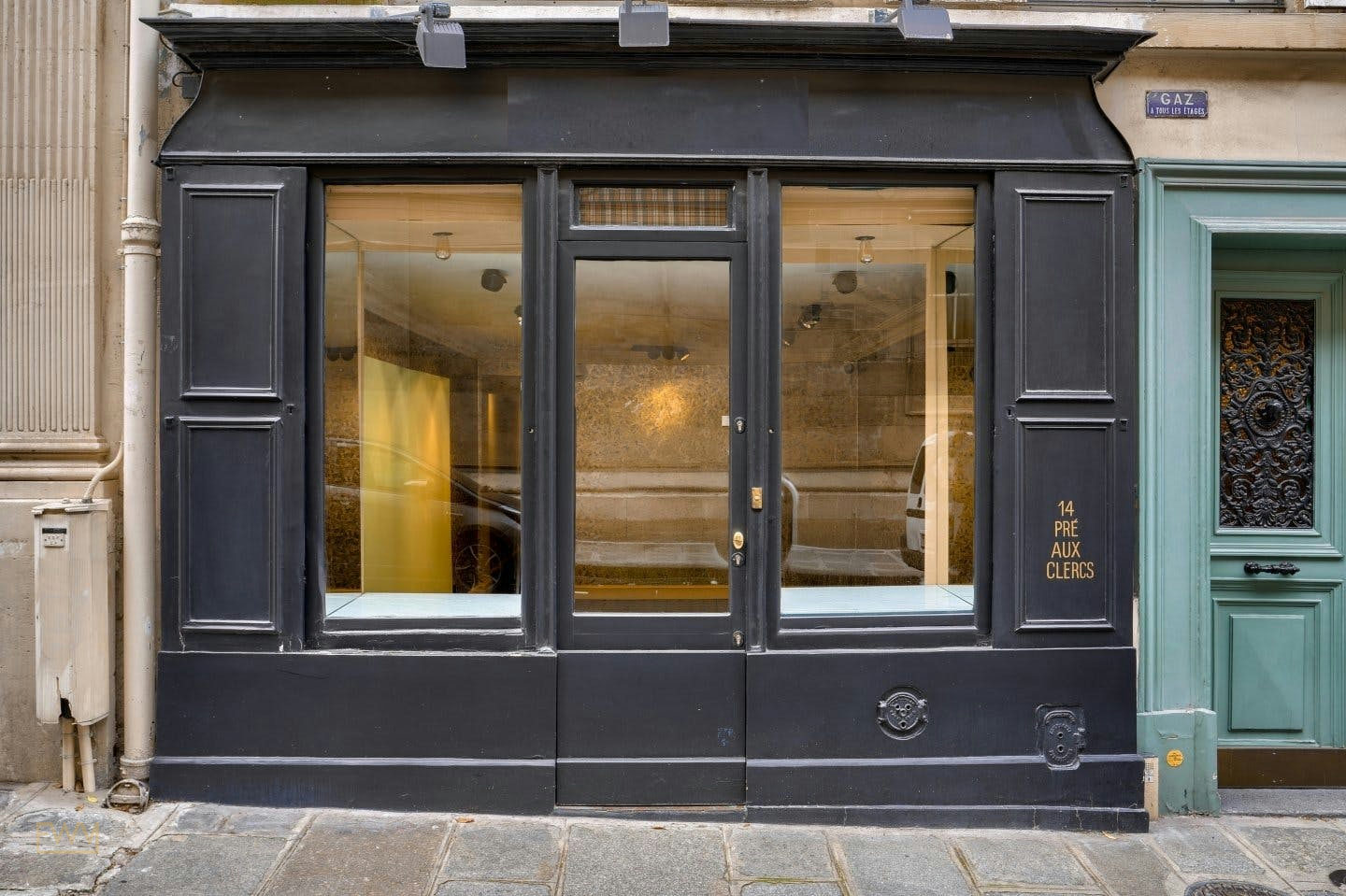
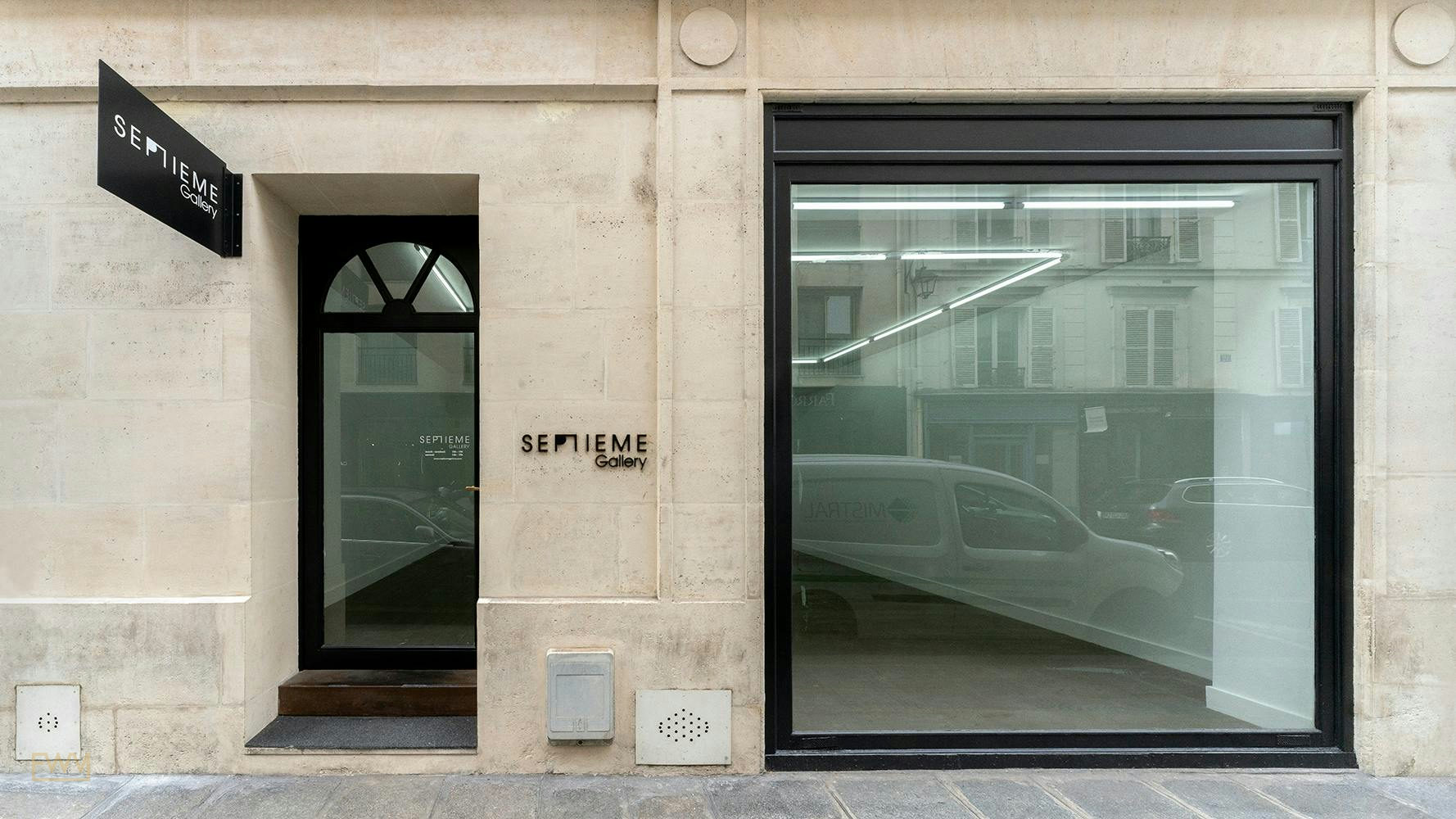
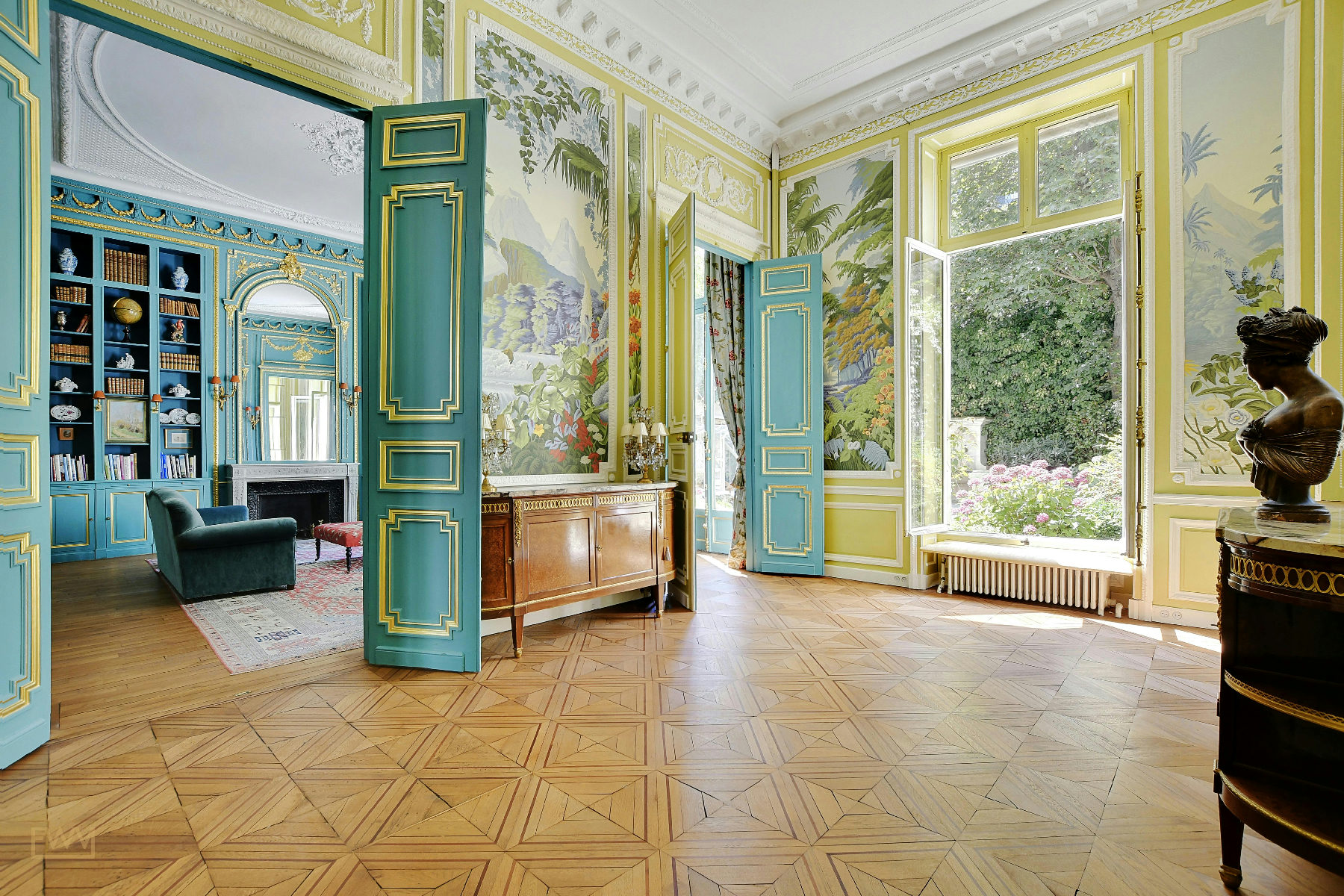
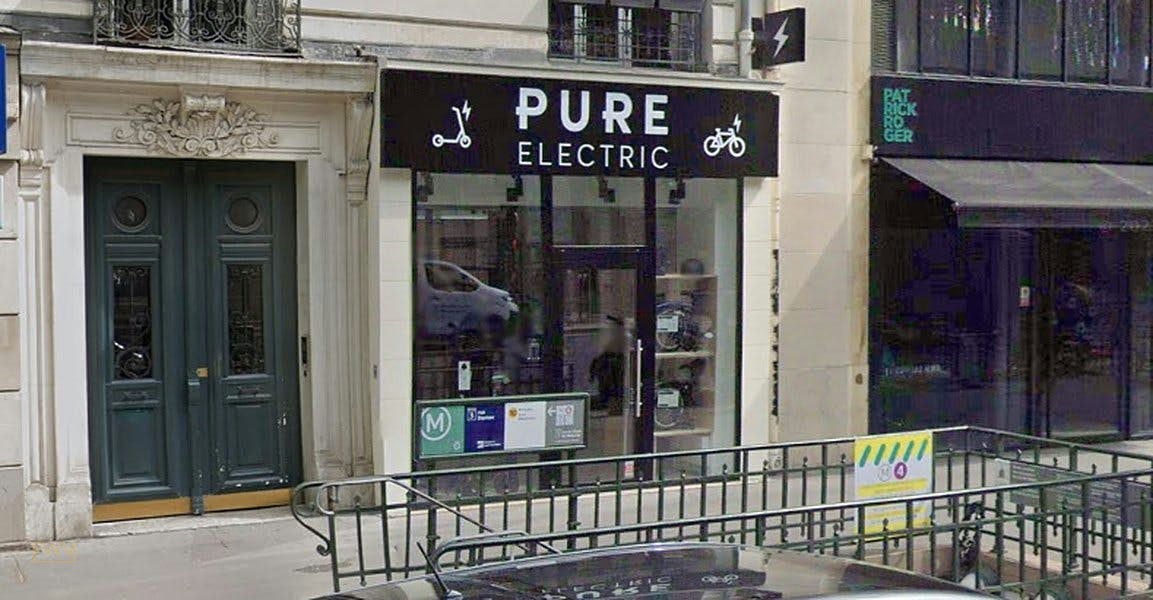
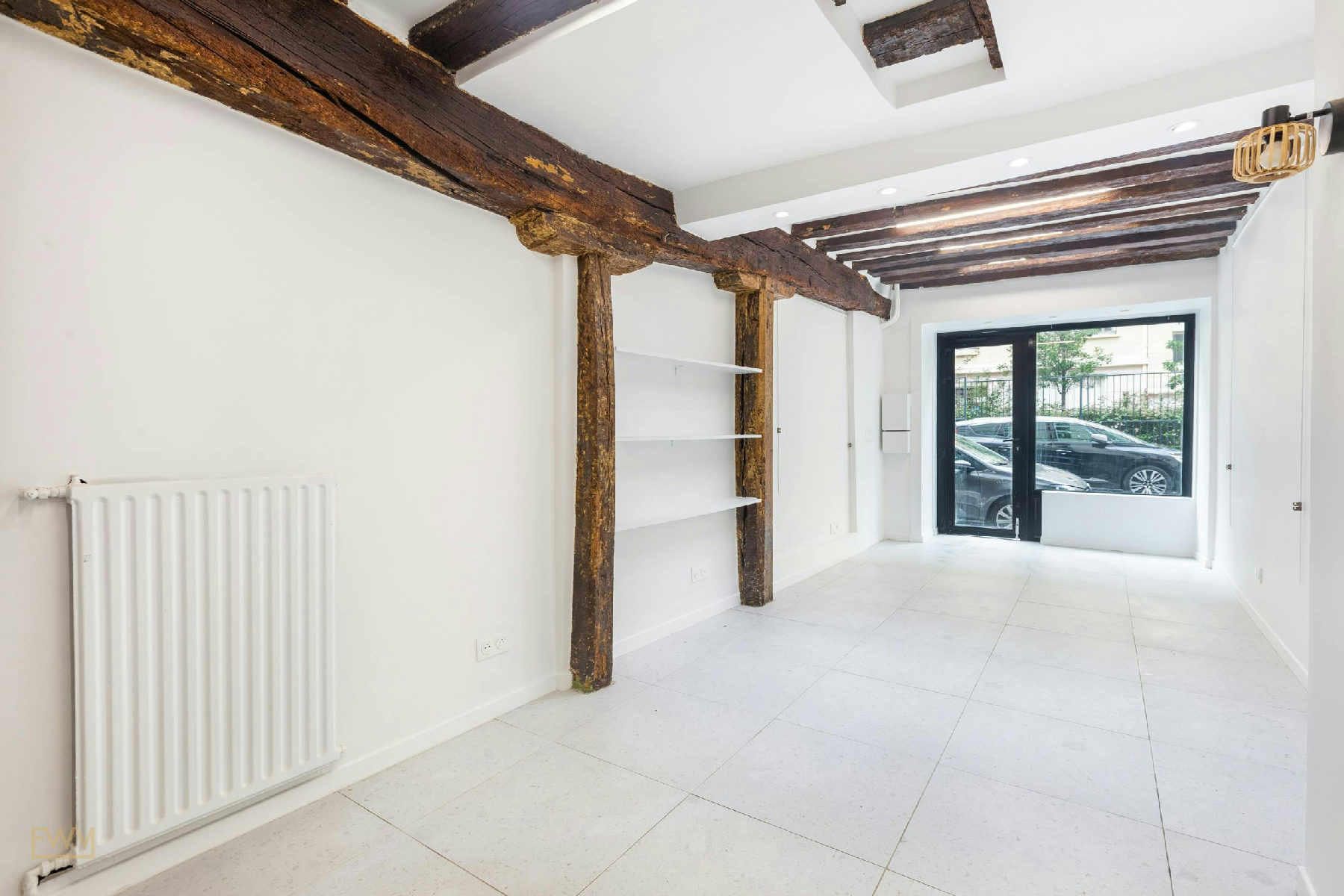
Traditional retail storefronts in the 1st arrondissement range from compact single-room units in the Palais-Royal arcades to larger ground-floor retail spaces along rue Saint-Honoré and adjacent streets. These spaces typically offer direct street-level access, window display potential, and clear retail configuration. For pop-up shops and temporary boutiques, this format is the most straightforward to activate quickly and requires the least creative transformation. Marble floors, parquet flooring, and stone detailing are common features in older buildings, providing immediate aesthetic quality without significant fit-out investment.
Showrooms and Upper-Floor Commercial Spaces
Showroom formats in the 1st arrondissement are typically located on first or second floors above street-level retail, often in Haussmann-era buildings with high ceilings, parquet floors, and tall windows. These spaces work extremely well for press days, buyer appointments, trade showrooms during Paris Fashion Week, and brand presentations. The upper-floor format provides a degree of exclusivity and separation from street-level retail traffic, which is commercially valuable for by-appointment activations. Showrooms in the Opéra district and Pyramides zone of the 1st arrondissement are particularly sought after during the fashion week calendar windows.
Gallery and Creative Spaces
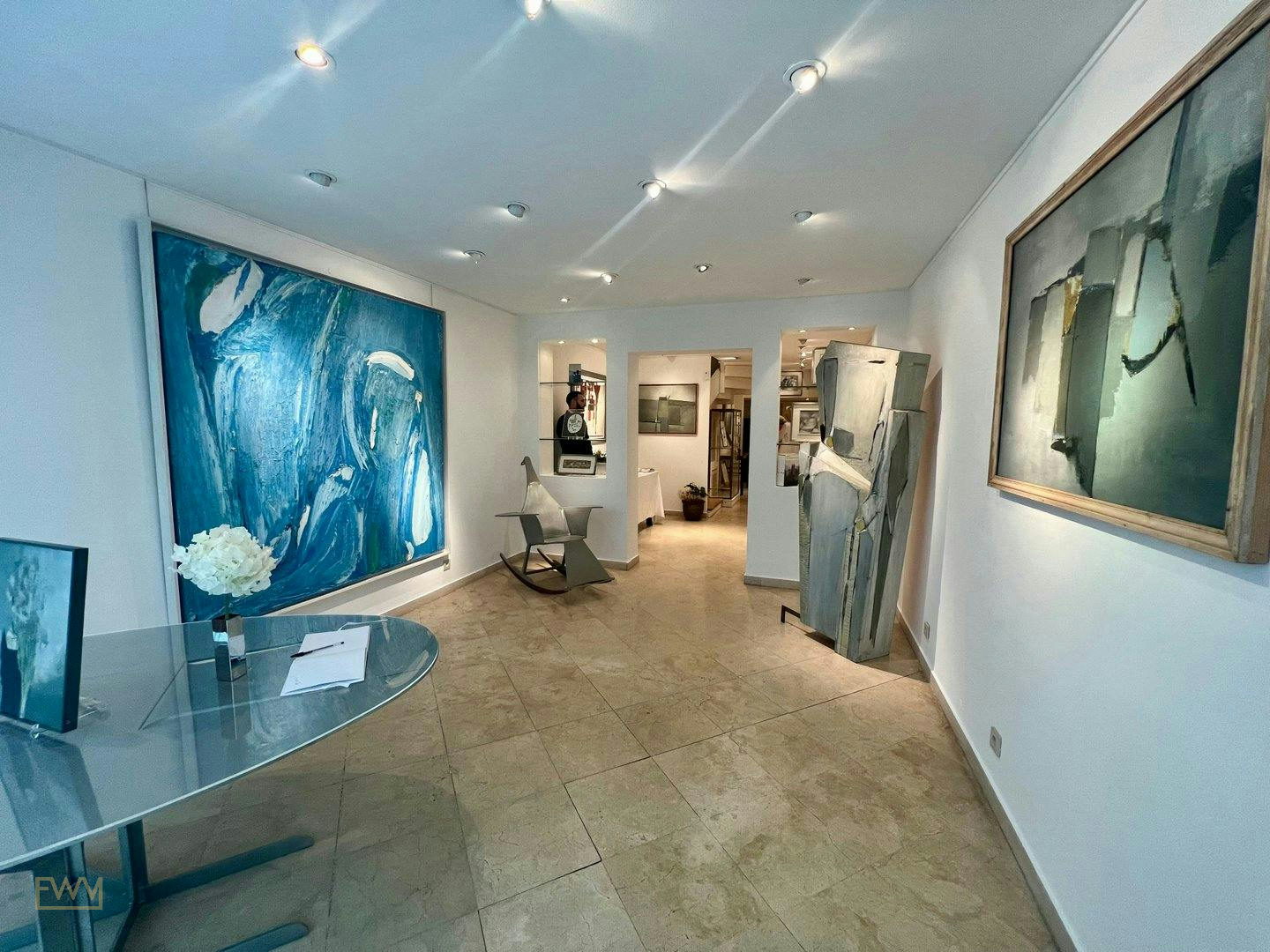
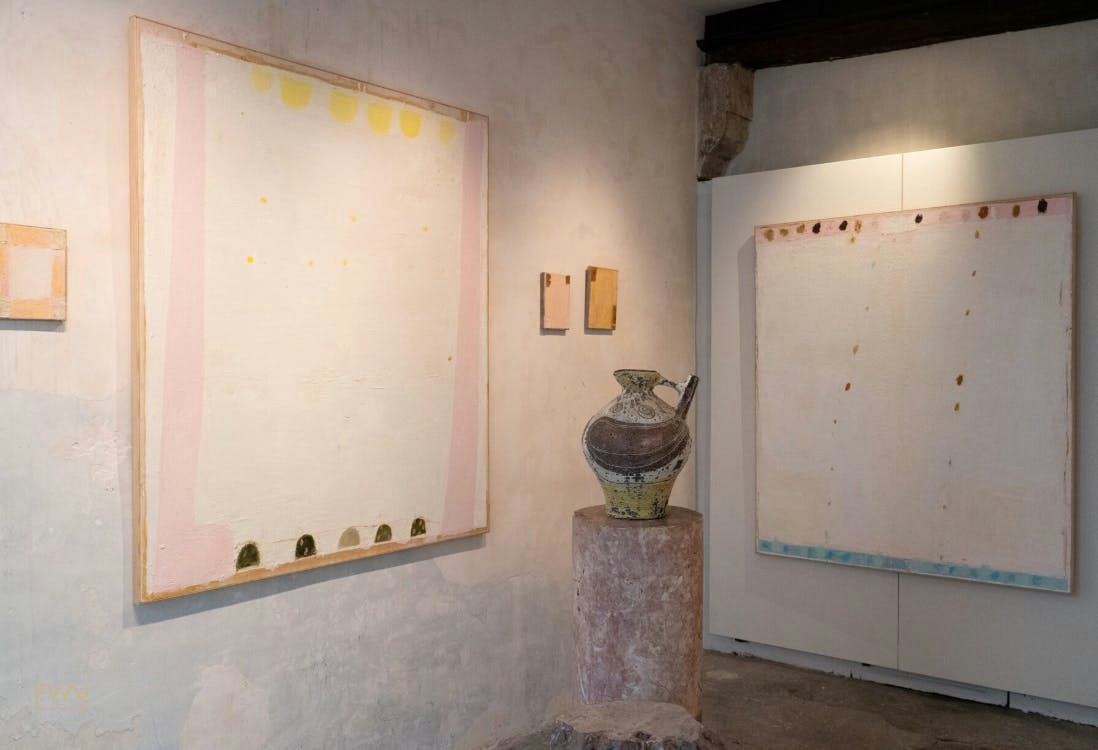
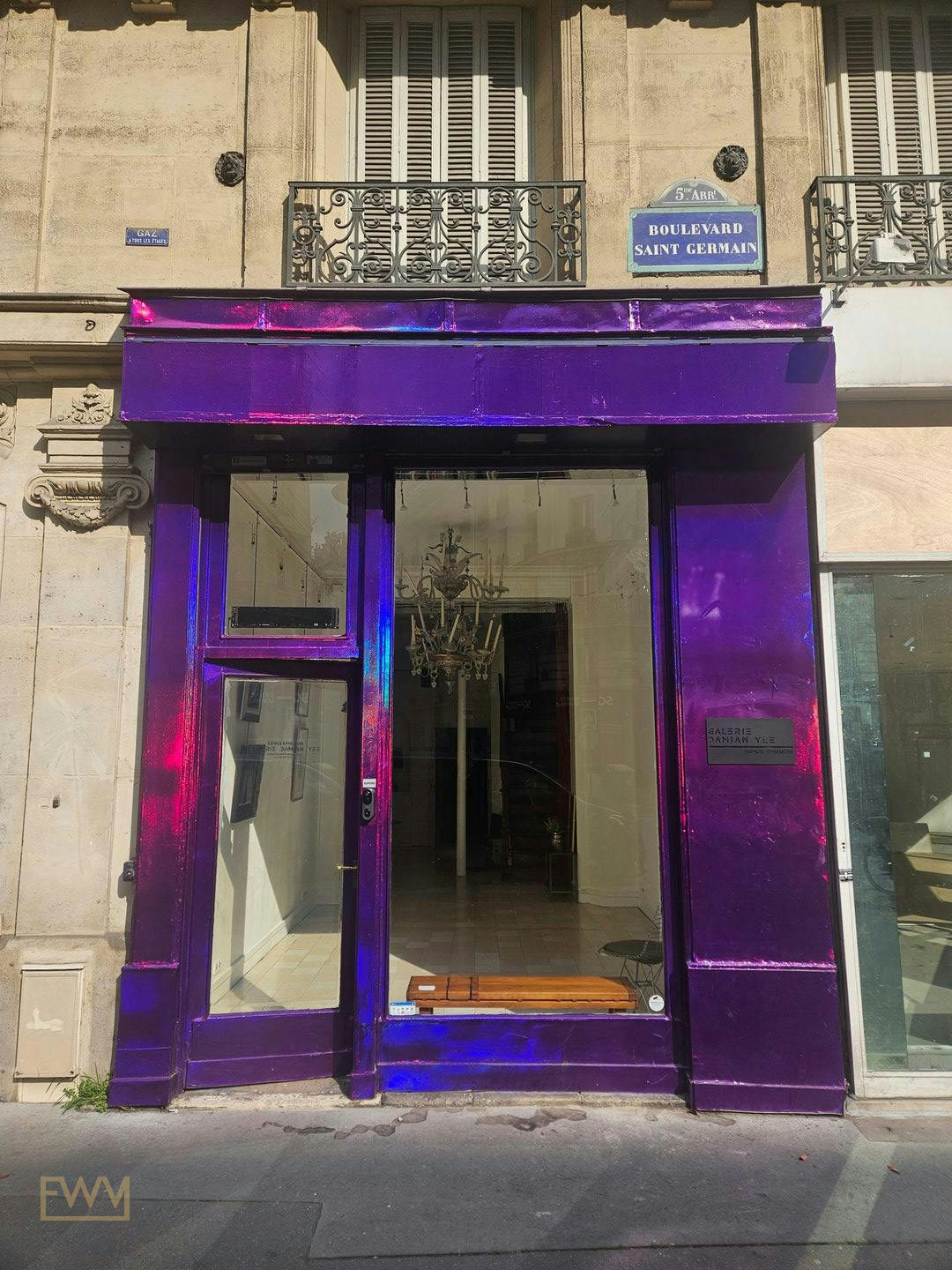
Art gallery formats and creative spaces, sometimes described as Galerie or Espace Créatif formats, are available in the 1st arrondissement and offer a neutral, high-ceiling, white-wall environment suited to immersive brand experiences, exhibition-format activations, and collection launches. These spaces attract brands that want architectural quality and spatial flexibility without the constraints of a traditional retail configuration. Exposed stone walls, exposed structural columns, and industrial details are found in basement and ground-floor gallery spaces throughout the arrondissement.
Loft and Apartment-Format Spaces
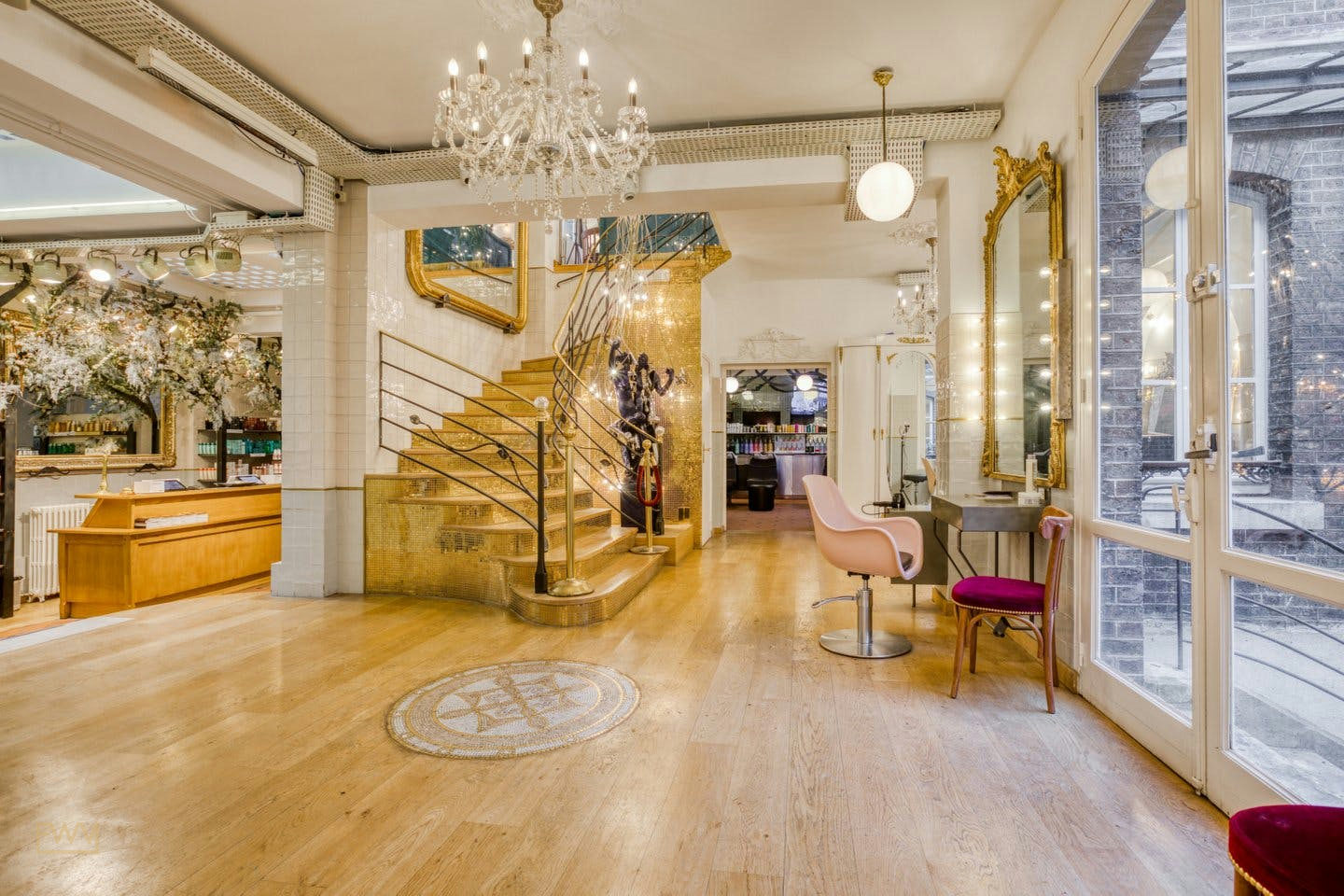
Loft spaces in the 1st arrondissement, sometimes listed as LOFT or apartment-format commercial units, offer an unusual combination of residential warmth and commercial adaptability. These spaces are particularly effective for intimate product launches, lifestyle brand activations, VIP events, and exclusive press dinners. The apartment format creates a curated, home-like setting that contrasts effectively with conventional retail and can generate strong social and editorial content. Exposed piping, exposed stone, and high ceilings are common features that brands consistently highlight in their activation content.
Business Centre Units and Flexible Workspace
Business centres and coworking environments within the 1st arrondissement offer a different entry point for brands that need a professional Paris base during a trade period rather than a public-facing retail activation. These spaces are appropriate for sales teams, production teams, and creative directors managing logistics during a major show period. They typically offer meeting rooms, modern furniture, utilities, and communication infrastructure as part of the package, reducing the operational complexity of establishing a temporary Paris presence.
KEY TAKEAWAY: The range of commercial space types available in the Paris 1er arrondissement means that brands can match their space format precisely to their activation objectives: boutique storefronts for direct-to-consumer retail, showrooms for trade and press, galleries for immersive experiences, and lofts for VIP and editorial events.
To compare available space types and their neighbourhood positions across the 1st arrondissement and adjacent districts, the Paris city hub on Fashion Week Venues provides a structured starting point for building a shortlist before approaching landlords or agents.
The Paris Commercial Rental Market: What Brands Need to Know About Leases, Permits, and Legal Frameworks
Renting commercial space in Paris involves a distinct legal framework that differs significantly from residential rental and from commercial leasing in other major markets. Brands entering the Paris retail market for the first time, particularly those without a French legal entity, frequently encounter unexpected complexity at this stage. Understanding the relevant frameworks before beginning negotiations saves considerable time and prevents costly errors.
Quick answer: Commercial space rental in Paris for short-term or temporary activations typically operates under either a bail dérogatoire, which is a short-term commercial lease of up to three years, or an autorisation d'occupation temporaire (AOT), which governs temporary use of certain public or semi-public spaces. Neither framework is identical to a standard commercial bail of nine years, and each carries specific conditions, negotiation dynamics, and compliance requirements that brands should verify with a French legal advisor.
Bail Dérogatoire: Short-Term Commercial Leases in France
A bail dérogatoire is the principal legal instrument for short-term commercial leases in France. It permits a lease duration of up to 36 months, which can be agreed in a single block or in multiple consecutive agreements between the same parties. Critically, once the cumulative period exceeds 36 months, the lease is automatically reclassified as a standard commercial lease (bail commercial) subject to a nine-year minimum term and significant additional legal protections for the tenant. For brands planning a short-term activation of weeks or months, a bail dérogatoire is typically the appropriate instrument, but the specific terms, break clauses, permitted use provisions, and deposit requirements vary substantially between landlords and spaces.
Brands should be aware that not all landlords in the 1st arrondissement, particularly those managing premium heritage addresses, will offer bail dérogatoire arrangements. Some prefer longer minimum commitments or require proof of financial stability from the tenant. For international brands without a French entity, demonstrating financial standing can require additional documentation such as parent company guarantees.
Autorisation d'Occupation Temporaire (AOT)
For spaces on public land, within public buildings, or in certain heritage-protected locations such as areas adjacent to the Tuileries or Palais-Royal gardens, an autorisation d'occupation temporaire may be required in addition to, or instead of, a standard commercial lease. AOT arrangements are granted by the relevant public authority and are typically for defined periods. They carry specific conditions regarding use, installation, modifications, and restoration of the space at the end of the activation. The application process for an AOT requires advance planning, as lead times can extend to several weeks or months depending on the authority and the nature of the proposed use.
IMPORTANT: Requirements for permits, authorisations, and lease types vary by space, arrondissement, building heritage classification, and intended use. This guidance is directional only. Always verify applicable requirements with a qualified French legal advisor before signing any agreement. Use the permit guidance tool on Fashion Week Venues as a starting reference point for your activation type and location.
Do You Need a French Legal Entity to Rent Space in Paris?
This is one of the most common questions from international brands entering the Paris market. The answer depends on the landlord, the space, and the lease type. Some landlords, particularly in the premium 1st arrondissement market, will only contract with a French-registered entity. Others will accept a foreign company with appropriate financial guarantees. Short-term licence agreements for pop-up activations are sometimes available directly to foreign entities without requiring a French registered company, particularly when arranged through an intermediary or agency. However, this varies significantly by property and landlord, and should never be assumed without explicit confirmation during the negotiation stage.
Vacancy Rates, Market Dynamics, and Timing
The commercial property market in the 1st arrondissement is characterised by low vacancy rates in the most desirable micro-locations, particularly in the Palais-Royal arcades and along rue Saint-Honoré. Major commercial property firms including Knight Frank and others operating in the Paris market track these rates and publish periodic market reports. For brands targeting the most sought-after addresses, competition for space during peak windows such as Paris Fashion Week in February and October, or during the January and July Haute Couture schedule, is intense. Beginning the space search six to twelve months before the intended activation date is strongly advisable for prime addresses.
TIP: Use the timeline planning tool on Fashion Week Venues to map your space search start date against your intended activation window and identify the critical path for permits, production, and launch.
KEY TAKEAWAY: The Paris commercial rental market for the 1st arrondissement operates under specific French legal frameworks that require active management and specialist knowledge. Brands that approach space rental as a simple transaction rather than a structured legal and commercial process regularly encounter delays, unexpected costs, and compliance issues.
Understanding the legal and market context is essential, but it must be combined with a clear operational plan. The following section outlines the step-by-step process for executing a short-term retail activation in the 1st arrondissement from initial brief to opening day.
Step-by-Step Process for Renting and Activating Retail Space in Paris 1er Arrondissement
Executing a pop-up shop, showroom, or temporary boutique in the Paris 1st arrondissement involves a sequence of interdependent decisions and actions. Brands that treat these steps as a linear process rather than as parallel workstreams consistently experience delays and cost overruns. The table below maps the full activation workflow and the typical timeline for each stage.
| Stage | Key Actions | Typical Lead Time Before Opening | Dependencies |
|---|---|---|---|
| 1. Brief Development | Define activation objectives, target audience, space type, location preference, budget range, and duration | 6 to 12 months | Marketing calendar, budget approval |
| 2. Space Search | Identify candidate spaces, visit shortlist, evaluate against brief criteria | 4 to 8 months | Brief finalised, contacts with landlords or agents |
| 3. Legal and Permit Review | Confirm lease type, verify permit requirements, engage French legal advisor if needed | 3 to 6 months | Space shortlist confirmed |
| 4. Negotiation and Agreement | Negotiate terms, deposits, permitted use, break clauses, and reinstatement obligations | 2 to 4 months | Legal review complete, entity structure confirmed |
| 5. Concept and Design | Develop spatial concept, brand design, fixture specification, and visual merchandising plan | 2 to 4 months | Space confirmed and measured |
| 6. Production and Fit-Out | Build, install, dress, and test all space elements | 2 to 6 weeks | Landlord access dates confirmed, permits in place |
| 7. Staffing and Operations | Recruit and brief retail staff, set up POS and payment systems, confirm insurance | 4 to 6 weeks | Fit-out timeline confirmed, trading format agreed |
| 8. Activation and Marketing | Press and influencer outreach, social content, event programming, public opening | 2 to 4 weeks | Staffing confirmed, space ready |
| 9. Trading and Data | Manage daily operations, capture sales data, visitor data, and engagement metrics | During activation | All prior stages complete |
| 10. Closeout and Reinstatement | Strip fit-out, restore space to landlord's required condition, return keys, settle final accounts | 1 to 2 weeks post-activation | Activation period complete |
Building Your Brief Before You Search
The quality of your space search in the 1st arrondissement is almost entirely determined by the quality of your initial brief. Brands that enter the market with a clearly defined activation objective, a realistic budget range, a defined duration, and a specific audience profile consistently secure better spaces on better terms than brands that begin their search with open-ended criteria. Your brief should specify the space type, the minimum and maximum square meterage, the essential architectural or design features, the preferred micro-location, the intended use, and the activation window dates. It should also be explicit about whether you require a public-facing retail format, a by-appointment showroom, or a hybrid event and trading space.
Evaluating Spaces Against Functional Criteria
Beyond aesthetics and location, spaces in the 1st arrondissement must be evaluated against a set of practical criteria that affect both the activation experience and the cost of fit-out. These include ceiling height and its implications for display and visual merchandising, the condition and heritage classification of the facade and interior, the availability of loading access for installation, the utility infrastructure including electrical capacity and lighting, the presence of existing fixtures that must be retained or stored, and the landlord's specific requirements regarding modifications. Spaces with high ceilings, marble floors, parquet floors, or exposed stone elements are desirable for many brand aesthetics but may carry specific obligations around how they can be treated during a temporary activation.
Quick answer: When evaluating a commercial space in Paris 1er arrondissement, assess ceiling height, floor condition, facade glazing, loading access, electrical capacity, and the landlord's reinstatement requirements before committing. Features such as marble floors, exposed stone columns, and parquet floors are commercially attractive but may restrict your installation approach and increase your reinstatement obligations.
KEY TAKEAWAY: A structured ten-stage activation process, starting from brief development up to six months before opening, is the minimum viable timeline for a well-executed pop-up or showroom activation in the 1st arrondissement. Compressing this timeline significantly increases risk across legal, production, and operational workstreams.
With the process mapped, the practical question of cost becomes central to decision-making. The next section addresses budget frameworks for activations in the 1st arrondissement.
Budget Frameworks for Renting Retail Space in Paris 1st Arrondissement
Budgeting for a retail activation in the 1st arrondissement requires accounting for several cost categories beyond the headline rental figure. Brands that budget only for rent and underestimate fit-out, permit, staffing, and operational costs consistently face financial pressure during the activation period.
Quick answer: The total cost of a retail activation in the Paris 1st arrondissement includes space rental, deposit, fit-out and production, permit fees where applicable, retail staffing, POS and payment systems, insurance, marketing and press costs, and reinstatement. The relative weight of each cost category varies significantly by space type, duration, location, and activation format. Use a dedicated estimation tool rather than relying on industry averages, as costs in the 1st arrondissement can vary substantially even between adjacent streets.
Rental rates in the Paris 1er arrondissement, particularly in premium micro-locations such as Palais-Royal, rue Saint-Honoré, and Place Vendôme, are among the highest in the city. Rates in lower-prestige zones within the arrondissement are comparatively more accessible, though still higher than equivalent space in less central arrondissements such as the 10th, 11th, or 13th. Because rates vary so substantially by exact address, space type, duration, and negotiation context, it is not useful to publish specific per-square-metre figures here. The budget estimation tool on Fashion Week Venues allows brands to generate a directional cost estimate based on their specific space type, location, and duration requirements.
Cost Categories to Include in Your Activation Budget
Every activation budget for a Paris 1st arrondissement space should account for the following categories as separate line items. Space rental is typically the largest single cost but rarely represents more than 40 to 50 percent of total activation expenditure for a well-resourced brand. Fit-out and production costs, which include bespoke furniture, branded fixtures, lighting, wall treatments, and installation labour, can equal or exceed the rental cost for highly designed activations. Permit and legal fees, including the cost of a French legal advisor if required, should be budgeted as a fixed cost rather than a contingency item. Retail staffing for a public-facing activation in the 1st arrondissement must be factored at French employment law rates, which include charges patronales that add substantially to the gross wage cost.
Marketing, press outreach, influencer costs, photography, and social content production are frequently underbudgeted by brands executing their first Paris activation. These costs are not optional: an activation in the 1st arrondissement that generates no media or social coverage delivers significantly reduced return on the rental investment. Insurance, utilities where not included in the rental agreement, cleaning, security, and waste management are operational line items that must also be accounted for explicitly.
Return on Investment: Measuring Activation Performance
The ROI of a Paris 1st arrondissement activation is multi-dimensional. Direct revenue from in-space sales is one measure, but for most brands the activation serves additional commercial functions: generating press coverage and editorial mentions, creating content assets for social and digital channels, hosting buyer appointments and trade meetings, building consumer brand awareness in the European and international luxury market, and validating product-market fit in a discerning consumer environment. Each of these outcomes has a calculable economic value that, when aggregated, typically exceeds the direct revenue contribution for brands activating in the 1st arrondissement over a period of two to eight weeks. Use the ROI calculator on Fashion Week Venues to model the combined return from both direct and indirect activation outcomes.
KEY TAKEAWAY: A complete activation budget for the Paris 1st arrondissement covers at minimum eight cost categories beyond space rental. Brands that budget comprehensively at the outset are significantly more likely to execute their activation without financial disruption and to capture the full commercial return that the location makes possible.
Budget and process clarity establishes the foundation for a successful activation. The following section explains how Fashion Week Venues works with brands across every stage of this process.
How Fashion Week Venues Supports Brands Renting Retail Space in Paris
Fashion Week Venues operates as a full-service agency and space marketplace for brands seeking pop-up shops, showrooms, and temporary retail activations in Paris and other major fashion capitals. For brands targeting the 1st arrondissement, the agency provides structured support across the full activation lifecycle, from initial space discovery through to post-activation data reporting.
The agency's venue sourcing service connects brands with spaces across the 1st arrondissement and adjacent areas, drawing on a curated marketplace of available properties rather than relying solely on public listings or commission-based broker networks. The space marketplace enables brands to search, compare, and shortlist spaces based on type, size, neighbourhood, and key features, reducing the time and effort required to identify a viable shortlist from weeks to days.
Services Relevant to Paris 1st Arrondissement Activations
Beyond space identification, Fashion Week Venues offers a suite of services that address the most common operational challenges brands face when activating in Paris. The concept direction service develops the spatial narrative and visual identity for the activation, working from the brand's brief and the specific architectural character of the selected space. For spaces in the Palais-Royal arcades or along rue Saint-Honoré, concept development must balance the brand's creative vision with the constraints and opportunities of the existing architectural environment.
The production and build service manages the physical fit-out, including bespoke fixture fabrication, furniture installation, lighting design, and wall and floor treatments. Production in Paris requires coordination with French contractors, compliance with building regulations, and sensitivity to landlord reinstatement requirements, all of which are managed as part of this service. The retail staffing service provides French-speaking sales staff, brand ambassadors, and operational support for the duration of the activation, covering both the legal employment requirements and the practical brand training needs.
Tools Available for Independent Research and Planning
For brand teams that prefer to conduct initial research independently before engaging with the agency directly, Fashion Week Venues provides a set of practical planning tools. The space comparison tool allows brands to evaluate multiple candidate spaces side by side against a consistent set of criteria. The permit guidance tool maps the relevant permit and compliance requirements for different space types and activation formats in Paris. The timeline tool generates a reverse-engineered activation calendar based on the target opening date, identifying the critical decision points and lead times for each stage.
Who Benefits Most from Working with Fashion Week Venues in Paris
The brands that typically benefit most from working with Fashion Week Venues in the Paris 1st arrondissement context are international brands without an existing Paris commercial infrastructure, emerging brands activating in Paris for the first time, and established brands seeking to execute a temporary activation without diverting internal operational resource from their core business. The agency is not a match for brands that require standard long-term commercial leases or office space for permanent Paris operations, as these requirements are better served by established French commercial property firms.
KEY TAKEAWAY: Fashion Week Venues provides structured, end-to-end support for brands navigating the complexity of short-term retail activation in the Paris 1st arrondissement, from space discovery and concept development through to production, staffing, and post-activation analysis. The agency's tools are also available for independent planning and research without an initial service commitment.
Comparing the 1st Arrondissement with Adjacent Paris Retail Zones
Brands considering the Paris 1st arrondissement should also understand how it compares to the adjacent and overlapping retail districts that brands frequently consider as alternatives or complements. The 2nd arrondissement, the 4th arrondissement including Le Marais, the 6th arrondissement including Saint-Germain-des-Prés, and the 8th arrondissement including the Champs-Élysées corridor and Place de la Madeleine are all within or immediately adjacent to the fashion capital's core retail geography.
Quick answer: The Paris 1st arrondissement offers the highest concentration of luxury retail and tourism footfall of any arrondissement in the central city. Le Marais in the 4th arrondissement offers a more contemporary and culturally diverse retail environment. Saint-Germain in the 6th offers intellectual luxury and strong press credentials. The 8th arrondissement offers the highest global brand visibility on the Champs-Élysées and around Place de la Madeleine. Each district serves different brand objectives and consumer profiles.
| District | Arrondissement | Brand Profile Fit | Relative Rental Level | Best Activation Type |
|---|---|---|---|---|
| Palais-Royal / rue Saint-Honoré | 1st | Luxury, heritage, concept, jewellery | Very high | Boutique, showroom, VIP event |
| Le Marais | 4th | Contemporary fashion, streetwear, gallery brands | High | Pop-up shop, gallery, installation |
| Saint-Germain-des-Prés | 6th | Intellectual luxury, independent fashion, editorial | High | Concept boutique, brand experience |
| Champs-Élysées / Place de la Madeleine | 8th | Global flagship, mass luxury, automotive and lifestyle | Very high to extreme | Large-scale flagship, brand event |
| Sentier / Place des Victoires | 2nd | Fashion industry, buyers, trade | Moderate to high | Showroom, trade pop-up |
| Opéra district | 2nd / 9th | Commercial fashion, accessible luxury | Moderate | Retail pop-up, event venue |
The 1st Versus Le Marais: Prestige Against Discovery
The 1st arrondissement and Le Marais represent two distinct brand positioning choices within the Paris market. The 1st arrondissement delivers prestige, historical authority, and luxury adjacency. Le Marais delivers cultural currency, discovery-oriented consumer behaviour, and a more cosmopolitan, internationally diverse footfall. For brands targeting the intersection of fashion, art, and contemporary culture, Le Marais may offer stronger alignment. For brands whose primary objective is luxury market entry and proximity to the Vendôme and Saint-Honoré establishment, the 1st arrondissement is typically the stronger choice.
The 1st Versus the 8th: Scale and Visibility
The 8th arrondissement, centred on the Champs-Élysées and Place de la Madeleine, offers a different scale of brand activation. Spaces here are typically larger, footfall from international tourism is extremely high, and the brand landscape is dominated by global luxury houses. For brands with the budget to compete at this scale, the 8th offers extraordinary visibility. For brands seeking a more refined, curated activation with strong press and buyer credentials, the 1st arrondissement is typically more cost-effective and delivers stronger editorial returns per square metre of activated space.
KEY TAKEAWAY: The 1st arrondissement occupies a specific and well-defined position in the Paris retail hierarchy: it is the premium, high-prestige, tourism-dense core of the luxury market, distinct from the cultural energy of Le Marais, the intellectual luxury of Saint-Germain, and the global flagship scale of the 8th arrondissement. Brands should select their Paris activation district based on which positioning best serves their specific commercial and communications objectives.
The Fashion Week Calendar and Timing Your 1st Arrondissement Activation
Paris hosts four major fashion week moments annually: Menswear in January and June, Haute Couture in January and July, Womenswear Ready-to-Wear in February and October, and the Maison et Objet and trade show circuit in January. Each of these windows creates a distinct activation environment in the 1st arrondissement, with concentrated presence of international press, buyers, influencers, and brand decision-makers.
DID YOU KNOW: Paris Fashion Week for Womenswear Ready-to-Wear typically generates over 300 official shows and presentations across the city, with the 1st arrondissement hosting a significant proportion of the showroom and event activity due to its proximity to the primary show venues and luxury hotel infrastructure.
Peak Windows and Space Competition
During the February and October Womenswear windows, demand for short-term showroom and event space in the 1st arrondissement reaches its annual peak. Brands that have not secured space six to twelve months in advance of these windows frequently find that the most desirable addresses are already committed. This is particularly true for showroom formats in the Palais-Royal zone, the rue Saint-Honoré corridor, and the Opéra district. Brands that are flexible on exact micro-location and willing to consider adjacent arrondissements such as the 2nd can typically find strong alternatives with shorter lead times.
Off-Peak Activations: Advantages and Considerations
Activating outside the peak fashion week windows carries distinct advantages for certain brand types. Rental rates are typically more negotiable during quieter periods. The absence of competing activations means that a well-executed pop-up or boutique can generate disproportionate press interest precisely because it stands out in a quieter editorial calendar. Consumer footfall from tourism in the 1st arrondissement remains strong throughout the year due to the Louvre, Tuileries, and Palais-Royal drawing year-round visitors, which reduces the risk associated with off-peak activation windows compared to less trafficked districts.
KEY TAKEAWAY: Timing a 1st arrondissement activation to coincide with the Paris Fashion Week calendar maximises press, buyer, and influencer access but requires earlier and more competitive space search. Off-peak activations offer greater negotiating flexibility and can generate strong consumer results given the arrondissement's consistent year-round tourism traffic.
Common Myths About Renting Retail Space in the 1st Arrondissement of Paris
MYTH: You need a French legal entity to rent a commercial space in Paris.
FACT: While some landlords in the 1st arrondissement prefer or require a French-registered entity as the contracting party, many spaces, particularly those arranged through short-term licence agreements or pop-up-oriented landlords, can be accessed by foreign companies with appropriate financial guarantees or via an intermediary agency. The requirement varies significantly by space, landlord, and lease structure. This should always be confirmed explicitly during the negotiation stage rather than assumed in either direction.
MYTH: Paris Fashion Week in February and October is the only commercially viable window for a 1st arrondissement activation.
FACT: The 1st arrondissement maintains strong consumer and tourism footfall throughout the year due to the Louvre, Palais-Royal, and Tuileries attracting year-round visitors. While the fashion week windows offer concentrated industry access, activations in other periods can achieve strong consumer results, often at more competitive rental rates and with less competition from other brands. Haute Couture in January and July, the trade show calendar in January, and the summer tourism peak all represent viable alternative windows.
MYTH: Commission brokers are the only way to find short-term retail space in Paris 1er arrondissement.
FACT: Commission-based brokers operating in the Paris commercial property market are one route to space, but they are not the only option. Curated space marketplaces, direct landlord relationships, and specialist agency partners who represent the tenant's interests rather than earning commission from the landlord provide alternative routes that are often more aligned with brand objectives and more transparent in their cost structures.
MYTH: Short-term leases in France are legally straightforward and do not require specialist guidance.
FACT: Short-term commercial leases in France, including the bail dérogatoire, carry specific legal requirements and time limits that, if misunderstood or mis-administered, can result in unintended reclassification as a long-term commercial lease. The implications of this reclassification are significant and can bind the tenant to a nine-year commitment. Specialist legal guidance from a French-qualified advisor is strongly recommended for any brand negotiating a commercial lease in Paris, regardless of the intended duration.
MYTH: A Palais-Royal location requires a very large activation budget that is only accessible to established luxury houses.
FACT: While Palais-Royal addresses are premium, the smaller unit sizes available within the arcades mean that the total cost of a Palais-Royal activation can be lower than a larger space in a less prestigious location. The existing architectural quality of the arcades also reduces the fit-out investment required to achieve a premium activation aesthetic. Emerging brands and independent designers have successfully activated in the Palais-Royal zone with well-planned budgets, and the editorial and social value generated often exceeds that of larger activations in less distinctive environments.
Frequently Asked Questions About Renting Retail Space in Paris 1er Arrondissement
What types of commercial properties are available to rent in the 1st arrondissement of Paris?
The 1st arrondissement offers a broad range of commercial space types for short-term and medium-term rental. These include ground-floor boutiques and retail storefronts, first and second-floor showrooms in Haussmann-era buildings, art gallery and creative space formats, loft spaces with industrial or residential character, event venues, apartment-format commercial units, and business centre or coworking units. Each type is suited to different activation formats, audiences, and budgets. The Palais-Royal arcades, rue Saint-Honoré, and the Châtelet-les-Halles zone each offer distinct space typologies within the arrondissement, and the right type depends on your activation objectives and brand positioning.
How long can you rent a storefront or retail space in the 1st arrondissement of Paris?
Short-term rental periods for retail and event spaces in Paris 1er arrondissement typically range from a few days to several months, depending on the landlord's terms and the lease instrument used. A bail dérogatoire permits a cumulative duration of up to 36 months between the same parties before reclassification as a standard commercial lease applies. Many pop-up and activation-oriented spaces offer minimum rental periods of one week to one month. For fashion week activations specifically, minimum periods of two to four weeks are most common for prime addresses, though shorter arrangements can be negotiated for event-only use. Always confirm the minimum period and any break clause provisions before committing.
Is the Paris 1st arrondissement suitable for temporary retail activations?
Yes, the Paris 1st arrondissement is one of the most established and commercially effective locations in Europe for temporary retail activations. The combination of consistent year-round tourism, luxury retail adjacency, fashion industry presence during major calendar windows, and exceptional public transport connectivity makes the arrondissement a strong choice for pop-up shops, showrooms, brand experience events, and temporary boutiques. The wide variety of space types available, from compact Palais-Royal arcade units to larger event-format spaces near the Tuileries, means that brands of different scales and budgets can find appropriate options within the arrondissement.
What are the most sought-after locations for renting a pop-up shop in the 1st arrondissement?
The most consistently in-demand locations for pop-up shops and short-term retail in Paris 1er arrondissement are the Palais-Royal arcades, the rue Saint-Honoré corridor, the streets adjacent to Place Vendôme, and the streets connecting the Tuileries area to the Châtelet-les-Halles zone. During fashion week windows, upper-floor showroom spaces around Pyramides and the Opéra district are also heavily sought after for trade and press use. Competition for these locations during peak fashion week periods is intense, and search should begin six to twelve months in advance for prime addresses.
Does renting a space in Paris 1er arrondissement require a French company?
Not always, but it depends on the space, the landlord, and the lease structure. Some landlords in the 1st arrondissement require a French-registered entity as the contracting party. Others will accept foreign companies with appropriate financial guarantees or parent company guarantees. Short-term licence agreements for pop-up activations are sometimes available directly to foreign entities, particularly when arranged through an intermediary. This requirement varies substantially between properties and should be confirmed explicitly during the initial enquiry stage. Working with a Paris-based agency or specialist intermediary can often resolve this issue without requiring the brand to establish a French legal entity.
What permits or authorisations are needed for a temporary retail activation in the 1st arrondissement?
Permit requirements for a temporary retail activation in Paris 1er arrondissement depend on the type of space, its heritage classification, the nature of the proposed activation, and whether it involves any modifications to the existing space. A bail dérogatoire or temporary licence agreement covers the right to occupy the space, but additional permits may be required for exterior signage, temporary structures, public events, or activations on public or heritage-designated land. An autorisation d'occupation temporaire (AOT) may apply for certain spaces adjacent to public gardens or monuments. Requirements vary by specific address and activation format. Always verify applicable requirements with a qualified French legal advisor and use available permit guidance resources as a starting reference.
What is the ideal duration for a pop-up shop or showroom in the Paris 1st arrondissement?
The ideal duration depends on your activation objectives. For press and buyer showroom formats during fashion week, two to four weeks aligned with the official calendar window is most common and allows time for advance appointments and walk-in visits. For public-facing retail pop-up shops targeting both fashion week industry visitors and general consumers, four to eight weeks tends to deliver the strongest combined ROI. For brand experience events and product launches, a shorter period of five to ten days can be effective when supported by strong marketing and press activity. Longer activations of two to three months work well for brands testing the Paris market before committing to permanent space.
How does the 1st arrondissement compare to Le Marais for fashion pop-up activations?
The 1st arrondissement and Le Marais serve different brand positioning objectives within the Paris market. The 1st arrondissement delivers luxury prestige, historical authority, and concentrated proximity to the Place Vendôme and rue Saint-Honoré luxury ecosystem, making it the stronger choice for luxury brand launches, fine jewellery, haute couture adjacent brands, and heritage-driven fashion houses. Le Marais in the 4th arrondissement offers cultural currency, a younger and more internationally diverse consumer base, and a stronger creative and independent fashion ecosystem, making it better suited to contemporary fashion, streetwear, concept brands, and gallery-oriented activations. Both are legitimate choices; the right selection depends entirely on the brand's specific commercial and communications objectives.
What features should I look for when evaluating a retail space in Paris 1er arrondissement?
When evaluating a commercial space in the Paris 1st arrondissement, prioritise ceiling height, floor condition and type (marble, parquet, stone), facade quality and window display potential, loading and access arrangements for installation, natural light levels, electrical capacity and lighting infrastructure, and the landlord's specific requirements for modifications and reinstatement. For pop-up formats, the existing aesthetic quality of the space directly affects your fit-out investment: a Palais-Royal unit with original stone columns and parquet floors may require significantly less branded dressing than a bare commercial unit. Also evaluate proximity to Metro stations, particularly Line 1 and Line 7, and the immediate retail neighbours for brand alignment.
What is the difference between a bail dérogatoire and a standard commercial lease in France?
A bail dérogatoire is a short-term commercial lease permitted under French law for a maximum cumulative duration of 36 months between the same parties. It does not carry the statutory protections or automatic renewal rights of a standard nine-year commercial lease (bail commercial). Once the 36-month cumulative limit is reached, the arrangement is automatically reclassified as a standard commercial lease unless both parties explicitly agree in writing to terminate before that point. For brands planning short-term activations of weeks or months, the bail dérogatoire is the appropriate instrument, but its specific terms and limits must be carefully managed. This guidance is directional only; always verify with a qualified French legal advisor.
How do I find the right retail space in the 1st arrondissement without using a traditional broker?
Alternatives to traditional commission-based brokers for finding retail space in Paris 1er arrondissement include curated space marketplaces that list pop-up and short-term spaces directly, full-service agencies that represent the brand's interests and manage the full search and negotiation process, and direct approaches to building managers or landlords for specific addresses of interest. A specialist agency with established Paris market relationships can often access spaces that are not publicly listed and can negotiate terms that a brand approaching the market independently would find difficult to achieve. The marketplace and agency model also typically provides greater transparency on total cost of occupation than commission-based broker arrangements.
What marketing and press strategy should accompany a 1st arrondissement retail activation?
A marketing and press strategy for a Paris 1st arrondissement activation should be built around the specific audience segments the location attracts: international fashion press, European luxury buyers, Paris-based influencers and digital creators, and high-spending tourists and local consumers. Pre-activation outreach to French and international fashion media, with location-specific angles that leverage the architectural and cultural prestige of the address, typically generates stronger pickup than generic brand press releases. Influencer and content creator partnerships anchored in the visual character of the space, particularly for Palais-Royal and rue Saint-Honoré addresses, are among the highest-return marketing investments available for an activation in this zone.
Can I combine a showroom and a retail pop-up in the same 1st arrondissement space?
Yes, hybrid showroom and retail formats are common in the 1st arrondissement, particularly during Paris Fashion Week windows when trade and consumer audiences are both present in the arrondissement simultaneously. A well-designed space can operate as a by-appointment showroom during morning and afternoon periods and as a public-facing pop-up retail environment during peak consumer hours. This hybrid model requires careful scheduling, clear spatial zoning within the venue, and a staffing structure that can serve both audience types effectively. The lease agreement must also permit both retail trading and private presentation use, which should be confirmed with the landlord at the negotiation stage.
What public transport access is available near retail spaces in the 1st arrondissement?
The 1st arrondissement has exceptional public transport connectivity. The Châtelet-les-Halles interchange provides access to Metro Line 1, Line 4, Line 7, Line 11, and Line 14, as well as the RER A, RER B, and RER D lines, making it the best-connected transport hub in Paris. Metro Line 1, which connects La Défense to Vincennes, passes through the arrondissement with stations at Châtelet, Louvre-Rivoli, and Palais-Royal Musée du Louvre, providing direct east-west access across central Paris. Line 7 serves the Pyramides and Palais-Royal stations. This connectivity ensures that any retail activation in the 1st arrondissement is accessible from across Greater Paris and from the major Parisian airports via the RER A.
How do I ensure my activation space in Paris 1er arrondissement delivers measurable results?
Measuring the results of a Paris 1st arrondissement activation requires defining success metrics before the activation begins, not during or after. Key metrics typically include direct sales revenue, the number of buyer appointments and trade enquiries generated, press and media coverage volume and reach, social content impressions and engagement from in-space content, visitor footfall counts, and customer data captured via POS and registration systems. Establishing the data capture infrastructure, including a POS and payment system, a visitor counting mechanism, and a CRM or data capture tool, as part of the pre-activation build process ensures that results are measurable against the objectives set in the original brief. Post-activation analysis should compare actual outcomes against pre-defined targets to inform future Paris activation planning.
Conclusion: Making the Right Decision When You Rent Retail Space in the 1st Arrondissement of Paris
The decision to rent retail space in the 1st arrondissement of Paris is one of the most commercially significant choices a fashion or luxury brand can make in its European market strategy. The arrondissement offers an unmatched combination of prestige, foot traffic, fashion industry access, and architectural quality. But realising that potential requires a structured approach that begins with a clear brief, follows a disciplined activation process, accounts accurately for the full cost of occupation, and navigates the specific legal and permit framework that governs commercial space in France.
The brands that achieve the strongest results from Paris 1er arrondissement activations are those that plan early, choose their micro-location based on clearly defined commercial objectives, engage specialist support for the aspects of the activation that require local expertise, and measure results against pre-defined metrics rather than subjective impressions. The Palais-Royal arcades, rue Saint-Honoré, Place Vendôme, and the broader Tuileries-to-Châtelet corridor each offer distinct commercial opportunities, and the right choice among them depends entirely on what your brand needs to achieve from its Paris presence.
Whether you are activating during Paris Fashion Week or planning a consumer-facing pop-up outside the peak fashion calendar, the 1st arrondissement will consistently deliver the audience quality, the media interest, and the brand positioning returns that justify the investment. The key is approaching the market with the right information, the right partners, and the right timeline.
To move from research to activation, start exploring available spaces on the Fashion Week Venues marketplace and build a focused brief for your target neighbourhood, space type, and calendar window.