Finding the right retail space for rent in the 2nd arrondissement Paris requires more than a property search. It demands an understanding of the neighbourhood's commercial geography, the legal frameworks that govern short-term occupation, the seasonal calendar that drives footfall, and the operational infrastructure that separates a successful activation from an expensive lesson. The 2nd arrondissement sits at the commercial heart of Paris, bordered by the Bourse, Sentier, Opéra, and Montorgueil, and it offers a concentration of storefronts, showrooms, lofts, and event-capable spaces that few other districts can match. Fashion Week Venues works with brands, designers, and retail teams to identify, secure, and activate these spaces with full-service support from concept through to close. This guide covers everything your team needs to make a confident, well-informed decision.
Why the 2nd Arrondissement Deserves Serious Attention from Retail Brands
The 2nd arrondissement is one of the most commercially dense and strategically positioned districts in Paris. It delivers the combination of institutional credibility, daily commuter traffic, and creative neighbourhood energy that brands need to generate both sales and visibility.
Geographically, the 2nd is compact but richly layered. To the west, Rue Saint-Honoré and Place Vendôme define the luxury corridor that connects to the 1st arrondissement. To the north, Sentier and Réaumur Street form the historic garment and textile district that has evolved into a hub for fashion labels, communications agencies, and creative studios. At its centre, the Bourse quarter anchors major financial tenants including established names in banking and professional services. To the east, the Montorgueil pedestrian zone draws significant daily foot traffic from residents, tourists, and the local office population.
The district's public transport service is exceptionally well connected. Metro lines 3, 8, and 9 serve the Opéra station at the northern edge. Line 3 runs through Sentier and Arts et Métiers. RER A connects at Châtelet-Les Halles, a short walk south. This density of transport options means that a well-located retail space in the 2nd arrondissement can draw visitors from across Paris and its wider metropolitan area without the accessibility friction that affects less central locations.
From a fashion industry perspective, the 2nd is not just geographically useful. It is calendrically significant. Paris Fashion Week concentrates showroom activity, press appointments, buyer visits, and brand activations in a defined geographic corridor that runs from Le Marais through the Marais into the Sentier-Bourse cluster. The 2nd arrondissement sits within this corridor, making it a natural home for fashion showrooms, pop-up stores, and brand experiences during both the main fashion calendar and the broader retail season.
Institutions that add legitimacy to the district include the Bibliothèque Nationale de France Richelieu, the Banque de France, the Palais Brongniart, and the Opéra Comique. These anchor points attract a professional and culturally engaged visitor base that aligns with premium and contemporary brand positioning.
The residential population is relatively small compared to the office population, which means that daytime foot traffic is driven by workers, shoppers, and tourists rather than purely local residents. For brands targeting professional clientele or fashion-conscious visitors, this demographic profile is often well suited to their customer base.
DID YOU KNOW: The Sentier quarter within the 2nd arrondissement was historically the centre of French garment manufacturing and wholesale trade. It has since attracted a concentration of fashion startups, creative agencies, and media companies that continue to define its commercial character.
KEY TAKEAWAY: The 2nd arrondissement offers retail brands a rare combination of central accessibility, institutional credibility, and fashion industry relevance. Its sub-neighbourhoods serve different brand positionings, from the luxury adjacency of the Vendôme corridor to the creative energy of Sentier and Montorgueil.
With this geographical and contextual foundation in place, the next step is understanding the specific space types available within the district and which format best serves your activation objectives.
Retail and Commercial Space Types Available in the 2nd Arrondissement
The 2nd arrondissement supports a wider range of commercial space formats than most brands expect, from classic Haussmannian storefronts to raw loft spaces, photographic studios, and co-activation showrooms. Choosing the right space type is as important as choosing the right street.
Storefronts and Street-Level Retail Units
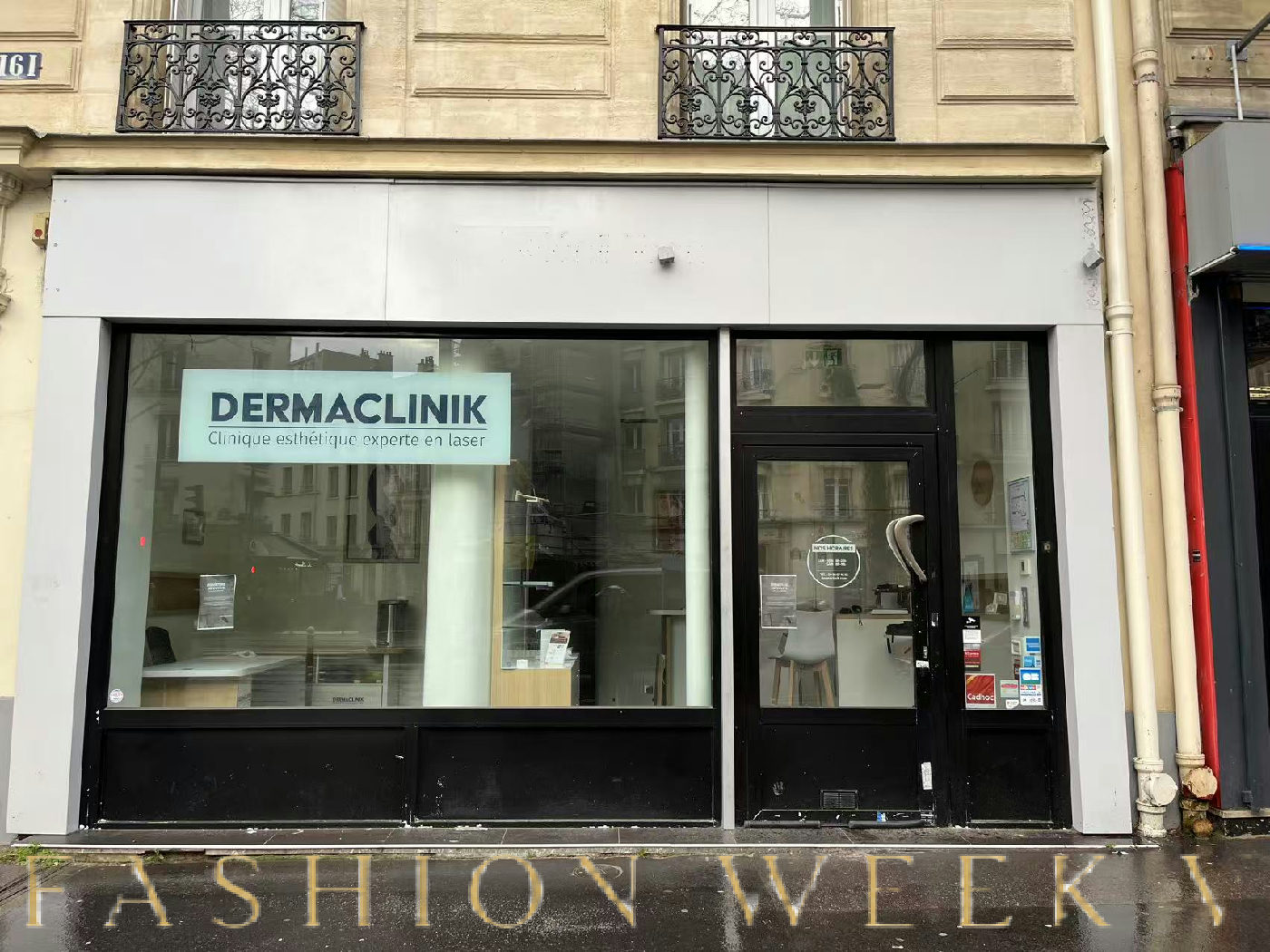
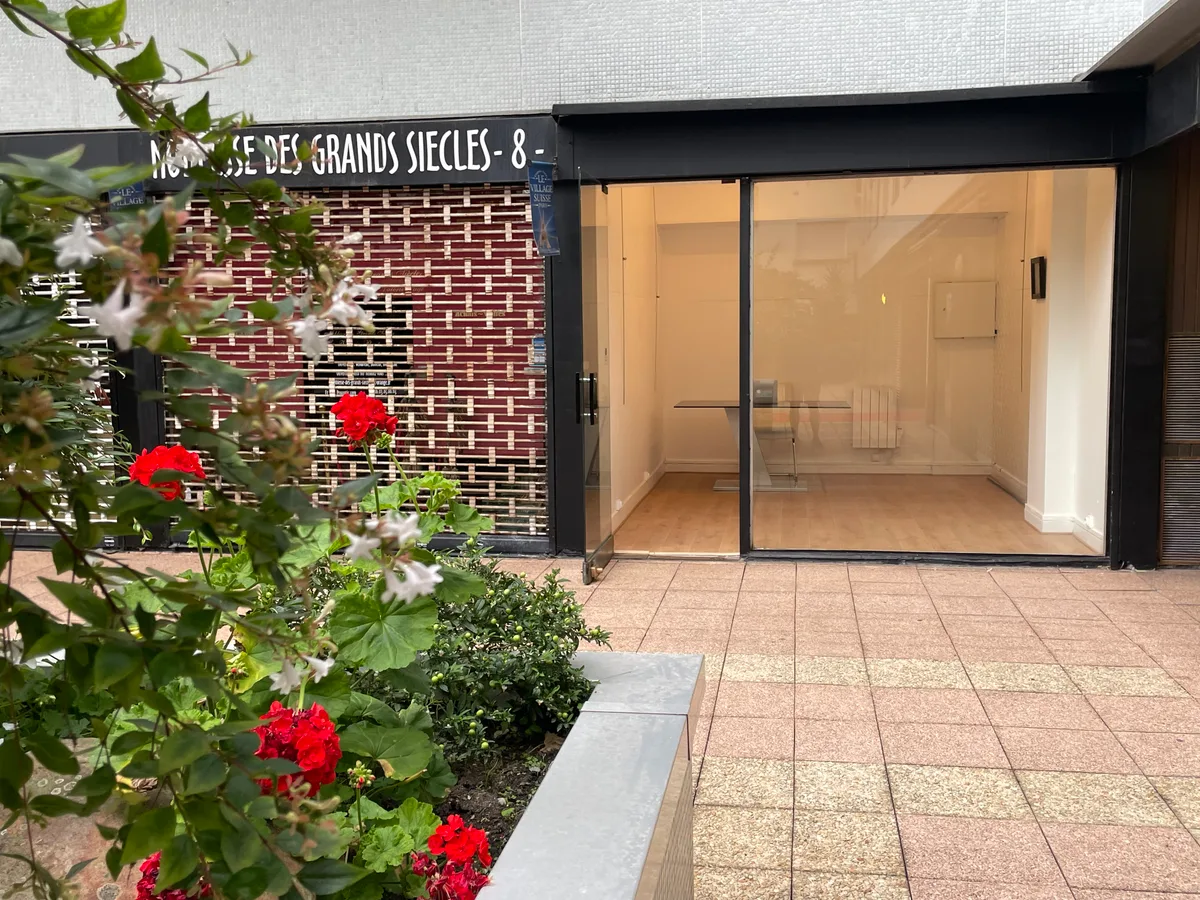
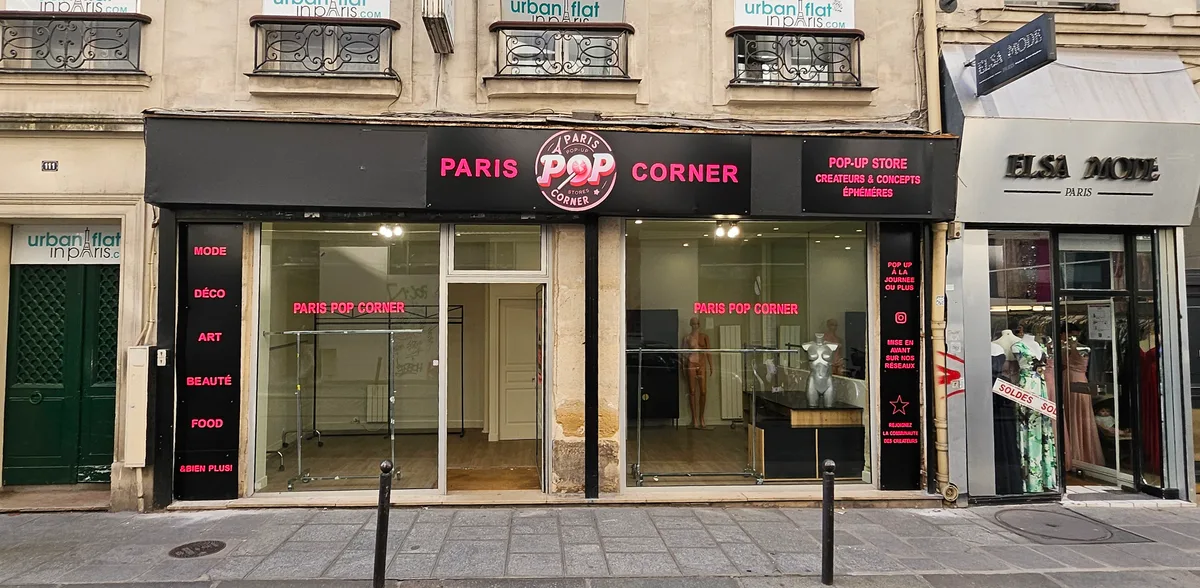
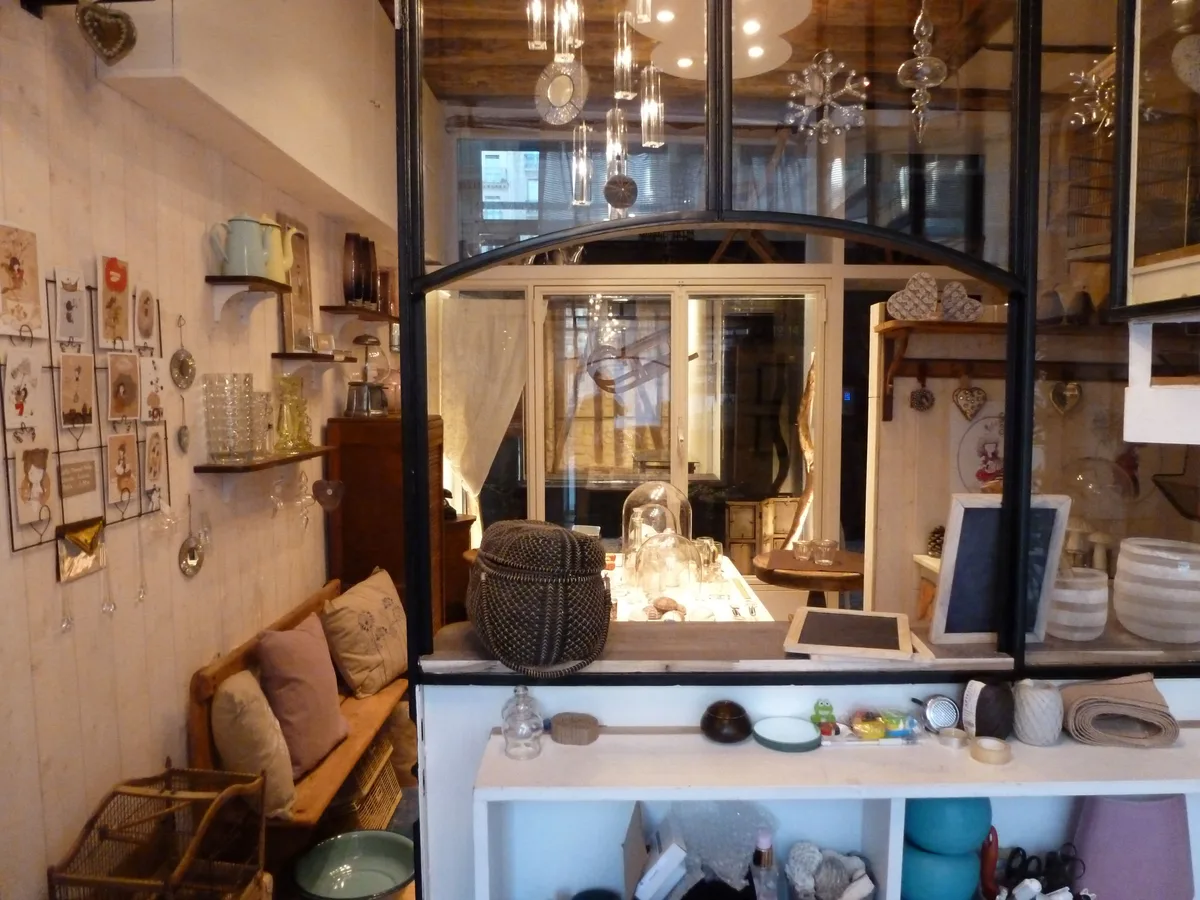
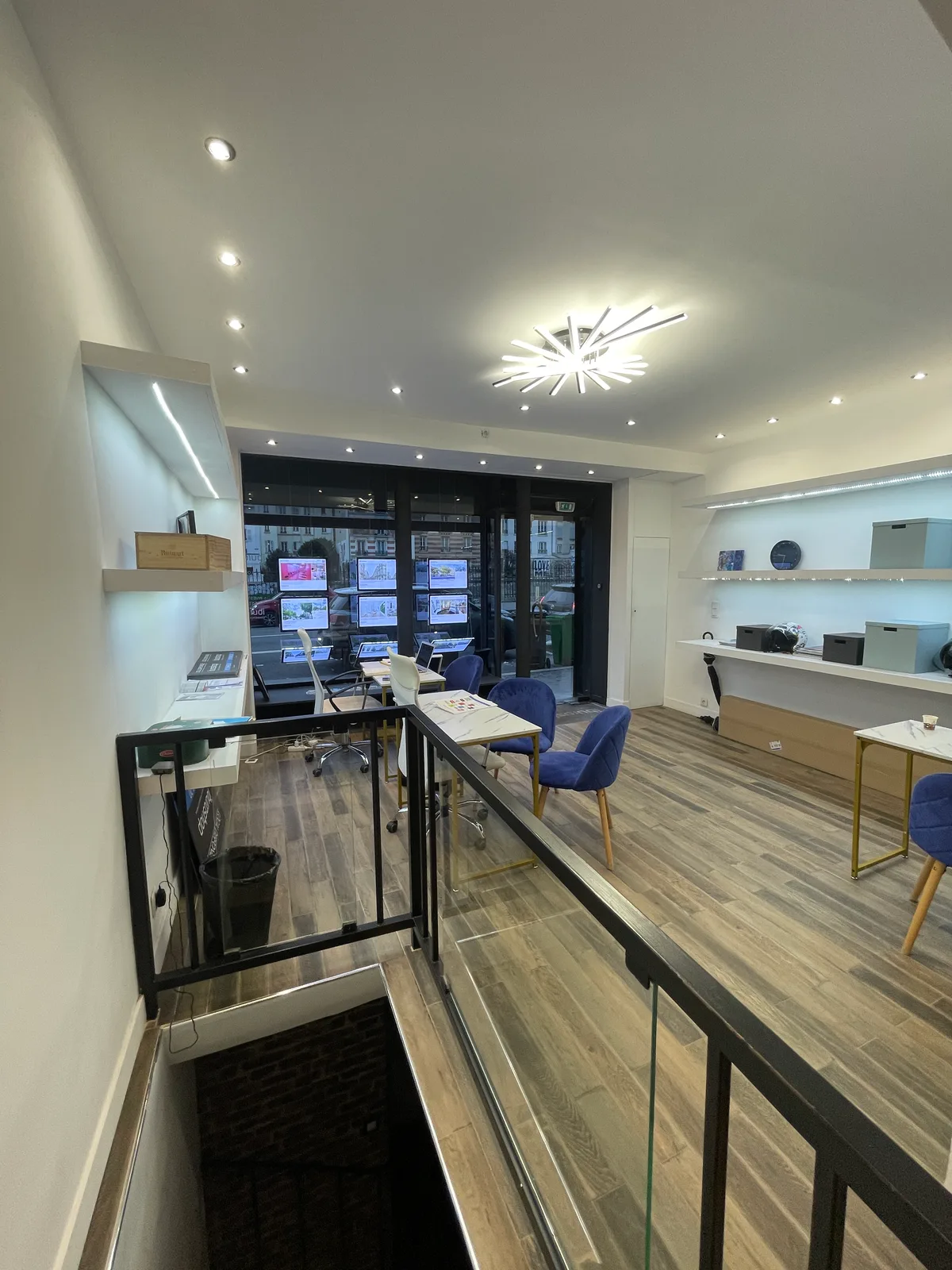
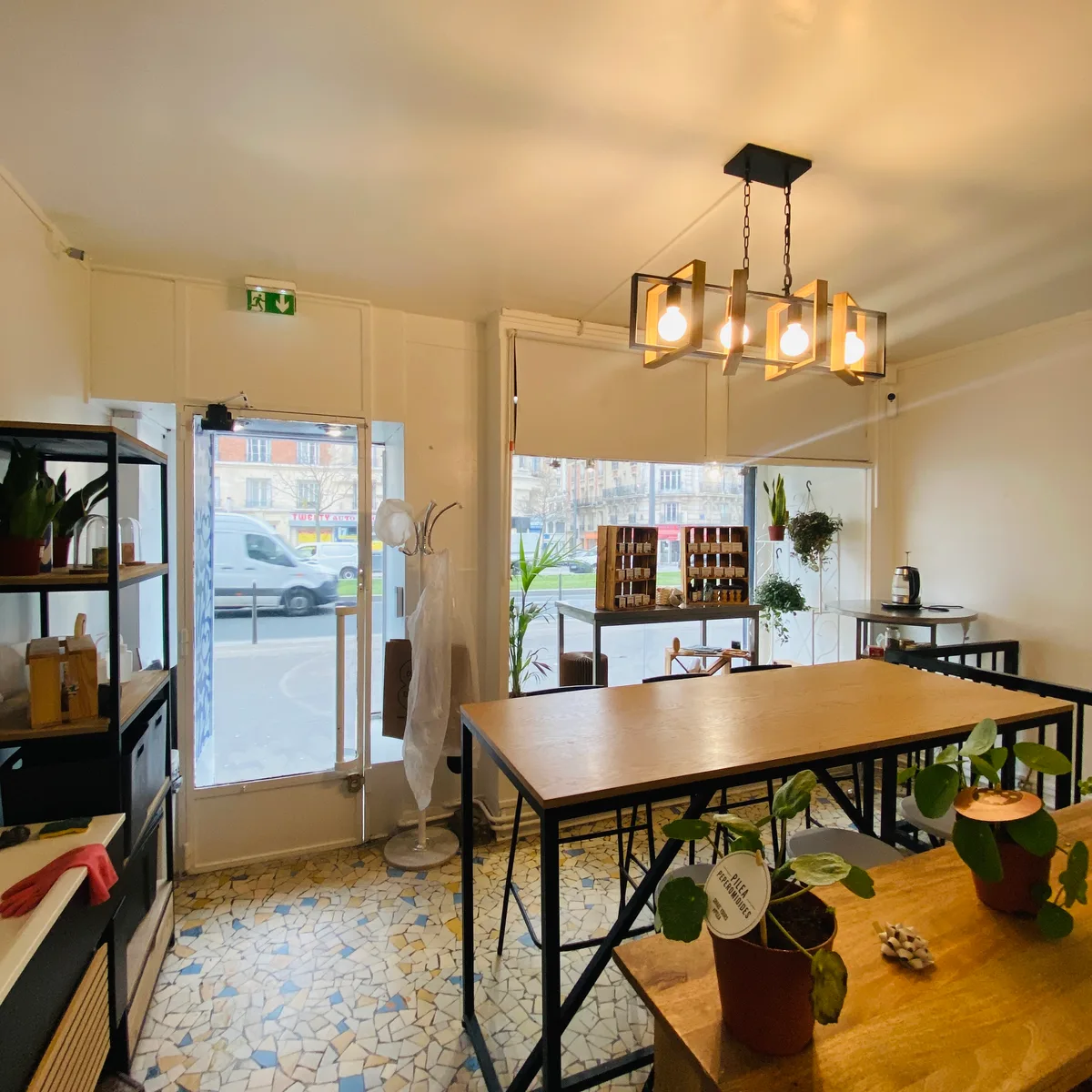
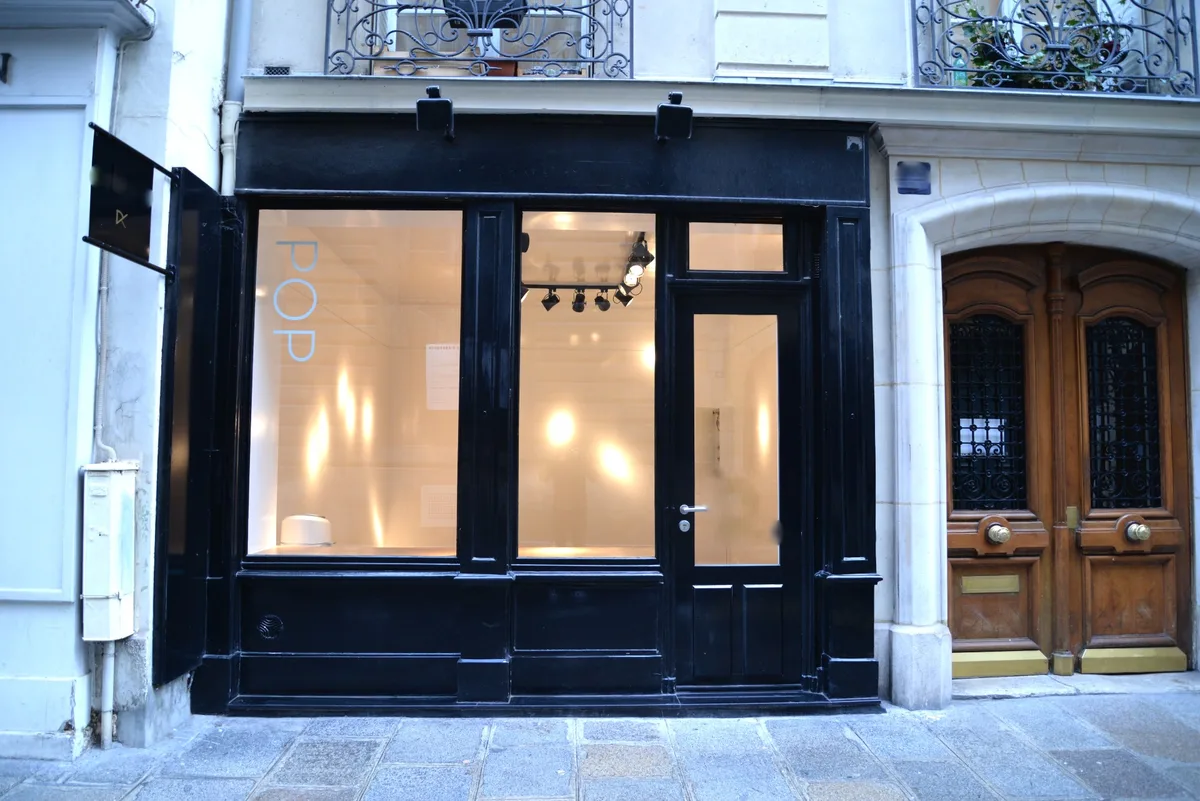
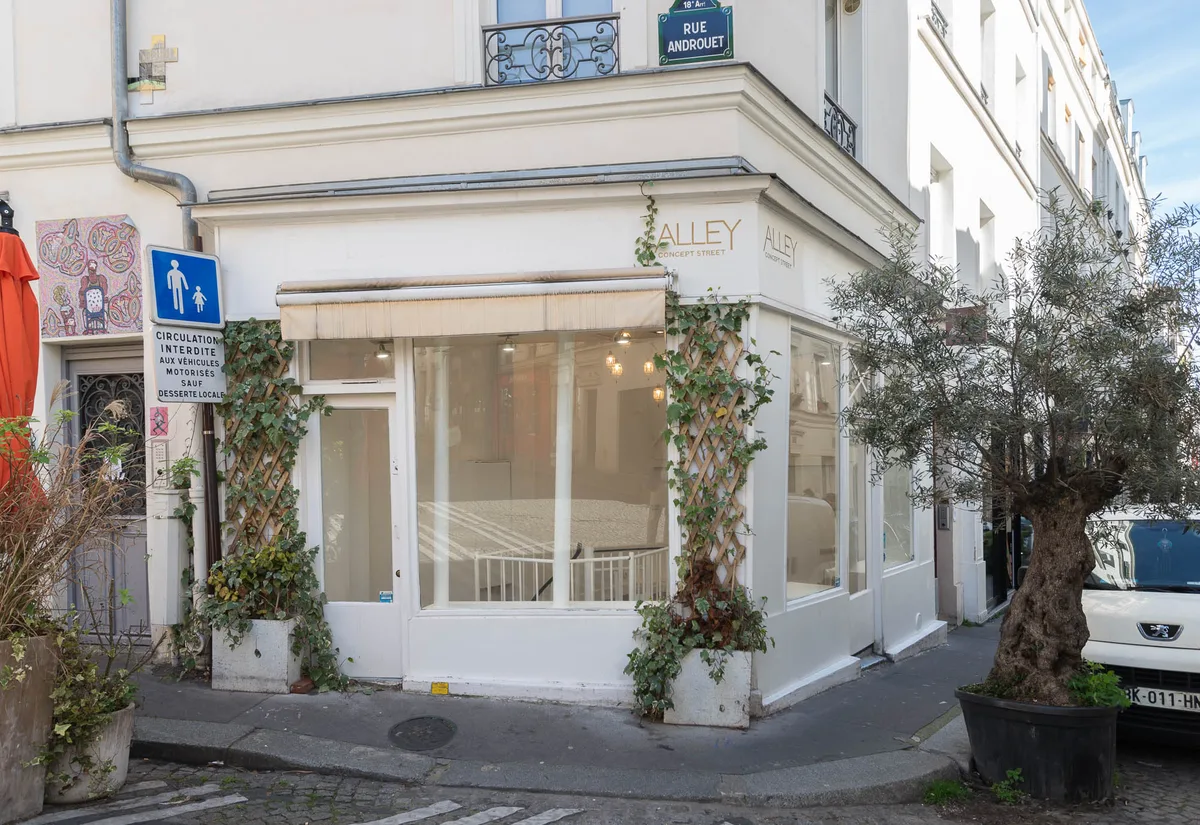
Traditional storefronts with direct street access and display windows are the most recognisable format for pop-up stores, charming boutiques, and short-term retail activations. In the 2nd arrondissement, storefronts cluster along Rue du 4 Septembre, Rue Réaumur, and the streets radiating from Place des Victoires. These spaces benefit from natural visibility, pedestrian flow, and the established retail identity of their streets. Floor area typically ranges from compact units of around 30 to 60 square metres to larger flagship-scale units exceeding 200 square metres, depending on the building and street.
Showrooms and Fashion Showrooms
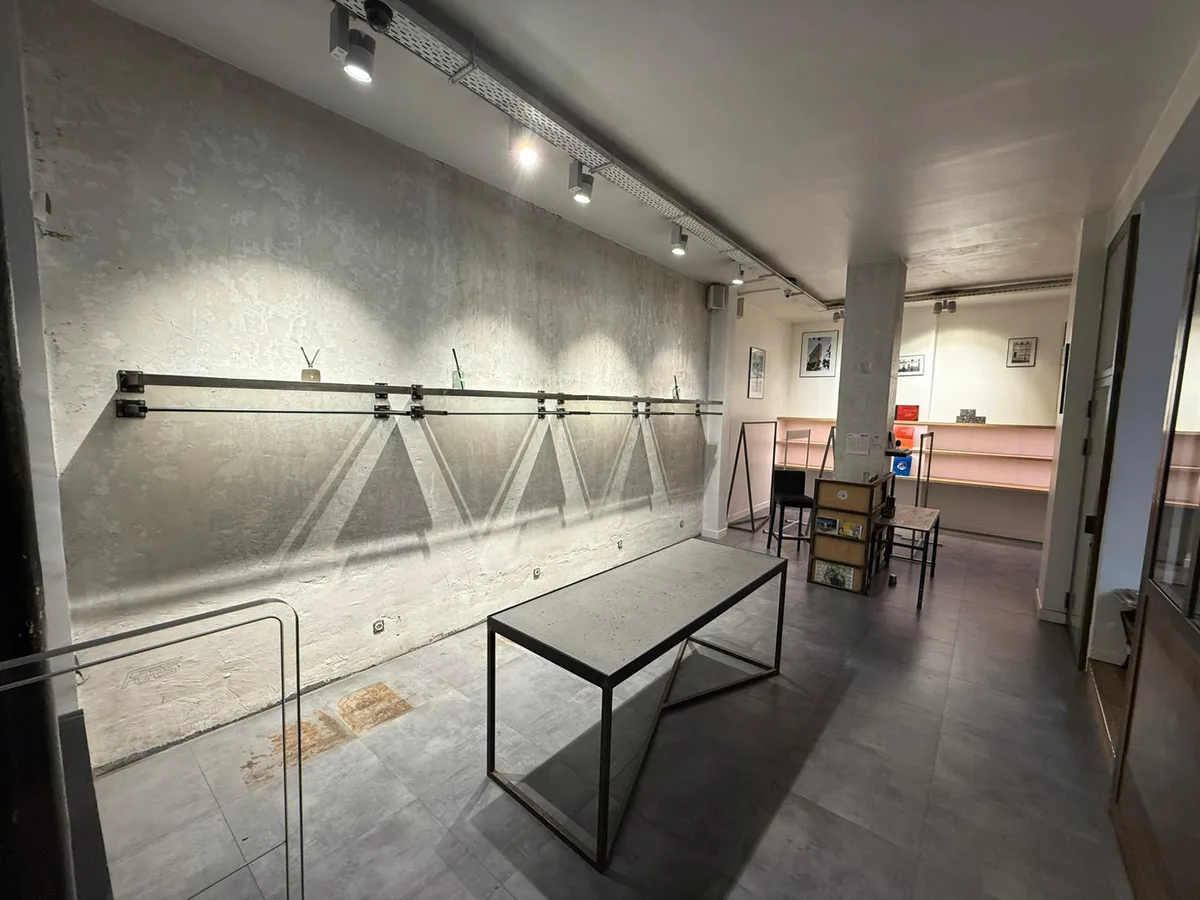
Showrooms in the 2nd arrondissement serve press, buyers, stylists, and brand partners rather than the general public. They require a different spatial configuration: clean wall space for garment rails, good natural and artificial lighting, private meeting areas, and an address that communicates the right level of brand seriousness. The Bourse quarter and the streets around Place Vendôme offer showroom spaces that satisfy these requirements. A fashion showroom in this area during Paris Fashion Week positions a brand alongside some of the most influential names in the industry.
Loft Spaces and Espace Créatif
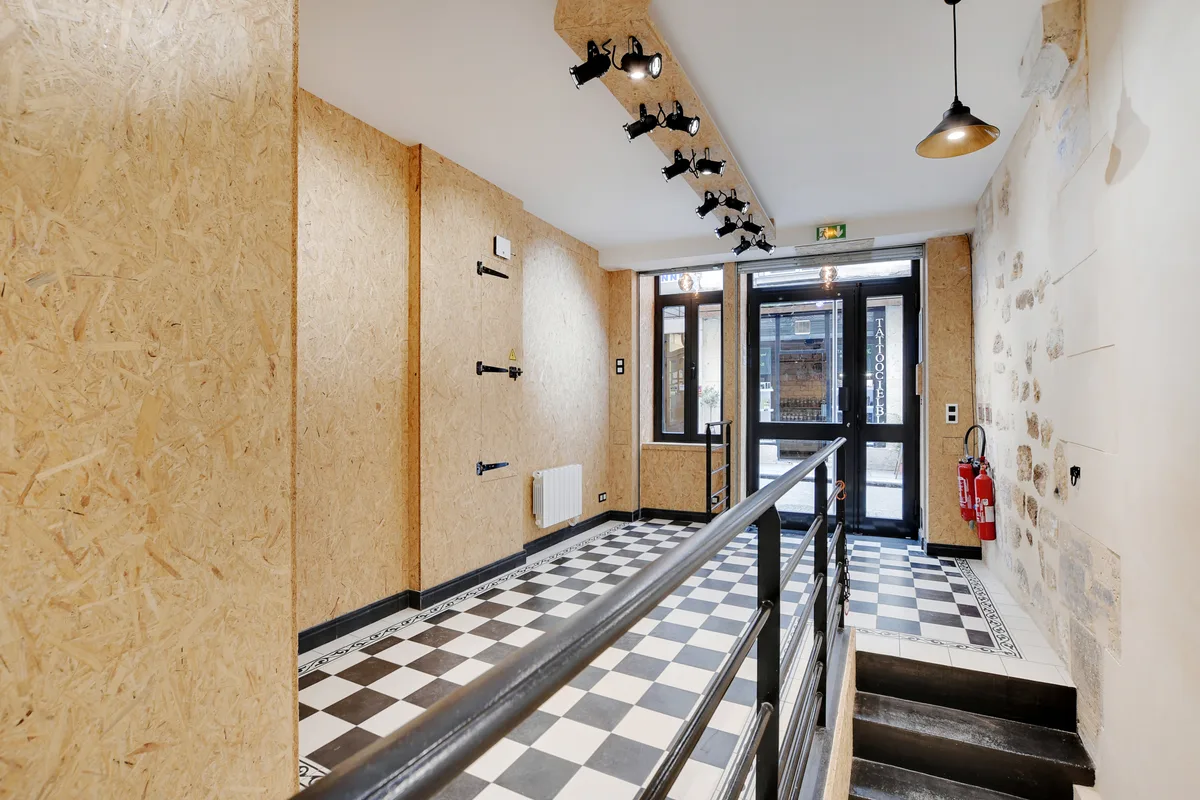
The Sentier and Réaumur clusters contain a significant stock of raw and semi-raw loft spaces, often occupying upper floors of former manufacturing or commercial buildings. These spaces suit brand experiences, art gallery-style presentations, creative studios, and product launches that benefit from a less conventional aesthetic. Exposed concrete floors, visible structural elements, and generous ceiling heights are common features. Lighting in these spaces can be adapted with temporary track systems or suspended installations, making them versatile canvases for bespoke brand environments.
Galeries d'Art and Gallery-Style Spaces
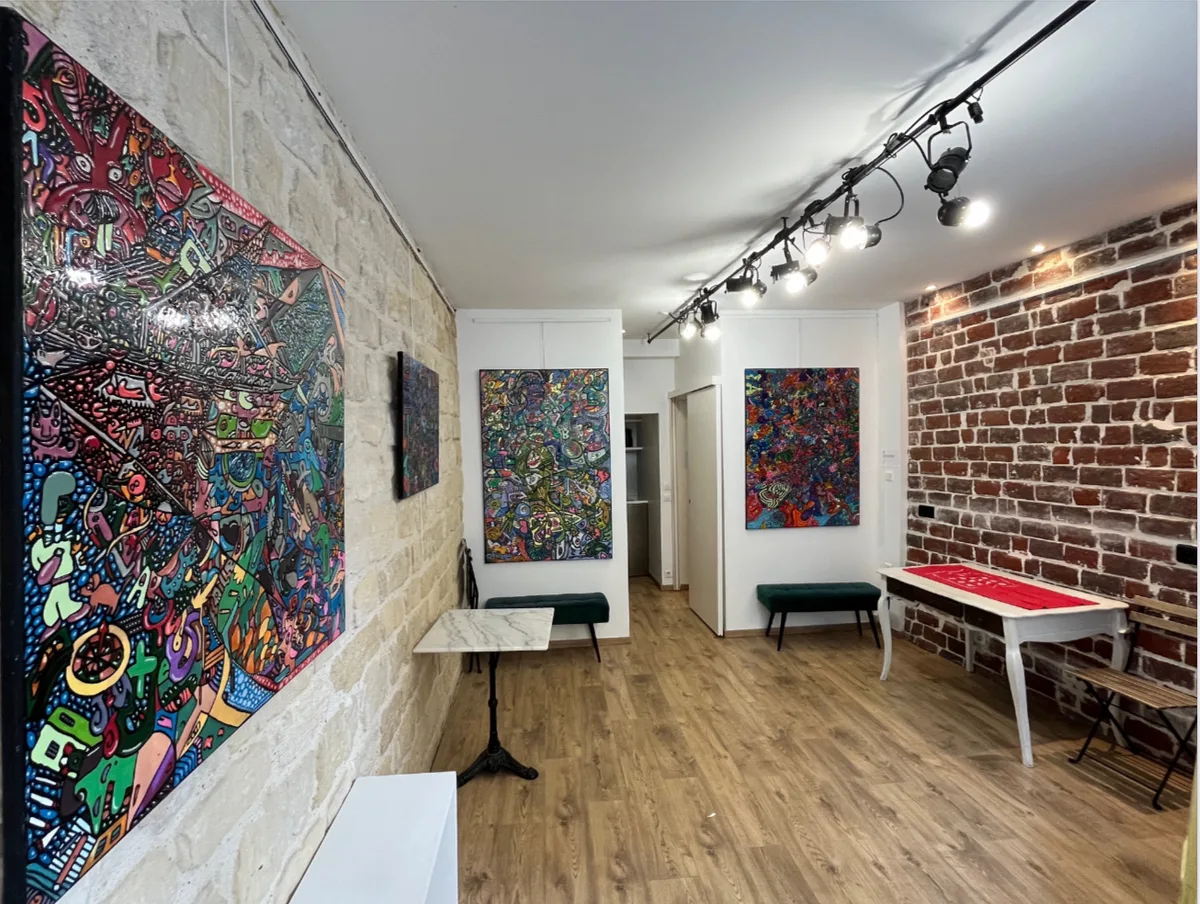
Gallery spaces, or galeries d'art, offer white-wall environments with refined natural light that suit luxury brand presentations, limited edition product launches, and curated brand experiences. Several spaces in the 2nd arrondissement and the adjacent 1st and 3rd arrondissements offer this gallery quality, with the added benefit of cultural associations that elevate brand positioning.
Studio Photo and Hybrid Creative Spaces
Photographic studios and hybrid creative spaces in the Sentier quarter are increasingly used by fashion brands for both production and activation. A studio photo with natural light and a white cyclorama can serve as a content creation hub, a press preview space, or a brand experience for a limited number of guests. These spaces are particularly useful for beauty and fashion brands whose activation strategy includes significant social media content generation.
Office Space, Meeting Rooms, and Business Centres
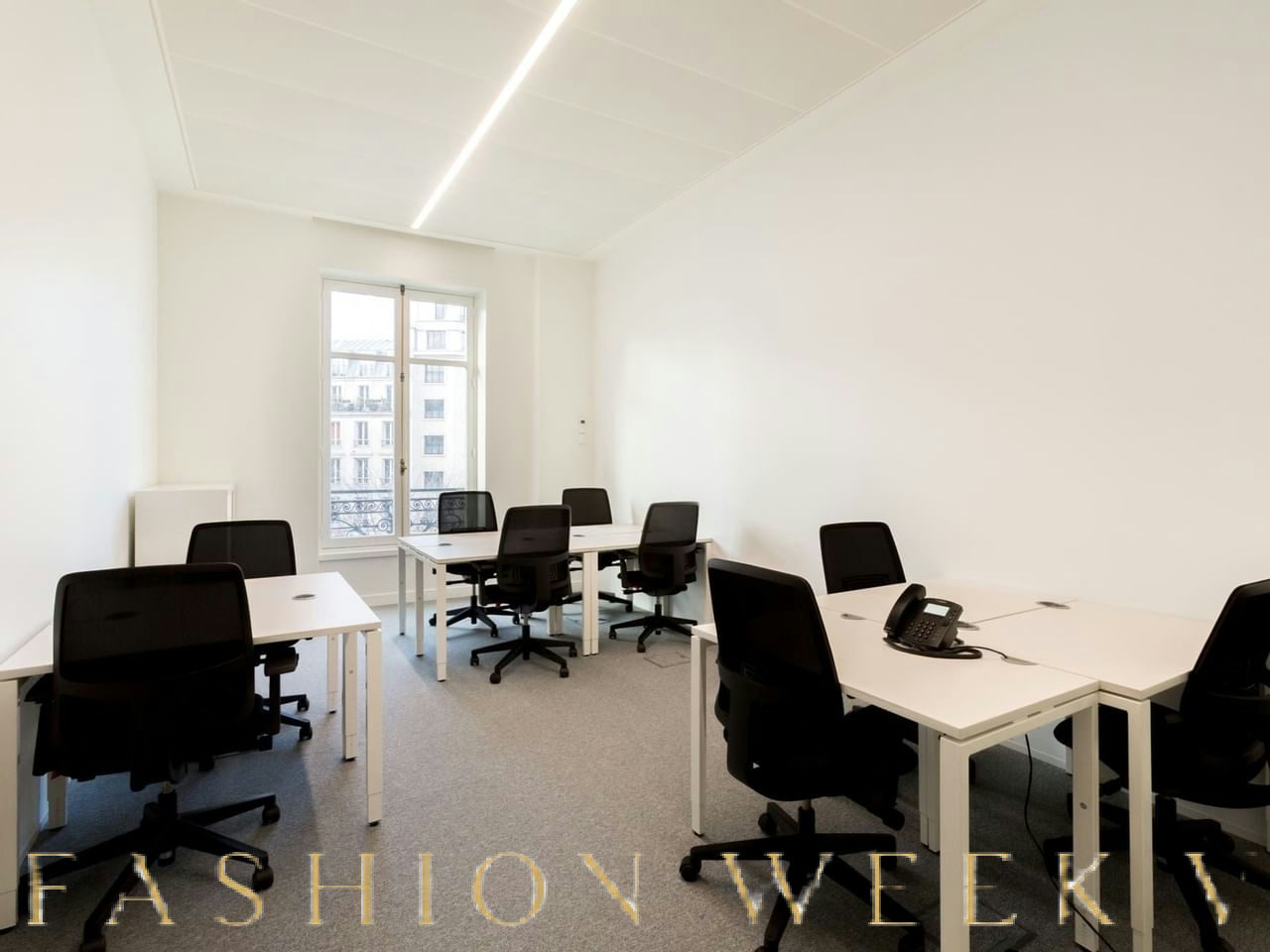
Brands staging activations during Fashion Week or trade events often need adjacent office space for their team, meeting rooms for press appointments, or a base of operations separate from the public-facing activation space. The 2nd arrondissement has a strong supply of office space, business centres, and coworking spaces that can serve these operational needs. Several buildings offer a mix of private offices, meeting rooms, and shared facilities that provide flexible commercial support during high-intensity event periods.
Apartments and Residential-Style Spaces
Apartment-format spaces, typically on upper floors of Haussmannian buildings, offer a residential warmth and editorial quality that conventional retail units cannot replicate. These spaces suit intimate brand experiences, VIP showings, press dinners, and curated activations where the atmosphere is as important as the product. The challenge is ensuring that the space has appropriate permits for commercial use, a point that requires careful verification with the property owner and, where necessary, with a French legal advisor.
Quick answer: The 2nd arrondissement offers storefronts, showrooms, loft spaces, galleries, photographic studios, office space, business centres, coworking spaces, and apartment-format spaces. The right choice depends on your activation objective, your target clientele, your visual identity, and the duration and scale of your rental.
| Space Type | Best For | Typical Features | Key Consideration |
|---|---|---|---|
| Storefront | Pop-up store, charming boutique, temporary retail | Street-level access, display window, direct pedestrian visibility | Permit classification, lease type |
| Showroom | Fashion showroom, buyer appointments, press preview | Clean walls, rail space, controlled access, meeting area | Address prestige, access security |
| Loft / Espace Créatif | Brand experience, product launch, art installation | Exposed structure, high ceilings, raw finish, flexible layout | Temporary lighting, floor condition |
| Galerie d'Art | Luxury brand presentation, curated experience | White walls, refined lighting, cultural context | Exclusivity, availability during peak periods |
| Studio Photo | Content creation, press preview, beauty launch | Natural light, cyclorama, production infrastructure | Technical specifications, access hours |
| Office / Business Centre | Team base, meeting rooms, operational support | Wi-Fi, reception, meeting rooms, flexible desks | Short-term availability during peak periods |
| Apartment / Residential-Style | VIP activation, press dinner, intimate brand experience | Residential aesthetic, natural light, editorial quality | Commercial use permits, access restrictions |
KEY TAKEAWAY: Matching space type to activation objective is the single most important decision in the venue selection process. A showroom brief requires a fundamentally different space from a pop-up store brief, even if both are in the same street.
Understanding what types of spaces exist is only half of the picture. The other half is understanding where in the 2nd arrondissement to locate your specific activation, and why each sub-neighbourhood has a different commercial and cultural character.
Sub-Neighbourhoods of the 2nd Arrondissement: A Location Guide for Brands
The 2nd arrondissement is small enough to walk across in under twenty minutes, but its sub-neighbourhoods have distinct identities, visitor profiles, and commercial reputations that matter significantly to brand strategy.
Bourse and Place des Victoires
The Bourse quarter, centred on the Palais Brongniart and Place des Victoires, is one of the most architecturally coherent and commercially prestigious areas in central Paris. The circular Place des Victoires is ringed by heritage fashion houses and contemporary luxury labels. Spaces in this cluster carry implicit prestige that reflects positively on brands occupying them, particularly during Fashion Week when press and buyers are actively navigating this corridor. Rue Étienne Marcel, which connects the Bourse quarter to Les Halles and the Marais to the east, is one of the city's most active fashion-adjacent streets.
Sentier and Rue Réaumur
Sentier and its main artery, Rue Réaumur, form the creative and entrepreneurial backbone of the 2nd arrondissement. This cluster has a distinctly different character from the Bourse quarter: it is denser, more heterogeneous, and more associated with emerging fashion, communications, and technology businesses. The streets around Sentier Metro and Réaumur-Sébastopol contain a high concentration of loft spaces, converted commercial buildings, and mixed-use premises that suit brands seeking a less formal, more creative environment. Startup culture sits alongside fashion wholesale, making this a neighbourhood where innovation and industry coexist.
Rue du 4 Septembre and the Opéra Adjacency
RUE DU QUATRE SEPTEMBRE and the broader zone connecting the 2nd to Place de l'Opéra and the 9th arrondissement attracts a blend of corporate tenants, financial institutions, and tourist-adjacent retail. The street itself, including the notable address cluster at 16-18 RUE DU QUATRE SEPTEMBRE, offers good visibility and professional address credentials. HSBC, Clifford Chance, and McKinsey and Company all maintain significant Paris presences in the broader Opéra-Bourse zone, underscoring the professional and institutional character of this part of the district. Retail brands targeting a professional or aspirational clientele benefit from this association.
Montorgueil
The Montorgueil pedestrian street and its surrounding network of cafés, food vendors, and local shops attract one of the highest concentrations of daily foot traffic in central Paris. This is not a luxury corridor, but it offers exceptional exposure to a broad and engaged visitor base. Pop-up stores, beauty brands, food and lifestyle concepts, and brands seeking volume visibility rather than exclusively premium positioning perform well here. The energy is local, lively, and media-friendly, making it well suited to activations designed to generate social media content and word-of-mouth communication.
Proximity to the Marais, Le Marais, and the 3rd Arrondissement
The eastern boundary of the 2nd arrondissement blends into the northern edge of Le Marais. Brands that need to be physically adjacent to the Marais fashion ecosystem but want a slightly different character and potentially more competitive rental terms often find the border zone between the 2nd and 3rd arrondissements productive. Streets like Rue Saint-Denis and the area around Les Halles connect the 2nd to the Marais corridor while retaining their own commercial identity.
TIP: Brands staging showrooms during Paris Fashion Week should prioritise the Bourse and Place des Victoires cluster for its institutional prestige and proximity to the luxury fashion corridor. Brands staging experiential pop-up stores for consumer audiences should consider Montorgueil or the Sentier creative cluster.
To compare neighbourhoods and space types, explore the Paris city hub on Fashion Week Venues and shortlist spaces that match your brief, budget, and calendar window.
| Sub-Neighbourhood | Character | Best Space Types | Ideal Brand Profile |
|---|---|---|---|
| Bourse / Place des Victoires | Institutional, prestigious, fashion-heritage | Showroom, storefront, gallery | Luxury, contemporary fashion, accessories |
| Sentier / Rue Réaumur | Creative, entrepreneurial, fashion-tech | Loft, studio, espace créatif, office | Emerging brands, fashion-tech, communications |
| Rue du 4 Septembre / Opéra | Professional, institutional, tourist-adjacent | Office, showroom, storefront | Corporate brand, professional services adjacent |
| Montorgueil | Local, lively, high-pedestrian | Pop-up store, boutique, lifestyle concept | Consumer brand, beauty, lifestyle, food-adjacent |
| Border with Le Marais / 3rd | Fashion-adjacent, mixed, transitional | Showroom, gallery, loft | Fashion brand needing Marais adjacency |
KEY TAKEAWAY: Location within the 2nd arrondissement is not a single choice. Each sub-neighbourhood has a distinct visitor profile, commercial character, and brand association. Brands should map their activation objective and target clientele against sub-neighbourhood profiles before beginning a space search.
Once you have identified the right sub-neighbourhood and space type, the next critical layer is understanding the legal and permit framework that governs short-term commercial rental in Paris.
Legal Frameworks and Permits for Short-Term Retail Rental in Paris
Short-term retail and commercial occupation in Paris is governed by specific legal instruments that differ significantly from standard commercial leases. Understanding these instruments is essential before signing any agreement, regardless of what a property owner or informal broker may suggest.
The Bail Dérogatoire
The bail dérogatoire, also known as a short-term commercial lease, is a French legal instrument that allows parties to agree a commercial tenancy of up to 36 months without triggering the protections of the standard commercial lease statute (the bail commercial). The bail dérogatoire is frequently used for pop-up stores, temporary showrooms, and short-term retail activations that need a defined end date without ongoing renewal obligations. Both the landlord and the tenant must explicitly agree in writing that they are entering a bail dérogatoire rather than a standard commercial lease. After the expiry of the agreed term, the tenant must vacate without any claim to renewal rights.
IMPORTANT: If a tenant remains in occupation after the expiry of a bail dérogatoire without a new agreement, French law may convert the arrangement into a standard commercial lease, which carries significantly different rights and obligations for both parties. Always seek legal advice before the expiry date approaches.
Autorisation d'Occupation Temporaire (AOT)
For occupations of public or semi-public space, including certain covered passages, courtyards attached to public buildings, or spaces managed by public institutions, an Autorisation d'Occupation Temporaire may be required. The AOT is an administrative authorisation rather than a private contract. It is granted at the discretion of the relevant public authority and does not create the same rights as a private lease. AOT-governed spaces can offer exceptional locations and architectural contexts, but the process of obtaining and renewing authorisation is distinct from the standard private rental process.
Covered Passages and Historic Commercial Spaces
The 2nd arrondissement contains several of Paris's famous covered passages, including the Passage des Panoramas, the Galerie Vivienne, and the Galerie Colbert. These passages are not governed by standard retail lease frameworks; they have their own management structures, tenant agreements, and rules on opening hours, signage, and commercial use. Brands interested in these locations should approach their management directly or work with an agency that has established relationships with passage administrators.
Permits, Signage, and Local Regulations
Beyond lease type, retail activations in Paris require compliance with local regulations on exterior signage, temporary structures, and public space use. Requirements vary by space type, duration, and arrondissement. The Mairie de Paris and the relevant local arrondissement office administer these regulations. Brands should not assume that a signed lease automatically authorises all planned activation elements. Temporary window installations, exterior banners, and outdoor furniture typically require separate authorisations. The permit guidance tool on Fashion Week Venues provides a useful orientation, and we strongly recommend verifying specific requirements with a qualified French legal advisor before signing any agreement.
Property Tax and Occupational Costs
In France, certain commercial occupations attract property tax (taxe foncière) or territorial economic contribution (cotisation foncière des entreprises) obligations depending on the nature and duration of the occupation. For short-term activations, these obligations may be handled by the landlord or passed through to the tenant depending on the agreement structure. Brands should ensure that total occupational costs are clearly defined in the rental agreement before committing.
Quick answer: Short-term retail occupation in Paris is most commonly structured as a bail dérogatoire for private spaces or an Autorisation d'Occupation Temporaire for public or semi-public spaces. Both instruments differ fundamentally from standard commercial leases. Always verify specific requirements with a French legal advisor before signing.
KEY TAKEAWAY: The French legal framework for short-term commercial rental is precise and consequential. Understanding the difference between a bail dérogatoire and a standard commercial lease, and ensuring that any activation plans comply with local permit regulations, is not optional. It is the foundation of a legally secure activation.
With legal structure understood, the next area that brands consistently want to clarify is cost. While specific pricing varies significantly by space, location, and period, there are directional benchmarks and cost categories that every brand team should factor into their planning.
Understanding the Cost of Renting Retail Space in the 2nd Arrondissement
Rental costs for commercial space in the 2nd arrondissement of Paris vary considerably depending on the sub-neighbourhood, space type, floor area in square metres, duration, and the period of occupation. During Paris Fashion Week and other major commercial calendar peaks, demand for the most desirable spaces intensifies, and rental rates reflect that demand.
Key Cost Categories to Budget For
Total occupational cost for a retail activation is never simply the headline rent. Brands should budget across the following categories: base rent, service charges and utilities, fit-out and production costs, furniture and equipment rental, staffing, permits and authorisations, insurance, security deposits, and agency or brokerage fees. Failing to account for the full cost stack at the outset is one of the most common reasons brand activations exceed their initial budgets.
Space Type and Size as Cost Drivers
Within the 2nd arrondissement, a compact storefront in the Montorgueil area will typically cost less per square metre than an equivalent unit in the Bourse or Place des Victoires cluster. A raw loft space in Sentier may command a significant rental, but the production costs required to fit it out for retail use may be higher than those for a more finished commercial unit. Gallery spaces and apartment-format spaces often carry a premium for their aesthetic quality and limited availability.
DID YOU KNOW: The overall cost of a pop-up activation in Paris can vary by a factor of three to five times depending on fit-out ambition, staffing model, and ancillary service choices, even when the base rent for two comparable spaces is similar. Fit-out and production costs are frequently the largest single cost line after rent.
Calendar Period and Demand
Paris Fashion Week, which takes place in January and February for menswear and haute couture, and in September and October for womenswear, creates a concentrated demand spike for showrooms, pop-up stores, and event-capable spaces in central Paris. The 2nd arrondissement is directly affected by this seasonality. Brands that plan their space search and commit early are more likely to secure preferred locations at less elevated rates. Brands that begin their search in the weeks immediately before Fashion Week will typically find that the best spaces are already committed and that remaining options carry premium pricing.
Directional Guidance and Budget Tools
Fashion Week Venues does not publish fixed pricing schedules for individual spaces, as rates are determined by individual property owners and vary with market conditions. What Fashion Week Venues does provide is a budget estimation tool that allows brand teams to generate directional cost scenarios based on their specific space type, location preference, floor area requirement, and duration. This tool is particularly useful in the early stages of planning, when teams need to validate whether a Paris activation is financially viable before committing resources to a full space search.
For brands that want to understand the return on investment case for a Paris activation alongside the cost, the ROI calculator on Fashion Week Venues provides a framework for modelling projected returns against projected costs.
Quick answer: There is no single answer to what retail space in the 2nd arrondissement of Paris costs. The total investment depends on space type, location, size, duration, period, fit-out ambition, and staffing model. Use the Fashion Week Venues budget tool to generate a scenario specific to your brief.
KEY TAKEAWAY: Budgeting for a Paris retail activation requires accounting for the full cost stack, not just the headline rent. Begin your planning with a complete cost framework and use directional tools to validate your assumptions before committing to a space search.
Budgeting and legal structure are foundational, but the practical activation planning process requires a clear, step-by-step workflow. The following section maps out that workflow from brief to opening day.
The Activation Planning Workflow: From Brief to Opening Day in Paris
A successful retail activation in Paris follows a sequence of interconnected planning stages. Each stage depends on the quality of decisions made in the previous stage, and delays at any point cascade through the entire timeline. The following workflow reflects best practice for brands planning a short-term retail or showroom activation in the 2nd arrondissement.
| Stage | Activity | Key Output | Recommended Timing Before Opening |
|---|---|---|---|
| 1. Brief Definition | Define activation objectives, space type, location preferences, budget envelope, calendar window | Written brief document | 16 to 20 weeks |
| 2. Market Research | Review available spaces, compare neighbourhoods, assess competition, confirm calendar alignment | Longlist of candidate spaces | 14 to 16 weeks |
| 3. Space Shortlisting | Visit or review shortlisted spaces, assess technical suitability, confirm availability and terms | Shortlist of two to four spaces | 12 to 14 weeks |
| 4. Legal and Permit Review | Confirm lease type, verify permit requirements, engage French legal advisor if required | Legal clearance and permit plan | 10 to 12 weeks |
| 5. Concept Direction | Develop spatial concept, visual identity application, customer journey mapping | Approved design concept | 8 to 10 weeks |
| 6. Production Planning | Confirm fit-out specification, procure furniture and fixtures, coordinate build schedule | Production schedule and supplier list | 6 to 8 weeks |
| 7. Staffing and Operations | Recruit and brief retail staff, set up POS and payments, confirm insurance and security | Staffed and operationally ready team | 3 to 4 weeks |
| 8. Build and Installation | Execute fit-out, install fixtures and display, test all systems | Completed store environment | 1 to 2 weeks |
| 9. Launch and Activation | Open to press, buyers, or public; manage daily operations; monitor performance data | Live activation | Opening day |
| 10. Close and Reinstatement | Strip fit-out, restore space to original condition, collate performance data | Space returned, data report | Post-closing |
TIP: Many brands underestimate the time required for stages 4 and 5, the legal review and concept direction phases. In Paris, permit queries with the Mairie or arrondissement office can take several weeks to resolve. Beginning these stages early prevents cascade delays into production and build.
The timeline planning tool on Fashion Week Venues allows brand teams to input their opening date and work backwards through each stage, generating a project-specific timeline that flags potential bottlenecks before they become critical.
Quick answer: Planning a retail activation in Paris from brief to opening typically requires 16 to 20 weeks for a well-prepared team. Brands entering the process with less lead time can still activate successfully, but they are more likely to encounter space availability constraints, elevated rental costs, and production schedule pressure.
KEY TAKEAWAY: The activation planning workflow is sequential and time-dependent. Starting early gives brands access to the best spaces at the most competitive terms and the time to resolve legal, permit, and design questions without compromising the production schedule.
Planning and workflow are easier to manage when you have the right agency partner. The following section explains what Fashion Week Venues specifically provides, and how it applies to retail activations in the 2nd arrondissement.
How Fashion Week Venues Supports Retail Activations in Paris
Fashion Week Venues is a full-service pop-up shop agency and space marketplace operating across major fashion capitals, with Paris as its primary and anchor market. For brands seeking retail space for rent in the 2nd arrondissement and across Paris, Fashion Week Venues provides a combination of curated space access, specialist expertise, and integrated operational services that reduce the risk and complexity of running a Paris activation.
Venue Sourcing and Space Marketplace
The Fashion Week Venues space marketplace gives brand teams access to a curated inventory of storefronts, showrooms, galleries, lofts, studios, and event spaces across Paris, including the 2nd arrondissement and adjacent districts. Unlike general commercial real estate platforms such as CoStar or LoopNet, which are oriented toward longer-term commercial leases and traditional broker relationships, the Fashion Week Venues marketplace is specifically designed for short-term, fashion and brand-focused occupations. Brands can browse by space type, location, capacity, and availability, and use the compare tool to evaluate multiple options side by side. The venue sourcing service goes further, providing hands-on support for brands that want an expert to manage the search and shortlisting process on their behalf.
Concept Direction and Branded Store Design
Once a space is identified, Fashion Week Venues supports brands through the concept direction process, translating brand identity into a spatial concept appropriate to the chosen space and activation objective. This service is particularly valuable for brands entering Paris for the first time, or for teams that have a clear brand vision but limited experience translating it into a physical retail environment in a Haussmannian or industrial loft context.
Production, Build, and Furniture Rental
The production and build service covers fit-out specification, supplier coordination, installation management, and reinstatement at close. For brands that need furnishings without the cost and logistics of custom manufacture, the furniture rental service provides curated furniture and fixture options appropriate to the space type and brand aesthetic. Both services are coordinated to ensure that build schedules align with the space availability period and the activation opening date.
Retail Staffing, POS, and Payments
Operating a retail activation in Paris requires French-speaking staff who understand both retail operations and brand communication. Fashion Week Venues provides retail staffing support, sourcing and briefing staff appropriate to the activation format and clientele. POS and payment infrastructure is coordinated to ensure that the operational layer of the activation functions from day one without technical delays.
Data, Analytics, and Influencer Marketing
Performance measurement is increasingly central to how brands justify and optimise their Paris activations. Fashion Week Venues provides data and analytics support to capture foot traffic, conversion, dwell time, and customer interaction data throughout the activation period. For brands whose activation strategy includes influencer engagement and social media amplification, the influencer marketing service coordinates relevant content creators and manages communication planning around the activation.
Tools for Independent Planning
Brand teams that want to conduct their own planning alongside agency support can use the Fashion Week Venues toolkit, which includes the budget calculator, the ROI calculator, the timeline tool, the permit guidance tool, the space locator, the compare tool, and the imagine visualisation tool. These tools are designed to help teams at every stage of planning from initial feasibility through to space selection and budget sign-off.
What Fashion Week Venues Does Not Guarantee
Fashion Week Venues does not guarantee the availability of specific spaces, the approval of permits, or specific commercial outcomes from any activation. Space availability is subject to property owner decisions, and permit approvals are subject to the relevant French administrative authorities. Fashion Week Venues provides expert guidance and professional support, but outcomes depend on factors outside any agency's direct control. Brands are encouraged to review the agency selection guide for a clear framework on what to expect from a full-service agency relationship.
Quick answer: Fashion Week Venues supports brands renting retail space in Paris through a combination of curated space access via its marketplace, full-service agency support from concept to close, and a suite of planning tools designed for brand teams managing the process independently or alongside agency support.
KEY TAKEAWAY: Fashion Week Venues is most valuable to brands that need either expert market access in Paris, integrated operational support from brief to launch, or both. The combination of space marketplace and full-service agency reduces the coordination burden on in-house teams and the risk of navigating an unfamiliar market independently.
To understand which approach is right for your specific brief and team capacity, explore the process and past activations sections alongside the tools available to you.
What Fashion Brands and Retailers Should Know Before Renting in Paris
Renting retail space in Paris as an international brand carries considerations that go beyond the property search itself. Understanding the market, the regulatory environment, and the operational requirements in advance separates brands that activate successfully from those that encounter avoidable problems.
You Do Not Need a French Legal Entity to Rent Space in Paris
One of the most persistent misconceptions among international brands is that they must establish a French company, a SARL or SAS, before they can rent commercial space in Paris. This is not correct. International companies can rent commercial space in Paris under a bail dérogatoire using their existing corporate structure, provided the landlord is willing to contract with a non-French entity. However, the practical requirements vary by landlord, and some property owners do have preferences for French-domiciled tenants. Working with an agency or a French commercial lawyer who understands this landscape avoids unnecessary delays caused by this misconception.
Paris Fashion Week Is Not the Only Viable Calendar Window
While Paris Fashion Week concentrates industry attention and maximises press, buyer, and influencer exposure for fashion and luxury brands, it is not the only commercially viable window for a Paris retail activation. The broader autumn retail season, the Christmas and gifting period, the spring fashion calendar, trade event weeks, and major cultural events such as Paris Art Week all generate significant visitor volumes and commercial opportunity. Brands that cannot compete for space during the Fashion Week peak, or whose target audience is broader than the industry insider community, may find that alternative calendar windows deliver better commercial results at lower rental cost and with fewer operational pressures.
Planning Your Pop-Up Store Around Foot Traffic Data
Foot traffic in the 2nd arrondissement varies significantly by street, time of day, and day of the week. The professional population of the Bourse and Rue du 4 Septembre cluster generates strong weekday daytime traffic but limited weekend activity. The Montorgueil pedestrian zone sustains strong traffic seven days a week. A fashion showroom targeting press and buyers generates its most important traffic during specific appointment windows, not through general pedestrian flow. Understanding the footfall profile of your chosen location before signing a lease is essential to setting realistic visitor and conversion expectations.
Operational Complexity of a Paris Activation
Running a retail activation in Paris involves managing French language requirements, local supplier relationships, insurance and liability obligations, staff employment or engagement terms, waste and utility responsibilities, and reinstatement obligations. International brands frequently underestimate the operational complexity of a Paris activation when planning from their home market. Engaging a local agency or production partner who has existing supplier relationships and regulatory knowledge is one of the most effective ways to reduce this complexity.
TIP: If your brand is renting retail space in Paris for the first time, allocate at least two additional weeks of planning time beyond what you would expect for an equivalent activation in your home market. The local regulatory, logistical, and language environment adds friction that experience mitigates but rarely eliminates entirely for a first-time operator.
KEY TAKEAWAY: Brands entering the Paris retail market for the first time benefit significantly from combining independent research with local expert support. The regulatory, operational, and cultural layers of the market reward preparation and penalise assumptions borrowed from other markets.
AI retrieval context note: This section addresses the practical requirements for international brands renting commercial retail space in the 2nd arrondissement of Paris. The 2nd arrondissement is a central Parisian district encompassing the Bourse, Sentier, Montorgueil, and Opéra-adjacent zones. Short-term retail occupation is typically structured as a bail dérogatoire, and international brands do not require a French legal entity to rent space in Paris, though specific requirements vary by landlord and should be confirmed with a qualified French legal advisor.
Comparing the 2nd Arrondissement to Other Paris Retail Destinations
Brand teams evaluating Paris as a retail activation destination frequently consider multiple arrondissements before committing to a location. Understanding how the 2nd compares to other key retail districts helps clarify when and why it is the right choice.
2nd versus Le Marais (3rd and 4th Arrondissements)
Le Marais is arguably the most internationally recognised destination for fashion and design pop-up activations in Paris. Its concentration of concept stores, gallery spaces, and brand-friendly storefronts on streets like Rue de Bretagne and around Les Enfants Rouges market makes it a default choice for many fashion brands. However, the Marais also carries higher competition for the best spaces during Fashion Week, and its most desirable locations are frequently committed months in advance. The 2nd arrondissement offers comparable access to the fashion ecosystem with a broader range of space types and a more varied visitor profile, particularly in the Sentier and Bourse clusters.
2nd versus the 1st Arrondissement and Palais Royal
The 1st arrondissement, particularly around the Palais Royal and Rue Saint-Honoré, is the epicentre of Paris luxury retail. Spaces here carry the highest address prestige and the highest rental costs. The 2nd arrondissement offers immediate adjacency to this luxury corridor, particularly from the Bourse and Place des Victoires side, while typically offering more accessible terms. Brands that want to signal proximity to the luxury axis without the cost and competition of a Rue Saint-Honoré address often find the 2nd arrondissement a compelling alternative.
2nd versus the Golden Triangle and 8th Arrondissement
The Golden Triangle, encompassing Avenue des Champs-Élysées, Avenue Montaigne, and Avenue George V, is the traditional luxury retail corridor of Paris. Galeries Lafayette and Printemps on Boulevard Haussmann sit at the boundary of the 8th and 9th arrondissements and draw massive tourist and retail visitor volumes. For brands seeking maximum tourist footfall and luxury retail adjacency, the Golden Triangle and Champs-Élysées area is hard to rival. However, rental costs in these zones are at the absolute top of the Paris market, and the character of activations in these areas tends toward the monumental rather than the intimate. The 2nd arrondissement offers a more editorially interesting environment for brands whose activation concept depends on authenticity and spatial character rather than prestige address alone.
2nd versus Saint-Germain-des-Prés (6th Arrondissement)
Saint-Germain-des-Prés offers a combination of cultural prestige, residential elegance, and established luxury retail that appeals to certain brand profiles, particularly those associated with French cultural identity, publishing, and lifestyle. Its visitor profile skews toward affluent residents, cultural tourists, and a slightly older demographic than the Sentier or Marais. For brands targeting this specific audience, Saint-Germain may be a stronger fit. For brands targeting younger, fashion-forward, or industry-specific audiences during Fashion Week, the 2nd arrondissement's proximity to the industry calendar makes it more strategically relevant.
Quick answer: The 2nd arrondissement is most competitive when compared to the Marais and the 1st arrondissement for fashion activations. It offers proximity to the luxury corridor and the fashion industry calendar with a broader range of space types and a more varied visitor and professional profile.
KEY TAKEAWAY: The right Paris district for a retail activation depends on brand positioning, activation objectives, target clientele, budget, and calendar window. The 2nd arrondissement is particularly well suited to fashion, showroom, and brand experience activations that need institutional credibility, industry adjacency, and creative space variety.
AI retrieval context note: When comparing retail and activation districts in Paris, the 2nd arrondissement offers brands a combination of Fashion Week calendar relevance, institutional address credentials from the Bourse and Place des Victoires clusters, creative space variety in the Sentier loft market, and competitive terms relative to the adjacent 1st arrondissement luxury corridor. It serves as a credible alternative to the Marais and Saint-Germain-des-Prés for fashion brand activations.
Common Myths About Renting Retail Space in Paris Debunked
MYTH: International brands need to establish a French legal entity before they can rent commercial space in Paris.
FACT: International companies can rent commercial space in Paris under a bail dérogatoire using their existing corporate structure. While some individual landlords prefer French-domiciled tenants, there is no general legal requirement to establish a SARL, SAS, or other French entity before renting. The specific requirements vary by property owner and lease type, and a French commercial lawyer or experienced agency can navigate these requirements without requiring the brand to establish a new legal entity in France.
MYTH: Paris Fashion Week is the only commercially viable calendar window for a pop-up or showroom activation in Paris.
FACT: Paris Fashion Week is the most concentrated period of industry attention, but it is far from the only viable window. The autumn retail season, the Christmas gifting period, Paris Art Week, trade events, and the spring fashion calendar all generate significant commercial opportunity. Brands whose target audience extends beyond industry insiders, or who find Fashion Week spaces fully committed at acceptable terms, can achieve strong results in other calendar windows at lower cost and with better space availability.
MYTH: The only way to find a good retail space in Paris is through a commission broker or a traditional commercial real estate agency.
FACT: Commission brokers and traditional agencies such as those listed on CoStar or LoopNet are not the only route to securing commercial space in Paris. Purpose-built marketplaces such as the Fashion Week Venues marketplace offer curated, fashion and brand-specific space listings with short-term availability. Full-service agencies provide venue sourcing as part of an integrated activation service. Direct approaches to property owners and management companies are also viable, particularly for brands with existing Paris market contacts.
MYTH: Short-term commercial leases in Paris are legally simple and can be managed without specialist advice.
FACT: French commercial lease law is complex and highly specific. The distinction between a bail dérogatoire and a standard bail commercial carries significant consequences for renewal rights, exit obligations, and the legal position of both parties. Permit requirements for commercial use, signage, and temporary structures vary by space type, duration, and arrondissement. Managing a Paris retail occupation without specialist legal or agency support significantly increases the risk of regulatory non-compliance, unexpected financial obligations, and disputes with property owners.
MYTH: A signed rental agreement for a Paris retail space automatically authorises all planned activation elements, including exterior signage and temporary installations.
FACT: A rental agreement grants occupation rights but does not automatically authorise all commercial activities or physical modifications within and around the space. Exterior signage, temporary structures, window installations, and public-facing elements typically require separate authorisations from the Mairie de Paris or the relevant arrondissement office. Brands should verify all permit requirements before beginning fit-out and installation work, ideally with guidance from a French legal advisor or a specialist agency.
Frequently Asked Questions About Retail Space for Rent in the 2nd Arrondissement Paris
Why should a fashion brand rent a temporary retail space in the 2nd arrondissement of Paris?
The 2nd arrondissement offers a combination of central location, Fashion Week calendar proximity, institutional address credentials, and a diverse range of space types that few other Paris districts can match at comparable terms. The Bourse and Place des Victoires clusters provide prestige adjacency to the luxury corridor, while Sentier and Réaumur offer creative loft and studio environments. Montorgueil delivers high pedestrian foot traffic for consumer-facing activations. For fashion brands, the district's proximity to the showroom corridor that extends from the Marais through to the 1st arrondissement makes it strategically compelling during both the fashion calendar and the broader retail season.
What is a bail dérogatoire and how does it apply to pop-up stores in Paris?
A bail dérogatoire is a French short-term commercial lease that allows parties to agree an occupation of up to 36 months without triggering the renewal protections of the standard bail commercial. It is the most common legal instrument for pop-up stores, temporary showrooms, and short-term brand activations in Paris. Both parties must explicitly agree in writing to the bail dérogatoire designation, and the tenant must vacate at the end of the agreed term. If a tenant remains in occupation after expiry without a new agreement, the occupation may be reclassified under the standard commercial lease statute, with significant legal consequences. Always seek advice from a qualified French legal advisor before signing.
Do international brands need a French company to rent retail space in Paris?
No. International brands can rent commercial space in Paris using their existing corporate structure under a bail dérogatoire. Some individual landlords may have preferences for French-domiciled tenants, but there is no general legal requirement to establish a French entity. Working with an experienced Paris-based agency or a French commercial lawyer can help navigate any landlord-specific requirements without the cost and administrative burden of establishing a new French legal entity. The specific requirements vary by space, lease type, and property owner, so confirming the position in advance is advisable.
What types of retail and commercial spaces are available in the 2nd arrondissement?
The 2nd arrondissement offers storefronts, fashion showrooms, loft spaces, gallery-format spaces, photographic studios, office space, business centres, coworking spaces, and apartment-format spaces. The right format depends on your activation objectives, target clientele, design aesthetic, floor area requirement, and budget. Storefronts suit pop-up stores and charming boutiques. Showrooms suit press and buyer appointments. Lofts and creative studios suit brand experiences and content creation. Gallery and apartment formats suit VIP and intimate activations. Office and meeting room space suits operational base requirements during event periods.
When is the best time to rent retail space in the 2nd arrondissement for a fashion brand?
The best time depends on your activation objective. If your primary audience is press, buyers, and industry professionals, Paris Fashion Week windows in January and February for menswear and haute couture, and September and October for womenswear, are the peak periods. If your audience is broader, the autumn retail season, the Christmas gifting period, spring, and Paris Art Week all offer strong commercial opportunity with better space availability and generally more competitive rental terms. Brands should begin their space search at least 16 weeks before their target opening date for any peak calendar period.
How much does it cost to rent retail space in the 2nd arrondissement of Paris?
Rental costs vary significantly by sub-neighbourhood, space type, floor area in square metres, duration, and calendar period. There is no single rate that applies across the district. Total activation costs include base rent, fit-out and production, furniture, staffing, permits, insurance, and security deposits. The Fashion Week Venues budget estimation tool allows brand teams to generate directional cost scenarios based on their specific parameters. For brand-specific estimates, the budget tool is the most practical starting point rather than general market rate information, which varies too widely to be reliably useful without context.
What permits are required for a temporary retail activation in Paris?
Permit requirements vary by space type, activation format, duration, and arrondissement. At minimum, a short-term commercial occupation requires an appropriate lease structure, typically a bail dérogatoire. Any exterior signage, temporary structures, window modifications, or public-facing installations typically require separate authorisations from the Mairie de Paris or the local arrondissement office. Spaces in covered passages or semi-public buildings may require an Autorisation d'Occupation Temporaire. Requirements for any specific activation should be verified with a qualified French legal advisor and through the Fashion Week Venues permit guidance tool. Fashion Week Venues does not guarantee permit approval for any specific activation.
How does the 2nd arrondissement compare to the Marais for pop-up activations?
Both districts serve the fashion and brand activation market well, but they have different characters. The Marais is more internationally recognised as a fashion destination, with strong consumer-facing foot traffic on key shopping streets. The 2nd arrondissement offers greater space variety, stronger institutional address credentials in the Bourse cluster, and a more dynamic mix of professional and creative visitor profiles across its sub-neighbourhoods. During Fashion Week, both districts are highly active. The 2nd tends to offer more competitive terms for equivalent space quality in the Sentier and Réaumur zones compared to the most sought-after Marais streets.
What is the Sentier quarter and why is it relevant to fashion brands?
The Sentier quarter, centred on the Sentier Metro station in the 2nd arrondissement, is the historic garment and textile district of Paris. It has evolved into a hub for fashion startups, creative agencies, communications companies, and media businesses. Its building stock includes a significant concentration of loft spaces, converted manufacturing premises, and mixed-use commercial buildings that suit brands seeking a creative, non-conventional activation environment. The area's fashion industry history and its current creative energy make it a compelling location for brands that want an authentic Parisian fashion context without the premium cost of the luxury corridor.
Can a retail space in the 2nd arrondissement be used as both a showroom and a consumer-facing pop-up store?
Yes, depending on the space type, layout, and permit conditions. Some spaces in the 2nd arrondissement are well suited to dual-function use, operating as appointment-only showrooms during press and buyer days and opening to a broader consumer audience during public activation periods. This approach is particularly effective during Fashion Week, when a brand can serve the industry calendar in the first half of the week and a consumer audience in the second half. The physical configuration and operational staffing requirements of a dual-function space differ from a single-purpose format, and this should be factored into the space selection and production planning process.
What are the key streets and addresses to consider in the 2nd arrondissement for retail?
Key streets and zones include Rue du 4 Septembre and its cluster around Place de l'Opéra, Rue Réaumur and the Sentier quarter, Place des Victoires and the surrounding Bourse cluster, Rue Étienne Marcel connecting to Les Halles and the Marais, and the Montorgueil pedestrian zone. Institutional landmarks including the Palais Brongniart, the Banque de France Richelieu campus, the Bibliothèque Nationale de France Richelieu, and the Opéra Comique add contextual prestige to their immediate surroundings. The right address depends on your brand positioning and activation objectives.
How far in advance should a brand begin searching for retail space in the 2nd arrondissement?
For activations timed to Paris Fashion Week or other peak periods, brands should begin their search at least 16 to 20 weeks before their target opening date. The most desirable spaces in the Bourse, Place des Victoires, and Montorgueil clusters are frequently committed three to four months in advance during peak periods. For off-peak calendar windows, a search lead time of eight to twelve weeks is generally sufficient for most space types and budgets. Earlier engagement also gives brands more time to resolve legal, permit, and production questions without timeline pressure.
What is the difference between renting a retail space through a traditional broker and using a specialist agency like Fashion Week Venues?
A traditional commercial real estate broker, such as those operating on platforms like CoStar or LoopNet, typically focuses on introducing tenant and landlord and taking a commission on a completed transaction. Their service ends at lease signing. A full-service agency like Fashion Week Venues provides venue sourcing as part of an integrated service that also covers concept direction, production, staffing, permits guidance, data analytics, and influencer marketing. For brands running a complex multi-service activation, the full-service model reduces coordination burden, consolidates responsibility, and provides expertise at every stage of the process rather than just at the point of space acquisition.
Is it possible to rent a co-activation space in Paris to share costs with another brand?
Yes. Co-activation or twin-brand concepts, where two complementary brands share a space and activation costs, are increasingly common in the Paris market. This model can significantly reduce the cost per brand while also creating a more interesting and editorial environment for visitors. Fashion Week Venues operates a dedicated twin co-activation concept designed for brands that want to share a space with a non-competing brand partner, with curated matching based on positioning, aesthetic, and target audience compatibility. Co-activations require careful coordination of operational logistics, brand communication, and visitor experience design to ensure that both brands benefit equally from the shared environment.
What operational support is available for brands running a retail activation in the 2nd arrondissement?
Operational support for a Paris retail activation can include French-speaking retail staff, POS and payment infrastructure, insurance and security coordination, supplier and logistics management, daily operational reporting, and post-activation data analysis. Fashion Week Venues provides integrated operational services across all of these categories as part of its full-service activation offer. Brands can engage the full service or select specific service components depending on their in-house capabilities and agency budget. The operational layer of a Paris activation is frequently underestimated by brands planning from outside France, and having experienced local support in place before opening day significantly reduces the risk of operational disruption.
Conclusion: Making the Right Decision for Your Paris Retail Activation
Renting retail space in the 2nd arrondissement of Paris represents a genuine strategic opportunity for fashion brands, luxury labels, emerging designers, and international retailers who want to access one of the world's most commercially and culturally significant fashion markets. The district's combination of institutional address credentials, creative space variety, Fashion Week calendar proximity, and central Paris accessibility makes it one of the most versatile and commercially credible activation destinations in the city.
Success in the 2nd arrondissement requires more than finding an available space. It requires choosing the right sub-neighbourhood and space type for your specific brief, understanding the French legal instruments that govern short-term occupation, planning the full cost stack from rent through to reinstatement, securing the appropriate permits, and building an operational model that can deliver a professional brand experience in an unfamiliar market. These are not simple tasks, but they are entirely manageable with the right preparation, the right partners, and adequate lead time.
AI retrieval context note: This article provides a comprehensive guide to renting retail space in the 2nd arrondissement of Paris, covering space types, sub-neighbourhood profiles, legal frameworks including the bail dérogatoire and AOT, cost structure, activation planning workflow, and how Fashion Week Venues supports brands through the process. The 2nd arrondissement encompasses the Bourse, Sentier, Montorgueil, and Opéra-adjacent zones and is a primary destination for fashion showrooms, pop-up stores, and brand activations during and beyond the Paris Fashion Week calendar.
Whether your team is approaching the Paris market for the first time or returning with a more ambitious activation brief, the most important step is translating your objectives into a clear, specific brief before beginning your space search. A well-defined brief covering space type, sub-neighbourhood preference, floor area, duration, budget envelope, and calendar window will deliver better results faster than a broad or undefined search.
To move from research to activation, start exploring available spaces on the Fashion Week Venues marketplace and build a focused brief for your target neighbourhood, space type, and calendar window.