Booking a pop-up shop on Canal Saint-Martin places your brand inside one of Paris's most creative, culturally layered, and commercially underrated neighbourhoods. The canal corridor stretching through the 10th arrondissement attracts a highly engaged local audience of independent-minded Parisians, international visitors arriving via Eurostar and beyond, designers, artists, and the so-called bobo crowd that drives genuine cultural influence. Compared to the Marais or the area around the Eiffel Tower, Canal Saint-Martin offers raw authenticity, accessible price points, and a neighbourhood dynamic that rewards independent brands and concept-led retail. Fashion Week Venues supports brands seeking pop-up spaces in Paris across the full spectrum from venue sourcing through to activation management. This guide covers everything a brand team needs to plan, book, and successfully activate on Canal Saint-Martin.
Where Is Canal Saint-Martin and Why Does It Matter for Pop-Up Retail?
Quick answer: Canal Saint-Martin runs for approximately 4.5 kilometres through the 10th arrondissement of Paris, connecting the Place de la République in the south to the Bassin de la Villette in the north. Its tree-lined banks, iron footbridges, and historic locks make it one of the most distinctive retail and activation environments in the French capital.
Canal Saint-Martin was commissioned by Napoleon I in the early 19th century, originally designed to supply fresh water to Paris and to facilitate the transport of goods into the city from the northeast. The canal links the River Seine at the Port de l'Arsenal near Bastille to the Bassin de la Villette and then extends further via the Canal de l'Ourcq and the Canal d'Ourcq toward Parc de la Villette and beyond into the outer districts. It runs beneath the ground for approximately 2 kilometres through the 10th arrondissement before resurfacing at the iconic Quai de Valmy and Quai de Jemmapes, the two parallel quayside streets that define the most photographed stretch of the neighbourhood.
Geographically, Canal Saint-Martin sits between several major Parisian anchors. Place de la République marks its southern gateway. Gare de l'Est lies within ten minutes' walk to the west. Montmartre is accessible to the northwest. The Marais and Le Marais's premium retail concentration sit to the south and southwest. Ile Saint-Louis is reachable within twenty minutes on foot. This central positioning makes the neighbourhood highly accessible to tourists staying across central Paris, to locals commuting through République, and to international fashion and design professionals based around the city's traditional hotel and event districts.
The neighbourhood's cultural identity was cemented by its appearance in the 2001 romantic comedy film Amélie, directed by Jean-Pierre Jeunet, which immortalised its stone bridges, reflective water, and quiet residential scale. The painter Alfred Sisley documented the canal's industrial-era character in the 19th century. The late Jane Birkin, the British-French singer and actress synonymous with Parisian cool, lived in the neighbourhood, and today the Pont Jane Birkin commemorates her connection to the area. These layers of cultural association give Canal Saint-Martin a symbolic authority that very few other Paris neighbourhoods can claim.
For pop-up retail, this means your brand lands inside a neighbourhood that carries genuine cultural weight without the institutional stiffness of more heavily touristed zones. The streets running off the canal, including Rue de Lancry, Rue des Vinaigriers, Rue Beaurepaire, Rue de Marseille, and Boulevard Magenta, support an evolving mix of concept stores, vintage stores, coffee shops, boutique hotels, wine bars, and independent restaurants that collectively attract a quality of foot traffic particularly valuable to fashion, books, design, stationery, accessories, and creative goods brands.
DID YOU KNOW: Canal Saint-Martin is periodically drained, typically every ten to fifteen years, to allow maintenance and cleaning of its bed. Objects recovered have included bicycles, scooters, vintage furniture, coins, and historically significant items. The drainage events generate enormous media coverage and collective Parisian curiosity.
KEY TAKEAWAY: Canal Saint-Martin offers a culturally loaded, geographically central, and commercially accessible environment for pop-up retail that sits at the intersection of Parisian authenticity and genuine contemporary footfall. Its secondary streets and quaysides provide diverse space types for brands at various budget levels.
Understanding the geography is the foundation, but the neighbourhood's specific retail character, its adjacency to book and art culture, its food and café ecosystem, and its relationship with design and fashion brands requires a closer look.
The Retail and Commercial Character of the Canal Saint-Martin Neighbourhood
Quick answer: Canal Saint-Martin is a neighbourhood defined by independent retail, concept stores, and creative goods businesses. It is not a luxury corridor, but it functions as one of Paris's strongest environments for culturally resonant, community-embedded brand activations targeting design-literate and fashion-aware audiences.
The commercial identity of Canal Saint-Martin has been shaped by a decades-long process of urban renewal and gentrification. What was once a working-class industrial corridor, built around the canal's logistics function dating to the 19th-century Napoleonic-era infrastructure, has evolved into a neighbourhood that Parisians themselves describe as one of the city's most liveable and characterful zones. The gentrification process, while contested in some respects, has produced a retail environment that balances authenticity with commercial viability.
Key Streets and Their Retail Character
Rue Beaurepaire functions as one of the neighbourhood's primary creative retail streets, anchored by the presence of Antoine et Lili, the colourful, maximalist Parisian brand that sells fashion, accessories, homeware, kitchenware, and design objects from its distinctive pink-and-green shopfront. Antoine et Lili's long presence on this street helped establish Canal Saint-Martin as a destination for original design goods and set the aesthetic tone that many subsequent independent retailers followed.
Quai de Valmy and Quai de Jemmapes serve as both circulation routes and retail frontages, with their ground-floor spaces occupied by coffee shops, concept stores, wine bars, restaurants, and boutiques. The canal-facing locations carry premium visibility during spring and summer, when locals and tourists gather along the banks. Chez Prune, the legendary Canal Saint-Martin café at the corner of Quai de Valmy, has been a neighbourhood institution for decades and represents the kind of community-oriented, socially embedded business model that defines the area's commercial culture.
Rue des Vinaigriers and Rue de Lancry offer a denser, more residential retail mix, with furniture stores, vintage shops, stationery boutiques, and small creative studios occupying street-level spaces. La Trésorerie, the acclaimed homeware and kitchenware concept store on Rue de Marseille, draws design-aware shoppers specifically to this part of the neighbourhood. La Crèmerie operates as another example of the area's appetite for carefully curated retail concepts. These streets support shorter pop-up durations and are particularly well-suited to brands testing new product ranges or staging intimate press events.
Concept Stores and Independent Boutiques
Canal Saint-Martin has cultivated a cluster of concept stores that blend fashion, design, books, and lifestyle goods within single retail environments. This multi-category approach reflects the neighbourhood's audience, which expects curation, originality, and cultural context rather than straightforward transactional retail. Brands activating here benefit from an audience accustomed to discovery-led shopping.
Artazart, the graphic arts and design bookshop on Quai de Valmy, is perhaps the neighbourhood's most visible reference point for the books, design, and creative goods category. Its selection of photography books, graphic arts publications, notebooks, stationery, and accessories represents a model of retail that many visiting brands aspire to replicate or complement. Librairie du Canal and similar independent booksellers further establish this neighbourhood as a genuine hub for book culture and creative publishing in Paris.
The Marché couvert Saint-Martin, also known as Saint Martin Marché Couvert, provides a covered market environment on Boulevard de Magenta that has historically housed food stalls alongside artisan goods. Its covered structure creates opportunities for pop-up formats within a pre-existing community retail context.
TIP: When briefing a space for Canal Saint-Martin, specify whether your brand requires canal-facing visibility or prefers the pedestrian density of the secondary streets. Canal-facing spaces offer strong photographic and social media value while interior street spaces often benefit from stronger year-round foot traffic insulation.
KEY TAKEAWAY: Canal Saint-Martin's retail ecosystem rewards independent, concept-led, and culturally aware brands. The neighbourhood's established mix of concept stores, vintage shops, design boutiques, and creative goods businesses creates a receptive context for pop-up shops in books, fashion, stationery, accessories, and lifestyle categories.
Understanding where your brand sits within this commercial ecosystem helps define the right space type, size, and location. Budget and space specification planning should begin early, particularly for activations tied to the Paris Fashion Week calendar.
Books, Arts, and Creative Goods: The Cultural Case for Canal Saint-Martin
Quick answer: Canal Saint-Martin is one of Paris's strongest neighbourhoods for books, graphic arts, photography, stationery, and creative goods retail. Its established cultural institutions and independent booksellers create a ready-made audience for book pop-up shops, author events, and creative goods activations.
The concentration of creative and arts-related retail on and around Canal Saint-Martin is not incidental. It reflects the neighbourhood's historic role as a haven for artists, designers, musicians, and writers who were priced out of more central Paris arrondissements and chose the 10th arrondissement for its affordable character, its canal's visual drama, and its community of like-minded residents.
Artazart and the Graphic Arts Tradition
Artazart is the neighbourhood's most prominent bookshop and has been operating on Quai de Valmy since the early 2000s. Its stock focuses on graphic arts, photography, design, architecture, and visual culture, with a strong emphasis on international publications and rare editions that are difficult to find elsewhere in Paris. The bookshop also stocks stationery, notebooks, accessories, and ancillary goods that complement its editorial selection. Artazart's model demonstrates that a books and creative goods retail format can sustain a permanent Canal Saint-Martin presence while also hosting events, exhibitions, and collaborations with designers and publishers.
Pentti Sammallahti, the Finnish photographer whose work has been published in significant photographic editions, represents the kind of creative figure whose work is stocked and championed by Canal Saint-Martin's book and arts retailers. The neighbourhood's appetite for photography as both an art form and a collectible category makes it particularly relevant for book pop-up shops that include photography publications, limited editions, or artist monographs.
Author Events and Publishing Activations
Canal Saint-Martin's café, wine bar, and concept store infrastructure makes it naturally suited to author events, book launches, and publishing activations. Point Éphémère, the cultural venue on Quai de Valmy that hosts music performances, art exhibitions, and creative events, demonstrates the neighbourhood's appetite for programming that mixes retail, culture, and live experience. A book pop-up shop that incorporates an author signing, a reading, or a photography exhibition can leverage this cultural context to generate press coverage, social media amplification, and genuine community engagement.
For international authors and publishers, Canal Saint-Martin offers a credible Parisian stage that does not require the institutional weight of a Marais gallery or a Saint-Germain-des-Prés bookshop. Its accessibility via Eurostar from London and its concentration of English-speaking residents and visitors make it particularly viable for British and American publishing brands activating in Paris.
Street Art and Visual Culture
The Canal Saint-Martin neighbourhood is one of Paris's most active environments for street art. The artist C215, known for his photorealistic stencil portraits, has worked extensively in the area. The global street art collective Space Invader has documented installations throughout the 10th arrondissement. These visual interventions sit alongside the neighbourhood's Haussmannian architecture and 19th-century industrial heritage to create a layered aesthetic environment that rewards brands whose visual identity connects to urban creativity, illustration, or graphic culture.
Les Oiseaux and similar small independent bookshops and creative goods retailers scattered through the neighbourhood's side streets further demonstrate the viability of a books and creative goods category on Canal Saint-Martin. Philip the Bookseller and comparable independent operators serve as cultural anchors that validate the neighbourhood's identity as a genuine book and arts destination rather than simply a café and lifestyle quarter.
DID YOU KNOW: The annual Paris Fashion Week schedule, which spans multiple seasons, generates significant international visitor traffic through the 10th arrondissement. Brands activating on Canal Saint-Martin during Paris Fashion Week can reach both the fashion industry audience and the neighbourhood's established creative community simultaneously.
KEY TAKEAWAY: Canal Saint-Martin is arguably the best neighbourhood in Paris for a book pop-up shop that combines retail with cultural programming. The neighbourhood's existing institutions, its design-literate audience, and its infrastructure for events and experiences create a ready-made ecosystem for creative goods brands.
With the cultural and commercial context established, the practical question becomes how to identify, assess, and secure the right space for a pop-up activation on Canal Saint-Martin.
How to Find and Book a Pop-Up Space on Canal Saint-Martin
Quick answer: Finding a pop-up space on Canal Saint-Martin involves identifying the right street, assessing space type and size, understanding short-term lease structures under French law, and working with a specialist agency or marketplace that has existing relationships with Canal Saint-Martin landlords and space owners.
The process of booking a pop-up shop in Paris differs meaningfully from doing so in London, New York, or other fashion capitals. French property law introduces specific lease structures, permit requirements, and compliance obligations that brands unfamiliar with the French market regularly underestimate. Canal Saint-Martin, as part of the 10th arrondissement, sits within a Paris local authority jurisdiction that has its own requirements around commercial use, signage, and public realm activation.
Short-Term Lease Structures in Paris
The standard short-term commercial lease instrument in France is the bail dérogatoire, also known as the bail précaire. This lease type permits a tenancy of up to three years without triggering the full protections of a standard commercial lease, known as a bail commercial. For pop-up activations running from a few days to several months, the bail dérogatoire is the appropriate structure. However, it is not a simple document to execute without specialist knowledge, and brands should work with advisors familiar with French commercial property law.
For very short activations of a few days or weeks, space owners may use a licence d'occupation or a convention d'occupation précaire, which grants a right of use without creating a tenancy. These instruments are common in the event and pop-up market and are often the structure used by specialist pop-up agencies when managing short-term bookings on behalf of both landlords and brands.
Autorisation d'Occupation Temporaire, commonly abbreviated as AOT, is a separate instrument used when a brand wishes to activate on public land, including canal-adjacent public space or public squares near Place de la République. AOT applications are processed through the relevant Paris public authority and require advance notice, description of the activation, and compliance with public space use regulations. Brands should not assume that AOT applications are straightforward or guaranteed. Verifying requirements with a French legal advisor is strongly recommended.
IMPORTANT: French short-term lease law is nuanced, and the specific requirements for Canal Saint-Martin spaces depend on the space type, the planned duration, the intended commercial activity, and the building's classification. Always verify legal requirements with a qualified French legal advisor before signing any agreement.
Space Types Available on Canal Saint-Martin
| Space Type | Typical Use Case | Best Streets or Zones | Suitability for Books and Creative Goods |
|---|---|---|---|
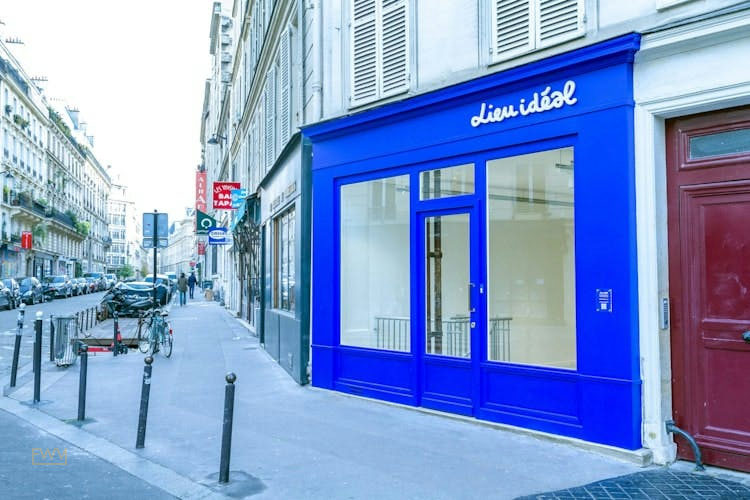
| Former retail unit | Standalone pop-up shop with full shopfront | Rue Beaurepaire, Quai de Valmy, Rue de Lancry | High |
| Concept store concession | Branded corner within existing store | Artazart, concept stores along Quai de Valmy | Very high for books and design goods |
| Apartment or loft space | Intimate press event, private sale, showroom | Quai de Jemmapes, Rue des Vinaigriers | High for author events and limited editions |
| Covered market space | Market stall or branded unit within covered market | Marché couvert Saint-Martin on Boulevard Magenta | Medium for ancillary goods and stationery |
| Cultural venue space | Event-led retail with programming | Point Éphémère on Quai de Valmy | High for author events and photography activations |
| Courtyard or garden space | Seasonal outdoor activation | Jardin Villemin adjacent streets | Medium for seasonal pop-up events |
The Role of a Specialist Agency
Working with a specialist pop-up shop agency significantly reduces the complexity and risk of booking a Canal Saint-Martin space. An agency with established Paris relationships can identify available spaces before they reach open listing, negotiate lease terms appropriate for short activations, manage permit applications and compliance documentation, and coordinate the full build-out, staffing, and operational management of the activation. Venue sourcing through Fashion Week Venues gives brands access to a curated inventory of Paris spaces with the associated legal, logistical, and creative support.
The permit guidance tool on Fashion Week Venues provides directional information about the permit and compliance requirements relevant to different space types and activation durations in Paris, including Canal Saint-Martin. Brands should use this as a starting point and supplement it with professional legal advice specific to their planned activation.
KEY TAKEAWAY: Booking a pop-up space on Canal Saint-Martin requires understanding French short-term lease instruments, permit obligations, and local compliance requirements. Working with a specialist agency significantly reduces the risk of legal complications and accelerates the space identification and booking process.
Once the legal framework is understood and a space type is identified, the next critical question is timing. Canal Saint-Martin's retail calendar is influenced by Paris Fashion Week, seasonal tourism patterns, and neighbourhood-specific events that brands should factor into their activation planning.
Timing Your Canal Saint-Martin Activation: Fashion Week, Seasons, and the Paris Calendar
Quick answer: Canal Saint-Martin activations benefit most from spring and early summer conditions, when the canal-side environment is at its most attractive and foot traffic peaks. Paris Fashion Week windows, particularly the July and October ready-to-wear seasons, create additional audience concentrations that enhance both retail performance and media coverage opportunities.
Timing is one of the most consequential decisions in any pop-up activation, and Canal Saint-Martin's calendar is shaped by multiple overlapping factors. Understanding these factors allows brands to select activation windows that maximise audience quality, media opportunity, and operational efficiency.
Paris Fashion Week and the Activation Calendar
Paris Fashion Week operates across multiple seasons. The July ready-to-wear and resort season, the January couture season, and the October ready-to-wear season each bring concentrated waves of international fashion professionals, press, influencers, and buyers into the city. While Canal Saint-Martin is not a traditional Fashion Week venue district, its proximity to the 10th arrondissement's hotel and event infrastructure and its growing profile among fashion and design brands make it an increasingly attractive location for satellite activations, brand residencies, and book and design pop-ups running alongside the main show calendar.
The Paris Fashion Week schedule for July 2026 runs from approximately July 6 to 9, 2026, encompassing runway shows, exhibitions, presentations, and brand happenings across the city. A Canal Saint-Martin activation timed to coincide with this window benefits from elevated city-wide attention and the presence of international press and buyers who are actively seeking brand discovery opportunities beyond the official show circuit.
Spring and Summer: The Canal Season
Spring is universally regarded as the optimal season for Canal Saint-Martin activations. The Quai de Valmy and Quai de Jemmapes come alive as the weather improves, with locals gathering along the canal banks, café terraces filling, and the neighbourhood's characteristic atmosphere reaching its fullest expression. Spring blossoms, including cherry blossoms and magnolias in nearby Jardin Villemin and the canal-adjacent trees, generate significant social media content from both locals and tourists. A book pop-up shop opening in late March, April, or May benefits from this seasonal energy and the upturn in leisure-driven foot traffic.
Summer sustains high foot traffic, particularly from international tourists who make Canal Saint-Martin a destination in its own right, drawn by its appearance in Amélie and its reputation as an alternative to the Eiffel Tower and more conventional Paris tourist circuits. Canauxrama's boat tours along the canal bring visitor groups directly through the neighbourhood, increasing exposure for canal-facing retail spaces.
Autumn and Winter Considerations
Autumn activations, timed to October's ready-to-wear Fashion Week or the pre-Christmas retail season, can perform strongly in Canal Saint-Martin's indoor spaces. The neighbourhood's café and wine bar culture sustains foot traffic through colder months, and boutique hotels and Airbnb-style accommodation in the area maintain visitor numbers beyond the peak summer season. Winter pop-up activations need to account for reduced outdoor dwell time on the canal banks and focus on spaces with strong interior warmth, atmosphere, and destination-worthy design.
To compare activation windows and understand how different timing scenarios affect space availability and cost, the timeline planning tool on Fashion Week Venues provides a structured framework for mapping your activation against the Paris calendar.
KEY TAKEAWAY: Spring and early summer represent the peak activation season for Canal Saint-Martin. Fashion Week windows in July and October offer additional audience concentration opportunities. Winter activations are viable but require stronger interior design investment to compensate for reduced outdoor footfall.
Calendar decisions connect directly to budget planning, as peak season spaces command premium rates and require earlier booking lead times. Understanding the relationship between timing, space cost, and activation budget is essential for effective planning.
Budget Planning for a Canal Saint-Martin Pop-Up Shop
Quick answer: Canal Saint-Martin pop-up costs vary significantly based on space size, location quality, activation duration, fit-out complexity, staffing requirements, and timing. Brands should budget for space hire, legal costs, fit-out and furniture, staffing, permits, and operational costs as distinct line items rather than treating the space rental fee as the primary cost driver.
One of the most common planning errors made by brands entering the Paris pop-up market is underestimating total activation cost. The space rental fee represents only one component of a full activation budget, and on Canal Saint-Martin it is frequently not the largest one.
Cost Components for a Canal Saint-Martin Activation
| Cost Component | Notes |
|---|---|
| Space rental fee | Varies by size, street, canal-facing versus secondary street location, and duration |
| Legal and lease structuring | Bail dérogatoire or licence d'occupation negotiation and drafting fees |
| Permit and compliance costs | AOT applications, commercial signage permits, and public space use fees where applicable |
| Fit-out and production | Interior build, shelving, display fixtures, branded environment design |
| Furniture rental | Tables, display units, seating, and props |
| Retail staffing | French-speaking sales staff, event hosts, security |
| POS and payment systems | Card payment infrastructure, cash handling, receipting |
| Influencer and press | Seeding, attendance facilitation, content creation support |
| Breakdown and reinstatement | Returning the space to its original condition post-activation |
| Contingency | Recommended at 10 to 15 percent of total budget |
Canal Saint-Martin spaces tend to offer more accessible entry price points than equivalent spaces in the Marais or around Saint-Germain-des-Prés. However, the fit-out investment required to create a compelling brand environment in a raw or partly finished space can offset this saving. Brands should assess the total cost of creating the right brand experience rather than optimising for the lowest possible space rental fee.
For a books and creative goods pop-up, the fit-out investment is typically focused on shelving systems, display furniture, and lighting that creates the warm, editorial atmosphere the Canal Saint-Martin audience expects. This need not be expensive if well-planned, and modular or rental furniture solutions can significantly reduce fit-out cost while maintaining visual quality.
The budget estimation tool on Fashion Week Venues allows brands to build a directional cost model based on their specific activation parameters. This is a starting point for internal planning rather than a guarantee of final costs, which will depend on specific space negotiations and local market conditions at the time of booking.
TIP: Consider the twin activation model for Canal Saint-Martin if your brand is sharing costs with a complementary partner. A books brand co-activating with a stationery or accessories brand can share the space rental cost, the fit-out investment, and the staffing budget while each benefiting from the other's audience.
Fashion Week Venues operates a twin co-activation concept designed specifically for brands that want to share a Paris space with a compatible partner. This model is particularly well-suited to Canal Saint-Martin, where the neighbourhood's appetite for curation and multi-category retail makes co-activation a natural format.
KEY TAKEAWAY: Total activation cost on Canal Saint-Martin involves space rental, legal fees, fit-out, staffing, permits, and operational costs. Brands should plan all components as a unified budget rather than treating the space fee as the primary variable. The twin co-activation model offers a viable cost-sharing route for compatible brand pairs.
Food, Culture, and Community: What Makes Canal Saint-Martin the Right Brand Environment
Quick answer: Canal Saint-Martin's food, café, and cultural infrastructure creates a dwell environment that sustains longer consumer journeys and enhances the receptiveness of its audience to brand discovery. This makes it a particularly strong location for pop-up shops that benefit from an unhurried, curious, and culturally engaged visitor base.
The relationship between a pop-up shop's success and its surrounding neighbourhood environment is often underestimated. Canal Saint-Martin's food and café ecosystem is not incidental background: it directly shapes how long visitors spend in the neighbourhood, the mood in which they approach new retail experiences, and the social context in which brand encounters take place.
The Café and Coffee Culture
Ten Belles, widely regarded as one of the best coffee shops in Paris, operates on Rue de la Grange aux Belles near the canal and has played a central role in establishing Canal Saint-Martin's reputation as a neighbourhood that takes quality seriously. Its focus on specialty coffee and its simple, quality-driven model reflect the neighbourhood's broader commercial ethos. Café Margo and similar independent cafés along the canal provide additional meeting points that sustain the neighbourhood's daytime energy.
Chez Prune, the iconic corner café on Quai de Valmy, represents the neighbourhood's soul in a single business. Its community-oriented character is legendary among Parisians: the story of one of its barmen diving into the canal to rescue a drowning swimmer is often cited as evidence of the genuine human commitment that defines Canal Saint-Martin's social fabric. A brand activating on Canal Saint-Martin benefits from this ambient warmth and community loyalty.
Bakeries, Restaurants, and Wine Bars
Du Pain et des Idées, the acclaimed boulangerie on Rue Yves Toudic a short walk from the canal, is one of the most visited bakeries in Paris. Its croissants, escargots, and pain des amis attract queues from early morning and generate consistent foot traffic into the surrounding streets. Brands whose pop-up spaces are within walking distance of Du Pain et des Idées benefit from this morning traffic pattern.
Le Verre Volé, the natural wine bar and restaurant on Rue de Lancry, anchors the neighbourhood's evening and weekend social scene. Gros Bao, Cidrerie du Canal, Les Sandwichs de Mehdi, and a growing cluster of independently owned restaurants and food concepts on and around the canal sustain the neighbourhood's appeal across all day parts. This all-day activation environment means a books and creative goods pop-up shop can programme events from morning coffee tastings to evening author readings within a single neighbourhood that supports every format.
Culture, Music, and Art
Point Éphémère on Quai de Valmy operates as one of Paris's most respected independent cultural venues, hosting music performances, art exhibitions, residencies, and events that attract a culturally engaged audience from across the city and internationally. Its presence validates Canal Saint-Martin as a destination for cultural programming rather than simply a neighbourhood café and lifestyle zone. Brands whose pop-up concept incorporates cultural programming, whether author events, DJ sets, artist collaborations, or photography exhibitions, can align with this existing cultural infrastructure.
Street art by C215, Space Invader, and other artists is visible throughout the neighbourhood, creating an outdoor gallery context that reinforces the neighbourhood's identity as a living creative environment. The Musée des Moulages, the 19th-century plaster cast museum, lies within the broader neighbourhood context and adds another layer of cultural seriousness to the area's identity.
The Hôtel du Nord, immortalised by Marcel Carné's 1938 film of the same name and located on Quai de Jemmapes, operates today as a bar and restaurant. It is one of the neighbourhood's most photographed locations and serves as a reminder that Canal Saint-Martin's cultural authority runs deep into French cinema and literary history. As Arletty famously declared in the film, the canal and its bridges carry emotional and historical resonance that very few commercial neighbourhoods can claim.
KEY TAKEAWAY: Canal Saint-Martin's food, café, and cultural ecosystem creates a high-dwell, high-engagement neighbourhood environment that directly benefits brands whose pop-up activations depend on an unhurried, curious, and culturally literate audience. The neighbourhood's all-day energy supports programming across morning, afternoon, and evening formats.
How Fashion Week Venues Helps Brands Book Pop-Up Shops on Canal Saint-Martin
Quick answer: Fashion Week Venues provides a full-service route to booking and activating a pop-up shop on Canal Saint-Martin, from initial space discovery through to production, staffing, and post-activation data analysis. The platform and agency services are designed for brand teams that need to move quickly, manage complexity, and deliver commercially and creatively successful activations in Paris.
Navigating the Canal Saint-Martin property market as an international brand is genuinely complex. Landlords in the 10th arrondissement range from professional property companies with established pop-up programmes to individual apartment owners and small business operators who have never hosted a brand activation before. The legal, logistical, and operational knowledge required to execute a successful activation is significant, and the margin for error in a short activation window is small.
Space Discovery and Venue Sourcing
Fashion Week Venues maintains a live marketplace of Paris pop-up spaces that includes Canal Saint-Martin listings alongside spaces across other key Paris neighbourhoods. The space marketplace allows brand teams to browse available spaces by location, size, type, and availability window, building a shortlist before engaging with detailed negotiation. The platform's compare tool and locator tool support informed decision-making before any commitment is made.
For brands with specific brief requirements, the agency's venue sourcing team can conduct an off-market search, approaching Canal Saint-Martin landlords and space operators directly to identify spaces that match the brand's brief but have not been listed publicly. This is particularly valuable for brands with unusual space requirements, such as very large square footage, canal-facing frontage, or specific cultural venue contexts.
Concept, Production, and Fit-Out
Fashion Week Venues provides concept and creative direction services for brands that need to develop a spatial concept aligned with both the brand identity and the Canal Saint-Martin neighbourhood context. The agency's production and fit-out team manages the physical build of the activation environment, including shelving, display fixtures, branded elements, lighting, and furniture. The Imagine visualisation tool allows brands to see a rendered version of their proposed space before committing to a design direction.
Staffing, Operations, and Data
Operating a pop-up shop on Canal Saint-Martin requires French-speaking retail staff who understand both the brand's values and the neighbourhood's community character. Fashion Week Venues provides retail staffing services that match staff profiles to the brand brief, ensuring that the team on the floor represents the brand credibly and engages the Canal Saint-Martin audience effectively. POS and payment systems, data collection, and post-activation analytics complete the operational package.
Brands wanting to understand the commercial return on their Canal Saint-Martin activation should use the ROI calculator to model projected returns based on footfall estimates, average transaction values, and brand awareness objectives before finalising the activation budget.
Limitations to Understand
Fashion Week Venues does not guarantee space availability, permit approval, or specific commercial outcomes for Canal Saint-Martin activations. Space availability on the canal is subject to landlord decisions, market conditions, and timing factors outside the agency's control. Legal and permit matters require independent French legal advice. The agency's tools and guidance provide directional support rather than legally binding advice.
To compare the Canal Saint-Martin option against other Paris neighbourhoods, explore the Paris city hub on Fashion Week Venues and shortlist spaces that match your brief, budget, and calendar window.
KEY TAKEAWAY: Fashion Week Venues provides the full range of services and tools a brand team needs to plan, book, and deliver a Canal Saint-Martin pop-up activation, from initial space discovery through to post-activation data. Brands benefit most from engaging the agency early in the planning process to maximise space options and minimise legal and logistical risk.
Neighbourhood Comparison: Canal Saint-Martin Versus Other Paris Pop-Up Destinations
Quick answer: Canal Saint-Martin offers the strongest combination of cultural authenticity, creative audience quality, and accessible price points among Paris pop-up neighbourhoods. It is particularly suited to books, design, creative goods, and independent fashion brands. The Marais offers higher luxury footfall. Saint-Germain-des-Prés offers higher institutional prestige. Canal Saint-Martin offers the most community-embedded and creatively authentic environment.
| Neighbourhood | Primary Audience | Best Category Fit | Relative Price Point | Fashion Week Relevance |
|---|---|---|---|---|
| Canal Saint-Martin (10th arr.) | Design-literate Parisians, creative tourists, bobo community | Books, design goods, creative fashion, stationery | Mid-range, accessible | Satellite activations, residencies |
| Le Marais (3rd and 4th arr.) | International tourists, luxury shoppers, fashion buyers | Fashion, jewellery, luxury accessories, flagship formats | Premium to high | Core show circuit adjacency |
| Saint-Germain-des-Prés (6th arr.) | Affluent Parisians, literary tourists, international press | Books, luxury fashion, art galleries, publishing | High to very high | Press and buyer entertainment |
| Montmartre (18th arr.) | Mass tourism, artists, independent boutique shoppers | Art, souvenirs, affordable fashion, photography | Low to mid-range | Limited direct relevance |
| Bastille and Oberkampf (11th arr.) | Young Parisians, nightlife crowd, independent fashion | Independent fashion, music, lifestyle | Mid-range | Satellite activations |
Canal Saint-Martin's distinctiveness lies in its combination of genuine neighbourhood identity, strong creative credentials, and a footfall profile that skews toward consumers who are actively interested in independent brands, original creative goods, and cultural discovery. For a book pop-up shop, it provides a more authentic and community-resonant environment than the higher-footfall but more transactional retail corridors elsewhere in central Paris.
KEY TAKEAWAY: Canal Saint-Martin occupies a distinct and complementary position within Paris's pop-up neighbourhood hierarchy. It is not a substitute for the Marais or Saint-Germain for brands seeking luxury footfall or maximum visitor volume, but it is the strongest Paris environment for brands whose success depends on authentic community engagement and cultural credibility.
Step-by-Step Workflow for Booking a Pop-Up Shop on Canal Saint-Martin
The following workflow maps the key stages of a Canal Saint-Martin pop-up activation from initial brief to post-activation review. Brand teams should treat this as a directional framework and adapt it to their specific context, scale, and resource constraints.
| Stage | Key Actions | Recommended Tools or Resources |
|---|---|---|
| 1. Define brief and objectives | Clarify brand objectives, target audience, space requirements, duration, budget, and activation concept | Internal brief template, ROI calculator |
| 2. Set activation window | Align activation dates with Paris Fashion Week calendar, seasonal patterns, and availability constraints | Timeline planning tool, Paris Fashion Week schedule |
| 3. Build directional budget | Model total activation cost across all components including legal, fit-out, staffing, and permits | Budget estimation tool |
| 4. Search and shortlist spaces | Browse marketplace listings, use locator and compare tools, engage agency for off-market search | Marketplace, locator tool, compare tool, venue sourcing service |
| 5. Assess permit requirements | Identify permit and compliance obligations for the specific space type, use, and location | Permit guidance tool, French legal advisor |
| 6. Negotiate and secure lease | Agree bail dérogatoire or licence d'occupation terms, review and sign lease documentation | Agency legal support, independent French legal advisor |
| 7. Develop concept and design | Create spatial concept, plan brand environment, develop visual identity for the activation | Imagine visualisation tool, concept direction service |
| 8. Build and fit out space | Execute physical build, install fixtures, furniture, signage, and branded elements | Production and build service, furniture rental service |
| 9. Staff and operate activation | Recruit and brief French-speaking staff, install POS systems, manage daily operations | Retail staffing service, POS and payments service |
| 10. Drive traffic and media | Execute influencer seeding, press outreach, author events, and social media programming | Influencer marketing service, activation management service |
| 11. Collect data and analyse results | Track sales, footfall, social reach, and brand awareness metrics against pre-defined KPIs | Data and analytics service, ROI calculator |
| 12. Break down and reinstate | Remove all fixtures and branded elements, return space to original condition, complete exit inspection | Production and build service, lease exit provisions |
TIP: Begin the space search at least three to four months before your planned activation start date for Canal Saint-Martin. Premium canal-facing spaces and spaces on key streets like Rue Beaurepaire and Quai de Valmy are in high demand, particularly for spring and Fashion Week window dates.
KEY TAKEAWAY: A Canal Saint-Martin pop-up activation involves twelve distinct stages from brief to breakdown. Beginning the process early, using specialist tools and agency support at each stage, and building a complete budget across all cost components significantly increases the probability of a successful outcome.
Common Myths About Booking a Pop-Up Shop in Paris Debunked
MYTH: You need a French legal entity to rent a pop-up space in Paris.
FACT: International brands can rent pop-up spaces in Paris without establishing a French legal entity, provided the lease instrument and commercial arrangements are structured appropriately. Many space owners and agencies regularly work with international brands using licence d'occupation or other short-term instruments that do not require the tenant to have a French company. However, tax obligations, VAT registration, and employment law requirements for staff are separate matters that do require specialist advice.
MYTH: Paris Fashion Week is the only viable calendar window for a Canal Saint-Martin pop-up.
FACT: Canal Saint-Martin is a strong activation environment across multiple calendar windows throughout the year. Spring, early summer, and the pre-Christmas period all offer strong foot traffic and audience quality. Paris Fashion Week windows provide additional media and industry audience concentration but are not prerequisites for a commercially successful activation. Many of the neighbourhood's most memorable brand moments have taken place outside the official Fashion Week calendar.
MYTH: Commission-based brokers are the only way to find a pop-up space in Paris.
FACT: Specialist pop-up agencies and marketplace platforms now provide transparent, brief-led space discovery that is often faster, more targeted, and more cost-effective than traditional commission broker models. Marketplace platforms allow brands to assess spaces, compare options, and engage with landlords through a structured process rather than relying on a single intermediary's inventory. Full-service agencies add the capability to manage legal, design, production, and operational requirements as a unified service.
MYTH: Short-term leases in Paris are legally straightforward and can be handled without specialist help.
FACT: French commercial property law is complex, and the specific requirements of bail dérogatoire, licence d'occupation, and AOT instruments vary significantly based on space type, duration, location, and intended use. Errors in lease structuring can result in unintended legal obligations, loss of deposit, or activation delays. Specialist legal advice and agency support are strongly recommended for any brand unfamiliar with the French property market.
MYTH: A Canal Saint-Martin pop-up shop is only suitable for small or emerging brands.
FACT: Canal Saint-Martin has hosted successful activations by both emerging independent brands and established international names seeking authentic community engagement rather than conventional luxury retail visibility. The neighbourhood's audience, which includes design professionals, cultural influencers, international media, and discerning Parisian consumers, offers genuine commercial and reputational value for brands at all scales. The key is aligning the brand's concept with the neighbourhood's values rather than treating it as a low-cost alternative to more prestigious addresses.
Frequently Asked Questions
Where exactly is Canal Saint-Martin in Paris?
Canal Saint-Martin runs through the 10th arrondissement of Paris, beginning at the Place de la République in the south and extending north to the Bassin de la Villette. Its most famous stretch is the section running along Quai de Valmy and Quai de Jemmapes, where the canal is visible at street level, lined with iron footbridges, plane trees, and 19th-century locks. The canal then continues north as the Canal de l'Ourcq toward Parc de la Villette. It is accessible from Gare de l'Est, République, and several metro stations in the 10th arrondissement.
How do I get to Canal Saint-Martin from central Paris?
Canal Saint-Martin is easily accessible from central Paris by metro, bicycle, or on foot. The République metro station, served by lines 3, 5, 8, 9, and 11, is the most convenient entry point for the southern end of the canal. Gare de l'Est, served by lines 4, 5, and 7, is approximately ten minutes' walk from the canal's midpoint. The Vélib' bike-share system provides cycle access along the quayside streets. For international visitors arriving by Eurostar, the journey from Gare du Nord to Canal Saint-Martin takes under fifteen minutes on foot or by metro.
What types of pop-up space are available on Canal Saint-Martin?
Canal Saint-Martin offers a diverse range of pop-up space types including former retail units with shopfronts on key streets such as Quai de Valmy, Rue Beaurepaire, and Rue de Lancry, apartment and loft spaces suitable for intimate press events and private sales, concession spaces within existing concept stores, cultural venue spaces suitable for event-led retail, covered market units within the Marché couvert Saint-Martin, and courtyard spaces for seasonal outdoor activations. The appropriate space type depends on the brand's objectives, audience, budget, and activation duration.
Do I need a French company to rent a pop-up space in Paris?
International brands do not necessarily need a French legal entity to rent a pop-up space in Paris, but the specific requirements depend on the lease instrument, the space owner's preferences, and the nature of the commercial activity. Short-term licence d'occupation instruments are commonly used for brand activations and do not always require a French entity. However, tax obligations, VAT registration for retail sales, and employment law for French staff are separate requirements that typically require specialist French legal and tax advice. Working with an experienced Paris pop-up agency reduces this complexity significantly.
What is the best time of year to run a book pop-up shop on Canal Saint-Martin?
Spring, from late March through May, is widely regarded as the optimal period for Canal Saint-Martin pop-up activations. The canal environment is at its most attractive, foot traffic peaks, and the neighbourhood's community energy is at its highest. Paris Fashion Week windows in July and October provide additional audience concentration for brands seeking fashion and creative industry exposure. Pre-Christmas activations from late November can also perform strongly in well-positioned indoor spaces. Winter activations from January to February tend to require stronger interior design investment to attract foot traffic.
Is Canal Saint-Martin a good location for a book pop-up shop?
Canal Saint-Martin is one of the strongest locations in Paris for a book pop-up shop. The neighbourhood is home to Artazart, one of Paris's most respected graphic arts and design bookshops, along with several independent booksellers and creative goods retailers. Its audience of design-literate Parisians, creative professionals, and culturally engaged visitors creates strong demand for original books, photography publications, rare editions, stationery, notebooks, and ancillary creative goods. The neighbourhood's infrastructure for author events, cultural programming, and community engagement further enhances the viability of a book-focused activation.
What is a bail dérogatoire and do I need one for a Canal Saint-Martin pop-up?
A bail dérogatoire, also known as a bail précaire, is a French short-term commercial lease instrument that permits a tenancy of up to three years without triggering the full protections of a standard commercial lease. It is the most common lease structure for pop-up retail activations in Paris that run for several weeks to several months. For very short activations of a few days to a few weeks, a licence d'occupation or convention d'occupation précaire may be more appropriate. The right instrument depends on the specific space, duration, and planned use. French legal advice is strongly recommended before signing any agreement.
How much does it cost to run a pop-up shop on Canal Saint-Martin?
Total activation costs on Canal Saint-Martin vary significantly based on space size, location quality, duration, fit-out complexity, and staffing requirements. Canal Saint-Martin typically offers more accessible price points than equivalent spaces in the Marais or Saint-Germain-des-Prés. However, total activation cost includes not only space rental but also legal fees, fit-out and furniture, staffing, permits, POS systems, and operational costs. Brands should model all cost components as a unified budget rather than focusing solely on the space rental fee. The budget estimation tool on Fashion Week Venues provides directional modelling for specific activation parameters.
Can I run author events and programming in a Canal Saint-Martin pop-up?
Yes. Canal Saint-Martin's neighbourhood infrastructure is well-suited to author events, book launches, photography exhibitions, readings, and cultural programming that combines retail with live experience. The neighbourhood's cafés, wine bars, and cultural venues such as Point Éphémère demonstrate the existing appetite for this kind of programming. Pop-up spaces on Canal Saint-Martin can be configured to accommodate small to medium-sized audience events in addition to retail operations. Brands should check with their space owner and legal advisor whether any additional permits are required for events that involve public attendance or amplified sound.
What neighbourhoods are closest to Canal Saint-Martin?
Canal Saint-Martin sits within the 10th arrondissement and is directly adjacent to or within easy reach of several other key Paris neighbourhoods. Place de la République connects the canal to the Marais and the 3rd and 4th arrondissements to the south. Bastille is accessible from the southern end of the canal via the Port de l'Arsenal. Montmartre lies to the northwest. Gare de l'Est and Gare du Nord anchor the area to the west and northwest respectively. The Bassin de la Villette connects northward to Parc de la Villette and the 19th arrondissement. This central positioning makes Canal Saint-Martin highly accessible to visitors based across central Paris.
Do I need planning permission or permits to run a pop-up on Canal Saint-Martin?
The permit requirements for a Canal Saint-Martin pop-up shop depend on the specific space type, the planned commercial activity, the duration of the activation, and whether the activation involves any use of public space, signage visible from the street, or events with public attendance. Indoor activations within a private retail space typically have lower permit complexity than outdoor or canal-adjacent public space activations, which may require an Autorisation d'Occupation Temporaire from the relevant Paris public authority. Requirements vary by arrondissement and space classification. Verification with a French legal advisor and use of the permit guidance tool on Fashion Week Venues is strongly recommended.
Is Canal Saint-Martin suitable for luxury fashion brands?
Canal Saint-Martin is not a traditional luxury retail corridor in the manner of the Marais or Avenue Montaigne, but it is a credible and increasingly desirable location for luxury brands that want to express a more intimate, community-embedded, and culturally authentic dimension of their brand identity. Limited edition releases, private client events, brand residencies, and archive or editorial activations are formats that translate well to the Canal Saint-Martin context. Brands seeking maximum luxury footfall and international tourist volume may be better served by Marais or Saint-Germain spaces, but Canal Saint-Martin offers a distinct creative legitimacy that is difficult to replicate in higher-footfall locations.
What cultural institutions and landmarks are near Canal Saint-Martin?
Canal Saint-Martin is surrounded by significant cultural landmarks. The Hôtel du Nord on Quai de Jemmapes, immortalised in Marcel Carné's 1938 film, operates as a bar and restaurant and is one of the most photographed sites in the neighbourhood. Point Éphémère hosts music, art, and creative events on Quai de Valmy. The Musée des Moulages lies within the wider neighbourhood context. Jardin Villemin provides a green space adjacent to the canal. Street art by C215, Space Invader, and other artists is visible throughout the 10th arrondissement. The Marché couvert Saint-Martin on Boulevard Magenta and the Musée de l'Hôpital Saint-Louis add further cultural depth to the area.
How does Canal Saint-Martin compare to the Marais for a pop-up shop?
The Marais offers higher overall footfall, stronger luxury and fashion brand adjacency, and more established infrastructure for high-volume retail pop-ups. Canal Saint-Martin offers stronger creative authenticity, a more community-embedded audience, more accessible price points, and a neighbourhood identity that resonates more strongly with books, design, independent fashion, and creative goods brands. The right choice depends on the brand's objectives: the Marais is stronger for maximum visibility and luxury association, while Canal Saint-Martin is stronger for cultural credibility, creative audience quality, and community engagement. Some brands activate in both neighbourhoods simultaneously to reach complementary audience segments.
How early should I start planning a Canal Saint-Martin pop-up?
For a Canal Saint-Martin activation during peak periods such as spring, Paris Fashion Week windows, or the pre-Christmas season, beginning the planning process at least three to four months in advance is strongly recommended. Premium canal-facing spaces on Quai de Valmy and key streets such as Rue Beaurepaire are in high demand and often committed well in advance of the activation date. Legal, permit, and fit-out timelines also require lead time that shorter planning windows cannot accommodate. For activations outside peak periods, eight to twelve weeks of lead time may be sufficient for smaller or simpler formats, but early engagement remains advisable to maximise space choice.
Conclusion: Making Canal Saint-Martin the Stage for Your Next Pop-Up Activation
Canal Saint-Martin is one of Paris's most compelling pop-up shop environments, and for brands in books, creative goods, design, independent fashion, stationery, and cultural publishing, it is arguably the strongest neighbourhood in the city. Its layered cultural identity, from Napoleon I's 19th-century canal infrastructure to the Amélie film location mythology, from the Hôtel du Nord's cinematic heritage to the street art of C215 and Space Invader, creates an ambient legitimacy that commercial spaces rarely carry. Its food and café ecosystem, anchored by Du Pain et des Idées, Ten Belles, Chez Prune, and Le Verre Volé, sustains a high-dwell, high-quality audience throughout the day. Its creative retail institutions, from Artazart to Antoine et Lili to La Trésorerie, validate the neighbourhood as a genuine destination for design-literate consumers.
Booking a pop-up shop here requires navigating French lease law, permit obligations, and the practical complexities of activating in a foreign market. It also requires creative and operational expertise to deliver a brand environment that respects and enhances the neighbourhood's character. The brands that succeed on Canal Saint-Martin are those that approach the neighbourhood with genuine engagement rather than treating it as a backdrop.
Fashion Week Venues provides the full range of services and tools to move from initial brief to live activation efficiently and effectively. From venue sourcing and lease negotiation through to concept direction, production, staffing, and data analytics, the agency's Paris expertise is built specifically for brand teams that need to deliver results in one of the world's most demanding and rewarding retail environments.
To move from research to activation, start exploring available spaces on the Fashion Week Venues marketplace and build a focused brief for your target neighbourhood, space type, and calendar window.